Author: admin

  • The Bug Bounty Edge: Crowdsourcing for Stronger Cybersecurity

    The Bug Bounty Edge: Crowdsourcing for Stronger Cybersecurity

    Bug bounty programs are a game-changer in the world of cybersecurity. By harnessing the power of crowdsourcing, organizations can tap into the collective expertise of security researchers around the globe to strengthen their cyber defenses.

    These programs, also known as vulnerability rewards programs, offer monetary incentives to ethical hackers for uncovering and reporting vulnerabilities in a company’s systems. It’s a win-win situation, where organizations benefit from the knowledge and skills of the broader security community, while researchers are rewarded for their efforts.

    Crowdsourcing cybersecurity through bug bounties allows organizations to access a diverse pool of talent and perspectives. This enables them to identify a wider range of vulnerabilities and potential attack vectors, ultimately leading to stronger defenses against cyber threats.

    Key Takeaways:

    • Bug bounty programs leverage the expertise of security researchers to identify and report vulnerabilities.
    • Ethical hackers are rewarded monetarily for their efforts in finding and disclosing bugs.
    • Crowdsourcing cybersecurity through bug bounties allows organizations to tap into a global talent pool.
    • Bug bounties promote collaboration between organizations and ethical hackers.
    • Bug bounty programs contribute to the strengthening of cybersecurity defenses.

    The Benefits of Bug Bounty Programs

    Bug bounty programs offer several benefits to organizations. Firstly, they provide access to a diverse pool of security researchers who have different backgrounds, perspectives, and expertise. This helps organizations to identify a wider range of vulnerabilities and potential attack vectors.

    Additionally, bug bounties promote collaboration between organizations and ethical hackers, creating a mutually beneficial relationship where both parties work together to improve cybersecurity. By incentivizing researchers with rewards, organizations encourage sustained engagement and build long-term relationships with skilled hackers.

    “Bug bounty programs provide a platform for organizations to collaborate with ethical hackers from around the world, leveraging their collective expertise to strengthen cybersecurity defenses.”

    Bug bounty programs also contribute to the strengthening of cybersecurity defenses by continuously identifying and addressing vulnerabilities. The collaborative nature of bug bounties enables organizations to stay ahead of potential threats and proactively enhance their security posture.

    Enhanced Security Expertise and Perspective

    Bug bounty programs bring together security researchers with diverse backgrounds and expertise, allowing organizations to tap into a broader range of knowledge and skills. This facilitates the identification of vulnerabilities that may have been overlooked by internal security teams. By embracing the collective wisdom of ethical hackers, organizations gain a fresh perspective on their systems and can better understand potential attack vectors.

    Collaboration and Knowledge Sharing

    In bug bounty programs, organizations and ethical hackers collaborate closely to identify and fix vulnerabilities. This partnership fosters knowledge sharing and promotes a culture of cybersecurity awareness. By working together, organizations can gain insights into emerging threats and adopt proactive measures to protect their networks, systems, and data.

    Continuous Improvement of Cybersecurity Defenses

    Bug bounties provide a continuous feedback loop for organizations to strengthen their cybersecurity defenses. As researchers find and report vulnerabilities, organizations can take swift action to address them, making their systems more resilient against potential attacks. Regular engagement with ethical hackers through bug bounty programs allows organizations to stay proactive, adapt to evolving threats, and ensure that their security measures are up to date.

    Selecting Bug Bounty Platforms and Companies

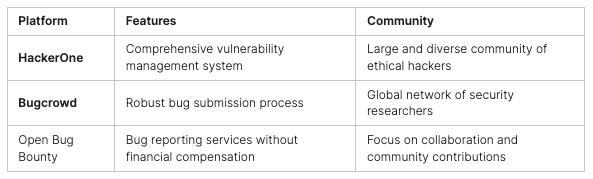
    When implementing a bug bounty program, organizations have the option to choose from various bug bounty platforms and companies. These platforms provide the necessary infrastructure for managing bug bounty programs and offer communication channels for researchers to submit vulnerability reports and interact with organizations. Two popular bug bounty platforms are HackerOne and Bugcrowd, which have built a reputation for their robust services and large communities of ethical hackers.

    In addition to bug bounty platforms, organizations can also run their bug bounty programs independently. This gives them more control over the program structure and requirements. However, running an independent bug bounty program requires dedicated resources and expertise to manage the program effectively.

    Alternatively, organizations can opt to utilize open bug bounty platforms like Open Bug Bounty. These platforms offer bug reporting services without requiring financial compensation. Open Bug Bounty focuses on building a collaborative community and provides opportunities for researchers to contribute to the security of smaller organizations that may not have the resources to run their bug bounty programs.

    Benefits of Bug Bounty Platforms and Companies:

    • Infrastructure for managing bug bounty programs
    • Communication channels for researchers and organizations
    • Diverse communities of ethical hackers
    • Access to a wide range of expertise and perspectives
    • Opportunity for collaboration and knowledge exchange

    Comparison of Bug Bounty Platforms and Open Bug Bounty:
    Challenges and Considerations in Bug Bounty Programs

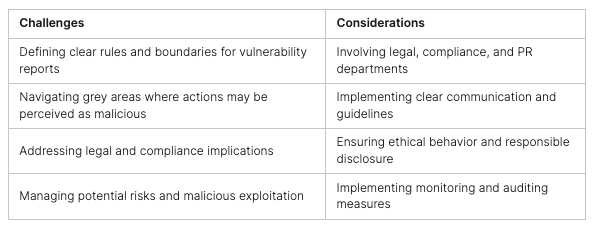
    Implementing a bug bounty program presents organizations with a unique set of challenges that must be carefully addressed. One of the major considerations is establishing clear rules and boundaries for determining what constitutes an acceptable vulnerability report and how these vulnerabilities will be addressed.

    Organizations must also navigate the legal and compliance implications of bug bounty programs, involving not just technical teams, but also legal, compliance, and PR departments. By involving these stakeholders, organizations can ensure that bug bounty programs align with legal frameworks and comply with regulatory requirements.

    Another challenge arises in the grey areas where the actions of security researchers may be perceived as malicious rather than helpful. It is essential to establish clear communication channels and guidelines to avoid misunderstandings and potential conflicts between organizations and researchers.

    Additionally, bug bounty programs pose legal implications that must be considered. Organizations should adhere to ethical guidelines and respect user privacy while conducting vulnerability testing. By prioritizing responsible disclosure and ensuring that ethical hackers do not exploit identified vulnerabilities, organizations can avoid potential legal ramifications.

    The potential risks associated with bug bounty programs also cannot be ignored. Malicious individuals may exploit bug bounty programs for malicious purposes, such as extortion or unauthorized access. Organizations must implement measures to mitigate these risks and ensure that program activities are closely monitored and audited.

    “Ensuring clear rules, engaging multiple stakeholders, promoting responsible disclosure, and mitigating risks are key considerations in implementing bug bounty programs.”

    To summarize, the challenges and considerations in bug bounty programs revolve around defining rules, addressing legal implications, navigating grey areas, and mitigating potential risks. By proactively addressing these challenges, organizations can create a secure environment for bug bounty programs and effectively harness the collective expertise of ethical hackers to strengthen their cybersecurity defenses.
    Building a Mature Security Culture for Bug Bounties

    To effectively implement bug bounty programs, organizations need to have a mature security culture in place. This involves ensuring that all stakeholders, including management, employees, and third-party suppliers, understand the importance of cybersecurity and are committed to it. By fostering a strong security culture, organizations can strengthen their defenses and collaborate more effectively with ethical hackers.

    Clear Rules and Processes

    Establishing clear rules, boundaries, and processes for vulnerability reporting and handling is essential. This ensures that everyone involved understands their roles and responsibilities, minimizing confusion and streamlining the bug bounty program. Clear guidelines contribute to effective collaboration and help organizations make the most of the expertise offered by ethical hackers.

    Involvement of All Departments

    It’s crucial to involve not just technical teams but also legal, compliance, and PR departments in bug bounty programs. This interdisciplinary approach helps address legal and compliance implications, communicate with ethical hackers effectively, and manage public relations. By engaging all relevant departments, organizations can ensure a comprehensive and well-coordinated response to vulnerabilities.

    Efficient Vulnerability Triage and Resolution

    Organizations must have the capability to triage and fix vulnerabilities efficiently. This requires establishing effective communication channels with the security researcher community and having a structured process in place to prioritize and address reported vulnerabilities. Regular and prompt communication helps build trust and encourages ethical hackers to continue collaborating with the organization.

    Collaboration with Ethical Hackers

    Creating a mature security culture involves fostering collaboration with ethical hackers. Organizations should establish open lines of communication and encourage ethical hackers to provide feedback and suggestions for improving cybersecurity. Recognizing their efforts and offering vulnerability rewards not only incentivizes ethical hackers to participate but also strengthens the relationship between the organization and the wider security community.

    Building a mature security culture sets the foundation for successful bug bounty programs. It ensures that bug bounty initiatives are integrated into the organization’s overall cybersecurity strategy and supported by a collaborative and responsive approach. By embracing a mature security culture, organizations can effectively harness the power of bug bounties to strengthen their cybersecurity defenses.

    Bug Bounty Programs: Are You Ready?

    Bug bounty programs can offer significant benefits to organizations seeking to enhance their cybersecurity defenses by tapping into the expertise of external security researchers. However, these programs may not be suitable for every organization. Before embarking on a bug bounty program, it is crucial to assess your readiness and preparedness.

    Organizations should have existing security measures in place, including robust vulnerability disclosure programs that allow for the responsible reporting of bugs. A culture of security internally is also essential, ensuring that all employees understand the importance of cybersecurity and their roles in maintaining it.

    Furthermore, organizations should be capable of handling and fixing known vulnerabilities before inviting external researchers to identify new ones. Establishing a bug bounty program requires resources and investment, including the potential hiring of security consultants or a Chief Security Officer (CSO).

    Refining and enhancing your vulnerability disclosure program is another key aspect to consider. Clear processes for receiving, evaluating, and addressing vulnerability reports must be established to ensure efficient collaboration between your organization and external researchers.

    It is important to note that bug bounty programs should be seen as a supplementary step to build upon existing security efforts, rather than a replacement for them. Organizations need to have a solid foundation of security practices in place before engaging in bug bounty programs.

    To summarize, before diving into bug bounty programs, assess your organization’s readiness, ensure you have established security measures and a culture of security, and be prepared to refine and enhance your vulnerability disclosure program. By taking these steps, you can maximize the effectiveness of your bug bounty program and leverage the collective expertise of security researchers to strengthen your cybersecurity defenses.

    Key considerations for bug bounty program readiness:

    • Existing security measures, including vulnerability disclosure programs
    • A culture of security internally
    • Capacity to handle and fix known vulnerabilities
    • Resources and investment, including potential hiring of security consultants or a CSO
    • Refinement and enhancement of vulnerability disclosure program

    Implementing a bug bounty program requires careful consideration and preparation. It is not a one-size-fits-all solution, and organizations should evaluate their readiness before diving in.

    Bug Bounty Programs for Beginners

    Bug bounty programs provide not only advanced hackers but also beginners with opportunities to learn and develop their skills in cybersecurity. These programs have designed their public platforms to be beginner-friendly, offering approachable entry points for researchers at any skill level.

    As a beginner, you can start small and gradually work your way up in bug bounty programs. This allows you to gain hands-on experience in probing production systems without causing any damage or legal trouble. By participating in bug bounty programs, you enter a supportive learning environment where you can build your track record and reputation as you submit valid bug reports.

    Successful submissions and eventual recognition in bug bounty programs can open up new opportunities and career advancements in the cybersecurity field. Whether you’re aspiring to become a cybersecurity professional or looking to enhance your existing skills, bug bounty programs provide a platform for learning and growth.

    Bug Bounty Platforms: Overview and Key Details

    Several bug bounty platforms offer opportunities for security researchers to participate in bug bounty programs. These platforms provide a structured environment for organizations to collaborate with ethical hackers and strengthen their cybersecurity defenses. Here, we provide an overview of some popular bug bounty platforms along with their key features and characteristics.

    HackerOne

    HackerOne is a widely recognized bug bounty platform that boasts a large and diverse community of ethical hackers. They offer various programs that cater to different organizations and industries. With their robust platform and comprehensive communication tools, HackerOne facilitates effective collaboration between organizations and researchers.

    Bugcrowd

    Bugcrowd focuses on vulnerability disclosure and bug bounty programs for diverse organizations, ranging from small businesses to large enterprises. Their platform is known for its comprehensive triage and verification processes to ensure high-quality bug submissions. Bugcrowd also emphasizes researcher engagement and offers rewards based on researcher reputation and expertise.

    Intigriti

    Intigriti is a bug bounty platform that specializes in serving European companies. They have a strong focus on responsible disclosure and ethical hacking practices. Intigriti utilizes their extensive network of security researchers to help European organizations identify and address vulnerabilities effectively.

    Open Bug Bounty

    Open Bug Bounty distinguishes itself as a non-profit platform that offers bug reporting services without requiring financial compensation. It provides an accessible option for smaller organizations with limited budgets to engage with the security research community. Open Bug Bounty aims to promote the responsible disclosure of vulnerabilities.

    HackenProof

    HackenProof is a bug bounty platform that focuses on linking ethical hackers to various Web3 projects. With their expertise in blockchain and decentralized technologies, HackenProof enables organizations operating in the Web3 ecosystem to leverage the skills of ethical hackers and enhance their security measures.

    Each bug bounty platform offers its unique set of features and characteristics, catering to the diverse needs of organizations and the security research community. Researchers can choose the platform that aligns with their expertise and preferences, ensuring effective collaboration and the discovery of vulnerabilities.

    In the next section, we will conclude our exploration of bug bounty programs and their role in strengthening cybersecurity.

    Conclusion

    In today’s cyber-centric world, where digital threats loom at every corner, the need for comprehensive vulnerability testing has never been more acute. Peris.ai Korava emerges as the ultimate solution in this domain, offering an unparalleled Bug Bounty Platform that leverages the collective expertise of a global community of ethical hackers. This crowdsourced approach to vulnerability testing not only enhances the security posture of organizations but also introduces a level of customization and efficiency unprecedented in the cybersecurity landscape.

    Peris.ai Korava distinguishes itself by allowing organizations to tailor their bug bounty programs to their specific requirements. With a variety of customization options, clients can define the scope of their programs and set appropriate rewards, ensuring alignment with their cybersecurity goals and budget. This bespoke approach guarantees optimal results, delivering value that far surpasses traditional vulnerability assessment methods.

    At the heart of Korava’s effectiveness is our formidable assembly of guardians—verified ethical hackers from around the globe. Each hacker undergoes a rigorous verification process before participating in any program, ensuring that only the most skilled and ethical professionals contribute to safeguarding your systems. This global network of cybersecurity experts stands ready to identify and report vulnerabilities, providing your organization with the critical insights needed to fortify its defenses.

    A standout feature of Korava is its double review process. Before any vulnerability report reaches a client, it undergoes a thorough review by three other ethical hackers. This meticulous process ensures the highest quality of reporting, virtually eliminating the risk of false positives. Such a level of scrutiny not only saves clients valuable time and resources in addressing security issues but also instills confidence in the remediation process.

    Peris.ai Korava is more than just a platform; it’s a strategic ally in the ongoing battle against cyber threats. By harnessing the collective intelligence and ethical prowess of a worldwide hacker community, Korava empowers organizations to stay one step ahead of potential vulnerabilities, ensuring their digital assets are secure and resilient against attacks.

    To explore how Peris.ai Korava can revolutionize your approach to cybersecurity and vulnerability management, we invite you to visit Peris.ai Cybersecurity. Discover the power of crowdsourced security testing and how our customizable programs, backed by a double review process, can provide your organization with the ultimate in cyber protection. Embrace the future of cybersecurity with Peris.ai Korava and secure your digital landscape today.

    FAQ

    What are bug bounty programs?

    Bug bounty programs are initiatives by companies to enlist the help of security researchers, or ethical hackers, to identify and report vulnerabilities in their systems. Researchers are rewarded with monetary incentives for their efforts.

    What are the benefits of bug bounty programs?

    Bug bounty programs offer access to a diverse pool of security researchers, promote collaboration between organizations and ethical hackers, and help strengthen cybersecurity defenses by identifying vulnerabilities.

    How do I select bug bounty platforms or companies?

    There are various bug bounty platforms available, such as HackerOne and Bugcrowd, which provide the infrastructure for managing bug bounty programs. Open Bug Bounty is a platform that offers bug reporting services without financial compensation.

    What challenges are involved in bug bounty programs?

    Challenges include defining clear rules and boundaries, addressing legal and compliance implications, and navigating potential misunderstandings between organizations and security researchers.

    How do I build a mature security culture for bug bounties?

    Building a mature security culture involves ensuring all stakeholders understand cybersecurity’s importance, establishing clear rules and processes for vulnerability reporting, and maintaining regular communication with the security researcher community.

    Are bug bounty programs suitable for every organization?

    Bug bounty programs require organizations to have existing security measures in place, the capacity to handle and fix known vulnerabilities, and resources and investment for implementation. They should be seen as an enhancement to existing security efforts.

    Can beginners participate in bug bounty programs?

    Bug bounty programs provide opportunities for beginners to learn and develop their skills. Many platforms have designed public programs to be approachable to researchers at any skill level.

    What bug bounty platforms are available?

    Popular bug bounty platforms include HackerOne, Bugcrowd, Intigriti, Open Bug Bounty, and HackenProof. Each platform has its own unique features and characteristics.

    How do bug bounty programs contribute to cybersecurity?

    Bug bounties play a crucial role in enhancing cybersecurity by enabling collaboration between organizations and ethical hackers, leveraging their expertise to fortify defenses, and creating a safer digital landscape.
  • The Art and Science of Pen Testing: Manual vs Automated

    The Art and Science of Pen Testing: Manual vs Automated

    Penetration testing (pen testing) has emerged as a vital practice for evaluating the security resilience of systems, networks, and applications. By emulating real-world cyberattacks, pen testing aims to unearth vulnerabilities that malicious hackers could exploit. The process encompasses two primary methodologies: manual and automated testing. Each method brings distinct advantages and drawbacks, making it crucial for security professionals to strike a harmonious balance between the two to conduct thorough and effective security assessments. This article delves into the art and science of pen testing, shedding light on the strengths and weaknesses inherent in manual and automated approaches. By comprehensively exploring these techniques, we aim to provide valuable insights into how organizations can bolster their cybersecurity defenses.

    Understanding Manual Pen Testing

    As the name suggests, manual penetration testing involves human intervention, where skilled and experienced security professionals simulate real-world attacks on the target systems. They act as ethical hackers, employing a mix of technical expertise and creativity to uncover vulnerabilities. Manual pen testers utilize various tools, techniques, and methodologies to explore potential weaknesses and misconfigurations.

    The Art of Manual Pen Testing

    1. Contextual Understanding: Manual pen testers bring contextual understanding to their assessments. They can interpret results in the context of the organization’s unique infrastructure, business processes, and industry-specific challenges. This insight enables them to prioritize risks accurately and identify complex interdependencies.
    2. Adaptability: Skilled manual testers can adapt their approach during the testing process based on their findings. If they uncover a particularly promising avenue of attack, they can pivot and explore it further, which is not always possible in automated testing.
    3. Uncovering Logical Flaws: Automated tools are often better suited for finding technical vulnerabilities, but manual testers excel at discovering logical flaws and scenarios where several seemingly minor vulnerabilities combine to create a significant risk.
    4. Social Engineering: Manual testing allows for social engineering assessments, where testers attempt to manipulate people within the organization to reveal sensitive information or grant unauthorized access. Such techniques often prove to be highly valuable for assessing overall security awareness.

    Limitations of Manual Pen Testing

    1. Time-Consuming: Manual pen testing can be time-consuming, especially for large and complex environments. Testers must manually explore various attack vectors, which might lead to a longer testing cycle.
    2. Subjectivity: Different testers might have varying skill levels and approaches, leading to potential subjectivity in identifying and prioritizing vulnerabilities.
    3. Scalability: Manual testing might not be practical for organizations with frequent and large-scale updates or for companies expanding rapidly.

    Understanding Automated Pen Testing

    Automated pen testing involves using software tools and scripts to perform vulnerability assessments and simulate attacks. These tools scan the target systems and applications, identify potential weaknesses, and generate reports outlining the discovered vulnerabilities.

    The Science of Automated Pen Testing

    1. Speed and Efficiency: Automated testing can quickly cover many potential vulnerabilities. It can scan large networks and systems comprehensively in a fraction of the time it would take a human to do the same.
    2. Consistency: Automated tools consistently perform tests, reducing the risk of human errors and ensuring the same set of tests is run repeatedly.
    3. Regularity: Automated tests can be scheduled regularly, allowing organizations to maintain continuous monitoring and assessment of their security posture.
    4. Comprehensive Database: Many automated tools leverage extensive databases of known vulnerabilities, ensuring they stay up-to-date with emerging threats.

    Limitations of Automated Pen Testing

    1. Limited Creativity: Automated tools lack the creativity and intuition of human testers. They might miss complex vulnerabilities that require a deeper understanding of the target environment.
    2. False Positives/Negatives: Automated tools can produce false positives and negatives. Sometimes, they might flag specific non-vulnerable configurations as risks or overlook less apparent vulnerabilities.
    3. Inability to Address Logical Flaws: Automated tools primarily focus on technical aspects and may overlook logical flaws in the system’s design or processes.
    4. Limited Scope: Automated testing is confined to predefined tests and might not explore novel attack vectors.

    Finding the Right Balance

    The key to successful penetration testing is finding the right balance between manual and automated approaches. Organizations can leverage the strengths of both methods while mitigating their respective weaknesses.

    Hybrid Approach

    A hybrid approach combines manual and automated testing to achieve comprehensive results. Manual testing can be used for in-depth assessments of critical assets, applications, and functionalities where human expertise is crucial. On the other hand, automated testing can be employed for regular vulnerability scanning of the entire infrastructure to identify low-hanging fruits and potential new threats.

    Integrating Automation in Manual Testing

    Manual testers can benefit from integrating specific automated tools into their workflow. These tools can help with preliminary reconnaissance, scanning, and repetitive tasks, freeing up more time for testers to focus on creative attacks and logical flaws.

    Continuous Testing

    As cybersecurity threats evolve continuously, conducting pen tests regularly is essential. Automated testing is vital in implementing continuous testing, especially for organizations with dynamic environments that undergo frequent changes.

    Conclusion

    Penetration testing remains a critical pillar of cybersecurity, empowering organizations to proactively detect and address vulnerabilities before malicious adversaries can exploit them. Striking the delicate balance between manual and automated techniques is at the core of achieving comprehensive and efficient security assessments.

    Manual testing brings a human touch to the process, combining contextual understanding, adaptability, and creative thinking. It allows skilled testers to identify technical vulnerabilities, logical flaws, and potential social engineering risks. However, manual testing can be time-consuming and subjective, making scaling for large and complex environments challenging.

    On the other hand, automated testing offers speed, efficiency, and consistency in scanning vast networks and systems, making it ideal for regular vulnerability assessments. It can quickly pinpoint low-hanging fruits, helping organizations maintain a continuous monitoring approach to cybersecurity. Yet, automated testing may fall short of identifying intricate vulnerabilities that require a deeper understanding of the target infrastructure.

    Organizations are encouraged to adopt a hybrid approach that harnesses manual and automated testing strengths for a robust cybersecurity posture. Automating automation into manual workflows can streamline repetitive tasks, enabling testers to focus on more complex and creative attack scenarios. Implementing continuous testing ensures that security assessments keep pace with the ever-changing threat landscape.

    If you seek a comprehensive and effective solution to fortify your digital platforms and infrastructures against potential threats, look no further than Peris.ai Pandava (Pentest & Assessment). Our cutting-edge proprietary utilities and tools, combined with the expertise of verified ethical hackers, enable us to conduct penetration testing with precision and depth. By leveraging our services, you can uncover vulnerabilities and weak points within your digital ecosystem and receive detailed reports to bolster your cybersecurity defenses. Safeguard your assets today and stay ahead in the ongoing battle against cyber threats with Peris.ai Pandava. Visit our website to learn more and schedule a consultation with our team of experts.

  • Strengthening Orgs with MDR

    Strengthening Orgs with MDR

    Characterized by an unprecedented surge in intricate and widespread cyber threats, organizations find themselves at a crossroads where conventional cybersecurity approaches prove inadequate. The conventional reactive strategies that once sufficed to secure valuable assets are now struggling to counter the sophisticated tactics employed by malicious actors. The dire need for a more proactive and dynamic approach to cybersecurity has paved the way for the ascendancy of Managed Detection and Response (MDR) services. To shield sensitive data, preserve critical systems, and fortify the overarching reputation of businesses, cybersecurity has embraced MDR as a potent weapon against evolving cyber threats. This article embarks on a comprehensive exploration of MDR—its conceptual underpinnings, multifaceted benefits, and pivotal role in bolstering the resilience of modern organizations.

    Understanding Managed Detection and Response (MDR)

    Managed Detection and Response (MDR) is an advanced cybersecurity service that combines cutting-edge technology with human expertise to provide organizations with a proactive and responsive defense against cyber threats. Unlike traditional cybersecurity solutions focusing on preventing attacks, MDR is designed to detect, investigate, and respond to threats in real time. It aims to bridge the gap between detection and response by offering a holistic approach to cybersecurity that encompasses monitoring, threat analysis, incident response, and continuous improvement.

    Key Components of MDR

    1. Continuous Monitoring: MDR providers utilize advanced tools to monitor an organization’s network, endpoints, applications, and data sources in real time. This constant surveillance helps identify suspicious activities or anomalies that could indicate a potential cyber threat.
    2. Threat Detection and Analysis: MDR services use signature-based and behavior-based detection techniques to identify known threats and previously unseen attacks. MDR providers can uncover sophisticated attacks that might evade traditional security measures by analyzing patterns and anomalies in network traffic and user behavior.
    3. Incident Response: In the event of a detected threat, MDR services offer rapid incident response. Skilled cybersecurity professionals investigate the threat, assess its severity, and take immediate action to mitigate its impact. This includes isolating affected systems, removing malicious code, and preventing further spread.
    4. Forensics and Investigation: MDR solutions offer detailed forensic analysis of security incidents. This involves tracing the attack’s origins, understanding the attack vectors, and determining the extent of damage. This information is crucial for understanding the attack landscape and preventing similar incidents in the future.
    5. Adaptive Protection: MDR adapts to evolving threats using machine learning and artificial intelligence to refine threat detection algorithms continuously. This ensures that the system becomes more effective over time and can identify emerging threats that might not have been previously recognized.

    Benefits of MDR for Organizations

    1. Proactive Threat Detection: MDR helps organizations identify and address threats before they escalate into full-blown attacks. By focusing on early detection, MDR minimizes potential damage and reduces the time and resources required for incident response.
    2. 24/7 Monitoring: Cyber threats can emerge anytime, making continuous monitoring essential. MDR provides round-the-clock surveillance, ensuring organizations remain protected even during non-business hours.
    3. Reduced Dwell Time: Dwell time refers to the duration a threat remains undetected within an organization’s network. MDR significantly reduces dwell time by quickly identifying and responding to threats, limiting their ability to move laterally and cause further damage.
    4. Expertise and Resources: MDR services offer access to a team of skilled cybersecurity professionals who specialize in threat detection, analysis, and incident response. This is particularly beneficial for organizations that may not have the resources to maintain an in-house cybersecurity team.
    5. Compliance and Reporting: Many industries have stringent regulatory requirements for data protection and security. MDR assists organizations in meeting these compliance standards by providing detailed reports and evidence of security measures.
    6. Cost-Effectiveness: Building an in-house security infrastructure, including personnel, tools, and training, can be costly. MDR offers a cost-effective alternative by outsourcing cybersecurity to experts who are well-equipped to handle the dynamic threat landscape.
    7. Scalability: As organizations grow, their cybersecurity needs evolve as well. MDR services are scalable and can adapt to changing requirements, ensuring that organizations remain protected regardless of size or complexity.

    Challenges and Considerations

    While MDR offers numerous advantages, organizations must also be aware of potential challenges and considerations:

    1. Integration Complexity: Integrating MDR services into existing cybersecurity infrastructure may require careful planning and adjustment to ensure seamless operation.
    2. Data Privacy Concerns: MDR involves monitoring network traffic and potentially sensitive data. Organizations must ensure that privacy regulations and data protection policies are adhered to.
    3. Dependency on Third Parties: Organizations relying on MDR providers put a certain degree of trust in the external service. This emphasizes the need for due diligence in selecting a reputable and trustworthy provider.
    4. False Positives: MDR systems, while advanced, are not immune to false positives – instances where benign activities are flagged as threats. Balancing accurate threat detection with false positive reduction requires ongoing fine-tuning.

    Conclusion

    In the face of an ever-evolving landscape rife with persistent cyber threats, the imperative for organizations to transcend the limitations of reactive cybersecurity measures has never been more compelling. Managed Detection and Response (MDR) emerges as a multifaceted strategy that transcends the constraints of conventional approaches. By embracing MDR, organizations not only fortify their digital fortresses but also proactively anticipate, detect, and counter potential threats before they materialize into full-blown breaches. This symbiotic fusion of advanced technology and human expertise equips organizations to stand as sentinels, vigilant against the myriad cyber perils that lurk in the digital shadows.

    The essence of MDR lies in its ability to amalgamate several pivotal aspects of cybersecurity into a cohesive and dynamic defense mechanism. The amalgamation of real-time threat detection, swift incident response, and continual monitoring coalesce into a robust shield against adversarial forces. As organizations adopt MDR services, they experience a paradigm shift from the traditional ‘waiting for threats’ model to a proactive one that is ‘prepared for threats.’ This shift not only empowers organizations to reduce the dwell time of potential threats significantly but also acts as a deterrent, steering cybercriminals away from fortified networks.

    MDR’s significance is magnified by its role as a guardian of sensitive data, critical systems, and modern enterprises’ intangible yet invaluable reputation. The interconnectedness of today’s digital world renders organizations vulnerable to far-reaching consequences in a breach. MDR acts as a safeguard, ensuring businesses can focus on their core operations without succumbing to the incessant fear of looming cyber threats. By embracing MDR, organizations protect their bottom lines and uphold the trust of their stakeholders and customers, a feat that is quintessential in today’s interconnected business ecosystem.

    In conclusion, as the digital arena continues to evolve, cybersecurity must evolve in tandem. Managed Detection and Response (MDR) emerges not as a mere adaptation but as a formidable solution that transcends the limitations of its predecessors. It empowers organizations to proactively address the dynamic landscape of cyber threats, transforming vulnerability into vigilance and challenges into opportunities. We invite you to visit our website to embark on this transformative journey and explore how MDR can fortify your organization’s digital defenses. Let us navigate the complexities of cybersecurity together, arming your organization with the knowledge, tools, and strategies needed to thrive in the digital age.

  • Step-by-Step: How Digital Forensic Experts Solve Cyber Mysteries During Incidents

    Step-by-Step: How Digital Forensic Experts Solve Cyber Mysteries During Incidents

    In today’s world, cybercriminals launch ransomware attacks and steal critical data. They’re even causing trouble for governments. As these threats change, companies and governments also change their game plans. They’re using digital forensic experts to fight new cybercrimes.

    But what exactly is the role of these experts in digital forensics? How do they find the evidence that solves cyber incidents? What skills and techniques do they use to track cyber attackers and hold them accountable? Let’s look closely at the world of digital forensic cybersecurity. We’ll see step by step how these pros crack cyber cases.

    Key Takeaways

    • Digital forensics professionals collect, process, and analyze computer-related evidence to identify network vulnerabilities and combat cyber threats.
    • They employ specialized techniques to retrieve encrypted or deleted data, critical in solving cybercrimes.
    • Digital forensics is a crucial component of incident response, providing valuable insights into the nature and origins of cyber attacks.
    • Forensic investigators must adhere to strict legal and ethical standards to ensure the admissibility of their findings in court.
    • Emerging technologies like artificial intelligence and machine learning are enhancing the capabilities of digital forensic tools and techniques.

    Unveiling the World of Digital Forensic Cybersecurity

    Digital forensics is essential in cybersecurity, as it collects and analyzes digital evidence. It plays a vital role in fighting cyber threats and is linked to computer forensic science. It helps experts find hidden or deleted data to solve cybercrimes.

    Understanding Digital Forensics in the Cybersecurity Landscape

    Diving into digital forensics is crucial for those in incident response and threat detection. It gives deep insights into cyber threats. This knowledge helps professionals navigate digital realms and find key evidence, enabling them to craft better strategies to combat risks.

    The Pivotal Role of Digital Forensics in Incident Response

    Specialists in digital forensics are the first line against cyber threats. They use various methods to analyze data and trace attacks. This insight is crucial in responding to incidents quickly and effectively, reducing harm.

    Collecting and Preserving Digital Evidence

    In digital forensic cybersecurity, the first steps are essential: collecting and preserving digital evidence. Experts use special tools to get data from digital devices safely. This step ensures the data’s integrity, especially from random access memory (RAM).

    Forensic Data Collection Techniques

    Investigators collect digital evidence in many ways. For hard drives, they employ disk imaging software, which makes exact copies while maintaining the data’s integrity.

    Another crucial method is live data acquisition. This lets them gather information from systems that are still running. It includes volatile memory and network data, which might disappear if they are shut down usually.

    Maintaining Integrity: The Four Principles of Digital Evidence

    Keeping digital evidence intact is vital in forensic investigations. Experts adhere to four principles from the Association of Chief Police Officers: not altering data, documenting all actions, ensuring continuity, and limiting access. These steps help ensure the evidence is trustworthy in court.

    Secure data storage is equally vital in digital forensics. This secured data is the basis for thorough analysis, investigation, and prosecution of cybercriminals.

    Digital Forensic Cybersecurity: Analysis and Investigation

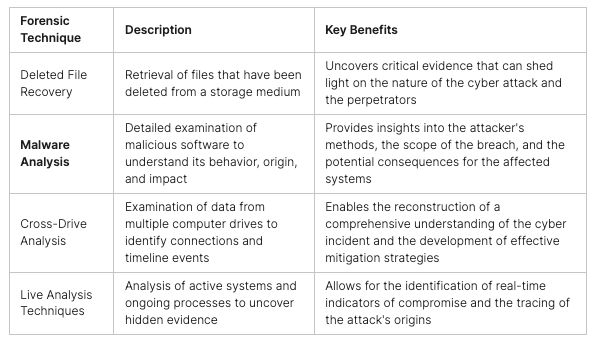
    In digital forensics, experts dig deep into computer data, looking for clues that point to cybercrimes. These computer forensic specialists use top tech to analyze information from various drives. They find hidden or locked data. Tools like deleted file recovery help them put together the story. This shows how a cyber attack happened, how much information was leaked, and who did it.

    Uncovering Hidden Data: Deleted File Recovery and Malware Analysis

    Specialists in digital forensics have unique skills. They can find deleted files and check out malware. They can also put together scraps of data and unlock secrets, which helps them find critical clues about the cyber problem. Malware analysis is vital. It shows the hacker’s plan, how bad the information leak was, and its effect on computer systems.

    Cross-Drive Analysis and Live Analysis Techniques

    Digital forensics gurus use advanced methods to track cyber attacks. They combine information from different drives and check live systems, which helps them spot links, events on a timeline, and hidden proof. These skills help them fully understand cybercrime, and they then plan how best to stop something similar in the future.

    The Legal Aspect: Reporting and Court Admissibility

    When it comes to digital forensic cybersecurity, the law matters a lot. Those who investigate digital evidence have to keep thorough records, which helps the evidence stand up in court. They also make sure the whole process is traceable and proves what happened.

    Documenting the Chain of Evidence

    Forensic experts create detailed reports on their work. These reports show how data was collected and analyzed. They are critical for the evidence to be used in court. It means keeping a clear record of everything they do.

    This ensures that the evidence is always handled correctly. Their reports ensure that details are kept. Keeping a solid record helps their findings be trusted in legal matters.

    Adhering to Legal and Ethical Standards

    Experts in computer forensics must follow strict rules in their field. They obey the guidelines set by the Association of Chief Police Officers (ACPO). This means they always keep the original data and document every move.

    By sticking to these rules, forensic experts prove they’re reliable. They make their work more likely to be used in court. This keeps everything fair and trusted in the legal field.

    Understanding tech and the law is crucial to digital forensic cybersecurity. Experts stay updated on new investigation methods and laws. This helps them work through cyber cases effectively and legally. They aim to make their findings reliable in court.

    Specialized Fields in Digital Forensic Investigations

    Digital forensic investigations cover many areas, each specifically tackling aspects of the field. These fields are vital for finding digital proof and stopping online dangers.

    Network Forensics: Monitoring and Analyzing Traffic

    Network forensics is critical in digital forensics. It focuses on watching and understanding computer traffic. By looking at data transfers, experts can spot legal evidence, find weak spots in security, and learn about cyber volleys. They use special tools to observe, understand, and dissect network data for a complete picture of digital incidents.

    Mobile Device Forensics: Retrieving Data from Smartphones and Tablets

    Today, mobile devices hold a wealth of clues for cyber cases. Mobile device forensics involves taking data from phones, tablets, and gadgets. Experts find key evidence for both law and civil cases using various methods, from unlocking phones to digging into app data.

    Cloud Forensics: Navigating the Complexities of Remote Data

    With more data on the cloud, a new field, cloud forensics, has become crucial. It faces challenges like data spread over vast networks and shared servers. Experts here build strategies to gather, save, and study cloud data. They also ensure that evidence stays solid in court cases.

    Tools and Technologies: Powering Digital Forensic Cybersecurity

    Digital forensics is constantly changing, thanks to many tools and technologies. These help forensic investigators with new cybersecurity threats. They use special software to check data and find deleted files. Plus, they have the latest hardware to get info from broken devices. All this tech is vital for solid digital forensic cybersecurity work.

    Now, there are special tools that use artificial intelligence and machine learning. They can find patterns and spot strange things quickly, improving computer forensics and cyber investigations. With these tools, teams can deal well with attacks, like figuring out malware or finding network weak spots.

    But it’s not just about programs. Special equipment helps, too, especially with data recovery and vulnerability assessment. These tools can extract information from broken or secured devices, allowing investigators to examine important information and better handle today’s cybersecurity issues.

    The world of digital forensic cybersecurity is constantly advancing. As it does, tools and tech get better and more flexible. This means forensic experts need to keep up. They should know the latest to fight cybercrime and protect groups from attacks.

    Overcoming Challenges in Digital Forensics

    As technology progresses, digital forensics faces new and growing challenges. Investigators in digital forensic cybersecurity and related fields must tackle complex issues, which are essential for finding evidence and solving cybercrime.

    Dealing with Advanced Malware and Encryption

    Digital forensic experts are dealing with tougher malware. This malware hides or encrypts data, making it hard to access. To find and use key data, experts need special malware tools and skills. They also have to keep learning about the latest malware and updating their tactics.

    Managing Data Volume and System Complexity

    Data is growing, and systems are getting more complex. Experts must sort through tons of data from laptops, phones, and more. They need special tools and skills to handle this data without damaging it.

    Addressing the Cryptography Dilemma

    End-to-end encryption is a big issue for digital forensics and privacy. As encryption becomes more common, finding ways to access encrypted data is crucial. Experts must balance the need to find digital evidence while protecting privacy.

    Digital forensics professionals must keep learning and use new tools. They also need to work with others in different fields. This teamwork and constant learning help solve cyber threats and bring offenders to justice.

    The Future of Digital Forensic Cybersecurity

    The digital world is always changing, and so is the need for digital forensics in cybersecurity. It’s going to play a bigger and more important part in fighting cyber threats. New tech like blockchain and quantum computing will create both problems and opportunities for these experts.

    Emerging Technologies and Their Impact

    Blockchain’s unique, secure way of working will make it hard for forensic pros to track cyber attacks. They’ll have to invent new methods to find evidence in this system. Plus, quantum computers might break our current security codes. This means digital forensic experts must change how they recover and analyze data to keep digital proof safe.

    Increased Collaboration with Law Enforcement

    The relationships between digital forensics and law enforcement will grow stronger. Fighting cybercrime needs a combined effort. Digital forensic experts will join forces with police to catch and prosecute cyber criminals. This teamwork aims to keep our digital world safe.

    The future of digital forensic cybersecurity is exciting and crucial to our safety in the cyber world. New technologies and closer teamwork will change how we find and use digital evidence against complex cyber attacks.

    Conclusion

    Digital forensics has become an indispensable component of cybersecurity, playing a crucial role in detecting and combating cyber threats. Experts in this field employ meticulous methods to gather, analyze, and preserve digital evidence, which is essential for solving cyber crimes and safeguarding data.

    As cyber threats continue to evolve and grow in complexity, the demand for skilled digital forensic experts has never been higher. These professionals are adept at uncovering hidden information, monitoring network activity, and tracing cyber attacks. Their expertise is vital in defending against cyber crimes, whether through analyzing network data or investigating digital devices.

    The future of digital forensics in cybersecurity looks promising, with advancements in technology and enhanced collaboration with law enforcement agencies making significant strides. Forensic professionals continuously update their skills and tools to stay ahead of cyber threats, maintaining their crucial role in protecting our digital world.

    For comprehensive solutions to enhance your cybersecurity posture and leverage the power of digital forensics, visit Peris.ai Cybersecurity. Explore our wide range of products and services designed to keep your organization secure in an ever-evolving cyber landscape. Secure your digital assets today with Peris.ai.

    FAQ

    What is the role of digital forensics in cybersecurity?

    Digital forensics is key in cybersecurity. It helps find and fight cyber threats. By investigating, analyzing, and keeping digital evidence safe, experts in this field solve cyber crimes and ensure the safety of our digital world.

    What are the fundamental principles of digital evidence preservation?

    Forensic investigators follow four critical principles for preserving digital evidence. These principles are set by the Association of Chief Police Officers (ACPO). They include not changing data, documenting all actions, keeping things continuous, and limiting who can access the data.

    It is really important to keep data safe in a secure place. This data is the backbone of any investigation and the legal steps that follow.

    What are some of the specialized fields in digital forensic investigations?

    Digital forensic investigations have several special fields, including network, mobile device, and cloud forensics. Network forensics examines computer network traffic. Mobile device forensics focuses on smartphones and tablets. Cloud forensics tackles the unique challenges of digital data in cloud systems.

    What are the key challenges in digital forensics?

    The field faces many challenges, like fighting advanced malware, which might hide or encrypt data. There’s also the issue of handling more data and complex technology. Plus, the rise of strong encryption makes things harder.

    Investigators need to keep their skills sharp and stay up to date with tools to face new cybercrime challenges and find evidence effectively.

    What is the future outlook for digital forensics in cybersecurity?

    Digital forensics is set to become more critical in the fight against cyber threats. New challenges will come up with new tech like blockchain and quantum computing. Yet, these techs also offer new ways to solve crimes.

    We can expect to see more teamwork between cybersecurity and law enforcement. They will join forces against the changing world of cybercrime.

  • Stay Secure: How to Identify and Avoid VPN Scams Like Fake NordVPN Ads

    Stay Secure: How to Identify and Avoid VPN Scams Like Fake NordVPN Ads

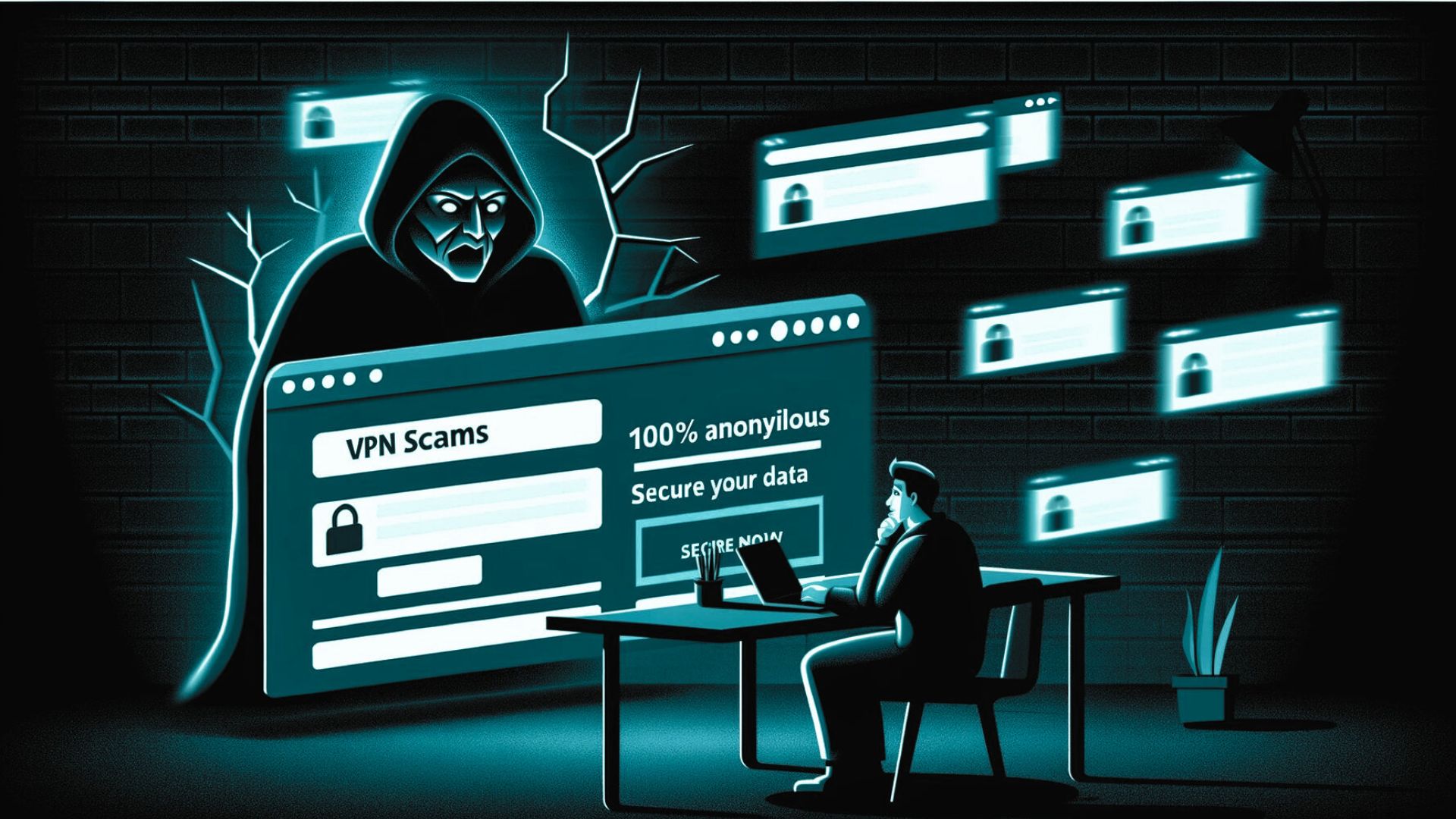
    In a recent disclosure, cybersecurity expert Jérôme Segura from Malwarebytes has uncovered a malicious ad campaign on Bing that mimics the official site of NordVPN. This sophisticated scam redirects unsuspecting users to a fraudulent website designed to install the SecTopRAT malware on their devices. While the total number of successful attacks remains unclear, the potential impact is significant.

    Understanding Malvertising and Its Impact

    Malvertising, or the use of online advertisements to spread malware, is a growing concern, especially with the integration of AI in chatbots enhancing the sophistication of these campaigns. Cybercriminals either purchase ad space or compromise existing ad campaigns to push malicious content, exploiting platforms like Google and Microsoft Bing. The latter is particularly vulnerable due to its integration with the Windows ecosystem and the Edge browser.

    The Perpetual Threat of VPN Scams

    NordVPN, a widely recognized name in the VPN industry, is often impersonated due to its popularity. Cybercriminals exploit the brand to launch attacks, taking advantage of the public’s increasing interest in privacy tools. Laura Tyrylytė, Head of Public Relations at Nord Security, highlights that malicious actors utilize the reputation of well-known brands to orchestrate these attacks, which are not exclusive to the VPN industry.

    In 2020, NordVPN’s security team addressed a similar threat by taking down a fake website distributing malware. Moreover, a 2021 report by Zscaler ThreatLabZ revealed that cybercriminals were distributing infostealer malware, such as Raccoon stealer, through counterfeit VPN apps posing as reputable services like NordVPN, Hotspot Shield, and F-Secure Freedom VPN.

    Strategies to Combat VPN Scams

    Despite the challenges, there are effective ways to identify and avoid falling victim to VPN scams:

    • Domain Verification: Always check the URL carefully. Official NordVPN domains are limited to https://nordvpn.com/, https://support.nordvpn.com/, and https://nordvpn.org/. Any deviation, especially misspellings like ‘nordivpn[.]xyz’, is a red flag.
    • Beware of URL Shorteners: Shortened URLs can obscure the actual destination, hiding malicious links. Tools like Link Checker can verify the safety of these links.
    • Check Domain Age: Newly created domains, like those registered only days before being used in campaigns, are suspicious.
    • Secure Connection Signs: Look for a padlock symbol next to the URL in your browser or ensure the URL is highlighted in green. Absence of these or a ‘Not secure’ warning is a cautionary sign.
    • Download Sources: Always download software from reputable app stores or directly from the provider’s official website.
    • Use an Ad-Blocker: Ad-blockers can prevent malicious ads from rendering in your browser, providing an additional layer of protection.

    NordVPN’s Proactive Measures and the Role of Search Engines

    NordVPN actively monitors various platforms to detect and report malicious ads quickly. However, the effectiveness of these efforts is partly dependent on the cooperation of platforms like Google and Microsoft, which must diligently manage and filter the ads they allow. Tyrylytė emphasizes the need for these search engines to allocate more resources to prevent malicious ads from appearing and causing harm to users.

    Partner with Peris.ai Cybersecurity for Enhanced Protection

    Understanding the mechanics behind VPN scams and the tactics used by cybercriminals is crucial for digital safety. Peris.ai Cybersecurity is dedicated to providing the knowledge and tools necessary to protect against these sophisticated threats. Visit our website to stay updated with the latest cybersecurity trends and safeguard your digital life with effective strategies and solutions.

    Protect yourself and your organization by staying informed and prepared. Partner with Peris.ai Cybersecurity to navigate the complex landscape of cyber threats confidently.

  • Stay Safe 24/7: Why Continuous Vulnerability Scanning Is Your Cybersecurity Lifeline

    Stay Safe 24/7: Why Continuous Vulnerability Scanning Is Your Cybersecurity Lifeline

    In our digital world today, threats are always on the horizon. It’s key to find and fix problems before they’re used against you. Continuous vulnerability scanning is a way to keep your defenses up all the time. It could be the thing that stops a big attack on your data. So, are you ready to step up and keep your organization safe from growing online dangers?

    Key Takeaways

    • Continuously scanning for vulnerabilities helps you stay ahead by finding and fixing holes in your security.
    • Network security monitoring and automated vulnerability detection are crucial for strong cybersecurity.
    • With real-time vulnerability assessment, you can quickly tackle new and potential threats.
    • A full vulnerability management platform gives you deep insights into cyber threat intelligence.
    • To lower the chances of successful cyber attacks, good patch management and compliance auditing are necessary.

    Understanding Continuous Vulnerability Scanning

    Vulnerability scanning helps organizations find and fix security problems in their technology. It involves routinely checking networks, systems, and apps for known issues. The tools used for this, called vulnerability scanners, look for things like outdated security patches or setup mistakes.

    What is Vulnerability Scanning?

    Imagine closely checking your organization’s digital stuff, like its networks, computers, and programs. Vulnerability scanning does just that. It identifies areas that could be a target for cyber attacks. By doing this, it shows the weak points in an organization’s security.

    Why Vulnerability Scanning Matters

    There are several reasons for using vulnerability scanning. It keeps security strong, helps meet rules, saves money by avoiding attacks, makes assets easier to track, and raises an organization’s safety level.

    Types of Vulnerability Scanning Use Cases

    Different scanning types focus on various IT security needs. Categories include network, web app, database, host, and checking virtual environments. Matching the scan to specific needs helps see and fix security risks across all digital areas.

    How Continuous Vulnerability Scanning Works

    The process starts by looking for weaknesses in networks and applications. Then, it moves to check and fix those problems. This method helps to keep IT systems safe from cyber threats.

    Stage 1: Scoping

    Teams first decide what areas to check for vulnerabilities. They list the devices and software to focus on. Doing this helps make the scanning process more effective and covers every potential risk.

    Stage 2: Tool Selection

    Next, selecting the right vulnerability management platform is key. It must meet a company’s unique security needs. The tool should watch over the network’s safety, find issues automatically, and give quick insights into ongoing threats.

    Stage 3: Configuration

    Settings like where to search, how deep, and what tools to use are chosen at this point. Setting up the scanning tool just right ensures that all possible vulnerabilities are spotted. This step is tailored to fit an organization’s specific setup.

    Stage 4: Scan Initiation

    Scanning starts now, maybe set to run automatically on a schedule. This proactive step helps catch new threats early. It makes sure that the system to fix problems is always ready.

    Stage 5: Vulnerability Detection

    At this step, the tool looks for common security issues across the network. It also checks if the system matches known dangerous setups. Such checks find things like old software that need updates or settings that could let in attackers.

    Stage 6: Vulnerability Analysis

    After scanning, the tool makes a detailed list of what’s found, sorting them from small to big risk. It also clears out any false alarms. This helps the team know where to start fixing issues right away.

    Stage 7: Remediation and Rescanning

    Here, the team works on fixing the problems found. They then run a new scan to check if the fixes worked. This keeps the system updated and guards against new threats.

    Stage 8: Continuous Monitoring

    The last part is to keep checking regularly for new threats. This constant monitoring is essential for a secure network. It helps in staying one step ahead of cyber threats.

    Vulnerability Management: The Bigger Picture

    Vulnerability management means keeping tabs on weaknesses in tech. This includes looking out for vulnerabilities and fixing them quickly. The goal is to make sure an organization’s systems and data stay safe.

    Vulnerability management is key for solid cybersecurity. It helps teams spot and resolve issues before they can cause harm. This process includes keeping track of all tech assets, scanning for threats non-stop, and reacting fast to incidents.

    Continuous Vulnerability Scanning vs. Penetration Testing

    Continuous vulnerability scanning and penetration testing are both key in keeping a business’s digital assets safe. But they work in different ways and have different goals.

    Continuous vulnerability scanning uses automated checks to find known issues like outdated software. It’s a proactive method that gives a real-time look at security status. This way, teams can fix issues before they cause trouble.

    Penetration testing, on the other hand, is a more hands-on kind of test. It involves experts trying to break in, like real hackers might. This deep method shows exactly how a weakness could be used against a system.

    The best security comes from a mix of both methods. Regular scans plus detailed testing spot issues fast and show their big-picture risks. This dual approach helps keep digital info safe and meets safety standards.

    Common Vulnerability Scanning Challenges

    Continuous vulnerability scanning is key for a strong network security monitoring plan. However, it faces its own set of issues. The main challenges are sharing resources and dealing with wrong results.

    Resource Sharing

    The work of automated vulnerability detection sometimes fights for the same network and computer resources as the day-to-day operations of the company. This fight can hurt the swiftness and accuracy of the real-time vulnerability assessment. It might cause scans to be slow or not completed at all. It’s vital to balance the needs of the vulnerability management platform and the tasks the company usually does. This keeps the cyber threat intelligence from the scans credible.

    False Positives and Negatives

    In continuous vulnerability scanning, dealing with wrong results like false positives and negatives is a common issue. False positives are errors where there seems to be a problem, but there isn’t. False negatives, on the other hand, miss real problems. Both can waste the security team’s time and effort. They might also mistakenly think they’re safe from real threats. It’s important to properly set up and check the vulnerability scanning tool. This ensures it works well and the patch management and compliance auditing procedures are solid.

    Importance of Vulnerability Assessment

    Vulnerability assessment is key for spotting and ranking weak points in systems. It highlights areas that bad actors could exploit, showing ways to lower these risks. This step is vital for any company wanting to boost its online safety.

    Identification of Security Weaknesses

    Such assessments are great at finding security flaws. Things like old software, bad setups, and missing security measures are spotted early. Fixing these issues beforehand keeps a company’s digital home sturdy against attacks.

    Prioritization of Threats

    It helps in figuring out which risks are most dangerous. By ranking threats, organizations can focus on tackling the big problems. This makes sure they use their time and money where it matters most.

    Compliance with Regulations

    For many industries, keeping up with rules is a must. Vulnerability assessments make it easier to meet security standards like HIPAA or GDPR. By showing they’re on top of weaknesses, companies avoid fines for not following the rules.

    Minimizing Internal and External Attack Surfaces

    These tests help find and fix spots where outsiders could get in. Doing so shrinks the chances of cyberattacks hitting home. It also safeguards valued info and tech from getting into the wrong hands.

    The Vulnerability Assessment Process

    Doing a full vulnerability assessment is a key part of ongoing vulnerability scanning. It helps groups understand their IT setup better. They can spot security threats. Let’s check out the main steps in a vulnerability assessment:

    Discover IT Assets

    First, find and list all tech resources your company owns or uses. This includes things like computers, software, and items saved in the cloud. This list gives us a good look at our digital area. It’s key for managing vulnerabilities and making sure we don’t miss any important assets during scans.

    Identify Vulnerabilities

    After listing all our tech stuff, the next stop is to find vulnerabilities. We use both automatic tools and human checks to look for weak spots. This real-time vulnerability assessment finds issues like old software, wrong settings, and open secret info. Potential hackers could use these against us.

    Document the Vulnerabilities

    It’s very important to write down all the vulnerabilities we find. We need to note where they are, how severe they are, and what they could do. This info helps us say which issues need fixing first. And it helps us make a good plan to solve them.

    Create Remediation Guidance

    So, how do we fix these vulnerabilities? The last step is making a plan for each problem. This could mean updating our software or tweaking our settings. The goal is to stop new vulnerabilities from popping up. The plan helps us deal with risks. It makes our cyber threat intelligence and security posture stronger.

    Types of Vulnerability Scans

    There are many kinds of continuous vulnerability scanning tools and methods. They aim to find possible security problems in a company’s network. These scans fall into different categories based on what they focus on and how they operate.

    • Network-Based Scans: These look for weak points in a network’s gear, like routers and firewalls. They make sure the network gets checked for problems all the time. This way, they help keep the network safe.
    • Host-Based Scans: These find vulnerabilities in individual devices, like computers, phones, or servers. They check the software and systems on these devices, making the whole network more secure.
    • Wireless Network Scans: These scans are specifically for wireless networks. They look for issues in how the network is set up, like problems with privacy and user access. This work makes wireless networks safer.
    • Application Scans: Application scans find issues in software, like websites or mobile apps. They ensure these programs meet security standards. This keeps the applications safe.
    • Database Scans: These scans focus on databases. They look for things like bad set-ups or ways to get in without the right permission. Such scans help keep data safe.

    By using a mix of these scanning methods, groups can really understand their security level. They can find and fix weak spots early. This makes their whole security stronger.

    Conclusion

    In today’s digital landscape, security threats are omnipresent. Regular vulnerability scanning is crucial for maintaining strong cybersecurity, providing real-time updates on your security posture and helping to address weaknesses before they can be exploited by malicious actors. By identifying and resolving these vulnerabilities, you significantly reduce the risk of cyberattacks, resulting in safer systems and minimized damage.

    Incorporating continuous vulnerability scanning into a comprehensive vulnerability management program is a strategic move. This program should encompass patch management, configuration management, and incident response to create a robust and secure IT environment. Such an integrated approach to vulnerability management forms the backbone of a solid cybersecurity strategy, keeping organizations protected against emerging threats while ensuring compliance with industry standards and regulations.

    Automated vulnerability detection and real-time assessment enhance network security monitoring, enabling quick identification and remediation of security flaws. This proactive approach is essential for safeguarding digital assets against the evolving landscape of cyber threats. Commitment to continuous vulnerability management fosters a secure and resilient IT infrastructure.

    At Peris.ai, we understand the critical importance of cybersecurity in today’s digital world. Our comprehensive Cybersecurity-as-a-Service platform, BIMA, offers the ultimate solution for your business. Available 24/7, BIMA provides a wide range of tailored cybersecurity tools and monitoring services to meet your unique needs. Our powerful proprietary and open-source tools deliver unparalleled security, while our subscription-based scanners keep you informed with the latest threat intelligence. With a flexible pay-as-you-go service model, you only pay for what you need—no upfront costs, no hidden fees.

    Whether you’re a small business or a large enterprise, BIMA has you covered. Our user-friendly platform simplifies the process of monitoring and protecting your business from start to finish. Take control of your cybersecurity today and protect your business from potential threats with BIMA.

    Don’t wait—start securing your business with BIMA today! Visit Peris.ai Bima to learn more about how our solutions can help you safeguard your digital world.

    FAQ

    What is vulnerability scanning?

    Vulnerability scanning is all about spotting and rating security issues in IT setups. Scanners poke around to find gaps, like missing updates or bad settings, that could let bad actors in.

    Why is vulnerability scanning important?

    It helps list all the parts of a network, digging up the risks each one might hide. This info is key for keeping everything current and safe, making sure nothing falls through the cracks.

    What are the different types of vulnerability scanning use cases?

    There are many angles to dig at, like checking network, app, or even database safety. Each has a unique approach but all aim to guard against incoming threats.

    What are the steps involved in the vulnerability scanning process?

    First, you scope out what and where to check. Then, pick the right tools and set them up. After that, you run the scans, review the findings, fix what’s broken, and then start over to keep things safe.

    How does vulnerability management fit into the bigger picture?

    It’s part of a bigger plan to keep on top of security issues, using tools and rules to constantly check and fix problems. This ongoing effort helps shield an organization’s digital stuff.

    How does continuous vulnerability scanning differ from penetration testing?

    Vulnerability scanning is more systematic, often using automated tools to check for everyday risks. Penetration testing is hands-on and less frequent, aiming to find hidden flaws like a hacker might.

    What are some common challenges with vulnerability scanning?

    Sharing scanning resources can slow things down. Plus, finding and fixing false alarms or misses can be a headache. Both mix-ups might make you think you’re safer than you are.

    Why is vulnerability assessment important?

    It’s a deep dive into a network’s weak spots, pulling out the big threats and showing where you’re doing well or not. This checkup keeps you step ahead of the bad guys.

    What are the key steps in the vulnerability assessment process?

    You start by finding what’s out there, then find and list the issues. After, you help make a plan to fix them. This cycle keeps the checkup going strong.

    What are the different types of vulnerability scans?

    There are scans for many setups, from networks to specific apps. By looking at each part closely, you keep the whole thing locked tight.

  • Stay Cautious: Encrypted PDFs are The Newest Method for Delivering Malware to Your Device

    Stay Cautious: Encrypted PDFs are The Newest Method for Delivering Malware to Your Device

    In the dynamic world of cyber threats, a new alarming trend has emerged, perpetrated by Russian-backed hackers utilizing malware cloaked as PDF encryption tools. This sophisticated tactic, aimed at compromising user information, involves sending victims encrypted PDFs under the guise of legitimacy. The unsuspecting recipients, upon expressing their inability to open the PDF, are then lured into downloading a malicious “encryption tool.” However, this tool is, in reality, a vehicle for malware delivery.

    Coldriver’s Shift Towards Malware Exploits

    The Threat Analysis Group (TAG), a dedicated team within Google specializing in the identification and neutralization of diverse security threats, highlights this tactic as a pivot towards malware-based attacks by Coldriver, a group traditionally known for its phishing exploits. The simplicity of the attack belies its effectiveness: a bait encrypted PDF followed by the provision of a malware-infused “encryption tool” that masquerades as a legitimate application, only to install backdoor malware named Spica on the victim’s device.

    Understanding Spica’s Impact

    Spica’s primary function is the theft of cookies from popular web browsers such as Google Chrome, Firefox, Edge, and Opera, thereby accessing the victim’s sensitive information. Google’s reports indicate that Spica has been active since September 2023, with Coldriver’s malicious activities traceable back to 2022.

    Proactive Defense Measures

    Google has responded to these threats by incorporating all known malicious domains, websites, and files related to these attacks into its Safe Browsing service, simultaneously alerting users who were potential targets. Nevertheless, individual vigilance and proactive measures remain paramount in safeguarding against such insidious threats. Essential steps include:

    1. Avoiding Unlicensed Software: The allure of bootleg software can be compelling, but the risks it poses to device security are significant. It is crucial to download software only from reputable sources, ensuring that any download links are verified and originate from trusted app stores.
    2. Exercising Caution with Links and Files: Suspicious, misspelled, or unfamiliar links should be approached with caution. Opt for accessing websites directly through manual input or trusted search engines, avoiding sponsored search results that may not always be secure.
    3. Regular Software Updates: Keeping your device’s software up to date is a critical security measure. Regular updates provide the latest security patches and enhancements, shielding your device from vulnerabilities that could be exploited by cybercriminals.
    4. Implementing Antivirus Protection: Antivirus software plays a crucial role in detecting and preventing malware infections, phishing emails, and ransomware scams. Ensuring comprehensive antivirus protection across all devices is a fundamental component of a robust cybersecurity strategy.

    Forward-Looking Cybersecurity Practices

    As the landscape of cyber threats continues to evolve, staying informed and adopting proactive security measures is essential. The emergence of malware disguised as encrypted PDFs underscores the need for heightened vigilance and the implementation of effective cybersecurity practices. By adhering to recommended precautions and leveraging advanced security solutions, individuals and organizations can fortify their defenses against the sophisticated tactics employed by cyber adversaries.

  • Startup Security 101: 6 Ways to Protect Your Venture With Minimal Spend!

    Startup Security 101: 6 Ways to Protect Your Venture With Minimal Spend!

    In the world of startups, speed, and growth matter a lot. But often, cybersecurity doesn’t get enough focus. With startups facing limits in both staff and money, protecting their business well seems tough. The good news? You can keep your startup safe without spending too much. It just takes smart moves and the right strategies for startup security on a budget.

    Key Takeaways

    • Startups can find cost-effective ways to enhance their cybersecurity posture by focusing on “low-hanging fruit” – steps that are inexpensive but highly impactful.
    • Understanding the cybersecurity landscape and assessing an organization’s needs are crucial first steps in developing an effective security strategy, especially for startups with limited resources.
    • Startups possess valuable data and ideas that make them attractive targets for cybercriminals, underscoring the importance of prioritizing cybersecurity.
    • Embedding a security-conscious culture within a startup, with leaders setting the tone and providing consistent training, can significantly improve overall security.
    • Implementing a robust incident response and remediation plan is a low-cost investment that can help startups stay ahead of potential security breaches and minimize their impact.

    The Importance of Cybersecurity for Startups

    Startups often focus more on growth than on cybersecurity, thinking it’s not urgent. Yet, not securing their digital information can be very costly. Startups with low-security spending and few resources are high on hackers’ lists. About 43% of cyberattacks target these underfunded companies. And sadly, nearly 60% of them close within six months of being attacked.

    Limited Resources Make Startups Prime Targets

    Startups face big challenges with cybersecurity, no matter how far along they are. They usually can’t afford to protect their systems as well as they’d like. Because of this, they become easy prey for hackers wanting to steal their data. Having a small security budget and a lean security strategy makes startups more vulnerable. This is because they appear weaker, inviting cybercriminals to attack them.

    The High Cost of Cyberattacks on Small Businesses

    If a startup gets hit by a cyberattack, it can hurt them. They might not recover from the financial and reputational harm. Shockingly, almost 60% shut down within six months of a breach. This is why having at least minimum viable security is crucial for startups. It helps protect key startup cybersecurity priorities like customer data and intellectual property. Doing so keeps their trust, brand, and long-term venture capital security expenses secure.

    Planning a Cybersecurity Strategy on a Budget

    Startups often find it hard to balance risk and resources. They must secure data without using up all their funds. It’s important to focus on cybersecurity investments wisely. By doing so, they can protect their business well, without overspending. The goal is to focus on what’s most important, create a smart plan, and start with a basic, but effective, security setup.

    Understanding Your Cyber Threat Landscape

    The first step in planning for security is to know your risks. It means looking at what threats your type of business is likely to face. This involves looking at what similar companies spend on security. This helps to focus on the most common security issues and spend your money wisely.

    Assessing Your Digital Footprint and Risks

    Next, you need to check how much you’re exposed online and where. This means looking at your website, social media, and more. It’s important to know what a security breach could mean for your business. Knowing this helps to decide where to put your security budget.

    Evaluating Your Cybersecurity Maturity Level

    Understanding how ready your security measures are is crucial. This step shows where your security strengths and weaknesses lie. It helps to better spend your budget. This ensures you are making the best decisions for your startup.

    Designing a Lean Cybersecurity Architecture

    After knowing your risks and current security level, it’s time to act. Focus on building a simple but effective security plan. This method aims to do what’s necessary and nothing extra. It saves money and boosts security where it’s needed most. that effectively addresses their unique startup cybersecurity priorities and security spending constraints, ultimately enhancing their overall resilience and protecting their valuable assets.

    Low-Cost Cybersecurity Measures for Startups

    Startups can boost their security even on a tight budget. They can start by training their staff to spot and avoid phishing scams. This step helps decrease the risk of cyberattacks. Also, they can use free security options like multi-factor authentication and encryption. These help without costing extra.

    Employee Security Awareness Training

    Phishing is a big issue for startup security. But with the right training, employees can learn to beat these tricks. This not only saves money but also shields the startup from cyber threats. It protects their startup security spend and early-stage company security budget.

    Enabling Free Security Features

    Free tools like multi-factor authentication are available from many services. These tools help protect vital startup data without more costs. Startups can thus build a strong security base without heavy spending. It’s key for security spending for startups and bootstrapped security spending.

    Implementing a Patching Routine

    Keeping software up-to-date is crucial, even for small businesses. Regular patches can help prevent cyberattacks and protect data. This approach strengthens the startup’s security measures, safeguarding their startup cybersecurity priorities.

    The Role of Resource Tagging in Security

    In today’s startup security spend world, resource tagging has become a key player. It’s known for being both low-cost and very effective. Experts say adding labels to resources is crucial for startups with venture capital security expenses constraints. Tagging helps these early companies improve their security a lot.

    When you tag your resources clearly, it’s easy to see who manages them. This is super helpful when there’s a security issue. Knowing this quickly can decrease the time it takes to fix a problem. It’s all about getting things done fast, a big deal in startup cybersecurity priorities.

    Also, tagging is seen as a smart, basic part of a security plan. It’s a key for security spending for startups and bootstrapped security spending. With tagging, you’re setting up a lean security strategy beautifully.

    Resource tagging doesn’t have to cost a lot. It can help startups do more with less, improving their security step by step. This approach fits well with the thinking of those who focus on their startup security spend and cybersecurity investments. It’s keeping in mind what’s best for their business.

    1. Leveraging Role-Based Access Control (RBAC)

    When thinking about how much to spend on startup security, cybersecurity investments, and total security budget for startups, many overlook Role-Based Access Control (RBAC). This approach is a cost-effective way for startups to boost their security level. Yet it’s something often forgotten in security budgets for early-stage companies and seed funding security plans.

    Instead of giving users the exact access they need, startups usually just give everyone admin rights. This makes things quicker and easier but not safe. The source points out that using RBAC to set specific access for each user takes less effort than fixing a cyber-attack from user accounts with too much access.

    The advice for startups is clear, no matter their bootstrapped security finances or size. They should use RBAC. This will make their security level better and reduce the risk from accounts that have too much access.

    2. Startup Security Spend: Password Management Solutions

    When thinking about startup security spend, password management is key. The best option is a single sign-on (SSO) system. It lets employees use all their apps with just one login. This method cuts down on the chances for thieves to steal credentials.

    SSO services, however, can be hard on the wallet and need a lot of resources. This makes it tough for early-stage companies with slim cybersecurity investments. Instead, password managers are a budget-friendlier choice. They create strong, unique passwords for each app and service. You only need to remember one master password to access them all. This strategy is smarter than using the same password for everything since it lowers the chances of being attacked.

    Starting a business often means racing to make products while trying to bring in money. But, the importance of securing passwords shouldn’t be forgotten, no matter the budget. A good password manager can be a smart, money-saving choice for bootstrapped or venture-backed startups. It’s proof that you can increase your security without breaking the bank.

    3. Embedding a Security-Conscious Culture

    Startups must build a culture focused on security. This is key for strong cybersecurity planning. The culture not only shapes who joins. It also affects the values the team lives by and the choices they make daily.

    Leaders must set a good example. They should show a deep commitment to security spending. This means being serious about investing in cybersecurity.

    Leading by Example from the Top

    Employees watch what their leaders do. When leaders make security a core value, the whole team follows. Leaders show security is a top concern by budgeting for it carefully. This moves the team to think the same way.

    Consistent Cybersecurity Training Programs

    Startups need to invest in training. This is part of the security budget. Everyone must know how to stay safe online. Such training confirms the company’s priority on cybersecurity.

    Sprinto’s training programs are a good example. They help startups spread a security-focused mindset throughout their teams.

    4. Monitoring, Detection, and Defense Strategies

    As startups use the cloud more, their devices are key for smooth work. It’s important to put serious thought into startup security spend and cybersecurity investments. This means making sure monitoring, detection, and defense are top priorities in their lean security strategy.

    Antivirus Software and Intrusion Detection

    Their first step should be installing good antivirus software and setting up an intrusion detection system. These tools find and stop threats early, which is critical for protecting early-stage company security budgets and seed funding security allocation.

    Log Management and Activity Tracking

    On top of that, startups need log management and activity tracking to watch over their online tracks. Keeping an eye on what networks and users do helps catch and handle any dangers right away. This makes the risk of big costs from venture capital security expenses lower.

    They should also look into compliance automation platforms like Sprinto. These help with tracking the rules and making sure you’re keeping up. Training workers to use strong and unique security spending for startups and bootstrapped security spending also goes a long way in making systems more secure.

    5. Incident Response and Remediation Planning

    In today’s fast-moving startup scene, cybersecurity investments and security spending for startups are tight. So, it’s critical to have a strong incident response and remediation plan. This is key even though putting effort into preventing and spotting issues is a must. Planning to fix problems is as vital. It helps early-stage companies deal with setbacks smartly, instead of reacting in chaos to every security incident.

    To keep threats at bay and reduce the harm to their work, startups should invest in this area. A solid incident response and remediation plan shows that bootstrapped startups take cybersecurity priorities seriously. It doesn’t just safeguard their data and ideas. It also makes investors, big-business clients, and authorities trust them more.

    Having a well-thought-out incident response and remediation plan is key for startups. It lets them catch problems early, take steps ahead of time, and lessen the impact of security snags. With this smart strategy and other low-cost cybersecurity measures, early-stage companies can boost their security. This prepares them for a bright future in the competitive startup world.

    6. Following Best Cybersecurity Practices

    Startups face threats beyond just financial loss. Cybercriminals aim at the valuable data they own. This info includes things like usernames, emails, and credit cards. If this gets out, it can badly hurt the startup’s future and how customers see it. So, it’s crucial for startup founders to not skip spending on security. It’s not just about money; it’s about protecting the company’s ideas, customer info, and image too.

    Protecting Valuable Data Beyond Finances

    Hackers don’t always go for money. Often, they want personal data that startups have. For startups, investing in strong data protection is critical, even if their budget is tight. They need to focus on keeping their info safe from hacks, no matter the cost of protection.

    Startups can protect their info without spending too much. They can do this by focusing on the most important security steps first. These include training their staff, controlling who has access to their data, and planning how to handle any security emergencies. This creates a strong security culture that helps the company keep growing and doing well.

    Conclusion

    Startups may have limited budgets, but they can still effectively defend against cyber threats by implementing cost-effective cybersecurity practices. These measures are essential for maintaining security, demonstrating due diligence, and building trust with investors, large clients, and certification bodies.

    Protecting data is crucial for startups, as they often hold valuable information and innovative ideas that make them prime targets for cybercriminals. Strategic budgeting for cybersecurity is vital for staying ahead of emerging threats and regulatory requirements. Wise investments in security can ensure ongoing protection and compliance.

    Utilizing free security tools and ensuring regular security updates can establish a solid foundation. Additionally, fostering a workplace culture that prioritizes security is indispensable. Implementing password managers and automated compliance tools further enhances a startup’s security posture. These strategies not only safeguard the startup’s assets but also support sustainable growth in the digital landscape.

    For comprehensive cybersecurity solutions tailored to your needs, visit Peris.ai Cybersecurity. Explore our range of products and services designed to protect your business and help you thrive in the ever-evolving cyber world. Don’t wait—secure your startup today with Peris.ai Cybersecurity.

    FAQ

    What are the major challenges startups face in managing cybersecurity risks?

    Startups often struggle with limited staff and funds for strong cybersecurity. They focus more on their products and earning money. Due to this, security sometimes comes as an afterthought.

    Why are startups prime targets for cyberattacks?

    Less-funded companies face about 43% of all cyberattacks. Sadly, almost 60% of small businesses close after being attacked. Startup data and new ideas make them tempting for cybercriminals.

    What are the key steps in developing an effective cybersecurity strategy for startups?

    Startups need to learn about the cyberspace threats they face. It’s crucial they check their risks and digital profile. By knowing their security readiness, they can build a good security plan with limited resources.

    What are some low-cost cybersecurity measures startups can implement?

    Employee training on security is crucial. Using free security tools like multi-factor authentication and encryption is a smart move. It’s also important to regularly update software to fix bugs.

    How can resource tagging improve security for startups?

    Resource tagging helps figure out who’s responsible for a resource during a security threat. This quickens response times and cuts down on fixing time.

    How can startups leverage Role-Based Access Control (RBAC) to enhance their security?

    Startups often make everyone an admin to save time. But, this makes their systems less secure. Enabling RBAC is easy and better than dealing with a security breach.

    What are the options for startups to manage passwords cost-effectively?

    While a single sign-on (SSO) would be great, it can be too expensive. Password managers, which are cheaper, offer a good alternative. They create and store unique passwords, keeping accounts safe.

    How can startups embed a security-conscious culture?

    Leaders must show security matters by their actions. They should encourage staff with consistent training on security. This helps teach employees how to keep the business safe.

    What monitoring, detection, and defense strategies should startups implement?

    Startups should use antivirus software and have an intrusion detection system. Keeping logs of network activities is essential. They should also look into a compliance platform to stay in line with regulations.

    Why is incident response and remediation planning crucial for startups?

    Planning for fixing security issues is vital for startups. It helps them deal with problems more calmly. This approach lets them avoid the chaos that can follow a security incident.

    Why is it important for startups to follow best cybersecurity practices?

    There’s a myth that hackers only want money. In truth, they often target valuable data. Keeping this data safe is key to a startup’s good name and future.

  • Start Cybersecurity: Price vs. Quality, Which Wins for Organization?

    Start Cybersecurity: Price vs. Quality, Which Wins for Organization?

    In an increasingly digital world, cybersecurity has become a top priority for organizations. As businesses rely more on technology to store and manage sensitive data, the risk of cyber threats and attacks continues to rise. This has led organizations to grapple with the dilemma of choosing between price and quality when it comes to implementing effective cybersecurity measures.

    On one hand, organizations may be tempted to opt for cheaper solutions to minimize costs. However, compromising on quality can leave them vulnerable to cyberattacks and potential data breaches. On the other hand, investing in high-quality cybersecurity solutions may come at a higher price, but it offers the potential for better protection and risk mitigation.

    When making decisions about cybersecurity, organizations must carefully evaluate the balance between cost and quality. They need to consider the potential financial and reputational impacts of not investing enough in security measures and the value they can gain by prioritizing cybersecurity. It requires a strategic approach that considers the organization’s specific needs and risk profile.

    This article will explore the factors that organizations should consider when making the price vs. quality decision in cybersecurity. It will provide insights into the impact of cybersecurity threats on businesses and the value that organizations can gain from investing in robust security measures. By the end, you’ll have a better understanding of how to strike the right balance between price and quality to ensure effective organizational security.

    Key Takeaways:

    • Cybersecurity is a top priority for organizations in an increasingly digital world.
    • The debate between price and quality in cybersecurity is an ongoing challenge for businesses.
    • Organizations must consider the potential financial and reputational impacts of not investing enough in security measures.
    • Investing in high-quality cybersecurity solutions offers better protection and risk mitigation.
    • A strategic approach is necessary to strike the right balance between price and quality in cybersecurity decision-making.

    The Rising Cost of Cybersecurity Threats to Organizations

    In today’s digital landscape, organizations are facing increasing cybersecurity threats that can have significant financial impacts. Cybercrime trends are evolving, with cybercriminals becoming more sophisticated in their attacks. This section will examine these rising cybersecurity threats and the financial consequences they impose on businesses.

    Trends in Cybercrime and Financial Impacts on Businesses

    Cybercrime continues to evolve, presenting new challenges for organizations. Organizations are at risk of significant financial losses from data breaches to ransomware attacks due to cybercriminal activities.

    These cybercrime trends pose significant financial risks to organizations of all sizes and industries. The costs associated with cybersecurity incidents go beyond immediate financial losses and can include reputational damage, legal expenses, regulatory penalties, and decreased customer trust.

    As cyber threats become more advanced and frequent, organizations must allocate resources to combat these risks effectively. Investing in comprehensive cybersecurity measures and adopting proactive threat prevention strategies is crucial to mitigate the financial impacts of cybercrime.

    Understanding the Value in Cybersecurity Investment

    Investing in cybersecurity is crucial for organizations to protect their sensitive data and prevent cyberattacks. In today’s digital landscape, where threats are constantly evolving, organizations need to prioritize cybersecurity to safeguard their assets and maintain the trust of their stakeholders. Organizations can unlock several key benefits that contribute to their overall success and resilience by making strategic investments in cybersecurity.

    One of the primary advantages of cybersecurity investment is the potential for a high return on investment (ROI). While it may seem costly to implement robust security measures, the long-term financial benefits outweigh the initial expenses. Effective cybersecurity measures can help organizations avoid costly data breaches, regulatory fines, legal fees, and reputational damage. By proactively protecting their data and systems, organizations can save significant resources in the event of a cybersecurity incident.

    Furthermore, cybersecurity investment goes beyond financial gains. It also provides organizations with peace of mind, knowing that they have taken steps to safeguard their sensitive information and critical infrastructure. By mitigating the risks associated with cyber threats, organizations can focus on their core operations without constant anxiety about potential breaches or disruptions. This increased peace of mind enhances productivity and allows organizations to pursue growth opportunities without being weighed down by cybersecurity concerns.

    Another benefit of cybersecurity investment is its ability to enhance the organization’s overall resilience and reputation. By safeguarding customer data and ensuring the privacy of sensitive information, organizations build trust and confidence among their customers and stakeholders. A strong cybersecurity posture can differentiate organizations from competitors, attract new customers, and retain existing ones, ultimately leading to increased customer loyalty and business growth.

    “Investing in cybersecurity is not just about protecting against external threats; it’s about safeguarding the continuity and sustainability of the organization. The value lies in the peace of mind, financial savings, and trust gained through a proactive approach.”

    In conclusion, the value of cybersecurity investment cannot be overstated. Organizations that prioritize cybersecurity reap the benefits of a strong ROI, enhanced peace of mind, and improved reputation. By recognizing cybersecurity’s value to their overall operations, organizations can make informed investment decisions that align with their business goals and objectives.

    Cybersecurity Investment: Unlocking Value and Peace of Mind

    Start Cybersecurity: Price vs. Quality, Which Wins for Organization?

    In the ongoing debate of price vs. quality in cybersecurity, organizations are faced with the challenge of finding the right balance. While cost-cutting measures may seem appealing in the short term, compromising on the quality of cybersecurity can have severe consequences for organizational security. This section explores the business case for prioritizing quality in cybersecurity and highlights the potential risks of cutting costs in this critical area.

    The Business Case for Prioritizing Quality in Cybersecurity

    Investing in quality cybersecurity measures is essential for organizations to protect their sensitive data, systems, and reputation. High-quality security solutions and practices can help prevent cyberattacks, detect potential threats, and respond effectively to incidents. By prioritizing quality, organizations can:

    • Enhance their overall security posture
    • Ensure compliance with industry regulations
    • Build trust with customers and partners
    • Mitigate the financial and reputational impacts of security breaches

    Ultimately, prioritizing quality in cybersecurity is a proactive approach that helps organizations minimize the likelihood and impact of cyberattacks, providing long-term benefits for their operations and stakeholders.

    How Cutting Costs Can Compromise Organizational Security

    In an effort to reduce expenses, some organizations may be tempted to cut costs in their cybersecurity budgets. However, cost-cutting measures in cybersecurity can have detrimental effects, leaving organizations vulnerable to cyber threats. Here are some of the risks associated with compromising on cybersecurity quality:

    • Increased susceptibility to cyberattacks
    • Loss or theft of sensitive data
    • Reputation damage and loss of customer trust
    • Legal and regulatory non-compliance penalties
    • Operational disruptions and financial losses

    It is crucial for organizations to understand that the cost of recovering from a cybersecurity breach can far exceed the initial cost of implementing robust security measures. Therefore, cutting costs in cybersecurity is a short-sighted approach that can have severe consequences for organizational security and overall business resilience.

    Quality in Cybersecurity: Certified Expertise vs. Cost Savings

    When it comes to ensuring the quality of cybersecurity measures, organizations often need help with hiring certified cybersecurity experts or opting for cost-saving measures. While cost considerations are important for any organization, compromising on the quality of cybersecurity can have severe consequences that far outweigh the initial savings.

    Certified cybersecurity experts bring a wealth of knowledge, skills, and experience to the table. Their expertise enables them to assess your organization’s unique security needs, identify vulnerabilities, and implement effective measures to mitigate risks. Organizations can benefit from their up-to-date knowledge of the evolving threat landscape and industry best practices by working with certified experts.

    On the other hand, relying solely on cost-saving measures in cybersecurity can lead to significant gaps in your organization’s security defenses. These measures often involve using generic or outdated security solutions, relying on inexperienced staff, or neglecting critical aspects of cybersecurity. Such compromises can leave your organization vulnerable to cyberattacks, data breaches, and financial losses.

    Striking a balance between quality and cost is crucial in cybersecurity investments. While it may be tempting to opt for cheaper options, organizations must consider the long-term impact of their choices. Investing in certified expertise ensures that your cybersecurity measures are tailored to your organization’s specific needs and aligned with industry standards.

    To visualize the importance of quality in cybersecurity, refer to the image below:

    A Comparison of Certified Expertise and Cost-Saving Measures in Cybersecurity

    This table clearly illustrates the advantages of investing in certified expertise over cost-saving measures. Certified cybersecurity experts provide the knowledge, skills, experience, and customization necessary to protect your organization effectively from evolving threats.

    Organizations should carefully evaluate their cybersecurity investment strategies and prioritize quality to safeguard their systems, data, and reputation effectively. By leveraging certified expertise, organizations can optimize their cybersecurity efforts and minimize the risks associated with cyber threats.

    Evaluating Cybersecurity Strategies: Balancing Cost and Effectiveness

    In order to ensure optimal cybersecurity for organizations, it is essential to evaluate cybersecurity strategies on an ongoing basis. Evaluating cybersecurity strategies involves carefully balancing cost and effectiveness as organizations strive to protect their sensitive data and mitigate cyber threats within budgetary constraints.

    Cybersecurity Auditing and Assessment Expenses

    Cybersecurity auditing and assessments play a critical role in evaluating the effectiveness of existing security measures and identifying potential vulnerabilities. However, conducting comprehensive cybersecurity audits can come with significant expenses. These expenses include hiring external consultants, investing in advanced auditing tools, and allocating personnel resources for the assessment process.

    Despite the associated costs, cybersecurity auditing is an essential investment for organizations. By conducting regular audits, businesses can gain valuable insights into their security posture and identify areas that require improvement. This proactive approach allows organizations to address vulnerabilities and strengthen their cybersecurity defenses, ultimately reducing the risk of data breaches and other cyber incidents.

    The Role of Continuous Training and Incident Response Readiness

    Continuous training in cybersecurity is another crucial aspect of evaluating cybersecurity strategies. Regular training programs ensure that employees have the knowledge and skills to detect and respond to emerging cyber threats. By investing in continuous training, organizations can create a culture of cybersecurity awareness and empower their workforce to actively participate in maintaining a secure environment.

    Additionally, incident response readiness is an integral part of effective cybersecurity strategies. Incident response encompasses the processes, technologies, and personnel necessary to promptly respond to and recover from cyber incidents. This readiness includes developing incident response plans, conducting tabletop exercises, and implementing incident response tools and infrastructure.

    Organizations that prioritize continuous training and incident response readiness are better prepared to handle cyber threats swiftly and effectively. By investing in these readiness measures, businesses can mitigate the impact of incidents and potentially prevent them from escalating into major breaches.

    Cybersecurity Readiness: Training and Incident Response Preparation
    Expenses involved in

    Measurable Outcomes: Assessing the ROI of Cybersecurity Measures

    Measuring the return on investment (ROI) of cybersecurity measures plays a crucial role in helping organizations assess the effectiveness and value of their security investments. By evaluating the impact of these investments, organizations can make informed decisions to optimize their cybersecurity strategies. This section will discuss the methods and metrics that organizations can employ to assess the ROI of their cybersecurity measures.

    Determining the Impact of Security Investments on Data Breach Costs

    Data breaches can have severe financial repercussions for organizations. Understanding the impact of security investments on data breach costs is essential for organizations looking to evaluate their cybersecurity strategies comprehensively. By analyzing the correlation between the implementation of cybersecurity measures and the costs associated with data breaches, organizations can gain insights into the effectiveness of their security investments. This insight can help organizations identify areas where additional investments may be required or areas where cost-saving measures can be implemented without compromising security.

    Cost-Benefit Analysis in Cybersecurity Decision-Making

    Conducting a cost-benefit analysis is a critical component of effective cybersecurity decision-making. Organizations need to consider both the costs associated with implementing cybersecurity measures and the potential benefits they can provide. By evaluating the costs against the anticipated benefits, organizations can make informed decisions about the value of their cybersecurity investments. This analysis ensures that organizations allocate their resources efficiently and prioritize the implementation of cybersecurity measures that offer the best cost-benefit ratio.

    Best Practices in Sourcing Quality Cybersecurity Solutions

    Organizations must find the right cybersecurity solutions to enhance their security posture. When it comes to sourcing quality cybersecurity solutions, there are several best practices and guidelines that organizations should follow. By following these practices, organizations can ensure the selection of reliable and effective security solutions that meet their unique needs.

    1. Evaluate Vendor Reputation: One of the first steps in sourcing quality cybersecurity solutions is to evaluate the reputation of potential vendors. Organizations should consider factors such as industry experience, customer reviews and testimonials, and certifications or accreditations showcasing a vendor’s cybersecurity expertise.
    2. Conduct Due Diligence: Before you make a purchasing decision, it is important to conduct due diligence on potential cybersecurity vendors. This includes researching their track record, assessing their financial stability, and evaluating their data protection and privacy approach. It is also crucial to review any legal agreements or contracts thoroughly to understand the terms and conditions of the solutions.
    3. Assess Solution Effectiveness: Organizations should thoroughly assess the effectiveness of cybersecurity solutions before making a final decision. This involves analyzing the features and functionalities of the solutions, understanding how they align with the organization’s specific security needs, and evaluating their ability to mitigate potential threats and vulnerabilities.
    4. Consider Scalability: As organizations grow and evolve, their cybersecurity needs may change. It is important to consider the scalability of the cybersecurity solutions being sourced. Organizations should ensure that the solutions can accommodate future growth and can be easily integrated with existing security infrastructure.
    5. Engage in Testing and Trials: To gain hands-on experience with potential cybersecurity solutions, organizations should engage in testing or trial periods whenever possible. This allows organizations to assess the solutions’ performance, usability, and compatibility in a real-world environment before committing to a long-term investment.
    6. Implement Effective Procurement Processes: Establishing effective procurement processes is crucial for the successful sourcing of cybersecurity solutions. This involves defining clear requirements, establishing the evaluation criteria, conducting vendor screenings, and documenting the decision-making process. Organizations can ensure a transparent and well-informed procurement process by following a structured approach.
    Sourcing Cybersecurity Excellence: Prioritizing Quality for Enhanced Protection

    By following these best practices, organizations can source quality cybersecurity solutions that align with their security objectives and enhance their overall security posture. It is important for organizations to prioritize quality in cybersecurity procurement to safeguard their sensitive information and mitigate cyber threats effectively.

    Cybersecurity for Smaller Organizations: Navigating Price and Quality Challenges

    Small and medium-sized businesses (SMBs) face unique challenges when it comes to cybersecurity. Limited resources and budgets often make implementing comprehensive security measures difficult for these organizations. However, cybersecurity is a critical aspect of protecting sensitive data and ensuring the longevity of SMBs in an increasingly digital world.

    SMBs must navigate the delicate balance between price and quality when it comes to cybersecurity. While cost-effective solutions may seem appealing, compromising the quality of security measures can leave organizations vulnerable to cyber threats. On the other hand, investing in high-quality security solutions may require a larger budget.

    Accessible High-Quality Security Solutions for SMBs

    Despite the challenges, there are accessible, high-quality security solutions available for SMBs. Many cybersecurity vendors offer tailored packages specifically designed for smaller organizations. These solutions provide robust protection without breaking the bank.

    When choosing a security solution for an SMB, it’s important to look for providers that specialize in catering to smaller organizations. These vendors understand the unique needs and constraints of SMBs and can offer cost-effective but reliable security solutions.

    Furthermore, cloud-based security solutions have gained popularity among SMBs. These solutions provide affordable access to advanced security features such as data encryption, threat detection, and real-time monitoring. Cloud-based solutions also minimize the need for dedicated hardware and technical expertise, making them more accessible for SMBs.

    Case Studies: Successful Cybersecurity Models in the SMB Sector

    To inspire and guide SMBs in their cybersecurity efforts, here are a few case studies of successful cybersecurity models implemented in the SMB sector:

    These case studies demonstrate that SMBs can achieve effective cybersecurity with the right strategies and solutions. By learning from successful models, SMBs can better navigate the price and quality challenges they face, ensuring the security of their organizations and the trust of their customers.

    Conclusion

    In today’s dynamic cybersecurity landscape, the balance between affordability and excellence is paramount for businesses. This article has delved into crucial considerations for organizations as they navigate their cybersecurity choices.

    The escalating expense of cyber threats underscores the urgency for businesses to focus on superior security measures. With cybercriminals becoming more advanced and the financial repercussions for companies increasing, it’s more important than ever to invest in strong cybersecurity defenses to safeguard vital data.

    While budgetary constraints are significant, skimping on cybersecurity can lead to dire outcomes, reinforcing the argument for prioritizing high-quality security solutions. The rationale for valuing quality in cybersecurity is compelling, highlighting the necessity for organizations to enhance their security investments.

    To wrap up, striking the right balance between cost-effectiveness and quality is essential in cybersecurity. Organizations should make enlightened decisions, considering the risks, advantages, and potential returns on investment. Adopting a well-rounded strategy, assessing cybersecurity plans, and choosing top-notch solutions enable organizations to maintain robust security without straining their finances.

    For a tailored solution that aligns with these principles, visit Peris.ai Cybersecurity. Discover how our approach can help your organization navigate cybersecurity challenges effectively and efficiently.

    FAQ

    What is the debate about price vs. quality in cybersecurity?

    The debate revolves around whether organizations should prioritize price or quality when implementing cybersecurity measures.

    What are the financial impacts of cybersecurity threats on businesses?

    Cybersecurity threats can result in significant financial costs for businesses, including data breach expenses, financial fraud losses, and operational disruptions.

    What is the value of investing in cybersecurity?

    Strategic investments in cybersecurity can provide organizations with enhanced data protection, risk mitigation, regulatory compliance, and brand reputation preservation.

    Why is prioritizing quality in cybersecurity important?

    Prioritizing quality in cybersecurity ensures robust protection against evolving threats, reduces the risk of breaches, and safeguards organizational assets and reputation.

    What are the risks of cutting costs in cybersecurity?

    Cutting costs in cybersecurity can result in compromised security measures, increased vulnerability to cyberattacks, and potential data breaches with severe financial and reputational consequences.

    What components should be part of a holistic cybersecurity strategy?

    A holistic cybersecurity strategy should include risk assessments, threat prevention measures, incident response planning, and ongoing employee training.

    Why is certified expertise important in cybersecurity?

    Certified cybersecurity experts possess the necessary knowledge and skills to implement effective security measures, detect vulnerabilities, and respond to cyber threats in a timely manner.

    What role do cybersecurity audits and assessments play in maintaining security?

    Cybersecurity audits and assessments help identify vulnerabilities, improve security measures, and ensure organizations are continuously prepared to defend against cyber threats.

    How can organizations measure the return on investment (ROI) of cybersecurity measures?

    Organizations can assess the ROI of cybersecurity measures through metrics such as reduced data breach costs, minimized operational disruptions, and enhanced customer trust.

    What are the best practices for sourcing quality cybersecurity solutions?

    Best practices include conducting due diligence in evaluating vendors, considering the specific cybersecurity needs of the organization, and implementing reliable procurement processes.

    What cybersecurity challenges do small and medium-sized businesses (SMBs) face?

    SMBs often struggle with limited resources and budgets, making it challenging to prioritize cybersecurity. They require accessible, high-quality security solutions tailored to their unique needs.

    Are there successful cybersecurity models implemented in the SMB sector?

    Yes, there are case studies showcasing successful cybersecurity models in the SMB sector that provide effective and affordable security solutions for small organizations.

  • Southeast Asia Faces Surge in Bruteforce Cyberattacks: Vietnam, Indonesia, and Thailand Most Affected

    Southeast Asia Faces Surge in Bruteforce Cyberattacks: Vietnam, Indonesia, and Thailand Most Affected

    A recent report from Kaspersky has highlighted a significant uptick in cyberattacks across Southeast Asia, with more than 61 million bruteforce attacks blocked in 2023. These attacks predominantly targeted businesses, exploiting vulnerabilities in Remote Desktop Protocol (RDP) connections.

    Regional Impact

    The distribution of these attacks varied significantly across the region:

    • Vietnam experienced the highest number of attacks, with approximately 25.9 million incidents.
    • Indonesia followed with about 11.7 million attacks.
    • Thailand saw 10.2 million attempts.
    • Other notable figures include Singapore with over six million incidents, the Philippines with nearly five million, and Malaysia, which recorded the lowest in the region at nearly three million attempts.

    Implications and Risks

    Successful bruteforce attacks via RDP can allow attackers to gain remote access to targeted computers, leading to potential data breaches, system disruptions, and other malicious activities. This highlights the need for enhanced security measures, particularly for systems that utilize RDP for remote access.

    Proactive Measures and Recommendations

    In response to the growing threat, businesses and individuals in Southeast Asia are urged to strengthen their cybersecurity defenses. This includes:

    • Implementing strong, complex passwords that are difficult to bruteforce.
    • Regularly updating software and systems to patch vulnerabilities that could be exploited via RDP.
    • Employing multi-factor authentication (MFA) to add an additional layer of security beyond just passwords.
    • Utilizing advanced security solutions that can detect and block potential bruteforce attempts.

    Stay Protected with Peris.ai Cybersecurity

    As cyber threats continue to evolve, staying informed and prepared is crucial. Peris.ai Cybersecurity provides the expertise and solutions needed to safeguard your digital environments. Visit our website to learn more about protecting your business from cyber threats like bruteforce attacks and to stay up-to-date with the latest cybersecurity trends and defenses.

    Enhance your cybersecurity posture and ensure your operations are shielded against increasingly sophisticated cyberattacks with Peris.ai Cybersecurity, your trusted partner in digital security.