Author: admin

  • Vulnerabilities Classification Based on Priority and Severity

    Vulnerabilities Classification Based on Priority and Severity

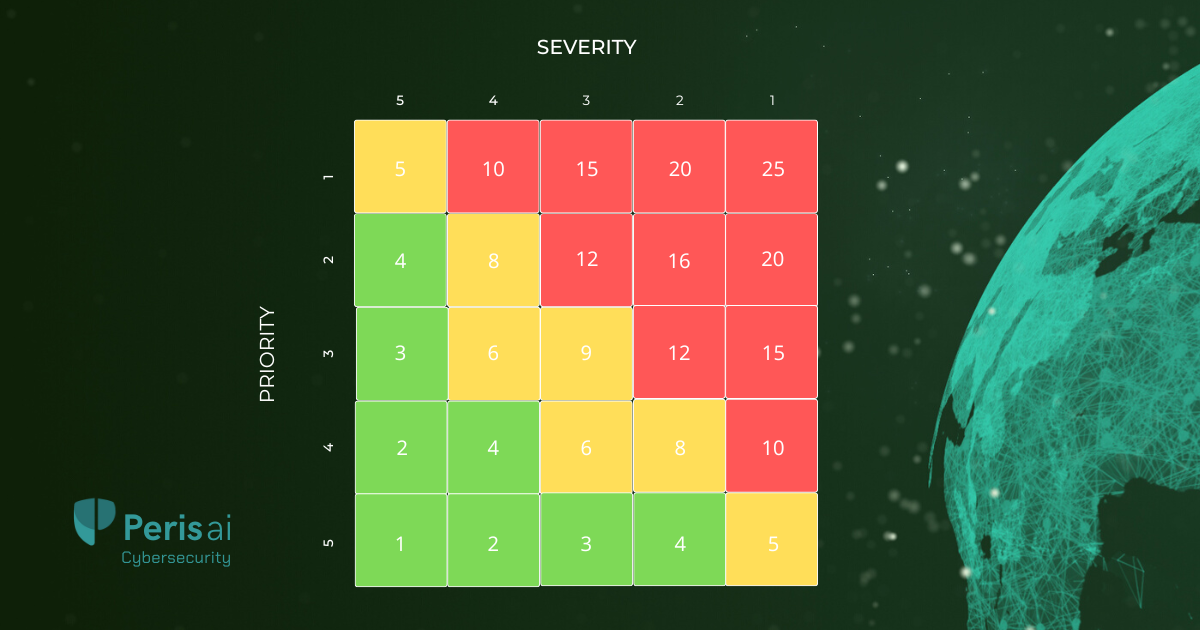
    Severity VS Priority

    The severity of a vulnerability is associated with system standards and the technical perspective of the system workflow. Severity examines whether the impact is severe or not. The severity level is less likely to change, while priority might differ.

    Priority indicates how quickly a vulnerability should be fixed and eradicated from an application. It shows a sense of urgency for dealing with a vulnerability in your system, with priority one being the highest and five being the lowest.

    Examples

    High Severity & High Priority (e.g. S1P1)

    A vulnerability that occurs in the basic functionality of the application, if it’s not fixed soon, will impact the business goal immediately. For example,

    • remote code execution (RCE)
    • SQL injection
    • Command Injections
    • or financial theft, direct financial loss

    A P1S1 vulnerability means your website is at risk of being hacked anytime. We recommend that you make it your highest priority to fix these vulnerabilities immediately.

    Mid Severity & Mid Priority (e.g. S3P3)

    A vulnerability that occurs on the application’s functionality that can be exploited by malicious attackers to access sensitive information on the application or server. The impact of S3P3 is relatively limited. For example:

    • It requires more skill to exploit a S3P3 vulnerability and might require some special conditions, such as inexistence of SSL/TLS certificate issues, or need to be in certain location (within target’s proximity location, etc)
    • Server misconfiguration

    Low Severity & Low Priority (S5P5)

    Any vulnerabilities that are acceptable business risks to the organization/company. For example:

    • information leakage (the version number of database, username of admin DB, where attackers could brute force the credentials, etc)
    • configuration errors
    • lack of some security measures

    Things that can be used in conjunction with social engineering to cause a more severe impact on the target.

  • Threat Intelligence: Leveraging Data to Stay Ahead of Cybersecurity Threats

    Threat Intelligence: Leveraging Data to Stay Ahead of Cybersecurity Threats

    In today’s increasingly digital landscape, the risk of cyber attacks is higher than ever. Cybercriminals are finding new and innovative ways to infiltrate computer systems and steal sensitive information, from phishing scams to ransomware attacks. As a result, individuals and organizations alike must remain vigilant and proactive in the face of these evolving threats. One approach that has gained traction in recent years is using threat intelligence data.

    Threat intelligence is collecting, analyzing, and sharing information about potential or current cyber threats. By using data from various sources, such as internal logs, social media, and the dark web, organizations can identify patterns and trends to predict and prevent future attacks. In this article, we will explore the concept of threat intelligence in more detail, discussing how it works and why it is a crucial tool for staying ahead of cybersecurity threats.

    What is Threat Intelligence?

    Threat intelligence is collecting, analyzing, and disseminating information about potential or current cyber threats. It uses data from various sources, including internal logs, social media, the dark web, and other public sources. This data is then analyzed to identify patterns and trends, which can be used to predict and prevent future cyber attacks.

    Why is Threat Intelligence Important?

    Threat intelligence is essential in the fight against cyber threats for several reasons:

    1. Proactive Defense: By analyzing data and identifying patterns, organizations can be more proactive in their approach to cybersecurity. Rather than simply reacting to attacks as they occur, threat intelligence allows organizations to anticipate and prevent potential threats.
    2. Faster Response: Threat intelligence can provide real-time information on emerging threats, allowing organizations to respond quickly and effectively.
    3. Targeted Approach: Threat intelligence enables organizations to focus their resources on the most critical threats. This targeted approach can save time and money while improving cybersecurity measures’ overall effectiveness.
    4. Collaboration: Threat intelligence can also facilitate collaboration between organizations, allowing them to share information and insights on potential threats.

    How Does Threat Intelligence Work?

    Threat intelligence involves several key steps:

    1. Data Collection: Threat intelligence begins with data collection. This data can come from various sources, including internal logs, social media, and other public sources.
    2. Data Analysis: Once data has been collected, it is analyzed to identify patterns and trends. This analysis can be performed manually or through machine learning algorithms.
    3. Threat Identification: Based on the analysis, potential threats are identified. These threats are then prioritized based on their severity and likelihood.
    4. Response Planning: Organizations can develop response plans once threats have been identified and prioritized. These plans may include patching vulnerabilities, improving security protocols, and training employees on cybersecurity best practices.
    5. Ongoing Monitoring: Threat intelligence is an ongoing process, and organizations must continually monitor the threat landscape to stay ahead of emerging threats.

    Leveraging Threat Intelligence

    To leverage threat intelligence effectively, organizations must take several steps:

    1. Develop a Strategy: Organizations must develop a comprehensive strategy for collecting, analyzing, and using threat intelligence data. This strategy should outline goals, metrics, and key performance indicators.
    2. Choose the Right Tools: Organizations must choose the right tools to collect and analyze threat intelligence data. These tools may include security information and event management (SIEM) systems, threat intelligence platforms, and machine learning algorithms.
    3. Collaborate with Others: Threat intelligence is most effective when organizations collaborate and share information. Organizations should seek partnerships with other organizations, industry groups, and government agencies.
    4. Train Employees: Employees are often the weakest link in an organization’s cybersecurity defense. Organizations must invest in cybersecurity training to ensure that employees understand the importance of threat intelligence and are equipped to recognize and respond to potential threats.

    Conclusion

    Threat intelligence is not just a buzzword but a critical element in the ever-evolving world of cybersecurity. As technology continues to advance, so do the methods of cybercriminals. Organizations must stay vigilant and utilize all available tools, including threat intelligence data, to combat these ever-growing threats.

    Developing a comprehensive strategy for threat intelligence may seem daunting, but it is an essential step in protecting valuable data and assets. By investing in the right tools and collaborating with others, organizations can stay ahead of potential threats and minimize the risk of an attack. Additionally, investing in employee training is crucial, as human error remains one of the most significant cybersecurity risks.

    Check out our website if you want a solution to improve your organization’s threat intelligence. We offer various services and tools to help you avoid potential threats and keep your data safe. Remember, cyber threats are not going away any time soon. It is up to us to remain vigilant and proactive in the fight against cybercrime.

  • The ROI of Investing in Cybersecurity

    The ROI of Investing in Cybersecurity

    As the digital landscape continues to grow, businesses increasingly rely on technology for their day-to-day operations. Unfortunately, this also means businesses are becoming more vulnerable to cyberattacks. Investing in comprehensive cybersecurity measures must be balanced, and companies that ignore this reality do so at their peril.

    Investing in cybersecurity makes perfect sense from a financial perspective. According to Fortune Business Insights, the global cybersecurity market will exceed $300 billion by 2026. Investing in the right solutions can protect your business from cyber threats while improving productivity and efficiency.

    Investing in cybersecurity solutions reduces the downtime associated with cyberattacks and data breaches. This is essential for keeping your customers happy and ensuring that your organization’s operations remain online during an attack or breach attempt. Not only does this reduce the cost of returned services due to downtime, but it also preserves customer trust and loyalty, which can often be priceless for a business’s success.

    Another ROI of investing in cybersecurity is improved employee productivity, as security threats can hamper workflow if left unchecked. Cybersecurity solutions like antivirus software and malware protection can protect against malicious actors attempting to gain access to sensitive company data or systems. Also, giving employees regular training on best practices for cybersecurity can help them understand how important it is to keep their computers safe from harm without slowing down their work.

    Finally, investing in cyber threat intelligence helps organizations avoid emerging digital threats while mitigating existing ones. Intelligence-driven security solutions allow companies to identify trends and vulnerabilities earlier than traditional methods by providing real-time insights into digital threats that could go unnoticed until it is too late. Knowing where potential vulnerabilities lie before attackers can exploit them allows organizations to bolster their defenses accordingly and protect against the costly damages associated with successful attacks.

    Cybersecurity investments are necessary for modern businesses looking to safeguard themselves against digital risks while remaining productive during these turbulent times. Considering the numerous advantages outlined above, it quickly becomes clear why savvy organizations have already invested in comprehensive cybersecurity measures, leveraging them for maximum return on investment (ROI).

  • The Real Cost of a Cybersecurity Breach: Understanding the Hidden Consequences of a ‘It won’t happen to us’​ Mentality

    The Real Cost of a Cybersecurity Breach: Understanding the Hidden Consequences of a ‘It won’t happen to us’​ Mentality

    Cybersecurity breaches in today’s digital age have become increasingly common and can have far-reaching consequences beyond the financial impact. The aftermath of a cyber attack can be devastating, with significant damage to a company’s reputation, loss of customer trust, and even legal repercussions. Yet, despite these risks, many organizations continue to adopt a “it won’t happen to us” mentality and do not take sufficient measures to protect themselves from cyber threats. This article will explore the cost of a cybersecurity breach and the hidden consequences that organizations may face due to complacency. By understanding the risks and actual costs of a cyber attack, businesses can better prepare themselves and adopt a proactive approach to cybersecurity.

    Explanation of what cybersecurity is and why it’s important

    Cybersecurity refers to the practice of protecting computer systems, networks, and digital data from unauthorized access, theft, and damage. It encompasses various technologies, processes, and procedures designed to prevent cyber attacks, identify potential threats, and respond to security incidents. Cybersecurity has become an essential part of daily life in today’s interconnected world, where virtually all aspects of business and personal life rely on digital technology. With the growing volume and sophistication of cyber threats, protecting sensitive information, such as financial data, individual details, and confidential business information, is more critical than ever. A cyber attack can have serious consequences, including financial losses, damage to a company’s reputation, and legal liabilities. By implementing effective cybersecurity measures, individuals and organizations can reduce the risk of cyber attacks and safeguard their assets and information from harm.

    The reality of cybersecurity breaches and how they can happen to anyone

    The reality of cybersecurity breaches is that they can happen to anyone, from small businesses to large corporations, from government agencies to individual users. Cybercriminals use a variety of tactics to exploit vulnerabilities in computer systems and networks, including phishing scams, malware attacks, and ransomware. No organization is completely immune to cyber attacks, and even those that invest heavily in cybersecurity can still fall, victim. Many cyber attacks are successful because of human error or complacencies, such as weak passwords, lack of software updates, and failure to follow security protocols. With the increasing use of cloud computing, mobile devices, and Internet of Things (IoT) technology, the attack surface for cybercriminals is expanding, making it even more critical for individuals and organizations to be vigilant and proactive in protecting their digital assets. The reality is that cybersecurity breaches are a growing threat, and everyone must take responsibility for their digital security.

    The purpose of the article post – is to highlight the hidden consequences of a “it won’t happen to us” mentality

    This article post awareness about the hidden consequences of a “it won’t happen to us” mentality regarding cybersecurity. Many individuals and organizations assume that they are not at risk of cyber attacks or that their current security measures are sufficient. However, this complacency can have severe consequences in a cyber attack. This article highlights the often-overlooked cybersecurity breaches, such as reputational damage, loss of customer trust, and legal liabilities. By examining these hidden consequences, this article’s post aims to encourage individuals and organizations to adopt a more proactive approach to cybersecurity and take steps to mitigate the risks of a potential cyber attack. Ultimately, this article post stresses the importance of cybersecurity and the need for constant vigilance in the face of an ever-evolving threat landscape.

    1. Immediate Consequences of a Cybersecurity Breach

    The immediate consequences of a cybersecurity breach can be significant and impact an organization in multiple ways. One of the most immediate consequences is financial losses resulting from the theft of sensitive data or disruption of business operations. Another direct consequence is reputational damage, which can occur when a breach becomes public and erodes customer trust in the organization. Additionally, a breach can lead to legal liabilities if the organization complies with relevant data protection regulations. Immediate consequences can also include costs associated with investigating the breach and restoring affected systems and data and the need to notify affected customers or stakeholders. Overall, the immediate consequences of a cybersecurity breach can be severe and have lasting effects on an organization, making it critical to have effective incident response plans in place to minimize the impact.

    Financial loss and the cost of repairing the damage

    Financial loss is one of the most significant consequences of a cybersecurity breach, and the cost of repairing the damage can be substantial. Repairing the damage includes the direct costs associated with investigating and responding to the breach and indirect costs such as lost revenue and productivity and damage to the organization’s reputation. The direct costs can include fees for forensic investigations, legal fees, and notification costs. Indirect costs can include business interruption costs, loss of customers, and decreased market value. In addition, organizations may also face regulatory fines or lawsuits, which can result in even higher financial costs. The financial loss from a cybersecurity breach can be devastating for small and medium-sized businesses, which may not have the financial resources to absorb the impact. Ultimately, the cost of repairing the damage from a breach underscores the importance of investing in robust cybersecurity measures to prevent or mitigate the risk of a breach and having a comprehensive incident response plan in place.

    Damage to reputation and loss of customer trust

    Damage to reputation and loss of customer trust are significant consequences of a cybersecurity breach. A breach can erode customers’ trust and confidence in an organization, particularly if their personal or financial information has been compromised. The damage to reputation can be long-lasting and difficult to repair, especially in cases where the breach was due to negligence or lack of proper security measures. The loss of customer trust can ripple effect on an organization’s bottom line, resulting in decreased sales, loss of existing customers, and difficulty acquiring new customers. Additionally, a breach can lead to negative media coverage and public scrutiny, further damaging an organization’s reputation. Ultimately, the damage to reputation and loss of customer trust that can result from a cybersecurity breach underscores the importance of taking a proactive approach to cybersecurity and investing in robust security measures, as well as being transparent and communicative with customers in the event of a breach.

    Legal consequences and regulatory fines

    Legal consequences and regulatory fines are other potential consequences of a cybersecurity breach. Organizations that fail to comply with data protection regulations may face significant fines and legal liabilities in case of a breach. Organizations may also face lawsuits from customers or other affected parties, which can result in further financial losses and reputational damage. The legal consequences of a breach could be particularly severe if the breach involves the theft or exposure of sensitive data, such as financial information, medical records, or intellectual property. Organizations can mitigate the risk of legal consequences by implementing robust security measures, complying with relevant data protection regulations, and having a comprehensive incident response plan’s impact to minimize a breach’s impact.

    Impact on employee productivity and morale

    The impact of a cybersecurity breach extends beyond financial and legal consequences and can also affect employee productivity and morale. Employees may experience stress and anxiety due to a breach, particularly if their personal information has been compromised. Additionally, the need to respond to a breach and implement new security measures can divert resources and attention away from other business activities, resulting in decreased productivity and morale. Furthermore, if the breach results in significant financial losses, organizations may be forced to implement cost-cutting measures such as layoffs, which can further erode employee morale. To mitigate the impact on employee productivity and morale, organizations should prioritize communication and transparency with their employees, ensuring that they are informed about the steps to address the breach and the organization’s commitment to improving security measures. Organizations should also prioritize employee training and education on cybersecurity best practices to help prevent future breaches and improve overall security posture.

    2. Hidden Consequences of a Cybersecurity Breach

    In addition to the immediate consequences of a cybersecurity breach, such as financial losses and reputational damage, hidden consequences may not be immediately apparent. For example, the long-term impact on customer trust and brand reputation can extend far beyond the immediate aftermath of a breach. Losing intellectual property or confidential information can have long-term consequences for an organization’s competitive advantage and future success. The stress and anxiety experienced by employees can also have a lasting impact on the organization’s culture and overall well-being. Furthermore, the cost of implementing new security measures and addressing the root causes of a breach can be high, with long-term financial and operational implications. Ultimately, the hidden consequences of a cybersecurity breach highlight the need for organizations to take a proactive approach to cybersecurity and invest in robust security measures to prevent breaches from occurring in the first place.

    Long-term financial impact, such as increased insurance premiums

    The long-term financial impact of a cybersecurity breach can be significant and may include increased insurance premiums. Following a breach, an organization may find it more challenging to obtain cybersecurity insurance, or the insurance cost may increase due to perceived higher risk. This increased cost can have a long-term impact on the organization’s finances, particularly for small and medium-sized businesses that may be more vulnerable to the financial consequences of a breach. Furthermore, the cost of implementing new security measures to prevent future breaches can also be high, with ongoing expenses related to monitoring, testing, and updating security systems. The long-term financial impact of a breach underscores the importance of investing in robust cybersecurity measures and taking a proactive approach to risk management to prevent or mitigate the effects of a breach. Additionally, organizations should consider cybersecurity insurance as part of their risk management strategy and work with their insurance provider to ensure that their coverage adequately reflects their cybersecurity risks and needs.

    Loss of intellectual property and trade secrets

    One of the hidden consequences of a cybersecurity breach is the loss of intellectual property and trade secrets, which can have long-term implications for an organization’s competitive advantage and future success. Intellectual property and trade secrets can include anything from product designs and manufacturing processes to marketing strategies and customer data. A breach that exposes this information to competitors or malicious actors can put an organization at a significant disadvantage and erode its competitive edge. The loss of intellectual property can also impact an organization’s ability to innovate and bring new products or services to market, further impacting its long-term viability. To mitigate the risk of intellectual property loss, organizations should prioritize cybersecurity measures that focus on data protection, such as access controls, encryption, and monitoring. Organizations should also have a comprehensive incident response plan to quickly detect and respond to breaches and minimize the impact on sensitive data.

    Increased vulnerability to future attacks

    Another hidden consequence of a cybersecurity breach is an increased vulnerability to future attacks. Once an organization has experienced a breach, it may become a more attractive target for future attacks, as malicious actors may see it as a weak point in cybersecurity. Additionally, suppose the root cause of the breach is not addressed, such as a vulnerability in a particular system or software. In that case. In that case. In that case. In that case. In that case. In that case, the organization may be at continued risk for future attacks. This increased vulnerability can lead to additional financial and reputational damage in the event of a future breach. To mitigate the risk of future attacks, organizations should conduct a thorough post-incident review to identify the root cause of the breach and take steps to address any vulnerabilities. This may involve implementing new security measures, updating software or systems, or conducting employee training on cybersecurity best practices. Organizations should also prioritize ongoing monitoring and testing to identify and address vulnerabilities before they can exploit malicious actors can exploit the malicious actors can exploit them. By taking a proactive approach to cybersecurity, organizations can reduce the risk of future breaches and minimize the impact of any occurring.

    Damage to organizational culture and employee trust

    Cybersecurity breaches can also damage an organization’s culture and erode employee trust. Employees may feel anxious or stressed after a breach, particularly if their personal information has been compromised. Additionally, if the breach is attributed to employee error or negligence, this can create feelings of guilt, shame, or blame. This can hurt employee morale, engagement, and productivity and may result in higher turnover rates or absenteeism. Furthermore, suppose the organization’s leadership is seen as unprepared or unable to handle the aftermath of a breach. This can damage employee trust and confidence in the organization’s ability to protect their data and maintain a safe and secure work environment. Organizations should prioritize communication and transparency in the aftermath of a breach to mitigate the impact on organizational culture and employee trust. This may involve providing regular updates on the situation, supporting affected employees, and providing ongoing training and education on cybersecurity best practices. By prioritizing employee trust and well-being, organizations can minimize the long-term impact of a breach on their culture and overall performance.

    3. Understanding the ‘It won’t happen to us’ Mentality

    The ‘It won’t happen to us’ mentality is a common and dangerous mindset many organizations fall into regarding cybersecurity. This mentality is often based on the belief that cybersecurity breaches only happen to other companies or that the organization is too tiny, obscure, or insignificant to be targeted by malicious actors. This can lead to a lack of investment in cybersecurity measures, such as firewalls, anti-virus software, and employee training, and a lack of preparedness in the event of a breach. The reality is that cybersecurity breaches can happen to any organization, regardless of size or industry. By failing to take cybersecurity seriously, organizations may be putting themselves at risk for significant financial and reputational damage. Understanding and overcoming the ‘It won’t happen to us’ mentality is critical to protecting an organization’s data, reputation, and long-term viability. This involves recognizing the real and serious risks associated with cybersecurity breaches, prioritizing investment in cybersecurity measures, and taking a proactive and ongoing approach to risk management.

    Common misconceptions about cybersecurity

    Many common misconceptions about cybersecurity can lead organizations to underestimate the risks of a breach or overlook critical vulnerabilities. One common misconception is that cybersecurity is solely the responsibility of IT or security teams. In reality, cybersecurity is a collective responsibility that involves all employees, from executives to front-line staff. Another misconception is that only large organizations are at risk for cyber attacks. Hackers target small and mid-sized businesses because they may have weaker security measures.

    Additionally, many organizations believe that investing in cybersecurity measures is too expensive or unnecessary. However, the cost of a breach can be significantly higher than the cost of preventative measures, and reputational damage can be long-lasting. Finally, there needs to be more aware that they are entirely protected once an organization has implemented cybersecurity measures. In reality, the cybersecurity landscape is constantly evolving, and ongoing monitoring and updates are necessary to stay ahead of new threats. Understanding and addressing these misconceptions is critical to effectively managing cybersecurity risk and protecting an organization’s assets and reputation.

    The dangers of assuming your organization is immune to cyber threats

    Assuming that an organization is immune to cyber threats is a dangerous mindset that can leave an organization vulnerable to attack. It can lead to a lack of investment in cybersecurity measures, a lack of preparedness for a breach, and a false sense of security that attackers can exploit. The reality is that no organization is entirely immune to cyber threats. Even with robust security measures, cybercriminals are constantly developing new and sophisticated attack methods, making it challenging to stay ahead of the curve. Failing to recognize this reality can lead to complacency and a lack of urgency regarding cybersecurity. The best defense against cyber threats is a proactive and ongoing risk management approach involving regular assessments, continuous monitoring, and regular training and education for all employees. By recognizing that no organization is immune and taking the necessary steps to protect against cyber threats, organizations can mitigate the risks of a breach and protect their valuable assets and reputation.

    The importance of proactive measures and staying vigilant

    Proactive measures and staying vigilant are critical to effective cybersecurity risk management. This involves taking a proactive approach to identifying and addressing vulnerabilities in an organization’s systems and processes rather than waiting for a breach to occur. This includes regularly updating and patching software and hardware, training and educating employees, implementing access controls and monitoring systems, and conducting risk assessments. Staying vigilant also means maintaining awareness of the latest cybersecurity threats and trends and adapting security measures accordingly. By staying ahead of the curve and proactively addressing cybersecurity risks, organizations can reduce the likelihood and impact of a breach, protect their reputation, and maintain the trust of their customers and stakeholders. Staying vigilant is a process that requires ongoing attention and resources rather than a one-time task. By prioritizing proactive measures and remaining vigilant, organizations can protect themselves against cyber threats and ensure their long-term viability.

    4. Steps to Mitigate the Risk of a Cybersecurity Breach

    Mitigating the risk of a cybersecurity breach involves taking a comprehensive approach to managing cybersecurity risk. First and foremost, organizations should conduct regular risk assessments to identify potential vulnerabilities and prioritize their response based on their impact and likelihood. This should include implementing robust security measures like firewalls, access controls, and monitoring systems. It is also critical to regularly update and patch software and hardware to address known vulnerabilities. Additionally, regular employee training and education can help reduce the risk of human error, a common cause of breaches. Organizations should also develop and test incident response plans to ensure they are prepared to respond effectively during a breach. Finally, it is essential to regularly monitor systems and networks for signs of suspicious activity and conduct ongoing testing and assessment of security measures to ensure they remain effective over time. By taking a proactive and comprehensive approach to cybersecurity risk management, organizations can effectively mitigate the risk of a breach and protect their valuable assets and reputation.

    Invest in cybersecurity measures, such as firewalls and anti-virus software

    Investing in cybersecurity measures such as firewalls and anti-virus software is critical to protecting an organization’s systems and data. Firewalls can help prevent unauthorized access to an organization’s network, while anti-virus software can detect and remove malicious software from devices. Investing in these measures and keeping them up to date is crucial to ensure their continued effectiveness against the latest threats. In addition to firewalls and anti-virus software, organizations may also consider investing in other security measures such as intrusion detection and prevention systems, data encryption, and access controls. While a cost is associated with investing in these measures, the cost of a cybersecurity breach can be much higher, making it a worthwhile investment to protect an organization’s valuable assets and reputation.

    Educate employees on best practices for cybersecurity

    Educating employees on best practices for cybersecurity is essential to reducing the risk of a cybersecurity breach. Many breaches occur due to human error, such as clicking on a phishing email or using weak passwords. Regular training and education can help employees understand the importance of cybersecurity and how they can contribute to the organization’s security efforts. This includes teaching employees how to identify and avoid common cyber threats, such as phishing scams and malware, and how to create and use strong passwords. It is also essential to provide ongoing training to keep employees informed of the latest cybersecurity threats and trends, as the threat landscape is constantly evolving. By investing in employee education and training, organizations can reduce the risk of a breach and ensure that their employees are well-informed and equipped to contribute to the organization’s cybersecurity efforts.

    Conduct regular security audits and risk assessments

    Regular security audits and risk assessments are critical in maintaining a strong cybersecurity posture. These assessments can help identify vulnerabilities and weaknesses in an organization’s systems, processes, and procedures. Regular audits can help ensure that security measures are correctly implemented and mitigate potential threats effectively. Risk assessments can help organizations prioritize their security efforts based on the level of risk associated with different types of threats. They can also help organizations make informed decisions about which security measures to implement and which to prioritize based on available resources and budget. A qualified third-party professional should conduct regular security audits and risk assessments to ensure that a comprehensive and objective evaluation is performed. By conducting regular assessments and audits, organizations can stay ahead of potential cybersecurity threats and take proactive steps to protect their valuable assets and reputation.

    Develop a comprehensive incident response plan

    Developing a comprehensive incident response plan is essential to ensuring that an organization can quickly and effectively respond to a cybersecurity breach. An incident response plan should outline the steps to be taken in the event of a breach, including identifying the scope of the breach, containing the damage, and restoring systems and data. The plan should also define the roles and responsibilities of individuals involved in the response effort, including internal and external stakeholders, such as IT staff, legal counsel, and law enforcement. In addition, the plan should be regularly tested and updated to ensure that it remains practical and relevant. By having a comprehensive incident response plan in place, organizations can minimize the impact of a breach and reduce the risk of further damage to their systems and data.

    Conclusion

    In conclusion, a cybersecurity breach can have significant and far-reaching consequences for any organization, regardless of size or industry. The hidden costs of a breach can be extensive, including damage to reputation, financial loss, legal consequences, and loss of intellectual property. Organizations must take proactive steps to mitigate the risk of a breach by investing in cybersecurity measures, educating employees on best practices, conducting regular security audits and risk assessments, and developing a comprehensive incident response plan. An ‘It won’t happen to us’ mentality can lead to a false sense of security, leaving organizations vulnerable to cyber threats. By staying vigilant and taking proactive measures, organizations can reduce the risk of a breach and ensure that they are well-equipped to respond quickly and effectively in the event of an attack.

    Recap of the hidden consequences of a cybersecurity breach

    To recap, the hidden consequences of a cybersecurity breach can be extensive and long-lasting. Immediate consequences include financial loss, reputational damage, and loss of customer trust. Legal consequences and regulatory fines can also result from a breach. The impact on employee productivity and morale can be significant, and the loss of intellectual property and trade secrets can have long-term consequences. A breach can also increase an organization’s vulnerability to future attacks and damage its culture and employee trust. Organizations must take proactive measures to mitigate the risk of a breach and develop a comprehensive incident response plan to minimize the impact of a breach should one occur. By taking these steps, organizations can protect their assets, reputation, and customer trust in the face of an ever-evolving threat landscape.

    Emphasis on the importance of proactive cybersecurity measures

    The importance of proactive cybersecurity measures cannot be overstated. It is no longer a question of if an organization will experience a breach but when. Cyber threats are constantly evolving, and attackers are becoming increasingly sophisticated in their methods. Taking a reactive approach to cybersecurity is no longer sufficient. Organizations must take a proactive approach to mitigate the risk of a breach by investing in cybersecurity measures, educating employees on best practices, conducting regular security audits and risk assessments, and developing a comprehensive incident response plan. By staying vigilant and taking proactive measures, organizations can reduce the risk of a breach and minimize the impact of an attack should one occur. The cost of a breach can be high, both financially and in terms of reputation and trust. It is in every organization’s best interest to prioritize cybersecurity and take the necessary steps to protect its assets and customers.

    Encouragement to take action and prioritize cybersecurity in your organization

    In today’s digital age, cybersecurity is not just a concern for IT departments but should be a priority for every organization. The risks of a breach are too significant to ignore, and the costs can be high regarding financial and reputational damage. Organizations that take a proactive approach to cybersecurity can reduce the risk of a breach and build trust with customers and stakeholders. It is time to move away from the “it won’t happen to us” mentality and take action to protect your organization. By investing in cybersecurity measures, educating employees, conducting regular security audits and risk assessments, and developing a comprehensive incident response plan, organizations can stay ahead of the evolving threat landscape and protect their assets and reputation.

    Don’t let a “It won’t happen to us” mentality be the downfall of your business! Visit our solution today to learn more about the actual cost of a cybersecurity breach and how to avoid its hidden consequences. Our experts can offer you witty solution advice and budgeting advice to keep the bank strong. So, what are you waiting for? Click your way to a secure future and visit our solution now!

  • The Benefits of Bug Bounties: Saving Time and Money in Penetration Testing

    The Benefits of Bug Bounties: Saving Time and Money in Penetration Testing

    In the ever-evolving landscape of cybersecurity, cybersecurity has become a top priority for organizations of all sizes. One way that companies are enhancing their security measures is through the implementation of bug bounty programs. Bug bounties are becoming increasingly popular as a cost-effective and efficient method of identifying vulnerabilities in software applications, websites, and other digital assets.

    Bug bounties are rewarding organizations offer to ethical hackers who identify and report security vulnerabilities in their systems. The concept is simple yet incredibly effective. Organizations can identify and address potential security issues before malicious actors exploit them by incentivizing a community of skilled professionals to find and report vulnerabilities.

    While bug bounties are relatively new to cybersecurity, their popularity rapidly grows as organizations recognize their significant benefits. Penetration testing has always been a critical component of any comprehensive cybersecurity program, but traditional methods can be time-consuming, expensive, and often fail to identify all potential vulnerabilities. Organizations can complement and enhance their efforts by incorporating bug bounties into their testing strategy while saving time and money.

    Explanation of what bug bounties are and their growing popularity

    Bug bounties have gained immense popularity recently due to the growing need for cybersecurity measures. Bug bounties are reward programs companies or organizations offer to ethical hackers who can identify and report vulnerabilities or bugs in their systems or applications. This approach is an effective way to crowdsource cybersecurity testing and identify potential vulnerabilities that malicious actors can exploit.

    The growing popularity of bug bounties is due to the increase in cyber-attacks and data breaches. Hackers’ use of advanced technology and techniques has made it challenging for companies to identify system vulnerabilities. Bug bounties enable companies to leverage the knowledge and expertise of ethical hackers worldwide to identify and report vulnerabilities before cybercriminals exploit them. Additionally, bug bounties offer a cost-effective and efficient solution for organizations to enhance their cybersecurity posture.

    The importance of penetration testing and how it relates to bug bounties

    Penetration testing is essential to maintaining a secure network, as it helps identify vulnerabilities and weaknesses in a system. This testing process simulates an attack on the web, and its goal is to expose any vulnerabilities that cybercriminals could exploit. Without proper penetration testing, an organization may not be aware of its weaknesses until it is too late.

    This is where bug bounties come into play. By offering rewards to ethical hackers for finding vulnerabilities, bug bounty programs encourage a more comprehensive range of skilled security experts to identify and report any weaknesses in the system. This means that before any penetration testing takes place, an organization can better understand its vulnerabilities, allowing them to take proactive measures to patch the weaknesses and improve its overall cybersecurity posture. Thus, penetration testing and bug bounties create a more secure network.

    Thus, penetration testing and bug bounties create a more secure network.

    What are Bug Bounties?

    Definition of bug bounties and how they work

    Bug bounties are programs offered by companies and organizations that encourage independent security researchers and ethical hackers to identify and report security vulnerabilities or bugs in their software, website, or application. In return, the researchers receive a monetary reward or recognition for their efforts. Bug bounty programs aim to identify and fix security vulnerabilities before cybercriminals can exploit them.

    Bug bounty programs have become increasingly popular among companies and organizations due to the growing importance of cybersecurity. With more sensitive information being stored and transmitted online, the need to protect against cyber attacks has never been more critical. Bug bounties provide companies with an additional layer of protection, allowing for identifying and resolving vulnerabilities that may have otherwise gone unnoticed. By crowdsourcing security testing to a global network of ethical hackers, companies can quickly and efficiently identify and fix vulnerabilities, ultimately saving time and money in the long run.

    https://www.linkedin.com/posts/perisai-cybersecurity_penetration-testing-or-bug-bounty-program-activity-7021803101112209408-ky5v?utm_source=share&utm_medium=member_desktop

    It is ultimately saving time and money in the long run.

    The history of bug bounties and their evolution

    Bug bounties have come a long way since their inception. The first recorded bug bounty program was launched in 1983 by the US Air Force. The “Friendly Computer Program” rewarded anyone who found and reported security vulnerabilities in Air Force computer systems. However, in the late 1990s, bug bounties began to gain popularity in the tech industry.

    Since then, bug bounty programs have evolved and become more common. Today, many large companies, such as Microsoft, Google, and Facebook, have bug bounty programs. In addition, several third-party platforms connect companies with security researchers and manage bug bounty programs on their behalf. As the prevalence of cyber attacks increases, bug bounty programs will become even more widespread and necessary to ensure online systems’ security.

    The different types of bug bounties and their benefits

    Bug bounties come in various forms, including public, private, and ongoing programs. Public programs are available to the general public and offer monetary rewards for discovering vulnerabilities, while private programs are restricted to a specific group of people or organizations. Ongoing programs are continuously available, and participants are paid for finding and reporting security issues.

    One of the main benefits of bug bounties is that they incentivize ethical hackers to find vulnerabilities in a company’s systems and report them instead of exploiting them for personal gain. This allows companies to identify and fix vulnerabilities before they are discovered and used by malicious actors, potentially saving the company from significant financial and reputational damage. Additionally, bug bounties can help companies improve their overall cybersecurity posture by encouraging the implementation of more robust security measures and providing valuable feedback on the effectiveness of existing security protocols.

    The Benefits of Bug Bounties

    How bug bounties can save time and money in penetration testing

    One of the most significant benefits of bug bounties is their ability to save time and money in penetration testing. With bug bounties, organizations can crowdsource the task of finding vulnerabilities to a large group of security researchers, who will be incentivized to find as many bugs as possible. This can save organizations the time and effort of conducting penetration testing, which can be time-consuming and expensive.

    Another way that bug bounties can save time and money is by allowing organizations to fix vulnerabilities before they become more significant problems. When a security researcher finds a bug through a bug bounty program, they will report it to the organization. The organization can then prioritize and fix the bug, potentially preventing it from being exploited by malicious actors. This can save organizations the time and money to remediate a more significant security incident.

    Finally, bug bounties can help organizations identify vulnerabilities that have gone unnoticed. By incentivizing a large group of security researchers to find vulnerabilities, bug bounty programs can help organizations identify even the most obscure or hard-to-find bugs. This can be especially valuable for organizations trying to maintain a strong cybersecurity posture and stay ahead of emerging threats. By identifying and fixing vulnerabilities before they can be exploited, organizations can save time and money in the long run and avoid potentially costly security incidents.

    The advantages of crowdsourcing and the power of community-driven bug hunting

    Crowdsourcing has become a popular approach to solving complex problems, and bug bounties are no exception. By leveraging the power of a community-driven approach to bug hunting, organizations can quickly identify and fix vulnerabilities that may have otherwise gone unnoticed. The advantages of crowdsourcing are clear: a diverse group of skilled individuals can collaborate to identify and remediate issues quickly and efficiently.

    One of the primary advantages of crowdsourcing is the ability to tap into a vast talent pool. With bug bounty programs, organizations can attract individuals with a wide range of skills, experience, and expertise, and all focused on identifying and addressing potential security issues. This increases the chances of identifying vulnerabilities and provides valuable insights into new and emerging threats.

    Another advantage of community-driven bug hunting is how issues can be identified and remediated. Traditional penetration testing can take weeks or even months, while bug bounties can provide results in days. This rapid feedback loop enables organizations to address vulnerabilities before attackers exploit them quickly.

    Overall, the power of community-driven bug hunting cannot be underestimated. By tapping into a diverse talent pool, organizations can identify vulnerabilities quickly and efficiently, saving time and money. As the threat landscape evolves, bug bounties will remain a critical tool in the fight against cyberattacks.

    Penetration Testing and Bug Bounties

    The role of penetration testing in identifying and addressing vulnerabilities

    Penetration testing is an essential aspect of cybersecurity that involves simulated attacks on a system to identify vulnerabilities and assess its security posture. The goal is to find weaknesses before attackers can exploit them, and it is a crucial step in protecting systems from cyber threats. The penetration testing results can help organizations identify areas where they need to improve their security measures and strengthen their defenses.

    One of the critical benefits of penetration testing is that it allows organizations to identify vulnerabilities that may not have been previously detected. By testing the system in a controlled environment, organizations can better understand their vulnerabilities and assess the effectiveness of their existing security measures. This information can be used to prioritize security enhancements, allocate resources more effectively, and improve overall security posture.

    Another advantage of penetration testing is that it provides a proactive approach to security. Instead of waiting for an attack to occur and then responding, organizations can identify vulnerabilities ahead of time and take action to mitigate them. This can help reduce the risk of data breaches and other security incidents and minimize the potential damage caused by such events.

    Ultimately, penetration testing is crucial in improving an organization’s cybersecurity posture. Organizations can proactively address vulnerabilities and weaknesses and strengthen their defenses against cyber threats by identifying them. It is a valuable tool in the fight against cybercrime, and its importance cannot be overstated.

    Another advantage of penetration testing is that it provides a proactive approach to security.

    How bug bounties can complement penetration testing and improve the overall cybersecurity posture of an organization

    Bug bounties and penetration testing may seem like separate approaches to finding vulnerabilities, but they can work together to create a more comprehensive cybersecurity strategy. Penetration testing is essential for identifying vulnerabilities within a company’s infrastructure and applications, but it has limitations. Penetration testing is often conducted on a set schedule and can only test for known vulnerabilities at that time. This leaves a gap for potential unknown vulnerabilities that may arise in between tests.

    This is where bug bounties can come in handy. Bug bounty programs provide a continuous and proactive approach to vulnerability detection. Companies can open their applications and systems to a global community of security researchers who can search for vulnerabilities anytime, providing an additional layer of security. By using penetration testing and bug bounties, companies can ensure they detect and address known and unknown vulnerabilities, ultimately improving their overall cybersecurity posture.

    Bug bounties can also complement penetration testing by providing a cost-effective way to find vulnerabilities. Penetration testing can be expensive, especially if it involves hiring external consultants to conduct the testing. On the other hand, bug bounties offer an affordable option for vulnerability detection. Companies can set a bounty amount for each vulnerability, incentivizing security researchers to find vulnerabilities without breaking the bank.

    Furthermore, bug bounties can also help companies build a community of security researchers who can provide ongoing feedback and insights into the latest security threats and trends. This community-driven approach can help companies avoid emerging threats and improve their overall security posture.

    In summary, bug bounties and penetration testing can work together to provide a comprehensive and cost-effective approach to cybersecurity. Companies can detect and address known and unknown vulnerabilities using both methods while getting feedback and insights.

    Companies can detect and address known and unknown vulnerabilities using both methods while getting feedback and insights.

    Real-world examples of how bug bounties have enhanced penetration testing efforts

    Bug bounties have become an integral part of many organizations’ cybersecurity strategies, with more and more companies turning to these programs to enhance their penetration testing efforts. One notable example is Microsoft, which launched its first bug bounty program in 2013 and has since expanded it to cover a wide range of products and services. Microsoft has identified and fixed numerous vulnerabilities that might have otherwise gone unnoticed through this program, strengthening its overall security posture.

    Another example is the United States Department of Defense, which launched its “Hack the Pentagon” bug bounty program in 2016. The program invited security researchers to identify vulnerabilities in the department’s public-facing websites and applications, offering monetary rewards for valid findings. The program was a resounding success, with over 1,400 vulnerabilities identified and fixed, and it has since been expanded to cover other department areas.

    Bug bounty programs have also effectively identified vulnerabilities in popular software and services. For instance, in 2019, Google paid over $6.5 million in rewards to researchers who identified security issues in its products, such as Android, Chrome, and Google Cloud. Through these programs, Google was able to identify and patch vulnerabilities before they could be exploited by malicious actors, protecting its users’ data and maintaining trust in its products.

    Overall, these real-world examples demonstrate the value of bug bounty programs in enhancing penetration testing efforts and improving organizations’ cybersecurity posture. By leveraging the skills and expertise of a global community of researchers, organizations can identify and address vulnerabilities that might otherwise go unnoticed, ultimately reducing the risk of security breaches and data loss.

    Best Practices for Implementing Bug Bounties

    The critical considerations for implementing a successful bug bounty program

    Implementing a successful bug bounty program is more challenging than it sounds. There are several key considerations that organizations must take into account to ensure that their program is effective. First and foremost, it is crucial to have clear rules and guidelines in place. This includes defining the program’s scope, setting appropriate rewards for different types of vulnerabilities, and establishing rules of engagement for researchers. Clear guidelines help ensure researchers know what is expected and can work within the program’s constraints.

    Another critical consideration is communication. Organizations must communicate clearly and effectively with both their internal teams and external researchers. This includes providing regular updates on the program’s status, addressing any issues that arise, and providing clear feedback to researchers on the vulnerabilities they have identified. By communicating effectively, organizations can build trust with the research community and ensure they can identify and address vulnerabilities on time.

    Finally, organizations must be prepared to address the vulnerabilities identified through their bug bounty program. This means having a process for verifying and triaging vulnerabilities and a plan for addressing them. Organizations should also have a plan for communicating with their customers and stakeholders about any identified vulnerabilities and the steps to manage them.

    A successful bug bounty program requires careful planning, clear communication, and a commitment to timely addressing vulnerabilities. By considering these fundamental considerations, organizations can reap the benefits of bug bounties and improve their overall cybersecurity posture.

    Clear guidelines, effective communication, and fair rewards are essential

    When implementing a successful bug bounty program, there are a few key considerations to remember. Clear guidelines are essential for bug hunters and the organization running the program. This includes outlining what vulnerabilities are in scope, what tools and techniques are allowed, and how rewards will be distributed. With clear guidelines, bug hunters may save time looking for vulnerabilities that are not eligible for rewards or, worse, may stumble upon sensitive data they should not have access to.

    Effective communication is also crucial within the organization and with the bug-hunting community. This means promptly acknowledging bug reports, providing status updates, and being transparent about the process for evaluating and rewarding vulnerabilities. Good communication can build trust and foster a productive relationship between the organization and the bug-hunting community.

    Finally, fair rewards are essential for a successful bug bounty program. The reward should be proportional to the severity of the vulnerability and the effort required to find it. Offering too low a reward may encourage skilled bug hunters to participate while offering too high a reward can lead to a flood of low-quality reports. Striking the right balance is essential, and organizations should be prepared to adjust their reward structure over time based on their experience with the program.

    In summary, clear guidelines, effective communication, and fair rewards are vital considerations when implementing a bug bounty program. By considering these factors and working closely with the bug-hunting community, organizations can improve their cybersecurity posture and stay one step ahead of potential threats.

    The role of bug bounty platforms and third-party providers

    Bug bounty platforms and third-party providers have become integral to bug bounty programs. These platforms and providers act as intermediaries between the organizations and the bug hunters. They offer various services, such as hosting the program, managing submissions, verifying bugs, and providing support.

    One of the benefits of using a bug bounty platform or third-party provider is that they can help ensure the program runs smoothly and efficiently. They have experience managing bug bounty programs, which means they can provide valuable guidance and support. They can also help ensure the program is well-publicized, increasing the number of participants and the likelihood of finding critical vulnerabilities.

    Another benefit of using a bug bounty platform or third-party provider is that they can provide impartiality to the program. Since they are not part of the organization, they can act as neutral parties when verifying and rewarding bug submissions. This helps ensure that the program is fair and unbiased, which can lead to a higher level of participation and more meaningful results.

    In conclusion, bug bounty platforms and third-party providers play an essential role in the success of bug bounty programs. They can ensure the program runs smoothly and efficiently, provide impartiality, and offer valuable guidance and support.

    Peris.ai Korava, one of the bug bounty platforms, can help identify vulnerabilities and improve an organization’s cybersecurity.

    Conclusion

    Recap the benefits of bug bounties and their impact on penetration testing and cybersecurity

    Bug bounties are becoming increasingly popular among organizations looking to bolster their cybersecurity posture. By crowdsourcing the identification of vulnerabilities in their systems, companies can tap into the collective intelligence of the security community and identify weaknesses that have otherwise gone unnoticed. This approach can save time and money compared to traditional penetration testing methods while providing a more comprehensive picture of an organization’s security posture.

    The benefits of bug bounties extend beyond just finding vulnerabilities. They can also provide valuable feedback to an organization on improving its security practices and policies. Bug bounty programs incentivize security researchers to report their findings responsibly and ethically and help build trust between organizations and the security community. Organizations can encourage researchers to submit high-quality reports and reduce the risk of false positives by implementing clear guidelines, effective communication, and fair rewards.

    Bug bounty platforms and third-party providers are essential in facilitating successful bug bounty programs. These platforms provide a central location for researchers to submit their findings and for organizations to manage their bug bounty programs. They can also offer additional services, such as triage and validation, which can help organizations to prioritize and address vulnerabilities more efficiently. However, organizations must choose a platform that aligns with their specific needs and goals and ensure that it has proper security measures to protect sensitive data.

    Peris.ai Korava, one of the bug bounty platforms, can help identify vulnerabilities and improve an organization’s cybersecurity. Peris.ai Korava answers with organization-specific needs and goals and takes advantage of the collective intelligence of the security community to strengthen organization defenses. Be sure to sign up for our bug bounty program now!

    Peris.ai Korava employs double review to validate the vulnerability report.

    In conclusion, bug bounties are an effective and efficient way to identify vulnerabilities in an organization’s systems and improve its overall cybersecurity posture. By leveraging the power of crowdsourcing and the security community, organizations can save time and money compared to traditional penetration testing methods while receiving valuable feedback on their security practices.

    Prospects for bug bounty programs and their potential to continue revolutionizing the field of cybersecurity

    The prospects for bug bounty programs are bright, and they have the potential to continue revolutionizing the field of cybersecurity. As more and more organizations embrace bug bounty programs, the community of ethical hackers will continue to grow and improve. The result will be increased awareness of vulnerabilities, faster remediation of bugs, and improved overall cybersecurity posture.

    Furthermore, as technology evolves and new threats emerge, bug bounty programs will become even more critical in identifying and mitigating cybersecurity risks. With the rise of the Internet of Things (IoT) and the growing dependence on cloud computing, the attack surface for potential threats continues to expand. Bug bounty programs can help organizations avoid these threats by providing a continuous testing cycle and feedback, leading to more secure systems and networks.

    Overall, bug bounty programs are an essential tool in the fight against cyber threats. By harnessing the power of the crowd and incentivizing ethical hackers to find and report vulnerabilities, organizations can stay ahead of the curve and protect their sensitive data and assets. As the cybersecurity landscape evolves, bug bounty programs will undoubtedly play an increasingly vital role in keeping us safe in the digital world.

  • The Benefits of Adopting a Zero Trust Security Model for Your Company

    The Benefits of Adopting a Zero Trust Security Model for Your Company

    The internet has transformed the way businesses operate. With the ease of online communication and the convenience of cloud-based solutions, companies can operate faster and more efficiently. However, this progress has also led to increased risks from cyber threats. Data breaches, hacks, and cyber-attacks have become more common and sophisticated, leaving businesses vulnerable to financial losses, reputational damage, and legal consequences.

    In response, companies of all sizes seek ways to strengthen their cybersecurity. One promising approach is the adoption of a zero-trust security model. This model assumes that no one, even those inside your organization, can be trusted by default and requires strict authentication and authorization protocols for every access request. Although it may seem counterintuitive, this approach can significantly improve security, reduce the risk of data breaches, and enhance compliance with regulatory requirements. In the following paragraphs, we will explore the benefits of adopting a zero-trust security model in more detail.

    What is a Zero Trust Security Model?

    The Zero Trust security model is a cybersecurity strategy that requires strict identity verification for every person, device, and application attempting to access your network. This means that every user, whether inside or outside your organization, must verify their identity and be authorized to access your data and resources. This security model operates on the principle of “never trust, always verify,” which means you assume every access request is a potential threat until proven otherwise.

    The Benefits of Adopting a Zero Trust Security Model

    1. Improved Security

    The primary benefit of adopting a zero-trust security model is improved security. By requiring strict authentication and authorization protocols for every access request, you can significantly reduce the risk of unauthorized access to your data and resources. Additionally, with the zero-trust model, you can create a secure environment to detect and prevent unauthorized access and malicious activity within your network.

    2. Enhanced Visibility and Control

    The zero-trust model gives you enhanced visibility and control over your network and resources. With this approach, you can monitor every access request, track data flows, and identify potential threats before they escalate. This allows you to detect and respond to any potential security breaches quickly.

    3. Reduced Risk of Data Breaches

    Data breaches are a significant concern for businesses of all sizes. Adopting a zero-trust security model can significantly reduce the risk of data breaches. With strict authentication and authorization protocols, you can ensure that only authorized users can access sensitive data. Additionally, with the zero-trust model, you can create a secure environment to detect and prevent unauthorized access and malicious activity within your network.

    4. Improved Compliance

    Many businesses must comply with various regulatory requirements. Adopting a zero-trust security model can help you achieve compliance with these regulations. You can ensure that only authorized users can access sensitive data by implementing strict authentication and authorization protocols. Additionally, the zero-trust model can help you track data flows and identify potential compliance risks.

    5. Cost-Effective

    Implementing a zero-trust security model can be cost-effective in the long run. You can save money on potential legal fees, fines, and lost revenue by reducing the risk of data breaches and other security incidents. Additionally, with enhanced visibility and control, you can quickly detect and respond to potential security breaches, reducing the recovery cost.

    6. Improved User Experience

    Contrary to popular belief, implementing a zero-trust security model can improve the user experience. With strict authentication and authorization protocols, users can access only the resources they need to do their job. This can help reduce the clutter and complexity of the network, making it easier for users to find what they need quickly.

    7. Scalability

    Finally, a zero-trust security model is highly scalable. As your business grows and evolves, you can easily adapt the model to meet your changing security needs. This means adding new users, devices, and applications to your network without sacrificing security.

    Conclusion

    The benefits of adopting a zero-trust security model go beyond mere protection from cyber threats. By implementing this approach, you can enhance compliance with regulatory requirements, reduce the risk of data breaches, improve user experience, and save money on potential legal fees and fines. With the zero-trust model, you can establish a secure and scalable environment that adapts to the changing needs of your business.

    So, if you want to strengthen the security of your business, adopting a zero-trust security model is a must. It may seem harsh not to trust anyone, even those inside your organization, but protecting your data and assets is necessary. Don’t wait until it’s too late; take action today to secure your business with a zero-trust security model.

    If you need help figuring out where to start, our website offers a range of solutions to help you implement a zero-trust security model tailored to your business needs. Check out our solutions to learn more and take the first step toward a more secure future. Remember, in today’s digital age, the best defense is a strong offense, and a zero-trust security model is the ultimate offensive weapon against cyber threats.

  • The 7 Deadly Sins of Cybersecurity in Company (and How to Avoid Them)

    The 7 Deadly Sins of Cybersecurity in Company (and How to Avoid Them)

    As technology advances, cybersecurity has become an increasingly crucial concern for businesses of all sizes. With so much sensitive information stored online, the consequences of a security breach can be catastrophic. Hackers and cybercriminals are constantly looking for ways to exploit vulnerabilities in a company’s system, and even small businesses are not immune to cyberattacks. It’s no longer a question of if a company will be targeted but when.

    However, navigating the world of cybersecurity can be overwhelming. There are countless threats and vulnerabilities that a company must consider, and keeping up with the latest security measures can be a daunting task. To help companies protect themselves, it’s important to identify and avoid the common mistakes that can leave them vulnerable. This is where the concept of the “7 deadly sins” of cybersecurity comes in. By understanding these common pitfalls and how to avoid them, companies can take proactive steps to protect themselves and their sensitive data.

    1. Pride: Thinking you’re too small or insignificant to be targeted by cybercriminals

    One of the biggest mistakes companies can make thinking they need to be bigger or more important to be targeted by cybercriminals. The reality is that hackers are always looking for vulnerable targets, and companies of all sizes are at risk. Don’t let your pride put your company at risk.

    How to avoid this sin:

    • Take cybersecurity seriously, regardless of your company’s size
    • Educate your employees about the importance of cybersecurity
    • Implement basic cybersecurity measures such as firewalls, antivirus software, and data encryption

    2. Envy: Being envious of competitors’ security measures

    Looking at other companies and envying their seemingly impenetrable security measures is easy. However, it’s important to remember that every company has different needs and budgets, and what works for one company may not work for another. Comparing your company’s security measures to others can distract you from addressing your vulnerabilities.

    How to avoid this sin:

    • Focus on your own company’s security needs and budget
    • Consult with cybersecurity experts to determine the best approach for your company
    • Don’t neglect the basics of cybersecurity, such as regular software updates and employee training

    3. Gluttony: Collecting too much data

    Data is a valuable business asset, but collecting too much can be a liability. Your company is more attractive to cyber criminals with more data you have. Additionally, the more data you have, the harder it is to secure.

    How to avoid this sin:

    • Only collect data that is necessary for your business operations
    • Regularly purge old and unnecessary data
    • Encrypt sensitive data and restrict access to it

    4. Lust: Falling for phishing scams

    Phishing scams are a common way for cybercriminals to access sensitive company information. These scams often come in emails or text messages that appear to be from a legitimate source but are designed to trick the recipient into revealing sensitive information.

    How to avoid this sin:

    • Train your employees to recognize phishing scams and how to respond to them
    • Implement two-factor authentication for sensitive accounts
    • Don’t click on links or download attachments from unknown or suspicious sources

    5. Wrath: Not properly managing access to company systems and data

    One of the biggest vulnerabilities for any company is improper management of access to company systems and data. All it takes is one disgruntled employee or contractor with access to sensitive information to cause a major breach.

    How to avoid this sin:

    • Implement access controls to restrict who has access to sensitive information
    • Regularly review and audit access privileges
    • Implement multi-factor authentication for sensitive accounts

    6. Greed: Failing to invest in cybersecurity

    Investing in cybersecurity can be expensive, but failing to do so can be even more costly. Cyberattacks can result in lost revenue and customers and damage your company’s reputation.

    How to avoid this sin:

    • Prioritize cybersecurity in your budget
    • Work with cybersecurity experts to identify the most effective and efficient security measures for your company
    • Regularly review and update your cybersecurity measures as needed

    7. Sloth: Not keeping up with cybersecurity trends and threats

    Cybersecurity threats constantly evolve, and what worked yesterday may not work today. Failing to keep up with cybersecurity trends and threats can leave your company vulnerable to attacks.

    How to avoid this sin:

    • Stay up to date with the latest cybersecurity trends and threats
    • Regularly review and update your cybersecurity measures as needed
    • Participate in cybersecurity training and conferences to stay informed and educated

    Conclusion

    In the words of the famous hacker Kevin Mitnick, “It doesn’t matter how strong your defenses are if you’re giving away the keys to the castle.” This sentiment couldn’t be more true when it comes to cybersecurity. Protecting your business from cyber threats is no longer just an option; it’s necessary. By avoiding the 7 deadly sins of cybersecurity, you can help safeguard your company’s sensitive information and reduce the risk of a devastating cyber attack.

    So, what are these deadly sins exactly? They include paying attention to investing in cybersecurity, collecting unnecessary data, falling for phishing scams, failing to manage access to company systems, and ignoring cybersecurity trends and threats. But fear not because there are steps you can take to avoid these mistakes and protect your business.

    First and foremost, take cybersecurity seriously. Don’t wait until it’s too late to implement proper security measures. Invest in cybersecurity and regularly update and review your systems as needed. Additionally, focus on your company’s specific needs and budget and only collect the necessary data to run your business. And be sure to stay informed about the latest cybersecurity trends and threats by participating in training and attending conferences.

    Ultimately, the cost of a cyber attack can be staggering financially and in terms of damage to your company’s reputation. Don’t let these deadly sins be the downfall of your business. Take action now to protect your company and its future. Check out our effective solutions and expert advice on cybersecurity. Remember, when it comes to cybersecurity, prevention is the best defense.

  • Statistics of Cybersecurity in 2022

    Statistics of Cybersecurity in 2022

    Cybercrime is a global problem that is only going to get worse. In fact, according to a study by the Cybersecurity Ventures Research Institute (CVRI), global cybercrime damage is expected to reach $10.5 trillion annually by 2025. The report found that digital theft and fraud accounted for nearly two-thirds of all cybercrime damage in 2017. The report also stated that cyberattacks would likely become more sophisticated and challenging to detect in the coming years.

    An estimated 3.5 million jobs will go unfilled by 2021 due to a severe shortage of skilled cybersecurity professionals. In addition, it is estimated that the global demand for information security analysts will reach approximately 1.8 million by 2021. However, only 400,000 people will be available to fill those positions. This skills gap will create a significant challenge for businesses looking to protect sensitive data from cybercriminals.

    In response to the growing threat of cybercrime, businesses and governments are taking several steps to address the issue. This includes adopting new technologies and strategies to improve security and minimize the impact of data breaches. But despite these efforts, the threat of a cyberattack remains high, and businesses remain vulnerable to cyberattacks.

    As the threat continues to grow, businesses need to protect their networks and data by investing in effective cybersecurity solutions. Some solutions include firewalls, encryption software, intrusion detection systems, and data loss prevention systems. For added protection, companies may also want to consider partnering with an experienced cybersecurity firm that can provide them with robust data security solutions and services.

    Peris.ai is a complete enterprise cybersecurity solution that provides end-to-end protection for organizations against a range of attacks including ransomware, phishing, and social engineering. It helps customers manage security from a single cloud-based console and easily scales as their business grows. Key features include centralized management, flexible deployment options, customizable policies, and powerful analytics. Contact us at contact@peris.ai for further details.

  • Preparing Your Business for the Unpredictable Future of AI Threats

    Preparing Your Business for the Unpredictable Future of AI Threats

    The rise of artificial intelligence (AI) has transformed the business landscape, providing organizations with new opportunities to streamline operations, improve efficiency, and enhance customer experiences. However, as with any technology, AI also brings new business risks and threats. These threats include data breaches, cyber-attacks, and the use of AI to spread misinformation or conduct fraudulent activities. Therefore, businesses must be proactive in preparing for the unpredictable future of AI threats.

    To start, businesses must recognize that AI threats are wider than large enterprises with extensive resources. Small and medium-sized businesses are also at risk and should take measures to protect themselves. This may include investing in cybersecurity solutions that use AI to detect and respond to potential threats or ensuring that employees are trained to identify and respond to suspicious activity. Additionally, businesses should develop contingency plans for responding to potential AI threats, including steps to mitigate the impact on customers and stakeholders. To ensure that your business is prepared, there are several steps that you can take.

    In this article, we’ll discuss the following topics

    • The current state of AI threats and why businesses should be concerned
    • The potential risks that AI poses to businesses
    • Strategies for preparing your business for AI threats

    The Current State of AI Threats and Why Businesses Should Be Concerned

    AI technology is advancing rapidly, and its potential applications are vast. While AI has many benefits, it also poses a significant threat to businesses. Here are some reasons why businesses should be concerned about AI threats

    • AI is becoming more sophisticated: As AI technology advances, it becomes increasingly sophisticated and capable of performing complex tasks. This means that AI can be used to carry out sophisticated cyber-attacks that can harm businesses.
    • AI can be used to automate attacks: One of the biggest threats that AI poses to businesses is its ability to automate attacks. This means that cybercriminals can use AI to create sophisticated attacks that can be carried out automatically without any human intervention.
    • AI can be used to mimic human behavior: AI technology is becoming increasingly good at mimicking human behavior. This means that cybercriminals can use AI to impersonate employees or customers, making it difficult for businesses to detect fraud or other malicious activity.

    Potential Risks That AI Poses to Businesses

    AI technology can pose several risks to businesses, including:

    • Cybersecurity threats: AI can be used to carry out sophisticated cyber-attacks that can harm businesses.
    • Data breaches: As AI becomes more sophisticated, it becomes easier for cybercriminals to breach business data.
    • Fraud: AI can be used to impersonate employees or customers, making it difficult for businesses to detect fraud.
    • Reputation damage: If a business falls victim to an AI attack, it can damage its reputation and erode customer trust.

    Strategies for Preparing Your Business for AI Threats

    To prepare your business for AI threats, there are several strategies that you can implement

    1. Conduct a Risk Assessment: The first step in preparing for AI threats is to conduct a risk assessment. This will help you identify potential vulnerabilities and areas where your business is most at risk.
    2. Develop an AI Strategy: Once you have identified the potential risks to your business, you should develop an AI strategy that considers these risks. This should include policies and procedures for detecting and responding to AI threats.
    3. Train Your Employees: Your employees are your first line of defense against AI threats. Make sure that they are trained on how to identify and respond to potential threats.
    4. Use AI to Detect Threats: AI can be used to detect potential threats before they become a problem. Consider using AI-powered cybersecurity solutions to help protect your business.
    5. Update Your Security Measures: As AI threats evolve, keeping your security measures current is important. Regularly review and update your cybersecurity policies and procedures.
    6. Monitor for Suspicious Activity: Watch for any suspicious activity on your network or systems. If you notice anything unusual, investigate it immediately.
    7. Have a Plan in Place: Finally, have a plan in place for how you will respond to an AI attack. This should include procedures for notifying customers, partners, and law enforcement agencies.

    Conclusion

    The unpredictable future of AI threats is a reality that businesses cannot ignore. Technological advancement means that AI is becoming increasingly sophisticated, and businesses must take proactive measures to protect themselves. However, businesses can minimize the potential impact of AI threats by implementing strategies such as conducting a risk assessment, training employees, and using AI-powered cybersecurity solutions.

    While the potential risks posed by AI are significant, there is also an opportunity for businesses to leverage this technology to their advantage. Businesses can unlock new opportunities to drive growth, innovation, and efficiency by embracing AI responsibly and ethically. As such, businesses need to balance the benefits and risks of AI and develop a comprehensive strategy that addresses both.

    Ultimately, preparing for the unpredictable future of AI threats requires a forward-thinking and adaptable approach. By staying vigilant, staying informed, and being proactive, businesses can navigate the risks and challenges posed by AI and emerge stronger and more resilient. So, take action today, and make sure that your business is prepared for the future of AI.

  • Penetration Testing: What Is It and How Do You Do It (In Cybersecurity) for companies/organizations

    Penetration Testing: What Is It and How Do You Do It (In Cybersecurity) for companies/organizations

    As technology continues to evolve, so make the cybersecurity threats. For companies and organizations, ensuring the safety and security of their data and systems is crucial to their success. Penetration testing is essential to any organization’s cybersecurity strategy, allowing them to identify and address vulnerabilities before attackers can exploit them.

    Penetration testing, or “pen testing,” involves simulating a cyber attack on an organization’s systems and networks to identify weaknesses and vulnerabilities. By conducting this test, organizations can gain valuable insights into their security posture and make informed decisions about improving it. This article will explore penetration testing, how it works, and why organizations must include it in their cybersecurity measures. We will also discuss the different types of penetration testing and the benefits of conducting regular testing to ensure the security of your organization’s data and systems.

    Overview of penetration testing

    Penetration testing is a process that aims to identify and exploit vulnerabilities in an organization’s systems, networks, and applications. The testing process can be performed manually or through automated tools, and security experts typically conduct it with specialized knowledge and training in cybersecurity. The process can involve various techniques, including reconnaissance, scanning, and exploitation. It is designed to simulate a real-world attack scenario to identify potential weaknesses in an organization’s security posture. Once the testing is complete, a comprehensive report outlines the vulnerabilities discovered and provides recommendations for remediation. Overall, penetration testing is a critical cybersecurity practice that helps organizations proactively identify and mitigate potential security risks before malicious actors can exploit them.

    Why Penetration Testing is Essential for Companies/Organizations?

    Penetration testing is a critical component of cybersecurity for companies and organizations. By conducting regular penetration testing, organizations can identify vulnerabilities in their security measures before attackers can exploit them. This proactive approach to security enables organizations to take corrective actions to strengthen their security posture and protect their valuable data and assets. Additionally, penetration testing helps organizations maintain compliance with industry and regulatory standards. Failure to comply with these standards can result in significant financial and legal consequences, making it essential to conduct regular penetration testing. In summary, penetration testing is critical to any company or organization that values its security, compliance, and reputation. It helps identify vulnerabilities, strengthen security measures, and protect sensitive data and assets.

    Protecting company data and assets

    Protecting company data and assets is one of the main reasons why penetration testing is essential for companies and organizations. With the increasing sophistication of cyber attacks, organizations face a higher risk of cyber threats that can compromise their data and assets. By conducting regular penetration testing, organizations can identify vulnerabilities in their systems, networks, and applications and take corrective measures to strengthen their security posture. Penetration testing helps organizations stay one step ahead of attackers by identifying potential weaknesses before they can be exploited. Additionally, penetration testing enables organizations to simulate real-world attack scenarios, providing insights into the effectiveness of their security controls and enabling them to make informed decisions about future investments in cybersecurity.

    Maintaining regulatory compliance

    Maintaining regulatory compliance is another critical reason penetration testing is essential for companies and organizations. Industry and regulatory standards require organizations to implement appropriate security controls and conduct regular security assessments to protect sensitive data. Failure to comply with these standards can result in significant financial and legal consequences, including fines, legal action, and damage to an organization’s reputation. Penetration testing helps organizations maintain compliance with these standards by identifying vulnerabilities and weaknesses in their security controls and enabling them to take corrective actions before they are subject to regulatory scrutiny. By conducting regular penetration testing, organizations can demonstrate their commitment to security and compliance, build customer trust, and avoid potential legal and financial consequences.

    Identifying vulnerabilities before attackers do

    One of the critical reasons why penetration testing is essential for companies and organizations is to identify vulnerabilities before attackers do. The increasing sophistication of cyber-attacks means that organizations face a higher risk of data breaches, theft of sensitive information, and other forms of cybercrime. Regular penetration testing enables organizations to identify vulnerabilities and weaknesses in their security measures before attackers can exploit them. This proactive approach to security is critical in today’s threat landscape, where attackers are constantly developing new and more sophisticated methods to bypass security controls.

    By identifying vulnerabilities before attackers do, organizations can take corrective actions to address these weaknesses, strengthen their security posture, and minimize the risk of a successful cyber attack. Penetration testing also provides valuable insights into the effectiveness of an organization’s security controls, enabling them to make informed decisions about future investments in cybersecurity. In summary, identifying vulnerabilities before attackers do is a critical reason why penetration testing is essential for companies and organizations. It enables organizations to stay one step ahead of attackers, protect sensitive data and assets, and maintain their reputation and customer trust.

    Strengthening security posture

    Strengthening security posture is another critical reason why penetration testing is essential for companies and organizations. Penetration testing comprehensively evaluates an organization’s security measures, including its policies, procedures, and technologies. By identifying weaknesses in these areas, organizations can take corrective actions to strengthen their security posture and minimize the risk of cyber attacks. Penetration testing also provides valuable insights into the effectiveness of an organization’s security controls, enabling them to make informed decisions about future investments in cybersecurity.

    Strengthening security posture through penetration testing is critical in today’s evolving threat landscape, where attackers constantly develop new, more sophisticated methods to bypass security controls. A strong security posture minimizes the risk of a successful cyber attack and enables organizations to respond effectively to security incidents when they do occur. By conducting regular penetration testing and taking corrective actions to strengthen their security posture, organizations can demonstrate their commitment to security and build trust with customers and stakeholders. In summary, maintaining a security posture through penetration testing is a critical reason companies and organizations must prioritize this practice as part of their cybersecurity strategy.

    What is Penetration Testing?

    Penetration testing is a proactive and comprehensive approach to identifying and evaluating security vulnerabilities in a company or organization’s digital infrastructure. It involves simulating attacks to find exploitable weaknesses before malicious actors exploit them. This chapter defines penetration testing and how it differs from other cybersecurity services. Additionally, it covers the different types of penetration testing, including those focused on applications and content management systems. The phases of penetration testing and the methodologies and tools used are also discussed, providing a comprehensive understanding of the process.

    Definition of penetration testing

    Penetration testing is a security testing process that involves simulating a cyber attack on an organization’s systems, applications, or network infrastructure. Penetration testing aims to identify and exploit vulnerabilities that real-world attackers could leverage. The process is typically performed by a team of skilled cybersecurity professionals who use manual and automated techniques to identify vulnerabilities, assess the organization’s security posture, and provide recommendations for improving its security controls. Penetration testing is an essential component of any effective cybersecurity program, providing organizations with a comprehensive understanding of their risk profile and helping to prioritize and allocate resources for remediation. By regularly conducting penetration testing, organizations can proactively identify and address security weaknesses before malicious actors exploit them.

    Comparison of penetration testing with other services in cybersecurity

    There are several services in the cybersecurity industry, and while they all serve to protect organizations from cyber attacks, they differ in their approach and focus. Penetration testing, bug bounty programs, and Security Operations Centers (SOCs) are some of the most commonly used services in the industry.

    Penetration testing involves simulating a real-world attack on an organization’s systems and infrastructure to identify vulnerabilities that attackers can exploit. The primary focus of penetration testing is to find weaknesses in an organization’s security posture before attackers do. On the other hand, Bug bounty programs are incentive-based programs that invite ethical hackers to find vulnerabilities in an organization’s systems and reward them for their findings. These programs are typically open to the public and can effectively identify vulnerabilities in an organization’s systems.

    SOCs are dedicated teams responsible for monitoring and defending an organization’s systems against cyber threats. They use technology and human expertise to identify and respond to threats in real-time. The focus of SOC is to continuously monitor the organization’s systems and detect threats as quickly as possible to prevent or minimize the impact of cyber attacks.

    While each service has unique approaches and benefits, penetration testing is often considered the most comprehensive approach to identifying and addressing vulnerabilities in an organization’s security posture. Penetration testing provides a detailed and in-depth assessment of an organization’s systems and infrastructure, whereas bug bounty programs and SOC may miss critical vulnerabilities.

    Types of penetration testing

    Penetration testing is a critical component of any cybersecurity program, and organizations can use several types of penetration testing to identify vulnerabilities in their systems. White box, black box, and grey box penetration testing provide different access levels and information to the tester, which can help uncover other vulnerabilities. Internal and external penetration testing simulates attacks from different perspectives, and both are important for identifying vulnerabilities in the organization’s network. Finally, manual and automated penetration testing approaches provide other advantages and disadvantages, with manual testing being more thorough and accurate but also slower and more labor-intensive. In contrast, automated testing can be faster and more efficient but may not identify all vulnerabilities. Choosing the correct type of penetration testing for an organization depends on various factors, including the organization’s goals, budget, and risk tolerance. It should be done in consultation with experienced cybersecurity professionals.

    White/ Black/ Gray box penetration testing

    There are three primary types of penetration testing: white-box, black-box, and grey-box testing. Each type of testing has its strengths and weaknesses, and the choice of testing methodology will depend on the organization’s specific needs.

    White-box testing

    White-box testing, or clear-box testing, is a penetration testing approach where the tester can access the system’s internal workings. This type of testing is usually performed by the development team or system administrators with detailed knowledge of the system architecture, programming code, and other system components. White-box testing gives the tester a comprehensive view of the system and allows them to evaluate its security from a technical perspective. This approach helps test complex systems where vulnerabilities may be hidden in the system architecture or source code. White-box testing can also help identify design and implementation flaws that may be missed in other testing methods.

    Black-box testing

    Black-box testing, also known as external testing, is a type of penetration testing where the tester has no prior knowledge about the system under test. This approach simulates the real-world scenario of an attacker without inside information about the target system. To identify potential attack vectors, the tester starts by performing reconnaissance activities such as information gathering and vulnerability scanning. Once the vulnerabilities are discovered, the tester exploits them to gain unauthorized access to the system. Black-box testing can help organizations identify vulnerabilities that may be missed during other types of testing, such as white-box testing. However, it can also be time-consuming and not provide a complete picture of the system’s security posture.

    Gray-box testing

    Gray-box testing is a combination of both white-box and black-box testing methodologies. In gray-box testing, the tester has limited knowledge of the system’s internal workings but has some understanding of its overall architecture and functionality. This testing type can be beneficial when the tester can access some system documentation or other information but not the complete source code. Gray-box testing can balance the in-depth analysis of white-box testing and the realistic assessment of black-box testing. This approach can help identify vulnerabilities that may not be apparent in black-box testing while allowing the tester to focus on the system’s most vulnerable areas.

    Internal and External penetration testing

    Penetration testing can be divided into two main types: internal and external testing. Both internal and external testing are essential components of a comprehensive penetration testing program, and each has unique benefits and challenges.

    Internal testing

    Internal testing is a type of penetration testing that simulates an attack from within the network or system being tested. Internal testing aims to identify vulnerabilities and weaknesses that an insider with legitimate access to the system could exploit. A tester typically conducts this testing with access to the internal network or design. It can help identify weak passwords, unpatched software, and misconfigured systems. Internal testing is essential for organizations to identify and mitigate risks posed by internal threats, including malicious insiders and accidental errors by employees. It helps organizations to strengthen their security posture and protect sensitive data from unauthorized access or disclosure.

    External testing

    External penetration testing involves testing the security of an organization’s assets from an external perspective, simulating an attack from a malicious actor on the internet. External testing aims to identify and exploit vulnerabilities in the organization’s perimeter defenses, such as firewalls, web application firewalls, intrusion detection systems, and other security technologies that protect the network from external threats. The external test is performed remotely, using tools and techniques that attackers might use, and tries to gain access to the organization’s network or applications without any prior knowledge of the system. The aim is to determine whether an attacker can access the organization’s strategies and sensitive data and to provide recommendations for improving the security posture of the organization’s perimeter defenses.

    Manual and automated penetration testing

    Manual and automated penetration testing are two different approaches used to test the security of a system or network. Manual and automated testing has advantages and limitations, and the choice between them depends on the specific needs and objectives of the penetration testing project. A combination of both approaches can be used to achieve the best results.

    Manual testing

    In penetration testing, a human tester manually searches for vulnerabilities in a system by attempting to exploit them. This method is proper when no automated tools are available for the specific procedure or the tester wants to understand the vulnerabilities more deeply. Manual testing allows testers to use their creativity and experience to identify vulnerabilities that automated tools may miss. However, manual testing is time-consuming, and there is a risk of human error. Additionally, manual testing can be expensive as it requires skilled personnel to carry out the testing. Manual testing is essential to penetration testing but should be combined with automated testing for maximum efficiency and accuracy.

    Automated testing

    Automated testing is a type of penetration testing that relies on software tools to identify and exploit vulnerabilities automatically. This approach to testing is often used to complement manual testing, as it can help identify a broader range of vulnerabilities and save time and effort. Automated tools typically perform tasks such as scanning networks, identifying open ports and services, and launching attacks to exploit known vulnerabilities. However, it’s important to note that automated tools are not foolproof and can miss specific vulnerabilities that may only be identified through manual testing. As such, manual and automated testing is often recommended for a more comprehensive and effective penetration testing strategy.

    Apps and CMSs can be penetration testing

    Application-based penetration testing and CMS penetration testing are essential aspects of penetration testing. Application-based penetration testing involves identifying and evaluating vulnerabilities in a specific application. This type of testing can be done through either black-box, white-box, or gray-box testing methods. On the other hand, CMS penetration testing is specifically focused on identifying and assessing the security of content management systems such as WordPress or Drupal. This type of testing evaluates the security of the CMS installation, plugins, themes, and application code. Both application-based and CMS penetration testing are crucial for ensuring the security of the application and the CMS system itself and can help to identify and address vulnerabilities before malicious actors can exploit them.

    Application-based penetration testing

    Application-based penetration testing is a type of testing that is focused on applications, including web applications, mobile applications, and other types of software. This testing method is designed to identify vulnerabilities within the application, such as cross-site scripting (XSS), SQL injection, and other potential issues that attackers could exploit. The goal of application-based penetration testing is to identify these vulnerabilities and provide recommendations on how to remediate them to improve the application’s overall security posture. The process typically involves manual testing and automated scanning tools and may be performed internally and externally.

    Web application penetration testing

    Web application penetration testing is a crucial process in ensuring the security of web applications. It involves comprehensively examining web applications to identify vulnerabilities and potential security breaches. During this process, various techniques are used to simulate attacks, identify weaknesses, and report them to developers for remediation. Web application penetration testing is necessary because web applications are often the primary entry points for cyber attackers. This type of testing can identify potential security gaps that hackers could exploit, including injection flaws, cross-site scripting, and broken authentication and session management. Once vulnerabilities are identified, developers can take appropriate steps to mitigate them and improve the application’s security.

    Mobile penetration testing

    Mobile penetration testing is a crucial aspect of application-based penetration testing. With the rapid development of mobile applications, the need to ensure their security has become increasingly important. Mobile penetration testing involves identifying security vulnerabilities and potential threats in applications running on different platforms, such as Android and iOS. The process involves analyzing the application and the underlying mobile device’s security to detect vulnerabilities and prevent unauthorized access. Common types of mobile application vulnerabilities include weak authentication, insecure data storage, and code injection. Penetration testing is vital for businesses that develop and use mobile applications to protect their data and ensure the security of their customers’ information.

    Cloud penetration testing

    Cloud penetration testing is application-based testing that assesses the security of cloud-based services and infrastructure. With the increasing adoption of cloud computing, it has become essential for organizations to ensure the security of their cloud-based assets. Cloud penetration testing involves assessing the security posture of cloud-based systems, such as virtual machines, applications, and data storage services. The testing process includes identifying vulnerabilities and potential risks that attackers could exploit. Common areas assessed during cloud penetration testing include access controls, data security, encryption, and network security. Organizations can ensure their cloud-based systems and services are secure and protected against cyber threats by performing cloud penetration testing.

    Network penetration testing

    While application-based penetration testing primarily focuses on identifying vulnerabilities in web applications, network penetration testing takes a broader approach and assesses the security of an organization’s network infrastructure. It involves testing various network components such as routers, firewalls, switches, and other network devices to identify vulnerabilities that attackers could exploit to gain unauthorized access. Network penetration testing can be performed internally and externally. The goal is to identify security weaknesses in the network architecture and provide recommendations for improving the organization’s overall network security posture. The tests are conducted to simulate real-world cyberattacks and identify the effectiveness of network security measures.

    API penetration testing

    API (Application Programming Interface) penetration testing is a specialized type that focuses on identifying vulnerabilities and potential attacks in the API layer of an application. APIs facilitate communication between different software components and systems and play a critical role in the functionality of many modern applications. However, they can also introduce security risks if not adequately secured. API penetration testing involves assessing the security of APIs by testing their authentication mechanisms, authorization controls, input validation, and output encoding, among other factors. This type of testing can help organizations identify potential vulnerabilities and take steps to secure their APIs, reducing the risk of security breaches and other attacks.

    Smart Contract penetration testing

    Smart Contract penetration testing is an application-based penetration testing that focuses on identifying vulnerabilities in smart contracts. Smart contracts are self-executing digital contracts that are based on blockchain technology. Since they involve the exchange of valuable assets, such as cryptocurrencies, it is critical to ensure their security. Smart Contract penetration testing involves thoroughly analyzing the smart contract’s code to identify vulnerabilities attackers could exploit. The process involves using specialized tools and techniques to simulate attacks and identify weaknesses in the smart contract’s logic or code. This type of testing is essential for any organization that relies on smart contracts to ensure that they are secure and protect their assets.

    CMS penetration testing

    CMS penetration testing is critical for identifying security vulnerabilities in content management systems. Popular CMSs like Drupal, Joomla, WordPress, Magento, and Share are all susceptible to attacks if not adequately secured. Penetration testing for these platforms helps uncover vulnerabilities like cross-site scripting, SQL injection, insecure file uploads, etc. Drupal penetration testing can help discover configuration issues, while Joomla penetration testing can identify vulnerabilities like information leakage and file inclusions. WordPress penetration testing can help detect flawed custom code, insecure plugins, and themes, and Magento penetration testing can detect issues like insecure file permissions and lack of encryption. Share penetration testing can help identify flaws in its REST APIs and weak permissions. By conducting CMS penetration testing, organizations can ensure that their content management systems are secure and minimize the risk of potential cyber-attacks.

    Drupal penetration testing

    Drupal is a popular open-source content management system for developing various web applications. Drupal websites and applications are also susceptible to security vulnerabilities, so penetration testing is crucial to identify and address weaknesses. During Drupal penetration testing, a tester would comprehensively evaluate the website’s security posture to detect and exploit vulnerabilities, including outdated software, weak passwords, cross-site scripting, and other issues. The testing would be carried out using both manual and automated techniques to provide a thorough analysis of the Drupal site’s security. Once the testing is complete, the tester will provide a detailed report of the vulnerabilities found and recommendations for remediation.

    Joomla penetration testing

    Joomla is a popular content management system (CMS) used by many websites, and as with any other CMS, it is vulnerable to security threats. Joomla penetration testing involves testing the system for vulnerabilities, weaknesses, and configuration errors that attackers can exploit. The process of Joomla penetration testing includes identifying the website’s attack surface, scanning for vulnerabilities, testing for known and unknown vulnerabilities, exploiting vulnerabilities to determine the potential impact, and finally, providing recommendations for mitigation. Some common vulnerabilities in Joomla include cross-site scripting (XSS), SQL injection, file inclusion, and directory traversal. By performing Joomla penetration testing, website owners can identify and remediate security weaknesses before attackers exploit them.

    WordPress penetration testing

    WordPress is a popular content management system (CMS) that powers millions of websites. Due to its widespread usage, it has become a prime target for cyber attacks. Penetration testing for WordPress involves assessing the website’s security posture by simulating attacks that real-world threat actors could carry out. The testing focuses on identifying vulnerabilities in the WordPress installation, plugins, and themes used on the website. The testing methodology typically includes reconnaissance, vulnerability scanning, manual testing, and exploitation. Common vulnerabilities found in WordPress websites include weak passwords, outdated software versions, and vulnerable plugins. Organizations need to conduct regular WordPress penetration testing to ensure the security of their websites and protect against potential cyber-attacks.

    Magento penetration testing

    Magento is an open-source eCommerce platform that powers many online stores. Due to the sensitive customer and financial data it handles, it is crucial to ensure its security. Magento penetration testing is a way to identify potential security vulnerabilities that attackers can exploit. It involves testing the website’s vulnerabilities, such as SQL injection, cross-site scripting, and other web application security issues. Some critical areas of Magento penetration testing include testing the authentication and authorization mechanisms, code quality, server and application configuration, network architecture, and sensitive data storage. The main objective of Magento penetration testing is to identify security vulnerabilities and provide recommendations to fix them to secure the eCommerce platform.

    Share penetration testing

    SharePoint is a widely used content management system (CMS) that helps organizations manage their documents, data, and information. Due to its popularity, SharePoint can also become a potential cyber attack target. Penetration testing can help identify vulnerabilities in SharePoint deployments and assist in hardening security configurations. Penetration testing for SharePoint typically involves identifying misconfigurations, insecure access controls, and vulnerabilities in custom-developed SharePoint components. Standard testing techniques include a web application, authentication, authorization, and data exposure testing. It is crucial to conduct regular penetration testing of SharePoint deployments to ensure the security and integrity of sensitive organizational data.

    Phases of penetration testing

    Penetration testing typically consists of several distinct phases. These phases are crucial in ensuring the penetration test is thorough and accurately assesses the target system’s security posture.

    Planning and reconnaissance

    Planning and reconnaissance are the first phases of the penetration testing process. In this phase, the tester defines the scope of the test, identifies the target system or network, and gathers information about the system’s architecture and infrastructure. This information gathering may include identifying potential entry points for an attacker, such as open ports or services, and gathering information about the target system’s configuration, operating system, and applications. The tester may also research the target organization’s security policies and procedures to ensure compliance with relevant regulations and standards. The planning and reconnaissance phase is critical to the success of the penetration test, as it lays the groundwork for the subsequent steps and ensures that the test is conducted in a controlled and efficient manner. It also helps identify potential risks and vulnerabilities that could threaten the target system or network.

    Scanning and enumeration

    Scanning and enumeration is the second phase of the penetration testing process. In this phase, the tester performs scans of the target system or network to identify open ports, services, and vulnerabilities. This may involve using automated tools or manual techniques to identify potential vulnerabilities in the system. The tester may also enumerate, identify, and map the system’s resources and services. This phase can be time-consuming, but it is critical to the success of the penetration test, as it helps to identify potential entry points for attackers and vulnerabilities that can be exploited to gain access to the system. The information gathered in this phase is used to develop a plan of attack for the subsequent phases of the penetration test.

    Gaining access

    Gaining access is the third phase of the penetration testing process. In this phase, the tester exploits the vulnerabilities identified in the previous phases to gain access to the target system or network. This may involve using various tools and techniques, including password cracking, social engineering, or exploiting software vulnerabilities. This phase aims to gain access to the system and escalate privileges to gain further access to sensitive data or resources. The tester must ensure that they do not cause any damage to the system while attempting to gain access, and they must maintain a low profile to avoid detection. Once access is gained, the tester moves to the next phase of the penetration test.

    Maintaining access

    Maintaining access is the fourth phase of the penetration testing process. In this phase, the tester attempts to maintain access to the target system or network by escalating privileges or installing backdoors to ensure continued access. This phase aims to identify how long an attacker could maintain access to the system or network without being detected. The tester may attempt to access and exfiltrate sensitive data or resources, and they must ensure that they do not trigger any alarms or alerts that could lead to their detection. This phase can be particularly challenging, as the tester must remain undetected while attempting to maintain access to the system. Once the tester has achieved their objectives, they move on to the final phase of the penetration test.

    Covering tracks

    Covering tracks is the fifth and final phase of the penetration testing process. In this phase, the tester attempts to cover their tracks to avoid detection by deleting logs or other evidence of the penetration test. The objective of this phase is to leave the target system or network in the same state as before the penetration test. The tester must ensure that they do not leave any traces of their activities, as this could lead to their detection and compromise the integrity of the penetration test. This phase is critical to the success of the penetration test, as it ensures that the target organization is not left vulnerable to future attacks. The tester must also provide a detailed report of their findings and recommendations to the target organization, which can be used to improve the organization’s security posture.

    Methodologies used in penetration testing

    Penetration testing methodologies are a set of guidelines and procedures that are used to conduct comprehensive and structured penetration tests. These methodologies provide a step-by-step approach to identifying vulnerabilities and security weaknesses in systems and applications. The methodologies typically include various phases such as planning, reconnaissance, scanning, enumeration, gaining access, maintaining access, and covering tracks. Additionally, methodologies provide guidelines on documenting and reporting the penetration test findings, which can help organizations improve their security posture. The most widely used penetration testing methodologies include the Open Web Application Security Project (OWASP) and the National Institute of Standards and Technology (NIST). These methodologies provide a structured approach to penetration testing and help organizations identify vulnerabilities and weaknesses in their systems. By following these methodologies, organizations can ensure that their systems are tested comprehensively and structured, which can help identify potential vulnerabilities and improve their overall security posture.

    Open Web Application Security Project (OWASP)

    The Open Web Application Security Project (OWASP) is a non-profit organization dedicated to improving software security. The OWASP provides a range of resources for developers, security professionals, and organizations to improve the security of their software, including the OWASP Top Ten, a list of the most critical web application security risks. The OWASP also provides a comprehensive testing guide for web applications, which includes a methodology for conducting penetration tests on web applications. The OWASP testing guide provides a structured approach to testing web applications, which includes the planning, preparation, testing, analysis, and reporting phases. The OWASP testing guide includes various tools and techniques for testing web applications, including manual and automated testing approaches.

    Organizations and security professionals widely use the OWASP methodology to conduct web application penetration tests. The methodology provides a comprehensive approach to testing web applications and ensures that all critical areas of the application are tested. The OWASP methodology includes several key steps, including identifying the target application, identifying the attack surface, identifying vulnerabilities, exploiting vulnerabilities, and reporting findings. The methodology also includes various tools and techniques for testing web applications, including automated scanning tools, manual testing approaches, and custom testing scripts. By following the OWASP methodology, organizations can ensure that their web applications are secure and protected from cyber-attacks.

    National Institute of Standards and Technology (NIST)

    The National Institute of Standards and Technology (NIST) is a non-regulatory agency of the United States Department of Commerce. The NIST provides standards and guidelines for various fields, including cybersecurity. The NIST has published Special Publication 800-115, which guides the planning and conducting of penetration testing. This publication provides a methodology that includes the planning, discovery, attack, and reporting phases. The methodology provides a structured approach to penetration testing and helps organizations identify vulnerabilities and weaknesses in their systems. The NIST methodology also emphasizes the importance of documenting and reporting the findings, which can help organizations improve their security posture.

    Organizations and security professionals widely use the NIST methodology for conducting penetration testing. The methodology emphasizes the importance of collaboration between the organization and the testing team to ensure that the testing is aligned with the organization’s objectives. The NIST methodology also emphasizes the importance of understanding the system architecture and attack surface, which can help identify potential vulnerabilities. By following the NIST methodology, organizations can ensure that their systems are tested in a comprehensive and structured manner, which can help identify potential vulnerabilities and improve their overall security posture.

    Tools used for penetration testing

    Penetration testing is a crucial part of cybersecurity, requiring specialized tools to perform the tests effectively. Using these tools and others, penetration testers can simulate various attack scenarios and identify potential vulnerabilities that must be addressed.

    Metasploit

    Metasploit is one of the most popular and widely used penetration testing tools. It is a framework that offers a range of features for conducting penetration testing and can be used for manual and automated testing. Metasploit provides an extensive collection of exploits and payloads, making it easier for testers to simulate real-world attacks. It also offers a powerful scripting language and a web interface, which makes it easy to use even for those who need to become more familiar with command-line interfaces. With Metasploit, testers can identify vulnerabilities, exploit them, and gain access to systems, all while maintaining control and monitoring the entire process.

    Nmap

    Nmap is a network exploration and security auditing tool that is widely used in the field of penetration testing. It can be used to identify hosts and services on a network, as well as map out the network topology. Nmap can also detect open ports and vulnerabilities, making it an essential tool in the initial reconnaissance phase of a penetration testing engagement. Nmap’s scripting engine allows for the development of custom scripts that can automate various tasks, such as brute-force password cracking, service version detection, and vulnerability scanning. Overall, Nmap is a powerful and versatile tool that every penetration tester should be familiar with.

    Burp Suite

    Burp Suite is a popular penetration testing tool that detects and exploits web application vulnerabilities. It is a comprehensive platform with various tools such as a proxy, scanner, and intruder. It can test for vulnerabilities, including cross-site scripting (XSS), SQL injection, and session fixation attacks. Burp Suite allows testers to analyze web application traffic, identify vulnerabilities, and manipulate parameters to test how the application responds. It also has a feature for automating tasks to speed up testing. Overall, Burp Suite is a versatile and powerful tool that is widely used in the field of penetration testing.

    OWASP ZAP

    OWASP ZAP (Zed Attack Proxy) is a widely used open-source security testing tool to find security vulnerabilities in web applications. It can detect vulnerabilities like SQL injection, cross-site scripting (XSS), and buffer overflows. OWASP ZAP offers a user-friendly interface that makes it easy to use, even for those with limited experience in penetration testing. The tool can automate testing and generate reports, making it a valuable asset for developers and security professionals. OWASP ZAP is highly customizable, and users can extend its functionality with add-ons and scripts. Overall, OWASP ZAP is a powerful tool regularly updated to keep up with the latest security threats and vulnerabilities.

    SQLmap

    SQLmap is a powerful tool designed for automated SQL injection and database takeover. It is open source and can be used to detect and exploit SQL injection vulnerabilities in web applications. SQL injection is a technique used to exploit a vulnerability in a web application’s input validation, which allows an attacker to execute arbitrary SQL code and gain access to the database. SQLmap automates detecting SQL injection vulnerabilities, dumping the database contents, and taking control of the database server. It supports many database management systems, such as MySQL, Oracle, Microsoft SQL Server, and PostgreSQL. Penetration testers and security researchers frequently use SQLmap to identify and exploit SQL injection vulnerabilities and verify web application security.

    Wireshark

    Wireshark is a widely used network protocol analyzer tool for penetration testing to analyze network traffic. It allows testers to capture and view the data packets transmitted over the network and provides detailed information about the source and destination of the packets, as well as the packets’ contents. This information can be used to identify network vulnerabilities and determine whether there is any unauthorized access to sensitive data. Wireshark can also analyze traffic patterns and monitor network performance, making it a valuable tool for network administrators and security professionals.

    Steps to Perform Penetration Testing

    Penetration testing is critical in identifying a system’s vulnerabilities and weaknesses. The entire process requires a thorough understanding of the system and its potential vulnerabilities and the use of appropriate tools and techniques to ensure the accuracy and effectiveness of the testing process.

    Preparation phase

    The preparation phase is the first step in the penetration testing process. It involves defining the scope of the test, obtaining authorization and legal agreements, and gathering information about the system. The test scope should be clearly defined to ensure the penetration testers understand the systems in-scope and out-of-scope. Obtaining authorization and legal agreements ensures that penetration testing activities do not violate laws or regulations. Gathering information about the system is essential to help identify potential vulnerabilities and determine the best approach to testing. This information can be obtained through publicly available sources, such as company websites or social engineering tactics. The preparation phase lays the foundation for a successful penetration test and ensures that the testing activities are controlled and ethical.

    Define the scope of the best

    In the preparation phase of a penetration testing engagement, one of the critical steps is to define the scope of the test. This involves identifying the systems, applications, and network segments that will be tested and determining the specific objectives of the test. The scope should be clearly defined to ensure that the test is focused and that all relevant areas are covered. It is essential to consider legal or regulatory requirements when defining the scope and any potential impact on the organization’s operations. This helps to ensure that the test is practical and conducted safely and in a controlled manner.

    Obtain authorization and legal agreements

    Obtaining authorization and legal agreements is a crucial step in the preparation phase of penetration testing. The penetration tester must obtain written permission from the client or organization that owns the system to be tested. This permission should include clear guidelines on what the tester can do and what is out of scope. It is essential to ensure that the test does not disrupt or cause any damage to the system or network and that any potential legal or regulatory issues are addressed before starting the testing process. The legal agreements should outline the responsibilities and liabilities of both the tester and the client, ensuring that the testing is carried out within a legally and ethically acceptable framework.

    Gather information about the system

    The first step in the penetration testing preparation phase is gathering information about the tested system. This includes identifying the IP addresses, domain names, and network architecture. It also determines the operating systems, software applications, and services running on the target system. This information is critical in helping the penetration tester identify potential vulnerabilities that could be exploited during testing. Information gathering can be done through various techniques such as passive reconnaissance, active reconnaissance, and social engineering. Once this information has been gathered, the penetration tester can move on to the next step of the preparation phase, which is obtaining authorization and legal agreements.

    Active testing phase

    During the Active Testing phase of penetration testing, the team will use various tools and techniques to assess the target system’s security actively. Each of these steps will provide valuable insights into the system’s security posture and help identify areas for improvement. It is important to note that these tests should only be performed with proper authorization and carefully planned and executed to minimize any potential impact on the target system.

    Vulnerability scanning

    Vulnerability scanning is a critical component of the active testing phase in penetration testing. This process involves using automated tools to identify a system’s potential security flaws and weaknesses. These tools can scan the target system’s network, applications, and services to identify known vulnerabilities and security misconfigurations. Vulnerability scanning is essential to identify potential attack vectors and prioritize the risks before the exploitation phase. It can also help identify any unauthorized devices or services that may be present on the network. It is crucial to select the right tool and configure it correctly to ensure that all potential vulnerabilities are detected.

    Exploitation

    In the active penetration testing phase, exploitation refers to the attempt to gain unauthorized access to a system by taking advantage of a vulnerability or weakness. This process involves using different tools and techniques to exploit known vulnerabilities and misconfigurations in the system or application being tested. The goal is to gain access to sensitive information or elevate privileges to gain more control over the system. Exploitation requires much skill and knowledge to execute correctly, which can cause significant damage if done incorrectly. Therefore, penetration testers must be trained and experienced in the latest exploitation techniques to ensure that they can identify and exploit vulnerabilities effectively and safely.

    Post-exploitation

    In the active penetration testing phase, post-exploitation is when the tester tries to maintain access to the system after successfully penetrating it. The goal is to gain more privileged access and escalate privileges to perform more attacks or extract sensitive information from the target system. Post-exploitation techniques can include installing backdoors, modifying system configurations, establishing remote access tunnels, creating new user accounts, or installing keyloggers. The tester may use various tools and techniques to hide their tracks and avoid detection by security systems. This phase is essential to determine the extent of the damage an attacker can cause and how to prevent similar attacks from occurring in the future.

    Password cracking

    Password cracking is when penetration testers attempt to obtain valid user account credentials by guessing or cracking passwords. This can be done through various methods, such as brute force attacks, dictionary attacks, and rainbow table attacks. Password cracking aims to determine weak or easily guessable passwords that attackers could exploit to gain unauthorized access to the system. Penetration testers use tools like John the Ripper, Hashcat, and Hydra to crack passwords. It is important to note that password cracking should only be performed with proper authorization and only be used to access systems with proper consent.

    Social engineering

    Social engineering is a method of exploiting human psychology to gain access to sensitive information or systems. This technique involves manipulating people into divulging confidential information, such as usernames and passwords, or granting unauthorized access to computer systems. Social engineering can take many forms, including phishing emails, pretexting, baiting, and tailgating. As part of the active testing phase of penetration testing, social engineering techniques are used to test the effectiveness of an organization’s security policies and to identify areas where employee training and awareness can be improved. By simulating a social engineering attack, penetration testers can evaluate the ability of employees to recognize and respond appropriately to potential threats and make recommendations for strengthening the organization’s security posture.

    Reporting and follow-up phase

    The reporting and follow-up phase is a crucial step in penetration testing. This phase involves documenting the findings, presenting the report to management, and following up on the remediation of vulnerabilities. The report should include details on the scope of the test, methodologies used, vulnerabilities discovered, and recommended remediation strategies. The report should also include a risk rating for each vulnerability based on its impact and likelihood of exploitation. Once the report is presented to management, it is crucial to follow up on the remediation of vulnerabilities and retest to ensure that the identified vulnerabilities have been adequately addressed. This phase helps ensure that the identified vulnerabilities are appropriately remediated, reducing the risk of future attacks on the system.

    Document findings

    After conducting the active testing phase, it is essential that you document the findings clearly and thoroughly. This includes details on vulnerabilities discovered, the methods used to exploit them, and any sensitive data accessed. It is also essential to document any mitigations or workarounds identified during the testing. This document records the penetration testing process and its results, providing helpful information for future remediation efforts. It should also include recommendations for improving the system’s security posture, prioritizing the most critical issues based on the risk they pose to the organization.

    Present the report to management

    Presenting the report to management is a crucial step in penetration testing. The report should be clear and concise, highlighting all the vulnerabilities found during the testing phase. The report should provide a detailed explanation of the impact and risk level of each vulnerability, along with recommendations for remediation. It should also include technical details enabling the IT team to reproduce and fix the vulnerabilities. A good report will enable management to make informed decisions on improving the organization’s security posture. It is essential to ensure that the report is presented in a way that is easy to understand for all stakeholders, including non-technical management team members.

    Remediation and retesting

    Remediation and retesting are critical steps in penetration testing as they ensure that the identified vulnerabilities have been addressed and the system is secure. Once the penetration testing report has been presented to the management, the organization should immediately remediate the vulnerabilities. This could involve applying security patches, configuring firewalls, or implementing other security measures to mitigate the identified risks. After the remediation process, it is essential to conduct retesting to ensure that the vulnerabilities have been successfully addressed and the security measures have been effective. This step helps to identify any residual risks that were not remediated or any new vulnerabilities that may have been introduced during the remediation process. The remediation and retesting phase is vital to improve the organization’s security posture and protect the system against future attacks.

    Challenges in Penetration Testing

    Penetration testing can be challenging for many organizations, and several common obstacles can arise during the testing process. One major challenge is ethical and legal issues. It is crucial to ensure that testing is performed within the confines of the law and does not violate any ethical boundaries. Another challenge is the lack of skilled personnel, as penetration testing requires high technical expertise and knowledge. The limited scope can also be challenging, as it may be difficult to fully assess the security of all systems and assets within an organization. Additionally, false positives and negatives can occur during testing, making it challenging to identify vulnerabilities accurately. Finally, time and resource constraints can be a significant challenge, as organizations may need more resources for testing and remediation efforts.

    Ethical and legal issues

    Ethical and legal issues are some of the significant challenges that organizations face in penetration testing. Penetration testing involves testing the vulnerabilities of a system by simulating an attack, which could result in accessing sensitive data or causing damage to the system. Therefore, obtaining proper authorization and legal agreements is essential to ensure the testing does not violate any laws or regulations. Additionally, ethical issues can arise when testing ethical hackers need to be made aware of the boundaries between ethical and unethical behavior. As a result, it is crucial to establish clear ethical guidelines and codes of conduct for penetration testing to ensure that the testing is conducted ethically and legally.

    Lack of skilled personnel

    One of the main challenges of penetration testing is the lack of skilled personnel. Penetration testing requires a specific skill set, including knowledge of operating systems, programming languages, and networking protocols. Finding qualified professionals with experience in this field can be difficult, and the demand for such individuals continues to rise. As technology evolves, the skills required for effective penetration testing must also keep pace, leading to a skills gap that further exacerbates the problem. As a result, organizations may need to invest in training or outsourcing to ensure that their systems are adequately tested for vulnerabilities.

    Limited Scope

    One of the significant challenges in penetration testing is the limited scope. The scope of a penetration test determines the assets and systems that will be tested, which may not cover all possible vulnerabilities. In many cases, the scope of the test is determined by budget, time constraints, or other limitations. This means that some vulnerabilities may be missed, leading to security breaches. To overcome this challenge, it is crucial to thoroughly understand the systems and assets that need to be tested and to conduct the test to maximize the coverage of vulnerabilities. It may also be necessary to conduct multiple tests over time to identify and address all possible vulnerabilities.

    False positives and false negatives

    False positives and false negatives are common issues in penetration testing. False positives occur when a vulnerability is identified that does not exist, while false negatives occur when a vulnerability exists but is not detected by the testing process. These issues can be caused by various factors, including the complexity of the tested system, the testing tools’ limitations, and the testing personnel’s skill level. False positives can waste time and resources, while false negatives can leave security gaps that attackers may exploit. Testers must be aware of and minimize these issues, such as using multiple testing tools and approaches and thoroughly validating any identified vulnerabilities.

    Time and resources constraints

    One of the significant challenges in penetration testing is the limited time and resources available for conducting a thorough assessment. Penetration testing can be time-consuming and requires specialized skills, tools, and equipment. Companies often need more budgets and timeframes for conducting these assessments, which can result in incomplete testing or rushed evaluations. Additionally, false positives and negatives can be significant issues in penetration testing. False positives can lead to unnecessary remediation efforts, while false negatives can leave vulnerabilities unaddressed. To overcome these challenges, it’s essential for companies to allocate sufficient time and resources for penetration testing and to work with experienced and skilled professionals in the field.

    Choosing the Right Penetration Testing Provider

    Choosing the right penetration testing provider is crucial to the success of a penetration testing project. Factors to consider when selecting a provider include their experience and expertise, the types of testing services they offer, their certifications and accreditations, and their reputation in the industry. It is also important to ask potential providers about their methodology, reporting process, and experience with similar projects. Red flags to watch out for include providers who promise unrealistic results or must provide a clear and detailed scope of work. Ultimately, choosing a provider who can provide the necessary expertise, resources, and communication to effectively and efficiently conduct a penetration testing project is essential.

    Factors to consider when choosing a penetration testing provider

    When choosing a penetration testing provider, several essential factors must be considered. Firstly, you should ensure that the provider has a good reputation and a track record of delivering high-quality services. It’s also important to consider the provider’s expertise and experience in your specific industry and the technologies you use. Additionally, looking for a provider that uses up-to-date testing methodologies and tools and has a clear understanding of compliance and regulatory requirements would be best. Finally, you should consider the provider’s communication and reporting capabilities, as clear and concise reporting is crucial for ensuring that any identified vulnerabilities are appropriately addressed.

    Questions to ask potential providers

    When choosing a penetration testing provider, you must ask various questions to ensure they meet your needs. Questions might include the provider’s experience, methodology, certifications, and approach to remediation and follow-up. Additionally, ask about the specific skills of the testing individuals and whether they have experience with your particular industry or technology. It is also essential to ask about the provider’s reporting process, including the level of detail and clarity you can expect. By asking these questions, you can better evaluate potential providers and make an informed decision.

    Red flags to watch out for

    When choosing a penetration testing provider, one must be aware of red flags indicating a less-than-reputable or competent provider. One red flag to watch out for is a provider that offers a one-size-fits-all approach to penetration testing rather than tailoring their approach to the specific needs and risks of the organization. Another red flag is a provider that guarantees a 100% success rate or offers unrealistic promises, as the nature of penetration testing means that there is always a possibility that some vulnerabilities will be missed. Additionally, providers that do not provide clear and transparent communication throughout the process or cannot provide references or case studies may also raise concerns. It is essential to thoroughly vet potential providers and ensure they have the experience, expertise, and reputation for providing high-quality and effective penetration testing services.

    Conclusion

    In conclusion, penetration testing is vital in ensuring the security and integrity of companies’ and organizations’ digital assets. It helps identify vulnerabilities and weaknesses in the system, which attackers can exploit. Regular penetration testing is necessary to maintain a strong security posture and prevent cyber attacks. As technology advances, the importance of cybersecurity in today’s digital landscape cannot be overstated. Companies and organizations must remain vigilant in protecting their digital assets by implementing robust cybersecurity measures and conducting regular penetration testing. Only then can they safeguard their reputation, customers, and sensitive data.

    Recap of the importance of penetration testing for companies/organizations

    Penetration testing is critical for companies and organizations to identify vulnerabilities in their systems and networks before cybercriminals exploit them. Penetration testing comprehensively evaluates an organization’s security posture, network infrastructure, software, and people. The process helps organizations determine whether their security measures are sufficient to protect against attacks, assess the effectiveness of their security policies and procedures, and identify any weaknesses in their security posture. Penetration testing is essential for organizations that handle sensitive data, such as financial institutions and healthcare providers. It is also a valuable tool for any organization that wants to improve cybersecurity.

    Emphasize the need for regular penetration testing

    penetration testing is crucial for companies and organizations to ensure the security and safety of their networks, systems, and data. It helps them identify vulnerabilities, weaknesses, and potential threats before attackers can exploit them. Regular penetration testing is necessary to maintain a strong security posture as new vulnerabilities, and threats emerge. It is important to remember that security is ongoing, and a one-time penetration test is insufficient to protect against constantly evolving cyber threats. Therefore, companies and organizations should prioritize regular and comprehensive penetration testing as a vital part of their cybersecurity strategy.

    Final thoughts on the significance of cybersecurity in today’s digital landscape

    In today’s digital landscape, cybersecurity has become increasingly crucial for companies and organizations of all sizes. The threat landscape constantly evolves, and cybercriminals are becoming more sophisticated in their attacks. Businesses must adopt proactive measures, such as regular penetration testing, to identify and address vulnerabilities before attackers can exploit them. The consequences of a successful cyber attack can be severe, including financial losses, reputation damage, and legal liabilities. Therefore, investing in cybersecurity is necessary and a wise business decision. Companies that prioritize cybersecurity will have a competitive advantage and gain the trust of their customers. Overall, the significance of cybersecurity cannot be overstated, and it should be a top priority for all organizations in today’s digital age.

    You can take the first step in protecting your business from cyber threats. Our cybersecurity assessment and on-demand penetration testing platform can give you peace of mind knowing your systems are secure. You can visit our solution today to protect your company’s future. Don’t wait for a cyber attack; be proactive and prioritize your cybersecurity now!