In today’s world, keeping our digital lives safe is more important than ever. We need to protect our personal messages and money transfers from prying eyes. Cryptography, a mix of math and computer science, is key to this digital safety.
This ancient art of hiding and revealing messages has grown with time. Now, it’s vital for keeping our online chats and transactions safe. But why is cryptography so important for our digital safety? And how does it adapt to new tech and threats?
Key Takeaways
Cryptography is the foundation of digital security, safeguarding data confidentiality, integrity, and authentication.
The field of cryptography has a long history, dating back to ancient civilizations, and has continued to evolve to meet modern challenges.
Cryptographic algorithms, such as symmetric-key and asymmetric-key encryption, play a vital role in securing digital communications and transactions.
Cryptographic protocols like SSL/TLS and digital signatures ensure the protection of sensitive information in everyday digital activities.
Cryptography is essential in emerging technologies like blockchain and quantum computing, ensuring the continued security of our digital world.
The Importance of Cryptography in the Digital Age
In today’s world, data is key to our daily lives. The internet and computers have led to a huge increase in data. This has brought us closer together, sparking creativity and innovation. But, it has also made cybersecurity a big challenge. That’s why cryptography is vital for keeping our digital world safe.
The Pervasiveness of Data and the Need for Protection
Now, data is everywhere, making strong data protection and information security more important than ever. Cyber threats can harm individuals, businesses, and governments. This shows how crucial digital trust is in our digital lives.
Cryptography’s Role in Ensuring Confidentiality, Integrity, and Authentication
Cryptography is key to keeping our privacy and data safe. It encrypts data so only the right people can see it. This keeps it confidential. Cryptographic protocols also check the integrity of messages and prove who is sending them, ensuring authentication.
In short, cryptography is crucial for digital security. It protects our digital lives by keeping data safe and secure. As we use technology more, cryptography’s role in the digital age is more important than ever.
“Cryptography is the foundation of digital security, ensuring the confidentiality, integrity, and authentication of our data and communications in the digital age.”
The Fundamentals of Cryptography
Cryptography is the art and science of keeping data safe. It relies on two key parts: the algorithm and the key. The algorithm, or cipher, is a math function for encrypting and decrypting data. The key helps the cipher do these tasks.
Encryption and Decryption Algorithms
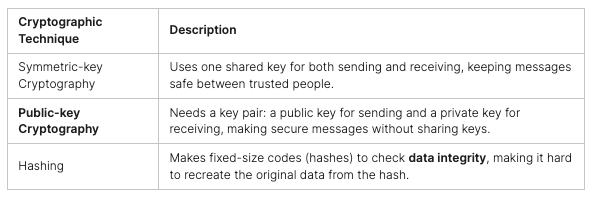
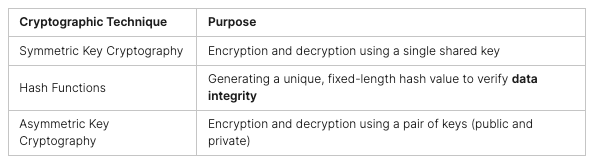
Cryptography has two main types: symmetric and asymmetric. Symmetric cryptography uses the same key for both encrypting and decrypting data. Asymmetric cryptography, or public-key cryptography, uses two different keys: one for encrypting and another for decrypting.
Symmetric and Asymmetric Cryptography
Symmetric-key cryptography is often used for keeping data secret because it’s fast and efficient. Asymmetric cryptography is used for key exchange, digital signatures, and verifying identity, since it doesn’t need a shared secret key.
Cryptographic algorithms, like DES and AES, help keep data safe, secure, and authentic. Hash functions, such as SHA-256 and MD5, turn data into fixed-size outputs to check data integrity and prevent tampering.
Cryptography is key for secure online transactions, digital signatures, password protection, and in military and intelligence fields. But, the rise of quantum computing could threaten current encryption methods. This means we need to keep improving cryptography to keep digital info safe.
Mathematical Foundations of Cryptography
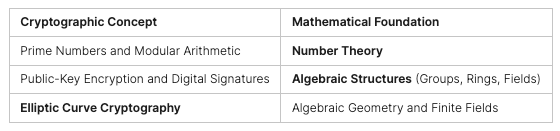
Cryptography is all about keeping messages safe. It’s built on number theory, a branch of math. Things like prime numbers and modular math are key to making secure systems.
Algebraic structures like groups and rings are also crucial. They help create secure ways to send messages and sign documents online. This math is essential for keeping our digital info safe.
Elliptic Curve Cryptography
Elliptic curve cryptography (ECC) is a special part of math used in crypto. It uses curves to make secure keys. ECC is strong like RSA but uses shorter keys, which is great for devices with less power.
The link between cryptographic mathematics and our digital safety is strong. As tech gets better, we’ll need stronger crypto solutions. So, math like number theory and algebra will keep being key to secure online talks.
“Cryptography is the essential building block of independence for organisations and individuals in the digital age.” – Eric Schmidt, former CEO of Google
Public-Key Cryptography: Secure Communication Without Prior Interaction
In today’s digital world, public-key cryptography is key for safe talks between people who’ve never met. It uses two keys: a public key shared openly and a private key kept secret.
RSA, a top public-key method, uses number theory for safe data sharing. To send a secure message, one uses the recipient’s public key for encryption. Only the private key can open it, keeping messages safe. This method means you don’t need to share keys before talking, changing the game for secure communication and key exchange.
Finding a private key by chance is like finding a grain of sand in the universe. Random Number Generation (RNG) uses computer processes and more to make private keys hard to guess or copy.
In Bitcoin and other digital coins, elliptic curve cryptography (ECC) makes public keys hard to turn back into private ones. Bitcoin uses SHA-256 and RIPEMD-160 to make a unique wallet address from the public key.
SSL certificates started using public key cryptography in the 1990s for online safety. Now, public key cryptography is key for keeping online data safe.
Companies need special ways to keep private keys safe, like cold storage wallets and multi-sig wallets. These keep important info safe and build trust with customers online.
“Public-key cryptography has changed how we safely talk online, letting unknown people share sensitive info with confidence.”
Cryptography in Everyday Life
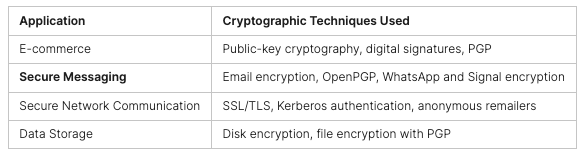
Cryptography is now a big part of our daily digital lives. It keeps our online activities safe. In e-commerce, it’s key for keeping our transactions secure. It protects things like credit card numbers and personal info. Apps like WhatsApp and Signal use end-to-end encryption to keep messages private, so only the intended people can read them.
E-Commerce and Online Transactions
E-commerce has made cryptography a must-have for secure online deals. Public-key cryptography is important for checking who sent a message and making sure it’s real. Tools like Pretty Good Privacy (PGP) add extra security to emails and files, making our digital chats safer.
Secure Communication and Messaging
Cryptographic methods are key to keeping our online chats and messages safe. Email encryption makes sure only the right people can read our messages. OpenPGP adds another layer of security to emails. Apps like WhatsApp and Signal use special codes to keep our messages safe and private.
“Cryptography is the foundation of digital security, ensuring the confidentiality, integrity, and authenticity of our online interactions and transactions.”
Cryptography is now a big part of our daily lives, keeping our data and messages safe. It helps with secure online shopping and private chats. Thanks to cryptography, we can trust and feel safe in our digital world.
Cryptography in Digital Security
In today’s digital world, cryptography is key to keeping data safe. Data encryption helps protect sensitive info by making it unreadable to others. Digital authentication checks who you are, making sure you’re who you say you are, for safe online talks and deals.
Data Protection and Encryption
Data encryption is a big part of keeping data safe. It turns plain text into code that only the right people can read. This keeps your data private, stops others from getting in, and keeps it safe while it’s moving or being stored.
Authentication and Digital Signatures
Digital authentication is key to making sure you’re really who you say you are online. Digital signatures use special codes to prove you’re talking to the right people, keeping out fakes and fraud. This tech is used in many places, like online banking and government services.
Data Integrity and Hash Functions
Cryptographic hash functions help keep data safe by checking if it’s been changed. They make a special code from your data, so you can tell if it’s been messed with. This is super important in fields like healthcare and finance, where keeping data right is crucial.
Cryptography is used in many areas, from the military to entertainment. As we use more technology, the need for data integrity, digital authentication, and data encryption grows. It’s a key tool against cybercrime and protecting important info.
“Cryptography is not just about privacy and secrecy, but also about ensuring the integrity and authenticity of digital information.”
Cryptography helps in many fields, from the military to entertainment. As technology gets better, the role of data integrity, digital authentication, and data encryption grows. It’s vital in fighting cybercrime and protecting important info.
Challenges and Future of Cryptography
The digital world is always changing, and the ways we keep our online secrets safe are facing big challenges. Quantum computing, a new tech with huge power, is a big worry for old encryption methods. This new tech could break many encryption methods very fast and efficiently.
Also, cyber threats are getting worse, making it vital to have strong cryptographic resilience. Companies need to keep up with new threats and be ready for quantum computing’s impact.
Quantum Computing and Its Impact
By 2024, quantum computing will start to be a real threat in the cybersecurity world. Quantum computers can do lots of calculations at once, solving hard problems much faster than old computers.
Evolving Cyber Threats and the Need for Robust Cryptography
To fight these threats, experts are working on quantum-resistant cryptography, or PQC. Big groups like NIST, ENISA, and NCSC are leading the way, making sure we have strong encryption.
Switching to quantum-resistant cryptography is tricky because it must be secure, fast, and work with current systems. In 2024, we’ll see more global work on these new encryption methods because we need to get ready for quantum threats.
Waiting to use quantum-resistant cryptography could leave companies open to big risks. Moving to these new standards is hard because they might be slower and need bigger keys, but they’re key for keeping data safe.
In 2024, companies and cybersecurity experts should start moving to quantum-resistant standards to keep data safe. Keeping an eye on quantum computing and joining in on discussions is important for updating security plans.
Conclusion
Cryptography is key to keeping our digital world safe from threats. As cyber threats grow and new tech like quantum computing comes, we need strong cryptography more than ever. By focusing on cryptography, governments and companies can strengthen their defenses and keep people safe in our digital world.
It’s important to find the right mix of policy, money, and advanced cryptography for digital security. With more of our lives online, we need strong cryptography to protect us. Companies that use encryption, authentication, and data integrity will be ready for cyber threats and keep their customers’ trust.
In the end, cryptography leads the way in fighting fast-changing digital threats. By using cryptography and staying ahead of new challenges, we can make a safer digital future. This future will support innovation, protect privacy, and make us trust the digital world more.
FAQ
What is the role of cryptography in digital security?
Cryptography is key to keeping digital info safe. It uses complex math to protect information. This ensures that digital messages and transactions stay private and secure.
What are the two fundamental components of cryptography?
Cryptography relies on two main parts: the algorithm and the key. The algorithm is a math function for encrypting and decrypting data. The key is a special piece of data that helps with the process.
What are the two main types of cryptography?
There are two main types of cryptography. Symmetric cryptography uses the same key for both encrypting and decrypting data. Asymmetric cryptography, or public-key cryptography, uses two different keys: one for encrypting and another for decrypting.
What is the role of number theory and algebraic structures in cryptography?
Number theory is vital in modern cryptography. It deals with prime numbers and other math concepts crucial for many algorithms. Algebraic structures help build cryptographic protocols, like Elliptic Curve Cryptography (ECC).
How does public-key cryptography enable secure communication between parties?
Public-key cryptography lets people communicate safely, even if they’ve never met. It uses a public key that anyone can see and a private key that’s kept secret. RSA, a well-known algorithm, uses math to keep data safe.
How is cryptography used in everyday life?
Cryptography is used in many parts of our lives. It keeps online shopping safe and protects messages in apps like WhatsApp and Signal. This ensures our privacy and keeps our communications secure.
What are the key challenges facing cryptography?
Cryptography faces big challenges, like quantum computing, which could break some encryption methods. Cyber threats also keep getting worse, targeting weak spots in cryptography. This means we need to keep improving our encryption methods.
APIs are essential for seamless business collaboration and data sharing, but they also present significant security risks. In 2020, 91% of companies experienced API security issues, highlighting the need for vigilant API discovery and monitoring to protect digital assets.
API discovery helps teams identify all active APIs, including hidden or vulnerable ones, allowing them to address issues before they escalate. This approach strengthens API management, keeping them secure and fully functional.
Asset monitoring complements API discovery by overseeing all digital assets, such as APIs and microservices, to detect and prevent threats early. Together, these practices help companies counteract a growing number of cyber threats, which surged by 137% in the past year.
Key Takeaways
API discovery is key for seeing all APIs in use, finding hidden or weak ones.
Asset monitoring works with API discovery to watch over digital assets, like APIs and microservices.
Together, API discovery and asset monitoring help find and fix problems early, keeping APIs safe and in line.
Using API discovery and asset monitoring is vital for fighting off more cyber threats, which have increased a lot.
By focusing on API discovery and asset monitoring, companies can manage their APIs better, keep them up-to-date, and make them secure.
The Importance of API Discovery for Cybersecurity
API discovery is key to better cybersecurity. It helps find and fix old or unwanted APIs, called “zombie APIs,” that might still be used. This makes projects run smoother by preventing teams from doing the same work twice.
API Discovery Uncovers Unmonitored and Vulnerable APIs
Today, most companies use over a thousand apps, a Salesforce survey found. This leads to hidden APIs, or “shadow APIs,” that aren’t listed in the official catalog. A 2022 report shows about 31% of attacks target these hidden APIs. API discovery finds and fixes these hidden dangers.
API Discovery Enables Proactive Risk Assessment and Remediation
Keeping an updated API list helps watch over sensitive data, like user info and API keys. API discovery tools also speed up app development, making things faster and better. Regular and standard API discovery practices are vital for safe and efficient API use.
Using standards like OpenAPI Specification (OAS), REST, and GraphQL makes API discovery better. This way, companies can find and fix problems before hackers do.
“Over a thousand applications are used in modern enterprises on average, according to a Salesforce survey.”
Understanding API Discovery: Internal vs. External Programs
API discovery is key for managing both internal and external APIs. It helps keep digital assets safe and under control. Internal discovery looks at APIs used inside the company. External discovery focuses on APIs shared with others.
Internal API Discovery: Identifying and Managing APIs for Internal Use
Internal API discovery is vital for security and efficiency. With many internal APIs, knowing them well is crucial. It helps in managing risks and ensuring everything runs smoothly.
It involves listing all APIs, knowing their roles, and setting up strong security. This way, companies can keep their internal systems safe and compliant.
External API Discovery: Identifying APIs for Third-Party Integration
External API discovery looks at APIs shared with others. It’s about keeping these APIs secure and compliant. This is important for digital assets shared with the outside world.
It helps spot and fix vulnerabilities. This way, companies can protect their digital assets from outside threats.
“Effective API discovery is the cornerstone of a robust cybersecurity strategy, enabling organizations to maintain control and visibility over their critical digital assets.”
Key Benefits of API Discovery for Organizations
API discovery is key for finding all APIs used in a company. It helps use resources better and makes work more efficient. This method saves money by making IT simpler and making the company more agile.
It also helps keep sensitive data safe, especially with more APIs being used and more attack points. Good API documentation makes it easier for developers to work. This leads to better integration and stronger systems.
Using API discovery helps companies improve security, cut costs, and find new ways to grow and innovate.
API Discovery in Action: Real-World Examples
API Discovery in the Financial Services Industry
Today, companies handle hundreds or thousands of internal APIs. In finance, 81% see APIs as key for business and IT. Major banks spend about 14% of their IT budget on APIs.
API discovery is vital here. It helps find hidden or unused APIs, called “zombie APIs.” These can be big security risks if not managed.
Good API discovery helps fix security issues. This includes not having authentication, exposing sensitive data, and sharing too much data. By checking their APIs, banks can lower risks and follow rules like GDPR and HIPAA.
API Management Platforms and API Discovery
API management platforms are key for managing APIs. They help with development, design, and security. These platforms manage an API’s whole life cycle.
They let companies see both public and internal APIs. This gives a full view of the API world. It helps with risk checks and fixing problems.
In short, API discovery is key for good API management and security, especially in finance. With the right tools, companies can see their API world, check risks, and protect data. This keeps them safe and follows rules.
“Effective API discovery and management are essential for organizations to maintain a strong cybersecurity posture and stay ahead of evolving threats in the digital landscape.”
Why API Discovery and Asset Monitoring Are Essential for Strong Cyber Defense
In today’s digital world, APIs are key for innovation and connection. They are crucial for a strong cybersecurity stance. API vulnerabilities have jumped 30% to 846 instances in 2023, making up 3.44% of all CVEs. This shows APIs are a big security risk, with 29% of CVEs in 2023 being API-related.
API discovery helps find and secure all APIs in an organization. With about 100 APIs on average, leaks from services like MailChimp have put 54 million users at risk. By finding and listing all APIs, companies can spot and fix vulnerabilities, protecting their systems and data.
In summary, API discovery and asset monitoring are vital for strong cyber defense. By actively managing APIs and monitoring their attack surface, companies can reduce risks and protect their digital assets.
“APIs constitute indispensable targets for security breaches, and organizations must prioritize API discovery and asset monitoring to strengthen their cyber defense strategies.”
Differentiating API Discovery and API Management
API discovery and API management are two important parts of the digital world. API management handles the whole API life cycle, from start to finish. API discovery is key in finding and understanding the APIs we have, making sure they don’t repeat each other and are safe and follow rules.
API Discovery Avoids Duplicating Functionality
API discovery helps teams find and avoid making the same thing twice. It keeps track of all APIs in one place. This way, teams can use what’s already there instead of starting over. It makes work more efficient and helps everything work better together.
API Discovery Focuses on Finding and Cataloging APIs
The main job of API discovery is to find and list all APIs in an organization. Knowing all about the APIs helps make better choices and plans. It also makes it easier to keep track of and use APIs safely and well throughout their life.
API Discovery Ensures Security and Compliance
API discovery is also key for keeping things safe and following rules. It makes sure all APIs are secure and follow the rules. This helps avoid problems and keeps everything in line with the law.
“APIs are expected to grow to millions, emphasizing the importance of exploring and testing suitable APIs for developing innovative applications.”
In short, API discovery and API management are two sides of the same coin. They help drive new ideas, keep things safe, and make sure everything works well together. API management looks after the whole API life cycle. API discovery focuses on finding, listing, and keeping APIs safe. This helps make better choices and use APIs more efficiently.
The Role of Asset Monitoring in API Security
Asset monitoring is key to strong API security. It keeps an eye on API assets like endpoints and usage patterns. This way, organizations can spot and fix vulnerabilities and suspicious activity fast.
This proactive method helps in assessing risks better and responding quickly to threats. It also ensures the safety of sensitive data and critical API functions.
Asset monitoring helps security teams fight off major API threats. These include Broken Object-Level Authorization (BOLA) and Broken User Authentication. These threats can cause big data breaches.
It also tackles Excessive Data Exposure and Lack of Resources and Rate Limiting issues. These can lead to huge data breaches and API downtime.
Asset monitoring catches Broken Function Level Authorization (BFLA) threats too. These can let unauthorized access or take over admin privileges.
By keeping a close eye on the API ecosystem, organizations can tackle these risks. This ensures the safety and integrity of their API operations.
Recent studies show 95% of enterprises face security issues in their APIs. And 23% have had a breach because of API security problems. With APIs making up over 71% of web traffic, monitoring them is more crucial than ever.
Asset monitoring helps organizations adopt a “Zero Trust” API security model. This model assumes a breach and grants minimal access privileges. It also uses threat analytics and security policies through an API gateway.
This approach helps defend against many security threats. It makes the API ecosystem safer from malicious actors.
In summary, asset monitoring is essential for a solid API security plan. It helps organizations stay visible, in control, and resilient against API security challenges.
Best Practices for API Discovery and Asset Monitoring
Keeping your cybersecurity strong needs a solid plan for finding and watching APIs. Here are some key steps to help you find, protect, and manage your APIs:
Use automated tools to find all APIs inside and outside your company.
Keep a detailed list of your APIs, including what they do and how they work.
Watch how APIs are used and their security to spot problems early.
Make sure only the right people can use your APIs by setting up strong access controls.
Make API security a part of your overall security plan for better protection.
Following these steps helps you find and fix API problems before they cause trouble. This way, you can keep your data safe and your systems running smoothly.
“API security is a critical component of any organization’s cybersecurity strategy. By implementing robust API discovery and asset monitoring practices, businesses can stay ahead of evolving threats and protect their valuable data and resources.”
API discovery and monitoring are key to a strong cyber defense. By sticking to these best practices, you can protect your APIs, lower the chance of data breaches, and keep your digital assets safe.
Conclusion
A strong cybersecurity strategy hinges on effective API discovery and asset monitoring, enabling security teams to identify and address vulnerabilities before they become major issues. By actively managing assets and monitoring APIs, organizations can significantly reduce risks, reinforce security, and maintain a secure cloud environment.
Proper asset management is essential, especially as overlooked or outdated data can lead to serious financial and compliance risks. API discovery plays a critical role in mitigating potential threats, as shown by high-profile incidents like the 2017 Equifax breach, underscoring the importance of securing APIs and protecting sensitive information.
Asset monitoring, combined with robust API security solutions, offers a comprehensive view of applications and cloud infrastructure. Solutions like CNAPP provide runtime protection, vulnerability management, threat detection, and response, ensuring that cloud-native applications remain secure and resilient against evolving cyber threats.
Enhance your cybersecurity with Peris.ai’s suite of solutions tailored to safeguard your organization. Visit Peris.ai to learn more about our advanced products and services.
FAQ
What is API discovery and why is it crucial for cybersecurity?
API discovery finds and lists all APIs in an organization. It’s key for cybersecurity because it shows all APIs used. This lets security teams find and fix hidden or risky APIs.
What is the difference between internal and external API discovery?
Internal API discovery looks at APIs used inside the company. It helps find and fix security issues and improve work flow. External API discovery looks at APIs used by others, like partners or customers. It helps keep these APIs safe and in line with rules.
What are the key benefits of API discovery for organizations?
API discovery helps save money by making IT simpler and more flexible. It helps systems work better together and keeps data safe. It also makes building new systems easier and more efficient.
How is API discovery used in the real world?
In finance, 81% see APIs as very important. Big banks spend 14% of their IT budget on APIs. API management tools help manage and secure APIs, making the whole system better.
How does API discovery differ from API management?
API discovery finds and lists APIs, while API management handles them from start to finish. Discovery makes sure APIs are safe, which helps the whole company stay secure.
What is the role of asset monitoring in API security?
Asset monitoring keeps an eye on all API parts. It helps spot and fix problems fast. This makes the API system safer and more secure.
What are the best practices for API discovery and asset monitoring?
Use automated tools for discovery and keep API lists current. Watch API use and traffic closely. Use strong access controls and security checks. Make API security part of the company’s overall security plan.
More people than ever are online, using many apps and devices. Traditional antivirus software can’t protect us from the wide range of cyber threats we face. With over 450,000 new harmful programs appearing daily, the fight against cyber threats has become huge and complex. Basic antivirus tools are now often not enough.
As a business leader, you’ve likely felt the growing problem of antivirus software not keeping up with cybercriminals’ new tactics. Threats and malware keep getting better, going beyond what basic antivirus can handle. They can’t stop things like ransomware, zero-day exploits, and advanced threats. It’s time to look into stronger, more complete cybersecurity solutions to protect your business in this new digital risk era.
Key Takeaways
Antivirus software alone is no longer enough in today’s evolving cybersecurity landscape.
The scale and complexity of cyber threats have outpaced the capabilities of traditional antivirus tools.
Advanced threats and malware require a more comprehensive, proactive approach to security.
Implementing a multi-layered cybersecurity strategy is essential for effective protection.
Exploring alternative security solutions, such as EDR and managed security services, can enhance your organization’s defenses.
The Evolving Cybersecurity Landscape
The digital world has changed a lot. More devices connect online every day, which has caused cyber threats to increase sharply. Now, we need more than traditional antivirus software to keep companies safe from new, complex attacks.
The Growing Need for Robust Cybersecurity Solutions
Cybercriminals use many new techniques now. They deploy ransomware, target supply chains, and use APTs, among other things. The push for digital upgrades by businesses has made them more vulnerable. This is because of cloud use, IoT, and more.
Antivirus Software’s Limitations in Today’s Threat Environment
Usually reliable defenses like firewalls are not enough anymore. Attacks now often go past these barriers. Also, the shift to remote work and using the cloud means old security rules don’t work as well. Devices connecting from everywhere, such as with BYOD, add to these difficulties.
Endpoint security and EDR tools can safeguard single devices against some threats. However, this is harder for big companies. MDR can help, but it also has its own problems, like finding too many false alarms.
With cyber threats growing, companies need to use different tactics together for safety. This shows we must look beyond just using antivirus software.
“Antivirus software alone detects only around 90% of known malware samples, leaving a substantial percentage undetected, as indicated by a study conducted by AV-TEST.”
The risk of cyber threats is becoming more complicated, so businesses must find ways to deal with these new dangers.
Understanding Antivirus Software
Antivirus software is key to keeping devices safe from harmful software like viruses and malware. It uses different ways to spot threats, including signature-based and heuristic-based detection. Next-generation antivirus uses AI to stop new threats without needing constant updates.
Malware attacks can cause big problems, like losing data or money and harming your reputation. To stay safe, it’s important to use antivirus software, keep software updated, and back up your data.
When picking antivirus software, think about how well it detects threats, its modern security features, and how it affects your system. Free versions can protect you, but you might need to pay for more features.
Windows antivirus software helps protect against malware by scanning your system and checking emails and websites. MacOS antivirus software also guards against malware, focusing on emails and web browsing. Android antivirus is crucial because many mobile devices are targeted by malware.
Antivirus software uses different ways to find and stop threats. Signature-based detection looks for known malware patterns, while heuristic-based detection uses algorithms to spot threats. Behavior-based detection watches how software acts to see if it’s harmful. To keep up with new malware, antivirus companies use cloud analysis.
“The cybersecurity landscape is constantly evolving, and antivirus software alone is no longer sufficient to protect against the ever-increasing threats. A comprehensive, multi-layered approach to cybersecurity is essential for safeguarding individuals and organizations in today’s digital landscape.”
Antivirus software is vital for fighting malware, but it’s not enough. For full protection, you also need to use encryption, multi-factor authentication and managed security services.
The Limitations of Antivirus Software
Antivirus software is key to cybersecurity, but it has big limits in fighting new threats. It looks for known malware patterns, finding new ones every day. Most software scans files or directories in real-time and does full scans at set times. Keeping your software updated is crucial for the best protection.
The Staggering Number of New Malicious Programs
Over 450,000 new malicious programs appear every day. This shows that antivirus software alone can’t fully protect your data. With so many new threats, antivirus vendors can’t always keep up, leaving users at risk.
The Reactive Nature of Antivirus Software
Antivirus software reacts after an infection, not before. This means businesses can suffer damage from quick attacks. IT Architechs says over 90% of cyber attacks start with emails. Just antivirus isn’t enough against these complex attacks.
The Rise of Smarter Malicious Programs
Cybercriminals now create malware that antivirus programs cannot catch. Since antivirus programs only look for known threats, new, smarter malware can slip through. This shows that we need a stronger, proactive approach to fighting cyber threats.
“While installing anti-virus software is effective, it has limitations as it can only detect malware with known characteristics, making users susceptible to new malware before it is identified by anti-virus vendors.”
In conclusion, antivirus software is vital but has its limits. We need a stronger, multi-layered approach to fight the growing cyber threats.
Cyber-attacks That Bypass Antivirus
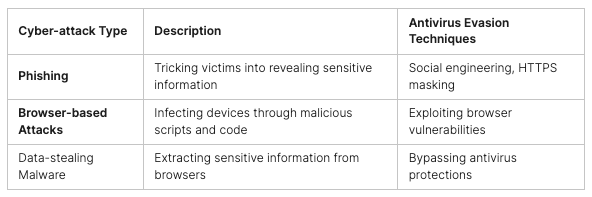
Cybercriminals are getting smarter and finding new ways to beat antivirus software. They use polymorphic malware that changes its file hash often, making it hard to catch. Malicious documents can also change their file hashes to slip past antivirus checks. Fileless malware attacks are making antivirus solutions harder to keep up with.
Phishing attacks are becoming more common. These scams trick people into sharing sensitive info like passwords or bank details. What’s scary is that many phishing sites now use HTTPS to hide their true nature, making them tough to spot.
Browser-based attacks are another big threat, spreading malware through web pages. Data-stealing malware can get into browsers and grab sensitive data, avoiding antivirus.
These attacks show that traditional antivirus software can’t keep up with new threats. DoS and DDoS attacks try to flood systems and take them down, making antivirus less effective. MITM attacks intercept data, so strong encryption is key to protect against them.
Cybercriminals keep getting better, so we need a strong, multi-layered defense against them. Using advanced security tools, training employees, and being proactive can help protect against these threats.
“The rise of cyber-attacks that bypass antivirus software underscores the need for a holistic approach to cybersecurity. Traditional solutions are no longer sufficient to protect against the growing sophistication of modern threats.”
Antivirus Software in Cybersecurity
Antivirus software is still key in cybersecurity, but it’s not enough to fight all threats alone. The average cost of a data breach on mobile devices hit $1.9 million in 2023, showing we need a broader cybersecurity plan.
There are two kinds of antivirus software: free and paid. Top names include Bitdefender, AVAST, and Panda. These tools help block spam, protect against viruses, and stop hackers. But they can slow down your computer, show ads, and have security gaps, especially in free versions.
Antivirus software uses different ways to find and stop threats. It looks for known threats, uses sandboxing, and learns from data to protect you. But, it mainly reacts to threats it knows about, not new ones.
To really protect digital assets, we need a full cybersecurity plan. This includes updating software, using strong passwords, and training staff. It also means backing up data, securing networks, and following rules for cybersecurity.
In summary, antivirus software is crucial but not enough for today’s complex threats. We must use a mix of antivirus and other security steps to protect our digital world.
Robust Cybersecurity Solutions Beyond Antivirus
As cybersecurity evolves, businesses need more than just antivirus software. They must use a mix of advanced security tools to protect themselves. This mix helps fight off many cyber threats.
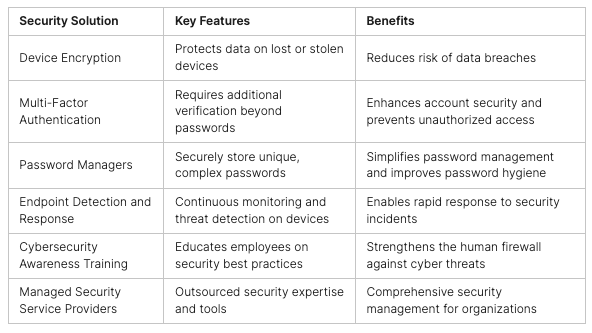
Device Encryption
Using device encryption is key to a strong cybersecurity plan. It ensures that all company devices, such as laptops and phones, are safe. If a device gets lost or stolen, encrypted data is hard for others to access.
Multi-Factor Authentication
Multi-factor authentication (MFA) is vital today. It makes logging in more secure by asking for extra proof, like a code or your face. This stops hackers from getting into accounts easily.
Password Managers
Bad passwords are a big risk for hackers. Password managers keep strong, unique passwords safe for each account. They make it easy for employees to keep their passwords secure.
Endpoint Detection and Response (EDR)
Endpoint detection and response (EDR) systems monitor devices closely. They spot and act on threats quickly, helping stop attacks before they get worse.
Cybersecurity Awareness Training
Teaching employees about cybersecurity best practices is crucial. Training covers how to spot phishing, manage passwords, and report incidents, turning employees into the first line of defense.
Managed Security Service Providers (MSPs)
For those without the skills or resources for cybersecurity, working with a managed security service provider (MSP) is smart. MSPs offer many services, like monitoring and handling security issues. They make sure companies have the right tools and knowledge to fight cyber threats.
By using a layered cybersecurity approach, businesses can protect themselves well. This is better than just relying on antivirus software.
“A strong cybersecurity strategy requires a multi-layered approach that goes beyond traditional antivirus software. By implementing a combination of advanced security tools, businesses can significantly enhance their resilience against the ever-evolving threat landscape.”
The Rise of Ransomware-as-a-Service (RaaS)
The ransomware industry has grown into a huge business, with cybercriminals using Ransomware-as-a-Service (RaaS) more and more. RaaS lets even new hackers do complex ransomware attacks. The people who make the malware give the tools and help, taking a share of the money made. This has led to more ransomware attacks on businesses of all sizes, with many new types and groups making money from this.
IBM’s X-Force Threat Intelligence Index says ransomware was a top cyber attack type in 2022. Zscaler’s 2022 report found that 8 out of 11 top ransomware types were RaaS. Now, ransomware attacks happen much faster, taking just 3.85 days on average in 2022, down from over 60 days in 2019.
RaaS has let many cybercriminals start ransomware attacks. Some types, like LockBit, made up 17% of ransomware cases in 2022. REvil was also big, causing 37% of ransomware attacks in 2021. The DarkSide ransomware was used in a big 2021 attack on the U.S. Colonial Pipeline, seen as the worst cyberattack on U.S. infrastructure.
Ransomware attacks are very profitable, with an average demand of $6 million in 2021. Total ransomware money made in 2020 was about $20 billion, up from $11.5 billion the year before. RaaS groups take a cut of the money made by affiliates, often 20% to 30%. The DarkSide group made nearly $5 million from the Colonial Pipeline attack, and REvil demanded $10 million in one case.
RaaS has made it easier for cybercriminals to attack, causing big problems for businesses and organizations worldwide. As threats grow, it’s key for companies to use strong cybersecurity to fight these attacks.
Getting over a ransomware attack is hard and expensive, which is why stopping RaaS attacks before they happen is crucial. With the ransomware industry growing, we need strong cybersecurity solutions that go beyond antivirus software.
The Advantages of EDR and MDR
As the world of cybersecurity changes, the usual antivirus software isn’t enough to stop advanced threats. So, many groups are now using more powerful tools, including Endpoint Detection and Response (EDR) and Managed Detection and Response (MDR) services.
How EDR Works to Detect and Respond to Threats
Traditional antivirus just can’t keep up. EDR solutions constantly monitor what’s happening on devices. They find strange or unknown things. When they find something bad, they act fast to stop it from spreading.
EDR is different from antivirus because it doesn’t just focus on known dangers. It uses smart tools and learns from patterns to spot any kind of threat. This means companies get a big-picture view of their safety. Then, they can move fast to deal with serious threats.
The Role of Managed Detection and Response (MDR) Services
For even more protection, companies use MDR services on top of EDR. MDR is like EDR, but it’s also a team that watches over your security all the time. They find problems and help fix them right away.
Choosing MDR means companies can find and stop threats quickly without adding more people to their teams. MDR also helps teams react quickly when there’s a security emergency.
EDR and MDR, together with antivirus, provide a strong defense against many kinds of threats.
Extended Detection and Response (XDR) solutions offer even more protection. XDR doesn’t just watch the devices; it keeps your whole security system safe. This kind of system watches for threats and acts to stop them.
By using EDR, MDR, and XDR, companies become better at seeing threats. They act quickly, save money, and manage their security team more easily.
“Implementing EDR, MDR, or XDR can help organizations improve threat visibility, accelerate security operations, reduce total cost of ownership (TCO), and ease the security staffing burden.”
Cyber Insurance and the Importance of EDR
Cyber insurance companies now see the big role of endpoint detection and response (EDR) tools. They know EDR is key to lowering cyber risks and keeping security strong. Traditional antivirus software can’t stop today’s complex cyber threats.
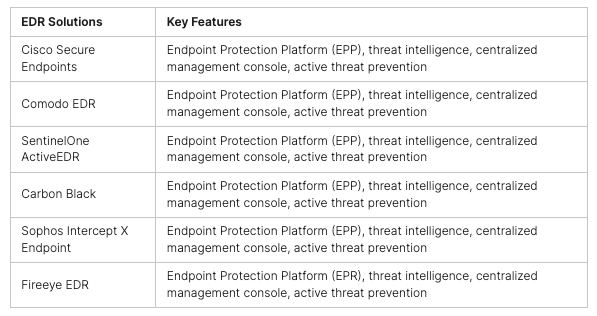
Many insurers now ask for EDR to qualify for policies. EDR tools have features like Endpoint Protection Platform (EPP), threat intelligence, and a central management console. These help companies spot, analyze, and act on security issues fast.
With new AI tools, keeping cybercriminals out is harder. Insurers want businesses to use strong security, such as EDR and multifactor authentication, to obtain cyber insurance.
Adding EDR to a company’s security plan shows that they’re ready to handle cyber risks. It helps them get cyber insurance, keeps their data safe and in compliance with laws, and strengthens them against cyber threats.
Cyber insurance also requires other security steps, like data backups and employee training. Using EDR and other strong security steps helps companies get cyber insurance. It also improves their security and lowers their risk.
Cyber insurance has many benefits, like covering cyberattack costs and helping with compliance. But insurers now want EDR and behavioral detection to fight new threats. Traditional antivirus isn’t enough against today’s threats.
Adding EDR to a company’s security plan is key for cyber insurance and fighting new threats. EDR helps protect digital assets, reduce losses, and keep customers and partners trusting.
The Value of Managed IT Services
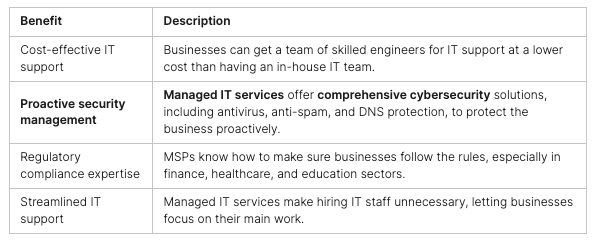
As the world of cybersecurity changes, working with a managed IT service provider (MSP) is key for companies. These services are gaining popularity among businesses for their reliable IT support. They offer access to skilled engineers who can set up and manage advanced security tools like Endpoint Detection and Response (EDR). These services are paid monthly and vary in cost based on the number of users, making them a good fit for small and medium-sized businesses.
Managed IT services offer more than just saving money. They provide a range of services, including cybersecurity management, cloud services, and remote monitoring and management. They also offer business continuity and disaster recovery solutions. Plus, MSPs are experts in handling rules for industries like finance, healthcare, and education, which is very useful.
One big plus of managed IT services is getting 24/7 IT support from skilled engineers who can fix problems quickly. The cybersecurity package includes antivirus, anti-spam, and DNS protection, making businesses safer. These services also make hiring IT staff easier, letting businesses focus on what they do best.
Working with a managed IT service provider helps businesses get the cybersecurity help and proactive management they need. This partnership helps businesses stay ahead of cyber threats and keeps their IT systems reliable and efficient.
“Managed IT services enable small to medium-sized businesses to access critical network, endpoint, and data management for smooth operations at a fraction of the cost of in-house management.”
By using the skills and resources of a managed IT service provider, companies can improve their cybersecurity, stay ahead of threats, and make their IT work better. This leads to more efficiency and profit.
Conclusion
In today’s rapidly evolving cyber landscape, traditional antivirus software alone is no longer sufficient to protect businesses from sophisticated threats. While antivirus solutions play a crucial role in detecting and blocking malware, their effectiveness relies heavily on frequent updates to identify new threats. Although essential, this approach may fall short against the complexities of modern cyber threats like ransomware.
To overcome antivirus software’s limitations, companies need to adopt a multi-layered cybersecurity strategy. This includes implementing advanced tools such as Endpoint Detection and Response (EDR), Multi-Factor Authentication (MFA), password managers and managed security services. EDR software is particularly effective in detecting, investigating, and responding to network attacks, providing comprehensive protection for businesses of all sizes.
By integrating these advanced cybersecurity measures, businesses can fortify their defenses against emerging threats. A robust cybersecurity plan should encompass regular security assessments, ongoing employee training, and expert support to mitigate cyber risks effectively.
Empower your cyber defense with Peris.ai Brahma – Incident Response Platform. Brahma offers an all-in-one, enterprise-grade solution designed to identify, prevent, and respond to both known and emerging cyber threats across your organization’s infrastructure. Utilizing advanced machine learning and behavior analytics, Brahma delivers exceptional detection and response capabilities across endpoints (EDR), network (NDR), and extended (XDR) systems.
Key Features of Brahma:
Dashboard Monitoring: Central hub for real-time security metrics, interactive charts, graphs, and alerts.
Security Configuration Assessment: Comprehensive view of system security configurations, identifying vulnerabilities due to misconfigurations.
MITRE ATT&CK Framework: Visualizes defensive coverage, helping you understand tactics and techniques used by attackers.
Vulnerabilities Dashboard: Centralized view of identified vulnerabilities, prioritizing and managing remediation efforts effectively.
Choose Brahma to fortify your organization’s defenses with cutting-edge technology, seamless integration, and unparalleled protection. Elevate your cybersecurity strategy and secure your digital future with Brahma. For more information, visit Peris.ai Cybersecurity.
FAQ
What are the limitations of traditional antivirus software in today’s cybersecurity landscape?
Antivirus software falls short in the battle against modern cyber threats. It struggles with the increase in devices and online actions, making it less effective against new types of malware and cyber threats.
What types of cyber-attacks can bypass antivirus software?
Phishing, browser attacks, and data theft are among the dangerous online threats. These dodgy tactics take advantage of gaps in antivirus software’s protection and sneak past undetected.
What are the key components of a robust cybersecurity solution beyond antivirus?
A strong cybersecurity setup needs several layers beyond basic antivirus. It includes device encryption, strong authentication, and password management. Also crucial are EDR, training on cybersecurity, and help from MSPs.
How do Endpoint Detection and Response (EDR) and Managed Detection and Response (MDR) solutions enhance cybersecurity?
EDR doesn’t just set watch like antivirus. It actively looks for threats by monitoring device activities. MDR steps up by not only watching but also having experts ready to take down threats as they spot them.
Why is cyber insurance increasingly requiring EDR as a prerequisite for policy qualification?
EDR is a must for cyber insurance these days. It proves that a company is doing its best to stay secure against cyber risks. Traditional antivirus can’t do this job well enough alone.
How can managed IT services help organizations enhance their cybersecurity?
Managed IT services offer vital help in keeping up with the fast-changing cyber threats. They can bring in and manage the latest security tech. This keeps businesses reacting fast and staying safe.
In the digital world of today, cybersecurity threats keep changing. Have you ever thought about how companies check their information security and guard against attacks? The key is a detailed security audit. But what does this audit mean, and why is it vital for companies of all sizes?
A security audit closely looks at an organization’s information systems, networks, and processes. It finds any weak spots cybercriminals could use. This check also looks at how well security controls, policies, and procedures are working. It sees if they meet industry best practices and compliance standards. The main goal is to let companies know how good their security is. It also helps them understand specific risks and find ways to avoid threats.
Why is a security audit important for every organization? What makes it so critical that you can’t ignore it? Let’s look into what a security audit really involves and why it matters so much.
Key Takeaways
A security audit is a comprehensive assessment of an organization’s information security posture, identifying vulnerabilities and weaknesses that could be exploited by cybercriminals.
The goal of a security audit is to help organizations assess their security posture, understand specific risks, and identify ways to protect the business against potential threats.
By conducting regular security audits, organizations can proactively manage risks, and safeguard against financial loss, reputational damage, and operational disruptions, ensuring the business’s sustainability and growth.
Security audits evaluate the effectiveness of security controls, policies, and procedures, and determine if they align with industry best practices and compliance standards.
Implementing best practices for security audits, such as regular monitoring, employee training, and collaboration, is crucial for ensuring their effectiveness and ongoing success.
The Importance of Security Information Audits
Security information audits are crucial for keeping an organization’s systems safe and strong. They check if the systems follow the rules well. This is important for protecting against dangers.
Preventing Data Breaches
These audits find system weaknesses early, helping avoid data breaches. Breaches can hurt the company’s finances and how it is seen by the public. They also lower how much customers trust the company. By working through these audits, experts offer ways to fix these issues. This keeps the company’s information safe from those who shouldn’t have it.
Compliance with Regulations
Security audits also help the company follow important laws like Sarbanes-Oxley and GDPR. Not following these laws can lead to big fines and harm the company’s image. With these regular checks, companies show they take data privacy and laws seriously. This builds trust with everyone involved.
Understanding a Security Audit
A security audit checks an organization’s information systems and processes. It finds any weak points that hackers might use. This check looks at how well security rules and plans are working. It also shows if they are following strong standards and rules.
Definition and Objectives
The main goal of a security audit is to see how safe an organization is. It looks for places where trouble might start. Then, it suggests ways to make the organization’s safety better. Doing these checks helps a group know where they are strong and where they need to work harder.
Internal vs. External Audits
Security audits are either done inside a company or by outside experts. Inside audits are by the company’s IT crew. They know the organization well. External checks are done by outsiders. They look at security without any biases. This gives a clear view of what’s happening.
Frequency and Timing
How often a security check is done depends on many things. The size of the organization and its field matter. So does how much risk it can take. Usually, a security audit should happen every year. For places handling secret data or in strict fields, more checks are needed. This keeps security strong against new threats.
Planning and Preparation
Getting ready for a security audit means carefully checking everything in your business. You start by choosing what parts of your IT system will be looked at. This might be your network security or how you keep customer data safe. You also make sure to follow special rules for handling important info, like HIPAA for healthcare data. Or PCI for card info.
Determining Scope and Goals
It’s key to clearly define the scope and goals of the security audit. This makes sure everything important gets checked. You figure out what’s most valuable and what could go wrong. Then, you set audit goals that match how you keep things safe in your business.
Gathering Documentation
Now, it’s time to collect all the paperwork needed for the audit. You make a security audit checklist to do this. This includes copies of your policies, procedures, and any old audit reports. Having all this info together helps the auditors grasp how secure your business is and if you follow the rules.
Selecting Audit Tools
The right audit tools will include things like code checkers or software that watches what users do. These tools help point out where your systems might be weak. They also check if your current safety steps are good enough. And they gather the facts needed for their advice.
Lastly, you should team up with the auditors. Choose people from your IT team who know your systems very well. Working together makes the audit go smoother and ensures it meets your specific business needs.
Conducting the Audit
The work of a security audit follows several important steps. First, a risk assessment happens. The auditor looks at what the company values most, how important it is, and what risks are connected. This includes trying to hack into systems, searching for weak spots, and seeing if staff are likely to fall for trickery. The findings help us understand how safe the company is. Then, the audit checks on the evaluation of security measures. This looks deeply at how well the company’s security rules and procedures work. The auditor checks if access controls are strong, if the network is secure, if web apps are safe, and how well staff know to stay safe. By spotting where the company’s security is weak, the audit can suggest clear ways to do better.
Security Audit
A security audit is key for managing risks in any business. It checks an organization’s info systems, networks, and processes. The goal is to spot vulnerabilities that cybercriminals might use. The audit also looks at whether the security controls, rules, and steps follow what’s best in the industry and if they meet compliance standards.
The audit starts with a risk assessment. Here, the auditor figures out what valuable assets the organization has. They look at how important these are and what risks they face. This step may use penetration testing, checks for weaknesses, and see if employees can be tricked by social engineering. The test results give a clear picture of how good the organization’s security is against possible risks.
Regular security audits let companies stay ahead of risks. They help avoid money loss, harm to their reputation or stops in their work. This keeps the company growing. The suggestions from the audit are a guide to make cybersecurity and data protection better. In the end, they make the organization stronger against new cyber threats.
Reporting and Follow-Up
After the security audit, the auditor makes an audit report. This report shows what they looked at, what they found, and how to make things better. It aims to boost the organization’s security posture.
Audit Report and Recommendations
The audit report is a detailed document. It points out where the organization is strong, where it’s weak, and how to improve. It’s like a map to fix any problems and make sure the company is safe online.
Implementing Recommendations
After getting the audit report, the company starts improving security. This can mean making new rules, adding security measures, training employees, or meeting certain standards. They choose what to do first by looking at the most serious risks and the biggest impacts on the business.
Continuous Improvement
Security audits are not just once. They should happen often. This way, the company keeps getting better at security. By testing and improving regularly, they stay ready for new security threats to keep their security posture strong.
Key Areas of Focus
Experts focus on certain key areas when they do a full security audit. They make sure to check website security, network security, and data privacy and protection. All these areas are very important for keeping an organization safe.
Website Security
An organization’s website must be very secure. It’s the main way the public sees the company and can be a big target for online attacks. A security audit looks at things like SSL/TLS, web application firewalls, and how the site deals with vulnerabilities.
This check finds any weak spots that could be used by hackers. Then, the organization can make its security stronger. This protects the company’s presence online.
Network Security
Network security is key and gets a lot of attention during a security audit. This part checks the structure of the organization’s network. It looks at things like firewalls, routers, and the controls in place.
The goal is to make sure everything is set up right to keep out threats. The audit also looks at things like remote access and cloud services for a full view of network safety.
Data Privacy and Protection
Protecting data is very important in our world today. A security audit reviews how an organization manages its data. It covers the use of access controls, encryption, and making sure data can be properly backed up and recovered.
This check also looks at how well the organization follows data protection laws. By doing this, the organization can protect its data well. It also keeps the trust of its customers and others.
Audit Tools and Resources
For a thorough security audit, one needs a set of special tools. These help find weaknesses, check how well security works now, and suggest ways to improve.
Intruder is a leading audit tool. It’s a vulnerability scanner that checks all security points. Its deep scans look at networks, web apps, and clouds. It also gives a detailed list of what needs fixing.
Mozilla Observatory is also key. It checks a site’s security features closely. Things it looks at include SSL/TLS setup and security headers. This helps spot and fix website security problems.
Organizations can use both free and paid tools for their audits. They include best practices, rules, and advice on tools and methods.
Tool:
CyCognito: CyCognito automates vulnerability management, prioritizing critical issues by business impact, not just severity. It continuously monitors your attack surface and uses context to intelligently prioritize threats.
Tenable: Tenable scans on-premises and cloud assets for vulnerabilities. It uses Nessus for deep network inspection and offers web application scanning for real-world testing.
Qualys: Qualys scans all IT assets in the cloud for vulnerabilities (Qualys VM) and offers real-time web application testing (DAST) to find security holes.
Rapid7: Rapid7’s InsightVM goes beyond basic scans. It offers live monitoring, and real-time risk analysis, and integrates with Metasploit for simulating attacks to find exploitable vulnerabilities.
Acunetix by Invicti: Invicti (formerly Acunetix) scans web apps for vulnerabilities (reducing false positives) and simulates attacks to find critical issues like SQL injection and XSS.
Burp Suite: Burp Suite (PortSwigger) is a pen tester’s toolkit for web application security testing. It offers manual and automated tools, including an intercepting proxy and vulnerability scanning, to find security weaknesses.
Frontline VM: Frontline VM (Digital Defense) simplifies vulnerability management in the cloud. It analyzes risks, prioritizes issues, offers remediation guidance, and integrates with security tools for faster fixes – even for non-experts.
OpenVAS: OpenVAS is a free, open-source vulnerability scanner for networks, servers, and web apps. It offers a big vulnerability database, scales well, and has a supportive community. However, setup might be more complex than commercial options.
OWASP ZAP: ZAP (OWASP) is a free, open-source scanner for web application security. It helps find vulnerabilities during development and testing with automated scans and manual testing tools. ZAP integrates with development pipelines for better security throughout the process.
Nmap: Nmap (free, open-source) maps networks, finds open ports & services, and even checks for vulnerabilities using scripts. It’s great for both network recon and targeted vulnerability assessments.
Managed Security Audit Services
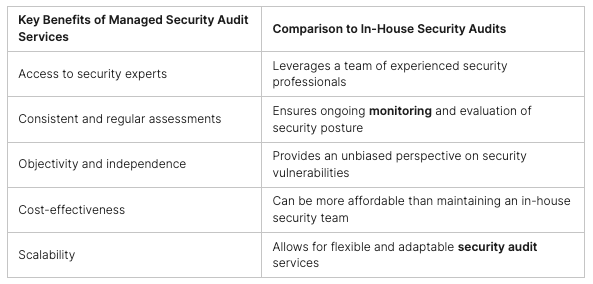
Businesses can get help with managed security audit services from outside experts. These services have many benefits. They include:
Working with a team of skilled security audits experts.
Always check and update your security with frequent security audits.
Getting an outside viewpoint on your security issues.
Saving money compared to having a whole in-house security team.
Changing the number and kind of security audits as needed.
Choosing the right managed security audit service helps companies keep their tech safe. This is especially key for small or mid-sized companies with not much IT staff.
Best Practices for Security Audits
It’s crucial to follow the best practices for the success of security audits. These practices include:
Regular Audits and Monitoring
Companies should regularly check for security gaps. They must keep an eye on their IT setups to catch and fix any problems fast.
Employee Training and Awareness
Teaching workers about security best practices matter a lot. When everyone knows how to keep things safe, risks go down. This especially helps against tricks like social engineering.
Collaboration and Communication
Working together is key for security audits to work well. The IT team, bosses, and others must talk and agree on safety goals. This makes it easier to act on any advice given.
Conclusion | Don’t Settle for Fragile Security – Take Control with BIMA
In today’s ever-evolving digital landscape, cyber threats are a constant concern. Regular security audits are crucial for identifying vulnerabilities before they’re exploited. However, relying solely on audits can leave your business exposed between assessments.
Here’s where BIMA steps in.
BIMA is your comprehensive Cybersecurity-as-a-Service (SecaaS) platform, offering 24/7 protection against even the most sophisticated attacks. Our powerful suite of security tools, combining proprietary and open-source technology with cutting-edge threat intelligence, provides unparalleled security without breaking the bank.
BIMA gives you the power to:
Proactively identify and mitigate risks before they impact your business.
Simplify security management with our user-friendly platform.
Scale your security needs seamlessly, whether you’re a startup or a large enterprise.
Benefit from a pay-as-you-go model, only paying for the services you need.
Don’t wait for the next cyberattack to disrupt your business. Secure your digital world with BIMA today!
A security audit checks how safe and strong the systems are. It looks at an organization’s tech, like its computers and networks. The goal is to find and fix any weak spots that hackers could use.
The audit sees if the organization follows security rules and advice. It also checks to make sure that the systems meet certain standards.
Why are security information audits crucial?
A security audit is important for keeping data safe. It tells an organization if they are meeting important rules. By finding and fixing problems, audits help stop data leaks.
Data leaks can be very expensive and damage an organization’s reputation. Audits also make sure an organization follows the law. Not doing so can lead to big fines and a bad image.
What are the different types of security audits?
There are two main types of security audits. Internal audits are done by the organization itself. External audits are carried out by outside experts.
The type and how often audits happen depend on the organization’s size and its risks. They also follow industry rules.
How should an organization prepare for a security audit?
To get ready for an audit, an organization needs to carefully check its business. They must look at possible weak spots in their tech. This means looking at things like online safety, data privacy, or how apps are secured.
They need to make sure they’re following important rules for sensitive data, like those in HIPAA for health info. And they should gather proof of their rules and past checks. Organizations also need the right tools for the audit, like software that looks for problems in code or watches how users behave.
They should pick a team to work with the auditors. This team should know a lot about the tech and security.
What are the key steps in conducting a security audit?
The process starts with identifying what matters most – an organization’s “crown jewels”. Then, the auditor rates how risky these assets are. They may try out ways to break in, check for weak points, and see if staff can be tricked into giving access.
All these tests help understand how well an organization’s security works. They give insight into what needs to improve.
What happens after the security audit is completed?
After auditing, a detailed report is made by the auditor. It highlights what was looked at, and what was found, and recommends how to be safer.
What are the key areas of focus in a security audit?
A security audit looks at website safety, network protection, and how data is kept private and secure.
What tools and resources are available for security audits?
There are many tools for audits. For example, Intruder finds and reports on security problems. Mozilla’s Observatory checks how safe a website is in detail.
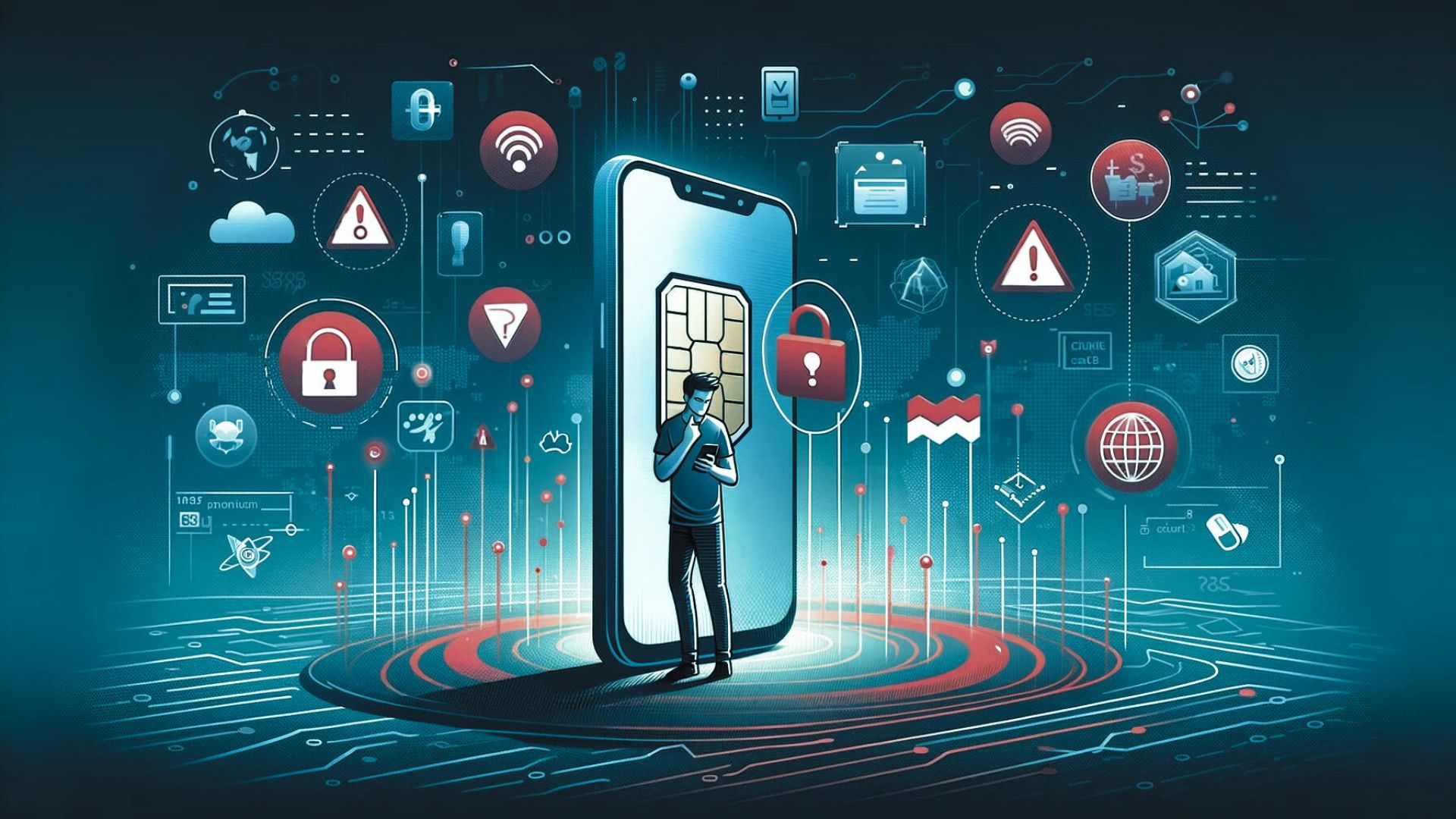
SIM swapping, also known as SIM jacking, is a malicious technique where hackers redirect your phone number to a SIM card they control. This allows them to intercept your calls, texts, and crucial two-factor authentication codes, potentially giving them access to your online accounts like email and banking.
How a SIM Swap Attack Works
SIM swapping tricks your cellular provider into transferring your existing phone number to a new SIM card controlled by the hacker. Different carriers have different security measures, but scammers often need sensitive information such as an address, password, or answers to security questions to impersonate you successfully. This information can be obtained through phishing, data breaches, or social engineering tactics like bribing someone inside the phone company.
Attack Methods:
Phishing Emails: Fake emails tricking you into giving up personal information.
Data Breaches: Hackers accessing your details through leaks.
In-Store or Call Center Fraud: Scammers pretending to be you in a store or over the phone.
Bribery: Insiders at phone companies are bribed to assist in the swap.
Protecting Against SIM Swap Attacks
Being aware of the threat and knowing the preventive measures is crucial. Here are some strategies to safeguard against SIM swapping:
Stay Vigilant Online
Be Wary of Links: Don’t click on suspicious links in emails, social media, or messaging apps. Always verify the source.
Update Software: Keep your browser and other software up-to-date for the latest security features.
Strong Passwords: Use complex and unique passwords for different accounts.
Secure Your Phone Accounts
Check with Your Provider: Ensure your carrier has strong security measures for SIM swaps.
Enable Two-Factor Authentication (2FA): Use authentication apps instead of phone numbers for 2FA wherever possible.
Recognizing a SIM Swap Attack
Detecting a SIM swap attack early can help mitigate the damage. Here are some signs:
Warning Signs:
No Service: Suddenly losing cell service without explanation.
Unusual Account Activity: Receiving alerts about suspicious activity or password changes you didn’t initiate.
Denied Access: Getting locked out of your accounts despite correct login details.
Unauthorized Transactions: Notices of bank transactions you didn’t authorize.
Steps to Take After a SIM Swap Attack
If you suspect a SIM swap attack, act quickly:
Immediate Actions:
Contact Your Carrier: Inform them of the unauthorized SIM swap and secure your number.
Change Passwords: Update your passwords for critical accounts and disable 2FA until your phone service is secure.
Alert Your Bank: Notify your financial institutions to prevent further unauthorized transactions.
Preventive Measures
Implementing robust security practices can significantly reduce the risk of SIM swap attacks.
Tips to Enhance Security:
Mobile Carrier Protections: Enable extra security features like account takeover protection or number transfer PINs provided by your carrier.
Account Alerts: Set up notifications for any changes in your bank and mobile accounts.
Personal Information Security: Be cautious about sharing personal details online and through calls.
Authentication Solutions: Use authentication apps or hardware keys like Yubikey for secure logins.
PIN Codes: Set strong PINs for your SIM card and phone accounts.
Biometric Authentication: Utilize facial recognition or fingerprint ID for added security.
Conclusion
SIM swapping is a serious threat, but by understanding how these attacks work and implementing effective security measures, you can protect your personal and financial information. Stay informed, stay vigilant, and take proactive steps to safeguard your digital identity.
For more cybersecurity tips and updates, visit Peris.ai.
Your Peris.ai Cybersecurity Team#YouBuild #WeGuard
In today’s world, cyber threats are everywhere. Companies need to move from just reacting to threats to being proactive. But how can they keep up with hackers who find weaknesses in their systems and cause breaches? The key is security architecture – designing systems and technologies to protect against cyber threats.
Security architecture makes sure cybersecurity fits with a company’s goals and risk level. By building security into systems from the start, companies can lower the number and impact of threats. Also, a strong security architecture helps teams respond quickly to breaches, stopping threats before they get worse.
Key Takeaways
Security architecture is the strategic design of systems, policies, and technologies to protect IT and business assets from cyberthreats.
A well-designed security architecture aligns cybersecurity with the organization’s unique business goals and risk management profile.
Security architecture ensures organizations have the IT infrastructure to properly prevent, detect, and respond to attacks.
Security architecture frameworks like TOGAF, SABSA, and OSA provide structured methodologies for designing and implementing security solutions.
Best practices for security architecture include developing a strategy, establishing objectives, training the organization, and staying updated on the latest threats.
Defining Security Architecture
Security architecture is about designing systems and technologies to protect IT and business assets from cyber threats. It makes sure cybersecurity fits with the organization’s goals and risk management. This master plan helps create a strong and flexible security posture.
It focuses on identifying threats and finding weak points in IT systems. Then, it designs solutions and sets priorities for security efforts.
By matching security investments with the organization’s risk and business goals, it ensures resources are used wisely. This approach reduces costs in deploying and running applications securely. It combines network, identity, data, and application security for a strong defense.
Security Architecture Frameworks and Standards
Following standards like COBIT®, SABSA, and TOGAF helps build a security plan that aligns with business goals. These frameworks, along with ISO 27001, NIST Cybersecurity Framework, and OWASP Top Ten, guide in creating secure systems. Certification audits show customers how safe an organization is.
Using “Security by Design” means building software with security controls from the start. Regular risk assessments and updates are key to keeping systems secure. The ISO27001 standard was updated in 2022, affecting companies’ security programs.
Security architecture gives a broad view of an organization’s security, unlike point solutions. It simplifies security, reducing complexity and overhead. This makes it easier to design secure solutions at a lower cost.
Security architecture programs follow 6 steps, from understanding business goals to aligning with needs. Leaders should see security architecture as key to cyber resilience. They should invest in skilled architects and balance preventive measures.
“Security architecture integrates various security components such as network security, identity and access management (IAM), data protection, and application security to create a unified security ecosystem for protection against potential threats.”
Key Objectives of Security Architecture
The main goal of security architecture is to lower cybersecurity risks and protect companies from threats. It involves making security a part of business operations. Security architects look at current processes and technologies to find gaps. They then create a plan to reduce the harm cyber threats can cause.
Today, CISOs and their teams face challenges in a world where security is everywhere. With the rise of multi-cloud, hybrid work, and digital transformation, attack surfaces grow fast. This makes it easier for attackers to find and exploit weaknesses.
Security architecture includes network, application, endpoint, identity, and data security. It also involves risk assessment, policy making, control implementation, and regular updates.
Security architecture is more than just technology; it’s a strategic plan that aligns with business goals. Security architects work with enterprise architects to create security strategies that fit the company’s goals. This ensures the security architecture supports the company’s objectives.
A well-implemented security architecture improves risk management and compliance, boosts operational efficiency, and supports business goals. It leads to better data protection, compliance with regulations, and a strong defense against cyber threats.
Security architecture is key for managing risks and ensuring compliance with laws. Industries like healthcare, finance, and e-commerce need strong security to avoid legal and financial losses from data breaches.
Effective security architecture improves operational efficiency, customer trust, and business resilience. Companies with strong security architecture gain trust from clients, partners, and stakeholders.
Benefits of Security Architecture
A solid cybersecurity architecture does more than just react to breaches. It also cuts down on threats, sometimes stopping them before they start. It fills security gaps and has plans for when incidents happen. This way, security teams can act fast and stop threats early, often with the help of automation.
Reduce Security Breaches
A good security architecture has fewer tools and vendors. It integrates everything well, making updates and threat responses easier. This setup makes the cyber system more efficient and scalable. It also makes sure the organization follows all the rules and laws.
“A strong security architecture is essential for organizations to proactively protect their IT assets and ensure business continuity in the face of evolving cyber threats.”
Frameworks and Standards for Cybersecurity Architecture
Security architects use established frameworks and standards to build strong cybersecurity architecture. These tools offer a structured way to design and manage security systems. They help align with an organization’s goals and risk level.
The main frameworks are TOGAF, SABSA, and OSA. TOGAF helps identify security issues in an enterprise. SABSA focuses on policy, answering key questions like what, why, when, and who. OSA gives a detailed look at security components and principles, offering a technical view.
The NIST Framework also guides security efforts. It outlines cybersecurity activities and outcomes for critical sectors.
These frameworks are key for security architects. They help design architectures that fight off new threats. By linking security to business goals and watching for new risks, organizations get stronger and more compliant.
Using TOGAF, SABSA, OSA, or the NIST framework is crucial. It helps architects build strong cybersecurity systems that protect vital assets.
How to Build an Effective Security Architecture
Creating a strong security architecture is key for companies to keep their IT and business assets safe from cyber threats. First, they need to understand their current security setup. Then, they must define a future state that fits their risk management and business goals. This plan helps them focus on what needs improvement and how to build a solid security framework.
A good security architecture includes important parts like orchestration, visibility, and policy enforcement. It also needs automation and compliance management across the whole cyber world. In today’s world, adopting a zero trust architecture is vital. This is because old security models don’t work anymore in a hybrid work and digital transformation setting. Having a unified console for managing security is also beneficial. It helps with network, cloud, endpoint, identity, data, monitoring, and governance.
The National Institute of Standards and Technology (NIST) Cybersecurity Framework is a great starting point for building a strong security architecture. It covers essential steps like identifying assets, protecting data, and responding to cyber attacks. Following this framework helps companies improve their cybersecurity, meet data privacy rules, and boost their market reputation.
To create a solid security architecture, companies must be proactive and always improve. By combining old security methods with new ones, they can manage risks better, enhance security, and stay ahead in the digital world.
“Cybersecurity architecture plays a critical role in protecting an organization’s digital assets and ensuring compliance with industry standards and regulations. By aligning security strategies with business goals, security architects can build a robust and resilient security posture.”
What Is Security Architecture and Why Does It Matter?
In the fast-paced world of cybersecurity, companies spend a lot on advanced security tools. These tools help fight off cyber threats and malicious actors. Yet, a more strategic plan is needed to tackle complex threats.
On average, businesses use over 130 security tools. These tools make managing security harder, require more staff, and take up a big part of the budget.
Security architecture is like a master plan for security. It helps organizations build a strong and flexible security system. It aligns security efforts with the company’s risk level and goals.
It combines network security, identity management, data protection, and app security into one framework. This way, companies can design and set up security systems to stop breaches before they happen.
Using security architecture makes things simpler and lets security teams focus on important tasks. They can work on finding threats and responding to incidents. It also helps companies follow important rules and standards like ISO 27001 and GDPR.
Security leaders should see security architecture as a key to staying safe online. They should invest in skilled architects and balance their cybersecurity strategy. Following standards like COBIT® and TOGAF helps create a security plan that grows with technology.
By using security architecture, companies can better handle the complex world of cybersecurity. They can make sure their security efforts match their business goals and risk management. This approach helps security teams stay ahead of threats and keep a strong defense against new dangers.
The Proactive Nature of Security Architecture
Security architecture teams do more than just react to problems. They use their deep knowledge to anticipate threats and vulnerabilities. They analyze threat intelligence and security trends to help organizations proactively design and implement security systems. This way, they can stay ahead of threats, not just react to them.
Following industry standards like COBIT and TOGAF helps build a strong security architecture. It’s not just about protecting against current threats. It’s also about designing for the future, improving security continuously. This ensures organizations can use new technologies safely.
Anticipating Threats and Vulnerabilities
Next-generation firewalls (NGFWs) offer advanced security with malware and malicious site blocking.
Unified threat management (UTM) combines security functions into one appliance for SMEs.
Multi-factor authentication (MFA) uses more than one method to verify users, like biometrics or apps.
Honeypots are decoy targets that alert to early attack detection.
Cloud firewalls protect cloud networks in IaaS or PaaS environments.
“Security architecture teams anticipate potential threats and vulnerabilities, enabling organizations to proactively design and implement security systems to avoid security breaches.”
Benefits of Security Architecture Compared to Point Solutions
Point solutions focus on specific security needs but miss the bigger picture. On the other hand, a comprehensive security architecture gives a strategic view of an entire security landscape. It boosts security, offering better visibility and awareness for proactive threat prevention.
This makes it easier to spot and handle threats fast, reducing the risk of big losses from cyber attacks.
Security architecture also saves money and simplifies things. It helps design secure solutions, streamlines processes, and cuts down on unnecessary steps. This leads to a more agile and affordable defense, which is key as cybercrime costs are expected to hit nearly $13.82 trillion by 2028.
It also gives cybersecurity experts a clear, strategic plan, especially in cloud environments. Cloud services face disruptions and threats, causing long downtimes that hurt business. A good security architecture can greatly reduce these issues for cloud users.
By choosing security architecture, organizations can better handle cyber risks, improve how they see and respond to threats, and prevent problems before they start. This boosts their security and resilience.
Security Architecture Point Solutions Comprehensive view of security landscape Specialized security measures Improved visibility and situational awareness Narrower focus Proactive threat prevention Reactive security measures Cost-effective and streamlined operations Higher complexity and overhead Empowers cybersecurity professionals Limited strategic approach
In conclusion, security architecture is a strategic and all-encompassing way to handle cybersecurity. It gives organizations the tools and insights to face the changing threat landscape and protect their key assets. By investing in a strong security architecture, businesses can improve their security, work more efficiently, and stay one step ahead of cyber threats.
Security Architecture Empowers Security Teams
Security architecture gives cybersecurity pros a clear, strategic plan. It makes things simpler and cheaper. It helps design secure solutions, making processes smoother and cutting down on waste. This makes for a strong, agile defense that’s also cost-effective.
A good security architecture tackles big problems, letting teams focus on important tasks. It helps design systems and networks to keep digital assets safe from cyber threats.
Security architects work with IT and developers to spot risks and create security plans. They also make plans to handle security issues quickly and get things back to normal.
Role Focus Area Cloud Security Architect Designing and implementing security solutions for cloud-based environments Enterprise Security Architect Developing holistic security architectures and strategies to protect an organization’s entire IT infrastructure Information Security Architect Protecting an organization’s sensitive information assets, including intellectual property, customer data, and financial information Network Security Architect Designing and implementing network security architectures, protocols, and configurations to protect against unauthorized access, malware, and other network-based threats Software Security Architect Designing secure software architectures and applications to mitigate vulnerabilities and prevent exploitation by attackers
Security architecture empowers teams with a clear plan, reducing complexity and boosting efficiency. This helps organizations focus their cybersecurity efforts better, use resources wisely, and improve their security stance.
Conclusion
Security architecture is a vital foundation for defending against cyber threats, providing more than just reactive measures—it offers a strategic approach to safeguarding IT systems. By focusing on key risks and leveraging zero trust security principles, security architecture ensures that resources are used efficiently to protect critical assets.
This proactive strategy helps organizations stay ahead of evolving technologies and threats, reducing cyber risks while enhancing operational efficiency. It also empowers security teams to remain prepared for emerging challenges, strengthening overall cybersecurity posture and enabling business growth.
A robust security architecture is essential for long-term protection of digital assets. By adopting and implementing strong security measures, companies can minimize the impact of breaches, safeguard their systems, and focus on their core objectives with confidence.
To learn more about how we can help strengthen your cybersecurity strategy, visit Peris.ai Cybersecurity today.
FAQ
What is security architecture?
Security architecture is about designing systems and policies to protect IT and business assets. It makes sure cybersecurity fits with the company’s goals and risk management.
What are the key objectives of security architecture?
The main goal is to lower the risk of security breaches and protect against threats. It’s about making security a part of daily business operations.
What are the benefits of security architecture?
It helps cut down on security breaches and makes responding to incidents faster. It also boosts operational efficiency and meets regulatory standards.
What are the standard frameworks used for cybersecurity architecture?
Security architects often use TOGAF, SABSA, and OSA frameworks. The NIST Framework for Improving Cybersecurity Infrastructure is also widely followed.
How do you build an effective security architecture?
To build a good security architecture, first map the current state. Then, describe the target state that matches the company’s risk profile. Prioritize what needs improvement. It should help with orchestration, visibility, and policy enforcement.
How does security architecture differ from point solutions?
Point solutions focus on specific security needs. But, security architecture gives a broad view of an organization’s security. It boosts security measures and offers better visibility for proactive defense and quick response.
How does security architecture empower security teams?
Security architecture simplifies things and reduces workloads. It helps design secure solutions and streamlines processes. This lets security teams focus on important tasks like threat hunting and incident response.
In today’s digital world, software plays a key role in business. That’s why we need strong security. Secure Software Development Lifecycle (S-SDLC) is a way to make software safer. It adds security steps at every stage, from planning to maintenance.
This approach helps lower the chance of security problems. It makes software safer for everyone.
S-SDLC is vital today because threats and software complexity grow. It deals with security at each step of making software. This way, companies can fight off many cyber threats.
Key Takeaways
S-SDLC adds security steps at every stage of making software.
It helps create a culture focused on security, lowering the chance of software flaws.
Using S-SDLC can make making software faster and cheaper by finding security issues early.
Regular testing and using security tools are key parts of S-SDLC.
Training developers on security is important for making secure applications.
Introduction to Secure Software Development Lifecycle (S-SDLC)
The Secure Software Development Lifecycle (S-SDLC) makes the traditional SDLC better by adding security steps at every stage. It puts security first for all teams working on software. This way, security is a key part from the start, not just an afterthought.
Definition and Importance of S-SDLC
S-SDLC is key because it offers a detailed and flexible way to handle security for today’s software development and deployment. Adding security at each step of the process helps lower the chance of security issues. It also makes software more secure.
Benefits of Implementing S-SDLC
Using S-SDLC brings many benefits, like cutting costs and focusing on security first. It also improves how development is planned and makes software more secure. Some main benefits include:
Finding and fixing security problems early, which saves money
Adding security best practices into development, creating a culture that values security
Matching security goals with business aims for a strategic approach to software security
Boosting overall security and lowering the risk of attacks or data breaches
By following S-SDLC, companies can make their software more secure and resilient. This helps protect their data and assets from cyber threats.
Phases of Secure SDLC
The Secure Software Development Lifecycle (S-SDLC) makes the traditional SDLC better by adding security steps at every stage. It aims to cut down on risks, meet compliance needs, and make secure apps from the start.
Planning: Assessing Risks and Security Landscape
In the planning phase, teams look at security risks and the threat scene. They plan how to use resources, schedule projects, and prepare for security from the beginning.
Requirements: Defining Security Requirements
The requirements phase focuses on setting clear security needs, knowing about laws, and adding them to the project. This makes security a key part of making software, not just an add-on.
Design: Incorporating Security Considerations
In design, security is a big part of planning, including threat modeling and checking design’s security effects. It’s important to use secure coding and testing to find and fix code issues.
The National Institute of Standards and Technology (NIST) made the Secure Software Development Framework (SSDF) to guide secure SDLC practices. The SSDF suggests training developers in secure coding, automating security checks, and securing open source parts.
Microsoft’s Security Development Lifecycle (SDL) and CLASP, a rule-based security framework, are more ways to boost security early in development.
Secure Coding Practices and Tools
Secure coding practices are key in the Secure Software Development Lifecycle (S-SDLC). They make sure the code is safe and has no bugs. This means cleaning inputs, not using hard-coded secrets, and using tools to find bugs early.
Developers need to learn about secure coding and follow security rules for their languages and frameworks. Checking the code often, with help from security experts, helps spot security problems early.
Tools like software composition analysis (SCA) and penetration testing are crucial in the S-SDLC. They find bugs in open-source parts and the app itself. These tools help teams see, fix, and prevent security issues at every stage of development.
Using secure coding and security tools in the S-SDLC makes software safer. It lowers the chance of data breaches and keeps customers trusting the brand.
Security Testing in S-SDLC
Security testing is key in the Secure Software Development Lifecycle (S-SDLC). It makes sure the software works right and is safe for users. This process uses manual tests, big tests in real-like settings, and security checks by special teams.
Static and Dynamic Testing Techniques
S-SDLC uses static and dynamic testing to find security problems during development. Static testing looks at the code without running it. Dynamic testing checks the software while it’s running. These methods help spot issues like SQL injection, which hits 9% of web apps, says OWASP.Using whitelisting and blacklisting can cut code injection risks by 70%.
Penetration Testing and Vulnerability Scanning
S-SDLC also has deep checks like penetration testing and scanning for vulnerabilities. Experts do these tests to find any security weak spots before the software goes live. Role-Based Access Control (RBAC) can cut down on unauthorized access by 50%.Multi-factor authentication (MFA) boosts security by 80% over single-factor methods.
Adding security testing at different S-SDLC stages helps find and fix security issues early. This makes software safer overall.
“Effective security testing is not just about finding vulnerabilities, but about understanding the context and potential impact of those vulnerabilities on the overall system.”
Using a full security testing plan in S-SDLC makes software safer and lowers cyber threat risks.
Deployment and Continuous Security Monitoring
In the secure software development lifecycle (S-SDLC), deployment and continuous security monitoring are key. They make sure the application stays secure over time. It’s important to set up the application securely from the start to avoid risks. Continuous security monitoring helps spot and fix security threats quickly, keeping the application safe.
Secure Configuration and Deployment Practices
Setting up the application securely means it’s ready for production with strong security measures. This includes using least privilege access and multi-factor authentication, and doing risk assessments. Adding security early in the development process helps find and fix problems before they’re big, saving time and money.
Monitoring and Responding to Vulnerabilities
Keeping an eye on the application for new threats is crucial. This way, security issues can be caught and fixed fast, keeping the application safe. Using DevSecOps and CI/CD/CS pipelines makes it 50% less likely to have a data breach, and it’s used more often in 2023.
By making security a part of the development process, we can make more secure applications. This reduces the chance of vulnerabilities and keeps production environments safe.
“Secure deployment and continuous security monitoring are essential components of the Secure SDLC, ensuring the long-term security and integrity of the application.”
What Is S-SDLC and How It Enhances Security
The Secure Software Development Lifecycle (S-SDLC) is a way to make software safer from start to finish. It starts with security in mind, tackling risks early. This method covers phases like gathering requirements, designing, implementing, testing, and deploying, making security key at each step.
Using an S-SDLC boosts software security a lot. Experts say it’s a must for any modern web app developer to cut down on risks. It helps find and fix problems early, making software safer, cheaper, and more efficient.
Old ways of testing security don’t work well with today’s fast-paced software making and using. That’s why we need agile security testing methods like the Secure Software Development Framework. S-SDLC makes apps safer, saves money, and meets deadlines, which is key in today’s fast-paced software world.
Secure coding, like using safe SQL queries, helps protect against attacks. Finding security problems early can also cut down on costs, as fixing them later can be very expensive, up to 100 times more.
S-SDLC doesn’t replace old security checks but adds security to the making of software. There are different security models, like Waterfall and Agile, based on the Software Development Life Cycle. The ISO standard on software development, ISO/IEC 12207, outlines how to do software development safely.
By using S-SDLC, companies can make their software safer, lower risks, and make security a team effort in making software. This way, they can reduce attacks, keep data safe, and keep users’ trust.
DevSecOps: Integrating Security into DevOps
DevSecOps blends security into the DevOps process. It makes sure development, operations, and security teams work together. This way, security is always part of the continuous process.
Goals and Principles of DevSecOps
DevSecOps aims to make software safer and faster. It does this by finding security problems early and making the release process quicker. It also uses automation to lower risks and make security more visible.
This approach helps avoid costly fixes and protects the app’s good name.
Implementing DevSecOps Practices
Using DevSecOps makes security a key part of making software. It uses tools like open source vulnerability scanning. It also uses Static and Dynamic Application Security Testing, and container image scanners.
These scans check for security problems at different stages of making and building the software.
DevSecOps also means getting new features and fixes out faster. It makes sure updates don’t break the app. This way, fixing security issues is cheaper and done early.
Tools like GitHub Actions, Trivy, Starboard, and OWASP ZAP help automate security checks. They find vulnerabilities and make security a key part of making software.
Software Supply Chain Security
Software development’s security is now a top concern. It’s about keeping the whole chain of components and entities safe from start to finish. This means protecting development tools, source code, and all systems in the Software Development Life Cycle (SDLC).
Importance of Software Supply Chain Security
Software supply chain security is very important. The SolarWinds attack showed how vulnerable software chains can be, affecting 18,000 customers. President Biden’s order to improve software security shows we need strong measures now.
Best Practices for Software Supply Chain Security
It’s key to follow best practices to protect against software risks and attacks. These include:
Implementing least-privilege access to limit the impact of potential breaches.
Hardening the security of connected devices and sensitive data to prevent unauthorized access.
Knowing and evaluating your suppliers to ensure the integrity of the entire supply chain.
Continuously monitoring the software supply chain for potential vulnerabilities or threats.
Organizations use tools like Synopsys Black Duck® for analyzing software, Coverity® for testing, and WhiteHat Dynamic for dynamic testing. These tools help see into the supply chain, find risks, and fix security issues early.
As attacks on software supply chains grow more common and complex, it’s time to review our security steps. Frameworks like SSDF (Software Supply Chain Defense) and SLSA (Supply-chain Levels for Software Artifacts) help with strong security controls. They ensure the software supply chain is safe and secure.
“Securing the software supply chain is no longer an option, it’s a necessity. Proactive measures and the adoption of best practices are crucial to protect against the growing threats in this space.”
By following best practices and using advanced tools, organizations can protect their software development. This helps fight the risks from supply chain attacks.
Conclusion
Implementing a Secure Software Development Lifecycle (S-SDLC) is crucial for creating secure software applications. By integrating security considerations and best practices into every phase of development, S-SDLC helps minimize security risks, enhance overall security posture, and ensure that security remains a top priority across all teams.
The advantages of adopting S-SDLC are clear. It results in lower costs, fosters a security-first mindset, improves development processes, and strengthens application security. By embracing S-SDLC alongside practices like DevSecOps and software supply chain security, companies can develop safer, more resilient, and secure software.
As the pace of software development accelerates, the need for a comprehensive secure SDLC becomes more critical than ever. By adopting S-SDLC principles and best practices, companies can position themselves as leaders in cybersecurity, reducing risks and delivering high-quality, secure software in today’s digital landscape.
To learn more about enhancing your software security and exploring our comprehensive range of cybersecurity solutions, visit Peris.ai Cybersecurity. Secure your software development process and protect your digital assets with Peris.ai today!
FAQ
What is S-SDLC and why is it important?
S-SDLC stands for Secure Software Development Lifecycle. It makes sure security is part of making software from start to finish. This helps lower the chance of security problems and makes software safer. In today’s world, security threats are always changing, so this is key.
What are the key benefits of implementing S-SDLC?
Using S-SDLC brings many benefits. It cuts costs, makes security a top priority, and helps plan better. It also makes software more secure overall. By adding security at every step, software becomes safer and more secure.
How does S-SDLC integrate security into the different phases of the software development process?
S-SDLC adds security to each step of making software. It starts by looking at security risks early on. Then, it sets clear security goals and makes sure the design is secure.
It also makes sure the code is secure, tests it well, and keeps it secure after it’s made. This makes the software safer and more secure.
What are the key secure coding practices and tools used in S-SDLC?
Secure coding is a big part of S-SDLC. It means writing code that’s safe and doesn’t have bugs. This includes cleaning inputs, avoiding secrets in code, and using tools to find problems.
Developers need to know how to code securely and follow the rules for their languages and frameworks.
What types of security testing are performed in the S-SDLC framework?
Security testing is key in S-SDLC. It checks that software works right and is safe. This includes tests by developers, big tests in real-like settings, and security checks by experts.
It uses different tests like SAST and IAST to find bugs. Penetration testing and scanning for vulnerabilities are also done to find any security issues before it’s released.
How does S-SDLC address security during the deployment and maintenance phases?
S-SDLC also looks at security when the software is put into use and kept up. It makes sure the software is set up safely in production. It also keeps an eye on it to catch any new security problems.
This helps fix security issues fast, keeping the software safe over time.
What are the key principles and practices of DevSecOps, and how does it relate to S-SDLC?
DevSecOps combines security with the DevOps process. It aims to make software safer and faster. It does this by finding security issues early, speeding up releases, and making security automatic.
By using DevSecOps, security is part of making and updating software. This makes sure security is always looked after in the S-SDLC.
Why is software supply chain security an important aspect of S-SDLC?
Software supply chain security is vital for S-SDLC. It protects all parts of the software’s journey from making to using. This includes keeping development tools and data safe.
Good practices include giving access only when needed, securing devices, knowing suppliers, and watching for threats. This keeps the software supply chain safe.
In the world of cybersecurity, vulnerability victories refer to the successful identification and remediation of security flaws. Contrary to what one might think, uncovering more flaws is actually a sign of cyber strength. Organizations reinforce their defenses by continuously assessing and discovering vulnerabilities and are better prepared to protect against potential threats. This article delves into the concept of vulnerability victories and explains why they are crucial in building robust cybersecurity programs.
Key Takeaways:
Vulnerability victories involve the successful identification and remediation of security flaws.
Uncovering more flaws is a sign of cyber strength as it demonstrates a proactive approach to cybersecurity.
Continuous vulnerability assessment is essential for reinforcing defenses and preparing for potential threats.
Vulnerability management practices, such as scanning and patching, contribute to overall cybersecurity success.
Embracing vulnerability discoveries as opportunities for growth and resilience is crucial for organizations.
Vulnerability management is a crucial aspect of cybersecurity. It involves proactively identifying and addressing flaws in an organization’s systems and infrastructure. This approach, known as vulnerability victories, plays a significant role in building robust cybersecurity programs.
The Concept of Vulnerability Victories
Vulnerability victories are achieved by continuously assessing and discovering vulnerabilities within an organization’s network and systems. Contrary to popular belief, uncovering more flaws is actually a sign of cyber strength. Organizations can reinforce their defenses and proactively protect against potential cyber threats by identifying vulnerabilities.
Importance of Continual Vulnerability Assessment
Continual vulnerability assessment is a vital component of vulnerability management. It involves regular detection and remediation of vulnerabilities to maintain a strong cybersecurity posture. By constantly evaluating the security landscape, organizations can stay one step ahead of cybercriminals and minimize their attack surface.
Key Components of an Effective Cybersecurity Program
An effective cybersecurity program encompasses various key components that contribute to successful vulnerability management:
Vulnerability scanning: Regularly scanning networks and systems to identify potential vulnerabilities.
Patch management: Ensuring that software and systems are up to date with the latest security patches.
Risk assessment: Evaluating and prioritizing vulnerabilities based on their potential impact.
By incorporating these components into their cybersecurity program, organizations can establish a strong foundation for vulnerability management and enhance their overall security posture.
Flaw Detection in Cybersecurity: Methods and Tools
Flaw detection in cybersecurity is a critical aspect of maintaining a strong defense against potential threats. Organizations can effectively identify vulnerabilities and prioritize their remediation efforts by employing various methods and utilizing cybersecurity tools.
One commonly employed technique in flaw detection is vulnerability scanning. This process involves the use of specialized software to scan system networks, applications, and devices for potential weaknesses. Vulnerability scanners analyze the configuration, code, and network infrastructure to identify known vulnerabilities and assess their risk level. This helps organizations understand their security posture and prioritize the mitigation of critical vulnerabilities.
In addition to vulnerability scanning, cybersecurity tools such as penetration testing frameworks provide valuable insights into potential flaws. These tools simulate real-world attack scenarios to identify weaknesses that may not be detected through other means. By mimicking the techniques used by hackers, organizations can uncover hidden vulnerabilities and address them before they can be exploited.
Proactive Protection: Enhancing Cybersecurity with Advanced Vulnerability Detection and Remediation
By leveraging these methods and tools, organizations can enhance their ability to detect and address vulnerabilities in their cybersecurity defenses. Proactively identifying and remedying flaws strengthens overall security posture and reduces the risk of successful cyber attacks.
Proactive Cyber Vulnerability Discovery for Enhanced Protection
Proactively discovering vulnerabilities is essential for enhancing cybersecurity protection. Organizations can stay one step ahead of cyber threats by actively seeking out and identifying potential weaknesses in systems and infrastructure. This section explores systematic approaches to discovering vulnerabilities and showcases case studies that highlight the effectiveness of proactive vulnerability identification in strengthening overall security posture.
Systematic Approaches to Discovering Vulnerabilities
Effective vulnerability discovery requires systematic approaches that enable organizations to identify and address security flaws at various stages of the development lifecycle. Here are some key systematic approaches:
Threat Modeling: By analyzing system architecture, potential threats can be identified, and appropriate security measures can be implemented.
Code Review: Conducting thorough code reviews helps uncover coding errors or vulnerabilities that may have been missed during development.
Penetration Testing: Proactively simulating cyberattacks helps identify vulnerabilities and assess the security readiness of systems.
By adopting these systematic approaches, organizations can establish proactive vulnerability discovery processes that minimize the risk of exploitation and enhance overall cybersecurity resilience.
Case Studies: Proactive Identifications Leading to Security Fortifications
Real-world examples demonstrate the effectiveness of proactive vulnerability identification in strengthening security. Let’s explore two case studies:
Case Study 1: Company X
Company X, a leading financial institution, implemented a proactive vulnerability discovery program that included regular threat modeling exercises and external penetration testing. As a result, several critical vulnerabilities were identified and remediated before any malicious exploitation occurred. This proactive approach reinforced their security posture and protected valuable customer data.
Case Study2: Organization Y
Organization Y, a government agency, integrated code review into its software development lifecycle. By conducting regular code reviews, they identified and addressed vulnerabilities early on, significantly reducing the risk of cyberattacks. This systematic approach to vulnerability discovery enabled them to fortify their systems and ensure the confidentiality and integrity of sensitive information.
These case studies highlight the value of proactive vulnerability identification in preventing potential security breaches and strengthening overall cyber defenses.
Vulnerability Victories: Why Uncovering More Flaws is a Sign of Cyber Strength!
Reiterating the importance of vulnerability victories, this section explores why uncovering more flaws should be seen as a positive sign of cyber strength. It emphasizes the significance of continuous improvement and adaptability in cybersecurity practices, encouraging organizations to embrace vulnerability discoveries as opportunities for growth and resilience.
Embracing Flaws for Cyber Strength: The Positive Power of Uncovering Vulnerabilities
Vulnerability victories signify an organization’s commitment to proactive cybersecurity measures. By actively uncovering and addressing cyber flaws, businesses strengthen their defenses and ensure a robust security posture. Rather than considering vulnerability discoveries as a sign of weakness, they should be viewed as indicators of a strong and dynamic cybersecurity strategy.
Cyber threats are constantly evolving, and maintaining a state of perpetual vigilance is crucial. Uncovering more flaws reflects the organization’s readiness to adapt and continuously improve its security protocols. Every identified vulnerability presents an opportunity for growth and enhancement, allowing companies to refine their defense mechanisms and fortify their systems against potential attacks.
“The greatest victory is not in never falling, but in rising every time we fall.”
Embracing vulnerability victories requires a proactive approach to cybersecurity. Organizations must prioritize regular vulnerability assessments and establish comprehensive vulnerability management practices. Businesses can stay one step ahead of potential threats by conducting periodic scans and adopting robust risk assessment frameworks.
The process of uncovering cyber flaws and addressing them is an essential part of building cyber strength. It enables organizations to identify vulnerabilities, assess their potential impact, and implement timely remediation measures. This continuous improvement cycle strengthens their security defenses and enhances their overall resilience.
Uncovering more flaws provides organizations with valuable insights into their cybersecurity landscape. Each identified vulnerability serves as an opportunity to bolster their defenses, implement necessary changes, and refine incident response plans. It demonstrates an organization’s commitment to maintaining a proactive stance against emerging cyber threats.
In conclusion, vulnerability victories are not signs of weakness but rather indicators of an organization’s cyber strength. By embracing vulnerability discoveries and continuously improving their security practices, businesses improve their defenses and overall resilience. The proactive approach to identifying and addressing cyber flaws establishes a solid foundation for robust cybersecurity programs, safeguarding valuable assets and ensuring long-term business success.
How Identifying Security Weaknesses Builds Cyber Resilience
Identifying security weaknesses is a crucial component of building cyber resilience. By proactively assessing and addressing vulnerabilities, organizations strengthen their defenses and enhance their ability to withstand and recover from cyber threats. In this section, we explore the role of resilience in cybersecurity, strategies to turn vulnerabilities into strengths, and real-world examples that demonstrate the power of resilience in response to exposed flaws.
The Role of Resilience in Cybersecurity
Cyber resilience is an organization’s capacity to anticipate, respond to, and recover from cyber incidents while maintaining the availability and functionality of its critical systems and assets. Resilience goes beyond traditional cybersecurity measures and encompasses a holistic approach to managing and mitigating risks. It involves proactive planning, effective incident response, and continuous improvement to adapt to evolving threats.
Strategies to Turn Vulnerabilities into Strengths
Turning vulnerabilities into strengths requires a proactive and systematic approach. Organizations can employ various strategies to achieve this:
Vulnerability Prioritization: Focusing on critical vulnerabilities and addressing them first enables organizations to allocate resources effectively and minimize the potential impact of cyber attacks.
Patch Management: Keeping systems up to date with the latest patches helps mitigate known vulnerabilities and reduces the attack surface.
Continuous Monitoring: Implementing real-time monitoring and threat intelligence allows organizations to promptly detect and respond to emerging threats.
Employee Training: Educating employees about cybersecurity best practices and fostering a culture of security awareness can help prevent and mitigate the human factor in cyber attacks.
Real-World Examples of Resilience in Response to Exposed Flaws
In the face of exposed flaws and vulnerabilities, organizations have demonstrated remarkable resilience in responding to and recovering from cyber incidents. Real-world examples showcase their ability to bounce back and enhance their cybersecurity posture:
“Company A, a leading financial institution, experienced a major data breach due to a software vulnerability. However, they quickly activated their incident response plan, notified affected customers promptly, and implemented enhanced security measures to prevent future incidents. This incident not only strengthened their internal cybersecurity protocols but also rebuilt trust with their customer base.”
“Organization B, a multinational corporation, identified a critical vulnerability in their supply chain management system. They immediately patched the vulnerability, conducted a thorough security audit, and established stronger vendor security requirements. This proactive response not only protected their internal systems but also safeguarded their ecosystem of partners and suppliers.”
Strengthening Cyber Defenses Through Collaborative Efforts
Strengthening cyber defenses is a collective responsibility that requires collaboration between organizations, industry professionals, and security researchers. By working together and sharing information, stakeholders can create a unified front against cyber threats and enhance overall cybersecurity resilience.
Collaborative cybersecurity efforts play a crucial role in strengthening defenses and mitigating potential risks. Through coordinated vulnerability disclosure programs, organizations can establish channels for researchers to report vulnerabilities, enabling prompt remediation responsibly. This transparent and collaborative approach fosters a culture of cooperation, trust, and accountability in the cybersecurity community.
In addition to information sharing, partnerships between organizations and industry professionals further enhance cyber defenses. Stakeholders can develop innovative solutions, identify emerging threats, and share best practices by pooling their collective knowledge, expertise, and resources. Collaborative efforts not only fortify individual organizations but also contribute to strengthening the entire cyber ecosystem.
“Collaboration is the key to building robust cyber defenses. By combining our strengths and knowledge, we can stay one step ahead of cyber adversaries and create a safer digital environment for all.”
One of the crucial aspects of collaborative cybersecurity is the establishment and participation in information-sharing platforms and organizations. These platforms provide a conducive environment for exchanging threat intelligence, sharing cybersecurity insights, and discussing emerging trends. By actively engaging in these collaborative forums, organizations can learn from each other’s experiences, gain valuable insights, and adapt their cybersecurity strategies accordingly.
Furthermore, collaboration also extends to public-private partnerships, where government agencies and private organizations join forces to enhance cybersecurity resilience on a national level. These partnerships enable the sharing of critical information, integration of resources, and the development of joint initiatives to combat cyber threats effectively.
The Impact of Public-Private Partnerships on National Resilience
Analyzing the Risk: Quantifying the Benefits of Finding Cyber Flaws
When it comes to cybersecurity, analyzing the risk and quantifying the benefits of finding cyber flaws are crucial steps in building a strong defense. By understanding the value of vulnerability identification, organizations can better prioritize their efforts and allocate resources effectively. This section discusses various metrics for measuring cybersecurity strength and highlights the impact of vulnerability identification on an organization’s overall security posture.
Metrics for Measuring Cybersecurity Strength
Measuring cybersecurity strength requires the use of specific metrics that provide insights into an organization’s level of preparedness and resilience against cyber threats. Here are some key metrics to consider:
Vulnerability discovery rate: This metric measures the frequency and rate at which vulnerabilities are identified. A higher rate indicates an organization’s proactive approach to vulnerability management.
Patch deployment speed: The speed at which security updates and patches are deployed is a critical metric. Rapid patch deployment reduces the window of opportunity for attackers to exploit vulnerabilities.
Incident response time: Measures the time it takes for an organization to detect, respond, and recover from a cybersecurity incident. A shorter response time indicates effective incident management.
Security training effectiveness: Evaluate the effectiveness of security awareness training programs in educating employees about cybersecurity best practices and reducing human error.
Compliance with security standards: Measures the extent to which an organization complies with industry-specific security standards and regulatory requirements.
By tracking and analyzing these metrics, organizations can gain valuable insights into their cybersecurity strength and identify areas for improvement.
Impact of Vulnerability Identification on Organizational Security Posture
The impact of vulnerability identification on an organization’s security posture cannot be underestimated. When vulnerabilities are identified and addressed, the organization’s overall security posture improves in several ways:
Reduced risk: By identifying and addressing vulnerabilities, organizations can minimize the potential risk of cyber attacks and data breaches.
Enhanced incident response: When vulnerabilities are proactively identified, organizations can develop effective incident response plans and implement necessary controls to mitigate the impact of potential threats.
Improved trust and reputation: Demonstrating a commitment to identifying and addressing vulnerabilities enhances an organization’s reputation as a trustworthy custodian of sensitive data.
Cost savings: Identifying vulnerabilities early can help organizations avoid costly data breaches and associated financial damages.
In conclusion, analyzing the risk and quantifying the benefits of finding cyber flaws are essential in building a strong cybersecurity program. By utilizing the right metrics and understanding the impact of vulnerability identification, organizations can take proactive steps to strengthen their overall security posture and better protect against cyber threats.
The Psychological Impact of Vulnerability Disclosures on Cybersecurity Teams
Vulnerability disclosures can have a profound psychological impact on cybersecurity teams. The process of uncovering and reporting vulnerabilities can evoke a range of emotions, from excitement and satisfaction to anxiety and fear. Organizations need to recognize and address these psychological factors to cultivate a security culture and promote their cybersecurity teams’ well-being.
Cultivating a Culture of Security Through Transparency
Transparency plays a key role in cultivating a culture of security within organizations. When vulnerabilities are discovered and disclosed, the information needs to be shared openly and transparently with the relevant teams. This creates an environment of trust and collaboration, where everyone is aware of the potential risks and can work together to address them. By fostering a culture of security through transparency, organizations effectively empower their cybersecurity teams to manage vulnerabilities without fear of blame or retribution.
Overcoming the Stigma Associated with Vulnerability Reporting
Unfortunately, there is often a stigma attached to vulnerability reporting within organizations. Some individuals may fear that reporting vulnerabilities will reflect negatively on their skills or the organization’s overall security posture. This stigma can hinder the effectiveness of vulnerability management efforts and discourage individuals from reporting vulnerabilities. To overcome this stigma, organizations need to emphasize the importance of vulnerability reporting as a critical component of their cybersecurity program. Organizations can create an environment that encourages open communication and collaboration by recognizing and rewarding the efforts of those who disclose vulnerabilities.
Overcoming the psychological barriers associated with vulnerability disclosures is vital for the success of vulnerability management efforts. By cultivating a culture of security through transparency and overcoming the stigma associated with vulnerability reporting, organizations can empower their cybersecurity teams to effectively identify and address vulnerabilities, leading to a stronger and more resilient security posture.
Fostering a Culture of Transparency for Stronger Vulnerability Management
Integrating Vulnerability Victories Into Security Policies and Protocols
Integrating vulnerability victories into security policies and protocols is essential for maintaining a proactive cybersecurity posture. By incorporating vulnerability management practices into organizational frameworks, businesses can ensure that identifying and addressing flaws is integral to everyday operations.
Effective security policies establish guidelines and best practices for vulnerability assessment, remediation, and ongoing monitoring. They provide a structured framework for identifying vulnerabilities, prioritizing remediation efforts, and implementing security controls to mitigate risks.
Security protocols, on the other hand, outline the specific steps and procedures that need to be followed when vulnerabilities are discovered. They define the responsibilities of different stakeholders, establish incident response processes, and ensure a coordinated and swift remediation process.
Organizations create a culture of continuous improvement and resilience by integrating vulnerability victories into security policies and protocols. This helps them stay ahead of potential threats, enhance their overall security posture, and protect critical assets from cyberattacks.
To illustrate the importance of this integration, consider the following table that showcases the key components of a comprehensive security framework:
Integrating vulnerability victories into these components ensures that organizations have a holistic approach to cybersecurity and are well-equipped to detect, respond, and recover from potential threats.
By adopting a proactive stance towards vulnerability management and making it an integral part of their security policies and protocols, organizations can effectively strengthen their cyber defenses and minimize the risk of successful cyberattacks.
Conclusion
To sum up, the identification of vulnerabilities is a pivotal aspect in fortifying an organization’s cyber defense mechanisms and boosting its overall cybersecurity resilience. Through regular vulnerability assessments, organizations can proactively strengthen their systems and infrastructure, thereby enhancing their defenses against potential cyber threats.
This article has delved into the concept of ‘vulnerability victories,’ emphasizing the significance of ongoing vulnerability assessments. We’ve examined essential elements of a robust cybersecurity program, including vulnerability scanning, patch management, and risk assessment, all of which are integral to successful vulnerability management.
Looking forward, the trajectory of cybersecurity vulnerability management is filled with potential. In the face of an ever-changing threat landscape, it’s critical for organizations to keep abreast of the latest developments and technological advancements. The future of this field will likely see a significant influence from automation and artificial intelligence, leading to more efficient and precise detection of vulnerabilities.
Cultivating a proactive security culture within organizations is key to achieving lasting improvements in cybersecurity. Such a culture, emphasizing transparency, open communication, and collaboration, creates a conducive environment for vulnerability identification and management. This shift in mindset is crucial for continuous enhancement and enables cybersecurity teams to address vulnerabilities with promptness and efficiency.
For an in-depth exploration of vulnerability management strategies and to discover how our specialized solutions can bolster your cybersecurity, we invite you to visit Peris.ai Cybersecurity. Embrace the future of cybersecurity with us, where proactive measures and cutting-edge technology combine to safeguard your digital landscape.
FAQ
What are vulnerability victories?
Vulnerability victories refer to the successful identification and remediation of security flaws.
Why is uncovering more flaws a sign of cyber strength?
Uncovering more flaws indicates that organizations continuously assess and fortify their defenses against potential threats.
What is vulnerability management?
Vulnerability management is the proactive approach to identifying and addressing an organization’s systems and infrastructure flaws.
How does vulnerability scanning contribute to vulnerability management?
Vulnerability scanning is a commonly employed technique that allows organizations to detect and prioritize potential weaknesses.
What are the key components of an effective cybersecurity program?
The key components include vulnerability scanning, patch management, and risk assessment.
How can organizations detect flaws in their cybersecurity?
Organizations can use methods and tools such as vulnerability scanning, penetration testing frameworks, and other cybersecurity tools to detect flaws.
Why is proactive vulnerability discovery important?
Proactively discovering vulnerabilities helps organizations identify weaknesses at various development lifecycle stages and enhances cybersecurity protection.
Can you provide examples of proactive vulnerability identification?
Threat modeling, code review, and penetration testing are examples of proactive vulnerability identification methods.
Why should organizations embrace vulnerability discoveries?
Embracing vulnerability discoveries allows organizations to view them as opportunities for growth and resilience in their cybersecurity practices.
How can security weaknesses contribute to building cyber resilience?
Identifying security weaknesses helps organizations understand potential threats and develop strategies to turn vulnerabilities into strengths.
What are some strategies for turning vulnerabilities into strengths?
Strategies include risk assessment, patch management, and implementing proper security protocols based on vulnerability discoveries.
How do collaborative efforts strengthen cyber defenses?
Collaborative efforts facilitate information sharing, coordinated vulnerability disclosure programs, and partnerships, which create a unified front against cyber threats.
How can organizations measure their cybersecurity strength?
Metrics such as vulnerability identification rates, time to remediation, and the impact of vulnerabilities on the overall security posture help measure cybersecurity strength.
What is the psychological impact of vulnerability disclosures on cybersecurity teams?
Vulnerability disclosures can create psychological stress, but cultivating a culture of security through transparency and open communication can mitigate these effects.
How can organizations create a culture of security?
Organizations can create a culture of security by encouraging vulnerability reporting, valuing open communication, and fostering collaboration among cybersecurity teams.
How can vulnerability victories be integrated into security policies and protocols?
Integrating vulnerability victories involves incorporating vulnerability management practices into organizational frameworks, ensuring that identifying and addressing flaws is integral to everyday operations.
The digital landscape is riddled with cybersecurity threats that continuously evolve, often outpacing the defense mechanisms put in place to thwart them. Virtual Private Networks (VPNs) have long been championed as fortresses of VPN security and privacy. Nevertheless, these shields are finding themselves repurposed into weapons by savvy hackers. While the intended VPN uses focused on safeguarding personal data and enhancing network security, the shadowy corners of the web reveal a stark contrast. Hackers are refining their hacking techniques, turning VPN vulnerabilities into conduits for intricate attacks, thus escalating the privacy risks for unwitting users.
In the unceasing cat-and-mouse game of internet safety, uncovering the ingenious and often unexpected ways hackers exploit VPN services is more critical than ever. By masquerading their activities within the encrypted channels of VPNs, these digital prowlers manage to operate under the radar, making it immensely challenging to preserve the sanctity of online privacy and security.
Key Takeaways
Understanding the dual role VPNs play in both protecting privacy and potentially aiding hackers.
Recognition of the sophisticated hacker tactics involving the misuse of VPNs.
Heightened awareness of VPN vulnerabilities amidst the current cybersecurity landscape.
Insights into the transformation of VPNs from privacy tools to potentially exploitable network security risks.
Strategies for mitigating privacy risks associated with VPN exploitation.
The Dual Nature of VPNs in Cybersecurity
While much of the tech industry heralds VPNs as champions of cybersecurity, this narrative only tells half the story. The paradox of VPNs is that they embody both a shield protecting citizens from online hazards and a cloak aiding those with nefarious intents. It’s a two-pronged phenomenon—an instrument that both secures our digital lives and, unsettlingly, facilitates the very threats it’s supposed to defend against.
Understanding the Protective Role of VPNs
At their core, VPNs are designed with the laudable goal of protecting users from a host of cybersecurity threats. By creating a secure tunnel between the user’s device and the internet, VPNs ensure that sensitive data is encrypted, effectively becoming gibberish to any unwanted onlookers. Think of this as the digital equivalent of whispering in a crowded room—others may see lips moving, but the conversation remains heard only by the intended parties.
In essence, VPNs stand as a bulwark against the dark arts of cyberspace: man-in-the-middle attacks, where cyber thieves intercept data, are rendered powerless in the face of VPN encryption. Similarly, the privacy risks that loom over public Wi-Fi users dissipate greatly when they connect through a VPN. By hiding IP addresses, individuals can also mitigate the threat of having their digital movements tracked or targeted by distributed denial-of-service (DDoS) attacks.
VPNs: The Digital Whisper in the Crowded Room of Cyberspace
Exploring the Darker Uses of VPNs by Hackers
However, the tale takes a darker turn when individuals with ill intent exploit the very tools designed for network security. Hackers, much like magicians, use misdirection in the form of VPNs to vanish from sight, leaving law enforcement grappling with shadowy figures rather than tangible suspects. The anonymizing properties of VPNs, while advantageous to privacy-conscious users, also provide a smokescreen for illicit activities, phishing campaigns, and unauthorized access to restricted content.
The challenges compound as law-abiding netizens and cybercriminals enter into an intricate dance, both using VPNs but with starkly different endgames. For those invested in bolstering VPN security, the task becomes one of differentiation—of using technology to secure one’s corner of the digital universe while preventing that same technology from crossing over to the dark side. Hence, the spotlight shines not just on VPNs’ capacity to defend but on their potential VPN vulnerabilities that users, unwittingly or not, might leave unguarded.
Cybersecurity Threats: How Hackers Exploit VPNs
The evolving landscape of cybersecurity has witnessed an uptick in the innovative use of VPNs by hackers. These cybercriminals have turned a tool designed for VPN security into a means to perpetrate privacy risks and launch sophisticated cybersecurity threats. For instance, hackers take advantage of VPNs to camouflage their digital footprints, making their identification and subsequent prosecution exceedingly difficult.
Among the arsenal of hacker tactics, the exploitation of VPN software vulnerabilities is particularly worrisome. Cybercriminals deploy these techniques to breach firewalls that would otherwise protect sensitive data, implant malware into systems, and execute phishing campaigns targeting unsuspecting users. Moreover, VPNs become a weapon in DDoS attacks, obfuscating the origin of the assault and complicating efforts to mitigate the resultant havoc.
IP Address Masquerading: Hackers frequently leverage VPN services to mask their actual IP addresses, disguising their geographical location and evading tracking measures set by cyber forensics teams.
Bypassing Firewalls: VPNs can tunnel through network defenses, allowing hackers to circumvent security protocols put in place to guard against unauthorized access.
Spreading Malware: Unsuspecting networks can be infiltrated with malicious software while hackers hide behind the veil of a VPN connection.
Initiating Phishing Attacks: Posing as legitimate entities, cybercriminals exploit VPNs to solicit personal information from individuals, putting their privacy at risk.
Conducting DDoS Attacks: Distributed Denial of Service attacks are amplified by the anonymity that VPNs offer, leaving victims challenged in tracing the source of the overwhelming traffic.
The ability of VPNs to encrypt data and hide user activity presents a paradox in cybersecurity. While intended to enhance privacy and online security for legitimate users, the same features provide cybercriminals with a potent cover for illegal endeavors.
Strategies to counter these exploits must evolve in tandem with the ever-changing hacker tactics, reinforcing the need for constant vigilance in the realm of VPN security. Stakeholders must confront these privacy risks and cybersecurity threats with both technological solutions and informed user practices. Only through such multidimensional defenses can the integrity of VPNs be preserved for secure, private internet usage.
Revealing Hacker Tactics: From Identity Masking to DDoS Attacks
In the ever-evolving landscape of cybersecurity, understanding the tools and methods used by hackers is essential for bolstering defenses. Virtual Private Networks, or VPNs, have been repurposed by adversaries for sinister activities that undermine network security and increase privacy risks. This section dives into the illicit world of hacking techniques, exploring how VPNs are exploited for IP address spoofing and other nefarious ends.
IP Address Spoofing with VPNs
Hacker tactics frequently involve the manipulation of IP addresses, obscuring the trail back to the perpetrator. By leveraging VPN services, hackers can effectively mask their true locations and identities, slipping past basic security measures undetected. This form of identity masking enables attackers to stage remote assaults without facing immediate repercussions, making it a popular choice within their hacking techniques repertoire.
VPN Security Vulnerabilities and Exploits
VPN vulnerabilities present a treasure trove for cybercriminals. Weak encryption standards and the use of outdated VPN protocols, such as PPTP and L2TP/IPSec, have opened the gates for unauthorized access and data breaches. The privacy risks associated with these loopholes are further complicated when VPNs are used in Distributed Denial of Service (DDoS) attacks. These assaults employ a network of compromised systems to flood a target with traffic, using the VPN’s anonymity to hide the attack’s origin, which severely hampers the efforts of those trying to mitigate the attack and protect network security.
VPNs: From Protectors to Pawns in the Cyber Exploit Economy
In summary, while VPNs were designed as tools for privacy and protection, their functionalities have been twisted to support an underground economy of cyber exploits. As network defenders, it is crucial to stay informed about these VPN vulnerabilities and develop strategies to detect and prevent such misuse, ensuring that the cloak of invisibility granted by these technologies does not enable the darker side of the digital world.
Privacy at Risk: The Unintended Consequences of VPN Use
When discussing VPN security, it’s crucial to consider the duality of its use. While the intent of VPNs has largely centered on safeguarding user data, hacker tactics have evolved, utilizing these tools to perpetrate cybercrimes. The incursion into personal and organizational cyberspace through the exploitation of VPN vulnerabilities presents severe privacy risks. Hackers have demonstrated the ability to intercept account credentials and navigate through encrypted tunnels to access sensitive information, highlighting the exigency for robust security measures.
In light of these increasingly sophisticated attacks, stakeholders must stay abreast of the potential vulnerabilities within their VPN solutions and understand the methods hackers might use to infiltrate systems. The acknowledgment of these privacy risks instigates a discussion on the need for continuous improvement of VPN security protocols and practices.
Below is a detailed breakdown of the key areas where VPNs can become susceptible to misuse and how these vulnerabilities could compromise user privacy:
The collective insights draw a picture of a landscape where VPN use is a game of cat-and-mouse between cybersecurity professionals and hackers. The former strives to shield data and identities with cutting-edge technologies, while the latter expends equal effort in devising new ways to compromise these digital fortresses. To navigate this terrain safely and effectively, users must not only choose their VPN providers wisely but also stay informed about possible hacker tactics and how to counteract them.
The Intricate Balance: VPN Uses Versus Privacy Risks
In the digital age, the deployment of Virtual Private Networks (VPNs) embodies a crucial paradox. As these tools afford users increased security on public networks, a closer examination reveals that the shield provided by VPNs can be wielded as a sword by those with malicious intent. The benefits and pitfalls surrounding VPN uses are intricately linked to network security protocols, and this interconnection demands attention to ensure the continued safeguarding of personal and corporate data.
Promoting VPN Benefits for Legitimate Use
Legitimate users rely on VPNs for a multitude of reasons. From protecting sensitive transactions on unsecured Wi-Fi networks to ensuring secure communication within remote work frameworks, VPNs serve as a bulwark against various cyber threats. Strong encryption and secure protocols, like OpenVPN and IKEv2/IPSec, are recommended pillars for reliable VPN security. When utilized properly, these technologies render data transmission opaque to prying eyes, contributing to a robust network security posture for both individuals and organizations.
The Consequences of Misusing VPNs
However, these same features that bolster privacy and data integrity are susceptible to exploitation. Hacker tactics involving VPNs can include masquerading as legitimate entities to bypass firewalls and carrying out complex phishing schemes undetected under the guise of encryption. The misuse of VPNs to obscure illegal activities not only poses privacy risks but also challenges the enforcement of cybercrime laws, reflecting a dichotomy that can compromise the very essence of VPN security.
As we chart the evolving landscape of VPN effectiveness, it becomes necessary to balance enhancing legitimate access with combatting nefarious abuses. The dialogue on VPN uses must continue to adapt, shaping a network ecosystem where privacy and security are not adversaries, but rather, allies in an ongoing effort to foster safe and secure internet experiences.
Decoding VPN Vulnerabilities: A Hacker’s Toolbox
As the digital landscape evolves, the cat-and-mouse game between cybersecurity experts and hackers intensifies. A critical aspect of this battleground is the robustness of VPN security. Despite the best efforts to secure online privacy, VPN vulnerabilities remain a significant vector through which hackers deploy an array of sophisticated tactics to compromise data integrity and privacy.
Weak Encryption: A Crevice for Cyber Attacks
In the arsenal of hacker tactics, weak encryption is akin to a sledgehammer—simple, blunt, and devastatingly effective. Poorly implemented encryption can easily turn a VPN from a shield into a tool for attack. Cybercriminals can exploit such chinks to orchestrate breaches that qualify as serious privacy risks for unsuspecting users.
Vulnerabilities in Outdated VPN Protocols
Outdated VPN protocols are akin to rusty locks on a modern vault—they simply do not provide the level of security required to thwart today’s sophisticated hacker tactics. Protocols such as PPTP and L2TP/IPSec, once the standard, now serve as warning examples of obsolete technology failing to protect against current threats. As hackers evolve, so must our VPN security, by discarding these antiquated protocols in favor of advanced, airtight alternatives.
To safeguard against these privacy risks, it is essential to adopt VPN services that prioritize strong encryption and regularly updated protocols. This proactive stance on VPN security ensures that the tools in a hacker’s toolbox become increasingly ineffective, thereby preserving the digital sanctity and personal privacy of users across the globe.
Network Security Versus VPN Security: Where the Lines Blur
In the complex arena of digital protection, the intersection of network security and VPN security presents a nuanced challenge. The advent of innovative technologies and sophisticated hacking methodologies have made it increasingly difficult to distinguish between the two, marking a pivotal point in the discussion on cyber defense. As we delve into the weaknesses and strengths inherent in modern cybersecurity protocols, it becomes evident that the traditional boundaries separating network security from VPN security are no longer as clear-cut as they once were.
Evaluating the Strengths and Weaknesses of Network Security Measures
Network security has traditionally been the front line of defense in safeguarding information systems. Employing a combination of firewalls, intrusion detection systems, and anti-malware software, these measures are designed to detect, thwart, and mitigate cybersecurity threats. However, even the most robust network security frameworks are not impervious to the refined tactics used by modern-day hackers, particularly when VPNs are introduced into the equation.
How VPNs Can Circumvent Traditional Cyber Defenses
VPNs, initially conceived as tools to reinforce privacy and enhance the security of data in transit, have proven they can also serve as a cloak for nefarious activities. By routing data through encrypted tunnels and frequently changing user IP addresses, VPNs can effectively bypass established network security measures, leaving systems vulnerable to unauthorized access and data exfiltration—highlighting the importance of continuous innovation in cybersecurity measures to address these privacy risks and VPN vulnerabilities.
In light of these complex challenges posed by the mingling of network security and VPN security, stakeholders within the cybersecurity community must remain proactive, consistently upgrading their strategies and technologies to not only understand but also anticipate the evolving landscape of VPN vulnerabilities and privacy risks in the face of pervasive cybersecurity threats.
Dismantling Hacker Anonymity: How Specialists Unravel VPN Misuse
In the cat-and-mouse game of network security, hacking techniques are constantly evolving, with nefarious individuals exploiting VPN vulnerabilities to mask their activities. However, strides in cyber incident response are allowing experts to systematically dismantle the veil of anonymity that hackers have long relied upon. The following outlines the methodical approach taken by specialists to unravel the abuse of VPNs and penalize the perpetrators.
Forensic Techniques in Cybersecurity
Evolving digital forensics capabilities form the backbone of tackling the clandestine use of VPNs in hacking. Here is an exemplary process that cybersecurity teams follow:
Analyze encrypted traffic passing through VPNs to detect potential red flags indicative of malicious intent.
Apply heuristic and behavioral analysis to pinpoint anomalous patterns that suggest unauthorized use.
Deploy advanced decryption techniques to unmask traffic and trace its origin, even when obscured by VPNs.
Forensic experts rely not only on technology but also on the meticulous collection and examination of digital evidence, piecing together seemingly trivial data points to form a coherent narrative around a cyber breach.
The Role of Law Enforcement and Cyber Incident Response
When a cybersecurity breach is identified, a robust cyber incident response is initiated, involving both private cybersecurity firms and public law enforcement agencies. Network security professionals work in tandem with the legal system to:
Trace the digital footprints left by cybercriminals.
Utilize legal means to gain access to logs and records from VPN service providers.
Coordinate multinational efforts to apprehend those using VPNs for illicit activities.
This collaborative effort often extends beyond borders, reflecting the global nature of cybercrime and the need for international cooperation and harmonization of cyber incident laws and regulations.
The strategies deployed to counteract the misuse of VPNs are continuously refined to keep pace with the sophisticated tactics adopted by cyber adversaries. By focusing on strengthening network security protocols and cultivating an informed cyber incident response, the cybersecurity community is better equipped to bring transparency to the obscured corners of the internet where hackers have previously operated with impunity.
Conclusion
As we navigate the ever-changing terrain of cybersecurity, VPNs emerge as a key technology crucial for enhancing both security and privacy for users worldwide. However, the increasing exploitation of VPN vulnerabilities by cybercriminals calls for a stronger emphasis on VPN security enhancements and comprehensive user education. This dual nature of VPNs, serving both as a shield against cyber threats and, paradoxically, as a tool exploited by cybercriminals, highlights the essential need for continuous vigilance and responsible usage of VPN technology.
Enhancing VPN Security Through Informed Actions and Awareness
To defend digital spaces from the misappropriation of VPNs, there’s an undeniable requirement for increased awareness and proactive measures. Users and organizations should prioritize the adoption of secure VPN protocols and ensure their VPN software is consistently up-to-date. Integrating VPNs with other cybersecurity solutions can establish a more formidable defense against privacy violations and cyber attacks. By fostering informed use and stressing the importance of upholding security standards, the role of VPNs as effective protective mechanisms can be substantially enhanced.
Reinforcing the Imperative of Responsible VPN Management
Managing VPNs wisely means recognizing both their strengths and the cybersecurity challenges they might present. Effective risk mitigation involves embracing a holistic and layered approach to security. True resilience in using VPNs comes from understanding that while they are vital in security strategies, they also require responsible management to recognize their limitations. Combined with proactive defense measures, this approach will lay the groundwork for a more secure digital future, reducing privacy vulnerabilities and strengthening defenses against unauthorized breaches.
For those seeking to strengthen their VPN security and overall cybersecurity posture, we invite you to explore our solutions at Peris.ai Cybersecurity. Our platform provides the tools and knowledge necessary to navigate these complexities, ensuring that your use of VPNs and other technologies contributes to a secure and resilient digital environment. Visit us to learn more and take the first step towards a more secure digital journey.
FAQ
What are some legitimate VPN uses for enhancing online privacy and security?
Legitimate VPN uses include encrypting data traffic, masking IP addresses to maintain anonymity, protecting against cyber threats like man-in-the-middle and DDoS attacks, and securing data on public Wi-Fi networks.
How do hackers exploit VPNs for malicious purposes?
Hackers use VPNs to hide their identities and locations, conduct phishing and malware distribution, bypass network security measures like firewalls and intrusion detection systems, and stage untraceable cyber attacks.
What types of cybersecurity threats are associated with VPN vulnerabilities?
Cybersecurity threats related to VPN vulnerabilities include interception and decryption of data by exploiting weak encryption or outdated protocols, unauthorized network access, and identity theft.
Can a VPN be used to spoof an IP address?
Yes, VPNs can be used for IP address spoofing, allowing hackers to hide their real locations and execute attacks as if they were coming from different geographical locations.
What are the unintended privacy risks of VPN use?
While VPNs are designed to protect privacy, unintended risks include potential leaks of sensitive information due to VPN software flaws or vulnerabilities that hackers can exploit.
How can the misuse of VPNs undermine user privacy and corporate data security?
Misuse of VPNs can lead to unauthorized access to personal or corporate networks, identity theft, account credentials leakage, and the inability to trace illegal activities back to the perpetrators.
What are some vulnerabilities in outdated VPN protocols hackers exploit?
Hackers exploit vulnerabilities in outdated VPN protocols such as PPTP and L2TP/IPSec, which are known for weak encryption standards and can be easier to compromise than more secure, updated protocols.
How do VPNs potentially circumvent traditional network security defenses?
VPNs encrypt data traffic and change a user’s IP address, which can bypass network security measures like firewalls and intrusion detection systems, making unauthorized access and data exfiltration possible without detection.
What techniques do cybersecurity experts use to counteract VPN misuse by hackers?
Cybersecurity experts employ techniques such as network traffic analysis, anomaly detection in system logs, forensic analysis, and collaboration with law enforcement to identify and trace hackers using VPNs for illicit activities.
How can individuals and organizations strengthen their VPN security?
Strengthening VPN security involves using VPNs with strong encryption, keeping the software and protocols up-to-date, and incorporating them into a broader security strategy that includes additional cybersecurity tools and awareness of VPN limitations.
Cybersecurity threats are constantly evolving and becoming more sophisticated, posing significant risks to organizations’ valuable data and digital assets. In this digital age, understanding these threats and their potential impact is crucial to implementing effective security measures. That’s where visualization comes in. Visualization is a powerful tool that can help organizations gain a deeper understanding of cybersecurity threats and their role in shaping security strategies.
By visualizing cybersecurity threats, organizations can transform complex data into intuitive visual representations. This enables security teams to easily identify patterns, relationships, and trends, leading to a more comprehensive understanding of potential vulnerabilities and attack vectors. Visual representations make it easier to communicate complex information across teams, ensuring everyone is on the same page when it comes to identifying and mitigating cybersecurity risks.
Visualization also empowers organizations to take proactive measures. By providing a clear picture of the threat landscape, visualization enables security teams to prioritize risks, allocate resources effectively, and implement targeted security measures. Through interactive and dynamic visualizations, security professionals can analyze data in real-time, spot anomalies, and respond swiftly to emerging threats.
Ultimately, the power of visualization lies in its ability to transform abstract cybersecurity concepts into tangible insights. It bridges the gap between technical jargon and meaningful actions, empowering organizations to make informed decisions and strengthen their cybersecurity defenses.
Key Takeaways:
Visualization plays a crucial role in understanding cybersecurity threats
Visual representations make complex data and relationships easily comprehensible
Visualization enables proactive measures by identifying and prioritizing risks
Interactive and dynamic visualizations allow real-time analysis and response
Visualization bridges the gap between technical jargon and actionable insights
Importance of Data Security in Cybersecurity
Data security is the foundation of cybersecurity. With the expansion of cloud infrastructure and digital transformation, organizations face an increased attack surface and need robust data security solutions.
Data security involves identifying critical data, controlling access policies, monitoring user activity, and ensuring compliance with privacy mandates. It helps organizations protect sensitive information from breaches, cyberattacks, and other security threats.
“Data security is not just a technical issue; it is a business imperative. Organizations must prioritize data security to safeguard their reputation, customer trust, and compliance with regulations. Any compromise in data security can result in severe consequences, such as financial losses, legal liabilities, and reputational damage.”
Protecting Against Breaches and Cyberattacks
Data security measures are essential for preventing unauthorized access to sensitive information. By implementing strong data security protocols, organizations can reduce the risk of data breaches and cyberattacks.
Meeting Compliance Requirements
In today’s regulatory environment, compliance is crucial for organizations to operate securely and avoid penalties. Data security plays a vital role in meeting compliance requirements, such as the General Data Protection Regulation (GDPR) or industry-specific standards like the Payment Card Industry Data Security Standard (PCI DSS).
Securing Confidential Information
Confidential data, including customer information, trade secrets, and proprietary business data, requires stringent protection. Data security measures such as encryption, access controls, and secure data storage help safeguard critical information from unauthorized disclosure.
Implementing robust data security practices is an ongoing effort for organizations. It requires a combination of technology solutions, employee training, and continuous monitoring to stay ahead of evolving cybersecurity threats.
Comprehensive Data Security Solutions
When it comes to safeguarding sensitive information and mitigating cyber threats, organizations need comprehensive data security solutions that provide visibility, insights, and compliance. These solutions play a vital role in strengthening data security posture and protecting critical data from unauthorized access. By implementing robust data security solutions, organizations can ensure real-time enforcement of security policies and access controls, detect vulnerabilities and risks, and meet regulatory compliance requirements.
One of the key advantages of data security solutions is the visibility they provide into an organization’s cybersecurity landscape. By gaining visibility, organizations can monitor and investigate potential threats, identify vulnerabilities, and take proactive measures to remediate them. The insights derived from data security solutions enable organizations to make informed decisions about their cybersecurity strategies, prioritize mitigation efforts, and enhance their incident response capabilities.
“Comprehensive data security solutions offer organizations visibility into their cybersecurity landscape, empowering them to gain insights, investigate threats, and take proactive measures to protect their critical data.”
Meeting regulatory compliance requirements is essential for organizations across various industries. Data security solutions help organizations ensure compliance by providing the necessary controls and monitoring mechanisms to protect sensitive information and prevent data breaches. By implementing these solutions, organizations can mitigate the risk of non-compliance penalties and reputational damage.
To illustrate the impact of comprehensive data security solutions, consider the following table:
Realizing the Full Potential of Data Security Solutions
Data security solutions form a critical part of an organization’s cybersecurity strategy. By providing visibility, insights, and compliance, these solutions empower organizations to protect their sensitive data and stay ahead of emerging cyberthreats. By taking full advantage of data security solutions, organizations can enhance their overall data security posture and maintain a strong defense against evolving cyber threats.
The Role of Knowledge Graphs in Cybersecurity
Knowledge Graphs play a crucial role in bolstering cybersecurity defenses by capturing and visualizing the complex relationships between diverse data points. In the realm of cybersecurity, these dynamic tools excel in real-time threat detection, incident response, and unifying disparate data sources for a holistic view of the cybersecurity landscape.
Knowledge Graphs serve as digital twins of network data, providing cybersecurity analysts with actionable insights. By leveraging these powerful graphs, organizations can enhance their cybersecurity capabilities and stay ahead of evolving threats.
“Knowledge Graphs empower organizations to connect the dots and analyze the intricate web of cybersecurity data, offering unparalleled visibility and intelligence,”
The unique ability of Knowledge Graphs to visualize complex relationships and dependencies enables analysts to identify potential vulnerabilities, detect threats in real-time, and respond swiftly to security incidents. By unifying and mapping the diverse data points, these graphs provide a comprehensive overview that helps organizations thwart cyberattacks and safeguard sensitive information.
In their research paper “Leveraging Knowledge Graphs for Cybersecurity Intelligence,” Williams et al. highlight the power of Knowledge Graphs in enhancing incident response capabilities and improving threat detection. The study demonstrates that organizations that leverage Knowledge Graphs have a faster incident response time and are better equipped to detect sophisticated cyber threats.
Benefits of Knowledge Graphs in Cybersecurity:
Real-time Threat Detection: Knowledge Graphs enable organizations to monitor and detect complex, interconnected threats in real-time, empowering them to take proactive measures before any potential breaches.
Efficient Incident Response: By visualizing network data, Knowledge Graphs provide cybersecurity analysts with a comprehensive view of the attack surface, facilitating swift and efficient incident response actions.
Unifying Data Sources: Knowledge Graphs integrate diverse data sources, enabling analysts to identify patterns, correlations, and hidden connections among various cybersecurity events.
Enhanced Risk Mitigation: Leveraging Knowledge Graphs allows organizations to gain actionable insights into potential vulnerabilities and prioritize mitigation efforts, reducing the impact of cyber threats.
The Future of Cybersecurity with Knowledge Graphs
As the cybersecurity landscape continues to evolve, the importance of leveraging Knowledge Graphs becomes increasingly evident. These powerful tools provide organizations with the means to holistically understand and combat cyber threats through advanced visualization techniques and actionable insights.
By harnessing the capabilities of Knowledge Graphs and continually adapting to emerging cyber threats, organizations can enhance their cybersecurity resilience, protect critical assets, and stay one step ahead of malicious actors.
The Crucial Role of Knowledge Graphs in Cybersecurity
Knowledge Graphs serve as digital twins, creating comprehensive representations of organizations’ cybersecurity environments. These graphs provide a holistic perspective that helps cybersecurity analysts query and take proactive measures. They automate cybersecurity tasks, map connections between systems, identify vulnerabilities, and pinpoint critical systems requiring heightened protection. Knowledge Graphs offer a visual representation and serve as a dynamic platform for cybersecurity analysts to gain insights, model threats, and predict cybersecurity risks.
With Knowledge Graphs, cybersecurity analysts can:
Automate cybersecurity tasks
Map connections between systems
Identify vulnerabilities
Pinpoint critical systems
By leveraging these capabilities, organizations can improve their cybersecurity posture and effectively defend against cyber threats.
Knowledge Graphs provide a visual representation of complex cybersecurity data, enabling analysts to:
Analyze and understand interconnected systems
Identify trends and patterns
Visualize potential attack paths
Identify areas of vulnerability
This visual representation enhances analysts’ ability to make informed decisions, prioritize resources, and proactively respond to emerging threats.
“Knowledge Graphs enable cybersecurity analysts to gain deep insights into the organization’s cybersecurity landscape, empowering them with the information necessary to make strategic decisions and mitigate risks effectively.”
Augmenting the Graph with Software Information
Integrating software information into Knowledge Graphs is a crucial step in enhancing their comprehensiveness and strengthening organizations’ cybersecurity defenses. By incorporating data from configuration management tools and scanning tools, Knowledge Graphs can be enriched with valuable insights, software versions, health reports, and vulnerability data. This integration allows organizations to gain a more complete understanding of their cybersecurity landscape and identify potential vulnerabilities and attack paths.
The inclusion of software information in Knowledge Graphs empowers cybersecurity analysts to make informed decisions and take proactive measures to protect critical assets. The comprehensive view provided by the augmented graph enables organizations to prioritize their resources and respond effectively to potential threats.
The Benefits of Graph Augmentation
“The integration of software information into Knowledge Graphs plays a pivotal role in strengthening cybersecurity defenses by providing a holistic understanding of vulnerabilities and attack vectors. This enhanced visualization allows organizations to identify potential weak points and take proactive measures to prevent breaches.”
As organizations continue to depend on complex software systems, understanding the intricacies of software versions and vulnerabilities becomes paramount. By augmenting Knowledge Graphs with software information, organizations can ensure that their cybersecurity efforts are comprehensive and up to date.
Enhanced Insights and Proactive Defense
The integration of software information expands the scope and depth of Knowledge Graphs, enabling organizations to unlock valuable insights into their cybersecurity posture. With a more comprehensive understanding of their software ecosystem, organizations can:
Identify vulnerabilities and prioritize patching
Track software versions and ensure the implementation of necessary updates
Detect misconfigurations and proper system settings
Monitor system health and performance to detect abnormalities
These capabilities empower organizations to proactively defend against potential threats and vulnerabilities. By leveraging the enriched Knowledge Graphs, organizations can stay one step ahead of cyber attackers and ensure the resilience of their cybersecurity infrastructure.
Enriching the Graph with Threat Intelligence
Integrating threat intelligence into Knowledge Graphs is a crucial step in fortifying cybersecurity defenses. By incorporating industry-standard vulnerability databases and attacker tactics and defensive measures matrices, organizations can enhance their graph with valuable insights. This enrichment process enables organizations to visualize vulnerabilities and discern potential attack paths, gaining a deeper understanding of their cybersecurity risks.
Threat intelligence serves as a rich source of data that highlights vulnerabilities affecting critical resources and identifies emerging attack patterns. By integrating this intelligence into the Knowledge Graph, organizations can proactively identify risks, prioritize mitigation efforts, and improve incident response capabilities.
Benefits of Enriching the Graph with Threat Intelligence
Enriching the graph with threat intelligence offers several key advantages:
Enhanced Risk Analysis: By incorporating threat intelligence into the graph, organizations can identify and prioritize vulnerabilities based on their potential impact on critical assets. This enables them to allocate resources more effectively and respond promptly to the most significant threats.
Attack Path Visualization: Integrating threat intelligence provides insights into attack patterns and potential paths that adversaries may exploit. Visualizing these attack paths in the graph allows organizations to identify weak points and take proactive measures to strengthen their defenses.
Predictive Capabilities: Enriching the graph with threat intelligence enables organizations to predict cybersecurity risks by identifying trends and patterns in attack vectors. This empowers them to stay one step ahead and implement preemptive measures to counter emerging threats.
A visually appealing and comprehensive table showcasing the benefits of enriching the graph with threat intelligence:
By enriching the graph with threat intelligence, organizations gain a comprehensive understanding of their cybersecurity landscape. This empowers them to make informed decisions, prioritize mitigations, and stay ahead of evolving threats.
Visualizing Vulnerabilities and Attack Paths
In the ever-evolving landscape of cybersecurity, organizations face an array of vulnerabilities and potential attack paths that threaten the security of their critical assets. To effectively defend against these risks, visualization plays a pivotal role in understanding the dynamic nature of cybersecurity threats and enhancing incident response capabilities.
One powerful method of visualization is through the use of attack graphs. These visual representations showcase interconnected vulnerabilities and potential routes that attackers may take to compromise organizational assets. By visualizing vulnerabilities and attack paths, organizations gain a holistic understanding of their cybersecurity risks, allowing them to prioritize their mitigation efforts accordingly.
Attack graphs provide a comprehensive overview of the cybersecurity landscape, highlighting the relationships between various vulnerabilities and their impact on critical assets. By visually mapping out these attack paths, organizations can identify the weakest points in their defenses and take proactive measures to strengthen them.
Through the power of visualization, cybersecurity professionals can analyze complex data and identify patterns that may not be immediately apparent in traditional reports or raw data. This visual representation enables them to gain actionable insights and make informed decisions to protect their digital assets.
Benefits of Visualizing Vulnerabilities and Attack Paths:
Enhanced understanding of the interconnected nature of vulnerabilities
Prioritization of mitigation efforts based on identified attack paths
Improved incident response capabilities
Identification of weak points in the cybersecurity defenses
Proactive measures to strengthen organizational security
“Visualization allows us to grasp the complex web of vulnerabilities and potential attack paths, empowering organizations to stay one step ahead of cyber threats.”
To better illustrate the power of visualizing vulnerabilities and attack paths, consider the following example:
This simplified table demonstrates how visualization can help identify the vulnerabilities exploited in each step of an attack path. By visualizing the progression of an attack, organizations can understand the sequence of events and implement appropriate security measures to prevent similar incidents.
By visualizing vulnerabilities and attack paths, organizations can effectively address cybersecurity risks, safeguard their critical assets, and bolster their overall security posture. With the power of visualization at their fingertips, cybersecurity professionals can proactively defend against emerging threats and stay one step ahead of potential attackers.
The AI and Data Visualization Intelligence Cycle
The combination of AI and data visualization in the intelligence cycle enhances the investigation process. AI techniques such as machine learning and natural language prompts can analyze and process data, while data visualization enables humans to understand and interpret AI-driven insights. AI can detect patterns and make recommendations, but human investigators play a crucial role in querying, exploring, and making executive decisions based on the visualized data.
“The insights gained from data visualization empower investigators to connect the dots and uncover hidden relationships, leading to actionable intelligence.”
With the help of AI, the intelligence cycle becomes more efficient, as it has the capability to sift through vast amounts of data and identify relevant information. Through machine learning algorithms, AI can detect patterns, trends, and anomalies that may go unnoticed by human analysts.
Data visualization complements AI by providing a visual representation of the insights generated. Visualizations help investigators grasp complex concepts quickly and gain a deeper understanding of the data. By representing data in visual formats such as charts, graphs, and maps, investigators can identify patterns, correlations, and anomalies more intuitively.
The insights gained from data visualization empower investigators to connect the dots and uncover hidden relationships, leading to actionable intelligence. This collaboration between AI and data visualization enhances the investigation process by leveraging the strengths of both technologies.
Benefits of AI and Data Visualization in the Intelligence Cycle
Enhanced data analysis: AI-powered algorithms assist in processing large volumes of data, extracting valuable insights that might otherwise be missed.
Improved decision-making: Data visualization enables investigators to interpret complex information quickly, facilitating informed decision-making during investigations.
Uncovering hidden patterns: AI algorithms can identify patterns and correlations in data, while data visualization makes these patterns more apparent to investigators.
Effective communication: Visualizing AI-generated insights makes it easier to communicate findings and share information with stakeholders and decision-makers.
The AI and Data Visualization Intelligence Cycle
The intelligence cycle, when augmented with AI and data visualization, follows a seamless process:
Data collection: AI algorithms assist in collecting and processing vast amounts of data from various sources.
Data analysis: AI algorithms analyze the collected data, identifying patterns, trends, and anomalies.
Data visualization: Visual representations of AI-driven insights are created to facilitate understanding and exploration.
Investigation and interpretation: Human investigators explore the visualized data, query the AI system, and make informed decisions based on their expertise and the AI-driven insights.
Insight utilization: Actionable intelligence is derived from the investigation process, enabling organizations to respond effectively to threats and enhance their cybersecurity posture.
Data visualization plays a critical role in the intelligence cycle by bridging the gap between AI-driven insights and human understanding. It empowers investigators to make informed decisions based on visualized data, resulting in actionable intelligence that leads to effective threat mitigation and informed decision-making.
The Five Steps of the Intelligence Cycle
The intelligence cycle is a systematic process that organizations follow to gather, analyze, and disseminate information to support decision-making and mitigate security threats. It consists of five essential steps: direction, data collection, data processing, analysis, dissemination, and feedback.
Throughout the intelligence cycle, various tools and techniques, including AI, data visualization, and human reasoning, are utilized to maximize the effectiveness and efficiency of each step.
Direction
The direction phase of the intelligence cycle involves setting objectives, determining the information requirements, and defining the scope of the intelligence operation. It is crucial to establish clear goals and priorities to guide the subsequent steps of the cycle.
Data Collection
Data collection is the process of gathering relevant information from various sources, both internal and external. This step involves conducting surveillance, utilizing open-source intelligence, and collecting data through human sources or technical means. It is essential to ensure the accuracy, integrity, and reliability of the collected data to generate meaningful insights.
Data Processing
Data processing is the transformation and analysis of collected information to extract useful intelligence. AI plays a significant role in this step, leveraging algorithms and machine learning to identify patterns, detect anomalies, and categorize data. By automating data processing, organizations can enhance their ability to handle vast amounts of information efficiently.
Analysis
The analysis phase involves examining the processed data to identify trends, patterns, and potential threats. Human analysts with expertise in cybersecurity and threat intelligence are instrumental in interpreting the findings and providing contextual insights. Visualizing the analyzed data through data visualization techniques, such as charts, graphs, and heat maps, enables analysts to gain a comprehensive understanding of the intelligence.
Dissemination and Feedback
The dissemination step involves sharing the analyzed intelligence with relevant stakeholders, such as decision-makers, security teams, and law enforcement agencies. It is crucial to communicate the information effectively and tailor it to the recipients’ needs for informed decision-making. Feedback loops are essential to refine the intelligence cycle continually. Evaluating the effectiveness and impact of the intelligence helps improve future investigations and enhance the overall intelligence process.
In summary, the intelligence cycle encompasses direction, data collection, data processing, analysis, dissemination, and feedback. By leveraging AI, data visualization, and human reasoning at each step, organizations can enhance their ability to gather, analyze, and disseminate intelligence effectively. This approach enables proactive threat detection, informed decision-making, and a more comprehensive understanding of the evolving cybersecurity landscape.
Conclusion
In the intricate domain of cybersecurity, visualization emerges as a pivotal tool for deciphering complex threats and forging effective defense strategies. Through the adept application of visualization techniques, organizations gain enhanced clarity on cybersecurity challenges, empowering them to make well-informed decisions to safeguard their digital realms.
Knowledge Graphs stand out as a potent instrument in the visualization arsenal, offering actionable intelligence and a comprehensive perspective on the intricate web of cyber threats. By marrying these advanced visualization tools with the prowess of AI technology, organizations can significantly boost their incident response efficiency and stay a step ahead in the ever-evolving cybersecurity landscape.
This fusion of human insight, cutting-edge AI, and sophisticated data visualization techniques heralds a new era of cybersecurity resilience. Leveraging visualization tools and the rich insights provided by Knowledge Graphs enables organizations to not only shield their sensitive data but also pinpoint vulnerabilities and proactively counter cybersecurity challenges. Through informed and knowledge-based decision-making, bolstered by visualization, organizations can fortify their cyber defenses and ensure the integrity of their digital infrastructure.
For organizations keen on harnessing the power of visualization in cybersecurity, Peris.ai Cybersecurity offers cutting-edge solutions. Our platform empowers you to visualize the cybersecurity landscape with unparalleled clarity, providing the tools and insights necessary for robust digital protection. Dive into the world of Peris.ai Cybersecurity and discover how our visualization techniques and Knowledge Graphs can transform your cybersecurity strategy, ensuring your organization’s resilience in the face of cyber threats. Visit us to explore how we can help you secure a fortified digital future.
FAQ
What is the power of visualization in cybersecurity?
Visualization plays a powerful role in presenting complex cybersecurity data and relationships in an easily comprehensible and actionable way. It enhances understanding and enables organizations to take proactive measures to mitigate risks.
Why is data security important in cybersecurity?
Data security is crucial in protecting sensitive information from unauthorized access and data breaches. It involves identifying critical data, controlling access policies, monitoring user activity, and ensuring compliance with privacy mandates.
How do comprehensive data security solutions help organizations?
Comprehensive data security solutions provide visibility and insights into cyber threats, enforce security policies, detect vulnerabilities, and help organizations meet regulatory compliance requirements. They improve data security posture and protect critical data from unauthorized access.
What is the role of Knowledge Graphs in cybersecurity?
Knowledge Graphs excel in real-time threat detection, incident response, and unifying diverse data sources in cybersecurity. They visualize the cybersecurity landscape, provide actionable insights, and help analysts query and take proactive measures.
How do Knowledge Graphs enhance cybersecurity capabilities?
Knowledge Graphs serve as digital twins, creating comprehensive representations of cybersecurity environments. They automate tasks, map connections between systems, identify vulnerabilities, and pinpoint critical systems requiring heightened protection. They offer a visual representation and serve as a dynamic platform for insights, threat modeling, and risk prediction.
How can software information be integrated into Knowledge Graphs?
Configuration management and scanning tools can provide software versions, health reports, and vulnerability data that enrich the graph. This integration enhances the comprehensiveness of the graph and helps identify potential vulnerabilities and attack paths within the cybersecurity landscape.
What role does threat intelligence play in Knowledge Graphs?
Integrating threat intelligence into Knowledge Graphs helps identify vulnerabilities affecting critical resources and uncover potential attack paths. By enriching the graph with industry-standard vulnerability databases and attacker tactics, organizations can visualize vulnerabilities and gain a deeper understanding of cybersecurity risks.
How does visualizing vulnerabilities and attack paths help organizations?
Visual representations such as attack graphs allow organizations to grasp the dynamic nature of cybersecurity threats. By visualizing interconnected vulnerabilities and potential attack routes, organizations can prioritize mitigation efforts and enhance their incident response capabilities.
What is the role of AI and data visualization in the intelligence cycle?
AI techniques such as machine learning and natural language prompts can analyze and process data, while data visualization enables human investigators to understand and interpret AI-driven insights. The combination of AI and data visualization enhances the investigation process and supports decision-making in cybersecurity.
What are the steps of the intelligence cycle?
The intelligence cycle consists of direction, data collection, data processing, analysis, dissemination, and feedback. Humans set objectives and collect data, AI aids in data processing and analysis, and data visualization enables effective communication of the results. Human decision-making and feedback loops are crucial in enhancing future investigations.