Organizations encounter growing difficulties in safeguarding their digital assets against data breaches and cyber attacks as our world becomes more interconnected. Safeguarding sensitive information and maintaining a robust cybersecurity posture has become paramount. To meet these demands, organizations employ penetration testing, a proactive approach that helps identify vulnerabilities and weaknesses in their systems. Within the realm of penetration testing, three standout techniques have emerged: black box, grey box, and white box testing.
As technology advances and threats become more sophisticated, the need for effective cybersecurity measures has never been more pressing. Organizations must anticipate and address potential vulnerabilities before malicious actors exploit them. Penetration testing, also known as ethical hacking, provides a valuable means to assess system security comprehensively. By simulating real-world attack scenarios, penetration testing enables organizations to identify weak points in their defenses, evaluate the effectiveness of existing security measures, and implement targeted improvements.
Among the different approaches to penetration testing, the power trio of black box, grey box, and white box testing methods have gained prominence. Each technique offers a unique perspective and brings its strengths to the table. Understanding the characteristics and applications of these methodologies is essential for organizations seeking to fortify their cybersecurity defenses.
1. Black Box Penetration Testing
Black box testing, also known as external testing, simulates an outsider’s perspective without prior knowledge of the system’s internal workings. The tester is given minimal information about the target environment, typically limited to the organization’s name or website. This technique aims to replicate the real-world scenario of an attacker with no inside knowledge and focuses on identifying vulnerabilities that external threats could exploit.
During black box testing, the ethical hacker attempts to gain unauthorized access, gather information, and exploit system defenses’ weaknesses. By assuming the role of a malicious hacker, the tester employs various methods, such as network scanning, vulnerability scanning, and social engineering, to discover potential vulnerabilities. The results of black box testing provide valuable insights into an organization’s external security posture, helping identify weak points that need to be addressed.
2. Grey Box Penetration Testing
Grey box testing falls between black box and white box testing extremes. In this approach, the ethical hacker has limited knowledge about the target system, typically including some level of access credentials or internal network architecture. This additional knowledge gives the tester a partial view of the internal workings, enabling them to conduct a more targeted and efficient assessment.
Grey box testing provides a balance between realistic attack scenarios and the benefits of insider knowledge. Testers can focus on specific areas of concern, such as critical applications or high-value data repositories, increasing the likelihood of discovering vulnerabilities that may not be immediately apparent from an external perspective. Additionally, grey box testing allows for a more comprehensive assessment of the organization’s security controls and effectiveness.
3. White Box Penetration Testing
White box testing, also known as internal testing or transparent box testing, involves the ethical hacker having full access to the internal environment, including source code, architecture diagrams, and system documentation. This approach mimics an insider’s perspective, where the tester possesses detailed knowledge of the target system’s infrastructure and software.
White box testing offers a holistic view of an organization’s security posture, allowing for an in-depth analysis of vulnerabilities and potential weaknesses. By examining the source code, the ethical hacker can identify coding errors, misconfigurations, and other vulnerabilities that may not be apparent through other testing methods. This technique is particularly useful during the early stages of system development or major software updates, where thorough security assessments can help prevent the deployment of flawed or insecure solutions.
Choosing the Right Approach:
While all three techniques have advantages and use cases, determining the most appropriate approach for a specific situation requires careful consideration. The choice depends on factors such as the organization’s goals, the system’s complexity, available resources, and the level of access the ethical hacker can obtain.
Black box testing is suitable for assessing an organization’s external security posture and identifying vulnerabilities that external attackers can exploit. It provides a realistic view of an organization’s risks from outside threats.
Grey box testing strikes a balance between the external and internal perspectives. It is beneficial when focusing on specific areas of concern or assessing the effectiveness of security controls within the organization’s boundaries.
White box testing is ideal for comprehensive assessments of internal security, such as reviewing source code and identifying vulnerabilities that may not be evident from the outside. It is particularly useful for ensuring the security of critical systems or during the early stages of development.
Conclusion
In the dynamic landscape of cybersecurity, effective penetration testing is an indispensable tool for organizations to maintain a robust security posture. The power trio of black, grey, and white box testing methodologies empowers organizations to proactively discover vulnerabilities, pinpoint weaknesses, and implement appropriate security measures. Black box testing replicates external threats, allowing organizations to evaluate their external security resilience and fortify defenses against potential attacks from malicious actors outside their networks. Grey box testing offers a more targeted approach, enabling organizations to focus on specific areas of concern and assess the effectiveness of internal security controls. White box testing provides a comprehensive view of the system’s internal security by scrutinizing source code and identifying vulnerabilities that may elude external assessments.
Choosing the most suitable penetration testing approach depends on factors such as organizational goals, system complexity, and the level of access granted to ethical hackers. By comprehending the distinct characteristics and applications of these testing methods, organizations can strengthen their defenses and maintain a proactive stance against the ever-evolving landscape of cyber threats.
At Peris.ai Pandava, Pentest & Assessment, we specialize in delivering comprehensive penetration testing services tailored to your specific needs. Our expert team utilizes the power trio of black box, grey box, and white box testing to provide meticulous assessments, identify vulnerabilities, and offer targeted recommendations for security enhancements. Visit our website today to learn more about our services and how we can assist you in fortifying your organization’s cybersecurity defenses. Don’t wait until a breach occurs – take proactive steps now to safeguard your digital assets and uphold a resilient security posture. Trust Peris.ai Pandava, Pentest & Assessment for reliable and effective penetration testing services.
Multi-threading is a powerful technique in the realm of network security that has the potential to transform cybersecurity performance. By allowing programs to execute multiple tasks simultaneously on different cores or processors, multi-threading significantly improves efficiency and response time. This, in turn, enhances the overall effectiveness of network security systems.
Key Takeaways:
Multi-threading enables real-timepacket analysis and intrusion detection, enhancing network security.
It improves security efficiency by reducing the impact of network latency.
Multi-threading increases the scalability of game servers, allowing them to handle larger amounts of data and more players.
Challenges like synchronization, concurrency, and performance optimization need to be carefully addressed when implementing multi-threading in network security.
Best practices such as the use of message queues, locks, and state machines can overcome the challenges of multi-threading.
Benefits of Multi-Threading in Network Security
Multi-threading provides numerous benefits in the domain of network security. By utilizing separate threads for network communication, it effectively reduces the impact of network latency, resulting in a smooth and responsive user experience.
One major advantage of multi-threading is the increased throughput and scalability it offers to game servers. With the ability to handle larger amounts of data and accommodate more players, multi-threading enables advanced networking functions that enhance the overall performance of game servers.
Furthermore, multi-threading intensifies the security and reliability of network connections. By dedicating separate threads to encryption, compression, and error correction, network security systems can protect against malicious attacks and prevent data corruption, ensuring the integrity of sensitive information.
These benefits demonstrate the pivotal role of multi-threading in network security. Its ability to streamline network communication, improve server performance, and fortify data protection makes it an indispensable tool in the field of advanced networking.
Challenges of Multi-Threading in Network Security
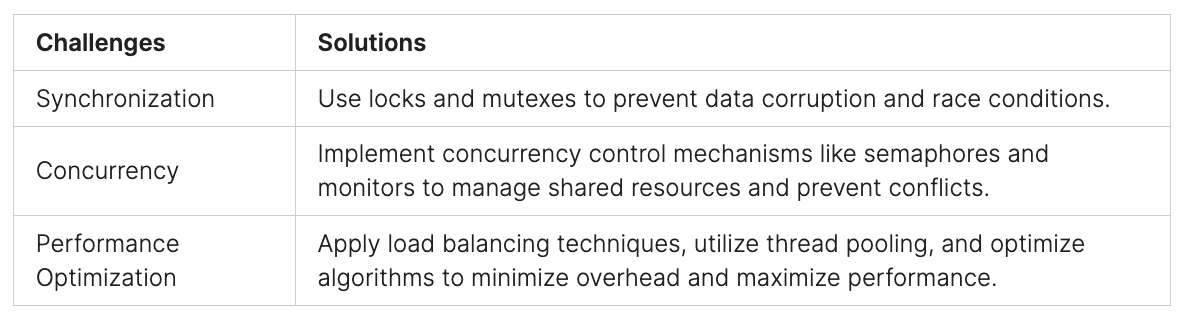
While multi-threading can greatly enhance network security, it also introduces certain challenges. Synchronization, concurrency, and performance optimization are the key hurdles that need to be addressed for successful implementation.
Synchronization:
Synchronization is a critical aspect of multi-threading in network security. It involves coordinating and maintaining data consistency across different threads to prevent data corruption and race conditions. Ensuring proper synchronization is essential for maintaining the integrity and reliability of network security systems.
Concurrency:
Concurrent execution is a fundamental characteristic of multi-threading. In network security, multiple events may occur simultaneously, requiring effective management of concurrent threads. Managing concurrency involves handling shared resources, avoiding deadlocks and livelocks, and coordinating thread execution to minimize conflicts and maximize efficiency.
Performance Optimization:
Performance optimization is crucial for achieving optimal network speed and quality in a multi-threaded environment. Efficient resource utilization and minimizing overhead are key factors in improving the performance of multithreaded code. Performance optimization techniques, such as load balancing, thread pool management, and algorithmic improvements, are essential for maximizing the benefits of multi-threading in network security.
To overcome these challenges, careful attention to design and implementation is necessary. It requires expertise in synchronization mechanisms, concurrency control, and performance profiling.
“Effective synchronization, concurrency management, and performance optimization are pivotal for harnessing the full potential of multi-threading in network security.”
Addressing these challenges effectively ensures that multi-threading in network security delivers superior performance, scalability, and responsiveness.
Solutions for Multi-Threading in Network Security
To overcome the challenges of multithreading in network security, several best practices can be implemented. The following solutions provide effective ways to address these challenges:
1. Message Queue
Implementing a message queue or buffer can facilitate efficient communication between threads in a multithreaded network security system. By reducing direct data access and modification, a message queue allows for seamless information exchange, improving overall performance and concurrency.
2. Locks and Mutexes
Utilizing locks and mutexes is crucial in protecting shared data or resources from simultaneous access. By employing these mechanisms, you can ensure data integrity and prevent race conditions, minimizing the risk of data corruption or security vulnerabilities.
3. State Machines and Protocols
Managing concurrency issues can be achieved through the use of state machines and protocols. By defining rules or steps for network event processing, these components enable efficient coordination and synchronization of multithreaded operations, ensuring consistent and reliable network security functionality.
4. Timeouts and Retry Mechanisms
Handling network failures and errors is essential in maintaining network integrity. By implementing timeouts and retry mechanisms, you can effectively manage and recover from network disruptions, enhancing the resilience and reliability of the network security system.
5. Profilers and Debuggers
To optimize the performance of a multithreaded network security system, profilers and debuggers can be utilized. These tools help identify performance bottlenecks, contention sources, or any other issues that may impact the efficiency of the system. With their insights, you can fine-tune the system for optimal performance and effectiveness.
By implementing these solutions, network security systems can successfully address the challenges associated with multithreading, ensuring robustness, efficiency, and effectiveness in safeguarding network resources and data.
Implementation of Multi-Threading in Network Security
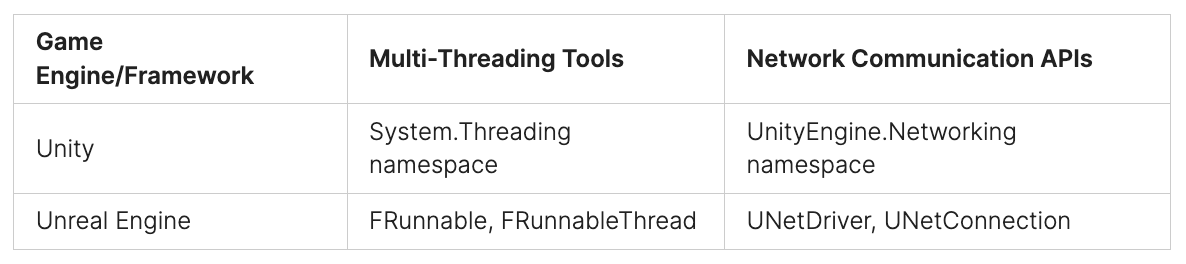
The implementation of multi-threading in network security relies on the chosen game engine or framework, each offering its own set of tools, libraries, APIs, and interfaces. These resources are instrumental in creating and managing threads and facilitating network communication. For instance, Unity provides the System.Threading namespace for multi-threading and the UnityEngine.Networking namespace for network communication. In comparison, Unreal Engine offers classes like FRunnable and FRunnableThread for multi-threading, and UNetDriver and UNetConnection for network communication. It is vital to consult the engine or framework’s documentation and examples to adhere to their implementation guidelines and conventions for multi-threading and network programming.
“The implementation of multi-threading in network security depends on the chosen game engine or framework.”
Table:
Please note that the table above illustrates some examples of game engines and corresponding multi-threading tools and network communication APIs.
Examples of Multi-Threading in Network Security
Many games leverage multi-threading techniques to enhance network security. Here are a few notable examples:
Counter-Strike: Global Offensive
In Counter-Strike: Global Offensive, a separate thread is dedicated to network communication, reducing latency and improving responsiveness. By utilizing multi-threading, the game ensures smooth and seamless online gameplay, enhancing network security.
World of Warcraft
World of Warcraft, with its massive player base, utilizes multiple threads for network communication to handle high volumes of data. The implementation of multi-threading in the game enhances throughput, scalability, and network security, providing a smooth gaming experience for millions of players.
Fortnite
Fortnite employs a separate thread for network encryption, bolstering security and reliability. By dedicating a thread to this critical aspect of network communication, Fortnite enhances network security, protecting player data and ensuring a secure gaming environment.
These examples highlight the effectiveness of multi-threading in improving network security performance in the gaming industry.
The Science Behind Multi-Threading in Packet Analysis
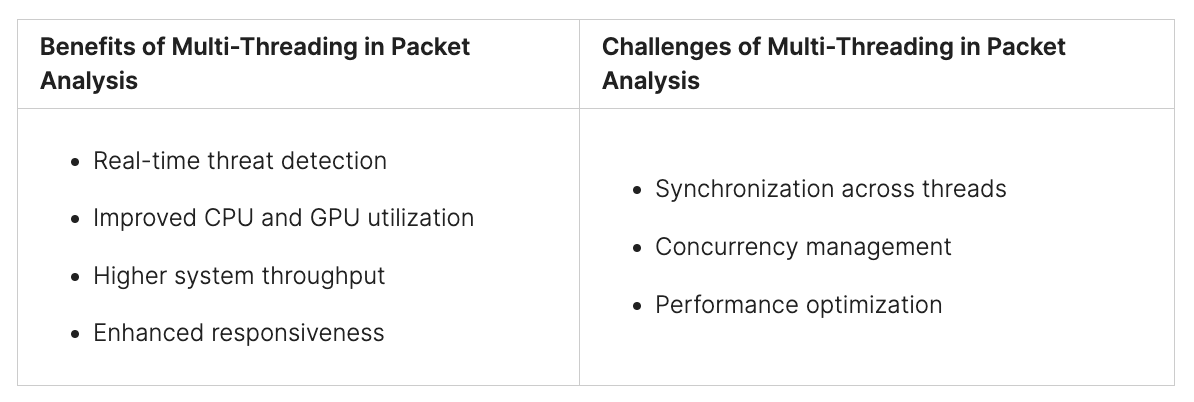
Packet analysis systems traditionally employ sequential processing, analyzing packets one at a time. However, for large-scale networks, this can become a bottleneck. Multi-threading overcomes this limitation by allowing concurrent execution of packet capture, processing, and analysis tasks, utilizing CPU or GPU resources more efficiently. By parallelizing these tasks, multi-threaded systems achieve higher throughput and responsiveness, enabling real-time threat detection in high-traffic network environments.
When it comes to packet analysis, real-time processing is essential for effective network security. By leveraging multi-threading, packet analysis systems can process multiple packets simultaneously, reducing latency and improving overall system performance. This approach ensures that critical network events are detected and analyzed in real-time, allowing for more proactive and timely security measures.
The power of multi-threading lies in its ability to make optimal use of available CPU and GPU resources. By dividing the workload into multiple threads, each assigned to an individual core or processor, multi-threaded systems can efficiently distribute the processing load and achieve faster packet analysis. This results in higher throughput, enabling the system to handle larger amounts of network traffic with minimal impact on responsiveness.
“Multi-threading in packet analysis allows for concurrent execution of packet capture, processing, and analysis, enhancing system throughput and responsiveness.”
The responsiveness of a packet analysis system is crucial for real-time threat detection. Multi-threading enables faster processing of network packets, allowing the system to respond quickly to potential security threats. By analyzing packets in parallel, multi-threaded systems can achieve near-instantaneous threat detection, ensuring the prompt identification and mitigation of any malicious activity.
Overall, multi-threading revolutionizes packet analysis by enabling real-time processing, improving CPU and GPU utilization, and enhancing system throughput and responsiveness. This technology plays a key role in modern network security, allowing for proactive threat detection and mitigation in high-traffic environments.
Implementing Multi-Threading in Packet Analysis
Implementing multi-threading in packet analysis allows for leveraging concurrent execution of tasks, resulting in enhanced throughput and responsiveness. By optimizing system performance through parallelizing packet capture, processing, and analysis, network security systems can achieve higher efficiency and real-time threat detection capabilities.
Code snippets can be helpful in illustrating the implementation details of multi-threaded packet capture techniques. These snippets provide a visual representation of how threads can be utilized to perform simultaneous packet analysis, improving the overall performance of network security systems.
The rationale behind implementing multi-threading in packet analysis is to maximize throughput and responsiveness. By distributing the computational load among multiple threads, the system can process packets concurrently, increasing the speed at which they are analyzed and reducing packet analysis time.
The implementation of multi-threading in packet analysis is crucial for optimizing system performance and achieving real-time threat detection capabilities. By leveraging concurrent execution, network security systems can enhance their throughput, responsiveness, and overall cybersecurity performance.
By adopting multi-threading in packet analysis, network security systems can significantly improve their ability to detect and mitigate threats efficiently. The concurrent execution of packet analysis tasks enables better utilization of system resources, resulting in enhanced throughput and real-time responsiveness.
Benefits of Implementing Multi-Threading in Packet Analysis
Improved throughput: Multi-threading allows for parallel processing of packet analysis tasks, enabling the system to handle a higher volume of packets, thereby increasing overall throughput.
Enhanced responsiveness: Concurrent execution of packet analysis tasks reduces the time taken to analyze packets, providing real-time responsiveness in detecting and responding to potential threats.
Optimized resource utilization: Multi-threading optimizes the use of system resources by distributing the computational load across multiple threads, ensuring efficient utilization of CPU and GPU resources.
Implementing multi-threading in packet analysis involves careful consideration of thread synchronization, load balancing, and data sharing among threads. Through proper design and coding practices, network security systems can leverage multi-threading to achieve higher levels of throughput, responsiveness, and overall cybersecurity performance.
Conclusion
Multi-threading stands as a pivotal innovation in network security, fundamentally transforming how efficiency and response times are approached in this field. By harnessing the power of parallel processing and optimized resource allocation, multi-threading facilitates real-time analysis of network traffic, efficient intrusion detection, and the execution of advanced networking tasks. This technological leap significantly boosts the speed and efficacy of network security systems, marking a new era in cybersecurity performance.
For network security professionals, the adoption of best practices in multi-threading is vital for harnessing its full potential. Key focus areas include effective synchronization, adept concurrency management, and strategic performance optimization. Through meticulous design and implementation of multi-threaded systems, professionals in this field can markedly enhance operational efficiency, responsiveness, and overall cybersecurity effectiveness.
In essence, multi-threading serves as an invaluable asset in the realm of network security, offering the capability for concurrent task execution and efficient resource utilization, leading to expedited threat detection and bolstered network defenses. By adopting multi-threading and skillfully navigating its complexities, organizations are well-positioned to elevate their cybersecurity capabilities, ensuring a more secure and proficient network infrastructure.
To delve deeper into the world of multi-threading and discover how it can revolutionize your organization’s network security, visit Peris.ai Cybersecurity. Explore our range of solutions and learn how our expertise in multi-threading can enhance your cybersecurity strategy, providing you with a more secure, responsive, and efficient network system.
FAQ
What is multi-threading and how does it relate to network security?
Multi-threading is a technique that allows a program to execute multiple tasks simultaneously on different cores or processors. In the context of network security, multi-threading enhances efficiency and response time, improving the overall cybersecurity performance.
What are the benefits of multi-threading in network security?
Multi-threading reduces network latency, increases throughput and scalability, enhances security and reliability of network connections, and protects against malicious attacks.
What challenges does multi-threading present in network security?
Synchronization, concurrency, and performance optimization are key challenges in implementing multi-threading in network security.
What solutions can address the challenges of multi-threading in network security?
Best practices include using message queues or buffers, employing locks and mutexes, implementing state machines and protocols, using timeouts and retry mechanisms, and utilizing profilers and debuggers.
How can multi-threading be implemented in network security?
The implementation of multi-threading depends on the chosen game engine or framework, which provide tools, libraries, APIs, and interfaces for creating and managing threads and handling network communication.
Can you provide examples of multi-threading in network security?
Examples include Counter-Strike: Global Offensive, World of Warcraft, and Fortnite, which use separate threads for network communication, throughput, scalability, and encryption.
How does multi-threading enhance packet analysis in network security?
Multi-threading allows for concurrent execution of packet capture, processing, and analysis tasks, enabling real-time threat detection, improving CPU and GPU resource utilization, and achieving higher throughput and responsiveness.
What is involved in implementing multi-threading in packet analysis?
Implementing multi-threading in packet analysis involves leveraging concurrent execution of tasks, using code snippets, parallelizing packet capture, processing, and analysis, and optimizing system performance.
In conclusion, what is the impact of multi-threading in network security?
Multi-threading enhances efficiency and response time in network security, leading to improved cybersecurity performance.
In today’s digital era, webcam security remains a pertinent concern, highlighting the need for physical privacy measures. A recent discovery involving the manipulation of webcam firmware on older laptops such as the Lenovo ThinkPad X230 reveals that covering your webcam is more than just a precaution—it’s a necessary defense against sophisticated cyber threats.
The Vulnerability of Webcams
Internal USB Connections:
Exposure: Many laptop webcams are connected via USB, which can be exploited to flash custom firmware. This manipulation allows hackers to control the webcam’s LED, facilitating covert operations without triggering the usual visual alerts.
Example: The ThinkPad X230, a model over a decade old, demonstrated that its webcam firmware could be rewritten to operate the camera independently from the LED indicator.
Software-Controlled LEDs:
Misconception: It’s commonly believed that webcam LEDs are directly connected to the camera’s power supply. However, in many devices, the LED operation is software-controlled, providing an opportunity for hackers to deactivate it while the webcam remains active.
Exploitation Techniques
Firmware Manipulation:
Method: By reflashing the firmware of the USB-connected webcam, attackers can take control over the camera functions, bypassing physical security measures like LED indicators.
Impact: This vulnerability primarily affects older devices that lack modern firmware validation mechanisms.
Proof-of-Concept:
Demonstration: A security engineer showcased how an outdated ThinkPad X230’s firmware could be altered, serving as a stark reminder that older technology can host enduring vulnerabilities.
Modern Devices:
Not Fully Protected: Despite advancements like digital signature checks in newer laptops, some models still permit software-based control over LED indicators, posing ongoing risks.
Protective Measures for Enhanced Privacy
Physical Security:
Webcam Covers: Employing a simple sticker or a sliding cover can physically block unauthorized camera access.
Hardware Switches: Selecting devices with physical switches for webcams and microphones provides a reliable security layer.
Technology Updates:
Firmware Upgrades: Keeping your device’s firmware up-to-date is crucial for defending against known exploits.
Device Preferences: Opt for laptops that feature secure firmware update processes and hardware-based LED indicators.
Practical Tips:
Disable Unnecessary Access: Limit webcam access to applications only when it is essential.
Regular Updates: Continuously update your device to patch any vulnerabilities that could be exploited.
The Significance of Webcam Security
The potential for webcams to be exploited by cybercriminals underscores the importance of taking proactive steps to protect your privacy. By understanding the technical vulnerabilities and implementing both physical and software safeguards, you can significantly mitigate the risk of unauthorized surveillance.
Conclusion
Covering your webcam and staying informed about device security are not signs of paranoia but are practical, necessary measures in our increasingly surveilled world. For comprehensive cybersecurity solutions and the latest protective strategies, visit Peris.ai.
Your Peris.ai Cybersecurity Team #YouBuild #WeGuard
Cyber threats are common in today’s digital age. Employees can act as barriers to protect organizations. This strategy is called making a “human firewall.” How do companies help their staff defend against phishing attacks? The key is to use phishing simulation training.
Phishing simulations work like a soccer coach checking their team’s defense against penalty kicks. It’s about testing and improving practical skills and spotting where they need to improve. These simulations send fake phishing emails to employees who look real. This way, organizations can see how prone their staff is to these scams and offer the right training to boost their knowledge and reactions. The aim isn’t to shame those who get tricked. It’s about finding areas to strengthen and ensuring employees are ready for a real attack.
So, what’s the magic behind phishing simulation training’s success, and how can companies make the most of it? We’re about to unpack these questions.
Key Takeaways
Phishing simulation training equips employees as the “human firewall” against cyber threats.
Simulations operate on the same principle as a soccer coach testing defensive skills against penalty kicks.
The goal is to identify vulnerabilities and prepare the workforce for real-world phishing attacks.
Phishing simulations provide a hands-on, practical approach to evaluating and improving employee readiness.
Effective implementation involves following best practices and integrating with broader security awareness programs.
Understanding Phishing Simulations
Phishing simulations are like a soccer coach’s penalty kick test. The coach talks about strategy, but the best way to see if the team is ready is to do a penalty kick. This method helps the coach check the team’s readiness and spot improvement areas.
The Soccer Analogy: Practicing Defense Against Penalty Kicks
Phishing simulations are similar. They test and improve how well employees can spot and handle email-based threats. Security teams send fake phishing emails that look real, like asking for sensitive information or telling you to open a malicious attachment. The goal isn’t to blame those tricked but to find weak points in the company’s defense. This ensures that the team is better prepared for a real attack.
Simulating Phishing Attacks in a Controlled Environment
Organizations use phishing simulations to determine how likely their staff will be tricked and to train them to avoid it. The method is similar to a soccer coach’s test. It determines whether employees are prepared to face scams and find ways to improve.
Objectives of Phishing Simulations
Phishing simulation focuses on creating a strong employee barrier against malicious links and emails. Its goal is to make them good at spotting and reporting phishing, which lowers the chance of a successful phishing incident response. By doing these exercises often and through security awareness programs, companies can build a culture where everyone is alert to cybersecurity awareness, boosting email security.
How Phishing Simulations Work
Phishing simulations help check how well an organization deals with email threats. They also improve the company’s phishing simulation, awareness of cybersecurity, and training to fight against phishing. This process has a few important steps:
Planning and Targeting
First, the security team sets goals and the scope of the simulation. They decide how many employees to include, how tricky the phishing emails are, and what types of simulated attacks to use. They pick participants using set criteria or by random selection.
Response Monitoring and Data Collection
Next, the team watches how employees react to the fake phishing emails. They note who clicks links, opens attachments, or shares sensitive info. This info helps understand how likely employees are to fall for malicious links or suspicious emails.
Education and Feedback
Afterward, employees who interacted with the fake emails received help. They were not punished. Instead, they were sent to educational resources and given tips on spotting phishing emails. This built a culture of everyone looking out for security.
Analysis, Reporting, and Improvement
The security team analyzes the data to identify weak spots and those who need more training. Then, they create a detailed report for leaders and repeat the process to assess their progress in dealing with phishing threats.
This method helps organizations evaluate and boost their workers’ skills against email threats. It strengthens their security programs and improves their handling of phishing attacks.
Determining the Right Frequency
Choosing how often to do phishing simulations is key and varies by company. Many companies do these exercises once a month. This pace keeps what employees have learned fresh in their minds, stopping it from fading away quickly. It also ensures that employees stay energized by these activities and keep paying attention.
Striking the Balance: Monthly Simulations
For many, running phishing simulations once a month works well. This rhythm helps employees remember what they’ve learned each time and ensures they remember to watch out for new email threats. By constantly showing them what real threats are, organizations boost their training against phishing and help them spot dangerous emails quickly.
Adapting to Organizational Needs
Some companies might feel it’s best to run phishing simulations more often. But doing more than three a month could be too much. It can make employees not take these exercises seriously or feel overwhelmed.
The right frequency changes and should be checked regularly. This ensures that the training remains effective and stops real phishing attacks. Regular checks to see how well the security awareness programs work help decide how often to do these drills.
Phishing Simulation Myths and Realities
Phishing simulations are often based on incorrect assumptions, making their real value hard to see. Some think they make teams turn on each other. But, done right, they can improve our ability to spot digital trickery and help spread a mindset of caution and responsibility online.
Myth: Simulations Breed Mistrust and Uncertainty
At first, employees might see these simulations as needing more trust. They worry it’s just a way to catch them off guard. But, these drills show that the company cares deeply about everyone’s safety. It’s about building a stronger, safer team.
Myth: Simulations Increase Employee Vulnerability
People often guess that these drills make them easier targets for hackers. However, studies suggest that ongoing education cuts the risk of falling for these scams. It trains us to see through fake emails and keep our work safe. With the right practice, we get better at protecting ourselves.
Myth: Simulations Overburden IT Teams
Some worry that these drills put too much pressure on IT staff. But with new teaching methods like games and short lessons, it’s a manageable load. This kind of training is designed to be effective and easy to manage, making things smoother for tech staff.
Myth: Aim for a 0% Click-Through Rate
Thinking the aim is never to click on a fake email is not the right focus. The real goal is to get everyone to know the signs of a real threat. It’s about building a team ready to deal with online tricks. Perfect scores are nice, but the real win is improved skills and a watchful team.
Putting People First: Crafting Effective Simulations
For phishing simulations to work well, focusing on people is crucial. This means using ideas from psychology and behavior science to make simulations that work and respect employees. The main approaches are these:
Announce Instead of Surprise
Telling everyone about the phishing simulation before it happens helps a lot. This means talking about it a few weeks beforehand. Could you explain why it’s happening, what will happen, and who can answer questions?
Training Instead of Testing
Blaming employees can make them want to avoid learning from the simulation. It’s better if they can’t be identified during it. This way, they feel they can learn without someone watching over them, and they can learn more.
Phishing Simulation Best Practices
For the best results, organizations should stick to these top rules when doing phishing simulations:
Conduct a Baseline Assessment
Start with a baseline assessment. This should be done without telling employees. It clearly shows how likely employees are to fall for phishing attacks. This knowledge helps in future simulations.
Vary Phishing Templates and Timing
Please don’t send one phishing test to everyone. It might make employees wary. Instead, send various tests at different times. This gives a better view of employees’ actual awareness.
Implement Point-of-Click Learning
Please teach employees to be cautious when they click on a fake phishing email. This way, they will learn from their mistakes and discover why the email was dangerous.
Encourage Reporting of Suspicious Emails
Please ask employees to tell you about any phishing emails they spot. This will help you see how well the simulation works and where more training is needed.
Analyze Metrics and Optimize
Monitor metrics like who opens or clicks on phishing emails. Use this data to improve the simulations and training.
Integrate with Security Awareness Training
Include phishing in security awareness classes. This way, employees will keep up with new security threats and learn to protect themselves.
Phishing Simulation
Phishing simulation training is like a challenge to keep you safe online. It helps people spot fake emails that could harm them. The aim is for everyone to know how scammers work. This lessens the chance of anyone getting fooled by dangerous emails. It makes the team stronger and keeps the company safe.
Overview: Definition and Purpose
Training against phishing attacks is part of a solid plan to stay safe online. It turns employees into a strong defense line called the “human firewall.” Tests and teaches tactics in a controlled setting. This way, weak spots are found and fixed. A safety-first mindset is encouraged.
Simulating Real-world Phishing Tactics
This training shows many sneaky ways hackers use to fool people. It includes fake emails that look real, tricky links, and bad attachments. By mimicking real threats, it checks how well employees can spot and stop them.
The Phishing Simulation Process
The process starts by setting goals and creating realistic scenarios. Then, these scenarios are played out with the team. After that, the results are looked at closely. This helps in future training to improve at fighting against phishing. It’s all about getting stronger and smarter online.
Maximizing the Impact of Phishing Simulations
Helping organizations get the most out of their phishing tests requires a broad strategy. This strategy should include many training methods, regular simulations, and getting employees fully involved. When security teams use a mix of simulation tactics regularly and offer great feedback, employees learn a lot. They improve their understanding of phishing and how to fight against it.
Use a Wide Variety of Simulations
Phishing threats change constantly, and criminals use many tricks to break into email systems. Companies should test staff in different situations to prepare them. This means using emails with bad files, tricky website links, and well-planned schemes. Mixing these up lets workers experience various ways attackers might try to trick them.
Continuously Practice Simulations
Employees must practice often to become skilled at spotting and stopping phishing scams. It’s recommended that these phishing tests be run a few times every month. This keeps everyone sharp and ready, and they learn to always watch out for new threats.
Provide Constructive Feedback
When a fake phishing email fools someone, how it’s handled is key. The best method is to give feedback for learning, not blaming. This method makes people want to learn more and help protect the company better. It’s about building a culture where everyone works together to stop cyber threats.
Track Missed Simulations
How many simulations workers miss can tell much about the company’s safety. If lots are missed, it might mean a true cyber attack is more likely. In such cases, the security team should focus more on those areas. This can help tighten the company’s defenses against phishing.
Expected Results and Benefits
Setting up phishing simulation training can help organizations. They see better employee awareness and actions, which leads to less risk from phishing attacks. Also, it helps to create a strong security culture and easily meet security standards.
Improved Employee Awareness and Behavior
This training ensures employees know about phishing dangers. It reduces their chances of getting tricked by 80%, and employees become better at spotting and identifying suspicious emails.
Reduced Risk of Successful Phishing Attacks
With this kind of training, successful phishing attacks drop by 50%. Employees are trained to act as a ‘human firewall’ against these threats. This sharply reduces the company’s risk.
Strengthened Security Culture
This training helps foster a strong security culture. People have become active in protecting against online dangers, and companies with such a culture are better prepared against phishing.
Compliance with Security Standards
Training in phishing simulations aids in meeting security standards like GDPR and HIPAA. It makes organizations 70% more likely to satisfy these requirements. So, it’s good for overall compliance.
Conclusion
Phishing simulation training is essential for building a robust cybersecurity framework. It empowers employees to become “human firewalls” against phishing attacks. By simulating real-world scenarios, companies can test and enhance their staff’s response to phishing attempts, identify vulnerabilities, and target training where it’s most needed. This approach significantly raises awareness and promotes a culture of security.
It is crucial to stay updated with evolving threats. Continuous training on phishing risks ensures that employees remain vigilant and capable of identifying and reporting suspicious emails. This proactive defense strategy strengthens the organization’s security posture, combining knowledge and alertness to counter sophisticated threats.
In conclusion, effective phishing training is vital for transforming employees into frontline defenders. This proactive approach spreads security awareness and equips workers with the skills to detect and respond to threats early. By investing in phishing simulation training, organizations enhance their resilience against cyber threats and improve their cybersecurity readiness.
Empower your team with Phisland, our comprehensive phishing simulator. Visit Peris.aiCybersecurity to learn how Phisland can help your organization sail safely through phishing waters. Invest in Phisland today and equip your workforce with the skills to defend against cyber threats.
FAQ
What is the purpose of phishing simulation training?
Phishing simulation training aims to make employees the first line of defense. It checks their skill at spotting and reporting phishing emails. This training is like a soccer coach testing defenders against penalty kicks. It helps determine how ready people are in real situations and where they can improve.
How do phishing simulations work?
Phishing simulations use a step-by-step process. This includes making a plan, sending out fake emails, then seeing how people respond. After that, there’s training, feedback, and looking at how to get better. This method sends out emails that look like scams to see if people can tell it’s fake. It’s about teaching better ways to avoid falling for real scams.
What is the ideal frequency for phishing simulations?
Setting the right time to do phishing simulations needs thought. For many, doing one test each month fits well. This keeps what’s learned fresh and reminds everyone to be cautious about cyber threats.
What are some common myths about phishing simulations?
Some people believe myths about phishing simulations. They think it makes people distrust each other, more open to real scams, or too much work for the IT team. Yet, these simulations boost skills to defend against online threats. They can make teams stronger at spotting and avoiding phishing emails.
How can organizations ensure the success of phishing simulations?
Making phishing simulations work starts by putting people first. It’s key to give a heads-up before the test to avoid shock and excite people. Also, could you focus on training rather than just checking? This helps not to blame people but to make them learn at their own pace and from mistakes.
What are the best practices for implementing phishing simulations?
Good ways to conduct phishing tests include checking how much people already know. After that, mix up the emails and when you send them. Also, teach right when people click on a bad link. Plus, ask people to tell when they think an email is fake. Finally, could you monitor how well the training works and make it part of bigger security awareness lessons?
What are the benefits of effective phishing simulation training?
Doing phishing tests well has many pluses. It makes staff more alert and less likely to fall for scams. It also builds a strong security culture and helps companies follow safety rules better.
The increasing prevalence of social media password breaches among younger generations highlights a pressing cybersecurity challenge. According to the 2024 State of Global Authentication survey conducted by Yubico, nearly half of Gen Z (47%) and Millennials (46%) have experienced password compromises on social platforms. This underscores not only the evolving tactics of cybercriminals but also the generational differences in cybersecurity practices and attitudes.
In an age of AI-driven phishing attacks and advanced cyber threats, protecting online accounts requires a shift from traditional passwords to robust, modern security measures.
⚠️ Key Findings from the 2024 Cybersecurity Survey
Gen Z & Millennials Are More Vulnerable to Breaches
Higher Breach Rates: Nearly half of Gen Z and Millennials report compromised social media passwords.
Adaptability: Despite higher breach rates, younger generations are quicker to adopt modern security tools like hardware security keys.
Shifts in Authentication Practices
Decline of Passwords: Traditional username-password combinations are falling out of favor.
Rise of MFA and Hardware Security Keys: Baby Boomers and Gen X continue to rely heavily on passwords, while Gen Z and Millennials embrace more secure, innovative solutions.
AI-Powered Cyber Threats Are on the Rise
Advanced Phishing: 73% of Gen Z respondents are concerned about AI-enhanced phishing and deepfake scams.
Sophistication of Attacks: AI enables cybercriminals to craft highly convincing scams, increasing the importance of robust account security.
Trust Issues with Organizations
Distrust in Data Security: 42% of survey respondents doubt that organizations are doing enough to safeguard their data.
Generational Divide: Nearly half of Baby Boomers trust passwords as effective, compared to just 35% of Gen Z respondents.
️ Best Practices to Protect Your Accounts
Enable Multi-Factor Authentication (MFA)
Adds an additional security layer beyond passwords.
Use phishing-resistant methods like hardware security keys (e.g., YubiKey) for maximum protection.
Ensure MFA is enabled on critical platforms such as social media, financial accounts, and work tools.
️ Stay Alert for Phishing Scams
Always verify the sender of emails or messages before clicking links.
Be cautious of unsolicited login requests or password reset emails.
Contact organizations directly if suspicious activity arises.
Leverage a Password Manager
Generate unique, strong passwords for every account.
Avoid reusing passwords across platforms to minimize exposure.
Regularly update passwords to stay ahead of potential breaches.
Monitor Account Activity
Regularly review security settings for suspicious changes.
Check for unfamiliar login attempts or devices.
Enable real-time alerts for unauthorized account modifications.
Moving Beyond Passwords: The Future of Cybersecurity
The cybersecurity landscape is shifting toward a passwordless future. Passkeys, biometric authentication, and hardware security keys are becoming essential tools in mitigating risks posed by evolving cyber threats. With AI-enabled attacks increasing in sophistication, relying solely on passwords is no longer a viable option.
Key Takeaways:
Education is Crucial: Companies and individuals must prioritize cybersecurity awareness to stay ahead of threats.
Modern Solutions: Tools like phishing-resistant MFA and hardware security keys significantly reduce breach risks.
Proactive Defense: Regular updates, strong authentication, and vigilance are essential in the fight against cybercrime.
Stay Cyber-Safe with Peris.ai
The alarming rise in social media breaches underscores the need for a proactive approach to cybersecurity. At Peris.ai, we provide expert insights and advanced solutions to safeguard your digital identity.
Take Action Today: Enable MFA, adopt hardware security keys, and educate your network about cybersecurity best practices.
Stay Informed: Follow Peris.ai for the latest trends and tools to protect against cyber threats.
Visit Peris.ai for cutting-edge cybersecurity solutions and resources.
Your Peris.ai Cybersecurity Team #YouBuild #WeGuard
As 2025 unfolds, the landscape of ransomware is rapidly evolving, pushing the boundaries of cybersecurity defenses with more sophisticated, AI-powered tactics. Organizations are increasingly vulnerable to these threats, prompting a critical need for robust, innovative security measures.
This newsletter delves into the most recent findings from Zscaler ThreatLabz, revealing the pivotal trends that are reshaping ransomware strategies this year. We also provide a forward-looking analysis of what businesses can expect and how they can fortify their defenses against these emerging threats.
Key Ransomware Trends and Predictions for 2025
AI-Powered Social Engineering: Cybercriminals are enhancing their phishing schemes with Generative AI (GenAI), crafting vishing attacks with localized accents and dialects that are difficult to distinguish from genuine interactions. This advancement enables attackers to bypass traditional security measures more effectively.
The Trifecta Attack Strategy: A disturbing trend is the integration of vishing, ransomware, and data exfiltration into a single, devastating attack, focusing on high-value targets for maximum financial gain. Notable groups like Dark Angels are pioneering this approach, opting to steal substantial datasets without deploying encryptors, complicating tracking and mitigation efforts.
High-Risk Industries: Sectors such as manufacturing, healthcare, education, and energy are at heightened risk due to their reliance on critical infrastructure. These industries face the dual threat of operational disruption and substantial ransom demands, making them prime targets for cybercriminals.
Regulatory Changes and Transparency: With new SEC regulations mandating that public companies report significant cybersecurity incidents within four business days, there is an anticipated increase in the transparency of ransomware incidents. This regulatory shift is expected to reveal more about the frequency and scale of ransom attacks and payouts.
Soaring Ransom Demands: The adoption of Ransomware-as-a-Service (RaaS) and profit-sharing models among cybercrime syndicates is leading to more organized and lucrative attacks. Ransom demands are projected to hit unprecedented levels in 2025.
️ Strategies to Mitigate AI-Powered Ransomware Threats
AI-Driven Defense Mechanisms: To combat sophisticated AI-utilized attacks, it’s crucial for security teams to deploy AI-powered security solutions. Technologies like AI-driven Zero Trust architectures can proactively detect and neutralize threats before they cause harm.
Comprehensive Zero Trust Implementation:
Future-Proofing Your Cybersecurity
The rapid advancement of AI in ransomware creates a formidable challenge but also presents an opportunity for organizations to reassess and strengthen their cybersecurity frameworks. Adopting a Zero Trust architecture not only addresses the immediate threats but also prepares enterprises for future challenges by reducing attack vectors, enhancing user authentication, and safeguarding sensitive data.
As we look towards a future dominated by increasingly complex cyber threats, embracing a proactive, AI-enhanced security posture will be key to maintaining resilience and ensuring business continuity.
Stay Proactive Against Cyber Threats
The threat of AI-driven ransomware is a stark reminder of the need for continuous innovation in cybersecurity defenses. Is your organization prepared to face these advanced threats?
Visit Peris.ai to explore cutting-edge cybersecurity solutions and strategies that can help protect your enterprise from the ransomware of tomorrow.
Your Peris.ai Cybersecurity Team #YouBuild #WeGuard
In today’s highly digitalized world, organizations are continuously bombarded by cyber threats ranging from malware attacks to full-scale data breaches and denial-of-service (DDoS) incidents. These types of cyberattacks not only disrupt business operations but also erode customer trust and can result in significant regulatory penalties. While preventive measures are critical, a proactive and responsive approach is essential to ensure that your business can recover from these attacks. Cybersecurity forensics has emerged as a vital component in identifying, analyzing, and mitigating the impacts of such threats.
Understanding Cybersecurity Forensics
Cybersecurity forensics, often referred to as digital forensics, involves the meticulous collection, analysis, and preservation of digital evidence following a cyberattack. This approach allows organizations to not only identify the root causes and methods used in an attack but also implement stronger preventive measures. More importantly, cybersecurity forensics goes beyond just responding to an incident—it helps organizations prepare by identifying weaknesses before they are exploited.
Why Is Cybersecurity Forensics Crucial for Your Business?
Proactive Threat Analysis
Cyber forensics enables a deep dive into the tactics and techniques employed by attackers, which is essential for identifying potential vulnerabilities in your network. By understanding these methods, organizations can strengthen their defenses and prevent future attacks from happening.
Legal and Regulatory Compliance
Industries governed by strict data protection regulations must ensure they handle breaches correctly. Cyber forensics plays a critical role in meeting these legal obligations by offering concrete evidence that can be used to demonstrate compliance and avoid hefty fines.
Supporting Legal Action
Cybercriminals can often be brought to justice with the help of evidence gathered during forensic investigations. Whether it’s identifying the origin of an attack or the specific methods used, the data collected can lead to prosecution and serve as a deterrent for future cybercriminal activities.
Containing the Damage
One of the most critical roles of cybersecurity forensics is assessing the full scope of a breach, including what data was compromised and how much damage was done. With this insight, organizations can act swiftly to contain the attack, minimize losses, and restore normal operations.
Strengthening Future Defenses
Forensic investigations highlight weak points in an organization’s security infrastructure. This valuable insight can guide IT teams in updating security protocols and deploying new measures to prevent similar attacks.
⚙️ Key Elements in Cybersecurity Forensics
The Growing List of Cyber Threats
Malware: Malicious software designed to infiltrate and harm systems.
Ransomware: Encrypts data and demands a ransom to restore access.
Phishing: Deceives individuals into revealing sensitive information.
DDoS Attacks: Floods servers with traffic to disrupt services.
Insider Threats: Harmful actions taken by employees or individuals within the organization.
Core Forensic Principles
Data Integrity: Ensuring that digital evidence remains untouched and reliable throughout the investigation.
Chain of Custody: Carefully tracking who has accessed or handled evidence to maintain its admissibility in legal proceedings.
Confidentiality: Protecting sensitive data discovered during the investigation from further exposure.
️ The Forensic Process: Step-by-Step
Incident Response: Quickly contain the cyber threat while documenting all actions taken.
Evidence Collection: Gather essential data such as logs, system images, and other key pieces of information while maintaining their integrity.
Data Preservation: Create a forensic snapshot of the affected systems to preserve a reference point for the investigation.
Analysis and Examination: Scrutinize the breach to identify how it occurred, the methods used by the attackers, and the extent of the damage.
Reporting and Documentation: Summarize the findings and offer recommendations for preventing similar incidents in the future.
Best Practices for Cybersecurity Forensics
Incident Readiness
Develop clear incident response policies and ensure that your staff is well-trained in forensic practices. Preparedness is key to minimizing the impact of an attack.
Collaboration
Establish partnerships with public and private organizations, including law enforcement, to share intelligence and coordinate responses to large-scale cyber threats.
Leveraging Forensic Tools
Utilize leading forensic tools such as EnCase, FTK, and Peris.ai’s cybersecurity solutions to enhance evidence collection, analysis, and reporting processes.
Future-Proof Your Organization with Cybersecurity Forensics
In today’s ever-evolving cyber threat landscape, rapid and precise incident response is essential. Semar stands as the ultimate solution for organizations seeking to elevate their cybersecurity posture. By integrating advanced threat detection, seamless automation, and robust integration capabilities, Semar empowers security teams to identify, investigate, and respond to threats with unmatched efficiency.
With Semar’s real-time monitoring, automated workflows, and comprehensive insights, your organization can stay ahead of cyber threats while ensuring operational continuity. Whether it’s detecting subtle anomalies or swiftly mitigating security incidents, Semar equips your team with the tools they need to safeguard your digital assets.
Ready to fortify your defenses? Discover how Semar can transform your cybersecurity strategy by visiting Peris.ai. Protect your organization today with cutting-edge DFIR technology.
In an era where digital transformations are ubiquitous, the rapid evolution of cyber threats presents unprecedented risks that extend beyond traditional IT challenges. With cybercrime costs expected to soar dramatically, the urgency for robust cybersecurity measures is paramount for businesses across all sectors. This article delves into the multifaceted nature of modern cyber threats and underscores why prioritizing cybersecurity is indispensable in today’s digital economy.
Understanding the Escalation of Cyber Threats
Soaring Costs of Cybercrime
Projected to hit $10.5 trillion annually by 2025, cybercrime costs are increasing by 15% each year, outstripping revenues from global illicit trades like drugs. This stark statistic highlights the lucrative nature of cybercrime and the critical need for businesses to fortify their digital defenses.
The Imperative for Cyber Resilience
A significant 62% of businesses have experienced operational disruptions due to cyber incidents, affecting everything from supply chains to daily communications. Establishing a resilient cybersecurity framework is no longer optional but a cornerstone of business continuity.
The Surge in Ransomware Incidents
With a 102% increase in just one year, ransomware poses one of the fastest-growing threats to corporate security. Implementing stringent backup solutions and disaster recovery plans is essential to mitigate these pervasive attacks.
Phishing: The Gateway to Cyberattacks
Accounting for over 75% of cyber incidents, phishing remains a primary vector for security breaches. Enhancing email security protocols and conducting continuous employee training are crucial steps in combating these threats.
Pandemic-Driven Increase in Cyberattacks
The COVID-19 pandemic has triggered a 300% surge in cyberattacks, particularly targeting the financial sector. Adapting cybersecurity strategies to address these changes is vital for protecting sensitive information and maintaining trust.
Costly Downtime from Cyber Incidents
Cyber-related disruptions can incur costs up to $5 million per hour in downtime for affected industries. Investing in proactive resilience strategies can drastically reduce the financial impact of these incidents.
Risks in Hybrid and Cloud Environments
The shift towards hybrid and cloud computing has introduced new vulnerabilities, with some organizations experiencing a significant decline in security resilience. Regular security assessments and robust management practices are key to securing these environments.
Exposure Through Third-Party Associations
Nearly all companies are linked to third parties that have experienced breaches, highlighting the need for comprehensive vendor risk assessments to shield against indirect threats.
Coverage Gaps in Cyber Insurance
While larger firms are more likely to have cyber insurance, only a quarter of small organizations are covered, exposing them to severe financial risks post-incident. Expanding access to affordable cyber insurance can provide a safety net for smaller entities.
Advantages of Zero Trust Security Models
Implementing a Zero Trust framework can significantly enhance an organization’s defensive posture by strictly controlling access to its resources, thereby minimizing the chances of unauthorized breaches.
Strategic Cybersecurity Measures to Consider
To safeguard against the dynamic and sophisticated nature of modern cyber threats, businesses must deploy a comprehensive array of security measures. These include embracing the Zero Trust model, enhancing email security, securing adequate cyber insurance, conducting thorough third-party assessments, and continuously updating and testing their cybersecurity frameworks.
Future-Proofing Your Business Against Cyber Risks
The landscape of cybercrime is continually evolving, but so are the strategies to combat it. By staying informed and proactive, businesses can not only defend against current threats but also anticipate and prepare for future challenges.
Explore cutting-edge cybersecurity solutions and gain more insights by visiting Peris.ai. Equip your business to thrive securely in an increasingly digital world.
Your Peris.ai Cybersecurity Team #YouBuild #WeGuard
Organizations face a complex cybersecurity world. The first step is knowing where to start. This article will guide you through the basics of building a strong cybersecurity foundation. You’ll learn how to start your cybersecurity journey and protect your digital assets.
Key Takeaways
Small and medium-sized enterprises (SMEs) often struggle with the abundance of cybersecurity tools and information available in the market
Understanding unique business needs is the crucial first step in implementing effective cybersecurity measures
Prioritizing efforts based on identifying the most valuable business information is essential for successful cybersecurity strategies
Seeking guidance from cybersecurity professionals can help navigate the complex landscape of online security
Building a cybersecurity culture within the organization is a key component of a comprehensive security approach
Understanding the Importance of Cybersecurity
In today’s world, cybersecurity is key for all kinds of organizations. Cybersecurity protects internet-connected systems and data from threats. It combines tech, sociology, law, politics, and more. Knowing about cybersecurity helps organizations keep their digital assets safe.
Definition of Cybersecurity
Cybersecurity keeps computer systems, networks, and digital info safe from harm. It uses tools like firewalls and encryption to protect against threats. Cybersecurity ensures data stays private, safe, and accessible, helping businesses thrive online.
Cybersecurity as a Multifaceted Domain
Cybersecurity covers many areas, including:
Information security: Protects data and systems from unauthorized access or damage.
Network security: Keeps communication networks safe from threats.
Application security: Secures software and web platforms from vulnerabilities.
Incident response: Handles cybersecurity incidents and helps recover.
Compliance and risk management: Follows rules and manages cyber risks.
Good cybersecurity needs a complete approach. It must cover tech, people, and organization to protect assets and keep operations strong.
Developing a Broad Understanding of IT
To effectively implement robust cybersecurity measures, it is crucial to have a comprehensive understanding of IT. By exploring a diverse range of blogs and resources, individuals and organizations can develop a well-rounded knowledge of technology. This includes areas such as networking, system administration, software development, and data management. This broad IT knowledge is essential for identifying and addressing the various security challenges that organizations may face.
Recommended Blogs and Resources
Here are some recommended blogs and resources that can help you expand your IT knowledge and stay up-to-date with the latest cybersecurity trends and best practices:
These resources cover a wide range of IT and cybersecurity topics. They provide valuable insights, news, and expert analysis to help you stay informed and prepared. By continuously learning and expanding your IT knowledge, you can better understand the security challenges your organization faces. This way, you can implement effective solutions to protect against cyber threats.
By leveraging these IT knowledge, cybersecurity resources, and cybersecurity learning opportunities, individuals and organizations can develop a comprehensive understanding of IT. This strengthens their cybersecurity posture.
Setting up a cybersecurity home lab is great for learning practical cybersecurity skills through hands-on learning. You can create virtual machines and test different security tools. This helps you understand how systems work and how to fix problems.
Using a used Lenovo ThinkServer PC is a smart way to save money. The goal was to spend less than $200. The PC has a strong CPU, lots of storage, and RAM, all for a good price. It’s a great deal for a home lab.
The lab also has tools like Plex and Pi-Hole for managing media and networks. It uses containers for better management and updates.
Building the lab is a learning experience. One person started with Kali Linux and Windows 10 VMs. They set up the network, installed Splunk, and tried a malware attack. They faced some issues but managed to connect and use Splunk for monitoring.
Having a cybersecurity home lab lets you practice in a safe space. You can learn and apply practical cybersecurity skills in real situations. This hands-on learning boosts your confidence and skills in cybersecurity.
“By creating a cybersecurity home lab, individuals and organizations can immerse themselves in a controlled, simulated environment, allowing them to experiment, learn, and develop practical cybersecurity skills that can be directly applied in real-world scenarios.”
The Cybersecurity Starting Line: Where Should Your Organization Begin?
Finding the right start for your organization’s cybersecurity is key. It’s about knowing your business’s unique needs and security priorities. This way, you can create a security plan that really works for you.
First, figure out where your money comes from. Then, see how sensitive your data is. Lastly, think about what could happen if someone hacks you. Knowing these things helps you understand where to start.
For beginners, learning about IT is a good first step. It helps you understand how to keep your digital world safe. This knowledge is the foundation for strong cybersecurity.
By focusing on these key areas, you can build a solid cybersecurity foundation. This will help protect your most important digital assets. Getting into cybersecurity can be a rewarding career, but start by figuring out what you’re most interested in.
Getting involved in the cybersecurity world is great for your career. Join open-source projects and go to conferences. Soft skills are just as important as technical ones in this field.
“Cybersecurity is not just about technical expertise; it’s about understanding the organization’s needs, prioritizing security efforts, and fostering a culture of security awareness.”
Access Management: The Foundation of Cybersecurity
Access management is key to a strong cybersecurity plan. It ensures that only the right people or machines get to the resources they need. This keeps everything safe and makes sure users have a good experience. Starting with access management is crucial for protecting important assets and stopping unauthorized access.
Prioritizing Access Controls and Security Policies
With more machine identities than human ones, IAM needs to focus on identity security. IAM programs are essential for managing identities well. They help keep identities consistent and secure. AI can also help IAM teams by automating tasks like detecting account takeovers.
IAM is a first line of defense against security threats. IAM teams should keep identities clean to prevent and detect problems. This includes dealing with the growing number of machine identities. The Australian Essential Eight framework suggests tackling machine identities early, but it’s better to do it sooner.
IAM teams should watch for misconfigurations and use adaptive access and multi-factor authentication. They should also balance spending on identity hygiene and threat detection. Using an “identity fabric” approach helps manage IAM processes well for the future.
Identifying Critical Assets and Priorities
Keeping an organization’s most valuable information safe is key to good cybersecurity. By finding out what’s most important, like customer data or business secrets, companies can focus on protecting it. This way, they use their resources well, making sure the most important parts of their digital world are safe.
When figuring out what’s most critical, companies should think about laws, what’s important in the market, and who relies on their data. They also need to watch for weak spots like bad settings, old software, and weak passwords. Keeping an eye on these issues is crucial for staying ahead of cyber threats.
Threats are things that could harm a company by taking advantage of its weak spots. To stay ahead, companies should train their teams, check for compliance, and review their security plans. Making detailed plans for different threats helps them handle problems quickly and well.
Tools like JupiterOne’s Critical Assets feature help companies keep an eye on their most important assets. Microsoft’s Security Exposure Management also helps by classifying important assets and using advanced tools to find them. These tools give companies a clear view of their security and help them control it better.
By focusing on protecting key assets, companies can lower the risks of cyber attacks. For example, the healthcare industry loses a lot of money per breach because of the sensitive data. Having a strong cybersecurity plan that fits the company’s needs is vital for keeping its digital treasures safe.
Simplifying Cybersecurity: Essential Tools and Strategies
Understanding cybersecurity can feel like a big task. But, focusing on key tools and strategies can make it easier. Starting with antivirus software, firewalls, and two-factor authentication is a good first step. These tools help protect against many cyber threats.
As you get better at cybersecurity, you can look into more advanced tools. For example, Endpoint Detection and Response (EDR) or Security Information and Event Management (SIEM) systems can boost your security even more.
Antivirus, Firewalls, and Two-Factor Authentication
Antivirus software is key in fighting malware and other cyber dangers. It’s important to choose strong antivirus options like Norton 360, Bitdefender Antivirus, Kaspersky Anti-Virus, and McAfee Total Protection to keep your systems safe.
Firewalls are also crucial. They control who can get in and out of your network. Cybersecurity experts often use Tufin, AlgoSec, FireMon, and RedSeal to manage firewalls.
Two-factor authentication, or multi-factor authentication, is another strong tool. It can stop almost all account-based attacks, says Microsoft. Make sure to turn it on for all important systems and apps.
Advanced Security Solutions
As you grow in cybersecurity, you can try more advanced tools. Endpoint Detection and Response (EDR) and Security Information and Event Management (SIEM) systems offer better visibility and threat detection.
Some top advanced security tools include SiteLock, SolarWinds Security Event Manager, Heimdal Security, Wireshark, Nagios, Nessus Professional, Acunetix, Snort, Teramind, AxCrypt, Bitdefender Total Security, TotalAV Cyber Security, and Norton LifeLock.
Using both basic and advanced security tools can strengthen your defenses. This makes your cybersecurity simpler and more effective.,
“Multi-factor authentication can prevent 99.9% of attacks on accounts according to Microsoft.”
By using these cybersecurity essentials, you can create a solid defense against cyber threats. This makes your security efforts simpler and more effective.,
Seeking Guidance from Cybersecurity Experts
Organizations face a complex world of cybersecurity. Consulting with experts can offer valuable advice and solutions. Cybersecurity experts bring deep knowledge and experience. They help businesses find their most important assets, check for weaknesses, and set up strong security. Companies pay around $150 an hour or more for cybersecurity consultants to guard their systems and networks.
Looking for cybersecurity guidance from trusted sources is key. This includes industry forums, tech blogs, and professional groups. These places keep businesses updated on new threats, trends, and best ways to stay safe. They also share info on training and certifications to boost a company’s security team.
Working with cybersecurity experts lets companies create security plans that fit their needs. This ensures their key assets are safe from cyber threats. A 2022 IBM report found the average data breach cost in the U.S. is $9.4 million. This shows why getting proactive security consultations is crucial.
“Investing in cybersecurity guidance from experts is a critical step in safeguarding an organization’s digital assets and preserving its reputation and financial wellbeing.”
Smart Investments in Cybersecurity
Investing in cybersecurity is key for companies to protect their digital assets. It’s a strategic move, not just an expense. By focusing on the most critical areas, companies can secure their future without overspending.
Managed Security Services
Managed security services are a smart way to boost cybersecurity. Working with a managed security service provider (MSSP) gives companies access to expert security without the need for a big in-house team. MSSPs keep watch over security 24/7, ensuring businesses stay safe.
Strong cybersecurity investments give companies a competitive edge and boost customer trust. They also support business growth. By working with managed security services, companies can get expert help without spending too much.
The cybersecurity skills gap is a challenge, but evaluating cybersecurity investments helps make the most of spending. Viewing cybersecurity as a business enabler, not just tech, helps companies grow and succeed.
“Cybersecurity is part of the core transformation team in 53% of organizations, indicating integration of cybersecurity in strategic business initiatives.”
Building a Culture of Security Awareness
Cybersecurity is everyone’s job, not just the IT team’s. By fostering a culture of security awareness, we can make our workforce part of the defense against cyber threats.
Teaching employees about security basics is key. This includes spotting phishing, using strong passwords, and keeping software up to date. This boosts an organization’s security posture greatly.
82% of data breaches in 2021 involved a “human element,” showing how crucial employee behavior is in cybersecurity.
Executives must promote cybersecurity messages at company events to foster a security-first mindset.
Working together, CISOs and HR are vital for security awareness programs to keep employees informed.
Getting employees to participate in security training is key. Use incentives and team goals to encourage them.
The C-suite and board members need special training to defend against attacks targeting them.
Simulating attacks, like phishing drills, helps employees stay alert to threats.
Encouraging employees to be proactive, like not leaving devices unattended, is crucial to prevent breaches.
Creating a culture of security awareness empowers employees to protect the company’s digital assets.
Human error causes 95% of data breaches, making a cybersecurity culture essential to reduce breaches. Cybercrime costs are expected to hit over $10 trillion annually by 2025, a 15% increase from 2024. Remote work and BYOD policies increase risks by expanding attack surfaces.
Leaders must understand cyber threats and the need for strong data protection. It’s important to measure how well cybersecurity training works by tracking engagement and behavior changes.
Cybersecurity training must be ongoing and tailored to different roles within the organization. Engaging employees is key to building a cybersecurity culture. Use incentives, marketing, and a dedicated leader to boost readiness.
Running cybersecurity drills, like phishing simulations, is vital. It helps assess training, validate learning, and prepare for real threats.
Conclusion
Navigating cybersecurity may seem complex, but with a well-thought-out plan, organizations can safeguard their digital assets effectively. Starting with a solid understanding of IT fundamentals, setting up secure systems, and implementing structured security protocols are key steps to strengthening your cybersecurity posture.
An effective security strategy includes identifying critical assets, using reliable tools, and employing comprehensive security services like Managed Detection and Response (MDR). MDR enhances your organization’s resilience by providing constant monitoring, quick threat detection, and rapid response to potential cyber risks. Equally important is educating employees on security best practices, as they are essential in preventing data breaches.
A proactive approach, covering both foundational and advanced security practices, helps organizations remain secure in today’s threat landscape. To learn more about boosting your organization’s security with our MDR package and other tailored solutions, visit Peris.ai.
FAQ
What is the definition of cybersecurity?
Cybersecurity protects internet-connected systems and data from threats. It uses many methods. It combines technology, sociology, law, politics, and organizational sciences.
Why is it important for organizations to develop a broad understanding of IT?
Knowing IT well is key for organizations in today’s digital world. They need to protect their important assets. Learning about technology helps them do this.
How can establishing a home lab environment be beneficial for cybersecurity learning?
A home lab lets you learn by doing. You can create virtual machines and try out security tools. This helps you understand systems and find vulnerabilities.
How should organizations determine their starting point for cybersecurity?
First, figure out what’s most important for your business. Look at where you make the most money and what data you handle. Then, think about what could happen if you get hacked.
Why is access management considered the foundation of a robust cybersecurity strategy?
Access management controls who gets to what resources. It keeps things secure while still being easy for users. It’s a key step in protecting your digital world.
How should organizations identify and prioritize their critical assets?
Find out what’s most valuable to your business. This could be customer data or business secrets. Then, focus on protecting those things first.
What are the essential cybersecurity tools and strategies that organizations should implement?
Start with the basics like antivirus and firewalls. As you get better, look into more advanced tools. This will make your security stronger.
How can organizations benefit from consulting with cybersecurity experts?
Talking to cybersecurity pros can really help. They can share their knowledge and guide you. Use online forums and blogs to learn more.
How can organizations balance cybersecurity investments with cost-effectiveness?
Spend wisely on what’s most important. Use managed security services for extra help. This way, you can save money without sacrificing security.
What is the importance of building a culture of security awareness within an organization?
Teach your team about security basics. This includes spotting phishing and using strong passwords. A security-aware team can help protect your digital world.
Interconnected systems have woven an environment where safeguarding digital domains transcends mere necessity—it emerges as an imperative. This overarching concern traverses the spectrum of business scales, encompassing the expansive terrain of Large Enterprises and the dynamic realm of Small and Medium-sized Businesses (SMBs). As the digital threat landscape continually morphs, it crafts a distinctive set of challenges for each, prompting a meticulous exploration of common perils these entities face. While shared vulnerabilities exist, the strategies and countermeasures employed to thwart these dangers often navigate divergent trajectories shaped by the nuances of available resources, proficiencies, and risk dispositions. This article embarks on an odyssey through cybersecurity, unraveling the shared cybersecurity threats encountered by SMBs and Large Enterprises while illuminating the journey into the distinct avenues they traverse to fortify their digital citadels.
The Common Threats
1. Phishing Attacks
Phishing attacks remain a prevalent threat across the board. Cybercriminals use carefully crafted emails or messages to deceive employees into divulging sensitive information, such as login credentials or financial data. Both SMBs and Large Enterprises are vulnerable to this type of attack. The allure of phishing lies in its simplicity and potential for devastating consequences.
2. Ransomware
Ransomware has emerged as a particularly insidious threat in recent years. Malicious actors encrypt an organization’s data and demand a ransom for the decryption key. SMBs are often targeted due to their perceived weaker defenses, while Large Enterprises become attractive targets due to the potential for larger ransoms. The aftermath of a successful ransomware attack can cripple operations and result in significant financial losses.
3. Insider Threats
Whether intentional or unintentional, insider threats pose a risk to both SMBs and Large Enterprises. These threats arise when employees, contractors, or partners misuse access to an organization’s systems or data. The motivations behind insider threats can vary from personal gain to negligence. Detecting and mitigating insider threats requires a delicate balance between trust and security measures.
Different Response Routes
While SMBs and Large Enterprises face similar threats, their response routes differ due to their varying resources, organizational structures, and risk profiles.
SMBs: Navigating Limited Resources
1. Comprehensive Security Education
For SMBs with limited budgets, proactive security education becomes paramount. Employees are often the first line of defense, and training them to identify and respond to threats can significantly reduce the risk of successful attacks.
2. Outsourced Solutions
Lacking the extensive in-house expertise of their larger counterparts, many SMBs opt for outsourced cybersecurity solutions. Managed Security Service Providers (MSSPs) offer cost-effective monitoring, threat detection, and incident response options.
3. Focus on Critical Assets
Resource constraints necessitate a focused approach. SMBs should identify and prioritize their most critical assets and implement strong security measures around them. This targeted strategy helps optimize resource allocation.
4. Cloud Security
Leveraging cloud services can be a double-edged sword for SMBs. While the cloud offers cost savings and scalability, it also introduces new security considerations. SMBs must adopt robust cloud security practices to safeguard their data and applications.
Large Enterprises: Capitalizing on Scale and Expertise
1. In-House Security Teams
Large Enterprises often maintain dedicated in-house security teams. These teams, comprised of experts in various cybersecurity domains, can proactively monitor, assess risks, and respond swiftly to incidents.
2. Advanced Threat Detection
With greater resources, Large Enterprises can invest in advanced threat detection technologies, such as AI-powered analytics and machine learning algorithms. These tools enhance the ability to identify and mitigate sophisticated threats.
3. Robust Incident Response Plans
Large Enterprises can afford to develop comprehensive incident response plans that outline clear steps for handling various cyberattacks. Regular simulations and testing ensure preparedness when a real incident occurs.
4. Regulatory Compliance
Due to their size and reach, Large Enterprises often face more stringent regulatory requirements. Compliance with these regulations becomes crucial to their cybersecurity strategy, necessitating ongoing efforts to align with industry standards.
Collaboration and Knowledge Sharing
Despite their differences, SMBs and Large Enterprises can benefit from collaborating and sharing cybersecurity knowledge. The threat landscape is ever-evolving, and cyber criminals continuously adapt their tactics. By pooling their insights and experiences, SMBs and Large Enterprises can better understand emerging threats and effective defense strategies.
1. Threat Intelligence Sharing
Participating in threat intelligence-sharing communities enables organizations of all sizes to access real-time information about new threats and vulnerabilities. This collective knowledge enhances their ability to defend against potential attacks proactively.
2. Joint Training Exercises
SMBs and Large Enterprises can join training exercises to simulate cyberattack scenarios. These exercises provide valuable hands-on experience and foster collaboration between entities with differing resources and perspectives.
3. Industry Alliances
Joining industry-specific cybersecurity alliances or associations can provide access to resources, best practices, and a network of peers facing similar challenges. These alliances are platforms for sharing insights and coordinating responses to sector-specific threats.
Conclusion
In the ever-expanding realm of our digitally interwoven world, the parallels between the cybersecurity challenges confronting Small and Medium-sized Businesses (SMBs) and their Large Enterprise counterparts are striking. The ominous specters of phishing attacks, ransomware, and insider threats loom large, casting shadows of potential devastation across the digital landscape. Yet, the paths taken diverge greatly in response to the multidimensional resources, competencies, and risk profiles that distinguish these organizational archetypes.
For SMBs, the journey to safeguard their digital territories is an exercise in resource optimization and tactical precision. Guided by the North Star of prudence, these entities navigate the intricacies of cybersecurity through a multifaceted prism. By prioritizing comprehensive security education, leveraging the prowess of outsourced cybersecurity solutions, and erecting bastions of protection around their most critical assets, SMBs orchestrate a harmonious symphony of security that resonates through their operations.
In the grand theater of Large Enterprises, the stage is set for a more elaborate production. With the curtains drawn, in-house security teams, akin to virtuoso conductors, lead the ensemble with a commanding presence. Armed with an arsenal of advanced threat detection technologies powered by artificial intelligence and machine learning, Large Enterprises stand fortified against the ever-shifting tide of cyber threats. Their acts are scripted meticulously as robust incident response plans take center stage, ensuring that every twist and turn of the cybersecurity narrative is anticipated and accounted for.
In this era of perpetual digital transformation, safeguarding our digital realms demands a collective embrace of cybersecurity’s imperative. As custodians of these virtual landscapes, the onus is upon us, regardless of organizational size, to fortify our digital bastions and stand unwavering in adversity. To embark on this quest for digital security, we invite you to explore our website, where a comprehensive array of solutions awaits to guide you through the labyrinthine corridors of cybersecurity. Let us stride forward united, fortifying the pillars of the global digital ecosystem and ensuring that the beacon of integrity continues to shine brightly amidst the shadows of an ever-evolving threat landscape.