Blog

  • What the NIST Cybersecurity Framework Is All About

    What the NIST Cybersecurity Framework Is All About

    In today’s world, cybersecurity threats are a big concern for all kinds of organizations. Imagine having a detailed, adaptable, and widely used framework to help manage these risks. That’s what the NIST Cybersecurity Framework (NIST CSF) offers. It’s a set of guidelines created by the National Institute of Standards and Technology (NIST) to simplify cybersecurity for organizations.

    But you might wonder: What is the NIST Cybersecurity Framework, and how can it help your business? Let’s explore the NIST CSF’s main parts, how to put it into action, and its big impact on cybersecurity.

    Key Takeaways

    • The NIST Cybersecurity Framework offers a flexible, voluntary, and repeatable way to handle cybersecurity risks.
    • It has five core functions: Identify, Protect, Detect, Respond, and Recover.
    • The Identify function is key, focusing on managing assets, assessing risks, and setting policies.
    • This framework matches up with other top security standards, making it a full solution.
    • Using the NIST CSF can boost your organization’s security and resilience.

    Introduction to the NIST Cybersecurity Framework

    Definition and Overview

    The NIST Cybersecurity Framework is a set of guidelines that helps organizations improve their cybersecurity. It’s made by the National Institute of Standards and Technology (NIST). This framework fills the gap of missing standards in cybersecurity, offering a common set of advice for all kinds of organizations. It’s seen as the top choice for boosting an organization’s cybersecurity skills, no matter its size or type.

    Importance and Relevance

    This framework is key for making organizations more secure against cyber threats. It helps them spot, protect, detect, respond to, and bounce back from cyber attacks. By setting a cybersecurity policy, using security steps like access control and encryption, watching for unauthorized actions, and having clear response and recovery plans, companies can lessen the damage from cyber attacks. With cyber threats on the rise, the NIST Cybersecurity Framework is vital for businesses and groups in many fields to handle and lower their cybersecurity risks.

    The framework is optional and uses current standards, guidelines, and practices. It has three main parts: the Core, Implementation Tiers, and Profiles. The Core lists what cybersecurity activities and results are wanted, in simple language. The Implementation Tiers and Profiles help organizations see and focus on areas to improve their cybersecurity.

    *CertMike Explains NIST Cybersecurity Framework: https://youtube.com/watch?v=_KXqDNVmpu8

    “The NIST Cybersecurity Framework is a voluntary tool designed to help businesses manage and reduce cybersecurity risks.”

    Core Structure of the NIST Cybersecurity Framework

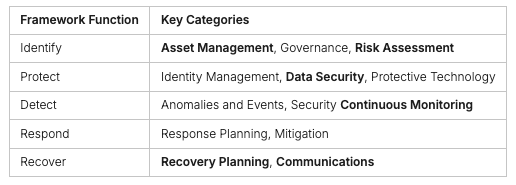
    The NIST Cybersecurity Framework has five core functions. These functions help an organization manage its cybersecurity risks. The functions are: Identify, Protect, Detect, Respond, and Recover. Each function has categories and subcategories that detail specific security practices and controls.

    Five Core Functions

    The Identify function helps understand and manage cybersecurity risks. It includes Asset Management, Governance, and Risk Assessment. The Protect function focuses on safeguarding critical infrastructure. It includes Identity Management, Data Security, and Protective Technology. The Detect function is about finding cybersecurity events quickly. It covers Anomalies and Events and Security Continuous Monitoring. The Respond function is about reacting to cybersecurity incidents. It includes Response Planning and Mitigation. The Recover function helps restore capabilities or services after an incident. It includes Recovery Planning and Communications.

    Categories and Subcategories

    The NIST Cybersecurity Framework has 108 Subcategories in the Core. These help create or improve a cybersecurity program. They let organizations customize the framework to fit their needs. This ensures a thorough and coordinated approach to cybersecurity.
    Edit imageDelete imageMinimize image

    The NIST Cybersecurity Framework is focused on outcomes. It helps organizations build a strong base for following new rules. Using the NIST Framework helps organizations deal with cybersecurity issues quickly.

    “The NIST Cybersecurity Framework 2.0 provides guidance to industry, government agencies, and other organizations to manage cybersecurity risks.”

    Identify Function

    The Identify function of the NIST Cybersecurity Framework (NIST CSF) helps organizations understand how to manage cybersecurity risks. It covers systems, people, assets, data, and capabilities. This includes managing assets and assessing risks to find ways to reduce them. By focusing on this, organizations can protect their most important resources.

    Asset Management

    Asset management is crucial in the Identify function of the NIST CSF. It means listing all the assets an organization has, like hardware and software. Knowing what they have helps organizations see where they might be vulnerable and focus on securing those areas.

    Risk Assessment and Management

    Risk assessment and management are also key parts of the Identify function. They help spot potential weaknesses and threats, and plan how to deal with them. This way, organizations can plan how to use their resources wisely and keep their software safe.

    *NIST CSF – Identify Function ((Asset Management)) Implementation: https://youtube.com/watch?v=VcC_KabV_Ho

    “The NIST Cybersecurity Framework provides a comprehensive approach to enhance an organization’s cybersecurity posture, with the Identify function serving as the foundational first step in this process.”

    Protect Function

    The Protect function of the NIST Cybersecurity Framework helps keep critical infrastructure safe. It also helps limit the damage from cyber threats. This includes steps for managing identities, securing data, and training staff on security. It also means keeping information systems and assets safe.

    By focusing on the Protect function, companies can lower the risk of cyber attacks. This makes it easier to handle security issues.

    The NIST Cybersecurity Framework gives detailed advice for better data security and managing access. It suggests ways to create secure keys, protect networks, and keep web servers safe. It also talks about using smart cards for access control and secure ways to send data.

    It also has tips on recovering from data breaches and securing email systems. By following these protect function nist csf, cybersecurity controls, and data security steps, companies can better protect their important assets.

    “The Protect function of the NIST Cybersecurity Framework is essential for organizations to develop and implement the necessary security measures to reduce the likelihood and impact of cyber threats.”

    Detect Function

    The Detect function of the NIST Cybersecurity Framework (NIST CSF) is key to spotting and tackling cybersecurity threats fast. It helps in creating and using the right steps to notice when cybersecurity events happen. This way, organizations can lessen their effects and get better at handling cybersecurity.

    Anomaly and Event Detection

    This function is about finding odd or suspicious actions in an organization’s systems and networks. It means setting up what’s normal for data, looking into cybersecurity events, linking event data, and figuring out how big the impact is. By setting clear alert levels, companies can spot and act on threats quickly, lowering the chance of attacks.

    Continuous Monitoring

    Continuous monitoring is key to the Detect function, making sure to always find security problems. It means watching the network, the physical place, how people work, and who they work with, and finding bad code and weaknesses. By keeping and testing how you find these issues, companies can share info on finding events and keep getting better at cybersecurity.

    Having a strong Detect function is vital for companies to find and deal with cyber threats fast. By using the advice and best practices from the NIST CSF, businesses can make their cybersecurity stronger and fight off new cyber threats.

    *NIST CSF Identify Function: https://youtube.com/watch?v=XGZyrWcUrJQ

    “Detecting cybersecurity events quickly can help lessen their effects and is key for a strong cybersecurity program.”

    Respond Function

    The Respond function of the NIST Cybersecurity Framework helps when a cybersecurity incident is detected. It includes planning for responses, communicating with others, and analyzing the incident to help recover. This way, organizations can limit the damage from a cyber attack and get back to normal.

    Response Planning

    Response Planning means having a plan ready for when a cyber attack happens. It includes knowing who to notify and what steps to take quickly.

    Communications and Analysis

    Good communication is key during a cyber attack. It’s important to talk to the right people fast, following the law or company rules. Analysis helps figure out what was hit, how bad it is, and gathers evidence for legal cases. Stopping the attack quickly is vital, and learning from it helps improve how we handle risks. After an attack, looking back to see what worked and what didn’t helps us get better. Practicing with exercises helps us be ready for real attacks, like ransomware.

    “The Respond function of the NIST Cybersecurity Framework is crucial for effectively containing the impact of a cybersecurity event and restoring normal operations.”

    Recover Function

    The Recover function of the NIST Cybersecurity Framework is key to an organization’s cybersecurity plan. It focuses on how to get back to normal after a security issue. This includes making plans, improving things, and talking to people – all important for staying strong and keeping business going.

    Recovery Planning

    Recovery planning is a big part of the Recover function. It’s about fixing systems and assets hit by a cyber attack. You need to know what depends on each other, who’s key people, and how to talk and work from other places. Also, having a plan for cyber events is a must. Doing recovery tests helps find and fix problems before they hit hard.

    Improvements and Communications

    Improving and talking with others are big parts of the Recover function too. By learning from past events and working with others, companies can get better at bouncing back. This makes them stronger against future attacks. Talking well with teams, customers, and groups that make rules is key to being open and trusted during recovery.

    The Recover function of the NIST Cybersecurity Framework is super important for a company’s cybersecurity plan. It helps fix important stuff, lessen the blow of incidents, and make things stronger overall.

    What the NIST Cybersecurity Framework Is All About

    The NIST Cybersecurity Framework offers guidelines and best practices for all types of organizations. It helps them manage their cybersecurity risks and improve their security. This framework focuses on five core functions: Identify, Protect, Detect, Respond, and Recover.

    It’s flexible and matches well with other security standards. This makes it a great tool for improving cybersecurity and lowering the risk of cyber threats. It helps organizations make smart choices about cybersecurity investments and talk about their security with leaders and the board.

    The framework stresses the importance of knowing the business and its risks. It guides organizations to focus on what’s most important for their risk management and business goals. This ensures their cybersecurity efforts match their overall goals.

    It also offers advice on how to protect identities, control access, and secure data. Plus, it helps set up strong detection and response plans for cybersecurity incidents. By following these five core functions, organizations can boost their cybersecurity and aim for higher levels of security, like the Adaptive tier.

    In summary, the NIST Cybersecurity Framework is a key resource for all kinds of organizations. It helps them improve their cybersecurity, lower risks, and stay strong against new cyber threats.

    Implementation Tiers and Maturity Levels

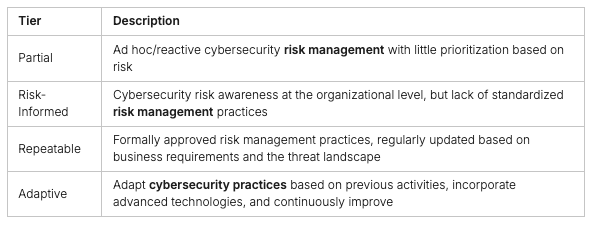
    The NIST Cybersecurity Framework (NIST CSF) helps organizations track their cybersecurity progress. It has four implementation tiers that show how well an organization does in cybersecurity. These tiers also show the cybersecurity maturity.

    At the lowest tier, Partial, organizations react to threats without a plan. They don’t really think about risks. Moving up to the Risk-Informed tier, they start to understand cybersecurity risks better. But, they don’t have a standard way to manage these risks across the company.

    The Repeatable tier means organizations have a plan for managing risks. They update this plan as needed to keep up with threats. At the top, the Adaptive tier, organizations keep getting better. They use new tech and learn from past experiences.
    The NIST CSF also talks about maturity levels. These levels help organizations improve their cybersecurity maturity. They go from basic security knowledge to a full, automated, and growing security program.

    Knowing where they stand in tiers and levels helps organizations see what they need to work on. They can make a plan to get better at security. This way, businesses can check their cybersecurity maturity and make smart choices about their risk management program.

    Using the NIST Cybersecurity Framework and moving up in maturity levels is a big job. But, it’s key for organizations wanting to boost their nist csf implementation tiers and handle cybersecurity risks.

    Getting Started with the NIST Cybersecurity Framework

    Using the NIST Cybersecurity Framework is a smart move for companies wanting to boost their cybersecurity and manage risks better. First, set clear goals and figure out what risks you can take. Then, check where you stand in cybersecurity, find laws that apply to you, and do a deep risk check.

    After that, make a plan for the security level you want to reach and see where you’re short. Then, make a plan to fix those gaps. This way, you can improve your cybersecurity and get safer, following the NIST Framework.

    The NIST Cybersecurity Framework has five main parts: Identify, Protect, Detect, Respond, and Recover. Here’s how to start:

    1. Set your project goals and risk limits.
    2. Check your current cybersecurity and find laws that apply.
    3. Do a full risk check to see what threats you face.
    4. Make a target profile for your risk goals.
    5. Plan and act on what you need to improve.

    This step-by-step plan helps you use the NIST Cybersecurity Framework well. It makes your cybersecurity and risk management better.
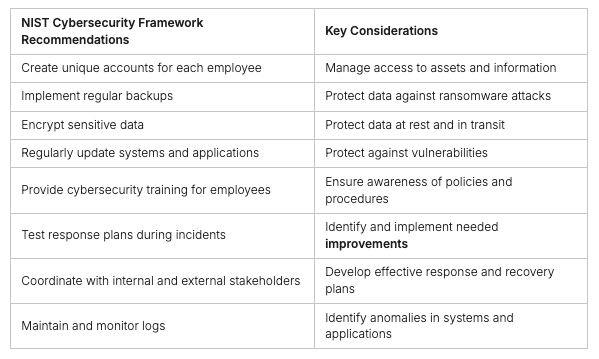
    Follow these tips and use the NIST Cybersecurity Framework to make your cybersecurity and risk management better.

    “The NIST Cybersecurity Framework provides a common language and structure for managing and reducing cybersecurity risk – a critical component of any successful business strategy.”

    Conclusion

    The NIST Cybersecurity Framework has become the leading standard for managing cybersecurity risks across various industries and organization sizes. It provides a structured approach for developing and implementing a robust cybersecurity strategy, protecting critical assets, identifying and mitigating cyber threats, and recovering swiftly and resiliently from security incidents.

    In today’s complex and ever-evolving threat landscape, the NIST Cybersecurity Framework exemplifies the power of collaboration and unified goals. Developed with input from over 3,000 industry professionals and cybersecurity experts, it serves as an essential tool for organizations looking to enhance their cybersecurity best practices, risk management, and information security measures. As the framework continues to evolve to address new challenges, it remains crucial for businesses striving to lead in the fight against cyber threats.

    For more information on how to strengthen your cybersecurity posture using the NIST Cybersecurity Framework and other best practices, visit Peris.ai Cybersecurity. Explore our wide range of products and services designed to help you navigate and mitigate the complexities of today’s digital threats. Secure your business with Peris.ai today!

    FAQ

    What is the NIST Cybersecurity Framework?

    The NIST Cybersecurity Framework is a set of guidelines from the National Institute of Standards and Technology (NIST). It helps organizations of all sizes manage and reduce their cybersecurity risk. It offers a clear way to understand and handle cybersecurity threats.

    What are the core functions of the NIST Cybersecurity Framework?

    The framework has five core functions: Identify, Protect, Detect, Respond, and Recover. These functions outline the main cybersecurity tasks an organization should do. They help manage risk effectively.

    How does the Identify function of the NIST Cybersecurity Framework work?

    The Identify function helps an organization understand its cybersecurity risk. It focuses on managing risks to systems, people, assets, data, and capabilities. This includes managing assets and assessing risks.

    What is the purpose of the Protect function in the NIST Cybersecurity Framework?

    The Protect function ensures critical infrastructure services are safe. It helps limit the impact of a cybersecurity event. This includes controls for identity management, access control, data security, and system security.

    How does the Detect function of the NIST Cybersecurity Framework help organizations?

    The Detect function helps spot cybersecurity events quickly. It includes detecting anomalies and monitoring continuously. This ensures protective measures work well and finds potential security issues.

    What is the purpose of the Respond function in the NIST Cybersecurity Framework?

    The Respond function is about taking action when a cybersecurity incident happens. It includes planning for responses, communicating, and analyzing to help with recovery.

    How does the Recover function of the NIST Cybersecurity Framework help organizations?

    The Recover function helps restore services or capabilities lost due to a cybersecurity incident. It includes planning for recovery and improving resilience to ensure business continuity.

    What are the implementation tiers of the NIST Cybersecurity Framework?

    The framework has four implementation tiers: Partial, Risk Informed, Repeatable, and Adaptive. These tiers show an organization’s level of cybersecurity risk management. Partial is the least mature, and Adaptive is the most advanced.

    How can organizations get started with the NIST Cybersecurity Framework?

    To start, organizations should set priorities and scope their project. They should assess their current cybersecurity, identify relevant regulations, and conduct a risk assessment. Then, create a target profile and develop an action plan to fill the gaps.

  • What Capture the Flag Competitions Teach Us About Cybersecurity

    What Capture the Flag Competitions Teach Us About Cybersecurity

    Capture the Flag (CTF) competitions are becoming a big deal in the fast-changing world of cybersecurity. They’re not just for tech experts; they show us what modern cybersecurity pros are like. But what do these competitions teach us? You might be surprised.

    CTF competitions are more than a hobby for cybersecurity fans. They mirror the real challenges faced by professionals every day. These events are big in the cybersecurity world and happen at conferences and gatherings, showing a lot of interest and participation. They let people practice finding vulnerabilities, reverse-engineering software, and solving tough problems in a safe, legal way. It’s a chance for individuals to improve their skills and compete with the best out there.

    Key Takeaways

    • Capture the Flag competitions offer a unique hands-on approach to cybersecurity training and skill development.
    • These competitions simulate real-world security challenges, preparing participants for the realities of the industry.
    • Participation in CTFs can lead to valuable networking opportunities and career advancement.
    • CTFs foster a culture of innovation, problem-solving, and collaborative thinking in cybersecurity.
    • Organizing and running CTF events presents its own set of challenges, but the benefits for the community are undeniable.

    As we explore Capture the Flag further, we’ll see the valuable lessons these competitions offer. They teach us about ethical hacking, teamwork, and strategic thinking. These insights are set to change how we handle digital security in the future.

    Introduction to Capture the Flag (CTF) Competitions

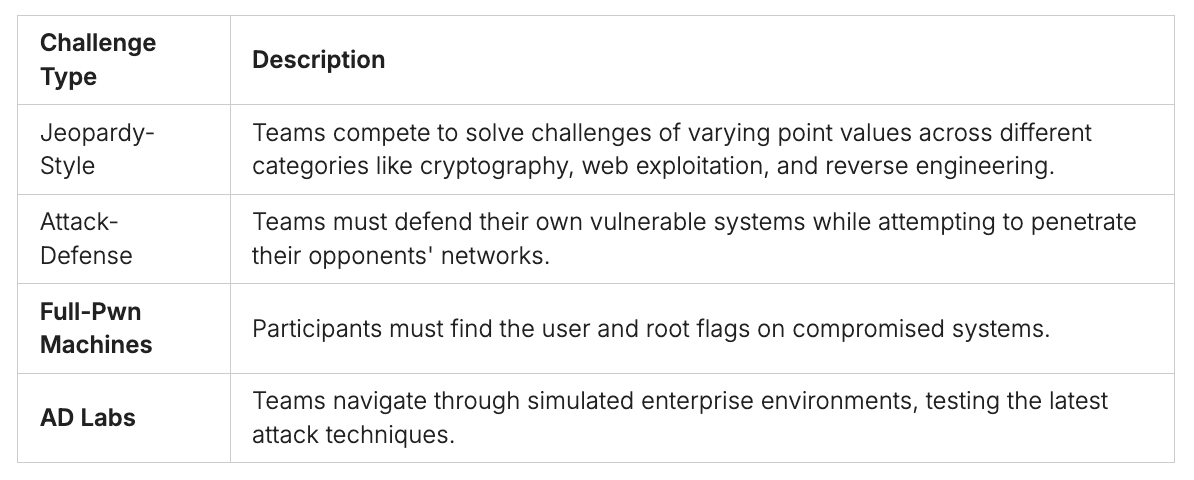
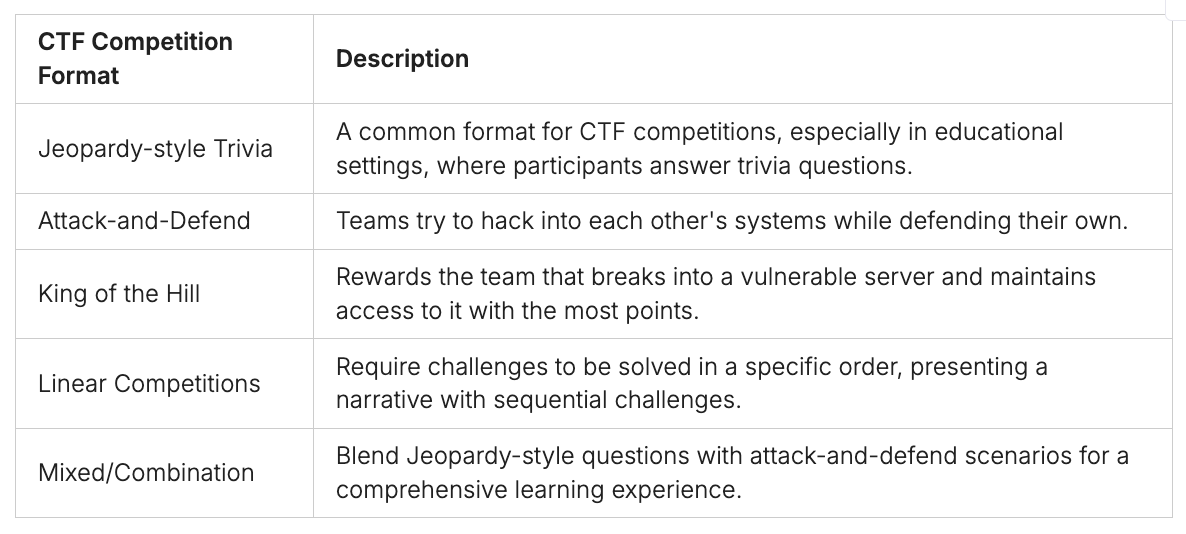
    CTF competitions are thrilling events where players, alone or in teams, aim to find and use system weaknesses to get a “flag” or secret info. They come in two main types: Jeopardy-style and Attack-Defense.

    What are CTF Competitions?

    In Jeopardy-style CTFs, players solve questions to get clues and earn points. Attack-Defense CTFs have teams defend their PCs while attacking others, earning points for finding flaws.

    Types of CTF Competitions

    CTF challenges cover areas like Web, Forensics, Cryptography, Reversing, OSINT, and Miscellaneous. To do well, it’s key to have a good toolkit and keep up with cybersecurity trends.

    Practicing is key in CTF competitions, with many contests offering past flags and solutions for practice. It’s also vital to take care of yourself during these intense events.

    Networking is good, but be careful with team info and don’t share solutions online. Always read the rules of each CTF you join.

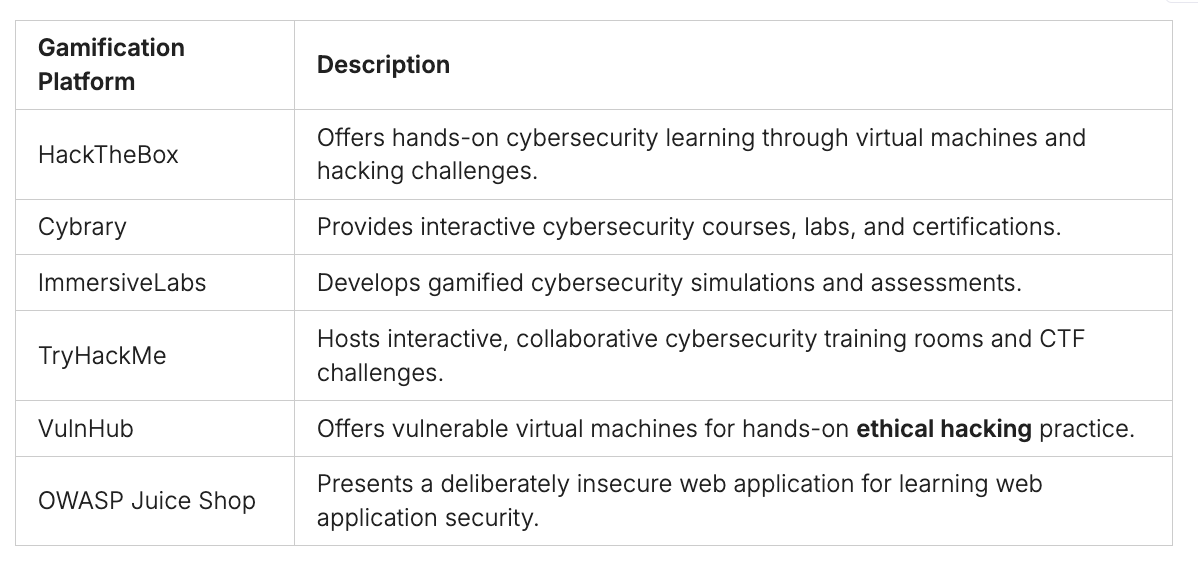
    CTF competitions are a fun way to improve your hacking skills and can be very rewarding. TryHackMe and Hack The Box are great places to learn and prepare. TheHackersMeetup also hosts CTFs with prizes and limited spots.

    *What is CTF? An introduction to security Capture The Flag competitions: https://youtube.com/watch?v=8ev9ZX9J45A

    For those into the cybersecurity world, events like HackersHour are great for meeting other CTF fans and keeping up with new trends.

    “Capture The Flag (CTF) competitions cover a variety of skills such as cryptography, steganography, open source intelligence, digital forensics, protocol analysis, penetration testing, vulnerability testing, threat hunting, website exploitation, and programming.”

    CTF events can be Red versus Blue, Jeopardy-style, or individual/team games, with different time limits. Tools like Kali Linux and Oracle Virtual Box are often used.

    Many platforms exist for practicing and honing your cybersecurity skills, such as PicoCTF and Cyber Skyline. Hacker101 CTF, TryHackMe, and GoogleCTF are also great options.

    The Benefits of Participating in CTF Competitions

    CTF competitions are key for boosting cybersecurity skills and cybersecurity education. They let participants get real-world experience in ethical hacking and problem-solving. Plus, they keep up with the newest cybersecurity trends and technologies.

    Hands-on Cybersecurity Experience

    CTF competitions give you a chance to use cybersecurity skills in real situations. You’ll face challenges like network analysis and finding vulnerabilities. By solving these, you’ll get a deeper understanding of cybersecurity concepts and improve your problem-solving.

    Staying Updated with Trends and Technologies

    These competitions focus on new cybersecurity threats like malware and phishing attacks. Taking part helps you stay current with cybersecurity trends and technologies. This is crucial for those looking to work in cybersecurity. It’s a great way to learn about the latest cybersecurity skills and methods.

    “Employers value CTF experiences when hiring cybersecurity students, as it demonstrates initiative and technical skills.”

    By joining CTF competitions, students boost their cybersecurity skills and learn about the latest cybersecurity trends and technologies. This practical experience and knowledge make them stand out in the fast-changing world of cybersecurity.

    Networking Opportunities in CTF Competitions

    Capture the Flag (CTF) competitions are a key spot for cybersecurity fans. They offer a chance to meet others who share your interests. These events draw in a mix of professionals, researchers, and students, making a lively cybersecurity community. Joining CTFs lets you make professional connections and talk about important topics with others in the field.

    Jeopardy-style CTFs are great for networking. Teams tackle challenges to earn points fast and right. Attack-and-defense CTFs, where teams defend and attack, encourage teamwork and sharing of insights. These events boost your skills and keep you updated on the latest in cybersecurity.

    CyberTitan, a Canadian event for students, offers real-world learning and helps grow the next cybersecurity leaders. Joining such events lets you meet future pros and help shape the cybersecurity community.

    *How to Prepare for a Capture the Flag Hacking Competition: https://youtube.com/watch?v=adse5Zxw_I4

    Running CTFs can be tough, needing setup and tools for everyone. But, using cyber ranges makes it easier. These platforms, like Field Effect Cyber Range, make joining in simple, boosting networking chances.

    “CTF events provide a platform for participants to stay informed about current trends and technologies in cybersecurity.”

    In summary, CTF competitions are a great way to make professional connections and be part of the cybersecurity community. They help you improve your skills and grow your network. This can boost your career and help the cybersecurity field grow.

    Career Advancement Through CTF Competitions

    CTF competitions are key for those wanting to move up in cybersecurity. They mimic real cybersecurity challenges and are known worldwide. These events let participants show off their skills, meet others in the field, and sometimes even get job offers.

    CTF challenges cover many cybersecurity areas, like hacking, coding, and more. You can compete alone or with a team, depending on what you like. Working together helps improve teamwork and sharing knowledge.

    Winning at CTFs has helped many cybersecurity pros, like Luis De la Rosa and others, grow in their careers. They say hard work, passion, and learning are key to doing well.

    There are many CTF events worldwide, both online and in person. Events like PicoCTF and DEF CON offer great challenges and chances to meet others. DEF CON CTF is especially known for its tough challenges and top teams.

    For those wanting to improve in offensive security, “Breaking & Entering” by Bishop Fox is a great guide.

    In summary, CTF competitions are a big help for moving up in cybersecurity. They help you get better at your job, make important connections, and can lead to new job chances.

    What Capture the Flag Competitions Teach Us About Cybersecurity

    Joining Capture the Flag (CTF) competitions teaches us a lot about cybersecurity. It helps us get better at protecting our systems and data. These events let us see how hackers think and work, which helps us defend against them.

    Teams work together in CTF competitions to solve challenges. This shows how crucial teamwork is in cybersecurity. Many experts say CTF is a top way to learn and use your skills safely.

    CTF events are also great for meeting other cybersecurity pros. You can find mentors, potential jobs, and people who share your interests. This helps build a strong community and helps your career grow.

    Cybersecurity Lessons from CTF Competitions:

    • Understanding hacking techniques and mindsets to improve cyber defense strategies
    • Emphasizing the importance of teamwork and collaboration in cybersecurity
    • Providing hands-on experience to develop technical skills and expertise
    • Facilitating networking and community-building among cybersecurity professionals

    Using what we learn from CTF competitions, companies can get better at cybersecurity. They can stay ahead of threats and build a skilled cybersecurity team.

    “CTF competitions are an invaluable tool for cybersecurity professionals to hone their skills and gain invaluable insights into the tactics and methods used by hackers. By understanding the mindset of the adversary, we can develop more effective cyber defense strategies and better protect our organizations.”

    Organizations and Individuals Running CTFs

    CTF competitions are now a key way for CTF organizers to test security safely. They draw in cybersecurity education and hacker training fans. They also attract those wanting to improve their ethical hacking skills.

    CTFs for Cybersecurity Education

    CTFs are becoming a go-to for teaching cybersecurity to students. They make learning about cybersecurity fun and spark interest in a career in info security. CyberTitan, a Canadian cybersecurity education event, is one example. It gives middle and high school students real-world learning experiences.

    Big-name CTF events like Insomni’hack, 0CTF/TCTF, GoogleCTF, PlaidCTF, DEF CON, FAUST CTF, ASIS CTF Quals, Pwn2Win CTF, InCTF International, and RCTF offer big cash prizes and other rewards.

    *Competitive Cybersecurity: Capture the Flag Contest: https://youtube.com/watch?v=R3YGrT3eOLo

    These events offer great hacker training and ethical hacking chances. They also help CTF organizers check and grow cybersecurity skills.

    Challenges of Organizing CTF Competitions

    Organizing a Capture the Flag (CTF) competition is tough. One big challenge is setting up a strong cybersecurity training space. This is often called a “cyber range.” It’s needed for the competition.

    Using Cyber Ranges for CTF Competitions

    Cyber ranges are like simulation labs for security training. They help organizers set up everything needed for CTF challenges quickly. These platforms have all the tools and resources teams need, making the competition easier to run. They also have features like scoreboards and timers that show team scores and activity in real-time.

    Another big challenge is making the competition both fun and educational. It’s important to have challenges that test different cybersecurity skills. This includes things like digital forensics and web security.

    Even with these challenges, CTF competitions are key for training in cybersecurity and finding new talent. By using cyber range platforms and designing good challenges, organizers can give participants a great experience. This helps grow the next generation of cybersecurity experts.

    *Capture the Flag (CTF) 101: https://youtube.com/watch?v=wL3acu8xspM

    “CTF events have been a staple at the DEFCON security conferences since 1996.”

    Gamification of Cybersecurity Through CTFs

    CTF competitions are a fun way to learn about cybersecurity. They started in the 1990s at hacker conferences, like DEFCON in Las Vegas, the biggest cybersecurity event in the U.S.. Now, teams from all over the world compete online for prizes and fame.

    CTFs help people get hands-on cybersecurity experience. They boost skills, encourage critical thinking, and show dedication to employers. They also teach teamwork. Gamification, a growing field, makes cybersecurity training fun through CTFs.

    There are different types of CTFs, like Attack-Defense and Jeopardy. Jeopardy challenges test many skills and reward quick solutions and difficulty. Most CTFs are for teams, usually no more than four, to improve teamwork.

    Mastering CTFs can boost your career in cybersecurity and gamification. With 3.5 million cybersecurity jobs lacking worldwide, CTFs are a great way to fill this gap. They help keep IT and security pros sharp and attract new talent.

    *I Played Beginner-Level Security CTFs For 30 Days – Here’s What I Learned: https://youtube.com/watch?v=Zw25_ySOrC0

    These platforms, along with CTFs and simulations, make cybersecurity training fun. Hackathons and gamified platforms teach cybersecurity skills in engaging ways. eSports platforms let people watch and learn from ethical hacking competitions.

    “Attitude is considered the most critical factor for entry into CTF competitions rather than specific skills.”

    In conclusion, CTF competitions make cybersecurity learning exciting for students and professionals. They improve critical thinking, teamwork, and passion for the field. This helps fill the cybersecurity skills gap and opens up new career paths in this fast-changing industry.

    CTF Content and Challenge Types

    CTF competitions are a big deal for cybersecurity fans. They test skills and keep folks updated on the latest in security. These events have many challenge types, each testing different cybersecurity skills.

    Jeopardy-Style Challenges

    Jeopardy-style CTFs are quite common. Teams face many challenges or questions, each worth points. They cover topics like cryptography, web exploitation, and reverse engineering.

    Full-Pwn Machines and AD Labs

    CTFs also feature full-pwn machines and AD labs. In full-pwn machines, teams aim to find flags on compromised systems. AD labs mimic real-world settings, testing new attack methods.

    CTF challenges are key in cybersecurity training and learning. They offer hands-on experience in a fun way. With various challenges, CTFs improve skills in vulnerability analysis, exploit development, and incident response.

    CTFs in Academia and Corporate Training

    Capture the Flag (CTF) competitions are now popular in schools and companies. They make learning about cybersecurity more hands-on and fun. Students get to solve real-world problems, improving their skills. Companies use CTFs to boost employee skills and make training fun with a game-like approach.

    The European Union Agency for Cybersecurity says the top CTF types are Jeopardy and Attack-Defense. These events test many skills, like hacking, defending, and analyzing network traffic. Winners can get cash, recognition, scholarships, or spots in more challenging CTFs, encouraging more people to join.

    However, CTFs might be tough for those new to cybersecurity. They often focus on quick attacks, not the slow, real-world kind. This can make the challenges less like real situations.

    To fix this, schools and companies can use cyber ranges for more realistic CTFs. Adding game elements and practical training helps bridge the gap between theory and practice. This makes participants better prepared for real cybersecurity challenges.

    Using CTFs in training shows their value in building a skilled cybersecurity workforce. As cybersecurity needs grow, CTFs will likely play a bigger role in training.

    Conclusion

    Capture the Flag (CTF) competitions are essential for enhancing cybersecurity skills for both professionals and students. These events provide practical experience in cryptography, reverse engineering, web exploitation, and forensics, simulating real-world cybersecurity challenges to test your skills and problem-solving abilities.

    Participating in CTFs not only hones your abilities but also connects you with peers in the field. Many cybersecurity experts attribute their growth to these competitions. With durations ranging from a few hours to several weeks, CTFs offer an engaging and competitive learning environment, featuring live leaderboards that make the experience enjoyable and motivating.

    As cybersecurity becomes increasingly critical, CTFs are recognized as valuable tools in educational institutions and organizations. They facilitate skill development, knowledge sharing, and exposure to the latest cybersecurity trends. By incorporating CTFs, schools and businesses can effectively train the next generation of cybersecurity leaders, preparing them to face future digital threats.

    Join our community at Peris.ai Cybersecurity to elevate your skills and connect with like-minded individuals. Visit Peris.ai to learn more about our events and how you can get involved. Secure your digital future with Peris.ai today!

    FAQ

    What are Capture the Flag (CTF) competitions?

    Capture the Flag (CTF) competitions test your skills in finding and using system weaknesses to get a “flag” or info. They come in different styles. Some are like jeopardy games where teams race to solve challenges fast and right. Others are attack-and-defense games where teams defend their systems and try to break into others.

    What are the benefits of participating in CTF competitions?

    CTF competitions offer many perks. You get real cybersecurity experience and improve your skills. You also keep up with new trends and tech. Plus, it’s a chance to meet others in the field and could lead to a cybersecurity career.

    How can CTF competitions inform cybersecurity best practices and defense strategies?

    CTFs give insights into hackers’ ways and methods. This helps cybersecurity pros develop better defenses. By knowing how hackers work, you can create stronger security for your organization.

    What types of CTF challenges are commonly used?

    There are many CTF challenges. You might find jeopardy-style, attack-and-defense, full-pwn machines, or Active Directory labs. These simulate real-world scenarios to test your skills.

    How are CTF competitions being used in academic and corporate settings?

    CTFs are used in schools and companies to improve cybersecurity training. In schools, they make learning more practical by facing real-world challenges. For companies, they boost skills and awareness, making training fun and effective.

  • What Is Endpoint Hygiene and How to Maintain It

    What Is Endpoint Hygiene and How to Maintain It

    In today’s digital world, cyber threats keep changing. Keeping your endpoint hygiene right is key to protecting your devices, apps, and data. Endpoint hygiene is vital for a strong cybersecurity plan. It sees every connected device as a risk for hackers. This includes laptops, smartphones, IoT devices, and even Point-of-Sale systems. Each one could be a weak spot that needs close watch and strong security.

    So, what is endpoint hygiene, and how do you keep your digital world safe from cybercriminals? Check out this detailed guide. It will show you the key steps to strengthen your endpoint security and protect your business online.

    Key Takeaways

    • Endpoint hygiene is the core of strong cybersecurity, shielding every connected device from threats.
    • Endpoint attacks can include unauthorized access, malware, and weak spots – managing them well is key.
    • Unified Endpoint Management solutions help in safely setting up and controlling company resources on any device.
    • EDR and NGAV technologies offer top-notch threat finding, handling, and stopping abilities.
    • Strong endpoint security is crucial for following the rules and avoiding the big costs of data breaches.

    Understanding Endpoint Hygiene and Its Importance

    Definition of Endpoint Hygiene

    Endpoint hygiene is about keeping an organization’s devices safe from threats. This includes computers, laptops, and mobile devices. It’s all about keeping these devices secure and working right.

    Why Endpoint Hygiene is Crucial for Cybersecurity

    Endpoint hygiene is key for cybersecurity because these devices can be entry points for hackers. If not managed well, they can lead to data breaches and malware infections. In 2019, about 4,000 organizations faced data breaches, a 50 percent jump from before.

    The average cost of a data breach went up by 12 percent in five years, reaching $3.92 million in 2019. It can take up to 102 days to fix a known vulnerability, but attackers can exploit them in just seven days. This shows how vital good endpoint hygiene is, as these devices are key targets for hackers.

    Good cyber hygiene practices can stop cybercriminals from installing malware and accessing data. If ignored, this can lead to a virus and data breach, hurting a company. These practices also help in responding to cyberattacks better.

    Ignoring cyber hygiene can open up many security risks, affecting the whole IT setup. Keeping up with cyber hygiene helps spot old software and systems, making the network less vulnerable to threats.

    Cyberattack Risks and the Costs of Data Breaches

    Cybersecurity risks are growing fast, with threats getting smarter and more efficient. Up to 60% of data breaches happen because of unpatched vulnerabilities. Companies that don’t focus on keeping their systems safe face big risks. In 2019, the average cost of a data breach was $3.92 million and is going up.

    Cyber attacks can really hurt a company’s money, reputation, and how well it runs. A survey found 88% of companies check for vulnerabilities, but many still get hit by data breaches. Over 80% of security experts have delayed patches to avoid problems, and 81% of top executives do the same to keep business running smoothly.

    Not taking security seriously can lead to big problems, as 94% of IT pros have to make tough choices to protect against cyber threats. Small businesses are often the target, with 43% of attacks aimed at them, but only 14% are ready for it. The cost of cyberattacks for small businesses is $8,300 on average, and big companies with less than 500 employees pay about $3.31 million.

    Keeping endpoints safe is key to fighting off cyber risks and the high costs of data breaches. Using automated systems for patches helps keep track of updates and report on their status. By focusing on endpoint hygiene, companies can shield themselves from the bad effects of cyber threats and data breaches.

    Key Elements of Good Endpoint Hygiene

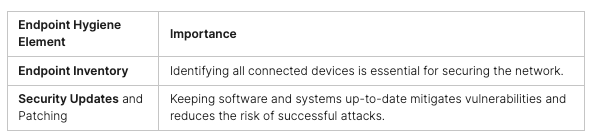
    Keeping your digital world safe is key. This means having a good endpoint inventory and keeping up with security updates and patching.

    Maintaining an Inventory of All Endpoints

    First, you need to know what devices are on your network. Without a full endpoint inventory, you can’t protect what you don’t know is there. It’s important to keep track of all devices, from computers to smart home gadgets, to spot security risks.

    Regular Security Updates and Patching

    Keeping your software and systems updated is crucial. Old systems without the latest security fixes are easy targets for hackers. By keeping up with patch management and software updates, you can lower the chance of getting attacked.

    Having a detailed endpoint inventory and regular security updates and patching helps protect against many cyber threats. These steps are key to strong endpoint hygiene, making your systems safer.

    “According to a recent Verizon’s Data Breach Investigation Report, ‘98% of security incidents and 88% of data breaches continue to occur within one of nine patterns.’”

    By focusing on these key areas, you can make your cybersecurity stronger. This helps protect your important data and systems.

    Limiting User Access and Privileges

    Keeping endpoints safe is more than just protecting the devices. Limiting user access and privileges is key to a strong cybersecurity plan. By giving access only to those who need it, companies can lessen the damage from a hacked endpoint. This also cuts the risk of unauthorized changes or data theft.

    Using the least privilege rule means users can only do what they need for their job. This lowers the chance of an attack and boosts security. It makes users work better by giving them only what they need. It also helps meet legal standards during audits by showing how access is controlled.

    To follow the least privilege rule, companies should check privileges often, start with the least access, separate privileges, give access as needed, and watch what each person does to lower risks. Not controlling privilege creep, where users get too many rights, can be a big cybersecurity risk.

    • Following cybersecurity best practices, the Principle of Least Privilege (POLP) can shrink an organization’s attack area and boost security by limiting access to what’s not needed.
    • It’s smart to keep the number of accounts with high access low to lessen the chance of getting attacked. For example, system admins are often targeted because they have a lot of access.
    • Using POLP stops malware from spreading by stopping users from putting in harmful software with more access.
    • Most cyber attacks use high-level credentials, so POLP limits how much damage an unauthorized user can do to a system.
    • Keeping an eye on and checking access controls is key to keeping POLP strong and making sure access matches what users do and should do.

    With more people working from home, strong access controls are more important than ever. With work and home life mixing, it’s vital to keep a tight control on who can access what to stop insider threats, whether on purpose or by mistake.

    By taking a full approach to limiting user access and privileges, companies can make their endpoint hygiene better and boost their cybersecurity.

    “Implementing the principle of least privilege helps ensure that users can only perform the tasks necessary for their role, reducing the attack surface and improving overall security.”

    Endpoint Hygiene in Cybersecurity: Essential Practices

    Good endpoint hygiene in cybersecurity means having strong data backup and recovery plans, and good password policies. Keeping important data safe from loss is key, whether it’s from ransomware, hardware problems, or other issues. Using strong passwords and changing them often can also lower the chance of attacks based on stolen passwords.

    Data Backup and Recovery Strategies

    With new threats all the time, having a solid data backup and recovery plan is vital for companies. A good automated backup system is a must, as manual backups can’t keep up with today’s threats. Backing up data often helps lessen the damage from data breaches, system crashes, or disasters, keeping business running smoothly.

    Password Management Policies

    Good password policies are key to strong endpoint hygiene. People should use strong passwords, keep software updated, use two-factor authentication, avoid suspicious links, and be careful with personal info online. Teaching people about cybersecurity can really help keep a company safe.

    Hackers work fast to exploit new vulnerabilities, so keeping software updated is crucial to stay safe. Strong passwords and regular password changes can greatly reduce the risk of attacks based on stolen passwords.

    Cyber hygiene protects companies from cyber attacks, lowering the risk of being hacked. It makes a company’s security stronger, keeping data, customer info, and devices safe from threats like ransomware and malware. Good cyber hygiene practices lead to better risk management, fewer vulnerabilities, and less chance of cyber threats. Doing cyber hygiene early can save money by avoiding the need for expensive security steps. Teaching employees about cybersecurity can help prevent data breaches, showing how important employees are in keeping things secure.

    “Practicing good cyber hygiene is essential for organizations to protect their systems and data from cyber threats.”

    By following these key endpoint hygiene steps, companies can boost their cybersecurity, protect their data, and avoid the high costs of data breaches.

    Securing New Software and Hardware Installations

    Setting up new software and hardware with the right security is key to keeping endpoints safe. IT teams must make sure all new items are secure and updated before they’re used. This way, they avoid letting attackers find weak spots.

    Unpatched systems are a big risk for cyber attacks. To fight this, IT should keep software and devices up to date with a good patch management plan. Also, giving fewer users admin rights and making passwords harder to guess helps a lot.

    Automation and new security tech are key to making endpoint hygiene easier. Tools like machine learning and behavior detection stop bad actions before they start. Modern security solutions give real-time updates and fix problems automatically. Using these tools helps keep cyber attacks away and boosts security.

    Good endpoint hygiene is vital for cybersecurity and following industry rules. By securing new tech early, IT teams create a strong, safe setup. This protects the company’s data, assets, and good name.

    The Role of Endpoint Security in Maintaining Hygiene

    Endpoint security is key to keeping an organization’s endpoints clean. Using endpoint hardening helps shrink the attack surface and lessen the blow of a breach. Also, having real-time endpoint visibility and monitoring lets IT spot and fix security problems fast. This keeps devices safe and sound.

    Endpoint Hardening Techniques

    Hardening endpoints is vital for their cleanliness. It means setting up strong security steps to make it harder for attackers to strike. This means keeping software up-to-date, setting strict password rules, and training employees well.

    • Keep software updated and patch vulnerabilities.
    • Use strong passwords with complexity and regular changes, plus multi-factor authentication.
    • Train employees on security best practices and how to report issues.

    Real-time Endpoint Visibility and Monitoring

    Keeping an eye on endpoints in real-time is key to spotting and fixing security issues fast. By watching all devices closely, IT can catch and act on threats quickly. This keeps the whole network safe.

    1. Use endpoint monitoring tools to check device status and security.
    2. Have solid plans for handling security incidents with endpoints.
    3. Update endpoint security policies often to keep up with new threats and tech.

    By using endpoint hardening and real-time endpoint visibility and monitoring, organizations can boost their endpoint hygiene. This makes their cybersecurity stronger.

    Automating Endpoint Hygiene with Modern Solutions

    As devices and threats grow, automated endpoint hygiene is key for security and keeping things running smoothly. Keeping IT systems clean is vital, using tools to track assets and manage updates and settings helps avoid downtime. It’s a must-have for any business, big or small.

    Cyber hygiene keeps systems safe by scanning for viruses, updating passwords, and managing settings to cut down on downtime from attacks. As companies grow, understanding their IT setup is crucial to shrink the attack surface and boost security.

    Using endpoint management tools to automate hygiene boosts efficiency and lightens the load on IT teams. These tools help manage device settings, software, and security across many devices. Automating tasks like updates and changes keeps endpoints secure and up to code.

    An endpoint hardening solution like Automox can make an organization less appealing to hackers. It automates IT hygiene across Windows, macOS, and Linux, following guidelines like the CIS framework. Automox lets IT and security teams quickly spot and fix hygiene issues, improving how they manage patches and settings.

    Modern security solutions like Automox enhance IT and cyber hygiene, shrink the attack surface, and automate compliance. Automox is a cloud-based platform that helps modern companies set up, patch, and secure devices worldwide, boosting IT and security readiness.

    “Proper IT hygiene is crucial for business continuity, relying on asset and software inventories and effective patch and configuration management to eliminate downtime.”

    Employee Education and Awareness Training

    Keeping technology safe is key, but so is teaching employees about security awareness. Phishing emails and other tricks can trick people, making it vital to train them to spot and avoid these threats. Teaching employees about cybersecurity best practices helps protect the company and cuts down on security risks.

    Most cyber attacks target people, so it’s crucial to educate the workforce. Not teaching employees about security awareness makes them more likely to fall for phishing, ransomware, and other cyber threats. Training programs give employees the skills to dodge cyber threats, offering things like interactive modules and games. They also test how alert employees are with fake phishing emails.

    Security awareness training teaches employees how to stay safe online and avoid security risks. It turns employees into strong defenders against security breaches. Studies show that most breaches happen because of human mistakes, and a big IBM study found the average cost of a data breach is $3.86 million.

    Security awareness training also helps meet legal standards, avoiding fines. Using Datto’s security tools with training makes a company stronger against cyber threats.

    “Human error is a leading cause of security breaches, emphasizing the importance of comprehensive training to reduce such errors.”

    Endpoint Hygiene and Compliance Requirements

    Keeping endpoints clean is key for cybersecurity and often a must for certain businesses. Laws like HIPAA, PCI DSS, and GDPR set rules for handling endpoints and protecting data. Good endpoint hygiene helps meet these rules and prepares for security checks.

    In the first half of 2021, ransomware attacks hit over $304.7 million, more than the year before. Over 350,000 new threats pop up every day, showing the need for strong security. The average cost of a ransomware attack is $4.44 million, says the Ponemon Institute’s 2020 report. Keeping endpoints clean is key to following the rules and getting ready for audits.

    About 10-20% of endpoints are missed in full visibility, even with strong cybersecurity efforts. Within 72 hours of the Log4Shell bug, over 800,000 attacks used it, showing how fast threats spread. Now, knowing what’s in software is vital after Log4Shell, making endpoint hygiene vital for cyber defense.

    Putting endpoint hygiene first helps meet rules, follow security standards, and get ready for audits. This way, cybersecurity gets a boost, showing a strong commitment to handling data and managing risks.

    Conclusion

    Keeping endpoints safe is key to strong cybersecurity. It means having a list of all devices, keeping software up to date, and limiting what users can do. Automating some tasks helps too. This makes it harder for hackers to get in and keeps data safe.

    Teaching employees and following rules also helps. This way, companies can keep their data and assets safe. It’s important to use technology and teach people how to stay safe online.

    Not having good endpoint hygiene can lead to big problems. Companies hit by data breaches lose about $3.86 million on average. Small businesses often close after a cyberattack. With more cyberattacks, like ransomware, happening a lot, having strong cybersecurity is key.

    Putting endpoint hygiene at the center of cybersecurity helps protect against threats. It makes it harder for hackers to get in. This keeps businesses safe, their reputation strong, and money secure in today’s digital world. It’s important for all businesses to be proactive about cybersecurity to stay safe.

    FAQ

    What is endpoint hygiene?

    Endpoint hygiene is about keeping devices safe from threats. It focuses on protecting hardware, apps, and data. It treats each device like a tiny world, checking for risks and vulnerabilities.

    Why is endpoint hygiene crucial for cybersecurity?

    In today’s world, cyber threats are always changing. Endpoint hygiene is key to fight these threats. It helps keep devices safe from hackers and protects against data breaches and malware.

    What are the key elements of good endpoint hygiene?

    Good endpoint hygiene means keeping track of all devices and updating them regularly. It’s also about controlling user access and having strong backup and password policies.

    How can endpoint security help maintain endpoint hygiene?

    Endpoint security is crucial for keeping devices safe. It includes hardening devices and monitoring them in real-time. This helps IT teams spot and fix security problems fast.

    How can organizations automate their endpoint hygiene processes?

    Using modern tools can automate endpoint hygiene. These tools help manage device settings and security updates. This makes it easier for IT to keep devices safe.

    Why is employee education and awareness training important for endpoint hygiene?

    Technology helps a lot, but training employees is key too. Phishing scams can trick people, so training them to spot these threats is vital. It’s part of keeping devices safe.

    How does endpoint hygiene relate to compliance requirements?

    Keeping devices safe is not just good practice; it’s often required by law. Laws like HIPAA and GDPR set rules for protecting data and managing devices securely.

  • Why Patch Management Should Be Your Top Priority

    Why Patch Management Should Be Your Top Priority

    We face constant cyber threats. The big question is: are you really protecting your digital assets? The answer is in patch management. But what if I said that good patch management could boost your security, follow the rules, and make your operations smoother? Let’s explore why patch management should be your main focus.

    Key Takeaways

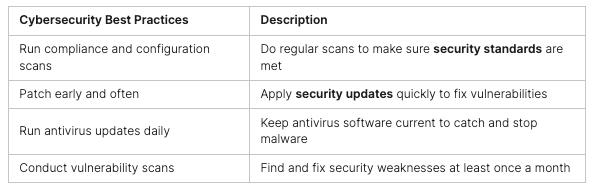
    • Patch management is key to reducing software flaws and boosting cybersecurity.
    • Regular updates keep systems running well, which is vital in fields like finance and healthcare, where downtime is expensive.
    • Good patch management is key to following rules in sectors with strict regulations.
    • It also improves how we handle vulnerabilities and manage assets.
    • Working together between IT and security teams is vital for patch management success.

    Introduction to Patch Management

    What is Patch Management?

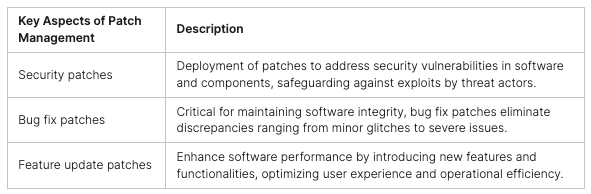
    Patch management is all about finding, getting, testing, and putting in software updates or patches. These updates fix bugs, make systems more secure, and add new features to computers and devices. They’re key to keeping software and operating systems running smoothly and safely.

    Importance of Patch Management in Cybersecurity

    Patch management is vital for cybersecurity. It helps protect against security breaches and cyber threats. By using patches early, companies can lower their risk of being attacked. In 2021, over 19,000 new vulnerabilities were found, but only 1,554 were used by hackers. The 2017 WannaCry attack, which hit over 200,000 computers worldwide, was caused by an unpatched Microsoft flaw. Good patch management is key to avoiding such attacks and keeping systems safe.

    https://youtube.com/watch?v=NvOwsO-GtiM

    “Patch management processes aim to cut downtime by prioritizing critical patches first to protect networks and shorten offline time for patching.”

    Companies like Microsoft often release patches on certain days, like “Patch Tuesday,” which affects when patches are applied. Automated systems can help make sure important patches get applied quickly, even when it’s hard to do so.

    Risks of Neglecting Patch Management

    Ignoring patch management can lead to big security risks and operational issues. Unpatched systems are more vulnerable to cyber attacks, making them easy targets for hackers. In 2023, the average cost of a data breach hit a record high of $4.45 million, showing a 2.3% increase from the year before and a 15.3% jump from 2020.

    Increased Vulnerability to Cyber Threats

    Companies that handle credit card info must apply security patches on time to follow the PCI DSS rules. The Equifax breach, caused by a missed patch, led to the loss of 143 million Americans’ data and the theft of over 200,000 credit card accounts, costing Equifax over 600 million dollars in fines. Now, the time from a vulnerability’s release to an attack attempt is just hours, leaving little room for mistakes.

    System Downtime and Productivity Loss

    Unpatched systems often crash or malfunction, causing downtime that slows down work and lowers productivity. Patch management automation saves IT admins’ time, letting them focus on important tasks and keeping the organization compliant. Many patch management tools exist, like Microsoft WSUS, IBM BigFix, and SolarWinds Patch Manager, which help with automated patching, scanning for vulnerabilities, and reporting.

    Not having a strong patch management plan can seriously hurt an organization’s security and efficiency. Automated patch management solutions cut down on IT time and make patch deployment easier, with or without human help. Good patch management means knowing what systems need patches, scanning for vulnerabilities, and prioritizing patches. It also involves releasing patches step by step, applying them right away, and testing them first.

    “Patch management automation saves valuable time for IT administrators, allowing them to focus on other critical tasks and creating a compliant organization.”

    Automated patch management tools should automatically get the latest updates, check patch integrity, and let admins control when to deploy them.

    Benefits of Effective Patch Management

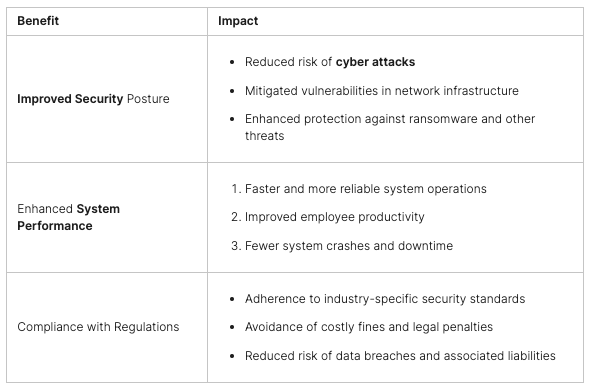
    A strong patch management plan has many benefits. It boosts security posture, improves system performance, and helps with regulatory compliance.

    Improved Security Posture

    Patch management is key to stopping ransomware attacks. It helps by fixing vulnerabilities quickly, making it harder for hackers to get in. This keeps the business safe and running smoothly.

    Enhanced System Performance

    Software patches do more than fix bugs. They also make systems work better by adding new features and improving their performance. This means employees can do their jobs more efficiently with fewer problems.

    Compliance with Regulations

    Following security rules is a must, and patch management is vital for this. A good patch management plan keeps an organization safe from fines and legal trouble by keeping data secure.

    By fixing issues, boosting performance, and following the rules, patch management makes a big difference. It strengthens security and makes things run better.

    https://youtube.com/watch?v=O5XXlJear0w

    “Effective patch management is the cornerstone of a robust cybersecurity strategy, protecting organizations from costly data breaches and system downtime.”

    Patch Management Process

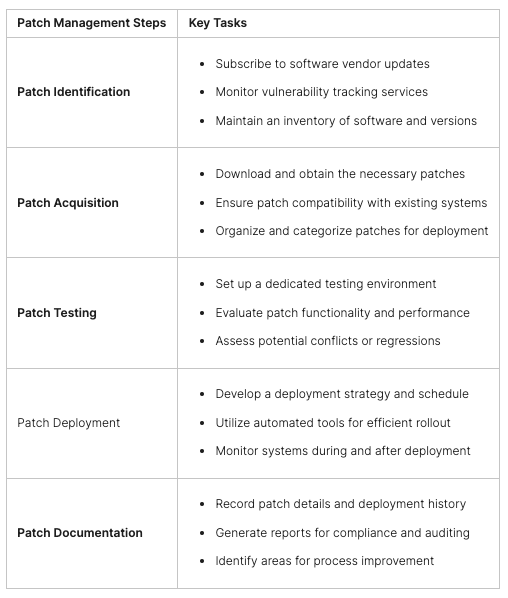
    Managing patches well is key to keeping an organization’s IT safe and stable. This process includes steps like finding and getting the right patches, testing them, deploying, and documenting the whole process.

    Identifying and Acquiring Patches

    First, find and get the right patches. This means subscribing to trusted sources like software vendors or services that track updates and security issues. Knowing about the latest patches helps organizations fix security risks early and keep systems updated.

    Testing and Deploying Patches

    Before putting patches in production, test them in a lab or sandbox to ensure they don’t cause new problems or conflict with other systems. After testing, patches can be safely put into production, either by hand or with automated tools.

    Documenting and Reporting

    Finally, document and report on the patch management process. Keep track of the patches applied, the systems they affect, when they were deployed, and any issues that came up. Good records help organizations check patch compliance, find ways to get better, and meet legal or industry needs.

    By following this detailed patch management process, organizations can keep their IT systems secure, stable, and current. This boosts their cybersecurity strength.

    “Effective patch management is not just about fixing security vulnerabilities; it’s about maintaining the overall health and performance of your IT infrastructure.”

    Patch Management for Cybersecurity

    Effective patch management is key to a strong cybersecurity plan. It reduces the risk of cyberattacks by fixing software flaws quickly, keeping data safe and helping businesses run smoothly.

    In today’s world, hackers often target bugs that have already been fixed. Delayed updates can happen when a bug is not spotted before a software release. Sometimes, a patch comes out after hackers have already attacked, showing why being proactive is important.

    Having a clear patch management process is vital. It includes finding, getting, installing, and checking patches. This is crucial for industries like healthcare, which must follow strict rules. Testing patches on one system first is a key step before rolling them out widely.

    Managing patches isn’t just for computers and servers. For example, Android devices get big updates once a year, but smaller ones are needed to fight threats. Businesses can use tools to update all their systems automatically.

    Timely patch management is very important. The Cybersecurity and Infrastructure Security Agency (CISA) suggests turning on automatic updates to speed things up. Hackers can exploit bugs for a long time, showing the risk of not updating systems.

    Keeping software updated is a top way to stop hackers from using known bugs. Vendors release patches to fix their products, and users must apply them quickly to stay safe.

    Good patch management does more than just protect against cyber threats. Companies that didn’t get hacked were better at patching bugs, 41% better. The UK’s Cyber Essentials Scheme says patch management is key, leading to lower insurance costs and more trust from investors and customers.

    In conclusion, patch management is crucial for cybersecurity. It helps reduce the risk of cyberattacks, keeps data safe, and ensures businesses can keep running. All types of organizations need to stay ahead of cyber threats.

    “Keeping software up to date is identified as the most effective defense against attackers exploiting patched vulnerabilities, underscoring the critical role of proactive patch management strategies.”

    Challenges in Patch Management

    Patch management is key to keeping systems safe, but it comes with its own set of problems. One big issue is when patches cause new issues or conflict with current software. Managing patches for remote devices or branch offices is harder because they might not get updates on time.

    With more people working from home because of COVID-19, patch management has gotten tougher. Now, companies have to monitor more devices connected through different security tools. Also, the number of devices in places like factories and power plants is growing, making it harder to monitor security risks.

    Buggy Patches

    Even though software makers try to make patches safe and stable, sometimes they cause new problems. This can lead to downtime, lost productivity, and more security risks. Companies need to test patches well before they use them to avoid these issues.

    Remote and Disconnected Systems

    Managing patches for remote or disconnected systems, like mobile devices or branch offices, is tough. These systems might not get updates fast, making them open to security threats. The increase in remote work has made this problem worse, as companies now have to handle more devices with different connections.

    Patch management needs a thorough plan to handle these challenges. Companies should focus on finding vulnerabilities, monitoring security updates, and ensuring that patches are applied quickly to all systems, including remote ones.

    https://youtube.com/watch?v=N6n2nA8jQsU

    Best Practices for Patch Management

    Good patch management practices are key to keeping systems safe and running well. Patch management is a key part of cybersecurity. It means finding, getting, testing, and releasing software updates to fix bugs and improve systems.

    Asset Inventory and Prioritization

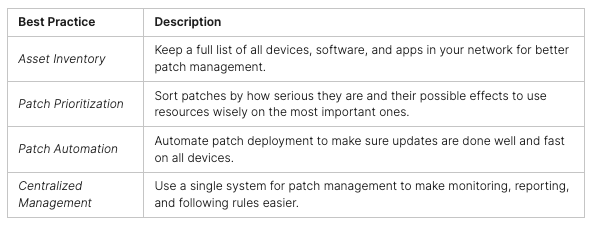
    First, you need a detailed asset inventory. Knowing what devices, software, and apps you have helps you manage and prioritize patches. It’s also important to decide which patches are most critical. This helps you use resources wisely and focus on the biggest risks.

    Automation and Centralized Management

    Automating patch deployment improves patch management and speeds up the process. A centralized system ensures all updates are done correctly and on time across the network. This also helps with monitoring, reporting, and following rules, keeping your patch strategy in line with your policies and laws.

    “A good patch management plan should involve IT, IT security, process engineering, operations, and senior management staff for optimum effectiveness.”

    Patch Management Tools and Solutions

    Keeping your IT systems safe and running well is key. Luckily, there are many patch management tools and solutions to help with this. These tools have features like scanning for vulnerabilities, finding patches, deploying them automatically, and giving detailed reports. This makes it easier for IT teams to keep systems updated and lowers the chance of security issues.

    Avira Software Updater is a free tool that supports over 150 applications. Avast Business Patch Management supports thousands of applications from big names like Adobe, Google, and Microsoft. For a broader approach, GFI LanGuard covers over 80 third-party apps. ManageEngine Patch Manager Plus is free for up to 20 computers and 5 servers.

    Looking at commercial options, there are many good choices. Atera has four plans for IT departments: Professional, Expert, Master, and Enterprise. Automox comes in Basic, Standard, and Pro plans. GFI LanGuard is priced per node annually, with discounts for larger numbers of nodes. ITarian lets you manage up to 50 endpoints for free, then charges for more. For big companies, Kaseya VSA is a top pick, but details on pricing aren’t shared in the article.

    Choosing the right patch management tool is crucial. It should fit your organization’s needs. With the right technology, you can make patch management smoother, boost security, and make your systems more reliable.

    Integrating Patch Management into Security Strategy

    Effective patch management is key to a strong security strategy. It works well with other security steps like vulnerability management and risk mitigation, allowing companies to protect their digital assets.

    By combining these efforts, companies can focus on the most critical patches. They can also automate patch applications and monitor system health, keeping their security strong.

    Following industry rules is also vital for patch management. Tools for automatic patch downloads, reporting on compliance, and scanning for vulnerabilities help avoid big fines.

    Working with a managed security service provider (MSSP) makes patch management easier. MSSPs offer the latest security patches, 24/7 IT help, and know-how in making patch plans. This helps reduce downtime and disruptions.

    By adding patch management to their security plan, companies can tackle risks early. They can improve system performance and follow the rules. This keeps their digital assets safe from cyber threats.

    “Creating a patch management strategy is key. It fixes security risks and keeps software up-to-date. This avoids crashes and downtime from old apps.”

    1. Identify and prioritize patches based on vulnerability impact
    2. Implement automated patch deployment workflows
    3. Continuously monitor system health and compliance
    4. Partner with a managed security service provider for comprehensive support

    Conclusion

    In today’s digital world, patch management is essential for organizations of all sizes. It protects digital assets by quickly addressing software vulnerabilities, ensuring safety from security breaches and compliance with industry regulations. The rapid growth of the patch management market underscores its critical role in cybersecurity.

    Neglecting patch management can lead to significant data breaches; in fact, 60% of breaches occur due to unpatched vulnerabilities. Additionally, non-compliance with regulations in sectors like healthcare and finance can result in substantial fines.

    Proactive patch management is crucial for maintaining a strong security posture. Utilizing automated tools and integrating patch management into a comprehensive cybersecurity strategy can reduce patching time by up to 90%, making it more efficient to safeguard digital assets.

    Visit Peris.ai Cybersecurity for comprehensive solutions to enhance your cybersecurity. Explore our range of products and services designed to keep your organization secure in an ever-evolving digital landscape. Secure your digital world today with Peris.ai.

    FAQ

    What is patch management?

    Patch management is about finding, getting, testing, and putting software patches on computers and devices. These patches fix bugs, close security gaps, and add new features to the software.

    Why is patch management important for cybersecurity?

    Patch management is key for cybersecurity. It keeps systems safe by fixing known security weaknesses. By using patches early, companies can lower their risk of security issues.

    What are the risks of neglecting patch management?

    Not focusing on patch management can lead to big risks. Systems become more open to cyber threats, causing downtime and less work. This can result in data breaches, money loss, and harm to a company’s reputation.

    What are the benefits of effective patch management?

    Good patch management brings many benefits. It boosts security, improves system speed, and follows industry rules. It greatly lowers the chance of cyberattacks by fixing security gaps on time.

    What are the key steps in the patch management process?

    The patch management process has key steps. First, find and get the needed patches. Then, test them in a safe place. Next, put them into production and keep a record of everything done.

    What are the common challenges in patch management?

    Patch management faces challenges, such as deploying patches that cause new issues. It is also hard to manage patches for remote systems, like mobile devices or branch offices. The COVID-19 pandemic made these challenges worse.

    What are some best practices for effective patch management?

    For good patch management, keep a detailed list of all devices and software. Prioritize patches based on how serious the issues they fix are. Use automated patch deployment through a central system.

    What types of patch management tools and solutions are available?

    Many patch management tools and solutions exist to make patching easier. They have features like scanning for vulnerabilities, finding patches, deploying them automatically, and detailed reports.

    How should patch management be integrated into an organization’s security strategy?

    Make patch management a part of your overall security plan. Linking it with other security efforts, like checking for vulnerabilities and assessing risks, helps protect digital assets fully.

  • What is InfoStealer Malware and How Does It Work?

    What is InfoStealer Malware and How Does It Work?

    In-Depth Overview: Understanding InfoStealer Malware

    In today’s complex cybersecurity landscape, one of the most insidious threats comes from InfoStealer malware. These malicious programs are engineered to extract sensitive data from compromised systems, targeting personal, financial, and business information. This includes passwords, credit card numbers, browsing histories, and more. The stolen data can be exploited for financial gain, identity theft, or even sold on the black market, posing severe risks to both individuals and organizations.

    How InfoStealers Infect Systems

    Common Infection Vectors:

    • Phishing Emails: Crafted to trick users into downloading malicious attachments or clicking harmful links.
    • Compromised Websites: Host malicious scripts that install malware directly onto the computer of unsuspecting visitors.
    • Malicious Attachments: Disguised as legitimate files, these attachments deliver malware when opened.

    Operational Tactics of InfoStealer Malware

    InfoStealers deploy various techniques to siphon data:

    • Keylogging: Capturing keystrokes to record sensitive inputs.
    • Form Grabbing: Intercepting data entered into web forms.
    • Clipboard Hijacking: Stealing information copied to the clipboard.
    • Screen Capturing: Taking screenshots to capture visible sensitive information.
    • Browser Session Hijacking: Stealing cookies and session tokens to impersonate the user.
    • Credential Dumping: Extracting stored login credentials directly from the device.
    • Man-in-the-Browser Attacks: Manipulating browser sessions to intercept and alter data in transit.
    • Email and Crypto-Wallet Harvesting: Gathering contact info and cryptocurrency keys.

    Notorious InfoStealer Malware Strains

    • Zeus (Zbot): Known for targeting financial data with stealth.
    • Ursnif (Gozi): Captures a broad spectrum of data, including banking credentials.
    • Agent Tesla: Acts as both a keylogger and a remote access tool.
    • LokiBot: Steals various data types and downloads further malicious payloads.
    • TrickBot: Originally a banking Trojan, now capable of initiating ransomware attacks.
    • Raccoon Stealer: Known for phishing and exploit kits to gather personal data.
    • Redline Stealer: Specializes in stealing passwords and credit card information.

    Comprehensive Protection Strategies Against InfoStealer Malware

    Targeted Security Measures:

    • Employ robust passwords and enable multi-factor authentication (MFA).
    • Regularly update and secure network access points.
    • Monitor for unusual activity, such as compromised cookies.
    • Conduct audits on third-party access to systems.

    Proactive Defense Actions:

    • Monitor dark web marketplaces for indications of stolen organizational data.
    • Acquire and secure logs from illicit sources to prevent misuse.
    • Utilize advanced threat intelligence to stay updated on InfoStealer tactics.

    Conclusion: Safeguarding Against InfoStealer Malware

    Understanding the mechanisms and behaviors of InfoStealer malware is pivotal in defending against it. By adopting rigorous security protocols, continuously monitoring potential threats, and educating about safe online practices, organizations can shield their critical data from these pervasive cyber threats.

    For more updates and comprehensive cybersecurity insights, ensure to visit our website at peris.ai.

    Stay vigilant, stay secure.

  • Understanding the Risks and Safe Practices of Public Wi-Fi Usage

    Understanding the Risks and Safe Practices of Public Wi-Fi Usage

    In today’s mobile-first world, public Wi-Fi networks are ubiquitous, offering convenient Internet access in cafés, libraries, airports, and other public places. However, these networks often lack stringent security measures, making them fertile ground for cybercriminals. To protect your digital life, it’s essential to understand the risks associated with public Wi-Fi and adopt robust security practices.

    The Dangers of Public Wi-Fi

    Exposure to Cyber Threats: Public Wi-Fi networks are typically not secured, or they use weak encryption, which allows cybercriminals easy access to intercept data transmitted over the network. This exposure can lead to several risks:

    • Ransomware Attacks: Malicious actors can deploy ransomware through compromised public Wi-Fi networks, encrypting your data and demanding a ransom for its release.
    • Spyware Installation: Hackers might install spyware on your devices through insecure connections, enabling them to monitor your activities and steal sensitive information like passwords, financial data, and personal identifiers.

    Utilizing VPNs for Enhanced Security

    Virtual Private Networks (VPNs) as a Shield: To safely utilize public Wi-Fi, using a VPN is highly recommended. A VPN encrypts your internet traffic, which prevents cybercriminals from intercepting your data, even on unsecured networks.

    • IP Address Concealment: VPNs mask your IP address, making your online actions more anonymous and harder to track.
    • Online Activity Protection: With a VPN, your data transmission is encrypted, significantly reducing the risk of cyber espionage.

    Risks of Unknown USB Drives

    Potential Threats from External Devices: The convenience of USB drives is undeniable, but plugging an unknown USB drive into your device is a risky move.

    • Malware Transmission: USB drives can be carriers of malware, which can automatically install itself on your device upon connection.

    ️ Defending Against Phishing Attacks

    Phishing Awareness: Cybercriminals often use phishing tactics to exploit public Wi-Fi vulnerabilities. These attacks usually involve sending fraudulent emails or texts that include malicious links or attachments.

    • Identifying Phishing Attempts: Be cautious of emails or messages that demand immediate action or contain links/attachments. Always verify the authenticity before interacting.
    • Safe Email Practices: Avoid clicking on links or downloading attachments from unknown or untrusted sources. Use email filters and security software to help detect and block phishing attempts.

    Importance of Regular Software Updates

    Keeping Systems Current: Regular updates to your device’s operating system and applications are crucial. These updates often include critical security patches that protect against new vulnerabilities.

    • Patch Management: Always install the latest security patches and updates for your software to protect against known exploits.
    • Trusted Installation Sources: Download apps and software updates directly from official websites or trusted app stores to avoid malicious content.

    Conclusion

    Proactive Cybersecurity: By understanding the risks associated with public Wi-Fi and implementing these best practices, you can significantly reduce your vulnerability to cyber attacks.

    • Use VPNs: Always use a VPN when connecting to public Wi-Fi to encrypt your data and shield your online activities.
    • Be Cautious of External Devices: Avoid using unknown USB drives that could introduce malware to your devices.
    • Practice Safe Browsing: Stay vigilant about phishing schemes and maintain rigorous email security practices.
    • Update Regularly: Keep your software up to date to mitigate potential breaches and protect against security vulnerabilities.

    Stay Protected with Peris.ai Cybersecurity: At Peris.ai, safeguarding your digital presence is our top priority. For more comprehensive cybersecurity insights and to stay updated with the latest protective measures, visit Peris.ai.

    Your Peris.ai Cybersecurity Team

    #YouBuild #WeGuard

  • Understanding and Identifying Malware in Today’s Digital Landscape

    Understanding and Identifying Malware in Today’s Digital Landscape

    Even though robust antivirus software shields most users from direct malware encounters, understanding the indicators of malware infections is essential for maintaining the security of your devices. Here’s a guide to spotting various types of malware and safeguarding your digital environment.

    Beware of Fake Antivirus Programs

    • Fake Antivirus Alerts: Be skeptical of antivirus solutions from unrecognizable sources that perform too swiftly, detect numerous threats immediately, and urge payment for threat removal.
    • Prevention Tip: Only download antivirus programs from reputable, well-known providers to avoid scams.

    Recognizing Ransomware

    • Example – Petya Ransomware: This malicious ransomware masquerades as a blue-screen error while encrypting your hard drive, subsequently demanding a ransom in Bitcoin to release your data.
    • Protection Tip: Always back up your data regularly and steer clear of suspicious links or attachments.

    Language and Installer Red Flags

    • Foreign Software Installers: Be cautious with installers in languages you do not understand, often a cover for introducing malware onto your systems.
    • Safety Tip: Install applications only from trusted sources and in languages that you are fluent in to prevent accidental malware installation.

    Dangers of Bundled Software

    • Bundled Risks: Sometimes, legitimate software includes unwanted add-ons like adware or spyware.
    • Preventative Measure: Opt for custom installation settings to deselect any unwanted bundled software and use evaluation tools like AppEsteem to verify software integrity.

    The Deception of Trojan Horses

    • Trojan Example: Applications like a seemingly harmless photo filter may act as a façade for installing malware.
    • Cautionary Tip: Exercise caution with free applications that require extensive permissions or offer features that seem too generous for no cost.

    Risqué Content as Bait

    • Sexually Suggestive Malware Lures: Cybercriminals often use sexually explicit content to attract users into downloading malicious software.
    • Safety Advice: Avoid engaging with or downloading files from adult-themed prompts or advertisements. Stick to well-known, secure websites.

    Malware in the Gaming Community

    • Gaming-Related Malware: Promises of free in-game items or cheats may lead to downloading malware-infected files.
    • Gamer’s Tip: Only download games and game-related content from official and verified sources to avoid hidden malware.

    Stay Proactive and Informed

    Understanding the diverse forms of malware and their typical disguises can greatly enhance your digital security posture. Keep your security solutions updated, steer clear of dubious downloads, and continuously educate yourself about the evolving landscape of cybersecurity threats.

    For further insights and detailed guides on protecting yourself from digital threats, follow Peris.ai Cybersecurity.

    Your Peris.ai Cybersecurity Team #YouBuild #WeGuard

  • Strengthening Your Cybersecurity: The Role of Robust Passwords

    Strengthening Your Cybersecurity: The Role of Robust Passwords

    In the era of escalating cyber threats, the strength of your password plays a crucial role in safeguarding your data. Cybercriminals are employing increasingly sophisticated methods to crack passwords, making the need for robust security measures more important than ever.

    Understanding Password Vulnerability

    The speed at which a password can be cracked depends largely on its complexity and length:

    • Simple Eight-Character Passwords: A basic password of just eight characters can be compromised in as little as 37 seconds using brute force techniques.
    • Complex Eight-Character Passwords: By incorporating a mix of numbers, upper and lower case letters, and symbols, an eight-character password’s security can be enhanced, potentially taking up to seven years to crack.
    • Sixteen-Character Numeric Passwords: Extending a password to 16 characters composed only of numbers can significantly increase its security, potentially taking up to 119 years for hackers to crack.

    The Importance of Password Length

    Increasing the length of a password greatly expands the number of possible combinations, making it exponentially more difficult for cybercriminals to crack. This demonstrates why length can often be more impactful than complexity in securing your accounts.

    Managing Strong Passwords Effectively

    While crafting longer and more complex passwords provides greater security, managing them can become challenging. This is where password managers play a crucial role. These tools not only securely store your passwords but also assist in generating strong, random passwords for each of your accounts, ensuring uniqueness and strength.

    ️ Enhancing Security with Multi-Factor Authentication

    Adding layers of security through methods like two-factor authentication (2FA) significantly bolsters your defense against unauthorized access. This additional verification step is essential in protecting sensitive data and personal information.

    Adopting Modern Password Practices

    • Stable Strong Passwords: Instead of changing your passwords frequently, focus on creating strong, unique passwords and maintain them unless you suspect they have been compromised.
    • Unique Passwords for Each Account: Avoid using the same password across multiple sites and services. Ensuring each account has a unique password is vital in preventing a single breach from jeopardizing multiple accounts.

    Staying Ahead: The Future of Password Security

    As technology evolves, so does the potential for existing encryption methods to become less effective. It is critical to stay updated with the latest advancements in cybersecurity and continuously refine your security practices.

    Stay Protected with Peris.ai Cybersecurity

    Navigating the complexities of digital security can be daunting. At Peris.ai Cybersecurity, we provide the expertise and tools necessary to protect your digital presence effectively. Visit our website for more insights into creating robust passwords and implementing effective cybersecurity strategies.

    Embrace enhanced security measures and ensure your data remains protected with Peris.ai Cybersecurity, your expert partner in navigating the digital landscape.

  • Understanding Malicious Email Attachments and How to Protect Yourself

    Understanding Malicious Email Attachments and How to Protect Yourself

    Understanding Malicious Email Attachments and How to Protect Yourself

    Emails are a crucial communication tool both in personal and professional contexts, but they are also common vectors for cyberattacks. Malicious email attachments are files sent via email designed to compromise security or damage a system. Daily, around 560,000 new malware threats are discovered, demonstrating the pervasive threat of these malicious attachments.

    How Malicious Email Attachments Operate

    Malicious email attachments can compromise systems through various methods:

    • Exploiting Vulnerabilities: Attachments may contain scripts that exploit weaknesses in software or operating systems to install malware.
    • Social Engineering: These attachments often appear as legitimate documents (e.g., invoices or urgent notices) to trick users into opening them.
    • Payload Delivery: Opening or executing the attachment triggers the malware, leading to potential data theft, system disruption, or integration into a botnet.
    • Propagation: Some malware tries to spread further by replicating itself through a victim’s contact list or local network.

    Common Origins of Malicious Attachments

    Malicious attachments can come from several sources:

    • Phishing Emails: These are crafted to look like they’re from legitimate sources, using urgency or fear to motivate the recipient to open the attachment.
    • Spoofed Email Addresses: Emails may appear to be sent from a known contact, increasing the likelihood that a recipient will trust and open the attachment.
    • Compromised Accounts: An attacker might hijack a legitimate email account and use it to distribute malware.
    • Business Email Compromise (BEC): This involves using a compromised business email account to send convincing malicious emails within or outside the organization.
    • Malware Distribution Campaigns: Attackers send emails with malicious attachments to large numbers of potential victims, often targeting specific industries or organizations.

    Strategies to Defend Against Malicious Email Attachments

    Protecting against malicious email attachments requires a multi-faceted approach:

    • Email Filtering: Utilize solutions that detect and block emails containing malicious attachments before they reach the inbox.
    • User Education: Train users to recognize phishing attempts and to be skeptical of unsolicited attachments, especially from unknown sources.
    • Sender Authentication: Implement protocols like SPF, DKIM, and DMARC to help verify that emails are from legitimate sources.
    • Attachment Scanning: Regularly scan attachments with updated antivirus and anti-malware software.
    • Restrict File Types: Limit the types of files that can be received via email, such as executables or script files, which are often used in malware attacks.
    • Keep Systems Updated: Ensure that all software, especially email clients and operating systems, are up to date with the latest security patches.
    • Sandboxing and Content Analysis: Analyze attachments in a controlled environment to identify malicious behavior without risking the primary system.
    • Incident Response: Have a plan in place for responding to incidents involving malicious attachments to minimize damage and recover more quickly.

    Stay Protected with Peris.ai Cybersecurity

    Navigating the complexities of email threats requires vigilance and effective security measures. At Peris.ai Cybersecurity, we are dedicated to providing the tools and expertise needed to safeguard your digital communications. Visit our website for more information and support in protecting against cyber threats.

    Enhance your email security and maintain your peace of mind with Peris.ai Cybersecurity, your trusted cybersecurity partner.

  • What is Continuous Vulnerability Management?

    What is Continuous Vulnerability Management?

    Continuous Vulnerability Management refers to the process of identifying, prioritizing, documenting, and remediating weak points in an IT environment. It involves continuously assessing and tracking vulnerabilities on all enterprise assets, monitoring threat and vulnerability information from various sources, and taking proactive measures to minimize the window of opportunity for attackers. Continuous Vulnerability Management is a crucial component of an effective cyber defense strategy, as it helps organizations reduce their exposure to potential attacks and strengthen their overall security posture.

    Key Takeaways:

    • Continuous Vulnerability Management is the process of identifying and addressing weaknesses in an IT environment.
    • It involves assessing vulnerabilities, monitoring threat information, and taking proactive measures to minimize the risk of attacks.
    • Continuous Vulnerability Management is an essential component of a robust cyber defense strategy.
    • It helps organizations reduce their exposure to potential attacks and strengthen their overall security posture.
    • By implementing Continuous Vulnerability Management practices, organizations can enhance their cybersecurity defenses and mitigate cyber risks.

    The Components of Continuous Vulnerability Management

    Continuous Vulnerability Management consists of four main components that work together to ensure an effective cybersecurity posture for organizations. These components include Identification, Evaluation, Remediation, and Reporting.

    1. Identification

    The identification component is the first step in Continuous Vulnerability Management. It involves identifying all digital assets and weaknesses within an organization’s IT environment. To accomplish this, organizations can utilize assessment tools and scanners to scan their infrastructure regularly. The frequency of these scans depends on the organization’s risk tolerance and the complexity of their IT environment. By identifying vulnerabilities, organizations can gain a comprehensive understanding of potential security risks.

    2. Evaluation

    The evaluation component is crucial for prioritizing vulnerabilities and determining the appropriate course of action. During this phase, vulnerabilities are assessed based on various factors such as severity, ease of exploitation, and financial impact. By evaluating vulnerabilities, organizations can allocate resources effectively and focus on addressing the most critical risks. This risk-based approach ensures that remediation efforts are prioritized for maximum impact.

    3. Remediation

    The remediation component involves taking action to address identified vulnerabilities. Organizations can employ a range of techniques, including patching software, applying updates, and implementing other security measures. Timely remediation is vital to minimize the window of opportunity for attackers. By effectively addressing weaknesses, organizations can strengthen their cybersecurity defenses and reduce the likelihood of successful cyberattacks.

    4. Reporting

    The reporting component is essential for documenting the progress and outcomes of vulnerability management efforts. By documenting vulnerabilities and their remediation status, organizations can track their cybersecurity efforts over time. This documentation also facilitates compliance requirements and future security audits. It provides valuable insights into the effectiveness of vulnerability management strategies and helps organizations make data-driven decisions to enhance their cybersecurity defenses.

    Implementing the components of Continuous Vulnerability Management in a coordinated and systematic manner is crucial for organizations to stay proactive in their cybersecurity efforts. By effectively identifying, evaluating, remediating, and reporting vulnerabilities, organizations can significantly reduce their risk exposure and enhance their overall security posture.

    The Importance of a Remediation Process

    Establishing and maintaining a remediation process is a critical aspect of Continuous Vulnerability Management. This process involves developing a risk-based strategy to address vulnerabilities, with regular reviews to ensure effectiveness. Remediation can involve various measures, such as patch management solutions, automated updates, and manual techniques. It’s essential to have a comprehensive and efficient remediation process to minimize the time between vulnerability detection and resolution. This helps organizations stay on top of their security posture and reduce the potential impact of attacks.

    When it comes to addressing vulnerabilities, organizations need to take a risk-based strategy. This means prioritizing remediation efforts based on the level of risk posed by each vulnerability. By focusing on the vulnerabilities with the highest risk, organizations can allocate their resources effectively and address the most critical weaknesses first.

    Patch management is a key aspect of the remediation process. It involves regularly applying patches and updates to software, firmware, and operating systems to fix known vulnerabilities. Patch management solutions automate this process, ensuring that organizations stay up to date with the latest security patches. This is crucial because cyber attackers often target known vulnerabilities, making regular patching essential for maintaining a strong defense.

    A well-defined and efficient remediation process not only helps organizations address vulnerabilities promptly but also contributes to ongoing improvement and risk reduction. By continuously reviewing and refining their remediation approach, organizations can identify trends, assess the effectiveness of their strategies, and make informed decisions regarding resource allocation.

    Effective remediation is not a one-time activity. It requires regular monitoring, evaluation, and adjustment to keep pace with evolving threats and IT environments. By adhering to a robust remediation process, organizations can enhance their security posture, reduce the window of opportunity for attackers, and protect their critical assets.

    The Role of Automated Scans and Patch Management

    Automated scans and patch management are crucial components of an effective Continuous Vulnerability Management strategy. These practices help organizations identify vulnerabilities, assess their impact, and address them promptly to reduce the risk of exploitation by threat actors.

    Organizations should conduct both internal and external automated scans on a regular basis. These scans enable the identification of weaknesses and vulnerabilities in IT assets, networks, applications, and databases. By performing in-depth vulnerability assessments, organizations can gain a comprehensive understanding of their security posture and prioritize remediation efforts.

    Authenticated and unauthenticated scans are equally important in vulnerability assessment. Authenticated scans utilize valid credentials to assess vulnerabilities from an insider’s perspective, while unauthenticated scans simulate attacks from external sources. The combination of both types of scans provides a holistic view of an organization’s vulnerabilities, ensuring comprehensive coverage.

    “Automated scans play a significant role in Continuous Vulnerability Management.”

    In addition to automated scans, organizations must have robust patch management processes in place. Patch management involves systematically applying software updates, including security patches, to operating systems and applications. These updates address known vulnerabilities and protect against potential exploitation.

    Automated patch management processes facilitate the timely deployment of updates, reducing the window of opportunity for attackers to exploit vulnerabilities. By automating these processes, organizations can ensure that critical security patches are applied promptly and consistently across their IT infrastructure, without relying on manual interventions.

    “Organizations should have automated patch management processes in place to ensure timely updates.”

    To illustrate the effectiveness of automated scans and patch management, consider the following table:

    This table demonstrates the status of vulnerabilities identified through automated scans and the corresponding patch management actions. By promptly patching critical and high-severity vulnerabilities, organizations can significantly mitigate their risk exposure.

    By integrating automated scans and patch management into their Continuous Vulnerability Management processes, organizations can proactively identify and address vulnerabilities across their IT environment. This proactive approach reduces the potential impact of attacks and strengthens an organization’s overall security posture.

    Conclusion

    Continuous Vulnerability Management is a critical component of a robust cybersecurity strategy. It empowers organizations to actively monitor, identify, and address security vulnerabilities before they can be exploited. By engaging in continuous assessment and remediation, organizations not only protect their systems and data but also significantly shrink the window of opportunity for potential cyber attacks.

    The implementation of a comprehensive and mature Continuous Vulnerability Management program is vital for enhancing the efficiency of vulnerability management processes. Such a program helps in minimizing the impact of attacks and elevates the overall effectiveness of an organization’s cybersecurity defenses. This proactive approach to cybersecurity ensures that organizations can swiftly adapt to new threats and maintain a strong defense against the dynamic challenges posed by the digital landscape.

    Regular vulnerability assessments enable organizations to remain vigilant against emerging threats, ensuring continuous protection and resilience. By promptly addressing detected vulnerabilities, organizations can markedly decrease their cyber risk and safeguard their most valuable assets from potential breaches.

    At Peris.ai Cybersecurity, we understand the importance of fortifying your cyber defenses through Continuous Vulnerability Management. Our advanced tools and expert guidance are designed to help your organization implement a robust vulnerability management strategy that keeps pace with the rapidly evolving cyber threats. Visit us at Peris.ai Cybersecurity to explore how we can assist you in enhancing your cybersecurity posture, reducing risks, and ensuring the ongoing protection of your digital environment. Let us help you stay one step ahead in your cybersecurity efforts.

    FAQ

    What is Continuous Vulnerability Management?

    Continuous Vulnerability Management refers to the process of identifying, prioritizing, documenting, and remediating weak points in an IT environment. It is a crucial component of an effective cyber defense strategy, helping organizations reduce their exposure to potential attacks and strengthen their overall security posture.

    What are the components of Continuous Vulnerability Management?

    Continuous Vulnerability Management consists of four main components: identification, evaluation, remediation, and reporting. These components involve identifying digital assets and weaknesses, assessing and prioritizing vulnerabilities, addressing weaknesses through patching and updates, and documenting vulnerabilities and their progress towards remediation.

    Why is a remediation process important in Continuous Vulnerability Management?

    Establishing and maintaining a remediation process is critical in Continuous Vulnerability Management. It involves developing a risk-based strategy to address vulnerabilities and ensuring timely resolution. A comprehensive remediation process helps organizations stay on top of their security posture and reduce the potential impact of attacks.

    What is the role of automated scans and patch management in Continuous Vulnerability Management?

    Automated scans play a significant role in Continuous Vulnerability Management. Organizations should perform regular internal and external vulnerability scans to identify weaknesses in IT assets, networks, applications, and databases. Patch management processes also help address known vulnerabilities and reduce the risk of exploitation by threat actors.

    Why is Continuous Vulnerability Management important?

    Continuous Vulnerability Management is a critical practice for organizations to enhance their cybersecurity defenses and reduce cyber risk. By continuously identifying, evaluating, remediating, and reporting vulnerabilities, organizations can stay proactive in their security efforts and minimize the window of opportunity for attacks. Implementing a mature and comprehensive Continuous Vulnerability Management program can streamline vulnerability management activities, reduce the impact of potential attacks, and improve the overall effectiveness of an organization’s cyber defense strategy.