In the ever-expanding battlefield of cybersecurity, the spotlight often falls on firewalls, encryption, and zero-day exploits. Yet, the vast majority of successful cyberattacks don’t start with brute force or nation-state toolkits. They begin with something far more mundane: a human mistake.
Employees click phishing links, reuse passwords, mishandle sensitive data, and sometimes unintentionally open the door to attackers. It’s a painful truth: your people can be your greatest strength or your weakest link.
But the answer isn’t to blame employees. It’s to empower them, monitor intelligently, and design your defenses to detect, contain, and respond to human-driven incidents. That’s the role of the Blue Team.
This article unpacks the real pain points organizations face when human error becomes the gateway for breaches. It explains the role of Blue Team services in hardening your people, processes, and technology. And it shows how Peris.ai’s Blue Team capabilities provide a comprehensive defense strategy that transforms employees from liabilities into allies.
Pain Points: When Employees Unwittingly Invite the Attack
1. Phishing and Social Engineering
Phishing remains a leading initial attack vector across industries. According to the 2025 Verizon Data Breach Investigations Report (DBIR), approximately 60% of breaches involved a human element, including errors and social engineering attacks .(Mimecast)
Spear-phishing emails often impersonate executives, mimic vendors, or use fake security alerts. Even trained employees can be fooled by highly targeted lures.
2. Credential Misuse and Weak Passwords
Users often reuse passwords across personal and professional accounts. A major cybersecurity incident revealed that over 19 billion real passwords were leaked online between April 2024 and April 2025, with a vast majority—94%—being reused across multiple accounts .(New York Post)
Even with MFA, session hijacking and credential stuffing remain serious threats.
3. Data Handling Errors
From misconfigured Google Drive links to emailing unencrypted spreadsheets, employees frequently mishandle sensitive data. These errors lead to compliance violations, regulatory fines, and reputational damage.
4. Shadow IT and Unauthorized Tools
Employees often install unapproved software, use unsanctioned cloud services, or bypass controls to “get the job done.” These systems often lack monitoring, patching, or proper access controls.
5. Insider Threats
While rare, some employees knowingly steal data, sabotage systems, or aid external attackers. More commonly, negligence—not malice—creates insider risk. According to Cybersecurity Insiders’ 2024 Insider Threat Report, 83% of organizations reported at least one insider attack in the last year .(IBM)
Case Examples: Real Damage from Human Mistakes
Healthcare breach caused by an employee falling for a phishing email requesting login credentials to access scheduling software. Result: ransomware encrypted critical systems for 3 days.
Manufacturing incident where a VPN password was reused from a previous LinkedIn breach. The attacker gained network access and exfiltrated proprietary designs.
Finance firm suffered a data leak when a junior analyst shared an internal spreadsheet with a third-party via Google Docs, forgetting to restrict access.
Why Technology Alone Isn’t Enough
Even the most advanced tools can’t fully mitigate human risk without proper strategy. Consider:
Email filters miss zero-day phishing payloads.
MFA doesn’t stop users from entering credentials on fake portals.
DLP solutions can’t judge business context for every shared file.
SIEM alerts require context to detect social engineering patterns.
What’s needed is a human-aware defense layer. One that combines training, simulation, detection, and response. That’s where the Blue Team steps in.
Blue Team Services: Your Human-Centric Defense
The Blue Team focuses on proactive defense: monitoring, detection, response, and improvement. Unlike red teams that simulate attackers, blue teams operate inside the network to defend in real-time.
At Peris.ai, our Blue Team services are designed to:
Reduce risk from human error
Detect early indicators of compromise
Contain and respond to incidents quickly
Build organizational cyber resilience
Core Blue Team Capabilities
1. Phishing Simulation & Awareness Training
Realistic phishing campaigns targeting specific roles and departments
Behavioral analytics to track who clicked, reported, or ignored
Adaptive training modules based on user performance
Rapid containment actions like isolating infected hosts
3. Insider Threat Monitoring
Baseline analysis of user behavior across email, files, and access patterns
Detection of anomalies like large file transfers, login irregularities, or privilege escalations
Integration with HR and access management for joint investigations
4. Threat Hunting
Proactive search for indicators of compromise and attacker footholds
Use of threat intelligence to identify trending social engineering campaigns
Daily, weekly, or continuous hunts depending on organizational maturity
5. SIEM and Log Correlation
Centralized analysis of user events across endpoints, network, and cloud
Correlation with CTI (Cyber Threat Intelligence) to flag suspicious user behavior
Alert prioritization and contextual enrichment for human-driven threats
6. Incident Response and Recovery
Rapid triage of suspected human-driven incidents
Root cause analysis to determine if user error led to the compromise
Remediation plans including containment, communication, and patching
How Peris.ai Blue Team Services Transform Human Risk into Resilience
Rather than treating users as the problem, Peris.ai builds a program that treats them as partners in defense. Here’s how:
Real-Time Behavioral Insight
Peris.ai integrates behavioral analytics into EDR and SIEM to understand normal vs. abnormal user activity. When an employee clicks a malicious link, we can:
Detect the initial event
Trace follow-up actions (downloads, process launches)
Automatically isolate the device or disable credentials if needed
Phishing Resilience Program
Using dynamic simulation tools, we mimic real-world phishing attacks tailored to your:
Business language
Employee roles
Local trends
This provides better data than generic awareness training and allows us to benchmark and improve user resilience over time.
Threat Detection + Human Context
By fusing CTI and UEBA (User and Entity Behavior Analytics), we detect:
Business email compromise (BEC) attempts
Credential abuse from reused or breached passwords
Insider misuse patterns (e.g., exfiltrating files before resignation)
Response and Education Cycle
After an incident, we run a loop:
Technical investigation and containment
User interview to determine root cause
Targeted training and system hardening
This ensures both technical and human remediation.
Complementing Red Team and SOC
While Red Team operations simulate attack paths, and SOCs monitor alerts, the Blue Team:
Bridges simulation with real defense
Focuses on the gray zone of user behavior
Drives continuous improvement across the cyber defense lifecycle
With Peris.ai, Blue Team services operate in harmony with your:
Existing detection platforms
Incident response workflows
Awareness programs
Getting Started: Building a Human-Centric Defense
Assess Your Human Risk: Conduct phishing tests, password audits, and behavioral baselining
Deploy Blue Team Services in Phases: Start with simulation and detection; expand to full threat hunting and IR
Integrate with CTI and SOC: Feed human-risk insights into your broader defense ecosystem
Conclusion: Empower Your Employees, Don’t Just Blame Them
Security failures due to human error are not a flaw in your people—they’re a flaw in your system. Blaming users leads to fear and non-reporting. Empowering them builds resilience.
Peris.ai’s Blue Team services are built on the idea that humans are not the weakest link when supported with the right tools, insight, and training.
With intelligent monitoring, realistic simulations, rapid response, and ongoing education, you can turn your people into a distributed human firewall that strengthens your cybersecurity posture.
When employees are your weakest link, Blue Team is your strongest answer.
The modern business landscape is intricately woven with technology and interconnected networks, ushering in unparalleled efficiency and innovation. Yet, this digital progress comes hand in hand with a pressing issue that transcends industries and organizational scales – cybersecurity. As technology advances, so do the tactics of cyber threats that loom over businesses. These threats possess the potential to not only disrupt daily operations but also breach sensitive data, casting long-lasting shadows on hard-earned reputations. In the relentless pursuit of mitigating these risks, the internal IT teams are the vanguards entrusted with fortifying an organization’s digital infrastructure. Among the array of tools at their disposal, none shine as brightly as the effective incident reporting platform – a cornerstone of organizational well-being and an embodiment of cutting-edge cybersecurity measures, converging to provide a shield of comprehensive threat protection.
The Landscape of Modern Cybersecurity Threats
Before delving into the significance of an effective incident reporting platform, it’s crucial to comprehend the evolving landscape of cybersecurity threats that organizations encounter today. Cybercriminals have become increasingly sophisticated, employing many tactics to breach digital defenses, including malware, phishing attacks, ransomware, and social engineering. These threats can exploit an organization’s infrastructure vulnerabilities, leading to data breaches, financial losses, and reputational damage.
Role of Internal IT Teams in Cybersecurity
Internal IT teams are the first line of defense against cyber threats. Their responsibilities extend beyond maintaining the organization’s technological infrastructure. They are tasked with monitoring network activity, identifying potential vulnerabilities, deploying security patches, and responding swiftly to incidents. In this context, an incident refers to any suspicious or unauthorized activity that could lead to a security breach.
Challenges in Incident Reporting and Management
Effective incident reporting and management are paramount in maintaining robust cybersecurity. When internal IT teams identify a potential threat, their ability to promptly report and address the incident can differentiate between containment and escalation. However, several challenges can impede this process:
Lack of Centralized Reporting: IT teams may be spread across different departments or locations in larger organizations, making it difficult to centralize incident reporting.
Communication Gaps: Clear communication between IT teams and other departments, such as legal, PR, and upper management, is essential during incident response. Communication breakdowns can lead to mismanagement of the incident.
Data Fragmentation: Incidents generate a wealth of data, including logs, network traffic analysis, and user activity. Without a centralized platform, this data may be scattered, making it challenging to piece together the full scope of the incident.
Delayed Response: Traditional methods of incident reporting, such as emails or manual forms, can lead to delays in response times, allowing cyber threats to propagate.
Enter the Effective Incident Reporting Platform
An effective incident reporting platform addresses these challenges and fortifies an organization’s cybersecurity posture. Such a platform is a centralized hub for reporting, tracking, and managing cybersecurity incidents. Here’s how it contributes to organizational safety and advanced cybersecurity:
1. Centralized Reporting and Tracking:
An incident reporting platform provides a unified interface for IT teams to report and track incidents in real-time. This centralized approach ensures that all incidents are documented, providing a comprehensive overview of the threat landscape. Moreover, authorized personnel can access the platform to view the status of ongoing incidents and track their resolution progress.
2. Streamlined Communication:
Communication gaps can be bridged through the incident reporting platform. IT teams can collaborate seamlessly with other departments by sharing incident-related information, updates, and action items within the platform. This real-time collaboration fosters a holistic approach to incident response, enabling quicker decision-making and more efficient containment strategies.
3. Data Consolidation:
An incident generates a plethora of data from various sources. An incident reporting platform facilitates the aggregation of this data, creating a comprehensive dataset for analysis. This data-driven approach enhances the organization’s understanding of the incident, enabling IT teams to identify patterns, root causes, and potential points of vulnerability.
4. Automated Workflows:
Modern incident reporting platforms often feature automation capabilities. Routine tasks can be automated, such as assigning incident ownership, notifying stakeholders, and triggering predefined response actions. This accelerates the incident response process and reduces the risk of human error.
5. Real-time Analysis:
Incident reporting platforms can integrate with cybersecurity tools that offer real-time analysis of incoming threats. This integration empowers IT teams to identify and respond to incidents as they unfold, enhancing the organization’s ability to thwart cyber threats before they escalate.
Conclusion: Empowering Organizational Resilience through Advanced Incident Reporting
In this digital epoch, where every facet of business is intricately intertwined with technology, the fortification of cybersecurity has emerged as an unassailable imperative. For organizations to thrive, preserving their digital landscapes is paramount, and this demands an unwavering shield against the relentless onslaught of cyber threats. Central to this defense is the internal IT teams – the unsung sentinels who guard invaluable digital assets in the ever-evolving theatre of cyber warfare. Amidst their arsenal of strategies, an exceptional incident reporting platform rises as a beacon of assurance, addressing the multifaceted challenges that IT teams encounter in incident reporting and management. Through its capability to centralize reporting, enhance communication channels, unify disparate data, and propel automation, this platform bestows organizations with the capability to unleash formidable cybersecurity mechanisms that guarantee total protection against a diverse spectrum of threats.
As our digital continues to expand, organizations are in a perpetual dance with dynamic and ingenious cyber adversaries. The manifestation of success now hinges on the ability to anticipate and circumvent these threats before they breach the digital moat. Internal IT teams, often the unsung heroes, are at the forefront of this battle, defending an organization’s digital realm against all odds. Their vigilance ensures operations remain unmarred, sensitive data remains inviolable, and business reputation remains untarnished.
Yet, the challenge is multifaceted. Cyber threats don’t adhere to convention; they evolve, adapt, and proliferate. In this intricate dance, an effective incident reporting platform emerges as a steadfast ally, streamlining the processes at the heart of cyber defense. By seamlessly centralizing incident reporting, this platform bridges the gap between IT teams spread across various domains, fostering a unified front against potential threats. Simultaneously, it becomes a conduit for unimpeded communication, enabling collaboration between IT teams, management, legal experts, and PR departments – all essential components of a swift and effective response to cyber incidents.
The true essence of an incident reporting platform goes beyond mere aggregation; it’s about consolidating data into a strategic advantage. This platform paints a comprehensive picture of the incident through its ability to harmonize diverse data streams. Such insights are indispensable – they unravel patterns, expose vulnerabilities, and pinpoint potential points of compromise. With this knowledge, IT teams are empowered to formulate robust countermeasures, arming the organization against future attacks.
As the symphony of cyber threats continues, adopting an advanced incident reporting platform takes center stage. It transforms a reactionary approach into a proactive strategy, reinforcing an organization’s cyber defenses and bolstering its capacity to thrive in an inherently perilous digital realm. To embark on this transformative journey towards fortified cybersecurity, we invite you to explore our comprehensive incident reporting solution on our website. Elevate your organization’s security posture, equip your internal IT teams with the tools of the future, and secure your digital legacy. Visit our website today and embrace the paradigm shift towards organizational safety and resilience in the face of adversities born in the digital crucible.
The world of cybersecurity is changing fast, with new threats popping up all the time. Artificial intelligence (AI) is becoming a key tool for blue teams, the cybersecurity experts who protect us from cyber attacks. Almost 80% of cybersecurity leaders think AI will make attacks bigger and faster. And 66% believe AI will come up with attacks we can’t even imagine.
To fight these new threats, blue teams are using AI to help them find, analyze, and tackle cyber threats better.
AI tools are key to blue team success, but human smarts are also vital. By combining AI and human know-how, blue teams can build a strong defense against the toughest cyber threats.
Key Takeaways
AI-powered solutions are changing how blue teams fight cyber threats.
AI tools help find threats, make security work smoother, and help prevent risks.
Secure AI and AI Visual Security use advanced analytics to spot odd behaviors and hidden malware, aiding blue teams.
Using AI and human skills together is key to making strong, proactive cybersecurity strategies against advanced threats.
The Role of AI in Cybersecurity SOC Operations
Artificial intelligence (AI) is changing how organizations fight cyber threats. AI systems can spot anomalies in real-time, catching attacks humans might miss. They also automate tasks like log analysis, letting teams focus on tough problems.
Predictive Analytics
Predictive analytics with machine learning help SOCs stop threats before they happen. AI gives deeper insights into cyber threats, helping SOCs make better decisions and plan ahead.
Enhanced Threat Analysis
AI makes threat analysis better by handling huge data sets in real-time. This gives security teams a clear view of threats, helping them respond faster and focus on real threats.
Adding AI to SOC operations is key to better cybersecurity. AI helps SOCs detect threats better, automate tasks, and predict attacks.
How AI Enhances SOC Capabilities
Artificial intelligence (AI) has greatly improved how Security Operations Centers (SOCs) work. AI systems watch network traffic and user actions. They use smart algorithms to spot unusual patterns that might mean trouble.
These systems give SOCs a clear view of threats as they happen. This lets them act fast and well.
Unsupervised Learning for Anomaly Detection
Unsupervised learning is key in AI for cybersecurity. It helps SOCs find new threats by looking for odd patterns in data. This is super useful against sneaky, hard-to-spot cyber attacks.
AI-Driven Cyber Threat Analytics
AI helps SOCs understand threats better. This means they can make smarter choices and plan better defenses. AI makes data analysis faster and more accurate, helping SOCs stay ahead of threats.
AI in SOCs brings many benefits, like better threat finding and more efficient work. But, it also brings challenges like making things more complex and worrying about data safety.
The future of AI in SOCs looks bright. We can expect better threat handling, smarter analytics, and better security across different systems. By using AI, SOCs can keep up with the fast-changing cyber world and protect against the toughest threats.
Machine Learning for SOC Automation
Machine learning is key in automating SOC tasks like log analysis and threat hunting. It frees up human analysts to tackle complex security issues. This way, AI tools handle the routine tasks, allowing humans to be more creative and skilled.
SOAR platforms are a big step forward in using machine learning for SOC. They integrate with many security tools, like SIEM and firewalls. This gives a complete view of security by combining data from different sources.
SOAR platforms can quickly isolate threats and alert the team. They use AI to predict threats, making detection and response faster and more accurate.
Machine learning also changes other SOC automation areas. AI tools spot unusual activity that might be threats. Generative AI makes security tasks easier for teams with different skills.
Using machine learning in SOC brings real benefits. It cuts down on false alarms and speeds up response times. As machine learning in cybersecurity grows, security teams will stay ahead of threats.
“AI and ML enable SOAR platforms to analyze vast amounts of data in real-time, identifying patterns and anomalies that might indicate a security threat.”
Predictive Threat Intelligence
Artificial intelligence (AI) is changing how we fight cyber threats. It helps organizations find and stop threats before they happen. This is thanks to machine-learning algorithms.
AI can spot patterns in big data that traditional security might miss. This means it can catch threats that others might not see. By focusing on prevention, AI helps stop threats early and respond quickly.
A good threat intelligence platform gathers and shares threat data. It helps teams work together and respond faster to threats. The first step is planning well, so the whole operation can succeed.
Collecting different types of data is key to good threat intelligence. This includes open-source info, internal alerts, and special monitoring services.
AI makes cybersecurity faster and more effective. It analyzes threats in real-time and responds automatically. AI gets better over time, making it a powerful tool against cyber threats.
AI has made processing threat data much faster. It adds value to alerts and finds patterns in big datasets.
AI deception technology tricks attackers and keeps important assets safe. It uses fake systems to confuse attackers. Using threat intelligence across the whole organization makes security stronger.
Working with AI will change cybersecurity for the better. It will help teams make faster decisions and automate routine tasks. Understanding attackers’ tactics helps defend against future threats.
Proactive strategies like threat hunting are key to staying ahead of threats.
Microminder CS uses AI to improve cybersecurity. It offers services like MDR, threat intelligence, and AI-based threat analysis. These services help detect threats early and respond quickly.
Getting help from experts can make security stronger. They can protect against complex threats and improve an organization’s defenses.
Benefits of AI in SOC Operations
AI in Security Operations Center (SOC) operations brings many benefits. It helps improve cybersecurity by detecting threats faster and more accurately than old methods. AI can find anomalies and cyber threats quicker than usual security. It also automates boring tasks, making SOC teams more efficient.
AI’s predictive analytics and threat intelligence help SOCs stop attacks before they start, making security more proactive. AI’s incident response is faster and more effective, lessening the damage of security incidents. It also cuts down on mistakes in threat detection and response.
Improved Threat Detection
AI and machine learning (ML) are great at analyzing big data to improve threat intelligence. They watch network activity and user behavior, spotting anomalies and threats better than old security.
Increased Efficiency
AI and ML make automating threat detection easier, making SOC work more efficient. This lets security analysts do more important tasks, like looking at complex threats and taking proactive steps.
Proactive Security Posture
AI-powered SOCs use predictive analytics and threat intelligence to stop attacks before they happen. This proactive approach helps organizations stay ahead of cyber threats, reducing breach impact.
Enhanced Incident Response
AI’s automation in incident response speeds up reaction to security incidents and breaches, lessening their impact. AI can find the incident’s cause, suggest fixes, and automate the response.
Reduced Human Error
AI in SOC operations cuts down on human mistakes in threat detection and response. It automates tasks and gives deeper insights, making security operations more accurate and consistent.
Challenges of Integrating AI in SOC Operations
Integrating AI in Security Operations Center (SOC) operations is promising but comes with challenges. AI can greatly improve threat detection and make operations more efficient. However, setting up and managing AI systems is complex.
One big challenge is making AI tools work well with current SOC systems and processes. It takes a lot of effort and time to make sure AI systems and old security tools work together smoothly. Also, there are ethical and legal issues to consider when using AI with sensitive data, adding to the complexity.
There’s also a lack of people with the right skills in AI and cybersecurity. Finding and training these experts is key to running AI-enhanced SOC operations well. They need to know both AI technology and security well.
Lastly, the cost of using AI for security can be a big problem for some companies, especially smaller ones. The money needed to buy, set up, and keep AI tools up to date can be hard to handle.
Even with these challenges, AI can greatly improve SOC capabilities and protect against cyber threats. To use AI effectively, organizations must tackle the integration issues, find skilled people, and manage costs.
The Future of AI in SOC Operations
The future of AI in security operations centers (SOCs) looks bright. Experts say we’ll see more autonomous SOCs soon. These AI systems will watch, detect, and act on threats with little human help.
Real-time threat intelligence and advanced analytics will help SOCs fight threats faster and better. AI will also link security systems across different environments. This will make cyber defense stronger and more unified.
AI-powered SOCs will be key in fighting advanced threats. Already, 91% of security teams use generative AI in their work. These tools automate tasks, improve threat detection, and offer insights. This lets security teams focus on big-picture tasks.
With AI SOCs, organizations will see better threat detection, more efficiency, and a stronger security stance. They’ll also handle incidents better.
But, using AI in SOCs comes with challenges. Finding the right mix of AI, automation, and human skills is crucial for effective security. As AI in cybersecurity grows, teams must adapt to use it fully.
The future of AI in SOCs is full of promise, leading to a new era of autonomous security operations and better cyber defense. By using AI, organizations can tackle talent shortages, complex threats, and the changing cybersecurity scene. As AI gets better, it will change how we protect our assets and stay safe from new cyber threats.
How AI Is Orchestrating Blue Team Success Against Advanced Threats
In the world of cybersecurity, blue teams face new and complex threats every day. AI tools are changing how they defend against these threats. AI helps blue teams spot threats faster, respond quicker, and prevent problems before they start.
AI uses analytics, automation, and predictive tools to help blue teams fight advanced threats. A study compared two cybersecurity competitions to show how AI improves blue team skills. This helps blue teams make better decisions and stay ahead of cyber threats.
The future of blue team success depends on using AI tools. With AI, blue teams can defend against advanced threats and keep their organizations safe.
Conclusion
Artificial Intelligence (AI) is transforming cybersecurity, giving blue teams the tools to detect and respond to advanced threats with unprecedented speed and accuracy. Through AI-driven threat detection, automated response, and seamless integration with existing security systems, organizations can strengthen their defenses and proactively combat cyber risks.
By leveraging AI for analytics, automation, and predictive intelligence, blue teams can prevent threats before they escalate, stay ahead of evolving cybersecurity challenges, and achieve significant cost savings in their security operations. Organizations using AI-driven cybersecurity solutions report average savings of $3.05 million in security costs, a testament to the power of advanced technology in reducing risk and enhancing protection.
As cyber threats continue to grow more sophisticated, AI will remain essential to a strong security strategy. Embrace AI-powered solutions with Peris.ai’s Brahma platform to fortify your defenses, streamline security operations, and stay resilient against the latest threats. Discover more at Peris.ai.
FAQ
How is AI transforming the way cybersecurity blue teams defend against advanced threats?
AI is changing how blue teams fight cyber threats. It brings new tools to Security Operations Centers (SOCs). This helps teams find threats faster and work more efficiently.
AI helps teams see threats coming and stop them before they happen. It makes them better at facing new challenges in cybersecurity.
What are the key roles of AI in enhancing cybersecurity SOC operations?
AI is key in making SOCs better. It helps find threats by looking at data in real-time. It also spots things that might look like threats.
AI does the boring tasks so teams can focus on the hard stuff. It also helps predict and stop attacks before they start. This gives teams a chance to act before it’s too late.
How does AI enhance the overall capabilities of cybersecurity teams in SOC operations?
Adding AI to SOCs makes teams stronger. It watches over networks and user actions, looking for anything out of the ordinary. This means teams can find threats faster.
AI also looks at data in new ways, finding threats that humans might miss. This helps teams make better decisions and defend against threats more effectively.
What role does machine learning play in automating SOC processes?
Machine learning is big in automating SOC tasks. It handles things like checking logs and looking for threats. This lets human analysts focus on the tough stuff.
How does AI provide predictive threat intelligence to SOCs?
AI uses past data to guess future threats. This lets SOCs get ready for attacks before they happen. It makes them safer overall.
What are the key benefits of integrating AI in SOC operations?
AI brings many good things to SOCs. It finds threats quicker and more accurately. This means fewer breaches go unnoticed.
It also makes teams more efficient by doing the easy tasks. This lets them handle more incidents and focus on big-picture stuff. AI helps teams see threats coming and stop them before they start. It also makes responses faster and more effective.
What are the key challenges in integrating AI in SOC operations?
While AI is great, there are challenges. Adding AI to SOCs can be hard and take a lot of resources. It needs careful planning and execution.
It’s also important to make sure AI handles data responsibly and follows privacy rules. Finding people who know both AI and cybersecurity can be tough. The cost of AI solutions can also be a big hurdle for some.
What is the future outlook for AI in SOC operations?
The future of AI in SOCs looks bright. Experts think we’ll see SOCs that can work on their own more. This means less human help needed.
AI will also get better at understanding threats in real-time. It will help SOCs stay ahead of threats. AI will work across different security systems, making defense stronger and more unified.
Your financial well-being hinges on robust cybersecurity solutions in today’s digital landscape. Businesses in Indonesia are increasingly recognizing the imperative nature of data protection and network security, with global data breach costs soaring to alarming figures. A partnership with a cybersecurity company isn’t just optional—it’s a strategic necessity. Cybersecurity extends beyond mere defense against threats; it’s an investment in your company’s continuity and reputation.
Employing comprehensive threat detection, vulnerability management, and security consulting tactics enables your enterprise to confront the complexities of cyber threats head-on. By choosing the right cybersecurity solutions provider, you are safeguarding your organization’s most valuable assets from the perils of the digital age.
Key Takeaways
Understand the imperative role of cybersecurity in protecting your business’s financial health.
Learn why robust data protection and network security are non-negotiable in today’s digital economy.
Recognize the importance of integrated cybersecurity services in preventing costly data breaches.
Discover how vulnerability management contributes to maintaining a strong defense against cyber threats.
Realize the value of security consulting from a reputable cybersecurity solutions provider in shaping security strategy.
Identify how partnering with the right cybersecurity company can ensure the safety and longevity of your business.
The Critical Role of Cybersecurity Solutions
Today’s digital landscape necessitates robust cybersecurity solutions for the well-being of businesses in Indonesia and beyond. As you focus on your company’s growth and success, understanding the intrinsic value of safeguarding your digital assets becomes crucial. This section explores the multifaceted nature of cybersecurity and its financial ramifications for your business.
What Are Cybersecurity Solutions?
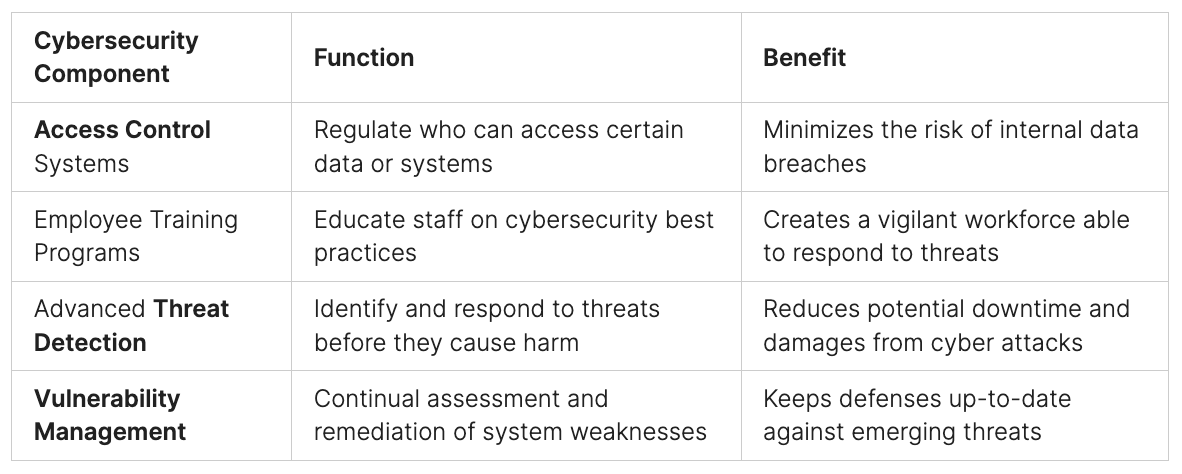
When we speak of cybersecurity solutions, we refer to a comprehensive set of tools, strategies, and educational initiatives to protect your organization’s digital infrastructure. These range from basic access control to sophisticated threat detection systems, ensuring your data’s integrity and resilience against unauthorized access.
Why Cybersecurity Is a Financially Wise Strategy
The judicious investment in cybersecurity goes beyond mere risk aversion—it’s a fiscally prudent move. With the growing sophistication of cyber threats, preemptive data protection and network security are crucial. Although implementing these measures incurs expense, failing to do so can lead to far greater financial loss, eroding your fiscal stability and customer trust.
The Staggering Cost of Data Breaches
The consequences of insufficient cybersecurity measures are startlingly evident when one examines the average cost of a data breach: an alarming $4.3 million in losses. Such numbers paint a stark picture of the potential financial devastation, emphasizing how cybersecurity is not merely an operational detail but a critical pillar of your company’s sustainability and profitability.
Implementing Essential Cybersecurity Services
As the cyber threat landscape evolves, it is imperative that organizations in Indonesia strengthen their defenses with key cybersecurity services. These foundational services protect against digital threats and foster an organizational culture of security awareness and vigilance.
Cybersecurity Training for Employees
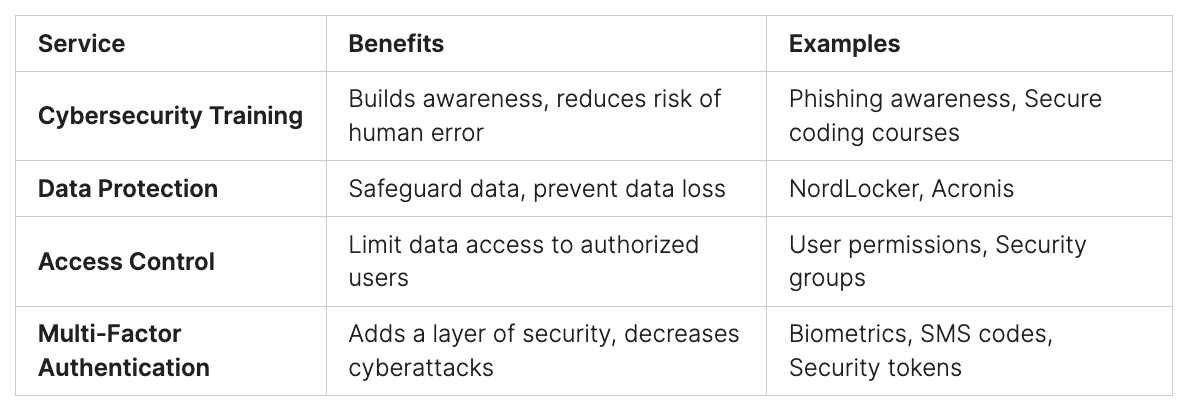
Fostering a secure environment begins with comprehensive cybersecurity training for your employees. From basic security awareness to advanced technical instruction, equipping your team with the knowledge to identify and respond to cyber threats is critical in safeguarding your company’s digital assets.
Data Protection Measures and Techniques
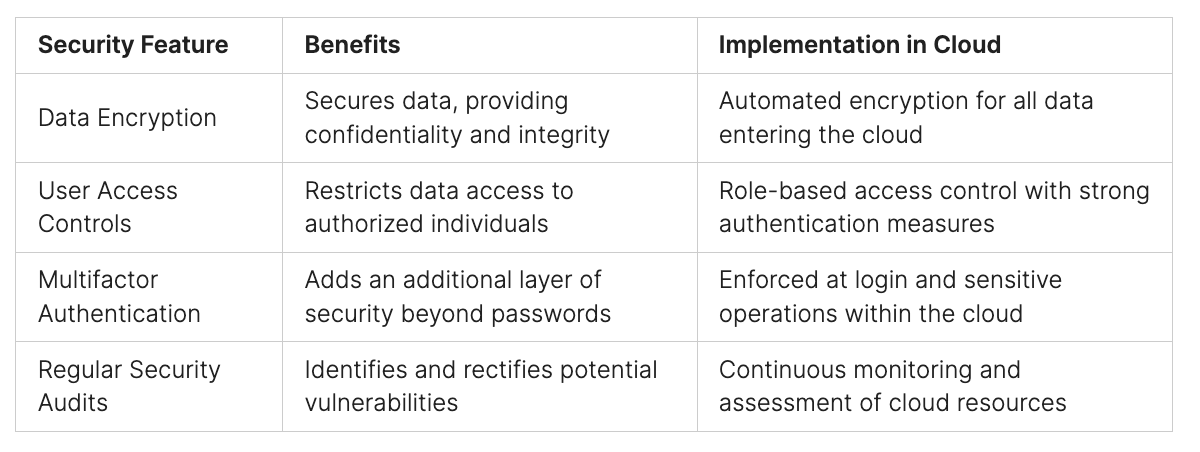
Data is at the heart of every organization, making data protection an essential practice. With the implementation of secure cloud services, you ensure that sensitive information is encrypted and stored safely, mitigating the risks associated with data breaches and cyber incursions.
Access Control and Multi-Factor Authentication
Implementing stringent access control measures is paramount to maintaining the integrity of your systems. Multi-factor authentication (MFA), a simple yet highly effective security step, requires multiple credentials to verify user identities, offering an additional layer of defense against unauthorized access.
Advanced Cybersecurity Company Solutions for Businesses
As your business grows and the value of your data increases, stepping up your cybersecurity is imperative. Advanced solutions are no longer optional but essential for a robust security posture. These solutions provide a strategic foundation for protecting your enterprise against sophisticated cyber threats and ensure business continuity.
Network Protection and Firewall Implementation
At the core of advanced cybersecurity is network protection. Incorporating firewalls is one of the most fundamental and necessary steps you can take. A well-implemented firewall filters incoming and outgoing network traffic, reducing the risk of cyber attacks. Coupled with Virtual Private Networks (VPNs), which encrypt your data for secure remote access, these measures establish a formidable barrier against unauthorized intrusions, preserving the sanctity of your network.
Innovative Endpoint Protection Strategies
Endpoints are often the front line in the battle against cyber threats. The shift to remote work has only heightened the need for robust endpoint protection. Solutions from cybersecurity leaders like Crowdstrike and Sophos employ advanced algorithms to monitor and analyze endpoint behaviors, flagging any suspicious activity that could indicate a breach. This goes beyond traditional antivirus applications to provide a deeper level of defense, ensuring your endpoints are not the weak link in your security chain.
Adapting to Evolving Threat Detection Techniques
In today’s dynamic cybersecurity landscape, evolving threat detection techniques are crucial. Employing platforms that integrate Endpoint Protection Platforms (EPP), Endpoint Detection and Response (EDR), and Extended Detection and Response (XDR) offer a multi-layered approach. These systems adapt in real time to new threats, enabling your business to remain one step ahead of cybercriminals. Deploying these sophisticated technologies equips you with the capacity to detect, respond to, and recover from cyber incidents more efficiently than ever before.
Choosing the Right Cybersecurity Solutions Provider
When the task at hand is to safeguard your organization against an array of digital threats, selecting a cybersecurity solutions provider becomes pivotal. You are tasked with finding a partner that not only comprehends the intricacies of cybersecurity services but also aligns with the unique contours of your company’s requirements. This means understanding the specific types of data you manage, appreciating the nuances of risk to which you are exposed, gauging the level of protection you aim to achieve, and matching these with the budget you have allocated for cybersecurity defenses.
In Indonesia, where digital advancement rapidly escalates, the prevalence of particular vulnerabilities and cybersecurity certifications can greatly influence your choice of provider. It is essential that they skillfully manage vulnerability management, delivering a system that tracks and prioritizes alerts effectively. Moreover, the solution must be scalable, integrating seamlessly with pre-existing systems and complying with local and international regulations.
Providers of cybersecurity services should also offer continuous, reliable customer support. This goes beyond the provision of defensive tools—it encompasses a guiding hand throughout the process of strengthening your cybersecurity posture. Moving forward, your provider should equip you with an array of tools, including but not limited to antivirus software, firewalls, Intrusion Detection and Prevention Systems (IDPS), Virtual Private Networks (VPNs), and cloud security solutions. These tools form the bedrock of organizational digital defense.
The significance of security consulting cannot be overstressed, as it brings to the table expertise and insights that are integral to crafting a strategic security framework. Hence, a provider skilled in consultancy adds immense value, guiding you through the arduous landscape of cyber threats and solutions. As you consider these pointers, remember that investing in a partnership that encourages a forward-looking approach to cybersecurity is the surest way to protect your organization.
Conclusion
As we navigate through the accelerating digital era, the emphasis on advanced vulnerability management strategies and forming alliances with proficient cybersecurity firms becomes increasingly critical for guiding your business safely into the future. Embracing comprehensive security consulting and state-of-the-art threat detection technologies goes beyond merely addressing current challenges; it’s about fortifying your organization against the unforeseeable twists and turns in the landscape of cyber threats. With a focus on growth and resilience, it’s time to delve into the emerging trends and practices poised to bolster your organization’s defenses.
Looking Ahead: The Evolution of Vulnerability Management
The path forward for vulnerability management is unmistakably geared towards proactive defenses. As the nature of cyber threats becomes more complex, the strategies to counteract these threats must also advance. The integration of artificial intelligence (AI) and machine learning (ML) into security systems heralds a new era where potential breaches can be predicted and prevented before they manifest. This paradigm shift towards anticipatory threat management promises to revolutionize organizational security infrastructures worldwide, including in markets like Indonesia, by offering not just reactive solutions but predictive safeguards.
The Value of Security Consulting for Future-Proofing
Security consulting transcends the traditional boundaries of a service; it represents a crucial investment in your business’s future resilience and success. Partnering with esteemed security consultants grants access to bespoke strategies and insights, tailored to meet the unique security demands of your organization. This collaborative approach lays down a robust groundwork for a defense system that is both comprehensive and attuned to the nuanced threats of the digital age. It’s a proactive step towards not only protecting your current assets but securing a path for sustained growth and defense against the cyber challenges of tomorrow.
Strategies for Maintaining a Competitive Edge in Cybersecurity
Adaptation, innovation, and collaboration are key to maintain a lead in the cybersecurity race. Aligning with a cybersecurity partner that offers cutting-edge threat detection while also staying abreast of technological progress is crucial. Embrace a culture of continuous education and adaptation, creating an environment where security awareness and preventive measures are ingrained in every aspect of your operations. The digital landscape may be relentless, but equipped with the right strategies and the support of a visionary cybersecurity firm, your journey through it can be navigated with assurance and foresight.
For organizations looking to elevate their cybersecurity posture and prepare for the future with confidence, Peris.ai Cybersecurity stands ready to assist. With our Peris.ai Ganesha Workshop & Training, alongside a suite of advanced security solutions, we’re dedicated to enhancing your cyber resilience. Visit Peris.ai Cybersecurity to explore how our expertise can secure your digital journey today and into the future.
FAQ
What Are Cybersecurity Solutions?
Cybersecurity solutions encompass a variety of tools, strategies, and services designed to protect organizations from cyber threats. This includes threat detection, data protection, network security, vulnerability management, and security consulting services, among other things. They provide the necessary defenses to maintain the confidentiality, integrity, and availability of an organization’s information systems.
Why Is Investing in Cybersecurity a Financially Wise Strategy?
Investing in cybersecurity is financially prudent as it helps mitigate risks associated with data breaches, which on average can cost organizations $4.3 million. Cybersecurity measures protect a company’s digital assets, and the expense incurred for data protection and network security is generally far less than the financial implications following a cyber incident. Hence, it is crucial to a business’s strategic planning and operational budget.
How Costly Are Data Breaches, and What Is Their Impact?
Data breaches can have a staggering financial impact on businesses, with global averages reaching $4.3 million in losses. These incidents lead to direct financial damage and can inflict reputational harm, loss of customer trust, legal consequences, and operational disruptions, highlighting the critical role of robust cybersecurity solutions in risk management.
Why Is Cybersecurity Training for Employees Important?
Cybersecurity training for employees is essential because it creates an informed workforce capable of recognizing and responding to cyber threats. Educating employees about phishing, secure coding practices, and other security essentials aids in fortifying the first line of defense against cyberattacks and reducing the risk of human error.
What Data Protection Measures and Techniques Should Be Implemented?
Organizations should implement various data protection measures, such as secure cloud backup solutions that encrypt and store data offsite and robust access control systems. Techniques like using multi-factor authentication (MFA) are fundamental in significantly reducing the risk of unauthorized access and potential breaches.
How Does Multi-Factor Authentication Contribute to Access Control?
Multi-factor authentication enhances access control by requiring users to provide multiple verification forms before accessing sensitive systems or information. This method is effective in preventing unauthorized access and can thwart a significant percentage of cyberattacks that exploit weak or stolen user credentials.
What Entails Network Protection and Firewall Implementation?
Network protection and firewall implementation involve setting up systems that monitor and control incoming and outgoing network traffic based on predetermined security rules. Firewalls are a barrier between secure internal networks and untrusted external networks, whereas network protection strategies ensure safe data exchanges and prevent unauthorized infiltrations.
What Are Innovative Endpoint Protection Strategies?
Innovative endpoint protection strategies include the deployment of sophisticated security software like Endpoint Protection Platforms (EPP), Endpoint Detection and Response (EDR), and Extended Detection and Response (XDR). These solutions monitor endpoint devices for suspicious activities, employ advanced algorithms to detect threats, and provide comprehensive defense mechanisms against cyberattacks.
How Is The Industry Adapting to Evolving Threat Detection Techniques?
The industry adapts to evolving threat detection techniques by integrating cutting-edge technologies such as Artificial Intelligence (AI), machine learning, and behavioral analysis into cybersecurity tools. These advancements enable proactive threat detection, facilitating quicker responses and adaptation to the continuously changing cyber threat landscape.
How Do I Choose the Right Cybersecurity Solutions Provider?
Choosing the right cybersecurity solutions provider involves evaluating your organization’s specific needs, the types of data you handle, your risk profile, your desired level of protection, and your budget. Look for providers that offer scalability, and user-friendly solutions, integrate well with existing systems, aid in compliance with regulations, and provide dependable support. Additionally, verify the providers’ industry certifications and their ability to prioritize and track vulnerability alerts effectively.
What Are the Future Trends in Vulnerability Management?
Future trends in vulnerability management point towards an increased emphasis on proactive strategies that identify and mitigate potential vulnerabilities before they are exploited. This involves more sophisticated vulnerability scanning technologies, greater integration with threat intelligence platforms, and the use of predictive analytics to foresee and prepare for emerging threats.
How Can Investing in Security Consulting Provide Long-Term Benefits?
Investing in security consulting can provide long-term benefits by helping organizations devise strategic, comprehensive cybersecurity plans. Security consultants offer expertise and insights into best practices, evolving threats, and regulatory compliance. They aid in aligning a company’s cybersecurity measures with their business objectives, thus strengthening the overall security posture and resilience against cyber threats.
What Can Organizations Do to Stay Ahead of Cyber Threats?
Organizations can stay ahead of cyber threats by adopting a proactive security stance, regularly updating and patching systems, employing advanced threat detection and response solutions, and continuously educating their workforce on security awareness. Partnering with a reputable cybersecurity company for expert guidance and integrating the latest security technologies are also critical steps in maintaining a robust defense against current and future cyber challenges.
Automated response is essential for blue teams in cybersecurity to combat threats effectively. Tasked with safeguarding networks and systems, blue teams leverage automation to quickly detect, analyze, and resolve security issues, minimizing the risk of major breaches.
This guide delves into the role of automated response in enhancing blue team operations. It explains what automated response is, its advantages, and best practices for implementation. By accelerating threat detection and resolution, automated response strengthens a company’s overall defense strategy.
Key Takeaways
Automated response is a critical component of effective blue team operations in modern cybersecurity.
Blue teams play a vital role in proactive defense, leveraging automated solutions to enhance their ability to mitigate threats.
Automated response can significantly reduce the time and resources required for incident detection and response, lowering an organization’s overall risk exposure.
Implementing a comprehensive automated response strategy requires careful planning, integration, and ongoing optimization to maximize its benefits.
Balancing automation with human oversight is essential to ensure the effectiveness and reliability of automated response systems.
What is a Blue Team?
In the world of cybersecurity, blue teams are key in finding weaknesses and threats to an organization’s assets. They work with red teams in simulated battles. This helps them share information and spot dangers. Blue teams also handle incident response, using tools like IDS and SIEM to catch and analyze threats as they happen.
Roles and Responsibilities of a Blue Team
Blue team members have many skills, like network management and threat detection. They fix security issues, manage updates, and set up new security measures. Through exercises and management, they help organizations stay ahead of cyber threats.
Importance of Blue Teams in Proactive Cybersecurity Defense
Blue teams are vital for keeping ahead of cyber threats. They help organizations react faster to security issues, following the “1-10-60 rule”. Regular exercises with red teams make an organization’s security stronger by finding weaknesses.
Blue teams use many security tools to keep watch against threats. They ensure quick response to incidents, follow rules, and promote a security-aware culture.
“Blue teams play a critical role in proactive cybersecurity defense, working to identify vulnerabilities and threats before they can be exploited.”
Understanding Automated Response in Cybersecurity
In the fast-changing world of cybersecurity, automated response is key in fighting new cyber threats. It uses technology to quickly find, analyze, and fix threats. This helps security teams act fast and well when threats arise.
The main goal of automated response is to spot threats early and stop them before they cause harm. It starts by gathering data from networks, logs, and security tools like firewalls. Then, it uses threat intelligence and machine learning algorithms to find any odd behavior that might be a threat.
When a threat is found, the system acts fast, following set workflows and playbooks to stop it. This might mean blocking bad traffic, isolating infected systems, or starting incident response.
Automation makes security teams respond quicker, lowering the risk for the company. Cybersecurity automation makes incident response better and lets teams do more important work. This makes the company’s security stronger.
As threats keep changing, automated response in cybersecurity will become even more important. By using this technology, security teams can stay ahead of threats. This protects important assets and lessens the damage from cyber attacks.
Benefits of Automated Response for Blue Teams
Automated response in cybersecurity is a big win for blue teams. It helps them find and fix security issues faster. This reduces the risk and exposure to threats. With cyberattacks happening every 39 seconds and downtime costing $200,000 per hour, blue teams need quick solutions.
Faster Incident Detection and Response
Advanced threat intelligence and machine learning spot patterns and anomalies in big data. This helps blue teams catch threats that others might miss. They can then quickly respond to attacks, reducing damage and fixing vulnerabilities fast.
Automation is key for blue teams. It lets them handle security tasks, incident responses, and alerts more efficiently.
Reduced Risk and Exposure to Threats
Automated response cuts down on risk and exposure by quickly fixing vulnerabilities. AI and ML analyze huge data sets to find unknown threats. Blue teams can then act fast to stop and fix these threats.
This keeps data and systems safe. It also helps keep customer trust and meet compliance.
In short, automated response is a big plus for blue teams. It means faster detection and response, less risk, and better defense against cyber attacks. With these tools, blue teams can improve their cybersecurity and protect their organizations.
Key Components of an Automated Response Strategy
To create a strong automated response strategy, you need a mix of threat intelligence and advanced analytics. These tools help spot and fight cyber threats fast. You also need automated workflows and incident response playbooks. These ensure your response is quick, efficient, and can grow with your needs.
Threat Intelligence and Analytics
Good automated response plans use strong threat intelligence to watch and analyze threat data. This data comes from network logs, security feeds, and malware reports. Advanced analytics and machine learning help find patterns and threats quickly. This lets you act fast.
Automated Workflows and Playbooks
Having workflows and incident response playbooks is key to a good plan. They guide your actions to stop threats, isolate systems, and fix vulnerabilities. This makes fighting cyber threats faster and uses less resources.
Metric Description Time between incident occurrence and detection The time from when an incident happens to when the security team finds out. Time between incident detection and acceptance for diagnosis The time it takes for the security team to start investigating an incident. Time of diagnosis The time it takes to figure out the cause and effect of an incident. Percentage of waiting time in the overall incident handling time The part of the time spent waiting for help or info during an incident. First-time resolution rate The rate of incidents fixed right away, without needing more work. Meeting the agreed resolution time Whether incidents are fixed within the set time.
For data breaches with personal info, your plan should cover notice to people or other groups. It should also check for harm and follow privacy rules.
Also, your plan should say who talks to whom about the breach. This includes staff, media, customers, government, and partners. It’s smart to have many people check messages before they go out to make sure they’re right and clear.
“Effective automated response strategies leverage the power of threat intelligence, analytics, and predefined workflows to enable organizations to respond to security incidents with speed, precision, and consistency.”
Integrating Automated Response into Blue Team Operations
Adding automated response to blue team operations boosts an organization’s cybersecurity operations. It combines automated systems with blue team expertise. This mix makes security stronger and more effective.
Blue teams can then focus on big-picture tasks. Automated systems quickly find, stop, and fix threats. This speeds up incident response and lowers the risk of data breaches.
Using security control validation is key in this mix. It checks security controls all the time, not just once. This is better than traditional pen tests, which only show what’s wrong at one point in time.
It lets blue teams keep up with new threats. This way, their security always gets better.
Breach and attack simulation (BAS) tools are also important. They test security controls by pretending to be different kinds of attacks. This helps find weak spots in security controls.
This testing is a big deal, but it’s essential for keeping security controls working right.
Key Benefits of Automated Response Integration Metrics Faster incident detection and response 94% of BAS Reviewers Recommend Cymulate Continuous Automated Red Teaming Reduced risk and exposure to threats Cymulate has received a 4.7/5 Rating for Breach and Attack Simulation (BAS) Tools Continuous improvement of security controls Cymulate recognized as a top innovation leader in Frost RadarTM Global BAS, 2022 report
By adding automated response to blue team operations, teams can do more strategic work. Automated systems take care of the day-to-day tasks. This mix of human smarts and machine power is key to better cybersecurity operations and less risk of cyber attacks.
“Automated control testing is a significant investment but critical for ensuring security controls are functioning properly.”
The Role of Automated Response in Reducing Threat Exposure: A Blue Team’s Guide
Automated response is key for blue teams to fight cyber threats. It helps them find and fix problems fast, reducing risk. Automated systems watch networks and apps for odd behavior, alerting blue teams to threats. This lets blue teams act quickly to stop threats and fix vulnerabilities.
Using automated response makes blue teams more efficient and effective. It supports them 24/7, giving them the tools to handle threats fast. This proactive approach helps protect against cyber attacks better.
Automated systems also use advanced analytics to guide blue teams. This helps them focus on the most important threats. By doing so, they can lower the risk of cyber attacks.
Benefit Description Statistical Data Faster Incident Detection and Response Automated systems can quickly identify anomalies and alert blue teams, enabling prompt action to contain threats and mitigate damage. , Reduced Risk and Exposure to Threats Advanced analytics and threat intelligence help blue teams focus on the most critical vulnerabilities, reducing the organization’s overall exposure to cyber risks. Improved Efficiency and Effectiveness The integration of automated response with blue team operations enhances the overall cybersecurity defense, enabling a more proactive and resilient approach.
Automated response boosts blue teams’ ability to fight cyber threats. It makes them more proactive and effective in defending against threats.
“Automated response is a game-changer for blue teams, enabling them to be more proactive, efficient, and effective in defending against cyber threats.”
Challenges in Implementing Automated Response
Adding automated response to a company’s security plan comes with its own set of challenges. Teams face change management and cultural shifts to get everyone on board. It’s important to talk to employees and train them well to build trust.
Also, finding the right mix of automation and human oversight is key. Automated tools can make things faster and more efficient, but humans are still needed for tough decisions. Planning, integrating, and keeping an eye on things is vital for success.
Change Management and Culture
Bringing in automated response means a big change for a company. People might worry about losing their say in decisions. Good change management, like training and talking openly, helps ease these worries.
Balancing Automation and Human Oversight
Automated response speeds up finding and fixing problems, but it’s important to keep humans involved. Automated systems can sometimes flag false alarms, which can be overwhelming. It’s key to have clear rules and ways for humans and machines to work together.
“Effective communication is essential for Blue and Red Teams, but can be hindered by conflicting priorities. Red Teams may focus on detailed reports, while Blue Teams need clear actions to reduce risks. Purple Teams play a crucial role in aligning communication and objectives between the two teams.”
To tackle these issues, companies need a full plan for automated response. They should work on teamwork, learning, and finding the right balance in automation. This way, security teams can make the most of automated response and improve their cybersecurity.
Best Practices for Effective Automated Response
Creating a strong automated response plan is key for companies to fight cyber threats. Cyber attacks are getting more common, complex, and expensive to fix. Many attackers use automation to launch multiple attacks at once.
To tackle this, companies need to follow some important steps. First, they must have clear plans and communication rules for handling incidents. With the rise of remote work, having detailed procedures is more important than ever.
It’s also good to test and update these plans regularly through drills. This helps improve how fast and well teams can handle incidents. Regular drills prepare teams to act quickly and effectively in real situations.
Training employees is another key part of a good automated response plan. Automated tools can spot threats faster and more accurately. They also help contain and fix security issues automatically. It’s important for employees to know their roles in responding to incidents.
Companies should also work fast to stop threats, fix vulnerabilities, and keep improving their automated response. Automation can make response times quicker. It also helps with routine security tasks and keeps security policies consistent.
By following these steps, companies can make the most of automated response and boost their cybersecurity. Using automation can also save money and make following rules easier. Tools like SOAR, SIEM, and XDR are important for strengthening cybersecurity.
Best Practices for Effective Automated Response
Establish clear incident response plans and communication protocols
Regularly test and update incident response plans through simulated exercises
Ensure employee training on roles and responsibilities during incident response
Quickly isolate and contain threats, remediate vulnerabilities, and continuously monitor and improve automated response capabilities
Leverage security automation platforms, SOAR, SIEM, and XDR tools to enhance cybersecurity posture
“Automated response is a game-changer in the fight against sophisticated cyber threats. By adopting these best practices, organizations can dramatically improve their ability to detect, respond, and recover from incidents, ultimately reducing their overall risk exposure.”
Following these best practices for automated response is vital for companies to keep up with cybersecurity threats. It helps protect their important assets from cyber attacks.
Use Cases and Real-World Examples
Automated response has shown to cut down on threats and boost cybersecurity in many companies. It helps by breaking down cyberattacks into seven stages, making it easier to stop them. But, if not done right, it can also increase risks.
A big bank cut its response time to malware attacks by using automated tools. A healthcare company also used advanced tech to quickly stop a data breach, keeping patient info safe. These stories show how automated response can help other companies improve their security.
The Gartner® 2023 Hype Cycle™ for Security Operations report says looking at risks first helps in choosing the right security tools. Security teams only use about 30% of their tools often, showing room for improvement.
Breach and Attack Simulation (BAS) tools are now key in fighting cyber threats. They help check if security measures are working and show how to improve. BAS tools give clear views of security improvements, helping leaders show the company’s safety level.
In summary, the examples and cases in this section show the real benefits of using automated response. It helps blue teams fight threats better and improve their cybersecurity.
Future Trends in Automated Response and Blue Team Operations
The world of cybersecurity is changing fast. Automated response and blue team operations will become even more key. New tech like artificial intelligence, machine learning, and threat intelligence will make detection and response smarter.
Blue teams will focus more on big-picture thinking and making decisions. They will also work to improve automated systems. Adding automated response to other security tools, like extended detection and response (XDR), will help fight cyber threats better.
The threat landscape is getting more complex. Combining automated response with blue team skills is vital for staying ahead. Cybersecurity innovation will lead the way, making automated response trends and blue team operations even better.
“The future of cybersecurity lies in the symbiotic relationship between automated response systems and the strategic guidance of blue teams. Together, they will shape the landscape of proactive and effective defense against evolving cyber threats.”
Conclusion
The ever-changing cyber threat landscape demands proactive defense strategies. Peris.ai’s Blue Team Service combines real-time threat mitigation, advanced threat intelligence, and continuous monitoring to ensure your organization stays one step ahead of attackers.
Our Blue Team experts not only identify and respond to threats quickly but also provide simulations, employee training, and robust incident response planning. With automated tools and human expertise, we streamline detection and response, enabling your organization to maintain a strong security posture while minimizing risks.
By integrating advanced machine learning and threat intelligence, our Blue Team Service ensures your assets remain protected against even the most sophisticated cyberattacks. From vulnerability management to continuous threat exposure assessments, we provide comprehensive defense solutions that build resilience and foster confidence.
Don’t wait to secure your organization—partner with Peris.ai Bima Blue Team Service today. Visit Peris.ai to learn more about how we can protect your business around the clock.
FAQ
What is a blue team?
A blue team is a group of cybersecurity experts. They work to protect an organization’s networks or systems. They are part of the security team and work against red teams, which simulate attacks to find weaknesses.
What are the roles and responsibilities of a blue team?
Blue teams take part in simulated attacks with red teams. They share threat information, find vulnerabilities, and handle security incidents. They also fix security issues through management and patching.
Why are blue teams important in proactive cybersecurity defense?
Blue teams are key for proactive security. They help organizations respond faster to security threats. By working with red teams, they improve an organization’s security.
What is automated response in cybersecurity?
Automated response helps protect against cyber attacks. It uses advanced tools to watch networks for threats and act quickly. This includes using threat intelligence and machine learning to spot threats.
How does automated response benefit blue teams?
Automated response helps blue teams detect and respond to threats faster. It reduces risk and lets blue teams focus on strategy and analysis. Automated systems handle the quick response to threats.
What are the key components of an effective automated response strategy?
A good automated response strategy needs advanced threat intelligence. It also needs automated workflows and playbooks for quick actions. These actions help contain threats and fix vulnerabilities.
What are the challenges in implementing automated response?
Starting automated response can be hard. It requires managing changes, getting everyone on board, and balancing automation with human oversight. This ensures decisions are made and problems are solved.
What are the best practices for effective automated response?
For effective automated response, have clear plans and test them often. Train employees, act fast to contain threats, and fix vulnerabilities. Always keep improving your automated response.
Can you provide examples of organizations successfully implementing automated response?
Yes, many organizations have done well with automated response. For example, a big bank cut down its response time and stopped a malware attack. A healthcare company also quickly found and fixed a data breach thanks to advanced tools.
How will the role of automated response and blue team operations evolve in the future?
Automated response and blue teams will become even more crucial. New technologies like AI and machine learning will make detection and response better. Blue teams will focus more on strategy and improving automated systems.
In today’s interconnected world, your business’s data and digital assets in Indonesia are constantly at risk from cyber threats. Whether you’re combating phishing attacks, DDoS disruptions, or unauthorized intrusions, the necessity of reliable network security services and robust data protection services cannot be overstated. Tailoring cybersecurity solutions to safeguard your enterprise can make the difference between thriving unscathed and suffering catastrophic data breaches. It’s not just about defense—it’s about ensuring resilience in a landscape of ever-evolving digital perils. Arm yourself with the top-line network security servicesIndonesia has to offer, and shield your business from the unseen dangers lurking in the depths of the digital realm.
Key Takeaways
Comprehensive network security services are vital to protect your business from emerging cyber threats.
Data protection services ensure the sanctity and integrity of your sensitive information.
In the face of increasing cyber attacks, Indonesian businesses must prioritize robust cybersecurity solutions.
Deploying advanced defenses preserves operational continuity and maintains corporate reputation.
Network security in Indonesia is not just a technical requirement, but a strategic one aligning with your business goals.
Understanding the Importance of Network Security Services
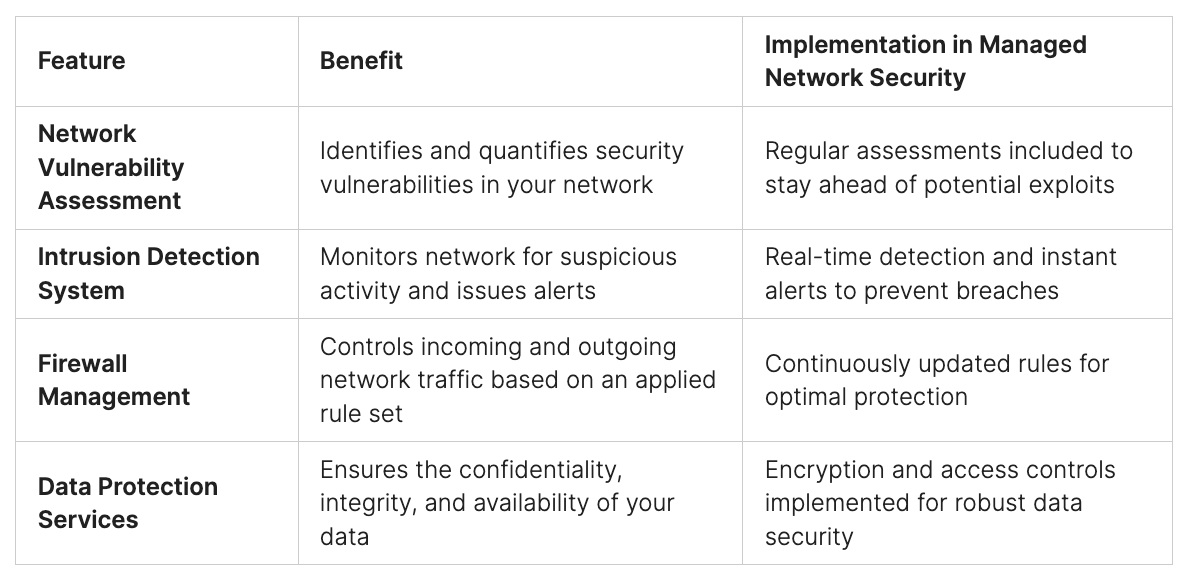
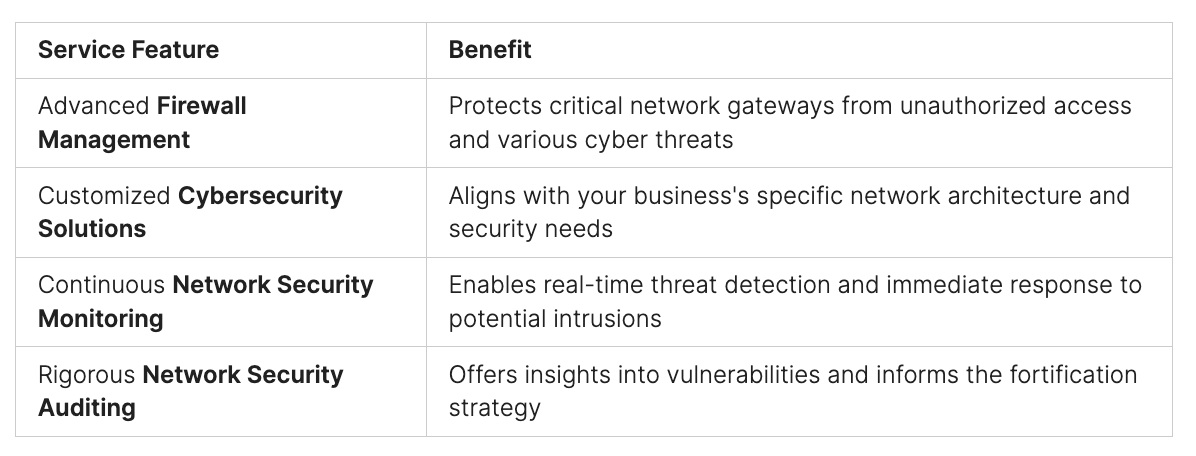
In today’s digital age, securing your business’s network infrastructure is not just an option—it’s a crucial aspect of safeguarding your enterprise’s future. With a comprehensive understanding of network security services, you can effectively protect your organization’s sensitive information and maintain operational continuity. These services encompass network vulnerability assessment, firewall management, and intrusion detection systems, providing a robust defense against emerging cyber threats.
Defining Network Security Services and Their Role
Network security services form an integral component of corporate defense mechanisms. They involve a variety of strategic actions, from deploying firewalls that filter traffic to employing intrusion detection systems that alert you to suspicious activities. A well-formulated plan for network vulnerability assessment reveals potential weaknesses that could be exploited by cybercriminals. As you delve into cybersecurity solutions, consider engaging in network security consulting to tailor your defenses to your specific needs. Quality data protection services and managed network security are vital for maintaining the integrity of your network.
Statistics Highlighting Network Insecurity Among Small Businesses
Shockingly, more than half of small businesses in Indonesia face the threat of cyber attacks due to a lack of cybersecurity measures. This startling truth underscores the urgent need for enterprises to invest in effective network security services. Without these protections, businesses expose themselves to incalculable risks that can result in devastating financial repercussions and irreparable harm to their reputation.
The Potential Impact of Cyber Threats on Operations and Reputation
Cyber threats are a formidable enemy that can disrupt your day-to-day operations and tarnish your market reputation. Ignoring the necessity for firewall management or sidelining the importance of an intrusion detection system can leave your business vulnerable to data breaches. Securing your network with comprehensive cybersecurity solutions and engaging in network security consulting lays the foundation for a resilient infrastructure, allowing you to maintain customer trust and operational stability despite the evolving landscape of cyber threats.
Implementing Essential Network Security Measures
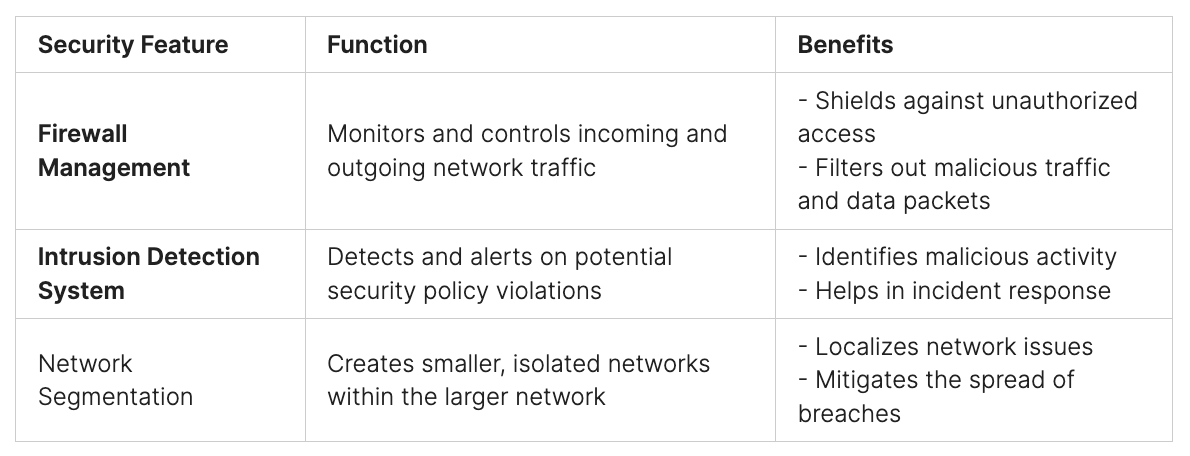
As you navigate the complex world of network security, several pivotal measures must be at the core of your strategy. Foremost among these is firewall management, which acts as a robust barrier between your trusted internal network and untrusted external networks, such as the internet. A well-configured firewall can discern and block threats, preventing unauthorized access to your network resources.
However, not all threats can be barred at the perimeter. That’s where an intrusion detection system (IDS) comes into play. An IDS meticulously monitors network traffic, searching for suspicious activity and known threats, instantly alerting you to potential breaches. By integrating network security monitoring, you ensure that vigilant eyes are always assessing the safety of your digital environment.
To further reinforce your network’s defenses, consider the practice of network segmentation. This technique divides your network into multiple segments or subnetworks, which can limit an intruder’s access even if they manage to penetrate your outer defenses. Each segment can enforce its own unique access controls, adding layers of security and isolating sensitive data.
Data Loss Prevention (DLP) strategies also form an indispensable part of safeguarding your assets. DLP systems monitor, detect, and block data breaches and exfiltration from within your organization, ensuring that sensitive data remains within the corporate boundaries. By implementing these layered security measures, you place yourself in an excellent position to protect your network against a diverse range of threats.
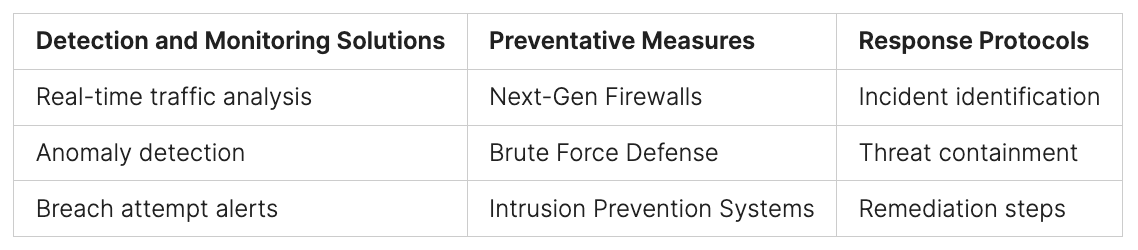
Network Security Services: Detection, Prevention, and Response Strategies
Your vigilance in managing network security is crucial for safeguarding your business’s critical assets. This section delves into the sophisticated frameworks that enable early threat detection, the advanced prevention techniques that protect your network infrastructure, and the robust response protocols that ensure swift action is taken when threats are identified.
Proactive Threat Identification and Real-Time Monitoring
Utilizing network security monitoring tools, your organization can gain the upper hand against potential cyber threats. The continuous surveillance performed by these systems enables you to detect anomalies and intrusion attempts in their infancy, thereby preserving the integrity of your network operations. These proactive measures, encompassing network security auditing and an intrusion detection system, are the first line of defense, offering peace of mind through constant vigilance.
Advanced Prevention Techniques Utilizing Firewalls and Intrusion Prevention Systems
The cornerstone of any solid network defense strategy is an advanced firewall management program, working in conjunction with an intrusion prevention system (IPS). Together, they form a robust barrier, preventing unauthorized access and stopping malicious activities in their tracks. These technologies are adept at identifying and thwarting a multitude of threats, from brute force attacks to the exploitation of network vulnerabilities, thereby ensuring your network remains uncompromised.
Effective Response Protocols to Contain and Neutralize Threats
When a security breach is detected, the efficacy of your network’s response protocols becomes apparent. Utilizing a tailored approach, network security services swiftly contain and neutralize ongoing threats. This rapid response reduces downtime and minimizes potential damage, reinforcing your business’s resilience in the face of cyber challenges. A thorough network vulnerability assessment post-incident ensures that your security posture is reinforced against future attacks.
Protecting Your Cloud Data: Encryption and Access Control
When it comes to cloud network security, encryption is the cornerstone that ensures your sensitive data remains confidential and intact. It transforms readable data into an encrypted format that is incomprehensible without the corresponding decryption key, providing a robust level of security, particularly critical for data in transit or stored remotely in the cloud. Employing advanced encryption standards is a prime directive among leading data protection services.
Equally important to encryption is the implementation of strict access control mechanisms. These policies are governed by the least privilege principle, which advocates for minimal user access rights to perform necessary operations. Such an approach minimizes potential internal and external breaches, ensuring users can access only what they need and nothing more. This principle is instrumental to maintaining a secure cloud environment.
Encryption: Essential for safeguarding data at rest and in transit
Access Control: Critical for defining who can and cannot access your cloud data
Understanding and implementing these advanced data protection services are vital for any organization wishing to safeguard their information within a cloud network security paradigm in Indonesia. It’s not just about deploying resources but aligning with a security concept that evolves with emerging threats and regulatory requirements.
Choosing the Right Service Provider for Managed Network Security
In today’s digital era, the stakes have never been higher when it comes to network security. With businesses pivoting towards digital-first strategies, the importance of robust network defense mechanisms cannot be overstated. But how do you select a partner that’s equipped to protect your network infrastructure? Let’s delve into the essential aspects to consider when opting for a managed network security provider.
Evaluating Provider Expertise and Experience
When it comes to network security consulting, the first factor to assess is a service provider’s expertise and experience. The credentials of a seasoned provider are reflected not just in the tenure but in their approach to tailoring cybersecurity solutions to your specific needs. Review case studies or testimonials demonstrating their prowess in scenarios similar to your organizational structure and industry. It’s not merely about the number of years in service but also the quality and relevance of the experience.
Assessing the Breadth of Cybersecurity Solutions Offered
Adequate defense against cyber threats requires a comprehensive suite of solutions. From firewall management to advanced intrusion detection measures, the right service provider should offer a robust array of tools to secure your network infrastructure. Ensure that they provide end-to-end data protection services, addressing your unique requirements and seamlessly integrating with your existing systems.
Key Offerings of Competent Network Security Providers
Responsiveness and Support Capabilities
Finally, the efficacy of a provider’s responsiveness and support capabilities often determines the difference between a minor security incident and a catastrophic breach. Evaluate their support infrastructure, including the availability of experts to handle crises and the agility of their network security monitoring systems. Their capacity to rapidly respond and adapt to evolving threats is paramount, thus ensuring the resilience and continuity of your business operations.
Selecting the right managed network security partner is a strategic decision that requires meticulous consideration of their expertise, range of cybersecurity solutions, and their ability to provide timely support. By prioritizing these factors, you can build a collaborative relationship with a provider that will strengthen your defenses and contribute to your company’s sustained success in the digital realm.
Conclusion
In the face of an ever-evolving digital arena, the imperative of bolstering your business’s network security in Indonesia is undeniable. The complexities and sophistications of cyber threats today require a robust line of defense, one that is often provided by comprehensive network security services. As your business grows and adapts to the changing online ecosystem, the protection of your data assets against potential cyber attacks becomes paramount.
By engaging with a provider skilled in delivering advanced cybersecurity solutions and managed network security, you place your trust in a partnership geared towards enhancing your organization’s safety. Such a provider will not only monitor threats but is also equipped to execute strategic defense mechanisms catered to the unique needs of your operational landscape. They stand as a bulwark against the tides of cyber risks, safeguarding the continuity of your business processes and the integrity of your digital data.
Ultimately, the choice of a network security expert should align with your industry’s demands and scalability requirements. Prioritize managed network security services that offer a strategic combination of monitoring, prevention, and rapid response solutions. Your vigilance in choosing the right cybersecurity solutions will be a decisive factor in upholding the resilience of your network infrastructure now and in the future.
FAQ
What are network security services and how do they protect my data?
Network security services consist of a myriad of tools and strategies designed to protect your business’s digital assets from cyber threats. This includes firewalls, intrusion detection systems, network vulnerability assessments, data protection services, and continuous monitoring, all focused on safeguarding your systems and data in Indonesia against unauthorized access, malware, and various cyberattacks.
Why is it particularly important for small businesses in Indonesia to implement network security services?
Small businesses are often at risk due to the lack of robust cybersecurity solutions. With alarming statistics indicating that more than half operate without any cybersecurity measures, these businesses are vulnerable to data breaches, financial losses, and reputational harm. Implementing network security services ensures they can defend themselves against attacks and maintain their operations and reputation.
How can cyber threats impact my business operations and its reputation?
Cyber threats can lead to unauthorized data access, operational disruptions, and financial losses. For businesses without effective network security services and managed network security, these risks can result in severe damage to credibility and the bottom line. Cybersecurity solutions are thereby essential to maintain data integrity, operational stability, and business resilience.
What essential network security measures should be implemented to secure my network environment?
Essential network security measures include deploying firewalls for traffic control, network segmentation for protecting sensitive data, and data loss prevention strategies. Additionally, network security monitoring and firewall management are crucial for preventing unauthorized access and monitoring for potential threats.
How do network security services proactively identify threats and monitor network activity?
Network security services use sophisticated detection algorithms and continuous monitoring frameworks to watch for suspicious activities and potential breaches. Real-time network security monitoring allows for vigilant oversight, helping to maintain the integrity and availability of network operations and data.
What advanced prevention techniques are employed in network security?
Advanced prevention techniques include next-generation firewalls and intrusion prevention systems that are designed to block threats like brute force and DoS attacks or exploitation of vulnerabilities. These tools work proactively, offering robust network protection even in the interim between a vulnerability’s disclosure and the application of security patches.
What are effective response protocols in network security services?
Effective response protocols involve rapidly identifying, containing, and neutralizing cyber threats as soon as they’re detected. This includes pinpointing the source of an attack, deploying countermeasures, and implementing preventive steps to safeguard against future threats, thus improving an organization’s ability to manage cyber incidents.
How are encryption and access control used to protect my cloud data?
Encryption masks your data, rendering it undecipherable to unauthorized parties, while access control policies limit user access to sensitive information based on their role, employing the least privilege principle and strong user authentication methods. Both are vital for enhancing the security of your cloud network and maintaining the confidentiality and integrity of your data.
How do I choose the right service provider for managed network security?
Choosing the right service provider involves evaluating their expertise in cybersecurity solutions, experience in the field, responsiveness to threats, and the range of security offerings. It is important to vet potential providers to ensure they can protect your network efficiently and adequately against cyber threats.
What should I consider when assessing the breadth of cybersecurity solutions a provider offers?
When assessing providers, consider the variety in their offerings, which should include advanced firewall management, data protection services, and hyperscale network security that adapts to changing demands. Providers should offer comprehensive strategies designed to secure various environments, from on-premise networks to cloud-based systems.
Why is responsiveness an important factor in network security service providers?
The ability of a network security service provider to respond swiftly to network intrusions or cyber threats is critical in minimizing potential damages. A provider’s support capabilities and rapid reaction are key to maintaining proactive defenses and ensuring the continuous operation of your business.