Tag: cybercrime-investigation

  • Breach Alert: The 6 Cloud Security Threats 2024 Every Business Must Prepare For!

    Breach Alert: The 6 Cloud Security Threats 2024 Every Business Must Prepare For!

    As we approach the new year, it is crucial for businesses to familiarize themselves with the potential cloud security threats that could jeopardize their operations. With the increasing innovation of attackers and the advancements in technologies such as AI and quantum computing, organizations must be proactive in developing a flexible and comprehensive security strategy. By staying prepared and informed, businesses can safeguard their digital assets and maintain the trust of their customers.

    Key Takeaways:

    • Businesses need to be aware of the potential cloud security threats that could impact their operations.
    • Developing a flexible and comprehensive security strategy is crucial in safeguarding digital assets.
    • Technologies such as AI and quantum computing are expected to bring changes to the cloud landscape.
    • Organizations must adopt quantum-resistant encryption algorithms and protocols to defend against quantum threats.
    • AI-powered attacks can pose both positive and negative implications for cybersecurity, necessitating robust security controls.

    Quantum Disrupting Security: A Growing Threat

    Quantum computing is a rapidly emerging technology that has the potential to revolutionize various fields, including encryption and security. With its extraordinary computational power, quantum computers pose a serious threat to the security of current encryption standards.

    “As quantum computers become more powerful and accessible, traditional encryption methods may become obsolete.”

    Traditional encryption algorithms, such as RSA and AES, rely on the difficulty of certain mathematical problems, such as factoring large numbers, to protect sensitive data. However, quantum computers can solve these problems much faster than classical computers, rendering these encryption methods vulnerable.

    To defend against the impending quantum threat, organizations need to adopt quantum-resistant encryption algorithms and protocols. These cryptographic techniques are specifically designed to withstand quantum attacks and provide robust security in the post-quantum era.

    It is crucial for organizations to stay proactive and vigilant in monitoring the quantum computing landscape. By staying updated on the latest developments and best practices, businesses can ensure they are well-prepared to mitigate the risks associated with quantum computing.

    Quantum-Resistant Encryption Algorithms

    Quantum-resistant encryption algorithms, also known as post-quantum cryptography, are designed to resist attacks from both classical and quantum computers. These algorithms are based on mathematical problems that are believed to be hard for both types of computers to solve.

    Some of the prominent quantum-resistant encryption algorithms include:

    • Lattice-based cryptography
    • Code-based cryptography
    • Multivariate cryptography
    • Hash-based cryptography
    • Isogeny-based cryptography

    Implementing these quantum-resistant encryption algorithms and protocols can significantly enhance the security of organizations’ sensitive information in the face of evolving threats from quantum computing.

    Staying Ahead of the Quantum Threat

    As quantum computing continues to advance, it is essential for businesses and security professionals to stay informed and proactive. Adopting quantum-resistant encryption algorithms is just one aspect of defending against the quantum threat.

    Organizations should also:

    • Regularly assess their security infrastructure and protocols
    • Upgrade their encryption standards to be quantum-resistant
    • Monitor the progress in quantum computing research and its potential implications for security
    • Collaborate with experts and institutions in the field to establish best practices

    By taking these proactive measures, businesses can better prepare themselves for the challenges posed by quantum computing and safeguard their sensitive data from future security breaches.

    AI-Powered Attacks: Harnessing New Technologies for Malicious Purposes

    Artificial intelligence (AI) is revolutionizing various industries, including cybersecurity. While AI presents opportunities for improving security measures, it also introduces new risks and challenges. Cybercriminals are harnessing AI to launch sophisticated and stealthy attacks, posing significant threats to businesses and individuals alike.

    Deepfake Attacks: Manipulating Reality for Ill Intent

    One alarming application of AI in cyber attacks is deepfake technology. Deepfake refers to the use of AI algorithms to manipulate images, videos, and audio, creating hyper-realistic fake content that is difficult to discern from authentic media. Malicious actors leverage deepfake technology to spread misinformation, engage in identity theft, and perpetrate social engineering attacks.

    Deepfake attacks can have severe consequences for individuals and organizations. By convincingly impersonating someone, attackers can deceive users into sharing sensitive information, compromising personal and corporate security. As deepfake technology evolves, it becomes increasingly challenging to detect and prevent these malicious activities.

    Adversarial AI: Outsmarting Defenses with AI

    Another concerning aspect of AI-powered attacks is the use of adversarial AI. Adversarial AI refers to AI algorithms that are designed to exploit vulnerabilities in machine learning systems. These attacks aim to manipulate AI models by subtly altering input data, leading to incorrect outputs or system failures.

    Adversarial AI attacks have the potential to bypass traditional security defenses, evade detection mechanisms, and compromise the integrity of AI-powered systems. By exploiting vulnerabilities in AI algorithms or training data, attackers can undermine the reliability and trustworthiness of AI-driven technologies.

    Counteracting AI-Powered Attacks: Building Resilient Cybersecurity

    To defend against AI-powered attacks, organizations must proactively invest in AI-based cybersecurity solutions. Utilizing AI technologies can help augment security defenses, automate threat detection and response, and enhance incident management capabilities. By leveraging AI, cybersecurity professionals can better analyze vast amounts of data, identify patterns, and detect anomalies in real-time.

    However, simply relying on AI-based solutions is not enough. Organizations must also implement robust security controls and policies. This includes implementing multi-factor authentication, regular vulnerability assessments and penetration testing, and user awareness training. Maintaining an educated and proactive workforce is crucial to prevent falling victim to AI-powered attacks.

    Moreover, collaboration and information sharing among businesses, cybersecurity experts, and law enforcement agencies are essential. By working together, organizations can strengthen their defenses, share knowledge on emerging threats, and develop effective countermeasures against AI-powered attacks.
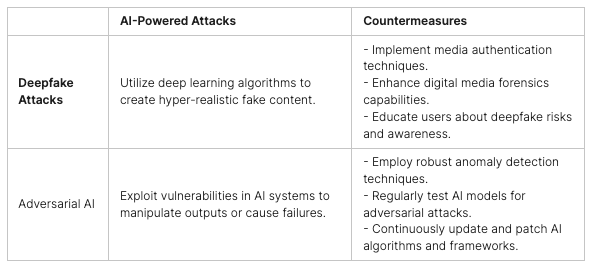
    In conclusion, the rise of AI-powered attacks poses significant challenges to cybersecurity. Deepfake attacks and adversarial AI techniques are growing threats that require immediate attention. By investing in AI-based cybersecurity solutions, implementing robust security controls, and fostering collaboration within the industry, organizations can effectively counter these malicious AI-driven activities and safeguard their digital assets.

    Ransomware: A Persistent and Evolving Threat

    Ransomware continues to pose a significant threat in the realm of cybersecurity. This form of malware encrypts victims’ files and holds them hostage until a ransom is paid, often in the form of cryptocurrency.

    What makes ransomware especially dangerous is its adaptability. Attackers are constantly evolving their tactics, employing advanced encryption algorithms and sophisticated extortion techniques to maximize their profits and avoid detection.

    Organizations must take a proactive approach to protect themselves from ransomware attacks. This involves implementing a comprehensive cybersecurity strategy that encompasses prevention, detection, response, and recovery.

    Patching systems and keeping software up to date is crucial in mitigating vulnerabilities that attackers may exploit. Additionally, organizations must employ robust security measures to limit network exposure and ensure proper user education on recognizing and handling phishing emails and suspicious links.

    Awareness and preparedness are key to minimizing the impact of ransomware attacks. Regularly backing up important files and storing them offline or in a secure cloud environment can help organizations recover their data without succumbing to the demands of attackers.

    It is also essential to have a well-defined incident response plan in place. This plan should include steps to isolate infected systems, identify the type of ransomware, and notify the appropriate authorities.

    By understanding the persistent nature of ransomware and implementing effective protection measures, organizations can minimize the risks associated with this ever-evolving cyber threat.

    The Impact of Ransomware Attacks

    Ransomware attacks can cause significant financial losses and reputational damage for businesses. Organizations that fall victim to ransomware may experience operational disruptions, loss of sensitive data, and potential legal and regulatory liabilities.
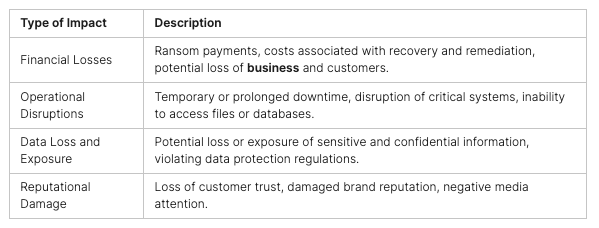
    It is vital for businesses to prioritize ransomware prevention and preparedness as part of their overall cybersecurity strategy. By investing in robust defenses, regular employee training, and incident response planning, organizations can mitigate the risks and consequences associated with this persistent and evolving threat.

    Cloud Computing Challenges: Navigating Data Security and Compliance

    While cloud computing offers numerous advantages, it also introduces new challenges in terms of data security and compliance. With the increasing adoption of cloud services, organizations must ensure that their sensitive information is protected and that they meet regulatory requirements.

    One of the main challenges is the risk of misconfigured cloud storage accounts. Improperly configured storage settings can expose sensitive data to unauthorized access and increase the likelihood of data breaches. It is essential for businesses to implement proper access controls and regularly audit their cloud storage settings to prevent these vulnerabilities.

    Infrastructure vulnerabilities also pose a significant threat to cloud data security. Weaknesses in the underlying cloud infrastructure can be exploited by attackers to gain unauthorized access to data. Organizations must work closely with cloud service providers to ensure that robust security measures are in place to protect their data.

    “Ensuring data security and compliance in the cloud is a shared responsibility between the organization and the service provider.”

    Organizations must prioritize access control mechanisms to limit who can access their cloud resources and data. Implementing strong authentication methods, such as multi-factor authentication, can help prevent unauthorized access. Additionally, regular monitoring and logging of access activities can provide insight into potential security breaches and aid in incident response.

    Compliance with regulations and industry standards is critical in cloud environments. Organizations need to stay up to date with evolving data protection laws and compliance requirements to ensure their cloud operations align with legal and regulatory obligations. Conducting regular compliance assessments and audits can identify any gaps and help organizations address them effectively.

    Best Practices for Cloud Data Security and Compliance:

    • Implement strong access controls, including multi-factor authentication
    • Regularly review and update cloud storage settings to prevent misconfigurations
    • Work closely with cloud service providers to ensure robust security measures are in place
    • Monitor and log access activities for early detection of security breaches
    • Stay up to date with data protection laws and compliance requirements
    • Conduct regular compliance assessments and audits
    • Train employees on cloud security best practices

    By addressing these cloud computing challenges and prioritizing data security and compliance, organizations can leverage the benefits of cloud technology while mitigating potential risks and ensuring the confidentiality, integrity, and availability of their data.

    Complexity in Multi-Cloud Environments: Managing Security in a Sprawling Landscape

    Managing security in multi-cloud environments can be a daunting task due to the complexity and variety of cloud platforms and services. With businesses relying on multiple cloud providers to meet their diverse needs, administrators often struggle to maintain control over their sprawling estates. This complexity introduces potential vulnerabilities, making it crucial for organizations to prioritize cloud security and implement effective security controls.

    One of the main challenges in managing security in a multi-cloud environment is ensuring consistent security practices across different platforms. Each cloud provider has its own set of security features and configurations, requiring administrators to have a deep understanding of each provider’s security controls. This can be time-consuming and error-prone, increasing the risk of misconfigurations and leaving cloud environments exposed to cyber threats.

    To address these challenges, organizations must adopt a comprehensive security strategy that includes a centralized platform for managing all their cloud assets and configurations. This centralized platform allows administrators to enforce consistent security policies and controls across all cloud providers, simplifying the management process and reducing the risk of human errors. Additionally, it provides a holistic view of the entire multi-cloud environment, enabling administrators to identify potential security gaps and take proactive measures to mitigate them.

    Implementing strong security controls is crucial in a multi-cloud environment. This includes deploying robust access management policies, applying encryption to protect sensitive data at rest and in transit, and regularly monitoring the cloud environment for any suspicious activities or vulnerabilities. By leveraging cloud security solutions that offer advanced threat detection and automated security measures, organizations can strengthen their security posture and effectively mitigate the risk of cyber attacks.

    Benefits of Centralized Security Management in Multi-Cloud Environments

    Centralized security management brings several benefits to organizations operating in multi-cloud environments. Firstly, it provides a unified view of security across all cloud platforms, enabling administrators to monitor security events, investigate incidents, and respond quickly and efficiently. This level of visibility enhances the overall security posture of the organization and simplifies compliance with regulatory requirements.

    Secondly, a centralized approach allows for the consistent enforcement of security policies and controls across multiple cloud providers. Administrators can define a set of standardized security configurations and apply them uniformly across all cloud environments, reducing the risk of misconfigurations and ensuring a high level of protection against potential threats.

    Finally, centralized security management minimizes complexity in multi-cloud environments. Instead of juggling different security tools and interfaces for each cloud provider, administrators can leverage a single platform that integrates with all their cloud environments. This streamlines security operations, improves efficiency, and enables administrators to focus their time and resources on addressing real security risks rather than managing disparate security systems.
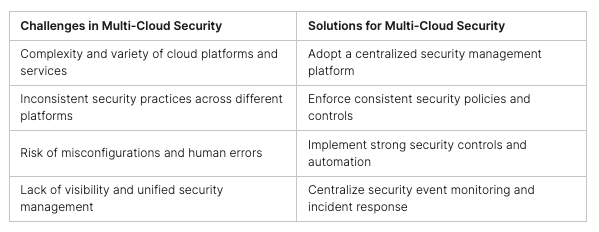

    In conclusion, managing security in multi-cloud environments requires organizations to navigate through the complexity and variety of cloud platforms while ensuring consistent security practices across different providers. By adopting a centralized security management approach, organizations can streamline security operations, reduce complexity, and improve their overall security posture. With robust security controls and automated measures in place, businesses can confidently embrace the benefits of multi-cloud environments while effectively mitigating the risks and challenges they present.

    Conclusion

    As we advance into 2024, the imperative for businesses to intensify their cybersecurity initiatives has never been more critical, especially with the escalating threats in cloud security. The advent of quantum computing, AI-powered attacks, sophisticated ransomware, and the inherent challenges of cloud computing and multi-cloud environments demand a proactive and informed approach to cybersecurity. Businesses must stay abreast of the latest threats and advancements, embrace cutting-edge security solutions, and adopt best practices to safeguard their digital assets effectively.

    The landscape of cloud security is continually evolving, necessitating that organizations adopt robust cybersecurity strategies to stay ahead of potential threats. By investing in the latest technologies and solutions, businesses can enhance their defenses and solidify their security postures. Cultivating a culture of awareness and preparedness is essential for mitigating risks associated with cloud security threats.

    Furthermore, compliance with regulatory requirements and the implementation of effective access control measures are crucial for maintaining security integrity. Regular security assessments and audits play a vital role in identifying vulnerabilities and fostering continuous improvement in security practices. Additionally, establishing strong partnerships with reliable security providers and engaging actively in industry forums and networks are strategic moves that can significantly boost a business’s preparedness against cloud security challenges.

    At Peris.ai Cybersecurity, we are dedicated to equipping businesses with the tools and expertise needed to navigate the complexities of cloud security. Our advanced solutions are designed to address the unique challenges of your business, ensuring compliance, enhancing security, and fostering a resilient cybersecurity posture. Visit us at Peris.ai Cybersecurity to explore how our tailored cybersecurity solutions can help protect your business against the emerging threats of the digital age. Let us help you stay one step ahead in the rapidly evolving world of cloud security.

    FAQ

    What are the top cloud security threats that businesses should prepare for in 2024?

    The top cloud security threats that businesses should prepare for in 2024 include quantum computing disruptions, AI-powered attacks, ransomware, challenges of cloud computing, and managing security in multi-cloud environments.

    How does quantum computing pose a threat to encryption and security?

    Quantum computing has the potential to render traditional encryption methods obsolete. As quantum computers become more powerful, the encryption standards currently in use may no longer be sufficient. To defend against this threat, organizations need to adopt quantum-resistant encryption algorithms and protocols.

    What are AI-powered attacks and how can organizations protect against them?

    AI-powered attacks leverage artificial intelligence to create sophisticated and stealthy cyberattacks. To protect against these attacks, organizations need to invest in AI-based cybersecurity solutions, implement robust security controls and policies, and stay updated on the latest developments and best practices.

    How can organizations protect themselves from ransomware attacks?

    To protect against ransomware attacks, organizations should adopt a comprehensive strategy that includes patching systems, limiting network exposure, educating users, and having a plan to detect, respond to, and recover from attacks.

    What are the main challenges of cloud computing in terms of data security and compliance?

    The challenges of cloud computing in terms of data security and compliance include misconfigured cloud storage accounts, infrastructure vulnerabilities, and the potential exposure of sensitive information. Organizations must prioritize data security, access control, and compliance by implementing robust security measures, conducting regular assessments, and staying updated on evolving regulations and standards.

    How can organizations manage security in multi-cloud environments?

    Managing security in multi-cloud environments can be challenging due to the complexity and variety of cloud platforms and services. Organizations can improve security by adopting a comprehensive security strategy that includes a centralized platform for managing all cloud assets and configurations, reducing complexity and providing better control over the sprawling landscape.

    How can businesses enhance their preparedness for cloud security threats?

    Businesses can enhance their preparedness for cloud security threats by staying informed about the latest threats, adopting advanced security solutions, and implementing best practices such as proactive monitoring, continuous security training, and regular security assessments.


  • Data Breaches and the Cloud: Securing Your Data in a Shared Environment

    Data Breaches and the Cloud: Securing Your Data in a Shared Environment

    Cloud computing has emerged as a foundational pillar, revolutionizing how businesses and individuals store and access their data. The allure of cloud technology lies in its ability to offer scalability, cost-efficiency, and seamless access to applications and information from anywhere in the world. However, as organizations increasingly rely on cloud infrastructure, their data security has become a critical concern. Data breaches have become all too common, making headlines and casting doubts on the safety of sensitive information stored in the cloud. This article delves into the risks associated with data breaches in a shared cloud environment and delves into effective strategies for securing your valuable data.

    The proliferation of cloud computing has ushered in a new era of convenience and productivity. Still, it has also introduced unique challenges, particularly regarding safeguarding data from unauthorized access and breaches. While cloud service providers (CSPs) play a pivotal role in implementing robust security measures, the shared nature of the cloud infrastructure necessitates a shared responsibility model. As a cloud user, it is crucial to understand the potential risks and take proactive steps to fortify the security of your data.

    By exploring the intricacies of data breaches in the cloud and examining effective security practices, this article aims to empower individuals and organizations with the knowledge to navigate the cloud landscape confidently. By understanding the risks and implementing the right security measures, you can ensure your data’s integrity, confidentiality, and availability in a shared cloud environment.

    Understanding Data Breaches in the Cloud

    A data breach refers to an unauthorized access or exposure of sensitive data. In a cloud environment, a data breach can occur when a malicious actor gains unauthorized access to stored data. This can happen for various reasons, including weak authentication mechanisms, vulnerabilities in the cloud infrastructure, or inadequate security practices by cloud service providers or users.

    Cloud service providers (CSPs) play a crucial role in ensuring the security of data stored in the cloud. They are responsible for implementing robust security measures, such as encryption, access controls, and intrusion detection systems, to protect their customers’ data. However, the shared nature of the cloud introduces additional complexities, making it essential for cloud users to take proactive measures to secure their data.

    Best Practices for Securing Data in the Cloud

    1. Choose a Reliable Cloud Service Provider

    Selecting a reputable and trustworthy cloud service provider is paramount. Consider their security certifications, compliance with data protection regulations, and track record in handling data breaches. Thoroughly review their security practices and ensure they align with your organization’s requirements.

    2. Encrypt Your Data

    Encrypting data before storing it in the cloud adds an extra layer of protection. This ensures that even if a data breach occurs, the stolen data remains unreadable without the encryption keys. Implement strong encryption algorithms and key management practices to safeguard your sensitive information.

    3. Implement Strong Access Controls

    Ensure that only authorized personnel have access to your data. Implement strong authentication mechanisms, such as two-factor authentication (2FA) or multi-factor authentication (MFA), to prevent unauthorized access. Regularly review and update access permissions based on the principle of least privilege, granting users the minimum level of access required to perform their duties.

    4. Regularly Update and Patch Systems

    Stay updated with the latest security patches and updates for your cloud infrastructure. Regularly patching your systems helps protect against known vulnerabilities and ensures that your cloud environment has the latest security features.

    5. Monitor and Audit Activity

    Implement robust monitoring and auditing practices to detect any unusual or suspicious activity in your cloud environment. Utilize intrusion detection and prevention systems (IDS/IPS) and security information and event management (SIEM) tools to identify potential threats and respond promptly to any security incidents.

    6. Backup Your Data

    Implement a regular backup strategy to create redundant copies of your data. This protects against accidental data loss, hardware failures, or ransomware attacks. Ensure that your backup data is securely stored and encrypted to maintain confidentiality.

    7. Educate and Train Employees

    Invest in comprehensive security awareness and training programs for your employees. Educate them about potential security risks, the importance of following security protocols, and how to identify and report suspicious activities. Establish clear policies and guidelines for data handling and security practices.

    Conclusion

    The importance of securing your data in the cloud cannot be overstated. The risks of data breaches are real and can have severe consequences for individuals and businesses alike. However, following best practices and implementing robust security measures can significantly reduce the likelihood of falling victim to a data breach.

    First and foremost, carefully selecting a reliable cloud service provider is crucial. Take the time to evaluate their security practices, certifications, and track record in handling data breaches. This initial step sets the foundation for a secure cloud environment.

    Next, prioritize the implementation of encryption and access controls. Encrypting your data ensures that even if a breach occurs, the stolen information remains unreadable without the encryption keys. Strong access controls, such as multi-factor authentication, add an extra defense against unauthorized access.

    Furthermore, maintaining constant vigilance through monitoring and auditing is essential. Implement intrusion detection and prevention systems, and leverage security information and event management tools to identify potential threats and respond promptly to any security incidents. Regularly updating and patching your systems ensures your cloud environment stays fortified against known vulnerabilities.

    Lastly, educating and training your employees about data security practices is paramount. Human error is often a weak link in the security chain, so providing comprehensive security awareness programs and establishing clear policies can help mitigate risks associated with accidental breaches.

    In conclusion, securing your data in the cloud is an ongoing process requiring technical measures, careful decision-making, and employee education. By prioritizing data security, you can confidently leverage the benefits of cloud computing while safeguarding your sensitive information from data breaches.

    To learn more about securing your data in the cloud and exploring comprehensive solutions, visit our website. Our experts are ready to assist you in protecting your valuable data and ensuring a secure cloud environment. Don’t leave your data vulnerable—take action today and fortify your cloud security to safeguard your most critical assets.

  • Exploring the Reasoning Behind Social Engineering Attacks Targeting Super Administrator Privileges

    Exploring the Reasoning Behind Social Engineering Attacks Targeting Super Administrator Privileges

    The relentless evolution of cybersecurity threats and social engineering attacks have emerged as a formidable menace, distinguished by their adeptness in manipulating human psychology rather than exploiting conventional technical vulnerabilities. This nefarious breed of attacks continually advances in sophistication, with one particularly disconcerting trend taking center stage: the calculated pursuit of super administrator privileges within corporate and institutional landscapes. These super administrators, positioned at the zenith of digital authority, effectively wield the keys to an organization’s most coveted digital assets, boasting unparalleled access and control over critical systems and sensitive data. The following article explores the intricate motivations, sophisticated techniques, and imperative preventive measures surrounding social engineering attacks specifically tailored to compromise super administrator privileges. Through this inquiry, we aim to illuminate the shadows that cloak these malicious endeavors and provide organizations with the insights necessary to safeguard their most prized digital assets.

    Understanding Social Engineering Attacks

    Before delving into the specific targeting of super administrator privileges, it’s essential to grasp the fundamentals of social engineering attacks. Social engineering is a psychological manipulation tactic that tricks individuals into divulging confidential information, providing access, or performing actions that benefit the attacker. These attacks exploit human psychology and rely on trust, authority, or urgency to succeed.

    Social engineers employ various techniques, such as phishing emails, pretexting, baiting, and tailgating, to manipulate their victims. They prey on human emotions, including fear, curiosity, and trust, to convince individuals to reveal sensitive information or perform actions that compromise security.

    Super Administrator Privileges: The Crown Jewels

    Super administrators, sometimes called “root” users, have the highest level of access and control within an organization’s IT infrastructure. These individuals can create, modify, or delete user accounts, access sensitive data, and configure critical systems. Super administrators are the ultimate gatekeepers of an organization’s digital kingdom, making them prime targets for cybercriminals.

    Reasons Behind Targeting Super Administrator Privileges

    1. Ultimate Access: The primary motivation for targeting super administrators is their unparalleled access. Gaining control over a super administrator account essentially grants cybercriminals unrestricted access to an organization’s digital assets, allowing them to execute malicious activities undetected.
    2. Privilege Escalation: Attackers often use compromised super administrator accounts as a stepping stone to escalate their privileges further. By compromising a super admin, they can move laterally within an organization’s network, gaining access to other privileged accounts and systems.
    3. Strategic Targeting: Cybercriminals strategically select super administrators as their targets because they represent the highest authority within an organization’s IT infrastructure. Successfully compromising a super admin account provides cybercriminals with an invaluable foothold.

    Social Engineering Techniques Targeting Super Administrators

    1. Spear Phishing: Cybercriminals craft highly convincing emails that appear to be from trusted sources or colleagues, luring super administrators to click on malicious links or download infected attachments. Once clicked, malware can infiltrate their systems.
    2. Impersonation: Attackers may impersonate coworkers, executives, or IT personnel to request sensitive information or actions from super administrators. This tactic exploits trust and authority, making it challenging to spot fraudulent requests.
    3. Pretexting: Social engineers create elaborate scenarios or pretexts to manipulate super administrators into disclosing information or performing actions. They may pose as vendors, auditors, or IT support personnel to gain access to sensitive systems.
    4. Insider Threats: In some cases, the attacker may already be an insider with knowledge of the organization’s super administrators. They can leverage this knowledge to exploit vulnerabilities in the human element of security.

    Preventive Measures

    1. Security Awareness Training: Organizations must invest in ongoing security awareness training to educate employees, including super administrators, about the dangers of social engineering attacks. Training should include identifying phishing emails, recognizing impersonation attempts, and practicing safe online behavior.
    2. Multifactor Authentication (MFA): Enforce MFA for super administrator accounts to add a layer of security. Even if an attacker manages to steal login credentials, MFA can thwart unauthorized access.
    3. Least Privilege Principle: Implement the principle of least privilege, ensuring that super administrators only have access to resources necessary for their roles. This reduces the potential damage an attacker can cause if they compromise a super admin account.
    4. Strong Password Policies: Enforce strong password policies, encouraging super administrators to use complex and unique passwords. Regularly update passwords and consider using password management tools.
    5. Verification Protocols: Establish strict verification protocols for sensitive actions, especially those requested through email or phone calls. Super administrators should verify any unusual requests through a secondary channel before taking action.
    6. Incident Response Plan: Develop and regularly update an incident response plan to address social engineering attacks promptly. This plan should include steps for identifying, mitigating, and recovering from such incidents.

    In Conclusion

    The specter of social engineering attacks looms larger than ever, with cybercriminals honing their psychological manipulation tactics to precision, all in pursuing super administrator privileges within organizations. These attacks, bolstered by their subtlety and the vulnerability of human psychology, are a stark reminder that traditional security measures alone cannot ensure an impenetrable defense. The rise in these targeted attacks necessitates a multifaceted approach to cybersecurity that transcends the technological realm and delves deep into human behavior.

    To fortify the defenses against this evolving threat landscape, it is incumbent upon organizations to prioritize cybersecurity awareness and education. Regular training programs, simulations of real-world scenarios, and cultivating a vigilant employee mindset can empower individuals at all levels to recognize and thwart social engineering attempts. Moreover, implementing robust preventive measures, such as multifactor authentication, strict access controls, and the principle of least privilege, can significantly reduce the attack surface and minimize the potential damage an attacker can inflict.

    In this age of persistent cyber threats, preparedness is the linchpin of a resilient cybersecurity strategy. Organizations must develop and continually refine their incident response plans, ensuring they can swiftly detect, contain, and mitigate the impacts of social engineering attacks. The protection of super administrator privileges should be prioritized, with stringent verification protocols and rigorous password policies in place. Organizations must adapt and evolve in these challenges to remain one step ahead of cybercriminals. For further insights and guidance on bolstering your cybersecurity defenses, we encourage you to visit our website, where you’ll find comprehensive resources and solutions tailored to safeguarding your digital kingdom. Your proactive commitment to cybersecurity today will determine your organization’s resilience in the face of tomorrow’s threats.

  • Reputation vs Financial Costs: Which is Heavier after a Cyber Attack?

    Reputation vs Financial Costs: Which is Heavier after a Cyber Attack?

    After a cyber attack, companies are faced with two major concerns: reputation damage and financial losses. The impact of a cyber attack can have far-reaching consequences, affecting a company’s image and bottom line. This article will explore the aftermath of a cyber attack, analyzing the weight of reputation damage and financial costs and discussing strategies to mitigate these risks.

    Key Takeaways:

    • After a cyber attack, reputation damage and financial losses are major concerns for companies.
    • Effective reputation management strategies are crucial for rebuilding trust and maintaining brand loyalty.
    • The financial implications of a cyber attack can be extensive, including breach recovery costs and potential legal consequences.
    • Companies should prioritize proactive cyber security measures to mitigate risks and minimize the impact of a cyber attack.
    • Cyber insurance plays a vital role in managing the financial risks associated with a cyber attack.

    The Importance of Reputation Management after a Cyber Attack

    After experiencing a cyber attack, companies must promptly address the impact on their reputation. Reputation management plays a crucial role in mitigating the long-term damage caused by such incidents. Companies can successfully navigate the aftermath of a cyber attack by taking proactive measures to rebuild trust and maintain brand loyalty.

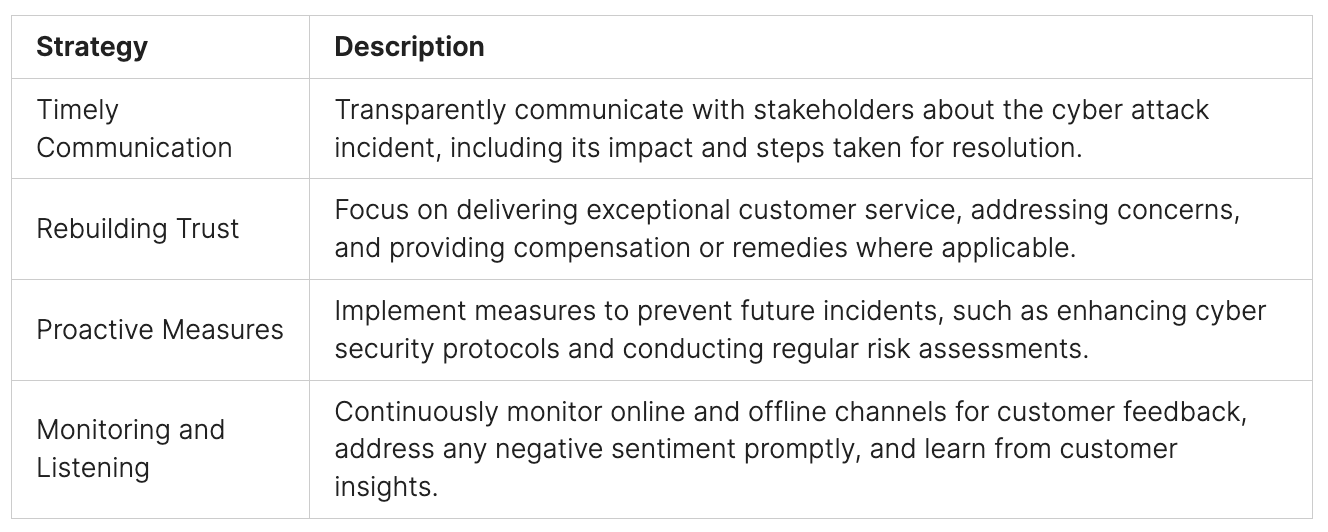
    Effective reputation management strategies include timely and transparent communication with stakeholders. By keeping customers, partners, and employees informed about the incident, companies demonstrate transparency and a commitment to resolving the issue. This open communication helps to maintain trust and mitigate potential reputational damage.

    “Reputation is everything. Protecting and preserving it should be a top priority for businesses in the aftermath of a cyber attack.”

    Additionally, companies should focus on rebuilding trust by delivering on their promises and providing exceptional customer service. This includes addressing customers’ concerns or questions, offering compensation or remedies where appropriate, and ensuring that similar incidents are less likely to occur in the future.

    Table: Reputation Management Strategies

    In conclusion, reputation management is of utmost importance after a cyber attack. By implementing effective strategies and prioritizing customer trust and loyalty, companies can successfully recover from the impact of a cyber attack and maintain their reputation in the long run.

    Rebuilding Trust: Strategies for Effective Reputation Management After a Cyber Attack.

    Assessing the Financial Implications of a Cyber Attack

    When a company falls victim to a cyber attack, the consequences extend beyond reputation damage. The financial implications can be substantial and significantly impact the organization’s overall stability. It is essential for companies to carefully evaluate the cost of breach recovery and understand the potential financial risks they face.

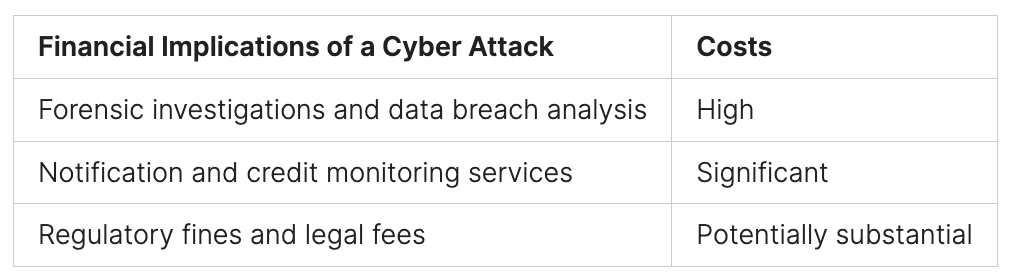
    One of the primary financial implications of a cyber attack is the expense associated with breach recovery. Companies often need to allocate resources for forensic investigations to identify the extent of the breach and determine the scope of compromised data. These investigations can be time-consuming and costly, requiring the expertise of specialized professionals.

    In addition to investigation costs, companies may incur expenses related to notification and credit monitoring services for affected individuals. These measures are crucial for mitigating the potential harm caused by the breach and ensuring that affected individuals are adequately protected. Moreover, companies may face regulatory fines and legal fees if the breach results in non-compliance with data protection regulations.

    Furthermore, a cyber attack can lead to business interruption and loss of revenue. Systems and operations may be disrupted, impacting the company’s ability to serve customers and generate income. The longer the interruption, the greater the financial consequences. Companies may also experience a decline in customer trust and loyalty, resulting in a loss of business and potential long-term revenue reduction.

    In summary, the financial implications of a cyber attack are far-reaching. From breach recovery costs to potential regulatory fines and revenue losses, companies must carefully assess the financial risks they face. By understanding these implications, organizations can better allocate resources and implement strategies to mitigate the financial impact of a cyber attack.

    Comparing the Impact on Reputation and Financial Costs

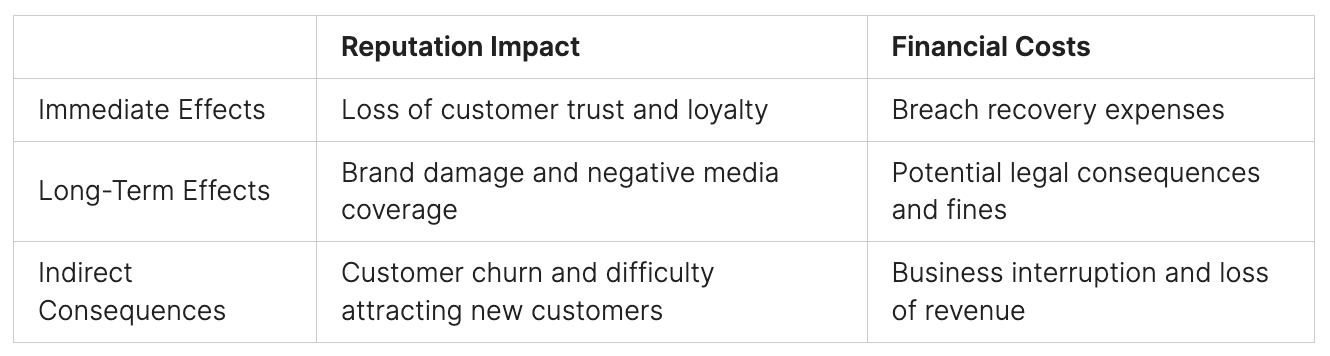
    When it comes to the aftermath of a cyber attack, the consequences can be twofold: reputation damage and financial costs. Both of these factors can greatly impact a company’s stability and future prospects. While the immediate financial costs may seem more tangible, the long-term damage to a company’s reputation can be equally, if not more, detrimental.

    Reputation damage resulting from a cyber attack can impact a company’s relationship with its customers. Negative media coverage, loss of trust, and a damaged brand image can lead to decreased sales, customer churn, and difficulty attracting new customers. The ripple effect of a tarnished reputation can continue long after the initial attack, leading to financial losses that may not be immediately apparent.

    On the other hand, the financial costs of a cyber attack can be substantial. From breach recovery expenses to potential legal consequences, companies may find themselves facing significant financial burdens. Remediation efforts, forensic investigations, notification and credit monitoring services, and even regulatory fines can quickly add up. Business interruption and loss of revenue due to the attack can further compound these costs, making the financial impact of a cyber attack difficult to overlook.

    The Importance of Balancing Reputation and Financial Considerations

    When assessing the severity of a cyber attack, companies must carefully weigh the impact on their reputation against the immediate financial costs. While the financial implications may be more evident in the short term, neglecting the long-term effects on reputation can have far-reaching consequences. It is crucial for companies to allocate resources and prioritize efforts to address both reputation management and financial recovery.

    By finding a balance between reputation management and financial considerations, companies can navigate the aftermath of a cyber attack more effectively. Taking proactive steps to rebuild customer trust, such as timely communication, transparent disclosure, and demonstrating a commitment to cybersecurity, can help mitigate reputation damage. Simultaneously, diligently managing the financial costs through appropriate insurance coverage, legal measures, and cost-effective breach recovery strategies is essential for long-term financial stability.

    Case Studies: High Reputation Damage vs High Financial Costs

    Examining real-world examples can provide valuable insights into the impact of cyber attacks on reputation and financial costs. The following case studies highlight the consequences of high reputation damage and high financial costs in the aftermath of a cyber attack.

    Case Study 1: Reputation Damage

    “Company XYZ experienced a significant data breach, resulting in the exposure of sensitive customer information. The incident received extensive media coverage, leading to a loss of trust from customers and damaging the company’s reputation. The negative publicity and customer backlash had a long-lasting impact, with sales plummeting, customer churn increasing, and brand perception severely affected.”

    Case Study 2: Financial Costs

    “Company ABC fell victim to a sophisticated cyber attack that resulted in extensive financial losses. The company had to bear the expenses of forensic investigations, legal fees, and notifying affected individuals. Additionally, the business interruption caused by the attack led to a significant loss of revenue. The financial strain was further exacerbated by the need for robust security measures to prevent future breaches and comply with regulatory requirements.”

    These case studies illustrate the contrasting effects of reputation damage and financial costs in the aftermath of a cyber attack. While both consequences are significant, they manifest in different ways and require tailored strategies for mitigation. Companies must be prepared to address the unique challenges posed by reputation damage and financial burdens to ensure their long-term stability.

    Learning from the Front Lines: Case Studies on Cyber Attacks.

    By studying these case studies, organizations can gain valuable insights into the potential repercussions of a cyber attack on their reputation and financial stability. It is crucial for businesses to implement robust cyber security measures to prevent and mitigate such attacks. Additionally, proactive reputation management strategies and comprehensive incident response plans can help organizations minimize the impact of a cyber attack on their reputation and navigate the financial costs involved.

    Mitigating Reputation Damage and Financial Costs

    After a cyber attack, companies must prioritize reputation management strategies and financial risk mitigation to navigate the aftermath effectively. Organizations can minimize the impact on their reputation and financial stability by implementing robust cyber security measures.

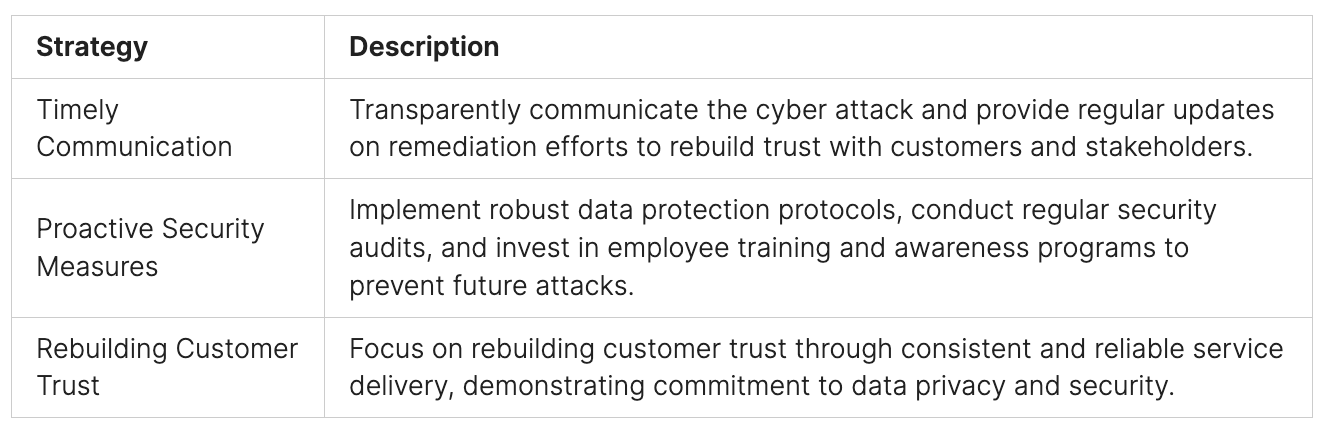
    One key aspect of reputation management is timely communication with stakeholders. Transparently disclosing the cyber attack and providing regular updates on the remediation efforts can help rebuild trust with customers and stakeholders. Additionally, companies should focus on proactive measures to prevent future attacks. This includes conducting regular security audits, implementing robust data protection protocols, and investing in employee training and awareness programs.

    Table: Key Reputation Management Strategies

    Alongside reputation management, companies should also consider financial risk mitigation strategies. This involves carefully assessing the financial implications of a cyber attack and taking proactive steps to minimize the costs. Companies can work with cyber insurance providers to ensure adequate coverage for breach recovery expenses, including forensic investigations, legal fees, and regulatory fines.

    Companies can mitigate reputation damage and minimize the financial costs associated with a cyber attack by employing comprehensive cyber security measures and partnering with cyber insurance providers. The proactive approach to cyber security and risk management will enable organizations to navigate the aftermath more effectively and ensure long-term stability.

    Fortify and Protect: Navigating the Aftermath of Cyber Attacks.

    The Role of Cyber Insurance in Managing Financial Risks

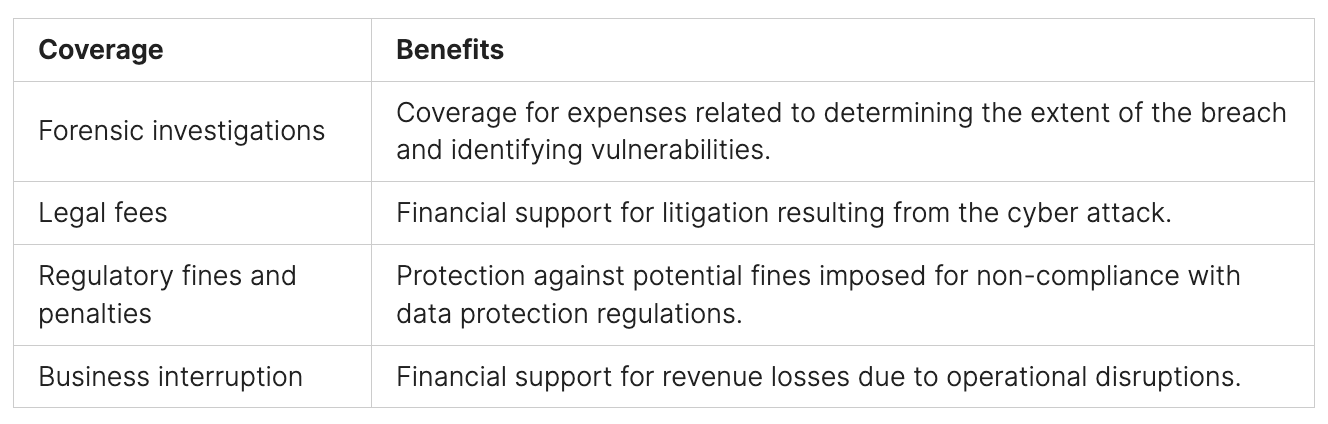
    Cyber insurance plays a crucial role in managing the financial risks associated with a cyber attack. As companies face the increasing threat of cybercrime, having a comprehensive insurance policy specifically designed to cover cyber risks is essential. Cyber insurance provides coverage for the expenses related to breach recovery, helping companies mitigate the financial impact of a cyber attack.

    With cyber insurance, companies can access funds to cover various costs incurred after a cyber attack. This includes expenses for forensic investigations to determine the extent of the breach and identify potential vulnerabilities. Additionally, the policy can cover legal fees, which may be necessary if the company faces litigation as a result of the cyber attack. Cyber insurance can also provide financial support for regulatory fines and penalties that may be imposed due to non-compliance with data protection regulations.

    Furthermore, cyber insurance can help offset the financial consequences of business interruption and loss of revenue. In the aftermath of a cyber attack, companies may experience disruptions in their operations, leading to financial losses. Cyber insurance policies can provide coverage for these financial setbacks, allowing companies to recover more quickly and effectively.

    Overall, cyber insurance provides companies with a valuable tool for managing the financial risks associated with cyber attacks. It allows companies to allocate resources effectively and minimize the impact of a cyber attack on their financial stability. By investing in cyber insurance, companies can protect themselves against the costly consequences of a cyber attack, ensuring they have the necessary financial means to recover and continue operating.

    Guarding Finances Against Cyber Storms.

    Balancing Reputation and Financial Considerations

    After a cyber attack, companies face the challenge of balancing their reputation management efforts against the financial costs incurred. While rebuilding customer trust and maintaining brand reputation is crucial, assessing the financial implications and allocating resources accordingly is equally important.

    One way to achieve this balance is by prioritizing reputation management strategies that focus on open and timely communication with stakeholders. This includes transparent disclosure of the cyber attack incident, outlining the steps taken to address the breach, and demonstrating a commitment to enhancing cybersecurity measures. By being proactive in managing their reputation, companies can regain customer trust and minimize the long-term impact of the cyber attack.

    Simultaneously, companies must consider the financial costs of a cyber attack. This includes expenses related to breach recovery, such as forensic investigations, legal fees, and potential lawsuits. By accurately assessing the financial implications, companies can allocate resources effectively, prioritize cybersecurity investments, and ensure financial stability in the aftermath of a cyber attack.

    To strike the right balance, companies should adopt a strategic approach that takes into account both the short-term and long-term effects on reputation and financial stability. This requires a comprehensive understanding of the cyber attack aftermath and a careful evaluation of the costs involved in reputation management and breach recovery efforts.

    The Importance of a Comprehensive Cyber Security Strategy

    A comprehensive cyber security strategy is crucial for organizations to mitigate the risks associated with cyber attacks effectively. As the threat landscape continues to evolve, businesses must prioritize the implementation of robust security measures to protect their sensitive data, safeguard customer trust, and minimize the financial implications of a cyber attack.

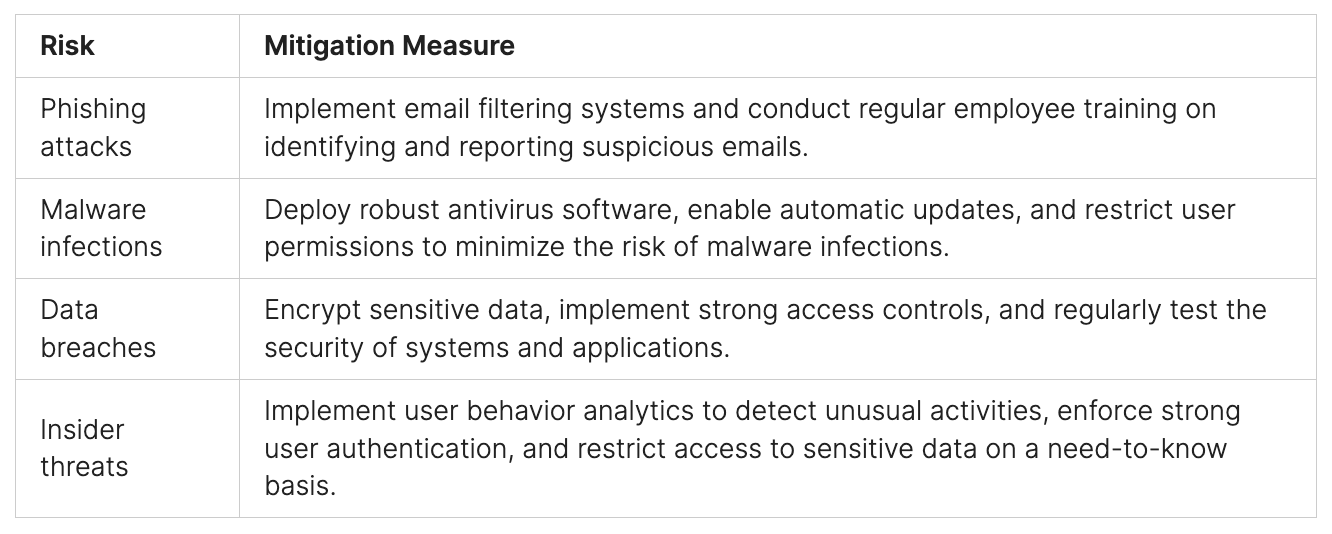
    By adopting a proactive approach to cyber security, companies can reduce the likelihood of successful attacks and protect their reputation. This includes conducting regular risk assessments to identify vulnerabilities, implementing strong access controls and authentication protocols, and staying abreast of the latest security threats and trends. A comprehensive strategy also involves educating employees about cyber security best practices, ensuring they are equipped to recognize and report potential threats.

    Table 9.1: Cyber Security Risk Mitigation Measures

    “A strong cyber security strategy is not a luxury but a necessity in today’s digital landscape. Without a comprehensive approach, organizations expose themselves to a wide range of cyber threats, including data breaches, ransomware attacks, and reputational damage.”

    By investing in a comprehensive cyber security strategy, organizations can proactively detect and respond to potential cyber threats, mitigating the risk of reputation damage and financial implications. Furthermore, the adoption of industry-recognized standards and frameworks, such as ISO 27001 or the NIST Cybersecurity Framework, can provide a solid foundation for maintaining a strong security posture.

    Achieving a robust cybersecurity strategy requires continuous monitoring, testing, and improvement. Organizations should conduct regular security audits and penetration testing to identify vulnerabilities and implement necessary remediation measures. Additionally, staying informed about emerging cyber threats and industry best practices through information-sharing platforms and industry associations is essential in order to stay ahead of evolving threats.

    In conclusion, a comprehensive cyber security strategy is crucial for organizations to protect their reputation, mitigate financial implications, and ensure the overall resilience of their digital infrastructure. By prioritizing cyber security measures, organizations can establish themselves as trusted custodians of data and demonstrate their commitment to safeguarding both customer and corporate assets.

    Conclusion

    In summary, the aftermath of a cyber attack poses a dual threat to companies, encompassing both reputation damage and financial repercussions. The enduring consequences of such attacks extend to eroding customer trust and brand loyalty, amplifying the importance of safeguarding a company’s standing in the aftermath of a breach. Moreover, the financial toll is considerable, spanning expenses related to recovery efforts and the potential for litigation.

    To confront these challenges head-on, companies must adopt a proactive approach that addresses both reputation and financial considerations. A robust reputation management strategy, characterized by transparent communication and a concerted effort to rebuild trust, stands as a pivotal component. Concurrently, the implementation of robust cybersecurity measures is imperative to mitigate risks and curtail potential financial losses.

    It is imperative for companies to strike a delicate balance between addressing short-term challenges and planning for long-term resilience against reputation damage and financial costs. This strategic equilibrium ensures the judicious allocation of resources, fostering stability and sustained success. We invite you to explore solutions tailored to your cybersecurity needs on our website (Peris.ai Cybersecurity) to fortify your defenses and effectively navigate the aftermath of a cyber attack. Safeguard your reputation and financial stability – visit us today.

    FAQ

    What are the major concerns after a cyber attack?

    The major concerns after a cyber attack are reputation damage and financial costs.

    How does a cyber attack affect a company’s reputation?

    A cyber attack can significantly damage a company’s reputation, leading to lost customers, negative media coverage, and long-term brand damage.

    What are the financial implications of a cyber attack?

    Financial costs can be extensive and may include expenses for breach recovery, forensic investigations, legal fees, regulatory fines, business interruption, and loss of revenue.

    How does reputation damage compare to financial costs after a cyber attack?

    Both reputation damage and financial costs are major consequences of a cyber attack. Companies must carefully balance the long-term impact on their reputation against the immediate financial costs when assessing the severity of a cyber attack.

    Can you provide case studies on reputation damage and financial costs after a cyber attack?

    Several high-profile cyber attacks serve as case studies for understanding the impact on reputation and financial costs.

    What strategies can companies use to mitigate reputation damage and financial costs after a cyber attack?

    Companies should prioritize proactive measures such as timely communication, transparent disclosure, and a focus on rebuilding trust. They should also implement robust cyber security measures and consider cyber insurance for financial protection.

    How does cyber insurance help in managing financial risks after a cyber attack?

    Cyber insurance provides coverage for expenses related to breach recovery, including forensic investigations, legal fees, regulatory fines, business interruption, and loss of revenue.

    How should companies balance reputation and financial considerations after a cyber attack?

    Companies should prioritize reputation management while also assessing the financial implications and allocating resources accordingly.

    Why is a comprehensive cyber security strategy important in mitigating the risks associated with cyber attacks?

    A comprehensive cyber security strategy helps reduce the likelihood of a successful attack, minimize the impact on reputation and financial costs, and ensure long-term stability.

  • Step-by-Step: How Digital Forensic Experts Solve Cyber Mysteries During Incidents

    Step-by-Step: How Digital Forensic Experts Solve Cyber Mysteries During Incidents

    In today’s world, cybercriminals launch ransomware attacks and steal critical data. They’re even causing trouble for governments. As these threats change, companies and governments also change their game plans. They’re using digital forensic experts to fight new cybercrimes.

    But what exactly is the role of these experts in digital forensics? How do they find the evidence that solves cyber incidents? What skills and techniques do they use to track cyber attackers and hold them accountable? Let’s look closely at the world of digital forensic cybersecurity. We’ll see step by step how these pros crack cyber cases.

    Key Takeaways

    • Digital forensics professionals collect, process, and analyze computer-related evidence to identify network vulnerabilities and combat cyber threats.
    • They employ specialized techniques to retrieve encrypted or deleted data, critical in solving cybercrimes.
    • Digital forensics is a crucial component of incident response, providing valuable insights into the nature and origins of cyber attacks.
    • Forensic investigators must adhere to strict legal and ethical standards to ensure the admissibility of their findings in court.
    • Emerging technologies like artificial intelligence and machine learning are enhancing the capabilities of digital forensic tools and techniques.

    Unveiling the World of Digital Forensic Cybersecurity

    Digital forensics is essential in cybersecurity, as it collects and analyzes digital evidence. It plays a vital role in fighting cyber threats and is linked to computer forensic science. It helps experts find hidden or deleted data to solve cybercrimes.

    Understanding Digital Forensics in the Cybersecurity Landscape

    Diving into digital forensics is crucial for those in incident response and threat detection. It gives deep insights into cyber threats. This knowledge helps professionals navigate digital realms and find key evidence, enabling them to craft better strategies to combat risks.

    The Pivotal Role of Digital Forensics in Incident Response

    Specialists in digital forensics are the first line against cyber threats. They use various methods to analyze data and trace attacks. This insight is crucial in responding to incidents quickly and effectively, reducing harm.

    Collecting and Preserving Digital Evidence

    In digital forensic cybersecurity, the first steps are essential: collecting and preserving digital evidence. Experts use special tools to get data from digital devices safely. This step ensures the data’s integrity, especially from random access memory (RAM).

    Forensic Data Collection Techniques

    Investigators collect digital evidence in many ways. For hard drives, they employ disk imaging software, which makes exact copies while maintaining the data’s integrity.

    Another crucial method is live data acquisition. This lets them gather information from systems that are still running. It includes volatile memory and network data, which might disappear if they are shut down usually.

    Maintaining Integrity: The Four Principles of Digital Evidence

    Keeping digital evidence intact is vital in forensic investigations. Experts adhere to four principles from the Association of Chief Police Officers: not altering data, documenting all actions, ensuring continuity, and limiting access. These steps help ensure the evidence is trustworthy in court.

    Secure data storage is equally vital in digital forensics. This secured data is the basis for thorough analysis, investigation, and prosecution of cybercriminals.

    Digital Forensic Cybersecurity: Analysis and Investigation

    In digital forensics, experts dig deep into computer data, looking for clues that point to cybercrimes. These computer forensic specialists use top tech to analyze information from various drives. They find hidden or locked data. Tools like deleted file recovery help them put together the story. This shows how a cyber attack happened, how much information was leaked, and who did it.

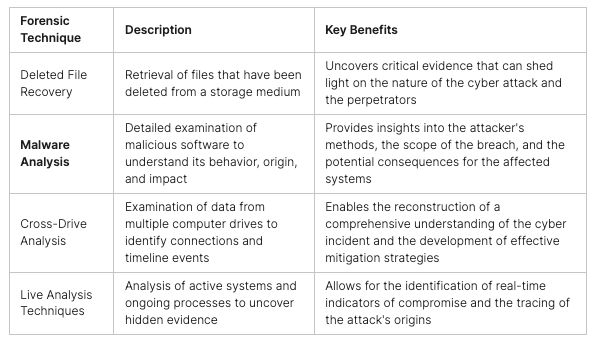
    Uncovering Hidden Data: Deleted File Recovery and Malware Analysis

    Specialists in digital forensics have unique skills. They can find deleted files and check out malware. They can also put together scraps of data and unlock secrets, which helps them find critical clues about the cyber problem. Malware analysis is vital. It shows the hacker’s plan, how bad the information leak was, and its effect on computer systems.

    Cross-Drive Analysis and Live Analysis Techniques

    Digital forensics gurus use advanced methods to track cyber attacks. They combine information from different drives and check live systems, which helps them spot links, events on a timeline, and hidden proof. These skills help them fully understand cybercrime, and they then plan how best to stop something similar in the future.

    The Legal Aspect: Reporting and Court Admissibility

    When it comes to digital forensic cybersecurity, the law matters a lot. Those who investigate digital evidence have to keep thorough records, which helps the evidence stand up in court. They also make sure the whole process is traceable and proves what happened.

    Documenting the Chain of Evidence

    Forensic experts create detailed reports on their work. These reports show how data was collected and analyzed. They are critical for the evidence to be used in court. It means keeping a clear record of everything they do.

    This ensures that the evidence is always handled correctly. Their reports ensure that details are kept. Keeping a solid record helps their findings be trusted in legal matters.

    Adhering to Legal and Ethical Standards

    Experts in computer forensics must follow strict rules in their field. They obey the guidelines set by the Association of Chief Police Officers (ACPO). This means they always keep the original data and document every move.

    By sticking to these rules, forensic experts prove they’re reliable. They make their work more likely to be used in court. This keeps everything fair and trusted in the legal field.

    Understanding tech and the law is crucial to digital forensic cybersecurity. Experts stay updated on new investigation methods and laws. This helps them work through cyber cases effectively and legally. They aim to make their findings reliable in court.

    Specialized Fields in Digital Forensic Investigations

    Digital forensic investigations cover many areas, each specifically tackling aspects of the field. These fields are vital for finding digital proof and stopping online dangers.

    Network Forensics: Monitoring and Analyzing Traffic

    Network forensics is critical in digital forensics. It focuses on watching and understanding computer traffic. By looking at data transfers, experts can spot legal evidence, find weak spots in security, and learn about cyber volleys. They use special tools to observe, understand, and dissect network data for a complete picture of digital incidents.

    Mobile Device Forensics: Retrieving Data from Smartphones and Tablets

    Today, mobile devices hold a wealth of clues for cyber cases. Mobile device forensics involves taking data from phones, tablets, and gadgets. Experts find key evidence for both law and civil cases using various methods, from unlocking phones to digging into app data.

    Cloud Forensics: Navigating the Complexities of Remote Data

    With more data on the cloud, a new field, cloud forensics, has become crucial. It faces challenges like data spread over vast networks and shared servers. Experts here build strategies to gather, save, and study cloud data. They also ensure that evidence stays solid in court cases.

    Tools and Technologies: Powering Digital Forensic Cybersecurity

    Digital forensics is constantly changing, thanks to many tools and technologies. These help forensic investigators with new cybersecurity threats. They use special software to check data and find deleted files. Plus, they have the latest hardware to get info from broken devices. All this tech is vital for solid digital forensic cybersecurity work.

    Now, there are special tools that use artificial intelligence and machine learning. They can find patterns and spot strange things quickly, improving computer forensics and cyber investigations. With these tools, teams can deal well with attacks, like figuring out malware or finding network weak spots.

    But it’s not just about programs. Special equipment helps, too, especially with data recovery and vulnerability assessment. These tools can extract information from broken or secured devices, allowing investigators to examine important information and better handle today’s cybersecurity issues.

    The world of digital forensic cybersecurity is constantly advancing. As it does, tools and tech get better and more flexible. This means forensic experts need to keep up. They should know the latest to fight cybercrime and protect groups from attacks.

    Overcoming Challenges in Digital Forensics

    As technology progresses, digital forensics faces new and growing challenges. Investigators in digital forensic cybersecurity and related fields must tackle complex issues, which are essential for finding evidence and solving cybercrime.

    Dealing with Advanced Malware and Encryption

    Digital forensic experts are dealing with tougher malware. This malware hides or encrypts data, making it hard to access. To find and use key data, experts need special malware tools and skills. They also have to keep learning about the latest malware and updating their tactics.

    Managing Data Volume and System Complexity

    Data is growing, and systems are getting more complex. Experts must sort through tons of data from laptops, phones, and more. They need special tools and skills to handle this data without damaging it.

    Addressing the Cryptography Dilemma

    End-to-end encryption is a big issue for digital forensics and privacy. As encryption becomes more common, finding ways to access encrypted data is crucial. Experts must balance the need to find digital evidence while protecting privacy.

    Digital forensics professionals must keep learning and use new tools. They also need to work with others in different fields. This teamwork and constant learning help solve cyber threats and bring offenders to justice.

    The Future of Digital Forensic Cybersecurity

    The digital world is always changing, and so is the need for digital forensics in cybersecurity. It’s going to play a bigger and more important part in fighting cyber threats. New tech like blockchain and quantum computing will create both problems and opportunities for these experts.

    Emerging Technologies and Their Impact

    Blockchain’s unique, secure way of working will make it hard for forensic pros to track cyber attacks. They’ll have to invent new methods to find evidence in this system. Plus, quantum computers might break our current security codes. This means digital forensic experts must change how they recover and analyze data to keep digital proof safe.

    Increased Collaboration with Law Enforcement

    The relationships between digital forensics and law enforcement will grow stronger. Fighting cybercrime needs a combined effort. Digital forensic experts will join forces with police to catch and prosecute cyber criminals. This teamwork aims to keep our digital world safe.

    The future of digital forensic cybersecurity is exciting and crucial to our safety in the cyber world. New technologies and closer teamwork will change how we find and use digital evidence against complex cyber attacks.

    Conclusion

    Digital forensics has become an indispensable component of cybersecurity, playing a crucial role in detecting and combating cyber threats. Experts in this field employ meticulous methods to gather, analyze, and preserve digital evidence, which is essential for solving cyber crimes and safeguarding data.

    As cyber threats continue to evolve and grow in complexity, the demand for skilled digital forensic experts has never been higher. These professionals are adept at uncovering hidden information, monitoring network activity, and tracing cyber attacks. Their expertise is vital in defending against cyber crimes, whether through analyzing network data or investigating digital devices.

    The future of digital forensics in cybersecurity looks promising, with advancements in technology and enhanced collaboration with law enforcement agencies making significant strides. Forensic professionals continuously update their skills and tools to stay ahead of cyber threats, maintaining their crucial role in protecting our digital world.

    For comprehensive solutions to enhance your cybersecurity posture and leverage the power of digital forensics, visit Peris.ai Cybersecurity. Explore our wide range of products and services designed to keep your organization secure in an ever-evolving cyber landscape. Secure your digital assets today with Peris.ai.

    FAQ

    What is the role of digital forensics in cybersecurity?

    Digital forensics is key in cybersecurity. It helps find and fight cyber threats. By investigating, analyzing, and keeping digital evidence safe, experts in this field solve cyber crimes and ensure the safety of our digital world.

    What are the fundamental principles of digital evidence preservation?

    Forensic investigators follow four critical principles for preserving digital evidence. These principles are set by the Association of Chief Police Officers (ACPO). They include not changing data, documenting all actions, keeping things continuous, and limiting who can access the data.

    It is really important to keep data safe in a secure place. This data is the backbone of any investigation and the legal steps that follow.

    What are some of the specialized fields in digital forensic investigations?

    Digital forensic investigations have several special fields, including network, mobile device, and cloud forensics. Network forensics examines computer network traffic. Mobile device forensics focuses on smartphones and tablets. Cloud forensics tackles the unique challenges of digital data in cloud systems.

    What are the key challenges in digital forensics?

    The field faces many challenges, like fighting advanced malware, which might hide or encrypt data. There’s also the issue of handling more data and complex technology. Plus, the rise of strong encryption makes things harder.

    Investigators need to keep their skills sharp and stay up to date with tools to face new cybercrime challenges and find evidence effectively.

    What is the future outlook for digital forensics in cybersecurity?

    Digital forensics is set to become more critical in the fight against cyber threats. New challenges will come up with new tech like blockchain and quantum computing. Yet, these techs also offer new ways to solve crimes.

    We can expect to see more teamwork between cybersecurity and law enforcement. They will join forces against the changing world of cybercrime.

  • The Cybersecurity Challenge: Common Threats for SMBs and Large Enterprises, But Different Response Routes

    The Cybersecurity Challenge: Common Threats for SMBs and Large Enterprises, But Different Response Routes

    Interconnected systems have woven an environment where safeguarding digital domains transcends mere necessity—it emerges as an imperative. This overarching concern traverses the spectrum of business scales, encompassing the expansive terrain of Large Enterprises and the dynamic realm of Small and Medium-sized Businesses (SMBs). As the digital threat landscape continually morphs, it crafts a distinctive set of challenges for each, prompting a meticulous exploration of common perils these entities face. While shared vulnerabilities exist, the strategies and countermeasures employed to thwart these dangers often navigate divergent trajectories shaped by the nuances of available resources, proficiencies, and risk dispositions. This article embarks on an odyssey through cybersecurity, unraveling the shared cybersecurity threats encountered by SMBs and Large Enterprises while illuminating the journey into the distinct avenues they traverse to fortify their digital citadels.

    The Common Threats

    1. Phishing Attacks

    Phishing attacks remain a prevalent threat across the board. Cybercriminals use carefully crafted emails or messages to deceive employees into divulging sensitive information, such as login credentials or financial data. Both SMBs and Large Enterprises are vulnerable to this type of attack. The allure of phishing lies in its simplicity and potential for devastating consequences.

    2. Ransomware

    Ransomware has emerged as a particularly insidious threat in recent years. Malicious actors encrypt an organization’s data and demand a ransom for the decryption key. SMBs are often targeted due to their perceived weaker defenses, while Large Enterprises become attractive targets due to the potential for larger ransoms. The aftermath of a successful ransomware attack can cripple operations and result in significant financial losses.

    3. Insider Threats

    Whether intentional or unintentional, insider threats pose a risk to both SMBs and Large Enterprises. These threats arise when employees, contractors, or partners misuse access to an organization’s systems or data. The motivations behind insider threats can vary from personal gain to negligence. Detecting and mitigating insider threats requires a delicate balance between trust and security measures.

    Different Response Routes

    While SMBs and Large Enterprises face similar threats, their response routes differ due to their varying resources, organizational structures, and risk profiles.

    SMBs: Navigating Limited Resources

    1. Comprehensive Security Education

    For SMBs with limited budgets, proactive security education becomes paramount. Employees are often the first line of defense, and training them to identify and respond to threats can significantly reduce the risk of successful attacks.

    2. Outsourced Solutions

    Lacking the extensive in-house expertise of their larger counterparts, many SMBs opt for outsourced cybersecurity solutions. Managed Security Service Providers (MSSPs) offer cost-effective monitoring, threat detection, and incident response options.

    3. Focus on Critical Assets

    Resource constraints necessitate a focused approach. SMBs should identify and prioritize their most critical assets and implement strong security measures around them. This targeted strategy helps optimize resource allocation.

    4. Cloud Security

    Leveraging cloud services can be a double-edged sword for SMBs. While the cloud offers cost savings and scalability, it also introduces new security considerations. SMBs must adopt robust cloud security practices to safeguard their data and applications.

    Large Enterprises: Capitalizing on Scale and Expertise

    1. In-House Security Teams

    Large Enterprises often maintain dedicated in-house security teams. These teams, comprised of experts in various cybersecurity domains, can proactively monitor, assess risks, and respond swiftly to incidents.

    2. Advanced Threat Detection

    With greater resources, Large Enterprises can invest in advanced threat detection technologies, such as AI-powered analytics and machine learning algorithms. These tools enhance the ability to identify and mitigate sophisticated threats.

    3. Robust Incident Response Plans

    Large Enterprises can afford to develop comprehensive incident response plans that outline clear steps for handling various cyberattacks. Regular simulations and testing ensure preparedness when a real incident occurs.

    4. Regulatory Compliance

    Due to their size and reach, Large Enterprises often face more stringent regulatory requirements. Compliance with these regulations becomes crucial to their cybersecurity strategy, necessitating ongoing efforts to align with industry standards.

    Collaboration and Knowledge Sharing

    Despite their differences, SMBs and Large Enterprises can benefit from collaborating and sharing cybersecurity knowledge. The threat landscape is ever-evolving, and cyber criminals continuously adapt their tactics. By pooling their insights and experiences, SMBs and Large Enterprises can better understand emerging threats and effective defense strategies.

    1. Threat Intelligence Sharing

    Participating in threat intelligence-sharing communities enables organizations of all sizes to access real-time information about new threats and vulnerabilities. This collective knowledge enhances their ability to defend against potential attacks proactively.

    2. Joint Training Exercises

    SMBs and Large Enterprises can join training exercises to simulate cyberattack scenarios. These exercises provide valuable hands-on experience and foster collaboration between entities with differing resources and perspectives.

    3. Industry Alliances

    Joining industry-specific cybersecurity alliances or associations can provide access to resources, best practices, and a network of peers facing similar challenges. These alliances are platforms for sharing insights and coordinating responses to sector-specific threats.

    Conclusion

    In the ever-expanding realm of our digitally interwoven world, the parallels between the cybersecurity challenges confronting Small and Medium-sized Businesses (SMBs) and their Large Enterprise counterparts are striking. The ominous specters of phishing attacks, ransomware, and insider threats loom large, casting shadows of potential devastation across the digital landscape. Yet, the paths taken diverge greatly in response to the multidimensional resources, competencies, and risk profiles that distinguish these organizational archetypes.

    For SMBs, the journey to safeguard their digital territories is an exercise in resource optimization and tactical precision. Guided by the North Star of prudence, these entities navigate the intricacies of cybersecurity through a multifaceted prism. By prioritizing comprehensive security education, leveraging the prowess of outsourced cybersecurity solutions, and erecting bastions of protection around their most critical assets, SMBs orchestrate a harmonious symphony of security that resonates through their operations.

    In the grand theater of Large Enterprises, the stage is set for a more elaborate production. With the curtains drawn, in-house security teams, akin to virtuoso conductors, lead the ensemble with a commanding presence. Armed with an arsenal of advanced threat detection technologies powered by artificial intelligence and machine learning, Large Enterprises stand fortified against the ever-shifting tide of cyber threats. Their acts are scripted meticulously as robust incident response plans take center stage, ensuring that every twist and turn of the cybersecurity narrative is anticipated and accounted for.

    In this era of perpetual digital transformation, safeguarding our digital realms demands a collective embrace of cybersecurity’s imperative. As custodians of these virtual landscapes, the onus is upon us, regardless of organizational size, to fortify our digital bastions and stand unwavering in adversity. To embark on this quest for digital security, we invite you to explore our website, where a comprehensive array of solutions awaits to guide you through the labyrinthine corridors of cybersecurity. Let us stride forward united, fortifying the pillars of the global digital ecosystem and ensuring that the beacon of integrity continues to shine brightly amidst the shadows of an ever-evolving threat landscape.

  • Why Threat Hunting Is the Next Big Thing in Cybersecurity

    Why Threat Hunting Is the Next Big Thing in Cybersecurity

    In today’s world, cyber threats are getting more complex. Just relying on automated security isn’t enough anymore. With cybercrime costs expected to hit over $10 trillion by 2025 and 72% of companies facing ransomware attacks in 2023, we need a new approach. Threat hunting is this new strategy that’s changing how we fight cyber threats.

    Key Takeaways

    • Threat hunting is a proactive way to find and stop advanced cyber threats that traditional security can’t catch.
    • For effective threat hunting, you need full network visibility, detailed endpoint data, and tools like SIEM with strong search features.
    • Threat hunters use threat intelligence, the MITRE ATT&CK framework, and a focused investigation to find hidden attackers.
    • Doing threat hunting all the time helps companies stay ahead of complex attackers and reduce how long threats last.
    • Threat hunting needs a mix of security knowledge, data analysis, and skills in handling incidents.

    What Is Threat Hunting?

    Threat hunting is a proactive way to find threats that are new or still not fixed in a network. It’s key for keeping safe against threats that automated security can’t catch.

    Definition and Importance

    It’s about skilled IT security folks looking for and stopping threats in a network. Automated tools and SOC analysts can tackle about 80% of threats, but the rest are tougher and can do a lot of damage. These threats can hide for up to 280 days before being found. Good threat hunting cuts down the time it takes to spot an attack, lessening the damage. The Cost of a Data Breach report says a breach can cost a company almost USD 4 million on average.

    Proactive Approach to Cybersecurity

    Threat hunting is key to a strong defense plan because attackers can hide in a network for months. Hunters work to find threats faster, which helps lessen the damage from attacks. There’s a big shortage of skills in cybersecurity, making experienced threat hunters very valuable. A top threat hunting service needs skilled people, lots of data, and strong analytics to work well.

    *Out of the Woods: The Threat Hunting Podcast | Ep. 8: https://youtube.com/watch?v=H3c3toLJvTU

    Threat hunters look at data to spot trends, fix weaknesses, and make security better. Managed security services offer deep knowledge and constant watch for a lower cost than having a team in-house. Keeping security data for a long time helps find hidden threats and focus on the most important weaknesses. CrowdStrike Falcon OverWatch is a 24/7 security solution that actively hunts, checks out, and gives advice on threats in a company’s setup.

    Why Threat Hunting Is Essential

    As cyberthreats get more complex, the need for threat hunting is clear. Automated systems help, but cyber threat hunting is key to fully protect assets by finding threats that automated systems miss.

    These threats can evade automated security, staying hidden for up to 280 days on average. In this time, attackers can gather data and plan a big attack. This can cost millions and hurt a company’s reputation. Threat hunting cuts down the time it takes to find these threats, reducing the damage they can do.

    Sophisticated Threats Evading Automated Security

    Security systems often don’t alert us to every sign of trouble to avoid false alarms. This lets attackers hide. Threat hunters must know their network well to spot unusual signs and guess where attacks might come from.

    Reducing Dwell Time and Mitigating Damages

    Threat hunting is not just guessing; it’s using data to make educated guesses. By actively looking for threats, companies can stop damage before it starts. This is key against the growing threat of sophisticated cyberthreats.

    “Threat hunting is structured and disciplined, involving the formulation of hypotheses, investigating data, and specific identification and remediation steps.”

    How Threat Hunting Works

    Threat hunting is a way to use data to keep systems safe. It depends on an organization’s “data fertility” – the amount of data its security tools collect. This data helps skilled hunters find and stop complex cyber threats that others might miss.

    Data Fertility and Enterprise Security Systems

    Threat hunters look at a lot of data from tools like SIEM systems, network traffic analyzers, and EDR solutions. They use this data to find hidden malware and spot suspicious patterns. This helps them catch threats that automated systems might overlook.

    The Human Element Complementing Automated Systems

    Cyberthreat hunting adds a human touch to security, working alongside automated tools. Threat hunters are experts who actively search for and investigate threats. They use their skills and knowledge to find and stop threats early.

    *Fundamentals: 11 Strategies of a World-Class SOC | SANS Blueprint Podcast Season 4 Intro: https://youtube.com/watch?v=6PRmCvRCKTQ

    “Threat hunting is the process of proactively and methodically searching through networks and datasets to detect and isolate advanced threats that have evaded traditional security solutions.” – Cybersecurity & Infrastructure Security Agency (CISA)

    Types of Threat Hunting

    Threat hunting is a proactive way to find and stop advanced threats before they happen. It comes in three main types: structured, unstructured, and situational or entity-driven.

    Structured Threat Hunting

    Structured threat hunting looks for signs of attacks using indicators of attack (IoA) and known threat behaviors. It uses the MITRE ATT&CK framework, a detailed guide on how attackers act. This method helps find complex threats like APTs and zero-day attacks.

    Unstructured Threat Hunting

    Unstructured threat hunting starts when something unusual is found, like an indicator of compromise (IoC). It digs into past and present data to find hidden dangers and understand an attack’s full extent. Tools like proxy logs and network data help guide this search.

    Situational or Entity-Driven Hunting

    This type of hunting looks at what’s most at risk in a network, like important accounts or assets. It focuses on these areas to catch threats that could really hurt the organization. This way, it’s more effective at stopping threats that matter the most.

    Good threat hunting mixes different methods, using threat intelligence and insights to find and stop advanced threats.

    Threat Hunting Models

    In the world of cybersecurity, threat hunting is a key way to find and stop advanced threats early. There are two main ways to do this: intel-based threat hunting and hypothesis-based threat hunting.

    Intel-Based Hunting

    Intel-based threat hunting uses indicators of compromise (IoCs) from threat intelligence to find and stop bad activity. This helps security teams keep up with new threats and act fast when they find something suspicious.

    Hypothesis Hunting

    Hypothesis-based threat hunting is more forward-thinking. It uses a threat hunting library based on the MITRE ATT&CK framework to spot advanced threats. This method looks for signs of attacks and tactics to catch threats before they can do harm.

    Both methods aim to stop threats before they can hurt an organization. Using both, security teams can get better at finding threats early, making their cybersecurity stronger.

    *Threat Hunting with Data Science, Machine Learning, and Artificial Intelligence: https://youtube.com/watch?v=fdqFdnkf9I4

    “Threat hunting is not just about finding the needle in the haystack, but about understanding the whole ecosystem and being able to anticipate the next move of the adversary.”

    Knowing about these threat hunting models helps organizations protect their assets and stay ahead in the fight against threats.

    Why Threat Hunting Is the Next Big Thing in Cybersecurity

    Threat hunting is becoming key in modern cybersecurity. As cyber threats get more complex, old security methods can’t keep up. Threat hunting is a proactive way that helps find and stop threats that others miss.

    It’s not just about waiting for threats to show up. Threat hunters actively look for signs of bad activity. They check data from many places, like network traffic and system logs, to find clues. This proactive method cuts down the time it takes to spot an attack, reducing the harm it can do.

    Threat hunting is vital for catching the 20% of threats that automated tools miss. These attacks are smart and tricky, making them hard to catch. By finding these threats, companies can make their cybersecurity stronger.

    It also helps teams learn about security risks. By looking at data and patterns, they can understand how attackers work. This helps them improve their defenses and stay ahead in cybersecurity innovation.

    As cybersecurity changes, threat hunting will play a big role in staying ahead. It works with automated tools and traditional responses to keep companies safe from complex threats.

    “Threat hunting is essential in low-maturity, vulnerable, and consequential OT environments where novel human-operated attacks pose a serious threat.”

    Threat Hunting Techniques

    Threat hunters use various methods to find hidden threats in a company’s network. They focus on baselining and attack-specific hunting.

    Baselining and Attack-Specific Hunting

    Baselining sets a standard for normal system and user actions. This makes it easier to spot unusual activities that might signal a threat. It helps companies stay ahead of threats that automated systems might miss, often staying hidden for up to 280 days.

    Attack-specific hunting targets certain threat actors or malware. It uses threat intelligence and data to find signs of compromise and tactics used by attackers. This method can cut down the time it takes to find an intrusion, reducing the harm caused by cyber attacks.

    Validation and Testing

    Threat hunters must check and test their methods regularly. This ensures they keep up with new attacker strategies and avoid false alarms. It’s vital, as a data breach can cost a company almost $4 million.

    Using different threat hunting techniques helps companies catch and stop threats early. This reduces the risk of expensive data breaches. Skilled IT security experts, or threat hunters, are key in this effort. They use their knowledge to find and stop threats in the network.

    As threats change, threat hunting is more crucial for a strong cybersecurity plan. By using these methods, companies can stay ahead of complex attackers. This helps protect their important data and assets.

    Threat Hunting Tools

    Threat hunters use special tools to help with their work. These include Managed Detection and Response (MDR), Security Information and Event Management (SIEM), and Security Analytics. These tools help teams find, investigate, and act on complex cyber threats.

    Managed Detection and Response (MDR)

    MDR services use threat intelligence and proactive hunting to find and act on advanced threats. This helps lower the time an attack goes unnoticed. It’s a cost-effective way for companies to get skilled threat hunters and the latest security tech without building their own team.

    Security Information and Event Management (SIEM)

    SIEM systems watch and analyze security events in real-time, finding oddities that might signal threats. While basic SIEM tools might not be good enough for hunting threats, some like Splunk and Exabeam support more advanced hunting.

    Security Analytics

    Security Analytics uses big data, machine learning, and AI for deeper insights and faster threat investigations. Tools like SecBI’s machine learning look at network traffic to spot signs of a breach. EDR products, such as Endgame and CrowdStrike, now have “Hunting Modules” to help with their main tasks.

    These tools, along with security experts, help companies stay ahead in the fight against cyber threats.

    The Threat Hunting Process

    Threat hunting is a proactive way to keep an eye on cybersecurity. It means looking for and checking out possible threats in an organization’s networks and systems. This process has three main steps: trigger, investigation, and resolution.

    Trigger

    The trigger stage starts when something unusual happens that makes a threat hunter look into it. This could be a security alert, strange activity, or anything that seems off. Teams of threat hunters usually include experts from the security operations center or other skilled security folks.

    Investigation

    In the investigation phase, the threat hunter digs deeper into the possible threat. They use different tools and methods to collect data, look for patterns, and figure out where the threat comes from and what it is. This can take a lot of time because there’s so much data to go through. Tools like clustering, grouping, and stack counting help spot potential threats.

    Resolution

    The resolution stage is when the threat hunter shares their findings with security teams. Then, they start working on fixing the threat. This might mean adding security controls, updating rules, or doing other things to fix the problem. Threat hunting can be done in a planned way or more by instinct, based on what the organization needs and the hunter’s skills.

    Good threat hunting mixes data analysis, security knowledge, and always getting better. By actively looking for threats, companies can cut down on how long threats stay around and lessen the damage from security breaches.

    Conclusion

    Threat hunting has become a crucial component of a strong cybersecurity strategy. By leveraging human expertise, advanced tools, and data analysis, threat hunting helps identify and address sophisticated threats that traditional methods may miss. Its proactive approach significantly reduces the time it takes to detect threats, minimizing the potential damage from cyberattacks.

    In today’s fast-evolving threat landscape, with increasingly cunning attackers, threat hunting is essential. It provides companies with the ability to stay ahead of hidden dangers and protect themselves from major cyber risks.

    Looking forward, the importance of threat hunting will continue to grow in digital defense. With the integration of automation and advanced threat intelligence, threat hunting will become even more effective at detecting and neutralizing cyber threats. By enhancing their threat hunting capabilities, companies can safeguard their digital assets with greater confidence.

    To learn more about how threat hunting and other advanced security solutions can protect your business, visit Peris.ai Cybersecurity. Let us help you stay ahead of emerging threats and strengthen your digital defenses today.

    FAQ

    What is threat hunting?

    Threat hunting is a proactive way to find threats that are new or still active in a network. It’s crucial because some threats can slip past automated security tools.

    Why is threat hunting essential?

    Automated tools and security teams can catch about 80% of threats. But the other 20% are often advanced threats that can do a lot of damage. Threat hunting helps find these threats faster, reducing the damage they can cause.

    How does threat hunting work?

    Threat hunting uses an organization’s data to find clues for hunters. It adds a human touch to security, working with automated tools to find and stop threats early.

    What are the different types of threat hunting?

    There are three main types of threat hunting: structured, unstructured, and situational. Each type uses different methods to find and investigate threats.

    What are the threat hunting models?

    The main threat hunting models are intel-based and hypothesis-based. Intel-based hunting looks for signs of past attacks. Hypothesis-based hunting uses specific signs and tactics to find threats before they strike.

    What techniques do threat hunters use?

    Hunters use techniques like baselining to spot unusual activity. They also focus on specific threats or malware. It’s important to keep testing and refining these methods.

    What tools do threat hunters use?

    Hunters use tools like Managed Detection and Response (MDR) and Security Analytics. These tools help them find and analyze threats.

    What is the threat hunting process?

    The process starts with a trigger that sets off the hunt. Then, the investigation collects and analyzes data. Finally, the resolution steps are taken to fix the issue and prevent future threats.

  • The Risks of Shadow IT and How to Mitigate Them

    The Risks of Shadow IT and How to Mitigate Them

    Shadow IT has become a growing concern for organizations in recent years. It refers to the use of unauthorized software, applications, and services by employees within an organization, often without the knowledge or approval of the IT department. While employees may use shadow IT to work more efficiently, it can pose significant risks to an organization’s security, data privacy, and regulatory compliance.

    The use of shadow IT can create security vulnerabilities that can be exploited by cybercriminals, putting sensitive data and systems at risk. It can also make it difficult for organizations to monitor and control access to data, leading to data privacy concerns. Shadow IT can result in costly fines and legal action for regulatory violations in highly regulated industries, such as healthcare or finance.

    In this article, we will delve deeper into the risks associated with shadow IT and provide practical tips on mitigating these risks. Organizations must understand and proactively address the risks, such as creating clear IT policies, educating employees, and implementing security tools and controls. By taking a proactive approach to shadow IT, organizations can protect their data and ensure compliance with regulatory requirements.

    Risks of Shadow IT

    1. Security Threats: Shadow IT can pose significant security threats to an organization. Employees using unauthorized applications and software can create security vulnerabilities that cybercriminals can exploit.
    2. Data Privacy: Shadow IT can also risk an organization’s data privacy. When employees use unapproved applications and services, they often store sensitive information outside the organization’s secure systems, making monitoring and controlling access difficult.
    3. Compliance Risks: Shadow IT can lead to compliance risks, especially in highly regulated industries such as healthcare or finance. Employees using unauthorized software may inadvertently violate regulatory requirements, which can result in costly fines and legal action.
    4. Integration Issues: Shadow IT can also create integration issues with the organization’s existing systems, leading to inefficiencies and additional costs.

    How to Mitigate the Risks of Shadow IT

    1. Create a Clear IT Policy: Organizations should create a clear IT policy outlining the approved applications, software, and services employees can use. This policy should be communicated clearly to all employees, and violations should be enforced.
    2. Educate Employees: Educating employees on the risks of shadow IT is essential. They should understand the security, privacy, and compliance risks of using unauthorized applications and services. Employees should also be trained to recognize and report suspicious activities or applications.
    3. Monitor Network Traffic: Organizations should monitor network traffic to detect unauthorized applications and services. This can be done using network monitoring tools to identify and block suspicious activity.
    4. Implement Access Controls: Access controls can help mitigate the risks of shadow IT. Access controls should be implemented at various levels, including the network, application, and data.
    5. Implement Data Loss Prevention: Implementing data loss prevention (DLP) tools can help prevent data loss and mitigate the risks of shadow IT. DLP tools can detect and prevent the transfer of sensitive data outside of the organization’s secure systems.
    6. Use Cloud Access Security Brokers (CASBs): CASBs are security tools that can help organizations monitor and control access to cloud-based applications and services. CASBs can also detect and prevent unauthorized access to data in the cloud.
    7. Regularly Assess and Update IT Policies: IT policies should be regularly assessed and updated to ensure they remain relevant and effective. As technology and threats evolve, policies should be revised to address new risks and vulnerabilities.

    Conclusion

    While shadow IT may seem like a sneaky way for employees to get things done more efficiently, it’s a double-edged sword that can harm an organization in multiple ways. From cybersecurity threats to data privacy breaches, the risks of shadow IT are not to be taken lightly. Fortunately, there are practical solutions to help mitigate these risks.

    Organizations should implement clear IT policies, educate their employees on the dangers of shadow IT, and implement security tools and controls. By doing so, they can proactively protect their data and ensure compliance with regulations. In short, don’t let shadow IT cast a dark cloud over your organization’s operations.

    If you still need to figure out how to tackle shadow IT in your organization, don’t fret! Plenty of resources are available to help you on your journey to cybersecurity and compliance. Check out our website for more information and solutions to help you stay ahead of the game.

    Remember, the risks of shadow IT are not going away anytime soon, so it’s best to be prepared and take action now. Protect your organization’s data and ensure compliance with regulations by implementing the right tools and strategies today.

  • Unmasking the Digital Shadows: Delving into Cybercrime Investigation

    Unmasking the Digital Shadows: Delving into Cybercrime Investigation

    Welcome to the digital era, where cybercrime has emerged as a significant menace, posing a grave threat to businesses and organizations across the globe. In this ever-evolving landscape, cybercriminals continuously devise novel techniques to exploit vulnerabilities in digital systems, ranging from insidious data breaches to cunning phishing scams. In light of these growing perils, it is imperative for companies and organizations to adopt proactive measures to safeguard themselves and their customers from such malicious attacks. One indispensable step towards fortifying their defenses is investing in cybercrime investigations.

    In this interconnected world, where information flows seamlessly through the vast network of cyberspace, the rise of cybercrime has disrupted the very fabric of our digital existence. No longer confined to the realm of science fiction, cyber threats have permeated every sector, from finance and healthcare to government agencies and small businesses. The consequences of a successful cyber attack can be devastating, resulting in financial losses, compromised sensitive data, tarnished reputations, and a loss of public trust. Therefore, it has become paramount for companies and organizations to remain vigilant and employ robust measures to combat these threats head-on.

    Cybercrime investigations have emerged as a vital weapon in this ongoing battle against cybercriminals. By delving into the intricate world of digital forensics, network analysis, and malware examination, investigators can trace the footprints left behind by cybercriminals. These investigations seek to uncover the identities of the perpetrators and expose their methods, aiding organizations in taking appropriate legal or disciplinary actions. Furthermore, these investigations play a crucial role in assessing the extent of the damage caused by cyber attacks, enabling organizations to mitigate the impact and implement measures to prevent future breaches. By proactively engaging in cybercrime investigations, companies and organizations can protect their valuable assets, preserve their reputations, and ensure the safety and trust of their customers.

    What is Cybercrime Investigation?

    Cybercrime investigation is the process of identifying and tracking down individuals or groups responsible for cyber attacks. It involves collecting and analyzing digital evidence to build a case against the perpetrators. Law enforcement agencies, private investigators, or internal IT departments can conduct this type of investigation.

    Why is Cybercrime Investigation Important for Companies and Organizations?

    Cybercrime investigation is crucial for companies and organizations for several reasons, including:

    1. Identifying the source of a cyber attack: Cybercrime investigations can help determine who is responsible for a cyber attack. This information can help organizations take appropriate legal or disciplinary action against the perpetrator.
    2. Mitigating damage: Cybercrime investigations can help organizations identify the extent of the damage caused by a cyber attack and take steps to minimize the impact.
    3. Preventing future attacks: By identifying vulnerabilities in their digital systems, companies, and organizations can take steps to prevent similar attacks in the future.
    4. Protecting reputation: A cyber attack can damage a company or organization’s reputation. Cybercrime investigations can help mitigate the damage and prevent negative publicity.

    How does Cybercrime Investigation Work?

    Cybercrime investigations involve a variety of techniques and tools, including:

    1. Digital Forensics: This involves the collection, preservation, and analysis of digital evidence. Digital forensics can help investigators identify the source of a cyber attack and the methods used by the perpetrator.
    2. Network Analysis: This involves analyzing network traffic to identify unusual patterns or activities that may indicate a cyber attack.
    3. Malware Analysis: Malware is a type of malicious software that can be used to steal data or damage systems. Malware analysis involves analyzing the code of a malware program to identify its purpose and methods of operation.
    4. Open-Source Intelligence: This involves using publicly available information to identify potential suspects or gather information about a cyber attack.
    5. Social Engineering: Social engineering involves manipulating individuals to divulge sensitive information or perform actions that cybercriminals can exploit.

    Challenges in Cybercrime Investigation

    Cybercrime investigation is a complex and challenging field. Investigators must overcome several obstacles, including:

    1. Rapidly Evolving Threats: Cybercriminals are constantly finding new ways to exploit vulnerabilities in digital systems. Investigators must keep up with these evolving threats to stay one step ahead of the perpetrators.
    2. Technical Expertise: Cybercrime investigations require a high level of technical expertise. Investigators must be proficient in a variety of digital forensic tools and techniques.
    3. Lack of Resources: Cybercrime investigations can be resource-intensive. Many companies and organizations may not have the budget or personnel to conduct a thorough investigation.

    Conclusion

    In a world where cybercrime lurks around every digital corner, companies, and organizations must unmask the culprits and safeguard their digital realms. Cybercrime investigations have emerged as the magnifying glass that helps expose the nefarious activities of cybercriminals. From unraveling complex data breaches to deciphering the intricacies of phishing scams, these investigations are the secret weapon in organizations seeking to outsmart the digital shadows.

    So, it’s time to take a proactive stance and invest in cybercrime investigations. Arm yourselves with knowledge, equip your digital fortresses, and partner with skilled investigators who will lead you through the labyrinth of cybercrime.

    But where can you find this cybercrime-solving solution, you ask? Fear not, for we have a solution at your fingertips. Visit our solution, where we have assembled cybercrime investigation experts ready to unravel the mysteries that plague your organization. With their expertise in digital forensics, network analysis, and malware examination, they will help you unmask the villains, mitigate the damage, and fortify your digital defenses.

    Remember, ignorance is not bliss in the face of cyber threats, but action is power. Embrace the world of cybercrime investigation, and together, let’s shine a light on the digital shadows that haunt us. Visit our solution today and take the first step towards a safer, more secure digital future.