Tag: incident-response-platform

  • The Power of Multi-Threading in Network Security

    The Power of Multi-Threading in Network Security

    Multi-threading is a powerful technique in the realm of network security that has the potential to transform cybersecurity performance. By allowing programs to execute multiple tasks simultaneously on different cores or processors, multi-threading significantly improves efficiency and response time. This, in turn, enhances the overall effectiveness of network security systems.

    Key Takeaways:

    • Multi-threading enables real-time packet analysis and intrusion detection, enhancing network security.
    • It improves security efficiency by reducing the impact of network latency.
    • Multi-threading increases the scalability of game servers, allowing them to handle larger amounts of data and more players.
    • Challenges like synchronization, concurrency, and performance optimization need to be carefully addressed when implementing multi-threading in network security.
    • Best practices such as the use of message queues, locks, and state machines can overcome the challenges of multi-threading.

    Benefits of Multi-Threading in Network Security

    Multi-threading provides numerous benefits in the domain of network security. By utilizing separate threads for network communication, it effectively reduces the impact of network latency, resulting in a smooth and responsive user experience.

    One major advantage of multi-threading is the increased throughput and scalability it offers to game servers. With the ability to handle larger amounts of data and accommodate more players, multi-threading enables advanced networking functions that enhance the overall performance of game servers.

    Furthermore, multi-threading intensifies the security and reliability of network connections. By dedicating separate threads to encryption, compression, and error correction, network security systems can protect against malicious attacks and prevent data corruption, ensuring the integrity of sensitive information.

    These benefits demonstrate the pivotal role of multi-threading in network security. Its ability to streamline network communication, improve server performance, and fortify data protection makes it an indispensable tool in the field of advanced networking.

    Challenges of Multi-Threading in Network Security

    While multi-threading can greatly enhance network security, it also introduces certain challenges. Synchronization, concurrency, and performance optimization are the key hurdles that need to be addressed for successful implementation.

    Synchronization:

    Synchronization is a critical aspect of multi-threading in network security. It involves coordinating and maintaining data consistency across different threads to prevent data corruption and race conditions. Ensuring proper synchronization is essential for maintaining the integrity and reliability of network security systems.

    Concurrency:

    Concurrent execution is a fundamental characteristic of multi-threading. In network security, multiple events may occur simultaneously, requiring effective management of concurrent threads. Managing concurrency involves handling shared resources, avoiding deadlocks and livelocks, and coordinating thread execution to minimize conflicts and maximize efficiency.

    Performance Optimization:

    Performance optimization is crucial for achieving optimal network speed and quality in a multi-threaded environment. Efficient resource utilization and minimizing overhead are key factors in improving the performance of multithreaded code. Performance optimization techniques, such as load balancing, thread pool management, and algorithmic improvements, are essential for maximizing the benefits of multi-threading in network security.

    To overcome these challenges, careful attention to design and implementation is necessary. It requires expertise in synchronization mechanisms, concurrency control, and performance profiling.

    “Effective synchronization, concurrency management, and performance optimization are pivotal for harnessing the full potential of multi-threading in network security.”
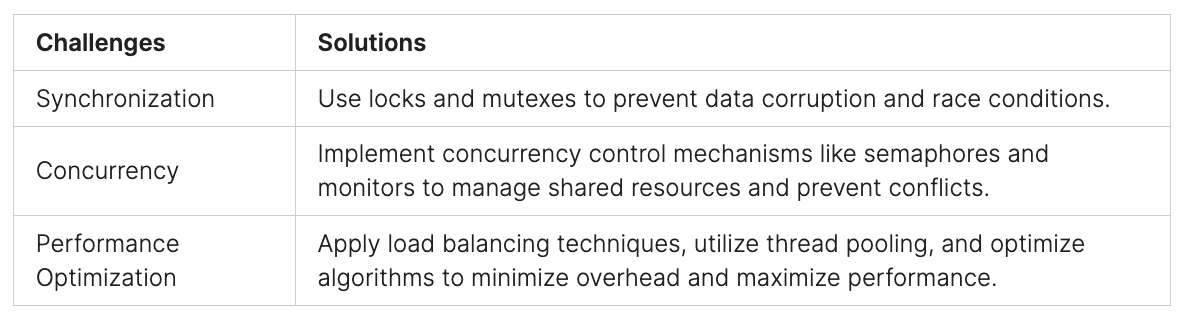
    Addressing these challenges effectively ensures that multi-threading in network security delivers superior performance, scalability, and responsiveness.

    Solutions for Multi-Threading in Network Security

    To overcome the challenges of multithreading in network security, several best practices can be implemented. The following solutions provide effective ways to address these challenges:

    1. Message Queue

    Implementing a message queue or buffer can facilitate efficient communication between threads in a multithreaded network security system. By reducing direct data access and modification, a message queue allows for seamless information exchange, improving overall performance and concurrency.

    2. Locks and Mutexes

    Utilizing locks and mutexes is crucial in protecting shared data or resources from simultaneous access. By employing these mechanisms, you can ensure data integrity and prevent race conditions, minimizing the risk of data corruption or security vulnerabilities.

    3. State Machines and Protocols

    Managing concurrency issues can be achieved through the use of state machines and protocols. By defining rules or steps for network event processing, these components enable efficient coordination and synchronization of multithreaded operations, ensuring consistent and reliable network security functionality.

    4. Timeouts and Retry Mechanisms

    Handling network failures and errors is essential in maintaining network integrity. By implementing timeouts and retry mechanisms, you can effectively manage and recover from network disruptions, enhancing the resilience and reliability of the network security system.

    5. Profilers and Debuggers

    To optimize the performance of a multithreaded network security system, profilers and debuggers can be utilized. These tools help identify performance bottlenecks, contention sources, or any other issues that may impact the efficiency of the system. With their insights, you can fine-tune the system for optimal performance and effectiveness.

    By implementing these solutions, network security systems can successfully address the challenges associated with multithreading, ensuring robustness, efficiency, and effectiveness in safeguarding network resources and data.

    Implementation of Multi-Threading in Network Security

    The implementation of multi-threading in network security relies on the chosen game engine or framework, each offering its own set of tools, libraries, APIs, and interfaces. These resources are instrumental in creating and managing threads and facilitating network communication. For instance, Unity provides the System.Threading namespace for multi-threading and the UnityEngine.Networking namespace for network communication. In comparison, Unreal Engine offers classes like FRunnable and FRunnableThread for multi-threading, and UNetDriver and UNetConnection for network communication. It is vital to consult the engine or framework’s documentation and examples to adhere to their implementation guidelines and conventions for multi-threading and network programming.

    “The implementation of multi-threading in network security depends on the chosen game engine or framework.”

    Table:
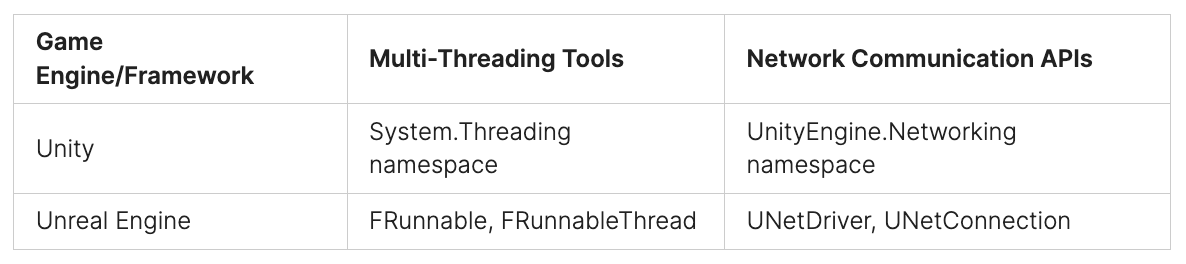
    Please note that the table above illustrates some examples of game engines and corresponding multi-threading tools and network communication APIs.

    Examples of Multi-Threading in Network Security

    Many games leverage multi-threading techniques to enhance network security. Here are a few notable examples:

    Counter-Strike: Global Offensive

    In Counter-Strike: Global Offensive, a separate thread is dedicated to network communication, reducing latency and improving responsiveness. By utilizing multi-threading, the game ensures smooth and seamless online gameplay, enhancing network security.

    World of Warcraft

    World of Warcraft, with its massive player base, utilizes multiple threads for network communication to handle high volumes of data. The implementation of multi-threading in the game enhances throughput, scalability, and network security, providing a smooth gaming experience for millions of players.

    Fortnite

    Fortnite employs a separate thread for network encryption, bolstering security and reliability. By dedicating a thread to this critical aspect of network communication, Fortnite enhances network security, protecting player data and ensuring a secure gaming environment.

    These examples highlight the effectiveness of multi-threading in improving network security performance in the gaming industry.

    The Science Behind Multi-Threading in Packet Analysis

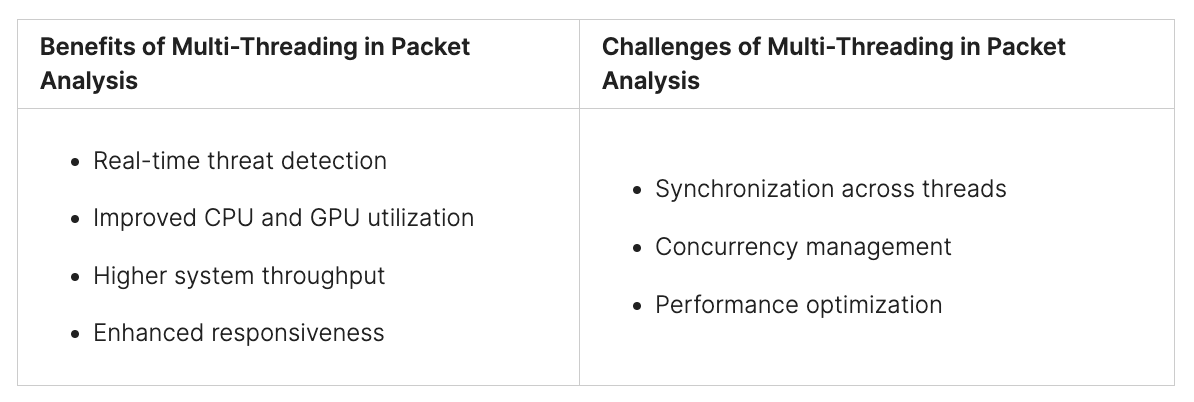
    Packet analysis systems traditionally employ sequential processing, analyzing packets one at a time. However, for large-scale networks, this can become a bottleneck. Multi-threading overcomes this limitation by allowing concurrent execution of packet capture, processing, and analysis tasks, utilizing CPU or GPU resources more efficiently. By parallelizing these tasks, multi-threaded systems achieve higher throughput and responsiveness, enabling real-time threat detection in high-traffic network environments.

    When it comes to packet analysis, real-time processing is essential for effective network security. By leveraging multi-threading, packet analysis systems can process multiple packets simultaneously, reducing latency and improving overall system performance. This approach ensures that critical network events are detected and analyzed in real-time, allowing for more proactive and timely security measures.

    The power of multi-threading lies in its ability to make optimal use of available CPU and GPU resources. By dividing the workload into multiple threads, each assigned to an individual core or processor, multi-threaded systems can efficiently distribute the processing load and achieve faster packet analysis. This results in higher throughput, enabling the system to handle larger amounts of network traffic with minimal impact on responsiveness.

    “Multi-threading in packet analysis allows for concurrent execution of packet capture, processing, and analysis, enhancing system throughput and responsiveness.”

    The responsiveness of a packet analysis system is crucial for real-time threat detection. Multi-threading enables faster processing of network packets, allowing the system to respond quickly to potential security threats. By analyzing packets in parallel, multi-threaded systems can achieve near-instantaneous threat detection, ensuring the prompt identification and mitigation of any malicious activity.

    Overall, multi-threading revolutionizes packet analysis by enabling real-time processing, improving CPU and GPU utilization, and enhancing system throughput and responsiveness. This technology plays a key role in modern network security, allowing for proactive threat detection and mitigation in high-traffic environments.
    Implementing Multi-Threading in Packet Analysis

    Implementing multi-threading in packet analysis allows for leveraging concurrent execution of tasks, resulting in enhanced throughput and responsiveness. By optimizing system performance through parallelizing packet capture, processing, and analysis, network security systems can achieve higher efficiency and real-time threat detection capabilities.

    Code snippets can be helpful in illustrating the implementation details of multi-threaded packet capture techniques. These snippets provide a visual representation of how threads can be utilized to perform simultaneous packet analysis, improving the overall performance of network security systems.

    The rationale behind implementing multi-threading in packet analysis is to maximize throughput and responsiveness. By distributing the computational load among multiple threads, the system can process packets concurrently, increasing the speed at which they are analyzed and reducing packet analysis time.

    The implementation of multi-threading in packet analysis is crucial for optimizing system performance and achieving real-time threat detection capabilities. By leveraging concurrent execution, network security systems can enhance their throughput, responsiveness, and overall cybersecurity performance.

    By adopting multi-threading in packet analysis, network security systems can significantly improve their ability to detect and mitigate threats efficiently. The concurrent execution of packet analysis tasks enables better utilization of system resources, resulting in enhanced throughput and real-time responsiveness.

    Benefits of Implementing Multi-Threading in Packet Analysis

    • Improved throughput: Multi-threading allows for parallel processing of packet analysis tasks, enabling the system to handle a higher volume of packets, thereby increasing overall throughput.
    • Enhanced responsiveness: Concurrent execution of packet analysis tasks reduces the time taken to analyze packets, providing real-time responsiveness in detecting and responding to potential threats.
    • Optimized resource utilization: Multi-threading optimizes the use of system resources by distributing the computational load across multiple threads, ensuring efficient utilization of CPU and GPU resources.

    Implementing multi-threading in packet analysis involves careful consideration of thread synchronization, load balancing, and data sharing among threads. Through proper design and coding practices, network security systems can leverage multi-threading to achieve higher levels of throughput, responsiveness, and overall cybersecurity performance.

    Conclusion

    Multi-threading stands as a pivotal innovation in network security, fundamentally transforming how efficiency and response times are approached in this field. By harnessing the power of parallel processing and optimized resource allocation, multi-threading facilitates real-time analysis of network traffic, efficient intrusion detection, and the execution of advanced networking tasks. This technological leap significantly boosts the speed and efficacy of network security systems, marking a new era in cybersecurity performance.

    For network security professionals, the adoption of best practices in multi-threading is vital for harnessing its full potential. Key focus areas include effective synchronization, adept concurrency management, and strategic performance optimization. Through meticulous design and implementation of multi-threaded systems, professionals in this field can markedly enhance operational efficiency, responsiveness, and overall cybersecurity effectiveness.

    In essence, multi-threading serves as an invaluable asset in the realm of network security, offering the capability for concurrent task execution and efficient resource utilization, leading to expedited threat detection and bolstered network defenses. By adopting multi-threading and skillfully navigating its complexities, organizations are well-positioned to elevate their cybersecurity capabilities, ensuring a more secure and proficient network infrastructure.

    To delve deeper into the world of multi-threading and discover how it can revolutionize your organization’s network security, visit Peris.ai Cybersecurity. Explore our range of solutions and learn how our expertise in multi-threading can enhance your cybersecurity strategy, providing you with a more secure, responsive, and efficient network system.

    FAQ

    What is multi-threading and how does it relate to network security?

    Multi-threading is a technique that allows a program to execute multiple tasks simultaneously on different cores or processors. In the context of network security, multi-threading enhances efficiency and response time, improving the overall cybersecurity performance.

    What are the benefits of multi-threading in network security?

    Multi-threading reduces network latency, increases throughput and scalability, enhances security and reliability of network connections, and protects against malicious attacks.

    What challenges does multi-threading present in network security?

    Synchronization, concurrency, and performance optimization are key challenges in implementing multi-threading in network security.

    What solutions can address the challenges of multi-threading in network security?

    Best practices include using message queues or buffers, employing locks and mutexes, implementing state machines and protocols, using timeouts and retry mechanisms, and utilizing profilers and debuggers.

    How can multi-threading be implemented in network security?

    The implementation of multi-threading depends on the chosen game engine or framework, which provide tools, libraries, APIs, and interfaces for creating and managing threads and handling network communication.

    Can you provide examples of multi-threading in network security?

    Examples include Counter-Strike: Global Offensive, World of Warcraft, and Fortnite, which use separate threads for network communication, throughput, scalability, and encryption.

    How does multi-threading enhance packet analysis in network security?

    Multi-threading allows for concurrent execution of packet capture, processing, and analysis tasks, enabling real-time threat detection, improving CPU and GPU resource utilization, and achieving higher throughput and responsiveness.

    What is involved in implementing multi-threading in packet analysis?

    Implementing multi-threading in packet analysis involves leveraging concurrent execution of tasks, using code snippets, parallelizing packet capture, processing, and analysis, and optimizing system performance.

    In conclusion, what is the impact of multi-threading in network security?

    Multi-threading enhances efficiency and response time in network security, leading to improved cybersecurity performance.


  • Unlocking Efficiency: The What, Why, and How of Security Automation!

    Unlocking Efficiency: The What, Why, and How of Security Automation!

    In our digital world today, the number of cyber threats is growing like never before. This makes cybersecurity automation important for security teams. They use it to make their defense stronger and be more proactive.

    Automation in security means spotting, checking, and fixing cyber threats by itself. This can happen without any human touch. It uses programs made for this job. These programs do the work of handling alerts, so the security team can focus on the most critical issues.

    Let’s look closer at security orchestration, automated response (SOAR), and incident response automation. We’ll also see about automated threat remediation. By using these technologies, we’ll find out how AI-driven security operations and autonomous cyber defense are changing the game in cybersecurity.

    Key Takeaways

    • Security automation is the process of automatically detecting, investigating, and remediating cyber threats.
    • Cybersecurity automation helps streamline the multitude of security alerts that teams deal with daily.
    • Security orchestration and automated response (SOAR) are critical components of security automation.
    • AI-driven security operations and autonomous cyber defense are transforming the cybersecurity landscape.
    • Leveraging security automation can enhance an organization’s cyber resilience and responsiveness.

    Understanding Security Automation

    Today, the world of cybersecurity is changing fast. To keep up, many companies are using security automation. This tool helps fight against more and more advanced cyberattacks. It does its work automatically, finding, checking, and fixing threats all on its own.

    What is Security Automation?

    Security automation does a few big tasks. It looks for threats to a company’s safety, sorts them out, and decides which ones need attention first. This helps security teams work better. They get to deal with the most important problems, making the whole security system stronger.

    Capabilities of Security Automation

    Security workflow automation can do lots of jobs. It can find threats, check them out, and fix them. It’s also good at managing problems before they become too big. All these talents mean that security teams can work smarter, making their companies safer without working long hours.

    Automated Threat Detection and Response

    One of the main jobs of security automation is spotting risks and dealing with them. It uses smart algorithms and learning machines to quickly see and rank threats. Then, it takes quick action to keep problems from getting worse. This quick response is key to stopping security issues and managing risks well.

    How Automated Threat Detection and Response Revolutionizes Cybersecurity

    The Need for Cybersecurity Automation

    The need for cybersecurity automation comes from the big increase in cyberattacks. These attacks now happen every 39 seconds. Almost half of all companies had a data breach in the last two years, costing millions each time. This means the growing number and power of cyber threats are too much for security teams to handle alone. It shows why it’s crucial to use security orchestration and SOAR tools to boost incident response automation and deal with threats quickly.

    The Rise of Cyberattacks

    The world of cybersecurity is getting harder to navigate. Cybercriminals are always finding new ways to sneak past our defenses. They use things like advanced persistent threats (APTs) and ransomware. This makes the job of security teams a real challenge. Without the right tools, they can’t keep up with the speed and cleverness of these attacks.

    Challenges of Manual Security Operations

    Depending only on people to handle security has its problems. This leads to issues like missing important alerts, slow responses, and mistakes. With AI-driven security operations getting better, not using cybersecurity automation puts organizations at a big risk. They might fall behind in protecting against smart and frequent cyber threats.

    Signs Your Organization Needs Security Automation

    If your organization is facing these signs, it’s time to think about security automation:

    • Overwhelmed security teams struggling to keep up with the volume of security alerts and incidents
    • Slow response times in detecting, investigating, and remediating security threats
    • High rates of false positive alerts lead to wasted resources
    • Difficulty integrating and correlating data from multiple security tools and systems
    • Lack of visibility into the organization’s overall security posture and risk profile

    Benefits of Security Automation

    With the rise in cybersecurity threats, security automation has become essential. It improves how companies defend against attacks. By handling security incidents automatically, many benefits arise. These include better security and quicker incident responses.

    Faster Threat Detection and Response

    Cybersecurity automation is vital for spotting and reacting to threats quickly. It shortens the time needed to find and stop cyber dangers. It can sift through a lot of data, link events, and take necessary actions, letting security teams act swiftly.

    Reduced Risk of Human Error

    Human mistakes are common in manual security work. They can mean missing threats or not responding on time. With automated threat remediation, the chance for error is cut. Security responses become more reliable and effective. This lowers the risk of attacks causing significant harm.

    Increased Operational Efficiency

    AI-driven security operations make security work smarter. By automating many tasks, it boosts how well the security team operates. This shift means there’s more time for critical security projects. The result is a stronger defense against cyber threats.

    Boosting Operational Efficiency with AI-Driven Automation

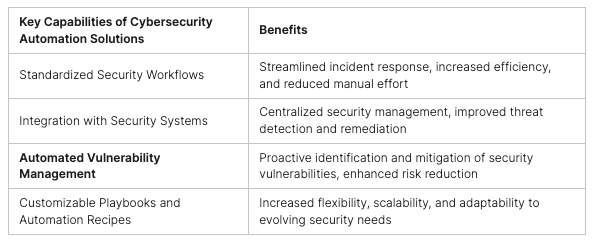
    Cybersecurity Automation Solutions

    Today, organizations are facing more cybersecurity threats. To manage these challenges, they rely on security automation and orchestration tools. Security workflow automation and automated vulnerability management are key features of these tools.

    Standardized Workflows

    Automated cybersecurity solutions create consistent security workflows. These workflows act automatically when specific issues arise. They handle various tasks, from incident responses to managing software vulnerabilities.

    Integration with Security Systems

    Good cybersecurity systems work well with your existing security tools. This includes systems for managing security information, scanning for vulnerabilities, and more. By working together, they better find and fix threats.

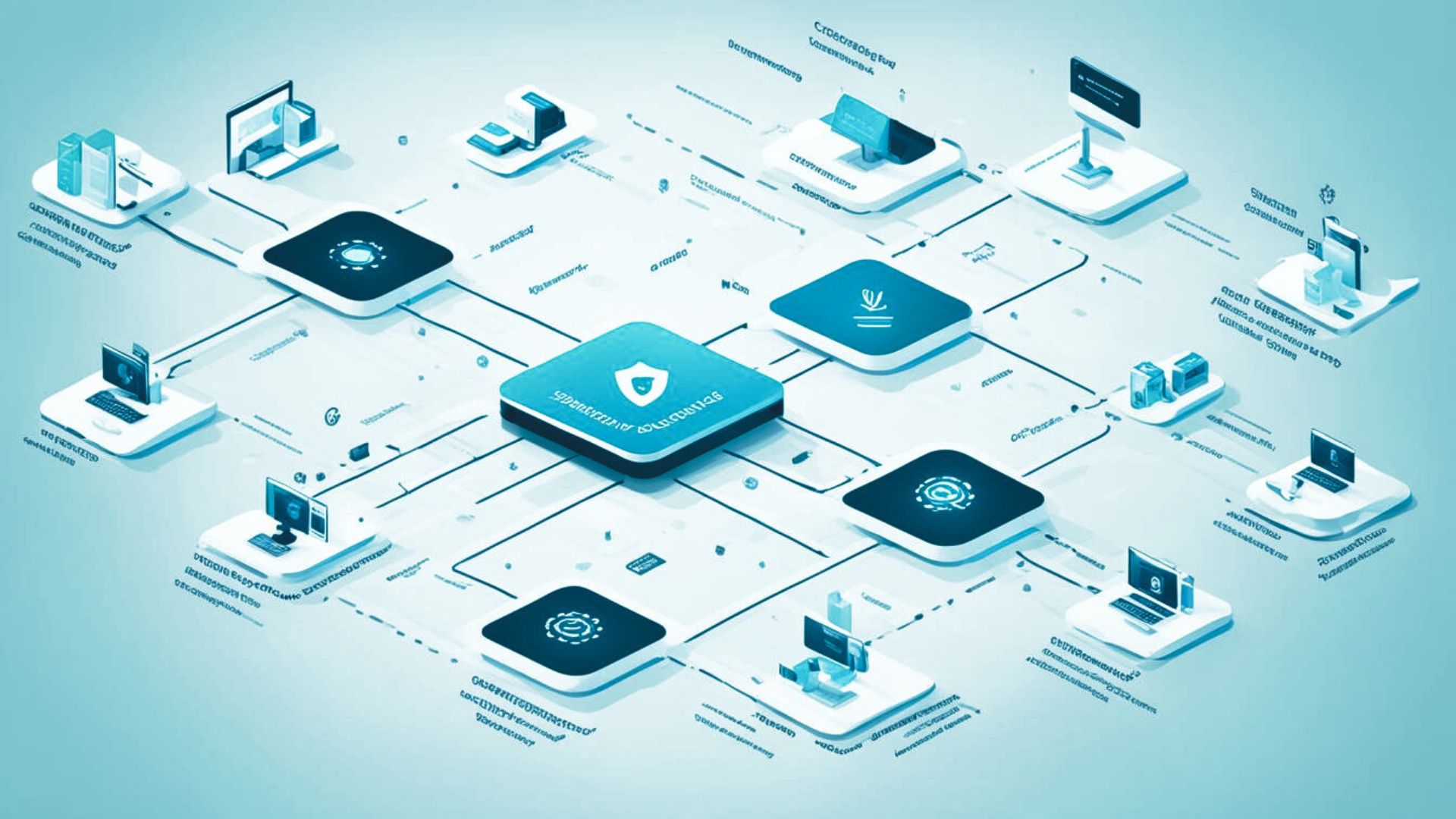
    Enhancing Cybersecurity Through Integrated Security Systems

    The Evolution of Cybersecurity Automation

    Security automation has become key for organizations facing more cyberattacks. The current cyber threat level requires a swift response. This is where security automation and orchestration play a crucial role. These technologies help find and handle attacks faster.

    The increase in danger from cybercriminals has made manual processes less effective. With more systems to watch, it’s hard to catch every threat. That’s why organizations are increasingly using security orchestration tools. These tools automate parts of the response process, making it easier to manage the flood of security alerts.

    Today, automated response (soar) solutions are more advanced than ever. They feature automated threat spotting and handle incident responses more efficiently. They can work with many security tools. This combined effort makes responses to cyber threats quicker and more effective.

    How Security Automation and SOAR Enhance Cyber Defenses

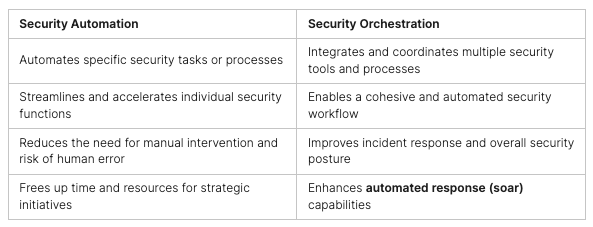
    Automation vs. Orchestration

    The terms “security automation” and “security orchestration” often mix. Yet, understanding their differences is key. Both are vital for security but for different reasons, offering unique advantages.

    Understanding Automation

    Security automation uses tech to do security jobs without human help. This includes spotting and dealing with security issues, managing risks, and making sure rules are followed. It makes these tasks faster, cutting down on mistakes people might make. This lets security teams work better. They can use their time and effort on more important goals.

    Understanding Orchestration

    Security orchestration connects and manages many security tools and tasks. It makes them work together. This isn’t just about automating tasks. It’s about having everything work in sync. This way, when a security issue is found, everything jumps into action together.

    To sum up, security automation is about automating tasks. Meanwhile, security orchestration brings all security tools and tasks together into one big, efficient system. Businesses need both to boost their security to the highest level.

    Security Automation Security Orchestration Automates specific security tasks or processes Integrates and coordinates multiple security tools and processes Streamlines and accelerates individual security functions Enables a cohesive and automated security workflow Reduces the need for manual intervention and risk of human error Improves incident response and overall security posture Frees up time and resources for strategic initiatives Enhances automated response (soar) capabilities

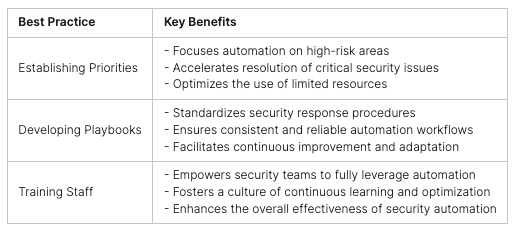
    Best Practices for Security Automation

    To get the most out of security automation, focus on managing automated vulnerability and autonomous cyber defense. It’s key to follow these best practices:

    Establishing Priorities

    First, pinpoint your organization’s biggest security threats and weaknesses. Automate tackling these critical areas to quickly and effectively fix major issues.

    Developing Playbooks

    Create detailed playbooks for security automation. These should explain what to do step by step for different security problems. Make sure to review and update them as threats change.

    Training Staff

    Give your security team comprehensive training on using automation tools well. This lets them get better at their job by adjusting and improving automation workflows.

    Following these guideposts helps companies make the best of security automation and defense. This strengthens their security and readiness against cyber threats.

    Cybersecurity Automation and AI

    Security teams use automation to improve their defense against cyber threats. But, attackers use the same tools to launch more attacks and find weaknesses. Today’s cyberattacks are quick and use many methods, making it hard for defenders. Ai-driven security operations and autonomous cyber defense are key. They help organizations fight against a growing number of threats.

    Fighting AI with AI

    Cybercriminals are turning to AI to automate their malicious efforts. They use these tools from the start of an attack to the very end. To overcome these challenges, security teams must also use AI and ML. Ai-driven security operations process huge amounts of security data in no time. They can spot unusual activities and react to threats quickly.

    Advantages of Automated Security Systems

    Autonomous cyber defense uses AI and automation to watch for threats 24/7 without needing human action. These systems can handle many security tasks on their own. They can investigate issues, sort alerts, and start fixing problems. This lets security experts work on bigger strategies. By automating tasks and cutting down on errors, autonomous cyber defense makes an organization safer and more resilient.

    Conclusion

    In today’s digital landscape, the security of our information is paramount. As cyber threats become more sophisticated, organizations must evolve their protective measures. The integration of security automation and orchestration is essential for responding to threats swiftly and effectively.

    Peris.ai Brahma Fusion offers an advanced solution for security orchestration and automated response. This AI-driven security orchestrator enhances threat management and response across an organization’s IT infrastructure, ensuring a robust defense against cyber threats.

    Key Features of Brahma Fusion:

    • Threat Detection and Analysis: Utilizes advanced AI and machine learning to analyze real-time data, detect threats, and execute predefined playbooks for consistent and efficient incident response.
    • Integration and Interoperability: Seamlessly integrates with diverse security tools via APIs, consolidating operations, and working in harmony with SIEM systems to aggregate and analyze security alerts and logs.
    • Automated Response: Automatically triggers predefined actions in response to detected threats, such as isolating affected systems, blocking malicious IP addresses, and initiating incident response protocols.
    • API Discovery and Asset Monitoring: Provides unparalleled visibility by automatically identifying and cataloging APIs and assets, enabling effective management, vulnerability detection, and robust security.

    Embracing security orchestration and automated response technology like Brahma Fusion allows businesses to manage cyber threats more efficiently. This technology not only facilitates quicker reactions to attacks but also ensures smarter, integrated security operations. With AI-driven capabilities, Brahma Fusion supports autonomous cyber defense and streamlined threat remediation.

    As cybersecurity challenges grow increasingly complex, organizations that prioritize security workflow automation and automated vulnerability management will be better equipped to protect their data and maintain up-to-date security systems. This proactive approach ensures readiness for new challenges and strengthens security efforts over time.

    For more information on how Brahma Fusion can transform your cybersecurity strategy and enhance your threat response capabilities, visit Peris.ai Cybersecurity. Secure your digital future with Peris.ai Brahma Fusion and stay ahead of evolving cyber threats.

    FAQ

    What is security automation?

    Security automation means using programs to find, check, and fix cyber threats on their own. They work without needing humans to do the tasks.

    What are the key capabilities of security automation?

    It offers one system to manage security tasks throughout a company. This includes using the same steps for all issues, working with security tools, and finding and fixing threats automatically.

    Why is there a need for cybersecurity automation?

    The number of cyberattacks is growing fast. They occur every 39 seconds, and nearly half of all companies have faced a breach. Each breach costs about $4.35 million.

    What are the key benefits of security automation?

    Organizations see a lot of advantages with security automation. They can catch and handle threats quicker, lower the risk of mistakes, and work more efficiently.

    What is the difference between security automation and security orchestration?

    Though people often use them together, there’s a difference. Automation refers to making security tasks happen by themselves. Orchestration means making different tools work together smoothly.

    What are the best practices for implementing security automation?

    To benefit the most from security automation, organizations need to do a few things. They should set clear goals, make playbooks, and teach their teams how to use the automated systems.

    How are cybersecurity automation and AI related?

    Now, cybersecurity automation is starting to use AI for more effective defense. This lets organizations combat AI-powered attacks with their smart defense systems.

  • Visualize the Threat: The Power of Visualization in Cybersecurity

    Visualize the Threat: The Power of Visualization in Cybersecurity

    Cybersecurity threats are constantly evolving and becoming more sophisticated, posing significant risks to organizations’ valuable data and digital assets. In this digital age, understanding these threats and their potential impact is crucial to implementing effective security measures. That’s where visualization comes in. Visualization is a powerful tool that can help organizations gain a deeper understanding of cybersecurity threats and their role in shaping security strategies.

    By visualizing cybersecurity threats, organizations can transform complex data into intuitive visual representations. This enables security teams to easily identify patterns, relationships, and trends, leading to a more comprehensive understanding of potential vulnerabilities and attack vectors. Visual representations make it easier to communicate complex information across teams, ensuring everyone is on the same page when it comes to identifying and mitigating cybersecurity risks.

    Visualization also empowers organizations to take proactive measures. By providing a clear picture of the threat landscape, visualization enables security teams to prioritize risks, allocate resources effectively, and implement targeted security measures. Through interactive and dynamic visualizations, security professionals can analyze data in real-time, spot anomalies, and respond swiftly to emerging threats.

    Ultimately, the power of visualization lies in its ability to transform abstract cybersecurity concepts into tangible insights. It bridges the gap between technical jargon and meaningful actions, empowering organizations to make informed decisions and strengthen their cybersecurity defenses.

    Key Takeaways:

    • Visualization plays a crucial role in understanding cybersecurity threats
    • Visual representations make complex data and relationships easily comprehensible
    • Visualization enables proactive measures by identifying and prioritizing risks
    • Interactive and dynamic visualizations allow real-time analysis and response
    • Visualization bridges the gap between technical jargon and actionable insights

    Importance of Data Security in Cybersecurity

    Data security is the foundation of cybersecurity. With the expansion of cloud infrastructure and digital transformation, organizations face an increased attack surface and need robust data security solutions.

    Data security involves identifying critical data, controlling access policies, monitoring user activity, and ensuring compliance with privacy mandates. It helps organizations protect sensitive information from breaches, cyberattacks, and other security threats.

    “Data security is not just a technical issue; it is a business imperative. Organizations must prioritize data security to safeguard their reputation, customer trust, and compliance with regulations. Any compromise in data security can result in severe consequences, such as financial losses, legal liabilities, and reputational damage.”

    Protecting Against Breaches and Cyberattacks

    Data security measures are essential for preventing unauthorized access to sensitive information. By implementing strong data security protocols, organizations can reduce the risk of data breaches and cyberattacks.

    Meeting Compliance Requirements

    In today’s regulatory environment, compliance is crucial for organizations to operate securely and avoid penalties. Data security plays a vital role in meeting compliance requirements, such as the General Data Protection Regulation (GDPR) or industry-specific standards like the Payment Card Industry Data Security Standard (PCI DSS).

    Securing Confidential Information

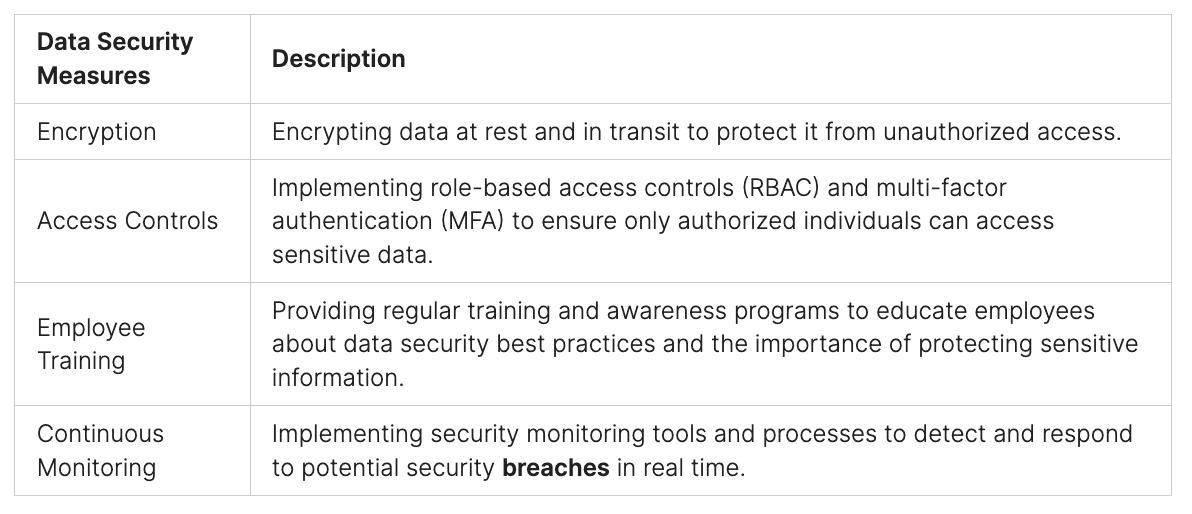
    Confidential data, including customer information, trade secrets, and proprietary business data, requires stringent protection. Data security measures such as encryption, access controls, and secure data storage help safeguard critical information from unauthorized disclosure.

    Implementing robust data security practices is an ongoing effort for organizations. It requires a combination of technology solutions, employee training, and continuous monitoring to stay ahead of evolving cybersecurity threats.

    Comprehensive Data Security Solutions

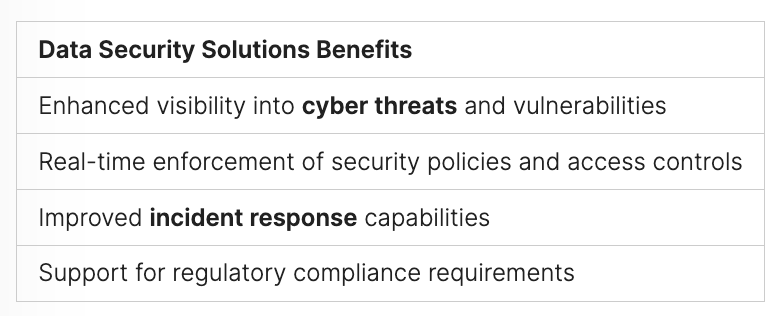
    When it comes to safeguarding sensitive information and mitigating cyber threats, organizations need comprehensive data security solutions that provide visibility, insights, and compliance. These solutions play a vital role in strengthening data security posture and protecting critical data from unauthorized access. By implementing robust data security solutions, organizations can ensure real-time enforcement of security policies and access controls, detect vulnerabilities and risks, and meet regulatory compliance requirements.
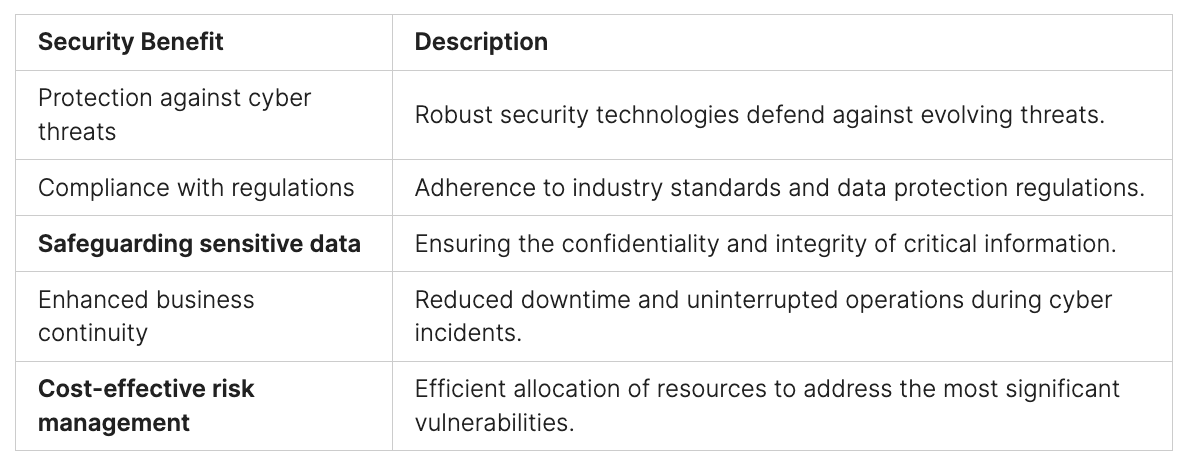
    One of the key advantages of data security solutions is the visibility they provide into an organization’s cybersecurity landscape. By gaining visibility, organizations can monitor and investigate potential threats, identify vulnerabilities, and take proactive measures to remediate them. The insights derived from data security solutions enable organizations to make informed decisions about their cybersecurity strategies, prioritize mitigation efforts, and enhance their incident response capabilities.

    “Comprehensive data security solutions offer organizations visibility into their cybersecurity landscape, empowering them to gain insights, investigate threats, and take proactive measures to protect their critical data.”

    Meeting regulatory compliance requirements is essential for organizations across various industries. Data security solutions help organizations ensure compliance by providing the necessary controls and monitoring mechanisms to protect sensitive information and prevent data breaches. By implementing these solutions, organizations can mitigate the risk of non-compliance penalties and reputational damage.

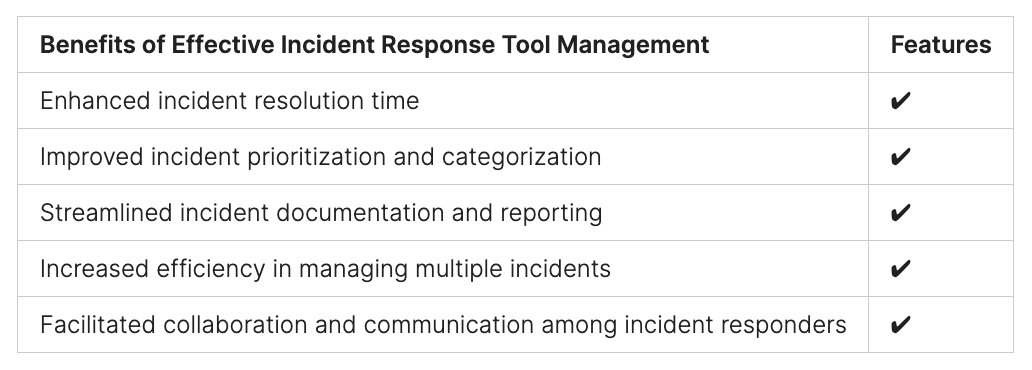
    To illustrate the impact of comprehensive data security solutions, consider the following table:

    Realizing the Full Potential of Data Security Solutions

    Data security solutions form a critical part of an organization’s cybersecurity strategy. By providing visibility, insights, and compliance, these solutions empower organizations to protect their sensitive data and stay ahead of emerging cyberthreats. By taking full advantage of data security solutions, organizations can enhance their overall data security posture and maintain a strong defense against evolving cyber threats.

    The Role of Knowledge Graphs in Cybersecurity

    Knowledge Graphs play a crucial role in bolstering cybersecurity defenses by capturing and visualizing the complex relationships between diverse data points. In the realm of cybersecurity, these dynamic tools excel in real-time threat detection, incident response, and unifying disparate data sources for a holistic view of the cybersecurity landscape.

    Knowledge Graphs serve as digital twins of network data, providing cybersecurity analysts with actionable insights. By leveraging these powerful graphs, organizations can enhance their cybersecurity capabilities and stay ahead of evolving threats.

    “Knowledge Graphs empower organizations to connect the dots and analyze the intricate web of cybersecurity data, offering unparalleled visibility and intelligence,”

    The unique ability of Knowledge Graphs to visualize complex relationships and dependencies enables analysts to identify potential vulnerabilities, detect threats in real-time, and respond swiftly to security incidents. By unifying and mapping the diverse data points, these graphs provide a comprehensive overview that helps organizations thwart cyberattacks and safeguard sensitive information.

    In their research paper “Leveraging Knowledge Graphs for Cybersecurity Intelligence,” Williams et al. highlight the power of Knowledge Graphs in enhancing incident response capabilities and improving threat detection. The study demonstrates that organizations that leverage Knowledge Graphs have a faster incident response time and are better equipped to detect sophisticated cyber threats.

    Benefits of Knowledge Graphs in Cybersecurity:

    • Real-time Threat Detection: Knowledge Graphs enable organizations to monitor and detect complex, interconnected threats in real-time, empowering them to take proactive measures before any potential breaches.
    • Efficient Incident Response: By visualizing network data, Knowledge Graphs provide cybersecurity analysts with a comprehensive view of the attack surface, facilitating swift and efficient incident response actions.
    • Unifying Data Sources: Knowledge Graphs integrate diverse data sources, enabling analysts to identify patterns, correlations, and hidden connections among various cybersecurity events.
    • Enhanced Risk Mitigation: Leveraging Knowledge Graphs allows organizations to gain actionable insights into potential vulnerabilities and prioritize mitigation efforts, reducing the impact of cyber threats.

    The Future of Cybersecurity with Knowledge Graphs

    As the cybersecurity landscape continues to evolve, the importance of leveraging Knowledge Graphs becomes increasingly evident. These powerful tools provide organizations with the means to holistically understand and combat cyber threats through advanced visualization techniques and actionable insights.

    By harnessing the capabilities of Knowledge Graphs and continually adapting to emerging cyber threats, organizations can enhance their cybersecurity resilience, protect critical assets, and stay one step ahead of malicious actors.

    The Crucial Role of Knowledge Graphs in Cybersecurity

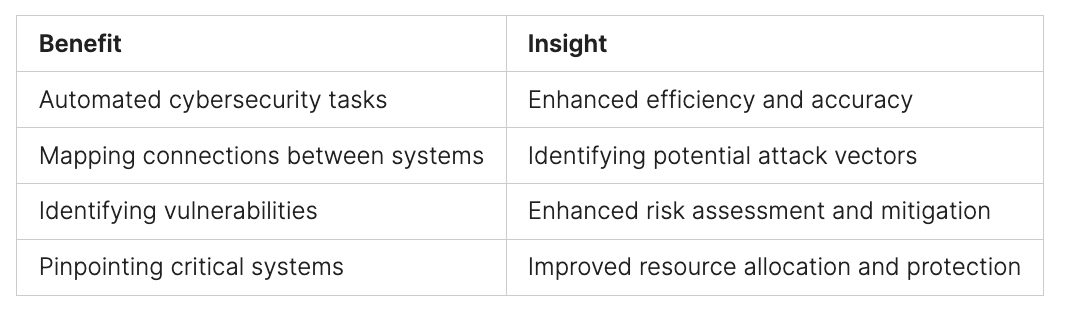
    Knowledge Graphs serve as digital twins, creating comprehensive representations of organizations’ cybersecurity environments. These graphs provide a holistic perspective that helps cybersecurity analysts query and take proactive measures. They automate cybersecurity tasks, map connections between systems, identify vulnerabilities, and pinpoint critical systems requiring heightened protection. Knowledge Graphs offer a visual representation and serve as a dynamic platform for cybersecurity analysts to gain insights, model threats, and predict cybersecurity risks.

    With Knowledge Graphs, cybersecurity analysts can:

    • Automate cybersecurity tasks
    • Map connections between systems
    • Identify vulnerabilities
    • Pinpoint critical systems

    By leveraging these capabilities, organizations can improve their cybersecurity posture and effectively defend against cyber threats.

    Knowledge Graphs provide a visual representation of complex cybersecurity data, enabling analysts to:

    1. Analyze and understand interconnected systems
    2. Identify trends and patterns
    3. Visualize potential attack paths
    4. Identify areas of vulnerability

    This visual representation enhances analysts’ ability to make informed decisions, prioritize resources, and proactively respond to emerging threats.

    “Knowledge Graphs enable cybersecurity analysts to gain deep insights into the organization’s cybersecurity landscape, empowering them with the information necessary to make strategic decisions and mitigate risks effectively.”

    Augmenting the Graph with Software Information

    Integrating software information into Knowledge Graphs is a crucial step in enhancing their comprehensiveness and strengthening organizations’ cybersecurity defenses. By incorporating data from configuration management tools and scanning tools, Knowledge Graphs can be enriched with valuable insights, software versions, health reports, and vulnerability data. This integration allows organizations to gain a more complete understanding of their cybersecurity landscape and identify potential vulnerabilities and attack paths.

    The inclusion of software information in Knowledge Graphs empowers cybersecurity analysts to make informed decisions and take proactive measures to protect critical assets. The comprehensive view provided by the augmented graph enables organizations to prioritize their resources and respond effectively to potential threats.

    The Benefits of Graph Augmentation

    “The integration of software information into Knowledge Graphs plays a pivotal role in strengthening cybersecurity defenses by providing a holistic understanding of vulnerabilities and attack vectors. This enhanced visualization allows organizations to identify potential weak points and take proactive measures to prevent breaches.”

    As organizations continue to depend on complex software systems, understanding the intricacies of software versions and vulnerabilities becomes paramount. By augmenting Knowledge Graphs with software information, organizations can ensure that their cybersecurity efforts are comprehensive and up to date.

    Enhanced Insights and Proactive Defense

    The integration of software information expands the scope and depth of Knowledge Graphs, enabling organizations to unlock valuable insights into their cybersecurity posture. With a more comprehensive understanding of their software ecosystem, organizations can:

    • Identify vulnerabilities and prioritize patching
    • Track software versions and ensure the implementation of necessary updates
    • Detect misconfigurations and proper system settings
    • Monitor system health and performance to detect abnormalities

    These capabilities empower organizations to proactively defend against potential threats and vulnerabilities. By leveraging the enriched Knowledge Graphs, organizations can stay one step ahead of cyber attackers and ensure the resilience of their cybersecurity infrastructure.

    Enriching the Graph with Threat Intelligence

    Integrating threat intelligence into Knowledge Graphs is a crucial step in fortifying cybersecurity defenses. By incorporating industry-standard vulnerability databases and attacker tactics and defensive measures matrices, organizations can enhance their graph with valuable insights. This enrichment process enables organizations to visualize vulnerabilities and discern potential attack paths, gaining a deeper understanding of their cybersecurity risks.

    Threat intelligence serves as a rich source of data that highlights vulnerabilities affecting critical resources and identifies emerging attack patterns. By integrating this intelligence into the Knowledge Graph, organizations can proactively identify risks, prioritize mitigation efforts, and improve incident response capabilities.

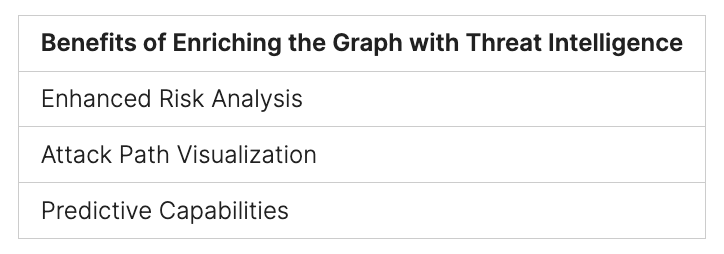
    Benefits of Enriching the Graph with Threat Intelligence

    Enriching the graph with threat intelligence offers several key advantages:

    1. Enhanced Risk Analysis: By incorporating threat intelligence into the graph, organizations can identify and prioritize vulnerabilities based on their potential impact on critical assets. This enables them to allocate resources more effectively and respond promptly to the most significant threats.
    2. Attack Path Visualization: Integrating threat intelligence provides insights into attack patterns and potential paths that adversaries may exploit. Visualizing these attack paths in the graph allows organizations to identify weak points and take proactive measures to strengthen their defenses.
    3. Predictive Capabilities: Enriching the graph with threat intelligence enables organizations to predict cybersecurity risks by identifying trends and patterns in attack vectors. This empowers them to stay one step ahead and implement preemptive measures to counter emerging threats.

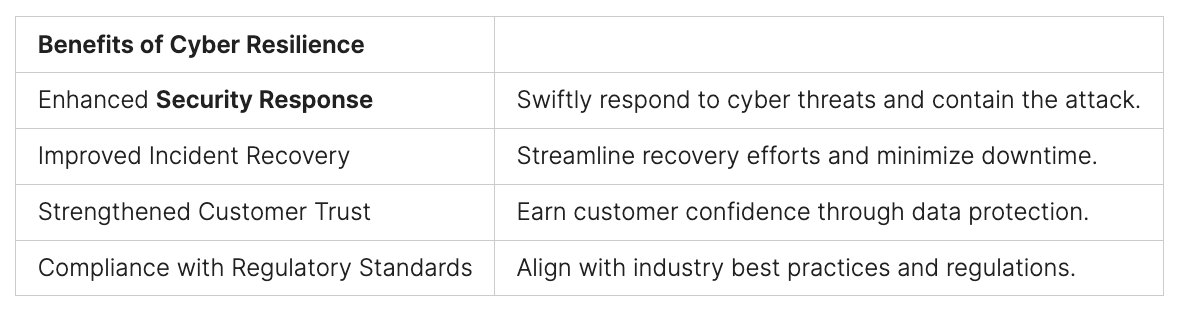
    A visually appealing and comprehensive table showcasing the benefits of enriching the graph with threat intelligence:

    By enriching the graph with threat intelligence, organizations gain a comprehensive understanding of their cybersecurity landscape. This empowers them to make informed decisions, prioritize mitigations, and stay ahead of evolving threats.

    Visualizing Vulnerabilities and Attack Paths

    In the ever-evolving landscape of cybersecurity, organizations face an array of vulnerabilities and potential attack paths that threaten the security of their critical assets. To effectively defend against these risks, visualization plays a pivotal role in understanding the dynamic nature of cybersecurity threats and enhancing incident response capabilities.

    One powerful method of visualization is through the use of attack graphs. These visual representations showcase interconnected vulnerabilities and potential routes that attackers may take to compromise organizational assets. By visualizing vulnerabilities and attack paths, organizations gain a holistic understanding of their cybersecurity risks, allowing them to prioritize their mitigation efforts accordingly.

    Attack graphs provide a comprehensive overview of the cybersecurity landscape, highlighting the relationships between various vulnerabilities and their impact on critical assets. By visually mapping out these attack paths, organizations can identify the weakest points in their defenses and take proactive measures to strengthen them.

    Through the power of visualization, cybersecurity professionals can analyze complex data and identify patterns that may not be immediately apparent in traditional reports or raw data. This visual representation enables them to gain actionable insights and make informed decisions to protect their digital assets.

    Benefits of Visualizing Vulnerabilities and Attack Paths:

    • Enhanced understanding of the interconnected nature of vulnerabilities
    • Prioritization of mitigation efforts based on identified attack paths
    • Improved incident response capabilities
    • Identification of weak points in the cybersecurity defenses
    • Proactive measures to strengthen organizational security

    “Visualization allows us to grasp the complex web of vulnerabilities and potential attack paths, empowering organizations to stay one step ahead of cyber threats.”

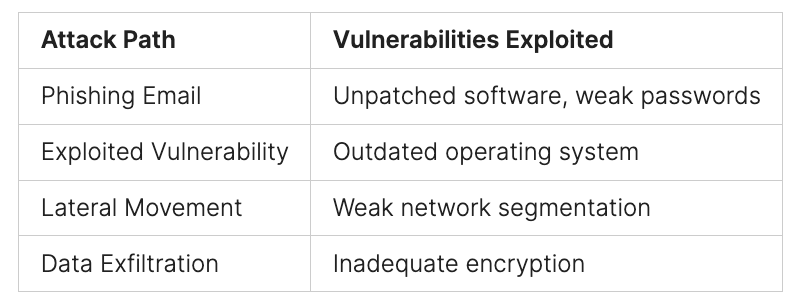
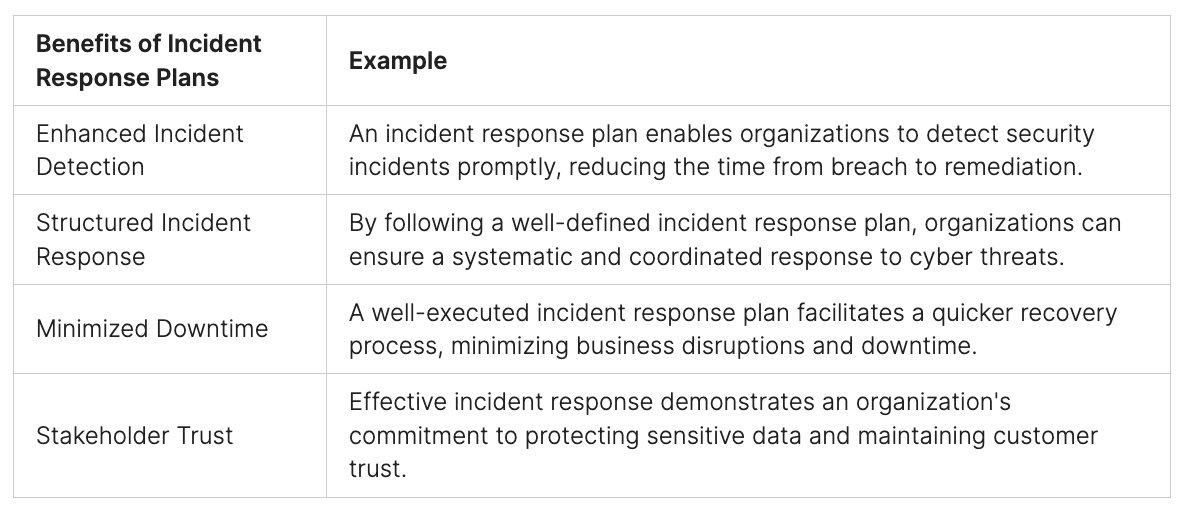
    To better illustrate the power of visualizing vulnerabilities and attack paths, consider the following example:

    This simplified table demonstrates how visualization can help identify the vulnerabilities exploited in each step of an attack path. By visualizing the progression of an attack, organizations can understand the sequence of events and implement appropriate security measures to prevent similar incidents.

    By visualizing vulnerabilities and attack paths, organizations can effectively address cybersecurity risks, safeguard their critical assets, and bolster their overall security posture. With the power of visualization at their fingertips, cybersecurity professionals can proactively defend against emerging threats and stay one step ahead of potential attackers.

    The AI and Data Visualization Intelligence Cycle

    The combination of AI and data visualization in the intelligence cycle enhances the investigation process. AI techniques such as machine learning and natural language prompts can analyze and process data, while data visualization enables humans to understand and interpret AI-driven insights. AI can detect patterns and make recommendations, but human investigators play a crucial role in querying, exploring, and making executive decisions based on the visualized data.

    “The insights gained from data visualization empower investigators to connect the dots and uncover hidden relationships, leading to actionable intelligence.”

    With the help of AI, the intelligence cycle becomes more efficient, as it has the capability to sift through vast amounts of data and identify relevant information. Through machine learning algorithms, AI can detect patterns, trends, and anomalies that may go unnoticed by human analysts.

    Data visualization complements AI by providing a visual representation of the insights generated. Visualizations help investigators grasp complex concepts quickly and gain a deeper understanding of the data. By representing data in visual formats such as charts, graphs, and maps, investigators can identify patterns, correlations, and anomalies more intuitively.

    The insights gained from data visualization empower investigators to connect the dots and uncover hidden relationships, leading to actionable intelligence. This collaboration between AI and data visualization enhances the investigation process by leveraging the strengths of both technologies.
    Benefits of AI and Data Visualization in the Intelligence Cycle

    • Enhanced data analysis: AI-powered algorithms assist in processing large volumes of data, extracting valuable insights that might otherwise be missed.
    • Improved decision-making: Data visualization enables investigators to interpret complex information quickly, facilitating informed decision-making during investigations.
    • Uncovering hidden patterns: AI algorithms can identify patterns and correlations in data, while data visualization makes these patterns more apparent to investigators.
    • Effective communication: Visualizing AI-generated insights makes it easier to communicate findings and share information with stakeholders and decision-makers.

    The AI and Data Visualization Intelligence Cycle

    The intelligence cycle, when augmented with AI and data visualization, follows a seamless process:

    1. Data collection: AI algorithms assist in collecting and processing vast amounts of data from various sources.
    2. Data analysis: AI algorithms analyze the collected data, identifying patterns, trends, and anomalies.
    3. Data visualization: Visual representations of AI-driven insights are created to facilitate understanding and exploration.
    4. Investigation and interpretation: Human investigators explore the visualized data, query the AI system, and make informed decisions based on their expertise and the AI-driven insights.
    5. Insight utilization: Actionable intelligence is derived from the investigation process, enabling organizations to respond effectively to threats and enhance their cybersecurity posture.

    Data visualization plays a critical role in the intelligence cycle by bridging the gap between AI-driven insights and human understanding. It empowers investigators to make informed decisions based on visualized data, resulting in actionable intelligence that leads to effective threat mitigation and informed decision-making.

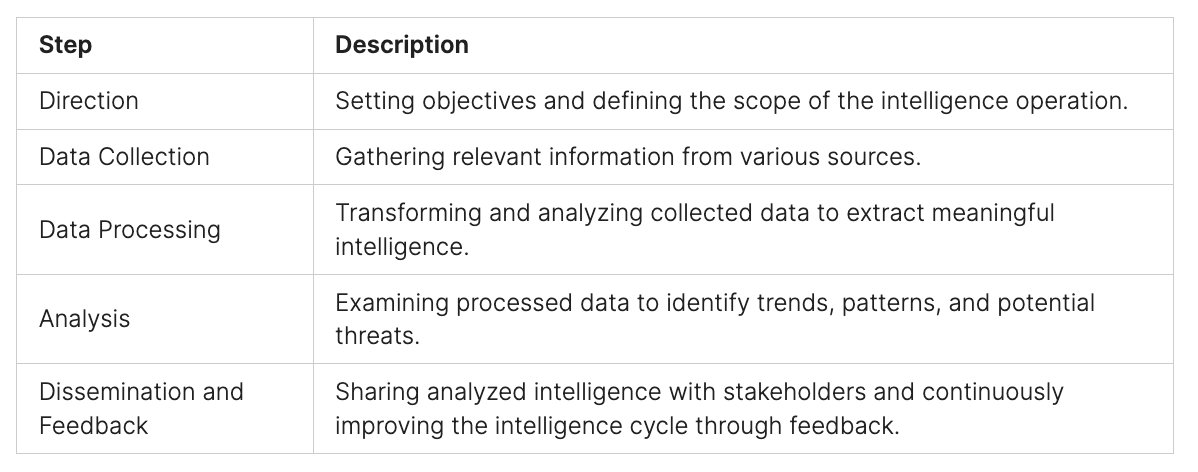
    The Five Steps of the Intelligence Cycle

    The intelligence cycle is a systematic process that organizations follow to gather, analyze, and disseminate information to support decision-making and mitigate security threats. It consists of five essential steps: direction, data collection, data processing, analysis, dissemination, and feedback.

    Throughout the intelligence cycle, various tools and techniques, including AI, data visualization, and human reasoning, are utilized to maximize the effectiveness and efficiency of each step.

    Direction

    The direction phase of the intelligence cycle involves setting objectives, determining the information requirements, and defining the scope of the intelligence operation. It is crucial to establish clear goals and priorities to guide the subsequent steps of the cycle.

    Data Collection

    Data collection is the process of gathering relevant information from various sources, both internal and external. This step involves conducting surveillance, utilizing open-source intelligence, and collecting data through human sources or technical means. It is essential to ensure the accuracy, integrity, and reliability of the collected data to generate meaningful insights.

    Data Processing

    Data processing is the transformation and analysis of collected information to extract useful intelligence. AI plays a significant role in this step, leveraging algorithms and machine learning to identify patterns, detect anomalies, and categorize data. By automating data processing, organizations can enhance their ability to handle vast amounts of information efficiently.

    Analysis

    The analysis phase involves examining the processed data to identify trends, patterns, and potential threats. Human analysts with expertise in cybersecurity and threat intelligence are instrumental in interpreting the findings and providing contextual insights. Visualizing the analyzed data through data visualization techniques, such as charts, graphs, and heat maps, enables analysts to gain a comprehensive understanding of the intelligence.

    Dissemination and Feedback

    The dissemination step involves sharing the analyzed intelligence with relevant stakeholders, such as decision-makers, security teams, and law enforcement agencies. It is crucial to communicate the information effectively and tailor it to the recipients’ needs for informed decision-making. Feedback loops are essential to refine the intelligence cycle continually. Evaluating the effectiveness and impact of the intelligence helps improve future investigations and enhance the overall intelligence process.

    In summary, the intelligence cycle encompasses direction, data collection, data processing, analysis, dissemination, and feedback. By leveraging AI, data visualization, and human reasoning at each step, organizations can enhance their ability to gather, analyze, and disseminate intelligence effectively. This approach enables proactive threat detection, informed decision-making, and a more comprehensive understanding of the evolving cybersecurity landscape.

    Conclusion

    In the intricate domain of cybersecurity, visualization emerges as a pivotal tool for deciphering complex threats and forging effective defense strategies. Through the adept application of visualization techniques, organizations gain enhanced clarity on cybersecurity challenges, empowering them to make well-informed decisions to safeguard their digital realms.

    Knowledge Graphs stand out as a potent instrument in the visualization arsenal, offering actionable intelligence and a comprehensive perspective on the intricate web of cyber threats. By marrying these advanced visualization tools with the prowess of AI technology, organizations can significantly boost their incident response efficiency and stay a step ahead in the ever-evolving cybersecurity landscape.

    This fusion of human insight, cutting-edge AI, and sophisticated data visualization techniques heralds a new era of cybersecurity resilience. Leveraging visualization tools and the rich insights provided by Knowledge Graphs enables organizations to not only shield their sensitive data but also pinpoint vulnerabilities and proactively counter cybersecurity challenges. Through informed and knowledge-based decision-making, bolstered by visualization, organizations can fortify their cyber defenses and ensure the integrity of their digital infrastructure.

    For organizations keen on harnessing the power of visualization in cybersecurity, Peris.ai Cybersecurity offers cutting-edge solutions. Our platform empowers you to visualize the cybersecurity landscape with unparalleled clarity, providing the tools and insights necessary for robust digital protection. Dive into the world of Peris.ai Cybersecurity and discover how our visualization techniques and Knowledge Graphs can transform your cybersecurity strategy, ensuring your organization’s resilience in the face of cyber threats. Visit us to explore how we can help you secure a fortified digital future.

    FAQ

    What is the power of visualization in cybersecurity?

    Visualization plays a powerful role in presenting complex cybersecurity data and relationships in an easily comprehensible and actionable way. It enhances understanding and enables organizations to take proactive measures to mitigate risks.

    Why is data security important in cybersecurity?

    Data security is crucial in protecting sensitive information from unauthorized access and data breaches. It involves identifying critical data, controlling access policies, monitoring user activity, and ensuring compliance with privacy mandates.

    How do comprehensive data security solutions help organizations?

    Comprehensive data security solutions provide visibility and insights into cyber threats, enforce security policies, detect vulnerabilities, and help organizations meet regulatory compliance requirements. They improve data security posture and protect critical data from unauthorized access.

    What is the role of Knowledge Graphs in cybersecurity?

    Knowledge Graphs excel in real-time threat detection, incident response, and unifying diverse data sources in cybersecurity. They visualize the cybersecurity landscape, provide actionable insights, and help analysts query and take proactive measures.

    How do Knowledge Graphs enhance cybersecurity capabilities?

    Knowledge Graphs serve as digital twins, creating comprehensive representations of cybersecurity environments. They automate tasks, map connections between systems, identify vulnerabilities, and pinpoint critical systems requiring heightened protection. They offer a visual representation and serve as a dynamic platform for insights, threat modeling, and risk prediction.

    How can software information be integrated into Knowledge Graphs?

    Configuration management and scanning tools can provide software versions, health reports, and vulnerability data that enrich the graph. This integration enhances the comprehensiveness of the graph and helps identify potential vulnerabilities and attack paths within the cybersecurity landscape.

    What role does threat intelligence play in Knowledge Graphs?

    Integrating threat intelligence into Knowledge Graphs helps identify vulnerabilities affecting critical resources and uncover potential attack paths. By enriching the graph with industry-standard vulnerability databases and attacker tactics, organizations can visualize vulnerabilities and gain a deeper understanding of cybersecurity risks.

    How does visualizing vulnerabilities and attack paths help organizations?

    Visual representations such as attack graphs allow organizations to grasp the dynamic nature of cybersecurity threats. By visualizing interconnected vulnerabilities and potential attack routes, organizations can prioritize mitigation efforts and enhance their incident response capabilities.

    What is the role of AI and data visualization in the intelligence cycle?

    AI techniques such as machine learning and natural language prompts can analyze and process data, while data visualization enables human investigators to understand and interpret AI-driven insights. The combination of AI and data visualization enhances the investigation process and supports decision-making in cybersecurity.

    What are the steps of the intelligence cycle?

    The intelligence cycle consists of direction, data collection, data processing, analysis, dissemination, and feedback. Humans set objectives and collect data, AI aids in data processing and analysis, and data visualization enables effective communication of the results. Human decision-making and feedback loops are crucial in enhancing future investigations.

  • Why Antivirus Software Is No Longer Enough – Here’s What You Need

    Why Antivirus Software Is No Longer Enough – Here’s What You Need

    More people than ever are online, using many apps and devices. Traditional antivirus software can’t protect us from the wide range of cyber threats we face. With over 450,000 new harmful programs appearing daily, the fight against cyber threats has become huge and complex. Basic antivirus tools are now often not enough.

    As a business leader, you’ve likely felt the growing problem of antivirus software not keeping up with cybercriminals’ new tactics. Threats and malware keep getting better, going beyond what basic antivirus can handle. They can’t stop things like ransomware, zero-day exploits, and advanced threats. It’s time to look into stronger, more complete cybersecurity solutions to protect your business in this new digital risk era.

    Key Takeaways

    • Antivirus software alone is no longer enough in today’s evolving cybersecurity landscape.
    • The scale and complexity of cyber threats have outpaced the capabilities of traditional antivirus tools.
    • Advanced threats and malware require a more comprehensive, proactive approach to security.
    • Implementing a multi-layered cybersecurity strategy is essential for effective protection.
    • Exploring alternative security solutions, such as EDR and managed security services, can enhance your organization’s defenses.

    The Evolving Cybersecurity Landscape

    The digital world has changed a lot. More devices connect online every day, which has caused cyber threats to increase sharply. Now, we need more than traditional antivirus software to keep companies safe from new, complex attacks.

    The Growing Need for Robust Cybersecurity Solutions

    Cybercriminals use many new techniques now. They deploy ransomware, target supply chains, and use APTs, among other things. The push for digital upgrades by businesses has made them more vulnerable. This is because of cloud use, IoT, and more.

    Antivirus Software’s Limitations in Today’s Threat Environment

    Usually reliable defenses like firewalls are not enough anymore. Attacks now often go past these barriers. Also, the shift to remote work and using the cloud means old security rules don’t work as well. Devices connecting from everywhere, such as with BYOD, add to these difficulties.

    Endpoint security and EDR tools can safeguard single devices against some threats. However, this is harder for big companies. MDR can help, but it also has its own problems, like finding too many false alarms.

    With cyber threats growing, companies need to use different tactics together for safety. This shows we must look beyond just using antivirus software.

    https://youtube.com/watch?v=zEWfJpDVJwY

    “Antivirus software alone detects only around 90% of known malware samples, leaving a substantial percentage undetected, as indicated by a study conducted by AV-TEST.”

    The risk of cyber threats is becoming more complicated, so businesses must find ways to deal with these new dangers.

    Understanding Antivirus Software

    Antivirus software is key to keeping devices safe from harmful software like viruses and malware. It uses different ways to spot threats, including signature-based and heuristic-based detection. Next-generation antivirus uses AI to stop new threats without needing constant updates.

    Malware attacks can cause big problems, like losing data or money and harming your reputation. To stay safe, it’s important to use antivirus software, keep software updated, and back up your data.

    When picking antivirus software, think about how well it detects threats, its modern security features, and how it affects your system. Free versions can protect you, but you might need to pay for more features.

    Windows antivirus software helps protect against malware by scanning your system and checking emails and websites. MacOS antivirus software also guards against malware, focusing on emails and web browsing. Android antivirus is crucial because many mobile devices are targeted by malware.

    Antivirus software uses different ways to find and stop threats. Signature-based detection looks for known malware patterns, while heuristic-based detection uses algorithms to spot threats. Behavior-based detection watches how software acts to see if it’s harmful. To keep up with new malware, antivirus companies use cloud analysis.

    “The cybersecurity landscape is constantly evolving, and antivirus software alone is no longer sufficient to protect against the ever-increasing threats. A comprehensive, multi-layered approach to cybersecurity is essential for safeguarding individuals and organizations in today’s digital landscape.”

    Antivirus software is vital for fighting malware, but it’s not enough. For full protection, you also need to use encryption, multi-factor authentication and managed security services.

    The Limitations of Antivirus Software

    Antivirus software is key to cybersecurity, but it has big limits in fighting new threats. It looks for known malware patterns, finding new ones every day. Most software scans files or directories in real-time and does full scans at set times. Keeping your software updated is crucial for the best protection.

    The Staggering Number of New Malicious Programs

    Over 450,000 new malicious programs appear every day. This shows that antivirus software alone can’t fully protect your data. With so many new threats, antivirus vendors can’t always keep up, leaving users at risk.

    The Reactive Nature of Antivirus Software

    Antivirus software reacts after an infection, not before. This means businesses can suffer damage from quick attacks. IT Architechs says over 90% of cyber attacks start with emails. Just antivirus isn’t enough against these complex attacks.

    The Rise of Smarter Malicious Programs

    Cybercriminals now create malware that antivirus programs cannot catch. Since antivirus programs only look for known threats, new, smarter malware can slip through. This shows that we need a stronger, proactive approach to fighting cyber threats.

    “While installing anti-virus software is effective, it has limitations as it can only detect malware with known characteristics, making users susceptible to new malware before it is identified by anti-virus vendors.”

    In conclusion, antivirus software is vital but has its limits. We need a stronger, multi-layered approach to fight the growing cyber threats.

    Cyber-attacks That Bypass Antivirus

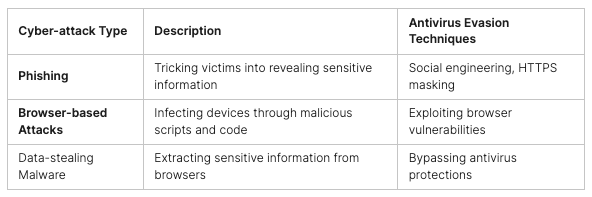
    Cybercriminals are getting smarter and finding new ways to beat antivirus software. They use polymorphic malware that changes its file hash often, making it hard to catch. Malicious documents can also change their file hashes to slip past antivirus checks. Fileless malware attacks are making antivirus solutions harder to keep up with.

    Phishing attacks are becoming more common. These scams trick people into sharing sensitive info like passwords or bank details. What’s scary is that many phishing sites now use HTTPS to hide their true nature, making them tough to spot.

    Browser-based attacks are another big threat, spreading malware through web pages. Data-stealing malware can get into browsers and grab sensitive data, avoiding antivirus.

    These attacks show that traditional antivirus software can’t keep up with new threats. DoS and DDoS attacks try to flood systems and take them down, making antivirus less effective. MITM attacks intercept data, so strong encryption is key to protect against them.

    Cybercriminals keep getting better, so we need a strong, multi-layered defense against them. Using advanced security tools, training employees, and being proactive can help protect against these threats.

    https://youtube.com/watch?v=OzfIG0p_lxw

    “The rise of cyber-attacks that bypass antivirus software underscores the need for a holistic approach to cybersecurity. Traditional solutions are no longer sufficient to protect against the growing sophistication of modern threats.”

    Antivirus Software in Cybersecurity

    Antivirus software is still key in cybersecurity, but it’s not enough to fight all threats alone. The average cost of a data breach on mobile devices hit $1.9 million in 2023, showing we need a broader cybersecurity plan.

    There are two kinds of antivirus software: free and paid. Top names include Bitdefender, AVAST, and Panda. These tools help block spam, protect against viruses, and stop hackers. But they can slow down your computer, show ads, and have security gaps, especially in free versions.

    Antivirus software uses different ways to find and stop threats. It looks for known threats, uses sandboxing, and learns from data to protect you. But, it mainly reacts to threats it knows about, not new ones.

    To really protect digital assets, we need a full cybersecurity plan. This includes updating software, using strong passwords, and training staff. It also means backing up data, securing networks, and following rules for cybersecurity.

    In summary, antivirus software is crucial but not enough for today’s complex threats. We must use a mix of antivirus and other security steps to protect our digital world.

    Robust Cybersecurity Solutions Beyond Antivirus

    As cybersecurity evolves, businesses need more than just antivirus software. They must use a mix of advanced security tools to protect themselves. This mix helps fight off many cyber threats.

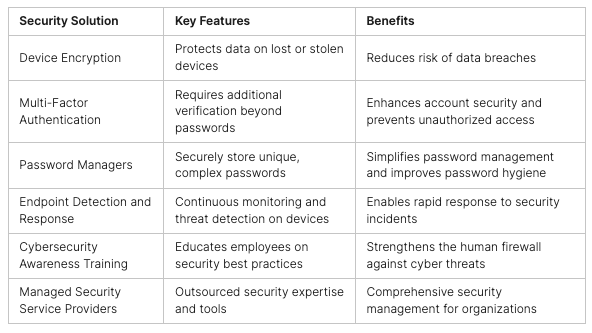
    Device Encryption

    Using device encryption is key to a strong cybersecurity plan. It ensures that all company devices, such as laptops and phones, are safe. If a device gets lost or stolen, encrypted data is hard for others to access.

    Multi-Factor Authentication

    Multi-factor authentication (MFA) is vital today. It makes logging in more secure by asking for extra proof, like a code or your face. This stops hackers from getting into accounts easily.

    Password Managers

    Bad passwords are a big risk for hackers. Password managers keep strong, unique passwords safe for each account. They make it easy for employees to keep their passwords secure.

    Endpoint Detection and Response (EDR)

    Endpoint detection and response (EDR) systems monitor devices closely. They spot and act on threats quickly, helping stop attacks before they get worse.

    Cybersecurity Awareness Training

    Teaching employees about cybersecurity best practices is crucial. Training covers how to spot phishing, manage passwords, and report incidents, turning employees into the first line of defense.

    Managed Security Service Providers (MSPs)

    For those without the skills or resources for cybersecurity, working with a managed security service provider (MSP) is smart. MSPs offer many services, like monitoring and handling security issues. They make sure companies have the right tools and knowledge to fight cyber threats.

    By using a layered cybersecurity approach, businesses can protect themselves well. This is better than just relying on antivirus software.

    https://youtube.com/watch?v=GwR1g-pm0pQ

    “A strong cybersecurity strategy requires a multi-layered approach that goes beyond traditional antivirus software. By implementing a combination of advanced security tools, businesses can significantly enhance their resilience against the ever-evolving threat landscape.”

    The Rise of Ransomware-as-a-Service (RaaS)

    The ransomware industry has grown into a huge business, with cybercriminals using Ransomware-as-a-Service (RaaS) more and more. RaaS lets even new hackers do complex ransomware attacks. The people who make the malware give the tools and help, taking a share of the money made. This has led to more ransomware attacks on businesses of all sizes, with many new types and groups making money from this.

    IBM’s X-Force Threat Intelligence Index says ransomware was a top cyber attack type in 2022. Zscaler’s 2022 report found that 8 out of 11 top ransomware types were RaaS. Now, ransomware attacks happen much faster, taking just 3.85 days on average in 2022, down from over 60 days in 2019.

    RaaS has let many cybercriminals start ransomware attacks. Some types, like LockBit, made up 17% of ransomware cases in 2022. REvil was also big, causing 37% of ransomware attacks in 2021. The DarkSide ransomware was used in a big 2021 attack on the U.S. Colonial Pipeline, seen as the worst cyberattack on U.S. infrastructure.

    Ransomware attacks are very profitable, with an average demand of $6 million in 2021. Total ransomware money made in 2020 was about $20 billion, up from $11.5 billion the year before. RaaS groups take a cut of the money made by affiliates, often 20% to 30%. The DarkSide group made nearly $5 million from the Colonial Pipeline attack, and REvil demanded $10 million in one case.

    RaaS has made it easier for cybercriminals to attack, causing big problems for businesses and organizations worldwide. As threats grow, it’s key for companies to use strong cybersecurity to fight these attacks.

    Getting over a ransomware attack is hard and expensive, which is why stopping RaaS attacks before they happen is crucial. With the ransomware industry growing, we need strong cybersecurity solutions that go beyond antivirus software.

    The Advantages of EDR and MDR

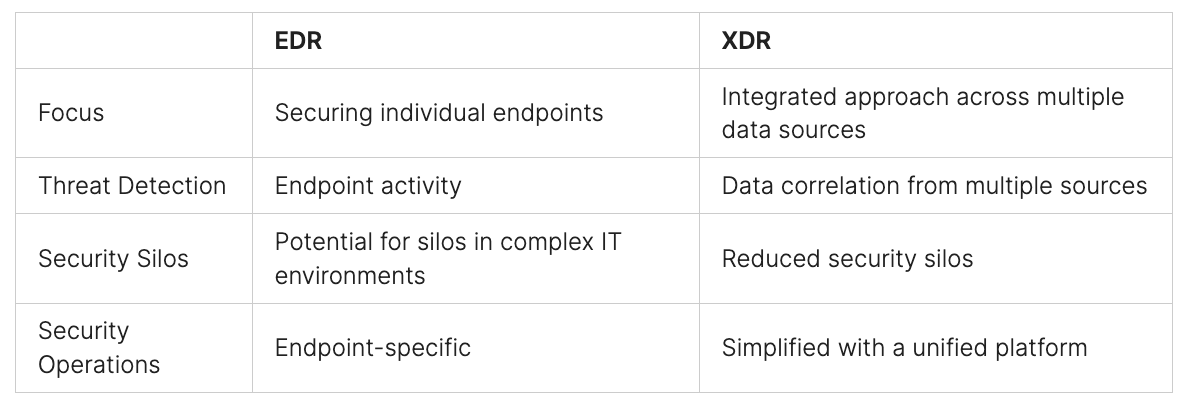
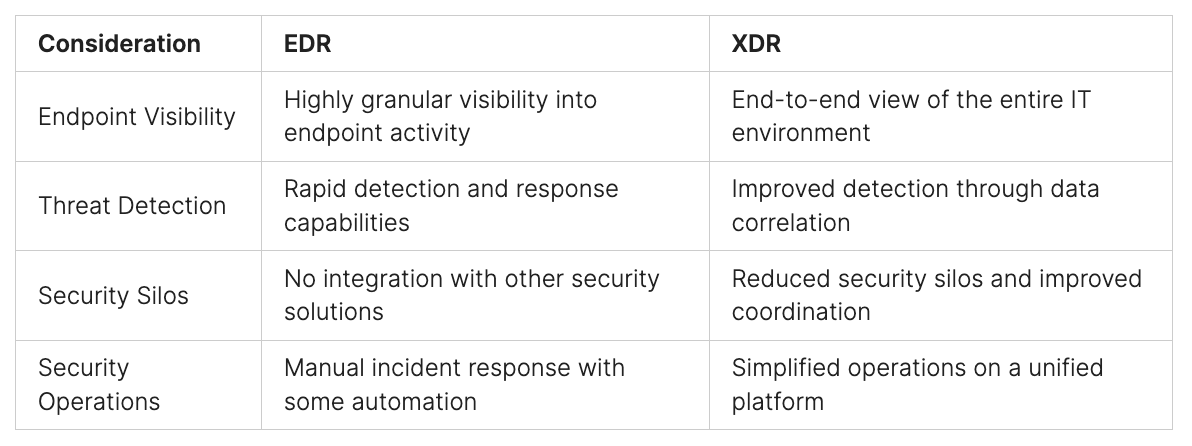
    As the world of cybersecurity changes, the usual antivirus software isn’t enough to stop advanced threats. So, many groups are now using more powerful tools, including Endpoint Detection and Response (EDR) and Managed Detection and Response (MDR) services.

    How EDR Works to Detect and Respond to Threats

    Traditional antivirus just can’t keep up. EDR solutions constantly monitor what’s happening on devices. They find strange or unknown things. When they find something bad, they act fast to stop it from spreading.

    EDR is different from antivirus because it doesn’t just focus on known dangers. It uses smart tools and learns from patterns to spot any kind of threat. This means companies get a big-picture view of their safety. Then, they can move fast to deal with serious threats.

    The Role of Managed Detection and Response (MDR) Services

    For even more protection, companies use MDR services on top of EDR. MDR is like EDR, but it’s also a team that watches over your security all the time. They find problems and help fix them right away.

    Choosing MDR means companies can find and stop threats quickly without adding more people to their teams. MDR also helps teams react quickly when there’s a security emergency.

    EDR and MDR, together with antivirus, provide a strong defense against many kinds of threats.

    Extended Detection and Response (XDR) solutions offer even more protection. XDR doesn’t just watch the devices; it keeps your whole security system safe. This kind of system watches for threats and acts to stop them.

    By using EDR, MDR, and XDR, companies become better at seeing threats. They act quickly, save money, and manage their security team more easily.

    “Implementing EDR, MDR, or XDR can help organizations improve threat visibility, accelerate security operations, reduce total cost of ownership (TCO), and ease the security staffing burden.”

    Cyber Insurance and the Importance of EDR

    Cyber insurance companies now see the big role of endpoint detection and response (EDR) tools. They know EDR is key to lowering cyber risks and keeping security strong. Traditional antivirus software can’t stop today’s complex cyber threats.

    Many insurers now ask for EDR to qualify for policies. EDR tools have features like Endpoint Protection Platform (EPP), threat intelligence, and a central management console. These help companies spot, analyze, and act on security issues fast.

    With new AI tools, keeping cybercriminals out is harder. Insurers want businesses to use strong security, such as EDR and multifactor authentication, to obtain cyber insurance.

    Adding EDR to a company’s security plan shows that they’re ready to handle cyber risks. It helps them get cyber insurance, keeps their data safe and in compliance with laws, and strengthens them against cyber threats.

    Cyber insurance also requires other security steps, like data backups and employee training. Using EDR and other strong security steps helps companies get cyber insurance. It also improves their security and lowers their risk.

    Cyber insurance has many benefits, like covering cyberattack costs and helping with compliance. But insurers now want EDR and behavioral detection to fight new threats. Traditional antivirus isn’t enough against today’s threats.

    Adding EDR to a company’s security plan is key for cyber insurance and fighting new threats. EDR helps protect digital assets, reduce losses, and keep customers and partners trusting.

    The Value of Managed IT Services

    As the world of cybersecurity changes, working with a managed IT service provider (MSP) is key for companies. These services are gaining popularity among businesses for their reliable IT support. They offer access to skilled engineers who can set up and manage advanced security tools like Endpoint Detection and Response (EDR). These services are paid monthly and vary in cost based on the number of users, making them a good fit for small and medium-sized businesses.

    Managed IT services offer more than just saving money. They provide a range of services, including cybersecurity management, cloud services, and remote monitoring and management. They also offer business continuity and disaster recovery solutions. Plus, MSPs are experts in handling rules for industries like finance, healthcare, and education, which is very useful.

    One big plus of managed IT services is getting 24/7 IT support from skilled engineers who can fix problems quickly. The cybersecurity package includes antivirus, anti-spam, and DNS protection, making businesses safer. These services also make hiring IT staff easier, letting businesses focus on what they do best.

    Working with a managed IT service provider helps businesses get the cybersecurity help and proactive management they need. This partnership helps businesses stay ahead of cyber threats and keeps their IT systems reliable and efficient.

    “Managed IT services enable small to medium-sized businesses to access critical network, endpoint, and data management for smooth operations at a fraction of the cost of in-house management.”

    By using the skills and resources of a managed IT service provider, companies can improve their cybersecurity, stay ahead of threats, and make their IT work better. This leads to more efficiency and profit.

    Conclusion

    In today’s rapidly evolving cyber landscape, traditional antivirus software alone is no longer sufficient to protect businesses from sophisticated threats. While antivirus solutions play a crucial role in detecting and blocking malware, their effectiveness relies heavily on frequent updates to identify new threats. Although essential, this approach may fall short against the complexities of modern cyber threats like ransomware.

    To overcome antivirus software’s limitations, companies need to adopt a multi-layered cybersecurity strategy. This includes implementing advanced tools such as Endpoint Detection and Response (EDR), Multi-Factor Authentication (MFA), password managers and managed security services. EDR software is particularly effective in detecting, investigating, and responding to network attacks, providing comprehensive protection for businesses of all sizes.

    By integrating these advanced cybersecurity measures, businesses can fortify their defenses against emerging threats. A robust cybersecurity plan should encompass regular security assessments, ongoing employee training, and expert support to mitigate cyber risks effectively.

    Empower your cyber defense with Peris.ai Brahma – Incident Response Platform. Brahma offers an all-in-one, enterprise-grade solution designed to identify, prevent, and respond to both known and emerging cyber threats across your organization’s infrastructure. Utilizing advanced machine learning and behavior analytics, Brahma delivers exceptional detection and response capabilities across endpoints (EDR), network (NDR), and extended (XDR) systems.

    Key Features of Brahma:

    • Dashboard Monitoring: Central hub for real-time security metrics, interactive charts, graphs, and alerts.
    • Security Configuration Assessment: Comprehensive view of system security configurations, identifying vulnerabilities due to misconfigurations.
    • MITRE ATT&CK Framework: Visualizes defensive coverage, helping you understand tactics and techniques used by attackers.
    • Vulnerabilities Dashboard: Centralized view of identified vulnerabilities, prioritizing and managing remediation efforts effectively.

    Choose Brahma to fortify your organization’s defenses with cutting-edge technology, seamless integration, and unparalleled protection. Elevate your cybersecurity strategy and secure your digital future with Brahma. For more information, visit Peris.ai Cybersecurity.

    FAQ

    What are the limitations of traditional antivirus software in today’s cybersecurity landscape?

    Antivirus software falls short in the battle against modern cyber threats. It struggles with the increase in devices and online actions, making it less effective against new types of malware and cyber threats.

    What types of cyber-attacks can bypass antivirus software?

    Phishing, browser attacks, and data theft are among the dangerous online threats. These dodgy tactics take advantage of gaps in antivirus software’s protection and sneak past undetected.

    What are the key components of a robust cybersecurity solution beyond antivirus?

    A strong cybersecurity setup needs several layers beyond basic antivirus. It includes device encryption, strong authentication, and password management. Also crucial are EDR, training on cybersecurity, and help from MSPs.

    How do Endpoint Detection and Response (EDR) and Managed Detection and Response (MDR) solutions enhance cybersecurity?

    EDR doesn’t just set watch like antivirus. It actively looks for threats by monitoring device activities. MDR steps up by not only watching but also having experts ready to take down threats as they spot them.

    Why is cyber insurance increasingly requiring EDR as a prerequisite for policy qualification?

    EDR is a must for cyber insurance these days. It proves that a company is doing its best to stay secure against cyber risks. Traditional antivirus can’t do this job well enough alone.

    How can managed IT services help organizations enhance their cybersecurity?

    Managed IT services offer vital help in keeping up with the fast-changing cyber threats. They can bring in and manage the latest security tech. This keeps businesses reacting fast and staying safe.

  • 5 Shocking Incident Response Failures and How to Avoid Them

    5 Shocking Incident Response Failures and How to Avoid Them

    Incident response failures can have serious consequences for organizations, leading to data breaches, financial losses, and damage to reputation. Businesses must understand the common cybersecurity mistakes that can result in these failures and implement effective prevention strategies to avoid them.

    Security protocols play a vital role in incident response, providing a framework for organizations to respond swiftly and effectively to cyber threats. By prioritizing risk avoidance and adhering to established security protocols, organizations can enhance their incident response capabilities and protect themselves against potential breaches.

    Key Takeaways:

    • Incident response failures can lead to significant consequences, such as data breaches and financial losses.
    • Understanding common cybersecurity mistakes is crucial for avoiding incident response failures.
    • Prevention strategies, including implementing security protocols, can help mitigate the risk of failures.
    • Risk avoidance should be a priority in incident response planning to enhance overall cybersecurity.

    The Importance of IT Asset Management in Incident Response

    IT asset management (ITAM) plays a crucial role in incident response by ensuring that all IT assets are properly accounted for and protected. In today’s digital landscape, organizations face cybersecurity vulnerabilities that can lead to costly data breaches and reputational damage. By implementing strong ITAM practices, organizations can enhance their incident response capabilities and safeguard against cyber threats.

    Regular audits of IT assets are essential to keep systems up-to-date and secure. These audits help identify vulnerabilities, gaps in security protocols, and potential risk areas. By staying proactive and vigilant in IT asset management, organizations can mitigate the risk of cyberattacks and strengthen their incident response strategies.

    ITAM software tools are invaluable resources for organizations as they provide real-time insights and automate various processes. These tools offer comprehensive visibility into an organization’s IT infrastructure, allowing for effective asset tracking and management. By leveraging ITAM software tools, organizations can streamline their incident response efforts and address vulnerabilities swiftly.

    The Benefits of IT Asset Management Software Tools

    “ITAM software tools provide organizations with critical capabilities in incident response, enabling proactive protection against cyber threats and improving overall cybersecurity posture.”

    • Real-time Visibility: ITAM software tools offer real-time insights into an organization’s IT assets, providing a comprehensive view of the entire infrastructure. This visibility helps identify potential vulnerabilities and respond promptly to incidents.
    • Automation and Efficiency: ITAM software tools automate various IT asset management processes, reducing manual effort and human error. Organizations can allocate their resources more effectively by eliminating time-consuming manual tasks and enhancing incident response efficiency.
    • Compliance and Audit Support: ITAM software tools assist organizations in maintaining compliance with regulatory requirements. These tools facilitate proper documentation, asset tracking, and reporting, streamlining the audit process and ensuring adherence to industry standards.
    • Centralized Data and Reporting: ITAM software tools provide centralized data storage and reporting capabilities, enabling easy access to relevant information during incident response. This centralized approach enhances collaboration and communication among incident response teams.

    Investing in ITAM practices and partnering with the right ITAM provider is crucial for organizations seeking to enhance their incident response capabilities. By prioritizing IT asset management and leveraging the power of ITAM software tools, organizations can effectively shield themselves from cyberattacks and strengthen their overall cybersecurity posture.

    The Impact of Compliance Issues on Incident Response

    Compliance with regulations and industry-specific standards is crucial for effective incident response. Failure to adhere to compliance requirements can have severe consequences, including financial penalties and reputational damage to organizations. Organizations must prioritize compliance in their incident response strategies to protect sensitive information and maintain stakeholder trust.

    In particular, organizations must ensure that their incident response efforts align with relevant regulatory requirements, such as the General Data Protection Regulation (GDPR) and the Health Insurance Portability and Accountability Act (HIPAA). These regulations define strict guidelines for handling personal data and protected health information. Organizations can safeguard individuals’ privacy and prevent legal ramifications by incorporating these requirements into incident response plans.

    Another aspect of compliance in incident response is vendor management. Organizations must extend their high standards and requirements to their vendors and ensure that their assets and practices comply with security and regulatory standards. This includes verifying that vendors have strong IT asset management (ITAM) practices to protect data and prevent cybersecurity breaches.

    “Compliance with regulations and industry-specific standards is critical for effective incident response.”

    By proactively addressing compliance issues throughout the entire incident response process, organizations can strengthen their defenses against cyber threats. Integrating compliance requirements into incident response plans, training employees on regulatory obligations, and conducting regular audits are key steps toward maintaining compliance. Organizations should also collaborate with legal and compliance teams to ensure a comprehensive approach to an incident response that aligns with both cybersecurity best practices and regulatory obligations.

    “Failure to adhere to compliance requirements can have severe consequences for organizations.”

    Furthermore, organizations should regularly review and update their incident response plans to reflect any changes in compliance regulations. By staying up to date with evolving regulatory requirements, organizations can adapt their incident response strategies accordingly and ensure ongoing compliance.

    Key Takeaways

    • Compliance with regulations and industry-specific standards is crucial for effective incident response.
    • Non-compliance can result in financial and reputational damage to organizations.
    • Organizations must ensure that their incident response efforts align with regulatory requirements, such as GDPR and HIPAA.
    • Vendors should also adhere to good ITAM practices and maintain assets compliant with security and regulatory requirements.
    • Proactively addressing compliance issues strengthens incident response capabilities and protects sensitive information.

    “By proactively addressing compliance issues throughout the entire incident response process, organizations can strengthen their defenses against cyber threats.”

    The Role of Incident Response Planning in Effective Cybersecurity Management

    Effective cybersecurity management requires well-defined incident response planning. Incident Response Plans (IRPs) provide a structured framework for security personnel to handle and mitigate the impact of cyber threats. By establishing comprehensive IRPs, organizations can enhance their incident response capabilities and be better prepared for cybersecurity incidents.

    One way to optimize the creation of IRPs is by leveraging the power of Large Language Models (LLMs) like ChatGPT. These advanced AI models can assist organizations in drafting initial incident response plans, suggesting best practices, and identifying documentation gaps. With the assistance of LLMs, organizations can create more robust and efficient IRPs, tailored to their specific needs and industry requirements.

    Continuous refinement is essential for ensuring the effectiveness of IRPs. Regularly reviewing, updating, and testing the plans allows organizations to stay up-to-date with emerging threats and adapt their incident response strategies accordingly. By embracing a proactive approach to incident response planning, organizations can stay ahead of cyber threats and minimize the potential impact of security incidents.

    Benefits of Incident Response Planning:

    1. Structured Response: IRPs provide clear guidelines and procedures for security personnel to follow during an incident, ensuring a coordinated and effective response.
    2. Faster Resolution: Well-defined IRPs enable organizations to respond promptly, reducing the time to detect, contain, and mitigate the impacts of security incidents.
    3. Minimized Damage: Through timely and efficient incident response, organizations can prevent the escalation of cyber threats, minimizing potential data breaches and financial losses.
    4. Compliance Adherence: IRPs help organizations meet regulatory requirements by establishing predefined processes for incident response and data breach notification.

    “Having a well-structured incident response plan in place is like having a roadmap during a crisis. It provides clarity and confidence to security teams, guiding them through the chaos and enabling a more effective response.” – John Smith, Chief Information Security Officer, ABC Corporation.

    Organizations must also consider the integration of Standard Operating Procedures (SOPs) within their IRPs. SOPs provide granular instructions and specific steps for incident responders to follow. By combining IRPs and SOPs, organizations can ensure consistent and standardized incident response practices throughout the entire organization.

    Key Elements of Comprehensive Incident Response Planning:

    Minimize imageEdit imageDelete image

    By incorporating robust incident response planning into their cybersecurity management practices, organizations can enhance their ability to detect, respond to, and recover from security incidents. Through the integration of LLMs, continuous refinement, and the utilization of SOPs, organizations can strengthen their incident response capabilities and better protect their critical assets from cyber threats.

    Common Challenges in Incident Response Planning

    Effective incident response planning is critical for organizations to mitigate risks and respond promptly to security incidents. However, there are several common challenges that organizations face in this process:

    • Complex systems: With the increasing complexity of IT infrastructures, incident response planning becomes more challenging. Coordinating responses across multiple systems and applications can be overwhelming.
    • High turnover rates: Employee turnover can impact incident response planning and capabilities. New team members need to be onboarded and trained, while knowledge gaps may arise when experienced team members leave.
    • Legacy technologies: Many organizations still rely on legacy technologies that are no longer supported or updated. These technologies may lack proper documentation and pose a significant challenge in incident response planning.
    • Lack of documentation: Inadequate documentation can hinder developing, reviewing, and refining incident response plans. Without proper documentation, ensuring consistency and accuracy in response processes is difficult.

    To overcome these challenges, organizations can leverage advanced technologies such as Large Language Models (LLMs) and incorporate artificial intelligence (AI) into their incident response planning processes. LLMs can streamline the planning process by suggesting innovative solutions, providing best practices, and identifying documentation gaps. By harnessing these technologies, organizations can enhance their incident response planning capabilities and improve their preparedness for security incidents.

    One example of an LLM that can assist in incident response planning is ChatGPT. ChatGPT can help organizations develop initial incident response plans, offer guidance on best practices, and identify areas that require documentation improvement.

    Implementing comprehensive incident response planning that considers these challenges and leverages the power of LLMs and AI technologies can significantly enhance an organization’s incident response capabilities and ensure a swift and effective response to security incidents.

    Best Practices for Incident Response Planning

    Implementing best practices in incident response planning is crucial for effective cybersecurity management. By following these best practices, organizations can enhance their incident response capabilities and improve their overall cybersecurity posture.

    1. Tailor Incident Response Plans: Develop incident response plans (IRPs) specifically tailored to your organization’s culture, environment, and business goals. Consider your organization’s unique challenges and vulnerabilities and create plans that address them effectively.

    2. Continuous Refinement: Regularly refine and update your IRPs to ensure their relevance and effectiveness. Cyber threats constantly evolve, and your response plans should reflect these changes. Conduct thorough reviews and assessments, and make necessary adjustments to your plans.

    3. Documentation is Key: Document all aspects of your incident response planning process, including procedures, protocols, and communication channels. Clear and comprehensive documentation ensures that all team members clearly understand their roles and responsibilities during an incident.

    4. Training and Education: Provide ongoing training and education to your incident response team. Keep them updated on the latest cybersecurity threats, techniques, and best practices. Regular training exercises and simulated incidents can help your team stay prepared and test the effectiveness of your IRPs.

    5. Regular Testing and Evaluation: Test your IRPs regularly to ensure their effectiveness and compatibility with emerging threats. Conduct incident response drills and exercises to assess your team’s readiness and identify areas for improvement. Evaluate the outcomes of these tests and make necessary adjustments to your plans.

    6. Embrace a Culture of Continuous Improvement: Encourage and foster a culture of continuous improvement within your organization’s incident response team. Foster an environment where feedback is welcomed, lessons learned from past incidents are shared, and new insights are integrated into the planning process.

    Quote:

    “Best practices for incident response planning require organizations to tailor their plans, continuously refine them, prioritize documentation and training, and regularly conduct testing. By following these guidelines, organizations can enhance their incident response capabilities and better protect against cyber threats.”

    By adhering to these best practices, organizations can strengthen their incident response planning and be better prepared to mitigate the impact of cybersecurity incidents. The continuous refinement of incident response plans, coupled with comprehensive documentation and ongoing training, allows organizations to adapt to evolving threats and respond effectively to incidents.

    Common Mistakes to Avoid in Incident Response Planning

    When it comes to incident response planning, there are several common mistakes that organizations should avoid. By learning from these mistakes, organizations can enhance their incident response capabilities and avoid common pitfalls. Let’s explore these mistakes and understand how to overcome them:

    1. Overcomplicating Response Procedures: One of the most prevalent mistakes in incident response planning is overcomplicating response procedures. When response procedures are overly complex, it can hinder investigations and slow down incident resolution. Organizations should strive for simplicity in their response procedures, ensuring they are clear, concise, and easy to follow.
    2. Using Outdated Plans: Another notable mistake is relying on outdated plans that are ineffective against evolving threats. In the rapidly changing landscape of cybersecurity, it is crucial to regularly review and update incident response plans to address emerging risks and vulnerabilities. Organizations should prioritize maintaining up-to-date plans that align with current cybersecurity best practices.
    3. Neglecting Regular Testing and Evaluation: Regular testing and evaluation of Incident Response Plans (IRPs) is essential for effective incident response. Neglecting this crucial step can lead to ineffective incident response during critical situations. By conducting regular testing exercises and evaluations, organizations can identify and address any weaknesses or gaps in their IRPs, ensuring their readiness to handle security incidents.

    By prioritizing simplicity, currency, and testing in incident response planning, organizations can avoid these common mistakes and optimize their incident response efforts.

    Effective Communication in Incident Response

    Effective communication is vital to incident response, particularly in organizations with segmented functions. Coordinating and interacting with key stakeholders can be challenging, but implementing a centralized communication dashboard can significantly streamline the communication process and enhance incident response capabilities.

    A centralized communication dashboard provides incident response teams with a dedicated platform for efficient information exchange during critical incidents. This centralized system allows teams to publish detailed information, retrieve relevant data, and ensure accurate and timely communication without relying on overloaded email systems.

    This centralized approach to communication offers several benefits:

    • Streamlined communication: All incident-related communication is consolidated in one central location, facilitating easy access and ensuring all team members are on the same page.
    • Real-time information: The dashboard provides real-time updates on incident status, allowing teams to stay informed and make informed decisions quickly.
    • Enhanced collaboration: Clear communication channels foster collaboration among team members, enabling effective coordination and faster incident resolution.

    In addition to these benefits, a centralized communication dashboard can provide a platform for incident documentation and knowledge sharing, allowing teams to maintain a repository of valuable incident response insights and best practices.

    To illustrate the impact of a centralized communication dashboard, consider the following scenario:

    An organization encounters a sophisticated cyberattack that targets sensitive customer information. The incident response team needs to coordinate with multiple departments, including IT, legal, and public relations. Without a centralized communication dashboard, team members must rely on emails, phone calls, and in-person meetings to exchange crucial information.

    In summary, effective communication is a fundamental aspect of incident response. Organizations can enhance coordination, streamline information exchange, and facilitate efficient incident resolution by implementing a centralized communication dashboard. Clear communication channels, supported by a centralized system, are essential for successful incident response efforts.

    Building a Skilled and Well-Managed Incident Response Team

    Building a skilled and well-managed incident response team is crucial for effective incident response. Organizations of all sizes face challenges in selecting the right personnel and allocating resources appropriately. Small organizations may assign incident response responsibilities to employees with technical knowledge but lacking experience in crisis management. Large organizations may struggle with resource allocation. It is important to carefully assess the need for training and seek assistance recruiting experienced staff for the incident response team. Strong leadership, clear roles and responsibilities, and ongoing training contribute to the team’s success.

    When forming an incident response team, organizations should consider the following:

    • Select individuals with diverse skills: Incident response involves various technical and non-technical tasks. Ensure the team comprises members with expertise in areas such as network security, forensics, and communication.
    • Assign clear roles and responsibilities: Define the functions and responsibilities of each team member to ensure efficient collaboration and workflow.
    • Provide thorough training: Regular and continuous training is essential to keep the team updated on the latest security threats, incident response strategies, and tools.
    • Cultivate strong leadership: A skilled and knowledgeable team leader can inspire and guide the team, promote effective decision-making, and ensure smooth coordination.

    Organizations must also establish effective team management practices, such as:

    • Regularly reviewing and evaluating team performance to identify areas for improvement and implement necessary changes.
    • Promoting a culture of collaboration and open communication within the team to facilitate information sharing and knowledge transfer.
    • Providing the necessary resources and support enables the team to carry out their incident response tasks effectively.
    • Encouraging a proactive approach to incident response by fostering a sense of ownership and responsibility among team members.

    By building a skilled and well-managed incident response team, organizations can enhance their incident response capabilities and effectively mitigate the impact of cybersecurity incidents.

    Preserving Evidence in Incident Response

    Preserving evidence is a critical aspect of incident response, ensuring the integrity and accuracy of investigations. In this process, support service personnel play a crucial role, working alongside the incident response team to secure evidence and facilitate an effective incident investigation.

    Support staff should be trained to recognize indicators that require the involvement of the incident response team. By understanding the significance of potential evidence, support personnel can promptly escalate incidents, ensuring that critical information is not overlooked or lost.

    Documentation is key in evidence preservation. Support staff should meticulously document their activities when responding to incidents. This includes capturing relevant information such as timestamps, actions taken, and any observations made during the incident response process. Detailed documentation helps maintain a clear and accurate incident record, contributing to comprehensive investigations.

    Actions taken by support staff to fix user problems should be carefully managed to avoid inadvertently destroying key evidence. Organizations can balance resolving issues promptly and preserving potential evidence by implementing proper incident response protocols.

    Creating a culture of documentation is paramount in preserving evidence. Organizations should emphasize the importance of documentation in incident response and ensure that support staff are aware of their role in evidence preservation. This can be achieved through regular training programs, reinforcing the significance of accurate record-keeping and providing guidelines for documenting incidents and their corresponding actions.

    By prioritizing evidence preservation and fostering a culture of documentation, organizations can strengthen their incident response efforts. The preservation of evidence enables thorough investigations, aiding in the identification of attackers, the understanding of attack vectors, and the implementation of effective security measures to prevent future incidents.

    Key Points:

    • Support service personnel play a crucial role in evidence preservation during incident response.
    • Documentation of activities and actions is essential for maintaining an accurate record of incidents.
    • Avoiding the destruction of evidence while resolving user problems requires careful management.
    • Creating a culture of documentation and providing training are vital for effective evidence preservation.

    Leveraging Incident Response Tools for Effective Incident Management

    Incident response tools are essential for efficiently managing and resolving security incidents. However, organizations must ensure these tools are adequately implemented, properly managed, regularly tested, and fully utilized. By optimizing incident response tool management, organizations can enhance their incident management capabilities and effectively address cybersecurity threats.

    Proper Tool Management

    Proper tool management is crucial to ensure the functionality, reliability, and effectiveness of incident response tools. Centralizing records of the tools used and regularly evaluating their performance can help organizations maintain optimal tool functionality. Organizations can identify and address any issues or gaps in tool capabilities by keeping track of tool updates and conducting periodic assessments.

    Data Accessibility

    Data accessibility is critical in incident response, as access to relevant information is vital for effective incident management. Organizations must ensure that incident response tools provide easy and timely access to critical data. Missing or unavailable information can hinder incident response efforts and potentially prolong the resolution time. Therefore, it is imperative to establish proper data accessibility protocols to facilitate efficient incident management.

    Threat Intelligence Integration

    Integrating threat intelligence into incident response processes enhances organizations’ understanding of potential threats and enables proactive incident management. By leveraging threat intelligence feeds and integrating them into incident response tools, organizations can quickly identify emerging threats, patterns, and indicators of compromise. This integration allows incident responders to make informed decisions and act promptly to mitigate risks.

    In their words…

    “Proper management and utilization of incident response tools is essential for effectively addressing cybersecurity incidents. By ensuring tool functionality, data accessibility, and threat intelligence integration, organizations can enhance their incident management capabilities and mitigate risks effectively.” – Cybersecurity Expert

    Minimize imageEdit imageDelete image

    Leveraging incident response tools and integrating them into incident management processes significantly improves an organization’s ability to respond to security incidents effectively. By adopting proper tool management practices, ensuring data accessibility, and integrating threat intelligence, organizations can enhance their incident response capabilities and better protect against cyber threats.

    Conclusion

    In today’s digital landscape, the consequences of incident response failures are far-reaching, potentially jeopardizing an organization’s data security, financial stability, and reputation. Yet, by adopting proactive measures, organizations can significantly mitigate these risks and enhance their incident response capabilities.

    The key to preventing such failures is the implementation of robust cybersecurity strategies. This includes regularly updating security protocols and leveraging the latest in cybersecurity technology. Organizations can fortify their defenses and reduce the likelihood of significant incidents by keeping cybersecurity management a top priority and staying vigilant against emerging threats.

    Moreover, crafting and maintaining a comprehensive incident response plan (IRP) is crucial for effective cybersecurity management. Organizations should develop these plans and continually refine and test them to ensure they are effective when most needed. Utilizing advanced technologies, such as Large Language Models (LLMs), can aid in drafting and improving these IRPs, optimizing an organization’s readiness to respond to incidents.

    Successful incident response also hinges on having skilled technical expertise, ensuring clear communication channels, establishing well-thought-out processes, and providing ongoing training for all involved. These elements are critical for organizations looking to enhance their cybersecurity measures and maintain readiness against potential threats.

    Peris.ai Cybersecurity recognizes the critical need for advanced, proactive cybersecurity solutions. Our platform is designed to support organizations in developing, refining, and implementing comprehensive incident response strategies that are robust and effective. Visit Peris.ai Cybersecurity to explore how our tools and services can help safeguard your organization against cybersecurity threats and enhance your incident response capabilities. Don’t wait for a security failure to realize the importance of proactive incident management—partner with us today to secure your organization’s future.

    FAQ

    What are some shocking incident response failures?

    Incident response failures can include data breaches, financial losses, and damage to the reputation of organizations.

    How can organizations avoid incident response failures?

    Organizations can avoid incident response failures by implementing effective prevention strategies, following security protocols, and prioritizing risk avoidance.

    What is the importance of IT Asset Management in incident response?

    IT Asset Management (ITAM) ensures that all IT assets are properly accounted for and protected, reducing the risk of cyberattacks.

    How can ITAM software tools help in incident response?

    ITAM software tools provide real-time insights and automate processes, helping organizations maintain comprehensive cybersecurity.

    What impact do compliance issues have on incident response?

    Non-compliance with regulations and industry-specific standards can result in financial and reputational damage for organizations.

    How can organizations address compliance issues in incident response?

    Organizations should ensure that their vendors adhere to good ITAM practices and maintain assets that are compliant with security and regulatory requirements.

    What role does incident response planning play in cybersecurity management?

    Incident response plans (IRPs) provide a framework for guiding security personnel during incidents and mitigating the impact of cyber threats.

    How can organizations enhance their incident response planning efforts?

    Organizations can leverage Large Language Models (LLMs) to draft initial plans, suggest best practices, and identify documentation gaps.

    What are some common challenges in incident response planning?

    Challenges in incident response planning include complex systems, high turnover rates, and the lack of documentation for legacy technologies.

    How can organizations overcome challenges in incident response planning?

    Organizations can leverage LLMs and incorporate AI technologies to streamline processes and improve organizational preparedness for security incidents.

    What are the best practices for incident response planning?

    Best practices for incident response planning include developing tailored IRPs, continuous refinement, documentation, training, and regular testing and evaluation.

    What are some common mistakes to avoid in incident response planning?

    Common mistakes to avoid include overcomplicating response procedures, relying on outdated plans, and neglecting regular testing and evaluation of IRPs.

    How does effective communication impact incident response?

    Effective communication, facilitated by a centralized communication dashboard, enhances collaboration and ensures accurate and timely information during incidents.

    How can organizations build a skilled and well-managed incident response team?

    Organizations can build a skilled and well-managed incident response team by carefully assessing training needs and recruiting experienced staff.

    What is the role of support service personnel in incident response?

    Support service personnel play a crucial role in preserving evidence and should be trained to recognize indicators that require the involvement of the incident response team.

    How can organizations leverage incident response tools for effective incident management?

    Organizations should ensure that incident response tools are adequate, properly managed, regularly tested, and fully utilized to improve their incident response capabilities.

    How can organizations avoid incident response failures and improve their cybersecurity readiness?

    By implementing prevention strategies, prioritizing cybersecurity management, and following best practices in incident response planning, organizations can mitigate risks and enhance their incident response capabilities.

  • Why Incident Response Platforms are Non-Negotiable in Today’s Cyber Climate

    Why Incident Response Platforms are Non-Negotiable in Today’s Cyber Climate

    In today’s digital landscape, the threat of cyber attacks is a constant and ever-evolving reality. As organizations become more interconnected and reliant on technology, the need for robust cybersecurity measures has never been greater. One crucial component of a comprehensive cybersecurity strategy is the adoption of incident response platforms.

    Incident response platforms play a pivotal role in detecting, analyzing, containing, eradicating, and recovering from security incidents. These platforms are designed to provide organizations with the necessary tools and capabilities to efficiently respond to cyber threats, minimizing potential damages and mitigating risks.

    Given the increasing sophistication and frequency of cyber attacks, incident response platforms have become non-negotiable in today’s cyber climate. They empower organizations to stay one step ahead of malicious actors, swiftly identifying and neutralizing threats before they can cause significant harm.

    Key Takeaways:

    • Incident response platforms are essential for effective cybersecurity strategies in today’s cyber climate.
    • These platforms enable organizations to detect, analyze, contain, eradicate, and recover from security incidents.
    • The adoption of incident response platforms minimizes potential damages and mitigates risks.
    • Incident response platforms empower organizations to stay ahead of evolving cyber threats.
    • Swift identification and neutralization of threats are essential in today’s digital landscape.

    The Role of Cyber Resilience in Tech Companies

    Cyber resilience is a holistic strategy that emphasizes readiness, response, and recovery in the face of cyber attacks. Unlike traditional security models that focus solely on prevention, cyber resilience recognizes that breaches are inevitable and focuses on the ability to effectively navigate and mitigate the aftermath of a successful attack.

    Tech companies, as vanguards of innovation and information, must prioritize cyber resilience in their cybersecurity strategies to safeguard their proprietary data, maintain customer trust, and contribute to the overall stability of the digital landscape.

    “Cyber resilience is the key to staying one step ahead of cyber threats and ensuring the continuity of business operations in the event of an attack.”

    Cyber resilience encompasses a multi-faceted approach that combines proactive measures with robust incident response and recovery plans. By building a strong cyber resilience framework, tech companies can effectively reduce the impact of cyber threats and minimize downtime, ensuring business continuity and customer confidence.

    Benefits of Cyber Resilience in Tech Companies

    1. Enhanced Security Response: Cyber resilience equips tech companies with the tools, processes, and technologies to swiftly respond to cyber threats. It enables organizations to detect and analyze security incidents, understand the nature and extent of the attack, and take appropriate measures to contain and eradicate the threat.

    2. Improved Incident Recovery: With a cyber resilience strategy in place, tech companies can streamline incident recovery efforts. They can quickly restore systems and data, minimizing the impact of the attack on their operations and reducing the risk of data loss or prolonged downtime.

    3. Strengthened Customer Trust: By prioritizing cyber resilience, tech companies demonstrate their commitment to protecting customer data and sensitive information. This enhances customer trust, fostering long-term relationships and brand loyalty.

    4. Compliance with Regulatory Standards: Cyber resilience frameworks align with industry best practices and regulatory requirements. By implementing these frameworks, tech companies can ensure compliance and mitigate the risk of penalties or legal consequences.

    Cyber resilience is not only a proactive approach but also a mindset that acknowledges the ever-evolving nature of cyber threats. It ensures that tech companies are well-prepared to deal with the consequences of an attack and continue their operations seamlessly.

    The Path to Cyber Resilience

    Creating a cyber-resilient environment requires a combination of people, processes, and technology. Tech companies should focus on:

    • Educating employees about cyber threats and their role in maintaining security
    • Implementing robust incident response plans to minimize the impact of an attack
    • Regularly testing and updating security measures to adapt to emerging threats
    • Incorporating cyber resilience into the overall business strategy and risk management process

    By embracing cyber resilience, tech companies can safeguard their operations, protect their customers, and contribute to a more secure digital landscape. The proactive measures taken today will pave the way for a resilient and secure future.

    Fortifying Digital Defenses with Access Controls

    Access controls are vital for strengthening digital defenses and safeguarding sensitive information from cyber threats. By implementing robust access control measures, organizations can significantly reduce the risk of unauthorized access and data breaches.

    One essential component of access controls is multi-factor authentication (MFA). MFA adds an extra layer of protection by requiring users to verify their identity through multiple means, such as a password, fingerprint, or one-time password generated by a mobile app. This verification process ensures that only authorized individuals can gain access to protected systems and resources.

    Another crucial aspect of access controls is endpoint protection. With the increasing number of remote workers and connected devices, securing individual endpoints is more critical than ever. Endpoint protection involves implementing security measures, such as antivirus software, firewalls, and encryption, to prevent malicious activities and unauthorized access from compromising the security of a device and the entire network.

    Regular access reviews are an essential practice in maintaining effective access controls. Access reviews involve assessing and updating user permissions on a regular basis. By periodically reviewing access rights, organizations can identify and remove unnecessary or excessive privileges, minimizing the risk of insider threats and ensuring that former employees or individuals with no longer necessary access no longer pose a security risk.

    By integrating access controls, multi-factor authentication, endpoint protection, and access reviews into their cybersecurity strategy, organizations can strengthen their digital defenses and protect their sensitive data from unauthorized access, ultimately minimizing the risk of costly data breaches and maintaining the trust of their stakeholders.

    The Importance of Access Controls

    “Access controls provide the necessary framework to prevent unauthorized access and protect sensitive information from falling into the wrong hands. By implementing multi-factor authentication, endpoint protection, and conducting regular access reviews, organizations can strengthen their security posture and minimize the risk of data breaches.”

    Importance of Security Awareness Training

    Security awareness training plays a vital role in equipping employees with the knowledge and skills necessary to recognize and respond to cyber threats effectively. With the increasing sophistication of attacks, it is crucial for organizations to invest in security awareness programs to protect their sensitive data and mitigate the risk of potential breaches.

    Through security awareness training, employees gain an understanding of the importance of strong passwords, how to identify common red flags in phishing emails, and how to navigate the digital landscape securely. By promoting a culture of security consciousness, organizations can create a proactive defense against cyber threats.

    One key aspect of security awareness training is the use of phishing simulations. These simulations imitate real-world cyber attacks, allowing employees to experience firsthand the techniques used by attackers. By exposing them to phishing attempts in a controlled environment, employees can learn to recognize suspicious emails, links, and attachments, thus reducing the risk of falling victim to phishing scams.

    “The best way to combat phishing attacks is through a combination of technical solutions and employee education. Security awareness training is an essential part of that strategy, providing employees with the tools they need to be the first line of defense against cyber threats.”

    In addition to phishing simulations, response training is another critical aspect of security awareness programs. This training prepares employees for worst-case scenarios, such as data breaches or cyber attacks, and equips them with the knowledge and skills to respond quickly and effectively. By understanding the nature of an attack and implementing appropriate damage control measures, employees can minimize the impact of security incidents.

    Overall, security awareness training is a fundamental component of a comprehensive cybersecurity strategy. By investing in training programs that educate employees about cyber threats and empower them to take proactive measures, organizations can significantly enhance their security posture and reduce the risk of successful attacks.

    Key Benefits of Security Awareness Training:

    • Empowers employees to recognize and respond to cyber threats
    • Reduces the risk of falling victim to phishing scams
    • Enhances the overall security posture of the organization
    • Promotes a culture of security consciousness
    • Minimizes the impact of security incidents through effective response training

    Ensuring that employees are well-informed and equipped to handle cyber threats is crucial in today’s digital landscape. By prioritizing security awareness training, organizations can foster a culture of security, empowering their employees to actively contribute to the protection of sensitive data and the overall resilience of the organization.

    The Power of Incident Response Plans

    Incident response plans are critical components of effective cybersecurity incident management. These comprehensive plans provide organizations with a structured approach to detecting, analyzing, containing, eradicating, and recovering from security incidents. By following a well-defined incident response plan, companies can efficiently navigate the complexities of cybersecurity incidents and minimize the impact on their operations and reputation.

    Detection & Analysis: The first step in incident response is the timely detection and thorough analysis of the incident. This involves actively monitoring networks and systems for any signs of unauthorized activity or suspicious behavior. Through advanced threat intelligence tools and techniques, organizations can quickly identify the nature and scope of the incident, gaining vital insights for effective response.

    Containment Strategies: Once an incident is detected and analyzed, containment strategies come into play. These strategies aim to isolate affected systems and prevent the incident from spreading further. By employing network segmentation, disabling compromised accounts, or implementing firewall rules, organizations can limit the impact of the incident and protect critical assets.

    Eradication & Recovery Steps: After containing the incident, the focus shifts to eradicating the threat and recovering affected systems. This involves removing the malicious presence, patching vulnerabilities, and restoring affected systems to their normal functioning state. By following well-defined procedures, organizations can ensure a swift and effective recovery, minimizing any disruptions to business operations.

    Post-Incident Analysis: An essential step in the incident response process is conducting a thorough post-incident analysis. This analysis helps identify the root causes behind the incident, assess the effectiveness of the response, and identify areas for improvement. By learning from each incident, organizations can enhance their incident response capabilities, strengthen their security posture, and proactively prevent future incidents.

    Implementing incident response plans not only enables organizations to respond to incidents effectively but also instills a culture of preparedness and resilience. These plans provide a framework for incident response teams, ensuring a coordinated and efficient response to any security incident. By prioritizing incident response planning, organizations can minimize the impact of cyber threats, protect sensitive data, and maintain the trust of their stakeholders.

    Ensuring Data Resilience with Secure Backups

    Maintaining secure backups is crucial for organizations to ensure data resilience and protect against potential data loss or corruption. In this section, we will explore key strategies for securing backups: air-gapped backups, immutable storage, and the importance of regular restoration testing.

    Air-Gapped Backups:

    Air-gapped backups provide an additional layer of protection by isolating them from the regular network. By physically disconnecting backup systems from the internet or any other network, organizations can defend against cyber threats that might compromise their primary data storage. This setup ensures that even if the main network is compromised, the air-gapped backups remain secure and accessible for restoration purposes.

    Immutable Storage:

    Immutable storage refers to storing data in a way that makes it unchangeable and untouchable, even by cyber attackers. By implementing immutable storage solutions, organizations can prevent unauthorized modification or deletion of backup data. This safeguard helps maintain the integrity of critical information, ensuring that backups remain reliable and intact when needed for recovery.

    Regular Restoration Testing:

    Regularly testing the restoration process is essential to ensure that backups are functional and can be successfully restored when necessary. By simulating real-world scenarios and conducting test restorations, organizations can identify any potential issues or shortcomings in their backup systems. This practice provides the confidence that data can be recovered effectively, serving as a vital safety net in the event of data loss or corruption.

    Remember, secure backups, including air-gapped backups and immutable storage, combined with regular restoration testing, form a robust data resilience strategy that helps organizations protect their critical information and maintain operational continuity.

    Stay tuned for the next section, where we will explore the concept of adopting a zero trust model for enhanced security.

    Adopting a Zero Trust Model for Enhanced Security

    Embracing a zero trust model is crucial in today’s cybersecurity landscape to enhance security measures and protect against evolving cyber threats. The zero trust model revolves around the principle of verifying all users and devices before granting access, eliminating inherent trust and ensuring the entry of only legitimate entities.

    By adopting the zero trust model, organizations take a proactive approach to cybersecurity, fortifying their digital defenses and minimizing potential vulnerabilities. This model operates under the assumption that no user or device should be automatically trusted, regardless of their location or network. Every access request is treated with skepticism and subjected to rigorous verification.

    One key element of the zero trust model is practicing least-privilege access. This means granting users and devices only the access permissions necessary for their specific roles and responsibilities. By limiting privileges to the bare minimum required, organizations reduce the risk of unauthorized activities and limit the potential damage caused by compromised credentials.

    The zero trust model acts as a cyber suit of armor, providing enhanced protection against cyber threats, including external attacks and insider threats. It enables organizations to maintain a strong security posture without compromising user productivity or impeding business operations.

    Benefits of Adopting a Zero Trust Model

    Implementing a zero trust model offers several key benefits:

    • Enhanced Security: By verifying all users and devices, organizations can significantly reduce the risk of data breaches and unauthorized access.
    • Mitigation of Insider Threats: The zero trust approach minimizes the risk of insider threats by strictly restricting access based on need and continuously monitoring user behavior.
    • Improved Data Protection: By implementing least-privilege access, organizations can better safeguard sensitive data, ensuring that access is limited to only those who require it.
    • Greater Visibility and Control: The zero trust model provides organizations with comprehensive visibility into all network activities, enabling real-time monitoring and proactive threat detection.
    • Compliance Readiness: With the zero trust model’s emphasis on controlling access and reducing vulnerabilities, organizations can maintain compliance with regulatory requirements.

    By adopting a zero trust model and implementing robust verification processes, organizations can strengthen their security posture, reduce the risk of cyber threats, and ensure the protection of critical assets and data.

    Expert Insight

    “The zero trust model represents a significant shift in cybersecurity strategy, moving away from the traditional perimeter-based approach and embracing a more comprehensive, trust-no-one mindset. By verifying all users and devices and implementing least-privilege access, organizations can establish a strong foundation for protecting against cyber threats and maintaining data integrity.”

    The Importance of Security Technology Management in 2024

    Investing in security technology management in 2024 is essential for businesses due to the heightened need for robust protection against evolving cyber threats, compliance with regulatory requirements, safeguarding sensitive data, enhancing business continuity and resilience, and cost-effective risk management. Security technology management involves the strategic and operational oversight of various technologies and systems employed to protect an organization’s assets, data, infrastructure, and personnel from security threats.

    The Evolving Cyber Threat Landscape

    In today’s ever-changing digital landscape, businesses face a wide array of cyber threats that can compromise their security posture. From sophisticated phishing attacks to ransomware and data breaches, organizations must proactively manage their technology infrastructure to stay ahead of potential threats.

    Compliance and Protecting Sensitive Data

    Compliance requirements continue to evolve, emphasizing the need for organizations to invest in security technology management. Adhering to industry regulations, such as GDPR or HIPAA, is crucial for safeguarding sensitive data and avoiding costly penalties. Effective management of security technologies ensures that appropriate measures, such as encryption and access controls, are in place, enabling businesses to meet compliance standards and protect their valuable information.

    Enhancing Business Continuity and Resilience

    Business continuity and resilience are critical components of any comprehensive security strategy. By investing in security technology management, organizations can implement measures such as disaster recovery plans and redundant systems that minimize downtime and ensure uninterrupted operations, even in the face of a cyber incident. This proactive approach to business continuity helps maintain customer confidence and strengthens the overall resilience of the organization.

    Cost-Effective Risk Management

    Implementing effective security technology management practices can result in cost-effective risk management. By identifying and prioritizing security risks, organizations can allocate their resources efficiently to address the most significant vulnerabilities. This targeted approach allows businesses to minimize the potential financial impact of security incidents and optimize their overall risk management strategy.

    Investing in security technology management is not just a prudent choice for businesses; it is an essential step to protect against cyber threats, ensure compliance, safeguard sensitive data, enhance business continuity, and achieve cost-effective risk management.

    To illustrate the importance of security technology management, consider the following table:

    By investing in security technology management, businesses can align their security strategies with industry best practices and stay ahead of emerging threats, ensuring the protection of their assets, reputation, and stakeholders’ trust.

    Conclusion

    In the current landscape where cyber threats are becoming more complex and frequent, it is imperative for organizations to fortify their defenses with strategic investments in incident response platforms, cyber resilience strategies, and security technology management. These elements are crucial for mitigating risks, protecting sensitive data, and ensuring business continuity.

    Incident response platforms are vital as they provide the tools necessary for rapid detection and mitigation of security incidents. Such platforms enable organizations to respond swiftly and effectively, minimizing the impact of cyber attacks and safeguarding critical data assets.

    Cyber resilience strategies go beyond preventive measures by preparing organizations to handle and recover from cyber incidents efficiently. Emphasizing readiness, response, and recovery, these strategies ensure that organizations can quickly bounce back from the impacts of cyber attacks, maintaining customer trust and business integrity.

    Security technology management is essential in implementing effective security measures and maintaining compliance with evolving regulatory standards. Proper management of these technologies not only protects sensitive information but also enhances operational continuity and strengthens stakeholder confidence in the organization’s commitment to security.

    By embracing these comprehensive cybersecurity approaches—incident response platforms, cyber resilience strategies, and security technology management—organizations can significantly enhance their security posture. This proactive stance not only helps in managing current threats but also prepares them for future challenges, thereby ensuring a secure and prosperous operational environment.

    At Peris.ai Cybersecurity, we understand the critical nature of robust cybersecurity practices. We invite you to explore our innovative solutions designed to enhance your organization’s digital defenses. Visit our website to discover how our expertise in incident response, cyber resilience, and security technology management can help your organization navigate the complexities of the cyber world safely and effectively. Take action today to secure your tomorrow.

    FAQ

    Why are incident response platforms essential in today’s cyber climate?

    Incident response platforms are essential in today’s cyber climate due to the increasing sophistication and frequency of cyber threats. They enable organizations to effectively detect, analyze, contain, eradicate, and recover from security incidents, making them a vital component of a comprehensive cybersecurity strategy.

    What is the role of cyber resilience in tech companies?

    Cyber resilience is a holistic strategy that emphasizes readiness, response, and recovery in the face of cyber attacks. Unlike traditional security models that solely focus on prevention, cyber resilience recognizes breaches as inevitable and prioritizes the ability to effectively mitigate the aftermath of successful attacks. Tech companies must prioritize cyber resilience to safeguard their proprietary data, maintain customer trust, and contribute to the overall stability of the digital landscape.

    How do access controls fortify digital defenses?

    Access controls play a crucial role in fortifying digital defenses. Implementing multi-factor authentication (MFA) adds an extra layer of protection by requiring users to verify their identity through multiple means. Endpoint protection secures individual devices to prevent malicious activities. Access reviews regularly assess and update user permissions to minimize the risk of insider threats and ensure former employees or individuals with unnecessary access no longer pose a security risk.

    Why is security awareness training important?

    Security awareness training is vital for equipping employees with the knowledge and skills to recognize and respond to cyber threats. It helps them understand the importance of strong passwords, identify red flags in emails, and navigate the digital landscape safely. Phishing simulations simulate real-world cyber attacks to train employees in recognizing the signs of a phishing attempt. Response training prepares employees for worst-case scenarios, ensuring they know how to identify the nature of an attack and implement damage control measures.

    What is the power of incident response plans?

    Incident response plans are crucial for effective cybersecurity incident management. The first step is detection and analysis, involving early identification of threats and understanding the nature and scope of the incident. Containment strategies isolate affected systems and prevent the incident from spreading. Eradication and recovery steps focus on removing the threat and bringing affected systems back to normal operation. Post-incident analysis is essential for learning from the experience and improving future incident response capabilities.

    How do secure backups ensure data resilience?

    Maintaining secure backups is essential for ensuring data resilience. Air-gapped backups, isolated from the regular network, provide an extra layer of protection against cyber chaos. Immutable storage ensures that stored data remains unchangeable and untouchable, even by cyber tricksters. Regularly testing restoration processes ensures that backups are functional and can be successfully restored when needed, providing a safety net in case of data loss or corruption.

    How does adopting a zero trust model enhance security?

    Embracing a zero trust model enhances security by requiring verification of all users and devices before granting access. This approach eliminates inherent trust and ensures that only legitimate users and devices are allowed entry. By practicing least-privilege access, organizations limit access permissions to only what is necessary for each user or device, reducing the risk of unauthorized activities. The zero trust model provides enhanced protection against evolving cyber threats.

    Why is security technology management important in 2024?

    Investing in security technology management in 2024 is essential for businesses due to the heightened need for robust protection against evolving cyber threats, compliance with regulatory requirements, safeguarding sensitive data, enhancing business continuity and resilience, and cost-effective risk management. Security technology management involves the strategic and operational oversight of various technologies and systems employed to protect an organization’s assets, data, infrastructure, and personnel from security threats.

  • EDR vs. MEDR: What’s the Difference and Why it Matters

    EDR vs. MEDR: What’s the Difference and Why it Matters

    The digital world is always changing, with new tech popping up everywhere. Cyber threats are getting smarter, targeting people, companies, and governments. Endpoint Detection and Response (EDR) and Managed Endpoint Detection and Response (MEDR) are key in fighting these threats.

    It’s important to know the difference between EDR and MEDR. Choosing the right one is vital for keeping your digital world safe. This is especially true in today’s fast-changing threat landscape.

    Key Takeaways:

    • EDR solutions focus on endpoint-specific monitoring and threat detection, while MEDR encompasses advanced processes, threat hunting, and human expertise.
    • EDR solutions require organizations to have their own cybersecurity expertise, while MEDR providers bring specialized teams to handle threat detection, analysis, and incident response.
    • EDR is often a reactive approach, while MEDR services take a more proactive stance, actively monitoring and hunting for threats.
    • MEDR offers 24/7 monitoring and enables businesses to proactively protect their digital assets and sensitive data.
    • The decision to use EDR, MEDR, or both depends on an organization’s specific needs, resources, and budget.

    Understanding Endpoint Security Threats

    The Evolving Digital Landscape and Security Risks

    More devices are connecting to cloud computing and IoT systems. This creates a bigger target for cyber threats. As devices grow, so do the ways attackers can get into a network. It’s key for companies to know these risks to plan better and defend themselves.

    Potential Entry Points for Cyber Threats

    Cloud and IoT use has opened up new ways for threats to get in. Companies need to watch these points closely to keep their data safe. A strong security plan can help fight off these new dangers.

    Knowing the digital world and where threats can come from helps companies protect their endpoints.

    What is Endpoint Detection and Response (EDR)?

    Endpoint Detection and Response (EDR) is a key part of cybersecurity. It focuses on finding and handling suspicious activity from all devices on a network. EDR systems record what happens on the network and keep it in a central database. They use AI and ML to help experts sort and analyze the data, find what’s normal, and spot anything out of the ordinary that might be a threat.

    Detecting and Reporting Suspicious Endpoint Activity

    EDR tools watch over endpoint activity and spot any odd behavior that could mean a security issue. They look for things like unauthorized access, strange file changes, and odd network connections. By always watching, EDR systems can quickly spot and warn about potential threats. This lets security teams jump into action fast to deal with problems.

    How EDR Protects Your Network

    EDR does more than just find and report on odd activity. It also helps keep your network safe. EDR tools can stop or isolate infected devices, stopping malware from spreading. They also give security teams important details and context, helping them understand and tackle attacks effectively.

    “EDR solutions are a critical component of modern cybersecurity, providing organizations with the tools and visibility they need to defend against evolving threats.”

    Benefits of EDR Solutions

    Endpoint Detection and Response (EDR) solutions are key in today’s digital world. They help security teams tackle threats fast with automated systems. EDR also keeps remote workforces safe by watching endpoints and spotting odd activity. Plus, they work well with other security tools, like Endpoint Protection Platforms (EPP), to protect against cyber threats.

    Automated Response Systems

    EDR shines with its automated response. It can quickly sort alerts, check big data, find security issues, and give threat info. This helps security teams act fast and right against threats.

    Secure Your Remote Workforce

    Remote work is common now, making endpoint security vital. EDR gives deep insight into many endpoints, like IoT devices and laptops. This lets teams watch and act on threats across the remote workforce.

    Works in Conjunction with Other Security Products

    EDR is made to work with other security tools. It teams up with EPP to make a strong defense against cyber threats. This combo gives better visibility, threat finding, and response skills.

    “EDR solutions offer a powerful combination of real-time monitoring, endpoint data analytics, and automated response functionality to enhance an organization’s overall cybersecurity posture.”

    EDR solutions bring many benefits, like automated response, remote workforce security, and integrated security. These tools help tackle today’s digital threats. By using EDR, companies can get stronger against cyber threats.

    EDR vs. MEDR: What’s the Difference and Why it Matters

    Endpoint Detection and Response (EDR) solutions are a strong tool against cyber threats. But, they need expert help to work best. Managed Endpoint Detection and Response (MEDR) solutions offer the needed analysis and support for network security.

    EDR mainly watches over individual devices like computers and servers. It helps security teams spot threats and handle attacks. MEDR, on the other hand, looks at the whole network, giving a broader view of security.

    EDR is good for small and medium-sized businesses. But, MEDR is better for big, complex networks with many devices. MEDR uses outside experts for better threat detection, solving the problem of finding skilled cybersecurity workers.

    Choosing between EDR and MEDR depends on several things. These include how big the organization is, the network’s complexity, available resources, and budget. Both have their benefits. EDR improves threat detection with advanced tools. MEDR offers ongoing monitoring and expert help in cybersecurity.

    As cyber threats grow, knowing the difference between EDR and MEDR is key. It helps organizations boost their cybersecurity and protect against digital risks.

    Managed Endpoint Detection and Response (MEDR)

    As the digital world keeps changing, companies face more cybersecurity challenges. More devices and remote work have made it harder to keep things safe. Managed Endpoint Detection and Response (MEDR) is a strong way to protect endpoints and lower security risks.

    Key Features and Benefits of MEDR

    MEDR uses advanced tech like AI and machine learning for real-time monitoring and threat detection. This helps businesses quickly find and stop security problems, keeping operations and data safe. It includes ongoing monitoring, detailed threat analysis, and fast incident response, all with the help of cybersecurity experts.

    • Real-time monitoring and detection of suspicious endpoint activity
    • Prompt incident response and remediation to minimize the impact of security breaches
    • Expert oversight and support from a dedicated cybersecurity team
    • Comprehensive coverage and tailored security policies to address unique business needs

    MEDR is more focused and proactive than traditional security methods. It combines Endpoint Protection Platform (EPP) and Endpoint Detection and Response (EDR) to fight advanced threats like zero-day exploits and fileless malware.

    MEDR’s focus on early detection, quick containment, detailed investigation, and complete threat removal is key for businesses that value uptime and data safety. With MEDR, companies can get help from a dedicated cybersecurity team to improve their security and handle digital landscape changes.

    “MEDR solutions offer proactive defense, comprehensive coverage, and strategic response, empowering businesses to stay ahead of the curve in the face of escalating cybersecurity threats.”

    Limitations of MEDR in Complex Security Environments

    Managed Endpoint Detection and Response (MEDR) solutions are great for protecting endpoints. But, they struggle in today’s connected world. Threats can move easily through networks, cloud services, and even use user behaviors. This makes MEDR’s focus on endpoints not enough for today’s complex threats.

    Another big issue is MEDR’s limited view of an organization’s security. It mainly looks at endpoint security. But it misses the big picture of networks, cloud, and user activities. This makes it hard to catch and stop threats that move between different areas.

    Remote work and cloud services have made security even harder. Traditional MEDR solutions can’t keep up with these changing environments. Threats can dodge traditional defenses and hit endpoints and cloud services.

    To overcome these challenges, organizations might want to look into more advanced solutions. Managed Extended Detection and Response (MXDR) offers a better way to handle threats. It gives a more complete view and works across different areas of the IT infrastructure.

    What is Managed Extended Detection and Response (MXDR)?

    MXDR is a top-notch security solution that goes beyond traditional endpoint detection. It covers networks, cloud environments, and user behavior. It uses advanced analytics and threat intelligence to fight off complex cyber threats.

    MXDR’s Enhanced Capabilities

    MXDR uses AI and ML to boost its detection and response abilities. It analyzes huge amounts of data from different sources to spot and stop threats fast. It also automates how it handles incidents, helping organizations respond quickly and well.

    The Need for MXDR in Modern Cybersecurity

    Cyber threats are getting more complex and varied, making old security methods not enough. With more people working from home, endpoint security is harder to manage. The Internet of Medical Things (IoMT) is also growing fast, adding to the security challenges.

    Cloud Service Providers, especially Microsoft, are leading in Extended Detection and Response (XDR). Microsoft’s strong presence in key areas gives it an edge.

    “MXDR integrates security across various IT components, offering advanced analytics and threat intelligence, proactive threat hunting, and automated response and remediation capabilities.”

    Choosing Between MEDR and MXDR

    Organizations face a choice between Managed Endpoint Detection and Response (MEDR) and Managed Extended Detection and Response (MXDR) for endpoint security. It’s important to understand what each offers to protect against cyber threats.

    Feature Comparison: MEDR vs. MXDR

    MEDR mainly focuses on protecting endpoints. It includes real-time monitoring, anomaly detection, and response for devices like desktops, laptops, and mobile phones. On the other hand, MXDR offers a broader view. It combines data from endpoints, networks, cloud services, and user behavior analytics for a unified security solution.

    MXDR offers advanced analytics, automation, and threat intelligence. This makes it a stronger defense against today’s cyber threats.

    The choice between MEDR and MXDR depends on your security needs, resources, and IT environment complexity. If you need broad protection, MXDR might be better. For a focus on endpoint security, MEDR could be the way to go.

    The Evolution of Endpoint Security Solutions

    The world of endpoint security has changed a lot because of new cyber threats. Now, we need protection, detection, and response to keep our IT safe. It all started with simple anti-virus software. Then, we moved to Endpoint Protection Platforms (EPP) that use smarter ways to fight threats.

    Next, Endpoint Detection and Response (EDR) solutions came along. They help find and fix problems after a breach. Today, most companies use a mix of EPP and EDR to stay safe from all kinds of threats.

    Managed Endpoint Detection and Response (MEDR) is becoming more popular. It’s like EDR but managed by experts. It’s great for companies that can’t handle it on their own. But, bigger companies might choose to manage it themselves.

    Choosing between EDR and MEDR depends on a few things. You need a Security Operations Center (SOC) and the right skills. EDR helps find and deal with advanced threats fast. It also keeps your company in line with rules and regulations.

    In short, endpoint security has grown a lot. It started with simple anti-virus and now we have EPP, EDR, and MEDR. These updates help protect us from new threats.

    “EDR solutions empower security teams to instantly comprehend attacks and boost their response capabilities, crucial in a rapidly evolving cyber threat landscape.”

    Conclusion

    As cybersecurity changes, companies must review their endpoint security plans. Both Endpoint Detection and Response (EDR) and Managed Endpoint Detection and Response (MEDR) are strong. But Managed Extended Detection and Response (MXDR) is more flexible and effective against today’s threats.

    It’s key to understand the value of proactive threat hunting and the limits of passive alerting tools. A good security solution must tackle advanced threats, limited resources, and compliance issues. Companies should look into MXDR for its 24/7 monitoring and active defense across various devices.

    Choosing MXDR can boost a company’s cybersecurity efforts. It helps in catching critical incidents and protecting valuable assets. The decision between MEDR and MXDR is vital for an organization’s security in the ever-changing digital world.

    FAQ

    What is Endpoint Detection and Response (EDR)?

    EDR tools and techniques help find and report on suspicious activity from network endpoints. They record network activity and store it in a central database. AI and machine learning help analyze this data.

    What are the benefits of EDR solutions?

    EDR solutions have many benefits. They include automated response systems and the ability to monitor remote workforces. They also work with other security products for a stronger defense against cyber threats.

    What is Managed Endpoint Detection and Response (MEDR)?

    MEDR solutions protect endpoint devices with advanced technology and expert oversight. They offer real-time monitoring, sophisticated threat detection, and quick incident response. Cybersecurity experts help manage and respond to security incidents.

    What are the limitations of MEDR?

    MEDR provides strong protection for endpoints but has limitations. It may not be enough against threats that move across networks and cloud services. It also doesn’t address threats that exploit user behaviors.

    What is Managed Extended Detection and Response (MXDR)?

    MXDR goes beyond MEDR by offering a more complete defense against cyber threats. It integrates security across networks, cloud services, and user behavior. It uses advanced analytics and threat intelligence for proactive threat hunting and automated response.

    How do MEDR and MXDR differ?

    MEDR mainly focuses on endpoints, while MXDR covers endpoints, networks, cloud services, and user behavior. MXDR’s broad approach and advanced analytics make it a stronger defense against today’s cyber threats.

  • XDR vs. EDR: Which Solution Best Protects Your Enterprise?

    XDR vs. EDR: Which Solution Best Protects Your Enterprise?

    The digital world is changing fast, with more devices connected than ever. This includes not just computers and phones, but also smart devices and more. With more entry points for hackers, protecting these devices is key for businesses. Antivirus alone can’t keep up with today’s cyber threats.

    This article looks at XDR (Extended Detection and Response) and EDR (Endpoint Detection and Response). We’ll see which one is better for keeping your business safe online. Knowing what each offers helps you choose the right cybersecurity for your company.

    Key Takeaways

    • More than 68% of organizations have been victims of endpoint threats.
    • Remote workers account for 20% of security breaches in organizations.
    • EDR focuses on protecting endpoints, offering visibility and threat prevention for individual devices.
    • XDR provides a broader security approach by integrating security across various components.
    • XDR complements EDR by incorporating telemetry from non-endpoint sources for enhanced security insights.

    Differentiating EDR and XDR

    Endpoint Detection and Response (EDR) Explained

    Endpoint Detection and Response (EDR) is a security tool that protects and watches over devices like computers and phones. It gathers data from these devices to find and fight off threats. This way, EDR helps keep devices safe by spotting and stopping threats early.

    Extended Detection and Response (XDR) Explained

    Extended Detection and Response (XDR) looks at security from a bigger picture. It doesn’t just focus on devices but also on networks and cloud systems. This wide view helps XDR find threats more accurately and act faster, reducing mistakes.

    XDR’s wide view helps fight threats better by understanding the whole security picture. It can also work together with other security areas to stop threats quickly.

    Even though EDR and XDR share some features, they are different in what they do and how they do it. Companies need to think about their security needs and what they can do to choose the best option.

    Delete imageEdit imageMinimize image

    Both EDR and XDR need experts to set up and run well. They require knowledge of cyber threats and security. The right choice depends on what the company needs and what they can do.

    EDR and XDR are key in keeping computers safe. For example, malware was behind up to 30% of data breaches in 2023, says Verizon. With more devices online, strong security is more important than ever.

    Companies like WatchGuard offer tools like EDR and XDR to help fight threats. Their WatchGuard ThreatSync tool helps manage threats across different systems, making it easier to keep everything safe.

    “XDR reduces manual investigation time, streamlines notifications, and cuts down on the volume of alerts.”

    Importance of EDR and XDR in Cybersecurity

    As more people work from home, the number of devices in organizations grows. Endpoint security strategies are now key. Endpoint Detection and Response (EDR) solutions help monitor these devices. They detect and respond to security incidents.

    Extended Detection and Response (XDR) goes further. It combines data from various security products, like EDR, network, cloud, and email security.

    XDR uses advanced analytics and machine learning to find and tackle threats. It automates incident response, making security operations better. Both EDR and XDR are vital for detecting and responding to threats. They improve incident response, reduce risk, and enhance security visibility.

    EDR mainly focuses on endpoint security. XDR, on the other hand, looks at multiple data sources. It uses SIEM, UEBA, NDR, and EDR tools for a broader security view.

    EDR uses signature-based detection and machine learning for endpoint security. XDR adds to this by analyzing network traffic, cloud services, and more.

    EDR works with endpoint security tools and has some automation. XDR, however, works with the whole security stack. It offers advanced automation and orchestration across multiple security layers.

    XDR quickly and accurately detects advanced attacks by analyzing various data sources. It provides a comprehensive security posture view for efficient threat detection and response. EDR protects against endpoint attacks. XDR, however, covers more sophisticated threats that traditional security measures can’t handle.

    Edit imageMinimize imageDelete image

    In summary, EDR and XDR are key to a strong cybersecurity strategy. They improve threat detection, incident response, risk reduction, and security visibility. EDR focuses on endpoint security. XDR’s comprehensive approach integrates data from multiple sources. This enables more efficient and effective security operations.

    Key Differences Between EDR and XDR

    Both Endpoint Detection and Response (EDR) and Extended Detection and Response (XDR) aim to boost cybersecurity. EDR mainly targets individual devices like laptops and servers. On the other hand, XDR uses data from many sources, including endpoints, networks, and cloud services.

    Coverage

    EDR and XDR differ in what they cover. EDR focuses on endpoint security, detecting and responding to threats on devices. XDR goes further, combining data from various tools for a broader security view.

    • XDR offers wide security coverage, tackling threats on endpoints, networks, and clouds.
    • XDR merges different security tools into one system, improving threat detection and response.
    • EDR mainly deals with endpoint threats.
    • XDR includes EDR and more, offering better protection across business systems.

    XDR is a cost-effective option for businesses with many networks and cloud apps. It helps prevent costly breaches.

    “XDR offers a centralized dashboard, enabling organizations to monitor and prioritize threat data from a single point.”

    In summary, EDR and XDR differ mainly in their scope. EDR focuses on endpoint security, while XDR integrates data from various sources. This gives a complete view of an organization’s security and improves threat detection and response.

    Detection and Response Capabilities

    In today’s fast-changing cybersecurity world, Endpoint Detection and Response (EDR) and Extended Detection and Response (XDR) are key. EDR uses methods like signature-based detection and machine learning to spot threats at endpoints. But, it might miss out on new, advanced attacks, leaving networks open to danger.

    XDR goes beyond EDR by looking at more data, like network traffic and cloud services. This wider view helps XDR find threats that EDR might miss. Also, XDR can respond in more ways than just isolating endpoints or stopping processes.

    Delete imageEdit imageMinimize image

    The MITRE ATT&CK Framework is a key tool for EDR and XDR. It helps spot and understand adversary tactics. Using this framework, teams can better defend against threats, making their security stronger.

    With cyber threats getting more complex, using advanced solutions like XDR is essential. XDR gives a full view of an organization’s security, helping teams fight threats better.

    Minimize imageEdit imageDelete image

    For those with limited resources or cybersecurity knowledge, Managed Detection and Response (MDR) is a good option. MDR combines EDR or XDR with expert security help, offering better threat detection and response.

    As threats keep changing, it’s vital for businesses to use advanced security tools like EDR and XDR. These tools help teams detect and handle complex threats, protecting important assets and keeping businesses running.

    XDR vs. EDR: Which Solution Best Protects Your Enterprise?

    Enterprises today face many cyber threats. These threats target their endpoints, cloud, and mobile devices. The debate between EDR and XDR solutions is key in this digital world.

    EDR gives deep insight into endpoints to prevent threats. XDR, on the other hand, offers security across endpoints, cloud, and mobile devices.

    XDR makes security management simpler and enforces policies across an organization. Both EDR and XDR aim to stop threats before they happen. They use automated detection and response to lessen cyberattack impact.

    EDR protects individual endpoints, while XDR covers multiple platforms. XDR also integrates threat management in one solution, making security operations smoother.

    Choosing between EDR and XDR is key for endpoint security. XDR is the next step in endpoint security, offering advanced threat protection. It’s best for modern computing, distributed workforces, and diverse endpoint usage.

    “XDR coordinates and extends the value of siloed security tools, unifying and streamlining security analysis, investigation, and remediation into one consolidated console.”

    Choosing between EDR and XDR depends on your enterprise’s needs. Knowing each solution’s strengths and weaknesses helps protect your digital assets and infrastructure.

    Pros and Cons of EDR

    Endpoint Detection and Response (EDR) solutions protect against threats at the endpoint level. They offer real-time monitoring, threat detection, and incident response. EDR’s main benefits include analyzing a lot of data to find malicious activities and quickly stopping security breaches.

    However, EDR only protects endpoints and might miss threats that spread across the IT environment.

    One big plus of EDR is its ability to do detailed forensic analysis. This helps organizations understand security incidents and find their causes. Also, EDR is often cheaper than Extended Detection and Response (XDR), which is good for businesses with tight budgets.

    But, EDR’s main weakness is its use of signature-based detection. This method doesn’t work well against unknown or zero-day threats. Also, the cost of a data breach can be very high, averaging $4.34 million, as reported by Xcitium.

    Choosing between EDR and XDR depends on what a company needs, its resources, and its current setup. EDR gives focused security, quick response, and deep insight into endpoint activities. XDR offers wide visibility, automated threat detection, and easier security management. Companies need to think about these points to pick the right cybersecurity solution for them.

    Integration and Automation

    Organizations are looking to boost their cybersecurity by integrating and automating security solutions. EDR, or Endpoint Detection and Response, works with other endpoint security tools. It also connects with network security tools to give a full view of attacks. On the other hand, XDR, or Extended Detection and Response, integrates with many security tools. This includes network, identity, cloud, and email security.

    EDR automates common actions like isolating endpoints and stopping processes. XDR, with SOAR, offers advanced automation and orchestration. It works across multiple security layers, automating complex workflows. This makes it easier to detect, analyze, and respond to threats. SIEM and SOAR systems are key in improving these abilities.

    Automation and Orchestration

    Automation and orchestration are vital in cybersecurity. SOAR technology automates responses and supports multiple vendors. It makes incident response tasks easier and automates security operations. MDR services combine tech and human expertise to fight cyber threats, boosting security.

    Combining EDR, XDR, and SOAR offers a strong security strategy. EDR targets endpoint threats, while XDR covers more areas. With SOAR, these tools automate complex workflows. This helps organizations respond to threats more efficiently.

    The need to integrate security tools and automate workflows is growing. Using EDR, XDR, and SOAR, organizations can improve their security. They can better defend against various cyber threats.

    Conclusion

    In today’s complex cybersecurity landscape, proactive and adaptive protection across endpoints, networks, and beyond is essential. Brahma’s comprehensive EDR/NDR/XDR platform equips organizations with powerful, enterprise-grade tools to detect, prevent, and respond to threats at every level. By combining advanced machine learning with behavior analytics, Brahma ensures both known and emerging threats are swiftly identified, mitigated, and managed.

    Whether focused on in-depth endpoint protection through EDR or a broader security strategy via XDR, Brahma offers a tailored approach to meet your organization’s unique needs. With real-time dashboard monitoring, MITRE ATT&CK framework coverage, and an intuitive vulnerabilities dashboard, Brahma brings clarity, agility, and strength to your security operations.

    Strengthen your cybersecurity with Brahma. Discover more about our advanced solutions and how we can empower your organization’s digital defense—visit Peris.ai today.

    FAQ

    What is the difference between XDR and EDR?

    EDR (Endpoint Detection and Response) mainly deals with endpoint security. It gives visibility and control over devices like desktops and laptops. XDR (Extended Detection and Response) looks at the bigger picture. It gives security teams a full view of the company’s security to make quicker and smarter decisions.

    What are the key capabilities of EDR and XDR?

    EDR uses methods like signature-based detection and machine learning to find threats at the endpoint. XDR goes further by looking at network traffic, cloud services, and more. This helps it spot complex threats that EDR might miss.

    What are the advantages of XDR over EDR?

    XDR can look at data from many places, like networks and clouds. This lets it find unusual behaviors and complex attacks that EDR might not see. XDR’s detailed view and advanced analytics make it better for protecting a company’s digital world.

    How do EDR and XDR integrate with other security tools?

    EDR works with other endpoint security tools and can link with network security tools too. XDR is made to work with many security tools, including network, cloud, and email security.

    What are the automation and orchestration capabilities of EDR and XDR?

    EDR automates simple actions like isolating endpoints. XDR, with a SOAR solution, can automate more complex tasks. It works across different security layers, making complex responses easier for teams.

  • EDR vs. XDR: The Ultimate Cybersecurity Showdown

    EDR vs. XDR: The Ultimate Cybersecurity Showdown

    In the rapidly evolving landscape of cybersecurity, organizations are continually searching for the best solutions to protect their data and assets. Two prominent contenders in this field are Endpoint Detection and Response (EDR) and Extended Detection and Response (XDR). While both offer robust threat detection and response capabilities, they differ in several key aspects. This article will explore the differences between EDR and XDR, as well as Network Detection and Response (NDR), to help you understand which solution offers the best protection for your network.

    Key Takeaways:

    • EDR and XDR are both powerful cybersecurity solutions.
    • EDR focuses on securing individual endpoints, providing detailed visibility into endpoint activity.
    • XDR takes a holistic approach, integrating data from multiple sources to provide a comprehensive view of the organization’s security posture.
    • The choice between EDR and XDR depends on the organization’s specific needs and security posture.

    EDR: Focus on the Endpoint

    Endpoint Detection and Response (EDR) solutions are designed to prioritize the security of individual endpoints, such as laptops, desktops, and servers. These solutions offer comprehensive visibility into endpoint activity, allowing security teams to closely monitor and analyze various aspects, including process execution, network connections, and file access. With this granular level of insight, organizations can swiftly and effectively detect and respond to potential threats.

    One of the key advantages of EDR is its deep visibility into endpoint activity. By continuously monitoring endpoint behavior, EDR tools can identify anomalies and suspicious activities in real-time, enabling timely threat detection and response. This proactive approach helps prevent security incidents from escalating and minimizes the potential damage caused by malicious actors.

    EDR solutions not only provide visibility but also offer rapid threat detection and response capabilities. Through advanced detection mechanisms and analytics, these tools can quickly identify indicators of compromise and potential security breaches, ensuring that immediate action can be taken to mitigate the risks involved. With EDR, organizations can enhance their incident response capabilities and speed up the resolution process.

    Automated incident response is another significant advantage of EDR solutions. By automating routine tasks and response actions, security teams can streamline their operations, enhance efficiency, and reduce human error. This automation ensures that potential threats are promptly addressed, allowing security personnel to focus on more critical and complex security issues.

    Overall, EDR solutions offer a powerful and specialized approach to endpoint security. With their deep visibility, rapid threat detection and response, and automated incident response, EDR tools prove invaluable for organizations managing a large number of endpoints.

    Key Features of EDR

    • Comprehensive visibility into endpoint activity
    • Rapid threat detection and response capabilities
    • Automated incident response

    XDR: A Unified Approach

    XDR (Extended Detection and Response) takes a holistic approach to security by integrating data from multiple sources, such as endpoints, networks, cloud workloads, and email. This unified platform provides a comprehensive view of the organization’s security posture across the entire IT environment, allowing for more effective threat detection and response.

    Unlike traditional security solutions that focus on individual components, XDR breaks down security silos and correlates data from various sources. By analyzing and correlating data from endpoints, networks, and other sources, XDR can detect threats that may go unnoticed by individual security tools. This comprehensive and unified approach maximizes the organization’s ability to identify and respond to potential security incidents.

    XDR also simplifies security operations by providing a single platform for managing all security data and activities. This centralized approach streamlines the security workflow, reduces the complexity of managing multiple tools, and improves overall efficiency.

    By implementing XDR, organizations can improve their security posture by gaining a deeper understanding of their network’s vulnerabilities, identifying potential threats faster, and responding more effectively. This proactive approach to security helps organizations stay one step ahead of cyber threats and mitigate risks more efficiently.

    The Benefits of XDR

    XDR offers several key benefits for organizations looking to enhance their threat detection capabilities and strengthen their security posture:

    • Improved Threat Detection: By correlating data from multiple sources, XDR provides a more comprehensive view of potential threats, allowing organizations to detect and respond to security incidents more effectively.
    • Reduced Security Silos: XDR breaks down the barriers between different security tools and data sources, enabling a more coordinated and integrated approach to security.
    • Simplified Security Operations: With a central platform for managing security activities, XDR simplifies the management and orchestration of security processes, reducing complexity and improving operational efficiency.

    XDR vs. EDR: A Comparison

    To better understand the benefits of XDR, it is important to compare it to Endpoint Detection and Response (EDR), a widely adopted security solution. While EDR focuses on securing individual endpoints, XDR takes a broader and more integrated approach to threat detection and response.

    Here is a comparison of XDR and EDR in terms of their core features:

    As the table illustrates, XDR provides a more comprehensive and integrated approach to security by incorporating data from various sources. This broader scope improves threat detection capabilities and reduces security silos.

    Benefits of EDR

    EDR solutions offer several key benefits that enhance the cybersecurity posture of organizations. By providing a comprehensive view of endpoint activity, EDR enables security teams to gain deep insights into the behavior of individual endpoints. This level of visibility makes it easier to detect anomalous activity and identify potential threats.

    With EDR, organizations can quickly and effectively respond to incidents, minimizing the potential damage caused by cyberattacks. The rapid threat detection capabilities of EDR solutions enable security teams to stay one step ahead of malicious actors, proactively mitigating potential risks.

    Automated incident response is another significant advantage of EDR. By automating routine tasks, such as isolating compromised endpoints or blocking malicious processes, EDR tools free up valuable time for security teams. This allows them to focus on more strategic and higher-value activities, such as threat hunting and analysis.

    “EDR solutions provide comprehensive visibility into endpoint activity, enabling faster threat detection and response.”

    Overall, EDR solutions play a critical role in bolstering an organization’s cybersecurity defenses. By offering detailed endpoint activity visibility, rapid threat detection, and automated incident response capabilities, EDR empowers organizations to proactively protect their networks and minimize the impact of security incidents.

    Benefits of XDR

    Extended Detection and Response (XDR) offers a range of benefits that significantly enhance an organization’s threat detection capabilities, streamline security operations, and break down security silos. By correlating data from multiple sources, XDR provides a more comprehensive view of potential threats, enabling a quicker and more effective response. Here are the key advantages of implementing XDR:

    1. Improved Threat Detection: XDR leverages data from endpoints, networks, cloud workloads, and email to identify threats that may go unnoticed by individual security solutions. By analyzing and correlating data from multiple sources, XDR offers enhanced detection capabilities, enabling proactive threat hunting and rapid incident response.
    2. Reduced Security Silos: Traditional security solutions often operate in silos, making it challenging for security teams to gain a comprehensive view of the threat landscape. XDR breaks down these silos by integrating data from various sources into a unified platform. This integrated approach empowers security teams to identify patterns and trends across the entire IT environment, improving their understanding of potential threats and enabling a more coordinated and effective response.
    3. Simplified Security Operations: Managing security operations can be complex and time-consuming when dealing with multiple security tools and platforms. XDR simplifies security operations by providing a single platform for managing all security data and activities. This centralized approach streamlines workflows, eliminates duplicate efforts, and enables efficient collaboration between security teams, resulting in improved productivity and reduced operational costs.

    Implementing XDR allows organizations to take a proactive stance against cyber threats, leveraging comprehensive threat detection capabilities, breaking down security silos, and simplifying security operations. By investing in XDR, organizations can elevate their security postures and stay one step ahead of evolving threats.

    Which is Better: EDR or XDR?

    The decision of whether EDR or XDR is the better cybersecurity solution depends on an organization’s specific needs and security posture. Both EDR and XDR offer unique capabilities that cater to different requirements.

    EDR:

    EDR, or Endpoint Detection and Response, is an ideal choice for organizations that manage a large number of endpoints and require detailed visibility into endpoint activity. EDR solutions provide a granular level of insight into processes, network connections, and file access on individual endpoints. This enhanced visibility enables security teams to quickly detect and respond to threats. With automated incident response capabilities, EDR tools streamline the management of security incidents and free up valuable time for security personnel.

    XDR:

    XDR, or Extended Detection and Response, takes a more holistic approach to cybersecurity. It integrates data from multiple sources, including endpoints, networks, cloud workloads, and email, providing a comprehensive view of an organization’s security posture. XDR offers improved threat detection by correlating data from various sources, which can uncover threats that may have been missed by individual security solutions. Additionally, XDR reduces security silos and simplifies security operations by consolidating security data and activities onto a single platform.

    The Future of Cybersecurity

    As organizations navigate the ever-evolving landscape of cybersecurity, the need for effective threat detection and response is paramount. Endpoint Detection and Response (EDR) and Extended Detection and Response (XDR) have emerged as powerful solutions in combating cybercrime. While both EDR and XDR offer valuable features, XDR represents the future of cybersecurity with its unified approach and improved security posture.

    EDR focuses on securing individual endpoints, providing in-depth visibility into endpoint activity for threat detection and response. While EDR solutions excel in endpoint protection, their limited scope may lead to security gaps in complex IT environments.

    XDR, on the other hand, takes a holistic approach to security by integrating data from multiple sources such as endpoints, networks, cloud workloads, and email. This unified platform offers a comprehensive view of an organization’s security posture, enabling improved threat detection and a more coordinated response to emerging threats.

    By correlating data across different sources, XDR eliminates security silos and provides a single platform for managing all security activities. As organizations embrace XDR solutions, we can anticipate a significant enhancement in their overall security posture.

    “The integration capabilities of XDR are key in taking cybersecurity to the next level. By breaking down silos and fostering collaboration among security tools, XDR enables organizations to stay one step ahead of sophisticated threats.”

    With the ever-increasing sophistication of cyber threats, a unified approach like XDR offers unparalleled visibility and protection. By leveraging the power of XDR, organizations can proactively defend against advanced attacks and strengthen their security defenses across the entire IT infrastructure.

    Benefits of XDR:

    • Improved threat detection through correlation of data from multiple sources
    • Reduced security silos for a more coordinated response to threats
    • Simplified security operations with a single platform for managing all security activities

    Organizations that prioritize a unified approach and an improved security posture should consider adopting XDR as their cybersecurity solution of choice.

    Additional Factors to Consider

    When choosing between EDR and XDR, there are several additional factors to consider. These factors can help organizations make an informed decision based on their specific needs and requirements. Take a closer look at the following considerations:

    Cost

    XDR solutions often come with additional features and functionality, which can make them more expensive than EDR solutions. Organizations should carefully evaluate their budget and determine the level of investment they are willing to make in their cybersecurity solution.

    Security Expertise

    Implementing and managing an XDR solution requires more security expertise compared to EDR. Organizations should assess their internal resources and determine if they have the necessary skills and knowledge to effectively handle an XDR solution. If not, they may need to consider hiring external security experts or seeking assistance from trusted cybersecurity providers.

    Integration

    Integration with other security tools in the organization’s environment is a vital consideration. EDR and XDR solutions should seamlessly integrate with existing security infrastructure to ensure a cohesive and effective defense strategy. Organizations should verify compatibility and ensure that the chosen solution can integrate smoothly with their current security stack.

    Organization’s Specific Needs

    Every organization has unique security requirements. It is essential to carefully evaluate these needs before making a decision between EDR and XDR. Consider factors such as the size of the organization, the complexity of the IT environment, and the level of threat exposure. Each solution offers different capabilities, and organizations should choose the one that aligns best with their specific needs and addresses their most critical security challenges.

    By considering these additional factors, organizations can make an informed decision about whether EDR or XDR is the best fit for their cybersecurity strategy. It’s crucial to find the right balance between cost-effectiveness, security expertise, integration capabilities, and meeting the organization’s specific needs.

    Conclusion

    In conclusion, both EDR and XDR are powerful tools that can play a vital role in an organization’s cybersecurity strategy. EDR offers detailed visibility into endpoint activity and rapid threat detection and response capabilities, making it a suitable choice for organizations with a large number of endpoints to manage. XDR, on the other hand, offers a more comprehensive and unified approach to security, providing improved threat detection, reduced security silos, and simplified security operations. The choice between EDR and XDR depends on the organization’s specific needs and security posture.

    Comparative Analysis: EDR vs. XDR

    Based on this comparison, EDR excels in providing detailed visibility into endpoint activity and offering rapid threat detection and response capabilities. On the other hand, XDR goes beyond individual endpoints and provides a comprehensive view of the entire IT environment, enabling improved threat detection, reduced security silos, and simplified security operations.

    EDR focuses on securing individual endpoints, while XDR takes a more holistic approach by integrating data from multiple sources. This comprehensive approach offered by XDR can detect threats that might be missed by EDR solutions, making it an increasingly attractive choice for organizations.

    When selecting between EDR and XDR, organizations should assess their specific needs, IT environment complexity, and desired level of security. Ultimately, the right choice will depend on achieving a comprehensive approach to cybersecurity and comprehensive detection of threats across the organization.

    Do You Need Expert Advice?

    If you’re uncertain about which cybersecurity solution is best for your business, don’t worry. The Peris.ai Cybersecurity team is here to help you make an informed decision based on your specific needs and requirements. With our expert advice, you can find the perfect cybersecurity solution that offers the optimal level of protection for your business.

    Book a call with Peris.ai Cybersecurity today to consult with our professionals. We’ll provide you with guidance and insights to ensure you choose the best cybersecurity solution that is tailored to your business needs. With our expertise, you can navigate through the complex landscape of cybersecurity and implement the solution that’s best for your business.

    The Importance of Choosing the Right Cybersecurity Solution

    Ensuring the protection of your network and critical data is paramount in today’s digital landscape. With various cybersecurity solutions available, selecting the right one can make all the difference. As you navigate through the options, it is crucial to understand the differences between EDR, NDR, and XDR, and assess your organization’s specific needs.

    Endpoint Detection and Response (EDR) focuses on securing individual endpoints, offering detailed visibility into endpoint activity and rapid threat detection and response capabilities. Network Detection and Response (NDR) focuses on monitoring and analyzing network traffic to identify and respond to potential threats. Extended Detection and Response (XDR) takes a more holistic approach, integrating data from multiple sources to provide a comprehensive view of your organization’s security posture.

    By evaluating your organization’s specific needs and considering the unique benefits and capabilities of EDR, NDR, and XDR, you can make an informed decision. Protecting your network and critical data requires a cybersecurity solution that aligns with your requirements, ensuring optimal security and peace of mind.

    FAQ

    What is Endpoint Detection and Response (EDR)?

    EDR solutions focus on securing individual endpoints such as laptops, desktops, and servers, providing detailed visibility into endpoint activity, threat detection, and incident response capabilities.

    What is Extended Detection and Response (XDR)?

    XDR takes a holistic approach to security by integrating data from multiple sources, offering improved threat detection, reduced security silos, and simplified security operations across the entire IT environment.

    How does EDR differ from Network Detection and Response (NDR)?

    EDR focuses on securing individual endpoints, while NDR focuses on detecting and responding to threats within the network infrastructure.

    What are the benefits of EDR?

    EDR provides in-depth visibility into endpoint activity, rapid threat detection and response capabilities, and automated incident response, enhancing an organization’s security posture.

    What are the benefits of XDR?

    XDR offers improved threat detection by correlating data from multiple sources, reduces security silos, and simplifies security operations by providing a unified platform for managing all security data and activities.

    Which is better, EDR or XDR?

    The choice between EDR and XDR depends on an organization’s specific needs and security posture. EDR is suitable for organizations with a large number of endpoints, while XDR is ideal for those with a complex IT environment.

    What is the future of cybersecurity?

    XDR represents the future of cybersecurity, offering a unified and comprehensive approach to threat detection and response, improving overall security posture.

    What additional factors should be considered when choosing between EDR and XDR?

    Factors such as cost, security expertise, and integration with existing security tools should be considered when choosing between EDR and XDR.

    How important is it to choose the right cybersecurity solution?

    Choosing the right cybersecurity solution is crucial to ensure the protection of your network and critical data.

  • Emergency Call: The Top 6 Incident Management Software Tools

    Emergency Call: The Top 6 Incident Management Software Tools

    In today’s fast-paced digital world, the ability to respond swiftly and effectively to IT incidents is more crucial than ever. Robust incident management software plays a pivotal role in helping organizations handle crises with finesse rather than frenzy. This guide delves into the top six incident management software choices for 2024, tailored for DevOps and SRE teams across various business stages, from nimble startups to mature enterprises.

    Top Incident Management Solutions

    Explore the standout features, pros, and cons of each leading platform to find the best fit for your organizational needs.

    1. Splunk On-Call (Victorops)

    • Overview: Offers streamlined on-call management and escalation processes, with a focus on automation and data-driven insights.
    • Pros: Strong automation capabilities and competitive pricing, with a data-focused approach to incident management.
    • Cons: Integration primarily focused around the Splunk ecosystem, which may not suit all users.

    2. Moogsoft

    • Overview: Utilizes AI to proactively identify and resolve IT issues before they escalate, with a focus on automation and root cause analysis.
    • Pros: Advanced AI capabilities for predictive insights and automated response actions.
    • Cons: Some users desire more customization options and have noted occasional stability issues.

    3. Squadcast

    • Overview: Integrates on-call scheduling, incident response, and reliability workflows into a unified platform, aiming to enhance system uptime and simplify operations.
    • Pros: Offers a comprehensive feature set including AI-driven noise reduction, automated incident response workflows, and real-time performance tracking.
    • Cons: Continuous updates require teams to stay updated on new features and functionalities.

    4. Pagerduty

    • Overview: Combines intelligent alert routing, AIOps for noise reduction, and detailed incident response workflows, designed for high-stakes environments.
    • Pros: Efficient alert management, wide integration options, and advanced analytical capabilities.
    • Cons: High cost can be a barrier for smaller teams or organizations with limited budgets.

    5. xMatters

    • Overview: A cost-effective solution providing core incident management functionalities with a focus on alerts, escalations, and communications.
    • Pros: Affordably priced with essential features that support effective incident management.
    • Cons: Lacks some of the more advanced features found in pricier competitor.

    6. Opsgenie

    • Overview: Known for its comprehensive alerting and on-call management capabilities, Opsgenie offers a centralized approach to incident management.
    • Pros: Efficient central management of alerts and communications, coupled with robust scheduling tools.
    • Cons: Some users have reported stability issues and infrequent updates since its acquisition by Atlassian.

    Key Considerations for Incident Management Software

    When choosing the appropriate incident management software, it’s essential to assess these vital features that bolster response effectiveness:

    • On-Call Scheduling & Management:
      • Ensures efficient scheduling of the right personnel.
      • Reduces downtime and streamlines response efforts.
    • Alerting and Notifications:
      • Provides timely, severity-based alerts via various communication channels.
      • Ensures that alerts capture the immediate attention of necessary team members.
    • Incident Response Workflows:
      • Utilizes structured workflows to guide teams through predefined steps.
      • Reduces confusion and speeds up the recovery process.
    • Integrations:
      • Achieves seamless integration with existing tools and systems.
      • Enhances operational visibility and aids in faster incident resolution.
    • Pricing Flexibility:
      • Offers cost-effective solutions that align with organizational budgets and needs.
      • Helps maintain high security levels without imposing financial burdens.

    Conclusion: Peris.ai Brahma as Your Go-To Incident Management Solution

    Discover Brahma by Peris.ai Cybersecurity, a powerful alternative to conventional incident management systems. Designed to optimize operational resilience, Brahma combines the best of AI technology with user-centric features:

    • AI-Powered Incident Management: Brahma utilizes advanced AI algorithms to anticipate, identify, and resolve IT issues before they escalate, significantly reducing potential disruptions.
    • Integrated On-Call Scheduling and Response: It ensures that the right personnel are alerted and ready to act swiftly and effectively, thereby minimizing downtime and enhancing operational continuity.
    • Customizable Workflows: Unlike some platforms that offer rigid solutions, Brahma allows for high customization, enabling you to tailor incident response workflows to meet your specific operational needs.
    • Comprehensive Integration Capability: With Brahma, integration isn’t just an option; it’s a priority. It supports a wide array of tools and systems, ensuring that all aspects of your IT environment are interconnected for smoother, faster incident resolution.
    • Cost-Effective Solution: Offering scalable pricing models, Brahma ensures that you can maintain high security and operational efficiency without overstretching your budget.

    Brahma by Peris.ai Cybersecurity stands out not just for its technological prowess but for its adaptability to diverse business environments, ensuring that every organization, regardless of size, can achieve top-tier incident management capabilities. For a deeper dive into what Brahma can offer, visit our product page.

    FAQ

    Q: What is incident management software?

    A: Incident management software helps organizations prepare for, respond to, and recover from IT incidents efficiently. It includes features for alert management, task coordination, and post-incident analysis.

    Q: Why is on-call management important in incident response?

    A: On-call management ensures that the right personnel are available to respond to an incident as soon as it occurs, which is crucial for minimizing downtime and resolving issues quickly.

    Q: Can these tools integrate with existing IT systems?

    A: Yes, most modern incident management tools offer extensive integration capabilities with popular IT systems and applications to provide a centralized management experience.