Keamanan siber bukan hanya sekadar perlindungan teknis, tetapi juga perlindungan terhadap bisnis dan reputasi. Dengan meningkatnya serangan siber, organisasi yang tidak menguji keamanannya berisiko menjadi target utama. Jika Anda tidak menguji keamanan, peretas akan menemukan celah dan mengeksploitasinya.
Fakta Penting: – 70% – 90% keberhasilan peretasan berasal dari social engineering, menunjukkan pentingnya uji keamanan proaktif. – Biaya rata-rata pelanggaran data mencapai lebih dari $4 juta pada 2023. – Hanya sebagian kecil anggaran IT yang dialokasikan untuk mengurangi risiko manusia, membuat banyak bisnis rentan terhadap serangan. – 60% bisnis kecil yang mengalami kebocoran data akan tutup dalam waktu 6 bulan setelah serangan.
Dengan menguji keamanan secara berkala, organisasi dapat mengidentifikasi kelemahan sebelum peretas menemukannya. Penilaian keamanan website dan pengujian penetrasi (penetration testing) adalah langkah penting untuk mencegah ancaman siber yang semakin canggih.
Mengapa Banyak Organisasi Mengabaikan Pengujian Keamanan?
Banyak organisasi tidak memprioritaskan pengujian keamanan karena kurangnya pemahaman tentang risiko atau keterbatasan sumber daya. Padahal, tanpa pengujian keamanan, sistem dan data menjadi rentan terhadap serangan.
Cara mengatasi kelalaian ini: – Lakukan audit keamanan siber secara rutin untuk mendeteksi dan memperbaiki celah. – Gunakan uji keamanan jaringan (network security test) untuk mensimulasikan serangan nyata. – Investasikan dalam pencegahan kebocoran data untuk melindungi informasi pelanggan.
Perbandingan Langkah Keamanan:
– Audit Keamanan Siber: Mengidentifikasi kelemahan dan risiko dalam sistem keamanan. – Uji Keamanan Jaringan: Mensimulasikan serangan siber untuk mengevaluasi ketahanan sistem. – Pencegahan Kebocoran DataMelindungi informasi sensitif dan menjaga kepercayaan pelanggan.
Pelajari lebih lanjut tentang strategi pengujian keamanan: Klik di sini
Tren Serangan Siber dan Titik Masuk Umum Peretas
Tren Serangan Siber Terkini: – Biaya rata-rata pelanggaran data global pada 2024 mencapai $4,88 juta, meningkat 10% dibanding tahun sebelumnya. – Serangan phishing, penggunaan kata sandi lemah, dan software yang tidak diperbarui menjadi pintu masuk utama bagi peretas.
Cara Mencegah Peretas Masuk ke Sistem Anda: – Gunakan teknik pencegahan peretasan, seperti autentikasi multi-faktor dan kebijakan kata sandi yang kuat. – Lakukan evaluasi keamanan online secara rutin untuk mendeteksi kelemahan sejak dini.
Metode Pengujian Keamanan yang Wajib Dilakukan:
– Pengujian Penetrasi: Mengidentifikasi dan mengurangi risiko eksploitasi peretas. – Pemindaian KerentananMendeteksi masalah seperti cross-site scripting dan SQL injection. – Evaluasi Keamanan OnlineMemberikan wawasan detail mengenai kelemahan sistem.
Tonton video ini untuk memahami metode pengujian penetrasi: Klik di sini
Membangun Budaya Keamanan yang Kuat
Menciptakan budaya keamanan yang kuat adalah langkah penting dalam melindungi organisasi dari ancaman siber. Hal ini mencakup pelatihan karyawan, kesadaran keamanan, dan kepatuhan terhadap regulasi keamanan data.
Langkah-langkah untuk membangun budaya keamanan yang efektif: – Lakukan pelatihan karyawan secara rutin tentang praktik keamanan siber terbaik. – Terapkan inisiatif kesadaran keamanan untuk mendorong budaya keamanan dalam organisasi. – Pastikan kepatuhan terhadap regulasi keamanan data seperti GDPR, HIPAA, dan PCI-DSS.
Strategi Budaya Keamanan:
– Pelatihan Keamanan Karyawan: Meningkatkan kesadaran dan mengurangi risiko serangan berbasis manusia. – Inisiatif Kesadaran KeamananMendorong kebiasaan keamanan yang baik dalam organisasi. – Kepatuhan RegulasiMemastikan perusahaan memenuhi standar keamanan yang berlaku.
Pelajari lebih lanjut tentang regulasi keamanan dan pengujian kepatuhan: Klik di sini
Kesimpulan: Pengujian Keamanan Adalah Keputusan Wajib
Jika Anda tidak menguji keamanan, peretas akan melakukannya untuk Anda. Keamanan proaktif sangat penting untuk mencegah kebocoran data dan melindungi informasi bisnis yang sensitif.
Langkah-langkah utama untuk keamanan siber yang lebih kuat: – Lakukan audit keamanan dan pengujian jaringan secara berkala. – Gunakan layanan pengujian penetrasi untuk menemukan dan menutup celah keamanan. – Berinvestasi dalam pelatihan keamanan karyawan untuk mencegah serangan social engineering.
Lindungi bisnis Anda dengan solusi keamanan dari Peris.ai Cybersecurity!
Automated vs Manual Penetration Testing — Mana yang Anda Butuhkan?
Dalam lanskap digital saat ini, keamanan siber menjadi prioritas utama bagi organisasi di seluruh dunia. Penetration testing (pentest) adalah praktik penting yang membantu mengidentifikasi kerentanan dalam sistem sebelum dapat dieksploitasi oleh peretas. Namun, salah satu keputusan besar bagi tim keamanan IT adalah memilih antara Automated Penetration Testing atau Manual Penetration Testing — atau bahkan mengombinasikan keduanya.
Memahami Penetration Testing
Apa itu Penetration Testing?
Penetration testing adalah proses yang mensimulasikan serangan siber terhadap sistem komputer untuk mengidentifikasi kelemahan yang dapat dieksploitasi. Umumnya, tes ini dilakukan oleh ethical hackers yang menggunakan berbagai metode dan alat untuk menemukan celah keamanan.
Metode pentest terbagi menjadi dua pendekatan utama:
Automated Penetration Testing – Menggunakan alat otomatis untuk memindai kelemahan yang sudah dikenal.
Manual Penetration Testing – Melibatkan analis keamanan untuk mengidentifikasi celah keamanan yang lebih kompleks.
Mengapa Penetration Testing Penting?
Mengidentifikasi kerentanan sebelum dieksploitasi oleh penyerang.
Mengurangi risiko kebocoran data dan serangan siber.
Membantu perusahaan mematuhi standar keamanan dan regulasi.
Automated Penetration Testing: Cepat dan Efisien
Automated penetration testing menggunakan alat khusus untuk secara cepat mendeteksi kerentanan umum dalam berbagai sistem. Teknologi ini bekerja berdasarkan algoritma yang telah ditentukan untuk menemukan kelemahan dalam jaringan, aplikasi, atau infrastruktur digital.
✅ Keunggulan Automated Testing:
Kecepatan dan Efisiensi Alat otomatis dapat memindai ribuan sistem dalam hitungan menit, memungkinkan perusahaan untuk segera menindaklanjuti kelemahan yang ditemukan.
Biaya Lebih Rendah Automated pentest lebih hemat dibandingkan manual testing, sehingga cocok untuk penilaian keamanan berkala.
❌ Kekurangan Automated Testing:
Cakupan Terbatas Automated tools hanya dapat mendeteksi kerentanan yang sudah dikenal, sehingga celah keamanan yang lebih kompleks bisa terlewat.
Ketergantungan pada Database Jika suatu ancaman belum terdokumentasi dalam database, alat otomatis tidak akan dapat mengenalinya.
Manual Penetration Testing: Pendekatan Mendalam dan Adaptif
Berbeda dengan automated testing, manual penetration testing dilakukan oleh analis keamanan yang secara langsung mengeksplorasi sistem untuk menemukan celah keamanan yang lebih kompleks.
✅ Keunggulan Manual Testing:
Deteksi Lebih Mendalam Manual testing memungkinkan ethical hackers untuk menganalisis arsitektur sistem secara menyeluruh, menemukan vulnerabilitas yang tersembunyi.
Adaptif terhadap Serangan Nyata Pentester dapat menyesuaikan metode uji berdasarkan temuan langsung, memberikan cakupan keamanan yang lebih komprehensif.
❌ Kekurangan Manual Testing:
Memakan Waktu Karena pengujian dilakukan secara manual, prosesnya bisa memakan waktu lebih lama dibandingkan dengan automated testing.
Biaya Lebih Tinggi Manual penetration testing umumnya lebih mahal karena membutuhkan tenaga ahli dengan keterampilan tinggi.
Kombinasi Automated dan Manual Testing: Solusi Optimal untuk Keamanan Siber
Banyak organisasi memilih pendekatan hybrid, mengombinasikan kecepatan automated testing dengan ketelitian manual testing. Pendekatan ini menawarkan evaluasi keamanan yang lebih komprehensif.
Strategi Integrasi:
Automated Testing untuk pemindaian rutin dan cepat dalam mendeteksi kelemahan umum.
Manual Testing untuk investigasi lebih dalam terhadap risiko keamanan yang kompleks.
Continuous Security Monitoring untuk memastikan bahwa sistem tetap aman dari ancaman terbaru.
Dengan menggunakan kombinasi automated dan manual penetration testing, perusahaan dapat memastikan perlindungan yang lebih menyeluruh terhadap serangan siber.
Penetration Testing as a Service (PTaaS)
Apa itu PTaaS?
Penetration Testing as a Service (PTaaS) adalah layanan yang mengintegrasikan berbagai metode pengujian keamanan dalam satu sistem yang berkelanjutan. Model layanan ini memungkinkan perusahaan untuk mengelola kebutuhan keamanan tanpa harus memiliki tim internal yang besar.
✅ Keunggulan PTaaS:
Keamanan Berkelanjutan Pengujian dilakukan secara rutin dan berkelanjutan untuk menjaga keamanan tetap mutakhir.
Fleksibel dan Skalabel PTaaS dapat disesuaikan dengan skala dan kebutuhan perusahaan.
Akses ke Ahli Keamanan Dengan PTaaS, perusahaan mendapatkan akses ke tim ethical hackers profesional yang memiliki keahlian luas dalam menemukan dan menganalisis ancaman siber.
Kesimpulan: Perkuat Keamanan Siber dengan Strategi Penetration Testing yang Tepat
Penetration testing adalah komponen penting dalam strategi keamanan siber yang efektif. Dengan memahami kelebihan dan keterbatasan automated dan manual penetration testing, organisasi dapat menyesuaikan pendekatan mereka untuk melindungi aset digital dari ancaman yang semakin canggih.
Automated Testing cocok untuk pemindaian cepat dan rutin guna mendeteksi kelemahan yang sudah dikenal. Manual Testing sangat efektif untuk mengungkap kelemahan kompleks yang membutuhkan analisis lebih mendalam. Hybrid Approach adalah solusi ideal untuk perlindungan menyeluruh, mengombinasikan kecepatan alat otomatis dengan ketelitian pengujian manual.
Peris.ai Pandava: Keamanan Siber Tanpa Kompromi
Dengan Peris.ai Pandava, bisnis Anda akan selalu selangkah lebih maju dalam menghadapi ancaman siber. Ethical hackers kami melakukan penetration testing secara menyeluruh dan memberikan laporan detil, membantu Anda mengidentifikasi kerentanan sebelum dieksploitasi.
✅ Keunggulan Peris.ai Pandava:
Mendeteksi dan mengatasi kerentanan dalam infrastruktur digital.
Memanfaatkan kombinasi automated dan manual penetration testing.
Memberikan laporan rinci dan rekomendasi tindakan mitigasi.
Memastikan keamanan yang lebih baik untuk bisnis Anda.
Jangan tunggu sampai serangan terjadi! Lindungi bisnis Anda dengan solusi keamanan dari Peris.ai Cybersecurity. Kunjungi Peris.ai sekarang dan temukan bagaimana kami bisa membantu Anda tetap aman dari ancaman siber.
The e-commerce sector is booming, but with this growth, cyber threats are a significant risk, aiming to hurt online retail protection and how much customers trust these platforms. High-profile breach attacks on various e-commerce sites have shown big security holes. Now, more than ever, there’s a massive need for strong e-commerce security. Penetration testing has become key to strengthening cybersecurity and customer trust in this digital age.
Key Takeaways
E-commerce security must be a top priority to protect against growing cyber threats.
Penetration testing is an essential practice for maintaining online retail protection.
Businesses can prevent cyber disasters by proactively identifying and addressing vulnerabilities.
Incorporating cybersecurity measures is vital to sustaining customer trust and loyalty.
Staying ahead of cybercriminals is a continuous effort that requires regular risk assessments and updates.
The Stakes of E-Commerce Security
Online shopping’s popularity has turned the digital market into a war zone. Here, e-commerce vulnerabilities are targeted by skilled hacker threats. Keeping an organization’s financial cybersecurity strong is crucial. It’s about safeguarding data and strengthening the IT infrastructure. This defense is against common dangers like DDoS attacks.
Mounting Cyber Threats Against Online Retailers
E-commerce is familiar with cyber threats. Looking closely at recent events shows a trend of specific attacks. These can cause big financial and reputation losses. There is spear phishing that tricks employees, big DDoS attacks that break systems, and harmful malware. All highlight the risks online stores face.
The Escalating Cyber Threats Facing Online Retailers
Real-Life Breaches Undermine Consumer Confidence
When shoppers hear about major breaches, it affects the whole industry. It shows how critical it is for e-commerce sites to have strong cybersecurity. These actions protect not only money but also the trust shoppers have in online shopping.
Understanding E-Commerce Penetration Testing
Penetration testing is key for digital protection. It uses the skills of ethical hacking pros to secure online stores. These experts act like hackers to find and fix weak spots in e-commerce sites.
They use advanced tools to check user accounts, payment systems, and apps. Even third-party vendors are examined. Their goal is to defend online businesses from various digital threats. This includes simple software issues and serious security flaws.
Penetration testing is more than fixing problems. It’s like being a detective in the cybersecurity world. It spots cyber risks early, stopping them before they become big problems. This helps protect customer data and keeps online shopping safe.
Component Security Risk Action by Ethical Hacker Benefit User Accounts Unauthorized access Simulate account breach attempts Strengthen authentication processes Payment Platforms Data interception Test encryption & transaction security Secure financial transactions Mobile Apps Exploitable vulnerabilities Assess for outdated software & flaws Ensure robust app security Third-party Vendors Supply chain breaches Evaluate external system integrations Minimize third-party risks
In today’s world, cyber threats are constantly changing. Staying ahead with ethical hacking and penetration testing is crucial. It’s not only about safety but also about building business strength. Such detailed checks lead to safer online shopping. This boosts customer trust and loyalty to your brand.
The Multifaceted Approach of Penetration Testing
Penetration testing is a key part of total cybersecurity strategies. It uses strong ethical hacking techniques to find vulnerabilities. This is essential for keeping e-commerce sites safe from new cyber threats.
Strategies to Uncover Vulnerabilities
Cyber experts use many strategies to find system flaws. They look for outdated software, which hackers often exploit. Mobile app security is also checked for vulnerabilities.
Strategies to Uncover and Mitigate Cyber Vulnerabilities
Stress-Testing Against Diverse Attack Vectors
Penetration testing means testing under various attack scenarios. This helps identify current and future threats. It ensures the system is strong against attacks, offering a solid defense.
Attack Vector Tactic Purpose SQL Injection Testing input fields for code injection vulnerabilities To prevent unauthorized access to database information Cross-Site Scripting (XSS) Assessing site for client-side script vulnerabilities To avoid the execution of harmful scripts on user browsers Distributed Denial of Service (DDoS) Evaluating network resilience against high traffic attacks To ensure uptime and reliability of online services Phishing Probing the effectiveness of security training and email filters To enhance staff awareness and reaction to deceptive emails
Ethical hacking techniques allow testers to mimic various cyber attacks. This in-depth testing is vital for quick vulnerability fixes and cybersecurity growth. Strengthening defenses helps protect the business and its customers.
Proactive Defenses with Penetration Testing
In our digital world, facing cyber threats is a daily battle. That’s why proactive cybersecurity is critical for online businesses. Penetration testing is key in this fight. It helps find weaknesses before hackers do. Through detailed checks of IT systems, companies can spot serious security holes. They can figure out how bad these could be and take steps to fix them.
Identification and Prioritization of Threats
Regular penetration tests are crucial for fighting cyber threats. They let businesses find and sort threats efficiently. This method makes sure that efforts are focused on the most vulnerable areas. Plus, focusing on data protection helps stop attacks. It also helps build trust with customers.
Improved Response and Recovery Protocols
Penetration testing does more than just spot problems. It also helps businesses get better at bouncing back from cyber-attacks. Creating strong recovery plans is at the heart of this. It means businesses can fight off threats and fix any damage fast. Including modern defense methods and ongoing staff training boosts security. It keeps both the company’s digital presence and its reputation safe.
Building Trust with Robust E-Commerce Security
At the heart of successful e-commerce is the ability to ensure a secure shopping experience. This is key to building consumer trust. It goes beyond stopping data breaches. It’s about showing a strong commitment to data privacy. This dedication helps build customer loyalty. It is crucial for an online retailer’s long-term success.
Secure Shopping, Loyal Customers: Building Trust Through Robust E-Commerce Security
Employ state-of-the-art encryption methodologies to safeguard sensitive customer information during transactions.
Implement rigorous transaction verification systems to prevent unauthorized access or fraudulent activities.
Minimize data retention, holding only what is necessary for business operations and customer service and doing so with the utmost respect for privacy laws.
Clear communication about security and privacy policies is vital for standout customer assurance. Customers feel more secure when they know how their data is protected. This trust is crucial.
Security Feature Impact on Customer Trust Impact on Data Privacy Advanced Encryption Enhances customer confidence in transactional security Protects data integrity from end to end Real-Time Monitoring Builds a reputation for proactive security Ensures immediate response to potential threats Privacy Policy Transparency Strengthens legal and ethical commitment towards customers Clarifies data usage and customer rights.
In summary, creating a secure shopping experience is a constant effort that demands careful attention and a focus on the customer. By prioritizing data privacy and consumer trust, companies can tackle cybersecurity challenges. They turn them into chances to show reliability and honesty.
Conclusion
In digital commerce, the inevitability of cyber-attacks makes cybersecurity not just an option but a necessity. It’s an integral component of modern business strategy, with penetration testing playing a pivotal role. This practice critically assesses e-commerce systems, uncovering vulnerabilities and fortifying digital trust—a vital element in protecting current operations and preparing for future threats.
The robustness of an e-commerce platform is often demonstrated by its resilience against cyber threats. Regular penetration testing is essential to ensure this strength is maintained and enhanced. It reassures customers that their data is secure, deepening their trust in the brand. Moreover, the benefits of penetration testing extend beyond mere defense; it elevates a brand’s reputation as a secure and reliable player in the digital marketplace.
Investing in penetration testing is, therefore, investing in the future viability of your e-commerce business. It enhances system security, fosters customer confidence, and facilitates business growth. Prioritizing cybersecurity is crucial to thriving in today’s dynamic and challenging digital environment—it safeguards your business and secures its continued success.
At Peris.ai Cybersecurity, we understand the critical importance of robust cybersecurity measures, particularly penetration testing, for e-commerce platforms. We invite you to explore our services and discover how we can help enhance your cybersecurity posture. Visit Peris.ai Cybersecurity to learn more about how our tailored solutions can protect your business and help it thrive in the competitive digital landscape. Secure your business’s future today with Peris.ai Cybersecurity.
FAQ
What is e-commerce penetration testing, and why is it crucial for online retail protection?
E-commerce penetration testing mimics cyber attacks on online retail sites to find and fix weak spots. It’s key for defending against digital dangers, keeping customer data safe, and preserving trust online.
How do cyber threats impact the security of e-commerce businesses?
Cyber threats can cause data leaks and financial loss and harm a retailer’s good name. They involve hacker attacks, DDoS disruptions, and more. All aim at the weak points in e-commerce systems and IT setups.
What are some common types of cyber risks assessed during e-commerce penetration testing?
Penetration tests check for issues like wrong software setup, injection flaws, and old systems. Ethical hackers play a big role in finding these risks. This keeps online shops safe.
What strategies are employed during penetration testing to uncover vulnerabilities?
In penetration testing, experts use ethical hacking, stress testing against attacks, and checking software and hardware for weak spots. This helps ensure online safety.
How does penetration testing help in the identification and prioritization of potential threats?
Penetration testing spots key weak points that attackers could use. This lets companies focus on stopping the biggest threats first. They beef up their cyber defenses accordingly.
What steps do businesses take to improve their response and recovery protocols through penetration testing?
Companies learn from penetration testing to improve their response and recovery. They update systems, use encryption, and train staff in cyber safety. This boosts data security and prepares them for possible attacks.
How does robust e-commerce security build customer trust?
Strong security measures, safe transactions, and a secure shopping space show shoppers that businesses care about their data. This builds trust and confidence in the business.
What are the long-term benefits of investing in cybersecurity and penetration testing for online retailers?
Investing in good cyber defense and regular testing keeps online shops resilient. It builds digital trust with customers. This supports a business’s overall success and future growth.
In today’s world, protecting our computer systems is more crucial than ever. With cyberattacks on the rise, the threat to our data is real. That’s where white box penetration testing comes in. It mimics a hacker’s method to find and fix system weaknesses before they’re attacked.
White box testing is unique. It checks a system from the inside, like how a hacker would. This helps organizations make their defenses stronger against new cyber threats. Let’s explore how white box penetration testing is changing the game in security.
Key Takeaways
White box penetration testing provides the tester with full access to the target system, including source code, architecture, and credentials.
This approach enables a more thorough security evaluation, identifying vulnerabilities that may be overlooked in black box or gray box testing.
White box testing is crucial for assessing critical components of a system, particularly in software development and multi-application environments.
By leveraging detailed system knowledge, white box testing allows for precise vulnerability identification and the implementation of effective mitigation strategies.
Integrating white box testing into the software development life cycle (SDLC) can help organizations shift left and address security concerns early in the development process.
Introduction to White Box Penetration Testing
White box penetration testing is sometimes called clear box testing. It’s when the testers know everything about the target system. This includes source code, documentation, and different account levels. It’s used a lot to check important parts of a system, mostly by those making software or using many apps.
What is White Box Penetration Testing?
It’s a deep look at a system’s weaknesses, both inside and outside. This test looks at things like source code, design, and business logic that black box tests miss. With so much knowledge about the system, it finds vulnerabilities accurately.
The Need for White Box Testing in Today’s Cyber Landscape
Software is getting more complex, and so are cyber threats. This is why thorough security checks are more important now. White box penetration testing is good at finding hidden system problems and making sure security issues are fixed early.
Benefits of White Box Penetration Testing
Allowing testers to explore a system inside out has many advantages. It includes:
Spotting unseen weaknesses: It finds issues missed by other tests, like those in the source code, design, and logic.
Fast problem solving: It finds problems early, which means they can be fixed quickly.
Boosting system security and code checks: It helps improve how companies write safe code and check their software’s safety.
Meeting rules and standards: It makes sure a system follows the right industry and data security regulations.
Differences Between Black Box, Gray Box, and White Box Penetration Testing
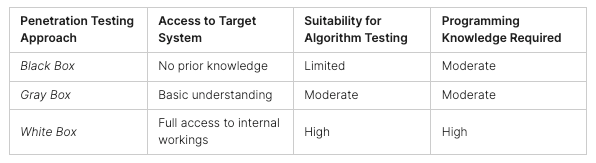
There are three main ways to do a penetration test. These are black box, gray box, and white box testing. Black box tests are done without knowing anything about the system. This is like a surprise attack. Gray box tests use some knowledge of the target system. White box tests give the tester all the information about the system, like the source code.
White box testing lets the tester deeply examine the system’s security. It’s the best way to find hidden flaws. This method is great for algorithm testing. It needs more knowledge of programming.
Using white box testing, testers can find more vulnerabilities. This is because they have more information. It makes the vulnerability assessment and software security stronger.
Key Techniques in White Box Penetration Testing
White box penetration tests look at the target’s code and structure to find weak spots. They use source code review, static code analysis, and dynamic code analysis. These methods join up to give a full check on how safe the code is.
Source Code Review
Source code review checks all the code closely. It lets testers find risks like bad input handling or weak coding. Analyzing the code deeply finds bugs attackers could use if they get the code.
Static Code Analysis
Static code analysis uses tools to pinpoint code flaws without running it. The tools scan the code for dangers like SQL injections and XSS. This process helps testers check the code before it goes live.
Dynamic Code Analysis
Dynamic code analysis tests the code while it’s running. This way, testers can see if the code stands up to attacks and find live weaknesses. It’s another step to ensure an app is secure.
By using these techniques together, testers can spot more risks. This helps make apps safer. It’s key for companies wanting to boost their app’s security and strength.
The White Box Penetration Testing Process
The white box penetration testing carefully checks a system inside out. It starts by gathering info about the target like architecture and diagrams. Essential is getting to the source code.
Defining Test Objectives and Critical Components
Next, the tester sets clear goals and pinpoints vital parts of the system. This way, the test focuses on what matters most. It makes the test count.
Static Analysis Phase
Then comes the static analysis phase. Here, the source code is gone over with a fine-tooth comb. The goal is to catch bugs like SQL injections and XSS. Both automated tools and manual checks are used.
Dynamic Analysis Phase
In the dynamic analysis phase, experiments mimic real attacks. This is to find hidden gaps. The tester uses hands-on tactics to see where real threats could break in.
Vulnerability Reporting and Prioritization
Finally, a detailed report is put together. It lists vulnerabilities and their risks. It also suggests fixes. This step ensures the most important issues are dealt with first. It makes the system safer against attacks.
White Box Penetration Testing Tools
White box penetration testing uses various tools to help in different parts of the tests. These tools are important for making the checks more effective and efficient. They help testers find security holes that might be missed with other methods.
Automated Tools for Static Analysis
Semgrep is one tool used for the static analysis step. It checks the code for security issues, like wrong input handling or unsafe coding habits. This helps the tester check the code quicker and find problems before the software is used. These tools give the tester a deep look at how the software works and spot areas that could be targeted by hackers.
Dynamic Analysis and Exploitation Tools
For dynamic analysis, tools such as Burp Suite, Metasploit, and SQLmap come into play. They act like hackers, trying to break into the software by exploiting its weak spots. Using these tools, the tester sees how dangerous these flaws could be if a real attack happens. A mix of static and dynamic checks paints a full picture of the software’s security level. This process pinpoints the worst security holes that need fixing first.
Using a range of white box testing tools allows for a deep examination of security issues. They focus on areas often missed in black box testing. This detailed checkup helps in making the system more secure against new cyber threats.
White Box Penetration Testing
White box testing is super helpful for checking how secure cloud-based infrastructure and web applications are. Testers get to see inside these systems. This means they can dig into the setup of services in the cloud and the code of websites.
Examining Cloud Infrastructure and Configurations
In one study, a tester got by the CloudFront content delivery network (CDN). They went straight to the EC2 server that hosted the site. They found security weaknesses hidden by the CDN. This detailed look was possible because of the white box method.
Analyzing Source Code for Web Applications
This method also lets testers look closely at an app’s source code. They look for bugs that might not show up otherwise. Testers understand the app’s deep workings. This helps them spot security problems in the code.
Identifying Vulnerabilities in Cloud Storage (S3 Buckets)
In another case, a white box tester found an open S3 bucket. This bucket wrongly lets anyone see important files, like secret data. Such big issues need a full review of how the cloud is set up.
Integrating White Box Testing into the SDLC
Integrating white box penetration testing into the SDLC is vital. It helps find and fix security problems early in development. This early focus makes it possible to stop flaws from reaching the final product.
Shifting Left: Incorporating Security Early
Shifting left involves dealing with security issues from the start. It lets developers work on security at the same time they build new features. This reduces the time and money needed to correct problems later.
This approach helps create software that’s safe from the beginning. This way, the risk of successful attacks becomes lower.
Continuous Integration and Continuous Delivery (CI/CD)
Integrating white box testing into the CI/CD pipeline keeps security high. It makes sure new features don’t bring in new risks. This strategy, based on ongoing white box testing, helps maintain security. It protects against successful attacks.
Compliance and Regulatory Considerations
White box penetration testing is key for making application security and software assurance better. It’s vital for meeting industry standards and regulatory requirements too. In fields like healthcare, finance, or government, rules such as HIPAA, PCI DSS, or NIST say you need strong security controls.
It looks inside an app’s source code to find weaknesses. This is critical for sticking to the rules. Data privacy laws, including GDPR and CCPA, need companies to focus on info security. Adding white box testing to how they build things shows they care about keeping data safe. It also helps avoid big fines for not following the rules.
Industry Standards and Frameworks
Companies must follow lots of rules, from HIPAA to NIST, for tight security controls. White box testing is a must. It uncovers problems deep in the app’s code and structure. This helps meet compliance needs smoothly.
Data Privacy and Security Regulations
Data privacy laws like GDPR and CCPA really stress the need for secure systems. Using white box testing from the start shows companies are serious about protecting data. Plus, it helps prevent serious problems like hacks and fines.
Best Practices for White Box Penetration Testing
To do white box penetration testing well, it’s key to follow certain steps. You should use secure coding practices and do code reviews often. This lets developers find and fix problems in the code before it’s rolled out. Also, give users and programs only as much access as they need. This can limit the harm if a vulnerability is attacked.
Secure Coding Practices and Code Reviews
Following solid coding practices and doing thorough code reviews is crucial. When developers follow safe coding tips, common issues like SQL injections and cross-site scripting get tackled early on. Then, having expert security folks review the code further cuts down on any missed problems.
Access Control and Least Privilege Principles
Using strong access control and least privilege can lessen an attack’s effects. By only giving the basics of what job roles need, the harm from an attack drops. Even if a flaw is found, it’s harder for attackers to do more damage.
Threat Modeling and Risk Assessment
Running threat modeling and risk assessment helps spot and deal with threats wisely. This means looking closely at your system, spotting dangers, and figuring out what threats are likely and how bad they could be. By focusing on the main risks, you can make better choices on where to put effort and resources.
Using these steps in white box testing makes applications and software safer. This lowers the chances of being hit by cyberattacks.
Conclusion
White box penetration testing is crucial for thoroughly understanding the security of an application. By providing testers with full access to the application’s internal workings, this method uncovers hidden vulnerabilities that external testing might miss.
This approach allows for early detection and remediation of bugs, enhancing the application’s overall security. It is also essential for complying with security standards such as HIPAA and GDPR, demonstrating a company’s commitment to data protection.
Incorporating white box penetration testing into your software development process significantly strengthens your defenses against cyber threats, ensuring the safety of critical data and customer information.
With Peris.ai Pandava, you can rest assured that your business will stay secure while gaining a competitive edge in the marketplace. Sleep better at night knowing your data is safe. Our ethical hackers will conduct thorough penetration testing and provide detailed reports, identifying vulnerabilities before they can be exploited. “Finding vulnerabilities and weak points within your digital platform and infrastructures” may sound daunting, but with Peris.ai Pandava Service, you can rest easy.
Visit Peris.ai Cybersecurity to learn more about how our comprehensive security solutions can protect your business and keep you ahead of cyber threats. Secure your digital world today with Peris.ai Pandava.
FAQ
What is white box penetration testing?
White box penetration testing is a detailed method. It’s also called transparent or clear box testing. Testers know everything about the target system, like the source code. They have all the documentation and access to many accounts.
They can see the software’s hidden problems before it’s used by people. This helps find and fix issues early.
What are the benefits of white box penetration testing?
White box testing is great because it looks deeply into a system. It can spot security issues not seen with other tests. Since testers see the inside of the software, they can find specific problems.
It gives a clear picture of a system’s safety level. This makes it easier to make the system as secure as possible.
How does white box penetration testing differ from black box and gray box testing?
There are three main types of penetration tests. Black box testing is like a surprise attack. Testers know very little about the system. Gray box testing allows some info about the system.
White box testing, however, opens the system fully to testers. They see everything, including the code and structure.
What are the key techniques used in white box penetration testing?
White box testing includes looking at the code closely. This is the source code review. It also uses tools to check the code for security issues without running it.
Finally, testers run the software to find more vulnerabilities. It helps make the system stronger against real attacks.
How does the white box penetration testing process work?
The process starts with gathering info. Then testers lay out what they will check. They look at the code and run the software, investigating every corner.
Finally, they write a report. This report details the found issues and how to fix them.
What tools are used in white box penetration testing?
White box testing uses specialized tools. For code checking, it might use Semgrep. For running the software and finding vulnerabilities, tools like Burp Suite and Metasploit are common.
These tools help testers do their job thoroughly and efficiently.
How can white box penetration testing be useful for cloud-based infrastructure and applications?
It’s essential for checking cloud security. Testers can see deeply into the system, much more than with other tests. This allows for uncovering hidden risks.
It ensures that cloud services and web apps are as safe as possible.
How can white box penetration testing be integrated into the software development life cycle (SDLC)?
Adding this testing early helps catch bugs before the system is used. This saves time and money later. It’s called shifting left.
By testing during development, security becomes part of the whole process. It’s not an afterthought.
How does white box penetration testing support compliance with industry standards and regulations?
White box testing is often required to follow rules like HIPAA and PCI DSS. It shows that the system is secure as needed by these rules.
Thus, it helps organizations prove they are protecting data and preventing cyber attacks.
What are some best practices for conducting effective white box penetration testing?
To test well, use safe coding and keep checking your code. Also, limit access to only what’s needed. Think about what threats you might face.
It’s good to test often, not just once. This keeps your system up-to-date and ready to face new dangers.
In our connected world, keeping digital assets safe is key. As cyber threats grow, penetration testing is vital. It finds system weaknesses and helps boost defenses. This piece explores gray box testing. It’s a security check-up. Ethical hackers look for vulnerabilities without causing damage.
Weaknesses can be hard to spot, like in system configurations and access control mechanisms. Penetration testing searches for these issues. It aims to see how well defenses block a cyber-attack. Both manual and automated checks happen, with hackers using different tools.
What sets gray box testing apart from black and white box methods? How does it boost a company’s cybersecurity risk management and vulnerability remediation? This section will answer these questions.
Key Takeaways
Gray box penetration testing combines elements of black box and white box testing to provide a balanced and effective security assessment approach.
It grants testers partial knowledge of the system’s internal workings, allowing for more targeted and user-like interactions compared to black box testing.
Gray box testing can uncover vulnerabilities that may be missed by a purely black box or white box approach, improving the overall security posture.
Techniques like matrix testing, regression testing, and orthogonal array testing are used in gray box testing to thoroughly assess the system.
Gray box penetration testing is particularly useful for evaluating web applications, APIs, and privileged access controls.
Introduction to Penetration Testing
In today’s world, cybersecurity is more important than ever. Penetration testing is a key method. It helps organizations check how well they are protected against attacks. This method uses ethical hackers, also called penetration testers or ethical hackers. They test systems or networks as if they are real bad actors. Their goal is to find weak spots that could be exploited.
What is Penetration Testing?
Penetration testing, or pen testing, is like a pretend cyberattack done in a safe way. Its purpose is to find security holes and fix them. Unlike harmful hackers, penetration testers work for the good. They look closely at systems, networks, or apps. They try to break in but follow strict rules to ensure no real damage is done.
Types of Penetration Testing Techniques
There are different penetration testing techniques to secure systems. They include:
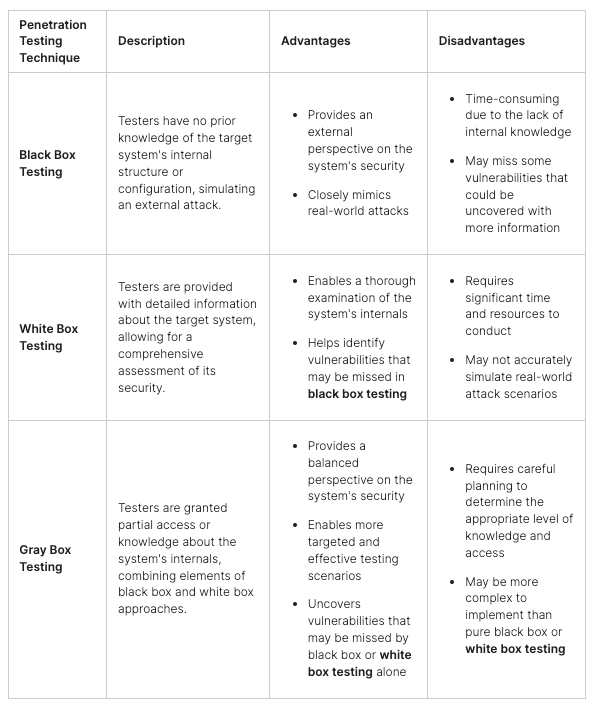
Black Box Testing: The tester doesn’t know anything about the target system’s inside. It’s like a surprise attack from the outside.
White Box Testing: The tester knows all about the target system. This allows for a deep check of its security.
Gray Box Testing: The tester has some but not complete knowledge of the system. This mixes the other two methods.
Mixing these penetration testing techniques gives a thorough check of security. It helps find weaknesses that could be exploited by real threats.
Demystifying Black Box Penetration Testing
Black box testing, also known as external penetration testing, is like simulating a cyberattack. The tester has little information about the company’s IT or security. It’s like being blindfolded in a dark, unknown world, starting from outside the network. The aim is to find vulnerabilities just as a real hacker would. Even though it’s time-consuming, it gives key insights into a company’s external defense.
In black box penetration testing, the tester knows very little about the system they are testing. They act like a real cybersecurity threat actor, trying to break in. Without inside info, the tester has to search for vulnerabilities in a detailed way, much like an ethical hacking mission. They use their skills, knowledge of the industry, and various vulnerability assessment tools to find weaknesses.
Starting from the outside help test the organization’s defense against real cyberattacks. This method truly checks how effective the company’s security measures are. It points out areas that need more care or fixing. In the end, it provides a thorough look at the company’s security from an outsider’s view.
Understanding White Box Penetration Testing
White box testing is like getting a map to a treasure with all the clues. The tester knows everything about the network infrastructure and security systems. With this knowledge, they can fully check the organization’s defenses.
Such tests do not copy real cyberattacks from the outside. Yet, they are great at finding weak spots in the network. They can even fake the danger of insider threats, showing how an attack from inside could harm the company. This kind of testing is fast and open, but big companies might still need to be patient for the full report.
Gray Box Penetration Testing
Gray box penetration testing blends black and white box testing’s best parts. Testers have some info on the network, not all of it. This lets them check things more like a regular user than just guessing.
What is Gray Box Penetration Testing?
It’s a method that mixes white and black box pen testing. Testers know some things about the system. This is unlike the total secrecy of black box testing or the full knowledge of white box testing.
How Does Gray Box Testing Help Secure Your System?
It gives testers a peek at the company’s network. This lets checks focus better on the system’s flaws. Testers can then look at how real users might use the system and find hidden weak spots.
Critical Characteristics of Gray Box Testing
Here are the main points of gray box penetration testing:
Partial knowledge of the system’s structure and functions
Allows simulation of real user tests
Finds hidden flaws not seen in black box tests
Uses time and resources well compared to white box testing
Looks into the system’s reaction after a breach and its effects
Gray Box Penetration Testing Examples
Gray box penetration testing digs deeper than just black box methods. It helps find and tackle specific problems. This type of testing uses a mix of white and black box methods. It gives a full check-up of a company’s cyber defenses.
Website Form Testing
For website form testing, a black box tester uses various email inputs. This is to see how the system handles email confirmations without knowing the system details. In a gray box test, the tester knows email checks are done with JavaScript. They can run tests with and without JavaScript. This finds more about the website’s form security.
Login Functionality Testing
Gray box testing is also useful for checking a system’s login security. Unlike black box testing, it doesn’t stop at just guessing passwords. It uses some system insight to create smarter tests. These tests can check how the system blocks wrong logins, the strength of password rules, and if multi-factor authentication works well. Gray box testing is a powerful mix. It can reveal hidden weak spots not found by other tests.
Gray Box Testing Techniques
Gray box penetration testing is a special kind of test that’s very powerful. It’s between white box testing and black box testing in terms of perspective. Testers know some internal details of the system, helping them find more vulnerabilities effectively. This approach catches security flaws that other methods might miss.
Matrix Testing
Matrix testing looks at different input combos to find edge cases and weaknesses. Testers use what they know about the system to create detailed test plans. They check how the system reacts to different inputs.
Regression Testing
Regression testing is key to make sure old functions still work after updates. In gray box testing, testers use their inside knowledge to focus on these checks. They ensure security measures are still working and find any new problems quickly.
Pattern Testing
Pattern testing focuses on common system sequences. Gray box testers use this to create tests. They look for any mistakes, flaws, or strange actions that attackers might use.
Orthogonal Array Testing (OAT)
OAT is a smart way to test many system inputs efficiently. Testers create tests that cover a lot but with fewer actual tests. This leads to quicker and cheaper security checks.
Authenticated Testing
Authenticated testing is essential in gray box approaches. Testers act like they’re authorized to see how secure the system really is. This lets them find issues that internal attackers or hacked accounts might exploit.
Combining these techniques with inside knowledge makes gray box testing effective. It gives a deep view of system security, helping companies fix issues and improve their defenses.
API Penetration Testing
APIs are often targeted by attackers because they’re open and handle sensitive info. It’s crucial to put up strong security barriers and not just assume they’ll work. To check on these barriers, API penetration testing is key.
Scope of an API Penetration Test
An API penetration test checks all the key security points of an API. This includes how it identifies users, allows use, checks data, and manages its whole life cycle. Looking for weak spots helps make the API security stronger and lowers the risk of bad access or data leaks.
Black Box Penetration Testing of an API
In black box API testing, the tester acts like someone outside trying to break-in. They don’t know how the API works inside. This simulates a real attack. The tester uses things like tips from OWASP and tools to check for flaws in the API’s use, security checks, and how it filters information.
Gray Box Penetration Testing of an API
Gray box API testing mixes both black box and white box testing. Testers get some info about how the API works. This lets them dig deep in a more focused way. Knowing a bit inside and seeing from the outside, gray box penetration testing finds hidden flaws. These might be left out if only black box testing was done.
Exploiting Vulnerabilities with Gray Box Testing
Gray box penetration testing is a powerful method for finding and fixing security issues. It uses some knowledge about the system’s inner workings. This is more effective than black box testing because it’s like having a key to uncover hidden problems. By looking at the system from an insider perspective, testers can find security holes that outsiders might miss.
Exploiting a Mass Assignment Vulnerability
Mass assignment issues happen when a program doesn’t check user input correctly. This lets attackers change parts of the program they shouldn’t. In gray box testing, testers use their inside view of the system to send specific inputs. These can be used to access secret data or do things they’re not supposed to do.
Manipulating Server Requests Using SSRF
SSRF occurs when a web app downloads content from a URL without checking it. In gray box tests, testers’ knowledge helps them find ways to misuse this feature. They can make the app download from places it shouldn’t, leading to data leaks or deeper hacks.
Exploiting a Broken Access Control Vulnerability on GraphQL
Broken access control in a GraphQL app lets users get to data or actions they shouldn’t. Gray box tests leverage this by using a tester’s knowledge of the app’s data structure. They craft special requests to try and get around the security checks.
These instances show the strength of gray box testing. It combines the best of both black and white box testing. This method can root out hidden flaws in a system’s security effectively. This mix gives a clearer look at how secure an organization really is.
White Box Penetration Testing of an API
White box testing gives testers full knowledge of how the system works. This approach, when used on an API, allows them to deeply check its security. They can find issues not seen with other testing methods.
Exploiting an IDOR Vulnerability
In this kind of testing, the tester knows everything about the API’s inside. They can spot IDOR vulnerabilities. These are where the API wrongly lets users access sensitive data without checking their permissions first.
Exploiting a Command Injection
When using a white box approach, the tester checks how the API handles inputs and outputs. They look for spots that might allow a command injection attack. With thorough knowledge of the API’s internal workings, they can create attacks to do things the system shouldn’t allow.
Conclusion
In our increasingly connected world, securing digital assets is paramount. As cyber threats evolve, penetration testing becomes essential in identifying system vulnerabilities and enhancing defenses. Gray box testing, in particular, offers a unique approach by providing a comprehensive security check-up where ethical hackers search for vulnerabilities without causing damage.
Gray box penetration testing is crucial for uncovering hidden weaknesses, such as flaws in system configurations and access control mechanisms. This method assesses the effectiveness of existing defenses against potential cyber-attacks through a combination of manual and automated checks, utilizing various tools and techniques.
What distinguishes gray box testing from black and white box methods? How does it enhance a company’s cybersecurity risk management and vulnerability remediation? By leveraging partial knowledge of the system, gray box testing provides a balanced perspective, combining the internal access of white box testing with the external view of black box testing. This approach allows for more accurate identification of security gaps and more effective remediation strategies.
With Peris.ai Pandava, you can rest assured that your business will stay secure while gaining a competitive edge in the marketplace. Sleep better at night knowing your data is safe. Our ethical hackers will conduct thorough penetration testing and provide detailed reports—like a scene out of Mission Impossible. Identifying vulnerabilities before they’re exploited may sound daunting, but with Peris.ai Pandava Service, it’s something you can rest easy about.
Visit Peris.ai Cybersecurity to learn more about how our comprehensive security solutions can protect your business and keep you ahead of cyber threats. Secure your digital world today with Peris.ai Pandava.
FAQ
What is penetration testing?
Penetration testing checks computer systems or networks for security. Ethical hackers, like black hackers but safe, look for weak spots. The aim is to find vulnerabilities and boost defenses against cyber-attacks.
What are the types of penetration testing techniques?
Penetration testing has various types, including: – Black box testing: This mimics a real attack, knowing very little about the system. – White box testing: The tester knows everything about the network and its security. – Gray box testing: Testers are partially informed, highlighting a mix of black and white methods.
What is gray box penetration testing?
Gray box penetration testing blends both white and black box methods. Testers understand some internal system details, making tests more user-representative than black box tests alone.
How does gray box testing help secure a system?
Gray box testing helps find weaknesses by knowing some system internals. This targeted approach finds vulnerabilities that might be overlooked in black or white box tests.
What are the critical characteristics of gray box testing?
Gray box testing’s key features are: – Knowing part of the network’s information – Deeper testing than black box – Focusing on specific concerns – Mimicking user interactions
What are some examples of gray box penetration testing?
Examples of gray box tests are: – Checking website forms with partial email validation process insight – Testing logins with basic knowledge of the system’s structure
How is gray box penetration testing applied to API security?
In API security, gray box testing means testers know some of the API’s workings. This deep knowledge lets them pinpoint vulnerabilities effectively. It’s better than black box because testers have insight into the API’s structure.
What are some vulnerabilities that can be exploited with gray box testing?
How does white box penetration testing differ from gray box testing for APIs?
White box testing knows all about the API system, unlike gray box, which only has some knowledge. This makes white box testing more thorough, but gray box testing balances insight with testing efficiency from both black and white methods.
Pentesting, also known as penetration testing, is a crucial practice in the field of cybersecurity. It involves rigorously scrutinizing computer systems, networks, and web applications to identify and expose vulnerabilities that attackers could exploit. By proactively testing and reinforcing the security of digital infrastructures, pentesting plays a vital role in defending against constantly evolving cyber threats.
This article will delve into the intricacies of pentesting, exploring its meaning, a pentester’s career path, and the practice’s technicalities. It will also discuss specialized areas of pentesting, such as network penetration testing and physical penetration testing, highlighting the importance of this proactive approach to cybersecurity.
Key Takeaways:
Pentesting is a proactive approach to cybersecurity, identifying and addressing vulnerabilities before attackers can exploit them.
It involves rigorous testing and reinforcement of computer systems, networks, and web applications.
A career in pentesting requires a strong foundation in IT fundamentals, specialized skills, and continuous learning.
Specialized areas within pentesting, such as network penetration testing and physical penetration testing, further enhance cybersecurity measures.
As social engineering attacks evolve, organizations need to stay vigilant and invest in advanced security tools and awareness programs.
The Essence of Penetration Testing in Cyber Security
Penetration testing, also known as pen testing, is a fundamental practice in the realm of cybersecurity. It involves thoroughly examining computer systems, networks, or web applications to identify vulnerabilities that attackers could potentially exploit. By simulating cyber-attacks and pinpointing weaknesses, penetration testing helps organizations assess the effectiveness of their security measures and fortify their defenses. This proactive approach is essential in an era where cyber threats are constantly evolving, making the role of a pentester indispensable in the ongoing battle against cybercrime.
To better understand the significance of penetration testing, let’s explore some key aspects related to this important field:
The proactive nature: Penetration testing takes a proactive approach to cybersecurity. Instead of waiting for an attack, organizations employ pentesters to actively search for vulnerabilities and address them before they can be exploited. This proactive stance enables businesses to stay one step ahead of cybercriminals, minimizing the potential damage and loss.
Vulnerability assessment: Penetration testing involves thoroughly assessing vulnerabilities within computer systems, networks, or web applications. It encompasses various techniques and methodologies to identify weaknesses and potential entry points for attackers. By conducting vulnerability assessments, organizations can comprehensively understand their security posture and develop effective strategies to enhance their defenses.
Cybersecurity optimization: The primary objective of penetration testing is to optimize cybersecurity measures. Organizations can implement targeted solutions to address these gaps by identifying vulnerabilities and weaknesses. Regular penetration testing allows businesses to measure the effectiveness of their security measures, identify areas that require improvement, and make informed decisions regarding resource allocation for maximum cyber defense.
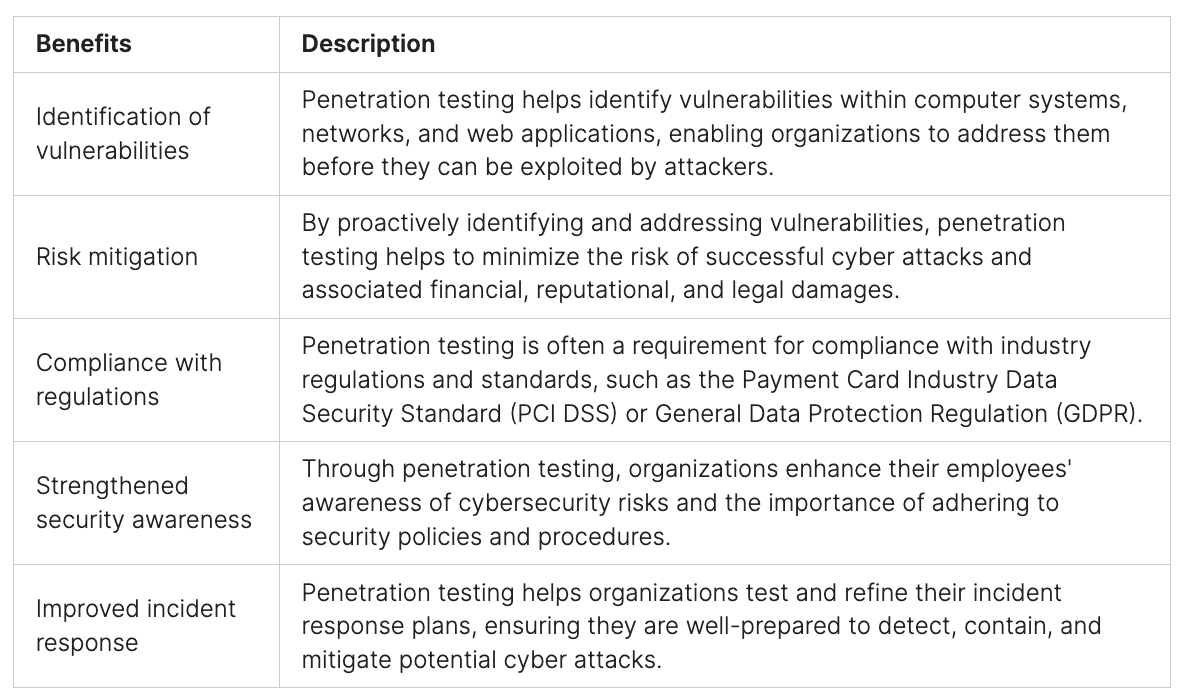
Overall, penetration testing is crucial in fortifying cybersecurity by identifying vulnerabilities, assessing their potential impact, and implementing proactive measures to mitigate risks. It enables organizations to proactively approach cybersecurity, optimize their defenses, and stay ahead of the ever-evolving cyber threat landscape.
Benefits of Penetration Testing:
The Pentester Career Path
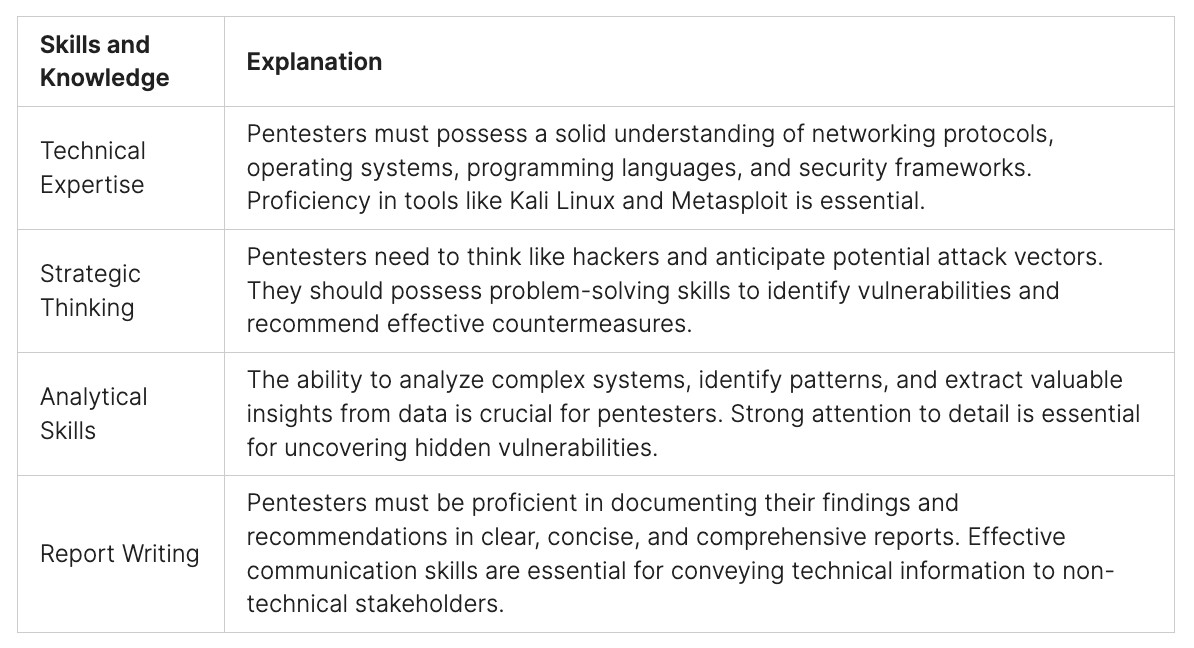
The career path of a pentester is an exciting journey into the dynamic world of cybersecurity. Aspiring pentesters need to develop a strong foundation in IT fundamentals and progressively specialize in security pen and cyber penetration testing. Gaining experience in roles such as network security analyst or IT security consultant can pave the way for advancement.
Continuous learning is crucial in this field, as cybersecurity is ever-evolving. Pentesters must stay current with the latest hacking techniques, defensive strategies, and emerging technologies. Engaging in certifications, such as the Certified Ethical Hacker (CEH) certification, demonstrates a commitment to enhancing skills and knowledge.
Hands-on experience is invaluable for pentesters. Intrusion testing and computer security and penetration testing provide real-world exposure to identify and exploit vulnerabilities in digital systems.
The role of a pentester requires not only technical expertise but also ethical conduct. It is essential to work within legal frameworks and adhere to professional ethics. Pentesters are critical in enhancing cybersecurity by identifying weaknesses and helping organizations strengthen their defenses.
The Technicalities of Penetration Testing
Penetration testing is a systematic approach to identifying and exploiting network, system, and application security vulnerabilities. It plays a crucial role in maintaining network security, evaluating entry points, identifying weaknesses, and simulating cyber-attacks to gauge potential impact. By employing various techniques and methodologies, pentesters uncover vulnerabilities that can be further mitigated through security optimization.
Penetration Testing Techniques
Penetration testing involves a range of techniques tailored to address different security aspects. These techniques include:
Social Engineering: This technique exploits human vulnerabilities through deception and manipulation.
Technical System Hacking: It involves identifying and exploiting weaknesses in the target system’s infrastructure and software.
Network Sniffing: This technique captures and analyzes network traffic to uncover potential security vulnerabilities.
The Penetration Testing Process
The penetration testing process typically follows a structured methodology, ensuring a comprehensive assessment of security vulnerabilities:
Reconnaissance: Gathering information about the target system to understand its architecture and potential vulnerabilities.
Scanning and Gaining Access: Identifying and exploiting vulnerabilities to access the target system.
Maintaining Access: Sustaining the compromised access to analyze potential impacts and uncover deeper vulnerabilities.
Reporting and Suggesting Improvements: Document findings and provide recommendations to enhance network security and mitigate vulnerabilities.
Network Security and Vulnerability Identification
Network security penetration testing is an essential component of penetration testing, focusing on maintaining the integrity and confidentiality of a network. By evaluating entry points, identifying weaknesses, and simulating cyber-attacks, pentesters play a critical role in fortifying network defenses. Through meticulous vulnerability identification, organizations can proactively address security gaps, optimize security measures, and ensure a robust cyber defense strategy.
Specialized Areas in Penetration Testing
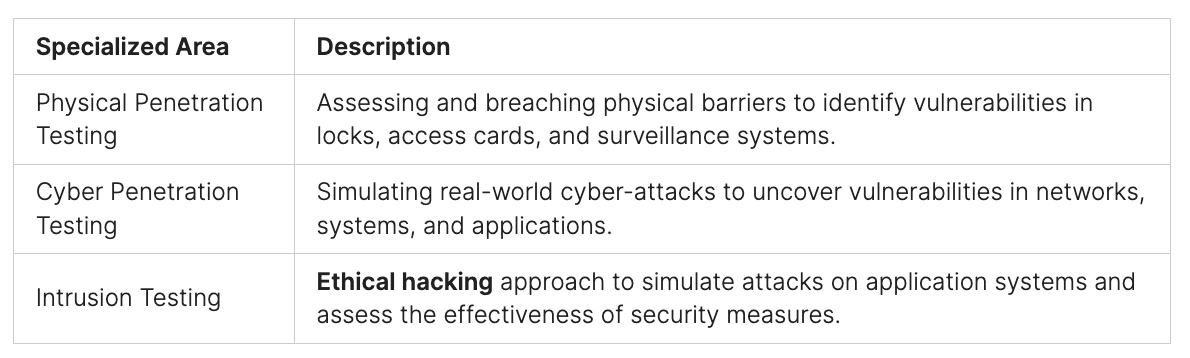
Penetration testing, a vital practice in cybersecurity, extends beyond traditional network testing to specialized areas that further fortify digital defense systems. These specialized areas include physical penetration testing, cyber penetration testing, and intrusion testing, each serving a distinct purpose in ensuring comprehensive security.
Physical Penetration Testing
Physical penetration testing focuses on assessing and breaching physical barriers, such as locks, access cards, and surveillance systems. This branch of penetration testing requires a unique blend of skills and expertise, encompassing familiarity with digital and physical security protocols, social engineering tactics, and knowledge of modern security systems. By scrutinizing physical security measures, organizations can identify vulnerabilities and fortify their physical defenses.
Cyber Penetration Testing
Cyber penetration testing is crucial in safeguarding digital assets against various cyber threats. It involves simulating real-world cyber-attacks to identify network, system, and application vulnerabilities. By thoroughly examining the digital infrastructure, cyber penetration testing enables organizations to identify and address weaknesses, preventing potential breaches, data theft, or system compromise.
Intrusion Testing
Intrusion testing, or ethical hacking, is a branch of penetration testing that simulates attacks on various application systems. By adopting the perspective of a malicious actor, intrusion testers identify vulnerabilities and exploit them to assess the effectiveness of security measures. This testing methodology gives organizations critical insights into their application’s security posture, enabling them to mitigate risks and enhance their overall cybersecurity proactively.
These specialized areas within penetration testing underscore the importance of a comprehensive and proactive approach to cybersecurity. By combining physical penetration testing, cyber penetration testing, and intrusion testing, organizations can build robust defense mechanisms that effectively safeguard their digital assets from ever-evolving threas.
Social Engineering in Cybersecurity
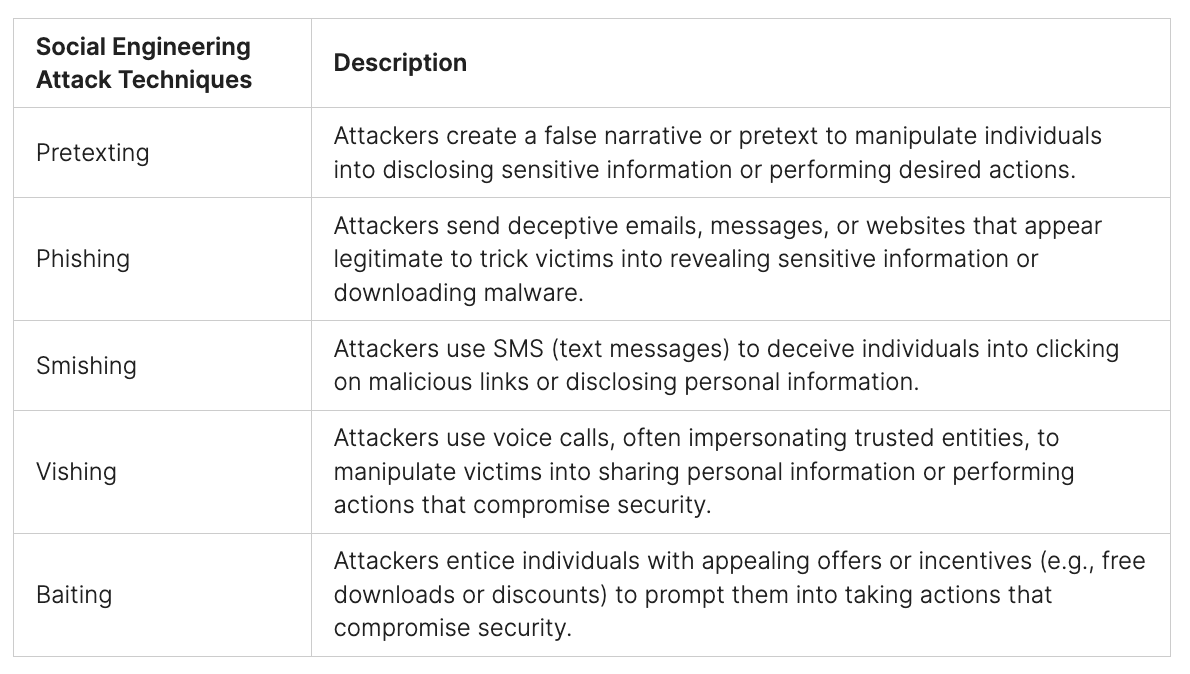
Social engineering is an insidious tactic employed by attackers to exploit psychological vulnerabilities and manipulate individuals into providing sensitive information or performing actions that compromise cybersecurity. These attacks capitalize on human psychology and trust to deceive individuals and gain unauthorized access to sensitive data or systems. In the digital age, social engineering attacks have become increasingly sophisticated, leveraging advanced technologies such as AI-powered attacks to enhance their effectiveness.
The Social Engineering Attack Cycle
Social engineering attacks typically follow a cycle that involves several stages:
Information Gathering: Attackers collect personal, organizational, or technical information about their targets, often using open-source intelligence (OSINT) techniques.
Relationship Establishment: Using the gathered information, attackers build rapport or establish a relationship with the target, exploiting their trust.
Exploitation: Attackers manipulate the target into performing actions that benefit the attacker, such as disclosing sensitive information or clicking on malicious links.
Culmination: The attack reaches its intended goal, which may involve unauthorized access, data theft, financial fraud, or other malicious activities.
An understanding of this attack cycle is crucial for individuals and organizations to recognize and defend against social engineering attacks effectively.
Email Phishing: A Prevalent Form of Social Engineering
One of the most prevalent forms of social engineering is email phishing, where attackers send deceptive emails posing as legitimate entities to trick recipients into disclosing sensitive information, downloading malware, or initiating unauthorized actions. Phishing attacks often exploit psychological factors such as urgency, curiosity, or fear to manipulate victims into taking the desired action.
Email analysis and detection techniques are crucial in identifying and preventing phishing attacks. By analyzing email headers, content, and attachments, security professionals can assess their legitimacy and detect red flags that indicate phishing attempts.
A Role of AI in Social Engineering Attacks
“Artificial intelligence is increasingly being leveraged by attackers to craft convincing messages and enhance the effectiveness of social engineering attacks. Machine learning algorithms can analyze vast amounts of data to create highly personalized and persuasive communications.”
The integration of AI technology in social engineering attacks poses a new level of threat. AI-powered attacks can generate emails, messages, or voice calls that closely mimic human communication styles and patterns, making it more challenging to distinguish between genuine and malicious communications.
Addressing AI-powered social engineering attacks requires a multi-faceted approach that combines advanced security measures with user awareness and education. Organizations should deploy AI-driven tools and solutions to analyze incoming communications and identify potential phishing attempts. Additionally, ongoing training and awareness programs can help individuals recognize and report suspicious activities, mitigating the risks associated with social engineering attacks.
By understanding the tactics employed in social engineering attacks, organizations can implement robust security measures and educate their users to stay vigilant and protect against this constantly evolving threat.
Advanced Social Engineering Tools and Tactics
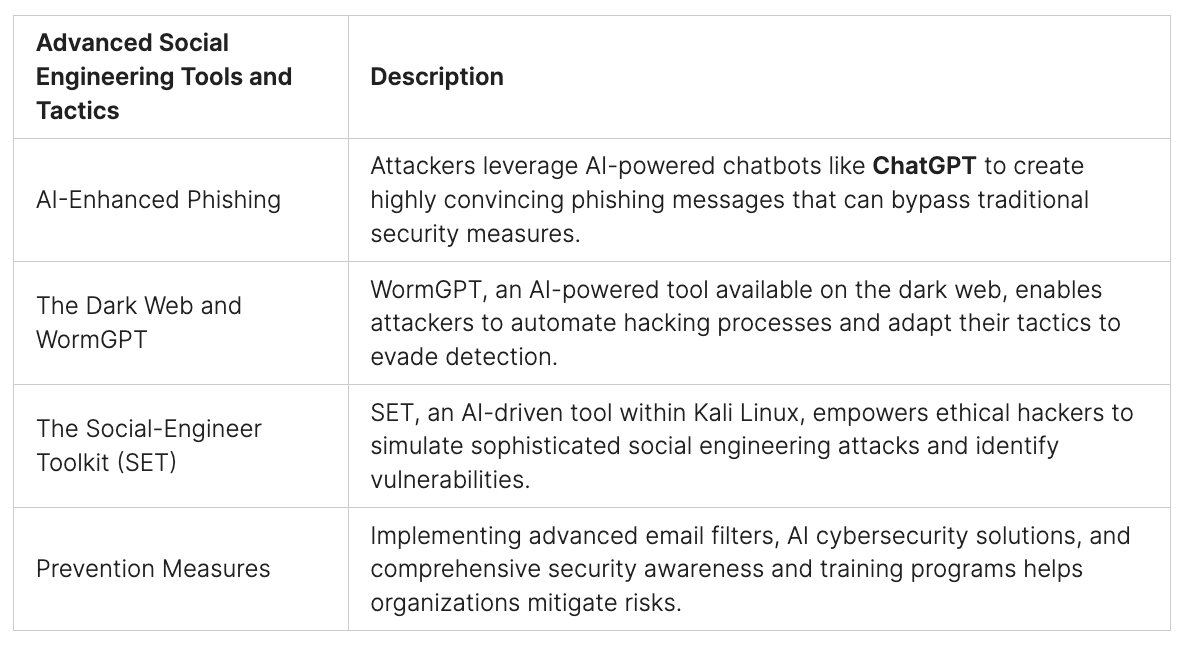
With the rapid advancement of AI technology, social engineering attacks have become more sophisticated. Attackers are leveraging emerging tools and tactics, including the integration of AI in phishing campaigns, to increase their success rates and evade detection. Organizations must stay informed about these evolving techniques and implement robust prevention measures.
AI-Enhanced Phishing
One of the latest advancements in social engineering attacks is using AI technology to enhance phishing campaigns. Attackers leverage AI-powered chatbots like ChatGPT to create compelling messages that mimic human conversation. These AI-driven phishing attempts can bypass traditional cybersecurity defenses, making it challenging for users to discern between genuine and malicious communications.
To illustrate the potential impact of AI-enhanced phishing, consider the example of a banking phishing attack. Attackers can use AI algorithms to analyze a target’s social media profiles, blog posts, and other publicly available information to craft personalized and plausible phishing emails. These emails may appear to come from a trusted institution, tricking recipients into revealing sensitive information or downloading malicious attachments.
The Dark Web and WormGPT
The dark web is a hidden part of the internet where anonymous activities occur, including buying and selling hacking tools and services. Within this underground economy, a new threat has emerged, and it is known as WormGPT. This AI-powered tool is offered as a paid service on the dark web, providing attackers with automated hacking capabilities.
WormGPT is designed to mimic the behavior of a human hacker, autonomously scanning systems, identifying vulnerabilities, and launching attacks. Its AI capabilities enable it to adapt and evolve its tactics, making detecting and defending against it even more challenging. This tool is a stark reminder of the evolving nature of social engineering attacks and the need to enhance cybersecurity measures continuously.
The Social-Engineer Toolkit (SET)
While the emergence of AI in social engineering attacks raises concerns, ethical hackers and penetration testers can also leverage AI-driven tools to enhance their defensive strategies. One such tool is the Social-Engineer Toolkit (SET) within Kali Linux. With its AI capabilities, the SET empowers security professionals to simulate sophisticated social engineering attacks and identify vulnerabilities within an organization’s defenses.
The SET offers a wide range of features, including email spoofing, spear-phishing attacks, and website cloning, enabling testers to evaluate the effectiveness of an organization’s security awareness and prevention measures. By embracing AI-driven tools like the SET, organizations can better understand their vulnerabilities and take proactive steps to strengthen their cybersecurity defenses.
Prevention Measures
Mitigating the risks associated with advanced social engineering attacks requires a comprehensive approach that combines technical solutions, employee awareness, and stringent prevention measures. Organizations should focus on implementing advanced email filters to detect and block AI-enhanced phishing attempts.
Investing in AI-driven cybersecurity solutions can provide organizations with improved threat intelligence, enabling swift identification and response to emerging social engineering tactics. Regular security awareness and training programs are essential to educate employees about the evolving nature of social engineering attacks and equip them with the knowledge to identify and report potential threats.
By staying vigilant, leveraging advanced prevention measures, and keeping pace with the rapidly evolving social engineering landscape, organizations can enhance their cybersecurity posture and protect themselves against the growing threat of AI-enhanced phishing attacks. Taking a proactive approach to security and embracing AI technology as a defensive tool is crucial in the ongoing fight against social engineering threats.
Conclusion
In today’s digital era, where cyber threats loom larger and more sophisticated than ever, pentesting emerges as a cornerstone practice for preemptive cybersecurity. This critical exercise empowers organizations to uncover and remediate vulnerabilities before they become gateways for malicious actors. Through meticulous evaluation of computer systems, networks, and web applications, pentesting significantly bolsters an organization’s cyber defenses and enhances its security stance.
Delving deeper, specialized domains such as physical and cyber penetration testing amplify the breadth and depth of proactive cybersecurity efforts. These nuanced approaches enable organizations to fortify not only their digital landscapes but also their physical perimeters, thereby securing their essential assets against a spectrum of potential threats.
As attackers increasingly leverage artificial intelligence to sophisticate their social engineering schemes, the imperative for organizations to stay alert and proactive skyrockets. The adoption of cutting-edge security solutions, along with the implementation of exhaustive awareness and training initiatives, is vital for cultivating a pervasive culture of cybersecurity awareness among staff. These measures are instrumental in navigating the complexities of modern cyber threats.
Adopting pentesting as a proactive defense strategy, coupled with a vigilant stance against social engineering tactics, positions organizations to significantly enhance their security frameworks. This forward-looking approach, underpinned by ethical hacking methodologies, equips organizations with the readiness to protect their invaluable data and maintain their reputational integrity amidst the evolving cyber threat landscape.
Peris.ai Cybersecurity introduces Peris.ai Pandava, a service designed with the philosophy that your organization’s security and competitive edge in the market are paramount. Sleep peacefully, knowing that our team of ethical hackers is diligently conducting penetration tests, reminiscent of a “Mission Impossible” scenario, to identify vulnerabilities within your digital and physical infrastructures. With Peris.ai Pandava, the daunting task of securing your digital platform becomes a manageable and reassuring endeavor.
We invite you to explore how Peris.ai Pandava can transform your organization’s approach to cybersecurity. Visit Peris.ai Cybersecurity to learn more about our penetration testing services and how we can help you navigate the complexities of safeguarding your digital and physical assets against the ever-evolving cyber threats. Secure your peace of mind and give your business the protective edge it deserves with Peris.ai Pandava.
FAQ
What is pentesting?
Pentesting, also known as penetration testing, is the practice of rigorously scrutinizing computer systems, networks, and web applications to identify and expose vulnerabilities that attackers could exploit.
Why is pentesting important?
Pentesting plays a vital role in defending against constantly evolving cyber threats. It helps organizations proactively test and reinforce the security of their digital infrastructures, making their defenses stronger and more resilient.
What is the career path of a pentester?
Aspiring pentesters need to develop a strong foundation in IT fundamentals and progressively specialize in security pen and cyber penetration testing. Gaining experience in roles such as network security analyst or IT security consultant can pave the way for advancement.
What are the technicalities of pentesting?
Pentesting involves various techniques, including social engineering, technical system hacking, and network sniffing. These techniques serve the purpose of uncovering different types of vulnerabilities and simulating cyber-attacks to assess the effectiveness of security measures.
What are the specialized areas in pentesting?
Specialized areas in pentesting include physical penetration testing, which assesses and breaches physical barriers, and cyber penetration testing, which safeguards digital assets against a wide range of cyber threats. Intrusion testing focuses explicitly on ethical hacking and simulating attacks on various application systems to identify vulnerabilities.
What is social engineering in cybersecurity?
Social engineering is an insidious tactic employed by attackers to exploit psychological vulnerabilities and manipulate individuals into providing sensitive information or performing actions that compromise cybersecurity.
What are the advanced social engineering tools and tactics?
With the rapid advancement of AI technology, social engineering attacks have become more sophisticated. Attackers are integrating AI in phishing campaigns and leveraging tools like the Social-Engineer Toolkit (SET) within Kali Linux. Organizations must implement advanced email filters, AI cybersecurity solutions, and comprehensive awareness and training programs to mitigate the risks associated with advanced social engineering attacks.
Why is proactive cybersecurity essential?
Proactive cybersecurity practices, such as pentesting, are crucial in identifying and addressing vulnerabilities before attackers can exploit them. Organizations can optimize their security posture and protect their digital assets by constantly fortifying cyber defenses and staying one step ahead of evolving threats.
In the ever-evolving landscape of cybersecurity, the practice of annually rotating pen test vendors is a topic of considerable debate. This approach, characterized by hiring different providers each year, is aimed at enhancing an organization’s security posture by leveraging fresh perspectives and diverse expertise. But is this strategy as effective as it’s presumed to be?
The Case for Annual Vendor Rotation
The logic behind rotating pen test vendors is rooted in the principle that no single provider can uncover all vulnerabilities. Different teams bring varied skill sets and methodologies to the table, potentially revealing new issues. Key advantages include:
Fresh Eyes: New providers may spot vulnerabilities that prior testers overlooked.
Methodological Diversity: Varying approaches can identify unique security flaws.
Benchmarking Opportunities: Insights from different vendors enable comprehensive security enhancements.
Competitive Edge: The prospect of securing future engagements encourages vendors to excel.
Challenges with Vendor Rotation
Despite its perceived benefits, the practice of rotating vendors annually is not without its challenges:
Inconsistency: Frequent changes can lead to discrepancies in testing and reporting, complicating long-term security assessments.
Onboarding Hurdles: Acclimating new vendors to your infrastructure requires time and resources, potentially diluting the effectiveness of each test.
Resource Allocation: The annual process of vendor selection and integration demands significant internal effort.
Increased Costs: The indirect expenses of constant vendor transitions can accumulate, impacting your cybersecurity budget.
Embracing PTaaS for Continuous and Comprehensive Security
Penetration Testing as a Service (PTaaS) emerges as a compelling alternative, offering a more streamlined and consistent approach to cybersecurity. Peris.ai Cybersecurity’s PTaaS solutions, such as Peris.ai Pandava, deliver continuous security monitoring and assessment, tailored to modern organizational needs. Key benefits include:
Reduced Overhead: Eliminate the need for annual vendor transitions, saving valuable time and resources.
Standardized Testing: Benefit from uniform methodologies that facilitate easier result comparison and trend analysis.
Frequent Assessments: Schedule regular tests without the logistical challenges of coordinating multiple vendors.
Diverse Expertise: Leverage a broad pool of skilled testers for in-depth and customized security evaluations.
Cost-Effectiveness: With PTaaS, avoid the financial and operational costs associated with yearly vendor changes.
Peris.ai Cybersecurity’s Innovative Approach
Peris.ai Cybersecurity introduces Peris.ai Pandava, a premier PTaaS offering that stands at the forefront of cybersecurity solutions. Our service encompasses:
Comprehensive Testing by Expert Analysts: Our team of seasoned testers employs a rich array of techniques to uncover and address vulnerabilities, ensuring your applications are scrutinized from every angle.
Consistent and Deep Security Insights: Through regular, methodical testing, we provide a thorough understanding of your security posture, evolving with your organization to address new threats proactively.
Seamless Integration with Agile and DevOps: Our services are designed to complement your development processes, enhancing security without disrupting workflow.
Real-Time Reporting for Immediate Action: Receive instant alerts on vulnerabilities, allowing for swift remediation and strengthening your defense posture.
Scalable Solutions Tailored to Your Needs: Whether you’re a startup or a large enterprise, our PTaaS model is designed to adapt to your specific requirements, ensuring optimal security at every stage of your growth.
Conclusion: Moving Beyond Traditional Pen Testing
While the traditional model of annual pen test vendor rotation has its merits, the dynamic nature of cyber threats calls for a more continuous and integrated approach. By choosing Peris.ai Cybersecurity’s PTaaS offerings, organizations can achieve a deeper, more consistent understanding of their vulnerabilities, enabling proactive defense mechanisms and fostering a culture of continuous improvement in cybersecurity practices.
Organizations encounter growing difficulties in safeguarding their digital assets against data breaches and cyber attacks as our world becomes more interconnected. Safeguarding sensitive information and maintaining a robust cybersecurity posture has become paramount. To meet these demands, organizations employ penetration testing, a proactive approach that helps identify vulnerabilities and weaknesses in their systems. Within the realm of penetration testing, three standout techniques have emerged: black box, grey box, and white box testing.
As technology advances and threats become more sophisticated, the need for effective cybersecurity measures has never been more pressing. Organizations must anticipate and address potential vulnerabilities before malicious actors exploit them. Penetration testing, also known as ethical hacking, provides a valuable means to assess system security comprehensively. By simulating real-world attack scenarios, penetration testing enables organizations to identify weak points in their defenses, evaluate the effectiveness of existing security measures, and implement targeted improvements.
Among the different approaches to penetration testing, the power trio of black box, grey box, and white box testing methods have gained prominence. Each technique offers a unique perspective and brings its strengths to the table. Understanding the characteristics and applications of these methodologies is essential for organizations seeking to fortify their cybersecurity defenses.
1. Black Box Penetration Testing
Black box testing, also known as external testing, simulates an outsider’s perspective without prior knowledge of the system’s internal workings. The tester is given minimal information about the target environment, typically limited to the organization’s name or website. This technique aims to replicate the real-world scenario of an attacker with no inside knowledge and focuses on identifying vulnerabilities that external threats could exploit.
During black box testing, the ethical hacker attempts to gain unauthorized access, gather information, and exploit system defenses’ weaknesses. By assuming the role of a malicious hacker, the tester employs various methods, such as network scanning, vulnerability scanning, and social engineering, to discover potential vulnerabilities. The results of black box testing provide valuable insights into an organization’s external security posture, helping identify weak points that need to be addressed.
2. Grey Box Penetration Testing
Grey box testing falls between black box and white box testing extremes. In this approach, the ethical hacker has limited knowledge about the target system, typically including some level of access credentials or internal network architecture. This additional knowledge gives the tester a partial view of the internal workings, enabling them to conduct a more targeted and efficient assessment.
Grey box testing provides a balance between realistic attack scenarios and the benefits of insider knowledge. Testers can focus on specific areas of concern, such as critical applications or high-value data repositories, increasing the likelihood of discovering vulnerabilities that may not be immediately apparent from an external perspective. Additionally, grey box testing allows for a more comprehensive assessment of the organization’s security controls and effectiveness.
3. White Box Penetration Testing
White box testing, also known as internal testing or transparent box testing, involves the ethical hacker having full access to the internal environment, including source code, architecture diagrams, and system documentation. This approach mimics an insider’s perspective, where the tester possesses detailed knowledge of the target system’s infrastructure and software.
White box testing offers a holistic view of an organization’s security posture, allowing for an in-depth analysis of vulnerabilities and potential weaknesses. By examining the source code, the ethical hacker can identify coding errors, misconfigurations, and other vulnerabilities that may not be apparent through other testing methods. This technique is particularly useful during the early stages of system development or major software updates, where thorough security assessments can help prevent the deployment of flawed or insecure solutions.
Choosing the Right Approach:
While all three techniques have advantages and use cases, determining the most appropriate approach for a specific situation requires careful consideration. The choice depends on factors such as the organization’s goals, the system’s complexity, available resources, and the level of access the ethical hacker can obtain.
Black box testing is suitable for assessing an organization’s external security posture and identifying vulnerabilities that external attackers can exploit. It provides a realistic view of an organization’s risks from outside threats.
Grey box testing strikes a balance between the external and internal perspectives. It is beneficial when focusing on specific areas of concern or assessing the effectiveness of security controls within the organization’s boundaries.
White box testing is ideal for comprehensive assessments of internal security, such as reviewing source code and identifying vulnerabilities that may not be evident from the outside. It is particularly useful for ensuring the security of critical systems or during the early stages of development.
Conclusion
In the dynamic landscape of cybersecurity, effective penetration testing is an indispensable tool for organizations to maintain a robust security posture. The power trio of black, grey, and white box testing methodologies empowers organizations to proactively discover vulnerabilities, pinpoint weaknesses, and implement appropriate security measures. Black box testing replicates external threats, allowing organizations to evaluate their external security resilience and fortify defenses against potential attacks from malicious actors outside their networks. Grey box testing offers a more targeted approach, enabling organizations to focus on specific areas of concern and assess the effectiveness of internal security controls. White box testing provides a comprehensive view of the system’s internal security by scrutinizing source code and identifying vulnerabilities that may elude external assessments.
Choosing the most suitable penetration testing approach depends on factors such as organizational goals, system complexity, and the level of access granted to ethical hackers. By comprehending the distinct characteristics and applications of these testing methods, organizations can strengthen their defenses and maintain a proactive stance against the ever-evolving landscape of cyber threats.
At Peris.ai Pandava, Pentest & Assessment, we specialize in delivering comprehensive penetration testing services tailored to your specific needs. Our expert team utilizes the power trio of black box, grey box, and white box testing to provide meticulous assessments, identify vulnerabilities, and offer targeted recommendations for security enhancements. Visit our website today to learn more about our services and how we can assist you in fortifying your organization’s cybersecurity defenses. Don’t wait until a breach occurs – take proactive steps now to safeguard your digital assets and uphold a resilient security posture. Trust Peris.ai Pandava, Pentest & Assessment for reliable and effective penetration testing services.
Today, our digital world is growing fast, but so are cyber threats. This makes it key to regularly check our online security. But what makes some third-party pen testing teams stand out? Let’s delve into how important they are and find out who’s great at keeping our data safe.
Key Takeaways
Penetration testing, or ethical hacking, is a critical cybersecurity practice that identifies vulnerabilities in systems and networks.
Third-party penetration testing services leverage the expertise of specialized cybersecurity professionals to provide an objective and comprehensive security assessment.
Partnering with a reputable third-party provider can help organizations uncover hidden vulnerabilities, enhance their cybersecurity measures, and maintain regulatory compliance.
Investing in third-party pen testing is a strategic decision that can protect digital assets and stay ahead of potential threats.
The selection of the right third-party provider is crucial, as their expertise, methodology, and support can significantly impact the effectiveness of the assessment.
Understanding Third-Party Penetration Testing Service
Penetration testing, often called “pen testing,” simulates cyberattacks to find system and network flaws. This testing uses real hackers’ tactics to uncover security holes. You can then fix these areas before they’re misused.
What is Penetration Testing?
Penetration testing uses hackings tools and strategies, but for good, to make an organization more secure. It’s about enhancing security, not causing trouble. This ethical hacking process offers a full view of how security works in an organization.
Importance of Ethical Hacking
Ethical hacking, or penetration testing, is essential. It helps cybersecurity experts stop attacks before they happen. By imitating attacks, ethical hackers show organizations how to better protect themselves and follow security rules.
Vulnerability Assessment vs. Penetration Testing
Vulnerability assessments find security problems. Penetration tests then try to use these weaknesses to see the whole security situation. This helps companies focus on fixing the most important security issues.
Types of Third-Party Penetration Testing Services
Third-party penetration testing services can focus on different parts of a company’s security. These include special checks designed to find weak spots and make the company’s cybersecurity better.
Web Application Penetration Testing
This type looks for weak spots in web applications. It finds common issues like XSS, SQL injection, and weak logins. By acting like real hackers, these experts help make online services safer and keep data secure.
Network Penetration Testing
This service checks how secure an organization’s networks are. It looks at things like firewalls and servers. By finding and fixing problems early, it helps keep out cyber attackers.
Wireless Penetration Testing
Here, the focus is on making sure wireless networks are safe. Because these are often easy targets for cybercriminals. The testers look at things like who can access the network and encryption to stop attacks before they can happen.
IoT Penetration Testing
With more smart devices around, IoT testing is very important. These checks make sure smart devices are hard to hack. They help because many smart gadgets don’t always have the best security.
Thick Client Penetration Testing
This service looks at apps on computers or laptops. They check for security holes against different kinds of attacks. By looking at apps, they make sure the whole computer system is safe.
Benefits of Third-Party Penetration Testing Service
Hiring a third-party for penetration testing has several key benefits. It allows companies to enhance their cybersecurity. These services use experts and advanced methods to find vulnerabilities missed by internal teams.
They do a full check of security gaps and weak points. Then, they help put in place better defenses. This improves a company’s network and web security greatly.
Identifying Vulnerabilities
Third parties like penetration testing as a service use the latest tools for deep security checks. Their goal is to find and exploit weaknesses. This way, they unearth hidden vulnerabilities that might otherwise go unnoticed.
They simulate real-life cyber attacks. This gives companies a clear picture of their security level. And it helps them understand the risk of actual cyber threats.
Enhancing Cybersecurity Posture
The information from these tests is vital. It lets companies make smart security choices. By fixing vulnerabilities, they improve their overall security and resilience against cyber threats.
This comprehensive security approach keeps them safe from evolving threats. And it ensures a strong and ongoing security position.
Compliance and Regulatory Requirements
Many industries need regular security checks because of rules and standards. Third-party services are key in meeting these demands. They show that the company is serious about keeping data and systems safe.
Fulfilling these tests builds trust and keeps the company’s image positive. It also helps avoid fines or legal issues related to security breaches.
Choosing the Right Third-Party Penetration Testing Service Provider
When picking a third-party penetration testing service provider, it’s key to check their skills and certifications. Find one with a strong history of doing thorough security assessments. They should also know a lot about the latest threat landscape.
Expertise and Certifications
Good penetration testing as a service providers have teams with ethical hackers and cybersecurity consultants. These experts are great at vulnerability assessment and network security audits. They hold certificates like Certified Ethical Hacker (CEH) and Offensive Security Certified Professional (OSCP). All of this shows they’re skilled in web application security testing and red team operations.
Methodology and Approach
It’s smart to look at how the provider plans to work. Make sure their methods suit your security goals. They should use a solid and detailed process for external penetration testing. This should include checking your network security, web applications, and IoT devices.
Reporting and Remediation Support
Think about the reports and help they’ll give you after the tests. Good reports and clear advice on fixing issues are vital. They can make your information security audit work better. This can boost your company’s cybersecurity posture.
Third-Party Penetration Testing vs. In-House Testing
Organizations can do in-house penetration testing. But working with a third-party service provider has its benefits. These providers have more tools and techniques at their disposal. This can help find weaknesses not caught by in-house teams. Plus, they bring a fresh look. This shows problems that might be hard for those inside to see.
Cost Considerations
Money talks when it comes to cybersecurity. Maintaining a penetration testing team inside can be costly. By going outside to a specialized team, organizations can save big. They get top-notch security assessments without the cost of a full in-house team.
Objectivity and Fresh Perspective
Being objective benefits everyone. A third-party penetration testing as a service provider offers clear eyes and thoughts. This can pinpoint weaknesses that might have been missed. Such security audits spot overlooked issues, improving an organization’s cybersecurity stance.
Access to Advanced Tools and Techniques
Specialists have special tools. Third-party penetration testing service providers have a plethora of leading tools and techniques. They’re ideal for red team operations and external penetration testing. This cutting-edge information security audit gear is hard to maintain in-house. Relying on them is smart and cost-efficient.
Preparing for a Third-Party Penetration Test
Getting ready for a third-party penetration test is important. There are three main steps to take. You need to know what the test will cover, set up how you’ll communicate, and get permission to do the test.
Defining Scope and Objectives
The first thing is to decide what the test will look at and what it should achieve. This helps the third-party penetration testing service understand what your company needs. The tests will match your main security goals, giving you the most useful results.
Establishing Communication Channels
Talk well with the testing provider is key. Good communication makes the test run smoothly. It lets you share information quickly and solve any problems fast. This way, you and the provider stay on the same page.
Securing Necessary Approvals
Getting the green light from those in charge is vital before the test starts. You might need permission from management or IT. These approvals make sure the test goes ahead without issues.
Interpreting Penetration Testing Results
Finishing a third-party third-party penetration testing service is just the start of making a place more secure. Knowing what the test results mean and the risk ratings is critical. This helps in fixing the most dangerous security issues first.
Understanding Risk Ratings
Pen testing reports give vulnerabilities a risk rating, from low to critical. These ratings show how much damage a flaw could do if hackers use it. It’s important for teams to really understand these risks to fix them.
Prioritizing Remediation Efforts
With the risk ratings clear, organizations can set priorities. They should fix the biggest security holes first. By doing this, they lower the chance of facing serious cyber threats.
Developing a Comprehensive Security Strategy
Insights from penetration tests should help make a full security plan. This plan includes using the right controls, policies, and checks. With this strategy, a place can keep its defenses strong and protect its digital stuff well.
Cybersecurity Consulting and Managed Services
After hiring a third-party penetration testing service, businesses can keep getting help with cybersecurity consulting and managed services. These ongoing services include continuous monitoring and threat detection. They help keep an eye out for new security threats.
Continuous Monitoring and Threat Detection
These solutions let organizations always monitor their systems and networks. They watch for any weird activity or vulnerability risks. Using advanced analytics and SIEM technologies, services quickly find and fight cybersecurity incidents. This can reduce harm and prevent worse damage.
Incident Response and Forensics
If there’s a security breach, having incident response and forensic capabilities is key. They ensure a fast and strong reaction. This helps contain the incident, gather evidence, and get back to normal soon. Working with skilled cybersecurity consulting teams prepares businesses for handling security issues well.
Security Awareness Training
A good security posture needs everyone in the company to be involved. Security training is vital. It creates a culture where staff can spot and report dangers. It also teaches them how to keep important information and digital assets safe. With the right security awareness training, a company improves its network security audits and web application security testing.
Conclusion
In today’s rapidly evolving landscape of security threats, maintaining robust cybersecurity measures is more crucial than ever. Partnering with a trusted third-party penetration testing service can identify and address vulnerabilities within your digital infrastructure before they can be exploited. This proactive approach not only protects your sensitive data but also ensures compliance with industry regulations.
Opting for third-party penetration testing is a strategic move. It prepares your company for potential threats by leveraging the expertise of ethical hackers to uncover and resolve hidden issues. This thorough security assessment ensures your online assets remain secure, giving you peace of mind and a competitive edge.
The demand for third-party penetration testing and red team operations is increasing. Businesses that embrace this approach are better equipped to safeguard their critical assets and demonstrate a serious commitment to security, which is essential in today’s digital age.
With Peris.ai Pandava, you can rest assured that your business will stay secure while gaining a competitive edge in the marketplace. Sleep better at night knowing your data is safe. Our ethical hackers conduct thorough penetration testing and provide detailed reports, identifying vulnerabilities before they’re exploited. “Finding vulnerabilities and weak points within your digital platform & infrastructures” may sound daunting, but with Peris.ai Pandava Service, it’s something you can rest easy about.
Visit Peris.ai Cybersecurity to learn more about Peris.ai Pandava and how our services can help you secure your business against evolving cyber threats. Secure your digital future today!
FAQ
What is penetration testing?
Penetration testing, also known as ethical hacking, is a way to find system or network problems. It’s like a cyber-attack test run by experts to see where a company’s security is weak.
What is the difference between vulnerability assessment and penetration testing?
Vulnerability assessments look for security flaws. Penetration testing takes it further by trying to use those flaws. This helps understand how safe an organization really is.
What are the different types of third-party penetration testing services?
There are many types of third-party tests. These include checks on web applications, networks, wireless tech, IoT, and thick client services.
What are the benefits of engaging a third-party penetration testing service provider?
Having outside experts test your security finds more issues. It boosts your security measures and helps meet rules and standards.
What should organizations consider when selecting a third-party penetration testing service provider?
Look for a provider with a deep skillset. They should have known certifications and use solid methods. Their reports and help to fix issues should be top-notch.
What are the advantages of third-party penetration testing over in-house testing?
Outsiders can bring new tools and thinking. They might find hidden problems that your team missed.
How should organizations prepare for a third-party penetration test?
Get ready by setting clear goals and sharing the plan with all involved. Make sure everyone knows what’s being tested and approved for the test.
How should organizations interpret and act on the results of a penetration test?
Put the found problems in order of risk and fix what’s most urgent first. Use the test findings to build a stronger security plan.
What additional cybersecurity services can organizations benefit from beyond penetration testing?
They can gain from services like ongoing checking, spotting threats, dealing with attacks, exploring attacks afterwards, and training people to be more security aware.
In today’s digital world, keeping data safe is crucial for all sorts of businesses. Cyberattacks are always a risk. So, how can companies protect their valuable info and avoid big losses? The key is having regular cybersecurity audits.
Cybersecurity audits help keep companies and their data secure. These checks look at how strong a company’s security is, find any weak spots, and show how to get better. By doing these audits often, companies can find and fix security risks. This makes info safer, helps follow the rules, and makes their security processes better.
Cybersecurity audits are very important in today’s world of growing cyber dangers. For instance, someone could try to attack your company’s systems about every 39 seconds. And if they succeed, it might cost around $2.6 million. That’s why doing cybersecurity audits regularly is a smart way for businesses to stay strong and flexible in a changing digital landscape.
Key Takeaways:
Cybersecurity audits provide a comprehensive evaluation of an organization’s security measures and uncover vulnerabilities.
Regular cybersecurity audits allow for proactive identification and mitigation of security risks.
Cybersecurity audits enhance the protection of sensitive data, ensure compliance, and improve security processes.
Cybersecurity audits are essential in the face of increasing cyber threats, such as cyberattacks and malware incidents.
Investing in regular cybersecurity audits is a strategic move to safeguard businesses and maintain resilience in the digital age.
Understanding Cybersecurity Audits
In today’s world, keeping an organization’s digital info safe is super important. A cybersecurity audit checks an organization’s info systems, rules, and setups to see if they’re safe. It looks for weak spots and threats to the data and suggests ways to fix them.
What is a Cybersecurity Audit?
A cybersecurity audit carefully checks how secure an organization’s info is. It looks at the control measures used to protect data, spots any vulnerabilities, and tells how to make things safer. This check reviews an organization’s tech, policies, and responses to security events to meet top standards.
Objectives of a Cybersecurity Audit
The main goals of a cybersecurity audit are to:
Find vulnerabilities and weaknesses in the organization’s info systems.
Check if the current security controls can stop risks.
Ensure the organization follows regulatory requirements and standards.
Suggest ways to reduce risks and make data and response systems better.
Benefits of Cybersecurity Audits
Doing regular cybersecurity audits offers many pluses for organizations:
Identification and mitigation of vulnerabilities help avoid attacks.
Prioritization and management of risks make security plans better.
Following industry rules and legal needs avoid fines and bad press.
Improving security and response plans prepares for incidents better.
Better data protection and privacy keep sensitive info safe.
Improved control on who gets access protects important data.
Teaching employees about security helps them protect themselves better.
Saving money by finding issues early avoids big costly surprises.
Boosting trust from customers and partners shows they’re serious about security.
Cybersecurity Audits for Cloud Computing
The rise of cloud computing has changed how we store and handle data. This shift has made cloud security auditing crucial. It ensures that data is safe, private, and easy to get to.
Importance of Cloud Security Auditing
Cloud security audits look at how safe cloud systems are. They check on data storage, user access control, networks, and systems, and how threats are handled. These checks find weaknesses, make sure rules are followed, and earn trust.
Challenges in Cloud Security Auditing
Evaluating cloud security has its own set of issues. The nature of being virtualspread out, and having less control over tech can be tough. This makes protecting and checking cloud systems hard.
Dealing with these issues needs a group effort. It involves working with cloud providers and using special tools. This way, businesses keep their data safe and meet rules in cloud computing.
The Cybersecurity Audit Process
Conducting a thorough cybersecurity audit is key to keeping an organization safe from cyber threats. The process looks closely at how secure the organization’s digital assets are. It finds areas that need to get better.
Step 1: Determine Audit Range and Goals
The first step is setting the audit’s objectives and scope. This means picking the rules and goals to follow. It helps in focusing the audit on areas that need attention.
Step 2: Collect Pertinent Data
To understand the security setup, we need to gather lots of data. This includes info on the IT systems, network, and security policies. This step gives the auditor a full picture to find and fix weaknesses.
Step 3: Review Existing Safeguards
After collecting data, the auditor looks at the security controls in place. They check if these are working well. They aim to spot areas for improvement or extra protection.
Step 4: Document Findings
Now, the auditor shares their findings in a detailed report. The report talks about the threats, weaknesses, and recommendations. It helps the organization understand and act on these security issues.
Step 5: Put Recommendations into Action
The last step is acting on the audit’s results. A plan is made to fix the security problems. This plan might involve adding security measures, updating staff, or training employees. Following this plan well strengthens the organization’s security.
Key Areas Covered in a Cybersecurity Audit
A cybersecurity audit looks closely at an organization’s security setup. It aims to keep the company safe in every way. Here are the main points that get checked:
Information Security Policies and Procedures
The auditor checks the organization’s security rules and steps. They make sure these are recent, complete, and working well. It makes sure the right security policies are there to keep important data safe, guide how workers act, and deal with security events.
Physical Security
The auditor looks into how the company keeps its spaces safe. They see if the right steps are taken to control who gets in, to protect the borders, and to watch over areas with cameras. This makes sure that the company’s places and things are well-guarded.
Network Security
The auditor checks how well the organization protects its network. They look at systems like firewalls and tools that spot if someone’s trying to break in. This work aims to find and fix any security holes in the company’s network.
Application Security
The auditor reviews how the organization’s software is guarded. They check that good practices are used like making sure data put in the app is safe. This step helps protect important software from threats and weak spots.
User Security
The auditor examines how the organization makes its users safe. They look at how passwords are handled, how security is taught to employees, and how important data is only accessible by the right people. This check makes sure that people working for the company also help keep it safe.
Cybersecurity Audits for Regulatory Compliance
Today’s businesses face the challenge of meeting various laws to keep data safe and trust. They use cybersecurity audits to check their compliance with rules and protect their work.
PCI DSS Compliance
Companies dealing with credit card payments must pass cybersecurity audits to follow PCI DSS rules. These checks look at their security, data safety, and how they respond to problems. They ensure customer payment info stays safe and that rules are met.
HIPAA Compliance
In healthcare, these audits help meet HIPAA rules that protect patient info. They review security, who can access data and handling procedures. This keeps health details private and follows the law.
GDPR Compliance
Companies handling EU people’s data must do these audits to align with GDPR. They check how data is protected, if people agree to use their data, and what to do if there’s a problem. This proves the company follows strict privacy standards.
Conducting audits often helps lower the risks of breaking the law and facing penalties. It shows a company cares about keeping data safe, which builds trust with customers and protects its image.
Cybersecurity Audits
Cybersecurity audits are key for organizations to hit major goals. They help in finding and lessening risks. This protects important info and makes the organization’s security better.
Identifying and Mitigating Risk
These audits are critical. They help find security holes and dangers. This way, businesses can focus on fixing the most important risks. It helps make their systems safer from cyber dangers.
Protecting Sensitive Information
Keeping security controls updated is the job of cybersecurity audits. They check that important data is safe. This means using tools like encryption, access rules, and strong data backup. These steps are vital for keeping critical info private, safe, and available.
Improving Security Posture
After an audit finds weaknesses, organizations work on them. This makes their security stronger. A better defense against cyber threats is the result. Plus, customers and partners trust them more.
Conducting a Cybersecurity Audit
A cybersecurity audit is a thorough check of an organization’s digital security. It helps find weak points, review safety measures, and suggest how to get better. This process ensures the organization’s tech setup and risks are carefully looked at. The goal is to offer tips that can help.
Planning and Scoping the Audit
The first task is to understand the IT setup, the goals, and the risks of the organization. This insight shapes the audit’s focus and methods. It ensures the audit meets the specific needs of the company. Through planning, the audit offers valuable insights that are on point.
Gathering Information and Data
Next, it’s time to gather info. This includes checking for risks, finding flaws, and testing how easy it is to break in. By looking at this data, the auditor can figure out where to focus and suggest improvements.
Evaluating Cybersecurity Controls
The auditor then checks the security controls in place. They look at how well the organization manages who can access their system, how they encrypt data and their response to incidents. The goal is to see if these measures are enough to stay safe.
Reviewing Data and Identifying Vulnerabilities
The auditor reviews all data to find weaknesses in the organization’s defenses. This step is crucial to understanding the whole security picture. It points out what needs fixing right away.
Documenting Findings and Recommendations
The last part involves creating a detailed report. It lists what was found, what needs to change, and how to improve. This document gives a clear guide for making the organization’s digital space safer and stronger.
Benefits of Regular Cybersecurity Audits
Doing regular checks on cybersecurity helps many aspects of a business. It makes the business safer, keeps it in line with the law, builds trust with customers, and ensures the business keeps running smoothly. Now, let’s look into these benefits more closely:
Enhanced Security
Cybersecurity audits find and fix weak spots in a company’s tech and networks. By looking for these issues early, a company can add extra layers of protection. This helps lower the chance of getting hit by hackers or losing important data. So, checking risks and fixing them is key for a strong, safe tech setup.
Compliance Assurance
Many areas of business are now closely watched to make sure they are following the rules. This includes things like protecting people’s private info (HIPAA, GDPR) or handling credit card data safely (PCI DSS). Regular checks ensure a company is following these rules. Avoiding fines and other problems linked to rule-breaking is a big plus.
Customer Confidence
Showing that cybersecurity is a top priority through scheduled checks can do wonders for trust. In today’s world, where a data breach can shake things up, having your customers’ trust is gold. It keeps a company’s reputation and business strong, even if something bad happens.
Business Continuity
Strong cybersecurity and the ability to quickly react to threats, highlighted by these audits, are vital. They help a business keep running, even in tough times. This is how a company weathers through cyberattacks and stays in business in the long run.
In wrapping up, cybersecurity checks bring big benefits. They make a business more secure, help it stay on the right side of the law, boost customer trust, and ensure the business keeps going. Being proactive about security is crucial for businesses to protect what they’ve built, facing future digital challenges with confidence.
Choosing the Right Cybersecurity Audit Provider
It’s key to pick a cybersecurity audit provider with the right skills and background. They should be good at cybersecurity audits, network security assessments, and vulnerability scanning. Make sure they offer lots of services like penetration testing, risk management, and compliance audits. This ensures they can meet all your data protection and ethical hacking needs.
The best provider should know a lot about the security needs of your industry and how to respond to incidents. Check their success stories, recommendations from other clients, and certificates. This will confirm they have what it takes to give you great cybersecurity audits.
By looking at these points, you can ensure your organization works with experts. They should be able to do great security assessments that keep your important data safe and meet rules.
Conclusion
In today’s digital age, cybersecurity audits are essential for safeguarding organizations against the increasing threats in the online world. These audits provide a thorough examination of security measures, ensuring that risks are mitigated, regulatory requirements are met, and overall safety is enhanced.
As businesses increasingly rely on technology and the internet, robust cybersecurity practices become even more critical. Cybersecurity audits are a wise investment, identifying and addressing vulnerabilities, protecting sensitive data, and instilling confidence in customers.
In summary, cybersecurity audits play a pivotal role in combating online threats. By adhering to their recommendations, organizations can stay ahead of cyber threats, protect their digital assets, and maintain customer trust and safety.
For comprehensive cybersecurity solutions, including audits, penetration testing, and more, visit Peris.ai Cybersecurity. Explore our wide range of products and services designed to keep your business secure in an ever-evolving digital landscape. Secure your business today with Peris.ai.
FAQ
What is a cybersecurity audit?
A cybersecurity audit deeply looks into an organization’s info systems. It checks policies, procedures, and technology used. The aim is to make sure these systems are effectively keeping data safe.
What are the objectives of a cybersecurity audit?
The goal of a cybersecurity audit is to find and fix weak spots. It wants to make sure an organization’s data is secure from every possible threat. This includes suggesting ways to upgrade and protect data better.
What are the key benefits of cybersecurity audits?
These audits are helpful in many ways. They find and fix security gaps. They help companies follow laws and rules. Audits make security policies and responses to problems better. They also improve how well data is kept safe and private.
Why is cloud security auditing crucial?
Cloud security audits are key for keeping cloud-stored data safe. They check how secure the cloud’s systems are. This includes looking at how data is stored, who can access it, and how threats are handled.
What are the challenges in cloud security auditing?
The main challenge in auditing cloud security is the unique nature of cloud services. Their virtual setup and wide-reaching structure make control hard. This can make it tough to check and ensure full security.
What are the key steps in the cybersecurity audit process?
The main steps in a cybersecurity audit start with planning. They go on to collect important info and then review what’s already in place. Finally, after noting down any issues, the audit makes recommendations to fix problems.
What key areas does a comprehensive cybersecurity audit typically cover?
A broad cybersecurity audit usually looks into several important aspects. This includes policy and procedure checks, site and data security, protecting digital networks, securing software, and making sure users are safe.
How do cybersecurity audits help with regulatory compliance?
Cybersecurity audits are important for meeting legal rules and data standards. They ensure that an organization’s security measures satisfy required laws, like PCI DSS, HIPAA, and GDPR.
What are the key objectives of conducting cybersecurity audits?
The main goals of cybersecurity audits are to lower risks, protect important data, and make security measures stronger. They aim to keep businesses and their customers safe from cyber threats and data risks.
What are the steps in conducting a comprehensive cybersecurity audit?
To carry out a deep cybersecurity audit, planning comes first. It’s followed by information collection and a full check of security setups. After identifying any weak points, the audit reports its findings and provides solutions.
What are the key benefits of regular cybersecurity audits?
Having cybersecurity audits often brings several advantages. It tightens security, ensures rule compliance, boosts customer trust, and keeps business operations running smoothly. This is why regular check-ups are important.