Di dunia yang semakin terhubung, organisasi menghadapi tantangan besar dalam melindungi aset digital mereka dari ancaman siber yang terus berkembang. Continuous Threat Exposure Management (CTEM) hadir sebagai solusi proaktif yang memungkinkan perusahaan untuk mengidentifikasi, mengevaluasi, dan mengatasi ancaman sebelum menjadi insiden serius.
CTEM berfokus pada pemantauan berkelanjutan terhadap potensi celah keamanan, memungkinkan organisasi untuk beralih dari strategi reaktif ke pendekatan keamanan yang lebih adaptif dan dinamis. Dengan pendekatan ini, perusahaan dapat mengurangi risiko ancaman sebelum dieksploitasi oleh peretas.
Mengapa CTEM Penting dalam Keamanan Siber?
Banyak organisasi masih mengalami kesulitan dalam mendeteksi ancaman sejak dini karena keterbatasan visibilitas terhadap lingkungan digital mereka. Beberapa tantangan utama yang dihadapi meliputi:
Infrastruktur IT yang kompleks, termasuk cloud, on-premise, dan hybrid environments yang sulit dipantau secara menyeluruh.
Ketergantungan pada vendor pihak ketiga, yang meningkatkan risiko keamanan akibat akses eksternal yang tidak terkontrol.
Teknologi yang tidak terintegrasi, menyebabkan kurangnya koordinasi dalam mendeteksi dan merespons ancaman.
CTEM membantu mengatasi tantangan ini dengan memberikan visibilitas penuh terhadap permukaan serangan digital, memungkinkan perusahaan untuk:
Mendeteksi celah keamanan sebelum diserang.
Memprioritaskan risiko berdasarkan dampak dan tingkat eksploitasi.
Mengintegrasikan solusi keamanan yang lebih efektif untuk perlindungan berkelanjutan.
Tahapan dalam Continuous Threat Exposure Management (CTEM)
CTEM terdiri dari lima tahap utama yang membantu organisasi dalam mengelola dan mengurangi eksposur ancaman secara berkelanjutan:
1️⃣ Scoping (Menentukan Ruang Lingkup)
Langkah awal dalam CTEM adalah menetapkan cakupan dan prioritas perlindungan keamanan. Ini mencakup identifikasi aset kritis, regulasi yang harus dipatuhi, serta ancaman spesifik yang dapat mempengaruhi operasional bisnis.
2️⃣ Discovery (Menemukan Aset dan Risiko)
Tahap ini berfokus pada pemetaan permukaan serangan, mengidentifikasi semua sistem, jaringan, aplikasi, serta titik akses yang dapat menjadi target peretas. Visibilitas penuh terhadap aset digital sangat penting untuk memahami potensi risiko.
3️⃣ Prioritization (Menentukan Risiko Paling Kritis)
Setiap ancaman tidak memiliki tingkat risiko yang sama. Dengan melakukan analisis terhadap dampak bisnis dan kemungkinan eksploitasi, organisasi dapat memfokuskan sumber daya keamanan pada ancaman yang paling berbahaya terlebih dahulu.
4️⃣ Validation (Validasi Ancaman dan Simulasi Serangan)
Simulasi serangan digunakan untuk menguji apakah celah keamanan yang ditemukan benar-benar dapat dieksploitasi. Ini membantu perusahaan memahami ancaman nyata yang perlu segera ditangani dibandingkan ancaman teoritis.
5️⃣ Mobilization (Tindakan Pencegahan dan Perbaikan Keamanan)
Langkah terakhir dalam CTEM adalah menerapkan langkah-langkah mitigasi seperti perbaikan sistem, penerapan patch keamanan, penguatan kebijakan akses, serta peningkatan arsitektur keamanan secara keseluruhan.
Manfaat Utama CTEM dalam Keamanan Siber
Mencegah pelanggaran sebelum terjadi, dengan pendekatan berbasis pemantauan berkelanjutan.
Meningkatkan efisiensi operasional, dengan fokus pada ancaman yang memiliki dampak terbesar.
Mengoptimalkan anggaran keamanan, dengan mengalokasikan sumber daya ke area yang benar-benar berisiko.
Membangun postur keamanan yang lebih tangguh, melalui integrasi strategi pertahanan yang lebih adaptif.
Jangan Tunggu Hingga Serangan Terjadi—Ambil Langkah Sekarang!
Keamanan siber bukan lagi sekadar respons terhadap serangan, tetapi tentang membangun pertahanan yang terus berkembang seiring dengan ancaman baru. Continuous Threat Exposure Management memungkinkan organisasi untuk selalu selangkah lebih maju dalam menghadapi ancaman digital.
Kunjungi Peris.ai dan temukan bagaimana solusi keamanan berbasis AI dapat membantu memperkuat pertahanan bisnis Anda dari ancaman siber yang semakin kompleks!
Serangan siber semakin berkembang dengan metode yang semakin canggih. Perusahaan yang tidak secara rutin menguji ketahanan sistemnya berisiko terhadap peretasan, pencurian data, dan serangan ransomware.
Red Team berperan sebagai “peretas etis” yang bertugas mengidentifikasi celah keamanan sebelum peretas melakukannya. Dengan melakukan simulasi serangan, Red Team membantu organisasi memahami titik lemah dalam sistem keamanan mereka dan mengambil langkah mitigasi yang diperlukan.
Tanpa Red Team, perusahaan cenderung bersikap reaktif terhadap serangan, bukan mencegahnya sejak awal.
Red Team vs. Blue Team: Peran Kritis dalam Keamanan Siber
Keamanan siber bukan hanya tentang perlindungan sistem, tetapi juga pengujian terhadap efektivitas pertahanan tersebut. Red Team dan Blue Team bekerja bersama untuk meningkatkan ketahanan keamanan organisasi:
Red Team bertindak sebagai penyerang untuk menguji celah keamanan.
Blue Team bertugas mempertahankan sistem dan memperbaiki kelemahan yang ditemukan.
Tes yang dilakukan Red Team membantu Blue Team dalam meningkatkan deteksi dan respons terhadap ancaman nyata, sehingga perusahaan dapat lebih siap menghadapi berbagai jenis serangan.
Asset Discovery: Langkah Awal dalam Pengujian Keamanan
Asset discovery adalah proses identifikasi dan pemetaan aset digital dalam suatu organisasi, termasuk server, aplikasi, database, dan jaringan. Tanpa pemetaan yang akurat, perusahaan tidak akan tahu sistem mana yang perlu dilindungi.
Manfaat utama asset discovery meliputi:
Mengidentifikasi aset kritis yang dapat menjadi target serangan.
Mendeteksi celah keamanan yang mungkin terabaikan.
Menemukan layanan atau perangkat tersembunyi yang rentan terhadap eksploitasi.
Mempermudah simulasi serangan untuk menguji keamanan sistem.
Organisasi yang tidak memiliki asset discovery yang efektif cenderung lebih rentan terhadap serangan yang tidak terdeteksi.
Teknik yang Digunakan Red Team untuk Asset Discovery
Red Team menggunakan berbagai metode untuk mengidentifikasi dan menganalisis aset digital, termasuk:
Network Scanning & Mapping
Melakukan pemindaian jaringan untuk mendeteksi perangkat aktif, layanan yang berjalan, dan port terbuka.
Menggunakan berbagai alat untuk mengidentifikasi titik masuk yang rentan.
Vulnerability Assessment
Menggunakan alat pemindaian untuk menemukan kelemahan dalam sistem dan aplikasi.
Menganalisis konfigurasi yang tidak aman dan risiko eksploitasi.
Open Source Intelligence (OSINT)
Mengumpulkan informasi dari sumber terbuka, seperti repositori kode atau media sosial, untuk menemukan data yang terekspos.
Social Engineering & Phishing Simulations
Menguji kelemahan manusia dalam keamanan siber melalui metode seperti phishing atau teknik manipulasi lainnya.
Faktor manusia masih menjadi penyebab utama keberhasilan serangan siber, sehingga simulasi ini sangat penting dalam meningkatkan kesadaran keamanan dalam organisasi.
Bagaimana Red Team Menggunakan Asset Discovery untuk Memperkuat Keamanan?
Red Team tidak hanya menemukan celah keamanan, tetapi juga membantu perusahaan dalam memperbaikinya dengan cara:
Menganalisis Infrastruktur Digital
Memetakan seluruh perangkat, jaringan, aplikasi, dan sistem yang terhubung.
Mengidentifikasi aset yang paling rentan terhadap serangan.
Mendeteksi dan Mengeksploitasi Celah Keamanan
Menguji seberapa kuat perlindungan seperti enkripsi dan firewall.
Meniru skenario serangan nyata untuk mengevaluasi ketahanan sistem.
Meningkatkan Kesadaran Keamanan dalam Organisasi
Memberikan pelatihan kepada karyawan mengenai potensi ancaman siber.
Meningkatkan kesadaran terhadap serangan berbasis social engineering dan phishing.
Membantu dalam Kepatuhan Regulasi
Uji keamanan Red Team sering kali diperlukan untuk standar keamanan seperti ISO 27001, GDPR, dan PCI DSS.
Menyediakan laporan keamanan yang mendukung kepatuhan terhadap regulasi industri.
Meningkatkan Respons terhadap Insiden Keamanan
Salah satu manfaat utama Red Team adalah menguji kesiapan organisasi dalam menangani insiden keamanan.
Menilai Waktu Deteksi dan Respons
Seberapa cepat tim keamanan dapat mendeteksi ancaman?
Seberapa efektif respons terhadap serangan yang sedang berlangsung?
Mengidentifikasi Kelemahan dalam Rencana Tanggap Insiden
Menguji apakah prosedur pemulihan dapat berjalan efektif dalam situasi nyata.
Memastikan sistem dapat dipulihkan dengan cepat setelah serangan.
Memperbarui Protokol Keamanan Secara Berkala
Melakukan pembaruan pada firewall, sistem deteksi intrusi, dan alat keamanan lainnya.
Menyesuaikan kebijakan keamanan dengan tren ancaman terbaru.
Organisasi yang memiliki strategi respons insiden yang kuat dapat mengurangi downtime dan mempercepat pemulihan setelah serangan.
Today’s digital world is like a battlefield. Cybersecurity strategies are vital to protect an organization’s data and operations. Two main groups, Red Teams and Blue Teams, play a key role. They form the heart of cyber defense, which is crucial for strong network security.
Red Teams are made up of expert ethical hackers. They take offensive actions to mimic real cyber attackers. Their job is to break into an organization’s defense to find weak spots. This helps businesses improve their security by understanding potential threats. On the flip side, Blue Teams defend against these simulated attacks. They work hard to make sure an organization’s cyber defenses stay strong.
The threat landscape in cybersecurity changes very fast. It’s the combined work of both Red and Blue Teams that helps create and improve cybersecurity strategies. This teamwork makes an organization’s security stronger. It builds a strong defense against cyber threats.
Key Takeaways
The interplay between Red Teams and Blue Teams is foundational to an effective cybersecurity strategy.
Red Teams employ ethical hacking to test and improve cyber defense mechanisms.
Blue Teams are essential for maintaining resilient network security against incoming threats.
Continuous adaptation and updating of the security posture are necessary to respond to the evolving threat landscape.
Threat intelligence gathered by Red Teams is critical for informing the defensive strategies of Blue Teams.
Both teams contribute to a holistic approach to cybersecurity, ensuring the protection of sensitive data and business continuity.
The Strategic Role of Red Teams in Cybersecurity
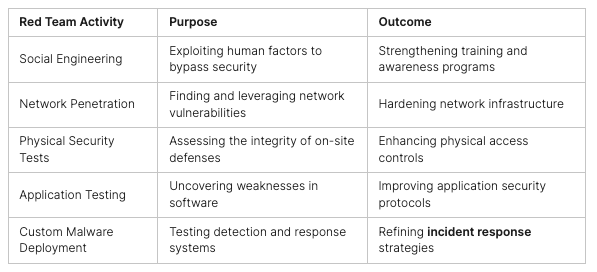
In the dynamic world of cybersecurity, Red Team exercises are vital for protecting information systems. They use tactics like penetration testing and vulnerability exploitation. These teams perform ethical hacking to mimic real attacker strategies. Their cyber attack simulations help improve an organization’s defenses.
Simulating Real-Life Cyber Attacks
Red Teams work to reflect the unpredictable nature of real cyber threats. They conduct tests ranging from social engineering to advanced digital intrusions. This strengthens security and gets organizations ready for evolving cyber threats.
Continuous Pursuit of System Vulnerabilities
The main goal of Red Teams is to find system vulnerabilities. They carefully check an organization’s network to find possible entry points for hackers. With advanced techniques, they ensure the security measures are strong and effective.
Creativity and Persistence: The Hallmarks of Red Teams
Red Team members are known for their creativity and persistence. These qualities help them find and use system weaknesses. By simulating attacks, they help make security stronger against potential breaches.
Red Teams follow strict rules and ethics to improve, not harm, security. The feedback from their tests is crucial for building a solid cybersecurity defense.
Defensive Protocols: How Blue Teams Safeguard Organizations
Blue Team protocols are the backbone of strong cybersecurity. These teams work tirelessly at the forefront of incident response. They use detailed security measures to protect assets. Their work starts with a thorough risk assessment. Then, they focus on protecting a company’s most valuable assets.
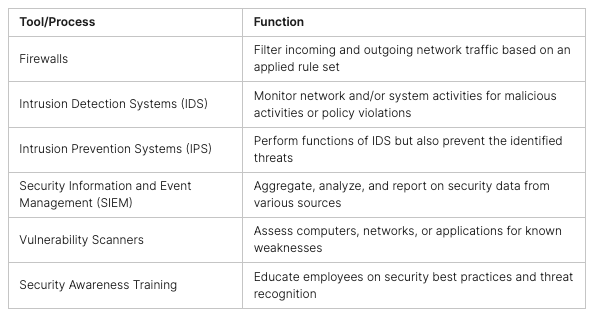
At the heart of their strategy is network monitoring. This helps in catching suspicious activity early. By doing so, they can stop threats before they turn into major issues. Below, you’ll find a list of tools and processes Blue Teams use to protect digital spaces:
The Blue Teams also conduct DNS audits and vulnerability scanning. These are crucial in forming a proactive defense. They check domain names and search for security vulnerabilities.
The Blue Teams are quick to respond in a crisis. Their incident response process includes:
Immediate containment to limit threat impact.
Root cause removal to stop further spread.
System recovery to restore full functionality.
Learning lessons to better prepare for future threats.
As digital assets grow more important, Blue Teams keep improving and watching networks closely. This strengthens an organization’s defenses.
To wrap up, Blue Teams’ expert balance of proactive steps, technical skills, and quick response helps them protect organizations. Their expertise in risk assessment and incident response is crucial for keeping assets safe.
Red Teams and Blue Teams: Enhancing Organizational Resilience
In the world of cybersecurity, merging the power of Red and Blue Teams boosts organizational strength. These teams are key in making a business’s digital space safer and more secure. By combining Red Teams’ proactive steps with Blue Teams’ defensive skills, they create a powerful duo. This mix lets companies quickly adapt and stand strong against cyber threats.
An Integrated Approach to Cyber Threats
Companies that mix both offensive and defensive cyber strategies fare better. They use Red Teams to find weak spots and Blue Teams to protect vital assets. This balanced approach brings out the best in cybersecurity team work. It ensures smooth communication and quick action against threats. Together, these teams set a high standard in cybersecurity that others aim to reach.
Triumph Through Teamwork: The Competitive Edge
Teamwork in cybersecurity is more than working together; it’s a smart strategy. It has these expert teams challenge each other, raising security standards. This rivalry boosts creativity and keeps defenses up-to-date against new cyber threats. As a result, competitive cybersecurity acts as more than a safeguard. It gives companies an edge, making them tough targets for hackers. This protects their reputation and financial health.
The mix of attack and defense insights builds a culture focused on organizational resilience. This creates a flexible and strong cybersecurity system. It’s built to last against both time and cyber-attacks.
The Cybersecurity Battleground: Offense vs. Defense
In the high-stakes world of cybersecurity battleground, teams face off in a vital power clash. On this battlefield, offensive cyber strategies and defensive cyber measures meet head-on. The key to success? Using both proactive and reactive approaches to keep the balance of security.
Distinct Mindsets of Attack and Defense Teams
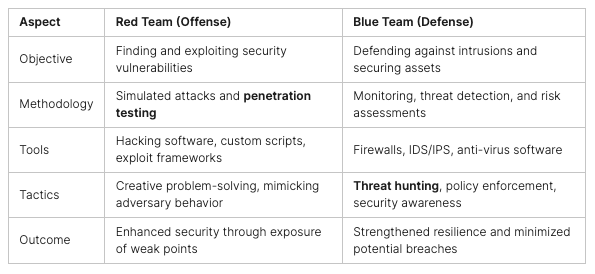
The Red Team’s approach is all about finding weak spots in a company’s digital armor. They use offensive cyber strategies to mimic real attackers. By doing this, they expose and fix vulnerabilities, making the company’s cybersecurity stronger.
On the other hand, Blue Teams focus on defense. They work hard to protect the company from cyber attacks. Their strategy includes being always alert, constantly monitoring, and having solid plans for dealing with incidents.
Balancing Cyber Defenses with Proactive Threat Hunting
While Blue Teams strengthen the company’s defenses, having proactive cybersecurity is also crucial. This involves not just updating defenses but also actively looking for threats within the system. Such efforts help companies stop potential attacks before they happen, rather than responding after the fact.
Maintaining a balance between offense and defense is crucial. It prepares organizations to face current dangers and quickly adjust to new ones. This makes them strong on the ever-changing cybersecurity battleground.
Developing a Holistic Cybersecurity Framework
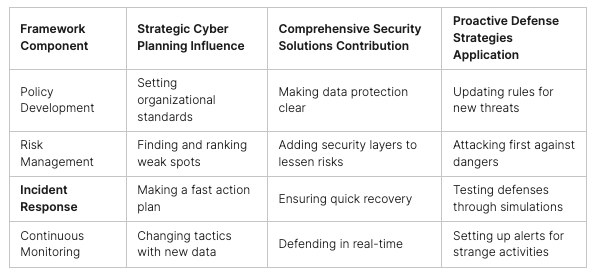
To build a holistic cybersecurity framework, groups need strategic cyber planning. They also need proactive defense strategies. A good framework uses broad coverage, adaptability, and various cyber functions. This is key today.
It mixes Red Teams’ attack skills with Blue Teams’ defenses. This creates a strong, ready system. It can quickly handle new cyber threats.
To make this complex system, commitment to comprehensive security solutions is needed. It’s about setting standard rules and uniting the work of Red and Blue Teams. This way, every cybersecurity aspect is handled well and thoroughly. Here’s an example:
“A holistic cybersecurity framework combines proactive steps, smart planning, and reaction skills. It forms a digital fortress that’s hard to break.”
A smart security plan gets better over time. It keeps up with new threats and uses the latest tech. By aligning improvements with business goals, companies become robust. They’re ready for today’s and tomorrow’s threats.
In conclusion, groups should dive into making a holistic cybersecurity framework. It should include strategic cyber planning, comprehensive security solutions, and proactive defense strategies. This three-part approach keeps our digital worlds safe against growing cyber threats.
Evolving Threat Landscapes: Adapting through Red and Blue Team Collaboration
As the digital world expands, evolving threats become a major concern for security experts. It’s vital to combine Red Team collaboration with Blue Team adaptability. This creates a strong defense against changing cyber threats. Sharing threat intelligence is key to staying informed and ready.
Sharing Threat Intelligence: A Global Imperative
Changing cybersecurity defenses to face evolving threats requires threat intelligence sharing. By sharing info, Red and Blue Teams can understand and stop attacks early. Having access to global intelligence data is crucial. It helps teams stop attacks before they happen.
Adaptive Defense: Learning from Simulated Threats
Learning from Red Team exercises, Blue Team can improve. These simulations help Blue Teams make their defenses stronger. By practicing and reviewing these simulations, they keep learning and adapting. This ensures they stay ready for new tactics from adversaries.
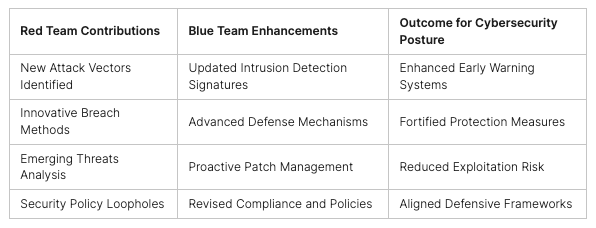
This strategy uses offensive and defensive strengths together. The table below shows key areas of shared intelligence and how teams adapt.
In conclusion, cybersecurity landscapes continuously change. The teamwork of Red and Blue Teams, through intelligence sharing and learning, is crucial. Their ongoing cooperation makes organizations ready to face digital threats.
Advanced Cyber Defense Tactics: The Integration of Red Teams and Blue Teams
The world of cybersecurity tactics has changed a lot with Red Team integration and Blue Team collaboration coming together. This mix is at the heart of advanced cyber defense. It creates a culture that focuses on stopping threats and making systems stronger. By combining Red Teams’ aggressive threat spotting with Blue Teams’ defensive skills, companies can set up fast and flexible cyber safety actions.
At the center of this teamwork is making security better, where Red and Blue Teams unite to strengthen defense. This teamwork forms a solid strategy that helps organizations stay secure against new cyber threats.
With security response optimization, there’s always room for getting better. The lessons from practice attacks lead to stronger defenses.
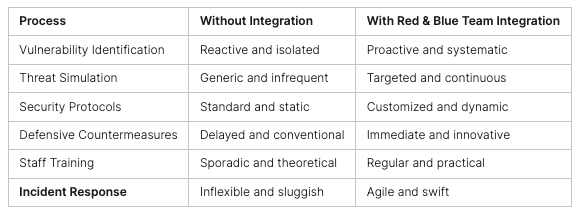
When we look closer, we see how Red Team integration boosts Blue Team efforts:
By adopting advanced cyber defense strategies through this teamwork, the effect of cyberattacks is reduced. This approach helps companies get ready for and stop future threats. It’s a vital shift in cybersecurity tactics—a field that’s always changing and needs smart, fast teamwork.
In short, advanced cyber defense is more than just using tools. It’s about creating a space where Red Team integration and Blue Team collaboration push security to new heights. The shared knowledge of these teams leads to a smarter way of optimizing responses. This is what sets the standard in today’s cybersecurity efforts.
Conclusion
In the dynamic and ever-evolving world of digital security, the collaboration between Red Teams and Blue Teams is essential for fortifying cybersecurity defenses. This partnership epitomizes the synergy necessary to safeguard online environments effectively. Red Teams, by simulating real-world cyber attacks, identify vulnerabilities in security systems, while Blue Teams focus on defending against these infiltrations and strengthening the system’s resilience.
The continuous interaction between Red and Blue Teams not only identifies and rectifies vulnerabilities but also fosters an environment of perpetual learning and improvement. This iterative process is crucial for adapting to the sophisticated tactics of modern cyber threats, ensuring that security measures evolve faster than the tactics employed by attackers. This teamwork is the cornerstone of a robust cybersecurity strategy, ensuring that defenses are not only reactive but proactively tested and enhanced.
For organizations aiming to maintain a cutting-edge defense against cyber threats, the integration of both Red and Blue Team efforts is vital. Their combined expertise allows businesses to anticipate potential security breaches and adapt their defenses before any real damage can occur. This proactive approach to cybersecurity ensures that organizations can continue to operate safely and reliably in an increasingly hostile digital landscape.
At Peris.ai Cybersecurity, we understand the importance of this dynamic and offer comprehensive Red Teaming services as part of our Peris.ai Pandava suite. Our Red Team Service goes beyond traditional penetration testing by simulating sophisticated cyber attacks to uncover deep-rooted vulnerabilities, providing your organization with the insights needed to fortify your defenses. Visit us at Peris.ai Cybersecurity to learn more about how our Red Team services can help you stay one step ahead of cyber threats and ensure that your organization is prepared to face the future of digital security with confidence. Embrace the collaborative power of Red and Blue Teams with Peris.ai and secure your digital world today.
FAQ
What are Red Teams in cybersecurity?
Red Teams are groups that work on offensive cybersecurity. They use ethical hacking to find weaknesses in a network’s security. Their goal is to find these issues to make the network stronger against real attacks.
How do Blue Teams contribute to cyber defense?
Blue Teams focus on defending an organization from cyber threats. They handle risk analysis, monitor networks, and respond to incidents. They aim to keep critical assets safe and fend off threats.
Why is the collaboration between Red Teams and Blue Teams important?
When Red and Blue Teams work together, they create a strong cybersecurity strategy. Red Teams find flaws, and Blue Teams improve security with this knowledge. This teamwork makes the organization’s defenses better.
What distinguishes the offensive strategies of Red Teams from the defensive measures of Blue Teams?
Red Teams attack using unique hacking methods to find and fix security gaps. In contrast, Blue Teams protect the organization. They watch for threats and keep the company’s data safe.
How does proactive threat hunting contribute to an organization’s cybersecurity?
Proactive threat hunting means always looking for cyber threats. It uses offense and defense to respond to new dangers. This makes the security stronger and more effective.
What is a holistic cybersecurity framework, and why is it necessary?
A holistic framework combines attacking and defending in cybersecurity. It involves planning and defending against threats. This ensures an organization can handle new dangers and keep improving its defenses.
In what ways can threat intelligence sharing improve cybersecurity?
Sharing threat intelligence means exchanging information on cyber threats worldwide. This makes defense strategies smarter and more effective. It helps organizations be better prepared for new risks.
What constitutes advanced cyber defense tactics?
Advanced tactics come from mixing Red Teams’ attacks with Blue Teams’ defenses. This creates new strategies that keep up with the latest security practices, making defenses stronger.
How does simulation of cyber threats aid in improving cybersecurity?
Simulating threats tests a network’s defenses safely. It shows what attackers might do. This helps Blue Teams improve defenses and plan better for real attacks.
What is the role of competitive cybersecurity in an organization?
Competitive cybersecurity means Red and Blue Teams challenge each other. This competition improves their methods and makes cybersecurity stronger. It leads to continuous learning and better defenses.
As our world becomes more interconnected and digitalized, the significance of robust cybersecurity measures cannot be emphasized enough. Companies operating in diverse industries constantly face the threat of malicious actors eager to exploit vulnerabilities within their systems and networks. To safeguard sensitive data and maintain uninterrupted business operations, organizations must adopt proactive strategies to bolster their cybersecurity defenses. A highly effective technique that has gained considerable prominence in recent years is known as Red Teaming.
Red Teaming is a powerful solution to this challenge, offering a comprehensive and realistic assessment of an organization’s security posture. Unlike conventional penetration testing focusing on limited security aspects, Red Teaming takes a holistic approach. By simulating real-world cyber-attacks, Red Teaming replicates the strategies and techniques of actual adversaries, enabling organizations to identify weaknesses and potential attack vectors that might otherwise go unnoticed. This proactive methodology empowers companies to understand their security gaps better, proactively address vulnerabilities, and fortify their cybersecurity framework.
What is Red Teaming?
Red Teaming is a security assessment methodology that simulates real-world cyber-attacks on an organization’s systems and infrastructure. Unlike traditional penetration testing, which focuses on finding vulnerabilities within the scope of a specific assessment, Red Teaming takes a more comprehensive approach. It aims to replicate genuine adversaries’ tactics, techniques, and procedures (TTPs) to identify weaknesses and uncover potential attack vectors that may have been overlooked.
The Role of Red Teamers
Red Teaming is carried out by highly skilled cybersecurity professionals known as Red Teamers. These individuals deeply understand various hacking techniques, social engineering tactics, and cutting-edge cybersecurity tools. Their primary objective is to emulate the mindset and actions of potential attackers, helping organizations identify and address vulnerabilities before malicious actors can exploit them.
Benefits of Red Teaming
Holistic Security Assessment: Red Teaming evaluates an organization’s security posture, considering technical and human factors. It assesses the effectiveness of security controls, incident response procedures, employee awareness, and other critical aspects of cybersecurity.
Realistic Threat Simulation: Red Teaming goes beyond traditional vulnerability scanning and testing. It emulates the tactics of real attackers, enabling organizations to identify vulnerabilities that may go unnoticed in routine security assessments. By mimicking real-world attack scenarios, Red Teaming helps organizations understand their adversaries better and prepare robust defense strategies accordingly.
Identifying Weak Links: Red Teaming aims to identify the weakest links in an organization’s defenses, whether technical vulnerabilities or human errors. It helps uncover potential entry points that attackers could exploit, providing valuable insights into areas that require immediate attention and strengthening.
Enhanced Incident Response Capability: Red Teaming exercises simulate actual attacks, allowing organizations to test their incident response capabilities in a controlled environment. This enables the identification of gaps in response procedures, communication channels, and coordination among teams. By uncovering weaknesses in incident response, organizations can improve their ability to detect, respond, and recover from security incidents effectively.
Improved Security Awareness and Training: Red Teaming exercises often involve social engineering techniques like phishing emails or physical intrusion attempts. Organizations can identify areas where additional education and awareness efforts are required by testing employees’ security awareness and training programs. This helps in creating a more security-conscious culture within the company.
Implementing Red Teaming
To implement Red Teaming effectively, organizations should follow these key steps:
Define Objectives: Clearly define the goals and scope of the Red Teaming exercise. Determine which systems, networks, or personnel will be included and identify the areas to assess.
Assemble a Red Team: Build a team of skilled cybersecurity professionals to conduct the Red Teaming exercise. The team should include experts from various domains, such as penetration testing, social engineering, and incident response.
Reconnaissance and Planning: The Red Team should gather information about the organization’s systems, networks, and personnel. This helps in designing realistic attack scenarios and identifying potential vulnerabilities.
Simulation and Testing: The Red Team performs the simulated attacks, employing various techniques to exploit vulnerabilities and gain unauthorized access. This may include network attacks, phishing campaigns, physical intrusion attempts, etc.
Analysis and Reporting: After the exercise, the Red Team provides a detailed report highlighting their identified vulnerabilities and weaknesses. They should also offer recommendations for remediation and strengthening the organization’s defenses.
Remediation and Follow-Up: Based on the Red Team’s findings, the organization’s cybersecurity team should prioritize and address the identified vulnerabilities. They should also revise security policies, procedures, and training programs to mitigate future risks.
Conclusion
Organizations must be bold in the ever-evolving landscape of cybersecurity threats. A proactive approach is essential to safeguard sensitive data, protect business continuity, and stay ahead of malicious actors. Red Teaming is a robust and comprehensive methodology that can significantly enhance your organization’s security posture. By adopting Red Teaming practices, you can better understand your vulnerabilities, strengthen incident response capabilities, and cultivate a culture of heightened security awareness within your company.
Implementing Red Teaming empowers your organization to identify weaknesses that may go unnoticed through traditional security assessments. By simulating real-world attack scenarios, Red Teaming allows you to see your defenses from an adversary’s perspective, enabling you to fortify your systems and networks accordingly. The comprehensive evaluation provided by Red Teaming helps you uncover potential entry points and address them proactively, reducing the risk of successful cyber-attacks.
Additionally, Red Teaming enhances your incident response capabilities by allowing you to test and refine your response procedures in a controlled environment. By simulating realistic attacks, you can identify gaps or bottlenecks in your incident response plan, fine-tune your processes and enhance your ability to detect, respond to, and recover from security incidents effectively.
To take your organization’s cybersecurity defenses to the next level, we would like to invite you to explore our website. Our team of experienced professionals specializes in Red Teaming services tailored to meet your specific needs. By engaging our services, you can benefit from our expertise in emulating real-world attack scenarios, identifying vulnerabilities, and providing actionable recommendations to bolster your defenses.
Remember, staying ahead in the battle against cyber threats requires a proactive stance. Embrace Red Teaming as a proactive approach to cybersecurity, and fortify your organization against the ever-evolving threat landscape. Visit our website today to learn more about how our Red Teaming services can empower your company and protect your valuable assets in the digital age.
Red team services play a crucial role in today’s evolving cybersecurity landscape. With the ever-increasing sophistication of cyber threats, organizations need to go beyond routine security assessments to fortify their defenses effectively. That’s where red teaming comes in.
Red teaming is a proactive cybersecurity strategy that involves simulating real-world cyber attacks to identify vulnerabilities and weaknesses. By stepping into the shoes of potential adversaries, a red team can provide organizations with a unique perspective on their defenses and help them enhance their overall cyber defense strategy.
Key Takeaways:
Red teaming is a proactive cybersecurity strategy that simulates real-world cyber attacks.
It goes beyond routine security assessments and actively seeks out vulnerabilities.
Red teaming provides organizations with a unique perspective on their defenses.
By identifying weaknesses, organizations can fortify their cyber defense strategy.
Red team services enhance overall cybersecurity posture and incident response preparedness.
What is Red Teaming?
Red-teaming involves a team of experts, known as the red team, simulating cyber attacks to identify vulnerabilities and weaknesses in an organization’s defenses. It goes beyond traditional cybersecurity approaches by emulating the tactics of potential adversaries. This proactive strategy allows organizations to identify and address vulnerabilities before they can be exploited by malicious actors. Red teaming is a comprehensive cybersecurity testing method that includes security vulnerability analysis and helps organizations strengthen their overall defense strategy.
The Evolution of Red Teaming in Cybersecurity
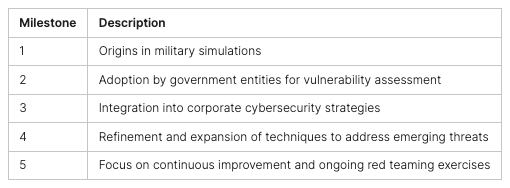
Red teaming has evolved alongside the changing cybersecurity landscape. Originally rooted in military simulations, it has transformed into a dynamic cybersecurity strategy that prepares organizations for cyber attacks. With the rise of sophisticated cyber threats, red teaming has become increasingly crucial. It is not just a one-time exercise but an ongoing process that continually refines its techniques to stay ahead of emerging threats. Red teaming plays a vital role in defensive cybersecurity, equipping organizations with the necessary preparation to combat cyber attacks.
Key Milestones in the Evolution of Red Teaming
The Role of Red Teaming in Defensive Cybersecurity
Defensive cybersecurity requires organizations to anticipate and prepare for cyber attacks. Red teaming offers a proactive approach, enabling organizations to simulate realistic cyber attacks and identify weaknesses in their defenses. By constantly refining their techniques and staying ahead of emerging threats, red teaming helps organizations build a robust cybersecurity posture. It provides invaluable insights into an organization’s vulnerabilities, allowing for targeted improvements in defensive capabilities.
Quotes from Industry Experts
“Red teaming is a critical component of any effective cybersecurity strategy. By simulating real-world attacks, organizations can identify and mitigate vulnerabilities before they are exploited by malicious actors.”
“The evolution of red teaming mirrors the ever-changing cyber threat landscape. Organizations must invest in ongoing red teaming exercises to continuously strengthen their defensive cybersecurity measures.”
Benefits of Red Teaming
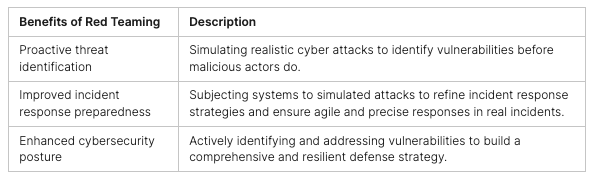
Red teaming provides organizations with numerous benefits that contribute to a robust and proactive cybersecurity strategy. By simulating realistic cyber attacks, proactive threat identification becomes possible, allowing organizations to uncover vulnerabilities before malicious actors do. This early detection enables organizations to take strategic measures to reinforce their defenses, mitigating the risk of potential breaches.
Another significant advantage of red teaming is its ability to enhance incident response preparedness. By subjecting systems to simulated attacks, security teams can refine their incident response strategies. This serves as a valuable dress rehearsal that hones their agility and precision in dealing with real incidents, ensuring a swift and effective response.
Through red teaming, organizations actively identify and address vulnerabilities, leading to an enhanced cybersecurity posture. By staying one step ahead of potential threats, organizations can build a comprehensive defense strategy that is resilient and proactive in addressing emerging cybersecurity challenges.
Proactive threat identification, incident response preparedness, and an enhanced cybersecurity posture are the key benefits that organizations gain from implementing red teaming.
Benefits of Red Teaming:
Proactive threat identification
Improved incident response preparedness
Enhanced cybersecurity posture
Red teaming is not only a valuable exercise in identifying vulnerabilities but also a vital component of a comprehensive cybersecurity defense strategy. The table below briefly summarizes the key benefits of red teaming:
Implementing red teaming empowers organizations to proactively safeguard their critical assets and data, staying ahead in the ever-evolving threat landscape.
Cost-Effectiveness of Red Teaming
Investing in cybersecurity is often considered a significant expenditure for organizations. However, red teaming offers a cost-effective and efficient long-term solution. While there is an initial investment required, the benefits far outweigh the costs. Red teaming acts as an insurance policy, helping organizations avoid the financial and reputational fallout that can occur as a result of a real cyber attack.
By proactively identifying and mitigating threats, red teaming allows organizations to fortify their defenses and minimize the potential impact of a cyber attack. It is comparable to fixing a leaky roof before a storm; the small investment now saves from a major financial downpour later.
“Red teaming acts as an insurance policy, helping organizations avoid the financial and reputational fallout that can occur as a result of a real cyber attack.”
In addition to avoiding the financial and reputational fallout, red teaming provides organizations with several other cost-saving benefits. By identifying vulnerabilities and weaknesses in their defenses, organizations can proactively address them, minimizing the likelihood of a successful cyber attack. This proactive approach helps prevent potential financial losses that can result from data breaches, system downtime, and the need for extensive remediation efforts.
Moreover, red teaming can help organizations reduce their reliance on cyber attack insurance. While insurance coverage is a valuable component of a comprehensive cybersecurity strategy, investing in proactive measures like red teaming can significantly reduce the likelihood and impact of cyber attacks, thereby potentially reducing insurance premiums.
Financial and Reputational Fallout Avoidance through Red Teaming
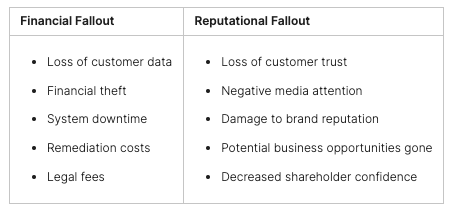
Avoiding the financial and reputational fallout of a real cyber attack is critical for organizations. The cost of recovering from a cyber attack can be substantial, including financial losses from theft, system disruptions, regulatory penalties, and even lawsuits. Additionally, the reputational damage resulting from a cyber attack can lead to a loss of customer trust and decreased business opportunities.
Red teaming helps organizations mitigate these risks by identifying vulnerabilities and strengthening their defenses. By simulating realistic cyber attacks, red teaming reveals weaknesses that can be addressed proactively, minimizing the financial and reputational impact of an actual breach.
An Example of Cost Savings with Red Teaming
Consider a hypothetical organization that invests in red teaming to identify vulnerabilities in its systems and processes. During the red team exercise, several critical vulnerabilities are discovered and promptly addressed. As a result, the organization is able to patch these vulnerabilities and implement safeguards effectively.
If the organization had not undergone red teaming and these vulnerabilities had been exploited by a malicious actor, the financial and reputational fallout could have been significant. The potential costs include:
As this example illustrates, the cost of red teaming is considerably lower than the potential financial and reputational fallout of a successful cyber attack. By investing in proactive measures like red teaming, organizations can minimize risks and safeguard their financial stability and reputation.
Methodologies and Simulation Tools
Red teaming methodologies serve as the foundation for a robust cybersecurity strategy. These methodologies provide organizations with the blueprints to effectively simulate cyber attacks and identify vulnerabilities within their defenses. By tailoring or selecting the appropriate methodologies, organizations can ensure the success of their red teaming initiatives.
One common approach is adversary emulation, which involves mimicking the tactics, techniques, and procedures (TTPs) of potential attackers. This methodology enables organizations to evaluate their defenses against realistic cyber threats and understand their vulnerabilities from an adversary’s perspective.
Another valuable methodology is threat intelligence-driven testing. By incorporating threat intelligence into red teaming exercises, organizations can align their efforts with real-world threats and prioritize areas of vulnerability. This approach ensures that red teaming activities are focused on addressing the most relevant and pressing cyber risks.
In addition to methodologies, the effectiveness of red teaming relies heavily on the use of simulation tools and technologies. The red team’s arsenal includes cutting-edge simulation tools that enable the realistic emulation of cyber threats.
Penetration testing tools, such as Metasploit and Burp Suite, allow red teams to identify and exploit vulnerabilities in a controlled manner. These tools simulate various attack vectors and help uncover weaknesses that could be targeted by real attackers.
“Red teaming methodologies form the foundation of an effective cybersecurity strategy. By selecting the right methodologies and leveraging simulation tools, organizations can simulate realistic cyber threats and identify vulnerabilities in their defenses.”
For advanced threat emulation, red teams utilize sophisticated platforms designed specifically for this purpose. These platforms provide an extensive range of attack scenarios, allowing organizations to evaluate their defenses against complex and evolving threats. With features like automated attack simulations, customizable attack scenarios, and comprehensive reporting, advanced threat emulation platforms offer a realistic and dynamic environment for red teaming exercises.
By leveraging red team methodologies and simulation tools, organizations can gain valuable insights into their cybersecurity posture, identify weaknesses, and implement targeted measures to enhance their defenses.
Key Takeaways
Red teaming methodologies are crucial for simulating cyber attacks and identifying vulnerabilities.
Adversary emulation and threat intelligence-driven testing are common methodologies used in red teaming.
Simulation tools, including penetration testing tools and advanced threat emulation platforms, enable realistic emulation of cyber threats.
The selection and tailoring of methodologies, as well as the quality and relevance of simulation tools, are essential for the success of red teaming initiatives.
Skilled Professionals in Red Teaming
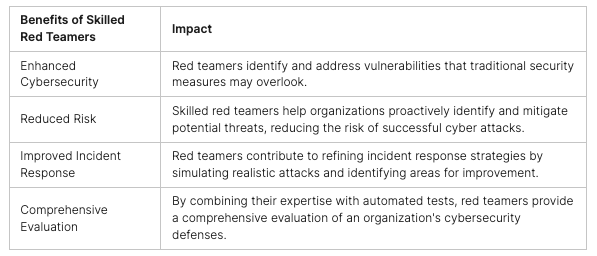
Skilled professionals, often referred to as red teamers, are instrumental in the success of red teaming initiatives. These individuals possess diverse backgrounds in cybersecurity and bring a wealth of expertise to the table. With their deep understanding of the threat landscape and creativity, red teamers play a crucial role in identifying and exploiting vulnerabilities that may go unnoticed by conventional security measures.
One of the key strengths of red teamers is their ability to think like attackers, allowing them to uncover unconventional vulnerabilities that may not be apparent to the organization’s security team. By adopting the mindset of a malicious actor, red teamers can explore different attack vectors, exploit weaknesses, and gain insight into potential areas of compromise.
The training and retention of skilled red teamers are essential for the continued success of red teaming initiatives. These professionals require up-to-date knowledge of the latest cyber threats, attack techniques, and defensive strategies. Additionally, their human touch complements the automated tests conducted during red teaming exercises, ensuring a comprehensive evaluation of an organization’s cybersecurity defenses.
Red teaming requires professionals who possess a combination of technical expertise, critical thinking skills, and a deep understanding of the evolving cybersecurity landscape. The expertise and insights provided by red teamers help organizations identify vulnerabilities and develop effective strategies to strengthen their defenses.
Skilled red teamers bring invaluable knowledge and experience to the table, ensuring that organizations stay ahead of evolving cyber threats. Their role in identifying unconventional vulnerabilities and strengthening cybersecurity defenses plays a crucial part in an organization’s overall security strategy.
Collaboration with Stakeholders
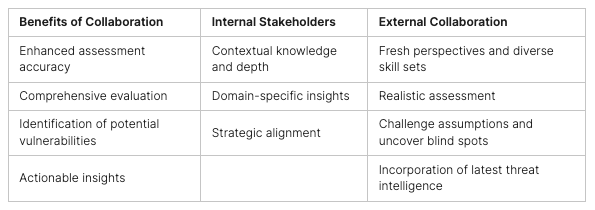
Red teaming is not a solo endeavor but a collaborative effort that involves internal and external stakeholders. By leveraging the collective knowledge and expertise of these individuals, organizations can achieve a more comprehensive assessment of their cybersecurity defenses.
Internal Stakeholders:
Internal stakeholders, such as IT personnel and executives, play crucial roles in the red teaming process. Their involvement provides context, depth, and domain-specific insights that contribute to a more accurate evaluation. IT personnel possess intricate knowledge of the organization’s systems and infrastructure, enabling them to identify potential vulnerabilities and suggest appropriate remediation measures. Executives bring a strategic perspective, aligning red teaming objectives with the organization’s overall cybersecurity strategy and ensuring buy-in from key decision-makers.
External Collaboration:
Collaborating with external entities brings fresh perspectives and diverse skill sets to the evaluation process. Partnering with external red teams, composed of experienced cybersecurity professionals, brings in expertise and methodologies that may not be readily available within the organization. These teams can challenge assumptions, uncover blind spots, and provide a more realistic assessment of an organization’s defenses. Additionally, engaging with threat intelligence providers enhances the evaluation by incorporating the latest threat intelligence and industry trends.
“Collaboration ensures a comprehensive assessment that considers both internal intricacies and external threat landscapes.”
By collaborating with both internal stakeholders and external partners, organizations simulate the diverse expertise and perspectives of a team of experts. This collaborative approach ensures a more thorough evaluation, identification of potential vulnerabilities, and actionable insights for fortifying cybersecurity defenses.
Overcoming Challenges in Red Teaming
Implementing red teaming often faces resistance as teams comfortable with routine security measures might see it as a disruption or unnecessary shake-up. The key lies in communication and education, making everyone aware that red teaming is about fortifying existing defenses with a proactive layer.
Overcoming resource constraints is another challenge organizations face during red teaming. Prioritization becomes crucial, as organizations strategically allocate resources to focus on critical assets and gradually expand their red-teaming capabilities.
Balancing realism and operational impact is also a challenge, as simulations should mirror potential threats without causing unnecessary disruption. Collaboration with internal stakeholders is paramount to ensure controlled exercises with minimal operational impact.
Conclusion
In the intricate and ever-evolving realm of cybersecurity, Red Team services emerge as a linchpin for bolstering an organization’s defense mechanisms against cyber threats. These services, characterized by their proactive approach, simulate real-world cyber attacks to uncover and address vulnerabilities within an organization’s security framework, thereby significantly enhancing its cybersecurity posture. Furthermore, Red Teaming enriches an organization’s incident response readiness, equipping security teams with the necessary tools and insights to adeptly navigate potential threats.
A notable advantage of Red Teaming lies in its cost-effectiveness. By proactively identifying and rectifying security vulnerabilities, organizations preempt the potentially devastating financial and reputational damages that real cyber attacks could inflict. In essence, Red Teaming functions as a preemptive investment, shielding organizations from the dire consequences of cyber incursions and reinforcing their long-term security.
The efficacy of Red Teaming hinges on a synergistic blend of advanced methodologies, simulation tools, and the expertise of skilled professionals. Employing the most suitable methodologies and leveraging state-of-the-art simulation tools are pivotal for the accurate emulation of threats. The human element, brought forth by seasoned Red Teamers with diverse cybersecurity backgrounds, plays a critical role in unearthing non-traditional vulnerabilities. Furthermore, fostering collaboration among all stakeholders ensures a comprehensive evaluation of the organization’s cybersecurity measures.
For organizations aiming to navigate the dynamic cybersecurity landscape successfully, integrating Red Team services into their security strategy is indispensable. By adopting Red Teaming, organizations not only proactively mitigate cyber threats but also fortify their security defenses and protect their vital assets.
Peris.ai Cybersecurity proudly offers the Peris.ai Pandava Red Team Service, a premium solution designed to simulate real-world threats and go beyond traditional Penetration Testing. Our service aims to provide organizations with an end-to-end, realistic assessment of their defenses, identifying vulnerabilities that could be overlooked by conventional methods. Through our expertly executed Red Team operations, we deliver actionable insights that empower organizations to improve their security posture, incident response capabilities, and resilience against cyber-attacks.
Embrace the future of cybersecurity defense with Peris.ai Pandava Red Team Service. Visit Peris.ai Cybersecurity to explore how our Red Team services can transform your organization’s approach to cybersecurity, ensuring a secure, resilient, and competitive stance in the digital marketplace.
FAQ
What are red team services?
Red team services involve simulating cyber attacks to identify vulnerabilities and weaknesses in an organization’s defenses. It goes beyond routine security assessments and actively seeks out weaknesses by employing the tactics of potential adversaries.
How does red teaming work?
Red teaming involves a team of experts, known as the red team, simulating cyber attacks to identify vulnerabilities and weaknesses in an organization’s defenses. It goes beyond traditional cybersecurity approaches by emulating the tactics of potential adversaries. This proactive strategy allows organizations to identify and address vulnerabilities before they can be exploited by malicious actors.
What are the benefits of red teaming?
Red teaming offers numerous benefits, including proactive threat identification, incident response preparedness, and enhanced overall cybersecurity posture. By simulating realistic cyber attacks, organizations can spot vulnerabilities before malicious actors do, allowing for strategic reinforcement of defenses.
Is red teaming cost-effective?
While there is an upfront investment, red teaming can be considered a cost-effective long-term solution. By proactively identifying and mitigating threats, organizations can avoid the financial and reputational fallout of a real cyber attack. It can be compared to fixing a leaky roof before a storm, as the small investment now saves from a major financial downpour later.
What are the methodologies and simulation tools used in red teaming?
Red teaming methodologies form the blueprints for a cybersecurity strategy. Different methodologies cater to different needs, whether it’s adversary emulation, threat intelligence-driven testing, or a combination of both. The arsenal of a red team includes cutting-edge simulation tools and technologies, such as penetration testing tools and advanced threat emulation platforms.
What is the role of skilled professionals in red teaming?
Skilled professionals, often referred to as red teamers, play a crucial role in red teaming. Their diverse backgrounds in cybersecurity, coupled with creativity and expertise, make them the backbone of red-teaming initiatives. Red teamers possess the ability to think like attackers and identify unconventional vulnerabilities.
How does collaboration with stakeholders contribute to red teaming?
Red teaming is a collaborative effort that involves internal and external stakeholders. Internal stakeholders, such as IT personnel and executives, provide context and depth to the assessment. External collaboration, through partnering with external red teams or engaging with threat intelligence providers, brings fresh perspectives to the evaluation.
What challenges are faced in implementing red teaming?
Implementing red teaming often faces resistance as teams comfortable with routine security measures might see it as a disruption or unnecessary shake-up. Overcoming resource constraints and balancing realism and operational impact are also challenges organizations face during red teaming. Collaboration with internal stakeholders is paramount to ensure controlled exercises with minimal operational impact.
How does red teaming fit into a cybersecurity defense strategy?
Red team services, which involve simulating cyber attacks, are an integral part of a comprehensive cybersecurity defense strategy. By proactively identifying vulnerabilities and weaknesses in defenses, red teaming enhances overall cybersecurity posture and improves incident response preparedness.
Note: For more information about red team services, simulating cyber attacks, and cybersecurity defense strategies, please reach out to our team or visit our website.
Characterized by an unprecedented surge in intricate and widespread cyber threats, organizations find themselves at a crossroads where conventional cybersecurity approaches prove inadequate. The conventional reactive strategies that once sufficed to secure valuable assets are now struggling to counter the sophisticated tactics employed by malicious actors. The dire need for a more proactive and dynamic approach to cybersecurity has paved the way for the ascendancy of Managed Detection and Response (MDR) services. To shield sensitive data, preserve critical systems, and fortify the overarching reputation of businesses, cybersecurity has embraced MDR as a potent weapon against evolving cyber threats. This article embarks on a comprehensive exploration of MDR—its conceptual underpinnings, multifaceted benefits, and pivotal role in bolstering the resilience of modern organizations.
Understanding Managed Detection and Response (MDR)
Managed Detection and Response (MDR) is an advanced cybersecurity service that combines cutting-edge technology with human expertise to provide organizations with a proactive and responsive defense against cyber threats. Unlike traditional cybersecurity solutions focusing on preventing attacks, MDR is designed to detect, investigate, and respond to threats in real time. It aims to bridge the gap between detection and response by offering a holistic approach to cybersecurity that encompasses monitoring, threat analysis, incident response, and continuous improvement.
Key Components of MDR
Continuous Monitoring: MDR providers utilize advanced tools to monitor an organization’s network, endpoints, applications, and data sources in real time. This constant surveillance helps identify suspicious activities or anomalies that could indicate a potential cyber threat.
Threat Detection and Analysis: MDR services use signature-based and behavior-based detection techniques to identify known threats and previously unseen attacks. MDR providers can uncover sophisticated attacks that might evade traditional security measures by analyzing patterns and anomalies in network traffic and user behavior.
Incident Response: In the event of a detected threat, MDR services offer rapid incident response. Skilled cybersecurity professionals investigate the threat, assess its severity, and take immediate action to mitigate its impact. This includes isolating affected systems, removing malicious code, and preventing further spread.
Forensics and Investigation: MDR solutions offer detailed forensic analysis of security incidents. This involves tracing the attack’s origins, understanding the attack vectors, and determining the extent of damage. This information is crucial for understanding the attack landscape and preventing similar incidents in the future.
Adaptive Protection: MDR adapts to evolving threats using machine learning and artificial intelligence to refine threat detection algorithms continuously. This ensures that the system becomes more effective over time and can identify emerging threats that might not have been previously recognized.
Benefits of MDR for Organizations
Proactive Threat Detection: MDR helps organizations identify and address threats before they escalate into full-blown attacks. By focusing on early detection, MDR minimizes potential damage and reduces the time and resources required for incident response.
24/7 Monitoring: Cyber threats can emerge anytime, making continuous monitoring essential. MDR provides round-the-clock surveillance, ensuring organizations remain protected even during non-business hours.
Reduced Dwell Time: Dwell time refers to the duration a threat remains undetected within an organization’s network. MDR significantly reduces dwell time by quickly identifying and responding to threats, limiting their ability to move laterally and cause further damage.
Expertise and Resources: MDR services offer access to a team of skilled cybersecurity professionals who specialize in threat detection, analysis, and incident response. This is particularly beneficial for organizations that may not have the resources to maintain an in-house cybersecurity team.
Compliance and Reporting: Many industries have stringent regulatory requirements for data protection and security. MDR assists organizations in meeting these compliance standards by providing detailed reports and evidence of security measures.
Cost-Effectiveness: Building an in-house security infrastructure, including personnel, tools, and training, can be costly. MDR offers a cost-effective alternative by outsourcing cybersecurity to experts who are well-equipped to handle the dynamic threat landscape.
Scalability: As organizations grow, their cybersecurity needs evolve as well. MDR services are scalable and can adapt to changing requirements, ensuring that organizations remain protected regardless of size or complexity.
Challenges and Considerations
While MDR offers numerous advantages, organizations must also be aware of potential challenges and considerations:
Integration Complexity: Integrating MDR services into existing cybersecurity infrastructure may require careful planning and adjustment to ensure seamless operation.
Data Privacy Concerns: MDR involves monitoring network traffic and potentially sensitive data. Organizations must ensure that privacy regulations and data protection policies are adhered to.
Dependency on Third Parties: Organizations relying on MDR providers put a certain degree of trust in the external service. This emphasizes the need for due diligence in selecting a reputable and trustworthy provider.
False Positives: MDR systems, while advanced, are not immune to false positives – instances where benign activities are flagged as threats. Balancing accurate threat detection with false positive reduction requires ongoing fine-tuning.
Conclusion
In the face of an ever-evolving landscape rife with persistent cyber threats, the imperative for organizations to transcend the limitations of reactive cybersecurity measures has never been more compelling. Managed Detection and Response (MDR) emerges as a multifaceted strategy that transcends the constraints of conventional approaches. By embracing MDR, organizations not only fortify their digital fortresses but also proactively anticipate, detect, and counter potential threats before they materialize into full-blown breaches. This symbiotic fusion of advanced technology and human expertise equips organizations to stand as sentinels, vigilant against the myriad cyber perils that lurk in the digital shadows.
The essence of MDR lies in its ability to amalgamate several pivotal aspects of cybersecurity into a cohesive and dynamic defense mechanism. The amalgamation of real-time threat detection, swift incident response, and continual monitoring coalesce into a robust shield against adversarial forces. As organizations adopt MDR services, they experience a paradigm shift from the traditional ‘waiting for threats’ model to a proactive one that is ‘prepared for threats.’ This shift not only empowers organizations to reduce the dwell time of potential threats significantly but also acts as a deterrent, steering cybercriminals away from fortified networks.
MDR’s significance is magnified by its role as a guardian of sensitive data, critical systems, and modern enterprises’ intangible yet invaluable reputation. The interconnectedness of today’s digital world renders organizations vulnerable to far-reaching consequences in a breach. MDR acts as a safeguard, ensuring businesses can focus on their core operations without succumbing to the incessant fear of looming cyber threats. By embracing MDR, organizations protect their bottom lines and uphold the trust of their stakeholders and customers, a feat that is quintessential in today’s interconnected business ecosystem.
In conclusion, as the digital arena continues to evolve, cybersecurity must evolve in tandem. Managed Detection and Response (MDR) emerges not as a mere adaptation but as a formidable solution that transcends the limitations of its predecessors. It empowers organizations to proactively address the dynamic landscape of cyber threats, transforming vulnerability into vigilance and challenges into opportunities. We invite you to visit our website to embark on this transformative journey and explore how MDR can fortify your organization’s digital defenses. Let us navigate the complexities of cybersecurity together, arming your organization with the knowledge, tools, and strategies needed to thrive in the digital age.