Tag: vulnerability-assessment

  • How to Implement Risk-Based Vulnerability Management Effectively

    How to Implement Risk-Based Vulnerability Management Effectively

    In today’s world, the risk of cyber attacks is high. Organizations must deal with many threats, like advanced malware and persistent attacks. To protect your systems, a good vulnerability management plan is crucial. This plan must focus on risks, fixing the most important vulnerabilities first.

    It can be hard to handle all the security updates and patches. You might be wondering how to use your resources wisely to tackle major risks. This guide will show you how to use a risk-focused strategy. It will help you guard against new threats effectively.

    Key Takeaways

    • Understand the key stages of a vulnerability management program, including identification, prioritization, remediation, and reporting.
    • Learn how to define your environment and risks, creating and maintaining a comprehensive asset inventory.
    • Discover the importance of continuous network scanning and vulnerability assessments to stay ahead of threats.
    • Explore strategies for prioritizing vulnerabilities based on risk, including exploitability and system criticality.
    • Gain insights into effective remediation approaches, from patching and upgrading to implementing compensating controls.

    Understanding Vulnerability Management

    Vulnerability management is about finding, checking, and fixing holes in a system’s security. It looks at threats like service denial, data exposure, and financial losses. And checks how these can affect the business and its compliance.

    What is Vulnerability Management?

    This is a way to search for and fix security issues in a company’s systems and apps. It’s key for catching problems before hackers can use them. This approach is a must-have for a strong cyber threat detection and risk assessment plan.

    Why Do You Need a Vulnerability Management Program?

    Having a solid vulnerability management setup is crucial for many reasons. It keeps security strong, follows the rules, and fights off new threats. It also lessens the risks of data theft, system attacks, and harm to the business’s name and money.

    The 4 Stages of a Vulnerability Management Program

    Good vulnerability management has four main steps:

    1. Identification: Keep checking the network to find and list all weaknesses.
    2. Assessment: Look at the found issues to see how they could harm the company. This includes things like patch management and risk assessment.
    3. Prioritization: Sort out weaknesses by how harmful they could be and how easy to use for hackers. This helps focus on fixing the worst ones first.
    4. Remediation: Fix the main vulnerabilities by applying patches or other controls. This cuts down on cyber risk.

    By sticking to these steps, businesses can stay ahead of cyber threats by managing their vulnerabilities well.

    Defining Your Environment and Risks

    Starting vulnerability management means knowing your tech world well. It includes checking your network, apps, and work settings for weak spots. When you know where these weak points are, you can act to protect your stuff better.

    Evaluating Vulnerabilities in Your Infrastructure

    Evaluating your network’s safety is vital. Look for any flaws in firewalls, servers, and more. This helps pinpoint what areas need the most attention to stay secure.

    Assessing Vulnerabilities in Applications

    It’s also critical to check how safe your apps are. This means seeing if things like who can access what are in good shape. Finding and fixing these spots stops big problems before they happen.

    Understanding Your Production Environment

    Knowing all about where you make things work is essential. This part is about seeing how everything in your tech world is linked. It helps in finding what must be protected the most to avoid major issues.

    Creating and Maintaining an Asset Inventory

    Keeping an updated asset inventory is key to a strong vulnerability management program. This list should include all hardware, software, and network assets. It’s helpful to note software versions and patch levels. , Asset management tools can make this job easier, helping to keep information current for vulnerability scanning tools.

    A good asset inventory does a lot. It helps security teams spot where attacks might come from. With this info, they can focus on fixing the most important problems first. Plus, knowing about different software helps teams patch things up before they get hacked.
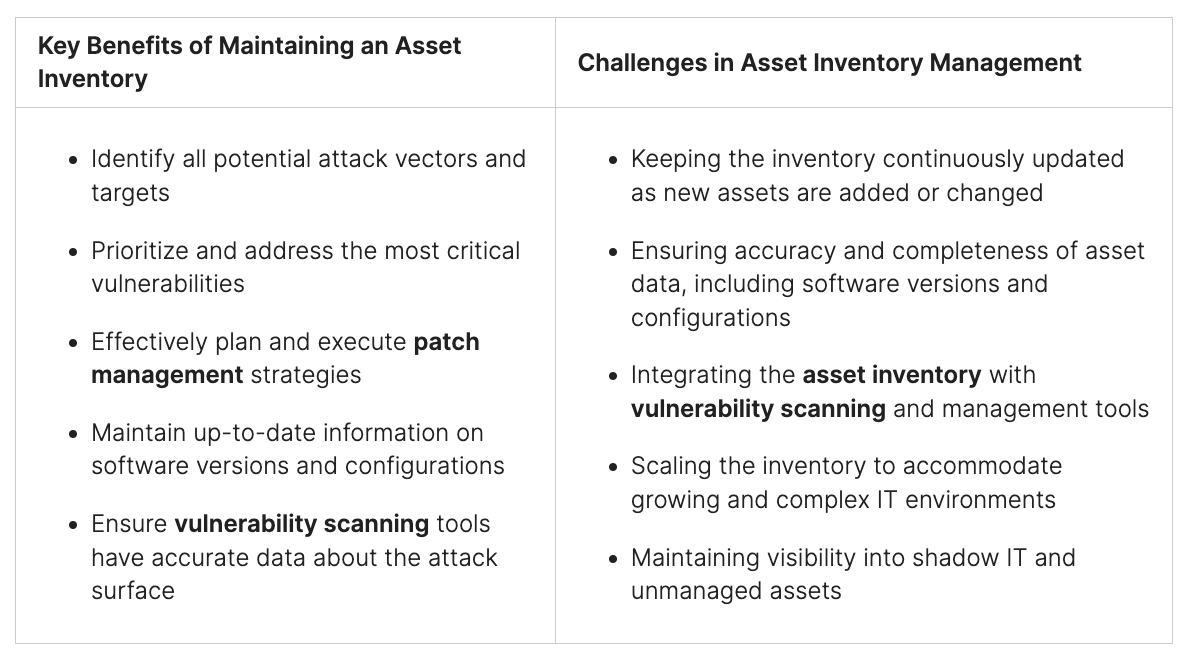
    Dealing with these tasks, organizations should turn to asset management solutions. These can automatically find, sort, and keep track of assets. They connect with vulnerability tools too, keeping the data fresh and reflecting real risks.

    Using asset inventory well helps improve overall vulnerability management. It lowers the chance of cyber attacks and makes companies more secure.

    Continuous Network Scanning

    Nowadays, vulnerability scanning happens all the time, not just occasionally. This change meets the need for organizations to always be ready against new threats. Having a system that scans vulnerabilities both inside and outside is a key part of good security. It helps keep systems safe around the clock by finding and fixing weak spots before attackers can use them.

    External Vulnerability Scans

    When we talk about external scans, we mean checking how a hacker might attack from the outside. These scans look for open doors in security, like weak points in websites or servers. By doing external scans often, companies can close these doors before any harm is done.

    Internal Vulnerability Scans

    Internal scans, on the other hand, look within a company’s own network and devices. They help find hidden vulnerabilities, like old software or mistakes in setup. This ongoing check lets companies fix problems fast. It stops attacks and protects important information and services.

    Doing both external and internal scans, along with keeping software updated, is crucial. It makes sure businesses are always ready to face new security challenges.

    Vulnerability Assessments vs Vulnerability Management

    A vulnerability assessment is like taking a picture of a company’s security at one moment. But, vulnerability management is a constant process. It includes scanning, looking for problems, deciding what’s most important to fix first, and then fixing them. This helps companies keep up with the ever-changing threats online.

    Vulnerability Assessments: A Snapshot in Time

    In a vulnerability assessment, experts check an organization’s IT setup. They are looking for spots that cyber attackers might target. They use network scans, test programs, and check system setups for weak points. This work shows the company’s security status at that time, but it doesn’t give a full picture of possible threats.

    Vulnerability Management: An Ongoing Process

    Vulnerability management means always watching for and fixing IT weaknesses. This includes frequently scanning the network, deciding which threats are most urgent, and applying fixes. By keeping up with these measures, a company can reduce risks and keep their systems secure.

    Prioritizing Vulnerabilities Based on Risk

    Deciding which vulnerabilities to deal with first is a key part of managing risks. It’s not just about the vulnerability’s CVSS score. It’s also about how likely it is to be used by hackers in the real world.

    Assessing Vulnerability Exploitability

    We must figure out how likely a bug is to be used by bad actors. We look at whether there are any known ways to ‘exploit’ the bug out in the open. We also consider how skilled a hacker needs to be and what damage they could do.

    By looking deeply into what makes a bug risky, security teams can tackle the most important threats first. This ensures they use their time and effort where it matters most.

    Considering System Value and Vulnerability Criticality

    It’s also vital to think about what a bug could harm and how crucial that thing is. For example, a bug that threatens a key system is more important to fix fast. This is compared to one that targets something less important.

    Organizations should weigh both a bug’s danger and the worth of what it targets. This balanced view helps in creating a strong strategy to fight off cyber dangers. It protects their top assets effectively.

    Remediation Strategies

    After finding and ranking vulnerabilities, the next step is to fix them. This fix might mean updating software, changing how systems work, or adding extra security measures.

    Patching and Upgrading Software

    Updating software is a key way to fix problems and strengthen security. Known as patch management, this strategy includes adding new updates and security fixes. This helps to make sure your systems are current and less likely to be targeted by hackers.

    Adjusting System Configurations

    Besides updating, setting up your systems differently can help. This might involve turning off services you don’t need, controlling who can access what, and using firewalls better. Making these setup changes can be a quick way to fill security holes, especially when updates are still on the way.

    Implementing Compensating Controls

    At times, fixing problems directly isn’t possible right away. Then, security compliance steps are crucial. This could mean putting in more firewalls, systems to detect intruders or extra security tools. They won’t solve the problem forever, but they add an important shield until the core issues can be solved.

    Vulnerability Management and Compliance

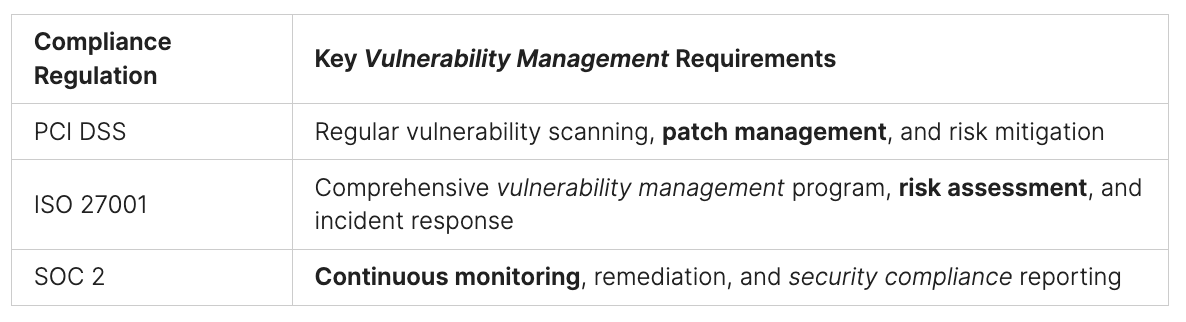
    Vulnerability management is very important for a company’s online safety. It also helps with meeting rules in different industries. These rules, like PCI DSS, ISO 27001, and SOC 2, say companies must have strong strategies to keep data and systems safe.

    Industry-Specific Regulations

    Each type of business has its own set of rules to follow. Good vulnerability management is critical for this. For instance, PCI DSS asks for regular checks on weaknesses and fixing them to keep credit card info safe. ISO 27001 wants companies to set up and keep up detailed vulnerability management plans.

    Reporting for Audits and Compliance

    Keeping good records is vital for proving your company’s vulnerability management is on point. This helps during checks and audits. The records should show what checks were done, how problems were fixed, and if the plan works well. This kind of reporting shows your company is serious about protecting important info and assets.
    Vulnerability Management Best Practices

    To succeed in vulnerability management, you need to follow top practices. These include automating important steps and connecting with other security tools. Plus, you must keep an eye on things all the time and be ready to change.

    Automating Vulnerability Management Processes

    Using automation for every part of handling vulnerabilities makes your safety steps better and quicker. It means you use tools that do tasks like checking for problems, deciding which ones to fix first, and then applying those fixes. This lets your team work on bigger plans.

    Integrating with Other Security Tools

    For a full view of security, it’s key to connect your vulnerability management with other safety tools. This includes bringing together your systems to watch out for issues, handling incidents, and meeting rules. By doing this, you see your security status better and can fix problems faster and smarter.

    Continuously Monitoring and Adapting

    Managing vulnerabilities is all about always watching and being ready to change. You need to be on the lookout for new threats and updates on problems. Regular checks and adding new ways from experts help keep your safety plan strong against new dangers.

    Vulnerability Management Tools and Resources

    Organizations are working hard to set up good vulnerability management programs. Many special tools and resources help with this important work in cybersecurity. Notable vulnerability management tools include Qualys, Tenable, Rapid7, and ServiceNow. They provide everything needed for finding assets, doing vulnerability scanning, assessing risks, and keeping track of fixes.

    These tools let companies see their weak points. This way, security teams can find and fix problems in their network and apps fast. Using the power of these vulnerability management tools, companies can improve their cybersecurity and make their defenses stronger.

    • Qualys: Asset discovery, vulnerability scanning, risk assessment, compliance management, remediation tracking
    • Tenable: Continuous monitoring, vulnerability assessment, threat detection, compliance reporting, risk-based prioritization.
    • Rapid7: Vulnerability management, penetration testing, incident detection and response, cloud security.
    • ServiceNow: Integrated vulnerability management, asset management, patch management, compliance tracking.

    Besides the top vulnerability management tools, organizations can use many cybersecurity resources. These include trade publications, online groups, and professional organizations. They help companies stay up to date with the best advice, trends, and new threats. By using the best tools and resources, companies can build a strong vulnerability management plan. This plan helps prevent risks and keep vital assets secure.

    Conclusion

    In today’s dynamic digital landscape, a robust vulnerability management plan is essential for organizations striving to maintain strong security defenses and combat cyber threats effectively. Understanding and implementing comprehensive vulnerability management helps organizations identify their risks, conduct regular network assessments, and address critical issues before they can be exploited.

    Staying informed and adopting the latest technologies empowers companies to safeguard their data against emerging cyber threats. Additionally, a solid vulnerability management strategy ensures compliance with industry security standards, further strengthening overall security measures.

    As the online environment continues to evolve, the importance of vulnerability management cannot be overstated. By leveraging the right tools and methodologies, organizations can significantly reduce risks and protect their most valuable assets, thereby maintaining the trust and confidence of their stakeholders.

    Explore our range of advanced cybersecurity products and services at Peris.ai to learn how we can help your organization enhance its security posture and stay ahead of cyber threats. Secure your future with Peris.ai and ensure your business thrives in the ever-changing digital world.

    FAQ

    What is vulnerability management?

    Vulnerability management deals with finding and fixing security holes. It focuses on an organization’s weak points that attackers might target.

    Why do you need a vulnerability management program?

    It’s vital for keeping the organization safe from cyber threats. Effective management spots risk early and take action to prevent possible harm.

    What are the key stages of a vulnerability management program?

    The main steps include finding vulnerabilities, deciding which ones are most urgent, fixing them, and then telling others what you did.

    How do you define your environment and risks in vulnerability management?

    Start by truly understanding your tech world. Look closely at your network, apps, and how data moves. This insight helps find and fix the most critical risks.

    Why is maintaining an asset inventory important for vulnerability management?

    Keeping track of every IT asset is key. This list should have everything from hardware to software details. It helps in knowing what needs protection the most.

    What is the difference between vulnerability assessments and vulnerability management?

    An assessment checks security at a single point. But, management keeps looking and fixing, making security stronger over time.

    How do you prioritize vulnerabilities based on risk?

    Recognize which ones are urgent by their possible danger and how easy it is to attack. The Common Vulnerability Scoring System score helps with this.

    What are some common remediation strategies for vulnerabilities?

    Usually, you update software, tweak settings, or add security measures. But sometimes, quick fixes aren’t an option, so you might need temporary solutions.

    How does vulnerability management relate to compliance?

    It’s essential for good security and keeping up with rules. Many regulations demand strong management of vulnerabilities to stay compliant.

    What are the best practices for implementing a successful vulnerability management program?

    Key steps include using automated tools, connecting with other security solutions, and always checking and improving your defenses.

    What are some popular vulnerability management tools and resources?

    Some top tools are Qualys, Tenable, and Rapid7. They help with everything from finding assets to fixing issues and tracking progress.
  • Why Regular Vulnerability Scanning Is Essential

    Why Regular Vulnerability Scanning Is Essential

    Cyber threats are evolving, making it crucial for businesses to stay ahead. Regular vulnerability scanning is an essential practice that helps identify and address security weaknesses before they can be exploited. By conducting routine scans, organizations can strengthen their defenses, reduce security risks, and maintain compliance with industry regulations.

    Understanding the Fundamentals of Vulnerability Scanning

    Vulnerability scanning is a proactive security measure designed to detect and mitigate potential risks. It involves systematically assessing systems, networks, and applications for weaknesses that could be leveraged by attackers.

    Types of Vulnerability Scans:

    • Network Scans – Identify vulnerabilities in connected devices and open ports.
    • Web Application Scans – Detect security flaws in web-based applications, such as injection vulnerabilities.
    • Database Scans – Analyze database configurations and security settings to prevent unauthorized access.

    Key Components of Scanning Systems:

    • Vulnerability Detection – Identifies security weaknesses in digital assets.
    • Risk Assessment – Evaluate the severity of detected vulnerabilities.
    • Remediation Guidance – Provides recommendations to mitigate identified risks.

    The Growing Threat Landscape in Modern Cybersecurity

    Cyberattacks are becoming more sophisticated, making it imperative for organizations to implement continuous monitoring strategies. Attackers often exploit known vulnerabilities that could have been prevented with regular security assessments.

    To effectively combat these risks, businesses should adopt a proactive approach that includes frequent updates, patch management, and regular vulnerability scanning. This ensures that security weaknesses are identified and addressed before they can be exploited.

    Why Regular Vulnerability Scanning Is Essential for Business Security

    Vulnerability scanning is a key component of an effective cybersecurity strategy. It helps businesses detect security gaps and prevent potential breaches. Regular scans also assist in maintaining compliance with security frameworks such as SOC 2, ISO 27001, and PCI DSS.

    Key Benefits:

    • Proactive Risk Management – Identifies and mitigates security threats before they escalate.
    • Regulatory Compliance – Ensures adherence to security standards and industry best practices.
    • Cost Savings – Reduces potential financial losses associated with security incidents.

    Common Vulnerabilities Detected Through Regular Scanning

    Routine security scans can uncover a range of vulnerabilities, including:

    • Weak passwords
    • Outdated software
    • Misconfigured systems
    • Web application vulnerabilities, such as SQL injection and cross-site scripting (XSS)

    By addressing these vulnerabilities, organizations can strengthen their security posture and minimize exposure to cyber threats.

    Implementing an Effective Vulnerability Scanning Program

    A well-structured vulnerability scanning program enhances an organization’s ability to detect and mitigate security risks.

    Key Considerations:

    • Define Scope and Parameters – Ensure all critical systems are included in the scanning process.
    • Set Scan Frequency – Conduct scans regularly to identify new vulnerabilities.
    • Choose the Right Tools – Utilize advanced scanning tools to detect and remediate security risks effectively.

    Real-World Benefits of Regular Security AssessmentsRegular security assessments contribute to a stronger cybersecurity framework. These assessments help organizations identify security weaknesses, enhance system protection, and comply with regulatory requirements. A proactive approach to security ensures business continuity and customer trust.Best Practices for Vulnerability ManagementAn effective vulnerability management strategy involves:

    • Prioritizing vulnerabilities based on risk level
    • Implementing remediation measures promptly
    • Documenting and analyzing scan results for continuous improvement

    By following these practices, businesses can strengthen their security defenses and reduce the likelihood of cyber incidents.

    Integration with Existing Security Infrastructure

    Integrating vulnerability scanning with existing security measures enhances an organization’s overall security posture.Key Integrations:

    • SIEM Systems – Enables real-time threat detection and incident response.
    • Automated Response Tools – Facilitates quick action on identified vulnerabilities.

    This integration ensures that security threats are detected and addressed efficiently, reducing overall risk.

    Overcoming Common Scanning Challenges

    Organizations may face challenges when implementing vulnerability scanning, such as limited resources, false positives, and complex IT environments. To overcome these challenges, businesses should:

    • Automate scanning processes for efficiency
    • Focus on high-risk vulnerabilities
    • Conduct both internal and external assessments for comprehensive coverage

    Future Trends in Vulnerability Assessment

    The future of cybersecurity will see increased reliance on AI and machine learning for vulnerability assessment. Continuous monitoring will become a standard practice, enabling organizations to detect and address security threats in real time. Staying updated with evolving security technologies is critical to maintaining a strong defense against cyber threats.

    Conclusion: Protect Your Digital Assets with Proactive Security

    In today’s rapidly evolving cyber landscape, regular vulnerability scanning is essential for safeguarding digital assets. Proactively identifying and addressing security risks helps organizations strengthen defenses, maintain compliance, and prevent costly breaches.

    By prioritizing vulnerability management, businesses can:

    • Detect and remediate security weaknesses before they are exploited
    • Enhance overall security posture and resilience against cyber threats
    • Ensure compliance with industry regulations and standards
    • Build trust with customers and stakeholders

    Don’t wait for a breach to expose your vulnerabilities. Stay ahead of threats with continuous security monitoring and proactive defense strategies.

    Strengthen your cybersecurity today! Explore Peris.ai’s advanced security solutions at https://www.peris.ai/.

    FAQ

    Why is regular vulnerability scanning essential for businesses? It helps identify and mitigate security threats before they can be exploited.

    What are the key benefits of vulnerability scanning? It enhances security, ensures regulatory compliance, and reduces risk exposure.

    How can businesses implement an effective scanning program? By defining scope, setting scan frequency, and choosing the right tools.

    What challenges do organizations face in vulnerability scanning? Limited resources, false positives, and complex environments, which can be addressed through automation and prioritization.

    What are the future trends in vulnerability assessment? AI-driven security, continuous monitoring, and real-time threat detection.

  • What Risk Assessments Can Reveal About Your Security Posture

    What Risk Assessments Can Reveal About Your Security Posture

    Risk assessments reveal critical insights into your organization’s security posture by identifying vulnerabilities and gaps in security controls. They help prioritize protection measures, improve incident response, and embed security into company culture. Regular evaluations of assets, risks, and security practices ensure resilience against evolving cyber threats while enhancing overall cybersecurity strategies.

    Key Takeaways

    • Comprehensive risk assessments help organizations prioritize security measures based on business criticality.
    • Implementing a well-designed cyber-risk management plan can improve an organization’s ability to recover from a security incident.
    • Ongoing adjustments to risk posture are essential to maintain optimal security levels in the face of an evolving cyber landscape.
    • Disseminating security policies and procedures can help embed security practices into a company’s culture.
    • Evaluating network security through attack simulations provides valuable insights for improving resilience against potential cyber threats.

    Understanding Security Posture

    An organization’s security posture is the overall security level of its software, hardware, services, networks, and more. It covers many areas like infosec, data security, and network security. It also includes things like preventing social engineering attacks and managing risks from vendors.

    What is Security Posture?

    The NIST Special Publication 800-128 says security posture is how secure an enterprise is. It looks at the security resources and capabilities an organization has.

    Key Components of Security Posture

    A strong security posture has several key parts:

    • Strong security policies for things like passwords, data handling, and how to respond to incidents.
    • A detailed list of all IT assets to know what could be at risk.
    • Good access controls to keep track of who can see what in the system.
    • A solid risk management system to watch over resources and find potential risks.
    • An incident response plan to handle cyber attacks and prevent future ones.

    Having a strong security posture is key for organizations to fight cyber risks and keep their assets safe.

    *What is Security Posture?: https://youtu.be/dnAizGuxbbM?si=5-rddcUh_mpYE1M5

    The Importance of Risk Assessments

    Regular security risk assessments are key for companies to know their security level and handle cybersecurity risks. These checks spot the most important IT assets and look at possible threats. This lets companies focus on risks that could hit the hardest and are most likely to happen. By using a detailed IT risk assessment, companies can find issues like unpatched software and unsecured data. Then, they can fix these problems.

    Doing a full security risk assessment brings big benefits to a company. It helps lower the costs of data breaches and makes sure security budgets are used well. Also, these assessments help follow data security rules like HIPAA and PCI DSS, avoiding big fines. Showing you care about security through these assessments can also make customers trust you more and stay with you.

    Security risk assessments give deep insights for smart choices on security, setup, and staff. Companies that handle personal info or health data must do these checks often for legal reasons.

    The process of security risk assessment includes finding and ranking IT assets, spotting threats and weak spots, and checking current controls to see how likely and big potential incidents could be. Experts say to do these checks every two years to keep up with strong security and fight new threats.

    Conducting a Comprehensive Risk Assessment

    Doing a thorough risk assessment is key to improving your organization’s security. It starts by listing all IT assets like systems, apps, devices, data, processes, and users. This list helps spot risks to those assets, including how likely a breach is and the damage it could cause.

    Identifying Assets and Risks

    After making the asset list, it’s time to sort risks by how important they are to your business. This helps you see your whole attack surface and understand your cybersecurity risks clearly. Laws like HIPAA and PCI-DSS require these risk assessments, showing how vital they are.

    Evaluating Security Controls

    Once risks are known, check how well your security controls work against them. You need to see if controls are good or bad and find any gaps. Using automated GRC tools can make this easier by tracking how well controls work and how they’re improving. The aim is to make sure your controls protect your organization well.

    By doing a full risk assessment, companies can see where they stand on security and focus on the biggest risks to fix. This is crucial against cyber threats, with 23% of small businesses hit by cyber attacks in 2020 and costs over $25,000 a year.

    *Cybersecurity Risk Assessment Common Findings: CIS Framework 7 – Continuous Vulnerability Management: https://youtu.be/EEqJnmpZpmQ?si=bo_mT52y0F-ZW6lv

    Risk Posture Best Practices

    Keeping your security strong is key to fighting off cyber threats. By using top security tips, you can make your security better and protect your important stuff.

    1. Keep a detailed list of all your IT stuff and how they work together.
    2. Do regular checks to find and fix weak spots in your defenses.
    3. Have a solid plan for security that covers all parts of keeping your data safe.
    4. Keep an eye on your security level and change your plans as threats change.
    5. Make security a part of your company’s culture by sharing rules, steps, and training on security.
    6. Test your network security with fake attacks and use what you learn to get better.
    7. Manage risks from third parties well to deal with problems from vendors and suppliers.

    By following these tips, you can make your security stronger, lower risks, and keep up with new threats.

    Using these security tips, companies can make their cybersecurity stronger, reduce weak spots, and be more resilient against new threats. Being proactive and always checking your security is key to staying safe.

    What Risk Assessments Can Reveal About Your Security Posture

    Risk assessments give deep insights into your organization’s security strengths and weaknesses. They find vulnerabilities and show where security controls don’t work well. This helps you see where cyber threats could hit you. By looking at your assets, risks, and security steps, you can fix problems, use resources better, and make smart choices to boost your cybersecurity.

    These assessments also guide you in making a strong security plan and improving it over time. You should do them often, like every six months to two years, based on what laws say. There are many types of risk assessments, like for information, data, apps, physical security, and insider threats.

    Laws like HIPAA, PCI DSS, GDPR, and others need security risk assessments. Because cyber insurance costs are going up, insurers want these assessments before they cover you. A full security risk check looks at servers, networks, data security, app scans, policies, and physical setup.

    Doing risk assessments often can prevent big problems like losing customers and money from cyber attacks. They focus on policies and how things work, showing where you need to get better. This helps make plans for when something goes wrong. Regular checks keep your data safe, help with budgeting, and catch weak spots before hackers do.

    *Incorporating Threat Modeling into Cybersecurity Risk Assessments: https://youtu.be/gXc123GbxVs?si=m3r1H7D2boM8N7mk

    “Comprehensive risk assessments are the foundation for building a robust security posture and defending against evolving cyber threats.”

    Continuous Monitoring and Adjustment

    Keeping your security strong is an ongoing task. Continuous security monitoring helps spot and fix new threats fast. Real-time security visibility through security ratings and automation tools gives you the info to adjust your security on time.

    The threat scene is always changing, with new threats popping up all the time. It’s key to keep updating your security to stay safe. Regular checks on your assets and risks help spot any gaps. By keeping an eye on these changes, you keep your security posture optimization strong against cyber threats. Adaptability is crucial to outsmart attackers and protect your important stuff and data.

    Real-Time Visibility

    Real-time security visibility is vital for making smart security choices. By always watching your security, you can spot and fix problems fast. This keeps you ahead of attackers and makes sure your security is doing its job.

    Adapting to Changes

    Your security needs to change as your business grows and threats evolve. Regular checks and constant monitoring help you see what needs to change in your security posture optimization. This flexible way of handling vulnerability management keeps you ready for new threats and keeps your security strong over time.

    “Continuous monitoring is more comprehensive and has better results for security compliance and overall data security compared to point-in-time monitoring.”

    Integrating Security into Company Culture

    Good cybersecurity is more than just tech. It needs a strong security culture that gets everyone involved. By making security awareness, rules, and steps part of your company, you help your team protect your assets.

    Offering detailed security training teaches employees how to act right, builds a security-focused mindset, and gets them to report odd stuff. When everyone sees security as a team effort, your company can handle new threats better and get stronger in security.

    Building a solid security culture is key to a full cybersecurity plan. It takes strong leadership, good communication, and staff who know their security roles. A culture that values employee engagement in security helps protect your assets and keeps a strong defense against cyber threats.

    “A strong security culture is the foundation for an effective cybersecurity strategy. It empowers employees to be active participants in safeguarding the organization’s assets.”

    1. Put together detailed security training programs to teach employees the right ways to act and their security roles.
    2. Build a culture of open talk, where staff feel safe to report security issues without worry.
    3. Give praise and rewards to employees who show great security awareness and actions, inspiring others to do the same.
    4. Make security a team effort, with clear roles and expectations for everyone.

    By putting security culture at your company’s core, you make your team strong supporters of your cybersecurity work. This makes your security posture stronger.

    Vendor Risk Management

    More and more, companies rely on third-party vendors and service providers. Managing the risks from these vendors is now key to cybersecurity. It’s vital to check these vendors thoroughly to find any weaknesses in your supply chain. This ensures they meet your security standards.

    When assessing vendor risk, we look at their security controls, policies, and how they follow the rules. A strong vendor risk management plan helps protect against data breaches and cyber attacks from third parties.

    Uncovering Third-Party Risks

    Assessing vendors can reveal many risks, like cybersecurity and data privacy issues. These assessments help find and fix risks at every stage of working with a vendor.

    This process includes checking on a vendor’s security, privacy, finances, and policies. It’s important to look at risks during different stages, from picking a vendor to ending the partnership.

    Risks from vendors can be broken down into several types. Scoring these risks helps us understand the level of danger.

    For a successful risk assessment, a team from various departments is needed. Setting a risk limit before picking vendors makes the process easier.

    Companies can use standard questionnaires or their own to learn about a vendor’s controls and compliance. Many use the NIST Cybersecurity Framework for their questionnaires.

    A good vendor risk management plan protects your supply chain and reduces the effect of third-party issues. It also helps follow industry rules.

    By actively managing vendor risks, companies can make their supply chain safer. They can keep up with rules and protect their important assets from threats.

    *What is a Vendor Risk Assessment | Centraleyes: https://youtu.be/I41ErTOC8OU?si=9sJonej3KLQc9WxB

    Quantifying and Reporting Cyber Risk

    Telling your team about your organization’s security is key to getting support from top leaders. By putting a number on your cyber risk, you make it easy for business leaders to understand. This means creating important metrics that show how well your security works, the money lost from possible breaches, and how much risk you face. Sharing these updates often helps justify spending, improve security, and keep your organization safe from cyber threats.

    To figure out cyber risk, use the formula: Cyber risk = Threat x Vulnerability x Information Value. With more tech use, the risk of cyber threats grows. Cyber risk assessments spot and rank risks to your operations, people, and other groups. These assessments give a clear summary to help leaders make smart security choices. They help spot threats and weaknesses to stop or lessen security issues, saving money and protecting your reputation.

    Cyber Risk Quantification helps align security with business goals, moving talks from tech to the top level. Quantifying cyber risk means better use of resources, focusing on the most critical risks, and improving talks between security and top leaders. It also lets you see how well your cybersecurity program is doing. But, it can be hard to get all the data, make it all fit together, and spot new threats fast.

    Putting a dollar value on cyber risk means looking at how likely a breach is and how much it could cost. You consider things like how bad a vulnerability is, the threat level, and how exposed your assets are. Using AI and special tools makes this process more accurate and gives clear advice on what to fix. Showing cyber risk in a way that’s easy to understand helps leaders make better choices. This way, you can show why cybersecurity spending is important by proving how it lowers the risk of breaches and shows the value of your security work.

    “Cyber risks are categorized from zero, low, medium, to high-risks. UpGuard’s risk profile feature categorizes discovered risks by impact factor.”

    Leveraging Security Ratings

    Security ratings are a key tool for checking and keeping track of your cybersecurity. They work like credit scores but for how secure you are. This lets you see how secure you and your partners are in a clear way.

    These ratings help you focus on fixing security issues, compare your security with others, and choose the right vendors. Adding security ratings to your plan makes it easier to follow rules, lessen the work of checking vendors, and improve your security by always watching and making it better.

    Services like FortifyData give ongoing checks of your security risks and threats. They use the NIST Cybersecurity Framework to help manage risks in a structured way. The NIST CSF score helps you see what risks you have, plan how to fix them, and track how your security is getting better.

    When picking a tool for checking cybersecurity risks, think about your company’s size, what you do, what you need, your budget, and how much you can do. The best tool covers all risks and threats to help you make smart choices.

    Security ratings show how secure an organization is with numbers or letters. They look at things like software bugs, how you handle patches, your network setup, and past breaches. FortifyData shares how it figures out its security ratings, making it clear what risks and vulnerabilities affect the score.

    *Cyber Risk Management: Essentials for the Practical CISO: https://youtu.be/3xUC5xhLshw?si=QDu9-j-BpQ4xKYeE

    Using security ratings helps improve your cybersecurity, makes checking vendors easier, and helps you make choices based on data to fight new threats.

    Conclusion

    Protecting your organization from cyber threats is essential, and conducting thorough risk assessments is the foundation for identifying vulnerabilities and strengthening your security posture. By regularly evaluating your systems, you can enhance your cybersecurity and prepare for evolving threats.

    Adopting best practices such as continuous monitoring and fostering a security-conscious culture within your organization significantly improves your defenses. It also ensures that you remain adaptable to new cyber risks.

    Communicating your cyber risks effectively to leadership emphasizes the importance of cybersecurity, helping secure the resources needed to maintain strong protections. Regular assessments, paired with tools like Nessus, allow you to detect and address security gaps before they become major issues.

    Building a strong security posture requires a proactive approach—through risk assessments, adherence to best practices, and vigilant monitoring, you can safeguard your critical assets and maintain a resilient cybersecurity framework.

    To explore our full range of cybersecurity solutions and services, visit Peris.ai Cybersecurity. Let us help you fortify your defenses and protect your organization from today’s ever-evolving threats.

    FAQ

    What is risk posture?

    Risk posture is how well an organization protects itself from cyber threats. It covers all aspects of cybersecurity, like software, hardware, and data protection.

    What is a risk assessment?

    Risk assessment is about finding and evaluating cyber risks. It helps protect your network and data by checking its security level and finding weaknesses.

    What is security posture?

    Security posture is how secure an organization is across all its systems and data. It includes many areas like network security and training employees on security.

    What are the key components of a robust security posture?

    A strong security posture needs good security policies, a detailed list of IT assets, strong access controls, a good risk management system, and a plan for handling incidents.

    Why is security posture important?

    Security posture is key because it lowers the risk of cyber attacks. With better security, your data stays safe, thanks to laws protecting data privacy.

    What are the steps in the risk assessment process?

    First, list all your IT assets. Then, find the risks to them. Next, sort the risks and check how well your security controls work.

    What are some best practices for improving security posture?

    Improve your security by keeping an updated list of assets, doing regular risk assessments, and having a clear security plan. Also, keep an eye on your security, make security a part of your culture, and manage risks from third parties well.

    How can risk assessments reveal insights about security posture?

    Risk assessments find weaknesses, spot bad security controls, and show where you’re open to cyber threats. This gives you ways to make your security better.

    Why is continuous monitoring of security posture important?

    Watching your security closely helps you spot and fix threats fast. It gives you the info you need to update your security plans and controls.

    How does integrating security into company culture help strengthen security posture?

    Making security a part of your company makes everyone help protect your assets. This builds a strong security culture and makes your organization more resilient against cyber threats.

    Why is vendor risk management important for security posture?

    Checking on your vendors’ security is key to keeping your supply chain safe. It helps stop data breaches and cyber attacks from third parties.

    How can quantifying and reporting cyber risk improve security posture?

    Talking about your security in numbers gets executives on board and gets you the resources you need. It means setting up KPIs and metrics to show how well your security works and what risks you face.

    How can security ratings help improve security posture?

    Security ratings give a score on how secure you are, helping you focus on what needs fixing. They let you compare with others and choose the right vendors.

  • What is Continuous Vulnerability Management?

    What is Continuous Vulnerability Management?

    Continuous Vulnerability Management refers to the process of identifying, prioritizing, documenting, and remediating weak points in an IT environment. It involves continuously assessing and tracking vulnerabilities on all enterprise assets, monitoring threat and vulnerability information from various sources, and taking proactive measures to minimize the window of opportunity for attackers. Continuous Vulnerability Management is a crucial component of an effective cyber defense strategy, as it helps organizations reduce their exposure to potential attacks and strengthen their overall security posture.

    Key Takeaways:

    • Continuous Vulnerability Management is the process of identifying and addressing weaknesses in an IT environment.
    • It involves assessing vulnerabilities, monitoring threat information, and taking proactive measures to minimize the risk of attacks.
    • Continuous Vulnerability Management is an essential component of a robust cyber defense strategy.
    • It helps organizations reduce their exposure to potential attacks and strengthen their overall security posture.
    • By implementing Continuous Vulnerability Management practices, organizations can enhance their cybersecurity defenses and mitigate cyber risks.

    The Components of Continuous Vulnerability Management

    Continuous Vulnerability Management consists of four main components that work together to ensure an effective cybersecurity posture for organizations. These components include Identification, Evaluation, Remediation, and Reporting.

    1. Identification

    The identification component is the first step in Continuous Vulnerability Management. It involves identifying all digital assets and weaknesses within an organization’s IT environment. To accomplish this, organizations can utilize assessment tools and scanners to scan their infrastructure regularly. The frequency of these scans depends on the organization’s risk tolerance and the complexity of their IT environment. By identifying vulnerabilities, organizations can gain a comprehensive understanding of potential security risks.

    2. Evaluation

    The evaluation component is crucial for prioritizing vulnerabilities and determining the appropriate course of action. During this phase, vulnerabilities are assessed based on various factors such as severity, ease of exploitation, and financial impact. By evaluating vulnerabilities, organizations can allocate resources effectively and focus on addressing the most critical risks. This risk-based approach ensures that remediation efforts are prioritized for maximum impact.

    3. Remediation

    The remediation component involves taking action to address identified vulnerabilities. Organizations can employ a range of techniques, including patching software, applying updates, and implementing other security measures. Timely remediation is vital to minimize the window of opportunity for attackers. By effectively addressing weaknesses, organizations can strengthen their cybersecurity defenses and reduce the likelihood of successful cyberattacks.

    4. Reporting

    The reporting component is essential for documenting the progress and outcomes of vulnerability management efforts. By documenting vulnerabilities and their remediation status, organizations can track their cybersecurity efforts over time. This documentation also facilitates compliance requirements and future security audits. It provides valuable insights into the effectiveness of vulnerability management strategies and helps organizations make data-driven decisions to enhance their cybersecurity defenses.

    Implementing the components of Continuous Vulnerability Management in a coordinated and systematic manner is crucial for organizations to stay proactive in their cybersecurity efforts. By effectively identifying, evaluating, remediating, and reporting vulnerabilities, organizations can significantly reduce their risk exposure and enhance their overall security posture.

    The Importance of a Remediation Process

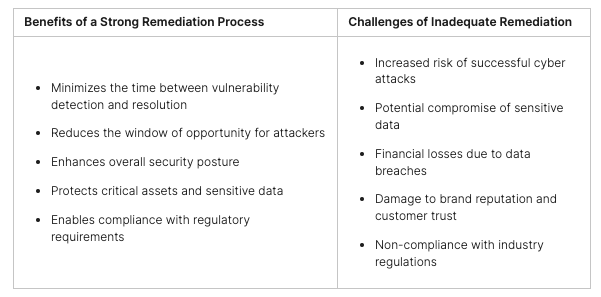
    Establishing and maintaining a remediation process is a critical aspect of Continuous Vulnerability Management. This process involves developing a risk-based strategy to address vulnerabilities, with regular reviews to ensure effectiveness. Remediation can involve various measures, such as patch management solutions, automated updates, and manual techniques. It’s essential to have a comprehensive and efficient remediation process to minimize the time between vulnerability detection and resolution. This helps organizations stay on top of their security posture and reduce the potential impact of attacks.

    When it comes to addressing vulnerabilities, organizations need to take a risk-based strategy. This means prioritizing remediation efforts based on the level of risk posed by each vulnerability. By focusing on the vulnerabilities with the highest risk, organizations can allocate their resources effectively and address the most critical weaknesses first.

    Patch management is a key aspect of the remediation process. It involves regularly applying patches and updates to software, firmware, and operating systems to fix known vulnerabilities. Patch management solutions automate this process, ensuring that organizations stay up to date with the latest security patches. This is crucial because cyber attackers often target known vulnerabilities, making regular patching essential for maintaining a strong defense.

    A well-defined and efficient remediation process not only helps organizations address vulnerabilities promptly but also contributes to ongoing improvement and risk reduction. By continuously reviewing and refining their remediation approach, organizations can identify trends, assess the effectiveness of their strategies, and make informed decisions regarding resource allocation.

    Effective remediation is not a one-time activity. It requires regular monitoring, evaluation, and adjustment to keep pace with evolving threats and IT environments. By adhering to a robust remediation process, organizations can enhance their security posture, reduce the window of opportunity for attackers, and protect their critical assets.

    The Role of Automated Scans and Patch Management

    Automated scans and patch management are crucial components of an effective Continuous Vulnerability Management strategy. These practices help organizations identify vulnerabilities, assess their impact, and address them promptly to reduce the risk of exploitation by threat actors.

    Organizations should conduct both internal and external automated scans on a regular basis. These scans enable the identification of weaknesses and vulnerabilities in IT assets, networks, applications, and databases. By performing in-depth vulnerability assessments, organizations can gain a comprehensive understanding of their security posture and prioritize remediation efforts.

    Authenticated and unauthenticated scans are equally important in vulnerability assessment. Authenticated scans utilize valid credentials to assess vulnerabilities from an insider’s perspective, while unauthenticated scans simulate attacks from external sources. The combination of both types of scans provides a holistic view of an organization’s vulnerabilities, ensuring comprehensive coverage.

    “Automated scans play a significant role in Continuous Vulnerability Management.”

    In addition to automated scans, organizations must have robust patch management processes in place. Patch management involves systematically applying software updates, including security patches, to operating systems and applications. These updates address known vulnerabilities and protect against potential exploitation.

    Automated patch management processes facilitate the timely deployment of updates, reducing the window of opportunity for attackers to exploit vulnerabilities. By automating these processes, organizations can ensure that critical security patches are applied promptly and consistently across their IT infrastructure, without relying on manual interventions.

    “Organizations should have automated patch management processes in place to ensure timely updates.”

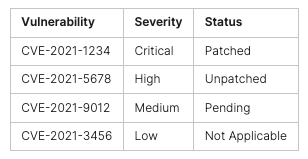
    To illustrate the effectiveness of automated scans and patch management, consider the following table:

    This table demonstrates the status of vulnerabilities identified through automated scans and the corresponding patch management actions. By promptly patching critical and high-severity vulnerabilities, organizations can significantly mitigate their risk exposure.

    By integrating automated scans and patch management into their Continuous Vulnerability Management processes, organizations can proactively identify and address vulnerabilities across their IT environment. This proactive approach reduces the potential impact of attacks and strengthens an organization’s overall security posture.

    Conclusion

    Continuous Vulnerability Management is a critical component of a robust cybersecurity strategy. It empowers organizations to actively monitor, identify, and address security vulnerabilities before they can be exploited. By engaging in continuous assessment and remediation, organizations not only protect their systems and data but also significantly shrink the window of opportunity for potential cyber attacks.

    The implementation of a comprehensive and mature Continuous Vulnerability Management program is vital for enhancing the efficiency of vulnerability management processes. Such a program helps in minimizing the impact of attacks and elevates the overall effectiveness of an organization’s cybersecurity defenses. This proactive approach to cybersecurity ensures that organizations can swiftly adapt to new threats and maintain a strong defense against the dynamic challenges posed by the digital landscape.

    Regular vulnerability assessments enable organizations to remain vigilant against emerging threats, ensuring continuous protection and resilience. By promptly addressing detected vulnerabilities, organizations can markedly decrease their cyber risk and safeguard their most valuable assets from potential breaches.

    At Peris.ai Cybersecurity, we understand the importance of fortifying your cyber defenses through Continuous Vulnerability Management. Our advanced tools and expert guidance are designed to help your organization implement a robust vulnerability management strategy that keeps pace with the rapidly evolving cyber threats. Visit us at Peris.ai Cybersecurity to explore how we can assist you in enhancing your cybersecurity posture, reducing risks, and ensuring the ongoing protection of your digital environment. Let us help you stay one step ahead in your cybersecurity efforts.

    FAQ

    What is Continuous Vulnerability Management?

    Continuous Vulnerability Management refers to the process of identifying, prioritizing, documenting, and remediating weak points in an IT environment. It is a crucial component of an effective cyber defense strategy, helping organizations reduce their exposure to potential attacks and strengthen their overall security posture.

    What are the components of Continuous Vulnerability Management?

    Continuous Vulnerability Management consists of four main components: identification, evaluation, remediation, and reporting. These components involve identifying digital assets and weaknesses, assessing and prioritizing vulnerabilities, addressing weaknesses through patching and updates, and documenting vulnerabilities and their progress towards remediation.

    Why is a remediation process important in Continuous Vulnerability Management?

    Establishing and maintaining a remediation process is critical in Continuous Vulnerability Management. It involves developing a risk-based strategy to address vulnerabilities and ensuring timely resolution. A comprehensive remediation process helps organizations stay on top of their security posture and reduce the potential impact of attacks.

    What is the role of automated scans and patch management in Continuous Vulnerability Management?

    Automated scans play a significant role in Continuous Vulnerability Management. Organizations should perform regular internal and external vulnerability scans to identify weaknesses in IT assets, networks, applications, and databases. Patch management processes also help address known vulnerabilities and reduce the risk of exploitation by threat actors.

    Why is Continuous Vulnerability Management important?

    Continuous Vulnerability Management is a critical practice for organizations to enhance their cybersecurity defenses and reduce cyber risk. By continuously identifying, evaluating, remediating, and reporting vulnerabilities, organizations can stay proactive in their security efforts and minimize the window of opportunity for attacks. Implementing a mature and comprehensive Continuous Vulnerability Management program can streamline vulnerability management activities, reduce the impact of potential attacks, and improve the overall effectiveness of an organization’s cyber defense strategy.

  • Staying Ahead of the Curve: Emerging Cybersecurity Threats and How to Mitigate Them

    Staying Ahead of the Curve: Emerging Cybersecurity Threats and How to Mitigate Them

    With technology advancing at an exponential rate, it is no surprise that cybersecurity threats continue to emerge at a rapid pace. Hackers and cybercriminals are becoming more sophisticated, leveraging new techniques and technologies to breach our digital defenses and gain access to our sensitive information. The year 2023 is no exception, and it is crucial to be aware of the emerging cybersecurity threats that pose a risk to individuals and businesses alike.

    One of the most significant emerging cybersecurity threats of 2023 is cybercriminals’ increased use of artificial intelligence (AI). With AI, hackers can create targeted attacks that are more difficult to detect and defend against, making it easier for them to compromise systems and steal data. Additionally, AI can be used to automate attacks, allowing cybercriminals to scale their operations and target more victims.

    Another emerging cybersecurity threat is the Internet of Things (IoT) rise. The IoT refers to the growing network of internet-connected devices, from smart home devices to industrial equipment. While the IoT can potentially revolutionize many aspects of our lives, it also presents a significant security risk. With so many connected devices, there are more potential entry points for cybercriminals to exploit, and many IoT devices have weak security protections, making them vulnerable to attacks.

    In this article, we will explore some of the other emerging cybersecurity threats of 2023 and provide tips on how to mitigate them. By staying informed and taking proactive steps to protect your data, you can help to safeguard yourself against cyber attacks and stay ahead of the curve in this ever-evolving landscape of cybersecurity threats.

    1. Phishing Attacks

    Phishing attacks remain one of the most common cybersecurity threats, and they’re becoming increasingly sophisticated. These attacks use fake emails or websites to trick users into divulging sensitive information, such as login credentials or financial information. To mitigate the risk of phishing attacks, you can:

    • Use a password manager to create and store strong, unique passwords for all your accounts.
    • Enable two-factor authentication on all your accounts for an extra layer of security.
    • Always double-check the URL of a website before entering any sensitive information.
    • Be wary of emails asking for personal or financial information, and don’t click on any links or attachments from unknown sources.

    2. Ransomware Attacks

    Ransomware attacks have been on the rise in recent years, and they’re showing no signs of slowing down. These attacks typically involve encrypting a user’s data and demanding payment in exchange for the decryption key. To protect against ransomware attacks, you can:

    • Back up your data regularly to an external hard drive or cloud service.
    • Keep your software and operating system up to date with the latest security patches.
    • Be wary of suspicious emails or links, and don’t open any attachments from unknown sources.

    3. IoT vulnerabilities

    The Internet of Things (IoT) refers to the network of connected devices, such as smart home appliances and wearable technology. However, these devices are often poorly secured and can be easily hacked, allowing cybercriminals to access your data or even control your devices remotely. To mitigate the risk of IoT vulnerabilities, you can:

    • Change default passwords on all your devices and use strong, unique passwords for each one.
    • Keep your IoT devices up to date with the latest firmware updates and security patches.
    • Disable any features or settings that you don’t need or use, such as remote access or data sharing.

    4. Cloud Security

    With more and more businesses and individuals relying on cloud storage and services, it’s important to ensure that these services are secure. Cloud security breaches can result in the loss of sensitive data and can have serious consequences for businesses. To mitigate the risk of cloud security breaches, you can:

    • Choose a reputable cloud service provider that offers robust security measures.
    • Use strong, unique passwords for your cloud accounts, and enable two-factor authentication.
    • Regularly monitor your cloud accounts for any signs of unauthorized access.

    5. AI-Powered Attacks

    As artificial intelligence (AI) becomes more sophisticated, cybercriminals are using AI-powered attacks to breach security systems. These attacks can use machine learning algorithms to learn about a target’s behavior and bypass security measures. To mitigate the risk of AI-powered attacks, you can:

    • Use AI-powered security systems that can detect and respond to potential threats.
    • Train employees to recognize the signs of AI-powered attacks and how to respond to them.
    • Keep up to date with the latest developments in AI-powered attacks and security measures.

    6. Supply Chain Attacks

    Supply chain attacks involve targeting a third-party vendor that provides services or products to a business with the aim of gaining access to the target’s network. These attacks can be challenging to detect and have serious consequences for businesses. To mitigate the risk of supply chain attacks, you can:

    • Conduct thorough due diligence on all third-party vendors, and ensure that they have robust security measures in place.
    • Monitor all network activity for any signs of suspicious behavior or unauthorized access.
    • Use multi-factor authentication to protect against unauthorized access to sensitive data.

    In conclusion

    Staying ahead of the curve when it comes to cybersecurity threats requires a combination of vigilance, education, and proactive measures. By staying informed about the latest threats and best practices for protection, you can help to safeguard yourself and your data from cybercriminals.

    Here are some additional tips to help you stay ahead of the curve:

    • Invest in quality antivirus software and keep it updated to provide the best protection possible.
    • Use strong, unique passwords for all your accounts, and consider using a password manager to help you manage them.
    • Use a virtual private network (VPN) when accessing the internet on public Wi-Fi to help protect your data from interception.
    • Consider using a security-focused web browser to help protect your privacy online.

    At the end of the day, cybersecurity is a constantly evolving field, and it’s impossible to be completely protected against all threats. However, staying informed and taking proactive steps to protect yourself can significantly reduce your risk of falling victim to a cyber attack. So stay vigilant, stay informed, and stay ahead of the curve!

  • Using Cybersecurity Assessments to Improve Your Company’s Security

    Using Cybersecurity Assessments to Improve Your Company’s Security

    In today’s digital landscape, the ever-increasing prevalence of cyber threats has rendered protecting your company’s sensitive information a matter of utmost importance. As technology advances, so does the sophistication of malicious actors seeking to exploit vulnerabilities in your security measures. In response to this escalating threat, cybersecurity assessments have emerged as a powerful tool for organizations to evaluate their existing security infrastructure and identify potential weaknesses. By regularly conducting these assessments, businesses can fortify their defenses, mitigate risks, and maintain a proactive stance against potential cyber attacks. This article will explore the profound significance of cybersecurity assessments and their essential role in improving your company’s overall security posture.

    Understanding Cybersecurity Assessments

    Before we delve into the benefits, let’s grasp the concept of cybersecurity assessments. Here are a few key points:

    • Definition: Cybersecurity assessments involve a systematic evaluation of an organization’s security measures, policies, procedures, and technology infrastructure to identify weaknesses and potential threats.
    • Objectives: The primary goal of a cybersecurity assessment is to assess the effectiveness of existing security controls, identify vulnerabilities, and recommend appropriate measures to enhance overall security posture.
    • Scope: Assessments encompass various aspects, including network security, application security, physical security, data protection, employee awareness, and compliance with industry standards and regulations.
    • Methodology: Cybersecurity assessments employ automated tools, manual reviews, interviews, and testing techniques to uncover vulnerabilities and provide actionable insights.

    Benefits of Cybersecurity Assessments

    Now, let’s explore the advantages that conducting cybersecurity assessments can bring to your organization:

    1. Identifying Vulnerabilities:

    • Assessments help identify potential weaknesses in your company’s infrastructure, such as outdated software, unpatched systems, misconfigured firewalls, or weak passwords.
    • By proactively addressing these vulnerabilities, you can significantly reduce the chances of falling victim to cyber attacks.

    2. Enhancing Security Controls:

    • Cybersecurity assessments shed light on the effectiveness of existing security controls and policies, allowing you to strengthen them if necessary.
    • You can establish a robust defense mechanism by aligning your security measures with industry best practices.

    3. Mitigating Risks:

    • Assessments provide a comprehensive understanding of your organization’s risk landscape, enabling you to prioritize and allocate resources to areas with the highest potential impact.
    • By implementing appropriate risk mitigation strategies, you can minimize the likelihood and impact of security breaches.

    4. Meeting Compliance Requirements:

    • Organizations must comply with many industries’ specific security regulations and standards to safeguard customer data and maintain business continuity.
    • Cybersecurity assessments help identify gaps in compliance and ensure that your company meets the requirements.

    5. Safeguarding Reputational and Financial Assets:

    • A successful cyber attack can have severe consequences, including reputational damage, loss of customer trust, and financial losses.
    • Regular assessments help minimize these risks, protecting your company’s most valuable assets.

    6. Enabling Continuous Improvement:

    • Cyber threats constantly evolve, making it essential to reassess and enhance your security measures regularly.
    • Conducting periodic assessments establishes a continuous improvement cycle, staying ahead of emerging threats and adapting your defenses accordingly.

    Implementing Cybersecurity Assessments

    Now that we understand the benefits, let’s delve into the steps involved in implementing practical cybersecurity assessments:

    1. Define Assessment Goals:

    • Clearly articulate the objectives of the assessment, including the areas to be evaluated and the desired outcomes.
    • Align these goals with your organization’s security requirements, compliance standards, and industry best practices.

    2. Engage Expertise:

    • Consider leveraging the expertise of qualified cybersecurity professionals or engaging third-party security firms.
    • These experts can bring specialized knowledge, experience, and tools to perform a thorough assessment and provide unbiased insights.

    3. Assess All Security Domains:

    • Ensure your assessments cover all critical security domains, such as network security, application security, data protection, physical security, and employee awareness.
    • Each domain has unique vulnerabilities and requires specific assessment techniques to uncover potential risks.

    4. Conduct Vulnerability Scans and Penetration Testing:

    • Utilize automated vulnerability scanning tools to identify weaknesses in your network infrastructure, systems, and applications.
    • Additionally, consider conducting penetration testing, where ethical hackers simulate real-world cyber attacks to evaluate the effectiveness of your defenses.

    5. Review Policies and Procedures:

    • Evaluate your organization’s security policies and procedures to align with industry standards and best practices.
    • Identify gaps or inconsistencies and update them to enhance your security posture.

    6. Employee Awareness and Training:

    • Assess the level of employee awareness and understanding of cybersecurity practices.
    • Conduct security awareness training sessions to educate employees on best practices, such as identifying phishing emails, creating strong passwords, and reporting suspicious activities.

    7. Analyze Physical Security Measures:

    • Evaluate physical security controls, including access controls, surveillance systems, and visitor management protocols.
    • Identify areas where improvements can be made to prevent unauthorized access to sensitive areas and assets.

    8. Review Incident Response Plans:

    • Assess the effectiveness of your incident response plans and procedures.
    • Ensure they are up to date, clearly defined, and tested periodically to ensure a swift and effective response during a security breach.

    9. Document and Analyze Findings:

    • Document all assessment findings, including vulnerabilities, risks, and recommendations for improvement.
    • Analyze the data to identify common patterns and prioritize actions based on each vulnerability’s severity and potential impact.

    10. Develop a Remediation Plan:

    • Create a comprehensive plan to address the identified vulnerabilities and risks.
    • Prioritize the most critical issues and allocate appropriate resources to remediate them effectively.

    11. Monitor and Evaluate Progress:

    • Regularly monitor and evaluate the progress of remediation efforts.
    • Implement a system to track improvements, measure the effectiveness of security enhancements, and ensure ongoing compliance with security standards.

    Conclusion

    In this ever-evolving battlefield of cyber threats, organizations must arm themselves with the mighty weapon of cybersecurity assessments to fortify their defenses. These assessments serve as the Sherlock Holmes of the digital world, uncovering vulnerabilities, enhancing security controls, and ensuring compliance with the ever-watchful eye of regulations. So, my dear reader, it’s time to embrace the power of cybersecurity assessments and embark on a journey toward a resilient and secure future for your company.

    But remember, my fellow data guardians, the cybersecurity game is never-ending. The villains of the digital realm are constantly scheming and evolving, requiring us to be ever-vigilant and adaptable. By harnessing the insights gained from these assessments, you can don the cape of proactivity, strengthen your security fortress, and stand tall against potential cyber attacks that dare to breach your defenses.

    So, without further ado, it’s time to take action! Visit our website to explore cutting-edge solutions, expert guidance, and a treasure trove of resources to bolster your company’s cybersecurity. Let us be your trusted ally in this battle as we navigate the treacherous waters of the digital realm together. Remember, the power to protect your valuable assets is within your grasp. Arm yourself with the knowledge and tools offered on our website and pave the way for a safer, more secure future for your company.

    Stay vigilant, stay prepared, and let cybersecurity assessments be your guiding light in this ever-changing landscape of digital threats. Together, we can ensure that your company’s reputation remains untarnished, your financial assets are safeguarded, and you emerge victorious in the face of cyber adversity. Don’t wait a moment longer—take charge of your company’s security destiny and unlock the power of cybersecurity assessments today!

  • Vulnerabilities Classification Based on Priority and Severity

    Vulnerabilities Classification Based on Priority and Severity

    Severity VS Priority

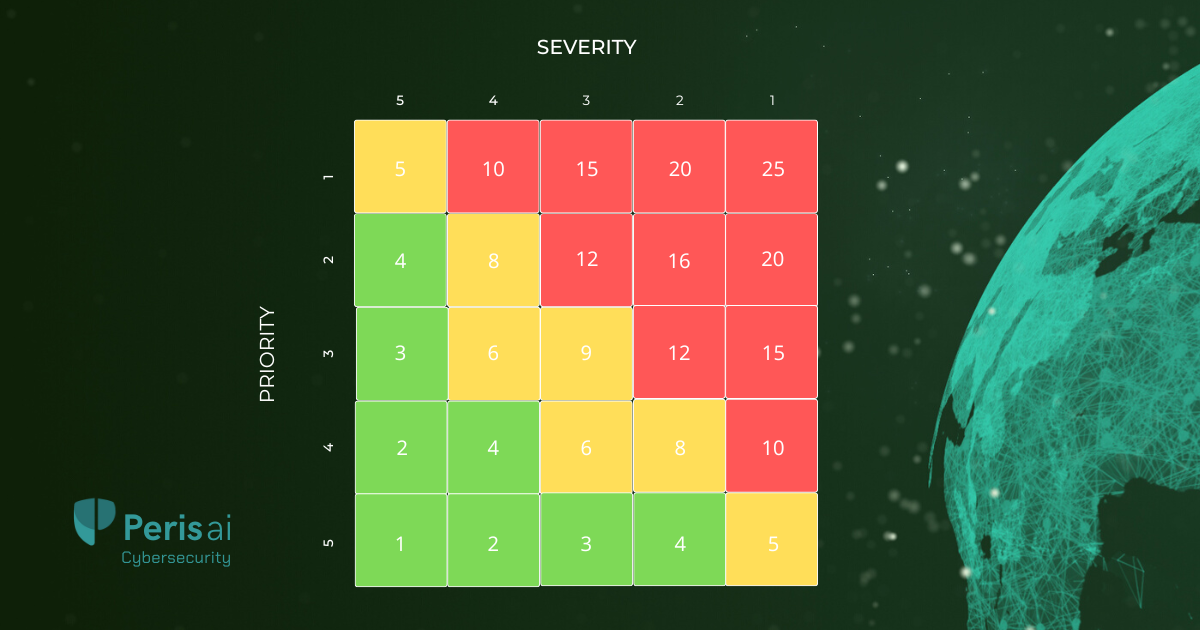
    The severity of a vulnerability is associated with system standards and the technical perspective of the system workflow. Severity examines whether the impact is severe or not. The severity level is less likely to change, while priority might differ.

    Priority indicates how quickly a vulnerability should be fixed and eradicated from an application. It shows a sense of urgency for dealing with a vulnerability in your system, with priority one being the highest and five being the lowest.

    Examples

    High Severity & High Priority (e.g. S1P1)

    A vulnerability that occurs in the basic functionality of the application, if it’s not fixed soon, will impact the business goal immediately. For example,

    • remote code execution (RCE)
    • SQL injection
    • Command Injections
    • or financial theft, direct financial loss

    A P1S1 vulnerability means your website is at risk of being hacked anytime. We recommend that you make it your highest priority to fix these vulnerabilities immediately.

    Mid Severity & Mid Priority (e.g. S3P3)

    A vulnerability that occurs on the application’s functionality that can be exploited by malicious attackers to access sensitive information on the application or server. The impact of S3P3 is relatively limited. For example:

    • It requires more skill to exploit a S3P3 vulnerability and might require some special conditions, such as inexistence of SSL/TLS certificate issues, or need to be in certain location (within target’s proximity location, etc)
    • Server misconfiguration

    Low Severity & Low Priority (S5P5)

    Any vulnerabilities that are acceptable business risks to the organization/company. For example:

    • information leakage (the version number of database, username of admin DB, where attackers could brute force the credentials, etc)
    • configuration errors
    • lack of some security measures

    Things that can be used in conjunction with social engineering to cause a more severe impact on the target.

  • Securing the Supply Chain: Best Practices for Ensuring Your Third-Party Vendors are Cyber-Secure

    Securing the Supply Chain: Best Practices for Ensuring Your Third-Party Vendors are Cyber-Secure

    In today’s interconnected world, businesses rely on third-party vendors more than ever to provide a wide range of goods and services. While these vendors can help organizations streamline operations and increase efficiency, they also present significant cybersecurity risks. A cyber-attack on a third-party vendor can compromise sensitive data, disrupt operations, and damage a company’s reputation.

    As such, businesses must prioritize supply chain security and take proactive measures to ensure their third-party vendors are cyber-secure. This requires a comprehensive approach that includes identifying potential risks, establishing security requirements, monitoring vendor compliance, educating employees, and having a response plan. Failure to do so can leave organizations vulnerable to cyber threats and undermine business continuity.

    This article will explore some best practices for securing the supply chain and ensuring that third-party vendors are cyber-secure. By following these recommendations, businesses can minimize risk exposure, protect their assets, and safeguard their reputation. Let us explore these practices more detail and learn how to build a robust supply chain security strategy.

    1. Know Your Vendors

    Know your vendors is a critical component of supply chain security. It involves doing diligence to assess the cyber risk of your third-party vendors, understanding their cybersecurity posture, and ensuring that they meet your organization’s security requirements. Here are some best practices for “Know Your Vendors”:

    • Identify all third-party vendors: To manage cyber risk effectively, you must know all the vendors that have access to your systems, data, or facilities. Create a comprehensive inventory of all third-party vendors, including their contact information, services provided, and criticality level.
    • Assess vendor security: Conduct a risk assessment to identify the cybersecurity risks associated with each vendor. The assessment should cover the vendor’s security controls, security policies and procedures, incident response plans, and security audit reports.
    • Verify vendor compliance: Verify that each vendor meets your organization’s security requirements, including compliance with applicable laws, regulations, and industry standards. Require vendors to provide evidence of their compliance, such as certification, audit reports, or assessments.
    • Monitor vendor security: Regularly monitor each vendor’s security posture to ensure they maintain adequate security controls and practices. Monitor vendor activity on your network, review security audit reports, and conduct periodic security assessments.
    • Include security requirements in contracts: Clearly define your organization’s security requirements in vendor contracts, including security controls, incident response plans, and breach notification requirements. Consider including clauses for indemnification, liability, and contract termination for security violations.

    By knowing your vendors and assessing their cybersecurity posture, you can identify potential vulnerabilities in your supply chain and take steps to mitigate the risks. A comprehensive “Know Your Vendors” program can help ensure that your third-party vendors are cyber-secure and meet your organization’s security requirements.

    2. Perform Risk Assessments

    Risk assessments are crucial in securing the supply chain and ensuring that third-party vendors are cyber-secure. Here are some key points to understand this practice:

    • Identify potential risks: Assessing risks involves identifying vulnerabilities that cybercriminals could exploit. This includes identifying potential weaknesses in your vendor’s IT infrastructure, data storage systems, and network security protocols.
    • Evaluate the likelihood of risk occurrence: Once potential risks have been identified, evaluate the likelihood of each risk occurring. This helps prioritize which risks to address first and allocate resources appropriately.
    • Determine the impact of risks: Evaluate the potential impact of each identified risk on your organization. This includes assessing the financial impact, reputational damage, and operational disruption that could result from a successful cyber-attack.
    • Determine the level of risk: Determine the level of risk associated with each identified risk by assessing the likelihood and impact of the risk. This helps prioritize which risks to address first and allocate resources accordingly.
    • Create a risk mitigation plan: Develop a plan to address the identified risks. This plan should include specific actions to mitigate or reduce the risks and contingency plans in case a risk materializes.

    Organizations can identify and mitigate potential risks associated with third-party vendors by performing risk assessments. This helps prevent cybersecurity incidents and ensures that the supply chain is secure.

    3. Establish Security Requirements

    Establishing security requirements is important to ensure that third-party vendors are cyber-secure. Here are some key points to understand about this practice:

    • Define security requirements: Define the security requirements your third-party vendors must meet to do business with your company. These requirements may include technical controls, security policies, data encryption, access controls, and other measures.
    • Align with industry standards: Align your security requirements with industry standards and best practices to ensure they are relevant and effective. This may include standards such as ISO 27001, NIST Cybersecurity Framework, etc.
    • Include in contracts: Incorporate your security requirements into your vendor contracts and ensure they are enforceable. This can help to hold vendors accountable for meeting your security standards.
    • Monitor compliance: Regularly monitor vendor compliance with your security requirements and hold them accountable for any non-compliance. This may include conducting security audits, penetration testing, and other assessments.
    • Communicate with vendors: Communicate your security requirements to your vendors and ensure they understand their responsibilities. This can help to foster a culture of security and ensure that your vendors are committed to meeting your standards.

    4. Monitor Vendor Compliance

    Monitoring vendor compliance is a critical component of ensuring the cyber-security of your supply chain. Here are some key points to keep in mind:

    • Regularly review vendor contracts and agreements to ensure they are complying with security requirements.
    • Use software tools to automate compliance monitoring and tracking.
    • Regularly request vendor security reports and updates to ensure they meet security standards and requirements.
    • Conduct on-site audits and assessments of vendor security practices and processes.
    • Regularly test vendor systems and processes to ensure they function as expected and are secure.
    • Follow up on any identified compliance issues and work with the vendor to implement corrective actions.
    • Maintain a clear and open line of communication with vendors to ensure ongoing compliance and collaboration.

    By following these best practices, you can ensure that your vendors meet your organization’s security requirements and minimize risk exposure.

    5. Educate Your Employees

    Educating employees is an essential part of supply chain security. Your employees can inadvertently expose your business to cyber threats if they are unaware of security risks and how to protect against them. Here are some ways to educate your employees:

    • Train employees on cybersecurity best practices, such as creating strong passwords, identifying phishing emails, and protecting sensitive information.
    • Conduct regular security awareness training sessions to reinforce the importance of supply chain security and remind employees of their role in protecting the business.
    • Implement policies and procedures requiring employees to report suspicious activity or potential security incidents.
    • Encourage employees to report any security incidents or breaches promptly and provide a clear procedure for reporting incidents.
    • Reward and recognize employees who demonstrate good cybersecurity practices and raise awareness of the importance of supply chain security.

    6. Have a Response Plan in Place

    A response plan is essential to manage any security incidents involving third-party vendors effectively. Here are some key points to keep in mind when creating a response plan:

    • Define roles and responsibilities for each member of the incident response team.
    • Establish communication channels and procedures for notifying relevant stakeholders, including vendors and customers.
    • Develop a step-by-step plan for incident containment, investigation, and resolution.
    • Determine criteria for when to escalate the incident to higher management or law enforcement levels.
    • Regularly review and update the response plan to ensure it remains relevant and effective in addressing new and emerging threats.

    With a response plan, businesses can minimize the impact of security incidents and quickly return to normal operations.

    7. Stay Up to Date

    Staying up to date with the latest trends and threats in supply chain security is crucial for maintaining a cyber-secure environment. Some tips to consider are:

    • Keep track of emerging threats and vulnerabilities impacting your supply chain security posture.
    • Attend relevant industry events and conferences to stay informed and exchange best practices with peers.
    • Follow relevant news sources, security blogs, and social media channels to stay updated on the latest security trends and alerts.
    • Stay in touch with your vendors and partners to understand their security posture and receive updates on their security practices.
    • Regularly review and update your supply chain security policies and procedures to ensure they align with the latest industry standards and regulatory requirements.

    By staying up to date, businesses can proactively identify and mitigate emerging risks, make informed decisions, and ensure their supply chain remains resilient against cyber threats.

    In Conclusion

    In the immortal words of Benjamin Franklin, “An ounce of prevention is worth a pound of cure.” And nowhere is this truer than in the realm of supply chain security. By taking the necessary steps to ensure that your third-party vendors are cyber-secure, you can prevent a potential security incident from becoming a costly and reputation-damaging disaster.

    Remember, your supply chain security is only as strong as its weakest link. So, whether you’re a small startup or a multinational corporation, it’s crucial to implement best practices such as risk assessments, security requirements, vendor monitoring, employee education, and response planning. By doing so, you’ll be well on your way to building a resilient and robust supply chain that can weather even the most severe cyber threats.

    At this point, you might be wondering, “But where do I start?” Fortunately, many tools and resources are available to help businesses of all sizes and sectors secure their supply chains. For instance, you can check our website, which offers comprehensive solutions for supply chain security. With our cutting-edge technologies and expert guidance, you can ensure that your third-party vendors are cyber-secure and that your business is well-protected from cyber threats. So why wait? Visit our website today and take the first step toward securing your supply chain.