In an unsettling revelation for digital security, researchers have recently discovered that hackers now possess an astonishing collection of nearly 10 billion unique passwords. This massive breach underscores the growing challenges and risks in today’s cybersecurity landscape. Here’s an in-depth look at the implications of this development and the critical measures you can take to safeguard your information.
Unveiling the Depth of the Data Breach
Discovery of rockyou2024.txt: Cybersecurity researchers stumbled upon a staggering repository named rockyou2024.txt, which contains almost 10 billion unique passwords. These passwords, gathered over the last two decades from various data breaches and cybersecurity incidents, highlight the extensive nature of digital vulnerabilities. In just the past two years, this file has been enriched with an additional 1.5 billion passwords, reflecting the accelerating pace of data compromise.
Understanding the Risks
Why Is This Significant? The vast accumulation of compromised passwords poses several serious threats:
Brute Force Attacks: With access to billions of passwords, hackers can automate attempts to breach accounts, testing thousands of passwords per second.
Credential Stuffing: The common habit of reusing passwords across multiple accounts can turn a single compromised password into a master key, allowing attackers to unlock multiple accounts belonging to the same user.
Proactive Measures to Enhance Your Cybersecurity
Steps to Safeguard Your Digital Identity:
Check for Leaked Passwords: Regularly use services that check if your credentials have been compromised. Change any exposed passwords without delay.
Strong, Unique Passwords: Make sure that each of your accounts is secured with a robust and unique password. This simple step can significantly hinder cross-account attacks from credential stuffing.
Two-Factor Authentication (2FA): Implementing 2FA adds an essential layer of security, ensuring that possessing a password alone is not enough to breach your account.
Adopt Passkeys When Available: Modern security standards are moving towards passkeys which, unlike traditional passwords, cannot be leaked since they are not stored or transferred in a way that is accessible to hackers.
Password Managers: Utilizing a password manager not only helps in generating and storing complex passwords but also in monitoring and alerting you about any potential leaks of your passwords.
Conclusion: A Call for Enhanced Vigilance
The discovery of the rockyou2024.txt file is a stark reminder of the persistent threats in the digital world. It is more crucial than ever to stay ahead of these threats by adopting advanced and proactive cybersecurity measures. By integrating robust security practices, you can protect your sensitive information and maintain control over your digital identity.
For continuous updates and in-depth insights into safeguarding your digital presence, make sure to visit Peris.ai.
As we use more digital tech, keeping our cybersecurity up is key. Cybercriminals are always looking for new ways to trick people. A big 86% of companies hit by ransomware were attacked on holidays or weekends.
This shows hackers work all the time, and so should your security. Good cybersecurity is vital to keep your business safe from digital threats.
It’s important to invest in strong cybersecurity and online safety. With more complex cyber attacks, old defenses won’t cut it. You must stay alert and keep up with new threats.
By focusing on ongoing cybersecurity, you can shield your business from cyber attacks’ harm.
Key Takeaways
Hackers often launch attacks on weekends or holidays, when security teams may be less vigilant.
86% of companies targeted by ransomware were attacked on a holiday or weekend.
Continuous cybersecurity is essential to protecting your business from evolving threats.
Robust online security measures can help prevent cyber attacks.
Investing in cybersecurity can help safeguard your business from devastating consequences.
Cyber attacks are highly targeted and sophisticated, making traditional defenses insufficient.
The Rising Tide of Weekend Cyber Attacks
Weekend cyber attacks are on the rise, with about 60% of all cyber incidents happening then. This is a big worry, showing we need strong network protection and IT security to stop data breaches.
More than 45% of cybersecurity experts say they’ve seen more attacks on Saturdays and Sundays. They also face a 30% longer wait to deal with cyber incidents on weekends. This delay can cost a lot, with weekend attacks causing an average loss of $1.4 million.
The following statistics show how serious this problem is:
70% of surveyed organizations have inadequate weekend security measures in place.
50% of companies do not have incident response teams operational during weekends.
80% of ransomware attacks start over the weekend, when they know organizations have fewer resources.
To fight these threats, 90% of IT professionals suggest constant monitoring. By focusing on network protection and IT security, companies can lower the chance of data breaches. This also helps reduce the financial damage from weekend cyber attacks.
Meet Company X: A Target During Downtime
Company X is a top player in its field. Recently, hackers hit them during downtime. This attack led to a big information security breach, losing sensitive data and halting work.
This shows how vital secure websites and strong security are, even when not in use.
The breach at Company X was due to human mistakes and weak security. Stats show 88 percent of breaches come from human errors, costing $4.88 million on average. Hackers found a weak spot in the system, getting to sensitive info and causing big harm.
To avoid such breaches, companies must focus on information security and secure websites. They should set up strong security, check for vulnerabilities often, and train staff on cybersecurity. These actions help lower the risk of a breach and keep data safe.
Some important steps for better information security include: Doing regular security checks and risk assessments Using strong security tools like firewalls and intrusion detection Training employees on cybersecurity Investing in secure websites and solid security measures
The Vulnerability Assessment
Doing a deep dive into vulnerability assessment is key to spotting security holes and weak spots. It’s about checking how well digital shields and cybersecurity steps work to stop breaches. With strong digital defenses, companies can cut down cyber attack risks and keep their data safe.
Risk analysis is a big part of this. It finds out what threats might hit and what to do first. It looks at how likely a breach is, how bad it could be, and how good current security is. With the right digital shields and cybersecurity know-how, companies can make a solid plan to tackle risks.
Initial Security Gaps
Security gaps often include old software, weak passwords, and poor network setup. These holes can let attackers sneak into a company’s systems and data. Fixing these weak spots with strong digital shields and cybersecurity can really lower breach risks and keep assets safe.
Risk Analysis Findings
Risk analysis shows the need for better digital shields and cybersecurity. This might mean getting new threat detection tools, doing regular security checks, and teaching employees about cybersecurity. By focusing on these, companies can make their cybersecurity stronger and lower breach risks.
Critical Points of Exposure
Critical weak spots are where a company’s digital shields and cybersecurity are most at risk. These might be old systems, unpatched bugs, or bad access controls. Fixing these weak spots can greatly lower breach risks and keep sensitive data safe.
Hackers Don’t Take Weekends Off: The Wake-Up Call
The need for constant cybersecurity is clear, as hackers don’t take weekends off. The FBI’s Internet Crime Complaint Center saw nearly 56,000 reports of personal data breaches in 2023. With about 100 different account passwords and logins, keeping everything secure is tough.
Some important stats show how serious this problem is:
The Identity Theft Resource Center found victims of identity theft lost millions, mainly from crypto and romance scams.
Many breaches come from automated or scalable attacks, not just direct financial theft.
Nation-state attacks often aim to gather information for intelligence or to gain an edge, not always causing immediate financial loss for individuals.
Given these numbers, companies must act fast to protect themselves. They need to understand that hackers don’t take weekends off. By focusing on cybersecurity and using strong security measures, companies can lower the chance of data breaches. This helps keep their customers’ personal info safe.
Year: Number of Reports
2022 over 200,000
2023 nearly 56,000
Implementing 24/7 Security Protocols
To keep your IT security and network safe, it’s key to have 24/7 security protocols. This means keeping your tech up to date, training your team, and having plans for emergencies. These steps help protect your organization from threats.
Here are some important steps for 24/7 security:
Do regular security checks to find weak spots in your network and devices.
Use firewalls and network security tools for constant protection.
Have strong password rules and multi-factor authentication to stop hacks.
Train your team regularly to make them security experts.
By focusing on IT security and network protection, you can lower the chance of data breaches and cyber attacks. As cybersecurity threats keep changing, it’s vital to stay ahead. With good security plans, your business can keep its systems and data safe, even when you’re not working.
Doing security audits and penetration tests helps find weak spots in your network. This lets you fix problems before they get used by hackers. Adding this to constant network watching and having a plan for security issues means your business is always ready to face any security problem.
Continuous Monitoring Solutions
Continuous monitoring solutions are key in stopping cyber attacks. They help improve cybersecurity and online security. These tools give real-time insights, letting businesses quickly fix security issues before they become big problems.
Recent stats show cyber attacks went up by 30% in 2024. On average, a business faces 1,636 attacks every week.
Using these solutions can cut down on security incidents. For example, regular scans can find hidden malware or weaknesses. This lowers the chance of data breaches. Also, penetration testing can find and fix weaknesses fast, saving time and effort.
Some main benefits of these solutions are:
Improved incident response efficiency by 95%
Reduced detection times for breaches from weeks to minutes
Enhanced security posture, resulting in fewer data breaches and lower costs
It’s vital for businesses to invest in continuous monitoring solutions. As online security keeps changing, staying ahead of threats is essential. With these solutions, businesses can keep their data safe, lowering the risk of cybersecurity breaches and costs.
In the world of round-the-clock security, people are key to keeping digital information safe. A culture that values security is critical today. This is because threats can pop up at any time.
To build a security-first culture, we need to train and educate staff. These programs should teach employees about the importance of digital safety. They should also give them the tools to spot and handle threats.
Staff Training and Awareness
Good staff training and awareness programs boost an organization’s security. By teaching employees about the latest threats and best practices, they can protect sensitive info. This makes them more proactive in keeping data safe.
Some important parts of staff training include:
Regular security awareness training sessions
Phishing simulation exercises
Incident response planning and training
Continuous monitoring and feedback mechanisms
By focusing on the human side of security, organizations can improve their defenses. This helps reduce the chance of security breaches and cyber threats.
Measuring Success: Security Metrics That Matter
To make sure cybersecurity and online security work well, it’s key to watch and study important metrics. This means keeping an eye on how many incidents happen, how fast we respond, and how they affect the company. Regular security audits and vulnerability scanning help spot risks and weak spots.
It’s also vital to check how good our incident response is. A 2022 IBM survey showed 68% of people often handle more than one incident at once. This shows we need quick and smart ways to deal with incidents. Also, a Sophos survey found 85% of people felt burned out, which hurts our security efforts.
Some key security metrics to keep an eye on are:
Incident response time
Number of incidents
Types of incidents (e.g., phishing, ransomware)
Employee training and awareness
System updates and patch management
By watching these metrics and using good cybersecurity and online security, companies can lower the chance of problems.
Return on Security Investment
Investing in it security and network protection can greatly benefit a company’s finances. Studies show that 70% of organizations see a positive Return on Security Investment (ROSI) from their cybersecurity efforts. This is because strong security programs can cut breach costs by 24% on average.
Some key areas where it security and network protection offer a return include:
Cost savings from fewer breach incidents
Improved efficiency through security automation
Enhanced reputation and customer trust
Also, investing in it security and network protection can save companies from the high costs of data breaches. The average cost of a data breach in the U.S. is $4.24 million. By investing in security, companies can lower the risk of a breach and avoid these costs.
In summary, investing in it security and network protection is vital for any company’s security strategy. It offers a return on investment, helping companies improve their finances while reducing the risk of expensive data breaches.
Future-Proofing: Beyond Traditional Security Hours
As cybersecurity threats grow, it’s key for companies to keep their security up to date. Hackers don’t take weekends off, and your security shouldn’t either. With more non-human identities and high-level access, cyber attacks are a bigger risk than ever.
One big issue in cybersecurity is infrastructure sprawl. It can cause security tool overlaps and increase risks. To outsmart hackers, companies need ongoing cybersecurity efforts. This includes regular password changes and AI for threat detection.
Some important stats show why cybersecurity awareness is critical:
For every human user, there are 20 non-human identities, often with high-level privileges, posing significant risks.
53 percent of organizations take over 13 weeks to rotate passwords, creating unnecessary vulnerabilities.
80 percent of surveyed organizations responded to what they believe to be AI-based attacks or threats within the last 12 months.
By focusing on cybersecurity and keeping up with new threats, companies can defend against hackers who work all the time. It’s time to move beyond old security hours. Invest in a strong cybersecurity plan that can handle today’s threats.
Conclusion: Securing Your Business Around the Clock
Cyber threats are evolving rapidly, and businesses must stay ahead with automation and orchestration to enhance their cybersecurity posture. With the average cost of a data breach reaching $4.88 million in 2024, organizations can no longer afford reactive security measures. Proactive automation is the key to minimizing risks and ensuring 24/7 protection against emerging threats.
Brahma Fusion empowers security teams by:
Automating security workflows to reduce manual effort and human errors.
Enhancing orchestration by seamlessly integrating security tools and platforms.
Improving response times with real-time threat detection and incident management.
By leveraging customizable security responses, an intuitive drag-and-drop interface, and precision scripting, organizations can build a cybersecurity strategy that is resilient, scalable, and highly efficient.
Take control of your security operations with Brahma Fusion. Visit https://www.peris.ai/ to explore how automation and orchestration can transform your cybersecurity strategy.
FAQ
What is the significance of continuous cybersecurity, and how does it impact my business?
Continuous cybersecurity is key because hackers never stop. They often target companies on weekends or holidays. This shows the need for constant online security and cybersecurity measures.
Why do hackers target companies during off-hours, and what are the consequences of weekend vulnerabilities?
Hackers go after companies when they’re less protected. This is because network and IT security are weaker during off-hours. It makes it easier for them to breach data, leading to big financial losses and damage to reputation.
How can I ensure that my website is secure, and what role does information security play in protecting my business?
To keep your website safe, use information security steps. This includes encrypting data, using secure protocols, and updating software and plugins. These actions help prevent cyber attacks and protect your business from data breaches.
What is a vulnerability assessment, and how can it help identify security gaps in my business?
A vulnerability assessment finds and checks security gaps in your business’s digital defenses. It helps you take steps to fix these issues and prevent cyber attacks.
Why is it essential to implement 24/7 security protocols, and what measures can I take to improve my business’s IT security and network protection?
Having 24/7 security is vital. It includes updating technology, training staff, and having emergency plans. These steps improve IT security and network protection, helping to prevent attacks and breaches at any time.
How can continuous monitoring solutions help detect and prevent cyber attacks, and what benefits do they offer for my business’s online security?
Continuous monitoring solutions watch your online security in real-time. They help spot and stop cyber attacks quickly. This keeps your business safe from data breaches and other threats.
What role does the human element play in round-the-clock security, and how can I build a security-first culture in my business?
People are key in round-the-clock security. Building a security-first culture means training staff on digital safety. It also means creating a culture where everyone is aware and responsible for security.
How can I measure the success of my business’s security measures, and what security metrics should I use to evaluate their effectiveness?
To see if your security measures work, use important security metrics. Look at incident response times, attack detection rates, and data breach prevention. These help you see how well your cybersecurity is doing.
What is the return on security investment, and how can I analyze the cost savings and prevention vs. recovery economics of my business’s security measures?
The return on security investment is the savings and benefits from IT security. Analyzing the cost savings and prevention vs. recovery economics helps you see if your security investments are worth it. It guides your decisions on cybersecurity.
How can I future-proof my business’s security, and what measures can I take to stay ahead of hackers and cyber threats?
To keep your business secure, use continuous cybersecurity. Stay updated on the latest threats and trends. Always check and improve your digital safeguards to stay ahead of hackers and threats.
As artificial intelligence (AI) reshapes industry landscapes, it’s also being manipulated by cybercriminals to enhance their malicious activities. Hackers are increasingly turning to AI to generate sophisticated malware code, significantly lowering the barrier to entry for executing complex cyberattacks. Here’s an in-depth look at how AI is facilitating a new wave of cybersecurity threats.
AI in Malware Development: Understanding the Emerging Threat
AI-Generated Malware: Recent developments have seen an uptick in malware created with AI, which allows even novice hackers to execute advanced attacks. This technology enables the rapid creation of new malware variants, complicating the efforts of cybersecurity professionals to defend against them.
Widening the Hacker Pool: By automating parts of the malware creation process, AI tools are democratizing the abilities once reserved for highly skilled programmers. This results in an increased volume of malware attacks, as individuals with minimal coding expertise can now launch significant cyber threats.
Common Attack Vectors: Utilizing familiar programming languages like HTML, VBScript, and JavaScript, these AI-driven malware attacks are not only simple to deploy but also exceedingly difficult to detect and mitigate.
Deceptive Delivery Methods: Often disguised within seemingly innocuous downloadable files, such as ZIP archives, AI-generated malware can evade detection by unsuspecting users and some traditional antivirus programs.
Concerns for the Future of Cybersecurity
Proliferation of Malware: The ease of creating malware with AI tools may lead to a surge in cyberattacks, particularly those targeting everyday web users with less-targeted, more disruptive methods.
Enhanced Capabilities for Seasoned Hackers: For sophisticated cybercriminals, AI can streamline the development of malware campaigns, making these operations more efficient and increasing the frequency of attacks.
Evolving Risks: As AI-generated malware becomes more common, the potential for these programs to evade traditional security measures grows, necessitating newer, more advanced defensive strategies.
Strategies to Fortify Your Defenses Against AI-Driven Threats
Enhance Vigilance: Exercise caution when downloading files, especially from unfamiliar sources. Be particularly wary of ZIP files, which could be masking AI-generated malware.
Update and Strengthen Antivirus Solutions: Ensure your antivirus software is equipped to identify and combat the latest malware threats, including those spawned by AI technologies.
Conduct Regular System Scans: Frequent scans can help detect and isolate suspicious files or activities, potentially identifying threats before they cause damage.
Scrutinize Communications: Approach email attachments and links with skepticism, even if they appear to originate from trusted sources.
Stay Ahead of Trends: Keeping abreast of new developments in cybersecurity can help you anticipate and prepare for emerging threats powered by artificial intelligence.
Navigating the AI-Generated Malware Threat
The advent of AI-generated malware represents a significant shift in the cybersecurity landscape. As this technology continues to evolve, so too does the nature of the threats we face. It’s crucial for users and organizations alike to adopt comprehensive security measures, remain vigilant, and continuously update their defensive strategies to protect against these sophisticated cyber threats.
For further insights and continuous updates on navigating the complex world of cybersecurity, please visit our website at Peris.ai.
Google’s latest innovation in search technology, the Search Generative Experience (SGE), has introduced AI-generated quick summaries and site recommendations to streamline user queries. However, recent observations by SEO consultant Lily Ray, backed by findings from BleepingComputer, have raised serious concerns. The SGE is inadvertently promoting websites involved in malware distribution and various online scams, including fake giveaways and tech support fraud.
The Unintended Consequences of AI-Enhanced Search Results
Earlier this month, Google began integrating SGE into its search mechanisms, aiming to enhance the user experience by providing concise AI-driven responses to queries. However, it soon became apparent that this feature might be suggesting sites that lead users into traps set by cybercriminals. The domains often share similarities such as the .online TLD, identical HTML templates, and a pattern of redirects, indicating their role in a coordinated SEO poisoning campaign designed to manipulate search engine results.
How Scammers Exploit SGE Recommendations
When users follow links recommended by SGE, they are often taken through a series of redirects, ending up on sites that deploy aggressive tactics such as fake captchas or misleading YouTube pages. These sites typically coax users into enabling browser notifications, which then serve as a conduit for delivering incessant spam directly to their desktops.
The Dangers of Browser Notification Spam
Once enabled, these notifications bombard users with misleading ads promoting tech support scams, counterfeit giveaways, and other dubious content. For instance, alerts claiming to be from McAfee may warn users of non-existent viruses, urging them to download software that is actually just a ploy to generate affiliate revenue for the fraudsters.
Complex Web of Deception and Financial Motives
Some of the scams further exploit user trust by promising high-value items like an Apple iPhone 15 Pro through fake Amazon loyalty programs. These schemes are particularly insidious as they harvest personal information for sale to other scammers or direct marketers, amplifying the victim’s risk exposure.
SGE’s Challenges and Google’s Response
Google has acknowledged the issue, noting that while they continuously enhance their spam-fighting capabilities, spammers are also evolving their strategies. This ongoing “cat and mouse” game makes it difficult to completely safeguard SGE from being manipulated. Despite this, Google has taken steps to remove known malicious entries and continues to refine its systems to better detect and exclude harmful content.
Protecting Yourself from Malicious Search Results
As users navigate this new AI-enhanced search landscape, vigilance is essential. Users should be wary of unsolicited browser notifications and suspicious links, even if they appear in Google’s search results. Here’s how you can manage unwanted notifications in Google Chrome:
Open Chrome and go to Settings > Content > Notifications.
Under “Allowed to send notifications,” review the list of sites.
Click the three dots next to any suspicious URLs and select ‘Remove’ to stop the notifications.
In light of these developments, Peris.ai Cybersecurity encourages users to exercise increased caution and to critically evaluate the credibility of websites and the legitimacy of online offers. As AI continues to reshape how we interact with digital content, staying informed about potential security threats and understanding how to mitigate them is crucial. By doing so, users can safeguard their digital experience against the evolving tactics of cybercriminals.
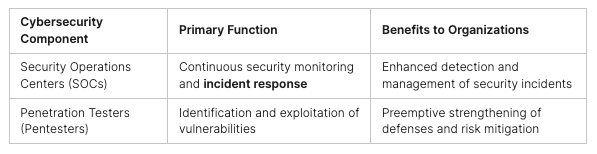
The digital world is always changing, with new threats popping up all the time. This is why strong cybersecurity is crucial to protect important info and keep systems safe. At the front line of defense are Security Operations Centers (SOCs) and Penetration Testers (Pentesters). They work together to fight cyber threats. SOCs keep an eye on network activities, ready to act on any strange behavior. Pentesters, on the other hand, look at security from a hacker’s perspective. They find weak spots that could be attacked. Their teamwork makes our cyber defenses solid, both reactive and strategic.
Cyber threats are getting more complex. So, the partnership between SOCs and Pentesters is more important than ever. SOCs watch over networks, while Pentesters test defenses by mimicking real-life cyber attacks. This combination makes for a defense system that’s not just tough, but also quick to adapt to new threats.
This partnership between monitoring and testing is key to staying one step ahead of cyber attacks. It gives organizations the chance to be ready for whatever comes their way. In a world where digital security experts and ethical hackers work together, cybersecurity goes beyond the usual methods. It offers a smarter way to keep the digital world safe.
Key Takeaways
Security Operations Centers (SOCs) provide continuous monitoring and incident detection, essential for spotting and responding to threats.
Penetration Testers (Pentesters) proactively uncover vulnerabilities, simulating the tactics of cybercriminals to bolster defenses.
The collaboration between SOCs and Pentesters encapsulates the balance of proactive and reactive cybersecurity measures.
Evolving cyber threats necessitate the blend of monitoring and testing to create a comprehensive reactive and strategic cyber defense.
The partnership of SOCs and Pentesters exemplifies the synergy required to navigate and mitigate complex cybersecurity challenges.
Understanding the Cybersecurity Landscape and the Rise of SOCs and Pentesters
The Cybersecurity Landscape is fast changing. Now more than ever, SOCs and Pentesters play a key role. They help fight the Complexity of Cyber Threats we see worldwide today. As hackers get smarter, it’s clear we need methods that are always alert and steps ahead. These include Continuous Monitoring and Penetration Testing.
The Increasing Complexity of Cyber Threats
Cyber threats are getting more complex. Bad actors use advanced methods to find and exploit weaknesses. This complexity means old-school security isn’t enough. Pentesters are crucial because they test our systems like hackers. This way, they find problems before real hackers can.
The Critical Role of SOCs in Continuous Monitoring
Continuous Monitoring is key in fighting cybercrime. SOCs lead this charge by watching over networks all the time. They quickly deal with any security issues. This constant vigilance and fast action help keep our digital world safe.
Penetration Testing: Going Beyond Detection with Proactive Measures
Beating cybercriminals means being proactive. That’s where Penetration Testing comes in. It tests our defenses thoroughly. This helps make our security stronger and stops breaches before they happen.
Unpacking the Functions of a Security Operations Center (SOC)
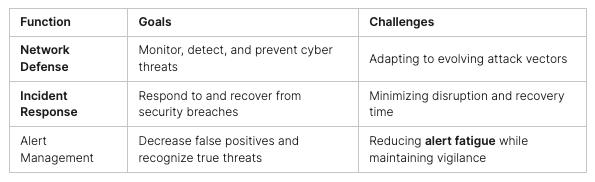
Security Operations Centers (SOCs) are vital for cyber safety in companies. They work tirelessly to keep network systems safe and secure. The main tasks of a SOC involve many steps, where being skilled in Network Defense and Incident Response is key. These skills help protect important systems.
Navigating Through Network Defense and Incident Response
Network Defense is at the heart of SOC activities. It covers watching for, finding, and stopping cyber threats. Incident Response is about the steps taken after a security problem happens. It aims to limit damage and get systems working normally again. These tasks are crucial for guarding organizations against online dangers.
The Challenge of Alert Fatigue: Seeking Accuracy and Efficiency
As cyber threats grow more complex, SOCs face a flood of security alerts. This can cause alert fatigue. This happens when too many alerts make it hard to spot the real threats. Handling these alerts with high efficiency and accuracy is vital. It ensures that actual threats get the attention they need and false alarms are kept low.
The Dynamic World of Penetration Testing as a Service (PTaaS)
In our fast-paced digital age, Penetration Testing as a Service (PTaaS) is key in protecting businesses. PTaaS is more than a service. It is a strategy that thrives in a Dynamic World. This world needs fast action against cyber threats. For those wanting to Fortify Defenses, PTaaS offers a vital resource. It is crafted by experts using a Hacker Approach.
Embracing the Hacker Approach to Fortify Defenses
With a Hacker Approach, Penetration Testing as a Service uses proven tactics to find and fix security holes. This method involves thinking like the enemy to stop attacks before they occur. It gives firms a chance to keep strengthening their cyber defenses.
Continuous Improvement in the SDLC: The Role of PTaaS in Development
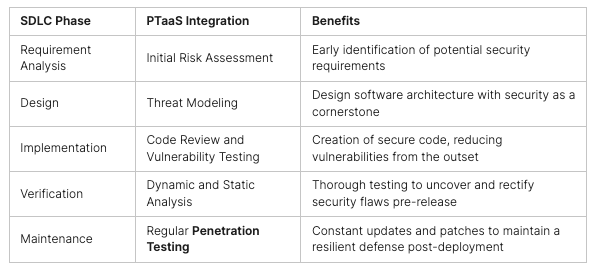
In software creation, PTaaS is vital for Continuous Improvement in the Software Development Life Cycle (SDLC). Adding it to the SDLC, developers can correct security problems early. They also build in safety features at every Development step. So, security becomes a built-in part of making software, not an afterthought.
Adding PTaaS to the development process lowers risks and prepares software for present and future cyber threats. Simply put, Penetration Testing as a Service is necessary in a Dynamic World. In this world, digital safety is crucial for ongoing business and trust.
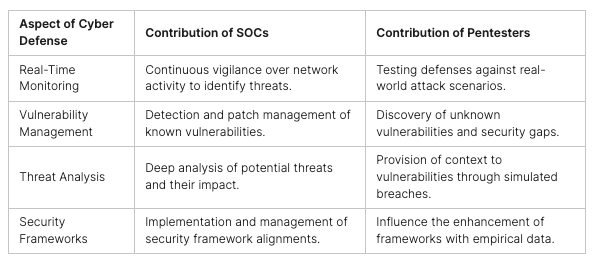
How SOCs and Pentesters Complement Each Other in Cyber Defense!
Cyber defense is like a complex puzzle. In that puzzle, Security Operations Centers (SOCs) and Pentesters are crucial pieces. They work together to protect against cyber threats. SOCs watch for threats and analyze incidents in real time. Meanwhile, Pentesters look for weaknesses the bad guys could use.
Let’s dive deeper into how SOCs and Pentesters work together. SOCs use tools to stop cyberattacks and keep a constant watch. At the same time, Pentesters test the defenses like attackers would, to find weak spots.
This teamwork strengthens security. When Pentesters find security holes, SOCs fix them. This creates a cycle of constant improvement. It’s like a dance between attack and defense. This approach keeps defenses strong and proactive.
Now, let’s explore what SOCs and Pentesters specifically bring to the table:
Threat Intelligence: Pentesters’ findings help SOCs understand and stop potential attacks.
Incident Response: If Pentesters spot a breach risk, SOCs can react faster and better.
Security Posture: With Pentesters’ input, SOCs ensure the defenses stay strong and current.
Policy and Compliance: Pentesters’ risk assessments help SOCs keep policies up to date.
Below is a brief comparison of how SOCs and Pentesters enhance cyber defense:
To sum up, SOCs and Pentesters crucially support each other. Their joint work is key to a dynamic defense. This defense can keep up with and fight off the changing dangers of cyber threats.
Blending the Strengths of Defensive and Offensive Cybersecurity Strategies
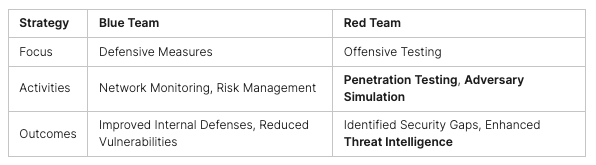
Today, cyber threats change faster than ever. A strong plan that mixes defensive cybersecurity strategies and offensive cybersecurity strategies is critical. By mixing these two, organizations can be quick and flexible in their cybersecurity stance. This method, called synchronized defense, uses the best of both defense and attack tactics for full security.
Creating a Synchronized Defense with Blue and Red Team Efforts
Modern cybersecurity needs teams to work together. The Blue Team works on defensive cybersecurity strategies. They strengthen defenses, assess risks, and watch for threats. The Red Team, on the other hand, uses offensive cybersecurity strategies. They simulate attacks, a method known as adversary simulation, to see if the defenses hold up. Their teamwork leads to constant learning and stronger defense against attacks.
Adversary Simulation and the Importance of Threat Intelligence in Cybersecurity
The Red Team’s adversary simulation is vital. It tests how well an organization can handle an attack. These tests also bring valuable insights for threat intelligence. Understanding the enemy’s moves is key. It helps predict and prepare for real attacks. With this knowledge, defenses can match real threats, not just guesses. It makes for a smarter, more focused defense plan.
Mixing defensive and offensive strategies makes cybersecurity stronger. Blue and Red teams work together for a defense that keeps up with threats. They use real-time data and simulations. This makes sure the defense is always ready and up-to-date with the latest threats.
Conclusion
In today’s rapidly evolving digital landscape, the significance of robust cybersecurity defenses cannot be overstated. Security Operations Centers (SOCs) and Penetration Testers (Pentesters) are integral to establishing a secure cyber environment. SOCs vigilantly monitor networks around the clock, swiftly identifying and addressing any security threats. Meanwhile, Pentesters proactively challenge these systems by simulating attacks, identifying vulnerabilities before they can be exploited by malicious actors. Together, these teams create a formidable force, ensuring comprehensive cybersecurity coverage.
The synergy between SOCs and Pentesters enhances an organization’s cybersecurity framework significantly. While SOCs provide the necessary shield, monitoring threats in real-time, Pentesters act as the sword, testing and strengthening defenses. This dynamic interplay not only bolsters security measures but also fosters a culture of continuous improvement and adaptation within cybersecurity practices, leading to stronger and more resilient defenses.
For organizations aiming to secure their operations against the spectrum of digital threats, integrating both SOCs and Pentesters into their cybersecurity strategy is essential. This dual approach ensures not just detection but also prevention, offering a well-rounded defense mechanism that is critical in today’s cyber context.
To ensure your organization is equipped to face these challenges, consider exploring Peris.ai Cybersecurity’s comprehensive solutions. With our SOC 24/7 services part of Peris.ai Bima, and on-demand Penetration Testing from Peris.ai Pandava, we provide the tools you need to maintain vigilance and proactively strengthen your defenses. Visit Peris.ai Bima SOC 24/7 and Peris.ai Pandava Penetration Testing to learn how our dedicated teams of SOCs and Pentesters can safeguard your digital assets and help secure your future in the cyber world.
FAQ
How do Security Operations Centers (SOCs) and Pentesters work together?
SOCS keep an eye on security all the time. They watch for and analyze security problems. Pentesters, on the other hand, look for weak spots on purpose to make defenses stronger.
What is the role of a Security Operations Center (SOC)?
A SOC manages network safety and handles incidents. They’re crucial for quick and right actions against security issues. They make sure alerts on security are dealt with properly.
How does Pentest as a Service (PTaaS) fortify defenses?
PTaaS takes a hacker’s view to spot and attack weak points. This helps firms up security. It’s part of making software safer right from its creation.
How do SOCs and Pentesters collaborate to strengthen cyber defense?
SOCS and Pentesters team up to bulk up a company’s cyber safety. This teamwork leads to better threat spotting and fixing. It also points out security holes to be covered.
How do defensive and offensive cybersecurity strategies complement each other?
Mixing defense and offense in cyber safety means stronger security. The Blue and Red Teams work together to find and seal security gaps. Using simulated attacks and intel about threats, they boost protection.
Amidst this age of technological prowess, where digital threads weave together the fabric of business operations, external exposure management has ascended to the realm of paramount importance. In a landscape perpetually rife with digital interconnections and interdependencies, an organization’s attack surfaces, akin to an intricate tapestry, represent the sum total of potential entry points accessible to both legitimate users and malicious agents. The alarming escalation of cyber threats in frequency and complexity has sounded a clarion call for businesses to embrace vigilance and sculpt comprehensive and resilient strategies that safeguard their digital sanctums. This exposé ventures beyond the surface, delving deep into the intricate nuances of external exposure management, unveiling its cardinal components, and providing a navigational compass for organizations to traverse the labyrinthine domain of modern cybersecurity, thereby ensuring the impregnability of their digital endowments.
Understanding External Exposure Management
External exposure management refers to the proactive identification, assessment, and mitigation of vulnerabilities present in an organization’s attack surfaces. An attack surface encompasses all points of entry that malicious actors could potentially exploit. These entry points could include web applications, APIs, network infrastructure, cloud services, and connected devices.
External exposure management involves understanding the organization’s digital footprint from an attacker’s perspective. It aims to minimize the potential avenues of attack by identifying and addressing weaknesses before they can be exploited. This approach starkly contrasts traditional security methods focusing solely on fortifying the perimeter without considering the broader attack surface.
Key Components of External Exposure Management
Asset Discovery and Inventory: The first step in managing external exposure is comprehensively understanding an organization’s digital assets. This involves thorough asset discovery to identify all systems, applications, and services accessible outside the organization’s network. Maintaining an accurate inventory helps assess potential risks and track changes over time.
Vulnerability Assessment: Once the assets are identified, a vulnerability assessment is conducted to pinpoint weaknesses in those assets. This assessment involves using automated tools to scan for known vulnerabilities, misconfigurations, and outdated software. Regular vulnerability assessments are essential to stay ahead of emerging threats and ensure timely remediation.
Threat Intelligence: Staying informed about the latest cyber threats is crucial for effective external exposure management. Threat intelligence involves gathering information about potential attackers, their tactics, techniques, and procedures (TTPs), and the vulnerabilities they commonly exploit. This knowledge enables organizations to prioritize their security efforts and allocate resources where they are most needed.
Patch Management: Vulnerabilities discovered during the assessment phase must be patched promptly. Timely patching helps close security gaps and reduce the window of opportunity for attackers. An effective patch management process ensures that critical security updates are applied without disrupting essential business operations.
Configuration Management: Misconfigured systems and applications can create significant security vulnerabilities. Configuration management involves ensuring that all software, systems, and services are properly configured according to security best practices. Regular reviews and audits are essential to maintain a secure configuration over time.
Web Application Security: Web applications often serve as attractive targets for attackers. Implementing secure coding practices, regular security testing, and web application firewalls (WAFs) can help protect these crucial components of the attack surface.
Access Control and Authentication: Controlling access to external-facing systems is vital for reducing the attack surface. Strong authentication mechanisms, multi-factor authentication (MFA), and the principle of least privilege should be implemented to restrict unauthorized access.
Holistic Approach: External exposure management is most effective when approached holistically. It should be an ongoing process that involves multiple teams, including cybersecurity, IT operations, and development. Collaboration between these teams ensures that security measures are seamlessly integrated into the organization’s processes.
Automation: Given the complexity of modern IT environments, manual management of external exposure is often impractical. Automation is crucial in streamlining asset discovery, vulnerability assessment, and patch management processes. Automated tools can help identify vulnerabilities more quickly and allow organizations to respond promptly.
Regular Monitoring and Incident Response: Continuous monitoring of the attack surface is essential to detect and respond to threats in real time. Organizations should establish robust incident response plans that outline steps to take in case of a security breach. Regular testing of these plans through simulated exercises helps ensure readiness.
Employee Training and Awareness: Human error remains a significant factor in security breaches. Comprehensive employee training programs are essential to educate staff about security best practices, phishing awareness, and the importance of adhering to security policies.
Third-Party Risk Management: Organizations often rely on third-party vendors and partners, increasing the attack surface indirectly. Assessing the security practices of third parties and ensuring they meet the organization’s standards is critical for overall security posture.
The Benefits of Effective External Exposure Management
Implementing a robust external exposure management strategy offers several significant benefits to organizations:
Reduced Risk: By identifying and addressing vulnerabilities proactively, the risk of successful cyberattacks is significantly reduced.
Enhanced Reputation: Effective external exposure management demonstrates a commitment to cybersecurity, which can enhance an organization’s reputation and foster trust among customers and partners.
Regulatory Compliance: Many industries have specific regulatory requirements for data protection and cybersecurity. A comprehensive external exposure management strategy helps organizations comply with these regulations.
Cost Savings: Preventing security breaches through proactive measures is often more cost-effective than dealing with the aftermath of an attack.
Business Continuity: A secure attack surface contributes to business continuity by minimizing disruptions caused by security incidents.
In summation
The relentless march toward digitalization and the pervasive expansion of online frontiers propel the notion of external exposure management into the realm of absolute necessity. In an era where a seamless digital tapestry interconnects businesses across the globe, the vulnerabilities and potential entry points that comprise an organization’s attack surface assume unprecedented significance. This, coupled with the incessant crescendo of cyber threats, paints a compelling portrait of urgency that necessitates steadfast action and the orchestration of multifaceted strategies to erect formidable fortifications around the digital citadels we have meticulously built.
The importance of safeguarding these virtual bastions through vigilant external exposure management cannot be overstated. The convergence of proactive identification, rigorous assessment, and resolute mitigation of vulnerabilities forms the bedrock upon which the defense against an ever-evolving threat landscape is erected. With each passing day, the arsenal of cyber adversaries swells with novel stratagems and techniques, necessitating a dynamic and all-encompassing approach to security. Adopting a holistic stance, whereby every facet of an organization’s digital footprint is scrutinized and fortified, assumes a mantle of paramount significance.
However, the journey toward impregnable cyber resilience is not one that organizations need to embark upon alone. An array of cutting-edge solutions and strategies beckon, poised to escort businesses through the intricate terrain of external exposure management. To explore these avenues further and uncover tailored approaches that suit the unique contours of your organization’s digital architecture, we invite you to navigate to our website. There, you will find a repository of insights, tools, and resources illuminating the path toward safeguarding your attack surfaces. In a world where digital perimeters expand ceaselessly and cyber threats lurk ominously, the choice to fortify and preserve your digital assets rests within your grasp. Seize the opportunity today – visit our website and embark on a journey toward fortified digital resilience.
In today’s world, companies can’t think they’re safe forever. Even the strongest defenses can be broken by smart attackers. To stay safe, you need to use new, secret tactics that experts keep hidden.
Want to know these secrets? Could you use them to make your company’s security stronger? Are you ready to see the tactics that could save your business from a big attack?
Key Takeaways
Understand the transformative SIEM market landscape and its impact on security operations
Discover how to avoid the pitfalls of siloed security and leverage a layered approach
Learn how to harness the power of security platforms and AI to enhance detection and response
Explore the importance of operationalizing security for holistic cyber resilience
Uncover the top SIEM tactics that security experts don’t want you to know
Mistaking Invisibility for Invincibility
Many businesses think they’re not a target for cybercriminals, feeling safe. But, every company, big or small, has valuable data that hackers want. It’s important to see your business as a target and focus on security first.
To protect your business, do regular security checks. You can do this yourself or with the help of security experts. These checks find and fix weak spots in your systems. Being proactive in cybersecurity makes your business safer and lowers the chance of an attack.
How to Avoid It
Do regular security checks: Check your security often, either by your team or with security experts, to find and fix weak spots.
Use a layered security approach: Use different security tools like firewalls and intrusion detection systems to protect against threats.
Train employees on cybersecurity: Teach your team how to spot and avoid threats like phishing and social engineering.
Keep software and systems updated: Update your software regularly to fix known problems and lower the risk of attacks.
Segment your network: Divide your network to stop attacks from spreading and limit damage if there’s a breach.
By following these steps, you can avoid the mistake of thinking you’re invisible to hackers. Make sure your business is ready to face the changing world of cybersecurity threats.
“Cybersecurity is not just about technology – it’s about people, processes, and culture. Adopting a security-first mindset is critical for organizations of all sizes.”
Siloed Security: A Recipe for Disaster
Cybersecurity is not just for IT; it’s a team effort. When security is seen as solely an IT responsibility, it creates blind spots and leaves the organization exposed. To prevent this, companies need to build a culture of cybersecurity awareness. This means giving all employees regular security training to teach them about threats and how to protect data.
It’s key to empower employees to report any suspicious activity. Also, investigating all reported incidents is crucial. This helps break down silos and makes sure everyone is working together to keep the company safe. By taking a holistic, company-wide approach to cybersecurity, organizations can greatly reduce their risk and improve their security.
“Cybersecurity is not just an IT issue; it’s a company-wide concern that requires collaboration between IT, management, and employees.”
The role of security culture and employee training is huge. Companies that focus on these areas can better spot and handle security threats. This boosts their cybersecurity awareness and makes them more resilient.
Creating a security-first mindset across the company helps avoid the dangers of siloed security approaches. It ensures the long-term safety of their assets and data.
The Untamed Network: A Breeding Ground for Threats
Many companies don’t fully understand their network setup. This makes it easy for hackers to find weaknesses. Old software, unpatched systems, and poor network visibility are big problems. It’s key to have a strong network security plan to fight these threats.
It’s smart to do regular security checks to find and fix problems before hackers do. Using automated patching keeps software current and reduces risks. Also, breaking down your network into smaller parts can help stop attacks from spreading.
How to Avoid It
Do regular security checks to find and fix problems before hackers do.
Use automated patching to keep software current and reduce risks.
Use Security Information and Event Management (SIEM) tools for real-time network activity and threat spotting.
Make a detailed network security plan that includes vulnerability scans, patching, and network segmentation.
By being proactive, companies can make their networks safer. This reduces the chance of being hit by cyber threats.
“Siloed security, where cybersecurity is seen as solely an IT issue, creates blind spots and leaves organizations exposed.”
Beyond the Antivirus: A Layered Security Approach
In today’s fast-changing world of cybersecurity, just using antivirus software isn’t enough. Experts say we need a layered security plan that goes beyond antivirus. This plan includes firewalls, intrusion detection and prevention systems (IDS/IPS), and endpoint detection and response (EDR) solutions. Together, they form a strong defense against cyber threats.
How to Avoid It
To create a layered security plan, follow these steps:
Use firewalls to block unwanted traffic and manage network access.
Set up IDS/IPS systems to watch your network for odd behavior and catch intruders.
Use EDR tools to find, check out, and handle advanced threats on your devices.
Integrate SIEM tools to gather and link log data from different sources. This helps spot and tackle security issues better.
Put in place email security, like DNS filtering and anti-phishing, to fight email threats.
Keep your security policies and procedures up to date to stay ahead of threats.
Give your employees solid security training. This helps them spot and handle cyber threats.
By using a layered security plan, you can greatly improve your organization’s defense against siem tactics, security experts, and many layered security threats. This includes antivirus, firewall, IDS/IPS, and EDR attacks. In today’s complex world, having a strong defense is key. A single weak spot can cause big problems.
“Cybersecurity is not a one-size-fits-all solution. Organizations need to adopt a layered approach to effectively protect themselves against the ever-evolving threat landscape.”
Exposed: Top SIEM Tactics That Security Experts Don’t Want You to Know
The world of cybersecurity is always changing. Security experts are always looking for new ways to stay ahead. But, some of the best SIEM strategies are secret. We’ll share the top SIEM tactics that security experts keep hidden, helping you boost your cybersecurity.
Old SIEM systems can be pricey because they need many people to run them. As companies grow, it’s hard to keep SIEM costs down. Also, older systems can’t handle the huge number of logs from today’s businesses. They also don’t automate tasks, so analysts have to do everything by hand.
The attack surface has grown a lot because we rely more on IT and data. Cybercriminals are now organized like real businesses, working on schedules. To fight these threats, experts use smart SIEM platforms. These use data analytics, big data, and AI to find and fix threats faster.
Smart SIEM platforms cut down on false alarms and focus on real threats. They make the job of security analysts easier and faster. This helps in quickly dealing with cyber threats.
Using these top SIEM tactics, companies can fight cybercrime better. They can manage security data better, automate threat detection, and use advanced analytics. This way, security experts can keep their organizations safe from new threats.
Don’t Let Your Guard Down at the Endpoint
In today’s world, devices like laptops, desktops, and phones are big security risks. With more devices and BYOD policies, attackers find it easier to get in. Also, mistakes from social engineering and unpatched software give hackers a way in.
To fight these risks, experts suggest using endpoint detection and response (EDR) solutions. EDR tools spot and tackle advanced threats, watching and analyzing what devices do. Also, using strong passwords and MFA boosts security a lot, as most data breaches come from insiders.
It’s also key to use application whitelisting, encrypt data, and train employees on security. These steps help protect against attacks on devices.
By using these siem tactics, security experts can make endpoint security stronger and stop EDR breaches. Taking steps ahead and using a layered defense is key to fight off threats to the endpoint.
The Shifting SIEM Landscape: Market Consolidation and New Approaches
The SIEM market is changing fast, with big mergers and acquisitions. Soon, many current SIEM solutions will stop being supported. This means customers will need to look at new cloud-based options or managed security services.
Next-gen SIEMs can handle a lot of data, including logs and identity info. They are great at finding threats in different environments, using AI and machine learning. They also help with meeting rules like HIPAA and GDPR.
Old SIEMs mainly looked at log outputs from various apps. They often sent out too many alerts, making it hard to keep up. This made it tough for companies to quickly respond to threats.
SIEM started in the late ’90s to gather log info from devices. Now, it has two main parts: SEM for watching and responding to threats, and SIM for managing logs and meeting rules.
Today’s SIEMs are cloud-based and can grow with your needs. They should collect and manage lots of data, work well with clouds, and be easy to use.
As the siem market changes, customers need to think about new siem tactics and managed security services. These can offer more flexibility and help reduce alert fatigue. Moving to an open security data architecture can also help avoid being stuck with one vendor.
“Next-generation SIEM solutions are cloud-native and offer rapid data source parser and analytics rules development, as well as MITRE ATT&CK framework integration to identify attack tactics, techniques, and procedures.”
As the siem landscape keeps evolving, security experts suggest keeping up with market trends. Look for solutions that offer more agility and better threat detection.
Effective SIEM Deployments: Six Tenets for Success
To make your SIEM (Security Information and Event Management) work well, focus on six key areas: spotting insider threats, finding advanced threats, keeping the cloud safe, stopping data leaks, following rules, and watching over OT (Operational Technology) and IoT (Internet of Things) security.
Identifying Insider Threats
SIEM solutions mix Security Information Management (SIM) and Security Event Management (SEM) to link log data from different sources. This helps spot security issues that might be missed. By focusing on insider threats, companies can use their SIEM to find odd user actions and stop data leaks from inside.
Detecting Advanced Threats
SIEM tools are great at finding threats before they happen, looking for odd activity in a company and giving important info on an incident. Good SIEM use helps security teams find and handle advanced threats, keeping the company safe from new attacks.
Securing the Cloud
As more companies move to the cloud, SIEM solutions are key in keeping cloud data and systems safe. By linking SIEM with cloud security tools, teams get full view and control over their cloud, stopping data leaks and rule breaks.
Uncovering Data Exfiltration
SIEM plays a big part in finding and stopping data leaks, a common trick by hackers. By watching network traffic and user actions, SIEM tools spot odd patterns and warn teams of possible data breaches, helping them act fast.
Managing Compliance
Rules like HIPAA, GLBA, and GDPR need constant log checks, a job SIEM tools do well. SIEM keeps data for a long time, helping with rules and showing how well security works.
Monitoring OT and IoT Security
With more OT and IoT use, SIEM must cover these new threats. By linking SIEM with OT and IoT security, companies can see and control all their tech, reducing risks from connected devices.
For SIEM to work well, you need a clear plan, knowing your security setup, picking what to watch, and doing it step by step. By focusing on these six areas, companies can use their SIEM to improve security and fight off many cyber threats.
Conclusion
In today’s fast-paced digital landscape, a robust cybersecurity strategy is essential. It requires a proactive approach that goes beyond basic security measures. By leveraging advanced SIEM tactics and a comprehensive SIEM framework, organizations can enhance their security posture and stay ahead of evolving cyber threats.
Building a security-first culture is critical, where cybersecurity is prioritized at every level. Implementing advanced SIEM and XDR solutions allows businesses to detect and mitigate threats early, improving their threat-hunting capabilities and gaining clearer insights into the cyber threat landscape.
Taking a proactive defense approach, investing in cutting-edge security solutions, and adapting to the ever-changing threat environment will help companies stay one step ahead of cybercriminals.
To explore how our solutions can strengthen your cybersecurity and help you stay protected, visit Peris.ai Cybersecurity. Let us assist you in safeguarding your business from advanced cyber threats.
FAQ
What are the common cybersecurity mistakes that organizations make?
Many businesses think they’re not at risk for cyberattacks. This can make them feel safe. But, every company has data that hackers want. To stay safe, they should think they’re a target and protect themselves well.
How can organizations foster a culture of cybersecurity awareness?
Cybersecurity is everyone’s job, not just IT’s. It needs teamwork from all levels of the company. To stay alert, offer regular security training and teach employees about threats.
Also, let employees report any strange activity. Always check out these reports.
What are the key components of a comprehensive network security strategy?
A good plan includes checking for weaknesses, updating software, and dividing your network. Use tools like SIEM to watch your network and spot threats.
How can organizations implement a layered security approach?
Use firewalls, IDS/IPS, and EDR to protect your network. These tools block bad traffic, watch for odd behavior, and catch malware. They work together to keep your network safe.
What are the six key tenets for effective SIEM deployments?
Good SIEM setups follow six important steps. They help find insider threats, catch advanced threats, and keep the cloud safe. They also help find data leaks, manage rules, and watch over OT and IoT.
How is the SIEM market evolving, and what should organizations consider?
The SIEM market is changing fast, with big companies buying each other. This means old systems might stop working soon. Soon, we’ll see more cloud-based solutions.
Customers should get ready for changes. They might want to look into managed security services or flexible security systems.
What are the key steps to improve an organization’s security posture?
To get better at security, fix common mistakes, teach everyone about cybersecurity, and have a strong plan. Use a layered defense and advanced SIEM tools to fight threats.
The relentless evolution of cybersecurity threats and social engineering attacks have emerged as a formidable menace, distinguished by their adeptness in manipulating human psychology rather than exploiting conventional technical vulnerabilities. This nefarious breed of attacks continually advances in sophistication, with one particularly disconcerting trend taking center stage: the calculated pursuit of super administrator privileges within corporate and institutional landscapes. These super administrators, positioned at the zenith of digital authority, effectively wield the keys to an organization’s most coveted digital assets, boasting unparalleled access and control over critical systems and sensitive data. The following article explores the intricate motivations, sophisticated techniques, and imperative preventive measures surrounding social engineering attacks specifically tailored to compromise super administrator privileges. Through this inquiry, we aim to illuminate the shadows that cloak these malicious endeavors and provide organizations with the insights necessary to safeguard their most prized digital assets.
Understanding Social Engineering Attacks
Before delving into the specific targeting of super administrator privileges, it’s essential to grasp the fundamentals of social engineering attacks. Social engineering is a psychological manipulation tactic that tricks individuals into divulging confidential information, providing access, or performing actions that benefit the attacker. These attacks exploit human psychology and rely on trust, authority, or urgency to succeed.
Social engineers employ various techniques, such as phishing emails, pretexting, baiting, and tailgating, to manipulate their victims. They prey on human emotions, including fear, curiosity, and trust, to convince individuals to reveal sensitive information or perform actions that compromise security.
Super Administrator Privileges: The Crown Jewels
Super administrators, sometimes called “root” users, have the highest level of access and control within an organization’s IT infrastructure. These individuals can create, modify, or delete user accounts, access sensitive data, and configure critical systems. Super administrators are the ultimate gatekeepers of an organization’s digital kingdom, making them prime targets for cybercriminals.
Reasons Behind Targeting Super Administrator Privileges
Ultimate Access: The primary motivation for targeting super administrators is their unparalleled access. Gaining control over a super administrator account essentially grants cybercriminals unrestricted access to an organization’s digital assets, allowing them to execute malicious activities undetected.
Privilege Escalation: Attackers often use compromised super administrator accounts as a stepping stone to escalate their privileges further. By compromising a super admin, they can move laterally within an organization’s network, gaining access to other privileged accounts and systems.
Strategic Targeting: Cybercriminals strategically select super administrators as their targets because they represent the highest authority within an organization’s IT infrastructure. Successfully compromising a super admin account provides cybercriminals with an invaluable foothold.
Social Engineering Techniques Targeting Super Administrators
Spear Phishing: Cybercriminals craft highly convincing emails that appear to be from trusted sources or colleagues, luring super administrators to click on malicious links or download infected attachments. Once clicked, malware can infiltrate their systems.
Impersonation: Attackers may impersonate coworkers, executives, or IT personnel to request sensitive information or actions from super administrators. This tactic exploits trust and authority, making it challenging to spot fraudulent requests.
Pretexting: Social engineers create elaborate scenarios or pretexts to manipulate super administrators into disclosing information or performing actions. They may pose as vendors, auditors, or IT support personnel to gain access to sensitive systems.
Insider Threats: In some cases, the attacker may already be an insider with knowledge of the organization’s super administrators. They can leverage this knowledge to exploit vulnerabilities in the human element of security.
Preventive Measures
Security Awareness Training: Organizations must invest in ongoing security awareness training to educate employees, including super administrators, about the dangers of social engineering attacks. Training should include identifying phishing emails, recognizing impersonation attempts, and practicing safe online behavior.
Multifactor Authentication (MFA): Enforce MFA for super administrator accounts to add a layer of security. Even if an attacker manages to steal login credentials, MFA can thwart unauthorized access.
Least Privilege Principle: Implement the principle of least privilege, ensuring that super administrators only have access to resources necessary for their roles. This reduces the potential damage an attacker can cause if they compromise a super admin account.
Strong Password Policies: Enforce strong password policies, encouraging super administrators to use complex and unique passwords. Regularly update passwords and consider using password management tools.
Verification Protocols: Establish strict verification protocols for sensitive actions, especially those requested through email or phone calls. Super administrators should verify any unusual requests through a secondary channel before taking action.
Incident Response Plan: Develop and regularly update an incident response plan to address social engineering attacks promptly. This plan should include steps for identifying, mitigating, and recovering from such incidents.
In Conclusion
The specter of social engineering attacks looms larger than ever, with cybercriminals honing their psychological manipulation tactics to precision, all in pursuing super administrator privileges within organizations. These attacks, bolstered by their subtlety and the vulnerability of human psychology, are a stark reminder that traditional security measures alone cannot ensure an impenetrable defense. The rise in these targeted attacks necessitates a multifaceted approach to cybersecurity that transcends the technological realm and delves deep into human behavior.
To fortify the defenses against this evolving threat landscape, it is incumbent upon organizations to prioritize cybersecurity awareness and education. Regular training programs, simulations of real-world scenarios, and cultivating a vigilant employee mindset can empower individuals at all levels to recognize and thwart social engineering attempts. Moreover, implementing robust preventive measures, such as multifactor authentication, strict access controls, and the principle of least privilege, can significantly reduce the attack surface and minimize the potential damage an attacker can inflict.
In this age of persistent cyber threats, preparedness is the linchpin of a resilient cybersecurity strategy. Organizations must develop and continually refine their incident response plans, ensuring they can swiftly detect, contain, and mitigate the impacts of social engineering attacks. The protection of super administrator privileges should be prioritized, with stringent verification protocols and rigorous password policies in place. Organizations must adapt and evolve in these challenges to remain one step ahead of cybercriminals. For further insights and guidance on bolstering your cybersecurity defenses, we encourage you to visit our website, where you’ll find comprehensive resources and solutions tailored to safeguarding your digital kingdom. Your proactive commitment to cybersecurity today will determine your organization’s resilience in the face of tomorrow’s threats.
In the dynamic realm of digital security, Singapore stands out as a bastion of innovation and reliability. The 2024 rankings of top cybersecurity firms by GoodFirms spotlight the critical role these entities play in fortifying digital assets—from personal blogs to expansive eCommerce sites. As enterprises and governmental agencies alike strive for cutting-edge defenses, the importance of choosing a trusted cybersecurity partner has never been more apparent.
Peris.ai Cybersecurity is proud to be recognized by GoodFirms in their latest review of elite cybersecurity providers in Singapore. This acknowledgment is a testament to our commitment to delivering state-of-the-art security solutions tailored to our clients’ unique needs.
Featured at the Forefront: Peris.ai Cybersecurity
At Peris.ai Cybersecurity, we’re not just participants in the industry; we lead by innovation. Our Security-as-a-Service platform, BIMA, integrates advanced technologies like EDR (Endpoint Detection and Response), NDR (Network Detection and Response), XDR (Extended Detection and Response), and SIEM (Security Information and Event Management) to provide a comprehensive security posture that’s both proactive and reactive.
Our solutions are designed for scalability and flexibility, ensuring they meet the demands of both burgeoning startups and established enterprises. With Peris.ai, clients gain more than a service provider—they gain a partner dedicated to their security and success.
Why Choose Peris.ai?
Advanced Integration: BIMA is built to seamlessly integrate into existing IT environments, enhancing both security and performance without disrupting ongoing operations.
Proactive Defense: Our tools are designed to predict, prevent, and mitigate risks before they impact your business.
Expertise and Experience: Our team comprises seasoned experts in cybersecurity, constantly evolving with the landscape to thwart even the most sophisticated threats.
Learn More About Our Peers
The GoodFirms article also highlights other distinguished firms, such as IT Block Pte. Ltd., known for its robust IT support, and Connectivity Global Pte. Ltd., which specializes in AI-driven email security solutions. Each firm brings unique strengths to the table, contributing to Singapore’s reputation as a cybersecurity hub.
For those interested in a comprehensive overview of the top cybersecurity providers in Singapore, we recommend reading the detailed reviews on the GoodFirms website.
Conclusion
Choosing the right cybersecurity partner is crucial in today’s digital age. At Peris.ai Cybersecurity, we are dedicated to providing unparalleled security solutions that safeguard your digital assets while empowering your business growth. Trust us to be your guide in navigating the complexities of cybersecurity.
Stay secure with Peris.ai, a leader in cybersecurity innovation.
Cyberspace is growing fast, and so are cyber threats. Cybersecurity protects computer systems and networks from attacks. It includes areas like application security and physical security. Knowing these domains is key to a strong cybersecurity plan.
Cybersecurity domains cover many areas, each with its own challenges. These include security architecture and threat intelligence. By focusing on these areas, companies can better protect their digital world.
Key Takeaways
Cybersecurity domains are the specialized areas within the field of cybersecurity, each with its own unique set of challenges and best practices.
Understanding cybersecurity domains is crucial for implementing effective cybersecurity strategies and building a comprehensive security policy.
The key cybersecurity domains include security architecture, frameworks and standards, enterprise risk management, application security, threat intelligence, user education, and physical security.
Adopting a holistic approach to these domains can help organizations enhance their overall cybersecurity posture and resilience.
The cybersecurity industry is facing a significant talent shortage, with an estimated 3.5 million professionals needed globally.
Introduction to Cybersecurity Domains
What are Cybersecurity Domains?
Cybersecurity domains are the different areas where we can apply cybersecurity methods. They cover things like threat intelligence, risk assessment, and application security. The cyber world has five main parts: the physical, logical, data, application, and user domains. Companies use frameworks like NIST CSF and PCI DSS to make their cybersecurity plans.
Importance of Understanding Cybersecurity Domains
Knowing about cybersecurity domains is key for companies to make strong security plans. It helps them fight off many cyber threats by focusing on each domain’s security needs. For example, application security means making apps safe and secure.
Risk assessment is about finding and managing risks, like doing asset inventories and scanning for vulnerabilities. Enterprise risk management (ERM) includes things like crisis management and cyber insurance.
Threat intelligence is about gathering and analyzing data to lower cybersecurity risks. Teaching employees about security helps protect against data breaches. Security operations cover things like disaster recovery and physical security.
By knowing about all these domains, companies can protect their assets better and reduce risks. This knowledge helps them make good security policies and use the right controls to fight off cyber threats.
This detailed look at cybersecurity domains gives a solid base for understanding the many parts of cybersecurity. By tackling these areas, businesses can improve their security and protect against cyber threats.
“Cybersecurity is no longer just an IT issue; it’s a business issue that requires a comprehensive, cross-functional approach.” –
Frameworks and Standards
Cybersecurity frameworks and standards are key for organizations to build a strong security base. They offer a clear way to handle cybersecurity risks, follow rules, and use the best practices. The NIST Cybersecurity Framework, ISO 27001, and OWASP Top 10 are well-known examples.
NIST Cybersecurity Framework
The NIST Cybersecurity Framework is made by the National Institute of Standards and Technology. It helps organizations understand and manage their cybersecurity risks. It focuses on key sectors and guides on setting up security processes and policies.
In 2024, the NIST Cybersecurity Framework got a big update from its 2018 version.
ISO 27001
ISO 27001 is a global standard for managing information security systems. It offers detailed controls and guidelines to protect information assets. It ensures data stays safe, complete, and accessible.
The ISO 27000 series has 60 standards covering many security topics. These include cloud security, disaster recovery, and healthcare data security.
OWASP Top 10
The OWASP Top 10 is a key standard for web application security. It lists the top security risks for web apps. It helps organizations focus on the most dangerous vulnerabilities, like injection flaws and sensitive data exposure.
Cybersecurity frameworks and standards are vital for managing risks. They offer a structured way to implement security measures and follow rules. By using these, organizations can improve their cybersecurity and protect their important assets from threats.
Risk Assessment
Effective risk assessment is key to a strong cybersecurity plan. It involves looking at threats, weaknesses, and the value of assets. This helps risk analysts and assessors focus on the most critical security issues.
Penetration Testing: Probing for Weaknesses
Penetration testing is a vital part of risk assessment. It mimics real attacks to find vulnerabilities in systems and networks. This helps organizations understand their risks and improve their defenses.
Vulnerability Scanning: Uncovering Weaknesses
Vulnerability scanning is also crucial. It helps find and fix security issues in IT systems. By scanning, analysts can spot problems like outdated software and weak passwords.
Asset Inventory: Knowing What Needs Protection
Keeping an accurate asset inventory is essential. It lists all digital and physical assets, their value, and how critical they are. This lets analysts focus on protecting the most important and vulnerable assets.
By using penetration testing, scanning, and inventory, organizations can better understand their cybersecurity. They can then make smart choices to improve their security.
“Cybersecurity risk assessments are considered invaluable in highly regulated sectors such as finance and healthcare.”
As threats grow, regular risk assessments are vital. They help organizations stay ahead of cyber threats and protect their key assets.
Enterprise Risk Management
In today’s fast-changing digital world, companies face many risks. These include cyber threats, data breaches, and disruptions in operations. Enterprise Risk Management (ERM) helps businesses tackle these risks in a big way. It makes them stronger, protects their reputation, and keeps them going for the long haul.
Risk Appetite: Setting the Boundaries
ERM also involves setting a company’s risk appetite. This is how much risk a business is okay with to reach its goals. Knowing their risk appetite helps companies make smart choices, control risks, and match their cybersecurity plans with their goals. This way, they can manage their cyber risks better.
Proactive Risk Monitoring: Staying Ahead of Threats
Good risk monitoring is key to keeping cybersecurity strong. Companies need to always check their threats, weaknesses, and how well they’re fighting risks. With strong monitoring, they can quickly spot, handle, and bounce back from cyber attacks. This helps avoid big losses, keeps their reputation safe, and keeps operations running smoothly.
By using a full ERM plan, businesses can face the complex world of cybersecurity with confidence. This ensures they can keep going strong and succeed in the long run.
“Effective Enterprise Risk Management Frameworks help banks lower risks, prevent financial losses, and attract more customers and investors.”
Governance
Effective governance is key to a strong cybersecurity strategy. It includes making strategic decisions, setting up accountability, and putting policies into action. This guides how an organization handles digital risks. At the federal level, the Cybersecurity and Infrastructure Security Agency (CISA) looks after information security policies for federal agencies. They create and enforce rules to tackle new threats.
States also play a role, like the Homeland Security Systems Engineering and Development Institute (HSSEDI). They share how states manage cybersecurity as a big issue.
Cybersecurity Policies: Defining the Rules of Engagement
Cybersecurity policies are the base of an organization’s security. They outline how to manage digital assets, reduce risks, and handle incidents. Good policies use industry standards, like the NIST Cybersecurity Framework. It has six main areas: Govern, Identify, Protect, Detect, Respond, and Recover.
Compliance and Regulations: Navigating the Regulatory Landscape
Following laws and rules is crucial for cybersecurity governance. Companies must keep up with data privacy laws and security standards. This ensures they operate legally. Compliance analysts and security auditors are key in this area. They check for gaps and help keep organizations in line with the law.
By focusing on governance, making smart policies, and following rules, companies can build a strong security culture. This approach helps them make smart choices, reduce risks, and protect their digital world in a changing threat environment.
“Cybersecurity governance is the foundation upon which an organization’s security posture is built. It’s not just about implementing security controls, but about aligning digital risk management with strategic business objectives.”
Threat Intelligence
Threat intelligence, or cyber threat intelligence (CTI), is about gathering and analyzing data on cyber threats. It helps organizations prepare for and respond to cyber attacks. This way, they can avoid financial and reputational losses.
Cyber Threat Monitoring
Monitoring cyber threats is key to threat intelligence. Tools like Domain Watch keep an eye on domain registrations. They spot domains that might be used for phishing or malware.
Digital Forensics and Incident Response experts then check these alerts. They decide if a threat is real and pass it on to the security team.
Threat Analysis
Good threat analysis is the heart of a strong threat intelligence program. Security teams use special techniques to understand threats. This helps them fight specific threats more effectively.
They also use this knowledge to train employees. This training helps employees spot and avoid phishing scams.
Adding threat intelligence to a security system makes it stronger. It gives security teams the tools they need to act fast against threats. This way, organizations can protect their important assets.
“Threat intelligence represents a force multiplier for organizations dealing with sophisticated threats.”
User Education
Protecting an organization’s information is a big challenge. User education is key in this fight. It aims to teach employees how to keep data safe from attacks or loss.
The CIA triad is at the core of user education. It stands for confidentiality, integrity, and availability. These three parts are the base of keeping information safe. Employees learn to protect sensitive data, keep information accurate, and ensure systems are always available.
Security Awareness Training: A Crucial Component
Security awareness training is essential. It teaches employees to spot and stop cyber threats. They learn about phishing, password safety, social engineering, and how to report incidents.
More people are looking for ways to learn about cybersecurity. They want to get better at protecting themselves and their companies. By teaching security awareness, companies can make their cybersecurity stronger.
“Cybersecurity is a team effort, and user education is the foundation upon which a resilient organization is built.”
Adding user education to a company’s cybersecurity plan is vital. It helps keep information safe, systems running smoothly, and data available when needed. As cyber threats grow, having good user education programs is crucial. It helps employees fight back against cyber attacks.
Cybersecurity covers many areas where security is key. It’s important for those in the field to know these domains well. This knowledge helps in creating a solid security plan and in career growth. The main areas include security architecture, frameworks, application security, and more.
Security architecture is about designing systems with security in mind from the start. It ensures that security is built into every part of the technology.
Frameworks and standards, like NIST and ISO 27001, offer guidelines for better security. They help professionals follow industry standards and stay compliant with laws.
Application security focuses on making software safe from hackers. It’s vital for keeping data safe in software applications.
Risk assessment involves finding and fixing security risks. Enterprise risk management looks at all risks and how to manage them.
Governance makes sure security practices match business goals and laws.
Threat intelligence helps by gathering and analyzing threat data. It helps defend against new cyber threats.
User education teaches employees to spot and handle security threats.
Security operations keep an eye on and handle security issues as they happen.
Physical security protects places, data centers, and hardware from harm.
Knowing these cybersecurity areas helps professionals plan their careers.
“Understanding the diverse cybersecurity domains is crucial for professionals to build comprehensive security strategies and plan their career development.”
By mastering these areas, professionals can have successful careers in cybersecurity.
Conclusion
Cybersecurity domains are the foundation of a comprehensive defense strategy. Understanding these key areas enables organizations to build effective cybersecurity plans, while helping professionals navigate their career paths and specialize in areas they are passionate about.
This article explored critical cybersecurity domains, including security architecture, frameworks, application security, and more. Each of these domains plays a vital role in defending organizations against diverse cyber threats, offering both protection and growth opportunities for cybersecurity experts.
As the cybersecurity landscape evolves, it’s crucial for businesses to align their strategies with these domains to stay protected. By adopting a proactive approach and leveraging expertise across these key areas, organizations can safeguard their assets and stay resilient against emerging threats.
For expert guidance and advanced solutions to strengthen your cybersecurity strategy, visit Peris.ai Cybersecurity. Let us help you stay ahead in the ever-changing digital security landscape.
FAQ
What are Cybersecurity Domains?
Cybersecurity domains are different areas where security methods are applied. These include application security, physical security, risk assessment, and threat intelligence. Knowing these domains is key to creating a solid cybersecurity plan.
Why is it important to understand Cybersecurity Domains?
It’s vital for companies to grasp cybersecurity domains to craft a strong security plan. For professionals, it helps in focusing on specific areas of interest and career growth.
What are the key Cybersecurity Frameworks and Standards?
Important frameworks and standards include the NIST Cybersecurity Framework, ISO 27001, and OWASP Top 10. They help in setting up a robust security program by defining risk tolerance and controls.
What is Application Security?
Application security involves adding defenses in software and services to protect against threats. It includes API security, security QA, and source code scans.
What is Risk Assessment?
Risk assessment involves analyzing the workplace to identify potential threats. It includes penetration testing, vulnerability scanning, and keeping an inventory of assets.
What is Enterprise Risk Management (ERM)?
ERM is a strategy to manage risks in finances, objectives, and operations. It covers crisis management, cyber insurance, and risk acceptance.
What is Cybersecurity Governance?
Cybersecurity governance provides a strategic view of risk management. It involves making decisions on security policies and ensuring legal compliance.
What is Threat Intelligence?
Threat intelligence is about gathering information on potential attacks. It helps in analyzing and reducing cybersecurity risks.
What is the importance of User Education in Cybersecurity?
User education aims to teach employees how to protect themselves and the company from cyber threats. Security awareness training is a key part of this.