Cloud computing has emerged as a foundational pillar, revolutionizing how businesses and individuals store and access their data. The allure of cloud technology lies in its ability to offer scalability, cost-efficiency, and seamless access to applications and information from anywhere in the world. However, as organizations increasingly rely on cloud infrastructure, their data security has become a critical concern. Data breaches have become all too common, making headlines and casting doubts on the safety of sensitive information stored in the cloud. This article delves into the risks associated with data breaches in a shared cloud environment and delves into effective strategies for securing your valuable data.
The proliferation of cloud computing has ushered in a new era of convenience and productivity. Still, it has also introduced unique challenges, particularly regarding safeguarding data from unauthorized access and breaches. While cloud service providers (CSPs) play a pivotal role in implementing robust security measures, the shared nature of the cloud infrastructure necessitates a shared responsibility model. As a cloud user, it is crucial to understand the potential risks and take proactive steps to fortify the security of your data.
By exploring the intricacies of data breaches in the cloud and examining effective security practices, this article aims to empower individuals and organizations with the knowledge to navigate the cloud landscape confidently. By understanding the risks and implementing the right security measures, you can ensure your data’s integrity, confidentiality, and availability in a shared cloud environment.
Understanding Data Breaches in the Cloud
A data breach refers to an unauthorized access or exposure of sensitive data. In a cloud environment, a data breach can occur when a malicious actor gains unauthorized access to stored data. This can happen for various reasons, including weak authentication mechanisms, vulnerabilities in the cloud infrastructure, or inadequate security practices by cloud service providers or users.
Cloud service providers (CSPs) play a crucial role in ensuring the security of data stored in the cloud. They are responsible for implementing robust security measures, such as encryption, access controls, and intrusion detection systems, to protect their customers’ data. However, the shared nature of the cloud introduces additional complexities, making it essential for cloud users to take proactive measures to secure their data.
Best Practices for Securing Data in the Cloud
1. Choose a Reliable Cloud Service Provider
Selecting a reputable and trustworthy cloud service provider is paramount. Consider their security certifications, compliance with data protection regulations, and track record in handling data breaches. Thoroughly review their security practices and ensure they align with your organization’s requirements.
2. Encrypt Your Data
Encrypting data before storing it in the cloud adds an extra layer of protection. This ensures that even if a data breach occurs, the stolen data remains unreadable without the encryption keys. Implement strong encryption algorithms and key management practices to safeguard your sensitive information.
3. Implement Strong Access Controls
Ensure that only authorized personnel have access to your data. Implement strong authentication mechanisms, such as two-factor authentication (2FA) or multi-factor authentication (MFA), to prevent unauthorized access. Regularly review and update access permissions based on the principle of least privilege, granting users the minimum level of access required to perform their duties.
4. Regularly Update and Patch Systems
Stay updated with the latest security patches and updates for your cloud infrastructure. Regularly patching your systems helps protect against known vulnerabilities and ensures that your cloud environment has the latest security features.
5. Monitor and Audit Activity
Implement robust monitoring and auditing practices to detect any unusual or suspicious activity in your cloud environment. Utilize intrusion detection and prevention systems (IDS/IPS) and security information and event management (SIEM) tools to identify potential threats and respond promptly to any security incidents.
6. Backup Your Data
Implement a regular backup strategy to create redundant copies of your data. This protects against accidental data loss, hardware failures, or ransomware attacks. Ensure that your backup data is securely stored and encrypted to maintain confidentiality.
7. Educate and Train Employees
Invest in comprehensive security awareness and training programs for your employees. Educate them about potential security risks, the importance of following security protocols, and how to identify and report suspicious activities. Establish clear policies and guidelines for data handling and security practices.
Conclusion
The importance of securing your data in the cloud cannot be overstated. The risks of data breaches are real and can have severe consequences for individuals and businesses alike. However, following best practices and implementing robust security measures can significantly reduce the likelihood of falling victim to a data breach.
First and foremost, carefully selecting a reliable cloud service provider is crucial. Take the time to evaluate their security practices, certifications, and track record in handling data breaches. This initial step sets the foundation for a secure cloud environment.
Next, prioritize the implementation of encryption and access controls. Encrypting your data ensures that even if a breach occurs, the stolen information remains unreadable without the encryption keys. Strong access controls, such as multi-factor authentication, add an extra defense against unauthorized access.
Furthermore, maintaining constant vigilance through monitoring and auditing is essential. Implement intrusion detection and prevention systems, and leverage security information and event management tools to identify potential threats and respond promptly to any security incidents. Regularly updating and patching your systems ensures your cloud environment stays fortified against known vulnerabilities.
Lastly, educating and training your employees about data security practices is paramount. Human error is often a weak link in the security chain, so providing comprehensive security awareness programs and establishing clear policies can help mitigate risks associated with accidental breaches.
In conclusion, securing your data in the cloud is an ongoing process requiring technical measures, careful decision-making, and employee education. By prioritizing data security, you can confidently leverage the benefits of cloud computing while safeguarding your sensitive information from data breaches.
To learn more about securing your data in the cloud and exploring comprehensive solutions, visit our website. Our experts are ready to assist you in protecting your valuable data and ensuring a secure cloud environment. Don’t leave your data vulnerable—take action today and fortify your cloud security to safeguard your most critical assets.
Data has become a highly prized commodity for individuals, enterprises, and institutions. With a wide array of personal information, financial data, and proprietary business secrets stored in the digital realm, it is no surprise that cybercriminals have set their sights on this treasure trove. Data breaches have surged in prominence, raising deep-seated concerns due to the far-reaching consequences they inflict. The fallout from these breaches encompasses substantial financial losses, severe damage to reputations, and the looming specter of legal consequences for those affected. In this article, we embark on a journey into the fundamentals of data breaches, exploring their ramifications and illuminating preventive measures and responses to combat these pervasive incidents effectively.
What is a Data Breach?
A data breach refers to an unauthorized access, acquisition, or disclosure of sensitive or confidential information by an individual, group, or entity. These incidents can occur in various ways, including hacking into computer systems, exploiting software vulnerabilities, insider threats, or even physical theft of devices containing sensitive data.
The data compromised in a breach can vary widely, encompassing personally identifiable information (PII) such as names, addresses, social security numbers, email addresses, and financial data. Data breaches may also target intellectual property, trade secrets, and other proprietary information.
The Impact of Data Breaches
Data breaches can severely affect individuals and organizations, leading to financial losses, identity theft, and compromised privacy. Let’s explore some of the critical impacts:
Financial Losses: Data breaches can result in significant financial losses for businesses. In addition to direct costs associated with investigating and mitigating the breach, there may be fines, legal penalties, and compensation to affected customers or clients.
Reputational Damage: A data breach can severely damage an organization’s reputation. Loss of trust from customers, partners, and investors can be difficult to regain, impacting the company’s long-term viability.
Identity Theft and Fraud: When PII is exposed, individuals risk identity theft and other forms of fraud. Cybercriminals can use stolen information to open fraudulent accounts, make unauthorized purchases, or even commit crimes under someone else’s identity.
Regulatory Non-Compliance: Many jurisdictions have strict data protection laws and regulations. Failure to safeguard data adequately can lead to legal consequences and hefty fines for non-compliance.
Competitive Disadvantage: For businesses, the theft of trade secrets or intellectual property can give competitors an unfair advantage and hinder innovation and growth.
Common Causes of Data Breaches
Data breaches can occur due to various factors and vulnerabilities. Some of the common causes include:
Weak Passwords: Using weak or easily guessable passwords can make it easier for attackers to gain unauthorized access to systems.
Phishing Attacks: Phishing is a social engineering technique where attackers trick individuals into revealing sensitive information, such as login credentials, through deceptive emails or websites.
Malware and Ransomware: Malicious software can infiltrate systems, steal data, or encrypt files, demanding a ransom for their release.
Insider Threats: Data breaches can also occur within an organization when employees, contractors, or partners intentionally or accidentally leak sensitive information.
Unpatched Software: Failure to apply security updates and patches leaves systems vulnerable to known exploits.
Third-Party Breaches: Data breaches can also occur through third-party vendors or partners who may have access to an organization’s sensitive information.
Preventing Data Breaches
Preventing data breaches requires a comprehensive and proactive approach to cybersecurity. Some essential preventive measures include:
Strong Authentication: Enforce strong passwords and implement multi-factor authentication (MFA) for an extra layer of security.
Employee Training: Educate employees about cybersecurity best practices, including recognizing and avoiding phishing attempts.
Regular Updates and Patches: Keep all software, operating systems, and applications updated with the latest security patches.
Access Control: Limit access to sensitive data to authorized personnel only and regularly review access privileges.
Data Encryption: Encrypt sensitive data at rest and in transit to protect it from unauthorized access.
Network Security: Implement firewalls, intrusion detection systems (IDS), and other network security measures to monitor and prevent unauthorized access.
Third-Party Due Diligence: If working with third-party vendors, ensure they have robust security measures to protect your data.
Responding to Data Breaches
Despite the best preventive efforts, data breaches can still occur. How an organization responds to a breach can significantly impact the extent of damage and the recovery process. Critical steps in responding to a data breach include:
Identification and Containment: Detect and isolate the source of the breach to prevent further unauthorized access.
Notification: Notify affected individuals, customers, or partners promptly to take appropriate actions to protect themselves.
Legal and Regulatory Compliance: Comply with legal requirements and notify relevant authorities about the breach, as applicable laws and regulations require.
Investigation: Conduct a thorough investigation to understand the extent of the breach, the data affected, and the methods used by the attackers.
Remediation: Take corrective actions to address vulnerabilities and prevent similar breaches in the future.
Communication and Transparency: Maintain open communication with stakeholders, including customers, employees, investors, and the media, to build trust and credibility.
Conclusion
The rising tide of data breaches presents a clear and present danger in our increasingly digitized world. Being well-informed about the fundamentals of data breaches and comprehending their potential repercussions is paramount for individuals and organizations alike. We must proactively safeguard our data assets, prevent unauthorized access, and minimize cyber intrusions risk. By embracing robust cybersecurity practices, maintaining a constant state of vigilance against evolving threats, and establishing a well-structured incident response plan, we fortify our defenses and effectively enhance our ability to counter potential breaches.
Securing sensitive information must be balanced in this interconnected and data-driven landscape. As technology advances, so do the tactics and techniques employed by cyber adversaries. Everyone must play an active role in promoting a culture of cybersecurity and data protection. Organizations should prioritize regular employee training to foster a security-conscious workforce, while individuals must exercise caution in their online activities and adopt secure practices in handling personal information.
For comprehensive solutions and expert guidance in the battle against data breaches, we invite you to explore our website. Discover cutting-edge tools, best practices, and actionable insights to shield your data from threats. Let us fortify the digital realm and forge a safer future for our data-driven world. Remember, knowledge and preparedness are our most potent weapons in the face of data breaches. Take charge of your data security journey today and equip yourself with the resources to defend against this ever-evolving menace.
Welcome to our comprehensive guide on the Cybersecurity Triangle for Organizations. In today’s digital landscape, businesses face numerous cyber threats that can compromise their sensitive data and disrupt their operations. Organizations need a strategic approach that balances price, quality, and time in their cybersecurity initiatives to protect their assets. This guideline provides valuable insights into how organizations can make informed decisions, optimize resources, and prioritize cybersecurity investments.
Key Takeaways:
The Cybersecurity Triangle for Organizations helps businesses find the right balance between price, quality, and time in their cybersecurity initiatives.
Price considerations involve budgeting and cost allocation for cybersecurity measures.
Quality focuses on implementing robust and reliable cybersecurity measures.
Time management strategies ensure efficient implementation and management of cybersecurity strategies.
Organizations can prioritize their cybersecurity investments by understanding and implementing the Cybersecurity Triangle.
Understanding the Cybersecurity Triangle Concept
The cybersecurity triangle concept is a fundamental framework that organizations must grasp to implement cybersecurity measures effectively. It centers around three key factors: price, quality, and time. By balancing these factors, organizations can develop a comprehensive approach to cybersecurity that addresses their specific needs and maximizes the protection of their assets.
Defining the Cybersecurity Triangle
The cybersecurity triangle comprises three crucial elements:
Price: This factor involves budgeting and cost allocation for cybersecurity initiatives. Organizations must consider their financial resources carefully and allocate budgetary provisions to support robust cybersecurity measures.
Quality: Ensuring the effectiveness and reliability of cybersecurity measures is the core focus of this factor. Organizations should implement robust and innovative technologies, adhere to industry best practices, and conduct regular security assessments to maintain high-quality cybersecurity resilience.
Time: Efficient time management is critical in implementing and managing cybersecurity strategies. Organizations must develop swift incident response plans, deploy rapid deployment security protocols, and conduct thorough disaster recovery planning and analysis to minimize downtime and maintain business continuity.
The Evolution of Cybersecurity Prioritization
Over time, the prioritization of cybersecurity factors has evolved as organizations recognize the increasing importance of a balanced approach:
In the past, organizations often prioritized cost over quality and time, focusing primarily on budgetary concerns. However, cybersecurity incidents and the subsequent financial and reputational damage have shifted the mindset. Organizations have come to understand that compromising quality and neglecting time management can lead to severe consequences. As a result, there has been a paradigm shift towards a comprehensive approach that balances all three factors of the cybersecurity triangle.
By comprehending and implementing the cybersecurity triangle concept, organizations can navigate the complex cybersecurity landscape and make informed decisions safeguarding their digital assets.
Price in Cybersecurity: Budgeting and Costs
Price plays a crucial role in cybersecurity as organizations must budget and allocate sufficient resources to protect their assets effectively. Allocating budgets for cybersecurity involves assessing the specific needs and risks of the organization, understanding the potential impact of cyber threats, and determining the financial investment required to mitigate those risks. This process requires careful consideration of various factors, including the organization’s size, industry regulations, and risk tolerance.
Allocating Budgets for Cybersecurity in Organizations
When allocating budgets for cybersecurity, organizations must take a strategic approach. It starts with assessing the unique needs and risks faced by the organization. By thoroughly evaluating current security measures, vulnerabilities, and potential threats, organizations can identify gaps and prioritize their budget allocation accordingly.
Moreover, organizations should consider the potential impact of cyber threats on their business operations and reputation. This includes evaluating the financial losses that could occur in a data breach or system outage and the costs associated with recovering from such incidents.
Organizations should also consider industry regulations and compliance requirements when allocating budgets for cybersecurity. Organizations must adhere to Different industries’ specific data protection and privacy regulations. This may require additional investments in security technologies, personnel training, and compliance audits.
It is also essential for organizations to balance their budget allocation between preventive, detective, and responsive cybersecurity measures. Preventive measures, such as firewalls and antivirus software, help protect systems and data from cyber threats. Detective measures like intrusion detection systems and security monitoring help identify and respond to potential threats. Responsive measures, such as incident response plans and data recovery solutions, ensure a quick and effective response during a security incident.
Understanding Cybersecurity Expense Categories
When budgeting for cybersecurity, organizations should consider various expense categories to ensure comprehensive coverage. These expense categories include:
Security personnel: Allocating budget for cybersecurity professionals responsible for implementing and managing security measures.
Security technologies: Invest in security solutions such as firewalls, antivirus software, encryption tools, and intrusion detection systems.
Security assessments and audits: Conduct regular assessments and audits to identify vulnerabilities and ensure compliance with industry standards and regulations.
Employee training and awareness: Budgeting for training programs that help employees understand their role in maintaining cybersecurity and raise awareness about potential threats.
Incident response and recovery: Allocating resources for developing and implementing incident response plans and investing in data recovery solutions.
By understanding the expense categories and their importance, organizations can allocate their budgets effectively, ensuring that all aspects of cybersecurity are adequately covered.
Ensuring Quality in Cybersecurity Measures
Ensuring quality in cybersecurity measures is vital for organizations to protect their assets from cyber threats effectively. Quality in cybersecurity involves implementing robust and reliable measures that can effectively detect, prevent, and respond to cyber-attacks. This includes using advanced technologies, adherence to industry best practices, regular security assessments and audits, and continuous employee training and awareness programs.
By prioritizing quality in cybersecurity, organizations can enhance their overall security posture and minimize the risk of data breaches and cyber incidents. It is essential to have a comprehensive approach that combines advanced technologies and industry standards for protection against evolving threats.
Organizations need to employ a multi-layered security approach to strengthen their defenses and create a resilient cybersecurity environment. By implementing a range of measures, such as firewalls, intrusion detection systems, encryption, and security information and event management (SIEM) solutions, organizations can detect and prevent cyber attacks. Regular security assessments and audits help identify vulnerabilities and ensure that cybersecurity measures are up to date.
Continuous employee training and awareness programs play a crucial role in ensuring the effectiveness of cybersecurity measures. By educating employees about common cyber threats, phishing attacks, and best practices for data protection, organizations can significantly reduce the risk of human error leading to security breaches.
By adopting a proactive and comprehensive approach to cybersecurity, organizations can stay ahead of cyber threats and safeguard their critical assets.
Key Elements of Ensuring Quality in Cybersecurity Measures
Implementing advanced technologies
Adhering to industry best practices
Conducting regular security assessments and audits
Providing continuous employee training and awareness programs
Balancing Time Management in Cybersecurity Strategies
Effective time management is essential in cybersecurity strategies to ensure organizations promptly respond to cyber threats while minimizing downtime and disruption. Time management encompasses various practices and processes that optimize time use in cybersecurity initiatives.
One crucial aspect of time management is the development of efficient incident response plans. These plans outline the steps to be taken during a cyber incident, allowing organizations to respond quickly and effectively. By having well-defined incident response plans in place, organizations can minimize the impact of cyber incidents and swiftly mitigate the risks posed by threats.
Rapid deployment security protocols also play a vital role in time management. These protocols enable organizations to rapidly deploy and activate security measures in response to emerging threats. By implementing these protocols, organizations can reduce the time it takes to protect their systems and data, preventing potential security breaches and minimizing the window of vulnerability.
Regular disaster recovery planning and analysis are crucial time management practices in cybersecurity. Organizations need to plan for potential disasters and develop robust recovery strategies proactively. Regular analysis allows organizations to identify vulnerabilities and weaknesses in their disaster recovery plans, enabling them to make necessary improvements and ensure optimal readiness.
By effectively managing time in cybersecurity strategies, organizations can minimize the impact of cyber incidents, reduce recovery time, and ensure the continuous availability of critical systems and data. Time management practices enable organizations to optimize their response to cyber threats and safeguard their assets efficiently and timely.
Cybersecurity Investment Decisions: Combining Price, Quality, and Time
Cybersecurity investment decisions require organizations to consider the interplay between price, quality, and time. Achieving a balance among these factors is essential for developing effective cybersecurity strategies that align with organizational goals and resource availability. This section explores case studies and implementation strategies demonstrating successful approaches to combining price, quality, and time in cybersecurity initiatives.
Case Studies and Implementation Strategies
Examining real-world case studies provides valuable insights into how organizations effectively combine price, quality, and time in their cybersecurity investments. These case studies highlight the importance of evaluating and prioritizing cybersecurity needs, understanding the potential impact of cyber threats, and allocating resources accordingly. Organizations can adapt and apply successful strategies to their unique contexts by learning from these examples.
Implementing a comprehensive cybersecurity strategy requires a thoughtful approach that addresses the specific needs and resources of the organization. By considering factors such as budget constraints, risk tolerance, and desired quality of security measures, organizations can make informed decisions on allocating their resources effectively. The implementation strategies from case studies provide practical guidance on integrating price, quality, and time considerations into the overall cybersecurity investment decision-making process.
Public Policy Implications and Corporate Theory
Cybersecurity investment decisions impact individual organizations and have broader implications at the public policy level. Public policy plays a crucial role in shaping the cybersecurity landscape and establishing standards and regulations organizations must adhere to. Understanding the public policy implications of cybersecurity investment decisions is essential for organizations to navigate compliance requirements and ensure the security of their assets.
Corporate theory also influences cybersecurity investment decisions as organizations strive to align their cybersecurity strategies with their overall business strategies. By considering factors such as the organization’s risk appetite, strategic objectives, and stakeholder expectations, organizations can make investment decisions that enhance their resilience to cyber threats while supporting their long-term goals.
Organizations can make informed and strategic cybersecurity investment decisions by analyzing real-world case studies, considering public policy implications, and incorporating corporate theory. This holistic approach ensures that organizations invest in the right cybersecurity measures, combining price, quality, and time to protect their assets effectively and mitigate cyber risks.
Time-Efficient Cybersecurity Strategies for Immediate Threat Response
Time is of the essence when it comes to cybersecurity. Organizations need to act swiftly and decisively to combat immediate cyber threats. This section explores time-efficient cybersecurity strategies that enable organizations to respond promptly and effectively.
Development of Rapid Deployment Security Protocols
Organizations should focus on developing rapid deployment security protocols to combat emerging threats quickly. These protocols allow for the swift deployment and activation of security measures in response to immediate cyber threats. By having predefined procedures and processes in place, organizations can reduce response times and minimize the impact of cyber incidents.
Establishing a dedicated incident response team that can be activated at a moment’s notice.
It is developing predefined incident response plans that outline the necessary steps to be taken in the event of a cyber attack.
Regularly conducting drills and simulations to test the effectiveness and efficiency of the response protocols.
It integrates automated threat detection and response systems to identify and mitigate cyber threats quickly.
By adopting these rapid deployment security protocols, organizations can significantly enhance their ability to respond to immediate cyber threats, minimize potential damages, and safeguard their critical assets and data.
Disaster Recovery Planning and Analysis
Disaster recovery planning and analysis are essential components of time-efficient cybersecurity strategies. By proactively preparing for potential cyber incidents, organizations can minimize downtime, mitigate damages, and ensure a swift recovery.
Key steps in disaster recovery planning and analysis include:
Conducting a thorough risk assessment to identify potential vulnerabilities and prioritize critical systems and data.
Developing comprehensive disaster recovery plans that outline the steps to be taken during a cyber incident.
Regularly test and update the disaster recovery plans to ensure their effectiveness and relevance.
Implement backup and data recovery mechanisms to restore critical systems and data quickly.
Performing post-incident analysis to identify areas for improvement and refine the disaster recovery strategies.
By incorporating disaster recovery planning and analysis into their cybersecurity strategies, organizations can minimize the impact of cyber incidents, reduce downtime, and ensure the continuity of their operations.
Benefits of Time-Efficient Cybersecurity Strategies
Minimized Response Time – Rapid deployment security protocols allow organizations to respond quickly to cyber threats, reducing the time it takes to identify and mitigate potential damages.
2. Reduced Impact of Cyber Incidents – By promptly activating security measures and implementing disaster recovery plans, organizations can minimize the impact of cyber incidents, preventing significant disruptions to their operations.
Improved Resilience – Time-efficient cybersecurity strategies enhance an organization’s resilience against cyber threats, enabling it to recover quickly and effectively in the face of an incident.
Enhanced Protection of Assets and Data – Rapid deployment security protocols and disaster recovery planning help organizations safeguard their critical assets and data by implementing proactive measures and efficient response mechanisms.
Achieving Cost-Quality-Time Balance in Cybersecurity
When it comes to cybersecurity, organizations often face the challenge of finding the right balance between cost, quality, and time. Allocating resources efficiently while ensuring adequate protection against cyber threats requires careful analysis and decision-making. This section explores the trade-offs of different cybersecurity approaches and provides practical frameworks for achieving a cost-quality-time balance.
Analyzing the Trade-offs in Cybersecurity Approaches
When implementing cybersecurity measures, organizations must consider various factors and make trade-offs to optimize their investments. One of the key trade-offs is cost versus quality. While investing in high-quality cybersecurity solutions can provide better protection, it often comes at a higher cost. On the other hand, opting for cheaper solutions may compromise the effectiveness of the security measures.
Another trade-off to consider is the balance between cost and time. Implementing comprehensive cybersecurity strategies takes time and effort, which may result in delays or disruptions to business operations. Therefore, organizations must analyze the trade-off between investing sufficient time in cybersecurity measures and the potential impact on productivity and efficiency.
Lastly, there is also a trade-off between quality and time. Implementing high-quality cybersecurity measures requires thorough planning, testing, and implementation. This may slow down the process compared to quick fixes or shortcuts, prioritizing speed over quality. Organizations need to weigh the benefits of investing time in quality measures against the urgency of immediate protection.
Practical Frameworks for Cybersecurity Balance
To help organizations achieve a cost-quality-time balance in cybersecurity, practical frameworks can guide decision-making and resource allocation. These frameworks consider each organization’s unique needs and resources and provide structured approaches to striking the right balance. Here are some practical frameworks to consider:
Risk-Based Approach: This framework identifies and prioritizes the most critical cyber risks based on their potential impact and likelihood of occurrence. Organizations can allocate resources effectively by aligning cybersecurity investments with risk assessments while addressing the most significant threats.
Cost-Benefit Analysis: This framework evaluates the costs and benefits of different cybersecurity measures. By quantifying the potential risks and potential savings associated with each measure, organizations can make informed decisions on where to invest their resources.
Resource Optimization Model: This framework considers the available resources and constraints of the organization, such as budget, manpower, and technology. By optimizing the allocation of resources, organizations can maximize the impact of their cybersecurity measures within the given limitations.
Continuous Improvement Framework: This framework emphasizes the iterative and continuous improvement of cybersecurity measures. By implementing an ongoing monitoring and evaluation process, organizations can identify areas for improvement and make adjustments to achieve a better cost-quality-time balance.
Implementing these practical frameworks can enable organizations to make informed decisions, optimize their cybersecurity investments, and maintain an effective balance between cost, quality, and time. By finding this balance, organizations can enhance their security posture, mitigate risks, and protect their valuable assets.
Cybersecurity Budgeting for Organizations: A Structured Approach
Cybersecurity budgeting for organizations requires a structured approach that considers the specific needs and resources of the organization. By following a structured approach, organizations can ensure that their cybersecurity investments are aligned with their strategic objectives while effectively protecting their assets.
One key step in the structured approach to cybersecurity budgeting is assessing risk. Organizations must evaluate the potential risks, such as the likelihood and impact of different cyber threats. This assessment helps identify the areas where cybersecurity investments are most crucial, ensuring that resources are allocated where they are most needed.
Once the risk assessment is complete, organizations can prioritize their investments. This involves determining the order in which cybersecurity initiatives should be implemented based on their potential impact on risk reduction. By prioritizing investments, organizations can first ensure that limited resources are allocated to the most critical areas.
Another important step is aligning the budget with strategic objectives. Organizations must consider their overall business goals and how cybersecurity investments can support them. This alignment ensures cybersecurity becomes integral to the organization’s strategic planning, with resources allocated accordingly.
It is crucial to involve key stakeholders in the cybersecurity budgeting process. This includes representatives from different departments and levels of the organization who can provide valuable insights and perspectives. By involving stakeholders, organizations can gather diverse input and ensure that the budget reflects the needs and priorities of the entire organization.
Organizations should conduct thorough assessments and regularly review and adjust the budget based on evolving cyber threats and organizational priorities to maintain effectiveness. By staying proactive and adaptive, organizations can ensure that their cybersecurity budget remains aligned with the changing threat landscape and the organization’s strategic goals.
Effective cybersecurity budgeting is essential for organizations to allocate their resources efficiently and effectively, ensuring the protection of their assets. By following a structured approach and considering the specific needs and resources of the organization, organizations can optimize their cybersecurity investments and enhance their overall security posture.
Conclusion: Harmonizing the Cybersecurity Triangle with Corporate Strategy
In summary, organizations must weave the principles of the cybersecurity triangle into their corporate strategy to safeguard their assets against digital threats effectively. The interplay of cost, excellence, and timeliness forms the crux of this approach, guiding businesses in formulating an all-encompassing cybersecurity plan that resonates with their overarching business goals.
The cybersecurity triangle acts as a strategic compass, guiding the allocation of resources and the management of risks. This paradigm aids companies in striking a balance between financial limitations and the imperative for dependable, high-caliber cyber defense mechanisms. Embedding this model into their strategic framework empowers organizations to elevate their cybersecurity standing, mitigate potential risks, and secure their assets for the long haul.
Implementing the cybersecurity triangle into an organization’s strategy demands a comprehensive viewpoint. Companies must weigh the fiscal aspects of their cybersecurity ventures, ensuring ample allocation of resources to combat the continually changing cyber threats. High-quality cybersecurity solutions, incorporating cutting-edge technology and best practices, are paramount for effective threat detection, prevention, and response.
Moreover, time is a critical element in cybersecurity strategies. Quick and effective incident response plans, swift security protocol implementation, and thorough disaster recovery plans are essential. These steps enable organizations to swiftly tackle emerging threats and reduce the impact of any operational disruptions.
Fusing the cybersecurity triangle with corporate strategy lays the groundwork for a resilient, forward-thinking cybersecurity posture. This strategy equips businesses to defend their valuable assets robustly, uphold customer trust, and successfully navigate the intricate and evolving realm of cyber threats.
For tailored cybersecurity solutions that align with this approach, we encourage you to contact us or visit Peris.ai Cybersecurity.
FAQ
What is the cybersecurity triangle for organizations?
The cybersecurity triangle for organizations is a comprehensive guideline that helps businesses find the right balance between price, quality, and time in their cybersecurity initiatives. It allows organizations to effectively protect their assets from cyber threats while optimizing their resources.
What does the price aspect of the cybersecurity triangle involve?
The price aspect involves budgeting and cost allocation for cybersecurity initiatives. Organizations must assess their needs and risks, understand the potential impact of cyber threats, and determine the financial investment required to mitigate those risks.
How can organizations ensure quality in their cybersecurity measures?
Organizations can ensure quality in cybersecurity by implementing robust and reliable measures that effectively detect, prevent, and respond to cyber-attacks. This includes using advanced technologies, adhering to industry best practices, conducting regular security assessments, and providing continuous employee training and awareness programs.
Why is time management important in cybersecurity strategies?
Time management is crucial in cybersecurity strategies to effectively respond to cyber threats, minimize downtime, and ensure the continuous availability of critical systems and data. It involves developing efficient incident response plans, implementing rapid deployment security protocols, and conducting regular disaster recovery planning and analysis.
How can organizations make cost-effective cybersecurity investment decisions?
Organizations can make cost-effective cybersecurity investment decisions by considering the interplay between price, quality, and time. This involves analyzing budget constraints, resource availability, risk tolerance and prioritizing investments based on specific needs and resources.
What are some key considerations for implementing high-quality cybersecurity solutions?
Implementing high-quality cybersecurity solutions requires using cryptography and access management techniques to ensure the confidentiality and integrity of sensitive data. Organizations should also implement data integrity and protection mechanisms such as encryption and data backup strategies to safeguard their data against unauthorized access and tampering.
How can organizations develop time-efficient cybersecurity strategies for immediate threat response?
Organizations can develop time-efficient cybersecurity strategies by establishing rapid deployment security protocols that enable quick activation of security measures in response to emerging threats. They should also have robust disaster recovery plans and procedures to recover from cyber incidents and minimize the impact of disruptions.
How can organizations strike the right balance between cost, quality, and time in their cybersecurity strategies?
Organizations can achieve a cost-quality-time balance in cybersecurity by analyzing trade-offs in different approaches, considering budget constraints, resource availability, and risk tolerance. Practical frameworks can help organizations make informed decisions and allocate resources efficiently and effectively.
What is a structured approach to cybersecurity budgeting for organizations?
A structured approach to cybersecurity budgeting involves assessing risk, prioritizing investments, and aligning the budget with strategic objectives. It requires involving key stakeholders, conducting thorough assessments, and regularly reviewing and adjusting the budget based on evolving threats and priorities.
How can organizations integrate the cybersecurity triangle into their corporate strategy?
Integrating the cybersecurity triangle into corporate strategy allows organizations to develop a comprehensive cybersecurity approach that aligns with their business objectives. It provides a framework for decision-making, resource allocation, and risk management, enhancing an organization’s overall cybersecurity posture and ensuring the long-term security of assets.
Embracing a culture of cybersecurity transparency is crucial in today’s digital landscape. Transparency not only differentiates businesses but also strengthens trust with customers, the C-Suite, the media, and other stakeholders. By openly sharing information about cybersecurity practices, organizations can foster trust and demonstrate their commitment to protecting sensitive data.
In addition to building trust, transparency in cybersecurity reporting promotes clear procedures for incident response and enhances the collective security of industries. When organizations proactively disclose cybersecurity challenges, it allows them to learn from each other’s experiences, preventing future attacks and improving overall resilience.
Key Takeaways:
Cybersecurity transparency builds trust with stakeholders and differentiates businesses.
Transparency promotes clear incident response procedures and industry-wide security improvement.
Transparency is crucial for fostering trust and demonstrating commitment to protecting sensitive data.
The Benefits of Cybersecurity Transparency
Transparency and accountability are critical in the field of cybersecurity. Organizations that prioritize transparency not only build trust with their stakeholders but also gain a competitive edge in the industry. By providing clear visibility into their vulnerability management, disclosures, and reporting procedures, businesses can demonstrate their commitment to robust security practices.
Embracing transparency allows organizations to not only react quickly to breaches but also enhance their resilience. By promptly disclosing security incidents and vulnerabilities, companies can address them more effectively and prevent further damage. This proactive approach decreases the impact of cyberattacks, safeguarding the organization and its stakeholders.
Furthermore, transparency promotes communication and collaboration between organizations. When businesses openly share their cybersecurity challenges and best practices, it creates an environment of collective learning and improvement. By engaging in collaborative efforts, companies can strengthen the overall security posture of the industry, making it more difficult for cybercriminals to exploit vulnerabilities.
“Transparency is the foundation of trust and creates a positive perception of an organization’s commitment to cybersecurity.”
Building trust through transparency is not only crucial for maintaining positive relationships with customers and partners, but it also attracts new opportunities. Customers are more likely to engage with companies that are transparent about their security practices and prioritize the protection of their data. Increased trust leads to increased customer loyalty and market reputation, giving organizations a significant competitive advantage.
As the threat landscape continues to evolve, organizations cannot afford to ignore the importance of cybersecurity transparency. By embracing transparency, businesses can demonstrate their commitment to protecting their stakeholders’ interests, foster collaboration across the industry, and build a strong foundation of trust.
The Role of Cybersecurity Reporting
Cybersecurity reporting plays a pivotal role in fostering transparency within organizations. It enables businesses to document and share relevant information about their security practices, incident responses, and vulnerability management. Through detailed cybersecurity reports, organizations can provide stakeholders with a comprehensive understanding of their security posture and demonstrate their commitment to risk management.
The Challenges of Cybersecurity Reporting
Despite the growing importance of cybersecurity reporting, many organizations continue to grapple with significant challenges in this area. One obstacle that persists is the culture of security through obscurity, where businesses keep their cybersecurity activities secretive. This approach stems from the fear of reputational and monetary damage that could result from disclosing cybersecurity incidents.
However, organizations must recognize that maintaining secrecy can actually harm their reputation in the long run. By concealing cybersecurity incidents, businesses risk losing the trust of their customers, partners, and stakeholders. When breaches or vulnerabilities are eventually exposed, the reputational damage can be significant and difficult to mitigate.
“Transparency is crucial in cybersecurity reporting. Concealing incidents may lead to even greater reputational damage when exposed.”
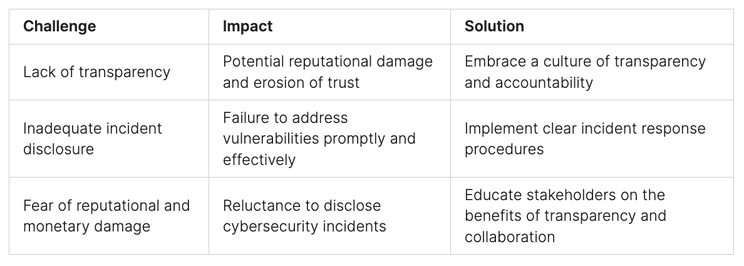
To illustrate the importance of addressing this challenge, consider the following table:
This table highlights the challenges organizations face in cybersecurity reporting, their potential impact, and suggested solutions to overcome them.
By addressing the challenges and embracing cybersecurity reporting transparency, businesses can foster a culture of trust, strengthen their security practices, and proactively protect themselves against potential threats.
Trust Starts with Transparency
The regulatory landscape and industry trends point towards a fundamental shift in the approach to cybersecurity, with an increasing emphasis on transparency. Organizations that embrace this culture of openness not only enhance their own security posture but also contribute to the overall security of the digital world.
Transparency in security fosters trust through the sharing of knowledge, reporting of attacks, disclosing vulnerabilities, and even leveraging ethical hacking. By adopting these practices, organizations establish themselves as trustworthy security partners, encouraging collaboration and communication within the cybersecurity ecosystem.
The Power of Sharing Knowledge
Transparency begins with sharing knowledge. Organizations should proactively communicate their cybersecurity practices, protocols, and incident response procedures. This open dialogue ensures that stakeholders have a clear understanding of the steps taken to protect sensitive data and systems.
By openly discussing their security measures, organizations can build confidence and strengthen customer trust. Transparency eliminates the mystery surrounding security practices and fosters a sense of shared responsibility.
Reporting Attacks and Disclosing Vulnerabilities
In the event of a cyber attack, organizations should prioritize timely and transparent reporting. This open communication not only allows affected parties to take necessary precautions but also demonstrates a commitment to addressing security challenges promptly.
Similarly, disclosing vulnerabilities is crucial in maintaining transparency. By sharing information about known vulnerabilities and actively seeking ways to address them, organizations contribute to the collective security of the digital ecosystem.
Putting Developers at the Heart of Security
Another essential aspect of transparency is embedding security into the development process. By prioritizing security during the software development lifecycle, organizations can uncover vulnerabilities early on and mitigate potential risks.
Empowering developers with the necessary tools, training, and resources helps create a security-first mindset, leading to more secure applications and systems. Transparent collaboration between developers and security teams ensures that security concerns are addressed efficiently and effectively.
The Role of the Entire Cybersecurity Ecosystem
Transparency extends beyond individual organizations to encompass the entire cybersecurity ecosystem. Collaboration among different stakeholders, including vendors, researchers, policymakers, and end-users, is key to combating evolving threats.
By actively participating in industry collaborations, organizations can contribute to the development and dissemination of best practices, threat intelligence sharing, and the establishment of common security standards. This collaborative approach enhances the overall security posture and strengthens trust across the digital landscape.
Embracing transparency in security is not without its challenges, but the benefits far outweigh the risks. By prioritizing openness, organizations can foster a culture of trust, promote effective security practices, and contribute to the collective security of our interconnected word.
Disclosing Complete and Accurate Cybersecurity Information
Transparency in cybersecurity reporting is crucial for organizations to maintain trust and demonstrate their commitment to security. When disclosing information about their security posture, organizations must ensure that the information provided is complete and accurate. This ensures that stakeholders have a clear understanding of the organization’s cybersecurity practices and the associated risks.
Cybersecurity documentation plays a vital role in providing a comprehensive overview of an organization’s security measures and risk management strategies. By documenting security processes, procedures, and controls, organizations can establish a solid foundation for transparency and accountability.
In many cases, CISOs (Chief Information Security Officers) face immense pressure to present a mature cybersecurity risk management process, even when controls may be insufficient. To meet these demands, it is essential for organizations to have rigorous risk management frameworks in place. This includes periodic risk assessments, vulnerability management programs, incident response plans, and ongoing monitoring and testing of security controls.
Board oversight is a critical component of cybersecurity reporting and transparency. Boards of directors should be actively involved in understanding the organization’s cybersecurity risks and asking granular questions to ensure accurate disclosures. By having a full appreciation of the cybersecurity landscape, boards can provide valuable guidance and support in mitigating security risks.
One effective way to enhance transparency is by maintaining a dynamic repository of cybersecurity questionnaire responses. This allows organizations to quickly and efficiently respond to requests for information from stakeholders, such as regulators, investors, or customers. By having readily available and up-to-date information, organizations can demonstrate their commitment to transparency and proactive risk management.
Furthermore, organizations can consider engaging third-party professionals for independent assessments of their cybersecurity practices. These assessments provide an objective evaluation of an organization’s security posture and can help identify areas for improvement. Sharing the results of these assessments can further enhance transparency and build trust among stakeholders.
“Transparency in cybersecurity reporting is not just about sharing positive outcomes, but also acknowledging weaknesses and vulnerabilities. By openly discussing challenges and demonstrating a commitment to improvement, organizations can foster a culture of continuous learning and improvement.”
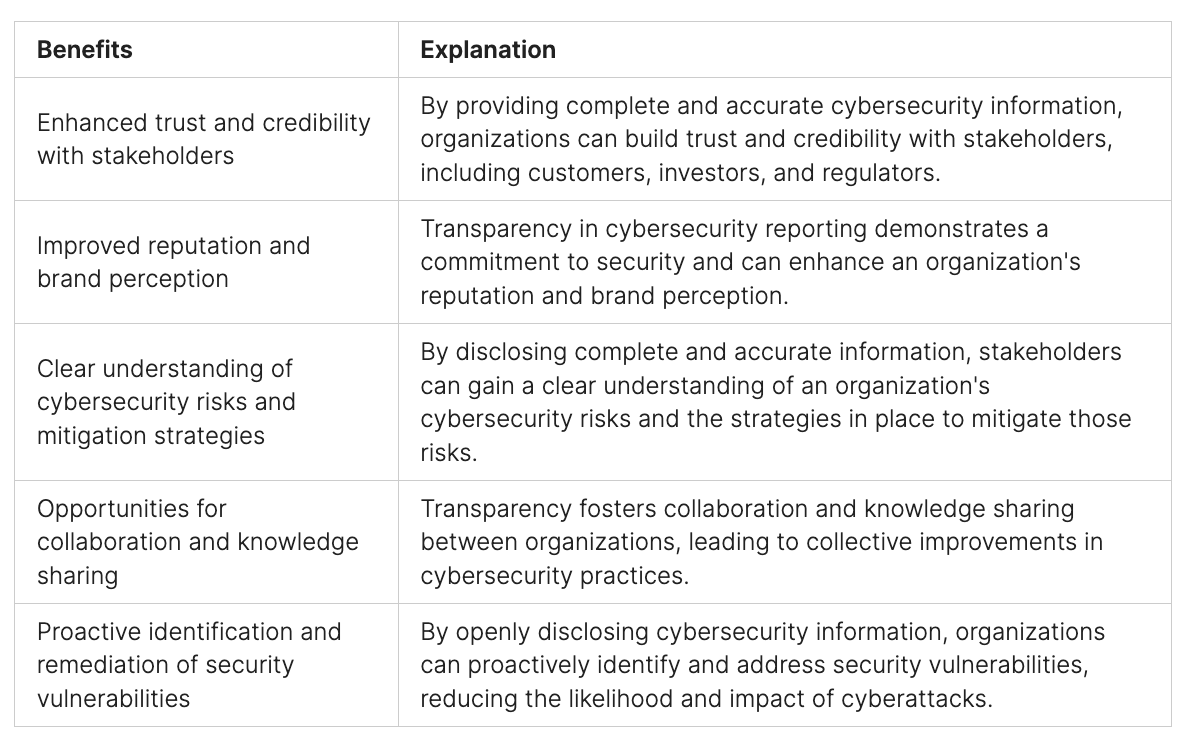
The Benefits of Disclosing Complete and Accurate Cybersecurity Information
Enhanced trust and credibility with stakeholders
Improved reputation and brand perception
Clear understanding of cybersecurity risks and mitigation strategies
Opportunities for collaboration and knowledge sharing
Proactive identification and remediation of security vulnerabilities
The Role of a Trust Center in AI Cybersecurity Transparency
As AI-enabled technologies continue to advance, concerns about cybersecurity become increasingly significant. Building and maintaining customer trust requires transparency in AI cybersecurity. To facilitate this transparency, organizations can leverage the power of a Trust Center.
A Trust Center serves as a central hub for organizing and displaying security documentation related to AI cybersecurity. It acts as a repository of valuable information, providing clear visibility into the security measures implemented in AI systems.
One of the primary functions of a Trust Center is to control access to sensitive information. By managing access permissions, organizations ensure that only authorized individuals can view and retrieve sensitive cybersecurity documentation.
“A Trust Center simplifies transparency in AI cybersecurity by organizing and displaying security documentation, controlling access to sensitive information, and automating responses to security questionnaires.”
Furthermore, a Trust Center plays a crucial role in automating responses to security questionnaires. This automation streamlines the process of sharing security information with stakeholders, such as customers, partners, and regulatory bodies. By automating the response process, organizations can ensure consistency and accuracy in their information sharing, saving time and resources in the process.
In addition to its organizational and automation capabilities, a Trust Center enables companies to keep their cybersecurity documentation updated in real time. This ensures that stakeholders have access to the most current and accurate information regarding AI security practices.
By providing a single location for buyers and customers to access AI security information, a Trust Center promotes trust and transparency. It instills confidence in the security measures implemented within AI systems and demonstrates a commitment to maintaining high cybersecurity standards.
The Benefits of a Trust Center
The implementation of a Trust Center in AI cybersecurity offers several benefits:
Enhanced transparency: A centralized platform ensures that security documentation is easily accessible, promoting transparency and open communication about AI cybersecurity practices.
Streamlined information sharing: Automating responses to security questionnaires reduces manual effort, allowing organizations to efficiently provide accurate and consistent information to stakeholders.
Real-time updates: The Trust Center keeps cybersecurity documentation up to date, ensuring that stakeholders have access to the most current information.
Building trust: A Trust Center demonstrates a commitment to cybersecurity transparency, helping to build and maintain trust with customers, partners, and regulatory bodies.
Overall, a Trust Center serves as a critical component in achieving transparency in AI cybersecurity. By organizing and displaying security documentation, controlling access to sensitive information, and automating responses to security questionnaires, companies can foster trust and confidence in their AI systems.
How a Trust Center Works
A Trust Center is a critical component in enabling transparency and enhancing the buyer security review process for AI-enabled technologies. It serves as a centralized platform where organizations can provide comprehensive security documentation to buyers, including essential AI cybersecurity information such as AI fact sheets and FAQs.
By offering a buyer-facing home for security documentation, a Trust Center helps reduce friction in the buyer security review process. Buyers can access the necessary information at their convenience, enabling a self-service approach that saves time and effort for both parties involved.
One of the key features of a Trust Center is the control over access to sensitive information. Organizations can ensure that specific information is accessed only by those who need to know, providing an additional layer of security and confidentiality.
Additionally, a Trust Center includes a Knowledge Base of AI-related questionnaire responses. This streamlines the information exchange with buyers and customers, as it provides a repository of pre-approved responses to commonly asked AI security questions. This saves time for both parties and ensures consistent and accurate information is communicated.
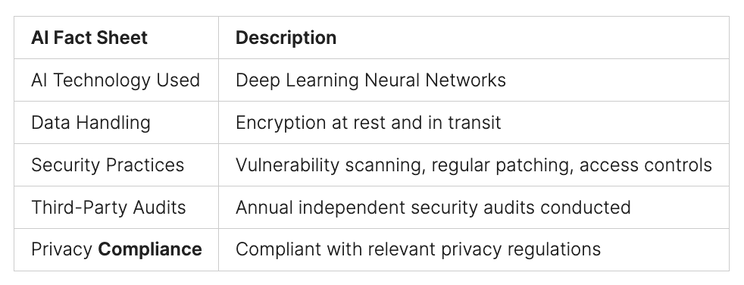
Example: AI Fact Sheet
Table: Example AI Fact Sheet showcasing key information about AI security practices.
Overall, a Trust Center provides organizations with a robust platform to showcase their commitment to AI security transparency. It enhances the buyer security review process, streamlines information exchange, and ensures the dissemination of accurate and up-to-date AI security information.
Ensuring Up-to-date AI Security Information
As AI technology continues to advance and cybersecurity risks evolve, it is crucial for organizations to provide buyers and customers with the most accurate and up-to-date AI security information. Keeping AI-related documentation current and accessible is essential in maintaining transparency and ensuring the highest level of security.
A Trust Center plays a vital role in this process, allowing companies to keep their AI-related documentation updated in real time. By leveraging the capabilities of the Trust Center, organizations can ensure that buyers and customers only access the most recent information, reducing any potential confusion or misinformation.
Furthermore, the Trust Center’s notification and email capabilities enable proactive communication with buyers and customers regarding AI policies and procedure changes. This ensures that all stakeholders are aware of any updates or shifts in cybersecurity practices, enhancing transparency and establishing trust.
With real-time updates of AI-related documentation through the Trust Center, organizations can address the ever-changing landscape of cybersecurity shifts. This helps companies stay ahead of potential threats and vulnerabilities, providing buyers and customers with the confidence that their AI technology is being protected by the latest security measures.
The image above represents the intersection between AI technology and cybersecurity, showcasing the importance of keeping AI security information up to date in today’s digital landscape.
Automating Responses to Security Questionnaires
A Trust Center can be a game-changer when it comes to automating responses to security questionnaires. By leveraging the information and documentation stored in the Trust Center, organizations can streamline the process of completing security questionnaires, saving time and resources while ensuring consistent and accurate responses.
With the ability to automate responses, organizations no longer need to manually fill out each security questionnaire they receive. Instead, they can rely on the Trust Center to provide pre-populated answers based on the stored information. This not only improves efficiency but also reduces the risk of human error that may occur when completing questionnaires manually.
Furthermore, by having a centralized repository of AI-related questionnaire responses, organizations can enhance their communication with customers and investors. They can quickly provide accurate and comprehensive information about AI cybersecurity risks, demonstrating their commitment to cybersecurity and building trust with stakeholders.
The automation of security questionnaire responses through a Trust Center offers several benefits:
Improved efficiency: Automating the process saves time and resources, allowing organizations to focus on other critical cybersecurity tasks.
Consistent and accurate responses: The Trust Center ensures that responses to questionnaires are consistent and based on up-to-date information, reducing the risk of discrepancies or outdated information.
Enhanced communication: Organizations can effectively communicate their cybersecurity measures and AI-related risks to customers and investors, fostering transparency and trust.
In summary, automating responses to security questionnaires through a Trust Center simplifies the buyer security review process, streamlines information exchange, and enables organizations to provide accurate and complete information about AI cybersecurity risks. By leveraging this automation, organizations can prioritize their cybersecurity efforts while building trust and confidence among their stakeholders.
Benefits of Automating Responses to Security Questionnaires
Improved efficiency
Consistent and accurate responses
Enhanced communication
Conclusion
In today’s digital ecosystem, the significance of transparency in cybersecurity cannot be overstated. It not only cultivates trust but also elevates the integrity of security practices within organizations. The implementation of a Trust Center is instrumental in championing this transparency, serving as a robust platform for organizing and disseminating crucial security information, managing access to sensitive data, and streamlining the response mechanism for security inquiries. Utilizing a Trust Center ensures that organizations can keep their AI security data promptly updated, thereby enriching the customer experience and positioning security as a catalyst for revenue growth while solidifying customer confidence.
The essence of transparency in cybersecurity reporting is foundational for forging trust with both stakeholders and customers. Establishing a culture rooted in openness and proactive sharing empowers organizations to stand out and fortify their connections with essential partners and clientele. A Trust Center, acting as a unified repository for security documentation, facilitates effortless access to and management of sensitive information. The automation of responses to security questionnaires not only conserves time but also guarantees the delivery of consistent and precise information. In essence, the adoption of transparency practices and the integration of a Trust Center yield mutual benefits for both the organization and its clientele.
As cybersecurity threats continue to evolve with increasing sophistication, the urgency for organizations to maintain contemporary AI security information becomes paramount. A Trust Center equips companies with the agility to update their AI-centric documentation dynamically, enabling real-time adaptability. Proactive dissemination of updates regarding policies and procedures to customers and buyers fosters a transparent culture and underscores an organization’s dedication to stringent cybersecurity measures. By embracing a Trust Center and placing a premium on transparency, organizations can not only refine their security protocols but also cultivate enduring trust among stakeholders.
Peris.ai Cybersecurity recognizes the transformative impact of transparency in strengthening cybersecurity measures and building trust. Our solutions, designed with this ethos at their core, provide organizations with the tools necessary to establish a comprehensive Trust Center, ensuring the management, accessibility, and update of critical security information. We invite you to explore how Peris.ai Cybersecurity can enhance your organization’s cybersecurity transparency and practices. Visit us at Peris.ai Cybersecurity to discover how our innovative approaches can fortify your cybersecurity framework, promoting trust and security as pivotal elements of your business strategy.
FAQ
What are the benefits of cybersecurity transparency?
Cybersecurity transparency allows organizations to differentiate themselves, strengthen trust with stakeholders, and enhance their overall security. It leads to clear incident response procedures and promotes collaboration within industries.
What challenges do organizations face in cybersecurity reporting?
Many organizations struggle to proactively disclose cybersecurity challenges due to fear of reputational damage. The culture of security through obscurity often hinders transparent reporting.
How does trust start with transparency in cybersecurity?
Transparency in cybersecurity builds trust by providing clear visibility into vulnerability management, reporting procedures, and overall security posture. Effective communication and collaboration foster trust and reduce the reoccurrence of cyberattacks.
How can organizations disclose complete and accurate cybersecurity information?
CISOs face pressure to present a mature cybersecurity risk management process, even when controls are insufficient. Boards should ask granular questions and have a full appreciation of cybersecurity risks to ensure accurate disclosures. Maintaining a dynamic repository of cybersecurity questionnaire responses and engaging third-party professionals can enhance transparency.
What is the role of a Trust Center in AI cybersecurity transparency?
A Trust Center serves as a central location for organizing and displaying security documentation related to AI cybersecurity. It ensures controlled access to sensitive information and automates responses to security questionnaires, simplifying the transparency process.
How does a Trust Center work?
A Trust Center provides a home for security documentation, such as fact sheets and FAQs, allowing self-service access to buyers and customers. It controls access to sensitive information and includes a Knowledge Base of AI-related questionnaire responses. The Trust Center also enables real-time updates and proactive communication with buyers and customers regarding AI policies and procedure changes.
How does a Trust Center ensure up-to-date AI security information?
A Trust Center allows organizations to keep their AI-related documentation updated in real time, ensuring that buyers and customers always access the most recent information. It also facilitates effective communication and transparency during shifts in cybersecurity risks.
How can a Trust Center automate responses to security questionnaires?
By leveraging the information and documentation stored in a Trust Center, organizations can automate responses to security questionnaires. This automation reduces time spent on completing questionnaires and ensures consistent and accurate responses. The centralized repository of AI-related questionnaire responses enables effective communication with customers and investors, providing comprehensive information about AI cybersecurity risks.
In an era where digital threats are evolving at an unprecedented rate, the importance of robust cybersecurity measures cannot be overstated. Organizations across the board are finding that the costs associated with preventing cyberattacks are significantly lower than those incurred from recovering from a breach. Let’s delve into why proactive cybersecurity investments are crucial for protecting your business financially and operationally.
Understanding the High Costs of Cybersecurity Breaches
Financial Implications
Staggering Costs: The average global cost of a data breach reached $4.45 million in 2023, according to an IBM study.
SMB Vulnerability: Small and medium-sized businesses often suffer disproportionately due to fewer resources to absorb the shock.
Operational and Reputational Damage
Business Disruption: Downtime needed for recovery can halt operations, causing significant financial drain and customer dissatisfaction.
Loss of Trust: A breach can severely damage a company’s reputation, leading to lost customers and decreased stakeholder trust.
Existential Risk: In severe cases, the financial strain from a breach can lead to business closure.
️ The Strategic Value of Cybersecurity Consulting
Proactive Defense
Cybersecurity consulting services proactively identify and address vulnerabilities, reducing the likelihood of costly breaches.
Tailored cybersecurity strategies can include comprehensive assessments, data protection protocols, continuous monitoring, and employee cybersecurity training.
Cost Management
Predictable Spending: Consulting services often come with clear, manageable costs tailored to fit SMB budgets.
Ongoing Support: Regular monitoring and updates ensure that defenses evolve in step with new threats, providing sustained protection without unexpected expenses.
Cost-Benefit Analysis: Prevention vs. Recovery
Investing in Cybersecurity Consulting
Structured, upfront investment focused on prevention.
Customized to align with specific business needs and risk profiles.
The Exorbitant Cost of Breaches
Unforeseen, large-scale expenses that can dwarf the costs of preventive measures.
Long-term damages include direct recovery costs and indirect impacts like reputational harm and lost business opportunities.
Long-Term Advantages of Cybersecurity Consulting
Risk Reduction: Consultants specialize in pinpointing and mitigating potential security risks.
Regulatory Compliance: Helps businesses meet data security standards specific to their industry, avoiding costly fines.
Educational Benefits: Provides ongoing training for employees, fortifying the human element of your cybersecurity defenses.
Operational Confidence: Allows business leaders to focus on growth and innovation with the assurance of a secure operational backdrop.
Conclusion: Prioritizing Cybersecurity Consulting for Future-Proof Business Operations
Investing in cybersecurity consulting is more than a safeguard; it’s a strategic business decision that preserves integrity, trust, and financial stability. The proactive approach not only mitigates risks but also aligns with long-term business objectives by ensuring continuous compliance and protection.
For comprehensive insights and to explore tailored cybersecurity solutions that protect against evolving threats, visit Peris.ai. Secure your future today.
Your Peris.ai Cybersecurity Team #YouBuild #WeGuard
As 2024 has shown us, cybersecurity is constantly evolving, with AI-driven threats, sophisticated ransomware campaigns, and escalating supply-chain vulnerabilities marking a year of unprecedented challenges. As we enter 2025, understanding these dynamics is crucial for any organization aiming to safeguard its operations against these growing threats.
Review of 2024’s Key Cybersecurity Challenges
AI-Driven Threats:Impact: AI has escalated cyber threats by enabling more complex phishing campaigns and frauds, such as deepfakes, affecting 72% of Fortune 1000 companies—response: Adoption of AI-driven security measures, enhanced verification to combat deepfakes, and AI-centric employee training.
Supply-Chain and Open-Source Vulnerabilities:Impact: Notable breaches in major platforms disrupted operations globally, highlighting the risks in supply chains and open-source software. Response: Implement robust supply chain risk management (SCRM) strategies, conduct regular audits, and enforce the software bill of materials (SBOM) for better transparency.
Ransomware Evolution:Impact: A pivot to more targeted ransomware attacks, particularly against critical infrastructure, using double and triple extortion methods. Response: Enhanced endpoint protection, network segmentation, and adoption of Zero Trust frameworks to reduce ransomware impact.
Cloud Security Challenges:Impact: Significant breaches due to cloud misconfigurations and weak security controls. Response: Tightened cloud security measures, automated patching, and deployment of Cloud Security Posture Management (CSPM) tools.
Geopolitical Tensions:Impact: Increased state-sponsored cyber activities from countries like Russia and China, posing enhanced espionage and disruption risks. Response: Strengthening cyber threat intelligence (CTI) capabilities and enhancing collaboration with national cybersecurity agencies.
Strategic Cybersecurity Approaches for 2025
As the digital threat landscape expands, the following strategic approaches can fortify your organization’s cybersecurity posture:
Zero-Trust Security Enhancement: Deploy continuous authentication and micro-segmentation to minimize unauthorized access and lateral movement within networks.
Advanced AI-Driven Security Solutions: Leverage AI-enhanced SOC to accurately detect threats, reducing false positives and enabling predictive threat intelligence for preemptive defense.
Preparation for Quantum Computing Threats: Begin transitioning to quantum-resistant cryptographic standards to safeguard against future threats posed by quantum computing.
Robust Cloud Security Frameworks: Strengthen cloud environments with enhanced authentication protocols, secure API endpoints, and comprehensive CSPM tools.
Supply Chain Security Fortification: Enforce stringent cybersecurity standards among third-party vendors and continuously monitor for threats within the supply chain network.
Cultivating a Proactive Cybersecurity Culture: Regular training programs focused on emerging threats such as phishing and AI-manipulated attacks to build a security-first organizational mindset.
Looking Ahead: Building Resilience for 2025 and Beyond
The cybersecurity landscape of 2025 demands proactive and innovative defense strategies. By understanding the past year’s challenges and adopting advanced security measures, organizations can defend against and stay ahead of the evolving cyber threats.
For ongoing updates, expert insights, and cutting-edge cybersecurity solutions tailored to protect your business against the dynamic threats of the digital age, visit Peris.ai.
Your Peris.ai Cybersecurity Team #YouBuild #WeGuard
Cyber risk assessment is a vital part of any organization’s risk management strategy. With the increasing cyber threats in today’s digital landscape, it’s essential to understand and address potential risks to your business’s information systems and data. A cybersecurity health check can help identify, evaluate, and mitigate these risks, ensuring the safety and security of your valuable assets.
In this article, we will explore the benefits and step-by-step process of cyber risk assessment. From understanding the concept and importance of cyber risk assessment to utilizing technology for automation, real-time monitoring, and data analytics, we will provide the insights you need to safeguard your business from cyber threats.
Key Takeaways:
Cyber risk assessment is crucial for identifying and mitigating potential threats to your organization’s information systems and data.
Utilizing technology in cyber risk assessment provides automation, real-time monitoring, and data analytics for enhanced efficiency and accuracy.
The process of cyber risk assessment involves preparation, categorization, and selecting the right tools to assess and mitigate risks effectively.
Cyber risk assessment offers benefits such as improved decision-making, financial stability, reputation protection, and regulatory compliance.
There are various cybersecurity risk assessment frameworks, including the NIST Cybersecurity Framework and ISO 27000, that organizations can leverage for comprehensive assessments.
Understanding Cyber Risk Assessment
Cyber risk assessment is a strategic process designed to identify, evaluate, and mitigate potential threats to your organization’s information systems and data. In the digital age, understanding and addressing cyber risks are critical components of a comprehensive risk management strategy. It involves strategically planning to avoid risks and make your business safer, navigating potential pitfalls, and ensuring resilience.
With cyber threats becoming increasingly sophisticated and prevalent, organizations must proactively assess and manage their cyber risk. By conducting a comprehensive cyber risk assessment, businesses can gain a holistic view of their vulnerabilities and develop targeted strategies to strengthen their cybersecurity defenses.
During a cyber risk assessment, various factors are considered, including the organization’s IT infrastructure, data management processes, security measures, and regulatory compliance. By analyzing these areas, businesses can identify potential weaknesses and prioritize areas for improvement.
“Cyber risk assessment is not a one-time event, but an ongoing process. It requires continuous vigilance and adaptation to stay ahead of emerging threats.”
A thorough cyber risk assessment enables organizations to take a proactive approach to cybersecurity rather than reacting to incidents once they occur. By understanding their cyber risk exposure, businesses can make informed decisions about cybersecurity investments, allocate resources effectively, and implement appropriate risk mitigation measures.
Furthermore, a comprehensive risk assessment helps organizations comply with industry-specific regulations and standards, safeguard customer data, protect brand reputation, and ensure business continuity.
Key Elements of Cyber Risk Assessment:
Identifying potential cyber threats and vulnerabilities
Evaluating the likelihood of each threat occurrence
Assessing the potential impacts and consequences of each threat
Quantifying the overall cyber risk exposure
Developing a risk mitigation plan
Implementing security controls and measures
Regularly reviewing and updating risk assessments
By following these key elements, organizations can ensure a comprehensive and effective cyber risk assessment process.
Edit imageDelete imageMinimize image
With cyber threats continuously evolving, cyber risk assessment remains critical for organizations of all sizes and industries. By understanding the concept and importance of cyber risk assessment, businesses can take proactive steps to protect their valuable data and information systems.
The Benefits of Utilizing Technology in Cyber Risk Assessment
Integrating technology into cyber risk assessment processes offers numerous benefits for businesses. By leveraging automation, real-time monitoring, data analytics, and scalability, organizations can enhance their cybersecurity measures and mitigate the ever-evolving threats they face.
Automation for Efficient Risk Identification
Automation plays a crucial role in cyber risk assessments by enabling rapid identification and categorization of potential threats. Instead of manual and time-consuming processes, automated tools can analyze vast amounts of data and detect vulnerabilities with greater efficiency. This ensures that crucial risks are not overlooked and allows businesses to respond promptly.
Real-Time Monitoring for Prompt Response
Real-time monitoring enables organizations to detect and respond to cyber threats as they occur, minimizing their impact. Through continuous network activity monitoring, businesses can identify suspicious behavior, unauthorized access attempts, and potential data breaches. Prompt response allows immediate remediation and reduces the risk of substantial damage to information systems and data.
Data Analytics for Enhanced Risk Assessment
Data analytics tools provide in-depth insights into patterns and trends related to cyber risks. By analyzing historical data and identifying correlations, organizations better understand potential vulnerabilities and attack vectors. This enhances the accuracy of risk assessments, enabling informed decision-making in implementing security measures and allocating resources for maximum risk mitigation.
Scalability for Adapting to Evolving Threats
Leveraging technology in cyber risk assessments allows for scalable solutions that can adapt to the ever-evolving landscape of cyber threats. Organizations need agile and adaptable security measures as new attack techniques emerge and existing vulnerabilities are patched. Technology-driven approaches provide the flexibility to implement changes and updates seamlessly, ensuring robust cybersecurity measures that keep pace with the dynamic nature of cyber risks.
Benefits of Utilizing Technology in Cyber Risk Assessment Efficient risk identification through automation Prompt response to cyber threats through real-time monitoring Enhanced risk assessment through data analytics Adaptability to evolving threats through scalability
By harnessing the power of technology in cyber risk assessment, businesses can proactively protect their sensitive information, strengthen their cybersecurity defenses, and maintain a robust security posture in the face of growing cybersecurity challenges.
Breaking Down the Process of Cyber Risk Assessment
Cyber risk assessment is a crucial component of effective cyber risk management. This process involves several key steps organizations should follow to ensure comprehensive evaluation and mitigation of cyber risks.
Step 1: Preparation
In this initial step, adequately preparing for the cyber risk assessment is important. This involves managing security and privacy risks, identifying key stakeholders, and establishing a robust cyber risk management framework. Organizations can lay the groundwork for a successful assessment by aligning these foundational elements.
Step 2: Categorization
After preparation, the next step is categorizing digital systems and information based on their impact on the business. This categorization allows for a more focused evaluation of cyber risks, enabling organizations to prioritize and allocate resources based on the level of risk posed by different assets.
Step 3: Selecting the Right Tools
Selecting the right tools is a critical aspect of the cyber risk assessment process. Organizations must identify and implement tools aligning with their needs and goals. These tools can range from vulnerability scanners and penetration testing software to threat intelligence platforms and risk assessment frameworks. Choosing the right tools ensures that the assessment is comprehensive and effective.
Step 4: Implementation and Evaluation
Organizations must implement the appropriate tools and assess their effectiveness once the appropriate tools have been selected. This involves conducting the assessment, analyzing the results, and identifying areas for improvement. Reviewing and updating the assessment regularly is essential to stay ahead of evolving cyber threats.
Step 5: Mitigation and Continuous Improvement
The final step in the process is to implement mitigation measures based on the assessment findings. This may involve enhancing security controls, implementing new policies and procedures, or providing additional employee training. Continuous improvement ensures that cyber risks are effectively managed and mitigated over time.
By following this step-by-step process, organizations can enhance their cyber risk management efforts and protect their valuable assets from potential cyber threats.
Delete imageMinimize imageEdit image
The Benefits of Cyber Risk Assessment
Cyber risk assessment offers numerous benefits for businesses. It enhances decision-making by providing a crystal-clear understanding of potential threats and challenges. Companies can gain valuable insights into their vulnerabilities and make informed decisions to protect their critical assets by conducting a comprehensive cyber risk assessment.
Enhancing Decision-Making
A cyber risk assessment acts as a powerful tool for decision-makers. It provides an in-depth analysis of cybersecurity risks, allowing organizations to prioritize their resources and implement effective mitigation strategies. By identifying potential threats and evaluating their impact, decision-makers can allocate resources strategically and make informed choices that align with their business goals.
Ensuring Financial Sturdiness
Financial stability is essential for the success of any business. Cyber risk assessment acts as a financial health check-up by identifying, measuring, and managing risks that could impact the bottom line. Organizations can take proactive measures to mitigate risks, protect their assets, and ensure long-term financial sturdiness by understanding the potential financial implications of cyber threats.
Being a Reputation Guardian
In today’s digital landscape, a company’s reputation is paramount. A cyber risk assessment helps protect the brand by identifying vulnerabilities and implementing robust security controls. By proactively addressing potential threats, organizations can safeguard customer trust, maintain a positive reputation, and mitigate the damage caused by cyber incidents. A strong reputation is a valuable asset that sets businesses apart from their competitors.
Ensuring Regulatory Compliance
Adhering to industry standards and legal requirements is crucial for every business. A cyber risk assessment ensures regulatory compliance by aligning business practices with industry standards and legal obligations. By identifying gaps in compliance and implementing necessary controls, organizations can avoid costly penalties, legal issues, and reputational damage.
“A cyber risk assessment serves as a strategic tool for businesses to enhance decision-making, secure financial stability, protect their reputation, and maintain regulatory compliance”
Edit imageDelete imageMinimize image
What is a Cybersecurity Assessment?
A cybersecurity assessment, also known as a cybersecurity risk assessment, analyzes an organization’s cybersecurity controls and its ability to remediate vulnerabilities. It evaluates the organization’s cybersecurity posture within the context of its business objectives. The assessment helps identify weaknesses and provides a high-level analysis of network vulnerabilities, allowing security teams to implement control measures.
The Importance of Cybersecurity Assessments
Ensuring the security of your organization’s digital assets is crucial in today’s interconnected world. Cybersecurity assessments play a significant role in protecting sensitive data and preventing potential attacks. By conducting regular assessments, businesses can:
Identify and Mitigate Risks: Assessments help identify vulnerabilities, weaknesses, and potential threats. They enable organizations to mitigate risks and improve their cybersecurity posture proactively.
Enhance Cybersecurity Controls: Assessments provide valuable insights into their effectiveness by evaluating existing cybersecurity controls. This allows organizations to identify gaps and implement stronger controls to protect against vulnerabilities.
Comply with Regulations: Cybersecurity assessments help organizations ensure compliance with industry regulations and legal requirements. They provide evidence of proactive efforts to protect sensitive data and maintain customer trust.
Strengthen Business Continuity: Identifying vulnerabilities and implementing robust cybersecurity controls helps organizations maintain operational continuity, even in the face of potential cyber threats or breaches.
The Cybersecurity Assessment Process
The process of conducting a cybersecurity assessment typically involves several key steps:
Evaluating the Scope: Assessing the scope of the assessment involves defining the boundaries and determining the systems, assets, and networks that will be included in the evaluation.
Determining Asset Value: Understanding the value of each asset helps prioritize resources and allocate appropriate security measures based on the potential impact of an attack or breach.
Identifying Risks: Thoroughly assessing potential risks and vulnerabilities enables organizations to develop effective mitigation strategies and prioritize remediation efforts.
Implementing Security Controls: Based on the identified risks, organizations can implement suitable cybersecurity controls to protect against vulnerabilities and enhance their overall security posture.
By following these steps, organizations can create a comprehensive approach to cybersecurity assessment and strengthen their defenses against cyber threats.
Edit imageMinimize imageDelete image
The Steps of a Cybersecurity Assessment
A cybersecurity assessment is a systematic process that organizations undertake to comprehensively evaluate their security posture. Following a series of steps, businesses can identify vulnerabilities, assess risks, and establish effective security controls. This section will outline each step involved in a cybersecurity assessment.
Evaluating the Scope of the Assessment
The first step in a cybersecurity assessment is to determine the scope. This involves identifying the systems, networks, and data to be assessed. By clearly defining the scope, organizations can focus their efforts and ensure a thorough evaluation of their security measures.
Determining the Value of Each Asset
Next, organizations need to determine the value of each asset. This includes assessing the importance of systems, data, and infrastructure to the overall business operations. Organizations can prioritize their security efforts and allocate resources effectively by assigning a value to each asset.
Identifying Cybersecurity Risks
Identifying cybersecurity risks is a crucial step in the assessment process. Organizations must identify potential threats and vulnerabilities that could compromise their systems or data. This can be done through vulnerability scanning, penetration testing, and analyzing security logs.
Comparing Asset Value with Prevention Cost
Once the risks have been identified, organizations need to compare the value of their assets with the cost of implementing preventive measures. This analysis helps determine the cost-effectiveness of security controls and aids in decision-making regarding resource allocation.
Establishing Security Controls
The final step in a cybersecurity assessment is to establish security controls. This involves mitigating the identified risks and protecting the organization’s assets. These controls include firewalls, intrusion detection systems, encryption, access controls, and employee training.
By following these steps, organizations can conduct a thorough cybersecurity assessment and gain valuable insights into their security posture. This enables them to identify vulnerabilities, assess the cost-effectiveness of preventive measures, and establish robust security controls to protect their systems and data.
The Importance of Performing a Cybersecurity Assessment
Performing a cybersecurity assessment is crucial for organizations to defend against various threats. By conducting regular assessments, businesses can identify vulnerabilities, minimize gaps in security, and keep key stakeholders informed about the organization’s cybersecurity posture. Additionally, cybersecurity assessments ensure compliance with regulations such as GDPR, HIPAA, PCI-DSS, CMMC, and FERPA.
A robust defense is essential in today’s digital landscape, where cyberattacks are becoming more sophisticated and prevalent. Cybersecurity assessments play a vital role in maintaining a strong defense by:
Identifying Vulnerabilities: Through thorough assessments, organizations can pinpoint weaknesses in their systems and networks, enabling them to implement measures to address and mitigate these vulnerabilities.
Minimizing Gaps in Security: Assessments help identify gaps or weaknesses in the organization’s cybersecurity measures, allowing for the development of more robust and comprehensive defense strategies.
Keeping Stakeholders Informed: By regularly performing assessments, organizations can provide stakeholders, including executive management, board members, and customers, with a clear understanding of the organization’s cybersecurity efforts and any potential risks.
Cybersecurity assessments also play a critical role in ensuring industry regulations and standards compliance. Meeting compliance requirements is necessary not only for legal and ethical reasons but also to enhance customer trust and safeguard sensitive data.
To illustrate the importance of cybersecurity assessments, consider the following scenario:
Company XYZ, a growing e-commerce business, has recently experienced an increase in cyberattacks targeting their customer data. By performing a cybersecurity assessment, they discovered vulnerabilities in their payment processing system that could potentially be exploited by hackers. Through remediation efforts based on the assessment’s findings, XYZ was able to strengthen their defense and protect their customers’ sensitive information.
By investing in regular cybersecurity assessments, organizations can proactively identify and address vulnerabilities, maintain a robust defense, and ensure compliance with industry regulations. These assessments form the foundation of a comprehensive cybersecurity strategy, helping businesses stay one step ahead of cyber threats and safeguard their valuable assets.
Different Types of Cybersecurity Risk Assessment Frameworks
When it comes to cybersecurity risk assessment, organizations have a range of frameworks at their disposal. These frameworks provide structured approaches and guidelines for evaluating and managing cyber risks. The NIST Cybersecurity Framework and the ISO 27000 standards are two widely recognized frameworks in the industry.
NIST Cybersecurity Framework
The NIST Cybersecurity Framework, developed by the National Institute of Standards and Technology (NIST), is a comprehensive framework that assists organizations in managing and mitigating cybersecurity risks. It outlines essential components and best practices for effective cybersecurity risk assessment and management.
Key features of the NIST Cybersecurity Framework include:
Identification of critical assets and systems
Assessment of existing cybersecurity measures
Detection, response, and recovery capabilities
Continuous monitoring and adaptation to evolving threats
The NIST Cybersecurity Framework is widely adopted and recognized for its flexibility and scalability across various industries.
ISO 27000 Standards
The ISO 27000 standards provide a holistic approach to information security management systems (ISMS). ISO 27001, in particular, sets out the requirements for establishing, implementing, maintaining, and continuously improving an ISMS within the context of the organization’s overall business risks.
Key features of ISO 27001 include:
Identification and assessment of information security risks
Implementation of appropriate security controls
Monitoring, measurement, analysis, and evaluation of the ISMS
Ensuring compliance with legal, regulatory, and contractual requirements
ISO 27001 is a globally recognized standard that not only focuses on internal information security but also extends to the security of third-party vendors and suppliers.
Minimize imageEdit imageDelete image
These frameworks, along with others available in the industry, play a crucial role in guiding organizations through the process of cybersecurity risk assessment. By leveraging these frameworks, businesses can enhance their understanding of cyber risks, prioritize mitigation efforts, and establish robust cybersecurity measures.
Challenges and Best Practices in Security Health Checks
Conducting effective security health checks can pose several challenges for organizations. Some of the common challenges include resource constraints, lack of expertise, and the ever-evolving nature of cyber threats. However, adopting best practices can help overcome these challenges and ensure a robust security posture.
One challenge that organizations often face is resource constraints. Limited budgets, manpower, and time can make it difficult to dedicate sufficient resources to security health checks. This can result in inadequate assessments and vulnerabilities being overlooked.
Lack of expertise is another hurdle that organizations encounter. Conducting thorough security health checks requires specialized knowledge and skills. Organizations may struggle to identify and mitigate potential risks without the necessary expertise.
The dynamic nature of cyber threats is an ongoing challenge for organizations. The landscape of cybersecurity is constantly evolving, with new threats emerging regularly. Organizations must continuously update their security protocols to stay one step ahead of cybercriminals.
Implementing best practices is essential to address these challenges and ensure effective security health checks. One best practice is leveraging Application Performance Monitoring (APM) tools. APM tools provide real-time insights into the performance and security of applications, enabling organizations to detect and respond to threats promptly.
Setting regular schedules for security health checks is another important best practice. By consistently conducting assessments, organizations can identify and address vulnerabilities before malicious actors exploit them.
Continuous updates to security protocols are crucial for maintaining a strong defense against evolving threats. Regularly reviewing and updating security measures, such as patch management and access controls, helps ensure the organization remains protected from the latest cyber threats.
Finally, inclusivity across all application tiers is a best practice that organizations should prioritize. Every layer of an application, from the front end to the back end, should be included in security health checks to ensure comprehensive protection.
“Leveraging APM, setting regular schedules for checks, continuously updating security protocols, and ensuring inclusivity across all application tiers are among the recommended best practices.”
By implementing these best practices, organizations can overcome the challenges associated with security health checks and establish a strong cybersecurity foundation. Taking proactive measures to assess and strengthen their security posture will ultimately safeguard sensitive data, protect against cyber threats, and maintain the trust of customers and stakeholders.
Edit imageMinimize imageDelete image
Conclusion
In today’s digital age, adopting a proactive approach to cybersecurity is more crucial than ever for safeguarding applications against evolving cyber threats. By integrating regular security health checks and utilizing Application Performance Monitoring (APM), organizations can significantly bolster their software resilience and safeguard sensitive data. When paired with regular updates and a robust crisis response plan, these consistent security assessments form the cornerstone of effective cybersecurity measures.
Prioritizing cybersecurity and committing to ongoing security health checks enhances customer trust and strengthens an organization’s reputation. Effective protection of applications from malicious attacks not only secures critical information but also underscores a dedication to customer privacy and data security. This proactive stance ensures organizations are consistently ahead of cybercriminals, effectively mitigating potential risks.
In conclusion, organizations must embrace a forward-thinking approach towards cybersecurity. Routine security health checks, enhanced by the capabilities of APM, equip organizations with a deep understanding of their applications’ vulnerabilities, enabling timely and effective risk management. By championing application protection and fostering a culture centered on proactive cybersecurity, organizations can ensure their software remains robust, customer trust is preserved, and their reputation remains untarnished in the competitive digital landscape.
To learn more about how your organization can enhance its cybersecurity posture and effectively protect its digital assets, visit Peris.ai Cybersecurity. Discover our innovative solutions and strategies to keep you one step ahead of cyber threats. Join us in our mission to secure your applications and protect your data by exploring the tools and services we offer at Peris.ai Cybersecurity. Take the proactive step today to secure a safer tomorrow for your organization.
FAQ
What is cyber risk assessment?
Cyber risk assessment is a strategic process designed to identify, evaluate, and mitigate potential threats to your organization’s information systems and data.
Why is cyber risk assessment important?
Understanding and addressing cyber risks are critical components of a comprehensive risk management strategy in the digital age.
What are the benefits of utilizing technology in cyber risk assessment?
Technology provides automation for efficiency, real-time monitoring, data analytics for in-depth insights, and scalability and adaptability to evolving threats.
What are the steps involved in cyber risk assessment?
The process includes preparation, categorization, and selecting the right tools to evaluate and manage cyber risks.
What are the benefits of cyber risk assessment?
Cyber risk assessment enhances decision-making, acts as a financial health check-up, serves as a reputation guardian, and ensures regulatory compliance.
What is a cybersecurity assessment?
A cybersecurity assessment analyzes an organization’s cybersecurity controls and their ability to remediate vulnerabilities within the context of its business objectives.
What are the steps involved in a cybersecurity assessment?
The steps include evaluating the scope, determining asset value, identifying risks, comparing asset value with prevention cost, and establishing security controls.
Why is performing a cybersecurity assessment important?
Performing a cybersecurity assessment helps identify vulnerabilities, minimize security gaps, and maintain compliance with regulations.
What are some popular cybersecurity risk assessment frameworks?
Two popular frameworks are the NIST Cybersecurity Framework and the ISO 27000 standards.
What are the challenges and best practices in security health checks?
Challenges include lack of expertise, resource constraints, and keeping up with evolving threats. Best practices include leveraging APM, setting regular schedules, continuously updating security protocols, and ensuring inclusivity across all application tiers.
Why is a proactive approach to cybersecurity important?
Taking a proactive approach, including security health checks and leveraging APM, helps safeguard applications, ensure ongoing security, improve customer trust, and maintain a strong reputation.
Cyberattacks are becoming more frequent and increasingly costly. According to Cybersecurity Ventures, the global cost of cybercrime is expected to soar from $3 trillion in 2015 to $10.5 trillion annually by 2025. This astronomical figure underscores the sophisticated methods that cybercriminals have developed to execute their malicious endeavors successfully.
The Multifaceted Financial Impact of Cyberattacks
While direct expenses such as ransomware payments and data recovery are often the focus, the actual cost of a cyberattack extends far beyond these immediate financial outlays. The repercussions can be severe and multifaceted for businesses, particularly those in critical sectors like finance, healthcare, and transportation. Here’s a breakdown of some of the hidden costs:
Revenue Loss: Operational disruptions can lead to significant financial losses. Downtime prevents transactions and impacts service delivery, affecting sales and eroding customer trust and loyalty over time.
Strained Relationships: Cyberattacks can damage relationships with customers and suppliers, potentially leading to long-term reputational harm and lost business opportunities.
Regulatory Fines and Increased Insurance Premiums: Non-compliance with regulations such as GDPR and CCPA can result in hefty fines. Moreover, businesses that fall victim to cyberattacks often face higher insurance premiums as their risk profile increases.
Understanding and Mitigating Vulnerabilities
A substantial portion of cyber vulnerabilities can be attributed to human error. A study by Stanford University found that employee mistakes cause 88% of data breaches. Cybercriminals exploit these weaknesses by crafting emails and messages and manipulating human emotions to provoke actions that breach security protocols.
However, technological gaps also play a significant role. Organizations rely heavily on firewalls, antivirus software, and intrusion detection systems. While these tools are vital, over-dependence on them can create a false sense of security. Cybercriminals continually evolve their tactics to bypass these defenses, necessitating a more comprehensive approach to cybersecurity.
A Multi-Pronged Approach to Enhancing Digital Defense
To effectively counteract these threats, organizations must adopt a layered security strategy that includes:
Technological Upgrades: Regular updates and patches are crucial to address security vulnerabilities in software and systems.
Employee Education: Training employees to recognize phishing attempts and understand the importance of security practices is critical.
Regular Security Audits and Penetration Testing: These measures help identify potential weaknesses before attackers can exploit them.
Advanced Threat Detection Systems: Implementing cutting-edge solutions can help quickly identify and mitigate threats.
The Role of Individuals in Cybersecurity
Beyond organizational and national efforts, individuals have a crucial role in maintaining cybersecurity. Regularly updating personal cybersecurity knowledge and practices can help safeguard personal information and contribute to broader digital ecosystem security.
Stay Protected with Peris.ai Cybersecurity
In the face of these growing threats, staying informed and prepared is essential. Peris.ai Cybersecurity is dedicated to providing the latest information and tools to protect against sophisticated cyber threats. Visit our website for more detailed guides on maintaining cybersecurity hygiene and keeping up with the latest in cyber threat defense.
Secure your digital presence and enhance your cybersecurity knowledge with Peris.ai Cybersecurity—your shield in the cyber world.
In the fast-paced and ever-changing realm of modern business, the significance of upholding ethical standards and adhering to regulations has reached unprecedented heights. With increasing scrutiny from stakeholders and an emphasis on corporate social responsibility, companies prioritizing ethical conduct cultivate trust among their stakeholders and establish a solid foundation for long-term success. This article delves into the critical importance of compliance and its challenges and presents strategies to empower businesses in effectively navigating the intricate landscape of ethics and regulations.
In an era characterized by heightened awareness and a demand for transparency, the consequences of non-compliance are more severe than ever before. The repercussions of failing to uphold ethical standards extend beyond mere legal consequences, encompassing reputational damage, financial losses, and a loss of public trust. Maintaining compliance has become essential to conducting business in today’s rapidly evolving landscape.
The primary objective of this article is to shed light on the profound significance of compliance in contemporary business practices. By exploring organizations’ challenges in achieving and sustaining compliance, we can gain valuable insights into the complexities involved. Furthermore, this article provides practical strategies and approaches that empower businesses to navigate the multifaceted realm of ethics and regulations with confidence and efficacy.
Understanding Compliance
Compliance refers to the adherence to laws, regulations, industry standards, and ethical guidelines that govern business operations. It ensures that organizations act responsibly, transparently, and in the best interests of their stakeholders. Compliance encompasses a wide range of areas, such as data privacy, anti-corruption, environmental sustainability, consumer protection, and employee rights. Neglecting compliance can lead to severe legal consequences, reputational damage, financial losses, and loss of public trust.
Challenges in Compliance
Complex Regulatory Environment: Businesses today face an increasingly complex web of regulations at the local, national, and international levels. Staying up-to-date with the ever-changing compliance landscape can be daunting.
Lack of Awareness: Many businesses struggle to understand the regulations that apply to their industry fully. Ignorance of compliance requirements can lead to unintentional violations and legal complications.
Resource Constraints: Small and medium-sized enterprises (SMEs) often lack the resources, expertise, and dedicated compliance teams to navigate compliance challenges effectively. Limited budgets can make it difficult to invest in compliance programs and training.
Cultural and Language Barriers: Companies operating globally must overcome cultural and language barriers when implementing compliance programs in different regions. Local customs, practices, and regulations vary, necessitating tailored approaches to meet compliance requirements.
Empowering Your Business Ethically
Commitment from Top Leadership: Ethical compliance begins with strong leadership commitment. Executives and board members must set the tone by fostering a culture of integrity, accountability, and ethical behavior throughout the organization. Clear policies and procedures should be established and communicated to all employees.
Robust Compliance Program: Developing a comprehensive compliance program is vital. It should include regular risk assessments, internal controls, monitoring mechanisms, and reporting systems to proactively identify, prevent, and address compliance issues. Such programs ensure employees understand their responsibilities and encourage them to report concerns or violations without fear of retaliation.
Employee Training and Awareness: Educating employees about compliance policies and regulations is crucial. Conduct regular training sessions to familiarize employees with ethical standards, potential risks, and how to handle ethical dilemmas. Foster a culture of open communication where employees feel comfortable seeking guidance and reporting concerns.
Effective Communication Channels: Establishing effective channels for reporting and addressing compliance issues is essential. Encourage employees to report suspected violations anonymously and provide protection against retaliation. Whistleblower hotlines, suggestion boxes, and regular feedback sessions can help create a safe environment for reporting concerns.
Continuous Monitoring and Auditing: Regular monitoring and auditing of business practices and processes can detect compliance gaps and deviations. Implementing internal and external audits and data analytics tools can help identify areas of improvement and prevent potential compliance breaches.
Collaboration with Regulatory Bodies: Engage with regulatory bodies and industry associations to stay informed about regulations and industry standards changes. Participate in relevant forums, conferences, and workshops to learn from industry peers and experts. Collaborative relationships with regulators can foster a better understanding of compliance expectations.
Technology and Automation: Leverage technology to streamline compliance processes and improve efficiency. Compliance management software, data analytics tools, and automation solutions can help identify risks, monitor compliance, and generate accurate reports. Automated reminders and workflows ensure timely action on compliance-related tasks.
Conclusion
Cracking the compliance code is paramount for empowering your business ethically in the modern business landscape. Prioritizing compliance enables organizations to build trust, mitigate risks, and achieve long-term success. Although the challenges of compliance may appear daunting, businesses can overcome them through a combination of strong leadership commitment, robust compliance programs, employee training, effective communication channels, continuous monitoring, collaboration with regulatory bodies, and the strategic use of technology.
Adhering to ethical standards and regulatory requirements safeguards businesses from legal consequences, elevates their reputation, and nurtures a culture of integrity. Compliance should be viewed as an opportunity to showcase responsible and ethical business practices, setting a positive example for employees, customers, and stakeholders. By instilling a strong compliance mindset within the organization, businesses can reinforce their commitment to ethical conduct and trust in their brand.
In today’s interconnected world, where information spreads rapidly and reputations can be built or shattered instantly, businesses cannot afford to overlook compliance. Embracing compliance as a strategic imperative empowers organizations to navigate the intricate compliance landscape while contributing to a sustainable and ethical business environment. By cracking the compliance code, businesses unlock their full potential, establish a solid foundation for growth, and pave the way for a successful and socially responsible future.
We invite you to visit our website to learn how to crack the compliance code and empower your business ethically and effectively. Explore our resources, tools, and solutions tailored to help businesses confidently navigate the complexities of compliance. Together, let us embark on a journey of ethical empowerment that protects our organizations, drives sustainable success, and positively impacts the world we operate in. Visit our website today and unlock the power of compliance for your business.
Did you know the container security market is expected to jump from $1.93 billion in 2023 to $12.61 billion by 2032? This is a 23.4% annual growth rate. This growth shows how vital it is to secure containerized environments. Cybercriminals are targeting these new technologies more and more. So, what makes container security so important, and how can businesses tackle these challenges?
Containers have changed how we develop, deploy, and scale apps. But they also bring unique security issues. A single flaw in a container image can put all instances at risk, especially in big deployments. The way containers are connected and share operating systems makes them vulnerable to big attacks. To keep container-based systems safe, we need a detailed plan that covers all security layers.
Key Takeaways:
Container security is a rapidly growing field, with the market projected to reach $12.61 billion by 2032.
Containers present unique security challenges due to their interconnected nature and shared operating system kernels.
Effective container security requires a multi-layered approach to address vulnerabilities, network security, secrets management, and storage protection.
Continuous vulnerability scanning, secure container registries, and runtime security monitoring are essential for maintaining a robust container security posture.
Integrating security practices into the container development lifecycle, from design to deployment, is crucial for securing containerized workloads.
Introduction to Container Security
In today’s fast-paced world, keeping containers secure is crucial for businesses. Containers are great for deploying apps because they’re light and efficient. But, they also bring their own set of security issues that need to be tackled.
Importance of Container Security
Container security is vital. More companies are seeing security as a major challenge with containers. Teams must assess risks by evaluating potential impact.
Also, containers must meet all compliance rules, which can be tricky because they change a lot. Sharing container resources can also pose security risks.
Key Components of Container Security Architecture
The core parts of container security include images, registries, deployment, runtime, secrets, network, and storage. Kubernetes helps with security through features like access control and network policies. Docker supports security with scanning and image hardening, and it has a secure registry.
Containers can run malicious processes, making monitoring hard due to their short lifespans. A lack of skilled experts is also a challenge, leading to potential misconfigurations. Tools for scanning containers are key to keeping workflows secure, checking for vulnerabilities in images.
Kubernetes is complex and can be vulnerable, making it a target for attacks. It’s important for businesses to take steps to secure it when using it in production.
“Securing containerized environments is essential to protect the integrity of your applications and data in a dynamic, fast-paced infrastructure.”
Vulnerability Management for Container Images
Securing container images is key because flaws in an image can spread to all containers made from it. This can cause big security problems. To tackle this, companies should focus on securing their base images and scanning for vulnerabilities all the time.
Securing Container Base Images
Companies should get their base images from trusted places, like official repositories, and keep them updated. This reduces the risk of using old images with known bugs. They should also remove extra software from the images to make them safer.
To make base images more secure, companies should scan them well for bugs and bad software. Using safe sources and scanning deeply can find and fix problems like bad components and too much access.
Continuous Vulnerability Scanning
Scanning for vulnerabilities all the time is key to finding and fixing security issues in container images. This way, companies can spot and fix problems early, keeping their apps safe.
Tools like Trivy and Calico help find and fix many security problems, like bad images and app bugs. Regular scans and fixing issues help keep security strong and follow rules.
Good practices for scanning include making it part of the development process, scanning often, and using safe images. Also, scan third-party stuff, automate scanning, and teach developers about security.
“Continuous vulnerability scanning is essential to detect and address vulnerabilities in container images throughout the development lifecycle.”
By being proactive about container image security and scanning all the time, companies can lower risks. They can keep their apps safe and make their container setup strong.
Securing Container Registries and Deployment
Keeping container registries and deployment safe is key in today’s tech world. These registries hold container images and need strong security to stop unauthorized access. This ensures only trusted images are used. With thousands of images in registries, controlling access and checking image integrity is vital.
When deploying, it’s important to manage containers securely to avoid vulnerabilities. Breaches can lead to many problems, like malicious code and system compromise. To fight these issues, companies must use strong security steps from start to finish.
By tackling security in registries and deployment, companies can make their container setup safer. The shared responsibility model in container security is key. Cloud providers handle the cloud’s security, while users protect their apps.
Runtime Security for Containerized Workloads
Keeping containerized workloads safe is key for businesses. Docker, containerd, and CRI-O are common runtimes with their own security needs. Containers on the same host can share a kernel, making them vulnerable to attacks.
Monitoring and Restricting Container Activities
Good runtime security means watching and controlling what containers do. Mistakes like open ports and weak login checks are big risks. In 2021, about 60% of companies found container mistakes in a year.
Preventing Lateral Movement and Privilege Escalation
One-third of companies faced security issues in 2021. Containers face threats like breakouts and data leaks. To stay safe, limit Docker API access and keep software up to date.
Ignoring security checks and using old software are big no-nos. Handling API keys carefully can stop breaches.
*Container Security: Only as Strong as its Weakest Link Across the Lifecycle:
“Security researchers found over 1,600 malicious containers on Docker Hub in 2022.”
Container Security Challenges and How to Overcome Them
Container technology has brought many benefits, like better app portability and efficiency. But, it also brings unique security challenges that companies must tackle. A recent survey found that 27% of cloud security incidents were due to misconfigurations.
One big challenge is the large attack surface from many containers. Each container is based on different images, which can have vulnerabilities. Containers also add complexity to IT environments, making things harder. Securing both the host and container configurations is a complex task.
To tackle these issues, companies need a solid container security plan. This plan should cover image, registry, deployment, runtime, network, secrets, and storage security. Tools like CloudGuard IaaS can help by temporarily fixing vulnerabilities. Agentless solutions like CloudGuard for Container Security offer deep visibility across all containers.
It’s vital to address compliance risks to avoid damage to reputation and bottom line.
Enterprises should integrate security tools into the software development lifecycle (SDLC) and CI/CD pipelines. This “shift-left” security approach helps catch threats early. By being proactive, companies can protect their assets and keep their container environments safe.
“Majority of organizations are embracing DevOps and the ‘shift-left’ approach, but a common misconception exists regarding the security needs of containers and Kubernetes environments.”
Beating container security challenges needs a multi-faceted strategy. By using the right tools and following best practices, companies can enjoy the benefits of containers while managing risks.
Secure Container Networking and Communications
More companies are using containers for apps, making network security key. Containers share the host OS’s kernel, making them vulnerable to attacks. To keep things safe, strong network rules and encryption are essential.
Implementing Network Policies and Encryption
Network policies are vital for managing traffic between containers and outside. They help block unwanted access and keep data safe. Encryption, like mTLS, keeps data secure as it moves around the network.
With good network policies and encryption, companies can boost container network security and container communications security. This helps protect against unauthorized access and data theft.
Securing containers is a big challenge, but focusing on the network is key. It helps protect container apps and the whole IT setup.
Managing Secrets and Sensitive Data in Containers
Keeping sensitive data safe is key in container security. Containers hold apps that deal with private info like API keys and passwords. It’s vital to manage these “secrets” well to keep the data safe and sound.
Best Practices for Secrets Management
Good secrets management in containers means a few key steps. First, keep sensitive data in a safe place, like a secrets service or encrypted storage. Only give access to secrets when needed, so only the right containers can see them.
Changing secrets often helps prevent data leaks or unauthorized access. Using automated systems for secrets updates keeps things secure without stopping container work.
Managing secrets gets tricky with containers’ dynamic nature. Companies should use container-native secrets solutions that work well with tools like Kubernetes.
Following these steps helps keep sensitive data safe in containers. This way, apps stay secure and protected. Secrets management is a big part of keeping containers safe.
Persistent Storage Security for Containerized Applications
Containerization and microservices are becoming more popular. This makes securing data in containers very important. Persistent storage keeps important data safe even when containers are deleted. This way, valuable information is not lost and can be easily found again.
Protecting persistent storage means keeping the storage safe and controlling who can access it. Companies must fix security issues and follow rules to keep data safe. Rules like CIS Benchmarks and NIST SP 800-190 help make sure data is secure in containers.
Kubernetes storage lets users and admins manage storage needs. It’s key for apps that need to remember things from one use to the next. This makes it easier for developers to work on apps.
LightOS by Lightbits Labs is a fast and secure storage solution for Kubernetes. It works as well as local NVMe® SSDs and keeps data safe. This shows how hard people are working to make storage in containers better.
Containers have grown a lot in the last ten years because they are easy to use and move around. Docker and Kubernetes help with security, but they need more protection. Containers make security harder because they are more complex than old apps.
Using open-source in containers can be risky because of bugs in the software. Without a plan, containers often fail security checks. It’s key to follow security rules for containers from the start.
By tackling the special security needs of containers, companies can keep data safe and follow rules. This lets them use containers fully while avoiding risks.
Integrating Security into the Container Development Lifecycle
Securing the container development lifecycle is key for organizations using containers. A shift-left security approach means adding security early on, from the start to the end. DevSecOps practices blend development, security, and operations. They automate security checks and fixes in the container development pipeline, making security a core part of the process.
Shift-Left Security and DevSecOps Practices
Security used to be an afterthought, added late in the development cycle. The shift-left security approach changes this, starting with security from the beginning. This way, organizations can find and fix problems early, saving time and money.
DevSecOps takes this further by automating security tasks in the container CI/CD pipeline. This includes scanning for vulnerabilities, enforcing policies, and managing security settings. By making security a part of the container development cycle, organizations ensure it’s not just an extra step, but a key part of the process.
By adopting a shift-left security mindset and using DevSecOps, organizations can tackle common container security issues. These include securing container base images, handling secrets and sensitive data, and keeping containerized workloads secure.
“Shifting security left and integrating it into the DevOps process is crucial for organizations to effectively secure their container environments and achieve a robust container security lifecycle.”
Conclusion
With 92% of companies using containers in production, securing these environments has become essential. Organizations face challenges like vulnerabilities in container images and runtime threats, making a strong security strategy crucial.
To protect applications and data, businesses must adopt comprehensive container security best practices. This includes implementing shift-left security, embracing DevSecOps, and using advanced tools for vulnerability scanning and runtime protection. Staying up-to-date with evolving container security strategies ensures that your organization can harness the full potential of containers while minimizing risks.
For a proactive approach to container security, visit Peris.ai Cybersecurity and explore our solutions to keep your containerized environments secure and resilient against emerging threats.
FAQ
What are the key components of container security architecture?
The main parts of container security architecture are container images, registries, and how they are deployed. It also includes runtime, secrets, network, and storage.
Why is securing container images crucial?
Securing container images is key because problems in an image can spread to all containers made from it. This can cause big issues.
How can enterprises secure container registries?
Companies should protect container registries to stop unauthorized access. They should make sure only trusted images are used.
What is the importance of runtime security for containerized workloads?
Runtime security is vital for protecting containers when they’re running. It involves watching and limiting what containers can do to stop bad behavior.
What are the key container security challenges that enterprises need to address?
Big challenges include the attack surface from many containers and the shared kernel architecture. This means securing both the host and container settings.
How can enterprises secure container network communications?
Companies can secure network communications by setting up network policies. They should also use encryption to keep data safe while it’s moving.
Why is proper secrets management crucial in containerized environments?
Good secrets management is key to stop unauthorized access. It makes sure sensitive info is only for containers that need it.
How can enterprises ensure the security of persistent storage for containerized applications?
Companies should protect the storage infrastructure and set up access controls. This prevents unauthorized data access.
What is the importance of integrating security into the container development lifecycle?
Integrating security early in development is crucial. It helps address security challenges by automating checks and fixes in the development pipeline.