Category: Article

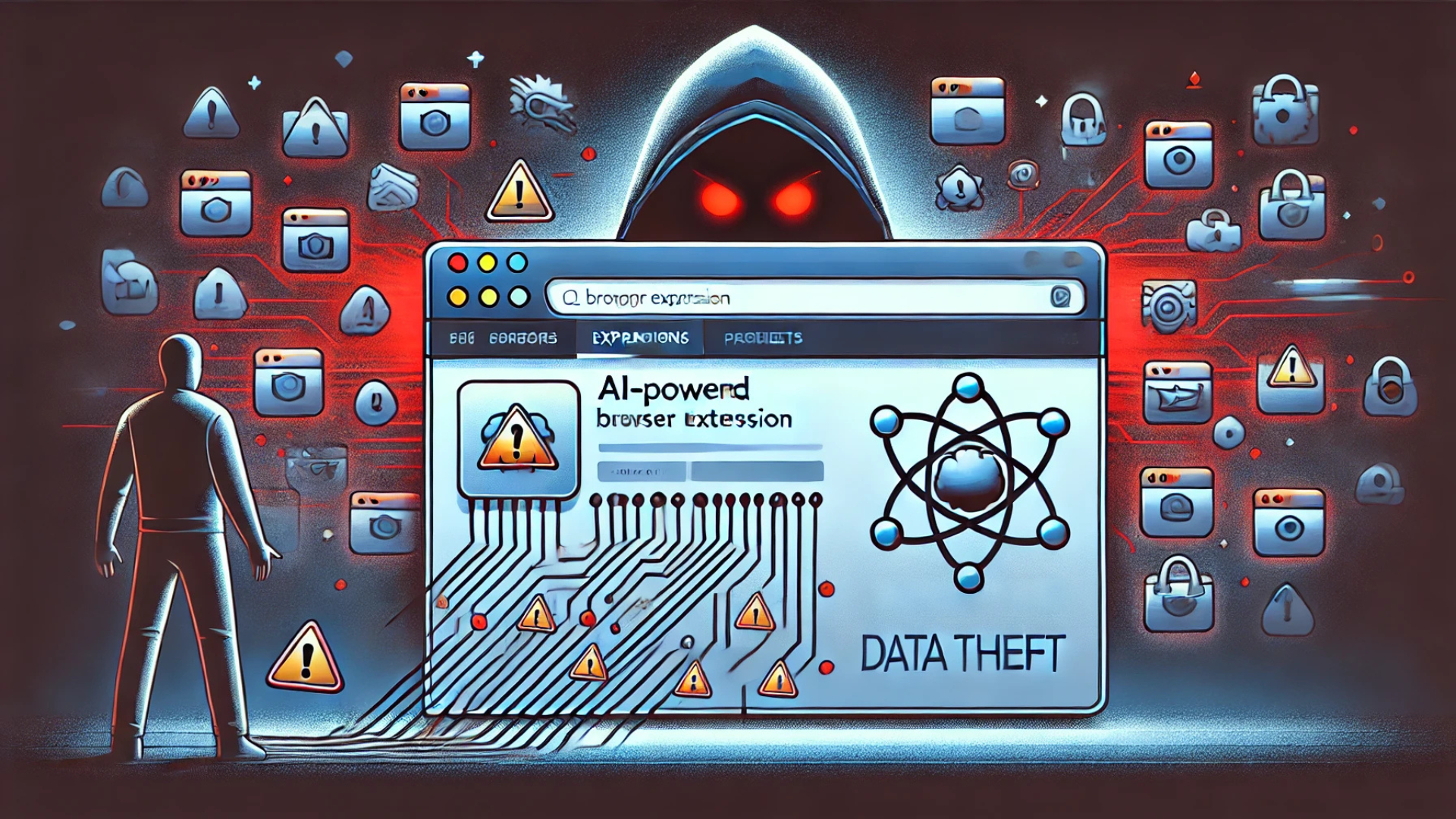
  • AI-Powered Chrome Extensions Hijacked for Data Theft—Are You at Risk?

    AI-Powered Chrome Extensions Hijacked for Data Theft—Are You at Risk?

    In the rapidly evolving digital age, AI-driven browser extensions are indispensable tools for small businesses, enhancing productivity and simplifying daily tasks. However, a recent cybercriminal campaign has put millions of users at risk by compromising at least 36 Google Chrome extensions that mimic popular AI and VPN services. This breach primarily affects small businesses and digital marketers, exposing them to severe data theft.

    The Rising Threat: Compromise of AI and VPN Chrome Extensions

    What You Need to Know:

    • Cybercriminals have hijacked 36 Chrome extensions, impacting over 2.6 million users.
    • These extensions, disguised as popular AI and VPN tools, were manipulated to deliver malware through seemingly legitimate updates.
    • The compromised extensions include names like “Bard AI Chat,” “ChatGPT for Google Meet,” and several VPN-related tools not affiliated with official providers like OpenAI or Google.

    Immediate Action Required: For a comprehensive list of affected extensions and detailed guidance, refer to the official security report linked at the end of this newsletter.

    How the Compromised Extensions Can Affect Your Business

    Malware Disguised as Updates:

    • Attackers distribute fake updates that, once installed, inject malicious code into the browser, enabling them to steal sensitive data.

    Data Targeted by Cybercriminals:

    • The focus is on Facebook Ads accounts from which attackers can extract login credentials, payment information, and critical business advertising data.

    Ongoing Risks:

    • Although many malicious extensions have been removed from the Chrome Web Store, some remain active and continue to pose a threat to users.

    Steps to Protect Your Business from Compromised Extensions

    1. Uninstall Suspicious Extensions: Immediately remove any questionable AI or VPN Chrome extensions not directly sourced from trusted developers like Google or OpenAI. Regularly review and adjust extension permissions to minimize potential exposure.
    2. Use Verified First-Party Extensions Only: To ensure security, utilize official extensions provided by recognized entities and avoid third-party tools that offer duplicated functionalities.
    3. Educate Your Team on Browser Security: Inform your staff about the risks associated with unauthorized extensions and enforce a browser security policy that limits the use of unverified extensions.
    4. Deploy Advanced Security Solutions: Implement comprehensive endpoint security software to detect and prevent malware infections. Ensure continuous protection against various cyber threats including spyware, ransomware, and phishing attacks.
    5. Regular Monitoring and Auditing: Conduct frequent security audits on browser extensions and enforce multi-factor authentication (MFA) to safeguard business accounts from unauthorized access.

    Key Takeaways for Safeguarding AI-Enhanced Workflows

    • The hijacking of 36 AI and VPN Chrome extensions highlights a significant cybersecurity threat, requiring immediate removal to protect your data.
    • Small businesses and marketers managing Facebook Ads accounts are at heightened risk and must prioritize security.
    • Adopt stringent security measures, restrict the use of browser extensions, and rely only on verified tools from reputable developers.
    • Ensure your cybersecurity defenses are robust, with up-to-date endpoint security solutions providing comprehensive protection.

    Stay Secure with Peris.ai

    With AI-driven cybersecurity threats becoming more sophisticated, it is critical for businesses to proactively secure their digital environments. Peris.ai is dedicated to equipping businesses with state-of-the-art cybersecurity solutions to combat and prevent emerging cyber threats.

    For more insights on how to protect your business and to explore advanced cybersecurity solutions, visit Peris.ai.

    Your Peris.ai Cybersecurity Team #YouBuild #WeGuard

  • Building a Cyber-Secure Future: The 1% Everyday Habit for Organizations in 2024

    Building a Cyber-Secure Future: The 1% Everyday Habit for Organizations in 2024

    Cybersecurity experts predict that in 2024, organizations will need to establish a 1% everyday habit to enhance their cyber defenses. This habit involves consistently practicing cybersecurity practices, implementing organizational cybersecurity strategies, and staying up to date with the latest cybersecurity trends.

    Key Takeaways:

    • The 1% everyday habit is crucial for organizations to strengthen their cybersecurity practices in 2024 and beyond.
    • Consistently practicing cybersecurity measures fosters a stronger security culture within organizations.
    • Implementing effective cybersecurity strategies, such as advanced threat detection systems and multi-factor authentication, is essential.
    • Building a security culture requires clear policies, open communication, and shared responsibility among employees.
    • Continuous education, training, and embracing automation and AI technologies can improve cybersecurity practices.

    The Importance of Cybersecurity Habits

    Developing strong cybersecurity habits is essential for organizations as cyber threats continue to evolve. In today’s digital landscape, where data breaches and cyberattacks are becoming increasingly common, organizations must prioritize cybersecurity awareness and take proactive measures to protect their sensitive information. By creating a culture of consistent cybersecurity practices, organizations can ensure that employees are aware of potential risks and are equipped with the knowledge to protect themselves and the organization as a whole.

    One of the key aspects of improving cybersecurity is the development of cybersecurity habits. These habits involve adopting a proactive approach to cybersecurity rather than simply reacting to threats after they occur. By establishing regular cybersecurity training programs and increasing awareness among employees, organizations can create a foundation for ongoing improvement in their cybersecurity posture. This includes familiarizing employees with best practices for securing their devices, identifying and reporting potential risks, and staying up to date with the latest threat intelligence.

    Additionally, cybersecurity habits should encompass the regular evaluation and assessment of security measures to identify any vulnerabilities or weaknesses. By conducting frequent security audits and implementing effective risk management strategies, organizations can detect and mitigate potential threats before they have a chance to cause significant damage.

    Quotes:

    “Cybersecurity is not a one-time event; it is an ongoing process that requires continuous effort and vigilance.” – Cybersecurity Expert

    “Improving cybersecurity requires a collective effort from all employees within an organization, as well as a commitment to lifelong learning and adapting to the ever-changing threat landscape.” – Industry Professional

    Organizations can significantly improve their cybersecurity posture by prioritizing cybersecurity habits and fostering a culture of awareness. It is essential for organizations to invest in ongoing training, implement robust security measures, and encourage employees to stay informed about the latest threats and best practices. With cybersecurity threats continuing to evolve, organizations must remain vigilant and proactive in their approach to cybersecurity to protect their valuable data and maintain the trust of their stakeholders.

    The 1% Everyday Habit Explained

    Implementing a 1% everyday habit is a key cybersecurity practice that organizations should adopt to enhance their defenses in 2024. This habit involves dedicating just 1% of each day to cybersecurity activities, ensuring that organizations consistently prioritize security. Organizations can significantly reduce the risk of cyberattacks and protect sensitive information by allocating a small portion of time to cybersecurity.

    Some examples of cybersecurity activities that can be included in the 1% everyday habit are:

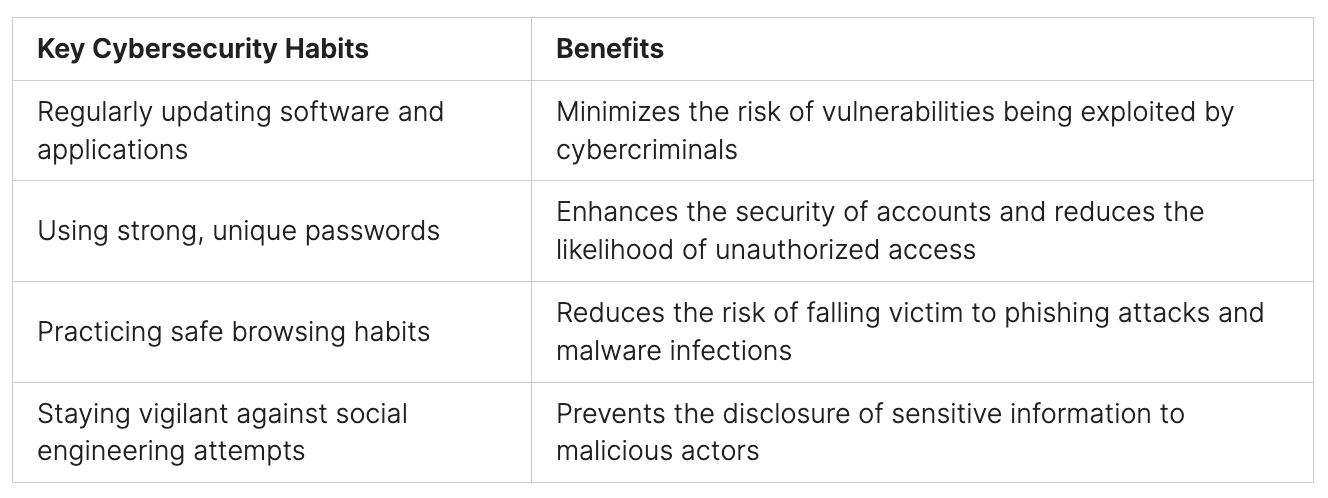
    • Regularly updating software and applications to patch vulnerabilities and protect against emerging threats.
    • Using strong, unique passwords and implementing multi-factor authentication to prevent unauthorized access.
    • Practicing safe browsing habits, such as avoiding suspicious websites and clicking on unknown links.
    • Remaining vigilant against phishing attempts and educating employees about common phishing techniques.

    By integrating these activities into daily routines, organizations can strengthen their cybersecurity posture and create a culture of security awareness. The 1% everyday habit ensures that cybersecurity becomes a habit rather than an afterthought, improving overall organizational cybersecurity resilience.

    Benefits of the 1% Everyday Habit

    1. Enhanced protection against cyberattacks
    2. Reduced risk of data breaches and loss
    3. Improved security culture within the organization
    4. Increase in cybersecurity awareness among employess

    By embracing the 1% everyday habit, organizations can fortify their cybersecurity defenses and stay one step ahead of cyber threats in 2024 and beyond.

    Cybersecurity Strategies for 2024

    As organizations navigate the ever-evolving landscape of cybersecurity threats, it is crucial for them to adopt effective strategies to protect their digital assets. In 2024, the importance of cybersecurity strategies must be addressed, and organizations must stay ahead of emerging trends to mitigate potential risks.

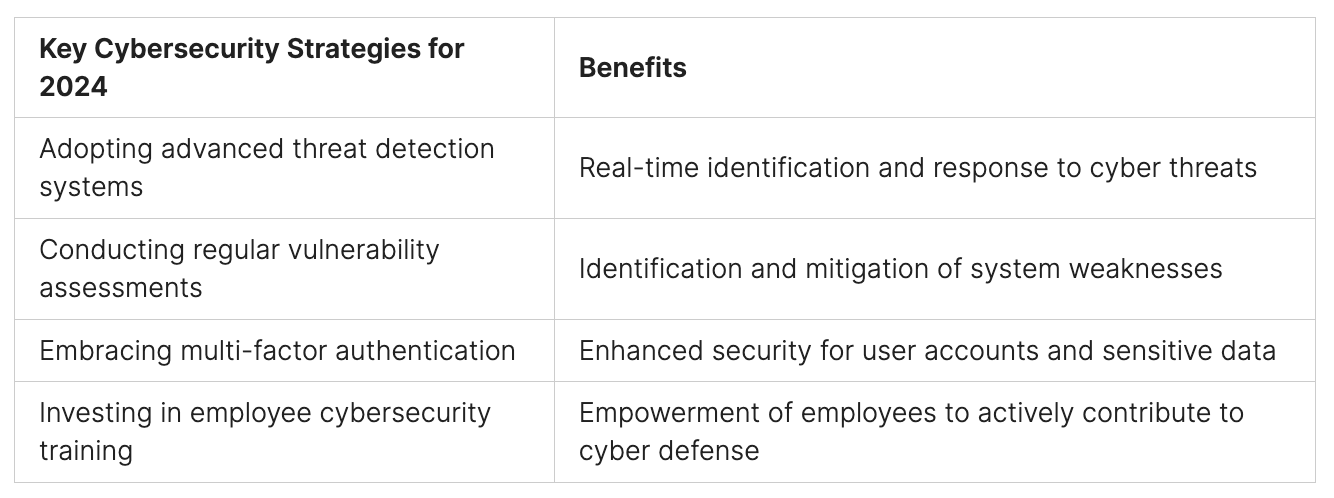
    One key strategy that organizations should prioritize is the implementation of advanced threat detection systems. These systems employ cutting-edge technologies like machine learning and artificial intelligence to identify and respond to cyber threats in real-time. By investing in these solutions, organizations can enhance their ability to detect and neutralize sophisticated attacks.

    “The ever-increasing complexity of cyber threats requires organizations to be proactive in their cybersecurity efforts.” – Cybersecurity Expert

    Another crucial aspect of cybersecurity strategies is conducting regular vulnerability assessments. These assessments help organizations identify weaknesses in their systems and processes, allowing them to patch vulnerabilities before malicious actors exploit them. Organizations can significantly reduce their risk exposure by adopting a proactive approach to vulnerability management.

    Furthermore, organizations should embrace multi-factor authentication to strengthen user account security. By requiring users to provide multiple forms of authentication, such as a password and a fingerprint or a one-time verification code, organizations can significantly reduce the risk of unauthorized access to critical systems and data.

    Lastly, investing in employee cybersecurity training is paramount to the success of any cybersecurity strategy. Employees play a crucial role in maintaining the overall security of an organization. By providing comprehensive training programs, organizations can ensure that employees are equipped with the knowledge and skills to identify and respond to potential threats effectively.

    In conclusion, organizations must adopt a multi-faceted approach to cybersecurity in 2024. By implementing advanced threat detection systems, conducting regular vulnerability assessments, embracing multi-factor authentication, and investing in employee training, organizations can strengthen their defenses against cyber threats and safeguard their digital assets.

    Building a Security Culture

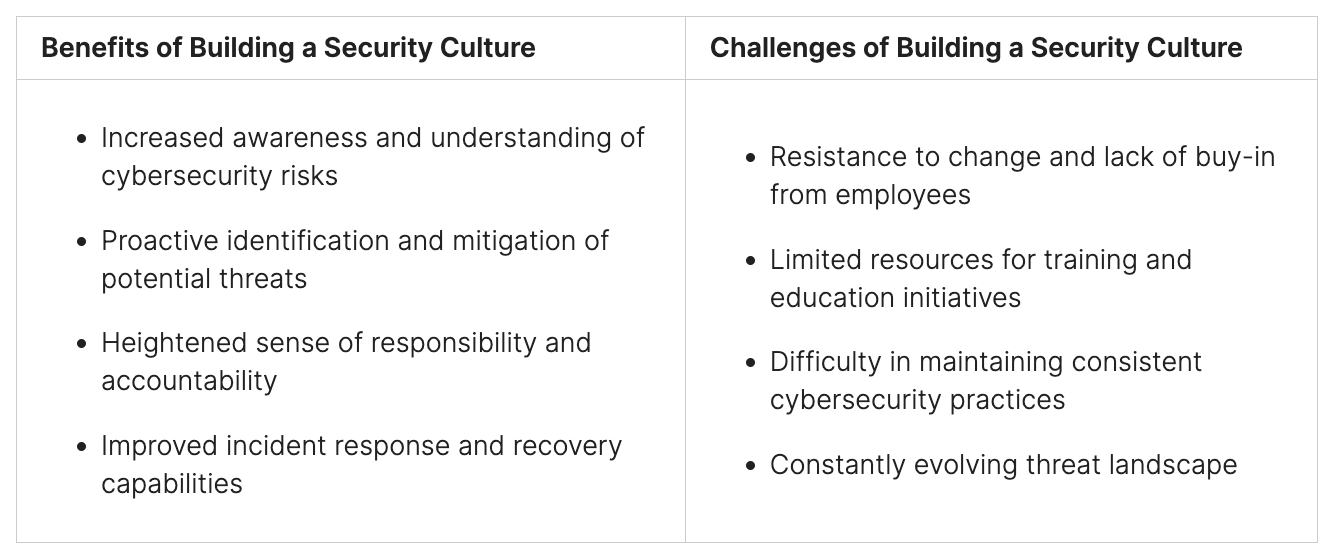
    Establishing a strong security culture within organizations is paramount for ensuring long-term cybersecurity success. Integrating cybersecurity into an organization’s fabric becomes a top priority for every employee, from the C-suite to the front lines. Building a security culture involves creating clear policies and procedures, promoting open communication about security concerns, and fostering a sense of shared responsibility among all staff members.

    Regular training and education are an effective way to build a security culture. By providing employees with the knowledge and skills necessary to identify and mitigate cybersecurity risks, organizations can empower their workforce to protect sensitive data proactively. Training sessions should cover topics such as safe browsing habits, recognizing phishing attempts, and best practices for password management. Ongoing education also ensures that employees stay up to date with the latest cybersecurity trends and threats.

    Another crucial element of building a security culture is fostering a collaborative environment. Organizations should encourage cross-functional teamwork and promote information sharing about potential threats and vulnerabilities. Organizations can gain insights from various perspectives and strengthen their overall cybersecurity posture by facilitating collaboration between departments. Regular communication channels should be established for reporting and addressing security incidents, allowing for swift and coordinated responses.

    Creating a security culture requires a holistic approach, encompassing training, collaboration, and clear communication. It is not enough to have strong technical safeguards in place; organizations must also foster a mindset of cybersecurity awareness and responsibility among their employees. By building a security culture, organizations can enhance their overall cybersecurity posture and better protect their critical assets.

    Collaboration and Communication

    Effective collaboration and communication play a crucial role in ensuring organizational cybersecurity. Organizations can better identify and respond to potential threats by fostering a teamwork and information-sharing culture. Encouraging cross-functional collaboration allows different departments to pool their expertise and insights, resulting in a more comprehensive understanding of cybersecurity risks.

    Establishing channels for reporting and addressing security incidents is equally important. Employees should feel empowered to report any security concerns promptly, enabling the organization to take swift action and mitigate potential risks. This open communication culture creates a proactive approach to cybersecurity, allowing organizations to address vulnerabilities before malicious actors can exploit them.

    “A culture of collaboration and communication is vital to the success of any cybersecurity strategy. By actively involving all employees in the security process, organizations can tap into a collective intelligence that strengthens their defenses against cyber threats.”

    Furthermore, collaboration extends beyond internal efforts. Organizations should also establish communication channels with external partners to share information on potential threats and best practices. Organizations can stay informed about the latest trends and emerging risks by collaborating with industry peers, sharing threat intelligence, and participating in cybersecurity forums.

    Benefits of Collaboration and Communication in Organizational Cybersecurity:

    • Enhanced threat detection and response capabilities
    • Faster incident identification and mitigation
    • Improved knowledge sharing and awareness of emerging risks
    • Strengthened relationships with industry peers and partners
    • Increased overall cybersecurity resilience

    In conclusion, effective collaboration and communication are essential components of a strong organizational cybersecurity posture. By fostering a collaborative environment, establishing communication channels, and actively involving employees, organizations can enhance their ability to detect and respond to cyber threats. Together, we can build a more secure digital future.

    The 1% Everyday Habit Explained

    Cybersecurity experts predict that in 2024, establishing a 1% everyday habit will be crucial for organizations to enhance their cyber defenses. But what exactly does this habit entail? The 1% everyday habit refers to dedicating just 1% of each day towards cybersecurity practices. By allocating a small portion of time each day, organizations can significantly improve their cybersecurity posture and minimize the risk of cyberattacks.

    So, what activities can be considered part of the 1% everyday habit? Regularly updating software and applications, using strong passwords, practicing safe browsing habits, and staying vigilant against phishing attempts are all essential components. When practiced consistently, These seemingly small actions can significantly impact an organization’s overall security culture.

    Implementing the 1% everyday habit requires ongoing cybersecurity awareness and education within the organization. By providing regular cybersecurity training sessions, organizations can ensure that employees are equipped with the knowledge and skills to identify and mitigate cyber risks. This continuous education and training empower the workforce to proactively protect sensitive data and improve the organization’s overall cybersecurity.

    Benefits of the 1% Everyday Habit

    • Enhanced cybersecurity posture
    • Minimization of cyber risks
    • Improved security culture

    The 1% everyday habit is a simple yet effective approach to cybersecurity. By integrating cybersecurity practices into employees’ daily routines, organizations can foster a culture of security and create a strong line of defense against cyber threats. Remember, even the smallest actions can make a significant difference in improving cybersecurity.

    Embracing Automation and AI

    In the ever-evolving field of cybersecurity, organizations must embrace automation and artificial intelligence (AI) technologies to enhance their defense capabilities. By leveraging these advanced tools, organizations can amplify their cybersecurity strategies and stay ahead of emerging threats.

    Automation plays a crucial role in streamlining routine security tasks, allowing organizations to allocate their resources more efficiently. Organizations can reduce the likelihood of human error by automating processes such as software updates, patch management, and threat remediation and ensure that critical security measures are consistently implemented.

    “Automation is the future of cybersecurity. By harnessing the power of AI and machine learning algorithms, organizations can detect and respond to threats in real-time, significantly reducing the time needed to contain and remediate security incidents.”

    Artificial intelligence, on the other hand, empowers organizations to detect and respond to sophisticated cyber threats more effectively. Machine learning algorithms can analyze vast amounts of data to identify anomalous behavior, enabling early detection of potential breaches. Additionally, AI-driven tools can automatically adapt to new attack vectors and evolving threat landscapes, bolstering organizations’ overall cyber defenses.

    Leveraging Automation and AI in Practice

    Organizations can leverage automation and AI in several key areas of their cybersecurity strategy:

    1. Threat Detection and Response: AI-powered security analytics platforms can continuously monitor network traffic, detect patterns indicative of malicious activity, and trigger immediate response actions to mitigate risks.
    2. Vulnerability Management: Automated vulnerability scanning tools can identify weaknesses in the IT environment and prioritize remediation efforts, ensuring that critical vulnerabilities are addressed promptly.
    3. Incident Response: AI-driven incident response platforms can automate the collection and analysis of evidence, facilitate rapid investigation, and guide organizations through the containment and remediation process.

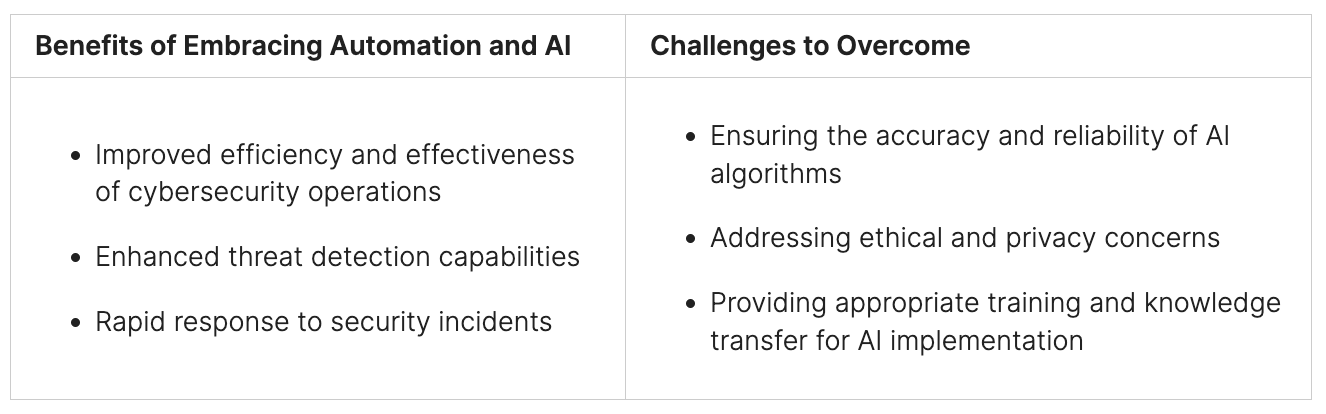
    By embracing automation and AI technologies, organizations can unlock numerous benefits, including improved efficiency, enhanced threat detection, and rapid incident response. However, it is crucial to address challenges such as ensuring the accuracy and reliability of AI algorithms, addressing ethical and privacy concerns, and providing appropriate training to maximize the potential of these technologies.

    Overall, the integration of automation and AI in cybersecurity strategies is an indispensable step for organizations seeking to improve their cyber defenses and stay resilient against evolving threats.

    Third-Party Risk Management

    Organizational cybersecurity requires effective management of third-party risks. Organizations collaborating with external vendors or partners expose themselves to potential vulnerabilities. Therefore, it is crucial to implement robust third-party risk management practices to protect sensitive data and maintain a strong security posture.

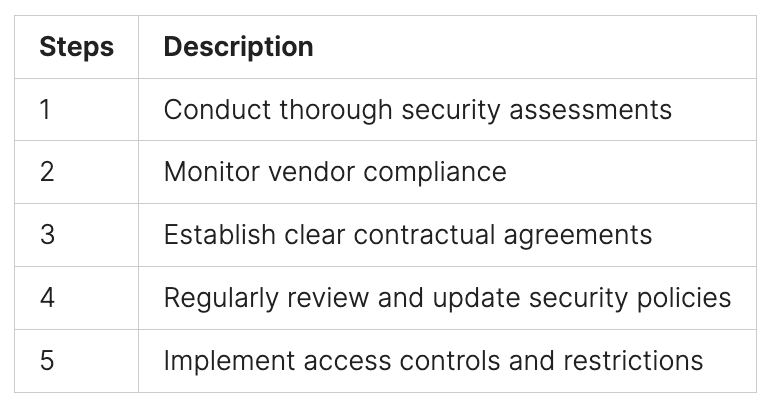
    One key aspect of third-party risk management is conducting thorough security assessments. Organizations should evaluate the cybersecurity measures their vendors and partners implement to ensure they meet the required standards. This includes assessing their infrastructure, policies, and procedures to identify any potential weaknesses or vulnerabilities. By regularly conducting these assessments, organizations can proactively address security gaps and mitigate risks.

    Monitoring vendor compliance is another critical component of third-party risk management. Organizations should establish clear contractual agreements that outline the cybersecurity responsibilities of each party. Regular audits and compliance checks should be conducted to ensure that vendors are adhering to these agreements. This helps to enforce accountability and ensures that all parties are actively working towards maintaining a high level of security.

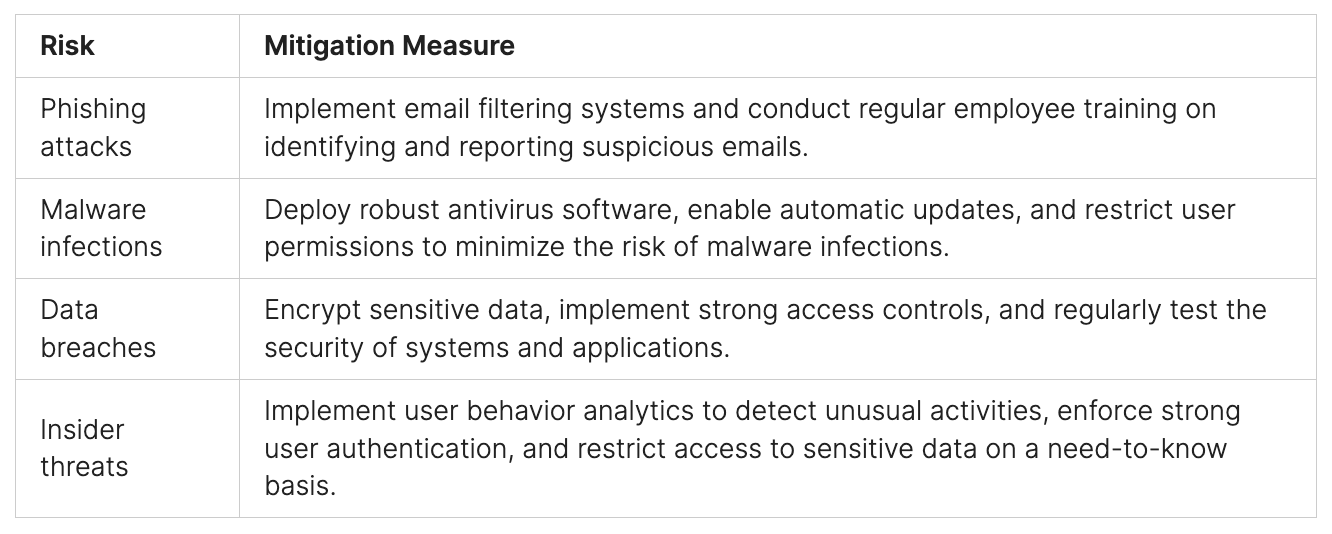
    Table: Key Steps in Third-Party Risk Management

    Organizations should also regularly review and update their security policies to reflect the evolving threat landscape. This includes defining clear guidelines for working with third parties and ensuring all parties know their security responsibilities. Regular communication and collaboration with vendors and partners are essential to maintain a shared understanding of security practices.

    Finally, implementing access controls and restrictions is crucial for managing third-party risks effectively. Organizations should carefully define the level of access and privileges granted to external parties. Organizations can reduce the likelihood of unauthorized access by implementing strong access controls and protecting sensitive data from potential breaches.

    The Importance of Incident Response and Recovery in Organizational Cybersecurity

    Effective incident response and recovery strategies are paramount in organizational cybersecurity. While preventive measures can mitigate the risk of cyberattacks, the reality is that no system is completely impenetrable. Therefore, organizations must be prepared to respond to security incidents and minimize their impact swiftly. Incident response and recovery encompass a set of structured processes and procedures that empower organizations to detect, contain, investigate, and recover from cybersecurity incidents in a timely manner.

    Incident response begins with the establishment of dedicated incident response teams comprised of security experts and key stakeholders. These teams are responsible for developing and implementing incident response plans, which outline the specific steps to be taken when a security incident occurs. Regular drills and simulations should be conducted to test the effectiveness of these plans, ensuring that all personnel are familiar with their roles and responsibilities.

    When an incident occurs, the response team must quickly assess the situation, identify the nature and scope of the attack, and initiate the appropriate containment measures. This may involve isolating affected systems, shutting down access points, or deactivating compromised accounts. Simultaneously, the team must gather evidence and conduct a thorough investigation to determine the attack’s source and the extent of the damage.

    Once the incident has been contained and investigated, the recovery phase begins. This involves restoring systems to their pre-incident state, removing malware or malicious code, and implementing stronger security measures to prevent future attacks. It is crucial for organizations to have proper recovery procedures in place to minimize downtime and resume normal operations as quickly as possible. Regular backups of critical data are essential to facilitate recovery and ensure that valuable information is not permanently lost.

    In summary, incident response and recovery are key components of organizational cybersecurity. Organizations can effectively mitigate the impact of security incidents and minimize the potential damage by having well-documented and tested incident response plans. Swift detection, containment, investigation, and recovery are essential for maintaining business continuity and safeguarding sensitive information. Organizations must invest in incident response capabilities and regularly evaluate and update their procedures to keep pace with evolving cyber threats.

    Continuous Monitoring and Evaluation

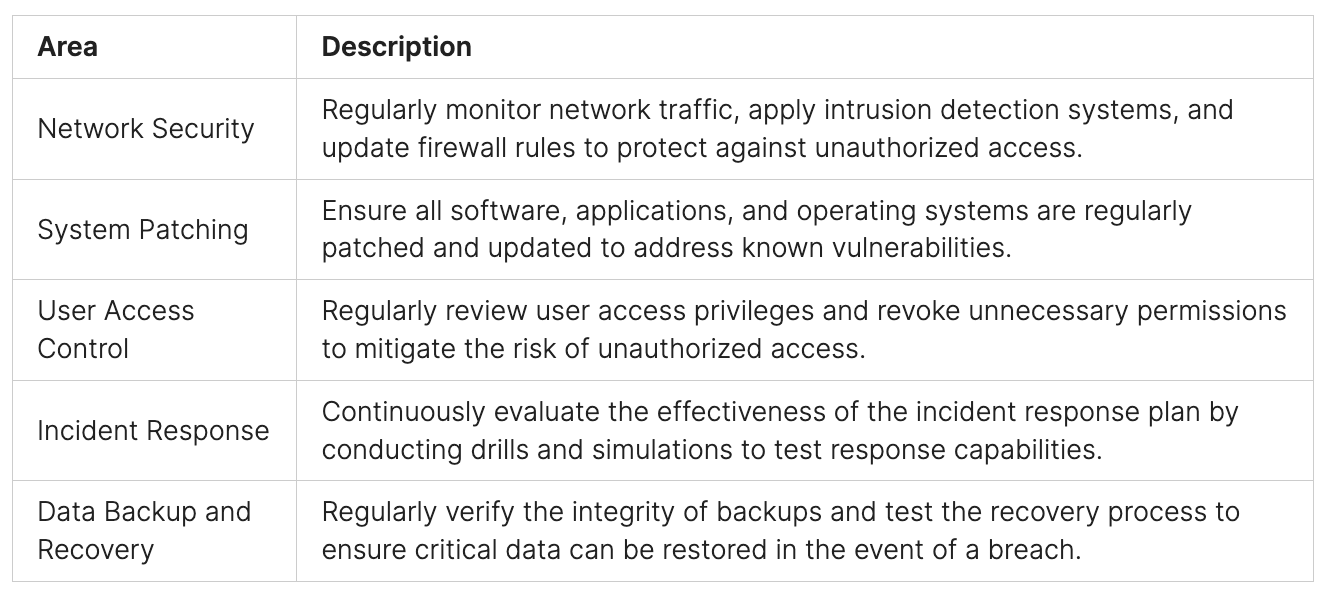
    Continuous monitoring and evaluation are essential components of maintaining effective cybersecurity practices. By regularly assessing the security measures in place, organizations can identify vulnerabilities and weaknesses before cyber threats exploit them. Regular security assessments, penetration testing, and vulnerability scanning should be conducted to identify and address potential risks proactively.

    Table: Key Areas for Continuous Monitoring and Evaluation

    By adopting a proactive approach to monitoring and evaluation, organizations can stay abreast of evolving cyber threats and implement necessary measures to improve their cybersecurity posture. Additionally, regular monitoring allows organizations to assess the effectiveness of their cybersecurity initiatives, identify improvement areas, and make informed decisions regarding resource allocation and future security investments.

    Conclusion

    Adopting the 1% everyday cybersecurity habit is paramount for organizations seeking to fortify their defenses in 2024 and beyond. This simple commitment to allocating a small fraction of each day towards cybersecurity initiatives can pave the way for a robust security culture, safeguarding sensitive data and minimizing the risk of cyber threats.

    Make organizational cybersecurity a daily priority by ensuring regular updates, maintaining strong passwords, practicing safe browsing habits, and staying vigilant against phishing attempts. Your dedication to this 1% habit can be the cornerstone of a resilient cybersecurity strategy.

    Take proactive steps by investing in employee education and training. Regular cybersecurity training sessions and continuous updates on the latest threats and mitigation techniques empower your workforce to identify and counter risks effectively.

    For comprehensive cybersecurity solutions and further insights, explore Peris.ai Cybersecurity on our website. By leveraging automation and AI technologies, Peris.ai offers cutting-edge tools to enhance the efficiency and effectiveness of your cybersecurity operations. Don’t wait—visit our website now to discover how you can elevate your organization’s cybersecurity posture and stay ahead in the ever-evolving landscape of cybersecurity.

    FAQ

    What is the 1% everyday habit in cybersecurity?

    The 1% everyday habit refers to dedicating just 1% of each day towards practicing cybersecurity measures, such as updating software, using strong passwords, and staying vigilant against phishing attempts.

    Why is building cybersecurity habits important for organizations?

    Developing strong cybersecurity habits helps organizations create a culture of consistent cybersecurity practices, enhance employee awareness of risks, and protect sensitive data.

    What are some examples of cybersecurity practices that organizations should implement?

    Examples of cybersecurity practices include regularly updating software and applications, using strong passwords, practicing safe browsing habits, and staying cautious against phishing attempts.

    What cybersecurity strategies should organizations focus on in 2024?

    Organizations should implement advanced threat detection systems, conduct regular vulnerability assessments, embrace multi-factor authentication, and invest in employee cybersecurity training.

    How can organizations build a security culture?

    Organizations can build a security culture by creating clear policies and procedures, promoting open communication about security concerns, and fostering a sense of shared responsibility among employees.

    Why is collaboration and communication important for cybersecurity?

    Collaboration and communication are important for cybersecurity because they encourage cross-functional teamwork, promote information sharing about potential threats, and establish channels for reporting and addressing security incidents.

    How can organizations ensure continuous education and training in cybersecurity?

    Organizations can ensure continuous education and training in cybersecurity by providing regular training sessions, updating employees on the latest threats and mitigation techniques, and encouraging ongoing learning opportunities.

    How can organizations embrace automation and AI in cybersecurity?

    Organizations can embrace automation and AI in cybersecurity by leveraging these technologies to automate routine security tasks, enhance threat detection capabilities, and respond rapidly to attacks.

    How should organizations manage third-party cybersecurity risks?

    Organizations should manage third-party cybersecurity risks by conducting thorough security assessments, monitoring vendor compliance, and establishing clear contractual agreements regarding cybersecurity responsibilities.

    What is the importance of incident response and recovery in cybersecurity?

    Incident response and recovery are essential for minimizing the impact of a cybersecurity attack. Organizations should establish incident response teams, conduct regular drills and simulations, and ensure proper recovery procedures are in place.

    Why is continuous monitoring and evaluation important in cybersecurity?

    Continuous monitoring and evaluation are important in cybersecurity to identify weaknesses, address them promptly, and ensure that cybersecurity practices remain effective and up to date.

  • Cybersecurity Triangle for Organizations Guideline: Price, Quality, Time

    Cybersecurity Triangle for Organizations Guideline: Price, Quality, Time

    Welcome to our comprehensive guide on the Cybersecurity Triangle for Organizations. In today’s digital landscape, businesses face numerous cyber threats that can compromise their sensitive data and disrupt their operations. Organizations need a strategic approach that balances price, quality, and time in their cybersecurity initiatives to protect their assets. This guideline provides valuable insights into how organizations can make informed decisions, optimize resources, and prioritize cybersecurity investments.

    Key Takeaways:

    • The Cybersecurity Triangle for Organizations helps businesses find the right balance between price, quality, and time in their cybersecurity initiatives.
    • Price considerations involve budgeting and cost allocation for cybersecurity measures.
    • Quality focuses on implementing robust and reliable cybersecurity measures.
    • Time management strategies ensure efficient implementation and management of cybersecurity strategies.
    • Organizations can prioritize their cybersecurity investments by understanding and implementing the Cybersecurity Triangle.

    Understanding the Cybersecurity Triangle Concept

    The cybersecurity triangle concept is a fundamental framework that organizations must grasp to implement cybersecurity measures effectively. It centers around three key factors: price, quality, and time. By balancing these factors, organizations can develop a comprehensive approach to cybersecurity that addresses their specific needs and maximizes the protection of their assets.

    Defining the Cybersecurity Triangle

    The cybersecurity triangle comprises three crucial elements:

    • Price: This factor involves budgeting and cost allocation for cybersecurity initiatives. Organizations must consider their financial resources carefully and allocate budgetary provisions to support robust cybersecurity measures.
    • Quality: Ensuring the effectiveness and reliability of cybersecurity measures is the core focus of this factor. Organizations should implement robust and innovative technologies, adhere to industry best practices, and conduct regular security assessments to maintain high-quality cybersecurity resilience.
    • Time: Efficient time management is critical in implementing and managing cybersecurity strategies. Organizations must develop swift incident response plans, deploy rapid deployment security protocols, and conduct thorough disaster recovery planning and analysis to minimize downtime and maintain business continuity.

    The Evolution of Cybersecurity Prioritization

    Over time, the prioritization of cybersecurity factors has evolved as organizations recognize the increasing importance of a balanced approach:

    In the past, organizations often prioritized cost over quality and time, focusing primarily on budgetary concerns. However, cybersecurity incidents and the subsequent financial and reputational damage have shifted the mindset. Organizations have come to understand that compromising quality and neglecting time management can lead to severe consequences. As a result, there has been a paradigm shift towards a comprehensive approach that balances all three factors of the cybersecurity triangle.

    By comprehending and implementing the cybersecurity triangle concept, organizations can navigate the complex cybersecurity landscape and make informed decisions safeguarding their digital assets.

    Price in Cybersecurity: Budgeting and Costs

    Price plays a crucial role in cybersecurity as organizations must budget and allocate sufficient resources to protect their assets effectively. Allocating budgets for cybersecurity involves assessing the specific needs and risks of the organization, understanding the potential impact of cyber threats, and determining the financial investment required to mitigate those risks. This process requires careful consideration of various factors, including the organization’s size, industry regulations, and risk tolerance.

    Allocating Budgets for Cybersecurity in Organizations

    When allocating budgets for cybersecurity, organizations must take a strategic approach. It starts with assessing the unique needs and risks faced by the organization. By thoroughly evaluating current security measures, vulnerabilities, and potential threats, organizations can identify gaps and prioritize their budget allocation accordingly.

    Moreover, organizations should consider the potential impact of cyber threats on their business operations and reputation. This includes evaluating the financial losses that could occur in a data breach or system outage and the costs associated with recovering from such incidents.

    Organizations should also consider industry regulations and compliance requirements when allocating budgets for cybersecurity. Organizations must adhere to Different industries’ specific data protection and privacy regulations. This may require additional investments in security technologies, personnel training, and compliance audits.

    It is also essential for organizations to balance their budget allocation between preventive, detective, and responsive cybersecurity measures. Preventive measures, such as firewalls and antivirus software, help protect systems and data from cyber threats. Detective measures like intrusion detection systems and security monitoring help identify and respond to potential threats. Responsive measures, such as incident response plans and data recovery solutions, ensure a quick and effective response during a security incident.

    Understanding Cybersecurity Expense Categories

    When budgeting for cybersecurity, organizations should consider various expense categories to ensure comprehensive coverage. These expense categories include:

    • Security personnel: Allocating budget for cybersecurity professionals responsible for implementing and managing security measures.
    • Security technologies: Invest in security solutions such as firewalls, antivirus software, encryption tools, and intrusion detection systems.
    • Security assessments and audits: Conduct regular assessments and audits to identify vulnerabilities and ensure compliance with industry standards and regulations.
    • Employee training and awareness: Budgeting for training programs that help employees understand their role in maintaining cybersecurity and raise awareness about potential threats.
    • Incident response and recovery: Allocating resources for developing and implementing incident response plans and investing in data recovery solutions.

    By understanding the expense categories and their importance, organizations can allocate their budgets effectively, ensuring that all aspects of cybersecurity are adequately covered.

    Ensuring Quality in Cybersecurity Measures

    Ensuring quality in cybersecurity measures is vital for organizations to protect their assets from cyber threats effectively. Quality in cybersecurity involves implementing robust and reliable measures that can effectively detect, prevent, and respond to cyber-attacks. This includes using advanced technologies, adherence to industry best practices, regular security assessments and audits, and continuous employee training and awareness programs.

    By prioritizing quality in cybersecurity, organizations can enhance their overall security posture and minimize the risk of data breaches and cyber incidents. It is essential to have a comprehensive approach that combines advanced technologies and industry standards for protection against evolving threats.

    Organizations need to employ a multi-layered security approach to strengthen their defenses and create a resilient cybersecurity environment. By implementing a range of measures, such as firewalls, intrusion detection systems, encryption, and security information and event management (SIEM) solutions, organizations can detect and prevent cyber attacks. Regular security assessments and audits help identify vulnerabilities and ensure that cybersecurity measures are up to date.

    Continuous employee training and awareness programs play a crucial role in ensuring the effectiveness of cybersecurity measures. By educating employees about common cyber threats, phishing attacks, and best practices for data protection, organizations can significantly reduce the risk of human error leading to security breaches.

    By adopting a proactive and comprehensive approach to cybersecurity, organizations can stay ahead of cyber threats and safeguard their critical assets.

    Key Elements of Ensuring Quality in Cybersecurity Measures

    • Implementing advanced technologies
    • Adhering to industry best practices
    • Conducting regular security assessments and audits
    • Providing continuous employee training and awareness programs

    Balancing Time Management in Cybersecurity Strategies

    Effective time management is essential in cybersecurity strategies to ensure organizations promptly respond to cyber threats while minimizing downtime and disruption. Time management encompasses various practices and processes that optimize time use in cybersecurity initiatives.

    One crucial aspect of time management is the development of efficient incident response plans. These plans outline the steps to be taken during a cyber incident, allowing organizations to respond quickly and effectively. By having well-defined incident response plans in place, organizations can minimize the impact of cyber incidents and swiftly mitigate the risks posed by threats.

    Rapid deployment security protocols also play a vital role in time management. These protocols enable organizations to rapidly deploy and activate security measures in response to emerging threats. By implementing these protocols, organizations can reduce the time it takes to protect their systems and data, preventing potential security breaches and minimizing the window of vulnerability.

    Regular disaster recovery planning and analysis are crucial time management practices in cybersecurity. Organizations need to plan for potential disasters and develop robust recovery strategies proactively. Regular analysis allows organizations to identify vulnerabilities and weaknesses in their disaster recovery plans, enabling them to make necessary improvements and ensure optimal readiness.

    By effectively managing time in cybersecurity strategies, organizations can minimize the impact of cyber incidents, reduce recovery time, and ensure the continuous availability of critical systems and data. Time management practices enable organizations to optimize their response to cyber threats and safeguard their assets efficiently and timely.

    Cybersecurity Investment Decisions: Combining Price, Quality, and Time

    Cybersecurity investment decisions require organizations to consider the interplay between price, quality, and time. Achieving a balance among these factors is essential for developing effective cybersecurity strategies that align with organizational goals and resource availability. This section explores case studies and implementation strategies demonstrating successful approaches to combining price, quality, and time in cybersecurity initiatives.

    Case Studies and Implementation Strategies

    Examining real-world case studies provides valuable insights into how organizations effectively combine price, quality, and time in their cybersecurity investments. These case studies highlight the importance of evaluating and prioritizing cybersecurity needs, understanding the potential impact of cyber threats, and allocating resources accordingly. Organizations can adapt and apply successful strategies to their unique contexts by learning from these examples.

    Implementing a comprehensive cybersecurity strategy requires a thoughtful approach that addresses the specific needs and resources of the organization. By considering factors such as budget constraints, risk tolerance, and desired quality of security measures, organizations can make informed decisions on allocating their resources effectively. The implementation strategies from case studies provide practical guidance on integrating price, quality, and time considerations into the overall cybersecurity investment decision-making process.

    Public Policy Implications and Corporate Theory

    Cybersecurity investment decisions impact individual organizations and have broader implications at the public policy level. Public policy plays a crucial role in shaping the cybersecurity landscape and establishing standards and regulations organizations must adhere to. Understanding the public policy implications of cybersecurity investment decisions is essential for organizations to navigate compliance requirements and ensure the security of their assets.

    Corporate theory also influences cybersecurity investment decisions as organizations strive to align their cybersecurity strategies with their overall business strategies. By considering factors such as the organization’s risk appetite, strategic objectives, and stakeholder expectations, organizations can make investment decisions that enhance their resilience to cyber threats while supporting their long-term goals.

    Organizations can make informed and strategic cybersecurity investment decisions by analyzing real-world case studies, considering public policy implications, and incorporating corporate theory. This holistic approach ensures that organizations invest in the right cybersecurity measures, combining price, quality, and time to protect their assets effectively and mitigate cyber risks.

    Time-Efficient Cybersecurity Strategies for Immediate Threat Response

    Time is of the essence when it comes to cybersecurity. Organizations need to act swiftly and decisively to combat immediate cyber threats. This section explores time-efficient cybersecurity strategies that enable organizations to respond promptly and effectively.

    Development of Rapid Deployment Security Protocols

    Organizations should focus on developing rapid deployment security protocols to combat emerging threats quickly. These protocols allow for the swift deployment and activation of security measures in response to immediate cyber threats. By having predefined procedures and processes in place, organizations can reduce response times and minimize the impact of cyber incidents.

    Implementing rapid deployment security protocols involves:

    1. Establishing a dedicated incident response team that can be activated at a moment’s notice.
    2. It is developing predefined incident response plans that outline the necessary steps to be taken in the event of a cyber attack.
    3. Regularly conducting drills and simulations to test the effectiveness and efficiency of the response protocols.
    4. It integrates automated threat detection and response systems to identify and mitigate cyber threats quickly.

    By adopting these rapid deployment security protocols, organizations can significantly enhance their ability to respond to immediate cyber threats, minimize potential damages, and safeguard their critical assets and data.

    Disaster Recovery Planning and Analysis

    Disaster recovery planning and analysis are essential components of time-efficient cybersecurity strategies. By proactively preparing for potential cyber incidents, organizations can minimize downtime, mitigate damages, and ensure a swift recovery.

    Key steps in disaster recovery planning and analysis include:

    1. Conducting a thorough risk assessment to identify potential vulnerabilities and prioritize critical systems and data.
    2. Developing comprehensive disaster recovery plans that outline the steps to be taken during a cyber incident.
    3. Regularly test and update the disaster recovery plans to ensure their effectiveness and relevance.
    4. Implement backup and data recovery mechanisms to restore critical systems and data quickly.
    5. Performing post-incident analysis to identify areas for improvement and refine the disaster recovery strategies.

    By incorporating disaster recovery planning and analysis into their cybersecurity strategies, organizations can minimize the impact of cyber incidents, reduce downtime, and ensure the continuity of their operations.

    Benefits of Time-Efficient Cybersecurity Strategies

    1. Minimized Response Time – Rapid deployment security protocols allow organizations to respond quickly to cyber threats, reducing the time it takes to identify and mitigate potential damages.
    2. 2. Reduced Impact of Cyber Incidents – By promptly activating security measures and implementing disaster recovery plans, organizations can minimize the impact of cyber incidents, preventing significant disruptions to their operations.
    3. Improved ResilienceTime-efficient cybersecurity strategies enhance an organization’s resilience against cyber threats, enabling it to recover quickly and effectively in the face of an incident.
    4. Enhanced Protection of Assets and Data – Rapid deployment security protocols and disaster recovery planning help organizations safeguard their critical assets and data by implementing proactive measures and efficient response mechanisms.

    Achieving Cost-Quality-Time Balance in Cybersecurity

    When it comes to cybersecurity, organizations often face the challenge of finding the right balance between cost, quality, and time. Allocating resources efficiently while ensuring adequate protection against cyber threats requires careful analysis and decision-making. This section explores the trade-offs of different cybersecurity approaches and provides practical frameworks for achieving a cost-quality-time balance.

    Analyzing the Trade-offs in Cybersecurity Approaches

    When implementing cybersecurity measures, organizations must consider various factors and make trade-offs to optimize their investments. One of the key trade-offs is cost versus quality. While investing in high-quality cybersecurity solutions can provide better protection, it often comes at a higher cost. On the other hand, opting for cheaper solutions may compromise the effectiveness of the security measures.

    Another trade-off to consider is the balance between cost and time. Implementing comprehensive cybersecurity strategies takes time and effort, which may result in delays or disruptions to business operations. Therefore, organizations must analyze the trade-off between investing sufficient time in cybersecurity measures and the potential impact on productivity and efficiency.

    Lastly, there is also a trade-off between quality and time. Implementing high-quality cybersecurity measures requires thorough planning, testing, and implementation. This may slow down the process compared to quick fixes or shortcuts, prioritizing speed over quality. Organizations need to weigh the benefits of investing time in quality measures against the urgency of immediate protection.

    Practical Frameworks for Cybersecurity Balance

    To help organizations achieve a cost-quality-time balance in cybersecurity, practical frameworks can guide decision-making and resource allocation. These frameworks consider each organization’s unique needs and resources and provide structured approaches to striking the right balance. Here are some practical frameworks to consider:

    1. Risk-Based Approach: This framework identifies and prioritizes the most critical cyber risks based on their potential impact and likelihood of occurrence. Organizations can allocate resources effectively by aligning cybersecurity investments with risk assessments while addressing the most significant threats.
    2. Cost-Benefit Analysis: This framework evaluates the costs and benefits of different cybersecurity measures. By quantifying the potential risks and potential savings associated with each measure, organizations can make informed decisions on where to invest their resources.
    3. Resource Optimization Model: This framework considers the available resources and constraints of the organization, such as budget, manpower, and technology. By optimizing the allocation of resources, organizations can maximize the impact of their cybersecurity measures within the given limitations.
    4. Continuous Improvement Framework: This framework emphasizes the iterative and continuous improvement of cybersecurity measures. By implementing an ongoing monitoring and evaluation process, organizations can identify areas for improvement and make adjustments to achieve a better cost-quality-time balance.

    Implementing these practical frameworks can enable organizations to make informed decisions, optimize their cybersecurity investments, and maintain an effective balance between cost, quality, and time. By finding this balance, organizations can enhance their security posture, mitigate risks, and protect their valuable assets.

    Cybersecurity Budgeting for Organizations: A Structured Approach

    Cybersecurity budgeting for organizations requires a structured approach that considers the specific needs and resources of the organization. By following a structured approach, organizations can ensure that their cybersecurity investments are aligned with their strategic objectives while effectively protecting their assets.

    One key step in the structured approach to cybersecurity budgeting is assessing risk. Organizations must evaluate the potential risks, such as the likelihood and impact of different cyber threats. This assessment helps identify the areas where cybersecurity investments are most crucial, ensuring that resources are allocated where they are most needed.

    Once the risk assessment is complete, organizations can prioritize their investments. This involves determining the order in which cybersecurity initiatives should be implemented based on their potential impact on risk reduction. By prioritizing investments, organizations can first ensure that limited resources are allocated to the most critical areas.

    Another important step is aligning the budget with strategic objectives. Organizations must consider their overall business goals and how cybersecurity investments can support them. This alignment ensures cybersecurity becomes integral to the organization’s strategic planning, with resources allocated accordingly.

    It is crucial to involve key stakeholders in the cybersecurity budgeting process. This includes representatives from different departments and levels of the organization who can provide valuable insights and perspectives. By involving stakeholders, organizations can gather diverse input and ensure that the budget reflects the needs and priorities of the entire organization.

    Organizations should conduct thorough assessments and regularly review and adjust the budget based on evolving cyber threats and organizational priorities to maintain effectiveness. By staying proactive and adaptive, organizations can ensure that their cybersecurity budget remains aligned with the changing threat landscape and the organization’s strategic goals.

    Effective cybersecurity budgeting is essential for organizations to allocate their resources efficiently and effectively, ensuring the protection of their assets. By following a structured approach and considering the specific needs and resources of the organization, organizations can optimize their cybersecurity investments and enhance their overall security posture.

    Conclusion: Harmonizing the Cybersecurity Triangle with Corporate Strategy

    In summary, organizations must weave the principles of the cybersecurity triangle into their corporate strategy to safeguard their assets against digital threats effectively. The interplay of cost, excellence, and timeliness forms the crux of this approach, guiding businesses in formulating an all-encompassing cybersecurity plan that resonates with their overarching business goals.

    The cybersecurity triangle acts as a strategic compass, guiding the allocation of resources and the management of risks. This paradigm aids companies in striking a balance between financial limitations and the imperative for dependable, high-caliber cyber defense mechanisms. Embedding this model into their strategic framework empowers organizations to elevate their cybersecurity standing, mitigate potential risks, and secure their assets for the long haul.

    Implementing the cybersecurity triangle into an organization’s strategy demands a comprehensive viewpoint. Companies must weigh the fiscal aspects of their cybersecurity ventures, ensuring ample allocation of resources to combat the continually changing cyber threats. High-quality cybersecurity solutions, incorporating cutting-edge technology and best practices, are paramount for effective threat detection, prevention, and response.

    Moreover, time is a critical element in cybersecurity strategies. Quick and effective incident response plans, swift security protocol implementation, and thorough disaster recovery plans are essential. These steps enable organizations to swiftly tackle emerging threats and reduce the impact of any operational disruptions.

    Fusing the cybersecurity triangle with corporate strategy lays the groundwork for a resilient, forward-thinking cybersecurity posture. This strategy equips businesses to defend their valuable assets robustly, uphold customer trust, and successfully navigate the intricate and evolving realm of cyber threats.

    For tailored cybersecurity solutions that align with this approach, we encourage you to contact us or visit Peris.ai Cybersecurity.

    FAQ

    What is the cybersecurity triangle for organizations?

    The cybersecurity triangle for organizations is a comprehensive guideline that helps businesses find the right balance between price, quality, and time in their cybersecurity initiatives. It allows organizations to effectively protect their assets from cyber threats while optimizing their resources.

    What does the price aspect of the cybersecurity triangle involve?

    The price aspect involves budgeting and cost allocation for cybersecurity initiatives. Organizations must assess their needs and risks, understand the potential impact of cyber threats, and determine the financial investment required to mitigate those risks.

    How can organizations ensure quality in their cybersecurity measures?

    Organizations can ensure quality in cybersecurity by implementing robust and reliable measures that effectively detect, prevent, and respond to cyber-attacks. This includes using advanced technologies, adhering to industry best practices, conducting regular security assessments, and providing continuous employee training and awareness programs.

    Why is time management important in cybersecurity strategies?

    Time management is crucial in cybersecurity strategies to effectively respond to cyber threats, minimize downtime, and ensure the continuous availability of critical systems and data. It involves developing efficient incident response plans, implementing rapid deployment security protocols, and conducting regular disaster recovery planning and analysis.

    How can organizations make cost-effective cybersecurity investment decisions?

    Organizations can make cost-effective cybersecurity investment decisions by considering the interplay between price, quality, and time. This involves analyzing budget constraints, resource availability, risk tolerance and prioritizing investments based on specific needs and resources.

    What are some key considerations for implementing high-quality cybersecurity solutions?

    Implementing high-quality cybersecurity solutions requires using cryptography and access management techniques to ensure the confidentiality and integrity of sensitive data. Organizations should also implement data integrity and protection mechanisms such as encryption and data backup strategies to safeguard their data against unauthorized access and tampering.

    How can organizations develop time-efficient cybersecurity strategies for immediate threat response?

    Organizations can develop time-efficient cybersecurity strategies by establishing rapid deployment security protocols that enable quick activation of security measures in response to emerging threats. They should also have robust disaster recovery plans and procedures to recover from cyber incidents and minimize the impact of disruptions.

    How can organizations strike the right balance between cost, quality, and time in their cybersecurity strategies?

    Organizations can achieve a cost-quality-time balance in cybersecurity by analyzing trade-offs in different approaches, considering budget constraints, resource availability, and risk tolerance. Practical frameworks can help organizations make informed decisions and allocate resources efficiently and effectively.

    What is a structured approach to cybersecurity budgeting for organizations?

    A structured approach to cybersecurity budgeting involves assessing risk, prioritizing investments, and aligning the budget with strategic objectives. It requires involving key stakeholders, conducting thorough assessments, and regularly reviewing and adjusting the budget based on evolving threats and priorities.

    How can organizations integrate the cybersecurity triangle into their corporate strategy?

    Integrating the cybersecurity triangle into corporate strategy allows organizations to develop a comprehensive cybersecurity approach that aligns with their business objectives. It provides a framework for decision-making, resource allocation, and risk management, enhancing an organization’s overall cybersecurity posture and ensuring the long-term security of assets.
  • Emerging AI-Driven Cybercrime: Understanding the Risks and Staying Protected

    Emerging AI-Driven Cybercrime: Understanding the Risks and Staying Protected

    In the digital age, the rapid advancement of artificial intelligence (AI) has not only revolutionized various industries but also provided potent tools for cybercriminals. This evolution in cybercrime necessitates a sophisticated approach to cybersecurity. Let’s delve into how criminals are harnessing AI to commit crimes more efficiently and intelligently.

    AI-Powered Cyber Threats: An Overview

    AI technologies have transcended traditional boundaries, infiltrating the cybercriminal toolkit with alarming effectiveness. Here are some prominent ways AI is being used in cybercrime:

    Deepfake Scams:

    Deepfake technology has significantly evolved, becoming a tool for complex cybercrimes, especially in scams involving identity impersonation. Cybercriminals utilize deepfake tech to create convincing fake identities or videos, often targeting vulnerable individuals with romance or sextortion scams. Notably, criminal groups like the “Yahoo Boys” are leveraging this technology to exploit minors, resulting in devastating emotional and financial consequences for the victims.

    Business Email Compromise (BEC):

    In BEC scams, AI is employed to manipulate communications subtly. Scammers use AI to alter invoices and redirect financial transactions by modifying PDF documents or swapping bank details seamlessly. These sophisticated AI tools are now being offered on a subscription basis, broadening their accessibility among cybercriminals.

    The Ongoing Evolution of AI-Driven Cybercrime Tools

    AI’s integration into cybercrime is profound, encompassing several tools that automate and refine criminal operations:

    Hacking Tools and Automation:

    AI is extensively used to automate the generation of malicious scripts and the exploration of network vulnerabilities. Some AI tools are designed to autonomously scan networks, identify security gaps, and even craft custom malware, reducing the need for continuous human oversight in cyber attacks.

    The Future Trajectory of AI in Cybercrime

    As AI technology advances, its application in cybercrime is expected to expand significantly, encompassing more sophisticated deepfake productions, phishing operations, and BEC activities. The cybersecurity landscape is poised for dramatic changes as AI tools increasingly gain the capability to autonomously discover and exploit vulnerabilities.

    Strategies for Mitigating AI-Enhanced Cyber Threats

    To protect against the rising wave of AI-driven cybercrime, it is crucial to adopt robust and proactive cybersecurity measures:

    Software Updates:

    Regularly updating your software is vital to defend against the latest AI-driven attacks. Ensuring that all systems, from operating systems to application software, are up-to-date helps close security loopholes that could be exploited by AI-enhanced threats.

    ️ Robust Security Solutions:

    Protect your devices with state-of-the-art antivirus software tailored to various platforms:

    • Windows: Use top-rated antivirus solutions for Windows PCs.
    • Mac: Employ comprehensive antivirus software designed for Mac systems.
    • Android: Install the best antivirus applications available for Android devices.
    • iOS/iPadOS: Due to Apple’s restrictions, use Mac antivirus software to scan iPhones and iPads via a USB connection.

    Vigilance in Communications:

    Maintain a high level of caution with emails and messages, particularly those from unknown sources. Avoid engaging with or responding to unsolicited attachments and links. Be especially wary of messages that invoke a sense of urgency, as these are often designed to precipitate hasty decisions conducive to phishing attacks.

    Conclusion

    As AI continues to evolve, so too do the tactics employed by cybercriminals. At Peris.ai Cybersecurity, we are dedicated to staying ahead of these advanced threats with our hyperautomated, modular cybersecurity solutions. By integrating AI-driven capabilities for threat detection, automated response, and comprehensive asset monitoring, we ensure robust protection for your digital endeavors.

    Stay proactive in your cybersecurity efforts with Peris.ai and ensure your defenses are as advanced as the threats they aim to counter. Visit our website at peris.ai for more insights and robust cybersecurity solutions.

    Your Peris.ai Cybersecurity Team #YouBuild #WeGuard

  • Hackers Use AI – So Should You

    Hackers Use AI – So Should You

    Hackers are now using AI to launch complex attacks. It’s vital for companies to use AI to keep up. AI is now a must-have in cyber security, as attacks are getting smarter and more common.

    Phishing, vishing, and deepfake technology are all getting a boost from AI. This makes it easier for hackers to trick people. However, using AI can help companies spot threats faster and keep their data safe.

    Using AI in cyber security is very important. Experts say that multi-factor authentication can cut down on breaches by 99%. However, AI is changing fast, and companies must keep up to protect themselves.

    Key Takeaways

    • Hackers are using AI to launch sophisticated cyber attacks, and organizations must use AI technology to stay ahead of these threats.
    • AI-powered cyber attacks are becoming more common and more effective, with AI-driven phishing attacks, vishing, and deepfake technology on the rise.
    • The use of AI in cyber security can help organizations improve their threat detection and response times and reduce the likelihood of successful breaches.
    • Multi-factor authentication (MFA) can reduce the likelihood of successful breaches by 99% if implemented effectively.
    • Organizations must be prepared to adapt and evolve their security measures to stay ahead of the threats posed by AI-powered cyber attacks.
    • AI technology is essential for cyber security, and organizations that do not use AI will be at a significant disadvantage in the fight against cyber threats.

    The Evolution of AI-Powered Cyber Threats

    Artificial intelligence is changing how cyber-attacks happen. Machine learning makes attacks smarter and more focused. This means companies must find new ways to protect their data. Cybercrime costs are expected to hit $10.5 trillion by 2025, showing the urgent need for strong security.

    Autonomous hacking tools are now part of the threat. They quickly find and use weaknesses in systems. Continuous monitoring and AI operational effectiveness are key to spotting these dangers. Here are some important stats about the threat level:

    • Average annual job openings in IT occupations from 2022 to 2032: 37,600 for computer systems analysts, 10,200 for database administrators and architects, and 19,800 for network and computer systems administrators.
    • Advanced Persistent Threats (APTs) remain undetected for an average of 286 days.
    • Cyber threats are designed to exploit vulnerabilities in devices across digital infrastructures, including personal data theft estimates representing financial losses in the trillions globally.

    *Are you using a Hacked AI system? https://youtube.com/watch?v=YSGiFry4vI4

    Cybercrime is getting more organized and targeted. This has led to a high chance of digital breaches. As AI attacks grow, companies must keep improving their defenses to stay safe.

    How Hackers Leverage AI Technologies

    AI has made hacking tools more advanced, allowing hackers to launch complex attacks easily. It’s vital to have strong hacker prevention tactics to fight these threats. Hackers mainly use AI to crack passwords with machine learning algorithms.

    These algorithms guess passwords with great accuracy, posing a big security risk. AI also powers social engineering attacks, using natural language to craft believable messages.

    *The Implications Of AI In Cyber Security: https://youtube.com/watch?v=kZMLwO3R_8E

    To fight these threats, using multifactor authentication and keeping software updated is key. Keeping up with AI in cybersecurity helps organizations protect against AI attacks.

    Knowing how hackers use AI helps organizations prevent and respond to threats. This way, they can stay ahead of cyber attackers.

    The Financial Impact of AI-Powered Cyber Attacks

    AI-powered cyber-attacks can cost a lot, with big companies facing losses of $1.5 million on average. To avoid these high costs, it’s key to have strong data protection strategies and digital defenses. This means investing in cybersecurity measures like AI for threat detection and response.

    Some important stats about the financial hit from AI-powered cyber attacks are:

    • 71% of organizations faced at least one cyberattack in 2023, with many blaming AI.
    • AI attacks can speed up the reconnaissance phase, cutting research time from weeks to hours.
    • About 85% of cybersecurity experts think AI-powered cyberattacks will grow a lot in the next two years.

    Companies can lessen the financial damage from AI-powered cyber attacks by using strong cybersecurity measures and data protection strategies. This includes using AI to boost digital defenses and speed up response times.

    Hackers Use AI – So Should You: The Defensive Edge

    As hackers increasingly use AI technology, it’s vital for companies to adopt AI in their cyber security. This way, they can keep up with threats and safeguard their data. The use of AI in cyber security creates a race where both sides use the same tech.

    Using AI in security has many advantages. For example, AI can spot vulnerabilities faster than hackers. It also keeps an eye on big networks for weaknesses, focusing on the most critical ones. This helps companies act fast, lessening the harm from attacks.

    Predictive Threat Detection

    Predictive threat detection is a key part of AI-powered security. Ai looks for patterns and oddities in data to find threats early. This lets companies stop attacks before they start, not just after.

    Automated Response Systems

    Automated response systems are another big plus of AI security. They can tackle threats on their own, saving time and effort. This quick action helps companies dodge data breaches and other cyber threats.

    *Learning Cybersecurity FAST with AI: https://youtube.com/watch?v=9eprsQJhfPY

    In summary, AI in cyber security is a major shift in protecting data. By using AI in their security plans, companies can outsmart threats and keep their data safe from cyber-attacks.

    Implementing AI-Driven Security Solutions

    The threat landscape is always changing. It’s key to keep up with AI-driven security solutions. Machine learning algorithms are vital for spotting and stopping cyberattacks. They help protect data and stay ahead of threats.

    When adding AI-driven security, think about cost and how it fits with your current digital defenses. Look at the benefits and make sure they work with what you already have. This way, your security gets stronger and risks lower.

    Some important things to keep in mind when using AI-driven security include:

    • Do a detailed cost-benefit analysis to see if it’s worth it
    • Plan how to integrate it smoothly with your current security
    • Make sure your team knows how to use it with training and support

    By following these steps and using machine learning algorithms, you can build strong data protection strategies. This will help you fight off new threats and keep your data safe from cyberattacks.

    Real-World Success Stories: Companies That Fought Back

    Many companies have used hacker prevention tactics to fight off AI-powered cyber attacks. A Gartner survey found that 34% of organizations are using or planning to use AI security tools. This is to tackle the risks of generative AI.

    Some companies have successfully defended against AI attacks. They’ve done this by using AI advancements in cybersecurity to boost their defenses. For example, Google and Microsoft have created AI-powered security systems. These systems help detect and fight cyber threats.

    Here are some key statistics on the importance of hacker prevention tactics and AI advancements in cybersecurity:

    • 73 million current and former AT&T customers were affected by a data breach in April 2024.
    • Over half a billion Ticketmaster customers had their information leaked due to a breach linked to a hack of Snowflake.
    • Approximately 26 billion records were exposed in the “Mother of All Breaches” data leak.

    *AI is Revolutionizing Cybersecurity! (The Battle Against Hackers Just Got Smarter) PART 2: https://youtube.com/watch?v=GZ1ZbOwy-FM

    These numbers show why companies must be proactive in cybersecurity. They need to keep monitoring and improving their defenses. By using effective hacker prevention tactics and staying current with AI advancements in cybersecurity, companies can lower their risk of AI attacks.

    The Human Element: AI as a Security Team Multiplier

    As companies spend more on cyber security, the human touch is key in AI-powered systems. AI can boost digital defenses greatly. But, a skilled team is needed to use these tools well.

    AI is great at handling big data and spotting odd patterns in real time. This makes it better at finding and dealing with threats. Yet, AI needs humans to check its work and fix any issues. Together, AI and human skills create strong cybersecurity measures.

    Staff Augmentation Benefits

    AI can also help security teams do their jobs better. Some good things about using AI include:

    • Enhanced threat detection and response capabilities
    • Improved incident response times
    • Increased efficiency in security operations

    Skill Enhancement Opportunities

    As AI gets better, cybersecurity pros need to learn new skills. They should get training in AI areas like machine learning and natural language processing. They also need to know how to analyze and understand data.

    Investing in team skills is vital. This way, companies can use AI security tools well. And they can stay one step ahead of new threats.

    Future-Proofing Your Digital Defense Strategy

    To stay ahead of cyber threats, organizations must use the latest AI technology. They should invest in artificial intelligence for better cybersecurity. Machine learning algorithms can also improve threat detection.

    Emerging AI security technologies include predictive threat detection and automated response systems. These can help reduce cyber risks and lower false positives in threat detection.

    Adopting AI-driven security solutions offers many benefits. They can automate incident responses, potentially saving millions in damages. AI can also handle complex cyber attacks beyond human capabilities, adapting quickly to new threats.

    Investment Priorities

    Organizations should invest in AI solutions that boost cost efficiency and automate defenses. This allows human resources to focus on important tasks. Investing in machine learning and artificial intelligence for user verification is key.

    By focusing on these investments, organizations can keep their digital defense strategies up-to-date. As cyber-attacks become more common, it’s vital to stay ahead. Investing in the latest AI security technologies is essential.

    Measuring ROI in AI Security Implementation

    Organizations are investing in AI for security. It’s key to measure the return on investment (ROI) to see if these solutions work well. Gartner says security spending will hit $90 billion in 2024, with 42% going to cybersecurity services.

    Good cybersecurity measures can offer a great ROI. 88% of boards now see cybersecurity as a business risk, not just a tech issue. To get the most out of AI security, keep checking how well it works and tweak it as needed.

    • 87% of consumers might leave if they don’t trust a company with their data (PwC)
    • 79% of investors think cybersecurity and privacy are key in their decisions (PwC’s Global Investor Survey)
    • The AI in cybersecurity market was $14.9 billion in 2021 and will hit $133.8 billion by 2030

    Investing in solid cybersecurity measures and data protection strategies helps avoid cyber attacks. This protects sensitive data and boosts ROI on AI security.

    Conclusion: Embracing AI as a Cybersecurity Imperative

    The cybersecurity landscape is evolving rapidly, and automation is no longer a luxury—it’s a necessity. With cyber threats growing more sophisticated, security teams need an intelligent, unified approach to streamline operations, reduce manual intervention, and enhance threat response.

    Brahma Fusion is the answer. As a cutting-edge unified connector, it simplifies security automation by integrating multiple tools and platforms, allowing organizations to respond faster and more efficiently. With features like customizable security responses, a drag-and-drop workflow builder, and the ability to incorporate custom code for precision, Brahma Fusion empowers security teams to stay ahead of modern threats with minimal effort.

    The days of reactive security are over. Brahma Fusion enables proactive, AI-driven automation that enhances efficiency, eliminates errors, and optimizes resource allocation—ultimately transforming security operations.

    Stay ahead of cyber threats with Brahma Fusion. Explore the future of security automation at https://www.peris.ai/.

    FAQ

    What is the main reason why organizations should use AI in cybersecurity?

    Organizations should use AI in cybersecurity because hackers use AI for attacks. This means companies need AI to protect themselves. It helps them stay ahead of threats.

    How do AI-powered cyber threats differ from traditional attack methods?

    AI-powered threats use machine learning and AI to launch complex attacks. These attacks are harder to detect and prevent. This shows the need for strong data protection strategies.

    How do hackers leverage AI technologies to launch cyber attacks?

    Hackers use AI for password cracking and social engineering. They also use automated scanning. This makes it key for companies to prevent attacks and keep up with AI in cybersecurity.

    What is the financial impact of AI-powered cyber attacks on organizations?

    AI-powered attacks can cost organizations a lot. This includes data breaches and attacks. Companies need to protect their data and prevent financial losses.

    What are the benefits of using AI in cybersecurity?

    AI in cybersecurity offers predictive threat detection and automated responses. It also helps in recognizing patterns. These benefits help organizations stay ahead of threats and improve their security.

    What are the key considerations for implementing AI-driven security solutions?

    When implementing AI-driven security, consider cost and benefits. Also, think about integration and training. It’s important to keep developing machine learning and protecting data.

    How can organizations measure the ROI of AI security implementation?

    To measure ROI, monitor and evaluate AI security solutions. Make adjustments as needed. Invest in cybersecurity that offers a good return on investment.

    What is the role of the human element in AI-powered cybersecurity?

    The human element is key in AI-powered cybersecurity. It offers benefits like staff augmentation and skill enhancement. It’s important for organizations to invest in their teams and provide ongoing training.

    How can organizations future-proof their digital defense strategy?

    To future-proof, stay updated with AI in cybersecurity. Invest in emerging technologies. Prioritize AI-driven solutions to enhance security.

  • Identifying URL Rewriting Scams Before It’s Too Late

    Identifying URL Rewriting Scams Before It’s Too Late

    In the realm of cybersecurity, phishing remains one of the most insidious threats, constantly evolving to circumvent even the most sophisticated email security measures. A notable method that cybercriminals have adapted to their advantage is exploiting URL rewriting—a feature originally designed to enhance security by monitoring and scanning email links for threats.

    Understanding URL Rewriting and Its Exploitation

    What is URL Rewriting?

    • Purpose: URL rewriting modifies original URLs in emails into safe links, which are then scanned for malicious content when clicked.
    • Methods:Legacy Approach: Utilizes databases of known malicious URLs.Real-Time Scanning: Employs AI and machine learning to assess links at the moment of interaction for any malicious activity.

    Exploitation by Cybercriminals:

    • Cybercriminals compromise email accounts with URL rewriting features, send “clean” URLs, and later manipulate these URLs to redirect unsuspecting users to phishing sites, employing techniques like CAPTCHA or geo-fencing to avoid detection.

    Notable Examples of URL Rewriting Exploits

    1. Double Rewrite Attack
    2. Cross-Target Exploitation
    3. Mimecast’s URL Rewrite
    4. Sophos URL Rewriting in IRS Scam

    Best Practices and Solutions to Counter URL Rewriting Exploits

    For Organizations:

    • Proactive Detection: Implement systems that evaluate and verify the safety of URLs before they reach the recipient.
    • Dynamic Analysis: Utilize behavior-based scanning in real-time to identify and neutralize threats hidden within rewritten URLs.
    • Continuous Monitoring: Regularly update and assess the security of rewritten URLs to catch any post-delivery manipulations.

    For Employees:

    • Training: Educate employees to recognize and scrutinize URLs meticulously, even those that seem to come from trusted sources.
    • Vigilance: Promote a culture where suspicious links are immediately reported to the cybersecurity team.

    Advanced Technological Solutions:

    • Dynamic URL Analysis by Perception Point:Proactive Detection: Scans links prior to delivery to prevent threats.Advanced Anti-Evasion: Capable of detecting sophisticated evasion methods like CAPTCHA challenges.Real-Time Reassessment: Continuously monitors and reassesses links for updated threat analysis.

    Conclusion: Enhancing Security Against Sophisticated Phishing Techniques

    The exploitation of URL rewriting by cybercriminals underscores the necessity for organizations to adopt more dynamic and proactive cybersecurity strategies. By integrating advanced detection technologies and fostering a vigilant workplace culture, businesses can better protect themselves from the ever-evolving landscape of cyber threats.

    For additional insights and resources on bolstering your cybersecurity measures, visit Peris.ai. Stay informed and secure with the latest in cyber defense strategies.

    Your Peris.ai Cybersecurity Team #YouBuild #WeGuard

  • Many Faces: Understanding the 7 Popular Types of Ransomware

    Many Faces: Understanding the 7 Popular Types of Ransomware

    As ransomware continues to be a significant cybersecurity threat in 2024, it is crucial for individuals and organizations to understand the various types of ransomware. Last year, 59% of organizations reported being targeted by ransomware attacks, with recovery costs averaging a staggering $2.73 million, reflecting a 50% increase from the previous year, as reported by the World Economic Forum.

    What is Ransomware?

    Ransomware is a type of malicious software designed to block access to a computer system or data, typically by encrypting files, until a sum of money is paid. Often, ransomware spreads through phishing emails or by exploiting software vulnerabilities, with cybercriminals usually demanding payment in cryptocurrency. In 2024, these attacks have evolved to focus on data theft and employ more advanced encryption techniques, increasing their threat level.

    The Seven Main Types of Ransomware

    1. Crypto Ransomware Description: Encrypts files, rendering them inaccessible without a decryption key. Impact: Severely cripples access to critical data. Examples: Maze, Ryuk

    2. Locker Ransomware Description: Locks you out of your entire computer system, not just specific files. Impact: Prevents access to the device until a ransom is paid. Examples: LockerGoga, LockerPin

    3. Scareware Description: Uses fake warnings and alerts to trick users into thinking their system is infected with malware. Impact: Often tricks users into paying for non-existent threats or fake antivirus software. Examples: SpySheriff, XPAntivirus

    4. Doxware (Extortionware) Description: Threatens to publish the victim’s sensitive data unless a ransom is paid. Impact: This can lead to significant reputational damage by exposing sensitive personal or corporate information. Examples: REvil

    5. Ransomware-as-a-Service (RaaS) Description: Cybercriminals rent or sell ransomware tools to affiliates, enabling them to carry out attacks. Impact: Lowers the entry barrier for attackers, spreading the reach of ransomware campaigns. Examples: LockBit, BlackCat

    6. Wiper Malware Description: Focuses on permanently deleting data from the infected systems. Impact: Unlike typical ransomware, the goal is disruption rather than financial gain. Examples: NotPetya

    7. Specific Ransomware Strains

    Examples:

    • CryptoLocker: Uses strong RSA public-key cryptography to encrypt files.
    • WannaCry: Exploits a Windows vulnerability to cause widespread damage.
    • Petya/NotPetya: Encrypts files and spreads autonomously within networks.
    • Cerber: Employs advanced techniques to evade detection.
    • Bad Rabbit: Disguised as a fake Adobe Flash installer, it spreads through compromised websites.

    How to Protect Yourself from Ransomware

    • Regular Backups: Maintain up-to-date backups of your data, which are stored offline to avoid contamination.
    • Software Updates: Keep all systems and applications updated to close security loopholes.
    • Network Segmentation: Isolate critical segments of your network to limit the spread of ransomware.
    • Advanced Security Tools: Implement cutting-edge ransomware protection solutions.
    • Incident Response Plan: Develop a comprehensive plan for responding to ransomware incidents without succumbing to ransom demands.

    Immediate Actions If You Suspect a Ransomware Infection

    • Disconnect: Isolate the affected systems from the network to prevent the spread.
    • Secure Data: Safeguard any external drives and backups.
    • Stop Processes: Terminate any suspicious processes running on your systems.
    • Documentation: Capture evidence of the ransom note and any other pertinent details.
    • Report: Inform relevant authorities to get professional help and mitigate legal repercussions.
    • Security Measures: Change all passwords and consider wiping affected drives after backing up important data.

    Conclusion

    Understanding and preparing for ransomware is more critical than ever. By familiarizing yourself with the different types of ransomware and adopting proactive security measures, you can significantly enhance your defenses against these costly and disruptive threats.

    Stay informed, stay secure.

    Visit Peris.ai for more insights and up-to-date cybersecurity information.

  • Reputation vs Financial Costs: Which is Heavier after a Cyber Attack?

    Reputation vs Financial Costs: Which is Heavier after a Cyber Attack?

    After a cyber attack, companies are faced with two major concerns: reputation damage and financial losses. The impact of a cyber attack can have far-reaching consequences, affecting a company’s image and bottom line. This article will explore the aftermath of a cyber attack, analyzing the weight of reputation damage and financial costs and discussing strategies to mitigate these risks.

    Key Takeaways:

    • After a cyber attack, reputation damage and financial losses are major concerns for companies.
    • Effective reputation management strategies are crucial for rebuilding trust and maintaining brand loyalty.
    • The financial implications of a cyber attack can be extensive, including breach recovery costs and potential legal consequences.
    • Companies should prioritize proactive cyber security measures to mitigate risks and minimize the impact of a cyber attack.
    • Cyber insurance plays a vital role in managing the financial risks associated with a cyber attack.

    The Importance of Reputation Management after a Cyber Attack

    After experiencing a cyber attack, companies must promptly address the impact on their reputation. Reputation management plays a crucial role in mitigating the long-term damage caused by such incidents. Companies can successfully navigate the aftermath of a cyber attack by taking proactive measures to rebuild trust and maintain brand loyalty.

    Effective reputation management strategies include timely and transparent communication with stakeholders. By keeping customers, partners, and employees informed about the incident, companies demonstrate transparency and a commitment to resolving the issue. This open communication helps to maintain trust and mitigate potential reputational damage.

    “Reputation is everything. Protecting and preserving it should be a top priority for businesses in the aftermath of a cyber attack.”

    Additionally, companies should focus on rebuilding trust by delivering on their promises and providing exceptional customer service. This includes addressing customers’ concerns or questions, offering compensation or remedies where appropriate, and ensuring that similar incidents are less likely to occur in the future.

    Table: Reputation Management Strategies

    In conclusion, reputation management is of utmost importance after a cyber attack. By implementing effective strategies and prioritizing customer trust and loyalty, companies can successfully recover from the impact of a cyber attack and maintain their reputation in the long run.

    Rebuilding Trust: Strategies for Effective Reputation Management After a Cyber Attack.

    Assessing the Financial Implications of a Cyber Attack

    When a company falls victim to a cyber attack, the consequences extend beyond reputation damage. The financial implications can be substantial and significantly impact the organization’s overall stability. It is essential for companies to carefully evaluate the cost of breach recovery and understand the potential financial risks they face.

    One of the primary financial implications of a cyber attack is the expense associated with breach recovery. Companies often need to allocate resources for forensic investigations to identify the extent of the breach and determine the scope of compromised data. These investigations can be time-consuming and costly, requiring the expertise of specialized professionals.

    In addition to investigation costs, companies may incur expenses related to notification and credit monitoring services for affected individuals. These measures are crucial for mitigating the potential harm caused by the breach and ensuring that affected individuals are adequately protected. Moreover, companies may face regulatory fines and legal fees if the breach results in non-compliance with data protection regulations.

    Furthermore, a cyber attack can lead to business interruption and loss of revenue. Systems and operations may be disrupted, impacting the company’s ability to serve customers and generate income. The longer the interruption, the greater the financial consequences. Companies may also experience a decline in customer trust and loyalty, resulting in a loss of business and potential long-term revenue reduction.

    In summary, the financial implications of a cyber attack are far-reaching. From breach recovery costs to potential regulatory fines and revenue losses, companies must carefully assess the financial risks they face. By understanding these implications, organizations can better allocate resources and implement strategies to mitigate the financial impact of a cyber attack.

    Comparing the Impact on Reputation and Financial Costs

    When it comes to the aftermath of a cyber attack, the consequences can be twofold: reputation damage and financial costs. Both of these factors can greatly impact a company’s stability and future prospects. While the immediate financial costs may seem more tangible, the long-term damage to a company’s reputation can be equally, if not more, detrimental.

    Reputation damage resulting from a cyber attack can impact a company’s relationship with its customers. Negative media coverage, loss of trust, and a damaged brand image can lead to decreased sales, customer churn, and difficulty attracting new customers. The ripple effect of a tarnished reputation can continue long after the initial attack, leading to financial losses that may not be immediately apparent.

    On the other hand, the financial costs of a cyber attack can be substantial. From breach recovery expenses to potential legal consequences, companies may find themselves facing significant financial burdens. Remediation efforts, forensic investigations, notification and credit monitoring services, and even regulatory fines can quickly add up. Business interruption and loss of revenue due to the attack can further compound these costs, making the financial impact of a cyber attack difficult to overlook.

    The Importance of Balancing Reputation and Financial Considerations

    When assessing the severity of a cyber attack, companies must carefully weigh the impact on their reputation against the immediate financial costs. While the financial implications may be more evident in the short term, neglecting the long-term effects on reputation can have far-reaching consequences. It is crucial for companies to allocate resources and prioritize efforts to address both reputation management and financial recovery.

    By finding a balance between reputation management and financial considerations, companies can navigate the aftermath of a cyber attack more effectively. Taking proactive steps to rebuild customer trust, such as timely communication, transparent disclosure, and demonstrating a commitment to cybersecurity, can help mitigate reputation damage. Simultaneously, diligently managing the financial costs through appropriate insurance coverage, legal measures, and cost-effective breach recovery strategies is essential for long-term financial stability.

    Case Studies: High Reputation Damage vs High Financial Costs

    Examining real-world examples can provide valuable insights into the impact of cyber attacks on reputation and financial costs. The following case studies highlight the consequences of high reputation damage and high financial costs in the aftermath of a cyber attack.

    Case Study 1: Reputation Damage

    “Company XYZ experienced a significant data breach, resulting in the exposure of sensitive customer information. The incident received extensive media coverage, leading to a loss of trust from customers and damaging the company’s reputation. The negative publicity and customer backlash had a long-lasting impact, with sales plummeting, customer churn increasing, and brand perception severely affected.”

    Case Study 2: Financial Costs

    “Company ABC fell victim to a sophisticated cyber attack that resulted in extensive financial losses. The company had to bear the expenses of forensic investigations, legal fees, and notifying affected individuals. Additionally, the business interruption caused by the attack led to a significant loss of revenue. The financial strain was further exacerbated by the need for robust security measures to prevent future breaches and comply with regulatory requirements.”

    These case studies illustrate the contrasting effects of reputation damage and financial costs in the aftermath of a cyber attack. While both consequences are significant, they manifest in different ways and require tailored strategies for mitigation. Companies must be prepared to address the unique challenges posed by reputation damage and financial burdens to ensure their long-term stability.

    Learning from the Front Lines: Case Studies on Cyber Attacks.

    By studying these case studies, organizations can gain valuable insights into the potential repercussions of a cyber attack on their reputation and financial stability. It is crucial for businesses to implement robust cyber security measures to prevent and mitigate such attacks. Additionally, proactive reputation management strategies and comprehensive incident response plans can help organizations minimize the impact of a cyber attack on their reputation and navigate the financial costs involved.

    Mitigating Reputation Damage and Financial Costs

    After a cyber attack, companies must prioritize reputation management strategies and financial risk mitigation to navigate the aftermath effectively. Organizations can minimize the impact on their reputation and financial stability by implementing robust cyber security measures.

    One key aspect of reputation management is timely communication with stakeholders. Transparently disclosing the cyber attack and providing regular updates on the remediation efforts can help rebuild trust with customers and stakeholders. Additionally, companies should focus on proactive measures to prevent future attacks. This includes conducting regular security audits, implementing robust data protection protocols, and investing in employee training and awareness programs.

    Table: Key Reputation Management Strategies

    Alongside reputation management, companies should also consider financial risk mitigation strategies. This involves carefully assessing the financial implications of a cyber attack and taking proactive steps to minimize the costs. Companies can work with cyber insurance providers to ensure adequate coverage for breach recovery expenses, including forensic investigations, legal fees, and regulatory fines.

    Companies can mitigate reputation damage and minimize the financial costs associated with a cyber attack by employing comprehensive cyber security measures and partnering with cyber insurance providers. The proactive approach to cyber security and risk management will enable organizations to navigate the aftermath more effectively and ensure long-term stability.

    Fortify and Protect: Navigating the Aftermath of Cyber Attacks.

    The Role of Cyber Insurance in Managing Financial Risks

    Cyber insurance plays a crucial role in managing the financial risks associated with a cyber attack. As companies face the increasing threat of cybercrime, having a comprehensive insurance policy specifically designed to cover cyber risks is essential. Cyber insurance provides coverage for the expenses related to breach recovery, helping companies mitigate the financial impact of a cyber attack.

    With cyber insurance, companies can access funds to cover various costs incurred after a cyber attack. This includes expenses for forensic investigations to determine the extent of the breach and identify potential vulnerabilities. Additionally, the policy can cover legal fees, which may be necessary if the company faces litigation as a result of the cyber attack. Cyber insurance can also provide financial support for regulatory fines and penalties that may be imposed due to non-compliance with data protection regulations.

    Furthermore, cyber insurance can help offset the financial consequences of business interruption and loss of revenue. In the aftermath of a cyber attack, companies may experience disruptions in their operations, leading to financial losses. Cyber insurance policies can provide coverage for these financial setbacks, allowing companies to recover more quickly and effectively.

    Overall, cyber insurance provides companies with a valuable tool for managing the financial risks associated with cyber attacks. It allows companies to allocate resources effectively and minimize the impact of a cyber attack on their financial stability. By investing in cyber insurance, companies can protect themselves against the costly consequences of a cyber attack, ensuring they have the necessary financial means to recover and continue operating.

    Guarding Finances Against Cyber Storms.

    Balancing Reputation and Financial Considerations

    After a cyber attack, companies face the challenge of balancing their reputation management efforts against the financial costs incurred. While rebuilding customer trust and maintaining brand reputation is crucial, assessing the financial implications and allocating resources accordingly is equally important.

    One way to achieve this balance is by prioritizing reputation management strategies that focus on open and timely communication with stakeholders. This includes transparent disclosure of the cyber attack incident, outlining the steps taken to address the breach, and demonstrating a commitment to enhancing cybersecurity measures. By being proactive in managing their reputation, companies can regain customer trust and minimize the long-term impact of the cyber attack.

    Simultaneously, companies must consider the financial costs of a cyber attack. This includes expenses related to breach recovery, such as forensic investigations, legal fees, and potential lawsuits. By accurately assessing the financial implications, companies can allocate resources effectively, prioritize cybersecurity investments, and ensure financial stability in the aftermath of a cyber attack.

    To strike the right balance, companies should adopt a strategic approach that takes into account both the short-term and long-term effects on reputation and financial stability. This requires a comprehensive understanding of the cyber attack aftermath and a careful evaluation of the costs involved in reputation management and breach recovery efforts.

    The Importance of a Comprehensive Cyber Security Strategy

    A comprehensive cyber security strategy is crucial for organizations to mitigate the risks associated with cyber attacks effectively. As the threat landscape continues to evolve, businesses must prioritize the implementation of robust security measures to protect their sensitive data, safeguard customer trust, and minimize the financial implications of a cyber attack.

    By adopting a proactive approach to cyber security, companies can reduce the likelihood of successful attacks and protect their reputation. This includes conducting regular risk assessments to identify vulnerabilities, implementing strong access controls and authentication protocols, and staying abreast of the latest security threats and trends. A comprehensive strategy also involves educating employees about cyber security best practices, ensuring they are equipped to recognize and report potential threats.

    Table 9.1: Cyber Security Risk Mitigation Measures

    “A strong cyber security strategy is not a luxury but a necessity in today’s digital landscape. Without a comprehensive approach, organizations expose themselves to a wide range of cyber threats, including data breaches, ransomware attacks, and reputational damage.”

    By investing in a comprehensive cyber security strategy, organizations can proactively detect and respond to potential cyber threats, mitigating the risk of reputation damage and financial implications. Furthermore, the adoption of industry-recognized standards and frameworks, such as ISO 27001 or the NIST Cybersecurity Framework, can provide a solid foundation for maintaining a strong security posture.

    Achieving a robust cybersecurity strategy requires continuous monitoring, testing, and improvement. Organizations should conduct regular security audits and penetration testing to identify vulnerabilities and implement necessary remediation measures. Additionally, staying informed about emerging cyber threats and industry best practices through information-sharing platforms and industry associations is essential in order to stay ahead of evolving threats.

    In conclusion, a comprehensive cyber security strategy is crucial for organizations to protect their reputation, mitigate financial implications, and ensure the overall resilience of their digital infrastructure. By prioritizing cyber security measures, organizations can establish themselves as trusted custodians of data and demonstrate their commitment to safeguarding both customer and corporate assets.
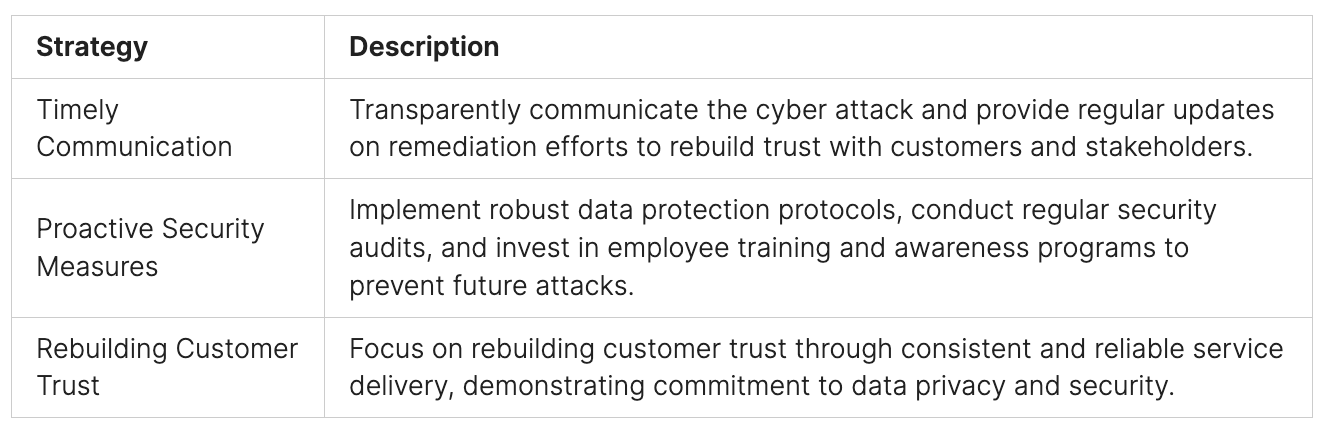
    Conclusion

    In summary, the aftermath of a cyber attack poses a dual threat to companies, encompassing both reputation damage and financial repercussions. The enduring consequences of such attacks extend to eroding customer trust and brand loyalty, amplifying the importance of safeguarding a company’s standing in the aftermath of a breach. Moreover, the financial toll is considerable, spanning expenses related to recovery efforts and the potential for litigation.

    To confront these challenges head-on, companies must adopt a proactive approach that addresses both reputation and financial considerations. A robust reputation management strategy, characterized by transparent communication and a concerted effort to rebuild trust, stands as a pivotal component. Concurrently, the implementation of robust cybersecurity measures is imperative to mitigate risks and curtail potential financial losses.

    It is imperative for companies to strike a delicate balance between addressing short-term challenges and planning for long-term resilience against reputation damage and financial costs. This strategic equilibrium ensures the judicious allocation of resources, fostering stability and sustained success. We invite you to explore solutions tailored to your cybersecurity needs on our website (Peris.ai Cybersecurity) to fortify your defenses and effectively navigate the aftermath of a cyber attack. Safeguard your reputation and financial stability – visit us today.

    FAQ

    What are the major concerns after a cyber attack?

    The major concerns after a cyber attack are reputation damage and financial costs.

    How does a cyber attack affect a company’s reputation?

    A cyber attack can significantly damage a company’s reputation, leading to lost customers, negative media coverage, and long-term brand damage.

    What are the financial implications of a cyber attack?

    Financial costs can be extensive and may include expenses for breach recovery, forensic investigations, legal fees, regulatory fines, business interruption, and loss of revenue.

    How does reputation damage compare to financial costs after a cyber attack?

    Both reputation damage and financial costs are major consequences of a cyber attack. Companies must carefully balance the long-term impact on their reputation against the immediate financial costs when assessing the severity of a cyber attack.

    Can you provide case studies on reputation damage and financial costs after a cyber attack?

    Several high-profile cyber attacks serve as case studies for understanding the impact on reputation and financial costs.

    What strategies can companies use to mitigate reputation damage and financial costs after a cyber attack?

    Companies should prioritize proactive measures such as timely communication, transparent disclosure, and a focus on rebuilding trust. They should also implement robust cyber security measures and consider cyber insurance for financial protection.

    How does cyber insurance help in managing financial risks after a cyber attack?

    Cyber insurance provides coverage for expenses related to breach recovery, including forensic investigations, legal fees, regulatory fines, business interruption, and loss of revenue.

    How should companies balance reputation and financial considerations after a cyber attack?

    Companies should prioritize reputation management while also assessing the financial implications and allocating resources accordingly.

    Why is a comprehensive cyber security strategy important in mitigating the risks associated with cyber attacks?

    A comprehensive cyber security strategy helps reduce the likelihood of a successful attack, minimize the impact on reputation and financial costs, and ensure long-term stability.

  • Stay Safe 24/7: Why Continuous Vulnerability Scanning Is Your Cybersecurity Lifeline

    Stay Safe 24/7: Why Continuous Vulnerability Scanning Is Your Cybersecurity Lifeline

    In our digital world today, threats are always on the horizon. It’s key to find and fix problems before they’re used against you. Continuous vulnerability scanning is a way to keep your defenses up all the time. It could be the thing that stops a big attack on your data. So, are you ready to step up and keep your organization safe from growing online dangers?

    Key Takeaways

    • Continuously scanning for vulnerabilities helps you stay ahead by finding and fixing holes in your security.
    • Network security monitoring and automated vulnerability detection are crucial for strong cybersecurity.
    • With real-time vulnerability assessment, you can quickly tackle new and potential threats.
    • A full vulnerability management platform gives you deep insights into cyber threat intelligence.
    • To lower the chances of successful cyber attacks, good patch management and compliance auditing are necessary.

    Understanding Continuous Vulnerability Scanning

    Vulnerability scanning helps organizations find and fix security problems in their technology. It involves routinely checking networks, systems, and apps for known issues. The tools used for this, called vulnerability scanners, look for things like outdated security patches or setup mistakes.

    What is Vulnerability Scanning?

    Imagine closely checking your organization’s digital stuff, like its networks, computers, and programs. Vulnerability scanning does just that. It identifies areas that could be a target for cyber attacks. By doing this, it shows the weak points in an organization’s security.

    Why Vulnerability Scanning Matters

    There are several reasons for using vulnerability scanning. It keeps security strong, helps meet rules, saves money by avoiding attacks, makes assets easier to track, and raises an organization’s safety level.

    Types of Vulnerability Scanning Use Cases

    Different scanning types focus on various IT security needs. Categories include network, web app, database, host, and checking virtual environments. Matching the scan to specific needs helps see and fix security risks across all digital areas.

    How Continuous Vulnerability Scanning Works

    The process starts by looking for weaknesses in networks and applications. Then, it moves to check and fix those problems. This method helps to keep IT systems safe from cyber threats.

    Stage 1: Scoping

    Teams first decide what areas to check for vulnerabilities. They list the devices and software to focus on. Doing this helps make the scanning process more effective and covers every potential risk.

    Stage 2: Tool Selection

    Next, selecting the right vulnerability management platform is key. It must meet a company’s unique security needs. The tool should watch over the network’s safety, find issues automatically, and give quick insights into ongoing threats.

    Stage 3: Configuration

    Settings like where to search, how deep, and what tools to use are chosen at this point. Setting up the scanning tool just right ensures that all possible vulnerabilities are spotted. This step is tailored to fit an organization’s specific setup.

    Stage 4: Scan Initiation

    Scanning starts now, maybe set to run automatically on a schedule. This proactive step helps catch new threats early. It makes sure that the system to fix problems is always ready.

    Stage 5: Vulnerability Detection

    At this step, the tool looks for common security issues across the network. It also checks if the system matches known dangerous setups. Such checks find things like old software that need updates or settings that could let in attackers.

    Stage 6: Vulnerability Analysis

    After scanning, the tool makes a detailed list of what’s found, sorting them from small to big risk. It also clears out any false alarms. This helps the team know where to start fixing issues right away.

    Stage 7: Remediation and Rescanning

    Here, the team works on fixing the problems found. They then run a new scan to check if the fixes worked. This keeps the system updated and guards against new threats.

    Stage 8: Continuous Monitoring

    The last part is to keep checking regularly for new threats. This constant monitoring is essential for a secure network. It helps in staying one step ahead of cyber threats.

    Vulnerability Management: The Bigger Picture

    Vulnerability management means keeping tabs on weaknesses in tech. This includes looking out for vulnerabilities and fixing them quickly. The goal is to make sure an organization’s systems and data stay safe.

    Vulnerability management is key for solid cybersecurity. It helps teams spot and resolve issues before they can cause harm. This process includes keeping track of all tech assets, scanning for threats non-stop, and reacting fast to incidents.

    Continuous Vulnerability Scanning vs. Penetration Testing

    Continuous vulnerability scanning and penetration testing are both key in keeping a business’s digital assets safe. But they work in different ways and have different goals.

    Continuous vulnerability scanning uses automated checks to find known issues like outdated software. It’s a proactive method that gives a real-time look at security status. This way, teams can fix issues before they cause trouble.

    Penetration testing, on the other hand, is a more hands-on kind of test. It involves experts trying to break in, like real hackers might. This deep method shows exactly how a weakness could be used against a system.

    The best security comes from a mix of both methods. Regular scans plus detailed testing spot issues fast and show their big-picture risks. This dual approach helps keep digital info safe and meets safety standards.

    Common Vulnerability Scanning Challenges

    Continuous vulnerability scanning is key for a strong network security monitoring plan. However, it faces its own set of issues. The main challenges are sharing resources and dealing with wrong results.

    Resource Sharing

    The work of automated vulnerability detection sometimes fights for the same network and computer resources as the day-to-day operations of the company. This fight can hurt the swiftness and accuracy of the real-time vulnerability assessment. It might cause scans to be slow or not completed at all. It’s vital to balance the needs of the vulnerability management platform and the tasks the company usually does. This keeps the cyber threat intelligence from the scans credible.

    False Positives and Negatives

    In continuous vulnerability scanning, dealing with wrong results like false positives and negatives is a common issue. False positives are errors where there seems to be a problem, but there isn’t. False negatives, on the other hand, miss real problems. Both can waste the security team’s time and effort. They might also mistakenly think they’re safe from real threats. It’s important to properly set up and check the vulnerability scanning tool. This ensures it works well and the patch management and compliance auditing procedures are solid.

    Importance of Vulnerability Assessment

    Vulnerability assessment is key for spotting and ranking weak points in systems. It highlights areas that bad actors could exploit, showing ways to lower these risks. This step is vital for any company wanting to boost its online safety.

    Identification of Security Weaknesses

    Such assessments are great at finding security flaws. Things like old software, bad setups, and missing security measures are spotted early. Fixing these issues beforehand keeps a company’s digital home sturdy against attacks.

    Prioritization of Threats

    It helps in figuring out which risks are most dangerous. By ranking threats, organizations can focus on tackling the big problems. This makes sure they use their time and money where it matters most.

    Compliance with Regulations

    For many industries, keeping up with rules is a must. Vulnerability assessments make it easier to meet security standards like HIPAA or GDPR. By showing they’re on top of weaknesses, companies avoid fines for not following the rules.

    Minimizing Internal and External Attack Surfaces

    These tests help find and fix spots where outsiders could get in. Doing so shrinks the chances of cyberattacks hitting home. It also safeguards valued info and tech from getting into the wrong hands.

    The Vulnerability Assessment Process

    Doing a full vulnerability assessment is a key part of ongoing vulnerability scanning. It helps groups understand their IT setup better. They can spot security threats. Let’s check out the main steps in a vulnerability assessment:

    Discover IT Assets

    First, find and list all tech resources your company owns or uses. This includes things like computers, software, and items saved in the cloud. This list gives us a good look at our digital area. It’s key for managing vulnerabilities and making sure we don’t miss any important assets during scans.

    Identify Vulnerabilities

    After listing all our tech stuff, the next stop is to find vulnerabilities. We use both automatic tools and human checks to look for weak spots. This real-time vulnerability assessment finds issues like old software, wrong settings, and open secret info. Potential hackers could use these against us.

    Document the Vulnerabilities

    It’s very important to write down all the vulnerabilities we find. We need to note where they are, how severe they are, and what they could do. This info helps us say which issues need fixing first. And it helps us make a good plan to solve them.

    Create Remediation Guidance

    So, how do we fix these vulnerabilities? The last step is making a plan for each problem. This could mean updating our software or tweaking our settings. The goal is to stop new vulnerabilities from popping up. The plan helps us deal with risks. It makes our cyber threat intelligence and security posture stronger.

    Types of Vulnerability Scans

    There are many kinds of continuous vulnerability scanning tools and methods. They aim to find possible security problems in a company’s network. These scans fall into different categories based on what they focus on and how they operate.

    • Network-Based Scans: These look for weak points in a network’s gear, like routers and firewalls. They make sure the network gets checked for problems all the time. This way, they help keep the network safe.
    • Host-Based Scans: These find vulnerabilities in individual devices, like computers, phones, or servers. They check the software and systems on these devices, making the whole network more secure.
    • Wireless Network Scans: These scans are specifically for wireless networks. They look for issues in how the network is set up, like problems with privacy and user access. This work makes wireless networks safer.
    • Application Scans: Application scans find issues in software, like websites or mobile apps. They ensure these programs meet security standards. This keeps the applications safe.
    • Database Scans: These scans focus on databases. They look for things like bad set-ups or ways to get in without the right permission. Such scans help keep data safe.

    By using a mix of these scanning methods, groups can really understand their security level. They can find and fix weak spots early. This makes their whole security stronger.

    Conclusion

    In today’s digital landscape, security threats are omnipresent. Regular vulnerability scanning is crucial for maintaining strong cybersecurity, providing real-time updates on your security posture and helping to address weaknesses before they can be exploited by malicious actors. By identifying and resolving these vulnerabilities, you significantly reduce the risk of cyberattacks, resulting in safer systems and minimized damage.

    Incorporating continuous vulnerability scanning into a comprehensive vulnerability management program is a strategic move. This program should encompass patch management, configuration management, and incident response to create a robust and secure IT environment. Such an integrated approach to vulnerability management forms the backbone of a solid cybersecurity strategy, keeping organizations protected against emerging threats while ensuring compliance with industry standards and regulations.

    Automated vulnerability detection and real-time assessment enhance network security monitoring, enabling quick identification and remediation of security flaws. This proactive approach is essential for safeguarding digital assets against the evolving landscape of cyber threats. Commitment to continuous vulnerability management fosters a secure and resilient IT infrastructure.

    At Peris.ai, we understand the critical importance of cybersecurity in today’s digital world. Our comprehensive Cybersecurity-as-a-Service platform, BIMA, offers the ultimate solution for your business. Available 24/7, BIMA provides a wide range of tailored cybersecurity tools and monitoring services to meet your unique needs. Our powerful proprietary and open-source tools deliver unparalleled security, while our subscription-based scanners keep you informed with the latest threat intelligence. With a flexible pay-as-you-go service model, you only pay for what you need—no upfront costs, no hidden fees.

    Whether you’re a small business or a large enterprise, BIMA has you covered. Our user-friendly platform simplifies the process of monitoring and protecting your business from start to finish. Take control of your cybersecurity today and protect your business from potential threats with BIMA.

    Don’t wait—start securing your business with BIMA today! Visit Peris.ai Bima to learn more about how our solutions can help you safeguard your digital world.

    FAQ

    What is vulnerability scanning?

    Vulnerability scanning is all about spotting and rating security issues in IT setups. Scanners poke around to find gaps, like missing updates or bad settings, that could let bad actors in.

    Why is vulnerability scanning important?

    It helps list all the parts of a network, digging up the risks each one might hide. This info is key for keeping everything current and safe, making sure nothing falls through the cracks.

    What are the different types of vulnerability scanning use cases?

    There are many angles to dig at, like checking network, app, or even database safety. Each has a unique approach but all aim to guard against incoming threats.

    What are the steps involved in the vulnerability scanning process?

    First, you scope out what and where to check. Then, pick the right tools and set them up. After that, you run the scans, review the findings, fix what’s broken, and then start over to keep things safe.

    How does vulnerability management fit into the bigger picture?

    It’s part of a bigger plan to keep on top of security issues, using tools and rules to constantly check and fix problems. This ongoing effort helps shield an organization’s digital stuff.

    How does continuous vulnerability scanning differ from penetration testing?

    Vulnerability scanning is more systematic, often using automated tools to check for everyday risks. Penetration testing is hands-on and less frequent, aiming to find hidden flaws like a hacker might.

    What are some common challenges with vulnerability scanning?

    Sharing scanning resources can slow things down. Plus, finding and fixing false alarms or misses can be a headache. Both mix-ups might make you think you’re safer than you are.

    Why is vulnerability assessment important?

    It’s a deep dive into a network’s weak spots, pulling out the big threats and showing where you’re doing well or not. This checkup keeps you step ahead of the bad guys.

    What are the key steps in the vulnerability assessment process?

    You start by finding what’s out there, then find and list the issues. After, you help make a plan to fix them. This cycle keeps the checkup going strong.

    What are the different types of vulnerability scans?

    There are scans for many setups, from networks to specific apps. By looking at each part closely, you keep the whole thing locked tight.

  • The Power Trio: Black Box, Grey Box, and White Box Penetration Testing Unveiled

    The Power Trio: Black Box, Grey Box, and White Box Penetration Testing Unveiled

    Organizations encounter growing difficulties in safeguarding their digital assets against data breaches and cyber attacks as our world becomes more interconnected. Safeguarding sensitive information and maintaining a robust cybersecurity posture has become paramount. To meet these demands, organizations employ penetration testing, a proactive approach that helps identify vulnerabilities and weaknesses in their systems. Within the realm of penetration testing, three standout techniques have emerged: black box, grey box, and white box testing.

    As technology advances and threats become more sophisticated, the need for effective cybersecurity measures has never been more pressing. Organizations must anticipate and address potential vulnerabilities before malicious actors exploit them. Penetration testing, also known as ethical hacking, provides a valuable means to assess system security comprehensively. By simulating real-world attack scenarios, penetration testing enables organizations to identify weak points in their defenses, evaluate the effectiveness of existing security measures, and implement targeted improvements.

    Among the different approaches to penetration testing, the power trio of black box, grey box, and white box testing methods have gained prominence. Each technique offers a unique perspective and brings its strengths to the table. Understanding the characteristics and applications of these methodologies is essential for organizations seeking to fortify their cybersecurity defenses.

    1. Black Box Penetration Testing

    Black box testing, also known as external testing, simulates an outsider’s perspective without prior knowledge of the system’s internal workings. The tester is given minimal information about the target environment, typically limited to the organization’s name or website. This technique aims to replicate the real-world scenario of an attacker with no inside knowledge and focuses on identifying vulnerabilities that external threats could exploit.

    During black box testing, the ethical hacker attempts to gain unauthorized access, gather information, and exploit system defenses’ weaknesses. By assuming the role of a malicious hacker, the tester employs various methods, such as network scanning, vulnerability scanning, and social engineering, to discover potential vulnerabilities. The results of black box testing provide valuable insights into an organization’s external security posture, helping identify weak points that need to be addressed.

    2. Grey Box Penetration Testing

    Grey box testing falls between black box and white box testing extremes. In this approach, the ethical hacker has limited knowledge about the target system, typically including some level of access credentials or internal network architecture. This additional knowledge gives the tester a partial view of the internal workings, enabling them to conduct a more targeted and efficient assessment.

    Grey box testing provides a balance between realistic attack scenarios and the benefits of insider knowledge. Testers can focus on specific areas of concern, such as critical applications or high-value data repositories, increasing the likelihood of discovering vulnerabilities that may not be immediately apparent from an external perspective. Additionally, grey box testing allows for a more comprehensive assessment of the organization’s security controls and effectiveness.

    3. White Box Penetration Testing

    White box testing, also known as internal testing or transparent box testing, involves the ethical hacker having full access to the internal environment, including source code, architecture diagrams, and system documentation. This approach mimics an insider’s perspective, where the tester possesses detailed knowledge of the target system’s infrastructure and software.

    White box testing offers a holistic view of an organization’s security posture, allowing for an in-depth analysis of vulnerabilities and potential weaknesses. By examining the source code, the ethical hacker can identify coding errors, misconfigurations, and other vulnerabilities that may not be apparent through other testing methods. This technique is particularly useful during the early stages of system development or major software updates, where thorough security assessments can help prevent the deployment of flawed or insecure solutions.

    Choosing the Right Approach:

    While all three techniques have advantages and use cases, determining the most appropriate approach for a specific situation requires careful consideration. The choice depends on factors such as the organization’s goals, the system’s complexity, available resources, and the level of access the ethical hacker can obtain.

    • Black box testing is suitable for assessing an organization’s external security posture and identifying vulnerabilities that external attackers can exploit. It provides a realistic view of an organization’s risks from outside threats.
    • Grey box testing strikes a balance between the external and internal perspectives. It is beneficial when focusing on specific areas of concern or assessing the effectiveness of security controls within the organization’s boundaries.
    • White box testing is ideal for comprehensive assessments of internal security, such as reviewing source code and identifying vulnerabilities that may not be evident from the outside. It is particularly useful for ensuring the security of critical systems or during the early stages of development.

    Conclusion

    In the dynamic landscape of cybersecurity, effective penetration testing is an indispensable tool for organizations to maintain a robust security posture. The power trio of black, grey, and white box testing methodologies empowers organizations to proactively discover vulnerabilities, pinpoint weaknesses, and implement appropriate security measures. Black box testing replicates external threats, allowing organizations to evaluate their external security resilience and fortify defenses against potential attacks from malicious actors outside their networks. Grey box testing offers a more targeted approach, enabling organizations to focus on specific areas of concern and assess the effectiveness of internal security controls. White box testing provides a comprehensive view of the system’s internal security by scrutinizing source code and identifying vulnerabilities that may elude external assessments.

    Choosing the most suitable penetration testing approach depends on factors such as organizational goals, system complexity, and the level of access granted to ethical hackers. By comprehending the distinct characteristics and applications of these testing methods, organizations can strengthen their defenses and maintain a proactive stance against the ever-evolving landscape of cyber threats.

    At Peris.ai Pandava, Pentest & Assessment, we specialize in delivering comprehensive penetration testing services tailored to your specific needs. Our expert team utilizes the power trio of black box, grey box, and white box testing to provide meticulous assessments, identify vulnerabilities, and offer targeted recommendations for security enhancements. Visit our website today to learn more about our services and how we can assist you in fortifying your organization’s cybersecurity defenses. Don’t wait until a breach occurs – take proactive steps now to safeguard your digital assets and uphold a resilient security posture. Trust Peris.ai Pandava, Pentest & Assessment for reliable and effective penetration testing services.