The tell-tale sign of a phishing email used to be the grammar. Awkward phrasing, misaligned tone, a CFO who suddenly writes like a non-native speaker, these were the signals security awareness training taught employees to catch.
Those signals are gone.
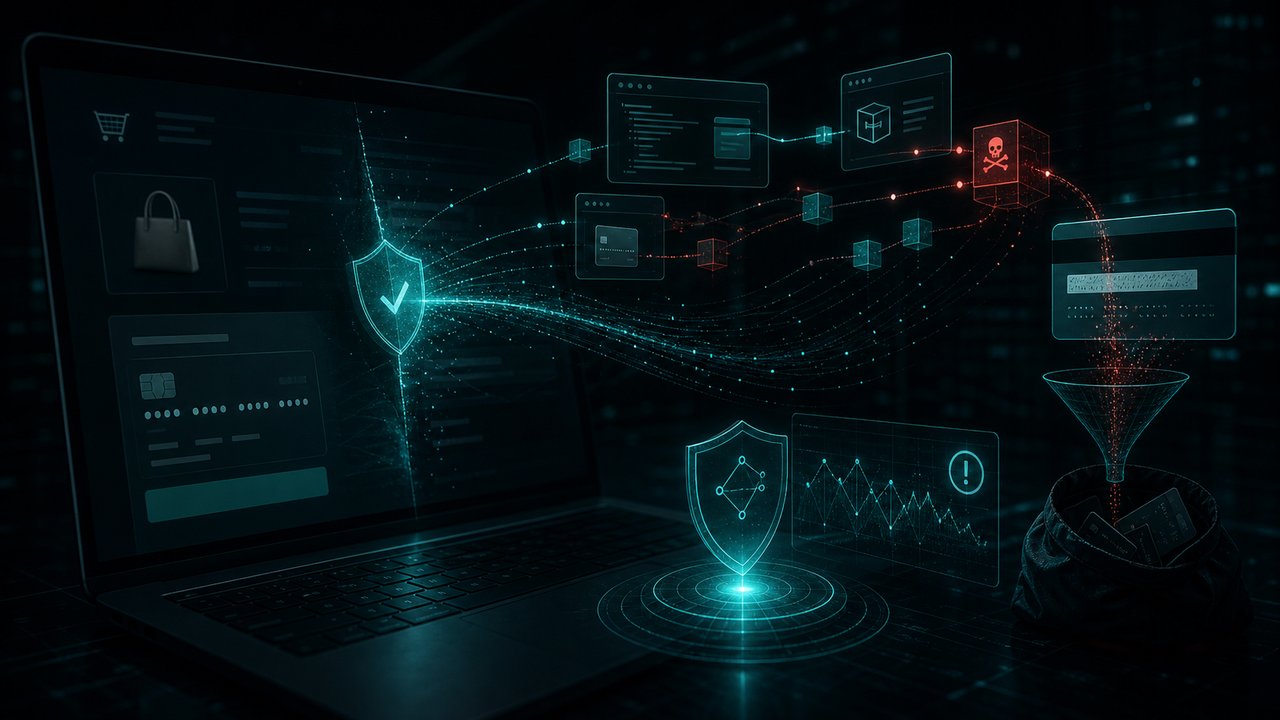
Generative AI has closed the stylistic gap between a real executive’s writing and a synthetic impersonation. Today, 40% of business email compromise (BEC) phishing emails are AI-generated, producing personalized, contextually accurate messages that match the target executive’s known vocabulary, communication cadence, and organizational context. The click-through rate on AI-crafted lures is 450% higher than on traditional phishing emails. And the financial sector is the primary target.
For CISOs at banks, insurers, and fintech firms, this is not an incremental escalation of a known threat. It is a qualitative change in what BEC actually is.
What Is AI-Powered Business Email Compromise?
Business email compromise (BEC) is a class of fraud where attackers impersonate executives, vendors, or business partners to manipulate employees into transferring funds, divulging credentials, or executing unauthorized transactions. Traditional BEC relied on social engineering and domain spoofing. AI-powered BEC adds stylometric matching, voice cloning, real-time context harvesting from LinkedIn and corporate websites, and automated multi-channel targeting.
The FBI IC3 reported that BEC caused more than $2.7 billion in adjusted losses in 2024 and accounts for 73% of all reported cyber incidents.
How the AI-BEC Threat Has Evolved in 2026
Adversary-in-the-Middle (AiTM) Phishing
In January 2026, Microsoft documented a multi-stage AiTM phishing and BEC campaign targeting the energy sector via SharePoint. Rather than simply spoofing an email, the attacker positioned themselves between the victim and a legitimate Microsoft authentication flow, intercepting session tokens in real time.
Dual-Channel BEC Attacks
The dominant 2026 BEC pattern is the dual-channel attack: simultaneous multi-vector contact where the target receives a spoofed email from an “executive” and a concurrent phone call or SMS confirming the request. The second channel creates urgency and authenticity reinforcement that significantly increases compliance rates.
Callback Phishing
Callback phishing, where a phishing email instructs the target to call a fraudulent number staffed by social engineers posing as IT or finance support, more than doubled in popularity in 2025 and continues accelerating into 2026.
What Happens When Financial Security Teams Don’t Address This
According to 2026 threat intelligence, 59% of financial services organizations hit by ransomware had their data successfully encrypted. The median ransom demand in financial services reached $3 million.
The Financial Sector’s Structural Vulnerability
Attack Vector
Why Financial Sector Is Exposed
Executive impersonation
Finance employees are trained to prioritize urgent requests from leadership
Vendor impersonation
High transaction volumes create normalcy for wire transfer requests
AiTM MFA bypass
Widespread MFA adoption has driven attackers to session hijacking rather than credential theft
AI style matching
Executives’ communication styles are well-documented through public statements and filings
Dual-channel attacks
Second communication channel creates false authentication signal
How Peris.ai Defends Financial Institutions Against AI-BEC
BrahmaFusion: Behavioral Analytics and Anomalous Communication Detection
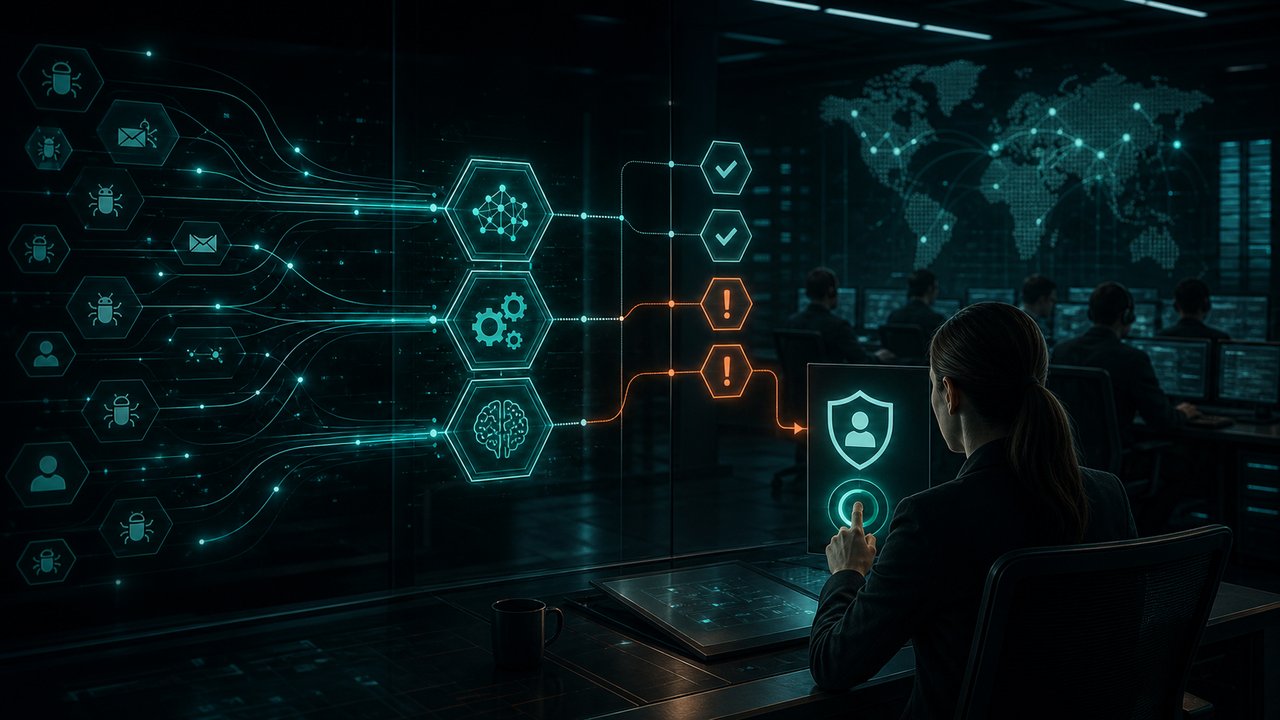
BrahmaFusion, Peris.ai’s agentic AI and hyperautomation platform, applies behavioral analytics to communication patterns across email, endpoint, and identity systems. While content filtering can be defeated by stylistically accurate AI-generated text, behavioral analytics focuses on what is unusual about how and when a communication occurs: an executive sending a wire transfer request from an unusual IP, at an unusual hour, to a new payee, without the corresponding approval workflow.
A FeedLoop customer using BrahmaFusion’s automation reported a 70% reduction in response time for anomalous communication incidents.
INDRA CTI provides real-time intelligence on threat actor campaigns, including BEC operations targeting specific industries and geographies. When a threat actor group begins targeting the Indonesian banking sector with AiTM infrastructure, INDRA CTI surfaces the relevant indicators before the first targeted email reaches your inbox.
Use Case: Catching an AI-BEC Attack Before the Wire Transfers
A regional bank’s CFO receives what appears to be an email from the CEO requesting an urgent $4.2M wire transfer to a new overseas account for a confidential acquisition. The email matches the CEO’s known writing style precisely.
BrahmaFusion flags the transaction request before it reaches the wire desk:
The email originated from an AiTM proxy domain registered 48 hours earlier (INDRA CTI IOC match)
The CEO’s actual session shows no corresponding activity in the corporate email system around the email’s timestamp
The payee account has no prior relationship in the organization’s transaction history
The request bypassed the standard dual-approval workflow required for transfers above $1M
The BrahmaFusion playbook pauses the request, alerts the SOC and compliance team, and generates a case in Peris.ai IRP with full evidence chain. The attack is neutralized without reaching the wire desk.
Benefits at a Glance
Benefit
Outcome
BrahmaFusion behavioral analytics
Detects AI-BEC even when content bypasses stylistic filters
Automated workflow tripwires
Wire transfer anomalies caught before human approval stage
INDRA CTI campaign tracking
Known BEC infrastructure blocked before first email lands
IRP evidence chain
Full forensic record for regulatory and legal response
70% faster response (BrahmaFusion)
Rapid containment reduces exposure window for AiTM session hijacks
The Authentication Stack Is No Longer Sufficient on Its Own
MFA was the correct response to credential theft. AiTM attacks are the response to MFA. The adversarial cycle does not stop at the authentication layer, and financial institutions that treat identity security as the final defense will be repeatedly outmaneuvered.
Behavioral analytics, real-time threat intelligence, and automated anomaly response are the layers that catch what authentication cannot. Peris.ai was built to operate at this level, with BrahmaFusion providing the intelligence-driven automation that financial security teams need to stay ahead of AI-powered fraud.
Visit peris.ai to see how Peris.ai’s agentic AI platform protects financial institutions from the next generation of BEC attacks.
Frequently Asked Questions
What is AI-powered BEC?
AI-powered business email compromise uses generative AI to create hyper-personalized, stylistically accurate executive impersonation emails, increasing click-through rates by up to 450% versus traditional phishing.
How does adversary-in-the-middle (AiTM) phishing bypass MFA?
AiTM phishing intercepts a user’s live authentication session, capturing the session token after the user completes genuine MFA. The attacker uses the captured token to authenticate as the user without ever needing the password or MFA code.
What are the signs of a dual-channel BEC attack?
An unsolicited request arriving simultaneously via email and phone or SMS, with urgency framing and a request that bypasses normal approval processes, is a strong indicator of a dual-channel BEC operation.
How much do BEC attacks cost financial organizations?
The FBI IC3 reported $2.7B+ in BEC-adjusted losses in 2024. The median ransom demand in financial services reached $3 million in 2026.
How does behavioral analytics catch AI-generated BEC emails?
Behavioral analytics focuses on communication context, not content: unusual timing, new payees, bypassed workflows, mismatched session activity, and infrastructure anomalies that AI-generated text cannot replicate.
On May 11, 2026, the Nitrogen ransomware group listed Foxconn on its public leak site, claiming exfiltration of approximately 8TB of data spanning more than 11 million files. Foxconn confirmed disruption to North American operations the following day. Here is why manufacturers are the next major ransomware battleground.
Foxconn is not a small target. It is one of the largest electronics manufacturers on the planet, a supplier to Apple, Microsoft, and Sony, operating factories on multiple continents. If Nitrogen ransomware can penetrate Foxconn’s North American operations and walk out with 8TB of sensitive data, no manufacturer should consider itself safe.
This post examines how Nitrogen operates, why the manufacturing sector has become a primary target, and what security architecture prevents an EDR killer from disabling your defences before the encryption begins.
What Is Nitrogen Ransomware?
Nitrogen ransomware is a ransomware-as-a-service (RaaS) operation that gained significant attention in 2026 for its targeting of large manufacturing, industrial, and logistics organisations. The group maintains a public leak site, NitroBlog, where it lists confirmed victims and publishes exfiltrated data to pressure ransom payment.
Nitrogen’s defining technical characteristic is its use of EDR killers as a standard pre-attack preparation step. EDR killers are tools specifically designed to disable, crash, or evade endpoint detection and response software before the ransomware payload is deployed. Their inclusion in Nitrogen’s standard attack playbook reflects a sector-wide trend: Kaspersky’s 2026 International Anti-Ransomware Day report confirmed that EDR killers are now standard components of ransomware attack chains across the industry.
How Nitrogen Gets In: The Malvertising Initial Access Vector
Nitrogen does not rely on zero-day exploits for initial access. Its approach is more insidious: malvertising campaigns that deliver trojanized installers of legitimate, trusted software.
The tools commonly used as lures include:
WinSCP (popular Windows file transfer tool)
AnyDesk (remote desktop software widely used in manufacturing IT)
Advanced IP Scanner (network administration tool)
PuTTY (SSH client used by IT and OT teams)
An IT technician searching for a free download of WinSCP may land on a malvertised page serving a trojanized installer that looks identical to the legitimate version. The installer runs, the legitimate software installs correctly, and in the background Nitrogen’s initial access malware establishes persistence. The technician sees nothing unusual.
The Foxconn Attack: Timeline and Impact
May 11, 2026: Nitrogen lists Foxconn on NitroBlog, claiming exfiltration of 8TB of data across more than 11 million files
May 12, 2026: Foxconn publicly confirms disruption to North American operations, affecting facilities in Wisconsin and Texas
Scope of data claimed: manufacturing specifications, supplier contracts, employee records, and operational data
The attack follows a pattern that Nitrogen has repeated across multiple manufacturing sector targets in 2026. The group increasingly favours encryptionless extortion, exfiltrating data and threatening to publish it rather than encrypting systems and demanding a decryption key.
Why Is Manufacturing a Ransomware Target?
Operational Technology Exposure
Modern manufacturing environments blend IT systems with OT (operational technology): industrial control systems, SCADA platforms, programmable logic controllers, and connected assembly-line equipment. These OT systems are often decades old, running software that cannot be updated without re-certifying the manufacturing process.
High Operational Cost of Downtime
A ransomware-induced shutdown of a manufacturing line costs thousands to tens of thousands of dollars per hour in lost production.
Interconnected Supply Chains
A breach at Foxconn has downstream implications for every organisation in its supply chain.
What Happens When EDR Is the First Casualty?
Nitrogen’s EDR killer deployment is specifically designed to neutralise your primary detection capability before the attack proceeds. When EDR is disabled:
Endpoint behavioural detection goes dark
The ransomware payload deploys without triggering the controls that should stop it
Security teams receive no alerts until encryption is already underway
Recovery scope expands dramatically because the attack was uncontained
Nitrogen Attack vs. Defended Environment
Attack Stage
Undefended Environment
Peris.ai-Defended Environment
Malvertised installer download
No detection
BimaRed surfaces malvertising domain
EDR killer execution
EDR disabled, blind spot created
XDR network layer continues detecting
Lateral movement
Undetected across OT/IT boundary
NVM packet analysis detects anomalous traversal
Data exfiltration
8TB exits unnoticed
XDR triggers BrahmaFusion isolation playbook
Ransomware payload
Encryption proceeds
Automated containment limits blast radius
How Peris.ai Defends Manufacturing Environments
Our EDR provides behavioural detection on industrial endpoints and IT workstations. Critically, Peris.ai’s EDR is designed to resist EDR killer techniques through tamper-protection mechanisms.
Our XDR extends detection to the full manufacturing environment, including OT network segments. In a factory where industrial control systems share network infrastructure with corporate IT, XDR correlates telemetry across both layers.
Our NVM (Network Visibility Monitor) provides packet-level analysis of all traffic traversing the factory network. Nitrogen’s data exfiltration, typically multi-gigabyte transfers to external infrastructure, generates distinctive network traffic patterns that NVM detects and flags regardless of endpoint agent status.
BimaRed monitors the attack surfaces that Nitrogen exploits for initial access: internet-facing management interfaces, exposed OT systems, and vulnerabilities in IT administration tools.
BrahmaFusion ties the detection layers together with automated response playbooks. When XDR or NVM surfaces Nitrogen indicators, BrahmaFusion triggers network segmentation rules that isolate affected systems from OT infrastructure before encryption can spread to production lines.
Benefits at a Glance
Benefit
Outcome
EDR with tamper protection
EDR killer techniques detected and resisted
XDR cross-layer visibility
OT/IT boundary lateral movement detected
NVM packet-level analysis
Large data exfiltration detected before completion
BimaRed attack surface monitoring
Malvertising domains and exposed assets surfaced early
BrahmaFusion automated segmentation
OT environments isolated before encryption spreads
Final Thought
Nitrogen ransomware listed Foxconn on May 11, 2026. The group will list its next target soon. For manufacturing security teams, the question is not whether their sector is being targeted. It is whether their detection architecture will survive an EDR killer long enough to contain the attack.
Platforms like BrahmaFusion by Peris.ai, combined with XDR, NVM, and INDRA CTI threat intelligence, give manufacturing security teams the layered, agent-independent detection and automated response capability they need to stop Nitrogen and groups like it before the production line goes dark.
Frequently Asked Questions
What is Nitrogen ransomware?
Nitrogen is a ransomware-as-a-service operation that targets manufacturing, industrial, and logistics organisations. The group uses malvertising campaigns to deliver trojanized installers of legitimate tools, deploys EDR killers to disable endpoint detection, and increasingly uses encryptionless extortion by threatening to publish stolen data.
How did Nitrogen ransomware attack Foxconn?
On May 11, 2026, Nitrogen listed Foxconn on its leak site claiming 8TB of exfiltrated data across 11 million or more files. Foxconn confirmed disruption to North American operations including facilities in Wisconsin and Texas on May 12, 2026.
What is an EDR killer and how does it work?
An EDR killer is a tool designed to disable, crash, or evade endpoint detection and response software before a ransomware payload deploys. By neutralising the primary detection control, attackers create a window where encryption or exfiltration proceeds without triggering alerts.
Why does Nitrogen use malvertising as an initial access vector?
Nitrogen uses malvertised downloads of legitimate IT tools (WinSCP, AnyDesk, Advanced IP Scanner, PuTTY) because these tools are trusted and regularly downloaded by IT and OT teams in manufacturing environments.
How can manufacturers defend against EDR killer attacks?
Effective defence requires layered detection that operates independently of endpoint agents. This includes network-level visibility (NVM), cross-layer XDR that monitors OT/IT boundaries, EDR with tamper-protection capabilities, and automated isolation playbooks.
Meta Lede: Stryker was cyberattacked in March 2026. 22% of hospitals have had attacks impact medical devices directly. IoMT security is now a patient safety issue.
On March 11, 2026, Stryker, one of the world’s largest medical technology companies supplying surgical equipment and devices to hospitals across the globe, was disrupted by a cyberattack affecting operations worldwide.
This was not a data breach. Stryker’s attack disrupted the operational continuity of a company whose devices are used in operating rooms, ICUs, and emergency departments every hour of every day. And Stryker is not an isolated case. By 2026, 22% of healthcare organizations have experienced cyberattacks that directly impacted medical devices, and 75% of those incidents disrupted patient care. In 24% of medical device attack cases, patients required transfer to other facilities.
Former FBI officials have proposed terrorist designations for ransomware hackers targeting hospitals, reflecting the recognized severity: when medical devices go offline, patients can die. The Internet of Medical Things (IoMT) is no longer just an IT problem. It is a critical care problem.
What Is IoMT Security and Why Is It Different from Standard Healthcare IT Security?
IoMT (Internet of Medical Things) security refers to the protection of network-connected medical devices: infusion pumps, patient monitors, imaging systems, surgical robots, ventilators, diagnostic equipment, and the thousands of other connected devices deployed across modern hospital environments.
IoMT security differs fundamentally from standard healthcare IT security in three ways:
Devices cannot be patched on a normal cycle. Medical device firmware updates require FDA clearance or CE marking in most jurisdictions. A vulnerability disclosed today may not have a patch available for 12 to 18 months.
Agents cannot be installed. Most medical devices run proprietary operating systems that cannot accept security agent software. Standard EDR deployment is impossible.
Device failure directly harms patients. Unlike an email server outage, a compromised ventilator or infusion pump creates an immediate clinical risk.
By 2026, smart hospitals deploy more than 7 million IoMT devices globally, double the level from 2021.
What the Stryker Attack Reveals About Medical Technology Vulnerability
The March 11, 2026 attack on Stryker demonstrates that the vulnerability extends beyond individual hospital networks to the medical technology supply chain. A cyberattack that disrupts Stryker’s operations can simultaneously affect:
Supply chain continuity for hospital procurement teams
Software update distribution for connected Stryker devices already deployed in hospitals
Remote monitoring and diagnostics capabilities for equipment under service contracts
Customer support and technical assistance for clinical staff
22% of healthcare organizations experienced cyberattacks directly impacting medical devices
75% of medical device attacks disrupted patient care
24% of medical device attacks required patient transfers to other facilities
$10.9 million average cost of a hospital ransomware attack (downtime, recovery, regulatory fines)
276 million health records breached in 2024 alone
How Peris.ai Addresses IoMT Cybersecurity
Agentless Medical Device Monitoring with NVM
Because agents cannot be installed on medical devices, the detection layer must be network-based. Peris.ai’s NVM (Network Visibility Monitor) performs passive packet-level inspection of medical device network traffic without requiring any software installation on the devices themselves and without causing any device operational impact.
NVM establishes behavioral baselines for each device type: the normal communication patterns of an infusion pump differ from those of a patient monitor. Deviations from baseline, including unexpected outbound connections, unusual authentication attempts, and command-and-control traffic patterns, trigger alerts without disrupting device function.
Cross-Network Threat Detection with XDR
Peris.ai’s XDR platform correlates signals from NVM (medical device network), EDR (clinical IT endpoints), and cloud environments into a unified detection view.
Automated Clinical Isolation with BrahmaFusion
BrahmaFusion, Peris.ai’s agentic AI and hyperautomation platform, enables automated response playbooks specifically designed to isolate compromised devices without disrupting clinical workflows. When NVM detects anomalous communication from a medical device, a BrahmaFusion playbook can:
Isolate the affected device’s network access at the switch level without powering down the device
Alert clinical biomedical engineering and the security team simultaneously
Trigger a structured incident response workflow via Peris.ai IRP
Preserve all network traffic captures for forensic investigation
Healthcare-Specific Threat Intelligence with INDRA CTI
INDRA CTI provides healthcare sector-specific threat intelligence: ransomware group tactics targeting medical devices, active campaign IOCs for healthcare-focused threat actors, and vulnerability intelligence for common medical device platforms and operating systems.
Real-World Scenario: A Ransomware Attack on Hospital IoMT
A regional hospital system with 2,400 connected medical devices across three facilities:
An attacker gains initial access through a phishing email to a hospital IT administrator
They move laterally through the hospital IT network to reach the medical device VLAN, which lacks proper segmentation
An infusion pump with a known unpatched CVE is exploited as a pivot point into the medical device network
Ransomware is deployed targeting the device management server and clinical data systems simultaneously
40 infusion pumps require manual operation; two ICU patients require transfer to another facility
Total incident cost: $12.4 million over 8 weeks of recovery
With Peris.ai: NVM detects the lateral movement into the medical device VLAN. BrahmaFusion isolates the compromised VLAN segment while preserving device function. The infusion pump CVE exploitation is flagged before pivot occurs. INDRA CTI confirms the attacker’s infrastructure matches a known ransomware group’s healthcare campaign.
Healthcare IoMT Security Priorities
Priority
Action
Peris.ai Capability
1
Deploy agentless network monitoring for all IoMT
NVM passive packet inspection
2
Segment medical device network from general IT
NVM-identified boundary enforcement via BrahmaFusion
3
Inventory all IoMT devices with firmware versions
BimaRed asset discovery
4
Monitor for healthcare-specific threat actor activity
INDRA CTI
5
Test network pivot paths into medical device VLANs
Pandava penetration testing
Conclusion
The Stryker cyberattack and the data from 2026 make one thing clear: IoMT security is no longer a future concern. With 22% of healthcare organizations already experiencing attacks that directly impact medical devices and 24% of those incidents forcing patient transfers, the question is not whether your hospital will face an IoMT security incident, but whether you will detect it before it reaches patients.
Peris.ai’s healthcare security stack, built around agentless NVM monitoring, cross-network XDR detection, and clinically aware BrahmaFusion automated response, provides the coverage that standard IT security tools cannot deliver in medical device environments.
Don’t wait for a breach to take action. Secure your organization today. Stay Secure with Peris.ai.
Frequently Asked Questions
What is IoMT cybersecurity?
IoMT (Internet of Medical Things) cybersecurity refers to the protection of network-connected medical devices including infusion pumps, patient monitors, imaging systems, surgical equipment, and diagnostic devices against cyberattacks that could disrupt clinical operations or compromise patient safety.
What happened in the Stryker cyberattack in 2026?
On March 11, 2026, Stryker, one of the world’s largest medical technology companies, was disrupted by a cyberattack affecting its global operations, including supply chain, software update distribution, and technical support capabilities for its connected medical devices.
Why are medical devices difficult to secure against cyberattacks?
Medical devices are difficult to secure because they typically run proprietary operating systems that cannot accept security agents, require regulatory approval for firmware updates creating long patch cycles, and cannot be taken offline without clinical risk to patients.
How common are cyberattacks on medical devices?
As of 2026, 22% of healthcare organizations have experienced cyberattacks that directly impacted medical devices. Of those, 75% disrupted patient care and 24% required patient transfers to other facilities.
What is the best way to monitor medical device security without disrupting clinical operations?
Passive, agentless network monitoring (such as NVM) is the recommended approach. It inspects medical device network traffic at the packet level without installing any software on devices and without causing any operational impact.
Meta Lede: AI-powered voice cloning made CEO fraud nearly undetectable. BEC losses hit $2.77B. Here’s how the attack is built and what stops it.
The call lasted four minutes. The voice on the line sounded exactly like the CFO: same cadence, same regional accent, same habit of trailing off before giving a direct instruction. The finance team authorized a $400,000 wire transfer. The CFO never made that call.
Business email compromise (BEC) has evolved beyond email. Attackers now use generative AI to clone the voices and, increasingly, the video presence of C-suite executives to authorize fraudulent wire transfers, extract credentials, and bypass standard verification procedures. The FBI classifies AI-powered BEC as one of the fastest-growing, highest-value fraud categories targeting enterprises in 2026, with BEC generating $2.77 billion in losses across 21,442 incidents in the most recent FBI IC3 reporting period.
Detection is nearly impossible in real time. Few tools exist for live audio deepfake detection, and human ears are fundamentally unreliable at identifying AI-generated speech. This post explains exactly how deepfake CEO voice cloning fraud is constructed, why it works, and what controls can actually stop it.
What Is Deepfake CEO Voice Cloning BEC?
Deepfake CEO voice cloning BEC is a variant of business email compromise in which attackers use AI-generated audio (and increasingly video) to impersonate senior executives during phone or video calls. Rather than sending a fraudulent email, the attacker places a phone call using a voice synthesized from publicly available audio sources, directing employees to take financial or access-related actions under false authority.
The FBI reports a 312% spike in AI-assisted cybercrime targeting US citizens between 2024 and 2026. Q1 2026 alone saw 10.7 million BEC attacks, with 4 million occurring in March.
How AI Voice Cloning Attacks Are Built
The Preparation Phase
Attackers invest weeks before placing a single fraudulent call. They harvest voice samples from publicly available sources:
Earnings call recordings and investor day presentations
Conference keynote videos and panel recordings
LinkedIn videos, podcast appearances, and media interviews
Company website leadership videos
Using commercially available AI voice synthesis tools, they train a voice model requiring as little as 30 seconds of clean audio. The result is a synthesized voice that replicates emotional cues: urgency, frustration, reassurance, and fatigue, all of which human listeners rely on to assess credibility.
The Attack Execution
Calls are deliberately timed to create pressure: before long weekends, immediately before market close, or during known leadership travel. The attacker calls the finance team, accounts payable department, or IT helpdesk and poses as the CEO, CFO, or other executive.
In 2026, the dominant tactic is the “dual-channel” attack: a simultaneous voice call, a spoofed email from an executive address, and a spoofed SMS text message all arrive at the same time, creating apparent corroboration across three channels.
Why Human Detection Fails
AI-generated voices now replicate micro-level speech patterns including breath timing, hesitation markers, and stress patterns. Independent testing shows that under 3% of hyper-personalized deepfake interactions are detected by their targets using standard listening judgment.
Why Deepfake CEO Fraud Is Different from Traditional BEC
Traditional BEC
AI Voice Cloning BEC
Email-only vector
Multi-channel: voice, email, SMS simultaneously
Relies on email spoofing detection
Bypasses email security entirely
Detectable via email header analysis
No email artifact to analyze
Caught by MFA and callback verification
Call-back verification spoofed via call forwarding
Effectiveness declining with awareness
Effectiveness increasing with AI quality
What Controls Actually Stop AI-Powered BEC
Challenge-Response Safe Words
The most immediately deployable control is a pre-established verbal safe word protocol between executive leadership and finance/IT teams. Any out-of-band financial or access request must be verified with a shared phrase that was established in person during onboarding and is rotated monthly.
Mandatory Dual-Approval Delay
All wire transfers above a defined threshold must require two independent approvals with a mandatory cooling-off period. No single voice call or message, regardless of claimed authority, can authorize a transfer without a second approver confirming through a separate verification path.
AI-Powered Anomaly Detection with BrahmaFusion
BrahmaFusion, Peris.ai’s agentic AI and hyperautomation platform, can monitor for unusual financial authorization patterns: requests arriving outside business hours, transfers to first-time beneficiary accounts, requests placed before public holidays, and dual-channel simultaneous contact patterns.
Incident Response Workflow with Peris.ai IRP
When a suspected CEO fraud attempt is detected or reported, a structured incident response workflow is essential. Peris.ai IRP provides unified case management to coordinate rapid investigation. Organizations using Peris.ai IRP have achieved 35% analyst workload reduction through this structured approach.
Threat Actor Attribution with INDRA CTI
INDRA CTI, Peris.ai’s cyber threat intelligence platform, tracks deepfake BEC campaign infrastructure: spoofed caller ID pools, campaign timing patterns, and affiliate groups operating specific CEO fraud campaigns.
Security Testing with Pandava
Pandava, Peris.ai’s penetration testing platform, includes social engineering scenarios specifically designed around simulated deepfake calls.
Real-World Scenario: A Dual-Channel CEO Fraud Attack
A regional bank’s CFO is traveling internationally for a conference:
Attackers monitor the CFO’s LinkedIn and conference social media to confirm travel dates
On Friday afternoon, three simultaneous contacts arrive: a spoofed email from the CFO’s address, a spoofed SMS from the CFO’s number, and a voice call using an AI-cloned version of the CFO’s voice
The voice call requests an urgent $650,000 wire transfer to a new vendor account, citing a confidential acquisition
The finance coordinator, seeing email and SMS corroboration, initiates the transfer
Total time from first contact to wire authorization: 11 minutes
With BrahmaFusion’s anomaly detection: the new beneficiary account, Friday afternoon timing, and simultaneous multi-channel contact pattern trigger an automated hold and escalation. The transfer is flagged for manual review before execution. The fraud is stopped.
Benefits of an AI-Aware BEC Defense Program
Benefit
Outcome
Behavioral anomaly detection
Catch unusual authorization patterns before transfer executes
Structured IR workflow
Coordinate response across finance, legal, and security in one platform
Threat actor tracking
Pre-flag known BEC campaign infrastructure
Simulated deepfake testing
Build staff resilience before real attacks arrive
Dual-approval enforcement
Remove single-point-of-failure in authorization chains
Conclusion
AI voice cloning has turned CEO fraud from an email problem into a multi-channel social engineering crisis. With $2.77 billion in losses and a 312% increase in AI-assisted cybercrime, organizations that rely solely on email security controls are defending against the wrong threat vector.
The controls that work are behavioral, not perceptual: anomaly detection that flags unusual authorization patterns, structured incident response that creates mandatory friction, and security testing that trains your teams before attackers do. Peris.ai’s integrated platform gives security and finance teams the tools to detect, respond to, and learn from deepfake BEC attempts before they become wire transfer losses.
Don’t wait for a breach to take action. Secure your organization today. Stay Secure with Peris.ai.
Frequently Asked Questions
What is deepfake CEO voice cloning fraud?
Deepfake CEO voice cloning fraud is a form of business email compromise (BEC) in which attackers use AI-synthesized audio to impersonate C-suite executives during phone calls, directing employees to authorize wire transfers, share credentials, or bypass standard verification procedures.
How do attackers create a deepfake voice for CEO fraud?
Attackers collect voice samples from public sources such as earnings calls, conference videos, and podcast recordings. Using AI voice synthesis tools, they train a voice model requiring as little as 30 seconds of audio, producing a synthetic voice that replicates the target’s speech patterns and emotional cues.
How much money has been lost to BEC and deepfake CEO fraud?
The FBI reports $2.77 billion in BEC losses across 21,442 incidents in the most recent IC3 reporting period. AI-assisted cybercrime targeting US citizens increased 312% between 2024 and 2026.
Can deepfake phone calls be detected in real time?
Industry testing shows that fewer than 3% of hyper-personalized deepfake interactions are detected by their targets in real time. Human listeners cannot reliably distinguish AI-generated speech, particularly under time pressure.
What is the most effective control against AI voice cloning BEC?
A combination of pre-established verbal safe words, mandatory dual-approval delays for financial transfers, AI-powered behavioral anomaly detection (such as BrahmaFusion), and regular simulated deepfake testing (such as Pandava) provides the most effective layered defense.
More than 90,000 LLMjacking attempts were logged between late 2025 and early 2026. Criminal AI toolkits have removed safety guardrails from large language models and made sophisticated attacks accessible at industrial scale. Your AI infrastructure is now an attack surface.
The AI revolution in enterprise technology has a shadow side that most organisations are not yet defending against. While security teams focus on AI-powered phishing and deepfake fraud, a different category of threat has matured quietly: attacks against AI infrastructure itself.
LLMjacking is the act of hijacking an organisation’s AI infrastructure to run compute-intensive tasks at the victim’s expense. It is analogous to cryptojacking but targets GPU-backed inference endpoints instead of CPU cycles. Meanwhile, a parallel criminal AI ecosystem has emerged, purpose-built to remove the safety controls of mainstream AI models and make sophisticated cyberattacks, fraud, and social engineering accessible to anyone willing to pay a subscription fee.
This post examines both threats, the data behind their scale, and what security teams need to do before their AI investment becomes someone else’s attack platform.
What Is LLMjacking?
LLMjacking is the unauthorised use of an organisation’s AI model infrastructure, typically cloud-hosted LLM endpoints, to run inference tasks for the attacker’s benefit. The attacker does not steal data in the traditional sense. Instead, they consume the organisation’s compute resources, generating costs that can reach tens of thousands of dollars per day at scale.
The attack vector is straightforward: misconfigured API keys, exposed inference endpoints, and vulnerable proxy configurations give attackers access to AI services. Automated scanners probe for these exposures continuously. More than 90,000 LLMjacking attempts were logged between late 2025 and early 2026, driven largely by misconfigured open proxies that provide access to LLM service APIs.
The Criminal AI Toolkit Ecosystem
Parallel to LLMjacking, a mature criminal AI ecosystem has developed specifically to remove the ethical and safety guardrails that mainstream AI providers have built into their models. These purpose-built criminal LLMs serve the same function as legitimate AI models, but without restrictions on harmful content:
WormGPT: generates convincing phishing emails, social engineering scripts, and malware code without the refusals that ChatGPT or Claude would produce
WolfGPT: focused on financial fraud and business email compromise script generation
EscapeGPT: specialises in jailbreaking and circumventing AI safety mechanisms
FraudGPT: used for generating fake invoices, fraudulent financial documents, and identity theft scripts
GhostGPT: targeted at creating evasive malware and exploit code
These tools are not hypothetical. They are available on underground markets with subscription pricing ranging from $100 to $1,500 per month, making sophisticated attack capabilities accessible to threat actors with minimal technical background.
The CrowdStrike 2026 Global Threat Report documented an 89% increase in AI-enabled adversary activity in 2025 compared to the prior year. All four major nation-state actors, China, Russia, Iran, and North Korea, had operationalised large language models in their attack chains by late 2025.
CVE-2025-53773: When AI Development Tools Become Attack Surfaces
The security risk of AI infrastructure extends beyond criminal toolkits. CVE-2025-53773 is a prompt injection vulnerability in GitHub Copilot that carries a CVSS score of 9.6. By embedding malicious instructions in pull request descriptions, an attacker could cause GitHub Copilot to execute arbitrary code on a developer’s workstation.
This vulnerability illustrates a category of risk that security teams are not yet systematically addressing: the AI tools embedded in the development workflow are themselves attack surfaces. Every AI-assisted code review, every AI-generated pull request summary, and every AI-powered development tool introduces a new vector for prompt injection, model manipulation, and supply chain compromise.
What Happens When AI Security Is Overlooked?
Organisations that deploy AI infrastructure without corresponding security controls face multiple compounding risks:
Financial: LLMjacking can generate unexpected cloud bills of $10,000 to $50,000 or more per day when attackers run compute-intensive inference tasks at scale
Operational: Consumed API quotas disable legitimate AI-powered workflows
Data exposure: Attackers with access to AI inference endpoints may be able to extract training data or previous conversation context through prompt injection
Competitive: Proprietary models trained on internal data may be accessible to attackers via compromised API endpoints
Reputational: AI infrastructure used to generate attacker content may create attribution and liability issues
AI Security: Traditional Posture vs. AI-Aware Defence
Risk Category
Without AI Security
With Peris.ai AI Security
LLMjacking detection
Discovered via unexpected invoice
BrahmaFusion detects anomalous AI API usage patterns
Criminal AI toolkit awareness
Unknown until breach
INDRA CTI tracks criminal AI infrastructure and TTPs
AI development tool vulnerabilities
Unmonitored in CI/CD pipeline
BimaRed SAST scans AI/ML pipeline code for injection vulnerabilities
Prompt injection in production
No detection capability
XDR monitors AI service interactions for anomalous patterns
Post-compromise response
Manual investigation
Peris.ai IRP case management with AI-specific playbooks
How Peris.ai Secures AI Infrastructure
INDRA CTI tracks the criminal AI toolkit ecosystem continuously. WormGPT, FraudGPT, GhostGPT, and their successors are monitored through their infrastructure, distribution channels, and capability updates. When a new criminal AI toolkit is identified that targets a specific sector or is observed being used in campaigns against organisations similar to yours, INDRA CTI delivers that intelligence to your security team as actionable context rather than a news item.
BimaRed applies SAST to your AI and ML pipeline code. Prompt injection vulnerabilities, like CVE-2025-53773, are a class of code-level issue that static analysis can identify. BimaRed scans AI pipeline code for unsafe prompt handling patterns, unsanitised user input passed to model APIs, and dependencies with known AI-related vulnerabilities.
BrahmaFusion detects anomalous AI API usage through behavioural monitoring. LLMjacking generates distinctive patterns: sudden spikes in API calls, unusual times of day for high-volume inference requests, calls from unexpected IP addresses or service identities, and consumption patterns inconsistent with legitimate business workflows. BrahmaFusion triggers automated isolation playbooks when these patterns are detected, revoking the compromised credentials and blocking the offending access before the bill arrives.
Our XDR provides cross-layer detection for AI cloud service abuse. In cloud environments where AI inference runs alongside other workloads, XDR correlates anomalous AI service activity with related indicators in identity logs, network traffic, and endpoint activity to build a complete picture of the attack chain.
Scenario: Catching LLMjacking Before the $40,000 Bill
At 2:30am, BrahmaFusion detects an anomaly in the organisation’s AI inference endpoint usage: API call volume has increased 8,000% over baseline in the past 45 minutes. The calls are originating from an IP not associated with any known service identity.
With Peris.ai:
BrahmaFusion immediately flags the anomalous API consumption pattern
INDRA CTI matches the source IP to known LLMjacking infrastructure from a scanning campaign identified the prior week
The compromised API key is revoked automatically
The inference endpoint is temporarily restricted to approved IP ranges pending investigation
Peris.ai IRP opens a case documenting the incident for the cloud security team
Estimated cost of the LLMjacking attempt if undetected for 24 hours: $38,000. Cost of the containment: 12 minutes of automated response.
Benefits at a Glance
Benefit
Outcome
INDRA CTI criminal AI monitoring
WormGPT, FraudGPT, and LLMjacking infrastructure tracked in real time
BimaRed AI pipeline SAST
Prompt injection vulnerabilities caught before deployment
BrahmaFusion API anomaly detection
LLMjacking detected and contained before significant cost accumulates
XDR cloud AI service monitoring
Full cross-layer visibility into AI infrastructure abuse
Final Thought
The AI infrastructure your organisation has invested in, the inference endpoints, the model APIs, the development tools with AI integration, is now part of your attack surface. The criminal ecosystem that has grown up around AI in 2025 and 2026 treats it as a resource to be exploited and a capability to be weaponised.
Platforms like BrahmaFusion by Peris.ai, combined with INDRA CTI’s criminal AI tracking and BimaRed’s AI pipeline security, give security teams the visibility and automated response needed to protect AI investments from becoming attacker infrastructure.
Frequently Asked Questions
What is LLMjacking?
LLMjacking is the unauthorised use of an organisation’s AI model infrastructure to run inference tasks at the victim’s expense. Attackers exploit misconfigured API keys or exposed inference endpoints to consume AI compute resources, generating costs of up to $50,000 or more per day. More than 90,000 LLMjacking attempts were logged between late 2025 and early 2026.
What are criminal AI tools like WormGPT and FraudGPT?
Criminal AI toolkits are purpose-built large language models that remove the safety guardrails of mainstream AI models. WormGPT generates phishing emails and malware code. FraudGPT creates fraudulent financial documents. GhostGPT produces evasive malware. These tools are available on underground markets for $100 to $1,500 per month.
What is CVE-2025-53773 in GitHub Copilot?
CVE-2025-53773 is a prompt injection vulnerability in GitHub Copilot with a CVSS score of 9.6. By embedding malicious instructions in pull request descriptions, an attacker could cause GitHub Copilot to execute arbitrary code on a developer’s machine.
How can organisations detect LLMjacking attempts?
Effective LLMjacking detection requires monitoring AI API usage for anomalous patterns: sudden spikes in call volume, requests from unexpected IP addresses or service identities, and consumption patterns inconsistent with normal business workflows. BrahmaFusion’s behavioural monitoring detects these patterns and triggers automated credential revocation before significant cost accumulates.
How has nation-state use of AI in attacks evolved?
According to CrowdStrike’s 2026 Global Threat Report, all four major nation-state actors (China, Russia, Iran, North Korea) had operationalised LLMs in their attack chains by late 2025, and AI-enabled adversary activity increased by 89% in 2025 versus the prior year.
Meta Lede: QR code phishing doubled in Q1 2026, making it the fastest-growing attack vector. Here’s why quishing bypasses email security and what stops it.
Your email security gateway caught 8.3 billion phishing threats in Q1 2026. It almost certainly missed the fastest-growing one.
QR code phishing, known as “quishing,” more than doubled in Q1 2026, according to Microsoft’s Q1 2026 Email Threat Landscape Report released April 30, 2026. It is now the fastest-growing attack vector in email-based threat data. The reason it bypasses your existing defenses is by design: QR codes contain no URL, only an image. Legacy email scanners that analyze link reputation and URL patterns have nothing to analyze. The malicious destination is invisible to automated scanning tools until the victim’s phone decodes it.
And that phone, in virtually every enterprise environment, has far weaker security controls than the corporate laptop sitting next to it.
This post explains exactly how QR code phishing 2026 works, why it is so difficult to detect with standard tools, and what security teams can add to close the gap.
What Is QR Code Phishing (Quishing)?
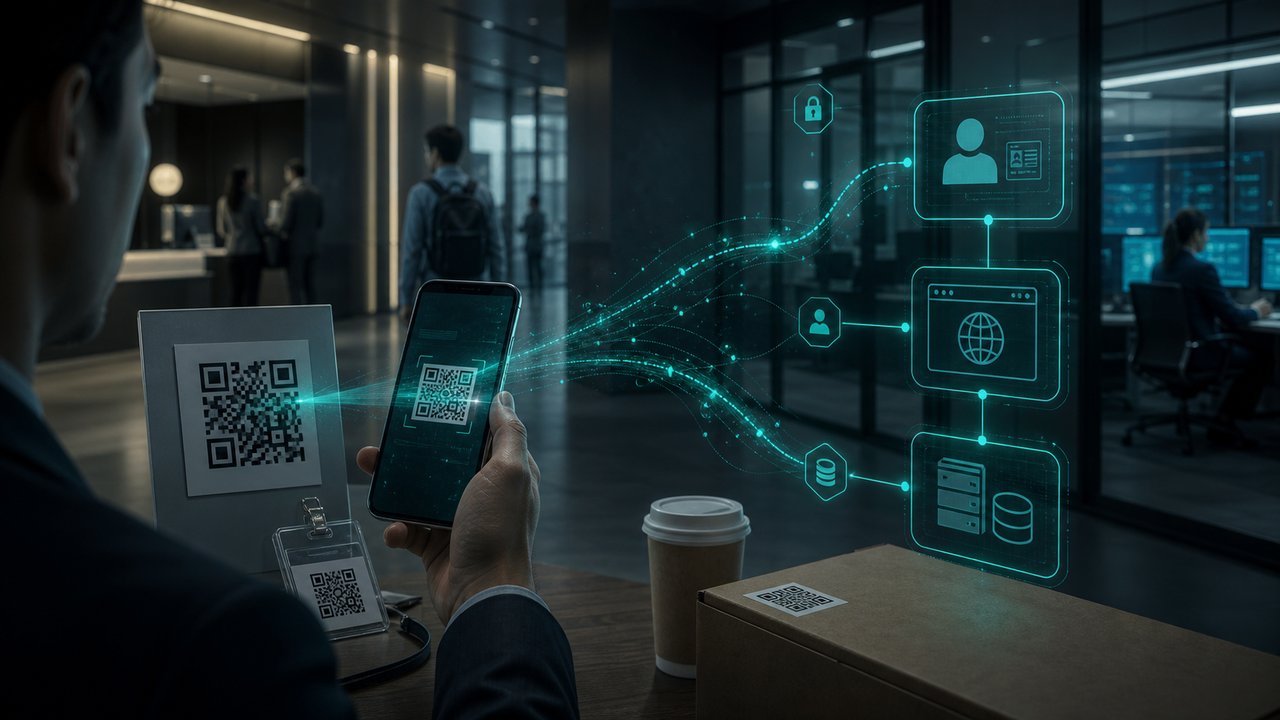
Quishing is a phishing attack that uses QR codes instead of embedded hyperlinks as the delivery mechanism. Rather than including a malicious URL that email security gateways can inspect and block, the attacker embeds a QR code image in the email or physical medium. The code itself contains the malicious URL, but this URL is not readable by text-based email scanning tools.
The victim scans the QR code with their mobile device, which resolves the URL and delivers the phishing payload or credential harvesting page. Because mobile devices typically operate on personal or unmanaged networks (home Wi-Fi, cellular data) and lack enterprise-grade endpoint protection, the payload executes in an environment with significantly weaker security controls than the corporate perimeter.
Between Q1 2026, a multi-stage campaign targeted 35,000 users across 26 countries using QR-linked payloads as the primary delivery mechanism.
Why QR Code Phishing Doubles in Q1 2026
The Email Security Bypass Architecture
The core reason quishing is growing is that it was engineered specifically to defeat email security gateways. Standard email security controls that fail against quishing include:
URL reputation scanning: No URL is present in the email body; the QR code is an image
Link rewriting and sandboxing: Cannot rewrite what does not appear as a link
Content analysis: The malicious destination is encoded in the image, not accessible to text analysis
Attachment scanning: A QR code image does not match malware signatures
The email that delivers a QR phishing payload can pass every standard email security check with a perfect score.
CAPTCHA-Gated Payloads: A Secondary Evasion Layer
Microsoft’s Q1 2026 data documents a parallel evolution: CAPTCHA-gated phishing, which grew rapidly alongside quishing in Q1. After the victim scans the QR code and loads the phishing page, the page requires a CAPTCHA completion before displaying the credential harvesting form. This prevents automated security analysis tools from reaching the payload page, making sandbox-based detection ineffective.
The Mobile Device Security Gap
The QR scanning device is typically a personal smartphone. In most enterprise environments:
Personal smartphones are not enrolled in Mobile Device Management (MDM)
They operate on personal networks outside enterprise security monitoring
They lack the endpoint protection installed on corporate laptops
Browser-level phishing protections on mobile are less mature than on desktop
Physical Environment Expansion
Quishing is no longer confined to email. In 2026, QR codes are being deployed as attack vectors in physical environments:
Fake QR codes pasted over legitimate ones at parking payment stations
Malicious QR codes embedded in conference badge lanyards and event materials
Phishing QR codes placed on posters in office reception areas and public spaces
Fake package delivery notifications with QR codes sent via physical mail
The 2026 Quishing Threat Landscape: By the Numbers
Metric
2026 Data Point
QR phishing growth, Q1 2026
More than doubled quarter-over-quarter
Total email phishing threats, Q1 2026
8.3 billion detected by Microsoft
BEC attacks total, Q1 2026
10.7 million (January surge 24%, March surge 26%)
Multi-country campaign scale
35,000 users targeted across 26 countries with QR payloads
Hyper-personalized AI phishing detection rate
Under 3% by standard security tools
How Peris.ai Defends Against Quishing Attacks
AI-Powered Phishing Response with BrahmaFusion
BrahmaFusion, Peris.ai’s agentic AI and hyperautomation platform, automates the response to phishing alerts including quishing incidents. When a user reports a QR phishing email or an anomalous mobile login is detected following QR code scanning, BrahmaFusion triggers a response playbook: the suspicious email is quarantined across all recipients, the session credentials are flagged for forced re-authentication, the QR code image is extracted and submitted for reputation analysis, and the SOC is notified with a fully enriched alert package.
Mobile and Endpoint Detection with XDR
Peris.ai’s XDR platform extends detection to cover mobile and endpoint behavior following QR code interactions. When a device accesses a newly registered domain immediately after a QR code was reported in the environment, or when credential entry is followed immediately by an anomalous login from an unusual location, XDR correlates these signals into a high-confidence alert.
Campaign Tracking with INDRA CTI
INDRA CTI, Peris.ai’s threat intelligence platform, tracks active quishing campaigns in real time: QR code infrastructure domains, campaign-specific payload patterns, and threat actor attribution for organized quishing operations.
Simulated Quishing Testing with Pandava
Pandava, Peris.ai’s penetration testing platform, includes simulated quishing attacks as part of social engineering assessment programs.
Real-World Scenario: A Quishing Attack Against a Finance Team
A finance director at a regional bank receives an email appearing to come from the bank’s IT department:
The email explains that multi-factor authentication is being upgraded and provides a QR code to complete enrollment
The email passes all email security gateway checks (no URL, no malware signature, trusted sender display name)
The finance director scans the QR code during a commute using their personal smartphone
The QR code resolves to a CAPTCHA-gated credential harvesting page mimicking the bank’s MFA portal
The finance director completes the CAPTCHA and enters their username, password, and MFA code
Attackers use the harvested credentials within 4 minutes to initiate a session on the corporate banking platform
$380,000 is transferred to an external account before the session triggers a behavioral alert
With Peris.ai: BrahmaFusion detects the anomalous login and forces re-authentication. INDRA CTI flags the destination domain as a known quishing campaign infrastructure. The transfer is blocked pending manual approval.
Quishing Defense Checklist
Control
Why It Helps
QR-aware email security
Detect and sandbox QR code images before delivery
Mobile Device Management
Extend endpoint security to devices used for QR scanning
Behavioral login anomaly detection
Catch credential misuse following successful quishing
Real-time campaign threat intel
Block known quishing domains before victims access them
Simulated quishing training
Build staff recognition before real attackers test them
Conclusion
QR code phishing doubled in Q1 2026 for the same reason any attack vector grows: it works. It bypasses email security gateways by design, exploits the security gap of unmanaged mobile devices, and is now expanding beyond email into physical environments.
Peris.ai’s combination of BrahmaFusion automated response, XDR behavioral detection, and INDRA CTI campaign intelligence gives security teams the multi-layer coverage needed to catch quishing attacks at the delivery, credential theft, and post-compromise stages.
Don’t wait for a breach to take action. Secure your organization today. Stay Secure with Peris.ai.
Frequently Asked Questions
What is QR code phishing (quishing)?
Quishing is a phishing attack that uses QR codes instead of embedded URLs to deliver malicious payloads. The QR code contains the malicious destination but appears as an image to email scanning tools, bypassing URL-based security checks.
How much did QR code phishing grow in 2026?
According to Microsoft’s Q1 2026 Email Threat Landscape Report, QR code phishing more than doubled in Q1 2026, making it the fastest-growing attack vector in email-based threat data for the quarter.
Why does quishing bypass email security gateways?
Email security gateways analyze text-based content, URLs, and file attachments. QR codes are images that contain no readable URL, so gateway tools have nothing to inspect or block.
What is CAPTCHA-gated phishing?
CAPTCHA-gated phishing places a CAPTCHA verification step between the victim and the credential harvesting page. This prevents automated security analysis tools from reaching the malicious payload, making sandbox-based detection ineffective.
How can organizations protect against quishing attacks?
Effective defenses include QR-aware email security, mobile device management, behavioral login anomaly detection, real-time threat intelligence to block known quishing domains, and simulated quishing exercises to train employees.
The Browser Became the New Endpoint, and Nobody Sent the Memo
While most enterprise security programs are still budgeting for shadow IT, the actual crisis has migrated into a single application: the browser. Layerx Security 2026 research shows that 1 in 6 enterprise users runs at least one AI-enabled browser extension, and 73% of those extensions carry high or critical permission scope. AI extensions are 60% more likely to have a known CVE than the average extension, three times more likely to have cookie access, and six times more likely to expand permissions after install.
IBM’s 2025 Cost of a Data Breach Report adds the financial line: shadow AI added USD 670,000 to the average breach cost, and only 37% of organizations had any governance controls in place.
This is the new perimeter problem. The CASB-SWG-DLP stack you bought in 2020 was not designed for it. This post is the CISO briefing on what changed, what is exposed, and how Peris.ai shrinks the gap.
What Is Shadow AI in the Browser?
Shadow AI describes the unsanctioned use of generative AI tools and AI-enabled browser extensions by employees, outside of central IT governance. It includes browser plugins that summarize email, rewrite documents, transcribe meetings, suggest replies, or read web pages, all by streaming corporate data to third-party large language model providers.
The defining characteristic of shadow AI is consent. Employees install these tools personally, often using personal accounts, and grant permissions through a one-click flow that bypasses identity, DLP, and procurement entirely.
Why Is Shadow AI So Dangerous in 2026?
Permission scope is enormous
73% of AI browser extensions in enterprise use carry permissions to read all data on visited pages, capture cookies, and modify network requests. An employee installing an AI assistant for Gmail is, in practice, granting that vendor access to every page they visit and every authenticated session they maintain.
Identity oversight is bypassed by design
90% of GenAI logins in enterprise environments bypass identity oversight, and 67% of employees access GenAI tools via personal accounts. The SSO, the conditional access policies, and the audit logs all become irrelevant because the user never touched the corporate identity provider for that session.
Data exposure is normalized in workflow
77% of employees paste data into GenAI prompts, and 50% of that paste activity includes corporate data, ranging from customer lists to financial models to source code. The transaction feels lightweight because the interface looks like a chat window, but the data exits the perimeter the moment Enter is pressed.
The vulnerability profile is worse than baseline
AI extensions are 60% more likely to carry known CVEs than the average extension. They are 6 times more likely to expand their permissions after install. They are 3 times more likely to require cookie access. The class of software least subject to enterprise vetting is also the class most likely to be exploitable.
What Happens When Teams Do Not Solve This?
20% of organizations reported breaches specifically caused by shadow AI in 2025.
IBM tracked an average USD 670,000 added breach cost attributable to shadow AI exposure.
Only 37% of organizations have any GenAI detection or governance policy. The other 63% are running blind.
Customer trust, particularly in regulated sectors, evaporates after a single shadow-AI-linked disclosure.
Old Way vs. New Way: Browser Governance
Capability
Pre-Shadow-AI Stack
2026 Browser Governance
Application control
CASB and SWG visibility
Real-time browser-process telemetry
Extension hygiene
Annual review of approved plugins
Continuous risk scoring per extension
Data exfiltration
DLP at network egress
Prompt-level DLP at browser layer
Identity scope
SSO-scoped audit
Identity plus personal-account behavioral baselines
Threat intel
Generic phishing IOCs
Malicious AI extension and prompt-injection infrastructure
How Peris.ai Closes the Shadow AI Gap
Peris.ai treats the browser as the actual endpoint, because in 2026 it functionally is. Three components address the shadow AI problem directly.
BrahmaFusion for browser behavioral analytics
BrahmaFusion correlates browser process telemetry with DLP signals, identity events, and outbound traffic patterns. When an employee pastes a customer list into an unsanctioned GenAI tab, BrahmaFusion sees the paste event, the destination, the data sensitivity, and the user context together. It can block the action in real time or trigger a structured coaching prompt without halting productivity. Peris.ai clients report 40% SOC cost savings after BrahmaFusion automates this class of policy enforcement.
INDRA CTI for malicious AI extension intelligence
INDRA CTI tracks malicious AI extensions, prompt-injection attack infrastructure, and AI vendors with known data-handling issues. Your team subscribes to a continuously updated risk feed instead of reactive review cycles.
XDR for endpoint-level browser visibility
Our XDR sees the process layer beneath the browser. When an AI extension expands permissions, accesses cookies it never needed before, or initiates outbound traffic to anomalous endpoints, XDR raises the alert and correlates it with identity and network signals.
Use Case: Catching a Paste Before It Leaves
A mid-market SaaS company using Peris.ai observes the following on a Wednesday morning.
A product manager installs a popular AI-powered email summarizer browser extension on her work laptop without going through procurement.
The extension immediately requests cookie access and the ability to read all visited pages. Our XDR logs the new extension fingerprint and elevated permission scope.
Within an hour, the product manager pastes a sensitive customer churn analysis into the extension’s prompt panel. BrahmaFusion identifies the paste as corporate data, classifies the destination as an unsanctioned LLM provider, and pauses the outbound request mid-flight.
The user sees a coaching message offering an approved alternative. The data never leaves. IRP captures the event for the governance team.
No breach. No board memo. No USD 670,000 cost addition.
Outcomes That Matter
Benefit
Outcome
Real-time prompt-layer DLP
Sensitive data does not leave the browser
Continuous extension risk scoring
High-CVE or scope-creep extensions surfaced before incident
Identity correlation across personal accounts
Closes the 90% identity-oversight gap
Automated coaching
Productivity preserved while policy enforced
Governance evidence in IRP
Regulator-ready trail for GenAI usage
Conclusion
Shadow AI is not a future risk. It is the most-installed and least-governed software category in your enterprise today. The CASB-SWG-DLP architecture, designed for traditional SaaS sprawl, does not see the browser-layer paste, the extension permission creep, or the personal-account login. Closing that gap requires agentic AI cybersecurity that operates at the browser and prompt layers, with hyperautomation SOC workflows tying it back to identity and network telemetry. Peris.ai brings exactly that capability.
Don’t wait for a breach to take action. Secure your organization today. Stay Secure with Peris.ai.
FAQ
What is shadow AI?
Shadow AI is the unsanctioned use of generative AI tools, browser extensions, or AI-enabled features by employees outside of central IT governance, typically via personal accounts that bypass corporate identity and DLP controls.
How widespread is shadow AI in 2026?
Layerx Security research finds 1 in 6 enterprise users runs at least one AI-enabled browser extension, with 73% of those extensions carrying high or critical permission scope. 77% of employees paste data into GenAI prompts.
How much does shadow AI cost when it leads to a breach?
IBM’s 2025 Cost of a Data Breach Report attributes an average USD 670,000 additional cost to breaches involving shadow AI exposure, and 20% of organizations reported breaches specifically caused by shadow AI.
Why does standard DLP miss shadow AI?
Traditional DLP is positioned at network egress and email gateways, while shadow AI usage often occurs inside an authenticated browser session via a personal account, with the data leaving as a chat prompt. The browser is the actual exfiltration surface and is invisible to legacy DLP.
How does Peris.ai detect and block shadow AI activity?
Peris.ai BrahmaFusion correlates browser process telemetry with DLP signals and identity events, blocks unsanctioned paste actions in real time, and provides coaching prompts. INDRA CTI scores AI extensions for risk continuously, and Peris.ai XDR sees permission-creep behaviors at the endpoint layer.
7,655 ransomware victims in 12 months (based on leak site tracking). One organization every 71 minutes. The dominant attack vector is not a vulnerability: it’s a valid login.
From March 2025 to March 2026, ransomware groups posted 7,655 victim claims. That is one new organization posted every 71 minutes, every hour of every day for an entire year. Fifty-three ransomware groups claimed US victims in January and February 2026 alone. Qilin alone claimed 1,179 victims across 74 countries, averaging 3.1 new victims every single day.
These numbers are striking. What is more striking is how the attacks actually begin. Ransomware is no longer primarily a story about exploiting technical vulnerabilities. The dominant shift in 2026 is identity-first attack: attackers prioritize credential theft, session token hijacking, and federated access abuse to achieve initial access. They do not break in through a zero-day. They log in with a valid credential.
This rewrite of the ransomware playbook has profound implications for threat models that are organized around perimeter defense and vulnerability management. If the attacker already has valid credentials, your firewall sees a legitimate login. Your SIEM records an authenticated session. Your EDR agent sees a credentialed user executing commands. The threat is inside the perimeter from the first moment, and it looks like a trusted user.
This post maps how credential-first ransomware works in 2026, why the identity perimeter is now the last line of defense, and what detection controls actually catch these attacks before encryption begins.
What Is Credential-First Ransomware?
Credential-first ransomware is a ransomware attack methodology that prioritizes obtaining valid authentication credentials as the first phase of the attack chain, rather than exploiting a technical vulnerability for initial access. This includes phishing-based credential theft, session token hijacking (including AiTM techniques), dark web purchase of previously stolen credentials, and insider recruitment.
Once inside with valid credentials, attackers move methodically: they discover the environment, elevate privileges, disable security tooling, destroy backups, and stage data for exfiltration before deploying encryption. The credential is the key. Everything else follows from having it.
The 2026 Ransomware Landscape: Who Is Attacking
The credential theft ransomware identity attack landscape in 2026 is characterized by a maturing ecosystem of specialized groups with distinct operating patterns.
Qilin leads by volume with 1,179 claims across 74 countries in the past 12 months. Akira targets mid-market organizations in manufacturing and professional services. Clop specializes in large-scale data theft from enterprise networks. INC Ransom and Play focus on critical infrastructure and healthcare. DragonForce and Sinobi represent newer entrants with rapidly growing victim counts.
Across these groups, several structural trends define 2026 operations: faster rebranding cycles when heat increases, cross-platform encryption capability that operates across Windows, Linux, and VMware ESXi simultaneously, and double extortion as the baseline: data exfiltration before encryption, with two separate leverage points for payment.
Perhaps most concerning: ransomware groups are actively recruiting native English speakers to approach corporate insiders as recruitment targets. A BBC reporter was contacted in 2026 by a group attempting to recruit insiders to plant ransomware in exchange for a share of the ransom. The attack surface now includes your employees as potential threat vectors.
The Credential-First Attack Chain
Phase 1: Credential Acquisition
Attackers acquire credentials through multiple channels operating in parallel. Phishing campaigns deliver credential-harvesting pages or info-stealers. Dark web credential markets sell previously stolen credentials from historical breaches. Session tokens are harvested through AiTM phishing proxies that bypass MFA. Federated identity vulnerabilities allow credential reuse across cloud environments.
Nation-state actors using AI to forge synthetic identities and deepfake personas have also been observed successfully passing recruitment and verification processes, establishing insider positions in targeted organizations. The acquisition phase is patient and multi-channel.
Phase 2: Persistent Access Establishment
With valid credentials, the attacker establishes persistent access using legitimate mechanisms: creating new accounts, adding MFA methods to existing accounts, registering new devices for trusted access, and installing remote management tools that are indistinguishable from legitimate IT infrastructure.
This phase is where dwell time accumulates. Attackers may maintain persistent access for weeks before proceeding, gathering intelligence on network topology, backup architecture, and security tooling.
Phase 3: Privilege Escalation and Lateral Movement
Using the persistent access, attackers escalate privileges by exploiting misconfigured access controls, over-privileged service accounts, and legacy systems that lack modern authentication requirements. Lateral movement uses legitimate tools: RDP, WMI, PowerShell, and network file shares — activities that are difficult to distinguish from normal IT operations without behavioral context.
Phase 4: Defense Evasion and Backup Destruction
Before encryption, attackers systematically disable or evade security controls: stopping EDR agents, clearing logs, disabling backup processes, and staging data exfiltration. Backup destruction is completed before ransomware deployment to remove the recovery option. This phase is the critical window for detection: the behavioral patterns of backup access and deletion, logging changes, and security tool manipulation are detectable anomalies that precede encryption.
Phase 5: Encryption and Double Extortion
With defenses disabled and backups destroyed, encryption is deployed. Simultaneously, the exfiltrated data creates a second extortion lever: pay or the data is published. In 2026, the encryption phase is often the first moment organizations realize an attack is underway: by then, the damage is largely done.
What Happens When Teams Miss the Early Phases
Ransomware groups have adapted to detection at the encryption phase: they simply rebuild with a different tool and re-enter. The organizations that successfully reduce breach impact are those that detect the attack during credential acquisition, persistence establishment, or the lateral movement phase — before backup destruction begins. Peris.ai’s platform reduces breach impact by 53% and cost by 47% in documented deployments: that reduction comes from early-phase detection, not post-encryption response.
Why Traditional Threat Models Miss Credential-First Ransomware
The credential-first ransomware playbook is not a new tactic: it is the maturation of an approach that has been growing in prevalence for years, driven by the increasing availability of stolen credentials, the effectiveness of session token hijacking, and the reality that most organizations have stronger perimeter defenses than identity security.
The threat model that treats network perimeter defense as the primary control is the wrong threat model for 2026. Identity security, behavioral analytics that surface anomalous credential use, and automated response speed are the controls that matter. Peris.ai’s XDR, BrahmaFusion, and IRP give SOC teams the identity-layer visibility, early-phase detection, and automated response capability to catch ransomware attacks before they reach the encryption phase.
Because in 2026, the most dangerous actor in your environment is not breaking in. They are already logged in. And the clock is running.
Learn how Peris.ai’s agentic AI platform empowers security teams to detect and stop credential-first ransomware before backup destruction begins. Want more insights? Visit Peris.ai.
Frequently Asked Questions
What is credential-first ransomware?
Credential-first ransomware prioritizes obtaining valid authentication credentials as the first phase of the attack chain, using credential theft, session token hijacking, or dark web credential purchases to gain access, rather than exploiting technical vulnerabilities.
How many ransomware attacks happened in 2025-2026?
Ransomware groups posted 7,655 victim claims from March 2025 to March 2026 (based on leak site tracking), representing one new organization every 71 minutes.
Who is Qilin ransomware?
Qilin is the most prolific ransomware group in the 12-month period ending March 2026, claiming 1,179 victims across 74 countries at an average rate of 3.1 victims per day.
Why does MFA no longer fully protect against ransomware?
AiTM phishing techniques proxy the authentication flow, capturing the session token after MFA completes. Attackers replay the token to gain authenticated access without ever having the user’s credentials or MFA device.
How does Peris.ai detect credential-first ransomware attacks?
Peris.ai’s XDR correlates identity signals across endpoint, network, cloud, and authentication layers to detect anomalous credential use in the early attack phases. BrahmaFusion executes automated response playbooks to contain compromise before lateral movement or backup destruction occurs.
Meta lede: A ransomware gang operated inside enterprise firewalls for 36 days before a patch existed — here’s why zero-day gaps are now your most dangerous blind spot.
When Cisco disclosed CVE-2026-20131 in early March 2026, the security community’s reaction wasn’t relief — it was alarm. The critical flaw in Cisco Secure Firewall Management Center had already been weaponized. The Interlock ransomware gang had been exploiting it since January 26, a full 36 days before a patch was made available. During that window, they had unauthenticated remote access and could execute arbitrary code with root privileges on affected devices.
The breach didn’t happen because defenders were careless. It happened because the vulnerability didn’t officially exist yet. No CVE. No patch. No alert. Just silence — while attackers moved freely through enterprise networks.
This is the zero-day paradox: the most dangerous threats are the ones your security tools aren’t configured to detect because, by definition, no one knows they exist yet. And in 2026, this isn’t an edge case. It’s a growing pattern that every security leader needs to plan for.
Why Zero-Day Vulnerabilities Are Now a Primary Ransomware Vector
The Exploitation Window Is Getting Longer
The Interlock-Cisco case is not an isolated incident. In 2025 and into 2026, threat actors — including nation-state APTs and financially motivated ransomware groups — have increasingly shifted to zero-day exploitation as a first point of entry.
What makes the zero-day gap so dangerous:
No signature exists yet. Traditional EDR and SIEM tools rely on known threat signatures. A zero-day bypasses this entirely.
Patch windows are shrinking but never reach zero. Even the most agile security teams face days-to-weeks between vendor disclosure and full enterprise patch deployment.
Attackers share intelligence faster than defenders. Dark web forums and ransomware affiliate networks circulate exploit code rapidly.
Critical infrastructure is the target. Firewalls, VPNs, and network management tools are now the highest-value targets for zero-day exploitation.
What Happens When You Miss the Window
Data exfiltration before encryption. Modern ransomware groups like Interlock, Qilin, and DragonForce don’t just encrypt — they steal first, enabling double extortion.
Persistence mechanisms planted. Threat actors establish multiple backdoors during the exploitation window.
Mean time to detect remains catastrophically high. The average enterprise takes 241 days to identify and contain a breach.
Regulatory and reputational fallout. PDPA, OJK, and MAS regulations impose strict breach notification requirements.
The Zero-Day Landscape in 2026: By the Numbers
Metric
Value
CVE-2026-20131 exploitation window
36 days before patch
Average eCrime breakout time
29 minutes (CrowdStrike 2026)
Average breach detection and containment
241 days
Average cost of a data breach
$4.88M (IBM 2024)
Ransomware attacks targeting weekends/holidays
86%
Ransomware groups active in Jan-Feb 2026
53+ groups
What Does Proactive Zero-Day Defense Actually Look Like?
How INDRA CTI and Peris.ai’s Platform Close the Gap
INDRA CTI, Peris.ai’s Cyber Threat Intelligence engine, continuously monitors dark web forums, threat actor TTPs against MITRE ATT&CK, real-time IOCs, and behavioral anomalies — surfacing signals often days before a CVE is formally published.
This is paired with Peris.ai’s NVM (Network Visibility Monitor) for packet-level network telemetry, and BrahmaFusion for automated correlation and response playbook execution.
Scenario: Catching the Next Zero-Day Before It Has a Name
A finance company in Jakarta: INDRA CTI flags Cisco FMC exploit chatter on January 26. NVM is tasked to increase telemetry. Three days later, an anomalous deserialization payload is detected. BrahmaFusion isolates the interface, preserves forensics, and opens an IRP case with MITRE ATT&CK mapping automatically. Exploitation caught on day 3, not day 36. Ransomware never deploys.
Benefits of Proactive Zero-Day Defense with Peris.ai
Benefit
Outcome
Dark web monitoring via INDRA CTI
Early warning before CVE publication
Packet-level detection via NVM
Catches exploitation invisible to log-based tools
BrahmaFusion automated playbooks
Containment in minutes, not hours
IRP unified case management
Full forensic record with MITRE ATT&CK mapping
Reduced breach detection time
From 241-day average toward single-digit days
Compliance preservation
Evidence chain for PDPA, OJK, MAS requirements
Conclusion
Zero-day vulnerabilities don’t announce themselves. The 36-day Interlock window wasn’t a failure of patching — it was a failure of intelligence and visibility. Don’t wait for the CVE to know you’re under attack. Stay Secure with Peris.ai.
FAQ
Q: What is a zero-day vulnerability?
A: A zero-day is a software flaw exploited before a vendor patch exists. Traditional signature-based tools cannot detect these attacks.
Q: How did Interlock exploit CVE-2026-20131?
A: Via insecure deserialization in Cisco FMC, granting unauthenticated root code execution — 36 days before disclosure.
Q: How can organizations defend against zero-day threats?
A: Through behavioral detection, proactive CTI monitoring upstream of public disclosure, and packet-level network visibility — exactly what Peris.ai’s INDRA CTI, NVM, and BrahmaFusion provide.
Q: What is agentic AI cybersecurity?
A: AI systems that autonomously execute multi-step detection and response. Peris.ai’s BrahmaFusion reduces analyst workload by 35% while compressing response times dramatically.
Q: How does INDRA CTI differ from standard threat feeds?
A: INDRA CTI monitors dark web forums and threat actor TTPs in real time, surfacing warnings before CVEs are assigned — shifting from reactive patching to proactive threat hunting.
Open Source Intelligence (OSINT) is a powerful tool for gathering, analyzing, and reporting data from publicly available sources. It involves collecting and interpreting information to extract valuable insights and intelligence. OSINT techniques are used to acquire information from various online sources and enhance decision-making processes. It serves as an unseen cyber informant by providing valuable intelligence on security threats, market research, and competitive intelligence.
Key Takeaways:
Open Source Intelligence (OSINT) is a valuable tool for gathering intelligence from publicly available sources.
OSINT techniques are used to acquire information from various online sources.
OSINT serves as an unseen cyber informant by providing valuable intelligence on security threats, market research, and competitive intelligence.
OSINT enhances decision-making processes by offering valuable insights and intelligence.
OSINT plays a crucial role in risk mitigation and intelligence gathering.
Understanding Open Source Intelligence (OSINT)
Open Source Intelligence (OSINT) is a crucial component in gathering, evaluating, and analyzing publicly available information to produce intelligence. Through the process of locating, processing, and interpreting data, OSINT aims to provide answers to specific intelligence questions. This valuable form of intelligence can be acquired from a wide range of sources, including public records, news media, social media platforms, websites, and even the dark web.
OSINT is utilized by various entities, such as government agencies, law enforcement, military organizations, investigative journalists, and private investigators. Its applications extend to investigations, intelligence gathering, and information analysis. By harnessing the power of OSINT, these entities can gain insights, uncover hidden connections, and make informed decisions based on the analyzed information.
Let’s explore some examples of OSINT:
Monitoring social media platforms to gather information related to security threats or criminal activities.
Researching publicly available financial records to analyze the financial stability of a company before a merger or investment.
Examining news articles and reports to gather intelligence on regional conflicts and geopolitical trends.
Scanning online forums and discussion boards to identify potential threats or risks.
What is Open Source Intelligence (OSINT) Investigation?
Open Source Intelligence investigation involves the systematic collection and analysis of publicly available information to uncover valuable insights and intelligence. Investigators use OSINT techniques to access and evaluate information from diverse sources and piece together a comprehensive understanding of a subject or target.
The process of OSINT investigation typically includes:
Identifying the objective of the investigation and the specific intelligence requirements.
Gathering information from various open sources, utilizing techniques such as web scraping and data mining.
Validating and verifying the collected information to ensure its accuracy and reliability.
Organizing and analyzing the gathered data to extract meaningful patterns, relationships, and insights.
Presenting the findings in a clear and concise manner, often in the form of intelligence reports or visualizations.
Overall, open source intelligence plays a crucial role in modern-day investigations, intelligence analysis, and decision-making processes. Its accessibility, versatility, and effectiveness make it an invaluable tool for organizations and individuals alike.
Edit imageMinimize imageDelete image
The Intelligence Cycle in Open Source Intelligence (OSINT)
The Intelligence Cycle is a crucial framework that drives the process of intelligence gathering and analysis in Open Source Intelligence (OSINT). This cycle consists of several distinct stages, each playing a vital role in extracting valuable insights and intelligence from publicly available sources. Understanding and effectively implementing the Intelligence Cycle is essential for a successful OSINT workflow.
1. Preparation
During the preparation stage, the objectives of the tasking are carefully assessed, and the best sources of information are identified. This stage sets the foundation for the entire OSINT workflow and ensures that the gathering and analysis processes align with the intended goals.
2. Collection
The collection stage involves gathering data and information from a diverse range of sources. These sources can include public records, social media platforms, news articles, websites, and more. The collection process requires meticulous attention to detail to ensure the completeness and accuracy of the gathered information.
3. Processing
In the processing stage, the collected information is organized, structured, and collated for further analysis. This involves extracting relevant data, removing duplicates, and ensuring data integrity. Effective processing techniques streamline the subsequent analysis phase.
4. Analysis and Production
The analysis and production stage is where the true value of OSINT shines. Here, the collected and processed information is analyzed to derive meaningful insights and actionable intelligence. Advanced techniques such as data visualization, natural language processing, and pattern recognition are utilized to uncover hidden connections, trends, and potential risks.
5. Dissemination
The final stage of the Intelligence Cycle involves presenting the findings and intelligence reports to stakeholders. A clear and concise delivery of the analyzed information ensures effective decision-making based on the intelligence gathered. Proper dissemination ensures that the right people receive the right information at the right time.
Creating an effective OSINT workflow is crucial to harness the power of intelligence gathering and information analysis. By following the Intelligence Cycle, organizations can maximize the value derived from open source intelligence, resulting in enhanced situational awareness, improved decision-making, and a proactive approach to risk managemen.
Delete imageEdit imageMinimize image
Passive versus Active OSINT Research
When conducting Open Source Intelligence (OSINT) research, there are two main approaches to consider: passive and active. Each approach has its own distinct characteristics and purpose, making them suitable for different scenarios.
Passive OSINT
In passive OSINT, the focus is on gathering information about a target without directly engaging with them. This approach involves collecting publicly available information from sources such as websites, social media, news articles, and public records. Researchers rely on existing data without interacting with individuals online or leaving any visible traces. Passive OSINT is valuable for collecting a wide range of information about a target without alerting them to your presence or intentions.
Active OSINT
Active OSINT involves engaging directly with a target by interacting with them online. This can include commenting on their posts, messaging them, or following their social media accounts. The goal is to gather information by blending in with the target group and appearing as a genuine user. Active OSINT requires more involvement and effort, as you need to be actively present and participate in the online communities related to your research. It allows for more direct and immediate access to information but also carries the risk of alerting the target to your presence.
Organizations that utilize OSINT research need to establish clear policies and guidelines regarding passive and active engagement. Ethical considerations, legal boundaries, and the potential impact on targets should be carefully evaluated. Striking a balance between collecting valuable intelligence and respecting privacy and ethical boundaries is crucial.
Minimize imageDelete imageEdit image
The Benefits of Passive and Active Engagement
Minimize imageDelete imageEdit image
Ultimately, the choice between passive and active OSINT research depends on the specific goals, resources, and ethical considerations of each organization. Both approaches have their merits and limitations, and understanding how to effectively deploy each in the intelligence gathering process is crucial for achieving successful outcomes.
The Benefits of Open Source Intelligence (OSINT)
Open Source Intelligence (OSINT) provides numerous benefits and advantages over other forms of intelligence collection. By utilizing publicly available information, OSINT eliminates the need for accessing classified or restricted sources, making it a cost-effective and efficient solution for gathering intelligence.
One of the key advantages of OSINT is its ability to gather information from a wide range of sources. Organizations can tap into diverse platforms such as social media, news articles, research papers, and websites to gather insights on various topics from multiple perspectives. This comprehensive approach allows for a more holistic understanding of the subject matter.
Another benefit of OSINT is its transparency and verifiability. The information collected through OSINT can be easily validated, ensuring its accuracy and reliability. This level of confidence empowers organizations to make informed decisions based on the intelligence gathered.
Moreover, OSINT offers timeliness and agility. With the vast amount of publicly available information, OSINT enables real-time intelligence gathering, enabling organizations to stay ahead of emerging trends, potential risks, and ever-evolving situations. This dynamic nature of OSINT makes it a valuable tool for decision-making processes.
“Open Source Intelligence (OSINT) eliminates the need for classified or restricted sources, making it a cost-effective and efficient solution for gathering intelligence.”
Furthermore, OSINT provides a wide range of sources to gather information from, ensuring a comprehensive view of the subject matter:
Social media platforms
News articles
Research papers
Government reports
Academic publications
These various sources contribute to the richness and diversity of the information gathered through OSINT, enhancing the quality of intelligence and facilitating better decision-making.
Overall, the benefits of Open Source Intelligence (OSINT) make it an invaluable tool for organizations across different sectors. It offers access to publicly available information, cost-effectiveness, transparency, verifiability, timeliness, and a wide range of sources for intelligence gathering. Embracing OSINT can significantly enhance an organization’s intelligence capabilities and ultimately drive better outcomes.
Open Source Intelligence (OSINT) Benefits:
Access to publicly available information
Cost-effectiveness
Transparency and verifiability
Real-time intelligence gathering
Diverse sources for comprehensive insights
Delete imageEdit imageMinimize image
How Open Source Intelligence (OSINT) Works
Open Source Intelligence (OSINT) involves a series of processes to collect, process, and analyze publicly available information. The goal is to extract valuable insights and intelligence that can inform decision-making and provide actionable intelligence.
The Collection Stage
During the collection stage, OSINT professionals gather information from various sources, including but not limited to:
Social media platforms
News articles
Government reports
Academic papers
This broad range of sources ensures a comprehensive and diverse dataset for analysis.
The Processing Stage
Once the information is collected, it goes through a processing stage. This involves organizing and structuring the data to make it easily interpretable and digestible. Data cleaning techniques are applied to remove any irrelevant or redundant information, ensuring data accuracy.
The Analysis Stage
The processed data is then subjected to various analysis techniques to identify patterns, trends, and relationships. Advanced tools and techniques, such as data visualization and natural language processing, are used to aid in this analysis. The goal is to gain deeper insights into the information collected and extract intelligence that can support decision-making processes.
Providing Actionable Intelligence
The ultimate objective of OSINT is to provide actionable intelligence based on the information collected, processed, and analyzed. This intelligence can be used for a variety of purposes, including:
“The key to OSINT success lies in the ability to transform raw data into meaningful insights that contribute to effective decision-making.”
By leveraging OSINT collection, processing, and analysis, organizations and individuals can gain valuable intelligence that can guide their strategies and actions.
Image: Keywords related to the current section: osint collection, osint processing, osint analysis.
Applications of Open Source Intelligence (OSINT)
Open Source Intelligence (OSINT) is a versatile tool with a wide range of applications across various industries and sectors. Let’s explore some of the key uses of OSINT:
1. Security and Intelligence:
OSINT is extensively used by governments, law enforcement agencies, and the military for security and intelligence purposes. It plays a crucial role in gathering valuable information on potential threats, risks, and emerging security trends.
2. Business and Market Research:
OSINT provides valuable insights for businesses by facilitating competitor analysis, monitoring industry trends, and conducting market research. It helps organizations understand consumer behavior, market dynamics, and identify new business opportunities.
3. Investigative Journalism:
Investigative journalists rely on OSINT to gather information for their investigations. It helps uncover hidden connections, verify facts, and expose wrongdoing. OSINT tools and techniques are essential for conducting in-depth research and reporting accurate stories.
4. Academic Research:
OSINT plays a significant role in academic research, enabling scholars to access publicly available data. It is particularly useful in fields such as social sciences, criminology, and political science, helping researchers gather information and analyze trends.
5. Legal Proceedings:
OSINT is increasingly being used in legal proceedings to gather evidence, support litigation, and strengthen cases. It provides lawyers and investigators with valuable information from public sources that can be admissible in court.
6. Information Security:
Information security professionals utilize OSINT to identify vulnerabilities, assess risks, and protect against cyber threats. It helps in understanding the tactics, techniques, and procedures employed by potential attackers.
7. Human Rights Investigations:
OSINT plays a crucial role in human rights investigations, providing organizations with the ability to track and document human rights abuses. It helps shine a light on violations and hold perpetrators accountable.
Industries and Sectors Benefiting from OSINT
Minimize imageDelete imageEdit image
As evident from the table above, OSINT finds significant applications across various industries and sectors, making it an invaluable tool for gathering information, enhancing decision-making processes, and driving positive outcomes.
The Open Source Intelligence (OSINT) Market Overview
Several factors contribute to the growth of the OSINT market. Firstly, the rising number of cyber threats and security breaches has created a pressing need for advanced intelligence gathering techniques. Organizations across various industries are leveraging OSINT to gather crucial insights and stay ahead of potential risks.
The government’s initiatives and regulations also play a significant role in propelling the OSINT market forward. With a growing emphasis on national security, governments around the world are investing in OSINT capabilities to enhance their intelligence gathering and analysis efforts.
Furthermore, technological advancements are driving the expansion of the OSINT market. As technology evolves, new tools and techniques are being developed to collect, process, and analyze data from a variety of sources. This allows organizations to extract valuable intelligence and make informed decisions.
Key Players in the OSINT Market
A number of key players dominate the OSINT market, each contributing to its overall growth and development. These companies are at the forefront of providing innovative OSINT solutions and services, empowering organizations with advanced intelligence capabilities:
These companies have established themselves as leaders in the field, offering cutting-edge technologies and expertise to clients across various industries.
The growing OSINT market presents numerous opportunities for organizations and industries to harness the power of open source intelligence. By leveraging OSINT capabilities and partnering with key players, businesses can gain a competitive edge, mitigate risks, and make well-informed decisions in an increasingly complex digital landscape.
Conclusion
In the digital age, Open Source Intelligence (OSINT) has become an indispensable asset for organizations aiming to navigate the complexities of cybersecurity threats and vulnerabilities. OSINT platforms, like the one offered by Peris.ai Cybersecurity, harness the wealth of information available in public domains to deliver actionable intelligence that can protect businesses from potential cyber threats.
Our OSINT platform stands out in the market by providing comprehensive insights into the latest hacking techniques, malware trends, phishing campaigns, and more, drawing from a diverse array of open and closed sources, including social media, forums, and underground marketplaces. Our dedicated team of experts ensures that our clients have access to the most current information, enabling them to make informed decisions about their cybersecurity strategies.
Potential Threat Alerts: Customize alerts to receive timely notifications about threats pertinent to your business. This feature allows you to stay ahead of potential risks, ensuring quick and effective response measures.
Multi Sources Analytics: Our platform’s strength lies in its ability to aggregate and analyze data from multiple sources, including social media, blockchains, messaging platforms, and even the dark web. This comprehensive approach facilitates thorough investigations and the discovery of crucial insights and connections, making it invaluable for various organizations seeking to bolster their cybersecurity measures.
Integration with SIEM systems is seamless, consolidating all security data in one place for a holistic view of your security posture. This integration enhances your ability to swiftly identify and react to emerging threats, fortifying your defenses against the dynamic challenges of the cyber landscape.
As the demand for OSINT grows, driven by the escalating need for sophisticated intelligence gathering and cybersecurity measures, Peris.ai Pandava positions itself as a key player in this evolving market. Our OSINT solution not only offers a competitive edge but also fosters a safer digital environment for businesses across industries.
Embrace the advanced capabilities of Peris.ai Pandava’s OSINT platform to elevate your organization’s intelligence gathering and cybersecurity strategies. Visit Peris.ai Cybersecurity to explore how our OSINT platform can empower your organization to mitigate risks, make well-informed decisions, and thrive in the increasingly complex digital world. Join us in harnessing the full potential of open source intelligence for a secure and informed future.
FAQ
What is Open Source Intelligence (OSINT)?
Open Source Intelligence (OSINT) is the practice of gathering, analyzing, and reporting intelligence from publicly available sources. It involves collecting and interpreting information to extract valuable insights and intelligence.
How is OSINT used in investigations?
OSINT is used in investigations by government agencies, law enforcement, and private investigators to gather information and intelligence. It helps uncover valuable insights, patterns, and relationships to aid in decision-making and solving cases.
What is the Intelligence Cycle in OSINT?
The Intelligence Cycle in OSINT is a framework that guides the process of collecting and analyzing intelligence. It consists of stages such as preparation, collection, processing, analysis and production, and dissemination. Each stage contributes to the overall effectiveness of the OSINT workflow.
What is the difference between passive and active OSINT research?
Passive OSINT research involves gathering information about a target without engaging with them directly. Active OSINT research, on the other hand, involves engaging with a target by commenting, messaging, or following them on social media platforms. Both approaches have different ethical considerations and advantages depending on the research goals.
What are the benefits of using Open Source Intelligence (OSINT)?
OSINT provides access to publicly available information, allowing organizations to gather information on diverse topics from different perspectives. It is cost-effective, transparent, and easily verifiable. OSINT also offers timeliness and a wide range of sources, making it a valuable tool for intelligence gathering and decision-making.
How does Open Source Intelligence (OSINT) work?
OSINT works by collecting publicly available information from various sources, processing and organizing the collected data, and analyzing it to extract insights and intelligence. The information is gathered from online sources such as social media, news articles, government reports, and academic papers.
What are the applications of Open Source Intelligence (OSINT)?
OSINT has applications in various industries and sectors. It is used for security and intelligence gathering, business and market research, investigative journalism, academic research, and legal proceedings. OSINT provides valuable insights and information for decision-making processes.
How does Open Source Intelligence (OSINT) contribute to decision-making?
OSINT provides valuable intelligence and insights that can inform decision-making processes. By gathering information from publicly available sources, organizations can assess potential risks, understand market trends, identify competitors, and make informed decisions based on accurate and reliable data.