Category: Article

  • Cybersecurity Reporting: Transparency Leads to Trust

    Cybersecurity Reporting: Transparency Leads to Trust

    Embracing a culture of cybersecurity transparency is crucial in today’s digital landscape. Transparency not only differentiates businesses but also strengthens trust with customers, the C-Suite, the media, and other stakeholders. By openly sharing information about cybersecurity practices, organizations can foster trust and demonstrate their commitment to protecting sensitive data.

    In addition to building trust, transparency in cybersecurity reporting promotes clear procedures for incident response and enhances the collective security of industries. When organizations proactively disclose cybersecurity challenges, it allows them to learn from each other’s experiences, preventing future attacks and improving overall resilience.

    Key Takeaways:

    • Cybersecurity transparency builds trust with stakeholders and differentiates businesses.
    • Transparency promotes clear incident response procedures and industry-wide security improvement.
    • Transparency is crucial for fostering trust and demonstrating commitment to protecting sensitive data.

    The Benefits of Cybersecurity Transparency

    Transparency and accountability are critical in the field of cybersecurity. Organizations that prioritize transparency not only build trust with their stakeholders but also gain a competitive edge in the industry. By providing clear visibility into their vulnerability management, disclosures, and reporting procedures, businesses can demonstrate their commitment to robust security practices.

    Embracing transparency allows organizations to not only react quickly to breaches but also enhance their resilience. By promptly disclosing security incidents and vulnerabilities, companies can address them more effectively and prevent further damage. This proactive approach decreases the impact of cyberattacks, safeguarding the organization and its stakeholders.

    Furthermore, transparency promotes communication and collaboration between organizations. When businesses openly share their cybersecurity challenges and best practices, it creates an environment of collective learning and improvement. By engaging in collaborative efforts, companies can strengthen the overall security posture of the industry, making it more difficult for cybercriminals to exploit vulnerabilities.

    “Transparency is the foundation of trust and creates a positive perception of an organization’s commitment to cybersecurity.”

    Building trust through transparency is not only crucial for maintaining positive relationships with customers and partners, but it also attracts new opportunities. Customers are more likely to engage with companies that are transparent about their security practices and prioritize the protection of their data. Increased trust leads to increased customer loyalty and market reputation, giving organizations a significant competitive advantage.

    As the threat landscape continues to evolve, organizations cannot afford to ignore the importance of cybersecurity transparency. By embracing transparency, businesses can demonstrate their commitment to protecting their stakeholders’ interests, foster collaboration across the industry, and build a strong foundation of trust.

    The Role of Cybersecurity Reporting

    Cybersecurity reporting plays a pivotal role in fostering transparency within organizations. It enables businesses to document and share relevant information about their security practices, incident responses, and vulnerability management. Through detailed cybersecurity reports, organizations can provide stakeholders with a comprehensive understanding of their security posture and demonstrate their commitment to risk management.

    The Challenges of Cybersecurity Reporting

    Despite the growing importance of cybersecurity reporting, many organizations continue to grapple with significant challenges in this area. One obstacle that persists is the culture of security through obscurity, where businesses keep their cybersecurity activities secretive. This approach stems from the fear of reputational and monetary damage that could result from disclosing cybersecurity incidents.

    However, organizations must recognize that maintaining secrecy can actually harm their reputation in the long run. By concealing cybersecurity incidents, businesses risk losing the trust of their customers, partners, and stakeholders. When breaches or vulnerabilities are eventually exposed, the reputational damage can be significant and difficult to mitigate.

    “Transparency is crucial in cybersecurity reporting. Concealing incidents may lead to even greater reputational damage when exposed.”

    To illustrate the importance of addressing this challenge, consider the following table:
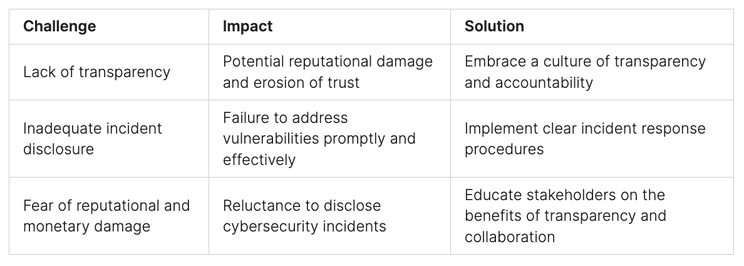
    This table highlights the challenges organizations face in cybersecurity reporting, their potential impact, and suggested solutions to overcome them.

    By addressing the challenges and embracing cybersecurity reporting transparency, businesses can foster a culture of trust, strengthen their security practices, and proactively protect themselves against potential threats.

    Trust Starts with Transparency

    The regulatory landscape and industry trends point towards a fundamental shift in the approach to cybersecurity, with an increasing emphasis on transparency. Organizations that embrace this culture of openness not only enhance their own security posture but also contribute to the overall security of the digital world.

    Transparency in security fosters trust through the sharing of knowledge, reporting of attacks, disclosing vulnerabilities, and even leveraging ethical hacking. By adopting these practices, organizations establish themselves as trustworthy security partners, encouraging collaboration and communication within the cybersecurity ecosystem.

    The Power of Sharing Knowledge

    Transparency begins with sharing knowledge. Organizations should proactively communicate their cybersecurity practices, protocols, and incident response procedures. This open dialogue ensures that stakeholders have a clear understanding of the steps taken to protect sensitive data and systems.

    By openly discussing their security measures, organizations can build confidence and strengthen customer trust. Transparency eliminates the mystery surrounding security practices and fosters a sense of shared responsibility.

    Reporting Attacks and Disclosing Vulnerabilities

    In the event of a cyber attack, organizations should prioritize timely and transparent reporting. This open communication not only allows affected parties to take necessary precautions but also demonstrates a commitment to addressing security challenges promptly.

    Similarly, disclosing vulnerabilities is crucial in maintaining transparency. By sharing information about known vulnerabilities and actively seeking ways to address them, organizations contribute to the collective security of the digital ecosystem.

    Putting Developers at the Heart of Security

    Another essential aspect of transparency is embedding security into the development process. By prioritizing security during the software development lifecycle, organizations can uncover vulnerabilities early on and mitigate potential risks.

    Empowering developers with the necessary tools, training, and resources helps create a security-first mindset, leading to more secure applications and systems. Transparent collaboration between developers and security teams ensures that security concerns are addressed efficiently and effectively.

    The Role of the Entire Cybersecurity Ecosystem

    Transparency extends beyond individual organizations to encompass the entire cybersecurity ecosystem. Collaboration among different stakeholders, including vendors, researchers, policymakers, and end-users, is key to combating evolving threats.

    By actively participating in industry collaborations, organizations can contribute to the development and dissemination of best practices, threat intelligence sharing, and the establishment of common security standards. This collaborative approach enhances the overall security posture and strengthens trust across the digital landscape.

    Embracing transparency in security is not without its challenges, but the benefits far outweigh the risks. By prioritizing openness, organizations can foster a culture of trust, promote effective security practices, and contribute to the collective security of our interconnected word.

    Disclosing Complete and Accurate Cybersecurity Information

    Transparency in cybersecurity reporting is crucial for organizations to maintain trust and demonstrate their commitment to security. When disclosing information about their security posture, organizations must ensure that the information provided is complete and accurate. This ensures that stakeholders have a clear understanding of the organization’s cybersecurity practices and the associated risks.

    Cybersecurity documentation plays a vital role in providing a comprehensive overview of an organization’s security measures and risk management strategies. By documenting security processes, procedures, and controls, organizations can establish a solid foundation for transparency and accountability.

    In many cases, CISOs (Chief Information Security Officers) face immense pressure to present a mature cybersecurity risk management process, even when controls may be insufficient. To meet these demands, it is essential for organizations to have rigorous risk management frameworks in place. This includes periodic risk assessments, vulnerability management programs, incident response plans, and ongoing monitoring and testing of security controls.

    Board oversight is a critical component of cybersecurity reporting and transparency. Boards of directors should be actively involved in understanding the organization’s cybersecurity risks and asking granular questions to ensure accurate disclosures. By having a full appreciation of the cybersecurity landscape, boards can provide valuable guidance and support in mitigating security risks.

    One effective way to enhance transparency is by maintaining a dynamic repository of cybersecurity questionnaire responses. This allows organizations to quickly and efficiently respond to requests for information from stakeholders, such as regulators, investors, or customers. By having readily available and up-to-date information, organizations can demonstrate their commitment to transparency and proactive risk management.

    Furthermore, organizations can consider engaging third-party professionals for independent assessments of their cybersecurity practices. These assessments provide an objective evaluation of an organization’s security posture and can help identify areas for improvement. Sharing the results of these assessments can further enhance transparency and build trust among stakeholders.

    “Transparency in cybersecurity reporting is not just about sharing positive outcomes, but also acknowledging weaknesses and vulnerabilities. By openly discussing challenges and demonstrating a commitment to improvement, organizations can foster a culture of continuous learning and improvement.”

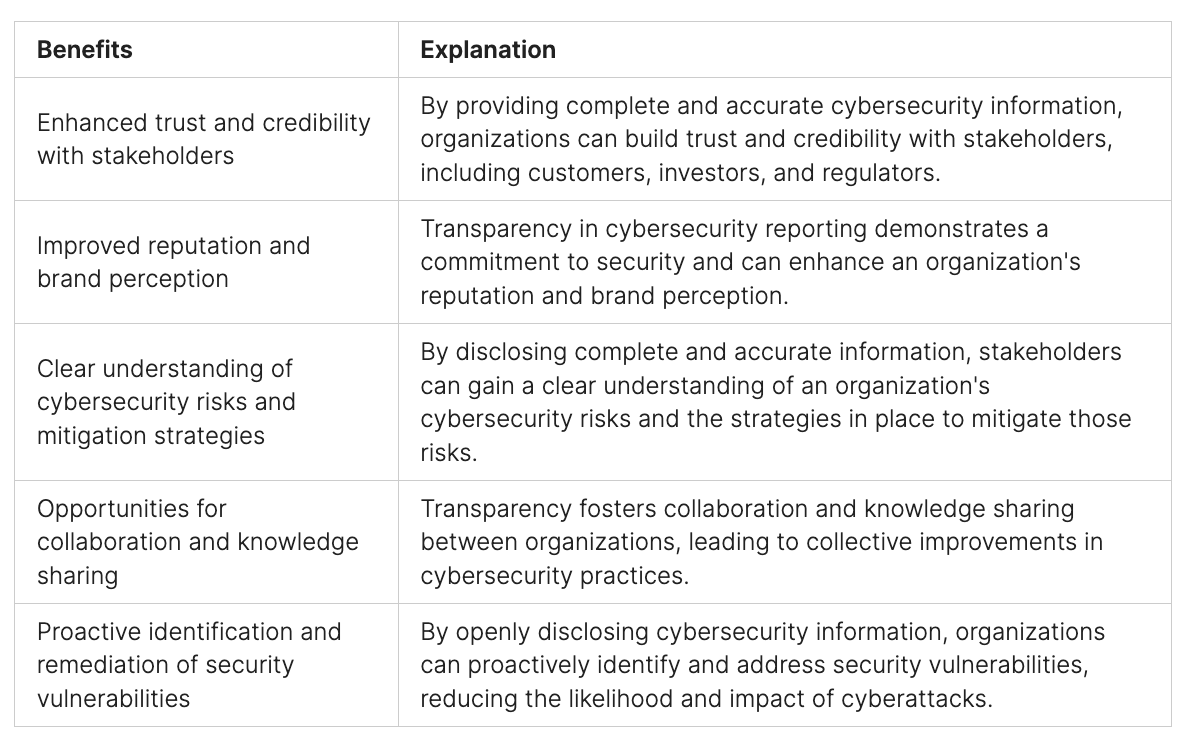
    The Benefits of Disclosing Complete and Accurate Cybersecurity Information

    • Enhanced trust and credibility with stakeholders
    • Improved reputation and brand perception
    • Clear understanding of cybersecurity risks and mitigation strategies
    • Opportunities for collaboration and knowledge sharing
    • Proactive identification and remediation of security vulnerabilities
    The Role of a Trust Center in AI Cybersecurity Transparency

    As AI-enabled technologies continue to advance, concerns about cybersecurity become increasingly significant. Building and maintaining customer trust requires transparency in AI cybersecurity. To facilitate this transparency, organizations can leverage the power of a Trust Center.

    A Trust Center serves as a central hub for organizing and displaying security documentation related to AI cybersecurity. It acts as a repository of valuable information, providing clear visibility into the security measures implemented in AI systems.

    One of the primary functions of a Trust Center is to control access to sensitive information. By managing access permissions, organizations ensure that only authorized individuals can view and retrieve sensitive cybersecurity documentation.

    “A Trust Center simplifies transparency in AI cybersecurity by organizing and displaying security documentation, controlling access to sensitive information, and automating responses to security questionnaires.”

    Furthermore, a Trust Center plays a crucial role in automating responses to security questionnaires. This automation streamlines the process of sharing security information with stakeholders, such as customers, partners, and regulatory bodies. By automating the response process, organizations can ensure consistency and accuracy in their information sharing, saving time and resources in the process.

    In addition to its organizational and automation capabilities, a Trust Center enables companies to keep their cybersecurity documentation updated in real time. This ensures that stakeholders have access to the most current and accurate information regarding AI security practices.

    By providing a single location for buyers and customers to access AI security information, a Trust Center promotes trust and transparency. It instills confidence in the security measures implemented within AI systems and demonstrates a commitment to maintaining high cybersecurity standards.

    The Benefits of a Trust Center

    The implementation of a Trust Center in AI cybersecurity offers several benefits:

    • Enhanced transparency: A centralized platform ensures that security documentation is easily accessible, promoting transparency and open communication about AI cybersecurity practices.
    • Streamlined information sharing: Automating responses to security questionnaires reduces manual effort, allowing organizations to efficiently provide accurate and consistent information to stakeholders.
    • Real-time updates: The Trust Center keeps cybersecurity documentation up to date, ensuring that stakeholders have access to the most current information.
    • Building trust: A Trust Center demonstrates a commitment to cybersecurity transparency, helping to build and maintain trust with customers, partners, and regulatory bodies.

    Overall, a Trust Center serves as a critical component in achieving transparency in AI cybersecurity. By organizing and displaying security documentation, controlling access to sensitive information, and automating responses to security questionnaires, companies can foster trust and confidence in their AI systems.

    How a Trust Center Works

    A Trust Center is a critical component in enabling transparency and enhancing the buyer security review process for AI-enabled technologies. It serves as a centralized platform where organizations can provide comprehensive security documentation to buyers, including essential AI cybersecurity information such as AI fact sheets and FAQs.

    By offering a buyer-facing home for security documentation, a Trust Center helps reduce friction in the buyer security review process. Buyers can access the necessary information at their convenience, enabling a self-service approach that saves time and effort for both parties involved.

    One of the key features of a Trust Center is the control over access to sensitive information. Organizations can ensure that specific information is accessed only by those who need to know, providing an additional layer of security and confidentiality.

    Additionally, a Trust Center includes a Knowledge Base of AI-related questionnaire responses. This streamlines the information exchange with buyers and customers, as it provides a repository of pre-approved responses to commonly asked AI security questions. This saves time for both parties and ensures consistent and accurate information is communicated.

    Example: AI Fact Sheet
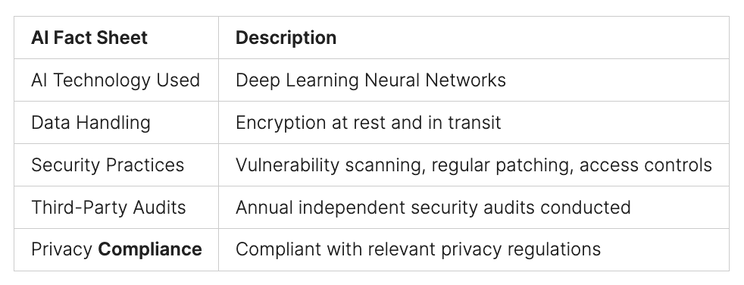
    Table: Example AI Fact Sheet showcasing key information about AI security practices.

    Overall, a Trust Center provides organizations with a robust platform to showcase their commitment to AI security transparency. It enhances the buyer security review process, streamlines information exchange, and ensures the dissemination of accurate and up-to-date AI security information.

    Ensuring Up-to-date AI Security Information

    As AI technology continues to advance and cybersecurity risks evolve, it is crucial for organizations to provide buyers and customers with the most accurate and up-to-date AI security information. Keeping AI-related documentation current and accessible is essential in maintaining transparency and ensuring the highest level of security.

    A Trust Center plays a vital role in this process, allowing companies to keep their AI-related documentation updated in real time. By leveraging the capabilities of the Trust Center, organizations can ensure that buyers and customers only access the most recent information, reducing any potential confusion or misinformation.

    Furthermore, the Trust Center’s notification and email capabilities enable proactive communication with buyers and customers regarding AI policies and procedure changes. This ensures that all stakeholders are aware of any updates or shifts in cybersecurity practices, enhancing transparency and establishing trust.

    With real-time updates of AI-related documentation through the Trust Center, organizations can address the ever-changing landscape of cybersecurity shifts. This helps companies stay ahead of potential threats and vulnerabilities, providing buyers and customers with the confidence that their AI technology is being protected by the latest security measures.

    The image above represents the intersection between AI technology and cybersecurity, showcasing the importance of keeping AI security information up to date in today’s digital landscape.

    Automating Responses to Security Questionnaires

    A Trust Center can be a game-changer when it comes to automating responses to security questionnaires. By leveraging the information and documentation stored in the Trust Center, organizations can streamline the process of completing security questionnaires, saving time and resources while ensuring consistent and accurate responses.

    With the ability to automate responses, organizations no longer need to manually fill out each security questionnaire they receive. Instead, they can rely on the Trust Center to provide pre-populated answers based on the stored information. This not only improves efficiency but also reduces the risk of human error that may occur when completing questionnaires manually.

    Furthermore, by having a centralized repository of AI-related questionnaire responses, organizations can enhance their communication with customers and investors. They can quickly provide accurate and comprehensive information about AI cybersecurity risks, demonstrating their commitment to cybersecurity and building trust with stakeholders.

    The automation of security questionnaire responses through a Trust Center offers several benefits:

    • Improved efficiency: Automating the process saves time and resources, allowing organizations to focus on other critical cybersecurity tasks.
    • Consistent and accurate responses: The Trust Center ensures that responses to questionnaires are consistent and based on up-to-date information, reducing the risk of discrepancies or outdated information.
    • Enhanced communication: Organizations can effectively communicate their cybersecurity measures and AI-related risks to customers and investors, fostering transparency and trust.

    In summary, automating responses to security questionnaires through a Trust Center simplifies the buyer security review process, streamlines information exchange, and enables organizations to provide accurate and complete information about AI cybersecurity risks. By leveraging this automation, organizations can prioritize their cybersecurity efforts while building trust and confidence among their stakeholders.

    Benefits of Automating Responses to Security Questionnaires

    • Improved efficiency
    • Consistent and accurate responses
    • Enhanced communication

    Conclusion

    In today’s digital ecosystem, the significance of transparency in cybersecurity cannot be overstated. It not only cultivates trust but also elevates the integrity of security practices within organizations. The implementation of a Trust Center is instrumental in championing this transparency, serving as a robust platform for organizing and disseminating crucial security information, managing access to sensitive data, and streamlining the response mechanism for security inquiries. Utilizing a Trust Center ensures that organizations can keep their AI security data promptly updated, thereby enriching the customer experience and positioning security as a catalyst for revenue growth while solidifying customer confidence.

    The essence of transparency in cybersecurity reporting is foundational for forging trust with both stakeholders and customers. Establishing a culture rooted in openness and proactive sharing empowers organizations to stand out and fortify their connections with essential partners and clientele. A Trust Center, acting as a unified repository for security documentation, facilitates effortless access to and management of sensitive information. The automation of responses to security questionnaires not only conserves time but also guarantees the delivery of consistent and precise information. In essence, the adoption of transparency practices and the integration of a Trust Center yield mutual benefits for both the organization and its clientele.

    As cybersecurity threats continue to evolve with increasing sophistication, the urgency for organizations to maintain contemporary AI security information becomes paramount. A Trust Center equips companies with the agility to update their AI-centric documentation dynamically, enabling real-time adaptability. Proactive dissemination of updates regarding policies and procedures to customers and buyers fosters a transparent culture and underscores an organization’s dedication to stringent cybersecurity measures. By embracing a Trust Center and placing a premium on transparency, organizations can not only refine their security protocols but also cultivate enduring trust among stakeholders.

    Peris.ai Cybersecurity recognizes the transformative impact of transparency in strengthening cybersecurity measures and building trust. Our solutions, designed with this ethos at their core, provide organizations with the tools necessary to establish a comprehensive Trust Center, ensuring the management, accessibility, and update of critical security information. We invite you to explore how Peris.ai Cybersecurity can enhance your organization’s cybersecurity transparency and practices. Visit us at Peris.ai Cybersecurity to discover how our innovative approaches can fortify your cybersecurity framework, promoting trust and security as pivotal elements of your business strategy.

    FAQ

    What are the benefits of cybersecurity transparency?

    Cybersecurity transparency allows organizations to differentiate themselves, strengthen trust with stakeholders, and enhance their overall security. It leads to clear incident response procedures and promotes collaboration within industries.

    What challenges do organizations face in cybersecurity reporting?

    Many organizations struggle to proactively disclose cybersecurity challenges due to fear of reputational damage. The culture of security through obscurity often hinders transparent reporting.

    How does trust start with transparency in cybersecurity?

    Transparency in cybersecurity builds trust by providing clear visibility into vulnerability management, reporting procedures, and overall security posture. Effective communication and collaboration foster trust and reduce the reoccurrence of cyberattacks.

    How can organizations disclose complete and accurate cybersecurity information?

    CISOs face pressure to present a mature cybersecurity risk management process, even when controls are insufficient. Boards should ask granular questions and have a full appreciation of cybersecurity risks to ensure accurate disclosures. Maintaining a dynamic repository of cybersecurity questionnaire responses and engaging third-party professionals can enhance transparency.

    What is the role of a Trust Center in AI cybersecurity transparency?

    A Trust Center serves as a central location for organizing and displaying security documentation related to AI cybersecurity. It ensures controlled access to sensitive information and automates responses to security questionnaires, simplifying the transparency process.

    How does a Trust Center work?

    A Trust Center provides a home for security documentation, such as fact sheets and FAQs, allowing self-service access to buyers and customers. It controls access to sensitive information and includes a Knowledge Base of AI-related questionnaire responses. The Trust Center also enables real-time updates and proactive communication with buyers and customers regarding AI policies and procedure changes.

    How does a Trust Center ensure up-to-date AI security information?

    A Trust Center allows organizations to keep their AI-related documentation updated in real time, ensuring that buyers and customers always access the most recent information. It also facilitates effective communication and transparency during shifts in cybersecurity risks.

    How can a Trust Center automate responses to security questionnaires?

    By leveraging the information and documentation stored in a Trust Center, organizations can automate responses to security questionnaires. This automation reduces time spent on completing questionnaires and ensures consistent and accurate responses. The centralized repository of AI-related questionnaire responses enables effective communication with customers and investors, providing comprehensive information about AI cybersecurity risks.


  • Emergency Call: The Top 6 Incident Management Software Tools

    Emergency Call: The Top 6 Incident Management Software Tools

    In today’s fast-paced digital world, the ability to respond swiftly and effectively to IT incidents is more crucial than ever. Robust incident management software plays a pivotal role in helping organizations handle crises with finesse rather than frenzy. This guide delves into the top six incident management software choices for 2024, tailored for DevOps and SRE teams across various business stages, from nimble startups to mature enterprises.

    Top Incident Management Solutions

    Explore the standout features, pros, and cons of each leading platform to find the best fit for your organizational needs.

    1. Splunk On-Call (Victorops)

    • Overview: Offers streamlined on-call management and escalation processes, with a focus on automation and data-driven insights.
    • Pros: Strong automation capabilities and competitive pricing, with a data-focused approach to incident management.
    • Cons: Integration primarily focused around the Splunk ecosystem, which may not suit all users.

    2. Moogsoft

    • Overview: Utilizes AI to proactively identify and resolve IT issues before they escalate, with a focus on automation and root cause analysis.
    • Pros: Advanced AI capabilities for predictive insights and automated response actions.
    • Cons: Some users desire more customization options and have noted occasional stability issues.

    3. Squadcast

    • Overview: Integrates on-call scheduling, incident response, and reliability workflows into a unified platform, aiming to enhance system uptime and simplify operations.
    • Pros: Offers a comprehensive feature set including AI-driven noise reduction, automated incident response workflows, and real-time performance tracking.
    • Cons: Continuous updates require teams to stay updated on new features and functionalities.

    4. Pagerduty

    • Overview: Combines intelligent alert routing, AIOps for noise reduction, and detailed incident response workflows, designed for high-stakes environments.
    • Pros: Efficient alert management, wide integration options, and advanced analytical capabilities.
    • Cons: High cost can be a barrier for smaller teams or organizations with limited budgets.

    5. xMatters

    • Overview: A cost-effective solution providing core incident management functionalities with a focus on alerts, escalations, and communications.
    • Pros: Affordably priced with essential features that support effective incident management.
    • Cons: Lacks some of the more advanced features found in pricier competitor.

    6. Opsgenie

    • Overview: Known for its comprehensive alerting and on-call management capabilities, Opsgenie offers a centralized approach to incident management.
    • Pros: Efficient central management of alerts and communications, coupled with robust scheduling tools.
    • Cons: Some users have reported stability issues and infrequent updates since its acquisition by Atlassian.

    Key Considerations for Incident Management Software

    When choosing the appropriate incident management software, it’s essential to assess these vital features that bolster response effectiveness:

    • On-Call Scheduling & Management:
      • Ensures efficient scheduling of the right personnel.
      • Reduces downtime and streamlines response efforts.
    • Alerting and Notifications:
      • Provides timely, severity-based alerts via various communication channels.
      • Ensures that alerts capture the immediate attention of necessary team members.
    • Incident Response Workflows:
      • Utilizes structured workflows to guide teams through predefined steps.
      • Reduces confusion and speeds up the recovery process.
    • Integrations:
      • Achieves seamless integration with existing tools and systems.
      • Enhances operational visibility and aids in faster incident resolution.
    • Pricing Flexibility:
      • Offers cost-effective solutions that align with organizational budgets and needs.
      • Helps maintain high security levels without imposing financial burdens.

    Conclusion: Peris.ai Brahma as Your Go-To Incident Management Solution

    Discover Brahma by Peris.ai Cybersecurity, a powerful alternative to conventional incident management systems. Designed to optimize operational resilience, Brahma combines the best of AI technology with user-centric features:

    • AI-Powered Incident Management: Brahma utilizes advanced AI algorithms to anticipate, identify, and resolve IT issues before they escalate, significantly reducing potential disruptions.
    • Integrated On-Call Scheduling and Response: It ensures that the right personnel are alerted and ready to act swiftly and effectively, thereby minimizing downtime and enhancing operational continuity.
    • Customizable Workflows: Unlike some platforms that offer rigid solutions, Brahma allows for high customization, enabling you to tailor incident response workflows to meet your specific operational needs.
    • Comprehensive Integration Capability: With Brahma, integration isn’t just an option; it’s a priority. It supports a wide array of tools and systems, ensuring that all aspects of your IT environment are interconnected for smoother, faster incident resolution.
    • Cost-Effective Solution: Offering scalable pricing models, Brahma ensures that you can maintain high security and operational efficiency without overstretching your budget.

    Brahma by Peris.ai Cybersecurity stands out not just for its technological prowess but for its adaptability to diverse business environments, ensuring that every organization, regardless of size, can achieve top-tier incident management capabilities. For a deeper dive into what Brahma can offer, visit our product page.

    FAQ

    Q: What is incident management software?

    A: Incident management software helps organizations prepare for, respond to, and recover from IT incidents efficiently. It includes features for alert management, task coordination, and post-incident analysis.

    Q: Why is on-call management important in incident response?

    A: On-call management ensures that the right personnel are available to respond to an incident as soon as it occurs, which is crucial for minimizing downtime and resolving issues quickly.

    Q: Can these tools integrate with existing IT systems?

    A: Yes, most modern incident management tools offer extensive integration capabilities with popular IT systems and applications to provide a centralized management experience.

  • Hackers Now Possess 10 Billion Compromised Passwords

    Hackers Now Possess 10 Billion Compromised Passwords

    In an unsettling revelation for digital security, researchers have recently discovered that hackers now possess an astonishing collection of nearly 10 billion unique passwords. This massive breach underscores the growing challenges and risks in today’s cybersecurity landscape. Here’s an in-depth look at the implications of this development and the critical measures you can take to safeguard your information.

    Unveiling the Depth of the Data Breach

    Discovery of rockyou2024.txt: Cybersecurity researchers stumbled upon a staggering repository named rockyou2024.txt, which contains almost 10 billion unique passwords. These passwords, gathered over the last two decades from various data breaches and cybersecurity incidents, highlight the extensive nature of digital vulnerabilities. In just the past two years, this file has been enriched with an additional 1.5 billion passwords, reflecting the accelerating pace of data compromise.

    Understanding the Risks

    Why Is This Significant? The vast accumulation of compromised passwords poses several serious threats:

    • Brute Force Attacks: With access to billions of passwords, hackers can automate attempts to breach accounts, testing thousands of passwords per second.
    • Credential Stuffing: The common habit of reusing passwords across multiple accounts can turn a single compromised password into a master key, allowing attackers to unlock multiple accounts belonging to the same user.

    Proactive Measures to Enhance Your Cybersecurity

    Steps to Safeguard Your Digital Identity:

    1. Check for Leaked Passwords: Regularly use services that check if your credentials have been compromised. Change any exposed passwords without delay.
    2. Strong, Unique Passwords: Make sure that each of your accounts is secured with a robust and unique password. This simple step can significantly hinder cross-account attacks from credential stuffing.
    3. Two-Factor Authentication (2FA): Implementing 2FA adds an essential layer of security, ensuring that possessing a password alone is not enough to breach your account.
    4. Adopt Passkeys When Available: Modern security standards are moving towards passkeys which, unlike traditional passwords, cannot be leaked since they are not stored or transferred in a way that is accessible to hackers.
    5. Password Managers: Utilizing a password manager not only helps in generating and storing complex passwords but also in monitoring and alerting you about any potential leaks of your passwords.

    Conclusion: A Call for Enhanced Vigilance

    The discovery of the rockyou2024.txt file is a stark reminder of the persistent threats in the digital world. It is more crucial than ever to stay ahead of these threats by adopting advanced and proactive cybersecurity measures. By integrating robust security practices, you can protect your sensitive information and maintain control over your digital identity.

    For continuous updates and in-depth insights into safeguarding your digital presence, make sure to visit Peris.ai.

  • Identifying Security Breaches on Your Work Device: Key Signs and Prevention Tips

    Identifying Security Breaches on Your Work Device: Key Signs and Prevention Tips

    In today’s digital era, where technological advancements like artificial intelligence (AI) are revolutionizing industries, the importance of cybersecurity has never been more critical. As devices become smarter, so do the methods employed by cybercriminals aiming to exploit them. Recognizing the signs of a security breach can help protect not only your data but also maintain the integrity of your organization’s digital assets.

    Indicators of a Compromised Device

    Understanding the red flags associated with a compromised work device is essential for timely and effective response. Here are several indicators that may suggest your device has been breached:

    1. Decreased Performance Speed

    If your device suddenly becomes sluggish, takes longer to open applications, or frequently freezes, it could be running unauthorized programs in the background. These could be malware attempting to steal sensitive information such as financial details and personal identification.

    2. Presence of Unknown Programs

    Unexpected or unfamiliar programs appearing on your device can be a sign of a security breach. If new applications launch on startup or unknown programs are running in the background, your device may be compromised. Difficulty in uninstalling these programs further indicates a potential breach.

    3. Traffic Redirection

    Being redirected to unfamiliar websites, especially those not secured by HTTPS, is a common tactic used by hackers. This redirection can lead to sites laden with malware, such as keyloggers and Trojan horses, aiming to exploit further vulnerabilities in your system.

    4. Suspicious Pop-Up Messages

    Frequent pop-up messages, especially those mimicking antivirus warnings and asking you to take immediate action, can be deceptive tactics employed by malware. Always verify such messages with your installed security software before taking any action.

    5. Unauthorised Emails

    Receiving reports from colleagues about spam or unusual emails sent from your account can indicate that your email has been hacked. This not only compromises your security but can also be used to propagate the attack within and beyond your organization.

    Protective Measures Against Cyber Threats

    Enhancing your device’s security involves more than just recognizing signs of a breach. Here are proactive steps you can take to fortify your defenses:

    • Regular Software Updates: Keep your operating system, applications, and security software up to date to protect against known vulnerabilities.
    • Use Strong, Unique Passwords: Implement robust passwords and change them regularly to secure your accounts.
    • Enable Multi-Factor Authentication: Adding an extra layer of security can significantly decrease the risk of unauthorized access.
    • Educate and Train: Regular training on cybersecurity best practices can empower you and your colleagues to identify and respond to security threats effectively.
    • Employ Comprehensive Security Solutions: Utilize reputable antivirus and anti-malware solutions, and consider adopting advanced cybersecurity measures like Security Orchestration, Automation, and Response (SOAR) systems.

    Conclusion

    As cyber threats evolve, so must our strategies to combat them. By staying vigilant and informed, you can significantly reduce the risk of a security breach and protect the digital infrastructure of your workplace.

    For more insights on maintaining cybersecurity and protecting your organizational assets, visit Peris.ai Cybersecurity. Stay updated with the latest in cybersecurity and ensure your digital safety with expert guidance and advanced security solutions from Peris.ai Cybersecurity. Follow us on social media for more useful tips and updates.

  • Malware Threats Escalate for macOS Users via Deceptive Ads and Websites

    Malware Threats Escalate for macOS Users via Deceptive Ads and Websites

    Cybersecurity researchers have sounded the alarm over a sophisticated campaign deploying stealer malware, including Atomic Stealer, targeting Apple macOS users through malicious advertisements and counterfeit websites. The operation, aimed at pilfering sensitive data from unsuspecting victims, underscores the growing concerns over macOS security vulnerabilities.

    Sneaky Infection Methods and Malware Delivery

    The attack exploits users’ trust in search engines, directing them to fake ads that lead to look-alike websites crafted to distribute malware. One such instance involves individuals searching for Arc Browser, only to be misled by sponsored links to a malicious site (“airci[.]net”) that cannot be accessed directly, hinting at tactics designed to skirt detection mechanisms. This site is responsible for disseminating a disk image file (“ArcSetup.dmg”) that harbors the Atomic Stealer malware, tricking users into entering system passwords via a fraudulent prompt to facilitate data theft.

    Another vector identified by Jamf Threat Labs involves a bogus website (“meethub[.]gg”), purportedly offering free group meeting scheduling software. Instead, it deploys stealer malware capable of extracting keychain data, web browser credentials, and cryptocurrency wallet information. This malware, bearing similarities to the Realst Rust-based stealer family, employs AppleScript to deceive users into surrendering their macOS login credentials for malicious purposes.

    Exploiting Professional Engagements for Malware Spread

    The attackers have employed creative pretexts, such as job opportunity discussions or podcast interview invitations, to coax targets into downloading malicious applications under the guise of joining video conferences. This approach appears particularly aimed at individuals within the cryptocurrency sector, exploiting their public visibility to orchestrate high-reward attacks.

    Emerging Trends and Sophisticated Evasion Techniques

    Recent disclosures by Moonlock Lab, MacPaw’s cybersecurity division, reveal another method involving malicious DMG files (“App_v1.0.4.dmg”) that leverage obfuscated AppleScript and bash payloads fetched from a Russian IP. This technique deceives users into bypassing macOS’s Gatekeeper security, emphasizing the stealth and sophistication of these malware campaigns.

    Additionally, malvertising campaigns distributing the FakeBat loader (aka EugenLoader) and other information-stealing malware through decoy sites mimic popular software like Notion and PuTTY, further illustrating the expansive threat landscape.

    The Increasing Threat to macOS Environments

    These findings starkly illustrate that macOS environments are no longer immune to the rising tide of cyber threats. With stealer malware evolving to incorporate advanced anti-virtualization techniques and self-destruct mechanisms, the urgency for heightened vigilance and robust cybersecurity defenses has never been more pronounced.

    Peris.ai Cybersecurity advises macOS users to exercise extreme caution with online advertisements and downloads, especially from unverified sources. As the sophistication of cyberattacks continues to evolve, maintaining an informed and proactive stance is essential for safeguarding sensitive information against these insidious threats.

    via The Hacker News

  • Red Team Services: Simulating Cyber Attacks for Better Defense

    Red Team Services: Simulating Cyber Attacks for Better Defense

    Red team services play a crucial role in today’s evolving cybersecurity landscape. With the ever-increasing sophistication of cyber threats, organizations need to go beyond routine security assessments to fortify their defenses effectively. That’s where red teaming comes in.

    Red teaming is a proactive cybersecurity strategy that involves simulating real-world cyber attacks to identify vulnerabilities and weaknesses. By stepping into the shoes of potential adversaries, a red team can provide organizations with a unique perspective on their defenses and help them enhance their overall cyber defense strategy.

    Key Takeaways:

    • Red teaming is a proactive cybersecurity strategy that simulates real-world cyber attacks.
    • It goes beyond routine security assessments and actively seeks out vulnerabilities.
    • Red teaming provides organizations with a unique perspective on their defenses.
    • By identifying weaknesses, organizations can fortify their cyber defense strategy.
    • Red team services enhance overall cybersecurity posture and incident response preparedness.

    What is Red Teaming?

    Red-teaming involves a team of experts, known as the red team, simulating cyber attacks to identify vulnerabilities and weaknesses in an organization’s defenses. It goes beyond traditional cybersecurity approaches by emulating the tactics of potential adversaries. This proactive strategy allows organizations to identify and address vulnerabilities before they can be exploited by malicious actors. Red teaming is a comprehensive cybersecurity testing method that includes security vulnerability analysis and helps organizations strengthen their overall defense strategy.

    The Evolution of Red Teaming in Cybersecurity

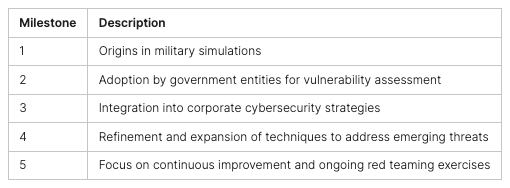
    Red teaming has evolved alongside the changing cybersecurity landscape. Originally rooted in military simulations, it has transformed into a dynamic cybersecurity strategy that prepares organizations for cyber attacks. With the rise of sophisticated cyber threats, red teaming has become increasingly crucial. It is not just a one-time exercise but an ongoing process that continually refines its techniques to stay ahead of emerging threats. Red teaming plays a vital role in defensive cybersecurity, equipping organizations with the necessary preparation to combat cyber attacks.

    Key Milestones in the Evolution of Red Teaming

    The Role of Red Teaming in Defensive Cybersecurity

    Defensive cybersecurity requires organizations to anticipate and prepare for cyber attacks. Red teaming offers a proactive approach, enabling organizations to simulate realistic cyber attacks and identify weaknesses in their defenses. By constantly refining their techniques and staying ahead of emerging threats, red teaming helps organizations build a robust cybersecurity posture. It provides invaluable insights into an organization’s vulnerabilities, allowing for targeted improvements in defensive capabilities.

    Quotes from Industry Experts

    “Red teaming is a critical component of any effective cybersecurity strategy. By simulating real-world attacks, organizations can identify and mitigate vulnerabilities before they are exploited by malicious actors.”

    “The evolution of red teaming mirrors the ever-changing cyber threat landscape. Organizations must invest in ongoing red teaming exercises to continuously strengthen their defensive cybersecurity measures.”

    Benefits of Red Teaming

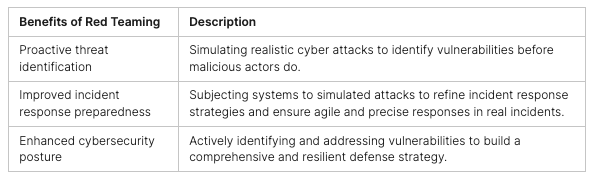
    Red teaming provides organizations with numerous benefits that contribute to a robust and proactive cybersecurity strategy. By simulating realistic cyber attacks, proactive threat identification becomes possible, allowing organizations to uncover vulnerabilities before malicious actors do. This early detection enables organizations to take strategic measures to reinforce their defenses, mitigating the risk of potential breaches.

    Another significant advantage of red teaming is its ability to enhance incident response preparedness. By subjecting systems to simulated attacks, security teams can refine their incident response strategies. This serves as a valuable dress rehearsal that hones their agility and precision in dealing with real incidents, ensuring a swift and effective response.

    Through red teaming, organizations actively identify and address vulnerabilities, leading to an enhanced cybersecurity posture. By staying one step ahead of potential threats, organizations can build a comprehensive defense strategy that is resilient and proactive in addressing emerging cybersecurity challenges.

    Proactive threat identification, incident response preparedness, and an enhanced cybersecurity posture are the key benefits that organizations gain from implementing red teaming.

    Benefits of Red Teaming:

    1. Proactive threat identification
    2. Improved incident response preparedness
    3. Enhanced cybersecurity posture

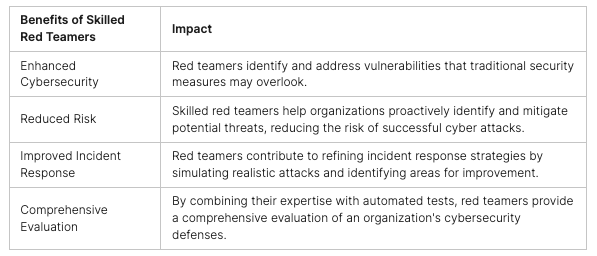
    Red teaming is not only a valuable exercise in identifying vulnerabilities but also a vital component of a comprehensive cybersecurity defense strategy. The table below briefly summarizes the key benefits of red teaming:

    Implementing red teaming empowers organizations to proactively safeguard their critical assets and data, staying ahead in the ever-evolving threat landscape.

    Cost-Effectiveness of Red Teaming

    Investing in cybersecurity is often considered a significant expenditure for organizations. However, red teaming offers a cost-effective and efficient long-term solution. While there is an initial investment required, the benefits far outweigh the costs. Red teaming acts as an insurance policy, helping organizations avoid the financial and reputational fallout that can occur as a result of a real cyber attack.

    By proactively identifying and mitigating threats, red teaming allows organizations to fortify their defenses and minimize the potential impact of a cyber attack. It is comparable to fixing a leaky roof before a storm; the small investment now saves from a major financial downpour later.

    “Red teaming acts as an insurance policy, helping organizations avoid the financial and reputational fallout that can occur as a result of a real cyber attack.”

    In addition to avoiding the financial and reputational fallout, red teaming provides organizations with several other cost-saving benefits. By identifying vulnerabilities and weaknesses in their defenses, organizations can proactively address them, minimizing the likelihood of a successful cyber attack. This proactive approach helps prevent potential financial losses that can result from data breaches, system downtime, and the need for extensive remediation efforts.

    Moreover, red teaming can help organizations reduce their reliance on cyber attack insurance. While insurance coverage is a valuable component of a comprehensive cybersecurity strategy, investing in proactive measures like red teaming can significantly reduce the likelihood and impact of cyber attacks, thereby potentially reducing insurance premiums.

    Financial and Reputational Fallout Avoidance through Red Teaming

    Avoiding the financial and reputational fallout of a real cyber attack is critical for organizations. The cost of recovering from a cyber attack can be substantial, including financial losses from theft, system disruptions, regulatory penalties, and even lawsuits. Additionally, the reputational damage resulting from a cyber attack can lead to a loss of customer trust and decreased business opportunities.

    Red teaming helps organizations mitigate these risks by identifying vulnerabilities and strengthening their defenses. By simulating realistic cyber attacks, red teaming reveals weaknesses that can be addressed proactively, minimizing the financial and reputational impact of an actual breach.

    An Example of Cost Savings with Red Teaming

    Consider a hypothetical organization that invests in red teaming to identify vulnerabilities in its systems and processes. During the red team exercise, several critical vulnerabilities are discovered and promptly addressed. As a result, the organization is able to patch these vulnerabilities and implement safeguards effectively.

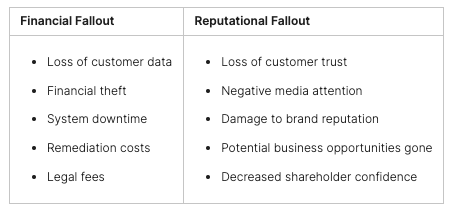
    If the organization had not undergone red teaming and these vulnerabilities had been exploited by a malicious actor, the financial and reputational fallout could have been significant. The potential costs include:

    As this example illustrates, the cost of red teaming is considerably lower than the potential financial and reputational fallout of a successful cyber attack. By investing in proactive measures like red teaming, organizations can minimize risks and safeguard their financial stability and reputation.

    Methodologies and Simulation Tools

    Red teaming methodologies serve as the foundation for a robust cybersecurity strategy. These methodologies provide organizations with the blueprints to effectively simulate cyber attacks and identify vulnerabilities within their defenses. By tailoring or selecting the appropriate methodologies, organizations can ensure the success of their red teaming initiatives.

    One common approach is adversary emulation, which involves mimicking the tactics, techniques, and procedures (TTPs) of potential attackers. This methodology enables organizations to evaluate their defenses against realistic cyber threats and understand their vulnerabilities from an adversary’s perspective.

    Another valuable methodology is threat intelligence-driven testing. By incorporating threat intelligence into red teaming exercises, organizations can align their efforts with real-world threats and prioritize areas of vulnerability. This approach ensures that red teaming activities are focused on addressing the most relevant and pressing cyber risks.

    In addition to methodologies, the effectiveness of red teaming relies heavily on the use of simulation tools and technologies. The red team’s arsenal includes cutting-edge simulation tools that enable the realistic emulation of cyber threats.

    Penetration testing tools, such as Metasploit and Burp Suite, allow red teams to identify and exploit vulnerabilities in a controlled manner. These tools simulate various attack vectors and help uncover weaknesses that could be targeted by real attackers.

    “Red teaming methodologies form the foundation of an effective cybersecurity strategy. By selecting the right methodologies and leveraging simulation tools, organizations can simulate realistic cyber threats and identify vulnerabilities in their defenses.”

    For advanced threat emulation, red teams utilize sophisticated platforms designed specifically for this purpose. These platforms provide an extensive range of attack scenarios, allowing organizations to evaluate their defenses against complex and evolving threats. With features like automated attack simulations, customizable attack scenarios, and comprehensive reporting, advanced threat emulation platforms offer a realistic and dynamic environment for red teaming exercises.

    By leveraging red team methodologies and simulation tools, organizations can gain valuable insights into their cybersecurity posture, identify weaknesses, and implement targeted measures to enhance their defenses.

    Key Takeaways

    • Red teaming methodologies are crucial for simulating cyber attacks and identifying vulnerabilities.
    • Adversary emulation and threat intelligence-driven testing are common methodologies used in red teaming.
    • Simulation tools, including penetration testing tools and advanced threat emulation platforms, enable realistic emulation of cyber threats.
    • The selection and tailoring of methodologies, as well as the quality and relevance of simulation tools, are essential for the success of red teaming initiatives.

    Skilled Professionals in Red Teaming

    Skilled professionals, often referred to as red teamers, are instrumental in the success of red teaming initiatives. These individuals possess diverse backgrounds in cybersecurity and bring a wealth of expertise to the table. With their deep understanding of the threat landscape and creativity, red teamers play a crucial role in identifying and exploiting vulnerabilities that may go unnoticed by conventional security measures.

    One of the key strengths of red teamers is their ability to think like attackers, allowing them to uncover unconventional vulnerabilities that may not be apparent to the organization’s security team. By adopting the mindset of a malicious actor, red teamers can explore different attack vectors, exploit weaknesses, and gain insight into potential areas of compromise.

    The training and retention of skilled red teamers are essential for the continued success of red teaming initiatives. These professionals require up-to-date knowledge of the latest cyber threats, attack techniques, and defensive strategies. Additionally, their human touch complements the automated tests conducted during red teaming exercises, ensuring a comprehensive evaluation of an organization’s cybersecurity defenses.

    Red teaming requires professionals who possess a combination of technical expertise, critical thinking skills, and a deep understanding of the evolving cybersecurity landscape. The expertise and insights provided by red teamers help organizations identify vulnerabilities and develop effective strategies to strengthen their defenses.

    Skilled red teamers bring invaluable knowledge and experience to the table, ensuring that organizations stay ahead of evolving cyber threats. Their role in identifying unconventional vulnerabilities and strengthening cybersecurity defenses plays a crucial part in an organization’s overall security strategy.

    Collaboration with Stakeholders

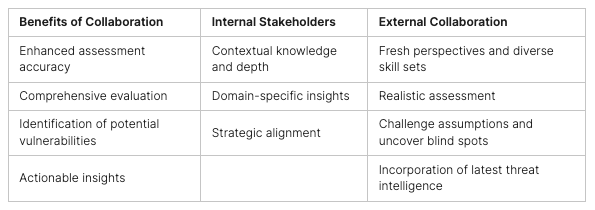
    Red teaming is not a solo endeavor but a collaborative effort that involves internal and external stakeholders. By leveraging the collective knowledge and expertise of these individuals, organizations can achieve a more comprehensive assessment of their cybersecurity defenses.

    Internal Stakeholders:

    Internal stakeholders, such as IT personnel and executives, play crucial roles in the red teaming process. Their involvement provides context, depth, and domain-specific insights that contribute to a more accurate evaluation. IT personnel possess intricate knowledge of the organization’s systems and infrastructure, enabling them to identify potential vulnerabilities and suggest appropriate remediation measures. Executives bring a strategic perspective, aligning red teaming objectives with the organization’s overall cybersecurity strategy and ensuring buy-in from key decision-makers.

    External Collaboration:

    Collaborating with external entities brings fresh perspectives and diverse skill sets to the evaluation process. Partnering with external red teams, composed of experienced cybersecurity professionals, brings in expertise and methodologies that may not be readily available within the organization. These teams can challenge assumptions, uncover blind spots, and provide a more realistic assessment of an organization’s defenses. Additionally, engaging with threat intelligence providers enhances the evaluation by incorporating the latest threat intelligence and industry trends.

    “Collaboration ensures a comprehensive assessment that considers both internal intricacies and external threat landscapes.”

    By collaborating with both internal stakeholders and external partners, organizations simulate the diverse expertise and perspectives of a team of experts. This collaborative approach ensures a more thorough evaluation, identification of potential vulnerabilities, and actionable insights for fortifying cybersecurity defenses.

    Overcoming Challenges in Red Teaming

    Implementing red teaming often faces resistance as teams comfortable with routine security measures might see it as a disruption or unnecessary shake-up. The key lies in communication and education, making everyone aware that red teaming is about fortifying existing defenses with a proactive layer.

    Overcoming resource constraints is another challenge organizations face during red teaming. Prioritization becomes crucial, as organizations strategically allocate resources to focus on critical assets and gradually expand their red-teaming capabilities.

    Balancing realism and operational impact is also a challenge, as simulations should mirror potential threats without causing unnecessary disruption. Collaboration with internal stakeholders is paramount to ensure controlled exercises with minimal operational impact.

    Conclusion

    In the intricate and ever-evolving realm of cybersecurity, Red Team services emerge as a linchpin for bolstering an organization’s defense mechanisms against cyber threats. These services, characterized by their proactive approach, simulate real-world cyber attacks to uncover and address vulnerabilities within an organization’s security framework, thereby significantly enhancing its cybersecurity posture. Furthermore, Red Teaming enriches an organization’s incident response readiness, equipping security teams with the necessary tools and insights to adeptly navigate potential threats.

    A notable advantage of Red Teaming lies in its cost-effectiveness. By proactively identifying and rectifying security vulnerabilities, organizations preempt the potentially devastating financial and reputational damages that real cyber attacks could inflict. In essence, Red Teaming functions as a preemptive investment, shielding organizations from the dire consequences of cyber incursions and reinforcing their long-term security.

    The efficacy of Red Teaming hinges on a synergistic blend of advanced methodologies, simulation tools, and the expertise of skilled professionals. Employing the most suitable methodologies and leveraging state-of-the-art simulation tools are pivotal for the accurate emulation of threats. The human element, brought forth by seasoned Red Teamers with diverse cybersecurity backgrounds, plays a critical role in unearthing non-traditional vulnerabilities. Furthermore, fostering collaboration among all stakeholders ensures a comprehensive evaluation of the organization’s cybersecurity measures.

    For organizations aiming to navigate the dynamic cybersecurity landscape successfully, integrating Red Team services into their security strategy is indispensable. By adopting Red Teaming, organizations not only proactively mitigate cyber threats but also fortify their security defenses and protect their vital assets.

    Peris.ai Cybersecurity proudly offers the Peris.ai Pandava Red Team Service, a premium solution designed to simulate real-world threats and go beyond traditional Penetration Testing. Our service aims to provide organizations with an end-to-end, realistic assessment of their defenses, identifying vulnerabilities that could be overlooked by conventional methods. Through our expertly executed Red Team operations, we deliver actionable insights that empower organizations to improve their security posture, incident response capabilities, and resilience against cyber-attacks.

    Embrace the future of cybersecurity defense with Peris.ai Pandava Red Team Service. Visit Peris.ai Cybersecurity to explore how our Red Team services can transform your organization’s approach to cybersecurity, ensuring a secure, resilient, and competitive stance in the digital marketplace.

    FAQ

    What are red team services?

    Red team services involve simulating cyber attacks to identify vulnerabilities and weaknesses in an organization’s defenses. It goes beyond routine security assessments and actively seeks out weaknesses by employing the tactics of potential adversaries.

    How does red teaming work?

    Red teaming involves a team of experts, known as the red team, simulating cyber attacks to identify vulnerabilities and weaknesses in an organization’s defenses. It goes beyond traditional cybersecurity approaches by emulating the tactics of potential adversaries. This proactive strategy allows organizations to identify and address vulnerabilities before they can be exploited by malicious actors.

    What are the benefits of red teaming?

    Red teaming offers numerous benefits, including proactive threat identification, incident response preparedness, and enhanced overall cybersecurity posture. By simulating realistic cyber attacks, organizations can spot vulnerabilities before malicious actors do, allowing for strategic reinforcement of defenses.

    Is red teaming cost-effective?

    While there is an upfront investment, red teaming can be considered a cost-effective long-term solution. By proactively identifying and mitigating threats, organizations can avoid the financial and reputational fallout of a real cyber attack. It can be compared to fixing a leaky roof before a storm, as the small investment now saves from a major financial downpour later.

    What are the methodologies and simulation tools used in red teaming?

    Red teaming methodologies form the blueprints for a cybersecurity strategy. Different methodologies cater to different needs, whether it’s adversary emulation, threat intelligence-driven testing, or a combination of both. The arsenal of a red team includes cutting-edge simulation tools and technologies, such as penetration testing tools and advanced threat emulation platforms.

    What is the role of skilled professionals in red teaming?

    Skilled professionals, often referred to as red teamers, play a crucial role in red teaming. Their diverse backgrounds in cybersecurity, coupled with creativity and expertise, make them the backbone of red-teaming initiatives. Red teamers possess the ability to think like attackers and identify unconventional vulnerabilities.

    How does collaboration with stakeholders contribute to red teaming?

    Red teaming is a collaborative effort that involves internal and external stakeholders. Internal stakeholders, such as IT personnel and executives, provide context and depth to the assessment. External collaboration, through partnering with external red teams or engaging with threat intelligence providers, brings fresh perspectives to the evaluation.

    What challenges are faced in implementing red teaming?

    Implementing red teaming often faces resistance as teams comfortable with routine security measures might see it as a disruption or unnecessary shake-up. Overcoming resource constraints and balancing realism and operational impact are also challenges organizations face during red teaming. Collaboration with internal stakeholders is paramount to ensure controlled exercises with minimal operational impact.

    How does red teaming fit into a cybersecurity defense strategy?

    Red team services, which involve simulating cyber attacks, are an integral part of a comprehensive cybersecurity defense strategy. By proactively identifying vulnerabilities and weaknesses in defenses, red teaming enhances overall cybersecurity posture and improves incident response preparedness.

    Note: For more information about red team services, simulating cyber attacks, and cybersecurity defense strategies, please reach out to our team or visit our website.

  • Stay Cautious: Encrypted PDFs are The Newest Method for Delivering Malware to Your Device

    Stay Cautious: Encrypted PDFs are The Newest Method for Delivering Malware to Your Device

    In the dynamic world of cyber threats, a new alarming trend has emerged, perpetrated by Russian-backed hackers utilizing malware cloaked as PDF encryption tools. This sophisticated tactic, aimed at compromising user information, involves sending victims encrypted PDFs under the guise of legitimacy. The unsuspecting recipients, upon expressing their inability to open the PDF, are then lured into downloading a malicious “encryption tool.” However, this tool is, in reality, a vehicle for malware delivery.

    Coldriver’s Shift Towards Malware Exploits

    The Threat Analysis Group (TAG), a dedicated team within Google specializing in the identification and neutralization of diverse security threats, highlights this tactic as a pivot towards malware-based attacks by Coldriver, a group traditionally known for its phishing exploits. The simplicity of the attack belies its effectiveness: a bait encrypted PDF followed by the provision of a malware-infused “encryption tool” that masquerades as a legitimate application, only to install backdoor malware named Spica on the victim’s device.

    Understanding Spica’s Impact

    Spica’s primary function is the theft of cookies from popular web browsers such as Google Chrome, Firefox, Edge, and Opera, thereby accessing the victim’s sensitive information. Google’s reports indicate that Spica has been active since September 2023, with Coldriver’s malicious activities traceable back to 2022.

    Proactive Defense Measures

    Google has responded to these threats by incorporating all known malicious domains, websites, and files related to these attacks into its Safe Browsing service, simultaneously alerting users who were potential targets. Nevertheless, individual vigilance and proactive measures remain paramount in safeguarding against such insidious threats. Essential steps include:

    1. Avoiding Unlicensed Software: The allure of bootleg software can be compelling, but the risks it poses to device security are significant. It is crucial to download software only from reputable sources, ensuring that any download links are verified and originate from trusted app stores.
    2. Exercising Caution with Links and Files: Suspicious, misspelled, or unfamiliar links should be approached with caution. Opt for accessing websites directly through manual input or trusted search engines, avoiding sponsored search results that may not always be secure.
    3. Regular Software Updates: Keeping your device’s software up to date is a critical security measure. Regular updates provide the latest security patches and enhancements, shielding your device from vulnerabilities that could be exploited by cybercriminals.
    4. Implementing Antivirus Protection: Antivirus software plays a crucial role in detecting and preventing malware infections, phishing emails, and ransomware scams. Ensuring comprehensive antivirus protection across all devices is a fundamental component of a robust cybersecurity strategy.

    Forward-Looking Cybersecurity Practices

    As the landscape of cyber threats continues to evolve, staying informed and adopting proactive security measures is essential. The emergence of malware disguised as encrypted PDFs underscores the need for heightened vigilance and the implementation of effective cybersecurity practices. By adhering to recommended precautions and leveraging advanced security solutions, individuals and organizations can fortify their defenses against the sophisticated tactics employed by cyber adversaries.

  • The Power of Multi-Threading in Network Security

    The Power of Multi-Threading in Network Security

    Multi-threading is a powerful technique in the realm of network security that has the potential to transform cybersecurity performance. By allowing programs to execute multiple tasks simultaneously on different cores or processors, multi-threading significantly improves efficiency and response time. This, in turn, enhances the overall effectiveness of network security systems.

    Key Takeaways:

    • Multi-threading enables real-time packet analysis and intrusion detection, enhancing network security.
    • It improves security efficiency by reducing the impact of network latency.
    • Multi-threading increases the scalability of game servers, allowing them to handle larger amounts of data and more players.
    • Challenges like synchronization, concurrency, and performance optimization need to be carefully addressed when implementing multi-threading in network security.
    • Best practices such as the use of message queues, locks, and state machines can overcome the challenges of multi-threading.

    Benefits of Multi-Threading in Network Security

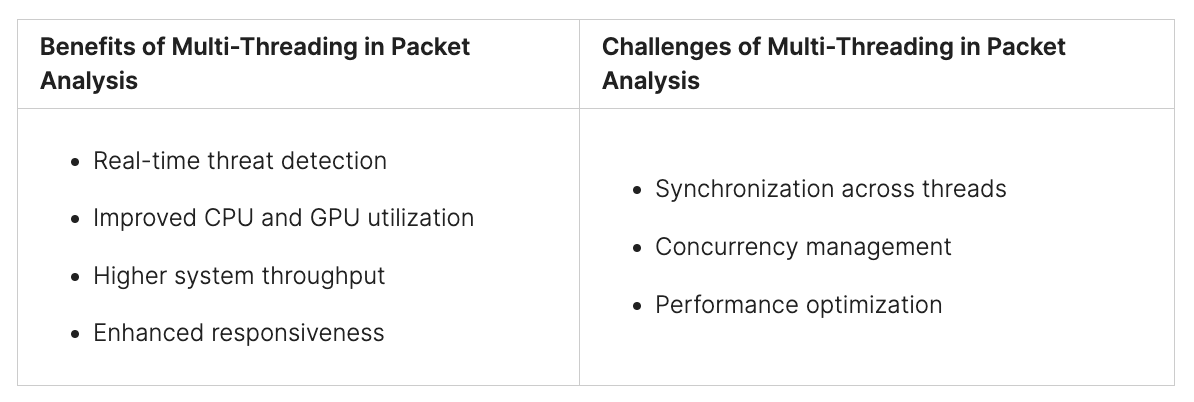
    Multi-threading provides numerous benefits in the domain of network security. By utilizing separate threads for network communication, it effectively reduces the impact of network latency, resulting in a smooth and responsive user experience.

    One major advantage of multi-threading is the increased throughput and scalability it offers to game servers. With the ability to handle larger amounts of data and accommodate more players, multi-threading enables advanced networking functions that enhance the overall performance of game servers.

    Furthermore, multi-threading intensifies the security and reliability of network connections. By dedicating separate threads to encryption, compression, and error correction, network security systems can protect against malicious attacks and prevent data corruption, ensuring the integrity of sensitive information.

    These benefits demonstrate the pivotal role of multi-threading in network security. Its ability to streamline network communication, improve server performance, and fortify data protection makes it an indispensable tool in the field of advanced networking.

    Challenges of Multi-Threading in Network Security

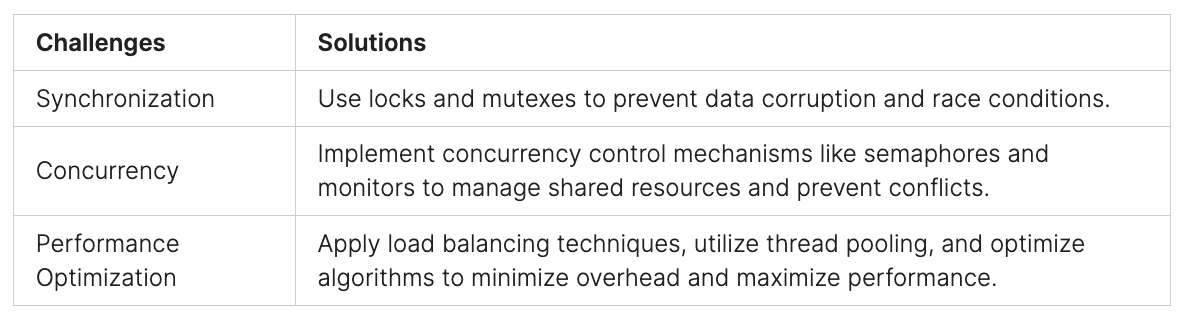
    While multi-threading can greatly enhance network security, it also introduces certain challenges. Synchronization, concurrency, and performance optimization are the key hurdles that need to be addressed for successful implementation.

    Synchronization:

    Synchronization is a critical aspect of multi-threading in network security. It involves coordinating and maintaining data consistency across different threads to prevent data corruption and race conditions. Ensuring proper synchronization is essential for maintaining the integrity and reliability of network security systems.

    Concurrency:

    Concurrent execution is a fundamental characteristic of multi-threading. In network security, multiple events may occur simultaneously, requiring effective management of concurrent threads. Managing concurrency involves handling shared resources, avoiding deadlocks and livelocks, and coordinating thread execution to minimize conflicts and maximize efficiency.

    Performance Optimization:

    Performance optimization is crucial for achieving optimal network speed and quality in a multi-threaded environment. Efficient resource utilization and minimizing overhead are key factors in improving the performance of multithreaded code. Performance optimization techniques, such as load balancing, thread pool management, and algorithmic improvements, are essential for maximizing the benefits of multi-threading in network security.

    To overcome these challenges, careful attention to design and implementation is necessary. It requires expertise in synchronization mechanisms, concurrency control, and performance profiling.

    “Effective synchronization, concurrency management, and performance optimization are pivotal for harnessing the full potential of multi-threading in network security.”

    Addressing these challenges effectively ensures that multi-threading in network security delivers superior performance, scalability, and responsiveness.

    Solutions for Multi-Threading in Network Security

    To overcome the challenges of multithreading in network security, several best practices can be implemented. The following solutions provide effective ways to address these challenges:

    1. Message Queue

    Implementing a message queue or buffer can facilitate efficient communication between threads in a multithreaded network security system. By reducing direct data access and modification, a message queue allows for seamless information exchange, improving overall performance and concurrency.

    2. Locks and Mutexes

    Utilizing locks and mutexes is crucial in protecting shared data or resources from simultaneous access. By employing these mechanisms, you can ensure data integrity and prevent race conditions, minimizing the risk of data corruption or security vulnerabilities.

    3. State Machines and Protocols

    Managing concurrency issues can be achieved through the use of state machines and protocols. By defining rules or steps for network event processing, these components enable efficient coordination and synchronization of multithreaded operations, ensuring consistent and reliable network security functionality.

    4. Timeouts and Retry Mechanisms

    Handling network failures and errors is essential in maintaining network integrity. By implementing timeouts and retry mechanisms, you can effectively manage and recover from network disruptions, enhancing the resilience and reliability of the network security system.

    5. Profilers and Debuggers

    To optimize the performance of a multithreaded network security system, profilers and debuggers can be utilized. These tools help identify performance bottlenecks, contention sources, or any other issues that may impact the efficiency of the system. With their insights, you can fine-tune the system for optimal performance and effectiveness.

    By implementing these solutions, network security systems can successfully address the challenges associated with multithreading, ensuring robustness, efficiency, and effectiveness in safeguarding network resources and data.

    Implementation of Multi-Threading in Network Security

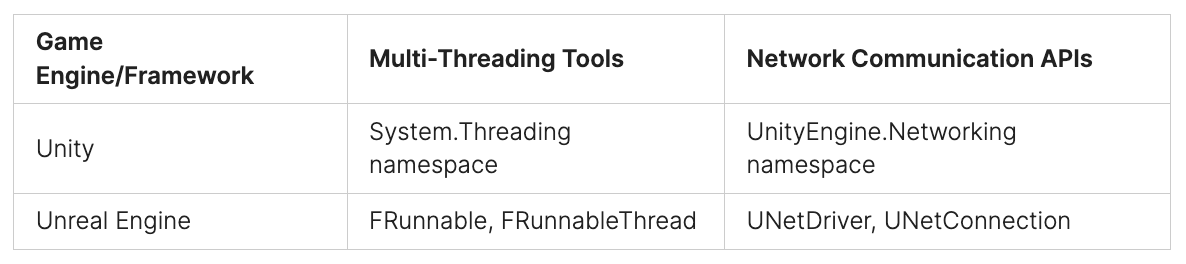
    The implementation of multi-threading in network security relies on the chosen game engine or framework, each offering its own set of tools, libraries, APIs, and interfaces. These resources are instrumental in creating and managing threads and facilitating network communication. For instance, Unity provides the System.Threading namespace for multi-threading and the UnityEngine.Networking namespace for network communication. In comparison, Unreal Engine offers classes like FRunnable and FRunnableThread for multi-threading, and UNetDriver and UNetConnection for network communication. It is vital to consult the engine or framework’s documentation and examples to adhere to their implementation guidelines and conventions for multi-threading and network programming.

    “The implementation of multi-threading in network security depends on the chosen game engine or framework.”

    Table:

    Please note that the table above illustrates some examples of game engines and corresponding multi-threading tools and network communication APIs.

    Examples of Multi-Threading in Network Security

    Many games leverage multi-threading techniques to enhance network security. Here are a few notable examples:

    Counter-Strike: Global Offensive

    In Counter-Strike: Global Offensive, a separate thread is dedicated to network communication, reducing latency and improving responsiveness. By utilizing multi-threading, the game ensures smooth and seamless online gameplay, enhancing network security.

    World of Warcraft

    World of Warcraft, with its massive player base, utilizes multiple threads for network communication to handle high volumes of data. The implementation of multi-threading in the game enhances throughput, scalability, and network security, providing a smooth gaming experience for millions of players.

    Fortnite

    Fortnite employs a separate thread for network encryption, bolstering security and reliability. By dedicating a thread to this critical aspect of network communication, Fortnite enhances network security, protecting player data and ensuring a secure gaming environment.

    These examples highlight the effectiveness of multi-threading in improving network security performance in the gaming industry.

    The Science Behind Multi-Threading in Packet Analysis

    Packet analysis systems traditionally employ sequential processing, analyzing packets one at a time. However, for large-scale networks, this can become a bottleneck. Multi-threading overcomes this limitation by allowing concurrent execution of packet capture, processing, and analysis tasks, utilizing CPU or GPU resources more efficiently. By parallelizing these tasks, multi-threaded systems achieve higher throughput and responsiveness, enabling real-time threat detection in high-traffic network environments.

    When it comes to packet analysis, real-time processing is essential for effective network security. By leveraging multi-threading, packet analysis systems can process multiple packets simultaneously, reducing latency and improving overall system performance. This approach ensures that critical network events are detected and analyzed in real-time, allowing for more proactive and timely security measures.

    The power of multi-threading lies in its ability to make optimal use of available CPU and GPU resources. By dividing the workload into multiple threads, each assigned to an individual core or processor, multi-threaded systems can efficiently distribute the processing load and achieve faster packet analysis. This results in higher throughput, enabling the system to handle larger amounts of network traffic with minimal impact on responsiveness.

    “Multi-threading in packet analysis allows for concurrent execution of packet capture, processing, and analysis, enhancing system throughput and responsiveness.”

    The responsiveness of a packet analysis system is crucial for real-time threat detection. Multi-threading enables faster processing of network packets, allowing the system to respond quickly to potential security threats. By analyzing packets in parallel, multi-threaded systems can achieve near-instantaneous threat detection, ensuring the prompt identification and mitigation of any malicious activity.

    Overall, multi-threading revolutionizes packet analysis by enabling real-time processing, improving CPU and GPU utilization, and enhancing system throughput and responsiveness. This technology plays a key role in modern network security, allowing for proactive threat detection and mitigation in high-traffic environments.

    Implementing Multi-Threading in Packet Analysis

    Implementing multi-threading in packet analysis allows for leveraging concurrent execution of tasks, resulting in enhanced throughput and responsiveness. By optimizing system performance through parallelizing packet capture, processing, and analysis, network security systems can achieve higher efficiency and real-time threat detection capabilities.

    Code snippets can be helpful in illustrating the implementation details of multi-threaded packet capture techniques. These snippets provide a visual representation of how threads can be utilized to perform simultaneous packet analysis, improving the overall performance of network security systems.

    The rationale behind implementing multi-threading in packet analysis is to maximize throughput and responsiveness. By distributing the computational load among multiple threads, the system can process packets concurrently, increasing the speed at which they are analyzed and reducing packet analysis time.

    The implementation of multi-threading in packet analysis is crucial for optimizing system performance and achieving real-time threat detection capabilities. By leveraging concurrent execution, network security systems can enhance their throughput, responsiveness, and overall cybersecurity performance.

    By adopting multi-threading in packet analysis, network security systems can significantly improve their ability to detect and mitigate threats efficiently. The concurrent execution of packet analysis tasks enables better utilization of system resources, resulting in enhanced throughput and real-time responsiveness.

    Benefits of Implementing Multi-Threading in Packet Analysis

    • Improved throughput: Multi-threading allows for parallel processing of packet analysis tasks, enabling the system to handle a higher volume of packets, thereby increasing overall throughput.
    • Enhanced responsiveness: Concurrent execution of packet analysis tasks reduces the time taken to analyze packets, providing real-time responsiveness in detecting and responding to potential threats.
    • Optimized resource utilization: Multi-threading optimizes the use of system resources by distributing the computational load across multiple threads, ensuring efficient utilization of CPU and GPU resources.

    Implementing multi-threading in packet analysis involves careful consideration of thread synchronization, load balancing, and data sharing among threads. Through proper design and coding practices, network security systems can leverage multi-threading to achieve higher levels of throughput, responsiveness, and overall cybersecurity performance.

    Conclusion

    Multi-threading stands as a pivotal innovation in network security, fundamentally transforming how efficiency and response times are approached in this field. By harnessing the power of parallel processing and optimized resource allocation, multi-threading facilitates real-time analysis of network traffic, efficient intrusion detection, and the execution of advanced networking tasks. This technological leap significantly boosts the speed and efficacy of network security systems, marking a new era in cybersecurity performance.

    For network security professionals, the adoption of best practices in multi-threading is vital for harnessing its full potential. Key focus areas include effective synchronization, adept concurrency management, and strategic performance optimization. Through meticulous design and implementation of multi-threaded systems, professionals in this field can markedly enhance operational efficiency, responsiveness, and overall cybersecurity effectiveness.

    In essence, multi-threading serves as an invaluable asset in the realm of network security, offering the capability for concurrent task execution and efficient resource utilization, leading to expedited threat detection and bolstered network defenses. By adopting multi-threading and skillfully navigating its complexities, organizations are well-positioned to elevate their cybersecurity capabilities, ensuring a more secure and proficient network infrastructure.

    To delve deeper into the world of multi-threading and discover how it can revolutionize your organization’s network security, visit Peris.ai Cybersecurity. Explore our range of solutions and learn how our expertise in multi-threading can enhance your cybersecurity strategy, providing you with a more secure, responsive, and efficient network system.

    FAQ

    What is multi-threading and how does it relate to network security?

    Multi-threading is a technique that allows a program to execute multiple tasks simultaneously on different cores or processors. In the context of network security, multi-threading enhances efficiency and response time, improving the overall cybersecurity performance.

    What are the benefits of multi-threading in network security?

    Multi-threading reduces network latency, increases throughput and scalability, enhances security and reliability of network connections, and protects against malicious attacks.

    What challenges does multi-threading present in network security?

    Synchronization, concurrency, and performance optimization are key challenges in implementing multi-threading in network security.

    What solutions can address the challenges of multi-threading in network security?

    Best practices include using message queues or buffers, employing locks and mutexes, implementing state machines and protocols, using timeouts and retry mechanisms, and utilizing profilers and debuggers.

    How can multi-threading be implemented in network security?

    The implementation of multi-threading depends on the chosen game engine or framework, which provide tools, libraries, APIs, and interfaces for creating and managing threads and handling network communication.

    Can you provide examples of multi-threading in network security?

    Examples include Counter-Strike: Global Offensive, World of Warcraft, and Fortnite, which use separate threads for network communication, throughput, scalability, and encryption.

    How does multi-threading enhance packet analysis in network security?

    Multi-threading allows for concurrent execution of packet capture, processing, and analysis tasks, enabling real-time threat detection, improving CPU and GPU resource utilization, and achieving higher throughput and responsiveness.

    What is involved in implementing multi-threading in packet analysis?

    Implementing multi-threading in packet analysis involves leveraging concurrent execution of tasks, using code snippets, parallelizing packet capture, processing, and analysis, and optimizing system performance.

    In conclusion, what is the impact of multi-threading in network security?

    Multi-threading enhances efficiency and response time in network security, leading to improved cybersecurity performance.

  • Unlock Benefits Security as a Service (SecaaS) for Organizations in the Digital Era

    Unlock Benefits Security as a Service (SecaaS) for Organizations in the Digital Era

    The digital era has ushered in a new wave of opportunities and challenges for organizations worldwide. As businesses embrace technology and digitize their operations, the need for robust cybersecurity measures has become more critical than ever. Protecting sensitive data, defending against cyber threats, and ensuring compliance with regulations are paramount for organizations operating in the digital landscape.

    One innovative solution that has gained traction in recent years is Security as a Service (SecaaS). This cloud-based security model provides organizations with a host of benefits, including enhanced threat detection, scalable security management, and increased flexibility in adapting to evolving cyber threats.

    Unlocking Cybersecurity Excellence: A Deep Dive into SecaaS Strategies for the Digital Age

    In this article, we will explore the importance of SecaaS in the digital era and the ways it can empower organizations to strengthen their cybersecurity posture. We will delve into key strategies for cyber attack detection, ensuring compliance and data protection, and emerging trends in cloud security. Additionally, we will share best practices for cloud security, strengthening network security, securing endpoints, and building resilience through disaster preparedness.

    Key Takeaways:

    • SecaaS offers organizations enhanced threat detection and scalable security management.
    • Implementing advanced threat detection systems and AI technologies can bolster attack detection in cloud computing.
    • Regular security audits, compliance checks, and encryption protocols are crucial for data protection in the cloud.
    • Emerging trends in cloud security include Security as a Service (SecaaS) and Cloud Access Security Brokers (CASBs).
    • Best practices for cloud security involve continuous monitoring, employee training, and regular patch management.

    Understanding the Evolving Landscape of Cloud Security

    In the digital era, cloud computing has revolutionized the way organizations store and access their data. However, this shift to the cloud has also brought about new security challenges. With cyber attacks becoming increasingly sophisticated, businesses must understand the evolving landscape of cloud security to protect their sensitive information.

    Cloud computing introduces unique vulnerabilities that can be exploited by malicious actors. Data breaches, malware infections, Distributed Denial of Service (DDoS) attacks, and insider threats are just a few examples of the risks that organizations face in the cloud. These threats can lead to significant financial losses, reputational damage, and regulatory non-compliance.

    To mitigate these risks, businesses need to establish robust security measures. This includes implementing advanced threat detection systems, such as Intrusion Detection Systems (IDS) and Intrusion Prevention Systems (IPS), which monitor network traffic and user activities for malicious patterns. Leveraging artificial intelligence (AI) and machine learning technologies can also enhance detection capabilities by analyzing large volumes of data and identifying subtle anomalies.

    “Cloud computing introduces unique vulnerabilities that can be exploited by malicious actors.”

    Additionally, organizations should adopt a Zero Trust model, which involves strict identity verification for every person and device accessing cloud resources. This approach ensures that only authorized individuals can access sensitive data and systems, reducing the risk of insider threats. Regular security audits, compliance checks, and the implementation of encryption and strong authentication protocols further enhance the overall security posture in the cloud environment.

    By understanding the evolving landscape of cloud security and implementing appropriate measures, organizations can safeguard their data and systems from cyber attacks. It is crucial to stay up-to-date with the latest security trends and continuously assess and improve the security posture to effectively counter the ever-evolving threats in the digital era.

    Key Strategies for Cyber Attack Detection in Cloud Computing

    AI & Machine Learning: The Silent Guardians of Cloud Security. Uncover the Power of Adaptive Cyber Attack Detection!

    Ensuring robust cyber attack detection in cloud computing requires the implementation of advanced threat detection systems, such as Intrusion Detection Systems (IDS) and Intrusion Prevention Systems (IPS). These systems play a crucial role in monitoring network traffic and user activities, allowing organizations to identify malicious patterns and anomalies that may indicate a cyber attack. IDS and IPS use sophisticated algorithms and rules to analyze data in real-time, providing an additional layer of defense against various threats.

    Artificial intelligence (AI) and machine learning technologies also contribute to effective cyber attack detection in cloud computing. By analyzing vast amounts of data, AI-powered systems can identify subtle anomalies that may go unnoticed by traditional security measures. Machine learning algorithms continuously adapt to new threats, enabling organizations to stay ahead of cybercriminals and protect their cloud infrastructure.

    The Zero Trust model is another key strategy for cyber attack detection in cloud computing. This model emphasizes strict identity verification for every person and device accessing cloud resources. By implementing a Zero Trust approach, organizations can mitigate the risk of unauthorized access and minimize the impact of potential cyber attacks. This model enforces granular access controls, ensuring that only authorized users and devices can access sensitive data and resources in the cloud.

    Ensuring Compliance and Data Protection in Cloud Security

    Compliance with regulatory requirements and the protection of data are crucial aspects of cloud security. Organizations must conduct regular security audits and compliance checks to ensure the adherence of their cloud infrastructure to industry best practices and regulations such as the General Data Protection Regulation (GDPR), Health Insurance Portability and Accountability Act (HIPAA), and Payment Card Industry Data Security Standard (PCI-DSS).

    Security audits involve assessing the effectiveness of security controls, identifying vulnerabilities, and implementing necessary improvements. Compliance checks ensure that organizations meet the specific requirements and standards set by relevant regulatory bodies. By conducting regular audits and checks, organizations can identify potential weaknesses in their cloud security posture and take appropriate remedial actions to mitigate risks.

    Data protection is another critical aspect of cloud security. Encryption of data at rest and in transit adds an extra layer of security, making it difficult for unauthorized individuals to access sensitive information. Strong authentication protocols, such as multi-factor authentication, ensure that only authorized users can access data and resources in the cloud.

    Overall, ensuring compliance and data protection is essential for organizations that operate in cloud environments. By conducting security audits, implementing necessary compliance measures, and using encryption and strong authentication protocols, organizations can enhance their cloud security posture and safeguard their valuable data.

    Emerging Trends in Cloud Security

    The ever-evolving landscape of cloud security has given rise to several emerging trends that organizations must be aware of to stay ahead of cyber threats. Two prominent trends in cloud security are Security as a Service (SECaaS) and Cloud Access Security Brokers (CASBs).

    Swift and Smart: Navigating the Cyber Threat Landscape with Automated Incident Response in Cloud Security. Stay Ahead, Stay Secure!

    SECaaS is a cloud-based security solution that offers scalable and flexible security management. It provides organizations with the ability to detect and respond to threats such as malware and intrusion attempts. By leveraging the power of the cloud, SECaaS enables organizations to benefit from advanced security capabilities without the need for extensive infrastructure or resources.

    CASBs, on the other hand, act as intermediaries between cloud service consumers and providers. They enforce security policies, ensuring compliance, data security, and threat protection. CASBs offer organizations greater visibility and control over their cloud applications and data, helping to mitigate risks and enhance overall security.

    Another emerging trend in cloud security is automated security incident response. With the increasing volume and complexity of cyber threats, organizations need to respond quickly and effectively to security incidents. Automated incident response tools can help detect and respond to security incidents promptly, reducing the impact of potential breaches and minimizing downtime.

    Best Practices for Cloud Security

    Ensuring robust cloud security is crucial in today’s digital landscape. Implementing best practices can help organizations mitigate the risk of cyber threats and protect their sensitive data. The following are key best practices for cloud security:

    Continuous Monitoring

    Continuous monitoring is essential to detect and respond to suspicious activities promptly. By monitoring network traffic, user behavior, and system logs, organizations can identify potential security breaches and take immediate action. Implementing robust monitoring tools and establishing a proactive security monitoring strategy can significantly enhance cloud security.

    Employee Training

    Human error is one of the leading causes of security breaches. Providing comprehensive training and awareness programs to employees is essential to ensure they understand the importance of following security protocols and best practices. Training should cover topics such as recognizing phishing attempts, creating strong passwords, and maintaining data privacy. Regularly updating employees on emerging cyber threats and conducting simulated phishing exercises can further strengthen their security awareness.

    Data Backup and Recovery

    Data backup and recovery plans are critical for ensuring data resilience and quick recovery in the event of a security incident or system failure. Regularly backing up data, storing backups securely, and regularly testing the restoration process are integral components of a robust data backup and recovery strategy. Organizations should also consider implementing redundant systems and off-site backups to further safeguard critical data.

    Regular Patch Management

    Regularly applying security patches and updates is crucial for protecting cloud infrastructure and systems from known vulnerabilities. Organizations should have a structured patch management process in place to identify and deploy patches promptly. Automated patch management tools can streamline the process and help ensure that systems are up-to-date with the latest security fixes.

    Best Practices for Cloud Security

    • Continuous Monitoring
    • Employee Training
    • Data Backup and Recovery
    • Regular Patch Management
    Safeguarding Your Cloud Infrastructure Through Timely Security Patches and Automated Management. Strengthening Defense, One Update at a Time!

    Strengthening Network Security in the Cloud

    Securing network connections and protecting sensitive data is crucial for maintaining a secure cloud environment. By implementing the right measures such as firewalls, securing Wi-Fi networks, regular software updates, and Virtual Private Networks (VPNs), organizations can enhance their network security and minimize the risk of unauthorized access or data breaches.

    Firewalls

    Firewalls act as the first line of defense in network security. They monitor and control incoming and outgoing network traffic, allowing only authorized communication and blocking potential threats. Implementing firewalls at entry and exit points can help prevent unauthorized access and protect sensitive information.

    Securing Wi-Fi Networks

    Wi-Fi networks are often targeted by hackers due to their vulnerabilities. To ensure secure Wi-Fi connections, organizations should use strong passwords, encrypt network traffic, and regularly update Wi-Fi security protocols. By implementing these measures, organizations can prevent unauthorized access to their network and protect sensitive data from being intercepted.

    Regular Software Updates

    Regular software updates are essential for maintaining a secure cloud environment. Software vendors regularly release updates to patch security vulnerabilities and address emerging threats. By keeping software and systems up-to-date, organizations can protect against known vulnerabilities and reduce the risk of successful cyber attacks.

    Virtual Private Network (VPN)

    A Virtual Private Network (VPN) provides a secure and encrypted connection between devices and the Internet. By routing network traffic through a VPN, organizations can protect data transmission from eavesdropping and unauthorized access. VPNs are especially important when accessing cloud resources from unsecured networks or remote locations, ensuring a secure connection and protecting sensitive information.

    To summarize, implementing firewalls, securing Wi-Fi networks, regularly updating software, and using Virtual Private Networks (VPNs) are essential measures for strengthening network security in the cloud. By adopting these practices, organizations can create a secure environment and minimize the risk of unauthorized access, data breaches, and other security threats.

    Securing Endpoints: Devices and Access Points

    Endpoint Security 101: A Multi-Layered Approach for Fortifying Your Digital Frontiers.

    Securing endpoints such as smartphones, laptops, and other devices is crucial to protecting sensitive data and preventing unauthorized access. By implementing a combination of strong passwords, two-factor authentication, regular software updates, limiting access, data encryption, and backups, organizations can significantly enhance the security of their endpoints.

    Strong passwords: One of the first lines of defense against unauthorized access is using strong, unique passwords for each device and online account. It’s essential to choose complex passwords, containing a combination of uppercase and lowercase letters, numbers, and special characters. Regularly updating passwords and avoiding common phrases or personal information can further strengthen security.

    Two-factor authentication: Adding an extra layer of security, two-factor authentication requires users to provide an additional piece of information, such as a unique code sent to their registered mobile device, in addition to their password. This helps verify the user’s identity and prevents unauthorized access even if the password is compromised.

    Regular software updates: Keeping all devices and software up-to-date with the latest security patches is crucial for addressing any known vulnerabilities. Software updates often include security enhancements and bug fixes that protect against new threats and potential exploits.

    Limiting access: Controlling access to sensitive data and systems is essential for preventing unauthorized individuals from compromising endpoints. Implementing user access controls, such as role-based permissions and least privilege principles, ensures that only authorized individuals can access specific resources.

    Data encryption: Encrypting data stored on endpoints adds a layer of protection. Encryption converts data into a format that is unreadable without the encryption key, making it difficult for unauthorized individuals to access sensitive information in case of a security breach or device theft.

    Backups: Regularly backing up data stored on endpoints is crucial for ensuring quick recovery in case of data loss or device damage. Having reliable backup systems in place allows organizations to restore critical data and minimize downtime in the event of an incident.

    By implementing these measures, organizations can significantly mitigate the risks associated with endpoint security and protect their valuable data from unauthorized access and potential threats.

    Building Resilience: Strengthening Cyber Defenses through Disaster Preparedness

    Disaster preparedness training plays a crucial role in strengthening an organization’s cyber defenses against evolving cyber threats. By identifying vulnerabilities, enhancing incident response capabilities, and developing effective cyber defense strategies, organizations can build resilience in the face of potential attacks. Regular drills and ongoing cybersecurity education are essential for maintaining strong cyber defenses in the ever-changing digital landscape.

    Benefits of Disaster Preparedness Training

    Disaster preparedness training equips organizations with the necessary skills and knowledge to identify and mitigate vulnerabilities that can be exploited by cybercriminals. By conducting vulnerability assessments, organizations can proactively identify weak points in their systems and processes and take appropriate measures to address them. This proactive approach significantly reduces the risk of successful cyber attacks.

    Moreover, disaster preparedness training helps organizations strengthen their incident response capabilities. By simulating cyberattack scenarios, organizations can test their incident response plans and identify areas for improvement. This enables them to respond effectively and efficiently in case of a real cyber attack, minimizing the potential damage and downtime.

    Cyber Defense Strategies and Incident Response

    Effective cyber defense strategies are a critical component of disaster preparedness. Organizations should adopt a multi-layered defense approach that includes implementing robust cybersecurity measures, such as firewalls, intrusion detection systems, and strong encryption protocols. Regular security audits and compliance checks should be conducted to ensure that security measures are up to date and aligned with industry best practices.

    Implementing a strong incident response plan is also vital for effective cyber defense. Organizations should establish clear incident response protocols, including predefined roles and responsibilities, communication channels, and escalation procedures. Regular training and simulations should be conducted to test the effectiveness of the incident response plan and identify areas for improvement.

    Conclusion

    In an era where cyber threats are on the rise, the implementation of robust cybersecurity measures is imperative for organizations navigating the digital landscape. Prioritizing cybersecurity not only fortifies defenses but also shields against potential attacks.

    An integral aspect of bolstering cyber defenses is disaster preparedness training. This proactive approach enables organizations to pinpoint vulnerabilities, enhance incident response capabilities, and formulate effective strategies for mitigating cyber threats.

    To sustain resilient defenses, regular educational sessions and training, coupled with cybersecurity drills, are indispensable. Keeping abreast of the latest cyber threats and consistently refining incident response capabilities empowers organizations to proactively thwart potential risks.

    As technology advances, organizations must evolve their cybersecurity measures to tackle emerging challenges. By investing in disaster preparedness and incident response, organizations can not only minimize the impact of cyber threats but also contribute to creating a safer digital environment.

    For a comprehensive solution tailored to your organization’s cybersecurity needs, we invite you to explore Peris.ai Cybersecurity. Peris.ai is a cybersecurity platform catering to both Web 2 and Web 3 projects. Our mission is to connect organizations with independent IT security researchers worldwide, all under one platform, united by the singular goal of providing a safer digital environment. Visit our website to discover how Peris.ai can enhance your cybersecurity posture.

    FAQ

    What are some key strategies for effective attack detection in cloud computing?

    Implementing advanced threat detection systems, leveraging AI and machine learning, adopting a zero trust security model, conducting regular security audits and compliance checks, and implementing encryption and strong authentication protocols are key strategies for effective attack detection in cloud computing.

    What are some emerging trends in cloud security?

    Some emerging trends in cloud security include Security as a Service (SECaaS), Cloud Access Security Brokers (CASBs), and automated security incident response.

    How can organizations ensure compliance and data protection in cloud security?

    Organizations can ensure compliance and data protection in cloud security by conducting regular security audits and compliance checks, adhering to regulations such as GDPR, HIPAA, and PCI-DSS, implementing encryption and strong authentication protocols, and adopting best practices for data protection.

    What are some best practices for cloud security?

    Best practices for cloud security include continuous monitoring and logging of activities, employee training and awareness programs, data backup and recovery plans, and regular patch management.

    How can network security be enhanced in the cloud?

    Network security in the cloud can be enhanced by implementing firewalls at entry and exit points, securing Wi-Fi networks with strong passwords and encryption, regularly updating software and systems, and using VPNs to establish secure connections.

    How can endpoints such as smartphones and laptops be secured in cloud environments?

    Endpoints such as smartphones and laptops can be secured in cloud environments by using strong passwords, enabling two-factor authentication, regularly updating software, limiting access to sensitive data and systems, encrypting data, and performing regular backups.

    How can organizations strengthen their cyber defenses through disaster preparedness?

    Organizations can strengthen their cyber defenses through disaster preparedness by identifying vulnerabilities, enhancing incident response capabilities, and developing and implementing effective cyber defense strategies.

    What is the importance of ongoing education and training in maintaining strong cyber defenses?

    Ongoing education and training, along with regular cybersecurity drills, are essential for maintaining strong cyber defenses in the ever-changing digital landscape.

  • Why Hack Yourself Non-Stop? The Brilliance Behind Continuous Penetration Testing

    Why Hack Yourself Non-Stop? The Brilliance Behind Continuous Penetration Testing

    In the world of cybersecurity, being steps ahead of attackers is vital. Each year, thousands of new ways to attack systems are found. The time for hackers to use these flaws is getting shorter. So, how can we find and fix these problems before hackers strike? The answer is continuous penetration testing.

    But, why do we need to keep testing constantly? Is this really the best way, making our systems deal with endless fake attacks? This article discusses why continuous penetration testing is a powerful way to protect your company. It’s all about staying safe from the changing threats out there.

    Key Takeaways

    • Continuous penetration testing is an ongoing adversarial attack simulation that closely emulates real-world threat actor tactics, techniques, and procedures (TTPs).
    • Annual or semi-annual penetration tests can quickly become obsolete as new vulnerabilities are discovered, leaving organizations vulnerable to exploitation.
    • Continuous testing provides a more cost-effective approach compared to traditional annual testing due to reduced ramp-up and reporting costs, as well as a better return on investment over time.
    • Leveraging the MITRE ATT&CK framework and real-time vulnerability monitoring, continuous penetration testing offers superior insights and a stronger overall cybersecurity posture.
    • By combining automated and manual testing methods, organizations can achieve comprehensive security coverage and effectively respond to emerging threats.

    Understanding Penetration Testing

    Penetration testing is also called a pen test or ethical hacking. It’s a way to test how strong a system’s security is. By simulating cyberattacks, you can see where the system is strong or weak.

    What is Penetration Testing?

    Penetration testing is a key step for all organizations. It helps see if their security policies really work. Then, they can make these policies better to avoid cyber threats.

    Why Penetration Testing is Crucial

    It’s critical for all organizations to do penetration testing regularly. This helps check the effectiveness of their security policies. And, it allows them to improve these policies to stop future cyber threats.

    Annual Penetration Testing: An Ineffective Approach

    The problem with doing penetration tests once or twice a year is clear. New vulnerabilities are found all the time. In 2000, there were 1,438 security flaws known. But by 2023, this number grew to 21,085. Skilled attackers keep track of what technology a company uses. They do this to find ways to break in.

    Vulnerabilities Are Constantly Emerging

    Things get risky for businesses that test their systems just once a year. That’s because new cyber threats appear all the time. This makes it hard for companies to fix their security holes before attackers exploit them.

    Attackers Exploit New Vulnerabilities Quickly

    When a new security flaw is found, attackers move fast. They use the time before it’s fixed to their advantage. This game underlines why yearly security checks aren’t enough. Companies need to be always alert about their security.

    Limitations of Automated Scanning and IDS

    Tools like automated vulnerability scanners and intrusion detection systems (IDSs) help keep organizations safe. But, they’re not enough alone. This is because they rely on signatures to spot possible dangers. This means they can miss new threats that don’t have known digital ‘fingerprints’ yet. So, it can be hard to stop these threats as they happen.

    Signature-Based Detection Misses New Threats

    The way automated scanners and IDSs work can’t always keep up with fast changes in cyber threats. If they don’t have the latest signatures, they might not find new problems. This leaves companies at risk of attacks or losing important data.

    Case Study: Data Breach Due to Unpatched Vulnerability

    For example, a big data breach recently happened. It exposed Personal Health Information (PHI) of about 4.5 million customers. Even with strong security efforts, the company couldn’t stop the attack. The problem was an old issue that their security didn’t catch and fix in time.

    Continuous Penetration Testing

    Continuous penetration testing is not like the usual one-time tests. It’s an always-on simulation of real-world attacks. By mimicking how real hackers act, it keeps organizations safe from new threats.

    Baseline Assessment and Roadmap to Remediation

    It starts with a Baseline Assessment to find weaknesses in system security. This step maps out a plan for fixing those issues. It gives a snapshot of how secure an organization is right now.

    Threat Modeling and Attack Trees

    The next step is Threat Modeling. Here, every software used is checked, and attack trees are made. These trees show how a weak software spot could harm the network. This helps focus on the most dangerous risks.

    Directed Attacks Simulate Adversarial Behavior

    Then comes the Directed Attacks phase. It imitates real attacks, aiming from different angles. This part is a mix of keeping up with the latest threats and testing the network against them, catching problems before hackers do.

    This method uses MITRE ATT&CK and in-depth knowledge of hacker techniques. It offers a more precise view of security, allowing steps to be taken to fix any issues. Essentially, it makes the whole network defense stronger.

    Cost-Effectiveness of Continuous Penetration Testing

    Many companies worry that continuous penetration testing costs too much. Yet, it can actually be cheaper over time than annual or semi-annual tests, especially when done by an outside team. Several reasons make this possible.

    Reduced Ramp-Up and Reporting Costs

    Continuous testing keeps an eye on an organization’s IT changes. It looks closely at specific infrastructure changes, not everything. This saves money on getting ready and writing reports, which can cost thousands each year. In traditional tests, a lot of time and money go into these extra tasks.

    Focused Testing on Infrastructure Changes

    With continuous testing, the team looks at new IT changes from the last check-up. This focused testing approach saves more money than the general tests done annually or semi-annually.

    Return on Investment over Time

    After the first year, the benefits of continuous security testing are clear. It saves a lot of money over time. This is because it reduces the need for big start-up and report-writing costs.

    Continuous Penetration Testing

    Continuous penetration testing learns from today’s threat actors tactics and techniques. It simulates attacks to test defenses. This includes trying to get initial access, assuming a breach, and what happens after.

    Emulating Real-World Threat Actor TTPs

    By acting like real threat actors, continuous testing tells how secure a system really is. It makes security teams smarter by showing real attack methods. This way, they can make better defenses.

    Leveraging MITRE ATT&CK Framework

    The MITRE ATT&CK framework is great for making attack simulations. It helps make tests that look like real threats. It gives a common way to talk about attacks, helping teams stay on top of the latest threats.

    Real-Time Vulnerability Monitoring

    Testing also keeps an eye on new security alerts. It checks which could be trouble for the company. This keeps the system safer by fixing issues before they’re used against the company.

    Combining Automated and Manual Testing

    Great security checks need both automatic tools and human insights. Tools like scanners and monitors see threats in real time and alert us to problems. They check for weaknesses all the time.

    Automated Tools for Efficiency

    Automatic tools find known problems quickly across big networks. They make detailed reports fast, helping companies keep up with dangers. Yet, they might not catch complex issues that need human review.

    Manual Processes for In-Depth Analysis

    But, humans are still needed for a deep look. Security experts check the machine results, figure out the best fixes, and make sure important issues get fixed first. They dig through the security to understand its real strength.

    Combining tools and human checks makes security strong. It means finding and fixing problems before they get critical. This mix ensures a company’s defenses stay sharp.

    Establishing a Clear Testing Flow

    A proper penetration testing flow is vital for finding and dealing with security threats in real time. It involves many stages working together. These include finding, looking at, and fixing weak spots in a company’s setup.

    Enumeration and Vulnerability Assessment

    The Enumeration stage is first. It collects info like active systems and open ports. Then, the Vulnerability Assessment phase takes a closer look. It finds the exact weak spots that hackers might use.

    Exploitation and Post-Exploitation

    The Exploitation step tests these weak spots with real attacks. This helps understand how bad they could be if used by hackers. If an attack works, the Post-Exploitation phase follows. It allows going deeper into the system and checking how far a hacker could get.

    Lateral Movement and Proof of Concept

    Lateral Movement and Proof of Concept are the last steps. Lateral Movement mimics how a real attack could spread through a network. Proof of Concept makes detailed reports about what was found. This helps the company know exactly what to fix.

    Having a clear testing flow helps testers stay in control. They can make sure every detail about the business is considered. This is important for checking how secure the company really is.

    Determining Testing Frequency

    Organizations must decide how often to run penetration tests. They should think about the worst things that could happen. Then, they should match the test schedule with their work on new products or updates.

    Doing yearly tests is the minimum. But, it’s better to test often to keep up. For example, continuous penetration testing helps spot risks quickly. This is important because risks are always changing.

    Aligning with Development Cycles

    It’s crucial to test often, following when new software is made. This way, any new risks that updates bring get caught fast. This becomes even more critical as companies add new features or change their software or network.

    Considering Worst-Case Scenarios

    Thinking about the worst that could happen guides how often to test. This method ensures better protection against major risks. It helps focus testing on the most important parts regularly.

    Implementing Continuous Penetration Testing

    Penetration testing is a detailed check on security for apps, networks, and tech systems. When companies do continuous penetration testing, they get thorough reports. These reports include the found vulnerabilities, what they are, how to attack, and what happens if they succeed.

    Detailed Vulnerability Reports

    Full vulnerability reports tell companies the state of their tech security. They show the problems found, how a hacker could use them, and what they could do. Knowing these issues helps organizations to smartly fix them, making their tech safer.

    Impact Assessment and Recommendations

    The continuous penetration testing should say what could happen if a hacker wins. This helps focus on fixing the most dangerous issues first. The reports also give step-by-step recommendations on how to make things better. This way, companies can build a stronger cybersecurity defense

    Conclusion

    With over 2,000 new information security issues emerging each month and skilled cyber attackers constantly at work, the necessity for continuous penetration testing has never been more critical. Annual penetration tests quickly become outdated, leaving systems vulnerable shortly after assessments are completed. By engaging in continuous penetration testing, organizations can stay ahead of current cyber threats and maintain stronger defenses.

    This proactive approach allows companies to identify and address vulnerabilities before they escalate into significant problems, effectively preventing costly cyber attacks and ensuring a high level of protection. As cyber threats become increasingly sophisticated, continuous penetration testing provides invaluable insights and strengthens overall security measures, helping organizations to stay resilient against persistent cyber adversaries.

    Ensure your business remains secure and gains a competitive edge with Peris.ai Pandava. Sleep better knowing your data is safe with our thorough penetration testing and detailed reports. Our ethical hackers will identify vulnerabilities and weak points within your digital platforms and infrastructures, allowing you to address them before they are exploited.

    Don’t wait—visit Peris.ai Cybersecurity to learn more about Peris.ai Pandava and how our services can help you safeguard your business against evolving cyber threats. Secure your digital future today!

    FAQ

    What is penetration testing?

    Penetration testing, or pen test, is like ethical hacking. It checks how secure a computer system is. This kind of testing looks for ways attackers could get in and what’s already strong.

    Why is penetration testing crucial?

    It’s key for any group to do pen tests regularly. They show if security rules actually work. Then, those rules can be made better to stop cyber threats.

    What are the limitations of annual penetration testing?

    Doing pen tests once a year or so has downsides. New vulnerabilities are found fast. Attackers can use this time to plan their moves before areas are secured.

    Why are automated scanning and IDS not enough?

    While good for everyday checks, they can miss new threats. This is since they look for specific signs, not keeping up with all the latest dangers.

    What are the key components of continuous penetration testing?

    It’s like always preparing for the worst. This means mimicking what real attackers could do often. It starts with setting a standard. Then, the tests get more direct and real as time goes on.

    How is continuous penetration testing more cost-effective?

    By always watching and reacting quickly, it’s cheaper in the long run. Doing power-up checks all the time becomes unnecessary. Plus, it saves a lot of time in figuring out the reports.

    How does continuous penetration testing emulate real-world threat actors?

    It learns from attackers’ latest moves and adapts fast. This means it tests from all points of possible attack, just like real threats. It also keeps up with the most current dangers.

    What is the importance of combining automated and manual testing?

    Both types are needed for security. Automating finds threats quickly, but manual checks give a deep look. They’re crucial in understanding the findings and planning for safety.

    What is a well-defined testing flow for penetration testing?

    The steps include learning about the system, checking for weak spots, trying to get in, deepening access, moving through the network, and proving attacks can really happen. This method leaves no stone unturned.

    How should organizations determine the frequency of penetration testing?

    They need to be alert and test as new risks come up. Yearly checks are just a start. But, keeping up with attacks and fixes is the smart play.

    What are the key benefits of implementing continuous penetration testing?

    It helps spot and fix problems before real damage. You’ll get info on threats and how they could hurt, plus ways to stay ahead of attackers. This keeps your defenses strong all the time.