Blog

  • SOC Analysts Are Burning Out—Let Peris.ai AI Playbooks Take Over

    SOC Analysts Are Burning Out—Let Peris.ai AI Playbooks Take Over

    Security Operations Centers (SOCs) are facing a critical challenge. While cyber threats grow in complexity and volume, SOC analysts are inundated with an overwhelming number of alerts, dashboards, false positives, and manual triage tasks. This relentless pressure leads to mental fatigue, burnout, and high turnover rates. Recent studies indicate that up to 70% of SOC analysts experience severe stress, with 64% considering leaving their roles within a year.

    This isn’t merely a talent retention issue; it’s a significant risk to organizational security. Overwhelmed and disengaged defenders provide adversaries with opportunities to exploit vulnerabilities.

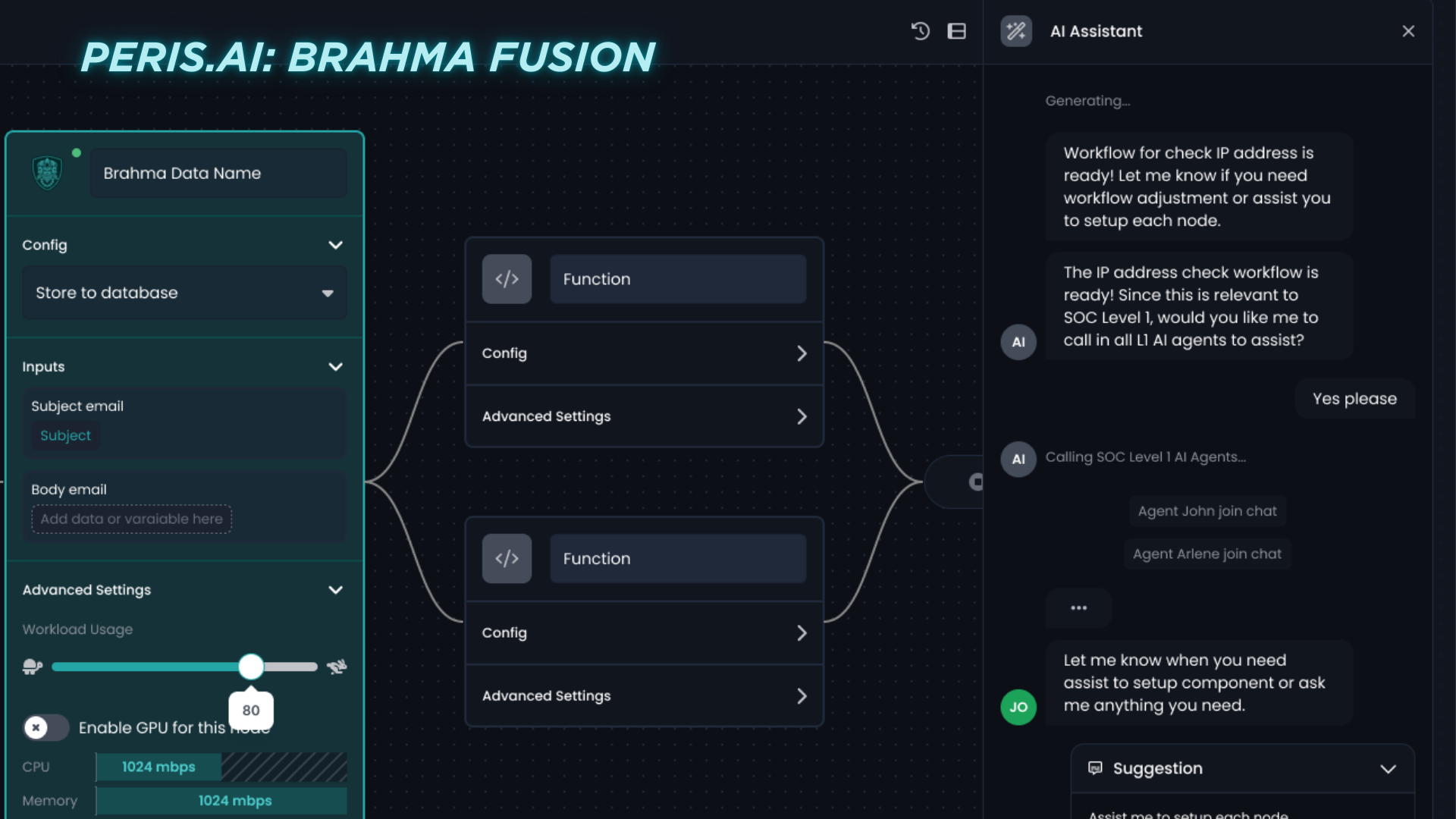
    The solution lies in AI-powered playbooks that automate repetitive, time-consuming, and error-prone SOC tasks. Peris.ai’s Brahma Fusion enables SOCs to transition from reactive firefighting to intelligent, scalable operations.

    The Burnout Equation: Why SOC Teams Are Struggling

    1. Alert Overload

    Modern SOCs handle thousands of alerts daily across SIEM, EDR, NDR, and cloud platforms. On average, SOC teams receive approximately 4,484 alerts per day, with analysts spending nearly 3 hours daily on manual triage.

    2. Manual Triage Bottlenecks

    Analysts dedicate significant time to pulling logs, correlating events, and classifying alerts, many of which turn out to be false positives.

    3. Context Switching

    Managing multiple tools and dashboards with varying interfaces and data structures leads to cognitive fatigue and inefficiencies.

    4. Repetitive Tasks

    Tasks such as enriching IOCs with threat intelligence, matching user behavior to baselines, checking logs for lateral movement, and ticket management consume valuable analyst time.

    5. High Turnover and Low Morale

    The monotonous nature of SOC work, combined with high stress, results in high turnover rates. Studies show that SOC analyst turnover rates can exceed 10% annually, with some organizations experiencing up to 25% turnover.

    The Risk of Burnout: Security Suffers

    • Delayed Response: Slower triage increases the dwell time of attackers within systems.
    • Missed Threats: Fatigued analysts are more prone to overlook subtle anomalies.
    • Inconsistent Workflows: High turnover leads to knowledge gaps and inconsistent processes.
    • Decreased Innovation: Burned-out teams lack the capacity for proactive threat hunting and strategic improvements.

    The AI Playbook Solution: Brahma Fusion from Peris.ai

    Brahma Fusion offers intelligent automation through low-code, AI-powered playbooks that replicate and accelerate Tier-1 and Tier-2 SOC tasks.

    What Is an AI Playbook?

    An AI playbook is a dynamic, preconfigured sequence of detection, enrichment, triage, and response actions triggered by specific security events. Unlike rigid scripts, Brahma Fusion’s AI playbooks:

    • Adapt to context
    • Evolve with new threat intelligence
    • Learn from analyst feedback

    These playbooks free up human capacity and accelerate decision-making with consistency and scale.

    How Brahma Fusion Helps Burnout-Proof Your SOC

    1. Automated Alert Triage

    • Suppresses low-fidelity alerts
    • Enriches high-priority events with real-time threat intelligence from INDRA
    • Scores alerts based on behavioral anomalies and threat actor patterns

    2. One-Click Investigations

    • Automatically collects logs from EDR, SIEM, firewall, and cloud platforms
    • Builds visual timelines of incident-related activity
    • Generates summary reports for analyst review

    3. Proactive Response Actions

    • Automatically isolates endpoints exhibiting ransomware behavior
    • Revokes credentials for users with suspected compromise
    • Blocks malicious IPs at firewall or cloud edge

    4. Feedback-Driven Improvement

    • Analysts can approve, modify, or reject AI decisions
    • Brahma Fusion learns from every action to enhance future playbooks

    Human + Machine, Not Human vs. Machine

    Brahma Fusion doesn’t replace analysts; it amplifies them. The platform operates on the principle that:

    • AI handles scale, speed, and routine tasks
    • Humans handle judgment, intuition, and escalation

    Together, they establish a sustainable, high-performance SOC model capable of scaling with threats without burning out talent.

    How to Get Started

    1. Identify Burnout Hotspots: Determine which tasks are most draining for your team (e.g., phishing triage, false positive reviews).
    2. Deploy Prebuilt Playbooks: Start with common use cases: phishing, malware, credential abuse.
    3. Integrate Feedback Loops: Allow analysts to review and refine AI decisions.
    4. Measure and Share Wins: Report on saved analyst hours, reduced response times, and improved morale.

    Conclusion: AI Isn’t Optional. It’s Essential.

    The threat landscape continues to evolve, and alert volumes show no signs of decreasing. If your SOC is experiencing burnout, you’re not alone—but you are at risk.

    With Peris.ai’s Brahma Fusion AI playbooks, you can:

    • Alleviate alert fatigue
    • Automate routine tasks effectively
    • Refocus your analysts on critical issues
    • Establish a resilient, sustainable, high-performing SOC

    Don’t lose your best defenders to burnout. Let Peris.ai handle the noise, so your team can concentrate on the fight.

    Learn more about Brahma Fusion at https://peris.ai

  • Rethink Your Passwords: Why Traditional Credential Security Is Failing Fast

    Rethink Your Passwords: Why Traditional Credential Security Is Failing Fast

    In a world driven by digital interactions and remote access, credential security has become a frontline business concern. Gone are the days when passwords alone could secure systems. Today, organizations must grapple with expanding access points, increasing compliance demands, and a wave of credential-based cyberattacks.

    From customer onboarding to API authentication, credentials are the keys to your digital kingdom. And if you’re still relying on outdated methods, you’re inviting unauthorized access, compliance penalties, and even customer churn.

    This article breaks down what credential management really involves, explores common pitfalls, and offers best practices that can elevate both security and user experience in the modern enterprise.

    What Is Credential Management?

    Credential management refers to the systematic handling of digital identity proofs—such as passwords, biometric markers, and tokens—that verify a user’s right to access systems and data.

    Why it matters:

    • Prevents unauthorized access to sensitive systems
    • Helps organizations maintain regulatory compliance (e.g., ISO, GDPR, HIPAA)
    • Supports seamless, secure digital experiences for both users and employees

    A strong credential management system is not just about storage—it’s about how credentials are issued, used, monitored, and revoked over their lifecycle.

    Credential Types Every Organization Should Understand

    Not all credentials serve the same purpose. Understanding what you’re managing is the first step toward securing it.

    Common credential types include:

    • Password-based credentials: Still widespread but highly vulnerable unless paired with MFA.
    • Digital certificates: Verified through PKI, often used for secure websites and email encryption.
    • Biometric credentials: Fingerprints, facial scans—unique to individuals and increasingly used in consumer authentication.
    • Hardware tokens: Physical devices used in multi-factor authentication (e.g., YubiKeys).
    • Software tokens: Authenticator apps that generate one-time passcodes.
    • API keys: Used for system-to-system communication; require tight lifecycle management.
    • Social media credentials: Convenient but risky for enterprise use due to limited control.
    • Verifiable credentials: Tamper-proof, cryptographically signed digital IDs gaining traction in decentralized identity ecosystems.

    The Biggest Challenges in Credential Management Today

    As digital ecosystems grow, so do the risks and complexities of managing identities securely. Even well-funded enterprises struggle with outdated processes and misaligned priorities.

    Here’s where many fall short:

    • Scalability Issues: Traditional credential systems don’t scale with cloud-native architectures.
    • Password Fatigue: Users juggling multiple accounts often reuse weak passwords.
    • Secure Storage Gaps: Poor encryption practices lead to exposed credentials during breaches.
    • Compliance Risks: Missed audits or weak controls can lead to costly penalties.
    • Phishing & Social Engineering: Attackers increasingly mimic login screens or manipulate users into sharing credentials.

    The lesson? Security isn’t just about software—it’s about people, processes, and proactive thinking.

    8 Best Practices for Stronger Credential Management

    You don’t need a massive overhaul—just a smart, layered strategy. These practices can help reduce attack surfaces while improving usability and compliance.

    1. Automate Onboarding

    Use secure workflows to issue credentials during user or customer onboarding. This reduces manual errors and accelerates verification processes.

    2. Train Users on Credential Safety

    Regularly educate employees and partners on phishing tactics, password hygiene, and suspicious activity reporting through engaging simulations or platform tips.

    3. Apply Zero Trust Architecture

    Don’t trust anyone by default—even internal users. Always verify access using behavioral analytics and risk-based authentication.

    4. Enforce Multi-Factor Authentication (MFA)

    Combine something users know (like a password) with something they have (a token or device) or are (biometric), making unauthorized access much harder.

    5. Encrypt Credentials End-to-End

    Store credentials using salted hashing and encrypt them during transmission to eliminate plain-text exposure risks.

    6. Monitor and Audit All Access

    Log every credential use and review for anomalies. Use centralized dashboards to detect abnormal login locations or time patterns.

    7. Enable Single Sign-On (SSO)

    Allow users to log in once to access multiple systems securely. This reduces password fatigue and improves administrative control.

    8. Embrace Verifiable Credentials

    Adopt decentralized digital IDs that users can present across systems without re-entering personal information—enhancing privacy and trust.

    Final Thought: Credentials Are Your Frontline—Treat Them That Way

    Credential management is no longer just a backend IT function—it’s a critical driver of business trust, regulatory compliance, and customer experience.

    To stay ahead, enterprises must rethink how they issue, secure, and retire digital credentials. That means integrating automation, enforcing zero trust principles, and continuously evolving user education.

    Because in today’s environment, a single compromised credential can undo years of security investment.

    Strengthen Your Credential Security with Peris.ai

    Peris.ai Cybersecurity supports organizations in modernizing identity and access controls—whether you’re adopting verifiable credentials, implementing zero trust policies, or auditing your MFA rollout.

    Visit peris.ai to explore expert resources and tools for smarter, more resilient digital identity protection.

  • Overwhelmed by Alerts? Here’s How Brahma Fusion Filters the Noise

    Overwhelmed by Alerts? Here’s How Brahma Fusion Filters the Noise

    In today’s threat landscape, security teams face a paradox: more alerts than ever, yet less clarity about what truly matters. Alert fatigue is a widespread and well-documented issue. SOC analysts are often overwhelmed by thousands of daily alerts—most of which are irrelevant, redundant, or unactionable.

    This alert overload isn’t just a productivity drain. It’s a critical security risk. When legitimate threats are buried beneath a mountain of noise, attackers can exploit the window of delayed detection and response to move laterally, exfiltrate data, or establish persistence.

    This article explores the pain points of alert fatigue, the systemic causes behind noisy SOC environments, and how Peris.ai’s Brahma Fusion empowers security teams to focus on what truly matters by filtering the noise, enriching alerts, and automating intelligent response.

    The Alert Fatigue Epidemic: What It Looks Like on the Ground

    1. Analysts Are Overwhelmed

    • The average SOC receives over 11,000 alerts per day.
    • Up to 70% of these alerts are false positives.
    • As a result, analysts become desensitized, leading to alert suppression, delayed investigation, or outright dismissal.

    2. Teams Spend Too Much Time on Low-Value Work

    • Repetitive triage of similar or duplicate alerts
    • Manual correlation of logs from disconnected tools
    • Searching for threat intelligence to validate alert relevance

    This creates a reactive and inefficient workflow that stalls response time.

    3. Real Threats Are Missed

    • High-risk events are frequently buried in low-fidelity noise
    • Lack of context prevents teams from separating false positives from true positives
    • Detection delays increase dwell time, magnifying the impact of a breach

    Why SOCs Are Flooded with Alerts

    Siloed Tools and Disconnected Systems

    • SIEMs, EDRs, NDRs, firewalls, and cloud platforms each generate alerts in isolation
    • Without integration or correlation, analysts are forced to stitch together context manually

    Static Rule-Based Detection

    • Detection rules are often broad, outdated, or misconfigured
    • These static rules fail to adapt to evolving attacker techniques or legitimate behavioral changes

    Poor Threat Intelligence Integration

    • Alerts are frequently generated without supporting threat intel
    • Analysts must waste valuable time researching indicators or manually enriching alerts

    Manual Playbook Execution

    • Even when response playbooks exist, actions must often be triggered manually
    • This creates bottlenecks, slows containment, and increases the risk of human error

    The Impact: Slower Response, Higher Risk

    Organizations that fail to address alert fatigue and high-volume noise experience:

    • Increased Mean Time to Detect (MTTD) and Mean Time to Respond (MTTR)
    • Higher false negative rates as genuine threats go undetected
    • Poor audit outcomes and greater regulatory risk due to ignored or uninvestigated alerts
    • Burned-out teams with high turnover, lost institutional knowledge, and eroded morale

    Brahma Fusion: Turning Alert Overload Into Operational Clarity

    Brahma Fusion, developed by Peris.ai, is built to solve the root causes of alert fatigue—not just suppress alerts, but intelligently understand, correlate, prioritize, and respond. It transforms disjointed data into high-confidence, actionable intelligence.

    Agentic AI Engine: Thinking Like a Human Analyst

    Brahma Fusion uses an agentic AI engine that mirrors the cognitive workflow of a Tier-1 SOC analyst:

    • Automatically suppresses known false positives
    • Correlates alerts across multiple tools and environments to reduce noise
    • Enriches alerts using INDRA’s contextual threat intelligence
    • Escalates only high-fidelity threats that require analyst action

    This enables faster, more accurate triage at scale.

    Unified Alert Stream

    Instead of forcing analysts to work across fragmented tools, Brahma Fusion centralizes alerts into a single, correlated stream, aggregating and enriching data from SIEM, EDR, NDR, cloud security tools, and beyond.

    Dynamic Playbook Execution

    • Playbooks are triggered automatically based on risk score, alert type, and observed behavior
    • Actions include:

    By automating response for known threats, Brahma Fusion frees analysts to focus on the unknown.

    Contextual Enrichment from INDRA

    Brahma Fusion integrates with INDRA, Peris.ai’s CTI engine, to:

    • Tag alerts with MITRE ATT&CK techniques and active threat actor data
    • Score indicators of compromise (IOCs) based on real-world campaign activity
    • Provide analysts with full situational awareness at a glance, not after hours of research

    Key Benefits of Using Brahma Fusion

    1. Alert Confidence

    Analysts trust the alerts they see. Every alert passed through Brahma Fusion is contextually enriched and risk-scored.

    2. Improved SOC Efficiency

    Handle more incidents with fewer personnel. Brahma Fusion scales response capacity without growing the team.

    3. Faster Incident Response

    Automated triage, correlation, and containment reduce the time between detection and action.

    4. Reduced Analyst Burnout

    By offloading repetitive, low-value tasks, Brahma Fusion lets analysts focus on threat hunting and complex investigations.

    5. Continuous Learning

    The platform evolves over time through analyst feedback and adaptation to emerging threats—improving both accuracy and relevance.

    How to Get Started with Brahma Fusion

    1. Integrate with Your Existing Stack
    2. Customize Playbooks
    3. Train the Agentic Engine
    4. Enable Threat Intelligence Sync
    5. Tune with Analyst Feedback

    Final Thoughts: Focus on What Matters

    Alert fatigue isn’t just a technical nuisance—it’s a strategic vulnerability. When security teams are buried in low-quality alerts, real threats go undetected, response times lag, and the organization remains exposed.

    Brahma Fusion helps your SOC cut through the noise, reduce operational friction, and accelerate the entire detection-to-response lifecycle. It turns chaos into clarity—and noise into protection.

    Less noise. More clarity. Real protection.

    Learn how Brahma Fusion fits into your SOC strategy: https://peris.ai/

  • Fog Ransomware: The Silent Storm in Cyber Extortion

    Fog Ransomware: The Silent Storm in Cyber Extortion

    A new threat has emerged—stealthy, persistent, and far more dangerous than previous ransomware strains. Fog Ransomware, discovered in mid-2024, has swiftly gained notoriety for its ability to paralyze entire organizations through advanced infiltration techniques and a double-extortion model.

    This isn’t just another headline. Fog is a wake-up call: it shows how modern ransomware campaigns are no longer brute-force attacks but carefully orchestrated operations, targeting sectors that once flew under the radar and exploiting the most overlooked vulnerabilities.

    Let’s break down how it works, who’s at risk, and—most importantly—how to defend against it.

    What Sets Fog Ransomware Apart?

    Fog doesn’t follow a predictable pattern. Instead, it adapts, hiding in plain sight and launching when defenses are down.

    Its dual-encryption approach—using both AES and RSA—renders decryption almost impossible without the private key. Combined with stealth-based execution, it bypasses most traditional antivirus systems with ease.

    Fog employs several techniques that make it highly evasive:

    • Fileless Execution: Operates entirely in memory, leaving no trace on disk.
    • Code Obfuscation: Alters its own code to avoid signature-based detection.
    • Disables Security Tools: Turns off Windows Defender and similar protections silently.
    • Abuses Legitimate Tools: Mimics user behavior using PowerShell and WMI scripting.

    These tactics make Fog a prime example of modern ransomware-as-a-service (RaaS): agile, stealthy, and scalable.

    Who’s in the Crosshairs?

    Initially, education and recreation sectors were Fog’s main targets—industries with low IT budgets and minimal monitoring. But that’s changing.

    Recent patterns show opportunistic expansion:

    • Finance
    • Technology
    • Healthcare

    No sector is truly safe, especially as attackers leverage credential leaks and unpatched VPNs to scale their reach.

    ⚠️ Real-World Damage Beyond Encryption

    The impact of a Fog attack can ripple through an organization, halting operations and eroding trust.

    Here’s what victims face:

    • Critical system disruption
    • Ransom costs + revenue loss from downtime
    • Reputational damage among customers and partners
    • ⚖️ Regulatory pressure if security negligence is uncovered

    Fog’s use of double extortion—encrypting files and threatening to leak sensitive data—adds urgency and psychological pressure, forcing faster payments and larger sums.

    The Fog Infection Lifecycle: 4 Phases

    Understanding how Fog moves can help organizations detect and stop it early.

    1️⃣ Exploitation & Entry

    • Targets VPN vulnerabilities like CVE-2024-40766 in outdated SonicWall devices
    • Also leverages stolen credentials from previous data breaches

    2️⃣ Lateral Movement

    • Uses tools like BloodHound, AnyDesk, and pass-the-hash techniques
    • Maps internal networks and escalates privileges quietly

    3️⃣ Deployment & Encryption

    • Disables defenses and backup systems
    • Encrypts VMDK files and appends .FOG or .FLOCKED extensions

    4️⃣ Extortion Phase

    • Drops readme.txt ransom notes with communication instructions
    • Threatens public data leaks if payment isn’t made quickly

    This lifecycle can unfold in hours or days, depending on system defenses.

    Common Entry Points and Vulnerabilities

    Fog ransomware doesn’t rely on one method—it exploits the weakest links:

    • Unpatched VPN firmware, especially SonicWall devices
    • Credential reuse from previous data breaches
    • Unmonitored remote access tools like AnyDesk or TeamViewer

    Organizations that delay patching or fail to track user access are especially vulnerable.

    ️ How to Defend Against Fog Ransomware

    A reactive approach won’t work. Fog requires layered defense strategies that combine awareness, technical controls, and operational discipline.

    ✅ Key Mitigation Strategies

    • User Awareness Training: Educate staff to spot phishing attempts and spoofed logins
    • Isolated Backups: Keep encrypted, offline copies of critical data
    • Patch Management: Regularly update all VPNs, endpoints, and internal tools
    • Phishing-Resistant MFA: Apply strong multi-factor authentication, especially for admins
    • Network Segmentation: Restrict lateral movement across systems
    • Honeypots & Decoy Files: Plant bait files and track access from known VPS or threat actors

    It’s not about one silver bullet—it’s about consistent visibility, vigilance, and layered controls.

    Final Thoughts: Don’t Wait for the Fog to Set In

    Fog ransomware isn’t just another malware strain. It’s part of a new wave of AI-aware, stealth-based cyber extortion tactics—designed to strike where it hurts most: trust, uptime, and critical data.

    Every organization, regardless of size or sector, should be asking:

    Are we ready to detect and contain an attack like this? Is our VPN patched? Are our backups isolated? Is our team trained?

    If the answer isn’t a confident yes, now is the time to act.

    Stay Ahead of Ransomware Threats

    At Peris.ai Cybersecurity, we help organizations proactively assess vulnerabilities, strengthen endpoint defenses, and train teams to recognize ransomware threats before they escalate. From threat detection to rapid response—resilience starts here.

    Visit peris.ai for tools, threat insights, and protection strategies tailored to your business.

  • Deepfake Scams: AI-Powered Fraud Is Undermining Corporate Trust

    Deepfake Scams: AI-Powered Fraud Is Undermining Corporate Trust

    What started as an internet novelty has become a serious security risk. Deepfakes—realistic synthetic audio and video generated by AI—have infiltrated the corporate world. Once used for entertainment or misinformation, these technologies are now being weaponized to impersonate executives, manipulate employees, and steal millions.

    A recent publication in the Journal of Cybersecurity and Privacy underscores how deepfake technology has evolved from viral content to strategic, targeted attacks within enterprises. From fabricated CEO calls to synthetic video messages, attackers are crafting believable personas to deceive, defraud, and disrupt.

    As AI tools become more accessible, the question isn’t if you’ll face a deepfake—it’s when. And more importantly: will you be able to spot it?

    How Deepfakes Are Exploited in Corporate Attacks

    Modern cybercriminals aren’t breaking down firewalls—they’re walking through the front door with a cloned voice or a fake executive on screen.

    • Executive Impersonation During Calls Attackers use AI-generated voice and video to pose as CEOs or department heads, convincingly instructing employees to authorize wire transfers, update vendor information, or share confidential credentials.
    • Financial Fraud at Scale There are documented cases where a synthetic voice led to a $243,000 loss. In another case, a manipulated video triggered a $25 million wire transfer, demonstrating just how convincing and catastrophic these scams can be.
    • Exploiting Human Trust, Not Just Systems Even well-trained employees can be deceived when instructions appear to come from a trusted leader. This form of attack bypasses traditional phishing red flags and highlights a new dimension of social engineering.
    • Low Barrier to Entry for Attackers Deepfake creation tools are now widely accessible—many are free, open-source, and require minimal technical expertise. With just a few voice samples scraped from online meetings or public videos, attackers can convincingly mimic leadership figures.

    Why Traditional Security Fails to Catch Deepfakes

    Despite the growing threat, most organizations remain underprepared, relying on legacy security systems that are not designed to detect AI-generated deception.

    Limited Deepfake-Specific Detection Conventional security tools such as antivirus software and anti-phishing filters focus on malicious code—not on audio patterns, facial distortions, or synthetic anomalies in media.

    Employee Training Gaps Most cybersecurity awareness programs focus on traditional phishing and malware. Few prepare staff—especially those in finance, HR, and legal—for deepfake scenarios that imitate authority figures in real time.

    False Positives & Integration Issues Early deepfake detection tools can generate false alarms or may not integrate seamlessly with enterprise platforms like Zoom, Teams, or Slack—making widespread adoption difficult.

    Lack of a Standardized Defense Framework To address this gap, researchers have proposed the PREDICT lifecycle—a structured model for organizational readiness against synthetic fraud:

    • Policies
    • Readiness
    • Education
    • Detection
    • Incident Response
    • Continuous Improvement
    • Testing

    This lifecycle provides a comprehensive, strategic approach to deepfake resilience, going beyond technical controls to include governance, training, and validation.

    Best Practices to Defend Against Deepfake Fraud

    Mitigating deepfake threats requires a multi-layered strategy, combining AI-driven tools with policy reform and cultural change.

    Recommended Actions:

    • Deploy AI-Based Detection Systems Use specialized solutions that analyze facial micro-expressions, voice frequency mismatches, lip-sync discrepancies, and metadata inconsistencies in real time.
    • Integrate Deepfake Awareness into Security Training Expand cybersecurity education to include deepfake-specific red flags. Conduct scenario-based roleplays with finance, HR, and executive assistants—those most likely to be targeted.
    • Revise and Expand Incident Response Plans Ensure your IR playbooks include procedures for verifying suspicious executive communications and handling deepfake incidents—complete with escalation protocols and verification layers.
    • Adopt a Zero Trust Framework Shift to a security model that assumes no identity or request is inherently trustworthy. Enforce strict identity validation and multi-factor authentication across all communication channels.
    • Join Threat Intelligence and Sharing Networks Collaborate with cybersecurity vendors, peer organizations, and law enforcement to stay ahead of evolving deepfake tactics and receive early warnings about new attack vectors.
    • Stay Aligned with AI and Data Privacy Regulations Review internal policies on the use of synthetic media and biometric data. Compliance with emerging standards—such as content authentication and traceability—will be essential for trust and legal defense.

    Final Thoughts: Don’t Wait for a Deepfake to Reach Your Inbox

    The rise of AI-powered impersonation has redefined cybersecurity’s weakest link: trust. Deepfakes don’t exploit software vulnerabilities—they exploit human relationships and organizational structure. If your people aren’t prepared, no firewall will protect you.

    The cost of inaction is high—financially, operationally, and reputationally.

    Now is the time to:

    • Audit and secure communication channels
    • Expand your awareness programs to include synthetic fraud
    • Deploy detection capabilities beyond legacy systems
    • Strengthen executive authentication and verification processes

    Want to Stay Ahead of the AI Threat Curve?

    Peris.ai Cybersecurity helps organizations build resilience against the evolving threat landscape—from synthetic fraud and deepfakes to phishing and ransomware. Whether you need detection tools, simulation training, or strategic response frameworks, Peris.ai supports every layer of your cybersecurity maturity.

    Visit peris.ai to explore deepfake detection strategies, incident response models, and tailored solutions for modern threats.

  • Can You Spot a Critical Vulnerability Before Attackers Do?

    Can You Spot a Critical Vulnerability Before Attackers Do?

    In today’s digital landscape, the gap between vulnerability discovery and exploitation is closing rapidly. Attackers now move within hours—or even minutes—to exploit newly disclosed flaws. Organizations that fail to identify and mitigate critical vulnerabilities before adversaries do are exposed to serious business risks: data breaches, ransomware, supply chain compromises, and regulatory penalties.

    Security teams face a pressing question every day: Can we find the next critical flaw before it’s too late?

    This article delves into the operational, technical, and strategic challenges organizations face in staying ahead of attackers. We explore why vulnerability detection is often inadequate, why traditional tools fall short, and how Peris.ai assists in building a proactive, predictive, and context-aware approach to vulnerability management—without aggressively promoting an entire suite of products.

    The Modern Vulnerability Landscape

    The Numbers Don’t Lie

    • Over 28,818 new CVEs were reported in 2023, marking a significant increase from previous years. (Cyber Security News)
    • The average time to exploit high-severity vulnerabilities has plummeted to as little as 3 days, emphasizing the urgency for rapid response. (FireCompass)
    • A substantial 60% of breaches involve exploitation of known vulnerabilities that had patches available, highlighting the critical need for timely patch management. (Indusface)

    Threat Actors Evolve Faster

    • Exploit kits and proof-of-concept (PoC) code are now shared within hours of CVE disclosures, accelerating the weaponization of vulnerabilities.
    • Ransomware-as-a-service groups actively monitor vulnerabilities to target easily exploitable systems.
    • Advanced Persistent Threats (APTs) combine vulnerability exploits with social engineering and lateral movement to maximize impact.

    Vulnerability Management Tools Fall Short

    • Most scanners rely on signature-based detection, missing novel or obfuscated threats.
    • Many tools lack context on exploitability, business impact, and threat actor interest, leading to misprioritization.
    • Prioritization often depends on generic CVSS scores, which may not accurately reflect real-world risk.

    The Pain Points: Why You’re Missing Critical Vulnerabilities

    1. Too Many Alerts, Too Little Insight

    • Security teams are overwhelmed by vulnerability reports, making it challenging to identify truly critical issues.
    • CVSS scores alone don’t reflect how relevant or urgent a vulnerability is.
    • Effective prioritization requires understanding the threat landscape, asset value, and exposure levels.

    2. Siloed Visibility

    • Scanners may miss web applications, APIs, third-party code, containers, and cloud misconfigurations, leaving blind spots.
    • Penetration tests are often conducted annually, not continuously, allowing vulnerabilities to persist undetected.

    3. Incomplete Attack Surface Mapping

    • Shadow IT, forgotten subdomains, and unmanaged assets are often the first targets attackers find, exploiting overlooked vulnerabilities.

    4. Lack of Threat Context

    • Security teams may be unaware if a vulnerability is actively exploited in the wild, leading to delayed or misprioritized remediation efforts.

    5. Remediation Bottlenecks

    • Even when vulnerabilities are identified, patching is often delayed due to operational risks and resource constraints, increasing exposure time.

    Real-World Consequence: Missed Detection = Breach

    Case Example: A multinational retailer suffered a ransomware attack exploiting a recently disclosed Apache vulnerability. Although the scanner had flagged the CVE, it was labeled “medium” due to its CVSS score and wasn’t prioritized.

    Outcome:

    • 48 hours of downtime
    • 4 TB of customer data exfiltrated
    • $8 million in operational losses

    The vulnerability was known, and a patch existed, but the lack of contextual threat intelligence led to a catastrophic breach.

    What You Need to Spot Vulnerabilities Before Attackers

    1. Continuous Asset Discovery

    • You can’t protect what you don’t know exists.
    • Assets must be discovered, inventoried, and continuously monitored to ensure comprehensive coverage.

    2. Risk-Based Prioritization

    Combine CVSS scores with:

    • Threat intelligence
    • Business criticality
    • Exploitability trends

    3. Attack Surface Mapping

    • Understand what’s publicly exposed.
    • Identify risky configurations, open ports, and accessible APIs that could be exploited.

    4. Threat Intelligence Correlation

    • Know which vulnerabilities are:

    5. Continuous Security Validation

    • Test whether discovered vulnerabilities can actually be exploited.
    • Use penetration testing as a service to validate risk and ensure defenses are effective.

    Peris.ai’s Targeted Solutions

    Peris.ai assists organizations in bridging the gap between discovery and defense with select, purpose-built capabilities.

    BimaRed: Attack Surface Management & Vulnerability Awareness

    • Continuous Discovery: Scans internet-facing infrastructure, subdomains, cloud assets, and APIs.
    • Risk-Based Prioritization: Flags critical exposures using real-time exploitability intelligence.
    • Shadow IT Detection: Identifies unauthorized systems before attackers do.

    INDRA: CTI That Gives Context

    • Vulnerability Threat Mapping: Correlates CVEs with actor campaigns and exploit kits.
    • Exploit Maturity Index: Flags when PoC code or Metasploit modules are available.
    • Alert Enrichment: Tags vulnerabilities as actively exploited or trending.

    Pandava: Continuous Pentesting & Validation

    • Human + AI Pentests: Ethical hackers test critical exposures in real time.
    • Exploit Verification: Confirms whether a vulnerability can be abused in your environment.
    • Remediation Workflow: Guides teams on fix paths and retests for closure.

    Use Case: Detecting a Zero-Day Exploit Attempt

    Context: A fintech company utilized BimaRed to monitor its cloud infrastructure.

    Detection:

    • INDRA flagged a trending CVE being discussed by an APT group in dark web channels.
    • BimaRed confirmed the organization had a vulnerable service exposed.

    Action:

    • Pandava simulated the exploit and confirmed access.
    • The team disabled the endpoint, patched the system, and implemented new rules in their WAF.

    Result: Breach averted. Downtime: 0. Intelligence made all the difference.

    Key Metrics That Improve With Contextual Vulnerability Intelligence

    False Positives

    • Without Context: High
    • With Peris.ai Approach: Reduced by 60%

    Time to Prioritize

    • Without Context: Days
    • With Peris.ai Approach: Minutes

    Time to Remediate

    • Without Context: Weeks
    • With Peris.ai Approach: Reduced by 45%

    Breach Risk

    • Without Context: Elevated
    • With Peris.ai Approach: Mitigated Proactively

    Analyst Productivity

    • Without Context: Bottlenecked
    • With Peris.ai Approach: Doubled via automation

    Best Practices for Getting Ahead of Exploitation

    1. Map Your Attack Surface Weekly
    2. Ingest CTI into Vulnerability Workflows
    3. Test Critical Paths Frequently
    4. Collaborate With DevOps and IT
    5. Automate Where Possible

    Strategic Impact of Getting It Right

    • Reduced Breach Probability: By catching the exploit before it happens, organizations drastically lower the likelihood of a successful cyberattack. Prevention is always more cost-effective than recovery.
    • Faster Compliance: Proactive vulnerability management supports regulatory compliance (e.g., NIST, ISO 27001, PCI DSS), with evidence of continuous scanning, risk-based prioritization, and incident response.
    • Improved Stakeholder Trust: Demonstrating a mature, intelligence-driven security posture builds confidence with customers, partners, and investors—especially in industries like finance, healthcare, and SaaS.
    • Cost Savings: Avoiding a breach can save millions in fines, legal fees, reputational damage, and recovery costs. Investing in contextual detection and rapid remediation pays for itself.
    • Empowered Security Teams: Automation and context remove noise, allowing analysts to focus on high-impact investigations and strategic improvements, rather than repetitive triage.

    Conclusion: The Window Is Closing

    Attackers move faster than ever—and the time between vulnerability disclosure and mass exploitation continues to shrink. Defending your organization can no longer rely on outdated scanners, basic CVSS scoring, or annual pen tests.

    The question isn’t whether you have vulnerabilities. You do. The question is whether you’ll detect, prioritize, and remediate them before an attacker does.

    Peris.ai enables this shift—from reactive detection to predictive, context-driven defense. With platforms like BimaRed, INDRA, and Pandava, your team can:

    • Continuously discover and monitor exposed assets
    • Prioritize vulnerabilities based on real-world threat intelligence
    • Validate risks through human-AI penetration testing
    • Accelerate remediation and reduce breach risk

    Can you spot a critical vulnerability before attackers do? With the right visibility, intelligence, and validation tools—yes, you can.

    Learn more at https://peris.ai

  • 5 Emerging Cybersecurity Threats Enterprises Can’t Afford to Ignore

    5 Emerging Cybersecurity Threats Enterprises Can’t Afford to Ignore

    In today’s digital battlefield, enterprise security is being tested like never before. As attack vectors become more advanced, many businesses continue to fall victim to preventable vulnerabilities—ranging from weak logging practices to simple user missteps.

    The real challenge? These aren’t rare, zero-day exploits. These are everyday risks that slip past outdated defenses and untrained eyes. As highlighted by recent findings from the SANS Institute, organizations must proactively recognize five critical emerging threats that are reshaping the corporate security landscape.

    Let’s explore the new threats putting your operations, data, and reputation at risk.

    1. Authorized Access Is Being Exploited

    Modern attackers aren’t always breaking in—they’re logging in.

    Threat actors are increasingly hijacking access tokens—the digital keys behind single sign-on (SSO) and session authentication. Once compromised, these tokens provide attackers with silent, persistent access across email platforms, cloud environments, DevOps tools, and internal infrastructure.

    What makes this threat worse:

    • Privileged browser sessions are targeted to extract sensitive metadata like patch statuses, session cookies, and access scopes—allowing attackers to escalate privileges or automate malicious workflows (e.g., via GitHub Actions).
    • Enterprises often overlook token expiration and revocation policies, allowing unauthorized sessions to persist undetected for extended periods.
    • The lack of comprehensive privilege mapping across hybrid ecosystems (cloud, SaaS, on-prem) creates blind spots, making unauthorized activity harder to detect or trace.

    Actionable Tip: Regularly audit privileges and implement zero-trust architectures that validate access based on user behavior, not just credentials.

    2. Ransomware Is Weaponizing Critical Infrastructure

    Ransomware has evolved beyond data encryption—it’s targeting the very systems that keep industries running.

    Industrial Control Systems (ICS) in sectors such as manufacturing, utilities, and energy are becoming high-value targets. These environments rely heavily on legacy operational technology (OT), which often lacks modern security controls.

    • Built-in security features in OT devices frequently go unused, leaving critical assets exposed by default.
    • Simple misconfigurations or default admin credentials are exploited as easy entry points into production environments.
    • Sophisticated, often state-sponsored actors now aim to not just disrupt operations—but to seize control or destroy physical systems, turning digital intrusions into real-world hazards.

    The consequences? Massive downtime, operational chaos, ransom demands—and in some cases, risks to human safety.

    Proactive Defense: Segment IT and OT networks, apply firmware updates routinely, and implement detection rules tailored to ICS protocols. Prevention must happen long before an attacker gets near critical machinery.

    3. Weak or Missing Logging Is a Hidden Threat

    Despite advancements in cybersecurity, insufficient logging remains a persistent and dangerous blind spot.

    When systems fail to capture baseline activity—what “normal” looks like—security teams are left flying blind. This gap enables AI-powered threats to mimic expected behaviors, slipping past detection and lingering undisturbed.

    Common missteps include:

    • Lack of centralized log visibility across hybrid environments, creating fragmented detection efforts.
    • Overreliance on SIEM tools that are not properly tuned or fail to correlate data in real time.
    • Absence of user behavior analytics, lateral movement tracking, and endpoint-level insights, which are critical for early warning signs.

    Security Best Practice: Implement unified logging strategies across environments, baseline normal activity patterns, and set alerts for subtle but suspicious deviations. Remember: logs aren’t just for forensics—they’re a frontline defense mechanism.

    4. AI Is Fueling a New Wave of Attacks

    Artificial intelligence has become a double-edged sword in cybersecurity. While defenders use it to detect threats faster, attackers now leverage AI to outmaneuver traditional security measures.

    • AI-generated phishing emails now achieve over 93% success rates by replicating authentic tone, intent, and context using data scraped from stolen archives and public communication records.
    • With real-time decision-making, AI accelerates reconnaissance, identifies vulnerabilities, and executes exfiltration—all before human analysts detect a breach.

    As threat actors evolve, static detection rules and signature-based defenses are rendered obsolete.

    The solution? Counter AI with smarter AI. Invest in adaptive threat detection, behavioral analytics, and machine learning models that evolve with the threat landscape—rather than reacting to what’s already happened.

    5. Human Error Remains the Easiest Entry Point

    No matter how sophisticated your tech stack, humans remain the most exploited vulnerability.

    From reused passwords to misconfigured SaaS settings, small mistakes continue to result in massive security breaches.

    Worse still, AI is now able to imitate employee behavior—from tone in emails to login patterns—making social engineering far more convincing than ever before.

    The answer isn’t just more training—it’s better training:

    • Teach employees how to identify AI-generated content and nuanced impersonation attempts.
    • Include simulations that feature deepfake voice and video impersonation to build real-world muscle memory.
    • Replace checkbox awareness modules with threat-based, role-specific training that prepares people for realistic attack scenarios.

    A true security culture starts with awareness, but it thrives on simulation, accountability, and empowerment.

    ️ Final Thought: Precision Is the New Standard

    In modern cybersecurity, complexity doesn’t equal protection—precision does. The enterprises that thrive today are those that act decisively, log intelligently, and guard credentials with discipline.

    Security today isn’t about reacting to breaches—it’s about preempting the next move.

    • Audit your access paths regularly
    • Patch legacy OT and IT systems
    • Elevate awareness programs with realistic training
    • Log behaviors, not just events

    Need Help Modernizing Your Cyber Defense?

    At Peris.ai Cybersecurity, we help enterprises evolve their defenses—whether it’s detecting token abuse, protecting ICS environments, countering AI-based attacks, or transforming human error into human resilience through next-gen awareness training.

    Visit peris.ai to explore threat intelligence, deepfake defense strategies, and practical solutions to today’s most dangerous risks.

  • 2025’s Biggest Cyber Lie: “We’re Safe from Ransomware”

    2025’s Biggest Cyber Lie: “We’re Safe from Ransomware”

    For years, ransomware has dominated cybersecurity headlines—and despite significant investments in modern defenses, it’s not going anywhere. In fact, in 2025, ransomware remains one of the most financially devastating cyber threats facing enterprises, governments, and SMBs alike.

    The myth that “we’re safe” stems from misplaced confidence in tools, budgets, and outdated assumptions. But attackers have evolved—and unfortunately, most defenders haven’t caught up.

    If ransomware isn’t new, why is it still winning? The uncomfortable truth: it’s not because attackers are always smarter—it’s because organizations are still making the same mistakes.

    Why Ransomware Continues to Thrive in 2025

    Ransomware isn’t flourishing because of groundbreaking innovation—it’s succeeding because fundamentals are still being ignored.

    Let’s break down why this threat still dominates global incident reports:

    • Cybersecurity spending is rising, projected to hit $212 billion in 2025 —but so are global ransomware damages, which are expected to reach $57 billion this year .
    • Attack vectors are shifting: from traditional endpoints to exposed edge devices—like VPNs, firewalls, and SaaS platforms.
    • AI-enhanced deception tactics such as deepfakes and automated phishing bots are lowering user defenses.
    • Ransomware-as-a-Service (RaaS) has democratized attacks, letting low-skill criminals deploy enterprise-grade malware kits .
    • Threat groups reinvest profits into acquiring zero-day exploits and building attack infrastructure, mimicking modern startups.

    Ransomware isn’t getting smarter—it’s getting easier to execute, and more financially rewarding.

    The Real Gaps That Keep Ransomware Alive

    Despite technological advancements, ransomware attacks still exploit the same security weaknesses—ones that should have been addressed years ago.

    Here’s what continues to fuel their success:

    • Weak credential hygiene: Password reuse and poor MFA enforcement leave the door wide open.
    • Unpatched vulnerabilities: Attackers don’t need zero-days when old flaws go unpatched for months.
    • Limited asset visibility: If you don’t know what’s exposed, you can’t defend it.
    • Underdeveloped incident response plans: Simulations are skipped, backups go untested, and roles are unclear during an attack.
    • No prioritization of critical vulnerabilities: Security teams are drowning in alerts and failing to focus on what’s actively being exploited.

    These are not advanced threats—they’re basic lapses attackers are counting on.

    How to Break the Ransomware Cycle (Without Buying More Tools)

    There’s no silver bullet to ransomware—but there is a clear blueprint for resilience. Start with the basics, execute them well, and repeat often.

    Here’s how to fortify your defenses:

    • Deploy MFA the right way Especially for internet-facing services like VPNs, remote desktop tools, and cloud apps.
    • Prioritize patches by context Don’t just patch based on CVSS scores—use real-world threat intelligence to fix what’s actively exploited first.
    • Improve visibility and asset mapping Know every endpoint, user privilege level, and potential lateral movement path across your infrastructure.
    • Regularly test your incident response Run tabletop exercises and red team drills. Validate your backup strategy in real-world scenarios.
    • Avoid rewarding attackers Invest in recovery readiness so you can say no to ransom demands—and mean it.

    Are Ransomware Gangs Innovating? Not Really.

    While headlines often claim ransomware is evolving, most groups are simply repackaging old tactics:

    • Coding in new languages like Rust or Go to evade basic antivirus tools
    • Updating encryption modules for faster file locking
    • Experimenting with firmware-level persistence to survive reboots

    But the core methods remain the same:

    • Phishing emails with malicious attachments
    • Credential theft from data dumps
    • Exploiting unpatched vulnerabilities
    • Deploying reused malware binaries

    It’s not about their innovation—it’s about our complacency.

    Final Takeaway: Ransomware Isn’t Unstoppable—Just Unchallenged

    If 2025 teaches us anything, it’s that ransomware thrives on gaps in execution, not gaps in technology. Threat actors don’t have to outsmart security teams if the basics are ignored.

    The path forward doesn’t require expensive new platforms—it requires disciplined implementation of proven practices.

    Start here:

    • Enhance credential security
    • Patch what matters
    • Map your assets
    • Drill your team on response

    Stay Ahead of the Threat with Peris.ai

    At Peris.ai Cybersecurity, we help organizations identify weak spots, monitor emerging ransomware campaigns, and build defenses that don’t break under pressure.

    Whether you’re looking to improve visibility, deploy threat-aware patching, or simulate real-world attack scenarios, we’re here to support your journey toward resilience.

    Visit peris.ai for expert tools, threat intelligence, and real-world cybersecurity solutions built for 2025 and beyond.

  • APAC Under Siege: Key Cybersecurity Lessons from the 2025 X-Force Threat Intelligence Report

    APAC Under Siege: Key Cybersecurity Lessons from the 2025 X-Force Threat Intelligence Report

    Cyberattacks across Asia-Pacific (APAC) are rising faster than ever. According to the IBM X-Force Threat Intelligence Index 2025, over one-third of all global cyberattacks in 2024 targeted the APAC region—revealing a deeply concerning pattern. From ransomware in manufacturing to credential theft and remote access exploitation, the cyber threat landscape in APAC is evolving rapidly.

    As digital transformation accelerates across industries, organizations must move from reactive defense to proactive threat prevention—especially in high-risk verticals like manufacturing, finance, and logistics.

    This article unpacks the key findings from the 2025 X-Force report and outlines actionable strategies for businesses looking to strengthen their cybersecurity posture in the region.

    Top Cyber Threats Affecting APAC in 2025

    1. Manufacturing Is the Prime Target

    40% of all cyberattacks in APAC were directed at the manufacturing sector—making it the region’s most targeted industry by a wide margin.

    • Legacy infrastructure and low cyber maturity in industrial systems make them vulnerable.
    • Ransomware actors are targeting operational technology (OT) environments to pressure companies into fast payments.
    • Finance (16%) and transportation (11%) are the next most-targeted sectors.

    The increasing convergence of IT and OT means that once-isolated systems are now attack vectors—especially when paired with slow patch cycles.

    2. Ransomware Still Dominates the Threat Landscape

    Despite law enforcement pressure on ransomware gangs, ransomware remains the most common attack outcome in APAC.

    Why? Because it’s still profitable—and many businesses remain unprepared.

    • Detection delays are allowing attackers to encrypt or exfiltrate before response teams act.
    • Repeat targeting is common, especially when ransom payments are made.
    • Decentralized ransomware models (post-Wizard Spider, QakBot takedowns) are harder to trace and dismantle.

    3. Weak Entry Points Enable Breaches

    External remote services accounted for 45% of all initial access vectors.

    This includes:

    • Unsecured VPNs
    • Misconfigured firewalls
    • Exposed APIs
    • Weak MFA or none at all

    In addition, 18% of attacks leveraged known vulnerabilities, often exploiting delayed patch cycles or forgotten systems.

    4. Identity-Based Attacks and Credential Theft Are Exploding

    Phishing and info-stealing malware have reached new highs in APAC:

    • Infostealer attacks rose 180% YoY, driven by phishing campaigns and malware-as-a-service kits.
    • Credential theft is now easier, faster, and more scalable than ever before.
    • MFA bypass techniques are on the rise—often using social engineering or token hijacking.

    This shift is reducing attacker overhead while increasing success rates, making identity-based attacks the new standard.

    5. Linux and AI Environments Are Now Prime Targets

    Cybercriminals are expanding their focus beyond Windows.

    • Over 50% of Red Hat Enterprise Linux systems had at least one unpatched critical vulnerability.
    • Top ransomware groups (e.g., LockBit, RansomHub) are now targeting both Linux and Windows ecosystems.
    • Meanwhile, AI agent frameworks have shown early signs of remote code execution vulnerabilities, signaling the next frontier of exploitation.

    Organizations leveraging AI for automation and analytics must begin securing AI pipelines with the same rigor as any production system.

    What APAC Organizations Must Do Now

    1. Modernize Authentication Practices

    Don’t rely on outdated MFA methods. Use phishing-resistant MFA and ensure it’s enforced across all cloud apps, VPNs, and internal systems.

    2. Invest in Real-Time Threat Detection

    Adopt solutions that enable real-time threat hunting and behavioral analytics. Time-to-detection is the difference between containment and crisis.

    3. Improve Patch Management & Visibility

    Track every asset, vulnerability, and endpoint across your environment. Pair CVE intelligence with dark web monitoring to stay ahead of exploits.

    4. Harden Remote Services

    Secure all externally facing infrastructure. Validate VPN configurations, firewall rules, and access control policies—most breaches still start here.

    5. Prepare for Linux and AI-Specific Threats

    Ensure Linux servers, containers, and AI systems are integrated into your broader risk management and vulnerability scanning program.

    Final Takeaway: Prevention Starts with Visibility and Speed

    The 2025 X-Force Report is not just a warning—it’s a blueprint. It highlights how ransomware remains a high-impact threat, how identity is the new perimeter, and why legacy systems across APAC are still being exploited at scale.

    To protect the future, businesses must rethink cybersecurity fundamentals—visibility, authentication, detection speed, and patch discipline.

    Stay Ahead with Peris.ai Cybersecurity

    At Peris.ai, we help APAC organizations detect evolving threats, secure vulnerable infrastructure, and train teams to respond before damage is done. Whether you need visibility into credential theft, real-time threat detection, or ransomware containment strategies—our cybersecurity solutions are built for scale, speed, and precision.

    Visit peris.ai to explore threat intelligence insights, AI-secure solutions, and endpoint-to-cloud protection strategies designed for today’s APAC cyber challenges.

  • CTI Without Context Is Just Noise — Meet Peris.ai Indra

    CTI Without Context Is Just Noise — Meet Peris.ai Indra

    Cyber Threat Intelligence (CTI) is often hailed as the cornerstone of proactive cyber defense. From IOC feeds and TTP mapping to actor profiling, CTI promises to deliver foresight and operational clarity. But in practice, most security teams find themselves overwhelmed—not empowered—by the volume and complexity of CTI.

    Why? Because most CTI is delivered without context.

    Without integration into detection workflows, alignment with business risk, or correlation with active threats, CTI becomes just another stream of data. For already overloaded SOC analysts and security teams, this isn’t just inefficient—it’s dangerous.

    This article explores the core challenges of ineffective CTI programs, the urgent need for contextual intelligence, and how Peris.ai Indra transforms raw threat data into actionable insight—driving faster decisions, smarter automation, and stronger security outcomes.

    The Problem: Intelligence Isn’t Actionable Without Context

    1. Information Overload

    Organizations often subscribe to multiple CTI feeds:

    • Commercial threat providers
    • Government or ISAC alerts
    • Open-source IOC lists

    The result? Tens of thousands of indicators flood into SIEMs and security dashboards daily—creating more confusion than clarity.

    2. Lack of Prioritization

    Most CTI feeds are not tailored to your business. They can’t:

    • Identify which assets are critical to your operations
    • Weigh threat relevance based on organizational risk
    • Filter out IOCs already covered by existing controls

    3. Disconnected Workflows

    CTI often lives in isolation:

    • Outside of SIEMs, SOAR platforms, and response tools
    • Unavailable to analysts when alerts hit
    • Unused in detection, triage, or remediation processes

    4. Static Threat Reports

    Threat briefs and PDF intel reports are:

    • Outdated by the time they’re read
    • Non-machine-readable, making automation impossible
    • Siloed from the tools where detection happens

    5. No Feedback Loops

    Even when CTI is used, most platforms fail to:

    • Track how intelligence is applied
    • Update feeds based on SOC feedback or evolving threats
    • Adapt scoring based on internal telemetry

    Consequences of CTI Without Context

    Missed Threats

    • High-fidelity IOCs are ignored due to alert fatigue
    • Lack of correlation causes adversary campaigns to go unnoticed

    Wasted Resources

    • Analysts spend hours triaging irrelevant data
    • Security platforms process massive feeds that add little value

    Slower Response Times

    • Without clear attribution or context, IR teams struggle to reconstruct timelines
    • Remediation steps become reactive and ambiguous

    Loss of Trust in Threat Intel

    • SOC teams start to ignore CTI feeds
    • Leadership questions the ROI of threat intelligence investment

    What Context-Driven CTI Should Look Like

    Effective CTI must be:

    • Relevant to your industry, region, and infrastructure
    • Timely, delivered in sync with alert triage and investigations
    • Correlated with internal telemetry and user behavior
    • Actionable, embedded in response workflows and decision points

    Introducing Peris.ai Indra: Contextual CTI That Powers Decisions

    Peris.ai Indra is not just another feed. It’s an intelligence correlation engine that transforms scattered data into decision-ready insight—right where it’s needed, when it’s needed.

    Core Capabilities of Indra

    1. Threat Actor and Campaign Correlation

    • Maps IOCs to known threat actor profiles
    • Tracks evolving TTPs across industries and geographies
    • Supports attribution, proactive blocking, and red team simulation

    2. Real-Time IOC Enrichment

    • Integrates directly into SIEMs, EDRs, and SOAR platforms
    • Enriches alerts with metadata: kill chain stage, source, frequency, risk level
    • Flags prevalence and first seen/last seen timestamps

    3. Confidence Scoring and Relevance Filtering

    • Uses contextual scoring based on your industry, asset class, and telemetry
    • Filters known false positives or low-impact indicators automatically

    4. Alert and Playbook Integration

    • Embeds threat intelligence directly into response workflows
    • Enhances behavior-based detections with external intelligence
    • Prioritizes alerts tied to active adversary campaigns

    5. Analyst-Centric Feedback Loops

    • Captures analyst interactions to improve scoring accuracy
    • Allows for analyst-sourced IOCs and in-field threat sightings
    • Continuously improves through usage-based learning

    Real-World Use Case: Stopping a Targeted Phishing Campaign

    Background: A regional financial services provider received a medium-severity alert for anomalous login behavior.

    Indra’s Role:

    • Correlated the login source with a Southeast Asia phishing campaign targeting digital banking platforms
    • Elevated the alert severity based on active campaign data
    • Delivered YARA rules and watchlists to endpoint protection systems
    • Triggered automated workflows: locked the user account, alerted the IR team, and launched forensic logging

    Outcome:

    • Contained the threat in under 15 minutes
    • Prevented potential credential compromise and downstream financial fraud

    Pain Points Solved by Indra

    Pain Point: Alert fatigue

    • Indra suppresses irrelevant IOCs (Indicators of Compromise) and scores relevance per asset to reduce noise.

    Pain Point: Workflow disconnects

    • Indra feeds Cyber Threat Intelligence (CTI) directly into alerts and automated response workflows for seamless integration.

    Pain Point: Poor prioritization

    • Indra aligns threat indicators with active attack campaigns and threat actor profiles, enabling better prioritization.

    Pain Point: Manual research burden

    • Indra enriches alerts instantly with information about threat actors, their tactics, and contextual details.

    Pain Point: Static threat feeds

    • Indra pulls real-time updates from OSINT sources, the dark web, and analyst feedback to keep intelligence current.

    Integration-First by Design

    Indra was built to enhance—not replace—your existing stack:

    • SIEMs (Splunk, Sentinel, Elastic) → Contextual alert enrichment
    • EDR/NDR Platforms → Correlated threat actor TTP profiles
    • SOAR Playbooks → Triggered actions based on matched campaigns
    • Ticketing Systems → Pre-populated context and linked evidence

    Intelligence Sources Used by Indra

    • Commercial CTI partnerships
    • Public threat feeds (CISA, CERTs, industry ISACs)
    • Dark web forums and breach markets
    • OSINT from Telegram, GitHub, forums, and paste sites
    • Malware sandbox analysis
    • Red team and deception telemetry from Peris.ai engagements

    CTI as a Strategic Asset

    When done right, CTI does more than inform detection. It adds value across:

    • CISO Dashboards: Aligns threat landscape with enterprise risk exposure
    • Board Reporting: Demonstrates actionable readiness and attacker awareness
    • Compliance: Shows evidence of control decisions based on real threat data
    • Red Teaming: Enables simulations of live adversary behavior

    Getting Started with Indra

    1. Connect Telemetry Sources: Start with SIEM and EDR data ingestion
    2. Customize Threat Filters: Prioritize intel based on geography, sector, and critical assets
    3. Push Context to Analysts: Display enriched intel directly in alert consoles
    4. Map to Existing Playbooks: Define auto-response triggers for critical threat actor behavior
    5. Train Your Teams: Embed CTI in threat hunting, incident response, and vulnerability prioritization

    Metrics That Matter

    Organizations using Indra report:

    • 40–60% reduction in MTTD through prioritized detection
    • Up to 75% fewer false-positive investigations
    • Stronger SOC confidence and less burnout
    • Improved executive trust in cyber risk reporting

    Conclusion: Make Intelligence Work for You

    Most security teams don’t suffer from a lack of data—they suffer from a lack of context.

    Peris.ai Indra helps you turn threat intelligence into threat understanding. By connecting external campaigns to internal risk, enriching alerts, and feeding decisions across the stack, Indra makes CTI a real-time force multiplier—not a burden.

    Intelligence is only powerful when it’s usable. With Indra, context becomes your strongest signal.

    Learn more at https://peris.ai/