Tag: security-awareness

  • Hackers Don’t Take Weekends Off. Neither Should Your Security

    Hackers Don’t Take Weekends Off. Neither Should Your Security

    As we use more digital tech, keeping our cybersecurity up is key. Cybercriminals are always looking for new ways to trick people. A big 86% of companies hit by ransomware were attacked on holidays or weekends.

    This shows hackers work all the time, and so should your security. Good cybersecurity is vital to keep your business safe from digital threats.

    It’s important to invest in strong cybersecurity and online safety. With more complex cyber attacks, old defenses won’t cut it. You must stay alert and keep up with new threats.

    By focusing on ongoing cybersecurity, you can shield your business from cyber attacks’ harm.

    Key Takeaways

    • Hackers often launch attacks on weekends or holidays, when security teams may be less vigilant.
    • 86% of companies targeted by ransomware were attacked on a holiday or weekend.
    • Continuous cybersecurity is essential to protecting your business from evolving threats.
    • Robust online security measures can help prevent cyber attacks.
    • Investing in cybersecurity can help safeguard your business from devastating consequences.
    • Cyber attacks are highly targeted and sophisticated, making traditional defenses insufficient.

    The Rising Tide of Weekend Cyber Attacks

    Weekend cyber attacks are on the rise, with about 60% of all cyber incidents happening then. This is a big worry, showing we need strong network protection and IT security to stop data breaches.

    More than 45% of cybersecurity experts say they’ve seen more attacks on Saturdays and Sundays. They also face a 30% longer wait to deal with cyber incidents on weekends. This delay can cost a lot, with weekend attacks causing an average loss of $1.4 million.

    The following statistics show how serious this problem is:

    • 70% of surveyed organizations have inadequate weekend security measures in place.
    • 50% of companies do not have incident response teams operational during weekends.
    • 80% of ransomware attacks start over the weekend, when they know organizations have fewer resources.

    *US Gov says ‘Don’t use a VPN’. Should you trust it?: https://youtube.com/watch?v=AYrx2EfhzNc

    To fight these threats, 90% of IT professionals suggest constant monitoring. By focusing on network protection and IT security, companies can lower the chance of data breaches. This also helps reduce the financial damage from weekend cyber attacks.

    Meet Company X: A Target During Downtime

    Company X is a top player in its field. Recently, hackers hit them during downtime. This attack led to a big information security breach, losing sensitive data and halting work.

    This shows how vital secure websites and strong security are, even when not in use.

    The breach at Company X was due to human mistakes and weak security. Stats show 88 percent of breaches come from human errors, costing $4.88 million on average. Hackers found a weak spot in the system, getting to sensitive info and causing big harm.

    To avoid such breaches, companies must focus on information security and secure websites. They should set up strong security, check for vulnerabilities often, and train staff on cybersecurity. These actions help lower the risk of a breach and keep data safe.

    Some important steps for better information security include: Doing regular security checks and risk assessments Using strong security tools like firewalls and intrusion detection Training employees on cybersecurity Investing in secure websites and solid security measures

    The Vulnerability Assessment

    Doing a deep dive into vulnerability assessment is key to spotting security holes and weak spots. It’s about checking how well digital shields and cybersecurity steps work to stop breaches. With strong digital defenses, companies can cut down cyber attack risks and keep their data safe.

    Risk analysis is a big part of this. It finds out what threats might hit and what to do first. It looks at how likely a breach is, how bad it could be, and how good current security is. With the right digital shields and cybersecurity know-how, companies can make a solid plan to tackle risks.

    Initial Security Gaps

    Security gaps often include old software, weak passwords, and poor network setup. These holes can let attackers sneak into a company’s systems and data. Fixing these weak spots with strong digital shields and cybersecurity can really lower breach risks and keep assets safe.

    Risk Analysis Findings

    Risk analysis shows the need for better digital shields and cybersecurity. This might mean getting new threat detection tools, doing regular security checks, and teaching employees about cybersecurity. By focusing on these, companies can make their cybersecurity stronger and lower breach risks.

    Critical Points of Exposure

    Critical weak spots are where a company’s digital shields and cybersecurity are most at risk. These might be old systems, unpatched bugs, or bad access controls. Fixing these weak spots can greatly lower breach risks and keep sensitive data safe.

    Hackers Don’t Take Weekends Off: The Wake-Up Call

    The need for constant cybersecurity is clear, as hackers don’t take weekends off. The FBI’s Internet Crime Complaint Center saw nearly 56,000 reports of personal data breaches in 2023. With about 100 different account passwords and logins, keeping everything secure is tough.

    Some important stats show how serious this problem is:

    • The Identity Theft Resource Center found victims of identity theft lost millions, mainly from crypto and romance scams.
    • Many breaches come from automated or scalable attacks, not just direct financial theft.
    • Nation-state attacks often aim to gather information for intelligence or to gain an edge, not always causing immediate financial loss for individuals.

    Given these numbers, companies must act fast to protect themselves. They need to understand that hackers don’t take weekends off. By focusing on cybersecurity and using strong security measures, companies can lower the chance of data breaches. This helps keep their customers’ personal info safe.

    Year: Number of Reports

    • 2022 over 200,000
    • 2023 nearly 56,000

    Implementing 24/7 Security Protocols

    To keep your IT security and network safe, it’s key to have 24/7 security protocols. This means keeping your tech up to date, training your team, and having plans for emergencies. These steps help protect your organization from threats.

    Here are some important steps for 24/7 security:

    • Do regular security checks to find weak spots in your network and devices.
    • Use firewalls and network security tools for constant protection.
    • Have strong password rules and multi-factor authentication to stop hacks.
    • Train your team regularly to make them security experts.

    By focusing on IT security and network protection, you can lower the chance of data breaches and cyber attacks. As cybersecurity threats keep changing, it’s vital to stay ahead. With good security plans, your business can keep its systems and data safe, even when you’re not working.

    *Data Exfiltration over TCP SSH HTTP(S) ICMP & DNS | TryHackMe | Part One: https://youtube.com/watch?v=qeDU-qyHy3s

    Doing security audits and penetration tests helps find weak spots in your network. This lets you fix problems before they get used by hackers. Adding this to constant network watching and having a plan for security issues means your business is always ready to face any security problem.

    Continuous Monitoring Solutions

    Continuous monitoring solutions are key in stopping cyber attacks. They help improve cybersecurity and online security. These tools give real-time insights, letting businesses quickly fix security issues before they become big problems.

    Recent stats show cyber attacks went up by 30% in 2024. On average, a business faces 1,636 attacks every week.

    Using these solutions can cut down on security incidents. For example, regular scans can find hidden malware or weaknesses. This lowers the chance of data breaches. Also, penetration testing can find and fix weaknesses fast, saving time and effort.

    Some main benefits of these solutions are:

    • Improved incident response efficiency by 95%
    • Reduced detection times for breaches from weeks to minutes
    • Enhanced security posture, resulting in fewer data breaches and lower costs

    It’s vital for businesses to invest in continuous monitoring solutions. As online security keeps changing, staying ahead of threats is essential. With these solutions, businesses can keep their data safe, lowering the risk of cybersecurity breaches and costs.

    *Have you been hacked? Hacker explains how to find out!: https://youtube.com/watch?v=bf-4ipD2S1M

    The Human Element in Round-the-Clock Security

    In the world of round-the-clock security, people are key to keeping digital information safe. A culture that values security is critical today. This is because threats can pop up at any time.

    To build a security-first culture, we need to train and educate staff. These programs should teach employees about the importance of digital safety. They should also give them the tools to spot and handle threats.

    Staff Training and Awareness

    Good staff training and awareness programs boost an organization’s security. By teaching employees about the latest threats and best practices, they can protect sensitive info. This makes them more proactive in keeping data safe.

    Some important parts of staff training include:

    • Regular security awareness training sessions
    • Phishing simulation exercises
    • Incident response planning and training
    • Continuous monitoring and feedback mechanisms

    By focusing on the human side of security, organizations can improve their defenses. This helps reduce the chance of security breaches and cyber threats.

    Measuring Success: Security Metrics That Matter

    To make sure cybersecurity and online security work well, it’s key to watch and study important metrics. This means keeping an eye on how many incidents happen, how fast we respond, and how they affect the company. Regular security audits and vulnerability scanning help spot risks and weak spots.

    It’s also vital to check how good our incident response is. A 2022 IBM survey showed 68% of people often handle more than one incident at once. This shows we need quick and smart ways to deal with incidents. Also, a Sophos survey found 85% of people felt burned out, which hurts our security efforts.

    Some key security metrics to keep an eye on are:

    • Incident response time
    • Number of incidents
    • Types of incidents (e.g., phishing, ransomware)
    • Employee training and awareness
    • System updates and patch management

    By watching these metrics and using good cybersecurity and online security, companies can lower the chance of problems.

    Return on Security Investment

    Investing in it security and network protection can greatly benefit a company’s finances. Studies show that 70% of organizations see a positive Return on Security Investment (ROSI) from their cybersecurity efforts. This is because strong security programs can cut breach costs by 24% on average.

    Some key areas where it security and network protection offer a return include:

    • Cost savings from fewer breach incidents
    • Improved efficiency through security automation
    • Enhanced reputation and customer trust

    Also, investing in it security and network protection can save companies from the high costs of data breaches. The average cost of a data breach in the U.S. is $4.24 million. By investing in security, companies can lower the risk of a breach and avoid these costs.

    In summary, investing in it security and network protection is vital for any company’s security strategy. It offers a return on investment, helping companies improve their finances while reducing the risk of expensive data breaches.

    Future-Proofing: Beyond Traditional Security Hours

    As cybersecurity threats grow, it’s key for companies to keep their security up to date. Hackers don’t take weekends off, and your security shouldn’t either. With more non-human identities and high-level access, cyber attacks are a bigger risk than ever.

    One big issue in cybersecurity is infrastructure sprawl. It can cause security tool overlaps and increase risks. To outsmart hackers, companies need ongoing cybersecurity efforts. This includes regular password changes and AI for threat detection.

    Some important stats show why cybersecurity awareness is critical:

    • For every human user, there are 20 non-human identities, often with high-level privileges, posing significant risks.
    • 53 percent of organizations take over 13 weeks to rotate passwords, creating unnecessary vulnerabilities.
    • 80 percent of surveyed organizations responded to what they believe to be AI-based attacks or threats within the last 12 months.

    By focusing on cybersecurity and keeping up with new threats, companies can defend against hackers who work all the time. It’s time to move beyond old security hours. Invest in a strong cybersecurity plan that can handle today’s threats.

    Conclusion: Securing Your Business Around the Clock

    Cyber threats are evolving rapidly, and businesses must stay ahead with automation and orchestration to enhance their cybersecurity posture. With the average cost of a data breach reaching $4.88 million in 2024, organizations can no longer afford reactive security measures. Proactive automation is the key to minimizing risks and ensuring 24/7 protection against emerging threats.

    Brahma Fusion empowers security teams by:

    • Automating security workflows to reduce manual effort and human errors.
    • Enhancing orchestration by seamlessly integrating security tools and platforms.
    • Improving response times with real-time threat detection and incident management.

    By leveraging customizable security responses, an intuitive drag-and-drop interface, and precision scripting, organizations can build a cybersecurity strategy that is resilient, scalable, and highly efficient.

    Take control of your security operations with Brahma Fusion. Visit https://www.peris.ai/ to explore how automation and orchestration can transform your cybersecurity strategy.

    FAQ

    What is the significance of continuous cybersecurity, and how does it impact my business?

    Continuous cybersecurity is key because hackers never stop. They often target companies on weekends or holidays. This shows the need for constant online security and cybersecurity measures.

    Why do hackers target companies during off-hours, and what are the consequences of weekend vulnerabilities?

    Hackers go after companies when they’re less protected. This is because network and IT security are weaker during off-hours. It makes it easier for them to breach data, leading to big financial losses and damage to reputation.

    How can I ensure that my website is secure, and what role does information security play in protecting my business?

    To keep your website safe, use information security steps. This includes encrypting data, using secure protocols, and updating software and plugins. These actions help prevent cyber attacks and protect your business from data breaches.

    What is a vulnerability assessment, and how can it help identify security gaps in my business?

    A vulnerability assessment finds and checks security gaps in your business’s digital defenses. It helps you take steps to fix these issues and prevent cyber attacks.

    Why is it essential to implement 24/7 security protocols, and what measures can I take to improve my business’s IT security and network protection?

    Having 24/7 security is vital. It includes updating technology, training staff, and having emergency plans. These steps improve IT security and network protection, helping to prevent attacks and breaches at any time.

    How can continuous monitoring solutions help detect and prevent cyber attacks, and what benefits do they offer for my business’s online security?

    Continuous monitoring solutions watch your online security in real-time. They help spot and stop cyber attacks quickly. This keeps your business safe from data breaches and other threats.

    What role does the human element play in round-the-clock security, and how can I build a security-first culture in my business?

    People are key in round-the-clock security. Building a security-first culture means training staff on digital safety. It also means creating a culture where everyone is aware and responsible for security.

    How can I measure the success of my business’s security measures, and what security metrics should I use to evaluate their effectiveness?

    To see if your security measures work, use important security metrics. Look at incident response times, attack detection rates, and data breach prevention. These help you see how well your cybersecurity is doing.

    What is the return on security investment, and how can I analyze the cost savings and prevention vs. recovery economics of my business’s security measures?

    The return on security investment is the savings and benefits from IT security. Analyzing the cost savings and prevention vs. recovery economics helps you see if your security investments are worth it. It guides your decisions on cybersecurity.

    How can I future-proof my business’s security, and what measures can I take to stay ahead of hackers and cyber threats?

    To keep your business secure, use continuous cybersecurity. Stay updated on the latest threats and trends. Always check and improve your digital safeguards to stay ahead of hackers and threats.
  • The Future of Ransomware in 2025 – Are You Prepared?

    The Future of Ransomware in 2025 – Are You Prepared?

    As 2025 unfolds, the landscape of ransomware is rapidly evolving, pushing the boundaries of cybersecurity defenses with more sophisticated, AI-powered tactics. Organizations are increasingly vulnerable to these threats, prompting a critical need for robust, innovative security measures.

    This newsletter delves into the most recent findings from Zscaler ThreatLabz, revealing the pivotal trends that are reshaping ransomware strategies this year. We also provide a forward-looking analysis of what businesses can expect and how they can fortify their defenses against these emerging threats.
    Key Ransomware Trends and Predictions for 2025

    • AI-Powered Social Engineering: Cybercriminals are enhancing their phishing schemes with Generative AI (GenAI), crafting vishing attacks with localized accents and dialects that are difficult to distinguish from genuine interactions. This advancement enables attackers to bypass traditional security measures more effectively.
    • The Trifecta Attack Strategy: A disturbing trend is the integration of vishing, ransomware, and data exfiltration into a single, devastating attack, focusing on high-value targets for maximum financial gain. Notable groups like Dark Angels are pioneering this approach, opting to steal substantial datasets without deploying encryptors, complicating tracking and mitigation efforts.
    • High-Risk Industries: Sectors such as manufacturing, healthcare, education, and energy are at heightened risk due to their reliance on critical infrastructure. These industries face the dual threat of operational disruption and substantial ransom demands, making them prime targets for cybercriminals.
    • Regulatory Changes and Transparency: With new SEC regulations mandating that public companies report significant cybersecurity incidents within four business days, there is an anticipated increase in the transparency of ransomware incidents. This regulatory shift is expected to reveal more about the frequency and scale of ransom attacks and payouts.
    • Soaring Ransom Demands: The adoption of Ransomware-as-a-Service (RaaS) and profit-sharing models among cybercrime syndicates is leading to more organized and lucrative attacks. Ransom demands are projected to hit unprecedented levels in 2025.

    ️ Strategies to Mitigate AI-Powered Ransomware Threats

    • AI-Driven Defense Mechanisms: To combat sophisticated AI-utilized attacks, it’s crucial for security teams to deploy AI-powered security solutions. Technologies like AI-driven Zero Trust architectures can proactively detect and neutralize threats before they cause harm.
    • Comprehensive Zero Trust Implementation:

    Future-Proofing Your Cybersecurity

    The rapid advancement of AI in ransomware creates a formidable challenge but also presents an opportunity for organizations to reassess and strengthen their cybersecurity frameworks. Adopting a Zero Trust architecture not only addresses the immediate threats but also prepares enterprises for future challenges by reducing attack vectors, enhancing user authentication, and safeguarding sensitive data.

    As we look towards a future dominated by increasingly complex cyber threats, embracing a proactive, AI-enhanced security posture will be key to maintaining resilience and ensuring business continuity.

    Stay Proactive Against Cyber Threats

    The threat of AI-driven ransomware is a stark reminder of the need for continuous innovation in cybersecurity defenses. Is your organization prepared to face these advanced threats?

    Visit Peris.ai to explore cutting-edge cybersecurity solutions and strategies that can help protect your enterprise from the ransomware of tomorrow.

    Your Peris.ai Cybersecurity Team #YouBuild #WeGuard

  • VPNs: Not Just for Privacy Anymore? Shocking Ways Hackers Are Using Them!

    VPNs: Not Just for Privacy Anymore? Shocking Ways Hackers Are Using Them!

    The digital landscape is riddled with cybersecurity threats that continuously evolve, often outpacing the defense mechanisms put in place to thwart them. Virtual Private Networks (VPNs) have long been championed as fortresses of VPN security and privacy. Nevertheless, these shields are finding themselves repurposed into weapons by savvy hackers. While the intended VPN uses focused on safeguarding personal data and enhancing network security, the shadowy corners of the web reveal a stark contrast. Hackers are refining their hacking techniques, turning VPN vulnerabilities into conduits for intricate attacks, thus escalating the privacy risks for unwitting users.

    In the unceasing cat-and-mouse game of internet safety, uncovering the ingenious and often unexpected ways hackers exploit VPN services is more critical than ever. By masquerading their activities within the encrypted channels of VPNs, these digital prowlers manage to operate under the radar, making it immensely challenging to preserve the sanctity of online privacy and security.

    Key Takeaways

    • Understanding the dual role VPNs play in both protecting privacy and potentially aiding hackers.
    • Recognition of the sophisticated hacker tactics involving the misuse of VPNs.
    • Heightened awareness of VPN vulnerabilities amidst the current cybersecurity landscape.
    • Insights into the transformation of VPNs from privacy tools to potentially exploitable network security risks.
    • Strategies for mitigating privacy risks associated with VPN exploitation.

    The Dual Nature of VPNs in Cybersecurity

    While much of the tech industry heralds VPNs as champions of cybersecurity, this narrative only tells half the story. The paradox of VPNs is that they embody both a shield protecting citizens from online hazards and a cloak aiding those with nefarious intents. It’s a two-pronged phenomenon—an instrument that both secures our digital lives and, unsettlingly, facilitates the very threats it’s supposed to defend against.

    Understanding the Protective Role of VPNs

    At their core, VPNs are designed with the laudable goal of protecting users from a host of cybersecurity threats. By creating a secure tunnel between the user’s device and the internet, VPNs ensure that sensitive data is encrypted, effectively becoming gibberish to any unwanted onlookers. Think of this as the digital equivalent of whispering in a crowded room—others may see lips moving, but the conversation remains heard only by the intended parties.

    In essence, VPNs stand as a bulwark against the dark arts of cyberspace: man-in-the-middle attacks, where cyber thieves intercept data, are rendered powerless in the face of VPN encryption. Similarly, the privacy risks that loom over public Wi-Fi users dissipate greatly when they connect through a VPN. By hiding IP addresses, individuals can also mitigate the threat of having their digital movements tracked or targeted by distributed denial-of-service (DDoS) attacks.

    VPNs: The Digital Whisper in the Crowded Room of Cyberspace

    Exploring the Darker Uses of VPNs by Hackers

    However, the tale takes a darker turn when individuals with ill intent exploit the very tools designed for network security. Hackers, much like magicians, use misdirection in the form of VPNs to vanish from sight, leaving law enforcement grappling with shadowy figures rather than tangible suspects. The anonymizing properties of VPNs, while advantageous to privacy-conscious users, also provide a smokescreen for illicit activities, phishing campaigns, and unauthorized access to restricted content.

    The challenges compound as law-abiding netizens and cybercriminals enter into an intricate dance, both using VPNs but with starkly different endgames. For those invested in bolstering VPN security, the task becomes one of differentiation—of using technology to secure one’s corner of the digital universe while preventing that same technology from crossing over to the dark side. Hence, the spotlight shines not just on VPNs’ capacity to defend but on their potential VPN vulnerabilities that users, unwittingly or not, might leave unguarded.

    Cybersecurity Threats: How Hackers Exploit VPNs

    The evolving landscape of cybersecurity has witnessed an uptick in the innovative use of VPNs by hackers. These cybercriminals have turned a tool designed for VPN security into a means to perpetrate privacy risks and launch sophisticated cybersecurity threats. For instance, hackers take advantage of VPNs to camouflage their digital footprints, making their identification and subsequent prosecution exceedingly difficult.

    Among the arsenal of hacker tactics, the exploitation of VPN software vulnerabilities is particularly worrisome. Cybercriminals deploy these techniques to breach firewalls that would otherwise protect sensitive data, implant malware into systems, and execute phishing campaigns targeting unsuspecting users. Moreover, VPNs become a weapon in DDoS attacks, obfuscating the origin of the assault and complicating efforts to mitigate the resultant havoc.

    1. IP Address Masquerading: Hackers frequently leverage VPN services to mask their actual IP addresses, disguising their geographical location and evading tracking measures set by cyber forensics teams.
    2. Bypassing Firewalls: VPNs can tunnel through network defenses, allowing hackers to circumvent security protocols put in place to guard against unauthorized access.
    3. Spreading Malware: Unsuspecting networks can be infiltrated with malicious software while hackers hide behind the veil of a VPN connection.
    4. Initiating Phishing Attacks: Posing as legitimate entities, cybercriminals exploit VPNs to solicit personal information from individuals, putting their privacy at risk.
    5. Conducting DDoS Attacks: Distributed Denial of Service attacks are amplified by the anonymity that VPNs offer, leaving victims challenged in tracing the source of the overwhelming traffic.

    The ability of VPNs to encrypt data and hide user activity presents a paradox in cybersecurity. While intended to enhance privacy and online security for legitimate users, the same features provide cybercriminals with a potent cover for illegal endeavors.

    Strategies to counter these exploits must evolve in tandem with the ever-changing hacker tactics, reinforcing the need for constant vigilance in the realm of VPN security. Stakeholders must confront these privacy risks and cybersecurity threats with both technological solutions and informed user practices. Only through such multidimensional defenses can the integrity of VPNs be preserved for secure, private internet usage.

    Revealing Hacker Tactics: From Identity Masking to DDoS Attacks

    In the ever-evolving landscape of cybersecurity, understanding the tools and methods used by hackers is essential for bolstering defenses. Virtual Private Networks, or VPNs, have been repurposed by adversaries for sinister activities that undermine network security and increase privacy risks. This section dives into the illicit world of hacking techniques, exploring how VPNs are exploited for IP address spoofing and other nefarious ends.

    IP Address Spoofing with VPNs

    Hacker tactics frequently involve the manipulation of IP addresses, obscuring the trail back to the perpetrator. By leveraging VPN services, hackers can effectively mask their true locations and identities, slipping past basic security measures undetected. This form of identity masking enables attackers to stage remote assaults without facing immediate repercussions, making it a popular choice within their hacking techniques repertoire.

    VPN Security Vulnerabilities and Exploits

    VPN vulnerabilities present a treasure trove for cybercriminals. Weak encryption standards and the use of outdated VPN protocols, such as PPTP and L2TP/IPSec, have opened the gates for unauthorized access and data breaches. The privacy risks associated with these loopholes are further complicated when VPNs are used in Distributed Denial of Service (DDoS) attacks. These assaults employ a network of compromised systems to flood a target with traffic, using the VPN’s anonymity to hide the attack’s origin, which severely hampers the efforts of those trying to mitigate the attack and protect network security.

    VPNs: From Protectors to Pawns in the Cyber Exploit Economy

    In summary, while VPNs were designed as tools for privacy and protection, their functionalities have been twisted to support an underground economy of cyber exploits. As network defenders, it is crucial to stay informed about these VPN vulnerabilities and develop strategies to detect and prevent such misuse, ensuring that the cloak of invisibility granted by these technologies does not enable the darker side of the digital world.

    Privacy at Risk: The Unintended Consequences of VPN Use

    When discussing VPN security, it’s crucial to consider the duality of its use. While the intent of VPNs has largely centered on safeguarding user data, hacker tactics have evolved, utilizing these tools to perpetrate cybercrimes. The incursion into personal and organizational cyberspace through the exploitation of VPN vulnerabilities presents severe privacy risks. Hackers have demonstrated the ability to intercept account credentials and navigate through encrypted tunnels to access sensitive information, highlighting the exigency for robust security measures.

    In light of these increasingly sophisticated attacks, stakeholders must stay abreast of the potential vulnerabilities within their VPN solutions and understand the methods hackers might use to infiltrate systems. The acknowledgment of these privacy risks instigates a discussion on the need for continuous improvement of VPN security protocols and practices.

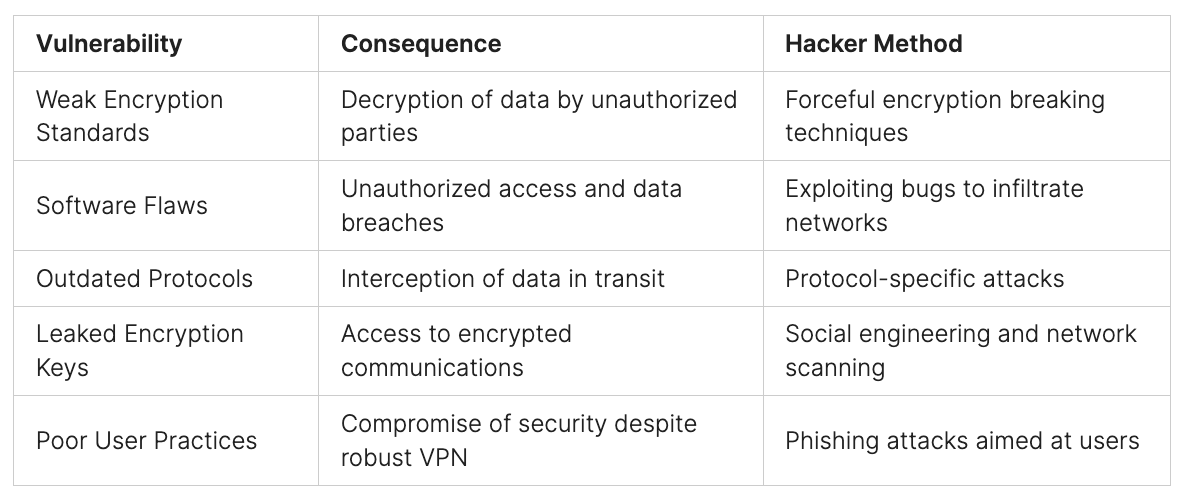
    Below is a detailed breakdown of the key areas where VPNs can become susceptible to misuse and how these vulnerabilities could compromise user privacy:

    The collective insights draw a picture of a landscape where VPN use is a game of cat-and-mouse between cybersecurity professionals and hackers. The former strives to shield data and identities with cutting-edge technologies, while the latter expends equal effort in devising new ways to compromise these digital fortresses. To navigate this terrain safely and effectively, users must not only choose their VPN providers wisely but also stay informed about possible hacker tactics and how to counteract them.

    The Intricate Balance: VPN Uses Versus Privacy Risks

    In the digital age, the deployment of Virtual Private Networks (VPNs) embodies a crucial paradox. As these tools afford users increased security on public networks, a closer examination reveals that the shield provided by VPNs can be wielded as a sword by those with malicious intent. The benefits and pitfalls surrounding VPN uses are intricately linked to network security protocols, and this interconnection demands attention to ensure the continued safeguarding of personal and corporate data.

    Promoting VPN Benefits for Legitimate Use

    Legitimate users rely on VPNs for a multitude of reasons. From protecting sensitive transactions on unsecured Wi-Fi networks to ensuring secure communication within remote work frameworks, VPNs serve as a bulwark against various cyber threats. Strong encryption and secure protocols, like OpenVPN and IKEv2/IPSec, are recommended pillars for reliable VPN security. When utilized properly, these technologies render data transmission opaque to prying eyes, contributing to a robust network security posture for both individuals and organizations.

    The Consequences of Misusing VPNs

    However, these same features that bolster privacy and data integrity are susceptible to exploitation. Hacker tactics involving VPNs can include masquerading as legitimate entities to bypass firewalls and carrying out complex phishing schemes undetected under the guise of encryption. The misuse of VPNs to obscure illegal activities not only poses privacy risks but also challenges the enforcement of cybercrime laws, reflecting a dichotomy that can compromise the very essence of VPN security.

    As we chart the evolving landscape of VPN effectiveness, it becomes necessary to balance enhancing legitimate access with combatting nefarious abuses. The dialogue on VPN uses must continue to adapt, shaping a network ecosystem where privacy and security are not adversaries, but rather, allies in an ongoing effort to foster safe and secure internet experiences.

    Decoding VPN Vulnerabilities: A Hacker’s Toolbox

    As the digital landscape evolves, the cat-and-mouse game between cybersecurity experts and hackers intensifies. A critical aspect of this battleground is the robustness of VPN security. Despite the best efforts to secure online privacy, VPN vulnerabilities remain a significant vector through which hackers deploy an array of sophisticated tactics to compromise data integrity and privacy.

    Weak Encryption: A Crevice for Cyber Attacks

    In the arsenal of hacker tactics, weak encryption is akin to a sledgehammer—simple, blunt, and devastatingly effective. Poorly implemented encryption can easily turn a VPN from a shield into a tool for attack. Cybercriminals can exploit such chinks to orchestrate breaches that qualify as serious privacy risks for unsuspecting users.

    Vulnerabilities in Outdated VPN Protocols

    Outdated VPN protocols are akin to rusty locks on a modern vault—they simply do not provide the level of security required to thwart today’s sophisticated hacker tactics. Protocols such as PPTP and L2TP/IPSec, once the standard, now serve as warning examples of obsolete technology failing to protect against current threats. As hackers evolve, so must our VPN security, by discarding these antiquated protocols in favor of advanced, airtight alternatives.

    To safeguard against these privacy risks, it is essential to adopt VPN services that prioritize strong encryption and regularly updated protocols. This proactive stance on VPN security ensures that the tools in a hacker’s toolbox become increasingly ineffective, thereby preserving the digital sanctity and personal privacy of users across the globe.

    Network Security Versus VPN Security: Where the Lines Blur

    In the complex arena of digital protection, the intersection of network security and VPN security presents a nuanced challenge. The advent of innovative technologies and sophisticated hacking methodologies have made it increasingly difficult to distinguish between the two, marking a pivotal point in the discussion on cyber defense. As we delve into the weaknesses and strengths inherent in modern cybersecurity protocols, it becomes evident that the traditional boundaries separating network security from VPN security are no longer as clear-cut as they once were.

    Evaluating the Strengths and Weaknesses of Network Security Measures

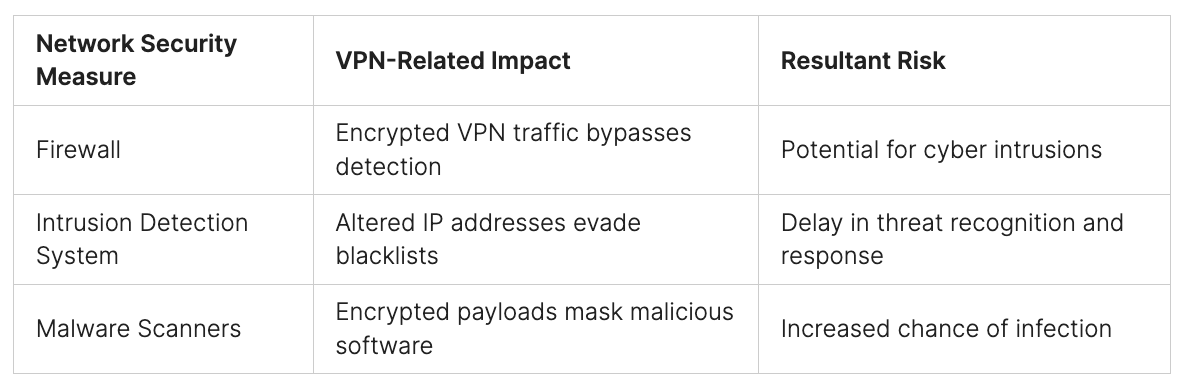
    Network security has traditionally been the front line of defense in safeguarding information systems. Employing a combination of firewalls, intrusion detection systems, and anti-malware software, these measures are designed to detect, thwart, and mitigate cybersecurity threats. However, even the most robust network security frameworks are not impervious to the refined tactics used by modern-day hackers, particularly when VPNs are introduced into the equation.

    How VPNs Can Circumvent Traditional Cyber Defenses

    VPNs, initially conceived as tools to reinforce privacy and enhance the security of data in transit, have proven they can also serve as a cloak for nefarious activities. By routing data through encrypted tunnels and frequently changing user IP addresses, VPNs can effectively bypass established network security measures, leaving systems vulnerable to unauthorized access and data exfiltration—highlighting the importance of continuous innovation in cybersecurity measures to address these privacy risks and VPN vulnerabilities.

    In light of these complex challenges posed by the mingling of network security and VPN security, stakeholders within the cybersecurity community must remain proactive, consistently upgrading their strategies and technologies to not only understand but also anticipate the evolving landscape of VPN vulnerabilities and privacy risks in the face of pervasive cybersecurity threats.

    Dismantling Hacker Anonymity: How Specialists Unravel VPN Misuse

    In the cat-and-mouse game of network security, hacking techniques are constantly evolving, with nefarious individuals exploiting VPN vulnerabilities to mask their activities. However, strides in cyber incident response are allowing experts to systematically dismantle the veil of anonymity that hackers have long relied upon. The following outlines the methodical approach taken by specialists to unravel the abuse of VPNs and penalize the perpetrators.

    Forensic Techniques in Cybersecurity

    Evolving digital forensics capabilities form the backbone of tackling the clandestine use of VPNs in hacking. Here is an exemplary process that cybersecurity teams follow:

    1. Analyze encrypted traffic passing through VPNs to detect potential red flags indicative of malicious intent.
    2. Apply heuristic and behavioral analysis to pinpoint anomalous patterns that suggest unauthorized use.
    3. Deploy advanced decryption techniques to unmask traffic and trace its origin, even when obscured by VPNs.

    Forensic experts rely not only on technology but also on the meticulous collection and examination of digital evidence, piecing together seemingly trivial data points to form a coherent narrative around a cyber breach.

    The Role of Law Enforcement and Cyber Incident Response

    When a cybersecurity breach is identified, a robust cyber incident response is initiated, involving both private cybersecurity firms and public law enforcement agencies. Network security professionals work in tandem with the legal system to:

    • Trace the digital footprints left by cybercriminals.
    • Utilize legal means to gain access to logs and records from VPN service providers.
    • Coordinate multinational efforts to apprehend those using VPNs for illicit activities.

    This collaborative effort often extends beyond borders, reflecting the global nature of cybercrime and the need for international cooperation and harmonization of cyber incident laws and regulations.

    The strategies deployed to counteract the misuse of VPNs are continuously refined to keep pace with the sophisticated tactics adopted by cyber adversaries. By focusing on strengthening network security protocols and cultivating an informed cyber incident response, the cybersecurity community is better equipped to bring transparency to the obscured corners of the internet where hackers have previously operated with impunity.

    Conclusion

    As we navigate the ever-changing terrain of cybersecurity, VPNs emerge as a key technology crucial for enhancing both security and privacy for users worldwide. However, the increasing exploitation of VPN vulnerabilities by cybercriminals calls for a stronger emphasis on VPN security enhancements and comprehensive user education. This dual nature of VPNs, serving both as a shield against cyber threats and, paradoxically, as a tool exploited by cybercriminals, highlights the essential need for continuous vigilance and responsible usage of VPN technology.

    Enhancing VPN Security Through Informed Actions and Awareness

    To defend digital spaces from the misappropriation of VPNs, there’s an undeniable requirement for increased awareness and proactive measures. Users and organizations should prioritize the adoption of secure VPN protocols and ensure their VPN software is consistently up-to-date. Integrating VPNs with other cybersecurity solutions can establish a more formidable defense against privacy violations and cyber attacks. By fostering informed use and stressing the importance of upholding security standards, the role of VPNs as effective protective mechanisms can be substantially enhanced.

    Reinforcing the Imperative of Responsible VPN Management

    Managing VPNs wisely means recognizing both their strengths and the cybersecurity challenges they might present. Effective risk mitigation involves embracing a holistic and layered approach to security. True resilience in using VPNs comes from understanding that while they are vital in security strategies, they also require responsible management to recognize their limitations. Combined with proactive defense measures, this approach will lay the groundwork for a more secure digital future, reducing privacy vulnerabilities and strengthening defenses against unauthorized breaches.

    For those seeking to strengthen their VPN security and overall cybersecurity posture, we invite you to explore our solutions at Peris.ai Cybersecurity. Our platform provides the tools and knowledge necessary to navigate these complexities, ensuring that your use of VPNs and other technologies contributes to a secure and resilient digital environment. Visit us to learn more and take the first step towards a more secure digital journey.

    FAQ

    What are some legitimate VPN uses for enhancing online privacy and security?

    Legitimate VPN uses include encrypting data traffic, masking IP addresses to maintain anonymity, protecting against cyber threats like man-in-the-middle and DDoS attacks, and securing data on public Wi-Fi networks.

    How do hackers exploit VPNs for malicious purposes?

    Hackers use VPNs to hide their identities and locations, conduct phishing and malware distribution, bypass network security measures like firewalls and intrusion detection systems, and stage untraceable cyber attacks.

    What types of cybersecurity threats are associated with VPN vulnerabilities?

    Cybersecurity threats related to VPN vulnerabilities include interception and decryption of data by exploiting weak encryption or outdated protocols, unauthorized network access, and identity theft.

    Can a VPN be used to spoof an IP address?

    Yes, VPNs can be used for IP address spoofing, allowing hackers to hide their real locations and execute attacks as if they were coming from different geographical locations.

    What are the unintended privacy risks of VPN use?

    While VPNs are designed to protect privacy, unintended risks include potential leaks of sensitive information due to VPN software flaws or vulnerabilities that hackers can exploit.

    How can the misuse of VPNs undermine user privacy and corporate data security?

    Misuse of VPNs can lead to unauthorized access to personal or corporate networks, identity theft, account credentials leakage, and the inability to trace illegal activities back to the perpetrators.

    What are some vulnerabilities in outdated VPN protocols hackers exploit?

    Hackers exploit vulnerabilities in outdated VPN protocols such as PPTP and L2TP/IPSec, which are known for weak encryption standards and can be easier to compromise than more secure, updated protocols.

    How do VPNs potentially circumvent traditional network security defenses?

    VPNs encrypt data traffic and change a user’s IP address, which can bypass network security measures like firewalls and intrusion detection systems, making unauthorized access and data exfiltration possible without detection.

    What techniques do cybersecurity experts use to counteract VPN misuse by hackers?

    Cybersecurity experts employ techniques such as network traffic analysis, anomaly detection in system logs, forensic analysis, and collaboration with law enforcement to identify and trace hackers using VPNs for illicit activities.

    How can individuals and organizations strengthen their VPN security?

    Strengthening VPN security involves using VPNs with strong encryption, keeping the software and protocols up-to-date, and incorporating them into a broader security strategy that includes additional cybersecurity tools and awareness of VPN limitations.

  • Why Internal Threats Shouldn’t Be Ignored

    Why Internal Threats Shouldn’t Be Ignored

    In today’s digital world, we often overlook a big threat – internal threats. These come from employees, contractors, or others inside the company. They can be very dangerous. But do we really understand and deal with these threats well? The answer might surprise you.

    While we hear a lot about cyber threats from outside, insider threats can be just as bad. These insiders know a lot about how the company works and can get to sensitive info. They can cause big data breaches, financial losses, and harm the company’s reputation. In fact, many people in business and IT are very worried about these threats, rating them very high.

    Key Takeaways

    • Internal threats are a big risk for companies, coming from employees, contractors, or others inside.
    • These threats can lead to big problems like data breaches, financial losses, and damage to the company’s reputation.
    • Many people in business and IT are very concerned about the risk of insider cyber attacks.
    • Companies need to act to reduce these risks, as ignoring them can hurt the company’s security and health.
    • Creating strong security plans, promoting a culture of security awareness, and using good access controls and monitoring are important to fight internal threats.

    The Gravity of Insider Cybersecurity Threats

    Insider threats are a big worry for healthcare groups. A recent survey by HIMSS Media showed many in the industry are very concerned. Most people in business and clinical roles worry a lot about these threats, giving them a score of 8.2 out of 10. Over half of them think these threats are very serious.

    Also, 42% of IT experts share the same big worry. This shows how serious insiders are seen as in healthcare.

    Insights from the Healthcare Industry

    Many in healthcare now focus more on insider threats than on threats from outside. This shows how big of a deal insider risks are for healthcare. They can really hurt the trust patients have in these places.

    Healthcare is getting more aware of how bad insider threats can be. This includes data breaches or misuse by people who are supposed to be trusted.

    *Inside the Surveillance Industrial Complex | America’s Surveillance State: https://youtube.com/watch?v=HMMA0rkTT04

    “Data breaches and cyber incidents have a profound effect on businesses, reputations, and livelihoods.”

    Most insider threats don’t get caught, which makes the problem even bigger. This means healthcare groups need strong security and training for their staff. If they don’t, they could lose patient data, face big financial losses, and damage their reputation.

    Types of Internal Threats to Customer Data

    Organizations face many internal threats that can harm customer data security. These threats come from insiders who steal or misuse data on purpose, and from employees who accidentally expose data. In fact, 60% of data breaches are from insiders, and small companies spend about $8.13 million on these incidents. Insider threats have jumped by 44% from 2020 to 2022.

    Most insider threats, about 56%, are due to employee or contractor carelessness. The FBI got nearly 20,000 Business Email Compromise (BEC) complaints in 2021, showing how insiders can be a big risk. To fight these risks, companies should watch who can see their data. They should also train employees regularly to keep up with new threats. Using tools from managed security providers can also help spot insider attacks.

    • Malicious insiders who intentionally steal or misuse sensitive information
    • Careless or negligent employees who inadvertently expose data through improper handling, unauthorized access, or weak security practices
    • Contractors or other insiders with legitimate access to the organization’s systems and data

    Type of Internal Threat Percentage of Insider Threats Malicious insider attacks 26% Employee or contractor negligence 56%

    Insider threats can come from many places, like current or past employees, contractors, and others with access to the company’s data. These threats can be intentional data theft or accidental data exposure. Verizon found that 82% of data breaches involve people, showing how big a risk insiders are.

    Recent big data breaches at Uber, Cash App Investing, and the city of Calgary show how serious insider threats are. Companies need to watch insiders closely and have strong security to protect customer data.

    “Insider threats affect over 34% of businesses every year, and 66% think insider attacks are more likely. Insider incidents have gone up by 47% in the last two years.”

    Why Internal Threats Shouldn’t Be Ignored

    Organizations often focus on fighting external cyber threats. But, they shouldn’t ignore the growing issue of insider risk. These threats come from within and can seriously harm data protection and cybersecurity. Studies show that the average loss from an insider data breach is $15 million. Also, 55% of data breaches are caused by insiders. Since 2021, there’s been a 28% jump in insider-driven data leaks.

    The Growing Problem of Insider Risk

    Many organizations find it hard to tackle internal threats. Even though 99% of companies say they have data leakage prevention, 78% have lost valuable data. This shows we need a better way to handle insider risks. In fact, 60% of cyber attacks involve trusted insiders. Only 7% of companies feel they have good insider threat protection.

    Dealing with internal threats needs a strategy that includes more than just tech. Good Insider Threat Programs need support from top management, enough money, and teamwork from IT, HR, Legal, and Security. It’s also key to know what data is critical, set clear rules, and build a security-aware culture.

    New tech like ChatGPT makes insider threats worse. 87% of security leaders worry about employees not following the rules with tools like ChatGPT. We need a strong, proactive security plan to tackle these new threats.

    Ignoring internal threats can lead to big problems like data breaches and financial losses. To avoid these risks, companies must focus on managing insider threats. This means using tech, having strong processes, and building a security culture. By tackling insider risk, organizations can improve their cybersecurity and protect their valuable assets.

    Vulnerabilities in Data Protection Measures

    Protecting customer data is crucial for companies, but many don’t fully cover their data protection gaps. These gaps can come from poor access controls, not training employees enough, not watching user actions closely, and missing key data protection steps. It’s vital to fix these issues to stop insider threats from leaking customer info.

    Human mistakes cause most data breaches, with 85% of them coming from this. This shows how important it is for companies to teach employees about cybersecurity. They need to know how to spot and stop phishing attacks to keep data safe. Also, new quantum computing tech could break into data, so companies must check how it affects their encrypted data.

    Insider threats, like employees leaving or moving, are big risks for data. To fight this, companies need to have strict controls, like telling HR about changes and watching user actions closely. They also need to pay attention to IoT devices, which can be a weak spot in security.

    Many companies don’t protect their data backups well, leaving sensitive info at risk. Using tokenization services can help keep data safe. Also, making sure data is encrypted when moving it is key, but often ignored.

    Having too much data makes a company more vulnerable, making it harder to keep data safe. Companies should only collect and keep the data they really need to lessen this risk. They should also avoid using too much anonymized data, as it can be traced back to real people, and use data masking instead.

    By fixing these data protection weaknesses, companies can protect customer data better and reduce risks from inside threats. This ensures the safety and privacy of important information.

    Third-Party Risks and Regulatory Compliance

    Companies face big risks from third-party vendors who can see sensitive customer data. Last year, 57% of manufacturers had a data breach because of these vendors. With an average of 67 vendors per company, each with many people accessing the network, the risk is high. Also, 44% of companies faced a breach due to too much access given to third parties. Not checking the security of these partners can lead to data breaches and legal problems.

    Addressing Vendor Security and Legal Requirements

    To lower these risks, companies need strong vendor management. Gartner says 60% of companies work with over 1,000 third parties, showing how big these networks are. It’s key to check their security regularly and make sure they follow data privacy laws. ProcessUnity is a leader in Third-Party Risk Management, showing its top performance in this area.

    A big part of managing third-party risks is looking at more than just cybersecurity risks. This includes things like reputation, location, politics, strategy, money, operations, privacy, following the law, ethics, keeping business running, performance, and environmental risks. Using automation in TPRM helps with tasks like figuring out risks, picking risk owners, and sending updates.

    The Third-Party Risk Management Lifecycle has steps like finding vendors, checking and picking them, assessing risks, fixing problems, making contracts, reporting, and keeping an eye on vendors. It also includes ending vendor relationships.

    “Businesses today operate within extensive networks of third-party relationships, making vendor security and regulatory compliance critical priorities.”

    Healthcare is often a target for cyber attacks, showing how vulnerable it is to security threats. The cost of cybercrime is expected to hit $24 trillion, showing the big financial hit from these risks. Manufacturing is a top target for cyber threats, as the World Economic Forum points out, making it a high-risk sector. Financial services and insurance were also big targets in 2022, showing the wide reach of cyber risks. The US hospitality market’s $4.1 trillion value in 2022 highlights its economic importance and the danger of cyber breaches.

    Overlooked Physical Security Threats

    Many organizations focus on fighting digital threats but often ignore physical security risks. Things like unsecured devices, throwing away sensitive papers, and not controlling who goes where can let insiders get to customer data and important assets.

    A report pointed out the danger of water heaters near server rooms, which could cause water damage and data loss. Nathan Whittacre, CEO of Stimulus Technologies, told of a client whose office was broken into by former workers who went straight for the server room. This shows how easy it is for insiders to breach physical security. Companies often keep access and passwords for ex-employees too long, making it easier for them to cause trouble.

    To fix these security gaps, simple steps like environmental monitoring systems can protect against fires, floods, or overheating. Using access control systems with keycards and cameras can also help keep offices and server rooms safe. It’s important to have a checklist for when employees leave to make sure they’re fully removed from the system.

    Working together between physical security and IT teams is key to making sure both physical and cybersecurity work well together. Most organizations find moving systems and apps to the cloud hard and expensive. IT experts can make sure physical security gear works well with cloud systems and help choose the right physical security systems to keep everything secure.

    It’s crucial to tackle physical security threats since most IT leaders worry about data breaches and 53% of breaches come from inside, like unauthorized access or throwing away papers the wrong way. By looking at both physical and digital security together, companies can lower the risk of insider threats and keep their important stuff safe.

    Findings Percentage Organizations that suffered a data breach in the last 12 months 68% Data breaches in the healthcare sector caused by loss or stolen paper documents or devices 71% Data breaches caused by internal factors like unauthorized access or improper disposal 53% IT managers who stated that physical security isn’t optimized in their companies 77% Reported workplace injuries and fatalities due to violence in 2018 20,790 injuries and 453 fatalities

    “Collaboration between physical security and IT teams leads to more effective converged security protections.”

    Access Management and User Behavior Monitoring

    Keeping an eye on who can access what is key to stopping insider threats. Companies need strong access controls like multi-factor authentication and specific roles to keep sensitive info safe. Watching how users act, what they access, and what they do with data can spot odd behavior and insider threats.

    Implementing Robust Access Controls and Analytics

    Knowing what’s normal for each employee and watching for changes is vital to catch insider threats early. Deep analysis of user behavior gives insights to tackle insider risks.

    Every company should focus on managing insider threats to reduce risks from both intentional and accidental insiders. To stop insider threats, companies should check new hires well, set clear rules, limit access to key info, use the least privilege model, and train employees on cybersecurity.

    Training employees is key to stopping accidental insider threats. Topics can include spotting phishing emails, secure remote access, and how to act in a cyber attack. Watching for unusual actions, like unauthorized file sharing or odd network logins, can catch insider threats early.

    Fostering a Culture of Security Awareness

    Creating a strong security culture in the workplace is key to fighting internal threats. It’s all about employee training programs, security awareness campaigns, and sharing security policies and best practices. By teaching employees how to protect data, we make a security-conscious workforce. This team can spot and stop insider risks.

    Many companies are not doing enough in this area. 40% of people said they don’t want to take security steps, and 53% haven’t had any cybersecurity training. Without security awareness, companies are open to insider threats. 41% of top leaders say their security efforts can’t keep up with new technology.

    To build a strong security awareness culture, we need to make employees key players in protecting data and assets. This means regular training, fun learning activities, and clear info on security risks. By sharing the importance of security, we turn our team into a strong defense against cyber-attacks.

    Building a security culture is a constant effort. It means working together and giving employees the power to act. This way, companies can improve their risk management and keep sensitive data safe.

    Key Insights Statistics Motivation is the primary obstacle to employee security actions 40% of respondents identified motivation as the primary obstacle Lack of cybersecurity training for employees 53% of employees have not undergone any cybersecurity training Security initiatives not keeping pace with digital transformation 41% of executives stated that their security initiatives have not kept pace Employees unsure of reporting security incidents 45% of employees are unsure who they should report security incidents to Employees do not think they have a role in maintaining security Almost a third of employees do not think they have a role in maintaining security

    “Employees should be seen as a line of defense (human firewall) against cyber-attacks, not the weakest link.”

    Conclusion

    Internal threats pose significant risks to companies, and overlooking them can lead to severe consequences. Malicious insiders or careless employees can expose sensitive customer data, resulting in substantial financial losses and damage to a company’s reputation.

    To combat these threats, companies need a robust strategy that includes enhanced access controls, user behavior monitoring, and comprehensive employee security training. It’s equally important to assess third-party relationships and maintain strong physical security measures.

    By addressing internal threats proactively, companies can better protect customer data and maintain trust with stakeholders. A clear understanding of risks allows organizations to focus on the most critical issues and avoid unnecessary disruptions.

    Implementing strong security measures and adhering to cybersecurity best practices are essential in mitigating insider risks. Insider threat programs play a crucial role in detecting and preventing potential threats before they materialize, ensuring the safety of company assets.

    For more insights and to explore our range of cybersecurity solutions, visit Peris.ai Cybersecurity. Safeguard your organization against internal and external threats with Peris.ai‘s comprehensive services and expertise.

    FAQ

    What are internal threats and why are they a significant concern for organizations?

    Internal threats come from people inside an organization who act maliciously or carelessly. These actions can lead to data breaches and harm the company’s reputation. It’s vital for companies to understand and tackle these threats.

    How concerned are healthcare organizations about insider cybersecurity threats?

    Healthcare organizations are very worried about insider threats, scoring an 8.2 out of 10. A survey showed 52% of those in business and clinical roles are very concerned. Also, 43% think insider threats are a bigger worry than external ones.

    What are the different types of internal threats that can compromise customer data?

    There are many internal threats, like malicious insiders who steal data on purpose. Others are careless employees who accidentally expose data. These threats can come from current or former staff, contractors, and others with access to the company’s systems.

    Why is the growing problem of insider risk often overlooked by organizations?

    Companies often focus more on threats from outside. But insider threats are hard to spot and stop because they come from within. This makes them a big risk for organizations.

    What are some common vulnerabilities in data protection measures that leave organizations susceptible to insider threats?

    Many companies don’t protect their data well. They might not control access properly, train employees enough, or watch user behavior closely. They also might not have a strong plan to protect data. Fixing these issues is key to keeping customer data safe.

    How can third-party relationships and physical security vulnerabilities contribute to insider threats?

    Working with third-party vendors can be risky if they don’t protect data well. Not checking their security can lead to breaches. Also, not securing devices, throwing away documents wrong, and not controlling access to certain areas can be dangers from within.

    What are the key measures organizations can take to mitigate insider threats?

    To fight insider threats, managing access and watching user behavior is key. Use strong access controls and watch for unusual actions. Teaching employees about security is also important to stop threats from within.

  • Hackers Use AI – So Should You

    Hackers Use AI – So Should You

    Hackers are now using AI to launch complex attacks. It’s vital for companies to use AI to keep up. AI is now a must-have in cyber security, as attacks are getting smarter and more common.

    Phishing, vishing, and deepfake technology are all getting a boost from AI. This makes it easier for hackers to trick people. However, using AI can help companies spot threats faster and keep their data safe.

    Using AI in cyber security is very important. Experts say that multi-factor authentication can cut down on breaches by 99%. However, AI is changing fast, and companies must keep up to protect themselves.

    Key Takeaways

    • Hackers are using AI to launch sophisticated cyber attacks, and organizations must use AI technology to stay ahead of these threats.
    • AI-powered cyber attacks are becoming more common and more effective, with AI-driven phishing attacks, vishing, and deepfake technology on the rise.
    • The use of AI in cyber security can help organizations improve their threat detection and response times and reduce the likelihood of successful breaches.
    • Multi-factor authentication (MFA) can reduce the likelihood of successful breaches by 99% if implemented effectively.
    • Organizations must be prepared to adapt and evolve their security measures to stay ahead of the threats posed by AI-powered cyber attacks.
    • AI technology is essential for cyber security, and organizations that do not use AI will be at a significant disadvantage in the fight against cyber threats.

    The Evolution of AI-Powered Cyber Threats

    Artificial intelligence is changing how cyber-attacks happen. Machine learning makes attacks smarter and more focused. This means companies must find new ways to protect their data. Cybercrime costs are expected to hit $10.5 trillion by 2025, showing the urgent need for strong security.

    Autonomous hacking tools are now part of the threat. They quickly find and use weaknesses in systems. Continuous monitoring and AI operational effectiveness are key to spotting these dangers. Here are some important stats about the threat level:

    • Average annual job openings in IT occupations from 2022 to 2032: 37,600 for computer systems analysts, 10,200 for database administrators and architects, and 19,800 for network and computer systems administrators.
    • Advanced Persistent Threats (APTs) remain undetected for an average of 286 days.
    • Cyber threats are designed to exploit vulnerabilities in devices across digital infrastructures, including personal data theft estimates representing financial losses in the trillions globally.

    *Are you using a Hacked AI system? https://youtube.com/watch?v=YSGiFry4vI4

    Cybercrime is getting more organized and targeted. This has led to a high chance of digital breaches. As AI attacks grow, companies must keep improving their defenses to stay safe.

    How Hackers Leverage AI Technologies

    AI has made hacking tools more advanced, allowing hackers to launch complex attacks easily. It’s vital to have strong hacker prevention tactics to fight these threats. Hackers mainly use AI to crack passwords with machine learning algorithms.

    These algorithms guess passwords with great accuracy, posing a big security risk. AI also powers social engineering attacks, using natural language to craft believable messages.

    *The Implications Of AI In Cyber Security: https://youtube.com/watch?v=kZMLwO3R_8E

    To fight these threats, using multifactor authentication and keeping software updated is key. Keeping up with AI in cybersecurity helps organizations protect against AI attacks.

    Knowing how hackers use AI helps organizations prevent and respond to threats. This way, they can stay ahead of cyber attackers.

    The Financial Impact of AI-Powered Cyber Attacks

    AI-powered cyber-attacks can cost a lot, with big companies facing losses of $1.5 million on average. To avoid these high costs, it’s key to have strong data protection strategies and digital defenses. This means investing in cybersecurity measures like AI for threat detection and response.

    Some important stats about the financial hit from AI-powered cyber attacks are:

    • 71% of organizations faced at least one cyberattack in 2023, with many blaming AI.
    • AI attacks can speed up the reconnaissance phase, cutting research time from weeks to hours.
    • About 85% of cybersecurity experts think AI-powered cyberattacks will grow a lot in the next two years.

    Companies can lessen the financial damage from AI-powered cyber attacks by using strong cybersecurity measures and data protection strategies. This includes using AI to boost digital defenses and speed up response times.

    Hackers Use AI – So Should You: The Defensive Edge

    As hackers increasingly use AI technology, it’s vital for companies to adopt AI in their cyber security. This way, they can keep up with threats and safeguard their data. The use of AI in cyber security creates a race where both sides use the same tech.

    Using AI in security has many advantages. For example, AI can spot vulnerabilities faster than hackers. It also keeps an eye on big networks for weaknesses, focusing on the most critical ones. This helps companies act fast, lessening the harm from attacks.

    Predictive Threat Detection

    Predictive threat detection is a key part of AI-powered security. Ai looks for patterns and oddities in data to find threats early. This lets companies stop attacks before they start, not just after.

    Automated Response Systems

    Automated response systems are another big plus of AI security. They can tackle threats on their own, saving time and effort. This quick action helps companies dodge data breaches and other cyber threats.

    *Learning Cybersecurity FAST with AI: https://youtube.com/watch?v=9eprsQJhfPY

    In summary, AI in cyber security is a major shift in protecting data. By using AI in their security plans, companies can outsmart threats and keep their data safe from cyber-attacks.

    Implementing AI-Driven Security Solutions

    The threat landscape is always changing. It’s key to keep up with AI-driven security solutions. Machine learning algorithms are vital for spotting and stopping cyberattacks. They help protect data and stay ahead of threats.

    When adding AI-driven security, think about cost and how it fits with your current digital defenses. Look at the benefits and make sure they work with what you already have. This way, your security gets stronger and risks lower.

    Some important things to keep in mind when using AI-driven security include:

    • Do a detailed cost-benefit analysis to see if it’s worth it
    • Plan how to integrate it smoothly with your current security
    • Make sure your team knows how to use it with training and support

    By following these steps and using machine learning algorithms, you can build strong data protection strategies. This will help you fight off new threats and keep your data safe from cyberattacks.

    Real-World Success Stories: Companies That Fought Back

    Many companies have used hacker prevention tactics to fight off AI-powered cyber attacks. A Gartner survey found that 34% of organizations are using or planning to use AI security tools. This is to tackle the risks of generative AI.

    Some companies have successfully defended against AI attacks. They’ve done this by using AI advancements in cybersecurity to boost their defenses. For example, Google and Microsoft have created AI-powered security systems. These systems help detect and fight cyber threats.

    Here are some key statistics on the importance of hacker prevention tactics and AI advancements in cybersecurity:

    • 73 million current and former AT&T customers were affected by a data breach in April 2024.
    • Over half a billion Ticketmaster customers had their information leaked due to a breach linked to a hack of Snowflake.
    • Approximately 26 billion records were exposed in the “Mother of All Breaches” data leak.

    *AI is Revolutionizing Cybersecurity! (The Battle Against Hackers Just Got Smarter) PART 2: https://youtube.com/watch?v=GZ1ZbOwy-FM

    These numbers show why companies must be proactive in cybersecurity. They need to keep monitoring and improving their defenses. By using effective hacker prevention tactics and staying current with AI advancements in cybersecurity, companies can lower their risk of AI attacks.

    The Human Element: AI as a Security Team Multiplier

    As companies spend more on cyber security, the human touch is key in AI-powered systems. AI can boost digital defenses greatly. But, a skilled team is needed to use these tools well.

    AI is great at handling big data and spotting odd patterns in real time. This makes it better at finding and dealing with threats. Yet, AI needs humans to check its work and fix any issues. Together, AI and human skills create strong cybersecurity measures.

    Staff Augmentation Benefits

    AI can also help security teams do their jobs better. Some good things about using AI include:

    • Enhanced threat detection and response capabilities
    • Improved incident response times
    • Increased efficiency in security operations

    Skill Enhancement Opportunities

    As AI gets better, cybersecurity pros need to learn new skills. They should get training in AI areas like machine learning and natural language processing. They also need to know how to analyze and understand data.

    Investing in team skills is vital. This way, companies can use AI security tools well. And they can stay one step ahead of new threats.

    Future-Proofing Your Digital Defense Strategy

    To stay ahead of cyber threats, organizations must use the latest AI technology. They should invest in artificial intelligence for better cybersecurity. Machine learning algorithms can also improve threat detection.

    Emerging AI security technologies include predictive threat detection and automated response systems. These can help reduce cyber risks and lower false positives in threat detection.

    Adopting AI-driven security solutions offers many benefits. They can automate incident responses, potentially saving millions in damages. AI can also handle complex cyber attacks beyond human capabilities, adapting quickly to new threats.

    Investment Priorities

    Organizations should invest in AI solutions that boost cost efficiency and automate defenses. This allows human resources to focus on important tasks. Investing in machine learning and artificial intelligence for user verification is key.

    By focusing on these investments, organizations can keep their digital defense strategies up-to-date. As cyber-attacks become more common, it’s vital to stay ahead. Investing in the latest AI security technologies is essential.

    Measuring ROI in AI Security Implementation

    Organizations are investing in AI for security. It’s key to measure the return on investment (ROI) to see if these solutions work well. Gartner says security spending will hit $90 billion in 2024, with 42% going to cybersecurity services.

    Good cybersecurity measures can offer a great ROI. 88% of boards now see cybersecurity as a business risk, not just a tech issue. To get the most out of AI security, keep checking how well it works and tweak it as needed.

    • 87% of consumers might leave if they don’t trust a company with their data (PwC)
    • 79% of investors think cybersecurity and privacy are key in their decisions (PwC’s Global Investor Survey)
    • The AI in cybersecurity market was $14.9 billion in 2021 and will hit $133.8 billion by 2030

    Investing in solid cybersecurity measures and data protection strategies helps avoid cyber attacks. This protects sensitive data and boosts ROI on AI security.

    Conclusion: Embracing AI as a Cybersecurity Imperative

    The cybersecurity landscape is evolving rapidly, and automation is no longer a luxury—it’s a necessity. With cyber threats growing more sophisticated, security teams need an intelligent, unified approach to streamline operations, reduce manual intervention, and enhance threat response.

    Brahma Fusion is the answer. As a cutting-edge unified connector, it simplifies security automation by integrating multiple tools and platforms, allowing organizations to respond faster and more efficiently. With features like customizable security responses, a drag-and-drop workflow builder, and the ability to incorporate custom code for precision, Brahma Fusion empowers security teams to stay ahead of modern threats with minimal effort.

    The days of reactive security are over. Brahma Fusion enables proactive, AI-driven automation that enhances efficiency, eliminates errors, and optimizes resource allocation—ultimately transforming security operations.

    Stay ahead of cyber threats with Brahma Fusion. Explore the future of security automation at https://www.peris.ai/.

    FAQ

    What is the main reason why organizations should use AI in cybersecurity?

    Organizations should use AI in cybersecurity because hackers use AI for attacks. This means companies need AI to protect themselves. It helps them stay ahead of threats.

    How do AI-powered cyber threats differ from traditional attack methods?

    AI-powered threats use machine learning and AI to launch complex attacks. These attacks are harder to detect and prevent. This shows the need for strong data protection strategies.

    How do hackers leverage AI technologies to launch cyber attacks?

    Hackers use AI for password cracking and social engineering. They also use automated scanning. This makes it key for companies to prevent attacks and keep up with AI in cybersecurity.

    What is the financial impact of AI-powered cyber attacks on organizations?

    AI-powered attacks can cost organizations a lot. This includes data breaches and attacks. Companies need to protect their data and prevent financial losses.

    What are the benefits of using AI in cybersecurity?

    AI in cybersecurity offers predictive threat detection and automated responses. It also helps in recognizing patterns. These benefits help organizations stay ahead of threats and improve their security.

    What are the key considerations for implementing AI-driven security solutions?

    When implementing AI-driven security, consider cost and benefits. Also, think about integration and training. It’s important to keep developing machine learning and protecting data.

    How can organizations measure the ROI of AI security implementation?

    To measure ROI, monitor and evaluate AI security solutions. Make adjustments as needed. Invest in cybersecurity that offers a good return on investment.

    What is the role of the human element in AI-powered cybersecurity?

    The human element is key in AI-powered cybersecurity. It offers benefits like staff augmentation and skill enhancement. It’s important for organizations to invest in their teams and provide ongoing training.

    How can organizations future-proof their digital defense strategy?

    To future-proof, stay updated with AI in cybersecurity. Invest in emerging technologies. Prioritize AI-driven solutions to enhance security.

  • How to Protect Yourself from Scammers Post-CrowdStrike Crash

    How to Protect Yourself from Scammers Post-CrowdStrike Crash

    In the wake of the CrowdStrike crash, opportunistic scammers are taking advantage of the resulting confusion. These fraudsters are devising schemes to deceive users during this vulnerable time. Here’s a comprehensive guide to understanding their tactics and safeguarding yourself.

    Key Insights

    1. Exploiting Opportunities

    Scenario: Scammers are capitalizing on the chaos following the CrowdStrike incident.

    Impact: Users seeking to reschedule flights, access banking services, or resolve tech issues are prime targets.

    Industries at Risk:

    • Travel: Airlines see an uptick in scams as customers attempt to rearrange travel plans.
    • Cybersecurity: Fraudulent actors pose as CrowdStrike support, offering harmful “fixes.”
    • General: The widespread impact of the crash means no sector is immune to potential scams.

    2. Recognizing Scams

    Red Flags: Requests for unusual personal information and communications riddled with poor grammar.

    Verification: Double-check the origins of calls and messages, recognizing that scammers can convincingly mimic legitimate entities.

    3. Resisting Quick-Fix Solutions

    Caution: Avoid hastily providing personal details online or over the phone.

    Validation: Dedicate time to confirm the authenticity of any service provider before proceeding.

    ️ Protective Measures to Counter Scams

    • URL Vigilance: Scrutinize links before clicking. Suspicious URLs often signal deceit.
    • Social Media Security: Look for verification badges to verify the authenticity of accounts, particularly those purporting to represent major companies.
    • Reporting: Promptly report any suspicious online behavior or content that appears fraudulent.
    • Information Security: Be skeptical of requests for sensitive information like social security numbers from supposed service providers.
    • Patience Pays Off: While responses from legitimate sources may be delayed, they are worth the wait compared to the risks of quick, unverified fixes.

    ️ Defending Your Data

    Phishing and malware exploitation are rampant, particularly during times of widespread disruption, when attackers aim to exploit vulnerabilities and capitalize on the chaos. Events like the CrowdStrike crash necessitate heightened vigilance. It’s essential to verify sources meticulously and handle personal information with utmost caution.

    Stay vigilant, stay secure. For more updates and comprehensive cybersecurity insights, visit Peris.ai Cybersecurity. Discover our extensive range of products and services designed to fortify your defenses against evolving cyber threats.

  • The Generational Divide in Social Media Security

    The Generational Divide in Social Media Security

    The increasing prevalence of social media password breaches among younger generations highlights a pressing cybersecurity challenge. According to the 2024 State of Global Authentication survey conducted by Yubico, nearly half of Gen Z (47%) and Millennials (46%) have experienced password compromises on social platforms. This underscores not only the evolving tactics of cybercriminals but also the generational differences in cybersecurity practices and attitudes.

    In an age of AI-driven phishing attacks and advanced cyber threats, protecting online accounts requires a shift from traditional passwords to robust, modern security measures.

    ⚠️ Key Findings from the 2024 Cybersecurity Survey

    Gen Z & Millennials Are More Vulnerable to Breaches

    • Higher Breach Rates: Nearly half of Gen Z and Millennials report compromised social media passwords.
    • Adaptability: Despite higher breach rates, younger generations are quicker to adopt modern security tools like hardware security keys.

    Shifts in Authentication Practices

    • Decline of Passwords: Traditional username-password combinations are falling out of favor.
    • Rise of MFA and Hardware Security Keys: Baby Boomers and Gen X continue to rely heavily on passwords, while Gen Z and Millennials embrace more secure, innovative solutions.

    AI-Powered Cyber Threats Are on the Rise

    • Advanced Phishing: 73% of Gen Z respondents are concerned about AI-enhanced phishing and deepfake scams.
    • Sophistication of Attacks: AI enables cybercriminals to craft highly convincing scams, increasing the importance of robust account security.

    Trust Issues with Organizations

    • Distrust in Data Security: 42% of survey respondents doubt that organizations are doing enough to safeguard their data.
    • Generational Divide: Nearly half of Baby Boomers trust passwords as effective, compared to just 35% of Gen Z respondents.

    ️ Best Practices to Protect Your Accounts

    Enable Multi-Factor Authentication (MFA)

    • Adds an additional security layer beyond passwords.
    • Use phishing-resistant methods like hardware security keys (e.g., YubiKey) for maximum protection.
    • Ensure MFA is enabled on critical platforms such as social media, financial accounts, and work tools.

    ️ Stay Alert for Phishing Scams

    • Always verify the sender of emails or messages before clicking links.
    • Be cautious of unsolicited login requests or password reset emails.
    • Contact organizations directly if suspicious activity arises.

    Leverage a Password Manager

    • Generate unique, strong passwords for every account.
    • Avoid reusing passwords across platforms to minimize exposure.
    • Regularly update passwords to stay ahead of potential breaches.

    Monitor Account Activity

    • Regularly review security settings for suspicious changes.
    • Check for unfamiliar login attempts or devices.
    • Enable real-time alerts for unauthorized account modifications.

    Moving Beyond Passwords: The Future of Cybersecurity

    The cybersecurity landscape is shifting toward a passwordless future. Passkeys, biometric authentication, and hardware security keys are becoming essential tools in mitigating risks posed by evolving cyber threats. With AI-enabled attacks increasing in sophistication, relying solely on passwords is no longer a viable option.

    Key Takeaways:

    • Education is Crucial: Companies and individuals must prioritize cybersecurity awareness to stay ahead of threats.
    • Modern Solutions: Tools like phishing-resistant MFA and hardware security keys significantly reduce breach risks.
    • Proactive Defense: Regular updates, strong authentication, and vigilance are essential in the fight against cybercrime.

    Stay Cyber-Safe with Peris.ai

    The alarming rise in social media breaches underscores the need for a proactive approach to cybersecurity. At Peris.ai, we provide expert insights and advanced solutions to safeguard your digital identity.

    • Take Action Today: Enable MFA, adopt hardware security keys, and educate your network about cybersecurity best practices.
    • Stay Informed: Follow Peris.ai for the latest trends and tools to protect against cyber threats.

    Visit Peris.ai for cutting-edge cybersecurity solutions and resources.

    Your Peris.ai Cybersecurity Team #YouBuild #WeGuard

  • Container Security Challenges and How to Overcome Them

    Container Security Challenges and How to Overcome Them

    Did you know the container security market is expected to jump from $1.93 billion in 2023 to $12.61 billion by 2032? This is a 23.4% annual growth rate. This growth shows how vital it is to secure containerized environments. Cybercriminals are targeting these new technologies more and more. So, what makes container security so important, and how can businesses tackle these challenges?

    Containers have changed how we develop, deploy, and scale apps. But they also bring unique security issues. A single flaw in a container image can put all instances at risk, especially in big deployments. The way containers are connected and share operating systems makes them vulnerable to big attacks. To keep container-based systems safe, we need a detailed plan that covers all security layers.

    Key Takeaways:

    • Container security is a rapidly growing field, with the market projected to reach $12.61 billion by 2032.
    • Containers present unique security challenges due to their interconnected nature and shared operating system kernels.
    • Effective container security requires a multi-layered approach to address vulnerabilities, network security, secrets management, and storage protection.
    • Continuous vulnerability scanning, secure container registries, and runtime security monitoring are essential for maintaining a robust container security posture.
    • Integrating security practices into the container development lifecycle, from design to deployment, is crucial for securing containerized workloads.

    Introduction to Container Security

    In today’s fast-paced world, keeping containers secure is crucial for businesses. Containers are great for deploying apps because they’re light and efficient. But, they also bring their own set of security issues that need to be tackled.

    Importance of Container Security

    Container security is vital. More companies are seeing security as a major challenge with containers. Teams must assess risks by evaluating potential impact.

    Also, containers must meet all compliance rules, which can be tricky because they change a lot. Sharing container resources can also pose security risks.

    Key Components of Container Security Architecture

    The core parts of container security include images, registries, deployment, runtime, secrets, network, and storage. Kubernetes helps with security through features like access control and network policies. Docker supports security with scanning and image hardening, and it has a secure registry.

    Containers can run malicious processes, making monitoring hard due to their short lifespans. A lack of skilled experts is also a challenge, leading to potential misconfigurations. Tools for scanning containers are key to keeping workflows secure, checking for vulnerabilities in images.

    Kubernetes is complex and can be vulnerable, making it a target for attacks. It’s important for businesses to take steps to secure it when using it in production.

    “Securing containerized environments is essential to protect the integrity of your applications and data in a dynamic, fast-paced infrastructure.”

    Vulnerability Management for Container Images

    Securing container images is key because flaws in an image can spread to all containers made from it. This can cause big security problems. To tackle this, companies should focus on securing their base images and scanning for vulnerabilities all the time.

    Securing Container Base Images

    Companies should get their base images from trusted places, like official repositories, and keep them updated. This reduces the risk of using old images with known bugs. They should also remove extra software from the images to make them safer.

    To make base images more secure, companies should scan them well for bugs and bad software. Using safe sources and scanning deeply can find and fix problems like bad components and too much access.

    Continuous Vulnerability Scanning

    Scanning for vulnerabilities all the time is key to finding and fixing security issues in container images. This way, companies can spot and fix problems early, keeping their apps safe.

    Tools like Trivy and Calico help find and fix many security problems, like bad images and app bugs. Regular scans and fixing issues help keep security strong and follow rules.

    Good practices for scanning include making it part of the development process, scanning often, and using safe images. Also, scan third-party stuff, automate scanning, and teach developers about security.

    “Continuous vulnerability scanning is essential to detect and address vulnerabilities in container images throughout the development lifecycle.”

    By being proactive about container image security and scanning all the time, companies can lower risks. They can keep their apps safe and make their container setup strong.

    Securing Container Registries and Deployment

    Keeping container registries and deployment safe is key in today’s tech world. These registries hold container images and need strong security to stop unauthorized access. This ensures only trusted images are used. With thousands of images in registries, controlling access and checking image integrity is vital.

    When deploying, it’s important to manage containers securely to avoid vulnerabilities. Breaches can lead to many problems, like malicious code and system compromise. To fight these issues, companies must use strong security steps from start to finish.

    By tackling security in registries and deployment, companies can make their container setup safer. The shared responsibility model in container security is key. Cloud providers handle the cloud’s security, while users protect their apps.

    Runtime Security for Containerized Workloads

    Keeping containerized workloads safe is key for businesses. Docker, containerd, and CRI-O are common runtimes with their own security needs. Containers on the same host can share a kernel, making them vulnerable to attacks.

    Monitoring and Restricting Container Activities

    Good runtime security means watching and controlling what containers do. Mistakes like open ports and weak login checks are big risks. In 2021, about 60% of companies found container mistakes in a year.

    Preventing Lateral Movement and Privilege Escalation

    One-third of companies faced security issues in 2021. Containers face threats like breakouts and data leaks. To stay safe, limit Docker API access and keep software up to date.

    Ignoring security checks and using old software are big no-nos. Handling API keys carefully can stop breaches.

    *Container Security: Only as Strong as its Weakest Link Across the Lifecycle:

    https://youtube.com/watch?v=zQnHJUS8H2k

    “Security researchers found over 1,600 malicious containers on Docker Hub in 2022.”

    Container Security Challenges and How to Overcome Them

    Container technology has brought many benefits, like better app portability and efficiency. But, it also brings unique security challenges that companies must tackle. A recent survey found that 27% of cloud security incidents were due to misconfigurations.

    One big challenge is the large attack surface from many containers. Each container is based on different images, which can have vulnerabilities. Containers also add complexity to IT environments, making things harder. Securing both the host and container configurations is a complex task.

    To tackle these issues, companies need a solid container security plan. This plan should cover image, registry, deployment, runtime, network, secrets, and storage security. Tools like CloudGuard IaaS can help by temporarily fixing vulnerabilities. Agentless solutions like CloudGuard for Container Security offer deep visibility across all containers.

    It’s vital to address compliance risks to avoid damage to reputation and bottom line.

    Enterprises should integrate security tools into the software development lifecycle (SDLC) and CI/CD pipelines. This “shift-left” security approach helps catch threats early. By being proactive, companies can protect their assets and keep their container environments safe.

    “Majority of organizations are embracing DevOps and the ‘shift-left’ approach, but a common misconception exists regarding the security needs of containers and Kubernetes environments.”

    Beating container security challenges needs a multi-faceted strategy. By using the right tools and following best practices, companies can enjoy the benefits of containers while managing risks.

    Secure Container Networking and Communications

    More companies are using containers for apps, making network security key. Containers share the host OS’s kernel, making them vulnerable to attacks. To keep things safe, strong network rules and encryption are essential.

    Implementing Network Policies and Encryption

    Network policies are vital for managing traffic between containers and outside. They help block unwanted access and keep data safe. Encryption, like mTLS, keeps data secure as it moves around the network.

    With good network policies and encryption, companies can boost container network security and container communications security. This helps protect against unauthorized access and data theft.

    Securing containers is a big challenge, but focusing on the network is key. It helps protect container apps and the whole IT setup.

    Managing Secrets and Sensitive Data in Containers

    Keeping sensitive data safe is key in container security. Containers hold apps that deal with private info like API keys and passwords. It’s vital to manage these “secrets” well to keep the data safe and sound.

    Best Practices for Secrets Management

    Good secrets management in containers means a few key steps. First, keep sensitive data in a safe place, like a secrets service or encrypted storage. Only give access to secrets when needed, so only the right containers can see them.

    Changing secrets often helps prevent data leaks or unauthorized access. Using automated systems for secrets updates keeps things secure without stopping container work.

    Managing secrets gets tricky with containers’ dynamic nature. Companies should use container-native secrets solutions that work well with tools like Kubernetes.

    Following these steps helps keep sensitive data safe in containers. This way, apps stay secure and protected. Secrets management is a big part of keeping containers safe.

    Persistent Storage Security for Containerized Applications

    Containerization and microservices are becoming more popular. This makes securing data in containers very important. Persistent storage keeps important data safe even when containers are deleted. This way, valuable information is not lost and can be easily found again.

    Protecting persistent storage means keeping the storage safe and controlling who can access it. Companies must fix security issues and follow rules to keep data safe. Rules like CIS Benchmarks and NIST SP 800-190 help make sure data is secure in containers.

    Kubernetes storage lets users and admins manage storage needs. It’s key for apps that need to remember things from one use to the next. This makes it easier for developers to work on apps.

    LightOS by Lightbits Labs is a fast and secure storage solution for Kubernetes. It works as well as local NVMe® SSDs and keeps data safe. This shows how hard people are working to make storage in containers better.

    *From VMs to Kubernetes: How to Overcome Data Storage Challenges: https://youtube.com/watch?v=UqfsZUeWScM

    Containers have grown a lot in the last ten years because they are easy to use and move around. Docker and Kubernetes help with security, but they need more protection. Containers make security harder because they are more complex than old apps.

    Using open-source in containers can be risky because of bugs in the software. Without a plan, containers often fail security checks. It’s key to follow security rules for containers from the start.

    By tackling the special security needs of containers, companies can keep data safe and follow rules. This lets them use containers fully while avoiding risks.

    Integrating Security into the Container Development Lifecycle

    Securing the container development lifecycle is key for organizations using containers. A shift-left security approach means adding security early on, from the start to the end. DevSecOps practices blend development, security, and operations. They automate security checks and fixes in the container development pipeline, making security a core part of the process.

    Shift-Left Security and DevSecOps Practices

    Security used to be an afterthought, added late in the development cycle. The shift-left security approach changes this, starting with security from the beginning. This way, organizations can find and fix problems early, saving time and money.

    DevSecOps takes this further by automating security tasks in the container CI/CD pipeline. This includes scanning for vulnerabilities, enforcing policies, and managing security settings. By making security a part of the container development cycle, organizations ensure it’s not just an extra step, but a key part of the process.

    By adopting a shift-left security mindset and using DevSecOps, organizations can tackle common container security issues. These include securing container base images, handling secrets and sensitive data, and keeping containerized workloads secure.

    “Shifting security left and integrating it into the DevOps process is crucial for organizations to effectively secure their container environments and achieve a robust container security lifecycle.”

    Conclusion

    With 92% of companies using containers in production, securing these environments has become essential. Organizations face challenges like vulnerabilities in container images and runtime threats, making a strong security strategy crucial.

    To protect applications and data, businesses must adopt comprehensive container security best practices. This includes implementing shift-left security, embracing DevSecOps, and using advanced tools for vulnerability scanning and runtime protection. Staying up-to-date with evolving container security strategies ensures that your organization can harness the full potential of containers while minimizing risks.

    For a proactive approach to container security, visit Peris.ai Cybersecurity and explore our solutions to keep your containerized environments secure and resilient against emerging threats.

    FAQ

    What are the key components of container security architecture?

    The main parts of container security architecture are container images, registries, and how they are deployed. It also includes runtime, secrets, network, and storage.

    Why is securing container images crucial?

    Securing container images is key because problems in an image can spread to all containers made from it. This can cause big issues.

    How can enterprises secure container registries?

    Companies should protect container registries to stop unauthorized access. They should make sure only trusted images are used.

    What is the importance of runtime security for containerized workloads?

    Runtime security is vital for protecting containers when they’re running. It involves watching and limiting what containers can do to stop bad behavior.

    What are the key container security challenges that enterprises need to address?

    Big challenges include the attack surface from many containers and the shared kernel architecture. This means securing both the host and container settings.

    How can enterprises secure container network communications?

    Companies can secure network communications by setting up network policies. They should also use encryption to keep data safe while it’s moving.

    Why is proper secrets management crucial in containerized environments?

    Good secrets management is key to stop unauthorized access. It makes sure sensitive info is only for containers that need it.

    How can enterprises ensure the security of persistent storage for containerized applications?

    Companies should protect the storage infrastructure and set up access controls. This prevents unauthorized data access.

    What is the importance of integrating security into the container development lifecycle?

    Integrating security early in development is crucial. It helps address security challenges by automating checks and fixes in the development pipeline.

  • Southeast Asia Faces Surge in Bruteforce Cyberattacks: Vietnam, Indonesia, and Thailand Most Affected

    Southeast Asia Faces Surge in Bruteforce Cyberattacks: Vietnam, Indonesia, and Thailand Most Affected

    A recent report from Kaspersky has highlighted a significant uptick in cyberattacks across Southeast Asia, with more than 61 million bruteforce attacks blocked in 2023. These attacks predominantly targeted businesses, exploiting vulnerabilities in Remote Desktop Protocol (RDP) connections.

    Regional Impact

    The distribution of these attacks varied significantly across the region:

    • Vietnam experienced the highest number of attacks, with approximately 25.9 million incidents.
    • Indonesia followed with about 11.7 million attacks.
    • Thailand saw 10.2 million attempts.
    • Other notable figures include Singapore with over six million incidents, the Philippines with nearly five million, and Malaysia, which recorded the lowest in the region at nearly three million attempts.

    Implications and Risks

    Successful bruteforce attacks via RDP can allow attackers to gain remote access to targeted computers, leading to potential data breaches, system disruptions, and other malicious activities. This highlights the need for enhanced security measures, particularly for systems that utilize RDP for remote access.

    Proactive Measures and Recommendations

    In response to the growing threat, businesses and individuals in Southeast Asia are urged to strengthen their cybersecurity defenses. This includes:

    • Implementing strong, complex passwords that are difficult to bruteforce.
    • Regularly updating software and systems to patch vulnerabilities that could be exploited via RDP.
    • Employing multi-factor authentication (MFA) to add an additional layer of security beyond just passwords.
    • Utilizing advanced security solutions that can detect and block potential bruteforce attempts.

    Stay Protected with Peris.ai Cybersecurity

    As cyber threats continue to evolve, staying informed and prepared is crucial. Peris.ai Cybersecurity provides the expertise and solutions needed to safeguard your digital environments. Visit our website to learn more about protecting your business from cyber threats like bruteforce attacks and to stay up-to-date with the latest cybersecurity trends and defenses.

    Enhance your cybersecurity posture and ensure your operations are shielded against increasingly sophisticated cyberattacks with Peris.ai Cybersecurity, your trusted partner in digital security.

  • Are Competitors Attacking your Cybersecurity System? Protect Yourself Now!

    Are Competitors Attacking your Cybersecurity System? Protect Yourself Now!

    In today’s highly competitive business landscape, the importance of cybersecurity cannot be overstated. With the increasing number of cyber threats and breaches, businesses must take proactive measures to protect their data and network from potential attacks.

    Competitors may be actively targeting your cybersecurity system, seeking to gain a competitive advantage, or obtain valuable information. Therefore, it is paramount to implement robust security measures to safeguard your business from these threats.

    Key Takeaways:

    • Competitors may pose a significant threat to your cybersecurity system.
    • Prioritizing cybersecurity is essential to protect your data and operations.
    • Implement proactive measures such as regular security audits and employee training.
    • Partner with a trusted cybersecurity provider for comprehensive protection.
    • Stay updated with the latest technologies to stay ahead of potential attacks.

    The Importance of Cybersecurity in Today’s Business Landscape

    In today’s fast-paced and interconnected business landscape, the importance of cybersecurity cannot be overstated. As businesses embrace digital transformation and rely more heavily on technology, they become vulnerable to various cyber threats and attacks. Competitors may exploit these vulnerabilities to gain unauthorized access to sensitive information, disrupt operations, or even steal valuable intellectual property.

    Cybersecurity serves as the first line of defense against these potential threats. By implementing robust security measures, businesses can protect their data, systems, and reputation. A strong cybersecurity system not only safeguards sensitive information but also instills confidence in customers and partners, enhancing the overall trustworthiness of the organization.

    Investing in cybersecurity is not just a matter of compliance or risk mitigation; it is a strategic imperative for businesses operating in today’s digital landscape. The cost of a security breach can be devastating, leading to financial losses, legal repercussions, and irreparable damage to the brand’s image. On the other hand, a proactive approach to cybersecurity can give businesses a competitive edge by assuring customers and partners that their data is safe, fostering stronger relationships built on trust.

    The Evolving Threat Landscape

    The threat landscape is constantly evolving, with hackers and cybercriminals developing new tactics and techniques to bypass security defenses. Competitors, with insider knowledge of an organization’s operations and vulnerabilities, can pose a significant risk. Businesses must stay informed about the latest cyber threats and adapt their security measures accordingly.

    By employing a comprehensive cybersecurity strategy that includes regular risk assessments, threat intelligence gathering, and employee training, businesses can better protect themselves against attacks. This strategy should also involve staying up to date with emerging technologies such as artificial intelligence and machine learning, which can enhance threat detection and response capabilities.

    Ultimately, the role of cybersecurity in today’s business landscape must be considered. It is not only about protecting critical assets but also about maintaining trust, reputation, and competitive advantage. By prioritizing cybersecurity, businesses can ensure their long-term success in an increasingly interconnected and digital world.

    Common Cybersecurity Threats from Competitors

    Competitors in today’s business landscape are becoming increasingly sophisticated in their attempts to undermine the cybersecurity systems of other companies. Businesses must be aware of the common cybersecurity threats posed by competitors and take appropriate measures to protect their sensitive data and networks. The following are some of the prevalent threats that businesses need to be vigilant about:

    Phishing Attacks

    Phishing attacks involve the use of deceptive emails or messages to trick employees into revealing sensitive information or downloading malicious files. These attacks can be highly convincing, impersonating trusted sources and leading unsuspecting individuals to disclose passwords, financial information, or other confidential data. Businesses should educate their employees about the signs of phishing attacks and implement robust email filtering systems to prevent such intrusions.

    Malware Infections

    Competitors may deploy malware, such as viruses, worms, or Trojans, to gain unauthorized access to a company’s network or disrupt its operations. Malware can be distributed through infected websites, email attachments or phishing campaigns. Regularly updating antivirus software, conducting thorough system scans, and practicing safe browsing habits can help protect against malware infections.

    Ransomware

    Ransomware is a type of malware that encrypts a company’s data and demands a ransom for its release. Competitors may employ ransomware to disrupt business operations, steal sensitive information, or exploit vulnerabilities in a company’s cybersecurity system. Implementing strong backup and disaster recovery solutions, maintaining offline backups, and training employees on suspicious activities can help mitigate the risks posed by ransomware attacks.

    Social Engineering

    Social engineering involves manipulating individuals to divulge confidential information or take actions that compromise their cybersecurity. Competitors may use social engineering techniques, such as pretexting, baiting, or tailgating, to gain unauthorized access to a company’s premises, systems, or data. Establishing strong access control measures, implementing employee training programs, and conducting regular security awareness campaigns can help prevent social engineering attacks.

    Insider Threats

    Insider threats refer to cybersecurity risks originating from within an organization, including employees, contractors, or business partners. Competitors may target individuals with access to sensitive information or attempt to recruit insiders to carry out malicious activities. Implementing strict access controls, conducting thorough background checks, and monitoring employee activities can help mitigate the risks associated with insider threats.

    Understanding the Impact of Competitor Attacks

    Competitor attacks on your cybersecurity system can have severe consequences for your business. These attacks can result in data breaches, loss of valuable intellectual property, financial losses, reputational damage, and legal repercussions. It is essential to understand the potential impact of such attacks and take proactive steps to prevent them.

    Table 1 below provides a comprehensive overview of the potential impact of competitor attacks:

    As shown in Table 1, the impact of competitor attacks can be multi-faceted and far-reaching. Businesses must prioritize cybersecurity measures to prevent and mitigate these risks.

    By implementing robust security protocols, regularly updating software and systems, conducting thorough risk assessments, and fostering a culture of cybersecurity awareness, businesses can significantly minimize the potential impact of competitor attacks. Furthermore, establishing incident response plans and regularly testing them will help ensure a swift and effective response in the event of an attack.

    Proactive Measures to Protect Your Cybersecurity System

    In order to safeguard your cybersecurity system from competitor attacks, it is crucial to implement a range of proactive measures. These measures will not only enhance the security of your data and network but also help to prevent potential breaches. By staying one step ahead of your competitors, you can maintain the integrity of your cybersecurity system and protect your business.

    Regular Security Audits

    Regular security audits are an essential part of maintaining the strength of your cybersecurity system. These audits involve a comprehensive review of your IT infrastructure, identifying any vulnerabilities, and implementing necessary updates or patches. By conducting these audits on a consistent basis, you can proactively identify and address any weaknesses in your system before competitors can exploit them.

    Employee Training on Cybersecurity Best Practices

    Employees are often the first line of defense against cyber threats, so it is crucial to provide them with the necessary training on cybersecurity best practices. This can include educating them on how to identify and report suspicious activities, the importance of strong passwords, and the potential risks associated with social engineering attacks. By equipping your employees with the knowledge and skills to protect your cybersecurity system, you can significantly reduce the likelihood of successful competitor attacks.

    Robust Backup and Disaster Recovery Solutions

    In the event of a cyber attack, having robust backup and disaster recovery solutions in place is essential. These solutions ensure that your data is regularly backed up and stored securely, allowing you to quickly recover and restore your systems in the event of a breach. By implementing these solutions, you can minimize the impact of competitor attacks and ensure business continuity.

    Implementing these proactive measures will help protect your cybersecurity system from competitor attacks and minimize the potential damage they can cause. By taking a proactive approach to cybersecurity, you can significantly reduce the risk of successful attacks and maintain the security of your business.

    Stay Ahead, Stay Secure!

    The Role of Cybersecurity in Cloud Computing

    Cloud computing has revolutionized the way businesses operate, providing scalability, flexibility, and cost-efficiency. However, the adoption of cloud-based systems also introduces new cybersecurity challenges. Competitors may exploit vulnerabilities in your cloud infrastructure, aiming to access sensitive data or disrupt critical operations. Understanding the role of cybersecurity in cloud computing is essential for protecting your business from such attacks.

    Strengthen your cloud security game now!

    One of the key aspects of securing cloud-based systems is data encryption. By encrypting your data before storing it in the cloud, you add a layer of protection. This ensures that even if a competitor gains unauthorized access to your cloud environment, they will not be able to make sense of the encrypted data.

    Access controls are another critical element of cloud security. Implementing strong access controls ensures that only authorized individuals can access your cloud resources. This helps prevent unauthorized access by competitors and reduces the risk of data breaches or disruptions.

    In the ever-evolving landscape of cloud computing, businesses must prioritize cybersecurity to protect their valuable data and operations from competitor attacks. By implementing robust security measures such as data encryption and access controls, and regularly monitoring your cloud environment, you can mitigate the risks associated with cloud-based systems and maintain a secure infrastructure.

    The Significance of Artificial Intelligence in Cybersecurity

    Artificial intelligence (AI) has emerged as a game-changer in the field of cybersecurity, revolutionizing the way businesses protect their sensitive data and networks. By leveraging advanced algorithms and machine learning capabilities, AI-powered cybersecurity solutions have proven to be highly effective in detecting and mitigating potential threats from competitors.

    One of the primary reasons for the significance of artificial intelligence in cybersecurity is its ability to analyze vast amounts of data in real-time. Traditional security measures often need help to keep pace with the rapidly evolving threat landscape. Still, AI can quickly identify patterns, detect anomalies, and flag suspicious activities that may indicate a potential cyber attack. This enables businesses to take proactive measures to mitigate risks and prevent a breach before it occurs.

    Moreover, AI-powered cybersecurity solutions can adapt and learn from new threats, continuously improving their detection capabilities over time. This dynamic and responsive approach is crucial in an environment where attackers are constantly developing new techniques and exploiting vulnerabilities. By leveraging AI, businesses can stay one step ahead of their competitors and ensure robust protection for their cybersecurity systems.

    Benefits of Artificial Intelligence in Cybersecurity

    The integration of artificial intelligence in cybersecurity offers several key benefits. First and foremost, AI can significantly enhance the speed and accuracy of threat detection and response. With the ability to analyze vast amounts of data in real-time, AI-powered systems can quickly identify and prioritize potential threats, allowing businesses to take immediate action.

    Additionally, AI can help reduce false positives by accurately distinguishing between legitimate activities and actual threats. This minimizes the burden on cybersecurity teams and ensures that resources are allocated effectively to address genuine risks. Furthermore, AI can improve overall cybersecurity posture by automating routine tasks, freeing up human personnel to focus on more complex and strategic aspects of cybersecurity.

    In conclusion, the significance of artificial intelligence in cybersecurity cannot be overstated. By harnessing the power of AI, businesses can strengthen their defense against competitor attacks and stay ahead in the ongoing battle against cyber threats. With its ability to analyze vast amounts of data, adapt to new risks, and enhance threat detection and response capabilities, AI is a critical tool in safeguarding sensitive information, maintaining business continuity, and ensuring a competitive edge in today’s digital landscape.

    Stay Ahead with AI in Cybersecurity!

    The Need for Strong Communication Channels in Cybersecurity

    Effective communication is vital in maintaining a strong cybersecurity system. Clear and efficient communication channels within your organization ensure swift dissemination of critical information regarding potential threats or incidents is done. This allows for quick response and mitigation, minimizing the impact of cyber attacks.

    Regular training programs, incident response protocols, and fostering a culture of security awareness are essential components of establishing strong communication channels. By keeping everyone within the organization informed and prepared, you create a unified front against cybersecurity challenges posed by competitors.

    Not only do strong communication channels enable rapid information sharing, but they also facilitate collaboration and coordination among different teams and departments. This collaboration enhances incident response capabilities and ensures that the right actions are taken promptly to address cyber threats.

    The Role of Incident Response Teams

    One crucial aspect of strong communication channels is the establishment of dedicated incident response teams. These teams consist of professionals with specialized knowledge and skills in handling cybersecurity incidents. Their primary responsibility is to detect, analyze, and respond to any potential threats or attacks.

    Incident response teams should have clearly defined protocols and escalation procedures to ensure seamless communication flow during critical situations. Regular training and rehearsals help keep the team members prepared to handle a wide range of cyber threats effectively.

    In conclusion, strong communication channels within your organization are key to maintaining a robust cybersecurity system. By establishing clear protocols, fostering a culture of security awareness, and forming dedicated incident response teams, you can effectively protect your business from cyber attacks. Swift and efficient communication enables timely response, collaboration, and coordination, ultimately safeguarding your data, operations, and reputation.

    Conclusion

    In conclusion, the escalating threat of competitors targeting your cybersecurity system requires a proactive stance to protect data and network integrity. Prioritizing cybersecurity is paramount in today’s dynamic business environment, serving as a bulwark against unauthorized access and preserving the sanctity of sensitive information. Familiarity with prevalent cybersecurity threats, such as phishing attacks and malware infections, empowers businesses to deploy effective countermeasures.

    Understanding the potential repercussions of competitor attacks—ranging from data breaches to financial losses and reputational harm—underscores the urgency of taking decisive action. By instating proactive measures like routine security audits, comprehensive employee training, robust password policies, and encryption practices, businesses can fortify their cybersecurity defenses. Embracing cutting-edge technologies, particularly artificial intelligence, and fostering transparent communication channels within the organization facilitates rapid detection, response, and mitigation efforts.

    To fortify against competitor threats and maintain a competitive edge, businesses must prioritize cybersecurity. The adoption of resilient cybersecurity protocols, staying abreast of the latest technological advancements, and cultivating a security-focused culture all play pivotal roles in shielding data, operations, and reputation. With a holistic cybersecurity approach firmly in place, businesses can confidently navigate the competitive landscape.

    Please take the next step in securing your business by exploring the innovative solutions offered on our website, Peris.ai Cybersecurity. Visit us today to discover how our comprehensive cybersecurity measures can empower your organization to thrive in an increasingly complex digital landscape.

    FAQ

    What are some common cybersecurity threats from competitors?

    Some common cybersecurity threats from competitors include phishing attacks, malware infections, ransomware, social engineering, and insider threats.

    What can be the consequences of competitor attacks on my cybersecurity system?

    Competitor attacks on your cybersecurity system can result in data breaches, loss of valuable intellectual property, financial losses, reputational damage, and legal repercussions.

    What proactive measures can I take to protect my cybersecurity system?

    You can implement proactive measures such as regular security audits, employee training on cybersecurity best practices, strong password policies, multi-factor authentication, network segmentation, encryption, regular software updates and patches, and robust backup and disaster recovery solutions.

    How can I protect my business’s cloud computing environment from competitor attacks?

    Implementing strong security measures, such as data encryption, access controls, and regular monitoring, is essential to protect your business’s cloud computing environment from competitor attacks.

    How does artificial intelligence play a role in cybersecurity?

    Artificial intelligence (AI) enables businesses to detect and respond to potential threats more effectively. AI-powered cybersecurity solutions can analyze vast amounts of data, identify patterns, and flag suspicious activities in real time.

    Why is effective communication important for cybersecurity?

    Effective communication within your organization is crucial for cybersecurity as it enables the swift sharing of critical information about potential threats or incidents, allowing for quick response and mitigation.