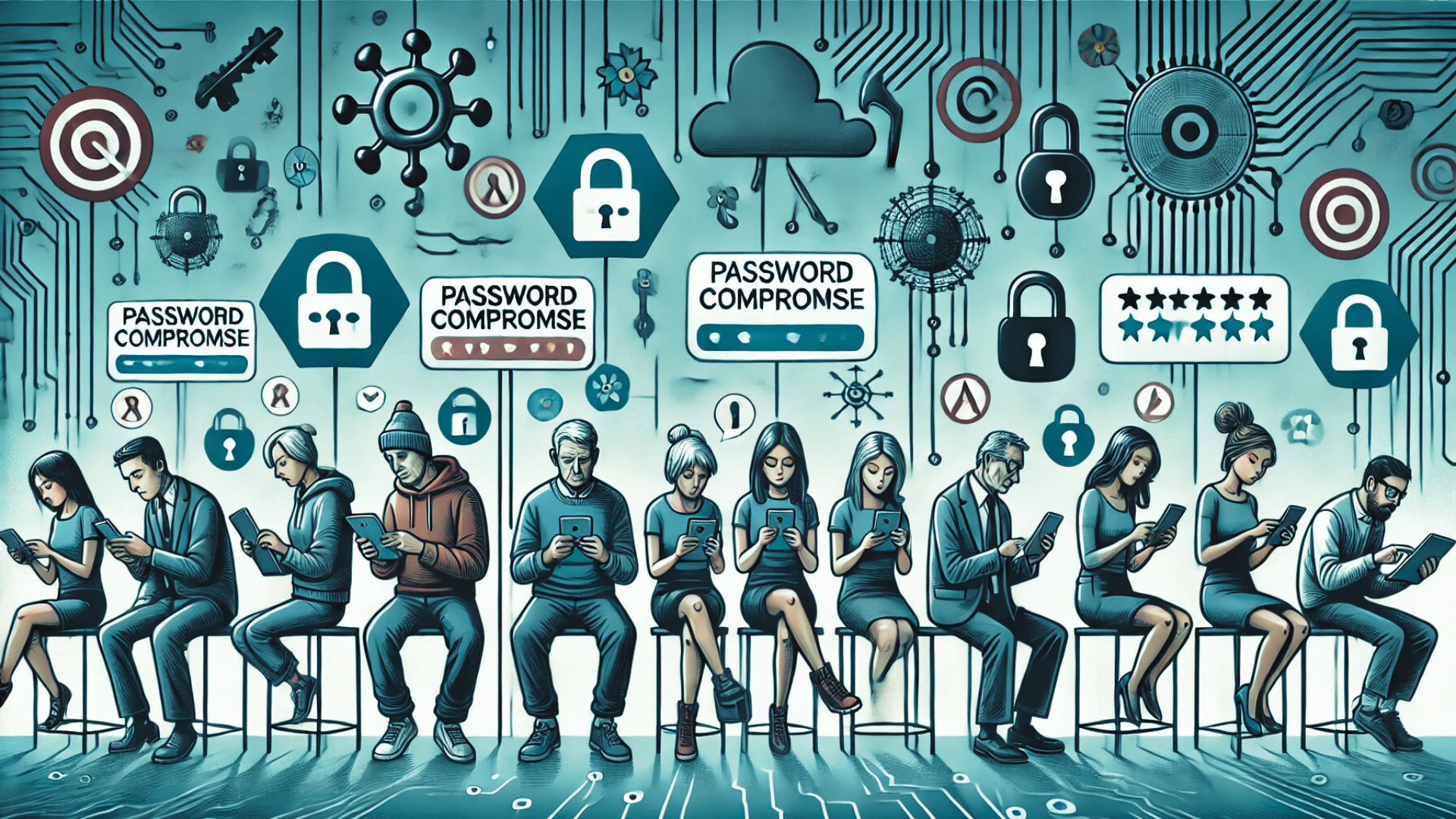
The increasing prevalence of social media password breaches among younger generations highlights a pressing cybersecurity challenge. According to the 2024 State of Global Authentication survey conducted by Yubico, nearly half of Gen Z (47%) and Millennials (46%) have experienced password compromises on social platforms. This underscores not only the evolving tactics of cybercriminals but also the generational differences in cybersecurity practices and attitudes.
In an age of AI-driven phishing attacks and advanced cyber threats, protecting online accounts requires a shift from traditional passwords to robust, modern security measures.
⚠️ Key Findings from the 2024 Cybersecurity Survey
Gen Z & Millennials Are More Vulnerable to Breaches
Higher Breach Rates: Nearly half of Gen Z and Millennials report compromised social media passwords.
Adaptability: Despite higher breach rates, younger generations are quicker to adopt modern security tools like hardware security keys.
Shifts in Authentication Practices
Decline of Passwords: Traditional username-password combinations are falling out of favor.
Rise of MFA and Hardware Security Keys: Baby Boomers and Gen X continue to rely heavily on passwords, while Gen Z and Millennials embrace more secure, innovative solutions.
AI-Powered Cyber Threats Are on the Rise
Advanced Phishing: 73% of Gen Z respondents are concerned about AI-enhanced phishing and deepfake scams.
Sophistication of Attacks: AI enables cybercriminals to craft highly convincing scams, increasing the importance of robust account security.
Trust Issues with Organizations
Distrust in Data Security: 42% of survey respondents doubt that organizations are doing enough to safeguard their data.
Generational Divide: Nearly half of Baby Boomers trust passwords as effective, compared to just 35% of Gen Z respondents.
️ Best Practices to Protect Your Accounts
Enable Multi-Factor Authentication (MFA)
Adds an additional security layer beyond passwords.
Use phishing-resistant methods like hardware security keys (e.g., YubiKey) for maximum protection.
Ensure MFA is enabled on critical platforms such as social media, financial accounts, and work tools.
️ Stay Alert for Phishing Scams
Always verify the sender of emails or messages before clicking links.
Be cautious of unsolicited login requests or password reset emails.
Contact organizations directly if suspicious activity arises.
Leverage a Password Manager
Generate unique, strong passwords for every account.
Avoid reusing passwords across platforms to minimize exposure.
Regularly update passwords to stay ahead of potential breaches.
Monitor Account Activity
Regularly review security settings for suspicious changes.
Check for unfamiliar login attempts or devices.
Enable real-time alerts for unauthorized account modifications.
Moving Beyond Passwords: The Future of Cybersecurity
The cybersecurity landscape is shifting toward a passwordless future. Passkeys, biometric authentication, and hardware security keys are becoming essential tools in mitigating risks posed by evolving cyber threats. With AI-enabled attacks increasing in sophistication, relying solely on passwords is no longer a viable option.
Key Takeaways:
Education is Crucial: Companies and individuals must prioritize cybersecurity awareness to stay ahead of threats.
Modern Solutions: Tools like phishing-resistant MFA and hardware security keys significantly reduce breach risks.
Proactive Defense: Regular updates, strong authentication, and vigilance are essential in the fight against cybercrime.
Stay Cyber-Safe with Peris.ai
The alarming rise in social media breaches underscores the need for a proactive approach to cybersecurity. At Peris.ai, we provide expert insights and advanced solutions to safeguard your digital identity.
Take Action Today: Enable MFA, adopt hardware security keys, and educate your network about cybersecurity best practices.
Stay Informed: Follow Peris.ai for the latest trends and tools to protect against cyber threats.
Visit Peris.ai for cutting-edge cybersecurity solutions and resources.
Your Peris.ai Cybersecurity Team #YouBuild #WeGuard
Did you know the container security market is expected to jump from $1.93 billion in 2023 to $12.61 billion by 2032? This is a 23.4% annual growth rate. This growth shows how vital it is to secure containerized environments. Cybercriminals are targeting these new technologies more and more. So, what makes container security so important, and how can businesses tackle these challenges?
Containers have changed how we develop, deploy, and scale apps. But they also bring unique security issues. A single flaw in a container image can put all instances at risk, especially in big deployments. The way containers are connected and share operating systems makes them vulnerable to big attacks. To keep container-based systems safe, we need a detailed plan that covers all security layers.
Key Takeaways:
Container security is a rapidly growing field, with the market projected to reach $12.61 billion by 2032.
Containers present unique security challenges due to their interconnected nature and shared operating system kernels.
Effective container security requires a multi-layered approach to address vulnerabilities, network security, secrets management, and storage protection.
Continuous vulnerability scanning, secure container registries, and runtime security monitoring are essential for maintaining a robust container security posture.
Integrating security practices into the container development lifecycle, from design to deployment, is crucial for securing containerized workloads.
Introduction to Container Security
In today’s fast-paced world, keeping containers secure is crucial for businesses. Containers are great for deploying apps because they’re light and efficient. But, they also bring their own set of security issues that need to be tackled.
Importance of Container Security
Container security is vital. More companies are seeing security as a major challenge with containers. Teams must assess risks by evaluating potential impact.
Also, containers must meet all compliance rules, which can be tricky because they change a lot. Sharing container resources can also pose security risks.
Key Components of Container Security Architecture
The core parts of container security include images, registries, deployment, runtime, secrets, network, and storage. Kubernetes helps with security through features like access control and network policies. Docker supports security with scanning and image hardening, and it has a secure registry.
Containers can run malicious processes, making monitoring hard due to their short lifespans. A lack of skilled experts is also a challenge, leading to potential misconfigurations. Tools for scanning containers are key to keeping workflows secure, checking for vulnerabilities in images.
Kubernetes is complex and can be vulnerable, making it a target for attacks. It’s important for businesses to take steps to secure it when using it in production.
“Securing containerized environments is essential to protect the integrity of your applications and data in a dynamic, fast-paced infrastructure.”
Vulnerability Management for Container Images
Securing container images is key because flaws in an image can spread to all containers made from it. This can cause big security problems. To tackle this, companies should focus on securing their base images and scanning for vulnerabilities all the time.
Securing Container Base Images
Companies should get their base images from trusted places, like official repositories, and keep them updated. This reduces the risk of using old images with known bugs. They should also remove extra software from the images to make them safer.
To make base images more secure, companies should scan them well for bugs and bad software. Using safe sources and scanning deeply can find and fix problems like bad components and too much access.
Continuous Vulnerability Scanning
Scanning for vulnerabilities all the time is key to finding and fixing security issues in container images. This way, companies can spot and fix problems early, keeping their apps safe.
Tools like Trivy and Calico help find and fix many security problems, like bad images and app bugs. Regular scans and fixing issues help keep security strong and follow rules.
Good practices for scanning include making it part of the development process, scanning often, and using safe images. Also, scan third-party stuff, automate scanning, and teach developers about security.
“Continuous vulnerability scanning is essential to detect and address vulnerabilities in container images throughout the development lifecycle.”
By being proactive about container image security and scanning all the time, companies can lower risks. They can keep their apps safe and make their container setup strong.
Securing Container Registries and Deployment
Keeping container registries and deployment safe is key in today’s tech world. These registries hold container images and need strong security to stop unauthorized access. This ensures only trusted images are used. With thousands of images in registries, controlling access and checking image integrity is vital.
When deploying, it’s important to manage containers securely to avoid vulnerabilities. Breaches can lead to many problems, like malicious code and system compromise. To fight these issues, companies must use strong security steps from start to finish.
By tackling security in registries and deployment, companies can make their container setup safer. The shared responsibility model in container security is key. Cloud providers handle the cloud’s security, while users protect their apps.
Runtime Security for Containerized Workloads
Keeping containerized workloads safe is key for businesses. Docker, containerd, and CRI-O are common runtimes with their own security needs. Containers on the same host can share a kernel, making them vulnerable to attacks.
Monitoring and Restricting Container Activities
Good runtime security means watching and controlling what containers do. Mistakes like open ports and weak login checks are big risks. In 2021, about 60% of companies found container mistakes in a year.
Preventing Lateral Movement and Privilege Escalation
One-third of companies faced security issues in 2021. Containers face threats like breakouts and data leaks. To stay safe, limit Docker API access and keep software up to date.
Ignoring security checks and using old software are big no-nos. Handling API keys carefully can stop breaches.
*Container Security: Only as Strong as its Weakest Link Across the Lifecycle:
“Security researchers found over 1,600 malicious containers on Docker Hub in 2022.”
Container Security Challenges and How to Overcome Them
Container technology has brought many benefits, like better app portability and efficiency. But, it also brings unique security challenges that companies must tackle. A recent survey found that 27% of cloud security incidents were due to misconfigurations.
One big challenge is the large attack surface from many containers. Each container is based on different images, which can have vulnerabilities. Containers also add complexity to IT environments, making things harder. Securing both the host and container configurations is a complex task.
To tackle these issues, companies need a solid container security plan. This plan should cover image, registry, deployment, runtime, network, secrets, and storage security. Tools like CloudGuard IaaS can help by temporarily fixing vulnerabilities. Agentless solutions like CloudGuard for Container Security offer deep visibility across all containers.
It’s vital to address compliance risks to avoid damage to reputation and bottom line.
Enterprises should integrate security tools into the software development lifecycle (SDLC) and CI/CD pipelines. This “shift-left” security approach helps catch threats early. By being proactive, companies can protect their assets and keep their container environments safe.
“Majority of organizations are embracing DevOps and the ‘shift-left’ approach, but a common misconception exists regarding the security needs of containers and Kubernetes environments.”
Beating container security challenges needs a multi-faceted strategy. By using the right tools and following best practices, companies can enjoy the benefits of containers while managing risks.
Secure Container Networking and Communications
More companies are using containers for apps, making network security key. Containers share the host OS’s kernel, making them vulnerable to attacks. To keep things safe, strong network rules and encryption are essential.
Implementing Network Policies and Encryption
Network policies are vital for managing traffic between containers and outside. They help block unwanted access and keep data safe. Encryption, like mTLS, keeps data secure as it moves around the network.
With good network policies and encryption, companies can boost container network security and container communications security. This helps protect against unauthorized access and data theft.
Securing containers is a big challenge, but focusing on the network is key. It helps protect container apps and the whole IT setup.
Managing Secrets and Sensitive Data in Containers
Keeping sensitive data safe is key in container security. Containers hold apps that deal with private info like API keys and passwords. It’s vital to manage these “secrets” well to keep the data safe and sound.
Best Practices for Secrets Management
Good secrets management in containers means a few key steps. First, keep sensitive data in a safe place, like a secrets service or encrypted storage. Only give access to secrets when needed, so only the right containers can see them.
Changing secrets often helps prevent data leaks or unauthorized access. Using automated systems for secrets updates keeps things secure without stopping container work.
Managing secrets gets tricky with containers’ dynamic nature. Companies should use container-native secrets solutions that work well with tools like Kubernetes.
Following these steps helps keep sensitive data safe in containers. This way, apps stay secure and protected. Secrets management is a big part of keeping containers safe.
Persistent Storage Security for Containerized Applications
Containerization and microservices are becoming more popular. This makes securing data in containers very important. Persistent storage keeps important data safe even when containers are deleted. This way, valuable information is not lost and can be easily found again.
Protecting persistent storage means keeping the storage safe and controlling who can access it. Companies must fix security issues and follow rules to keep data safe. Rules like CIS Benchmarks and NIST SP 800-190 help make sure data is secure in containers.
Kubernetes storage lets users and admins manage storage needs. It’s key for apps that need to remember things from one use to the next. This makes it easier for developers to work on apps.
LightOS by Lightbits Labs is a fast and secure storage solution for Kubernetes. It works as well as local NVMe® SSDs and keeps data safe. This shows how hard people are working to make storage in containers better.
Containers have grown a lot in the last ten years because they are easy to use and move around. Docker and Kubernetes help with security, but they need more protection. Containers make security harder because they are more complex than old apps.
Using open-source in containers can be risky because of bugs in the software. Without a plan, containers often fail security checks. It’s key to follow security rules for containers from the start.
By tackling the special security needs of containers, companies can keep data safe and follow rules. This lets them use containers fully while avoiding risks.
Integrating Security into the Container Development Lifecycle
Securing the container development lifecycle is key for organizations using containers. A shift-left security approach means adding security early on, from the start to the end. DevSecOps practices blend development, security, and operations. They automate security checks and fixes in the container development pipeline, making security a core part of the process.
Shift-Left Security and DevSecOps Practices
Security used to be an afterthought, added late in the development cycle. The shift-left security approach changes this, starting with security from the beginning. This way, organizations can find and fix problems early, saving time and money.
DevSecOps takes this further by automating security tasks in the container CI/CD pipeline. This includes scanning for vulnerabilities, enforcing policies, and managing security settings. By making security a part of the container development cycle, organizations ensure it’s not just an extra step, but a key part of the process.
By adopting a shift-left security mindset and using DevSecOps, organizations can tackle common container security issues. These include securing container base images, handling secrets and sensitive data, and keeping containerized workloads secure.
“Shifting security left and integrating it into the DevOps process is crucial for organizations to effectively secure their container environments and achieve a robust container security lifecycle.”
Conclusion
With 92% of companies using containers in production, securing these environments has become essential. Organizations face challenges like vulnerabilities in container images and runtime threats, making a strong security strategy crucial.
To protect applications and data, businesses must adopt comprehensive container security best practices. This includes implementing shift-left security, embracing DevSecOps, and using advanced tools for vulnerability scanning and runtime protection. Staying up-to-date with evolving container security strategies ensures that your organization can harness the full potential of containers while minimizing risks.
For a proactive approach to container security, visit Peris.ai Cybersecurity and explore our solutions to keep your containerized environments secure and resilient against emerging threats.
FAQ
What are the key components of container security architecture?
The main parts of container security architecture are container images, registries, and how they are deployed. It also includes runtime, secrets, network, and storage.
Why is securing container images crucial?
Securing container images is key because problems in an image can spread to all containers made from it. This can cause big issues.
How can enterprises secure container registries?
Companies should protect container registries to stop unauthorized access. They should make sure only trusted images are used.
What is the importance of runtime security for containerized workloads?
Runtime security is vital for protecting containers when they’re running. It involves watching and limiting what containers can do to stop bad behavior.
What are the key container security challenges that enterprises need to address?
Big challenges include the attack surface from many containers and the shared kernel architecture. This means securing both the host and container settings.
How can enterprises secure container network communications?
Companies can secure network communications by setting up network policies. They should also use encryption to keep data safe while it’s moving.
Why is proper secrets management crucial in containerized environments?
Good secrets management is key to stop unauthorized access. It makes sure sensitive info is only for containers that need it.
How can enterprises ensure the security of persistent storage for containerized applications?
Companies should protect the storage infrastructure and set up access controls. This prevents unauthorized data access.
What is the importance of integrating security into the container development lifecycle?
Integrating security early in development is crucial. It helps address security challenges by automating checks and fixes in the development pipeline.
A recent report from Kaspersky has highlighted a significant uptick in cyberattacks across Southeast Asia, with more than 61 million bruteforce attacks blocked in 2023. These attacks predominantly targeted businesses, exploiting vulnerabilities in Remote Desktop Protocol (RDP) connections.
Regional Impact
The distribution of these attacks varied significantly across the region:
Vietnam experienced the highest number of attacks, with approximately 25.9 million incidents.
Indonesia followed with about 11.7 million attacks.
Thailand saw 10.2 million attempts.
Other notable figures include Singapore with over six million incidents, the Philippines with nearly five million, and Malaysia, which recorded the lowest in the region at nearly three million attempts.
Implications and Risks
Successful bruteforce attacks via RDP can allow attackers to gain remote access to targeted computers, leading to potential data breaches, system disruptions, and other malicious activities. This highlights the need for enhanced security measures, particularly for systems that utilize RDP for remote access.
Proactive Measures and Recommendations
In response to the growing threat, businesses and individuals in Southeast Asia are urged to strengthen their cybersecurity defenses. This includes:
Implementing strong, complex passwords that are difficult to bruteforce.
Regularly updating software and systems to patch vulnerabilities that could be exploited via RDP.
Employing multi-factor authentication (MFA) to add an additional layer of security beyond just passwords.
Utilizing advanced security solutions that can detect and block potential bruteforce attempts.
Stay Protected with Peris.ai Cybersecurity
As cyber threats continue to evolve, staying informed and prepared is crucial. Peris.ai Cybersecurity provides the expertise and solutions needed to safeguard your digital environments. Visit our website to learn more about protecting your business from cyber threats like bruteforce attacks and to stay up-to-date with the latest cybersecurity trends and defenses.
Enhance your cybersecurity posture and ensure your operations are shielded against increasingly sophisticated cyberattacks with Peris.ai Cybersecurity, your trusted partner in digital security.
In today’s highly competitive business landscape, the importance of cybersecurity cannot be overstated. With the increasing number of cyber threats and breaches, businesses must take proactive measures to protect their data and network from potential attacks.
Competitors may be actively targeting your cybersecurity system, seeking to gain a competitive advantage, or obtain valuable information. Therefore, it is paramount to implement robust security measures to safeguard your business from these threats.
Key Takeaways:
Competitors may pose a significant threat to your cybersecurity system.
Prioritizing cybersecurity is essential to protect your data and operations.
Implement proactive measures such as regular security audits and employee training.
Partner with a trusted cybersecurity provider for comprehensive protection.
Stay updated with the latest technologies to stay ahead of potential attacks.
The Importance of Cybersecurity in Today’s Business Landscape
In today’s fast-paced and interconnected business landscape, the importance of cybersecurity cannot be overstated. As businesses embrace digital transformation and rely more heavily on technology, they become vulnerable to various cyber threats and attacks. Competitors may exploit these vulnerabilities to gain unauthorized access to sensitive information, disrupt operations, or even steal valuable intellectual property.
Cybersecurity serves as the first line of defense against these potential threats. By implementing robust security measures, businesses can protect their data, systems, and reputation. A strong cybersecurity system not only safeguards sensitive information but also instills confidence in customers and partners, enhancing the overall trustworthiness of the organization.
Investing in cybersecurity is not just a matter of compliance or risk mitigation; it is a strategic imperative for businesses operating in today’s digital landscape. The cost of a security breach can be devastating, leading to financial losses, legal repercussions, and irreparable damage to the brand’s image. On the other hand, a proactive approach to cybersecurity can give businesses a competitive edge by assuring customers and partners that their data is safe, fostering stronger relationships built on trust.
The Evolving Threat Landscape
The threat landscape is constantly evolving, with hackers and cybercriminals developing new tactics and techniques to bypass security defenses. Competitors, with insider knowledge of an organization’s operations and vulnerabilities, can pose a significant risk. Businesses must stay informed about the latest cyber threats and adapt their security measures accordingly.
By employing a comprehensive cybersecurity strategy that includes regular risk assessments, threat intelligence gathering, and employee training, businesses can better protect themselves against attacks. This strategy should also involve staying up to date with emerging technologies such as artificial intelligence and machine learning, which can enhance threat detection and response capabilities.
Ultimately, the role of cybersecurity in today’s business landscape must be considered. It is not only about protecting critical assets but also about maintaining trust, reputation, and competitive advantage. By prioritizing cybersecurity, businesses can ensure their long-term success in an increasingly interconnected and digital world.
Common Cybersecurity Threats from Competitors
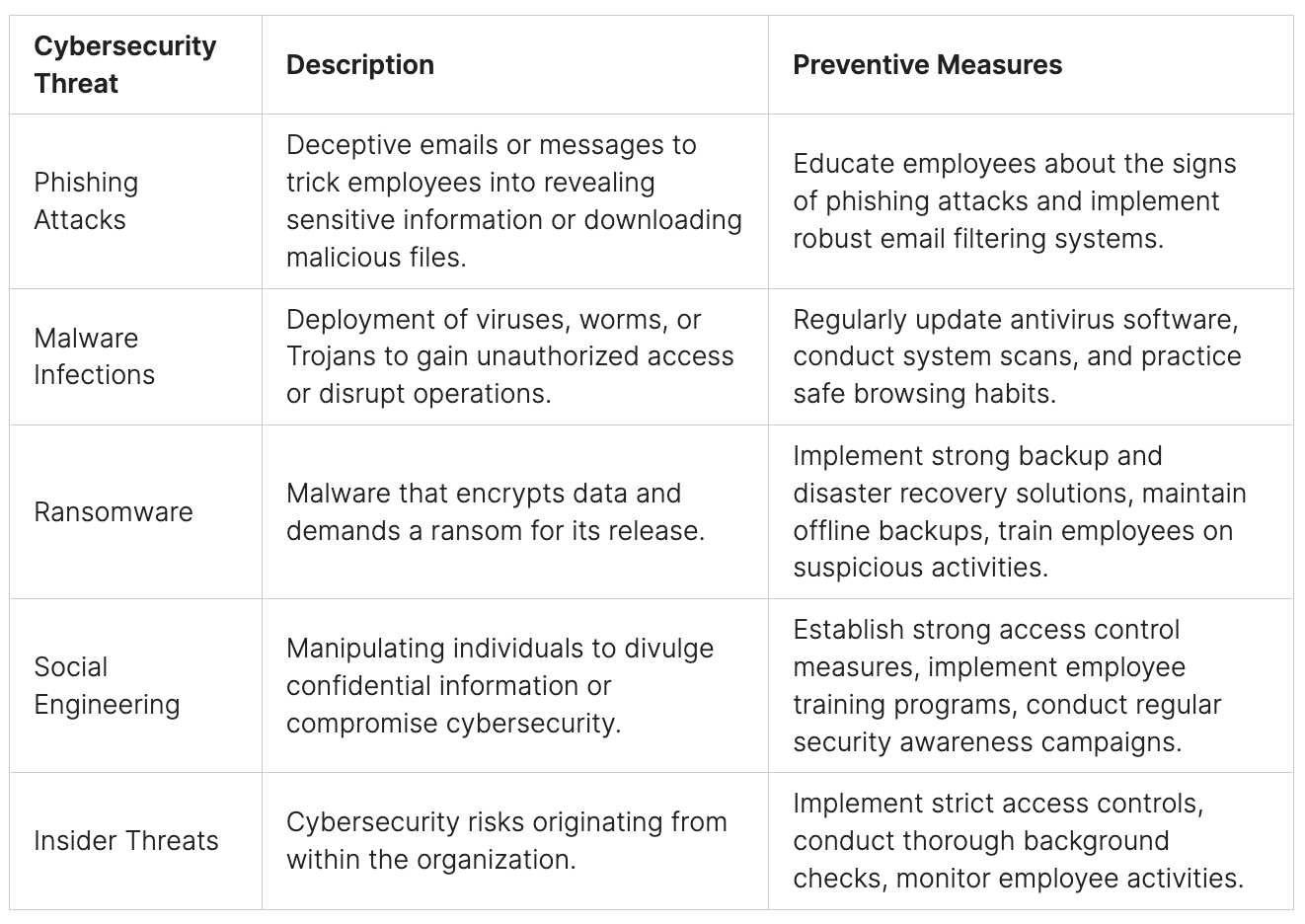
Competitors in today’s business landscape are becoming increasingly sophisticated in their attempts to undermine the cybersecurity systems of other companies. Businesses must be aware of the common cybersecurity threats posed by competitors and take appropriate measures to protect their sensitive data and networks. The following are some of the prevalent threats that businesses need to be vigilant about:
Phishing Attacks
Phishing attacks involve the use of deceptive emails or messages to trick employees into revealing sensitive information or downloading malicious files. These attacks can be highly convincing, impersonating trusted sources and leading unsuspecting individuals to disclose passwords, financial information, or other confidential data. Businesses should educate their employees about the signs of phishing attacks and implement robust email filtering systems to prevent such intrusions.
Malware Infections
Competitors may deploy malware, such as viruses, worms, or Trojans, to gain unauthorized access to a company’s network or disrupt its operations. Malware can be distributed through infected websites, email attachments or phishing campaigns. Regularly updating antivirus software, conducting thorough system scans, and practicing safe browsing habits can help protect against malware infections.
Ransomware
Ransomware is a type of malware that encrypts a company’s data and demands a ransom for its release. Competitors may employ ransomware to disrupt business operations, steal sensitive information, or exploit vulnerabilities in a company’s cybersecurity system. Implementing strong backup and disaster recovery solutions, maintaining offline backups, and training employees on suspicious activities can help mitigate the risks posed by ransomware attacks.
Social Engineering
Social engineering involves manipulating individuals to divulge confidential information or take actions that compromise their cybersecurity. Competitors may use social engineering techniques, such as pretexting, baiting, or tailgating, to gain unauthorized access to a company’s premises, systems, or data. Establishing strong access control measures, implementing employee training programs, and conducting regular security awareness campaigns can help prevent social engineering attacks.
Insider Threats
Insider threats refer to cybersecurity risks originating from within an organization, including employees, contractors, or business partners. Competitors may target individuals with access to sensitive information or attempt to recruit insiders to carry out malicious activities. Implementing strict access controls, conducting thorough background checks, and monitoring employee activities can help mitigate the risks associated with insider threats.
Understanding the Impact of Competitor Attacks
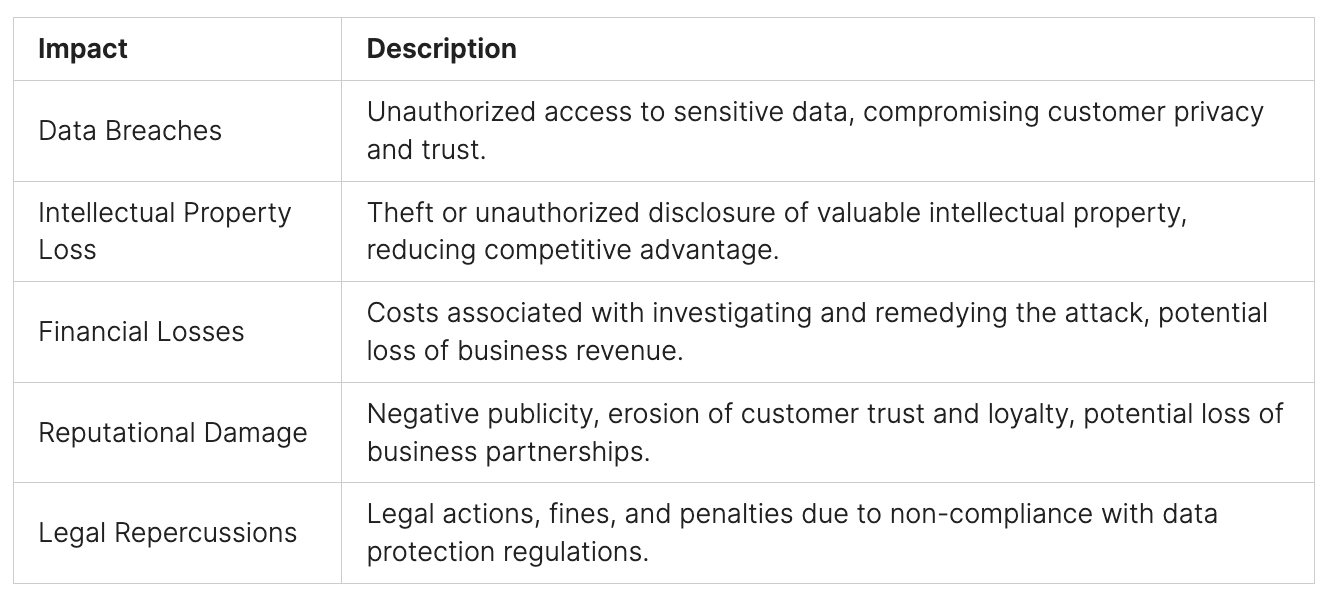
Competitor attacks on your cybersecurity system can have severe consequences for your business. These attacks can result in data breaches, loss of valuable intellectual property, financial losses, reputational damage, and legal repercussions. It is essential to understand the potential impact of such attacks and take proactive steps to prevent them.
Table 1 below provides a comprehensive overview of the potential impact of competitor attacks:
As shown in Table 1, the impact of competitor attacks can be multi-faceted and far-reaching. Businesses must prioritize cybersecurity measures to prevent and mitigate these risks.
By implementing robust security protocols, regularly updating software and systems, conducting thorough risk assessments, and fostering a culture of cybersecurity awareness, businesses can significantly minimize the potential impact of competitor attacks. Furthermore, establishing incident response plans and regularly testing them will help ensure a swift and effective response in the event of an attack.
Proactive Measures to Protect Your Cybersecurity System
In order to safeguard your cybersecurity system from competitor attacks, it is crucial to implement a range of proactive measures. These measures will not only enhance the security of your data and network but also help to prevent potential breaches. By staying one step ahead of your competitors, you can maintain the integrity of your cybersecurity system and protect your business.
Regular Security Audits
Regular security audits are an essential part of maintaining the strength of your cybersecurity system. These audits involve a comprehensive review of your IT infrastructure, identifying any vulnerabilities, and implementing necessary updates or patches. By conducting these audits on a consistent basis, you can proactively identify and address any weaknesses in your system before competitors can exploit them.
Employee Training on Cybersecurity Best Practices
Employees are often the first line of defense against cyber threats, so it is crucial to provide them with the necessary training on cybersecurity best practices. This can include educating them on how to identify and report suspicious activities, the importance of strong passwords, and the potential risks associated with social engineering attacks. By equipping your employees with the knowledge and skills to protect your cybersecurity system, you can significantly reduce the likelihood of successful competitor attacks.
Robust Backup and Disaster Recovery Solutions
In the event of a cyber attack, having robust backup and disaster recovery solutions in place is essential. These solutions ensure that your data is regularly backed up and stored securely, allowing you to quickly recover and restore your systems in the event of a breach. By implementing these solutions, you can minimize the impact of competitor attacks and ensure business continuity.
Implementing these proactive measures will help protect your cybersecurity system from competitor attacks and minimize the potential damage they can cause. By taking a proactive approach to cybersecurity, you can significantly reduce the risk of successful attacks and maintain the security of your business.
Stay Ahead, Stay Secure!
The Role of Cybersecurity in Cloud Computing
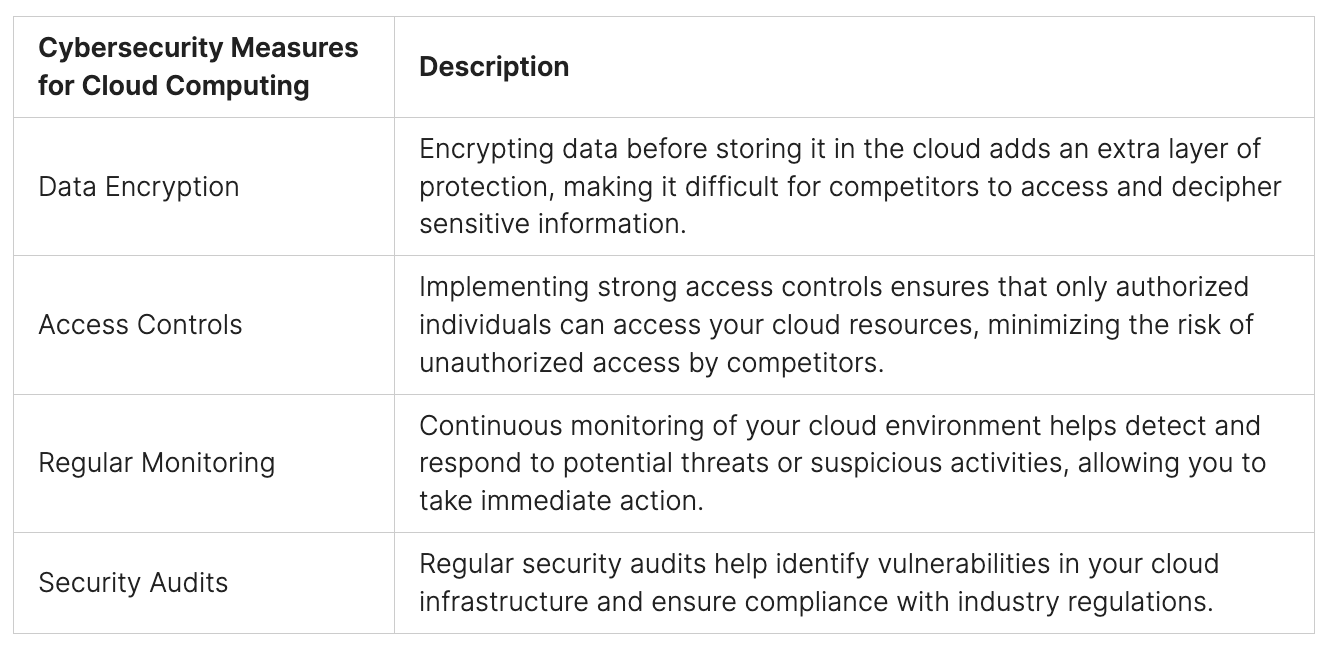
Cloud computing has revolutionized the way businesses operate, providing scalability, flexibility, and cost-efficiency. However, the adoption of cloud-based systems also introduces new cybersecurity challenges. Competitors may exploit vulnerabilities in your cloud infrastructure, aiming to access sensitive data or disrupt critical operations. Understanding the role of cybersecurity in cloud computing is essential for protecting your business from such attacks.
Strengthen your cloud security game now!
One of the key aspects of securing cloud-based systems is data encryption. By encrypting your data before storing it in the cloud, you add a layer of protection. This ensures that even if a competitor gains unauthorized access to your cloud environment, they will not be able to make sense of the encrypted data.
Access controls are another critical element of cloud security. Implementing strong access controls ensures that only authorized individuals can access your cloud resources. This helps prevent unauthorized access by competitors and reduces the risk of data breaches or disruptions.
In the ever-evolving landscape of cloud computing, businesses must prioritize cybersecurity to protect their valuable data and operations from competitor attacks. By implementing robust security measures such as data encryption and access controls, and regularly monitoring your cloud environment, you can mitigate the risks associated with cloud-based systems and maintain a secure infrastructure.
The Significance of Artificial Intelligence in Cybersecurity
Artificial intelligence (AI) has emerged as a game-changer in the field of cybersecurity, revolutionizing the way businesses protect their sensitive data and networks. By leveraging advanced algorithms and machine learning capabilities, AI-powered cybersecurity solutions have proven to be highly effective in detecting and mitigating potential threats from competitors.
One of the primary reasons for the significance of artificial intelligence in cybersecurity is its ability to analyze vast amounts of data in real-time. Traditional security measures often need help to keep pace with the rapidly evolving threat landscape. Still, AI can quickly identify patterns, detect anomalies, and flag suspicious activities that may indicate a potential cyber attack. This enables businesses to take proactive measures to mitigate risks and prevent a breach before it occurs.
Moreover, AI-powered cybersecurity solutions can adapt and learn from new threats, continuously improving their detection capabilities over time. This dynamic and responsive approach is crucial in an environment where attackers are constantly developing new techniques and exploiting vulnerabilities. By leveraging AI, businesses can stay one step ahead of their competitors and ensure robust protection for their cybersecurity systems.
Benefits of Artificial Intelligence in Cybersecurity
The integration of artificial intelligence in cybersecurity offers several key benefits. First and foremost, AI can significantly enhance the speed and accuracy of threat detection and response. With the ability to analyze vast amounts of data in real-time, AI-powered systems can quickly identify and prioritize potential threats, allowing businesses to take immediate action.
Additionally, AI can help reduce false positives by accurately distinguishing between legitimate activities and actual threats. This minimizes the burden on cybersecurity teams and ensures that resources are allocated effectively to address genuine risks. Furthermore, AI can improve overall cybersecurity posture by automating routine tasks, freeing up human personnel to focus on more complex and strategic aspects of cybersecurity.
In conclusion, the significance of artificial intelligence in cybersecurity cannot be overstated. By harnessing the power of AI, businesses can strengthen their defense against competitor attacks and stay ahead in the ongoing battle against cyber threats. With its ability to analyze vast amounts of data, adapt to new risks, and enhance threat detection and response capabilities, AI is a critical tool in safeguarding sensitive information, maintaining business continuity, and ensuring a competitive edge in today’s digital landscape.
Stay Ahead with AI in Cybersecurity!
The Need for Strong Communication Channels in Cybersecurity
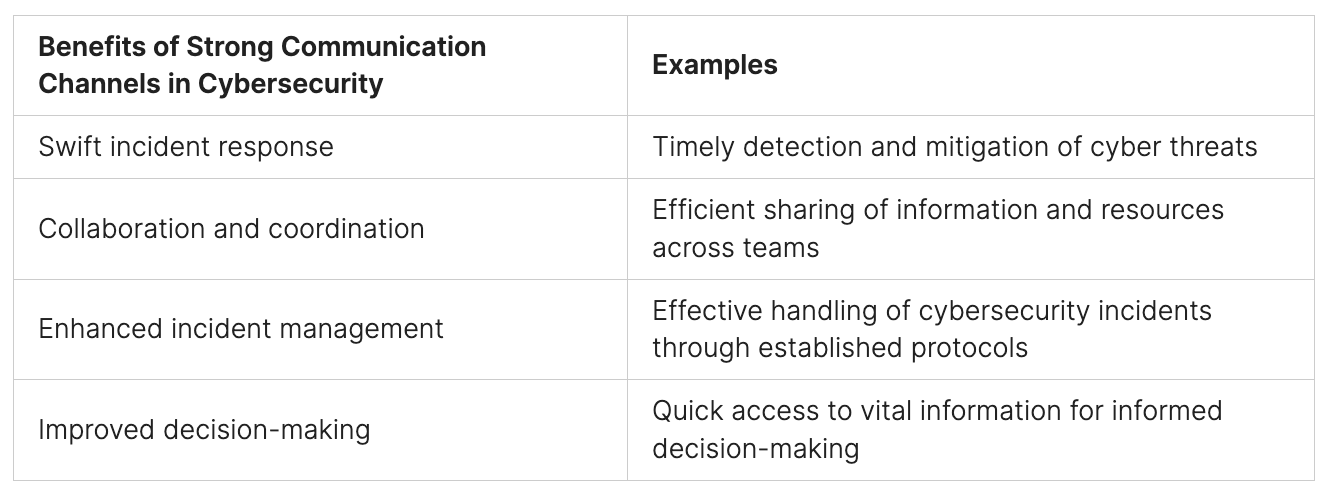
Effective communication is vital in maintaining a strong cybersecurity system. Clear and efficient communication channels within your organization ensure swift dissemination of critical information regarding potential threats or incidents is done. This allows for quick response and mitigation, minimizing the impact of cyber attacks.
Regular training programs, incident response protocols, and fostering a culture of security awareness are essential components of establishing strong communication channels. By keeping everyone within the organization informed and prepared, you create a unified front against cybersecurity challenges posed by competitors.
Not only do strong communication channels enable rapid information sharing, but they also facilitate collaboration and coordination among different teams and departments. This collaboration enhances incident response capabilities and ensures that the right actions are taken promptly to address cyber threats.
The Role of Incident Response Teams
One crucial aspect of strong communication channels is the establishment of dedicated incident response teams. These teams consist of professionals with specialized knowledge and skills in handling cybersecurity incidents. Their primary responsibility is to detect, analyze, and respond to any potential threats or attacks.
Incident response teams should have clearly defined protocols and escalation procedures to ensure seamless communication flow during critical situations. Regular training and rehearsals help keep the team members prepared to handle a wide range of cyber threats effectively.
In conclusion, strong communication channels within your organization are key to maintaining a robust cybersecurity system. By establishing clear protocols, fostering a culture of security awareness, and forming dedicated incident response teams, you can effectively protect your business from cyber attacks. Swift and efficient communication enables timely response, collaboration, and coordination, ultimately safeguarding your data, operations, and reputation.
Conclusion
In conclusion, the escalating threat of competitors targeting your cybersecurity system requires a proactive stance to protect data and network integrity. Prioritizing cybersecurity is paramount in today’s dynamic business environment, serving as a bulwark against unauthorized access and preserving the sanctity of sensitive information. Familiarity with prevalent cybersecurity threats, such as phishing attacks and malware infections, empowers businesses to deploy effective countermeasures.
Understanding the potential repercussions of competitor attacks—ranging from data breaches to financial losses and reputational harm—underscores the urgency of taking decisive action. By instating proactive measures like routine security audits, comprehensive employee training, robust password policies, and encryption practices, businesses can fortify their cybersecurity defenses. Embracing cutting-edge technologies, particularly artificial intelligence, and fostering transparent communication channels within the organization facilitates rapid detection, response, and mitigation efforts.
To fortify against competitor threats and maintain a competitive edge, businesses must prioritize cybersecurity. The adoption of resilient cybersecurity protocols, staying abreast of the latest technological advancements, and cultivating a security-focused culture all play pivotal roles in shielding data, operations, and reputation. With a holistic cybersecurity approach firmly in place, businesses can confidently navigate the competitive landscape.
Please take the next step in securing your business by exploring the innovative solutions offered on our website, Peris.ai Cybersecurity. Visit us today to discover how our comprehensive cybersecurity measures can empower your organization to thrive in an increasingly complex digital landscape.
FAQ
What are some common cybersecurity threats from competitors?
Some common cybersecurity threats from competitors include phishing attacks, malware infections, ransomware, social engineering, and insider threats.
What can be the consequences of competitor attacks on my cybersecurity system?
Competitor attacks on your cybersecurity system can result in data breaches, loss of valuable intellectual property, financial losses, reputational damage, and legal repercussions.
What proactive measures can I take to protect my cybersecurity system?
You can implement proactive measures such as regular security audits, employee training on cybersecurity best practices, strong password policies, multi-factor authentication, network segmentation, encryption, regular software updates and patches, and robust backup and disaster recovery solutions.
How can I protect my business’s cloud computing environment from competitor attacks?
Implementing strong security measures, such as data encryption, access controls, and regular monitoring, is essential to protect your business’s cloud computing environment from competitor attacks.
How does artificial intelligence play a role in cybersecurity?
Artificial intelligence (AI) enables businesses to detect and respond to potential threats more effectively. AI-powered cybersecurity solutions can analyze vast amounts of data, identify patterns, and flag suspicious activities in real time.
Why is effective communication important for cybersecurity?
Effective communication within your organization is crucial for cybersecurity as it enables the swift sharing of critical information about potential threats or incidents, allowing for quick response and mitigation.
As 2024 has shown us, cybersecurity is constantly evolving, with AI-driven threats, sophisticated ransomware campaigns, and escalating supply-chain vulnerabilities marking a year of unprecedented challenges. As we enter 2025, understanding these dynamics is crucial for any organization aiming to safeguard its operations against these growing threats.
Review of 2024’s Key Cybersecurity Challenges
AI-Driven Threats:Impact: AI has escalated cyber threats by enabling more complex phishing campaigns and frauds, such as deepfakes, affecting 72% of Fortune 1000 companies—response: Adoption of AI-driven security measures, enhanced verification to combat deepfakes, and AI-centric employee training.
Supply-Chain and Open-Source Vulnerabilities:Impact: Notable breaches in major platforms disrupted operations globally, highlighting the risks in supply chains and open-source software. Response: Implement robust supply chain risk management (SCRM) strategies, conduct regular audits, and enforce the software bill of materials (SBOM) for better transparency.
Ransomware Evolution:Impact: A pivot to more targeted ransomware attacks, particularly against critical infrastructure, using double and triple extortion methods. Response: Enhanced endpoint protection, network segmentation, and adoption of Zero Trust frameworks to reduce ransomware impact.
Cloud Security Challenges:Impact: Significant breaches due to cloud misconfigurations and weak security controls. Response: Tightened cloud security measures, automated patching, and deployment of Cloud Security Posture Management (CSPM) tools.
Geopolitical Tensions:Impact: Increased state-sponsored cyber activities from countries like Russia and China, posing enhanced espionage and disruption risks. Response: Strengthening cyber threat intelligence (CTI) capabilities and enhancing collaboration with national cybersecurity agencies.
Strategic Cybersecurity Approaches for 2025
As the digital threat landscape expands, the following strategic approaches can fortify your organization’s cybersecurity posture:
Zero-Trust Security Enhancement: Deploy continuous authentication and micro-segmentation to minimize unauthorized access and lateral movement within networks.
Advanced AI-Driven Security Solutions: Leverage AI-enhanced SOC to accurately detect threats, reducing false positives and enabling predictive threat intelligence for preemptive defense.
Preparation for Quantum Computing Threats: Begin transitioning to quantum-resistant cryptographic standards to safeguard against future threats posed by quantum computing.
Robust Cloud Security Frameworks: Strengthen cloud environments with enhanced authentication protocols, secure API endpoints, and comprehensive CSPM tools.
Supply Chain Security Fortification: Enforce stringent cybersecurity standards among third-party vendors and continuously monitor for threats within the supply chain network.
Cultivating a Proactive Cybersecurity Culture: Regular training programs focused on emerging threats such as phishing and AI-manipulated attacks to build a security-first organizational mindset.
Looking Ahead: Building Resilience for 2025 and Beyond
The cybersecurity landscape of 2025 demands proactive and innovative defense strategies. By understanding the past year’s challenges and adopting advanced security measures, organizations can defend against and stay ahead of the evolving cyber threats.
For ongoing updates, expert insights, and cutting-edge cybersecurity solutions tailored to protect your business against the dynamic threats of the digital age, visit Peris.ai.
Your Peris.ai Cybersecurity Team #YouBuild #WeGuard
In the ever-evolving realm of digital security, QR codes, a ubiquitous tool for everything from digital payments to restaurant menus, are now being exploited in sophisticated phishing schemes. Concerning the trend in phishing campaigns that utilize QR codes to deceive users. This article explores the mechanics of these QR code phishing attacks, their effectiveness, and provides practical advice on safeguarding against such threats.
Understanding QR Code Phishing Scams
The Convenience and the Risk: QR codes have become a staple in our digital lives, celebrated for their convenience and efficiency. However, this convenience also opens up new avenues for cybercriminals to craft more deceptive phishing attacks.
How QR Code Phishing Works:
Deceptive Emails: Cybercriminals send emails mimicking legitimate communications from well-known companies, complete with logos and personalized details. These emails often warn that the user’s account authentication is expiring and prompt immediate re-authentication to avoid service interruption.
Malicious QR Codes: The emails include a QR code that, when scanned, redirects the user to a fake website designed to harvest personal and financial information.
Urgency as a Tool: By creating a sense of urgency, these emails push the recipient to act swiftly—often bypassing their usual security checks.
Why Are QR Codes Effective for Phishing?
Familiarity Breeds Complacency: The widespread adoption of QR codes, especially in the context of digital payments and public health measures, has normalized their use. Unfortunately, this familiarity can lead users to let their guard down, making QR codes an effective tool for phishing.
Exploiting Digital Payment Trends: In regions like India, where digital payments are prevalent, the use of QR codes is particularly common, further enhancing the effectiveness of QR code phishing attacks.
️ Strategies to Protect Yourself from QR Code Phishing
Critical Vigilance with Urgent Communications:
Treat any communication that instills a sense of urgency with heightened suspicion, especially if it asks you to scan a QR code or provide personal information.
Sender Verification:
Always verify the authenticity of the sender through independent means. Check for any discrepancies in email addresses, grammar, or logo placement that might betray a phishing attempt.
Education and Awareness:
Stay informed about the latest phishing tactics and educate those around you. Awareness is your first line of defense against emerging cyber threats.
Conclusion: Your Defense Against QR Code Phishing
QR code phishing represents a significant and sophisticated threat, leveraging both technology and psychology to ensnare victims. By understanding the nature of these attacks and adopting a cautious and questioning approach to QR code scans, especially from unsolicited sources, you can protect yourself from potential harm.
Visit Peris.ai for more insights and resources on maintaining digital safety in an increasingly connected world.
Stay vigilant, stay informed, and secure your digital presence with Peris.ai Cybersecurity.
In an increasingly digital world, cybersecurity has become a top priority for organizations. As businesses rely more on technology to store and manage sensitive data, the risk of cyber threats and attacks continues to rise. This has led organizations to grapple with the dilemma of choosing between price and quality when it comes to implementing effective cybersecurity measures.
On one hand, organizations may be tempted to opt for cheaper solutions to minimize costs. However, compromising on quality can leave them vulnerable to cyberattacks and potential data breaches. On the other hand, investing in high-quality cybersecurity solutions may come at a higher price, but it offers the potential for better protection and risk mitigation.
When making decisions about cybersecurity, organizations must carefully evaluate the balance between cost and quality. They need to consider the potential financial and reputational impacts of not investing enough in security measures and the value they can gain by prioritizing cybersecurity. It requires a strategic approach that considers the organization’s specific needs and risk profile.
This article will explore the factors that organizations should consider when making the price vs. quality decision in cybersecurity. It will provide insights into the impact of cybersecurity threats on businesses and the value that organizations can gain from investing in robust security measures. By the end, you’ll have a better understanding of how to strike the right balance between price and quality to ensure effective organizational security.
Key Takeaways:
Cybersecurity is a top priority for organizations in an increasingly digital world.
The debate between price and quality in cybersecurity is an ongoing challenge for businesses.
Organizations must consider the potential financial and reputational impacts of not investing enough in security measures.
Investing in high-quality cybersecurity solutions offers better protection and risk mitigation.
A strategic approach is necessary to strike the right balance between price and quality in cybersecurity decision-making.
The Rising Cost of Cybersecurity Threats to Organizations
In today’s digital landscape, organizations are facing increasing cybersecurity threats that can have significant financial impacts. Cybercrime trends are evolving, with cybercriminals becoming more sophisticated in their attacks. This section will examine these rising cybersecurity threats and the financial consequences they impose on businesses.
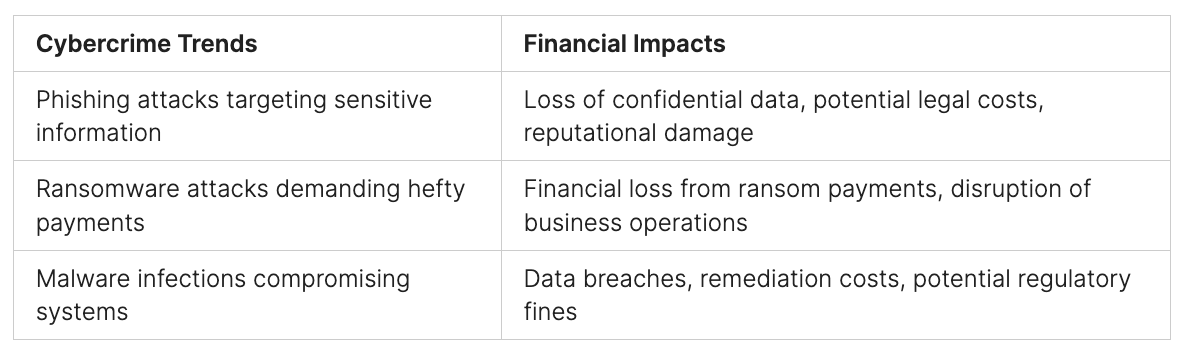
Trends in Cybercrime and Financial Impacts on Businesses
Cybercrime continues to evolve, presenting new challenges for organizations. Organizations are at risk of significant financial losses from data breaches to ransomware attacks due to cybercriminal activities.
These cybercrime trends pose significant financial risks to organizations of all sizes and industries. The costs associated with cybersecurity incidents go beyond immediate financial losses and can include reputational damage, legal expenses, regulatory penalties, and decreased customer trust.
As cyber threats become more advanced and frequent, organizations must allocate resources to combat these risks effectively. Investing in comprehensive cybersecurity measures and adopting proactive threat prevention strategies is crucial to mitigate the financial impacts of cybercrime.
Understanding the Value in Cybersecurity Investment
Investing in cybersecurity is crucial for organizations to protect their sensitive data and prevent cyberattacks. In today’s digital landscape, where threats are constantly evolving, organizations need to prioritize cybersecurity to safeguard their assets and maintain the trust of their stakeholders. Organizations can unlock several key benefits that contribute to their overall success and resilience by making strategic investments in cybersecurity.
One of the primary advantages of cybersecurity investment is the potential for a high return on investment (ROI). While it may seem costly to implement robust security measures, the long-term financial benefits outweigh the initial expenses. Effective cybersecurity measures can help organizations avoid costly data breaches, regulatory fines, legal fees, and reputational damage. By proactively protecting their data and systems, organizations can save significant resources in the event of a cybersecurity incident.
Furthermore, cybersecurity investment goes beyond financial gains. It also provides organizations with peace of mind, knowing that they have taken steps to safeguard their sensitive information and critical infrastructure. By mitigating the risks associated with cyber threats, organizations can focus on their core operations without constant anxiety about potential breaches or disruptions. This increased peace of mind enhances productivity and allows organizations to pursue growth opportunities without being weighed down by cybersecurity concerns.
Another benefit of cybersecurity investment is its ability to enhance the organization’s overall resilience and reputation. By safeguarding customer data and ensuring the privacy of sensitive information, organizations build trust and confidence among their customers and stakeholders. A strong cybersecurity posture can differentiate organizations from competitors, attract new customers, and retain existing ones, ultimately leading to increased customer loyalty and business growth.
“Investing in cybersecurity is not just about protecting against external threats; it’s about safeguarding the continuity and sustainability of the organization. The value lies in the peace of mind, financial savings, and trust gained through a proactive approach.”
In conclusion, the value of cybersecurity investment cannot be overstated. Organizations that prioritize cybersecurity reap the benefits of a strong ROI, enhanced peace of mind, and improved reputation. By recognizing cybersecurity’s value to their overall operations, organizations can make informed investment decisions that align with their business goals and objectives.
Cybersecurity Investment: Unlocking Value and Peace of Mind
Start Cybersecurity: Price vs. Quality, Which Wins for Organization?
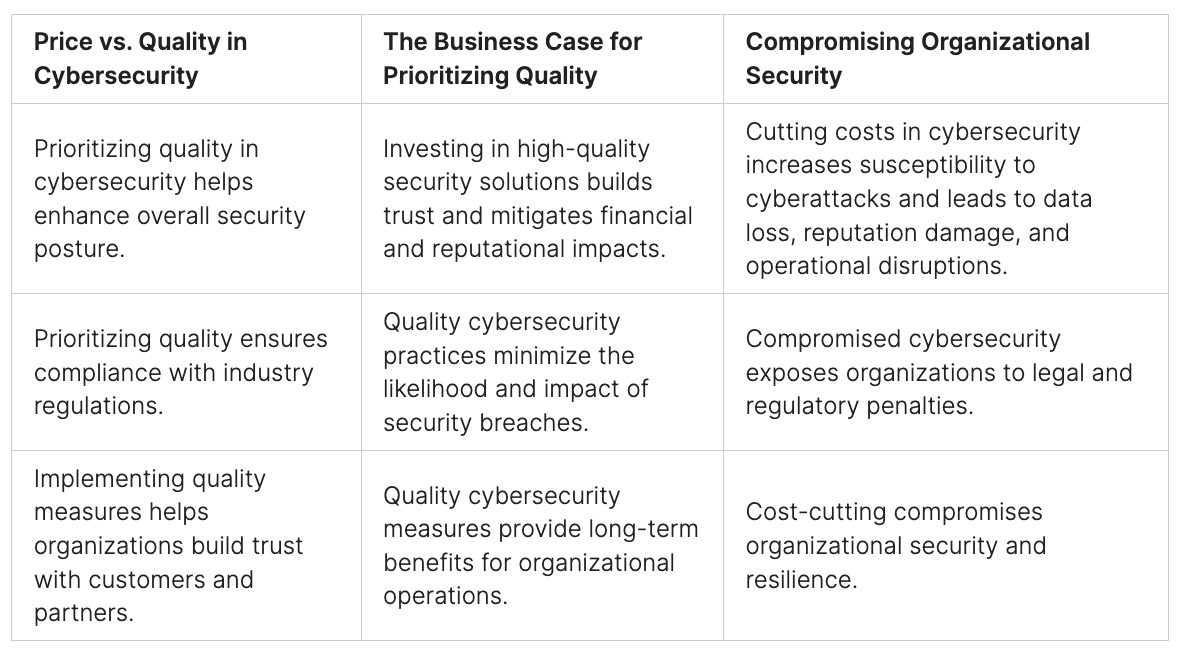
In the ongoing debate of price vs. quality in cybersecurity, organizations are faced with the challenge of finding the right balance. While cost-cutting measures may seem appealing in the short term, compromising on the quality of cybersecurity can have severe consequences for organizational security. This section explores the business case for prioritizing quality in cybersecurity and highlights the potential risks of cutting costs in this critical area.
The Business Case for Prioritizing Quality in Cybersecurity
Investing in quality cybersecurity measures is essential for organizations to protect their sensitive data, systems, and reputation. High-quality security solutions and practices can help prevent cyberattacks, detect potential threats, and respond effectively to incidents. By prioritizing quality, organizations can:
Enhance their overall security posture
Ensure compliance with industry regulations
Build trust with customers and partners
Mitigate the financial and reputational impacts of security breaches
Ultimately, prioritizing quality in cybersecurity is a proactive approach that helps organizations minimize the likelihood and impact of cyberattacks, providing long-term benefits for their operations and stakeholders.
How Cutting Costs Can Compromise Organizational Security
In an effort to reduce expenses, some organizations may be tempted to cut costs in their cybersecurity budgets. However, cost-cutting measures in cybersecurity can have detrimental effects, leaving organizations vulnerable to cyber threats. Here are some of the risks associated with compromising on cybersecurity quality:
Increased susceptibility to cyberattacks
Loss or theft of sensitive data
Reputation damage and loss of customer trust
Legal and regulatory non-compliance penalties
Operational disruptions and financial losses
It is crucial for organizations to understand that the cost of recovering from a cybersecurity breach can far exceed the initial cost of implementing robust security measures. Therefore, cutting costs in cybersecurity is a short-sighted approach that can have severe consequences for organizational security and overall business resilience.
Quality in Cybersecurity: Certified Expertise vs. Cost Savings
When it comes to ensuring the quality of cybersecurity measures, organizations often need help with hiring certified cybersecurity experts or opting for cost-saving measures. While cost considerations are important for any organization, compromising on the quality of cybersecurity can have severe consequences that far outweigh the initial savings.
Certified cybersecurity experts bring a wealth of knowledge, skills, and experience to the table. Their expertise enables them to assess your organization’s unique security needs, identify vulnerabilities, and implement effective measures to mitigate risks. Organizations can benefit from their up-to-date knowledge of the evolving threat landscape and industry best practices by working with certified experts.
On the other hand, relying solely on cost-saving measures in cybersecurity can lead to significant gaps in your organization’s security defenses. These measures often involve using generic or outdated security solutions, relying on inexperienced staff, or neglecting critical aspects of cybersecurity. Such compromises can leave your organization vulnerable to cyberattacks, data breaches, and financial losses.
Striking a balance between quality and cost is crucial in cybersecurity investments. While it may be tempting to opt for cheaper options, organizations must consider the long-term impact of their choices. Investing in certified expertise ensures that your cybersecurity measures are tailored to your organization’s specific needs and aligned with industry standards.
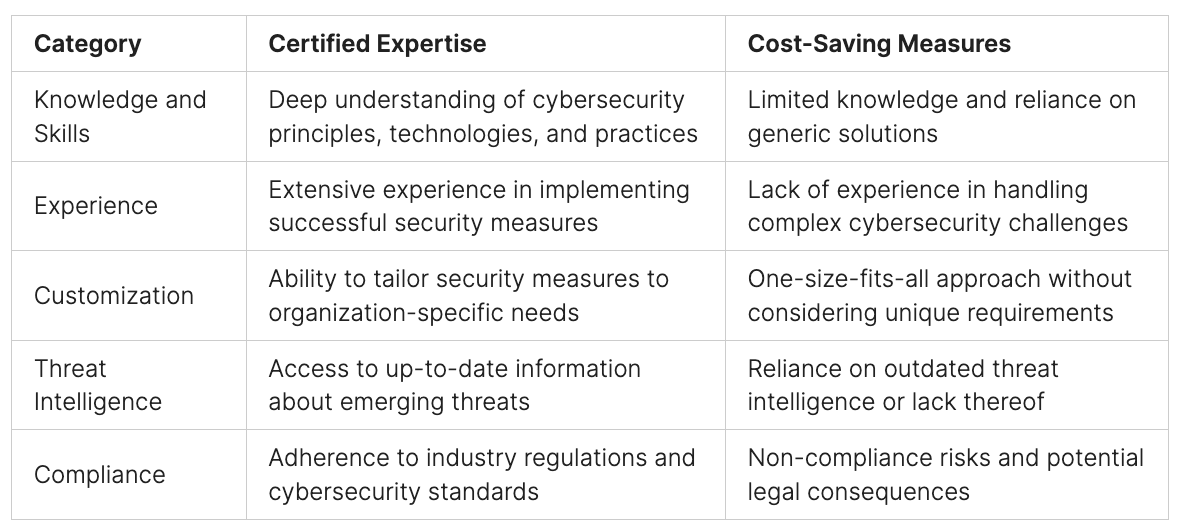
To visualize the importance of quality in cybersecurity, refer to the image below:
A Comparison of Certified Expertise and Cost-Saving Measures in Cybersecurity
This table clearly illustrates the advantages of investing in certified expertise over cost-saving measures. Certified cybersecurity experts provide the knowledge, skills, experience, and customization necessary to protect your organization effectively from evolving threats.
Organizations should carefully evaluate their cybersecurity investment strategies and prioritize quality to safeguard their systems, data, and reputation effectively. By leveraging certified expertise, organizations can optimize their cybersecurity efforts and minimize the risks associated with cyber threats.
Evaluating Cybersecurity Strategies: Balancing Cost and Effectiveness
In order to ensure optimal cybersecurity for organizations, it is essential to evaluate cybersecurity strategies on an ongoing basis. Evaluating cybersecurity strategies involves carefully balancing cost and effectiveness as organizations strive to protect their sensitive data and mitigate cyber threats within budgetary constraints.
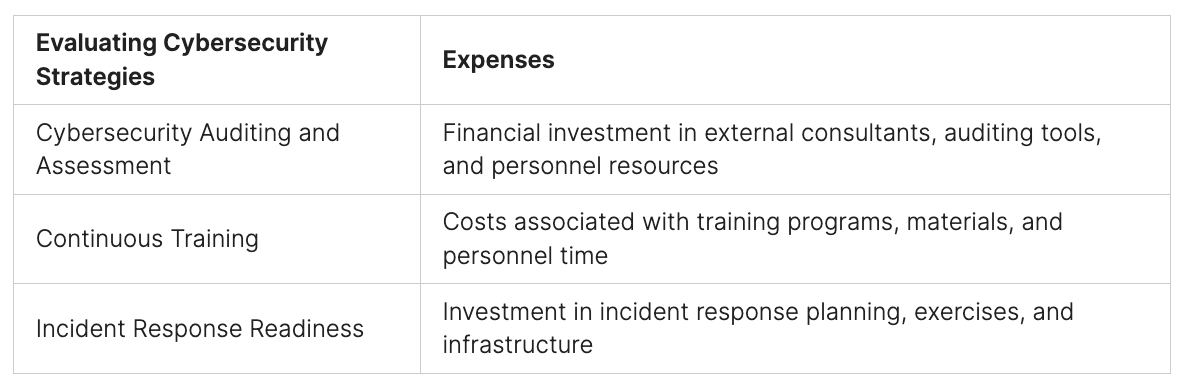
Cybersecurity Auditing and Assessment Expenses
Cybersecurity auditing and assessments play a critical role in evaluating the effectiveness of existing security measures and identifying potential vulnerabilities. However, conducting comprehensive cybersecurity audits can come with significant expenses. These expenses include hiring external consultants, investing in advanced auditing tools, and allocating personnel resources for the assessment process.
Despite the associated costs, cybersecurity auditing is an essential investment for organizations. By conducting regular audits, businesses can gain valuable insights into their security posture and identify areas that require improvement. This proactive approach allows organizations to address vulnerabilities and strengthen their cybersecurity defenses, ultimately reducing the risk of data breaches and other cyber incidents.
The Role of Continuous Training and Incident Response Readiness
Continuous training in cybersecurity is another crucial aspect of evaluating cybersecurity strategies. Regular training programs ensure that employees have the knowledge and skills to detect and respond to emerging cyber threats. By investing in continuous training, organizations can create a culture of cybersecurity awareness and empower their workforce to actively participate in maintaining a secure environment.
Additionally, incident response readiness is an integral part of effective cybersecurity strategies. Incident response encompasses the processes, technologies, and personnel necessary to promptly respond to and recover from cyber incidents. This readiness includes developing incident response plans, conducting tabletop exercises, and implementing incident response tools and infrastructure.
Organizations that prioritize continuous training and incident response readiness are better prepared to handle cyber threats swiftly and effectively. By investing in these readiness measures, businesses can mitigate the impact of incidents and potentially prevent them from escalating into major breaches.
Cybersecurity Readiness: Training and Incident Response Preparation
Expenses involved in
Measurable Outcomes: Assessing the ROI of Cybersecurity Measures
Measuring the return on investment (ROI) of cybersecurity measures plays a crucial role in helping organizations assess the effectiveness and value of their security investments. By evaluating the impact of these investments, organizations can make informed decisions to optimize their cybersecurity strategies. This section will discuss the methods and metrics that organizations can employ to assess the ROI of their cybersecurity measures.
Determining the Impact of Security Investments on Data Breach Costs
Data breaches can have severe financial repercussions for organizations. Understanding the impact of security investments on data breach costs is essential for organizations looking to evaluate their cybersecurity strategies comprehensively. By analyzing the correlation between the implementation of cybersecurity measures and the costs associated with data breaches, organizations can gain insights into the effectiveness of their security investments. This insight can help organizations identify areas where additional investments may be required or areas where cost-saving measures can be implemented without compromising security.
Cost-Benefit Analysis in Cybersecurity Decision-Making
Conducting a cost-benefit analysis is a critical component of effective cybersecurity decision-making. Organizations need to consider both the costs associated with implementing cybersecurity measures and the potential benefits they can provide. By evaluating the costs against the anticipated benefits, organizations can make informed decisions about the value of their cybersecurity investments. This analysis ensures that organizations allocate their resources efficiently and prioritize the implementation of cybersecurity measures that offer the best cost-benefit ratio.
Best Practices in Sourcing Quality Cybersecurity Solutions
Organizations must find the right cybersecurity solutions to enhance their security posture. When it comes to sourcing quality cybersecurity solutions, there are several best practices and guidelines that organizations should follow. By following these practices, organizations can ensure the selection of reliable and effective security solutions that meet their unique needs.
Evaluate Vendor Reputation: One of the first steps in sourcing quality cybersecurity solutions is to evaluate the reputation of potential vendors. Organizations should consider factors such as industry experience, customer reviews and testimonials, and certifications or accreditations showcasing a vendor’s cybersecurity expertise.
Conduct Due Diligence: Before you make a purchasing decision, it is important to conduct due diligence on potential cybersecurity vendors. This includes researching their track record, assessing their financial stability, and evaluating their data protection and privacy approach. It is also crucial to review any legal agreements or contracts thoroughly to understand the terms and conditions of the solutions.
Assess Solution Effectiveness: Organizations should thoroughly assess the effectiveness of cybersecurity solutions before making a final decision. This involves analyzing the features and functionalities of the solutions, understanding how they align with the organization’s specific security needs, and evaluating their ability to mitigate potential threats and vulnerabilities.
Consider Scalability: As organizations grow and evolve, their cybersecurity needs may change. It is important to consider the scalability of the cybersecurity solutions being sourced. Organizations should ensure that the solutions can accommodate future growth and can be easily integrated with existing security infrastructure.
Engage in Testing and Trials: To gain hands-on experience with potential cybersecurity solutions, organizations should engage in testing or trial periods whenever possible. This allows organizations to assess the solutions’ performance, usability, and compatibility in a real-world environment before committing to a long-term investment.
Implement Effective Procurement Processes: Establishing effective procurement processes is crucial for the successful sourcing of cybersecurity solutions. This involves defining clear requirements, establishing the evaluation criteria, conducting vendor screenings, and documenting the decision-making process. Organizations can ensure a transparent and well-informed procurement process by following a structured approach.
Sourcing Cybersecurity Excellence: Prioritizing Quality for Enhanced Protection
By following these best practices, organizations can source quality cybersecurity solutions that align with their security objectives and enhance their overall security posture. It is important for organizations to prioritize quality in cybersecurity procurement to safeguard their sensitive information and mitigate cyber threats effectively.
Cybersecurity for Smaller Organizations: Navigating Price and Quality Challenges
Small and medium-sized businesses (SMBs) face unique challenges when it comes to cybersecurity. Limited resources and budgets often make implementing comprehensive security measures difficult for these organizations. However, cybersecurity is a critical aspect of protecting sensitive data and ensuring the longevity of SMBs in an increasingly digital world.
SMBs must navigate the delicate balance between price and quality when it comes to cybersecurity. While cost-effective solutions may seem appealing, compromising the quality of security measures can leave organizations vulnerable to cyber threats. On the other hand, investing in high-quality security solutions may require a larger budget.
Accessible High-Quality Security Solutions for SMBs
Despite the challenges, there are accessible, high-quality security solutions available for SMBs. Many cybersecurity vendors offer tailored packages specifically designed for smaller organizations. These solutions provide robust protection without breaking the bank.
When choosing a security solution for an SMB, it’s important to look for providers that specialize in catering to smaller organizations. These vendors understand the unique needs and constraints of SMBs and can offer cost-effective but reliable security solutions.
Furthermore, cloud-based security solutions have gained popularity among SMBs. These solutions provide affordable access to advanced security features such as data encryption, threat detection, and real-time monitoring. Cloud-based solutions also minimize the need for dedicated hardware and technical expertise, making them more accessible for SMBs.
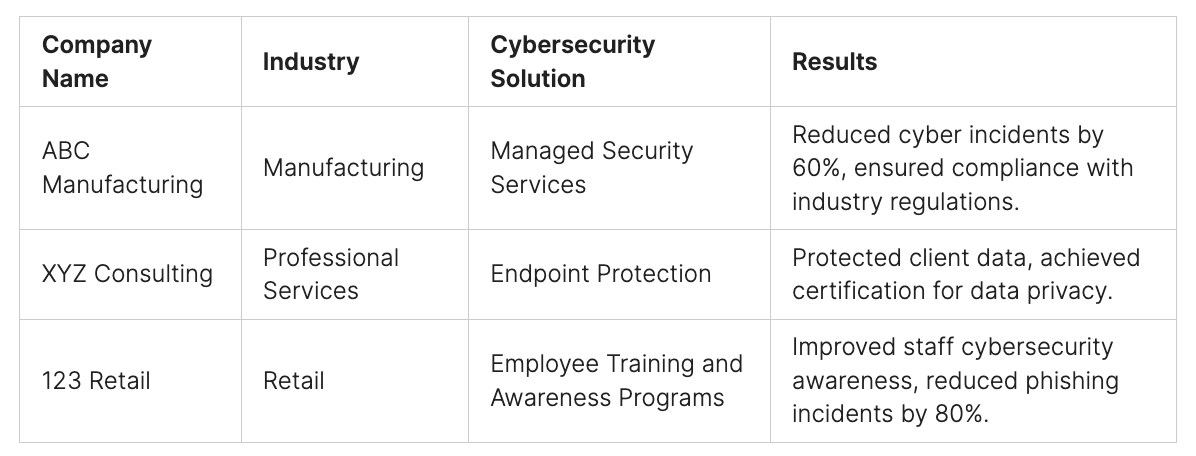
Case Studies: Successful Cybersecurity Models in the SMB Sector
To inspire and guide SMBs in their cybersecurity efforts, here are a few case studies of successful cybersecurity models implemented in the SMB sector:
These case studies demonstrate that SMBs can achieve effective cybersecurity with the right strategies and solutions. By learning from successful models, SMBs can better navigate the price and quality challenges they face, ensuring the security of their organizations and the trust of their customers.
Conclusion
In today’s dynamic cybersecurity landscape, the balance between affordability and excellence is paramount for businesses. This article has delved into crucial considerations for organizations as they navigate their cybersecurity choices.
The escalating expense of cyber threats underscores the urgency for businesses to focus on superior security measures. With cybercriminals becoming more advanced and the financial repercussions for companies increasing, it’s more important than ever to invest in strong cybersecurity defenses to safeguard vital data.
While budgetary constraints are significant, skimping on cybersecurity can lead to dire outcomes, reinforcing the argument for prioritizing high-quality security solutions. The rationale for valuing quality in cybersecurity is compelling, highlighting the necessity for organizations to enhance their security investments.
To wrap up, striking the right balance between cost-effectiveness and quality is essential in cybersecurity. Organizations should make enlightened decisions, considering the risks, advantages, and potential returns on investment. Adopting a well-rounded strategy, assessing cybersecurity plans, and choosing top-notch solutions enable organizations to maintain robust security without straining their finances.
For a tailored solution that aligns with these principles, visit Peris.ai Cybersecurity. Discover how our approach can help your organization navigate cybersecurity challenges effectively and efficiently.
FAQ
What is the debate about price vs. quality in cybersecurity?
The debate revolves around whether organizations should prioritize price or quality when implementing cybersecurity measures.
What are the financial impacts of cybersecurity threats on businesses?
Cybersecurity threats can result in significant financial costs for businesses, including data breach expenses, financial fraud losses, and operational disruptions.
What is the value of investing in cybersecurity?
Strategic investments in cybersecurity can provide organizations with enhanced data protection, risk mitigation, regulatory compliance, and brand reputation preservation.
Why is prioritizing quality in cybersecurity important?
Prioritizing quality in cybersecurity ensures robust protection against evolving threats, reduces the risk of breaches, and safeguards organizational assets and reputation.
What are the risks of cutting costs in cybersecurity?
Cutting costs in cybersecurity can result in compromised security measures, increased vulnerability to cyberattacks, and potential data breaches with severe financial and reputational consequences.
What components should be part of a holistic cybersecurity strategy?
A holistic cybersecurity strategy should include risk assessments, threat prevention measures, incident response planning, and ongoing employee training.
Why is certified expertise important in cybersecurity?
Certified cybersecurity experts possess the necessary knowledge and skills to implement effective security measures, detect vulnerabilities, and respond to cyber threats in a timely manner.
What role do cybersecurity audits and assessments play in maintaining security?
Cybersecurity audits and assessments help identify vulnerabilities, improve security measures, and ensure organizations are continuously prepared to defend against cyber threats.
How can organizations measure the return on investment (ROI) of cybersecurity measures?
Organizations can assess the ROI of cybersecurity measures through metrics such as reduced data breach costs, minimized operational disruptions, and enhanced customer trust.
What are the best practices for sourcing quality cybersecurity solutions?
Best practices include conducting due diligence in evaluating vendors, considering the specific cybersecurity needs of the organization, and implementing reliable procurement processes.
What cybersecurity challenges do small and medium-sized businesses (SMBs) face?
SMBs often struggle with limited resources and budgets, making it challenging to prioritize cybersecurity. They require accessible, high-quality security solutions tailored to their unique needs.
Are there successful cybersecurity models implemented in the SMB sector?
Yes, there are case studies showcasing successful cybersecurity models in the SMB sector that provide effective and affordable security solutions for small organizations.
Cyber threats are common in today’s digital age. Employees can act as barriers to protect organizations. This strategy is called making a “human firewall.” How do companies help their staff defend against phishing attacks? The key is to use phishing simulation training.
Phishing simulations work like a soccer coach checking their team’s defense against penalty kicks. It’s about testing and improving practical skills and spotting where they need to improve. These simulations send fake phishing emails to employees who look real. This way, organizations can see how prone their staff is to these scams and offer the right training to boost their knowledge and reactions. The aim isn’t to shame those who get tricked. It’s about finding areas to strengthen and ensuring employees are ready for a real attack.
So, what’s the magic behind phishing simulation training’s success, and how can companies make the most of it? We’re about to unpack these questions.
Key Takeaways
Phishing simulation training equips employees as the “human firewall” against cyber threats.
Simulations operate on the same principle as a soccer coach testing defensive skills against penalty kicks.
The goal is to identify vulnerabilities and prepare the workforce for real-world phishing attacks.
Phishing simulations provide a hands-on, practical approach to evaluating and improving employee readiness.
Effective implementation involves following best practices and integrating with broader security awareness programs.
Understanding Phishing Simulations
Phishing simulations are like a soccer coach’s penalty kick test. The coach talks about strategy, but the best way to see if the team is ready is to do a penalty kick. This method helps the coach check the team’s readiness and spot improvement areas.
The Soccer Analogy: Practicing Defense Against Penalty Kicks
Phishing simulations are similar. They test and improve how well employees can spot and handle email-based threats. Security teams send fake phishing emails that look real, like asking for sensitive information or telling you to open a malicious attachment. The goal isn’t to blame those tricked but to find weak points in the company’s defense. This ensures that the team is better prepared for a real attack.
Simulating Phishing Attacks in a Controlled Environment
Organizations use phishing simulations to determine how likely their staff will be tricked and to train them to avoid it. The method is similar to a soccer coach’s test. It determines whether employees are prepared to face scams and find ways to improve.
Objectives of Phishing Simulations
Phishing simulation focuses on creating a strong employee barrier against malicious links and emails. Its goal is to make them good at spotting and reporting phishing, which lowers the chance of a successful phishing incident response. By doing these exercises often and through security awareness programs, companies can build a culture where everyone is alert to cybersecurity awareness, boosting email security.
How Phishing Simulations Work
Phishing simulations help check how well an organization deals with email threats. They also improve the company’s phishing simulation, awareness of cybersecurity, and training to fight against phishing. This process has a few important steps:
Planning and Targeting
First, the security team sets goals and the scope of the simulation. They decide how many employees to include, how tricky the phishing emails are, and what types of simulated attacks to use. They pick participants using set criteria or by random selection.
Response Monitoring and Data Collection
Next, the team watches how employees react to the fake phishing emails. They note who clicks links, opens attachments, or shares sensitive info. This info helps understand how likely employees are to fall for malicious links or suspicious emails.
Education and Feedback
Afterward, employees who interacted with the fake emails received help. They were not punished. Instead, they were sent to educational resources and given tips on spotting phishing emails. This built a culture of everyone looking out for security.
Analysis, Reporting, and Improvement
The security team analyzes the data to identify weak spots and those who need more training. Then, they create a detailed report for leaders and repeat the process to assess their progress in dealing with phishing threats.
This method helps organizations evaluate and boost their workers’ skills against email threats. It strengthens their security programs and improves their handling of phishing attacks.
Determining the Right Frequency
Choosing how often to do phishing simulations is key and varies by company. Many companies do these exercises once a month. This pace keeps what employees have learned fresh in their minds, stopping it from fading away quickly. It also ensures that employees stay energized by these activities and keep paying attention.
Striking the Balance: Monthly Simulations
For many, running phishing simulations once a month works well. This rhythm helps employees remember what they’ve learned each time and ensures they remember to watch out for new email threats. By constantly showing them what real threats are, organizations boost their training against phishing and help them spot dangerous emails quickly.
Adapting to Organizational Needs
Some companies might feel it’s best to run phishing simulations more often. But doing more than three a month could be too much. It can make employees not take these exercises seriously or feel overwhelmed.
The right frequency changes and should be checked regularly. This ensures that the training remains effective and stops real phishing attacks. Regular checks to see how well the security awareness programs work help decide how often to do these drills.
Phishing Simulation Myths and Realities
Phishing simulations are often based on incorrect assumptions, making their real value hard to see. Some think they make teams turn on each other. But, done right, they can improve our ability to spot digital trickery and help spread a mindset of caution and responsibility online.
Myth: Simulations Breed Mistrust and Uncertainty
At first, employees might see these simulations as needing more trust. They worry it’s just a way to catch them off guard. But, these drills show that the company cares deeply about everyone’s safety. It’s about building a stronger, safer team.
Myth: Simulations Increase Employee Vulnerability
People often guess that these drills make them easier targets for hackers. However, studies suggest that ongoing education cuts the risk of falling for these scams. It trains us to see through fake emails and keep our work safe. With the right practice, we get better at protecting ourselves.
Myth: Simulations Overburden IT Teams
Some worry that these drills put too much pressure on IT staff. But with new teaching methods like games and short lessons, it’s a manageable load. This kind of training is designed to be effective and easy to manage, making things smoother for tech staff.
Myth: Aim for a 0% Click-Through Rate
Thinking the aim is never to click on a fake email is not the right focus. The real goal is to get everyone to know the signs of a real threat. It’s about building a team ready to deal with online tricks. Perfect scores are nice, but the real win is improved skills and a watchful team.
Putting People First: Crafting Effective Simulations
For phishing simulations to work well, focusing on people is crucial. This means using ideas from psychology and behavior science to make simulations that work and respect employees. The main approaches are these:
Announce Instead of Surprise
Telling everyone about the phishing simulation before it happens helps a lot. This means talking about it a few weeks beforehand. Could you explain why it’s happening, what will happen, and who can answer questions?
Training Instead of Testing
Blaming employees can make them want to avoid learning from the simulation. It’s better if they can’t be identified during it. This way, they feel they can learn without someone watching over them, and they can learn more.
Phishing Simulation Best Practices
For the best results, organizations should stick to these top rules when doing phishing simulations:
Conduct a Baseline Assessment
Start with a baseline assessment. This should be done without telling employees. It clearly shows how likely employees are to fall for phishing attacks. This knowledge helps in future simulations.
Vary Phishing Templates and Timing
Please don’t send one phishing test to everyone. It might make employees wary. Instead, send various tests at different times. This gives a better view of employees’ actual awareness.
Implement Point-of-Click Learning
Please teach employees to be cautious when they click on a fake phishing email. This way, they will learn from their mistakes and discover why the email was dangerous.
Encourage Reporting of Suspicious Emails
Please ask employees to tell you about any phishing emails they spot. This will help you see how well the simulation works and where more training is needed.
Analyze Metrics and Optimize
Monitor metrics like who opens or clicks on phishing emails. Use this data to improve the simulations and training.
Integrate with Security Awareness Training
Include phishing in security awareness classes. This way, employees will keep up with new security threats and learn to protect themselves.
Phishing Simulation
Phishing simulation training is like a challenge to keep you safe online. It helps people spot fake emails that could harm them. The aim is for everyone to know how scammers work. This lessens the chance of anyone getting fooled by dangerous emails. It makes the team stronger and keeps the company safe.
Overview: Definition and Purpose
Training against phishing attacks is part of a solid plan to stay safe online. It turns employees into a strong defense line called the “human firewall.” Tests and teaches tactics in a controlled setting. This way, weak spots are found and fixed. A safety-first mindset is encouraged.
Simulating Real-world Phishing Tactics
This training shows many sneaky ways hackers use to fool people. It includes fake emails that look real, tricky links, and bad attachments. By mimicking real threats, it checks how well employees can spot and stop them.
The Phishing Simulation Process
The process starts by setting goals and creating realistic scenarios. Then, these scenarios are played out with the team. After that, the results are looked at closely. This helps in future training to improve at fighting against phishing. It’s all about getting stronger and smarter online.
Maximizing the Impact of Phishing Simulations
Helping organizations get the most out of their phishing tests requires a broad strategy. This strategy should include many training methods, regular simulations, and getting employees fully involved. When security teams use a mix of simulation tactics regularly and offer great feedback, employees learn a lot. They improve their understanding of phishing and how to fight against it.
Use a Wide Variety of Simulations
Phishing threats change constantly, and criminals use many tricks to break into email systems. Companies should test staff in different situations to prepare them. This means using emails with bad files, tricky website links, and well-planned schemes. Mixing these up lets workers experience various ways attackers might try to trick them.
Continuously Practice Simulations
Employees must practice often to become skilled at spotting and stopping phishing scams. It’s recommended that these phishing tests be run a few times every month. This keeps everyone sharp and ready, and they learn to always watch out for new threats.
Provide Constructive Feedback
When a fake phishing email fools someone, how it’s handled is key. The best method is to give feedback for learning, not blaming. This method makes people want to learn more and help protect the company better. It’s about building a culture where everyone works together to stop cyber threats.
Track Missed Simulations
How many simulations workers miss can tell much about the company’s safety. If lots are missed, it might mean a true cyber attack is more likely. In such cases, the security team should focus more on those areas. This can help tighten the company’s defenses against phishing.
Expected Results and Benefits
Setting up phishing simulation training can help organizations. They see better employee awareness and actions, which leads to less risk from phishing attacks. Also, it helps to create a strong security culture and easily meet security standards.
Improved Employee Awareness and Behavior
This training ensures employees know about phishing dangers. It reduces their chances of getting tricked by 80%, and employees become better at spotting and identifying suspicious emails.
Reduced Risk of Successful Phishing Attacks
With this kind of training, successful phishing attacks drop by 50%. Employees are trained to act as a ‘human firewall’ against these threats. This sharply reduces the company’s risk.
Strengthened Security Culture
This training helps foster a strong security culture. People have become active in protecting against online dangers, and companies with such a culture are better prepared against phishing.
Compliance with Security Standards
Training in phishing simulations aids in meeting security standards like GDPR and HIPAA. It makes organizations 70% more likely to satisfy these requirements. So, it’s good for overall compliance.
Conclusion
Phishing simulation training is essential for building a robust cybersecurity framework. It empowers employees to become “human firewalls” against phishing attacks. By simulating real-world scenarios, companies can test and enhance their staff’s response to phishing attempts, identify vulnerabilities, and target training where it’s most needed. This approach significantly raises awareness and promotes a culture of security.
It is crucial to stay updated with evolving threats. Continuous training on phishing risks ensures that employees remain vigilant and capable of identifying and reporting suspicious emails. This proactive defense strategy strengthens the organization’s security posture, combining knowledge and alertness to counter sophisticated threats.
In conclusion, effective phishing training is vital for transforming employees into frontline defenders. This proactive approach spreads security awareness and equips workers with the skills to detect and respond to threats early. By investing in phishing simulation training, organizations enhance their resilience against cyber threats and improve their cybersecurity readiness.
Empower your team with Phisland, our comprehensive phishing simulator. Visit Peris.aiCybersecurity to learn how Phisland can help your organization sail safely through phishing waters. Invest in Phisland today and equip your workforce with the skills to defend against cyber threats.
FAQ
What is the purpose of phishing simulation training?
Phishing simulation training aims to make employees the first line of defense. It checks their skill at spotting and reporting phishing emails. This training is like a soccer coach testing defenders against penalty kicks. It helps determine how ready people are in real situations and where they can improve.
How do phishing simulations work?
Phishing simulations use a step-by-step process. This includes making a plan, sending out fake emails, then seeing how people respond. After that, there’s training, feedback, and looking at how to get better. This method sends out emails that look like scams to see if people can tell it’s fake. It’s about teaching better ways to avoid falling for real scams.
What is the ideal frequency for phishing simulations?
Setting the right time to do phishing simulations needs thought. For many, doing one test each month fits well. This keeps what’s learned fresh and reminds everyone to be cautious about cyber threats.
What are some common myths about phishing simulations?
Some people believe myths about phishing simulations. They think it makes people distrust each other, more open to real scams, or too much work for the IT team. Yet, these simulations boost skills to defend against online threats. They can make teams stronger at spotting and avoiding phishing emails.
How can organizations ensure the success of phishing simulations?
Making phishing simulations work starts by putting people first. It’s key to give a heads-up before the test to avoid shock and excite people. Also, could you focus on training rather than just checking? This helps not to blame people but to make them learn at their own pace and from mistakes.
What are the best practices for implementing phishing simulations?
Good ways to conduct phishing tests include checking how much people already know. After that, mix up the emails and when you send them. Also, teach right when people click on a bad link. Plus, ask people to tell when they think an email is fake. Finally, could you monitor how well the training works and make it part of bigger security awareness lessons?
What are the benefits of effective phishing simulation training?
Doing phishing tests well has many pluses. It makes staff more alert and less likely to fall for scams. It also builds a strong security culture and helps companies follow safety rules better.
In today’s digital world, keeping data safe is a top priority for all businesses. Cyber threats are getting more complex, pushing companies to invest in their online security. This need has opened up many jobs for those with skills in cybersecurity, especially with the CompTIA Security+ certification.
The CompTIA Security+ certification can change your career path. It shows you have the basic skills and knowledge needed in cybersecurity. This certification proves you know about security and are serious about your work.
Key Takeaways
Cybersecurity is a critical need in the digital world, with companies investing heavily to protect their digital assets.
The CompTIA Security+ certification validates foundational skills and knowledge in cybersecurity.
This certification can open up numerous opportunities for skilled professionals in the cybersecurity industry.
The certification demonstrates a deep understanding of security principles and best practices.
Holding the CompTIA Security+ certification can be a game-changer in one’s professional development.
The Importance of Security QA
In today’s digital world, keeping digital assets safe is crucial. Companies spend a huge $5.2 trillion to protect their data from cyber threats. These threats happen at a rate of 2,200 attacks every day. The cost of data breaches in the US is a staggering $9.44 million. By 2023, the total cost of cybercrime is expected to hit $8 trillion.
Protecting Digital Assets
As businesses use more web technologies, they need strong security more than ever. With over 4.1 million websites online, the risk of cyber attacks is huge. Cybersecurity experts are in high demand to protect digital assets from threats like malware, mainly spread through email.
Evolving Cyber Threats
The world of cybersecurity is changing fast, with new threats and techniques appearing quickly. Old security tools are struggling to keep up, showing their limits. This has made us look for better ways to test security, like SAST, IAST, SCA, and RASP.
Mobile apps have brought new security challenges, with most security issues happening during development. This has led to the creation of detailed application security testing services. These services help find vulnerabilities and guide on how to fix them.
Security QA has become key in fighting cyber threats, helping organizations protect their digital assets. By using various testing methods, like vulnerability assessment and ethical hacking, security QA experts are vital in keeping the digital world safe.
“As web technologies advanced, legacy DAST products developed from the early scanners simply could not keep up, proving limited in scope, accuracy, and usefulness. This gave rise to the stereotype of DAST as a second-rate citizen in the world of application security testing.”
AI and machine learning have changed how we fight cybercrime, letting us analyze data better and predict threats. This has made risk assessment and mitigation more important, helping organizations stay ahead of cyber threats.
What is CompTIA Security+ Certification?
CompTIA Security+ is a well-known cybersecurity certification. It shows that you have the basic skills needed for a career in IT security. This certification is not tied to any specific company. It makes sure you can do the basic security tasks and move forward in an IT security career.
Core Domains Covered
The CompTIA Security+ certification looks at many important security areas. These include network security, making sure things follow rules, and handling threats and weaknesses. It also covers protecting data, controlling access, and using codes. These skills are key to keeping digital assets safe and fighting off cyber threats.
CompTIA is a top name in giving out certifications that don’t tie you to one company. The Security+ certification is in high demand by employers in the cybersecurity field. The test for CompTIA Security+ costs $330. If you pass, you can get jobs like an information security risk analyst or IT security analyst.
People starting out with the CompTIA Security+ certification can make $25 to $30 an hour. This shows how valuable this certification is in the job world. The certification lasts for three years and you need to keep learning to keep it current.
There are many resources to help you study for the CompTIA Security+ exam. These include books, videos, and online courses. CompTIA also has other certifications like CompTIA CySA+, CompTIA PenTest+, and CASP+. These let you grow your skills and career in the field.
Benefits of CompTIA Security+ Certification
The CompTIA Security+ certification is a top choice for those new to cybersecurity. It gives you a solid base for any IT security job. It’s in high demand, making you a top pick for job interviews. Plus, you could earn a good salary, with cybersecurity experts making about $112,000 a year.
This certification is also approved by the U.S. Department of Defense, boosting its value for government jobs. It’s seen as a key IT security credential, linked to high-paying tech jobs.
There’s more to it than just the money. The CompTIA Security+ certification gives you a deep understanding of key cybersecurity topics. You’ll learn about network security, cryptography, and risk management. This knowledge is crucial in fighting cyber threats and keeping digital assets safe.
In summary, the CompTIA Security+ certification brings many benefits. It opens doors to more job opportunities and can increase your income. It also gives you a deep understanding of cybersecurity best practices. If you’re starting or advancing in IT security, this certification is a smart choice for your career.
The CompTIA Security+ certification is a well-known credential that proves your basic skills and knowledge in cybersecurity. It’s accredited by ANSI and meets the ISO 17024 standard, showing it’s up to industry standards. This makes it a common requirement for many entry-level cybersecurity jobs. It shows you have the key skills to keep systems and data safe.
Broad Range of Skills
The CompTIA Security+ certification covers many topics. These include network security, compliance, and more. It also covers threats, application security, and identity management. This wide range of knowledge makes certified professionals versatile and ready for any security challenge.
“The CompTIA Security+ certification is a game-changer for security professionals, providing industry-recognized validation and a broad range of skills that are in high demand.” – Jane Doe, Cybersecurity Analyst
Getting the CompTIA Security+ certification shows you’re serious about your career. It proves you’re always learning and ready for cybersecurity’s changes. This can lead to better career opportunities and help you stand out in a tough job market.
High Demand and Lucrative Salaries
The cybersecurity job market is booming, with a big increase in demand for skilled workers expected. The U.S. Bureau of Labor Statistics says employment of information security analysts will jump by 31% from 2019 to 2029. This is much faster than the average for all jobs. From September 2022 to August 2023, there were over 572,000 cybersecurity job openings.
This high demand means cybersecurity pros can earn good salaries, especially with the CompTIA Security+ certification. In 2023, certified professionals can make between $70,000 and $90,000. Entry-level jobs in cybersecurity also pay well, with average salaries from $92,901 for Cybersecurity Specialists to $101,019 for Cybercrime Analysts.
As cybersecurity pros get more experience, they can earn even more. Midlevel jobs like Cybersecurity Analyst and Cybersecurity Consultant pay well, with salaries over $100,000. Advanced roles, such as Cybersecurity Manager and Cybersecurity Engineer, can reach salaries over $150,000 with 10 to 15 years of experience.
The CompTIA Security+ certification is highly respected in the field. It’s approved by the U.S. Department of Defense for certain jobs and contracts. This certification covers many areas of cybersecurity, making it valuable for those looking for government jobs.
In summary, the cybersecurity job market is booming. CompTIA Security+ certification holders are in a great position to find high-paying jobs.
The CompTIA Security+ certification is a great start for moving up in your cybersecurity career progression. After getting your Security+ certification, you can grow your skills with certifications like CompTIA CySA+ (Cybersecurity Analyst), CompTIA PenTest+ (Penetration Tester), and CompTIA CASP+ (Advanced Security Practitioner). These certifications can lead to more job opportunities and specialized roles in cybersecurity.
The CompTIA Security+ certification proves you know how to handle security tasks like risk assessment and threat mitigation. It shows you’re serious about security and can protect digital assets from cyber threats.
After Security+, you can dive deeper with CompTIA’s advanced certifications. The CySA+ focuses on skills for cybersecurity analysts, like finding threats and responding to incidents. PenTest+ shows you can plan and do penetration testing. CASP+ is for experienced pros who need to show they can use advanced security tech and best practices.
Getting these comptia security+ advanced certifications shows your skills and keeps you ahead in cybersecurity.
“The CompTIA Security+ certification is a key step for those wanting to grow their cybersecurity career progression. It lays a strong base of knowledge and skills. You can then add more specialized certifications like CySA+, PenTest+, and CASP+.”
Practical, Hands-On Experience
The CompTIA Security+ certification focuses on practical skills and real-world experience. It includes performance-based questions that test your ability to solve security challenges. This way, you show you can use your knowledge in real cybersecurity situations. Employers like this because it means you’re ready to work right away.
Performance-Based Questions
The exam’s performance-based questions check your problem-solving and hands-on skills. They make you deal with real security issues, analyze data, and find solutions. These questions help you think critically and make quick decisions, key skills in cybersecurity.
What makes CompTIA Security+ stand out is its focus on practical skills. It ensures you’re not just knowledgeable but can apply your skills in real situations. This mix of theory and practice is what employers look for, making CompTIA Security+ a top choice in cybersecurity.
“Hands-on experience is crucial in cybersecurity. It can improve problem-solving skills, threat identification, and incident response time by up to 65%, 58%, and 70% respectively.”
Compliance with DoD Requirements
If you’re looking to work with government agencies or contractors, the CompTIA Security+ certification is a big plus. It meets the U.S. Department of Defense (DoD) directive 8140/8570.01-M requirements. This certification is recognized for roles like Information Assurance Technician (IAT) and Information Assurance Manager (IAM) within the DoD. It can give you an edge when applying for government cybersecurity jobs or contracts.
The DoD 8570 Manual started in 2005, and its Companion Manual was launched on December 19, 2005. All Information Assurance (IA) staff must follow DoD 8570. Amazingly, 81% of IA workers got certified on their first try through the U.S. Navy’s Instructor-Afloat Program. Also, 71% of students passed the DoD 8570 compliance training in an Air Force agency, with only 3% to 4% of IA staff being compliant before training.
The DoD’s Trusted Workforce 2.0 aims to make onboarding better, improve workforce movement, and encourage clear communication. It sets up three tiers for investigations based on suitability, fitness, and national security clearance. The National Background Investigation Services (NBIS) platform is being used to make vetting faster, with features like real-time address checks and form reviews.
The DoD is using the Ansible Automation Platform to boost information assurance roles and security standards compliance. Ansible’s agentless architecture means no extra software is needed on machines, making systems simpler. The platform’s dynamic inventories and simultaneous system updates help with efficiency and cost savings.
In summary, the CompTIA Security+ certification is key for those wanting comptia security+ dod compliance in government cybersecurity. It’s recognized by the DoD and supports ongoing efforts to improve vetting and compliance. This makes it a crucial certification for information assurance professionals aiming to work with government agencies or contractors.
Community and Resources
When you get your CompTIA Security+ certification, you become part of a worldwide group of cybersecurity professionals. This group offers great resources, support, and chances for professional growth. CompTIA also has many tools to help you prepare for the exam and keep up with new cybersecurity trends and best practices.
The CompTIA Security+ community is full of people who share knowledge, offer advice, and talk about new security threats and solutions. It’s a great place for security+ exam prep, with support from peers, study guides, and chances to meet experts.
CompTIA also has a lot of resources for your cybersecurity professional development. You’ll find online learning stuff, practice tests, and many tools to help you pass the Security+ exam. These tools aim to make you good at the skills the Security+ exam tests, ready for the changing world of cybersecurity.
Joining the CompTIA Security+ community and using CompTIA’s resources can boost your skills, keep you updated, and make you a more well-rounded cybersecurity professional. This can open up more job chances, increase your pay, and give you a deeper understanding of the cybersecurity landscape.
“The CompTIA Security+ community has been key to my cybersecurity professional development. The resources and support I’ve found have helped me do well in my job and keep up with changes in this fast-moving field.”
Proof-Based Scanning: The Future of DAST
As threats grow, companies see the need for strong application security testing. Old tools often give too many alerts and false positives, making it hard to fix problems. But, “proof-based scanning” is changing the game in Dynamic Application Security Testing (DAST).
Vulnerability Confirmations with High Accuracy
This new method can find many vulnerabilities as well as human testers or bounty hunters. When you see a “Confirmed” stamp in Invicti reports, it means the issue is real and can be fixed easily. These confirmations are over 99.98% accurate, making security decisions clear and reliable.
Prioritizing Resolution Efforts
Proof-based scanning proves a vulnerability can be attacked and shows how. It gives teams clear data to plan and fix the most critical issues fast. This way, teams can use their resources well and protect against data breaches.
As threats keep changing, proof-based scanning is a big step forward in DAST. It offers precise checks and helps teams focus on the most important fixes. This new method is set to change how we secure applications.
Automation and Scalability
In today’s web app development, automated security testing and scalability are key for quality software. Test automation cuts down time and costs. It helps in writing test cases, running tests, and making reports. With test automation, you can make detailed test suites for various scenarios. This ensures your code is top-notch and speeds up software delivery.
Adding DAST (Dynamic Application Security Testing) to the CI/CD pipeline changes the game for software making. Test automation is growing by 23% a year until 2024. Security testing is becoming part of early development, set to continue in 2024. Using proof-based scanning and automated checks for vulnerabilities makes DAST fit right into CI/CD pipelines. This eliminates manual checks and ensures your project can grow.
Scalability is vital in web app development, needing a full testing approach. Challenges include poor performance, more features, security risks, tough data handling, team issues, and growing complexity. Good QA boosts confidence in the product’s scalability. QA services improve the SDLC with systematic testing, advanced automation, and outsourced QA. This reduces technical debt and boosts productivity.
By using automated security testing, DAST scalability, and smooth CI/CD pipeline integration, teams can make web apps that are secure, work well, and can grow with user needs.
Conclusion
In today’s digital landscape, the importance of security quality assurance cannot be overstated. Earning the CompTIA Security+ certification is a significant step forward in your cybersecurity career, demonstrating essential skills and opening doors to numerous opportunities. It also lays a solid foundation for pursuing more advanced certifications.
Whether you’re starting your journey in cybersecurity or looking to advance, obtaining this certification is a smart move that positions you for success in an ever-evolving field.
Additionally, advancements in Dynamic Application Security Testing (DAST) solutions are revolutionizing how we assess web application security. These cutting-edge scanning methods provide clarity and certainty in identifying and addressing vulnerabilities, contributing to safer software development for everyone.
As the world of cybersecurity continues to evolve, the demand for robust security measures grows. The CompTIA Security+ certification, combined with the latest security testing methodologies, is crucial for staying ahead. With this certification and the newest tools at your disposal, you’ll be recognized as a trusted expert in the field.
To learn more about how you can strengthen your cybersecurity skills and stay ahead of emerging threats, visit Peris.ai Cybersecurity. Explore our range of products and services designed to help you excel in this dynamic industry. Secure your future with Peris.ai today!
FAQ
What is the CompTIA Security+ certification?
The CompTIA Security+ certification is a globally recognized credential. It shows you have basic skills in cybersecurity. It covers many areas like network security and how to keep data safe.
What are the benefits of earning the CompTIA Security+ certification?
Getting the CompTIA Security+ certification proves you have the skills needed in the industry. It opens doors to many job opportunities and helps you move up in your career. It’s in high demand, making you a top choice for job interviews.
It can lead to jobs with good pay. Plus, it’s approved by the U.S. Department of Defense, which is great for government jobs.
How does the CompTIA Security+ certification demonstrate practical, hands-on experience?
The CompTIA Security+ certification focuses on practical skills and real-world experience. The exam tests your ability to solve problems in real situations. This shows you can apply your knowledge in real life, which employers value a lot.
How can the CompTIA Security+ certification benefit those interested in working with government agencies or contractors?
If you want to work with government agencies or contractors, this certification is a big plus. It’s approved by the U.S. Department of Defense for certain jobs. This means it’s recognized for roles like Information Assurance Technician and Manager.
Having this certification can give you an edge when applying for these jobs or contracts.
How does the CompTIA Security+ certification provide a pathway to advanced cybersecurity certifications?
The CompTIA Security+ certification is a great starting point for more advanced certifications. After getting it, you can move on to certifications like CompTIA CySA+, PenTest+, and CASP+. These certifications can lead to more career opportunities and specialized roles in cybersecurity.
How does proof-based scanning improve web application security?
Proof-based scanning is a key part of Dynamic Application Security Testing (DAST). It finds many vulnerabilities with the same certainty as experts. The “Confirmed” stamp in reports means the issue is real, making security more reliable.
This method gives accurate data to fix issues quickly and efficiently.
How does proof-based scanning enable automation and scalability in web application security?
Proof-based scanning makes automation and scalability in web application security possible. It automatically confirms vulnerabilities, unlike old methods that needed manual checks. This lets security testing be part of the development process, supporting automation and growth in web development.
In the fast-changing world of cybersecurity, a key question stands out: Are humans the weakest part of our security? While technology continues to advance, the risk often comes from us, the people. It’s vital to understand how our mistakes can harm our digital safety. Cybersecurity presents a significant challenge for both large companies and individuals. Recognizing the impact of our actions can help us all be safer online.
Introduction to the Human Factor in Cybersecurity
Humans stand as the weakest link in the cybersecurity chain. Their actions often lead to security breaches and leak sensitive info. More than 90% of cyber incidents come from human error within groups, not from malicious attackers. This makes it vital to understand and deal with the role of human error in cyber breaches.
The Significance of Human Error in Cyber Breaches
Employees often make mistakes that lead to cyber breaches. They play a huge part in an organization’s security. Their slip-ups can open the door for bad actors to get to important data and systems.
The Urgency of Addressing Human-Related Risks
It’s crucial to deal with human-related risks in cybersecurity now. The results can be really bad. Just look at the fallout from big data breaches and the WannaCry issue, where human error sped up the malware. Ignoring the human side of security leaves companies wide open to serious problems, like losing money, harming their reputation, and breaking laws.
Common Human Errors Leading to Cyber Threats
People often make mistakes that let hackers in. These errors can let harmful actors attack computer systems. Mistakes like falling for fake emails, using easy passwords, and skipping updates can put a company at risk.
Phishing Attacks and Social Engineering Tactics
Phishing attacks and social engineering tactics exploit human psychology. Bad actors trick people into revealing sensitive information by creating a sense of urgency or exploiting emotions.
Weak or Reused Passwords
Using weak or the same passwords over and over is a big risk. It makes it easy for hackers to get into computers and steal information. To fight this, companies should make sure their employees use strong, different passwords and turn on extra security steps.
Failure to Install Software Updates
Delaying software updates provides an entry point for hackers, who exploit known vulnerabilities. Keeping software up to date is essential for maintaining digital security.
Humans the Weakest Link in Cyber Security
Humans are often the weakest link in keeping things safe online. They lack the right knowledge to protect themselves and their groups. Many see computers as magical, which can lead them to fall for tricks by bad guys.
This means hackers can use feelings like fear or the need to act fast to get people to share info they shouldn’t. This is known as social engineering.
Lack of Cyber Literacy and Awareness
Not knowing much about how tech works is a big worry for many. It makes people easy targets for those who want to use their feelings against them. Teaching people simple ways to stay safe online is really important. It helps lower the chances of getting tricked by cybercriminals.
Psychological Vulnerabilities Exploited by Cybercriminals
Cybercriminals are really good at using our feelings to get what they want. They can make someone feel like they have to do something now, or make them too curious to not click on a bad link. This can cause big security problems.
To fight this, it’s important to learn about and deal with these feelings they play on. It makes the human part of keeping things safe online stronger.
Remote Work Challenges and Increased Attack Surface
The shift to remote work has expanded the attack surface for cyber threats. Ensuring that remote workers are adequately trained and equipped to handle cybersecurity risks is crucial.
The Impact of Human Error on Cyber Incidents
Human error has a big effect on cyber incidents. This is clear from events a ransomware and big data breaches. These incidents happened because of people’s actions
Mitigating Human-Related Cybersecurity Risks
Organizations need to use many tools to fight human-related cybersecurity risks. They should use cybersecurity training and awareness programs along with multi-factor authentication and password managing tools. They also need user behavior analytics and anomaly detection.
Comprehensive Cybersecurity Training and Awareness Programs
It’s key for employees to have up-to-date cybersecurity training. This helps them spot phishing, know security rules, and use the best methods. A culture of security awareness makes employees the best defense against cyber threats.
Multi-Factor Authentication and Password Management Solutions
Multi-factor authentication makes it harder for unauthorized entry, even if passwords leak. Pairing this with robust password management fights risks from weak or overused passwords. Cybercriminals often target these areas.
User Behavior Analytics and Anomaly Detection
User behavior analytics watches how users act to find odd actions. This can spot early signs of trouble, like breaches. Using advanced analytics and anomaly detection, companies catch and fix harmful actions fast, lessening the effect of security threats.
The Role of Employees in Cybersecurity Defense
Employees are key in fighting off cyber threats. Companies need to make sure their staff understands the security awareness culture. This way, each worker becomes the first defense against cyber attacks.
Striking a Balance: Technology and Human Vigilance
Dealing with cybersecurity risks means finding a balance. This balance is between tech solutions and human watchfulness. Tools like firewalls and antivirus software are key in stopping threats. But, they need human eyes and a shared focus on cybersecurity.
The Future of Human-Centric Cybersecurity
The field of cybersecurity is always changing. The future of protecting people online will mix emerging trends and best practices. Organizations need to keep up with new social engineering tactics and password management improvements. They also need to use artificial intelligence and machine learning to watch user actions closely and spot odd behavior.
Emerging Trends and Best Practices
Businesses need to watch the latest in protecting people online. They should see how social engineering tactics are getting smarter, letting bad actors trick workers more easily by using their feelings. They should also look into strong best practices for passwords. This includes adding more than one security check when logging in and using tools to manage passwords. That way, they can lower the chance of passwords being broken or used again by attackers.
The Role of Artificial Intelligence and Machine Learning
Artificial intelligence and machine learning are about to change how we keep people safe online. They will help check how people usually act online. If something strange comes up, they can alert us. This helps catch harmful actions early.
By caring about people’s online safety and not just the technology, companies can be safer. They should mix new tech with good training and teach everyone to think about being safe. With new information and using the latest tools, they can protect their online stuff better. So, being careful and keeping up is key for a strong defense against online threats.
Conclusion
In today’s ever-evolving digital security landscape, staying one step ahead of cyber threats is crucial. People can be both the weakest link and the strongest defense in cybersecurity. For organizations to truly bolster their security posture, they must prioritize human factors alongside technological solutions. Addressing vulnerabilities caused by human error is a critical component in thwarting cyber attacks.
Organizations must educate their employees and integrate technology, policies, and human vigilance. By ensuring everyone is informed, alert, and unified in their approach to security, companies can significantly enhance their defenses against cyber threats. This holistic approach not only strengthens overall security but also enables more effective responses to potential threats.
Looking forward, the human aspect of cybersecurity will become even more pivotal. Fostering a security-minded culture and providing continuous education, combined with cutting-edge technology, will keep companies ahead in the cybersecurity race. This approach safeguards assets and maintains the organization’s reputation, even against internal threats.
At Peris.ai Cybersecurity, we offer comprehensive solutions to address these needs. Phisland, our sophisticated phishing simulator, helps organizations enhance security awareness by simulating phishing attacks via email, websites, and WhatsApp. Gain invaluable insights into how your team responds to potential threats and strengthen your cybersecurity posture.
Complementing this, Ganesha IT Security Training & Workshop provides hands-on learning materials formulated from years of experience. Practice and apply this knowledge in real-world scenarios to elevate your team’s skills and readiness.
What is the significance of human error in cybersecurity breaches?
More than 90% of cybersecurity issues stem from human mistakes within organizations.
What are some common human errors that can lead to cyber threats?
Key mistakes include falling for phishing attacks, using weak passwords, and failing to install software updates.
Why are humans considered the weakest link in cybersecurity?
People often lack sufficient knowledge about cyber threats, making them easy targets for cybercriminals.
How can organizations mitigate human-related cybersecurity risks?
Organizations can reduce risks by providing comprehensive cybersecurity training, implementing multi-factor authentication, and using robust password management solutions.
What is the role of employees in defending against cyber threats?
Employees are essential in maintaining cybersecurity. A culture of security awareness and open communication enhances an organization’s defense against cyber threats.
How can organizations strike a balance between technological solutions and human vigilance?
Combining advanced technological tools with active human oversight ensures a stronger defense against cyber threats.