In today’s highly digitalized world, organizations are continuously bombarded by cyber threats ranging from malware attacks to full-scale data breaches and denial-of-service (DDoS) incidents. These types of cyberattacks not only disrupt business operations but also erode customer trust and can result in significant regulatory penalties. While preventive measures are critical, a proactive and responsive approach is essential to ensure that your business can recover from these attacks. Cybersecurity forensics has emerged as a vital component in identifying, analyzing, and mitigating the impacts of such threats.
Understanding Cybersecurity Forensics
Cybersecurity forensics, often referred to as digital forensics, involves the meticulous collection, analysis, and preservation of digital evidence following a cyberattack. This approach allows organizations to not only identify the root causes and methods used in an attack but also implement stronger preventive measures. More importantly, cybersecurity forensics goes beyond just responding to an incident—it helps organizations prepare by identifying weaknesses before they are exploited.
Why Is Cybersecurity Forensics Crucial for Your Business?
Proactive Threat Analysis
Cyber forensics enables a deep dive into the tactics and techniques employed by attackers, which is essential for identifying potential vulnerabilities in your network. By understanding these methods, organizations can strengthen their defenses and prevent future attacks from happening.
Legal and Regulatory Compliance
Industries governed by strict data protection regulations must ensure they handle breaches correctly. Cyber forensics plays a critical role in meeting these legal obligations by offering concrete evidence that can be used to demonstrate compliance and avoid hefty fines.
Supporting Legal Action
Cybercriminals can often be brought to justice with the help of evidence gathered during forensic investigations. Whether it’s identifying the origin of an attack or the specific methods used, the data collected can lead to prosecution and serve as a deterrent for future cybercriminal activities.
Containing the Damage
One of the most critical roles of cybersecurity forensics is assessing the full scope of a breach, including what data was compromised and how much damage was done. With this insight, organizations can act swiftly to contain the attack, minimize losses, and restore normal operations.
Strengthening Future Defenses
Forensic investigations highlight weak points in an organization’s security infrastructure. This valuable insight can guide IT teams in updating security protocols and deploying new measures to prevent similar attacks.
⚙️ Key Elements in Cybersecurity Forensics
The Growing List of Cyber Threats
Malware: Malicious software designed to infiltrate and harm systems.
Ransomware: Encrypts data and demands a ransom to restore access.
Phishing: Deceives individuals into revealing sensitive information.
DDoS Attacks: Floods servers with traffic to disrupt services.
Insider Threats: Harmful actions taken by employees or individuals within the organization.
Core Forensic Principles
Data Integrity: Ensuring that digital evidence remains untouched and reliable throughout the investigation.
Chain of Custody: Carefully tracking who has accessed or handled evidence to maintain its admissibility in legal proceedings.
Confidentiality: Protecting sensitive data discovered during the investigation from further exposure.
️ The Forensic Process: Step-by-Step
Incident Response: Quickly contain the cyber threat while documenting all actions taken.
Evidence Collection: Gather essential data such as logs, system images, and other key pieces of information while maintaining their integrity.
Data Preservation: Create a forensic snapshot of the affected systems to preserve a reference point for the investigation.
Analysis and Examination: Scrutinize the breach to identify how it occurred, the methods used by the attackers, and the extent of the damage.
Reporting and Documentation: Summarize the findings and offer recommendations for preventing similar incidents in the future.
Best Practices for Cybersecurity Forensics
Incident Readiness
Develop clear incident response policies and ensure that your staff is well-trained in forensic practices. Preparedness is key to minimizing the impact of an attack.
Collaboration
Establish partnerships with public and private organizations, including law enforcement, to share intelligence and coordinate responses to large-scale cyber threats.
Leveraging Forensic Tools
Utilize leading forensic tools such as EnCase, FTK, and Peris.ai’s cybersecurity solutions to enhance evidence collection, analysis, and reporting processes.
Future-Proof Your Organization with Cybersecurity Forensics
In today’s ever-evolving cyber threat landscape, rapid and precise incident response is essential. Semar stands as the ultimate solution for organizations seeking to elevate their cybersecurity posture. By integrating advanced threat detection, seamless automation, and robust integration capabilities, Semar empowers security teams to identify, investigate, and respond to threats with unmatched efficiency.
With Semar’s real-time monitoring, automated workflows, and comprehensive insights, your organization can stay ahead of cyber threats while ensuring operational continuity. Whether it’s detecting subtle anomalies or swiftly mitigating security incidents, Semar equips your team with the tools they need to safeguard your digital assets.
Ready to fortify your defenses? Discover how Semar can transform your cybersecurity strategy by visiting Peris.ai. Protect your organization today with cutting-edge DFIR technology.
In today’s world, cyber threats are everywhere. The question is, are you protecting your business from the huge costs of a data breach? What if there was a way to lessen the financial damage of a cyber attack?Cyber insurance might be the solution you need.
The cost of a cyber threat has hit a record $4.62 million. This makes cyber insurance more important than ever. Over 60% of companies have faced a cyberattack in the last year. About 50% of them found it hard to deal with the aftermath after the pandemic.
Cyber insurance is here to protect your business from these financial disasters. It acts as a safety net when the worst happens.
Key Takeaways
Cyber insurance is a specialized form of coverage that helps businesses mitigate the financial impact of cyber threats and data breaches.
The average cost of a cyber threat has reached a record high of $4.62 million, underscoring the necessity of cyber insurance.
Over 60% of organizations have experienced a cyberattack in the past year, with many struggling to effectively manage the aftermath.
Cyber insurance covers costs associated with data loss, system damage, ransom demands, and liability for losses incurred by business partners.
Investing in cybersecurity solutions can help organizations qualify for cyber insurance and reduce premiums.
What is Cyber Insurance?
Cyber insurance is a special kind of coverage for businesses. It protects them from financial losses due to cyber threats and data breaches. This insurance helps companies deal with internet risks like data theft and hacking, which regular insurance doesn’t cover.
Definition and Purpose
Cyber insurance lets businesses share the risk of cyber attacks. It covers the costs and legal issues that come with cyber attacks. The main goal is to help companies bounce back from these attacks and keep running smoothly.
Types of Cyber Insurance Coverage
Cyber insurance policies have two main parts: first-party and third-party coverage. First-party coverage helps with direct costs like legal fees and data recovery. Third-party coverage protects against claims from others, like customers or competitors.
These policies can be customized for each business. They offer protection against data breaches and cyber attacks, both at home and abroad.
Cyber insurance shields businesses from cyber attack losses. Policies can include first-party, third-party, or both types of coverage. They should cover data breaches, attacks on third-party data, global cyber attacks, and terrorist acts.
Why is Cyber Insurance Important?
Cybercrime has seen a huge increase in recent years. Reports show that cyber security is now the top business risk for two years in a row. The average cost of a cyber attack is £15,300, with data breaches costing even more. Also, 61% of Small to Medium Businesses (SMBs) have faced at least one cyber attack.
Rising Cyber Crime Costs
The costs of cyber attacks are going up fast. The average cost of a data breach is USD 4.35 million. Ransomware attacks cost an average of USD 4.54 million, not counting ransom payments. With 83% of organizations facing more than one data breach, cyber insurance is key for all businesses.
Cyber insurance helps cover various cyber incidents, like ransomware and data breaches. It can help with financial losses, like incident response and system damage. It also covers liability for damages, legal fees, and fines.
But, cyber insurance doesn’t stop attacks from happening. It only helps with the financial damage after an attack. It’s best seen as a backup plan, part of a bigger security program to prevent risks.
The threat of cybercrime is getting bigger, with 57% of business leaders thinking attacks are inevitable. Cyber insurance is crucial for financial protection and support. It helps organizations recover from cyber attacks and keep running.
What Does Cyber Insurance Cover?
Cyber liability insurance offers vital protection for businesses against cyber risks. It includes two main parts: first-party and third-party coverage.
First-Party Coverage
First-party cyber insurance helps with direct costs from a cyber attack. This includes legal fees, IT forensics, and data restoration. It also covers breach notification and credit monitoring services.
These direct losses can be huge. Small businesses saw a 56% jump in claim severity in 2022’s second half. This shows the growing cyber threat they face.
Third-Party Coverage
Third-party cyber insurance protects against liabilities from cyber incidents or privacy law breaches. It covers legal costs, fines, and penalties from investigations.
Cyber insurance also guards against fraud, extortion, and network security issues.
Even with comprehensive coverage, cyber insurance has some exclusions. It doesn’t cover future revenue loss or brand damage. It’s key for businesses to know what their policy covers and what it doesn’t.
Cyber Insurance
Cyber insurance is key for companies today. It protects against data breaches and cyber attacks. With costs rising, cyber insurance is now a must for all businesses.
Insurance companies check a company’s security before offering cyber insurance. They make sure the policy fits the company’s risk level. Some might charge more or say no if a company’s security is weak.
By following these steps, companies can show they’re serious about cyber safety. This can lower cyber insurance costs and risk.
Cyber insurance is also vital for small businesses. They can get it for about $1,740 a year. This helps protect them from cyber threats.
In today’s digital world, cyber insurance is a must for all. Small to big companies need it. By improving security and choosing the right insurance, they can face cyber risks better.
“Cyber risks remain a top concern for businesses according to the 2023 Travelers Risk Index.”
Who Needs Cyber Insurance?
In today’s digital world, any business with an online presence should think about cyber insurance. It’s especially important for companies that deal with sensitive data like payment info or customer records. Small businesses, in particular, need cyber insurance because they’re often targeted by cybercriminals.
Businesses Handling Sensitive Data
Companies that handle sensitive info face big cyber risks. A data breach or ransomware attack can cause huge problems. Cyber insurance helps these businesses deal with the costs and damage.
Small Businesses and Cyber Risks
Small businesses are easy targets for cyber threats because they can’t afford strong security. A survey by the Small Business Administration found that 88% of small business owners feel vulnerable to cyberattacks. Cyber insurance can be a big help for these companies, covering costs from data breaches and ransomware attacks.
The cost of cyber insurance for small businesses is reasonable, with the median cost being $145 per month. Small policies can be added to a business owner’s policy. Larger companies might need standalone coverage with higher limits. The cost depends on several factors, including the company’s risk level and security measures.
In summary, cyber insurance is a must for businesses of all sizes, especially those with sensitive data or limited security. It protects against the financial and reputational damage of cyber attacks. Cyber insurance gives businesses the confidence and support they need in the digital world.
What Cyber Insurance Does Not Cover
Cyber insurance helps protect against many digital threats. But, it’s key to know what it doesn’t cover. It usually doesn’t help with problems caused by human mistakes or oversight that could have been avoided. This includes bad data handling, IT mishaps, insider attacks, and known but unfixed vulnerabilities.
Also, cyber insurance doesn’t cover pre-existing cyber attacks or claims from criminal cases. It also doesn’t help with environmental disasters or system failures owned by others.
It’s also important to remember that cyber insurance won’t pay for upgrades needed after an attack. It also won’t cover the loss of data value or a company’s market share after a cyber attack.
Exclusions for Preventable Issues
Cyber insurance policies often don’t cover preventable security issues. This includes:
Poor data management and mishandling of IT assets
Insider attacks like fraud or criminal misconduct
Unresolved vulnerabilities that the company had prior knowledge of
Cyber incidents that occurred before the policy was implemented
Claims in the form of criminal proceedings
Losses not associated with cybercrime coverage
Environmental disasters leading to business interruption
Third-party computer system failures not covered by the policy
Knowing these exclusions helps businesses prepare for and reduce risks not covered by their cyber insurance.
“Cyber insurance is not a one-size-fits-all solution. Businesses must carefully review policy exclusions and limitations to ensure they have the appropriate coverage for their specific needs and risks.”
Types of Cyber Liability Insurance
Cybersecurity insurance policies usually have two main types: network security and privacy liability insurance, and network business interruption insurance. These packages aim to protect businesses from various cyber risks. They offer a wide range of coverage.
Network Security and Privacy Liability
Network security and privacy liability insurance is the most common type. It helps businesses deal with the financial losses from data breaches and cyber attacks. It covers costs like forensic investigations and business interruptions.
It also covers third-party liabilities, such as legal fees and fines. This includes costs for communication, crisis measures, and credit monitoring.
Network Business Interruption
Network business interruption insurance is key for cyber liability coverage. It helps companies that face disruptions due to cyber incidents or network failures. With cyber threats on the rise, this insurance helps reduce financial losses from downtime and lost productivity.
Businesses often choose a mix of first-party and third-party cyber insurance. Insurers offer flexible packages to cover different cyber risks. The cost varies, from $500 to $50,000 or more, based on industry, online presence, and security measures.
The cyber insurance market is changing, with insurers asking for better security measures. Businesses need to review policy details carefully. This ensures they have the right protection against cyber threats.
“Cyber insurance can be a critical component in protecting a business from the financial consequences of a cyber incident. By understanding the different types of coverage available, businesses can make informed decisions to safeguard their operations and assets.”
Conclusion
In today’s world, cyber threats are a big worry for all kinds of companies. With more cyberattacks happening and costing more money, businesses must act fast to protect themselves. They need to use cyber insurance, secure devices, and advanced technology to stay safe.
Cyber insurance is not a fix-all for cyber risks. It’s a key tool to help manage the financial and reputation damage from cyberattacks. With the average data breach costing $4.35 million, insurance can help businesses recover. It covers costs like data loss, business downtime, legal fees, and fines.
The cyber insurance market is growing fast, expected to hit $28.25 billion by 2027. It’s clear that all companies, big or small, should get cyber insurance. By doing this and adding strong security, businesses can fight off cyber threats and stay strong for the future.
FAQ
What is cyber insurance?
Cyber insurance is a policy that helps organizations deal with financial losses from cyber attacks or data breaches.
What does cyber insurance cover?
It covers losses from data destruction, hacking, extortion, and theft. It also includes legal expenses and related costs.
Why is cyber insurance important?
It’s vital because data breach costs keep rising. Cyber attacks are more common than ever. It helps cover damages from cybercrime like data breaches and phishing.
Who needs cyber insurance?
Any business or organization with online presence should get cyber insurance. This includes those with payment info, sensitive customer data, or valuable digital assets.
What does cyber insurance not cover?
It doesn’t cover damages from human error or oversight. This includes poor data management, insider attacks, and unresolved vulnerabilities.
What are the main types of cyber liability insurance coverage?
There are two main types. First-party coverage covers losses directly impacting the business. Third-party coverage protects against liabilities from cyber incidents or privacy law violations.
In the digital world of today, cybersecurity threats keep changing. Have you ever thought about how companies check their information security and guard against attacks? The key is a detailed security audit. But what does this audit mean, and why is it vital for companies of all sizes?
A security audit closely looks at an organization’s information systems, networks, and processes. It finds any weak spots cybercriminals could use. This check also looks at how well security controls, policies, and procedures are working. It sees if they meet industry best practices and compliance standards. The main goal is to let companies know how good their security is. It also helps them understand specific risks and find ways to avoid threats.
Why is a security audit important for every organization? What makes it so critical that you can’t ignore it? Let’s look into what a security audit really involves and why it matters so much.
Key Takeaways
A security audit is a comprehensive assessment of an organization’s information security posture, identifying vulnerabilities and weaknesses that could be exploited by cybercriminals.
The goal of a security audit is to help organizations assess their security posture, understand specific risks, and identify ways to protect the business against potential threats.
By conducting regular security audits, organizations can proactively manage risks, and safeguard against financial loss, reputational damage, and operational disruptions, ensuring the business’s sustainability and growth.
Security audits evaluate the effectiveness of security controls, policies, and procedures, and determine if they align with industry best practices and compliance standards.
Implementing best practices for security audits, such as regular monitoring, employee training, and collaboration, is crucial for ensuring their effectiveness and ongoing success.
The Importance of Security Information Audits
Security information audits are crucial for keeping an organization’s systems safe and strong. They check if the systems follow the rules well. This is important for protecting against dangers.
Preventing Data Breaches
These audits find system weaknesses early, helping avoid data breaches. Breaches can hurt the company’s finances and how it is seen by the public. They also lower how much customers trust the company. By working through these audits, experts offer ways to fix these issues. This keeps the company’s information safe from those who shouldn’t have it.
Compliance with Regulations
Security audits also help the company follow important laws like Sarbanes-Oxley and GDPR. Not following these laws can lead to big fines and harm the company’s image. With these regular checks, companies show they take data privacy and laws seriously. This builds trust with everyone involved.
Understanding a Security Audit
A security audit checks an organization’s information systems and processes. It finds any weak points that hackers might use. This check looks at how well security rules and plans are working. It also shows if they are following strong standards and rules.
Definition and Objectives
The main goal of a security audit is to see how safe an organization is. It looks for places where trouble might start. Then, it suggests ways to make the organization’s safety better. Doing these checks helps a group know where they are strong and where they need to work harder.
Internal vs. External Audits
Security audits are either done inside a company or by outside experts. Inside audits are by the company’s IT crew. They know the organization well. External checks are done by outsiders. They look at security without any biases. This gives a clear view of what’s happening.
Frequency and Timing
How often a security check is done depends on many things. The size of the organization and its field matter. So does how much risk it can take. Usually, a security audit should happen every year. For places handling secret data or in strict fields, more checks are needed. This keeps security strong against new threats.
Planning and Preparation
Getting ready for a security audit means carefully checking everything in your business. You start by choosing what parts of your IT system will be looked at. This might be your network security or how you keep customer data safe. You also make sure to follow special rules for handling important info, like HIPAA for healthcare data. Or PCI for card info.
Determining Scope and Goals
It’s key to clearly define the scope and goals of the security audit. This makes sure everything important gets checked. You figure out what’s most valuable and what could go wrong. Then, you set audit goals that match how you keep things safe in your business.
Gathering Documentation
Now, it’s time to collect all the paperwork needed for the audit. You make a security audit checklist to do this. This includes copies of your policies, procedures, and any old audit reports. Having all this info together helps the auditors grasp how secure your business is and if you follow the rules.
Selecting Audit Tools
The right audit tools will include things like code checkers or software that watches what users do. These tools help point out where your systems might be weak. They also check if your current safety steps are good enough. And they gather the facts needed for their advice.
Lastly, you should team up with the auditors. Choose people from your IT team who know your systems very well. Working together makes the audit go smoother and ensures it meets your specific business needs.
Conducting the Audit
The work of a security audit follows several important steps. First, a risk assessment happens. The auditor looks at what the company values most, how important it is, and what risks are connected. This includes trying to hack into systems, searching for weak spots, and seeing if staff are likely to fall for trickery. The findings help us understand how safe the company is. Then, the audit checks on the evaluation of security measures. This looks deeply at how well the company’s security rules and procedures work. The auditor checks if access controls are strong, if the network is secure, if web apps are safe, and how well staff know to stay safe. By spotting where the company’s security is weak, the audit can suggest clear ways to do better.
Security Audit
A security audit is key for managing risks in any business. It checks an organization’s info systems, networks, and processes. The goal is to spot vulnerabilities that cybercriminals might use. The audit also looks at whether the security controls, rules, and steps follow what’s best in the industry and if they meet compliance standards.
The audit starts with a risk assessment. Here, the auditor figures out what valuable assets the organization has. They look at how important these are and what risks they face. This step may use penetration testing, checks for weaknesses, and see if employees can be tricked by social engineering. The test results give a clear picture of how good the organization’s security is against possible risks.
Regular security audits let companies stay ahead of risks. They help avoid money loss, harm to their reputation or stops in their work. This keeps the company growing. The suggestions from the audit are a guide to make cybersecurity and data protection better. In the end, they make the organization stronger against new cyber threats.
Reporting and Follow-Up
After the security audit, the auditor makes an audit report. This report shows what they looked at, what they found, and how to make things better. It aims to boost the organization’s security posture.
Audit Report and Recommendations
The audit report is a detailed document. It points out where the organization is strong, where it’s weak, and how to improve. It’s like a map to fix any problems and make sure the company is safe online.
Implementing Recommendations
After getting the audit report, the company starts improving security. This can mean making new rules, adding security measures, training employees, or meeting certain standards. They choose what to do first by looking at the most serious risks and the biggest impacts on the business.
Continuous Improvement
Security audits are not just once. They should happen often. This way, the company keeps getting better at security. By testing and improving regularly, they stay ready for new security threats to keep their security posture strong.
Key Areas of Focus
Experts focus on certain key areas when they do a full security audit. They make sure to check website security, network security, and data privacy and protection. All these areas are very important for keeping an organization safe.
Website Security
An organization’s website must be very secure. It’s the main way the public sees the company and can be a big target for online attacks. A security audit looks at things like SSL/TLS, web application firewalls, and how the site deals with vulnerabilities.
This check finds any weak spots that could be used by hackers. Then, the organization can make its security stronger. This protects the company’s presence online.
Network Security
Network security is key and gets a lot of attention during a security audit. This part checks the structure of the organization’s network. It looks at things like firewalls, routers, and the controls in place.
The goal is to make sure everything is set up right to keep out threats. The audit also looks at things like remote access and cloud services for a full view of network safety.
Data Privacy and Protection
Protecting data is very important in our world today. A security audit reviews how an organization manages its data. It covers the use of access controls, encryption, and making sure data can be properly backed up and recovered.
This check also looks at how well the organization follows data protection laws. By doing this, the organization can protect its data well. It also keeps the trust of its customers and others.
Audit Tools and Resources
For a thorough security audit, one needs a set of special tools. These help find weaknesses, check how well security works now, and suggest ways to improve.
Intruder is a leading audit tool. It’s a vulnerability scanner that checks all security points. Its deep scans look at networks, web apps, and clouds. It also gives a detailed list of what needs fixing.
Mozilla Observatory is also key. It checks a site’s security features closely. Things it looks at include SSL/TLS setup and security headers. This helps spot and fix website security problems.
Organizations can use both free and paid tools for their audits. They include best practices, rules, and advice on tools and methods.
Tool:
CyCognito: CyCognito automates vulnerability management, prioritizing critical issues by business impact, not just severity. It continuously monitors your attack surface and uses context to intelligently prioritize threats.
Tenable: Tenable scans on-premises and cloud assets for vulnerabilities. It uses Nessus for deep network inspection and offers web application scanning for real-world testing.
Qualys: Qualys scans all IT assets in the cloud for vulnerabilities (Qualys VM) and offers real-time web application testing (DAST) to find security holes.
Rapid7: Rapid7’s InsightVM goes beyond basic scans. It offers live monitoring, and real-time risk analysis, and integrates with Metasploit for simulating attacks to find exploitable vulnerabilities.
Acunetix by Invicti: Invicti (formerly Acunetix) scans web apps for vulnerabilities (reducing false positives) and simulates attacks to find critical issues like SQL injection and XSS.
Burp Suite: Burp Suite (PortSwigger) is a pen tester’s toolkit for web application security testing. It offers manual and automated tools, including an intercepting proxy and vulnerability scanning, to find security weaknesses.
Frontline VM: Frontline VM (Digital Defense) simplifies vulnerability management in the cloud. It analyzes risks, prioritizes issues, offers remediation guidance, and integrates with security tools for faster fixes – even for non-experts.
OpenVAS: OpenVAS is a free, open-source vulnerability scanner for networks, servers, and web apps. It offers a big vulnerability database, scales well, and has a supportive community. However, setup might be more complex than commercial options.
OWASP ZAP: ZAP (OWASP) is a free, open-source scanner for web application security. It helps find vulnerabilities during development and testing with automated scans and manual testing tools. ZAP integrates with development pipelines for better security throughout the process.
Nmap: Nmap (free, open-source) maps networks, finds open ports & services, and even checks for vulnerabilities using scripts. It’s great for both network recon and targeted vulnerability assessments.
Managed Security Audit Services
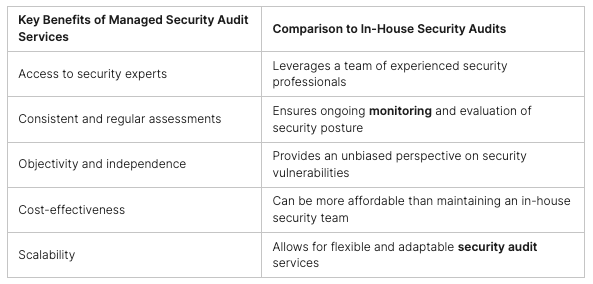
Businesses can get help with managed security audit services from outside experts. These services have many benefits. They include:
Working with a team of skilled security audits experts.
Always check and update your security with frequent security audits.
Getting an outside viewpoint on your security issues.
Saving money compared to having a whole in-house security team.
Changing the number and kind of security audits as needed.
Choosing the right managed security audit service helps companies keep their tech safe. This is especially key for small or mid-sized companies with not much IT staff.
Best Practices for Security Audits
It’s crucial to follow the best practices for the success of security audits. These practices include:
Regular Audits and Monitoring
Companies should regularly check for security gaps. They must keep an eye on their IT setups to catch and fix any problems fast.
Employee Training and Awareness
Teaching workers about security best practices matter a lot. When everyone knows how to keep things safe, risks go down. This especially helps against tricks like social engineering.
Collaboration and Communication
Working together is key for security audits to work well. The IT team, bosses, and others must talk and agree on safety goals. This makes it easier to act on any advice given.
Conclusion | Don’t Settle for Fragile Security – Take Control with BIMA
In today’s ever-evolving digital landscape, cyber threats are a constant concern. Regular security audits are crucial for identifying vulnerabilities before they’re exploited. However, relying solely on audits can leave your business exposed between assessments.
Here’s where BIMA steps in.
BIMA is your comprehensive Cybersecurity-as-a-Service (SecaaS) platform, offering 24/7 protection against even the most sophisticated attacks. Our powerful suite of security tools, combining proprietary and open-source technology with cutting-edge threat intelligence, provides unparalleled security without breaking the bank.
BIMA gives you the power to:
Proactively identify and mitigate risks before they impact your business.
Simplify security management with our user-friendly platform.
Scale your security needs seamlessly, whether you’re a startup or a large enterprise.
Benefit from a pay-as-you-go model, only paying for the services you need.
Don’t wait for the next cyberattack to disrupt your business. Secure your digital world with BIMA today!
A security audit checks how safe and strong the systems are. It looks at an organization’s tech, like its computers and networks. The goal is to find and fix any weak spots that hackers could use.
The audit sees if the organization follows security rules and advice. It also checks to make sure that the systems meet certain standards.
Why are security information audits crucial?
A security audit is important for keeping data safe. It tells an organization if they are meeting important rules. By finding and fixing problems, audits help stop data leaks.
Data leaks can be very expensive and damage an organization’s reputation. Audits also make sure an organization follows the law. Not doing so can lead to big fines and a bad image.
What are the different types of security audits?
There are two main types of security audits. Internal audits are done by the organization itself. External audits are carried out by outside experts.
The type and how often audits happen depend on the organization’s size and its risks. They also follow industry rules.
How should an organization prepare for a security audit?
To get ready for an audit, an organization needs to carefully check its business. They must look at possible weak spots in their tech. This means looking at things like online safety, data privacy, or how apps are secured.
They need to make sure they’re following important rules for sensitive data, like those in HIPAA for health info. And they should gather proof of their rules and past checks. Organizations also need the right tools for the audit, like software that looks for problems in code or watches how users behave.
They should pick a team to work with the auditors. This team should know a lot about the tech and security.
What are the key steps in conducting a security audit?
The process starts with identifying what matters most – an organization’s “crown jewels”. Then, the auditor rates how risky these assets are. They may try out ways to break in, check for weak points, and see if staff can be tricked into giving access.
All these tests help understand how well an organization’s security works. They give insight into what needs to improve.
What happens after the security audit is completed?
After auditing, a detailed report is made by the auditor. It highlights what was looked at, and what was found, and recommends how to be safer.
What are the key areas of focus in a security audit?
A security audit looks at website safety, network protection, and how data is kept private and secure.
What tools and resources are available for security audits?
There are many tools for audits. For example, Intruder finds and reports on security problems. Mozilla’s Observatory checks how safe a website is in detail.
In today’s digital world, knowing about cybersecurity is key to keeping your workplace safe. Every employee needs to learn 5 important cybersecurity lessons. This knowledge helps protect both the employee and the workplace from cyber threats.
As cyber threats grow, employees need to understand the risks. They need to know how to protect themselves and their workplace. This is where learning these 5 cybersecurity lessons comes in. Can your company afford to ignore the need for cybersecurity training?
Key Takeaways
Understanding the importance of 5 cybersecurity lessons every employee must learn is key to safety.
Cybersecurity training for employees is vital to stop cyber threats.
Employees are essential in keeping their organization’s data safe and preventing cyber attacks.
Cyber threats keep changing, so employees must stay alert and informed.
Using best cybersecurity practices can greatly lower the risk of cyber attacks and data breaches.
Understanding the Modern Cybersecurity Landscape
The world of cybersecurity is complex and always changing. New threats pop up every day. It’s key for employees to know about these threats and the dangers of a security breach. By focusing on cybersecurity awareness and employee training, companies can lower the chance of mistakes and boost their security.
Keeping sensitive info safe is a big deal. This can be done by training employees often, using strong access controls, and checking for risks regularly. The cost of security breaches is huge, with global cybercrime costs expected to hit $10.5 trillion by 2025.
Current Cyber Threats in the Workplace
Workplace cyber threats include social engineering attacks. These are common and very dangerous. They use AI and tricks to get employees to share sensitive info. Mistakes by employees are a big reason for security breaches, showing the need for constant training and awareness programs.
By making cybersecurity awareness and employee training a priority, companies can turn their employees into a strong part of their defense. This helps lower the risk of security breaches and keeps sensitive info safe.
The Foundation of Digital Security at Work
It’s vital to understand that over 90% of security breaches come from human mistakes. This shows how important cybersecurity training is. It helps employees know how to spot and handle cyber threats. This way, companies can lower the chance of mistakes and get better at security.
In 2023, 39% of companies said they would spend on training to fight cyber threats. This shows they’re serious about teaching their teams about cybersecurity. Training regularly helps create a security-focused culture. It keeps everyone learning and watching out for threats.
Some main benefits of good cybersecurity training are:
Lowering the chance of mistakes and making security better
Making employees more aware and careful
Building a security-focused culture in the company
By spending on training and boosting awareness, companies can greatly cut down on security risks. This protects their good name and money. It also makes employees feel they’re part of keeping things safe.
Essential Password Management Strategies
Password management is key to keeping your data safe. It’s important for employees to make strong, unique passwords. Using password manager tools helps stop phishing attacks. This way, companies can keep their sensitive information safe from unauthorized access.
Creating Strong, Unique Passwords
A good password should have at least 12 characters. But, making it 14 characters with a mix of letters, numbers, and symbols makes it even stronger. Forrester Research shows that 80% of security breaches happen because of weak passwords. So, it’s vital to protect your passwords well.
Password Manager Tools and Implementation
Tools like 1Password, Dashlane, NordPass, or Bitwarden make password management easier. They automatically create and store strong, unique passwords for each account. These tools help fight phishing attacks and keep your data safe.
Multi-Factor Authentication Basics
Adding multi-factor authentication to your password strategy adds extra security. It helps stop phishing attacks and keeps your data safe. Using password managers and multi-factor authentication protects your passwords. This ensures your data stays secure from cyber threats.
To stop phishing attacks, knowing about cybersecurity is key. Training programs teach employees about different phishing types, like email, smishing, and vishing. Phishing causes 36% of data breaches, making it a big threat.
Companies can lower phishing risks by training their staff well. They should offer courses that fit different learning styles, like hearing, seeing, and doing. This investment can save a lot of money from security issues.
Here are some ways to avoid phishing attacks:
Be careful with emails and attachments from unknown senders
Check if emails and websites are real
Use strong passwords and multi-factor authentication
By using these tips and staying updated on phishing tricks, you can lower your risk. With more cybersecurity jobs coming, it’s vital to focus on awareness and prevention.
5 Cybersecurity Lessons Every Employee Must Learn
To keep an organization’s sensitive info safe, employees need to know about cybersecurity awareness. This includes data protection best practices and ongoing employee training. AI-driven phishing simulations and gamified learning help employees learn to spot and handle threats.
Some key lessons include:
Secure data handling protocols to prevent unauthorized access to sensitive information.
Email security best practices, such as verifying sender addresses and being cautious with attachments.
Safe internet browsing guidelines, including avoiding suspicious websites and using strong passwords.
Mobile device security, such as using encryption and keeping software up-to-date.
By learning and applying these lessons, employees can help protect their organization’s sensitive info. This stops cyber attacks.
Regular cybersecurity awareness training is key. It makes sure employees know how to keep their organization’s info safe. This training can include online modules, workshops, and phishing simulations.
Building a Security-First Mindset
To fight cyber threats, an organization must put security first. This means creating a culture where everyone works to protect the company. Cybersecurity awareness training helps employees spot risks and report problems. This lowers the chance of mistakes and boosts security.
Training and resources for employees can lower cyber attack risks. Key steps include:
Daily security habits, like strong passwords and careful email use
Learning to assess risks and find solutions
Having clear ways to report security issues
These steps help organizations stay safe from cyber threats.
Organizations also need to keep their security plans up to date. Regular training and updates keep everyone alert. By focusing on employee training and awareness, companies can fight off cyber attacks and keep their data safe.
As we move to more remote work, keeping data safe is key. Cybersecurity awareness and employee training are vital. Research shows 86% of business leaders believe data breaches are more common when working from home. This makes it critical for companies to have strict security rules for remote work.
Organizations must regularly train employees on security. This includes teaching them about VPNs and how to protect data from hackers. With the right training, companies can lower the chance of cyber attacks and stay secure.
Some important steps to secure remote work include: Using VPNs to encrypt internet traffic Strong password policies and multi-factor authentication Regular security audits and risk assessments Secure devices and software for employees * Clear plans for handling security incidents
By focusing on cybersecurity awareness and training, companies can keep their remote work safe from cyber threats. This is important for keeping trust and following the law.
Implementing Security Protocols in Team Collaboration
It’s vital to talk about cybersecurity awareness and employee training in team work. Security protocols play a big role here. By training employees well, companies can lower the chance of mistakes and boost their security. This includes safe file sharing, secure communication, and keeping cloud storage safe.
Here are some important steps for setting up security protocols:
Make sure to follow laws like GDPR and HIPAA with cybersecurity awareness training
Use data protection best practices like encryption and access controls to protect sensitive data
Keep giving employee training and updates on security to help them face threats
By focusing on cybersecurity awareness and employee training, teams can make smart choices. They can also take steps to fight cyber threats. This makes the company’s data protection stronger.
Social Engineering Defense Strategies
To stop phishing attacks and boost cybersecurity awareness, it’s key to know the different social engineering attacks. These include phishing, smishing, and vishing. Employees can help protect their company’s sensitive info by knowing these threats. It’s wise to have regular training sessions, ideally every six months, to keep up with new security threats.
Some effective ways to fight social engineering attacks are to be cautious of unexpected info requests and use multi-factor authentication. Keeping devices updated with software patches is also vital, as it fixes vulnerabilities hackers might use. Using password managers can also help create unique passwords for each account, lowering the chance of unauthorized access.
Creating a culture of security awareness, led by senior management, helps everyone feel responsible for cybersecurity. This can be done through training programs that teach employees how to spot and handle social engineering attacks. By doing this, organizations can improve their cybersecurity awareness and stop phishing attacks, keeping their sensitive info safe.
Organizations should watch out for phishing, pretexting, baiting, quid pro quo, and tailgating attacks. By knowing these threats and taking the right steps, organizations can boost their cybersecurity awareness. This helps prevent phishing attacks and keeps their sensitive information safe from cyber threats.
Conclusion: Empowering Your Cybersecurity Journey
Cybersecurity is more than just technology—it’s about knowledge, preparedness, and continuous learning. Building a strong security culture starts with equipping employees with the right skills to identify and respond to threats. Through ongoing cybersecurity awareness training, hands-on exercises, and real-world applications, organizations can significantly reduce human error and strengthen their defenses.
A proactive approach to cybersecurity includes not only best practices like strong password management, multi-factor authentication, and timely software updates but also ensuring employees can recognize threats like phishing and social engineering attacks. By making security education a priority, businesses can foster a culture of resilience and preparedness against evolving cyber threats.
Take your cybersecurity skills to the next level with Peris.ai Ganesha—our hands-on training solution designed to bridge the gap between theory and real-world application. Visit Peris.ai to explore our expert-led training programs and start securing your digital future today.
FAQ
What are the 5 cybersecurity lessons every employee must learn to protect their organization’s sensitive information?
Employees need to learn about secure data handling, email security, and safe browsing. They should also know how to protect mobile devices and manage passwords. This helps prevent phishing and keeps sensitive info safe.
Why is cybersecurity awareness and employee training essential for organizations to stay ahead of cyber threats?
Cybersecurity training helps reduce human error and boosts security. Every employee is key in protecting sensitive info and stopping cyber attacks.
How can organizations implement secure password management strategies to prevent phishing attacks?
Organizations should train employees to create strong, unique passwords. They should use password managers and multi-factor authentication. This adds security to password management.
What are some common types of phishing attacks that employees should be aware of to prevent cyber attacks?
Employees need to know about email phishing, smishing, and vishing. They should learn how to spot and handle these attacks. This helps protect sensitive info and company assets.
How can organizations build a security-first mindset to stay ahead of cyber threats?
Organizations should foster a security culture. They should empower employees to protect company assets. Providing training and resources helps develop security habits and skills.
What are some best practices for securing remote work environments to prevent cyber attacks?
Use VPNs and access public Wi-Fi safely. Protect remote work from cyber threats. Train employees to use these security measures effectively.
How can organizations implement security protocols in team collaboration to prevent cyber attacks?
Provide training on secure file sharing and communication platform security. Promote a culture of security awareness. This helps protect team collaboration from cyber threats.
What are some social engineering defense strategies that organizations can use to prevent phishing attacks?
Educate employees on phishing recognition and response. This helps prevent unauthorized access and protects assets. Promote a culture of cybersecurity awareness.
Why is it essential for organizations to provide employees with regular cybersecurity awareness training programs?
Regular training educates employees on handling sensitive info and safe internet use. It promotes a culture of security awareness. This protects against cyber threats.
In our digital-first world, the threat of cyberattacks is more prevalent than ever. To combat this growing threat, businesses must emphasize the importance of IT hygiene—a cornerstone in safeguarding systems and data. Adopting proactive security measures is not just a best practice; it’s essential for maintaining the resilience and continuity of any organization.
Crafting a Cybersecurity Playbook
A well-structured cybersecurity playbook is indispensable. It should outline specific protocols for different types of cyber incidents, including clear steps for containment, eradication, and recovery. This guide should also contain essential contact information for rapid response and instructions for documenting incident details. Keeping this playbook updated and accessible ensures that your team can act swiftly and effectively in the face of a cyberattack.
Prioritizing Strong IT Hygiene Practices
Robust IT hygiene involves more than just regular password updates:
System Updates: Regularly apply patches and updates to all systems to close security loopholes.
Vulnerability Assessments: Routinely evaluate your IT infrastructure to identify and mitigate potential vulnerabilities.
Secure Configurations: Ensure that all system configurations adhere to the highest security standards to avoid exploitable weaknesses.
Engaging with Law Enforcement
Developing relationships with local and national law enforcement agencies can provide critical support during cyber incidents. These partnerships can offer valuable resources for incident investigation and recovery, enhancing your overall response strategy.
Training Staff on Cybersecurity Awareness
Employee education is critical:
Phishing Training: Regularly train employees to identify and respond appropriately to phishing attempts and other social engineering attacks.
Suspicious Activity Reporting: Encourage a culture where employees feel comfortable reporting suspicious activities without fear of reprisal.
Fortifying Against Financial Fraud
Financial systems are prime targets for cybercriminals. Strengthening these systems involves:
Transaction Security: Implement robust security measures for all financial transactions.
Audit and Monitoring: Continuously monitor financial activities and conduct regular audits to detect and respond to irregularities promptly.
️ Being Proactive with Cybersecurity
The best defense against cyber threats is a proactive approach. By maintaining excellent IT hygiene, regularly updating your cybersecurity playbook, and fostering a culture of security awareness, your business can defend against and mitigate the effects of cyberattacks.
For more insights into effective cybersecurity strategies and to discover how Peris.ai can enhance your organization’s defenses, visit our website at peris.ai.
Stay proactive, stay secure.
Your Peris.ai Cybersecurity Team #YouBuild #WeGuard
Cyberattacks are becoming more frequent and increasingly costly. According to Cybersecurity Ventures, the global cost of cybercrime is expected to soar from $3 trillion in 2015 to $10.5 trillion annually by 2025. This astronomical figure underscores the sophisticated methods that cybercriminals have developed to execute their malicious endeavors successfully.
The Multifaceted Financial Impact of Cyberattacks
While direct expenses such as ransomware payments and data recovery are often the focus, the actual cost of a cyberattack extends far beyond these immediate financial outlays. The repercussions can be severe and multifaceted for businesses, particularly those in critical sectors like finance, healthcare, and transportation. Here’s a breakdown of some of the hidden costs:
Revenue Loss: Operational disruptions can lead to significant financial losses. Downtime prevents transactions and impacts service delivery, affecting sales and eroding customer trust and loyalty over time.
Strained Relationships: Cyberattacks can damage relationships with customers and suppliers, potentially leading to long-term reputational harm and lost business opportunities.
Regulatory Fines and Increased Insurance Premiums: Non-compliance with regulations such as GDPR and CCPA can result in hefty fines. Moreover, businesses that fall victim to cyberattacks often face higher insurance premiums as their risk profile increases.
Understanding and Mitigating Vulnerabilities
A substantial portion of cyber vulnerabilities can be attributed to human error. A study by Stanford University found that employee mistakes cause 88% of data breaches. Cybercriminals exploit these weaknesses by crafting emails and messages and manipulating human emotions to provoke actions that breach security protocols.
However, technological gaps also play a significant role. Organizations rely heavily on firewalls, antivirus software, and intrusion detection systems. While these tools are vital, over-dependence on them can create a false sense of security. Cybercriminals continually evolve their tactics to bypass these defenses, necessitating a more comprehensive approach to cybersecurity.
A Multi-Pronged Approach to Enhancing Digital Defense
To effectively counteract these threats, organizations must adopt a layered security strategy that includes:
Technological Upgrades: Regular updates and patches are crucial to address security vulnerabilities in software and systems.
Employee Education: Training employees to recognize phishing attempts and understand the importance of security practices is critical.
Regular Security Audits and Penetration Testing: These measures help identify potential weaknesses before attackers can exploit them.
Advanced Threat Detection Systems: Implementing cutting-edge solutions can help quickly identify and mitigate threats.
The Role of Individuals in Cybersecurity
Beyond organizational and national efforts, individuals have a crucial role in maintaining cybersecurity. Regularly updating personal cybersecurity knowledge and practices can help safeguard personal information and contribute to broader digital ecosystem security.
Stay Protected with Peris.ai Cybersecurity
In the face of these growing threats, staying informed and prepared is essential. Peris.ai Cybersecurity is dedicated to providing the latest information and tools to protect against sophisticated cyber threats. Visit our website for more detailed guides on maintaining cybersecurity hygiene and keeping up with the latest in cyber threat defense.
Secure your digital presence and enhance your cybersecurity knowledge with Peris.ai Cybersecurity—your shield in the cyber world.
In the rapidly evolving landscape of cybersecurity, organizations are continually searching for the best solutions to protect their data and assets. Two prominent contenders in this field are Endpoint Detection and Response (EDR) and Extended Detection and Response (XDR). While both offer robust threat detection and response capabilities, they differ in several key aspects. This article will explore the differences between EDR and XDR, as well as Network Detection and Response (NDR), to help you understand which solution offers the best protection for your network.
Key Takeaways:
EDR and XDR are both powerful cybersecurity solutions.
EDR focuses on securing individual endpoints, providing detailed visibility into endpoint activity.
XDR takes a holistic approach, integrating data from multiple sources to provide a comprehensive view of the organization’s security posture.
The choice between EDR and XDR depends on the organization’s specific needs and security posture.
EDR: Focus on the Endpoint
Endpoint Detection and Response (EDR) solutions are designed to prioritize the security of individual endpoints, such as laptops, desktops, and servers. These solutions offer comprehensive visibility into endpoint activity, allowing security teams to closely monitor and analyze various aspects, including process execution, network connections, and file access. With this granular level of insight, organizations can swiftly and effectively detect and respond to potential threats.
One of the key advantages of EDR is its deep visibility into endpoint activity. By continuously monitoring endpoint behavior, EDR tools can identify anomalies and suspicious activities in real-time, enabling timely threat detection and response. This proactive approach helps prevent security incidents from escalating and minimizes the potential damage caused by malicious actors.
EDR solutions not only provide visibility but also offer rapid threat detection and response capabilities. Through advanced detection mechanisms and analytics, these tools can quickly identify indicators of compromise and potential security breaches, ensuring that immediate action can be taken to mitigate the risks involved. With EDR, organizations can enhance their incident response capabilities and speed up the resolution process.
Automated incident response is another significant advantage of EDR solutions. By automating routine tasks and response actions, security teams can streamline their operations, enhance efficiency, and reduce human error. This automation ensures that potential threats are promptly addressed, allowing security personnel to focus on more critical and complex security issues.
Overall, EDR solutions offer a powerful and specialized approach to endpoint security. With their deep visibility, rapid threat detection and response, and automated incident response, EDR tools prove invaluable for organizations managing a large number of endpoints.
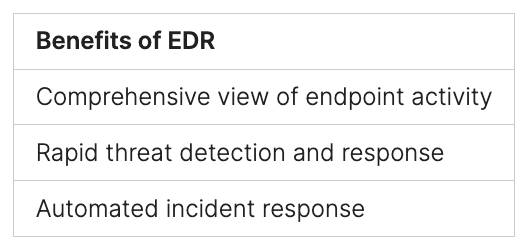
Key Features of EDR
Comprehensive visibility into endpoint activity
Rapid threat detection and response capabilities
Automated incident response
XDR: A Unified Approach
XDR (Extended Detection and Response) takes a holistic approach to security by integrating data from multiple sources, such as endpoints, networks, cloud workloads, and email. This unified platform provides a comprehensive view of the organization’s security posture across the entire IT environment, allowing for more effective threat detection and response.
Unlike traditional security solutions that focus on individual components, XDR breaks down security silos and correlates data from various sources. By analyzing and correlating data from endpoints, networks, and other sources, XDR can detect threats that may go unnoticed by individual security tools. This comprehensive and unified approach maximizes the organization’s ability to identify and respond to potential security incidents.
XDR also simplifies security operations by providing a single platform for managing all security data and activities. This centralized approach streamlines the security workflow, reduces the complexity of managing multiple tools, and improves overall efficiency.
By implementing XDR, organizations can improve their security posture by gaining a deeper understanding of their network’s vulnerabilities, identifying potential threats faster, and responding more effectively. This proactive approach to security helps organizations stay one step ahead of cyber threats and mitigate risks more efficiently.
The Benefits of XDR
XDR offers several key benefits for organizations looking to enhance their threat detection capabilities and strengthen their security posture:
Improved Threat Detection: By correlating data from multiple sources, XDR provides a more comprehensive view of potential threats, allowing organizations to detect and respond to security incidents more effectively.
Reduced Security Silos: XDR breaks down the barriers between different security tools and data sources, enabling a more coordinated and integrated approach to security.
Simplified Security Operations: With a central platform for managing security activities, XDR simplifies the management and orchestration of security processes, reducing complexity and improving operational efficiency.
XDR vs. EDR: A Comparison
To better understand the benefits of XDR, it is important to compare it to Endpoint Detection and Response (EDR), a widely adopted security solution. While EDR focuses on securing individual endpoints, XDR takes a broader and more integrated approach to threat detection and response.
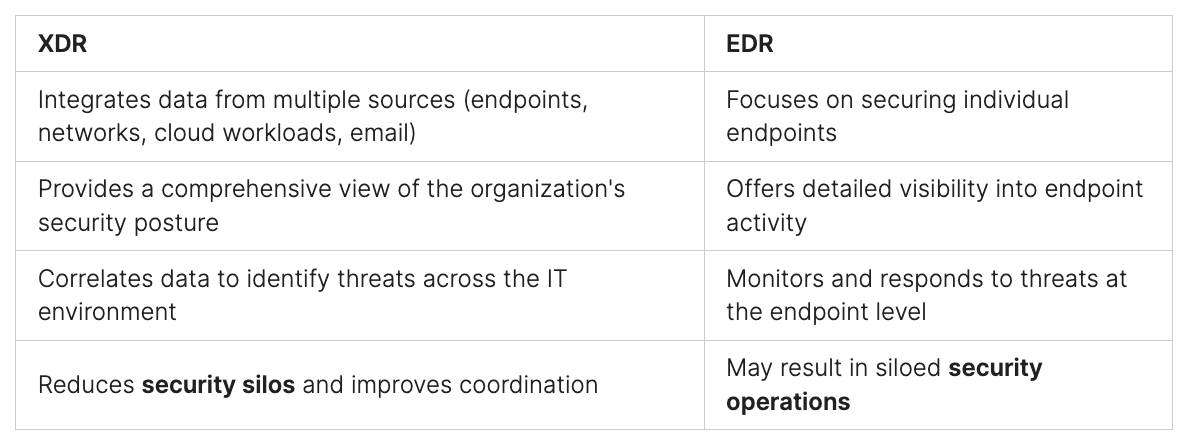
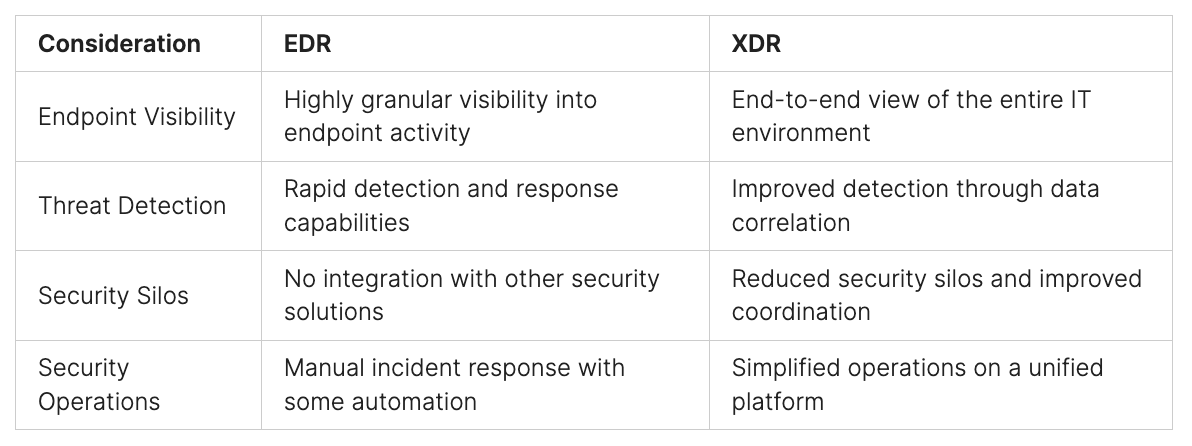
Here is a comparison of XDR and EDR in terms of their core features:
As the table illustrates, XDR provides a more comprehensive and integrated approach to security by incorporating data from various sources. This broader scope improves threat detection capabilities and reduces security silos.
Benefits of EDR
EDR solutions offer several key benefits that enhance the cybersecurity posture of organizations. By providing a comprehensive view of endpoint activity, EDR enables security teams to gain deep insights into the behavior of individual endpoints. This level of visibility makes it easier to detect anomalous activity and identify potential threats.
With EDR, organizations can quickly and effectively respond to incidents, minimizing the potential damage caused by cyberattacks. The rapid threat detection capabilities of EDR solutions enable security teams to stay one step ahead of malicious actors, proactively mitigating potential risks.
Automated incident response is another significant advantage of EDR. By automating routine tasks, such as isolating compromised endpoints or blocking malicious processes, EDR tools free up valuable time for security teams. This allows them to focus on more strategic and higher-value activities, such as threat hunting and analysis.
“EDR solutions provide comprehensive visibility into endpoint activity, enabling faster threat detection and response.”
Overall, EDR solutions play a critical role in bolstering an organization’s cybersecurity defenses. By offering detailed endpoint activity visibility, rapid threat detection, and automated incident response capabilities, EDR empowers organizations to proactively protect their networks and minimize the impact of security incidents.
Benefits of XDR
Extended Detection and Response (XDR) offers a range of benefits that significantly enhance an organization’s threat detection capabilities, streamline security operations, and break down security silos. By correlating data from multiple sources, XDR provides a more comprehensive view of potential threats, enabling a quicker and more effective response. Here are the key advantages of implementing XDR:
Improved Threat Detection: XDR leverages data from endpoints, networks, cloud workloads, and email to identify threats that may go unnoticed by individual security solutions. By analyzing and correlating data from multiple sources, XDR offers enhanced detection capabilities, enabling proactive threat hunting and rapid incident response.
Reduced Security Silos: Traditional security solutions often operate in silos, making it challenging for security teams to gain a comprehensive view of the threat landscape. XDR breaks down these silos by integrating data from various sources into a unified platform. This integrated approach empowers security teams to identify patterns and trends across the entire IT environment, improving their understanding of potential threats and enabling a more coordinated and effective response.
Simplified Security Operations: Managing security operations can be complex and time-consuming when dealing with multiple security tools and platforms. XDR simplifies security operations by providing a single platform for managing all security data and activities. This centralized approach streamlines workflows, eliminates duplicate efforts, and enables efficient collaboration between security teams, resulting in improved productivity and reduced operational costs.
Implementing XDR allows organizations to take a proactive stance against cyber threats, leveraging comprehensive threat detection capabilities, breaking down security silos, and simplifying security operations. By investing in XDR, organizations can elevate their security postures and stay one step ahead of evolving threats.
Which is Better: EDR or XDR?
The decision of whether EDR or XDR is the better cybersecurity solution depends on an organization’s specific needs and security posture. Both EDR and XDR offer unique capabilities that cater to different requirements.
EDR:
EDR, or Endpoint Detection and Response, is an ideal choice for organizations that manage a large number of endpoints and require detailed visibility into endpoint activity. EDR solutions provide a granular level of insight into processes, network connections, and file access on individual endpoints. This enhanced visibility enables security teams to quickly detect and respond to threats. With automated incident response capabilities, EDR tools streamline the management of security incidents and free up valuable time for security personnel.
XDR:
XDR, or Extended Detection and Response, takes a more holistic approach to cybersecurity. It integrates data from multiple sources, including endpoints, networks, cloud workloads, and email, providing a comprehensive view of an organization’s security posture. XDR offers improved threat detection by correlating data from various sources, which can uncover threats that may have been missed by individual security solutions. Additionally, XDR reduces security silos and simplifies security operations by consolidating security data and activities onto a single platform.
The Future of Cybersecurity
As organizations navigate the ever-evolving landscape of cybersecurity, the need for effective threat detection and response is paramount. Endpoint Detection and Response (EDR) and Extended Detection and Response (XDR) have emerged as powerful solutions in combating cybercrime. While both EDR and XDR offer valuable features, XDR represents the future of cybersecurity with its unified approach and improved security posture.
EDR focuses on securing individual endpoints, providing in-depth visibility into endpoint activity for threat detection and response. While EDR solutions excel in endpoint protection, their limited scope may lead to security gaps in complex IT environments.
XDR, on the other hand, takes a holistic approach to security by integrating data from multiple sources such as endpoints, networks, cloud workloads, and email. This unified platform offers a comprehensive view of an organization’s security posture, enabling improved threat detection and a more coordinated response to emerging threats.
By correlating data across different sources, XDR eliminates security silos and provides a single platform for managing all security activities. As organizations embrace XDR solutions, we can anticipate a significant enhancement in their overall security posture.
“The integration capabilities of XDR are key in taking cybersecurity to the next level. By breaking down silos and fostering collaboration among security tools, XDR enables organizations to stay one step ahead of sophisticated threats.”
With the ever-increasing sophistication of cyber threats, a unified approach like XDR offers unparalleled visibility and protection. By leveraging the power of XDR, organizations can proactively defend against advanced attacks and strengthen their security defenses across the entire IT infrastructure.
Benefits of XDR:
Improved threat detection through correlation of data from multiple sources
Reduced security silos for a more coordinated response to threats
Simplified security operations with a single platform for managing all security activities
Organizations that prioritize a unified approach and an improved security posture should consider adopting XDR as their cybersecurity solution of choice.
Additional Factors to Consider
When choosing between EDR and XDR, there are several additional factors to consider. These factors can help organizations make an informed decision based on their specific needs and requirements. Take a closer look at the following considerations:
Cost
XDR solutions often come with additional features and functionality, which can make them more expensive than EDR solutions. Organizations should carefully evaluate their budget and determine the level of investment they are willing to make in their cybersecurity solution.
Security Expertise
Implementing and managing an XDR solution requires more security expertise compared to EDR. Organizations should assess their internal resources and determine if they have the necessary skills and knowledge to effectively handle an XDR solution. If not, they may need to consider hiring external security experts or seeking assistance from trusted cybersecurity providers.
Integration
Integration with other security tools in the organization’s environment is a vital consideration. EDR and XDR solutions should seamlessly integrate with existing security infrastructure to ensure a cohesive and effective defense strategy. Organizations should verify compatibility and ensure that the chosen solution can integrate smoothly with their current security stack.
Organization’s Specific Needs
Every organization has unique security requirements. It is essential to carefully evaluate these needs before making a decision between EDR and XDR. Consider factors such as the size of the organization, the complexity of the IT environment, and the level of threat exposure. Each solution offers different capabilities, and organizations should choose the one that aligns best with their specific needs and addresses their most critical security challenges.
By considering these additional factors, organizations can make an informed decision about whether EDR or XDR is the best fit for their cybersecurity strategy. It’s crucial to find the right balance between cost-effectiveness, security expertise, integration capabilities, and meeting the organization’s specific needs.
Conclusion
In conclusion, both EDR and XDR are powerful tools that can play a vital role in an organization’s cybersecurity strategy. EDR offers detailed visibility into endpoint activity and rapid threat detection and response capabilities, making it a suitable choice for organizations with a large number of endpoints to manage. XDR, on the other hand, offers a more comprehensive and unified approach to security, providing improved threat detection, reduced security silos, and simplified security operations. The choice between EDR and XDR depends on the organization’s specific needs and security posture.
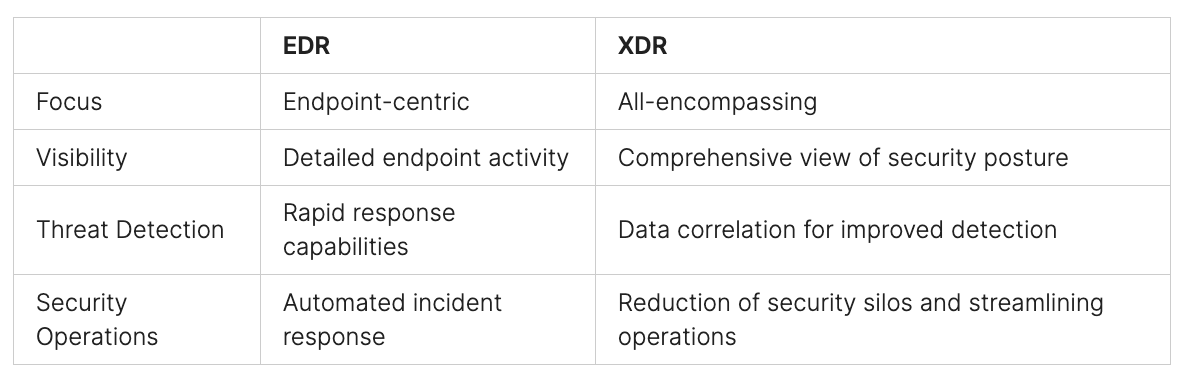
Comparative Analysis: EDR vs. XDR
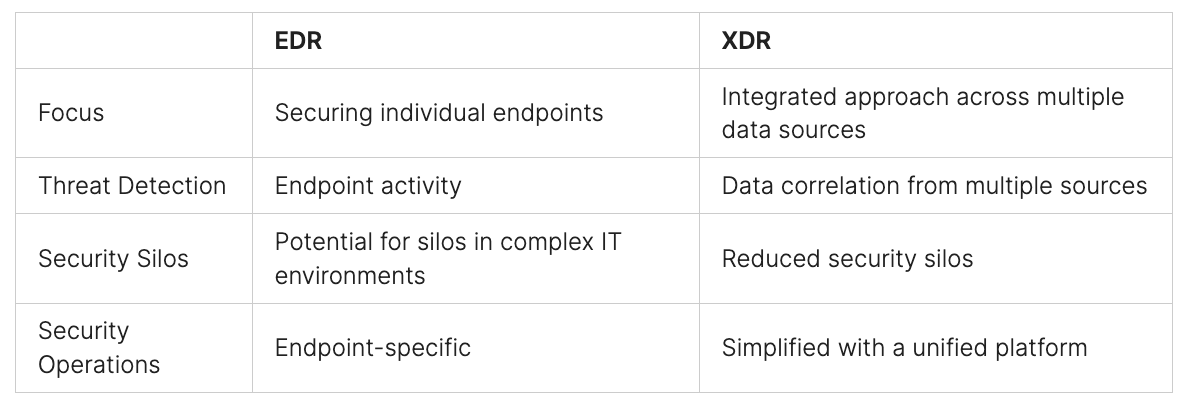
Based on this comparison, EDR excels in providing detailed visibility into endpoint activity and offering rapid threat detection and response capabilities. On the other hand, XDR goes beyond individual endpoints and provides a comprehensive view of the entire IT environment, enabling improved threat detection, reduced security silos, and simplified security operations.
EDR focuses on securing individual endpoints, while XDR takes a more holistic approach by integrating data from multiple sources. This comprehensive approach offered by XDR can detect threats that might be missed by EDR solutions, making it an increasingly attractive choice for organizations.
When selecting between EDR and XDR, organizations should assess their specific needs, IT environment complexity, and desired level of security. Ultimately, the right choice will depend on achieving a comprehensive approach to cybersecurity and comprehensive detection of threats across the organization.
Do You Need Expert Advice?
If you’re uncertain about which cybersecurity solution is best for your business, don’t worry. The Peris.ai Cybersecurity team is here to help you make an informed decision based on your specific needs and requirements. With our expert advice, you can find the perfect cybersecurity solution that offers the optimal level of protection for your business.
Book a call with Peris.ai Cybersecurity today to consult with our professionals. We’ll provide you with guidance and insights to ensure you choose the best cybersecurity solution that is tailored to your business needs. With our expertise, you can navigate through the complex landscape of cybersecurity and implement the solution that’s best for your business.
The Importance of Choosing the Right Cybersecurity Solution
Ensuring the protection of your network and critical data is paramount in today’s digital landscape. With various cybersecurity solutions available, selecting the right one can make all the difference. As you navigate through the options, it is crucial to understand the differences between EDR, NDR, and XDR, and assess your organization’s specific needs.
Endpoint Detection and Response (EDR) focuses on securing individual endpoints, offering detailed visibility into endpoint activity and rapid threat detection and response capabilities. Network Detection and Response (NDR) focuses on monitoring and analyzing network traffic to identify and respond to potential threats. Extended Detection and Response (XDR) takes a more holistic approach, integrating data from multiple sources to provide a comprehensive view of your organization’s security posture.
By evaluating your organization’s specific needs and considering the unique benefits and capabilities of EDR, NDR, and XDR, you can make an informed decision. Protecting your network and critical data requires a cybersecurity solution that aligns with your requirements, ensuring optimal security and peace of mind.
FAQ
What is Endpoint Detection and Response (EDR)?
EDR solutions focus on securing individual endpoints such as laptops, desktops, and servers, providing detailed visibility into endpoint activity, threat detection, and incident response capabilities.
What is Extended Detection and Response (XDR)?
XDR takes a holistic approach to security by integrating data from multiple sources, offering improved threat detection, reduced security silos, and simplified security operations across the entire IT environment.
How does EDR differ from Network Detection and Response (NDR)?
EDR focuses on securing individual endpoints, while NDR focuses on detecting and responding to threats within the network infrastructure.
What are the benefits of EDR?
EDR provides in-depth visibility into endpoint activity, rapid threat detection and response capabilities, and automated incident response, enhancing an organization’s security posture.
What are the benefits of XDR?
XDR offers improved threat detection by correlating data from multiple sources, reduces security silos, and simplifies security operations by providing a unified platform for managing all security data and activities.
Which is better, EDR or XDR?
The choice between EDR and XDR depends on an organization’s specific needs and security posture. EDR is suitable for organizations with a large number of endpoints, while XDR is ideal for those with a complex IT environment.
What is the future of cybersecurity?
XDR represents the future of cybersecurity, offering a unified and comprehensive approach to threat detection and response, improving overall security posture.
What additional factors should be considered when choosing between EDR and XDR?
Factors such as cost, security expertise, and integration with existing security tools should be considered when choosing between EDR and XDR.
How important is it to choose the right cybersecurity solution?
Choosing the right cybersecurity solution is crucial to ensure the protection of your network and critical data.
The digital world is always changing, with new threats popping up all the time. This is why strong cybersecurity is crucial to protect important info and keep systems safe. At the front line of defense are Security Operations Centers (SOCs) and Penetration Testers (Pentesters). They work together to fight cyber threats. SOCs keep an eye on network activities, ready to act on any strange behavior. Pentesters, on the other hand, look at security from a hacker’s perspective. They find weak spots that could be attacked. Their teamwork makes our cyber defenses solid, both reactive and strategic.
Cyber threats are getting more complex. So, the partnership between SOCs and Pentesters is more important than ever. SOCs watch over networks, while Pentesters test defenses by mimicking real-life cyber attacks. This combination makes for a defense system that’s not just tough, but also quick to adapt to new threats.
This partnership between monitoring and testing is key to staying one step ahead of cyber attacks. It gives organizations the chance to be ready for whatever comes their way. In a world where digital security experts and ethical hackers work together, cybersecurity goes beyond the usual methods. It offers a smarter way to keep the digital world safe.
Key Takeaways
Security Operations Centers (SOCs) provide continuous monitoring and incident detection, essential for spotting and responding to threats.
Penetration Testers (Pentesters) proactively uncover vulnerabilities, simulating the tactics of cybercriminals to bolster defenses.
The collaboration between SOCs and Pentesters encapsulates the balance of proactive and reactive cybersecurity measures.
Evolving cyber threats necessitate the blend of monitoring and testing to create a comprehensive reactive and strategic cyber defense.
The partnership of SOCs and Pentesters exemplifies the synergy required to navigate and mitigate complex cybersecurity challenges.
Understanding the Cybersecurity Landscape and the Rise of SOCs and Pentesters
The Cybersecurity Landscape is fast changing. Now more than ever, SOCs and Pentesters play a key role. They help fight the Complexity of Cyber Threats we see worldwide today. As hackers get smarter, it’s clear we need methods that are always alert and steps ahead. These include Continuous Monitoring and Penetration Testing.
The Increasing Complexity of Cyber Threats
Cyber threats are getting more complex. Bad actors use advanced methods to find and exploit weaknesses. This complexity means old-school security isn’t enough. Pentesters are crucial because they test our systems like hackers. This way, they find problems before real hackers can.
The Critical Role of SOCs in Continuous Monitoring
Continuous Monitoring is key in fighting cybercrime. SOCs lead this charge by watching over networks all the time. They quickly deal with any security issues. This constant vigilance and fast action help keep our digital world safe.
Penetration Testing: Going Beyond Detection with Proactive Measures
Beating cybercriminals means being proactive. That’s where Penetration Testing comes in. It tests our defenses thoroughly. This helps make our security stronger and stops breaches before they happen.
Unpacking the Functions of a Security Operations Center (SOC)
Security Operations Centers (SOCs) are vital for cyber safety in companies. They work tirelessly to keep network systems safe and secure. The main tasks of a SOC involve many steps, where being skilled in Network Defense and Incident Response is key. These skills help protect important systems.
Navigating Through Network Defense and Incident Response
Network Defense is at the heart of SOC activities. It covers watching for, finding, and stopping cyber threats. Incident Response is about the steps taken after a security problem happens. It aims to limit damage and get systems working normally again. These tasks are crucial for guarding organizations against online dangers.
The Challenge of Alert Fatigue: Seeking Accuracy and Efficiency
As cyber threats grow more complex, SOCs face a flood of security alerts. This can cause alert fatigue. This happens when too many alerts make it hard to spot the real threats. Handling these alerts with high efficiency and accuracy is vital. It ensures that actual threats get the attention they need and false alarms are kept low.
The Dynamic World of Penetration Testing as a Service (PTaaS)
In our fast-paced digital age, Penetration Testing as a Service (PTaaS) is key in protecting businesses. PTaaS is more than a service. It is a strategy that thrives in a Dynamic World. This world needs fast action against cyber threats. For those wanting to Fortify Defenses, PTaaS offers a vital resource. It is crafted by experts using a Hacker Approach.
Embracing the Hacker Approach to Fortify Defenses
With a Hacker Approach, Penetration Testing as a Service uses proven tactics to find and fix security holes. This method involves thinking like the enemy to stop attacks before they occur. It gives firms a chance to keep strengthening their cyber defenses.
Continuous Improvement in the SDLC: The Role of PTaaS in Development
In software creation, PTaaS is vital for Continuous Improvement in the Software Development Life Cycle (SDLC). Adding it to the SDLC, developers can correct security problems early. They also build in safety features at every Development step. So, security becomes a built-in part of making software, not an afterthought.
Adding PTaaS to the development process lowers risks and prepares software for present and future cyber threats. Simply put, Penetration Testing as a Service is necessary in a Dynamic World. In this world, digital safety is crucial for ongoing business and trust.
How SOCs and Pentesters Complement Each Other in Cyber Defense!
Cyber defense is like a complex puzzle. In that puzzle, Security Operations Centers (SOCs) and Pentesters are crucial pieces. They work together to protect against cyber threats. SOCs watch for threats and analyze incidents in real time. Meanwhile, Pentesters look for weaknesses the bad guys could use.
Let’s dive deeper into how SOCs and Pentesters work together. SOCs use tools to stop cyberattacks and keep a constant watch. At the same time, Pentesters test the defenses like attackers would, to find weak spots.
This teamwork strengthens security. When Pentesters find security holes, SOCs fix them. This creates a cycle of constant improvement. It’s like a dance between attack and defense. This approach keeps defenses strong and proactive.
Now, let’s explore what SOCs and Pentesters specifically bring to the table:
Threat Intelligence: Pentesters’ findings help SOCs understand and stop potential attacks.
Incident Response: If Pentesters spot a breach risk, SOCs can react faster and better.
Security Posture: With Pentesters’ input, SOCs ensure the defenses stay strong and current.
Policy and Compliance: Pentesters’ risk assessments help SOCs keep policies up to date.
Below is a brief comparison of how SOCs and Pentesters enhance cyber defense:
To sum up, SOCs and Pentesters crucially support each other. Their joint work is key to a dynamic defense. This defense can keep up with and fight off the changing dangers of cyber threats.
Blending the Strengths of Defensive and Offensive Cybersecurity Strategies
Today, cyber threats change faster than ever. A strong plan that mixes defensive cybersecurity strategies and offensive cybersecurity strategies is critical. By mixing these two, organizations can be quick and flexible in their cybersecurity stance. This method, called synchronized defense, uses the best of both defense and attack tactics for full security.
Creating a Synchronized Defense with Blue and Red Team Efforts
Modern cybersecurity needs teams to work together. The Blue Team works on defensive cybersecurity strategies. They strengthen defenses, assess risks, and watch for threats. The Red Team, on the other hand, uses offensive cybersecurity strategies. They simulate attacks, a method known as adversary simulation, to see if the defenses hold up. Their teamwork leads to constant learning and stronger defense against attacks.
Adversary Simulation and the Importance of Threat Intelligence in Cybersecurity
The Red Team’s adversary simulation is vital. It tests how well an organization can handle an attack. These tests also bring valuable insights for threat intelligence. Understanding the enemy’s moves is key. It helps predict and prepare for real attacks. With this knowledge, defenses can match real threats, not just guesses. It makes for a smarter, more focused defense plan.
Mixing defensive and offensive strategies makes cybersecurity stronger. Blue and Red teams work together for a defense that keeps up with threats. They use real-time data and simulations. This makes sure the defense is always ready and up-to-date with the latest threats.
Conclusion
In today’s rapidly evolving digital landscape, the significance of robust cybersecurity defenses cannot be overstated. Security Operations Centers (SOCs) and Penetration Testers (Pentesters) are integral to establishing a secure cyber environment. SOCs vigilantly monitor networks around the clock, swiftly identifying and addressing any security threats. Meanwhile, Pentesters proactively challenge these systems by simulating attacks, identifying vulnerabilities before they can be exploited by malicious actors. Together, these teams create a formidable force, ensuring comprehensive cybersecurity coverage.
The synergy between SOCs and Pentesters enhances an organization’s cybersecurity framework significantly. While SOCs provide the necessary shield, monitoring threats in real-time, Pentesters act as the sword, testing and strengthening defenses. This dynamic interplay not only bolsters security measures but also fosters a culture of continuous improvement and adaptation within cybersecurity practices, leading to stronger and more resilient defenses.
For organizations aiming to secure their operations against the spectrum of digital threats, integrating both SOCs and Pentesters into their cybersecurity strategy is essential. This dual approach ensures not just detection but also prevention, offering a well-rounded defense mechanism that is critical in today’s cyber context.
To ensure your organization is equipped to face these challenges, consider exploring Peris.ai Cybersecurity’s comprehensive solutions. With our SOC 24/7 services part of Peris.ai Bima, and on-demand Penetration Testing from Peris.ai Pandava, we provide the tools you need to maintain vigilance and proactively strengthen your defenses. Visit Peris.ai Bima SOC 24/7 and Peris.ai Pandava Penetration Testing to learn how our dedicated teams of SOCs and Pentesters can safeguard your digital assets and help secure your future in the cyber world.
FAQ
How do Security Operations Centers (SOCs) and Pentesters work together?
SOCS keep an eye on security all the time. They watch for and analyze security problems. Pentesters, on the other hand, look for weak spots on purpose to make defenses stronger.
What is the role of a Security Operations Center (SOC)?
A SOC manages network safety and handles incidents. They’re crucial for quick and right actions against security issues. They make sure alerts on security are dealt with properly.
How does Pentest as a Service (PTaaS) fortify defenses?
PTaaS takes a hacker’s view to spot and attack weak points. This helps firms up security. It’s part of making software safer right from its creation.
How do SOCs and Pentesters collaborate to strengthen cyber defense?
SOCS and Pentesters team up to bulk up a company’s cyber safety. This teamwork leads to better threat spotting and fixing. It also points out security holes to be covered.
How do defensive and offensive cybersecurity strategies complement each other?
Mixing defense and offense in cyber safety means stronger security. The Blue and Red Teams work together to find and seal security gaps. Using simulated attacks and intel about threats, they boost protection.
Ensuring robust cybersecurity has become critical for businesses across all scales. As cyber threats continue to grow in complexity, organizations face an increasing need to adopt proactive measures to protect their sensitive data and valuable assets from malicious actors. Ethical hacking stands out as a powerful ally for companies aiming to assess and fortify their security measures among the arsenal of effective cybersecurity methods available. Also known as penetration testing, ethical hacking involves a controlled and lawful simulation of cyber-attacks on a company’s systems to uncover vulnerabilities and weaknesses. This comprehensive article delves into ethical hacking, exploring its fundamental concepts, highlighting its invaluable benefits, and illustrating how businesses can harness its potential to fortify their cybersecurity posture.
1. Understanding Ethical Hacking
Ethical hacking involves employing skilled professionals, known as ethical hackers or white-hat hackers, to simulate cyber-attacks on a company’s IT infrastructure, applications, and networks. The goal is to identify potential vulnerabilities that malicious hackers could exploit. Unlike malicious hacking, ethical hacking is conducted with the explicit consent of the organization being tested and strictly adheres to legal and ethical guidelines.
2. The Importance of Ethical Hacking for Companies
2.1 Identifying Vulnerabilities
With the rapidly evolving threat landscape, new vulnerabilities are constantly being discovered. Ethical hacking helps businesses stay ahead by proactively identifying these vulnerabilities before malicious actors can exploit them. This process allows companies to patch or mitigate vulnerabilities promptly, reducing the risk of a successful cyber-attack.
2.2 Compliance Requirements
Many industries and regulatory bodies mandate regular security assessments and penetration testing to ensure compliance with data protection laws. Ethical hacking helps businesses meet these requirements and demonstrate their commitment to safeguarding customer data and sensitive information.
2.3 Protecting Reputation
A single cyber-attack can have devastating consequences for a company’s reputation. Customers, partners, and stakeholders trust organizations to protect their data. Ethical hacking helps companies build and maintain this trust by demonstrating a proactive approach to cybersecurity.
3. Conducting Ethical Hacking in Your Organization
3.1 Define Objectives and Scope
Before commencing any ethical hacking activity, it’s essential to establish clear objectives and scope. Determine the specific systems, networks, and applications to be tested, and outline the goals of the assessment. A well-defined scope ensures that ethical hackers focus on areas critical to your organization’s security.
3.2 Assemble a Skilled Team
Ethical hacking requires a team of skilled professionals with expertise in different areas of cybersecurity. Depending on the complexity of your organization’s infrastructure, you may need experts in network security, application security, cryptography, and more. Additionally, the team should include certified ethical hackers who understand ethical hacking methodologies and abide by industry best practices.
3.3 Conduct a Vulnerability Assessment
Ethical hacking typically begins with a vulnerability assessment to identify potential weak points in the organization’s systems. This phase involves scanning networks and applications, using automated tools to discover common vulnerabilities. It provides a starting point for ethical hackers to conduct further in-depth assessments.
3.4 Performing Penetration Testing
Penetration testing is the heart of ethical hacking. It involves manual testing and exploitation of vulnerabilities identified during the assessment phase. Ethical hackers attempt to gain unauthorized access to systems, escalate privileges, and access sensitive data, mimicking the methods used by real attackers. Through this process, they evaluate the actual risk posed by these vulnerabilities.
3.5 Analyzing and Reporting
Once the ethical hacking exercises are complete, the team must analyze the results and prepare a comprehensive report. The report should include details of identified vulnerabilities, the severity of each issue, potential business impact, and recommendations for remediation. This information is crucial for prioritizing and addressing security weaknesses effectively.
4. Benefits of Ethical Hacking
4.1 Proactive Risk Mitigation
Ethical hacking allows businesses to take a proactive stance against cyber threats. Organizations can implement necessary security measures and reduce their attack surface by identifying vulnerabilities before malicious hackers do.
4.2 Cost-Effective Security Enhancement
Investing in ethical hacking can be more cost-effective than dealing with the consequences of a successful cyber-attack. A breach’s financial and reputational damages can be significantly higher than the cost of conducting periodic ethical hacking assessments.
4.3 Enhanced Customer Trust
Customers are likelier to trust companies prioritizing cybersecurity and conducting regular ethical hacking assessments. Demonstrating a commitment to protecting customer data can be a competitive advantage in a data privacy-conscious market.
Conclusion
The escalating cyber threats of the digital age demand unwavering attention to cybersecurity for businesses of all sizes. Ethical hacking emerges as a robust and proactive approach to bolstering their defense mechanisms. By simulating cyber-attacks within a controlled and lawful framework, organizations gain invaluable insights into their vulnerabilities, enabling them to take decisive actions to mitigate risks. Protecting sensitive data and upholding a sterling reputation are no longer just aspirations but imperatives, achievable through the adoption of ethical hacking as a pivotal element of your cybersecurity strategy.
Incorporating ethical hacking practices into your organization’s security protocols can yield numerous benefits beyond risk mitigation. It grants your business a distinct competitive edge by demonstrating your unwavering commitment to safeguarding your assets and the data and trust your customers and partners bestowed upon you. Ethical hackers become instrumental allies in your quest for cybersecurity, actively working to identify potential weak points and fortify your digital infrastructure.
Take charge of your company’s cybersecurity destiny today. Embrace ethical hacking as a formidable tool to navigate the ever-evolving threat landscape and elevate your defense capabilities to unprecedented heights. Safeguard your organization’s reputation, secure your valuable data, and maintain the trust of your stakeholders by integrating ethical hacking into your cybersecurity strategy. To embark on this transformative journey and explore how ethical hacking can be tailored to your needs, visit our website today. Discover how our ethical hacker community skilled can partner with you to build a resilient fortress against the relentless tides of malicious activities. Together, let us forge a secure digital future and lead the way toward a safer, more robust cyber realm. Visit our website now and embark on the path to cybersecurity excellence!
With over 2 billion active users globally, Google accounts are a treasure trove of sensitive information—emails, photos, documents, and even financial details. This makes them prime targets for cybercriminals employing tactics like phishing, malware, and stolen credentials to gain unauthorized access.
A compromised Google account can lead to financial fraud, identity theft, and even reputational damage. Recognizing the warning signs and taking immediate action can prevent these threats from escalating into catastrophic consequences.
⚠️ Signs Your Google Account May Be Hacked
Despite Google’s robust security features, no system is foolproof. Here’s how you can detect if your account has been breached:
Unexpected Changes in Security Settings
Suspicious Activity Across Google Services
Unauthorized Financial Transactions
Google Security Alerts
What to Do If Your Google Account Is Hacked
A swift response is critical to mitigating the damage from a hacked account. Follow these steps to regain control and secure your account:
Enable Two-Factor Authentication (2FA)
Scan and Remove Malware
Update Passwords
Review Connected Devices and Apps
Notify Your Financial Institutions
Inform Your Contacts
️ How to Prevent Future Hacks
Proactive measures can significantly reduce the risk of a breach:
Strengthen Your Security
Be Cautious of Phishing Scams
Update Software Regularly
Secure Your Internet Connection
Stay Secure with Peris.ai
A compromised Google account can expose sensitive information to cybercriminals, but early detection and immediate action can make all the difference. Implementing security best practices, enabling advanced protection features, and maintaining vigilance are your best defenses against future attacks.
Want to learn more about safeguarding your online identity? Visit Peris.ai for expert cybersecurity insights and solutions tailored to keep your digital world safe.
Your Peris.ai Cybersecurity Team #YouBuild #WeGuard