Category: Article

  • Data Collection in Cybersecurity: More than Just Numbers

    Data Collection in Cybersecurity: More than Just Numbers

    The digital age has brought about significant advancements in technology and connectivity, leading to an unprecedented amount of data being generated and collected. In the realm of cybersecurity, data collection plays a crucial role in uncovering valuable insights and developing effective security strategies.

    With the rise of cyber threats and attacks, cybersecurity analytics has become an essential component of safeguarding sensitive information. By analyzing vast amounts of security data, organizations can gain valuable cyber insights and intelligence to fortify their defense mechanisms.

    Data collection in cybersecurity encompasses the systematic and organized process of information gathering for cyber analysis. It involves the collection, storage, and analysis of diverse data sets, including network logs, system configurations, user actions, and threat intelligence.

    However, data collection in cybersecurity is not solely about numbers. It goes beyond quantitative metrics and involves qualitative information that provides context and enhances the overall security strategy. Understanding the motives, tactics, and techniques employed by cybercriminals requires a comprehensive approach that encompasses both quantitative and qualitative data.

    By thoroughly analyzing data collected from various sources, cybersecurity professionals can identify patterns, detect anomalous behavior, and respond swiftly to potential threats. The insights derived from data collection enable proactive mitigation measures, ensuring that organizations stay one step ahead in the ever-evolving cyber landscape.

    Key Takeaways:

    • Data collection in cybersecurity involves gathering and analyzing a wide range of security data to develop effective security strategies.
    • Data analysis provides valuable cyber insights and intelligence that help fortify defense mechanisms.
    • Cybersecurity professionals utilize qualitative as well as quantitative data to understand cyber threats and attacks.
    • Thorough analysis of collected data allows for proactive mitigation measures.
    • Data collection plays a crucial role in staying ahead in the ever-evolving cyber landscape.

    Risks of Excessive Data Collection in Cybersecurity

    Excessive data collection in cybersecurity poses several risks that can have far-reaching consequences for individuals and organizations. These risks include:

    1. Data Misuse: Unscrupulous individuals or organizations may misuse collected data for questionable purposes, such as identity theft, fraud, or unauthorized surveillance.
    2. Information Overload: The sheer volume of collected data can lead to information overload, making it difficult to extract meaningful insights and hindering effective analysis and decision-making.
    3. Data Leaks: Data breaches and leaks can occur, resulting in the loss or exposure of personal information, leading to reputational damage, financial loss, and potential legal ramifications.
    4. Profiling and Discrimination: Excessive data collection can enable the creation of detailed profiles of individuals, leading to privacy infringements and potential discrimination based on factors such as race, gender, or socio-economic status.
    5. Data Dependency: Overreliance on data analytics without incorporating human intuition and accountability can lead to a false sense of security, overlooking critical vulnerabilities and potential threats.

    Excessive data collection in cybersecurity poses risks such as data misuse, information overload, data leaks, profiling and discrimination, and overreliance on data analytics.

    To address these risks, it is essential for individuals and organizations to implement necessary safeguards and best practices. This includes establishing robust data privacy and security measures, regularly auditing data collection practices, implementing strict data access controls, and complying with relevant privacy regulations. It is also crucial to strike a balance between data collection and privacy, ensuring that data is collected and used responsibly, with the consent and knowledge of individuals involved.

    Protecting Personal Data: The Key to Mitigating Risks

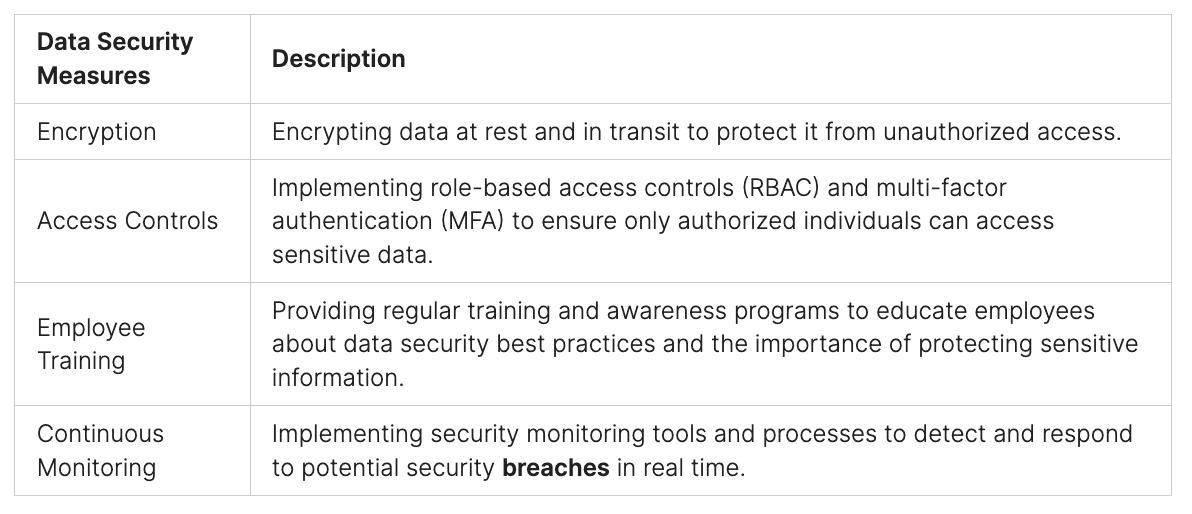
    Protecting personal data is a critical step in mitigating the risks associated with excessive data collection. By being mindful of privacy settings, limiting personal information sharing, and using privacy protection tools, individuals can take control of their data and reduce the likelihood of data misuse and unauthorized access. Furthermore, organizations must prioritize data security by implementing robust encryption protocols, conducting regular security audits, and providing cybersecurity training to employees.

    The risks of excessive data collection in cybersecurity should not be underestimated. By understanding these risks and taking proactive steps to protect personal data, individuals and organizations can navigate the digital landscape with confidence and ensure the privacy and security of sensitive information.

    Protecting Personal Data in the Digital Age

    In today’s digital age, protecting personal data has become more crucial than ever. With the increasing prevalence of data breaches and privacy violations, individuals must take proactive steps to safeguard their sensitive information. By following best practices regarding data privacy and utilizing privacy protection tools, individuals can establish a stronger defense against potential threats.

    Awareness of Privacy Risks

    Being aware of the risks associated with data privacy is the first step towards protecting personal information. Individuals should educate themselves about common threats such as identity theft, phishing scams, and online tracking. This knowledge empowers individuals to make informed decisions regarding their online activities and data-sharing practices.

    Limiting Personal Information Sharing

    One effective way to protect personal data is by limiting the sharing of personal information online. Individuals should evaluate the necessity and trustworthiness of each platform or service before providing personal details. By being selective with data-sharing, individuals can reduce the likelihood of their information falling into the wrong hands.

    Controlling Privacy Settings

    Controlling privacy settings on online services and applications is another important aspect of protecting personal data. Individuals should review the default privacy settings and adjust them according to their preferences. This ensures that personal information is only shared with authorized parties and minimizes the risk of unauthorized access.

    Using Privacy Protection Tools

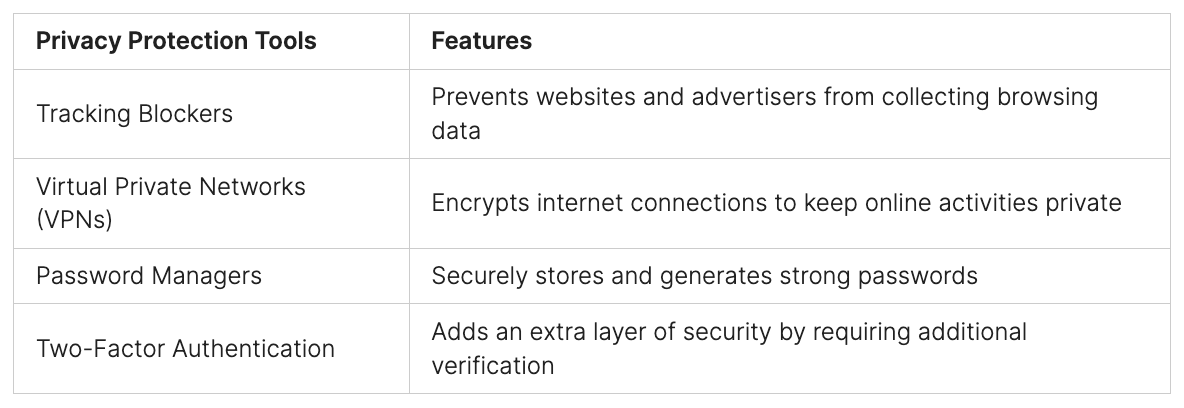
    Privacy protection tools such as tracking blockers or virtual private networks (VPNs) offer additional layers of security for personal data. Tracking blockers prevent websites and advertisers from collecting browsing data, while VPNs encrypt internet connections, keeping online activities private. By utilizing these tools, individuals can enhance their online privacy and reduce the likelihood of data breaches.

    Reading Privacy Policies

    Before disclosing personal data to any online platform or service, it is essential to carefully read and understand the privacy policies. These policies outline how and why personal information is collected, used, and shared. By familiarizing themselves with these policies, individuals can make informed decisions about the extent to which they are comfortable sharing their data.

    “Protecting personal data is not just about avoiding identity theft; it’s about preserving our fundamental right to privacy in a digital world.”

    By adopting these practices and utilizing privacy protection tools, individuals can take meaningful steps towards protecting their personal data. Safeguarding personal information in the digital age requires vigilance, awareness, and a proactive approach to privacy and security.

    Challenges of Data Collection in Cybersecurity Management

    Cybersecurity managers play a vital role in safeguarding against cyber threats, but they also face significant challenges in data collection. One prominent challenge revolves around evidence collection for prosecuting cyber attacks. To support legal proceedings and ensure justice, accurate and comprehensive evidence is crucial.

    Current data collection systems often require manual review and interpretation, which can be time-consuming and prone to errors. The sheer scale of cyber attacks further compounds the challenge, as the volume of data can be overwhelming to handle efficiently.

    Organizations may seek third-party assistance to aid in evidence collection, but this can introduce additional costs and complexities. Given the constantly evolving landscape of cyber threats, it is imperative to develop scalable mechanisms that enable efficient data collection and analysis.

    The Need for Streamlined Data Policy and Processes

    To address these challenges, cybersecurity managers must prioritize the establishment of clear data policies and processes. A well-defined data policy should outline the procedures for collecting, storing, and analyzing data, ensuring compliance with legal and regulatory requirements.

    By implementing robust data policies, organizations can streamline data collection processes, mitigate risks, and improve the overall effectiveness of cybersecurity operations.

    Effective evidence collection requires collaborative efforts between cybersecurity professionals, legal experts, and law enforcement agencies. By leveraging their expertise and working together, these stakeholders can strengthen the accuracy and reliability of evidence presented in cyber crime investigations.

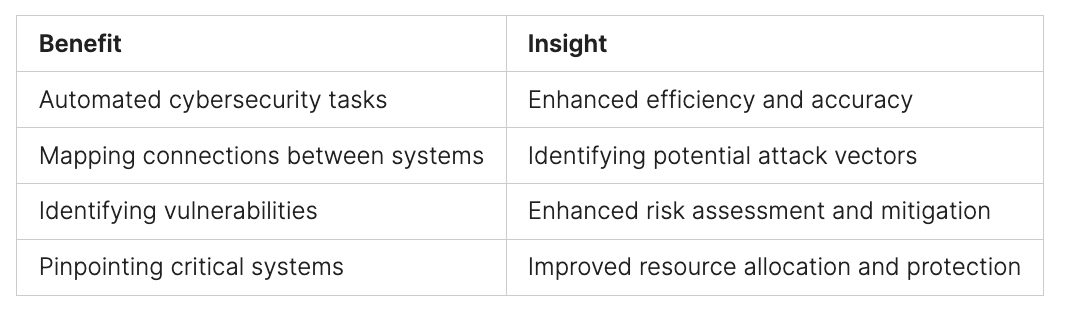
    Streamlining data collection also involves leveraging advanced technologies and automation. AI-powered tools and machine learning algorithms can help identify patterns and anomalies, enabling more efficient and effective evidence collection.

    Additionally, the use of data visualization techniques can help cybersecurity managers gain actionable insights from the collected data. Visual representations of complex data sets can aid in identifying trends, patterns, and potential attack vectors, enhancing proactive threat detection and prevention strategies.

    Data Collection Challenges in the Face of Cyber Attacks

    The rise in cyber attacks poses unique challenges to data collection in cybersecurity management. With the increasing sophistication of attackers, it has become more crucial than ever to stay one step ahead.

    • Data Breaches: Cyber attacks that result in data breaches can compromise sensitive information, making it imperative to collect evidence promptly and accurately to understand the extent of the breach and mitigate further damage.
    • Targeted Attacks: Sophisticated cyber attacks often target specific individuals or organizations, necessitating the collection of accurate evidence to identify the attackers, their motivations, and the potential impact on targeted entities.
    • Malware Analysis: Data collection is vital for analyzing malware and understanding its behavior, origins, and impact to develop effective countermeasures.

    Overcoming these challenges requires not only technical expertise but also collaboration between cybersecurity managers, IT teams, legal experts, and law enforcement agencies. Encouraging information sharing and fostering strong partnerships can help streamline data collection processes and improve response times.

    Effective Evidence Collection: A Table of Essential Factors
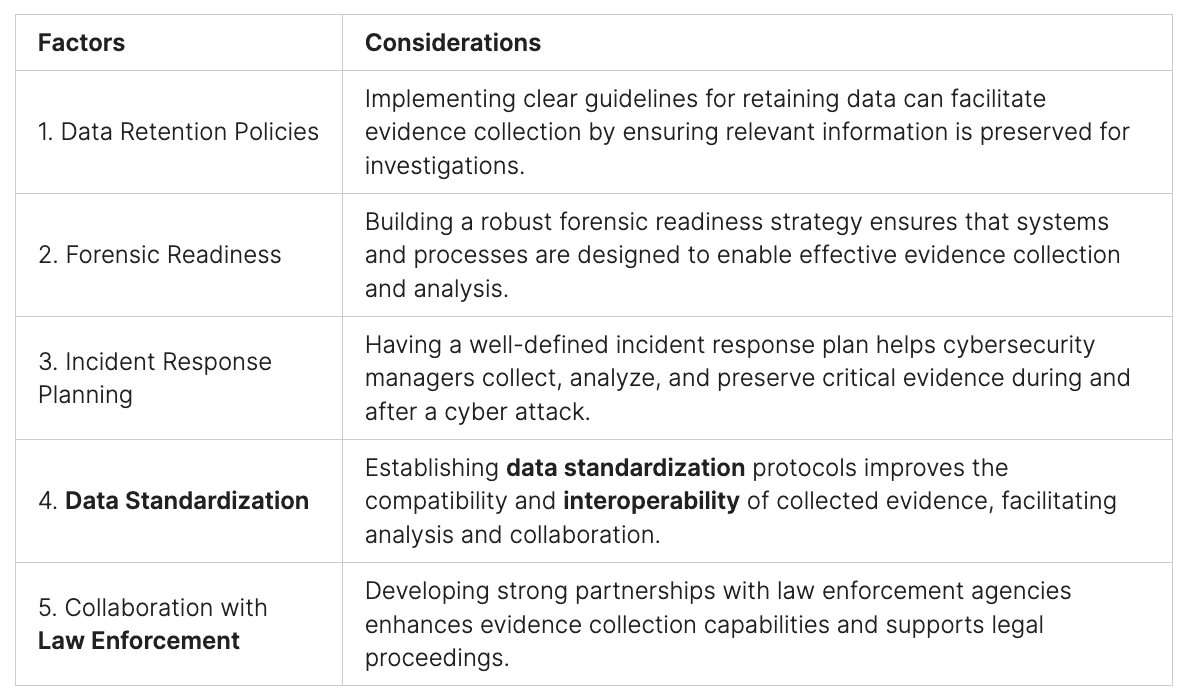
    By addressing these challenges and implementing proactive data collection strategies, cybersecurity managers can strengthen their defense against cyber threats and contribute to the broader goal of maintaining a secure digital environment.

    The Problem of Unstructured Data in Cybersecurity

    Unstructured data poses a significant challenge in the field of cybersecurity, impacting evidence collection and analysis. The lack of uniformity, coherence, and direction in unstructured data complicates investigations, particularly for law enforcement agencies. Most application-generated logs are not designed for law enforcement purposes and are stored in non-queryable formats, hindering the extraction of actionable insights. Without proper data standardization and interoperability, law enforcement struggles to effectively investigate cybercrimes and identify perpetrators.

    One of the major obstacles in addressing the issue of unstructured data is the absence of industry-wide standards for storing and formatting cybersecurity-related information. The lack of common guidelines makes it difficult to compare and correlate data from various sources, hindering the identification of patterns and trends. Without standardized data formats, law enforcement agencies face challenges in aggregating and analyzing data from different organizations and systems. This limits their ability to carry out comprehensive investigations and identify crucial information that may be vital to solving cybercrimes.

    “The absence of standards in storing and formatting data hampers effective evidence collection and analysis, obstructing law enforcement agencies in their efforts to investigate cybercrimes.”

    Efforts towards data standardization and interoperability are crucial to overcoming the challenges posed by unstructured data in cybersecurity. Establishing common reporting standards and formats would enhance the consistency and compatibility of data collection methods, enabling easier collaboration and information sharing between different entities. Improved interoperability would empower law enforcement agencies to extract meaningful insights from diverse data sources, enhancing their ability to identify, track, and apprehend cybercriminals.

    The Importance of Log Collection in Cybersecurity

    One of the primary forms of unstructured data in cybersecurity is log data, which consists of detailed records of system activities, network traffic, and user actions. Logs serve as a valuable source of information for incident response and forensic investigation, aiding in the identification of anomalous behavior and potential security breaches. However, log collection often presents challenges due to the wide variety of applications and systems involved in an organization’s infrastructure.
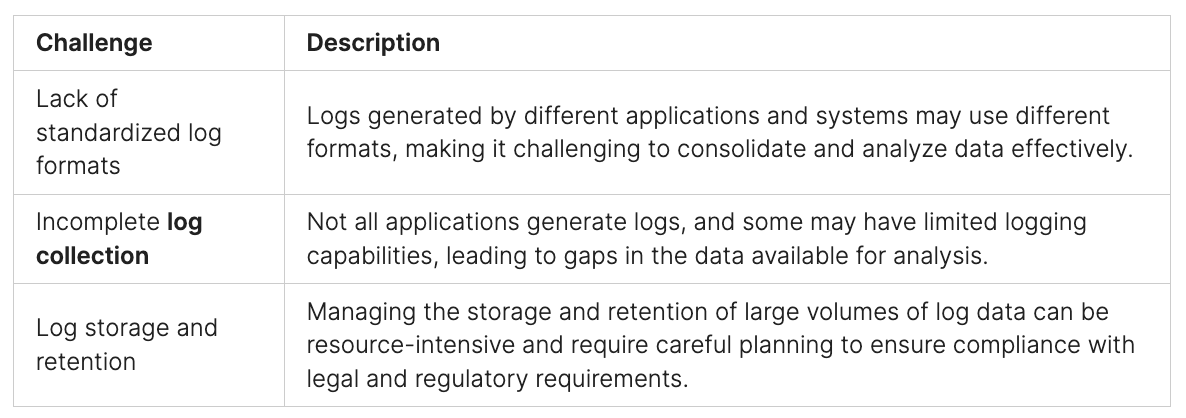
    Challenges in Log Collection

    Addressing the problem of unstructured data and enhancing log collection practices are essential steps towards improving cybersecurity capabilities. By implementing standardized data formats and investing in interoperable systems, organizations can facilitate efficient data analysis, information sharing, and collaboration with law enforcement agencies. These measures will significantly enhance the effectiveness of investigations and contribute to defending against cyber threats in an increasingly interconnected world.

    Rethinking Cybersecurity Software for Effective Data Collection

    The design of cybersecurity software should prioritize usability for all professionals, including those without deep expertise. Many existing cybersecurity applications are complex and tailored exclusively for experts in the field, which can hinder effective response to cyber attacks. To address this issue, organizations need to invest in user-friendly cybersecurity software that facilitates evidence collection and supports cybersecurity procedures for individuals at all levels of expertise.
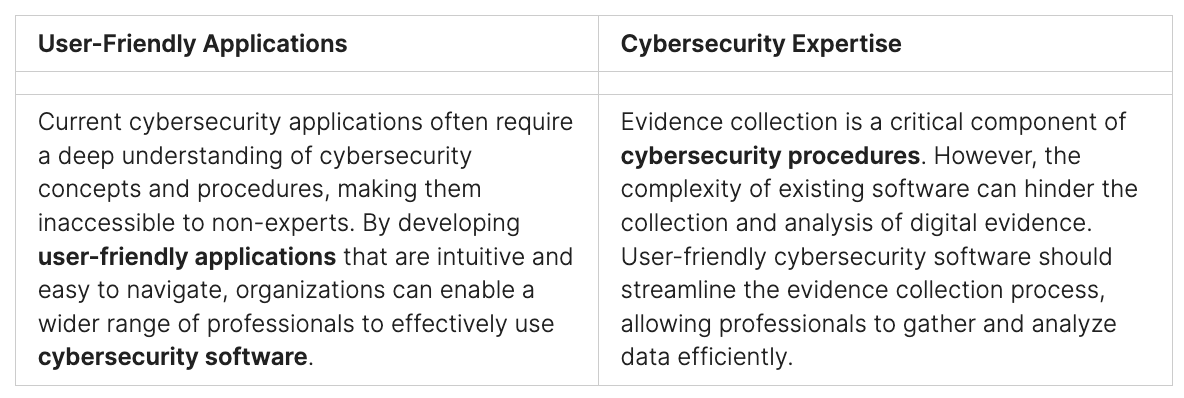
    By rethinking cybersecurity software design, organizations can bridge the gap between cybersecurity experts and other professionals involved in the data collection process. User-friendly applications will empower individuals with varying levels of expertise to contribute to cybersecurity efforts, enhancing the overall effectiveness of data collection and analysis.

    Compliance and the Role of Standards in Cybersecurity

    Compliance standards play a crucial role in shaping the cybersecurity landscape and promoting a secure digital environment. By adhering to compliance standards, organizations can minimize the risk of cyber attacks and ensure the protection of critical infrastructure.

    Benefits of Compliance Standards

    Implementing compliance standards offers a range of benefits, including:

    • Enhanced cybersecurity: Compliance standards provide a framework for organizations to implement comprehensive cybersecurity measures that address potential vulnerabilities and protect against emerging threats.
    • Reduced risk of cyber attacks: By aligning with compliance standards, organizations can identify and address potential vulnerabilities, taking proactive measures to mitigate the risk of cyber attacks.
    • Legal and regulatory compliance: Compliance with industry standards ensures organizations meet the legal and regulatory requirements set forth by governing bodies, avoiding penalties, fines, and legal consequences.
    • Lower insurance costs: Insurance providers often take compliance with standards into account when setting premiums. By demonstrating a commitment to cybersecurity best practices, organizations may secure lower insurance costs.

    Inspiring Similar Approaches in Other Industries

    The power industry’s experience with compliance standards can serve as an inspiration for other industries. As cyber threats continue to evolve and target critical infrastructure across various sectors, implementing similar standards can significantly enhance cybersecurity measures and protect against potential disruptions.

    The establishment of industry-specific compliance standards enables organizations to share best practices, collaborate with experts, and develop comprehensive cybersecurity strategies. This collaborative approach fosters improved cybersecurity practices, supports information sharing, and ensures a consistent level of protection across industries.

    Through compliance with standards, organizations not only strengthen their own cybersecurity posture but contribute to the overall resilience of the cybersecurity landscape. By embracing these standards, industries can safeguard their critical systems, protect sensitive data, and maintain the trust of their stakeholders.
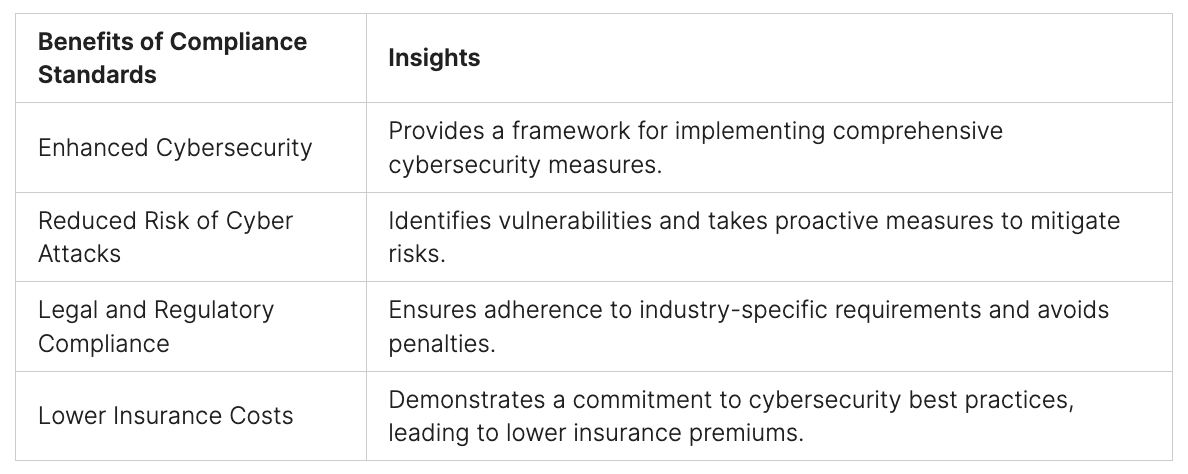
    Implementing compliance standards in cybersecurity not only strengthens the defense against cyber threats but also fosters collaboration, ensuring a consistent level of protection across industries. By embracing these standards, organizations contribute to a more secure digital landscape.

    Achieving Standardization and Interoperability in Cybersecurity

    The field of cybersecurity relies heavily on data collection and analysis to identify and combat cyber threats effectively. However, the lack of standardization and interoperability among different software applications poses significant challenges in this process. Without standardized practices, the cybersecurity industry struggles to establish a unified approach to data collection, resulting in fragmented and inefficient processes.

    To address these challenges, it is crucial for the cybersecurity industry to prioritize standardization and interoperability. By establishing common reporting standards and protocols, organizations can ensure consistency in data collection methods and formats. This standardization will enable seamless sharing and integration of data between different software applications, promoting a more collaborative and efficient cybersecurity ecosystem.

    Additionally, efforts should be made to develop interoperable APIs (Application Programming Interfaces) that allow different software systems to communicate and share data effectively. This integration of cybersecurity tools with evidence collection capabilities will streamline the process of log collection and analysis, enabling quicker and more accurate identification of potential threats.

    Achieving standardization and interoperability in the cybersecurity industry will have several benefits. Firstly, it will improve the efficiency of data collection and analysis, allowing organizations to identify patterns and trends more effectively. This, in turn, will enable proactive threat detection and mitigation, reducing the impact of cyber attacks on individuals and organizations.

    Furthermore, standardization and interoperability will enhance the overall evidence structure in cybersecurity. By establishing consistent formats and practices for log collection and analysis, the industry can improve the quality and reliability of evidence, making it easier to attribute cyber attacks and hold accountable those responsible.

    In summary, standardization and interoperability are essential for the growth and advancement of the cybersecurity industry. Implementing consistent practices and protocols will streamline data collection and analysis processes, promoting collaboration and efficiency. By investing in these initiatives, the industry can enhance its ability to protect individuals and organizations from cyber threats.
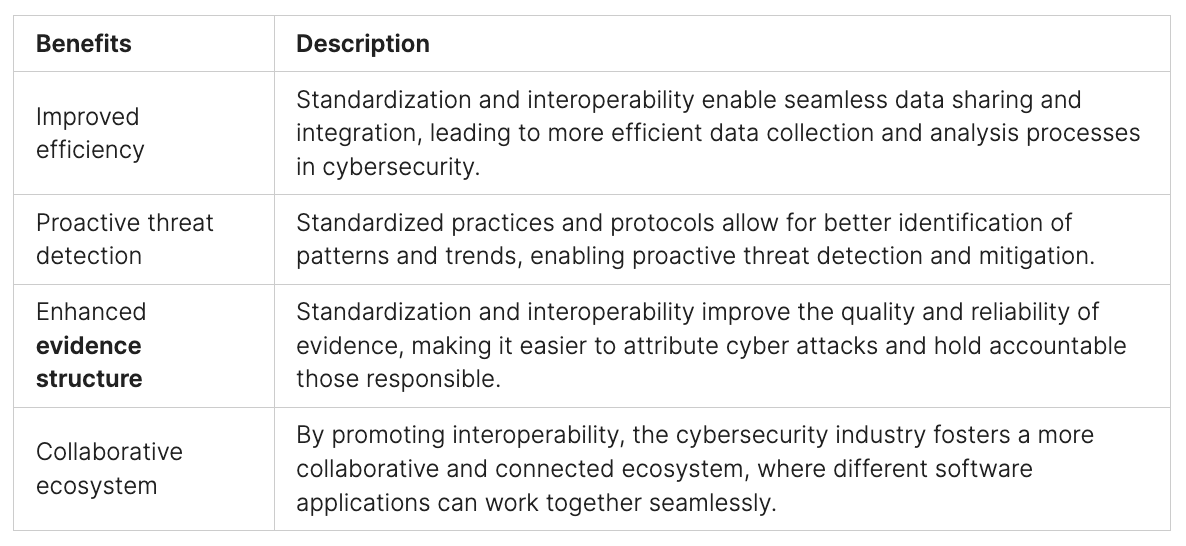
    Benefits of Standardization and Interoperability in Cybersecurity

    Conclusion

    In the rapidly evolving digital landscape, the escalating volume of data collection in cybersecurity highlights the pressing need for robust privacy and security measures. The challenges posed by extensive data gathering are substantial, yet actionable steps exist for both individuals and organizations to secure personal information and diminish these risks effectively.

    Key to enhancing data collection methodologies and bolstering evidence gathering endeavors are the principles of standardization, interoperability, and the deployment of user-centric cybersecurity solutions. The adoption of uniform reporting standards, the development of interoperable APIs, and the incorporation of cybersecurity tools equipped with evidence collection features significantly elevate the precision and efficiency of data analysis processes.

    Embracing conscientious data management and storage practices is crucial in fostering a culture of security and transparency within the cybersecurity domain. This entails a thorough appreciation for the critical nature of privacy and security, adherence to established data handling protocols, and the utilization of advanced privacy protection technologies. By placing a high value on data integrity, both individuals and organizations play a vital role in preserving sensitive information, maintaining data privacy rights, and contributing to the creation of a more secure digital ecosystem.

    At Peris.ai Cybersecurity, we are dedicated to supporting individuals and organizations navigate these complexities by offering innovative solutions designed to enhance data privacy and security. Our suite of tools and services is tailored to meet the challenges of today’s cybersecurity landscape, ensuring that your personal and organizational data is protected with the utmost rigor and sophistication. We invite you to explore the resources available at Peris.ai Cybersecurity and discover how our expertise can assist you in achieving a higher standard of privacy and security in your data collection and cybersecurity practices. Visit us to learn more about how we can help secure your digital future.

    FAQ

    What are the risks associated with excessive data collection in cybersecurity?

    The risks include the potential misuse of data for questionable purposes, information overload that hinders effective analysis, data leaks leading to the loss of personal information, profiling practices resulting in discrimination, and overreliance on data analytics diminishing human intuition and accountability.

    How can individuals protect their personal data in the digital age?

    Individuals can protect their personal data by being aware of privacy risks, limiting the sharing of personal information, controlling privacy settings on online services and apps, being selective with data-sharing, using privacy protection tools such as tracking blockers or VPNs, and carefully reading privacy policies before disclosing personal data.

    What challenges do cybersecurity managers face in data collection?

    Cybersecurity managers face challenges in data collection, specifically in evidence collection for prosecuting cyber attacks. Current data collection systems often require manual review and interpretation, leading organizations to seek third-party assistance. However, the process can be time-consuming and costly. Moreover, the sheer number of cyber attacks makes it necessary to develop scalable mechanisms for data collection and analysis.

    Why is unstructured data a problem in cybersecurity?

    Unstructured data in cybersecurity poses challenges due to the lack of uniformity, coherence, and direction. Most logs generated by applications are not designed for law enforcement efforts and are stored in non-queryable formats. The absence of standards for storing and formatting data complicates evidence collection and analysis, making it difficult for law enforcement to investigate cybercrimes effectively.

    How can cybersecurity software be improved for effective data collection?

    The design of cybersecurity software should consider the diverse range of professionals who use it, including those without deep expertise in the field. Currently, many cybersecurity applications are complex and intended for cybersecurity experts, hindering effective response to cyber attacks. Organizations need user-friendly software that facilitates evidence collection and supports cybersecurity procedures for various professionals involved in the process.

    What is the role of compliance standards in cybersecurity?

    Compliance standards, play a crucial role in improving the cybersecurity landscape. These standards provide a set of mandatory requirements that guide organizations in implementing physical and cybersecurity measures. Compliance helps minimize the risk of cyber attacks, avoid fines, and lower insurance costs. The power industry’s experience with standards can inspire other industries to adopt similar approaches.

    How can standardization and interoperability be achieved in cybersecurity?

    Achieving standardization and interoperability in the cybersecurity industry is crucial for effective data collection and analysis. Currently, there is a lack of standardized practices and interoperability among different software applications. Efforts should be made to establish common reporting standards, interoperable APIs, and better integration of cybersecurity tools with evidence collection capabilities. These changes would facilitate the efficient parsing of data, improve evidence structure, and enhance the overall cybersecurity landscape.

    Why is data collection important in cybersecurity?

    The constant increase in data collection in cybersecurity highlights the importance of privacy and security. While there are risks associated with excessive data collection, individuals and organizations can take steps to protect personal data and mitigate these risks. Standardization, interoperability, and user-friendly cybersecurity software can improve data collection and support evidence collection efforts. By adopting responsible approaches to data collection and storage, individuals and organizations can promote a culture of protection and transparency in the cybersecurity landscape.

  • Enhancing Security Posture with Automated Threat Detection and Playbook Execution

    Enhancing Security Posture with Automated Threat Detection and Playbook Execution

    In the rapidly evolving cybersecurity landscape, organizations are encountering an increasing array of threats. Adversaries continuously adapt their strategies, making it essential for organizations to leverage automation to strengthen their defenses. Automated threat detection and playbook execution enhance the ability to identify and respond to security threats, fortifying overall cyber defense.

    Automation is transforming cybersecurity by enabling teams to work more efficiently and effectively. With automated threat detection, organizations gain real-time insight into potential risks, allowing for faster response times and reduced vulnerabilities. This proactive approach helps uncover hidden threats, leading to a quicker response and reduced risk exposure.

    Automated playbook execution is another essential element. It streamlines incident response by automating predefined actions, allowing security teams to focus on more strategic tasks. This shift enhances the overall cybersecurity strategy, making organizations more resilient against threats.

    Key Takeaways

    • Automated threat detection and playbook execution are critical for strengthening security posture.
    • Automation accelerates incident response and risk mitigation, decreasing overall exposure.
    • Streamlined playbook execution frees security teams to address strategic challenges.
    • Integrating automation provides real-time visibility and rapid threat identification.
    • Optimizing security posture through automation is essential as threats continue to evolve.

    The Importance of Automated Security Posture

    Automation is central to enhancing an organization’s security posture, enabling security teams to quickly detect and respond to threats. This efficiency improves resource management and minimizes cybersecurity risks.

    Automation Reduces Detection and Response Times

    Security teams often struggle to manage the overwhelming number of alerts they receive daily. Automated workflows allow these teams to prioritize significant threats, shifting their focus away from routine tasks. Automated tools accelerate incident response, helping teams to detect, analyze, and address issues with efficiency.

    Improving Security Posture through Automation

    Incorporating security automation into an organization’s strategy significantly bolsters its defense capabilities. Automation can identify and remediate vulnerabilities promptly, lowering the likelihood of successful cyberattacks. Rapid threat identification and response protect against potential financial and reputational damage.

    With cyber threats occurring every 39 seconds, the need for automated security measures is pressing. Automated security postures allow organizations to avoid breaches and safeguard critical information.

    Effortless Automation in Incident Response

    Creating custom playbooks through a user-friendly, drag-and-drop interface enables security teams to automate incident response processes. This approach reduces manual tasks, allowing teams to address core security challenges efficiently.

    Automating incident response workflows helps security teams shift focus from repetitive actions to critical problem-solving, thus enhancing the overall security landscape.

    Integrating Automation with Case Management

    Combining security automation and case management streamlines incident investigation and response. When a playbook triggers, it creates a case that collects essential threat details. This method provides a clear event timeline, fostering collaboration and effective threat analysis.

    Centralized data management allows security teams to respond more swiftly and efficiently, ensuring a coordinated response to incidents from start to finish.

    Extending Automation Across the Tech Stack

    To strengthen security across an organization’s infrastructure, it’s essential to integrate automation throughout the technology stack. Security orchestration and automated response (SOAR) platforms allow teams to automate tasks for all tools within the tech environment, improving operational efficiency.

    Automated Endpoint Investigation and Response

    Automated SOAR capabilities enhance endpoint investigation and response. By continually analyzing logs and telemetry, these tools detect and address security issues promptly. This integration ensures quick and precise responses to incidents, minimizing impact.

    By extending security automation, organizations can streamline responses, improve security posture, and elevate efficiency.

    Unifying SIEM, Automation, and Analytics

    Many organizations are centralizing their security efforts through unified platforms that integrate SIEM, automation, and behavior analytics. This consolidation simplifies workflows and strengthens defense by providing a comprehensive view of security events, enhancing threat detection, and supporting data-driven decision-making.

    Understanding Cybersecurity Playbooks

    A cybersecurity playbook is a detailed strategy for addressing security incidents, guiding actions to reduce damage in the event of a breach. Playbooks typically cover:

    • Threat Detection: Identifies potential risks, such as malware or unauthorized access.
    • Incident Classification: Helps prioritize incidents by severity, aiding appropriate responses.
    • Incident Response: Outlines procedures for containing and resolving threats.
    • Security Communication: Establishes protocols for sharing incident information.
    • Post-Incident Analysis: Provides steps for investigation to uncover root causes and learn from incidents.

    By standardizing incident response processes, cybersecurity playbooks reinforce an organization’s defenses.

    Manual vs. Automated Cybersecurity Playbooks

    In today’s complex cyber landscape, Brahma Fusion offers a powerful and adaptable cybersecurity solution that goes beyond traditional defenses. With customizable playbooks, Brahma Fusion enables organizations to respond to threats swiftly and accurately, improving both Mean Time to Detect (MTTD) and Mean Time to Respond (MTTR). The platform’s AI-driven automation and advanced machine learning capabilities ensure consistent threat detection, reduced false positives, and automated threat mitigation, allowing security teams to focus on critical incidents without the noise of false alarms.

    Brahma Fusion’s seamless integration with existing security tools and SIEM systems consolidates operations, offering a unified view of your organization’s security posture. Real-time API discovery and continuous asset monitoring provide unparalleled visibility, which not only enhances the overall security posture but also supports compliance efforts. By continuously monitoring the network and updating asset inventories, Brahma Fusion helps maintain an adaptive and resilient security strategy.

    Investing in a solution like Brahma Fusion enables proactive cybersecurity management that keeps your organization protected against both current and emerging threats. Discover how Brahma Fusion can transform your security strategy—visit Peris.ai to learn more.

  • How Hackers Are Using GhostGPT to Develop Malware

    How Hackers Are Using GhostGPT to Develop Malware

    Artificial Intelligence (AI) is rapidly transforming industries, and while it has provided groundbreaking advancements, it has also given cybercriminals a dangerous new tool. GhostGPT, a generative AI model, is being exploited to create highly advanced malware, automate cyberattacks, and refine malicious code, making cybercrime more efficient, scalable, and difficult to detect.

    This new wave of AI-powered cyber threats requires next-generation security defenses. Organizations must understand how hackers are leveraging AI for attacks and take proactive measures to secure their systems.

    How Cybercriminals Are Using GhostGPT

    Hackers are weaponizing GhostGPT’s AI-driven capabilities to create automated and highly evasive cyber threats. Here’s how:

    Automated Malware Creation

    • Instantly generates ransomware, spyware, and trojans to compromise systems.
    • Creates polymorphic malware, which continuously modifies itself to evade detection.
    • Accelerates malware development, reducing the time and effort needed for cyberattacks.

    ️ Refining and Polishing Malicious Code

    • Improves existing malware to bypass antivirus detection and behavioral security tools.
    • Enhances phishing emails, deepfake scams, and social engineering tactics using AI-generated text.
    • Automates malware obfuscation, making threats harder to analyze and stop.

    Exploiting System Vulnerabilities

    • Analyzes security reports and system weaknesses to develop targeted exploits.
    • Automatically generates attack code for known vulnerabilities, even for zero-day exploits.
    • Improves penetration testing for cybercriminals, allowing them to test and refine attacks before execution.

    Key Takeaway: GhostGPT makes hacking more accessible, allowing both experienced attackers and low-skilled cybercriminals to launch sophisticated cyberattacks effortlessly.

    GhostGPT’s Role in AI-Assisted Exploit Generation

    GhostGPT isn’t just making hacking easier—it’s making cyberattacks smarter, faster, and harder to defend against.

    Key Features Driving AI-Powered Exploits:

    Decoding Vulnerability Reports

    • Processes technical security documents to find exploitable weaknesses in software and networks.
    • Generates fully functional attack scripts based on known vulnerabilities.

    Zero-Day Exploit Development

    • Creates custom attack codes for vulnerabilities that haven’t been patched yet.
    • Helps cybercriminals launch devastating attacks before companies can react.

    AI-Simulated Attacks

    • Allows hackers to test their malware and exploits in controlled environments before launching real attacks.
    • Refines attack techniques to maximize success rates and bypass security defenses.

    Key Takeaway: GhostGPT is closing the skill gap in cybercrime—now, even amateur hackers can launch highly effective and evasive cyberattacks.

    ⚠️ Why GhostGPT Is a Game-Changer for Hackers

    The ability to automate and refine attacks with AI gives cybercriminals a massive advantage. GhostGPT is changing the cybersecurity landscape in the following ways:

    • Lower Barrier to Entry – No advanced coding knowledge needed; AI generates malicious scripts instantly.
    • Bypassing Traditional Security – AI-enhanced malware is harder to detect using conventional cybersecurity tools.
    • Anonymity for Cybercriminals – Attackers can operate without leaving digital fingerprints, making it difficult to trace their activities.
    • Speed & Efficiency – Hackers can generate large-scale attacks in seconds, allowing for widespread disruption.

    Key Takeaway: Cybercriminals no longer need deep technical expertise—GhostGPT is making hacking faster, cheaper, and more dangerous.

    Securing the Future Against AI-Powered Threats

    With AI-driven cybercrime on the rise, traditional cybersecurity methods are no longer enough. Organizations need adaptive, AI-powered security solutions to detect, prevent, and respond to emerging threats like GhostGPT.

    How Businesses Can Defend Against AI-Powered Cyber Threats:

    • Implement AI-Driven Threat Detection – Use AI-powered security tools that detect anomalies and unusual behavior in real-time.
    • Enhance Phishing & Social Engineering Awareness – Train employees to recognize AI-generated phishing attacks and deepfake scams.
    • Adopt Zero-Trust Security Models – Restrict access only to necessary users and applications to minimize attack surfaces.
    • Monitor for AI-Generated Malware & Exploits – Use behavioral analytics to detect new, unknown attack patterns before they cause damage.
    • Regularly Patch & Update Systems – Stay ahead of AI-powered vulnerability exploitation by proactively patching security flaws.

    Key Takeaway: The only way to fight AI-driven cybercrime is with AI-powered cybersecurity.

    Stay Ahead of AI-Powered Cyber Threats with Peris.ai

    Cybercriminals are exploiting AI to launch highly sophisticated malware and cyberattacks—is your business prepared?

    Protect your systems with AI-driven security solutions. Peris.ai offers cutting-edge cybersecurity technologies that detect, prevent, and neutralize AI-enhanced cyber threats before they strike.

    Visit Peris.ai to explore advanced cybersecurity solutions.

    Don’t wait for an attack—fortify your digital defenses today.

    Your Peris.ai Cybersecurity Team #PerisAI #Cybersecurity #AIThreats #GhostGPT #YouBuild #WeGuard

  • Innovative Malware UNAPIMON Evades Detection with Uncommon Tactics

    Innovative Malware UNAPIMON Evades Detection with Uncommon Tactics

    Cybersecurity experts at Trend Micro have recently brought to light an ingenious piece of malware, dubbed UNAPIMON, which has been designed to stealthily bypass antivirus solutions. This novel threat is attributed to Winnti, a notorious Chinese state-sponsored group with a history of launching sophisticated cyberattacks on governments, tech companies, think tanks, and more.

    A Twist on Traditional Malware Techniques

    UNAPIMON stands out from conventional malware through its unique approach to evading detection. Traditional malware often employs API hooking to intercept and manipulate software functions for malicious purposes, a technique also utilized by security tools to monitor and thwart such threats. However, UNAPIMON takes a different path by leveraging Microsoft Detours to unhook critical API functions in child processes, particularly targeting the CreateProcessW API function. This strategic maneuver allows it to slip past antivirus programs undetected.

    The Simplicity and Creativity Behind UNAPIMON

    What makes UNAPIMON particularly noteworthy is its blend of simplicity and innovation. By utilizing Microsoft Detours, a legitimate debugging library, in a malevolent fashion, the malware showcases the versatility of common tools when wielded with malicious intent. This not only reflects the technical skill and creativity of its creators but also poses a significant challenge to behavioral detection mechanisms due to the tool’s legitimacy.

    Winnti’s Track Record of Evasion Tactics

    Winnti has long been recognized for its creative methods of avoiding detection. Past exploits include manipulating Windows print processors to conceal malware and persist within target networks, as well as fragmenting a Cobalt Strike beacon into over a hundred pieces to evade detection, only reassembling it when necessary. These incidents, detailed by BleepingComputer, underscore the group’s persistent innovation in crafting tools and methods to circumvent traditional cybersecurity defenses.

    Implications and the Path Forward

    The emergence of UNAPIMON underscores the ever-evolving landscape of cyber threats and the continuous arms race between cybercriminals and security professionals. It highlights the necessity for cybersecurity defenses to adapt to the increasingly sophisticated and inventive tactics employed by threat actors. As malware writers leverage the potential of common and legitimate tools for malicious purposes, the challenge for cybersecurity solutions to distinguish between benign and malevolent use becomes ever more complex.

    Peris.ai Cybersecurity emphasizes the importance of staying informed about the latest malware developments and enhancing detection capabilities to protect against innovative threats like UNAPIMON. The cybersecurity community must remain vigilant and foster a culture of continuous learning and adaptation to counter the sophisticated strategies employed by state-sponsored groups and other cyber adversaries.

  • Navigating the Threat Landscape: The Role of Generative AI in Cybersecurity

    Navigating the Threat Landscape: The Role of Generative AI in Cybersecurity

    In the dynamic realm of cybersecurity, the integration of generative AI technologies like ChatGPT presents both remarkable opportunities and formidable challenges. OpenAI’s recent report illuminates the dual nature of these tools—serving both as advancements in cybersecurity defenses and as potent weapons in the hands of cybercriminals. This discussion explores the significant ways malicious actors exploit AI, focusing on malware creation, advanced phishing operations, and the overall impact on cyber threats.

    Generative AI: A Tool for Cybercriminals

    The exploitation of AI technologies such as ChatGPT by cybercriminals has introduced a new level of sophistication to their operations. Here’s how they are leveraging AI:

    • Malware Development: Cybercriminals use AI to write and debug malicious code, making it easier to create effective and evasive malware.
    • Phishing Campaigns: AI assists in crafting highly convincing phishing emails that are tailored to the recipients, increasing the chances of successful scams.
    • Evasion Techniques: AI tools are employed to develop methods that help malware evade detection by security software.

    Highlighted Threat Groups and Their Use of AI

    • SweetSpecter: This group uses AI to enhance its reconnaissance capabilities, automate the exploitation of vulnerabilities like Log4j, and streamline malicious script development.
    • CyberAv3ngers: An Iranian IRGC-affiliated group focusing on critical infrastructure, utilizing AI to inquire about industrial system exploits and methods for stealthy operations.
    • Storm-0817: Engages AI for comprehensive malware lifecycle management, from development to command and control operations.

    Strategic Implications for Cybersecurity

    The application of AI in cyberattacks represents a paradigm shift in how threats are constructed and executed. It democratizes complex attack methods, enabling even those with minimal technical skills to execute high-impact cyberattacks. This evolution necessitates a reevaluation of traditional cybersecurity strategies.

    Proactive Measures for Organizations

    • AI Awareness: Businesses must recognize the potential of AI as a threat vector and stay informed about the latest developments in AI-driven cyber tactics.
    • Advanced Defenses: Implementing state-of-the-art threat detection systems that can identify AI-generated malicious activities is crucial.
    • Robust Incident Response: Organizations should streamline their incident response strategies to react swiftly to AI-assisted cyber threats, minimizing potential damages.

    Adapting to AI-Driven Threats

    The landscape of cybersecurity is continually evolving with the advancement of AI technologies. While these tools offer significant benefits for security enhancement, their misuse by cyber adversaries poses new challenges. To safeguard against these emerging threats, organizations need to leverage advanced security solutions and maintain a proactive stance on cybersecurity practices.

    For comprehensive strategies and updates on mitigating AI-driven cybersecurity risks, visit our website at peris.ai.

    Stay vigilant, stay ahead of the curve.

    Your Peris.ai Cybersecurity Team #YouBuild #WeGuard

  • Rising Threats: The NachoVPN Vulnerability in Popular VPN Clients

    Rising Threats: The NachoVPN Vulnerability in Popular VPN Clients

    In the digital realm where VPNs are pivotal for safeguarding online privacy, recent research has unmasked a severe vulnerability known as NachoVPN. This flaw is currently being exploited to compromise well-known VPN clients like SonicWall NetExtender and Palo Alto Networks GlobalProtect, leading to unauthorized access and data theft.

    Understanding NachoVPN

    NachoVPN is a critical vulnerability found in popular VPN software that attackers are exploiting to infiltrate user systems and steal sensitive information.

    Exploitation Techniques

    Phishing and Social Engineering:

    • Attackers deceive users into connecting to rogue VPN servers via phishing or manipulated documents.
    • Once connected, these malicious servers mimic legitimate ones, allowing attackers to hijack the session.

    Malicious Activities Include:

    • Credential Theft: Hackers steal user login credentials.
    • Malware Deployment: They install harmful software to compromise systems further.
    • Unauthorized Control: Attackers gain the ability to execute arbitrary code on the user’s device.

    Highlighted Vulnerabilities

    • SonicWall NetExtender (CVE-2024-29014): Patched in July 2024. Users should update to version 10.2.341 to secure their systems.
    • Palo Alto Networks GlobalProtect (CVE-2024-5921): Addressed in November 2024 with the release of version 6.2.6, which includes enhanced protections in FIPS-CC mode.

    How to Enhance Your Protection

    • Regular Software Updates: Continuously update your VPN client software to the latest version to mitigate vulnerabilities.
    • Enable Strong Authentication: Implement multi-factor authentication (MFA) to strengthen access security.
    • Vigilance Against Phishing: Always scrutinize emails and attachments, even those that appear to come from trusted sources, to avoid phishing traps.
    • Collaborative Security Enhancements: Utilize tools like NachoVPN, an open-source solution, to detect and address security weaknesses in VPN configurations.

    Is Your Data at Risk?

    The discovery of the NachoVPN vulnerability underscores the complexity of cyber threats and the critical need for proactive cybersecurity practices. Organizations and individuals must remain vigilant, updating their software regularly and staying educated on the latest cyber threat tactics.

    For ongoing insights and advanced cybersecurity solutions that keep pace with evolving threats, visit Peris.ai.

    Your Peris.ai Cybersecurity Team #YouBuild #WeGuard

  • The Art and Science of Pen Testing: Manual vs Automated

    The Art and Science of Pen Testing: Manual vs Automated

    Penetration testing (pen testing) has emerged as a vital practice for evaluating the security resilience of systems, networks, and applications. By emulating real-world cyberattacks, pen testing aims to unearth vulnerabilities that malicious hackers could exploit. The process encompasses two primary methodologies: manual and automated testing. Each method brings distinct advantages and drawbacks, making it crucial for security professionals to strike a harmonious balance between the two to conduct thorough and effective security assessments. This article delves into the art and science of pen testing, shedding light on the strengths and weaknesses inherent in manual and automated approaches. By comprehensively exploring these techniques, we aim to provide valuable insights into how organizations can bolster their cybersecurity defenses.

    Understanding Manual Pen Testing

    As the name suggests, manual penetration testing involves human intervention, where skilled and experienced security professionals simulate real-world attacks on the target systems. They act as ethical hackers, employing a mix of technical expertise and creativity to uncover vulnerabilities. Manual pen testers utilize various tools, techniques, and methodologies to explore potential weaknesses and misconfigurations.

    The Art of Manual Pen Testing

    1. Contextual Understanding: Manual pen testers bring contextual understanding to their assessments. They can interpret results in the context of the organization’s unique infrastructure, business processes, and industry-specific challenges. This insight enables them to prioritize risks accurately and identify complex interdependencies.
    2. Adaptability: Skilled manual testers can adapt their approach during the testing process based on their findings. If they uncover a particularly promising avenue of attack, they can pivot and explore it further, which is not always possible in automated testing.
    3. Uncovering Logical Flaws: Automated tools are often better suited for finding technical vulnerabilities, but manual testers excel at discovering logical flaws and scenarios where several seemingly minor vulnerabilities combine to create a significant risk.
    4. Social Engineering: Manual testing allows for social engineering assessments, where testers attempt to manipulate people within the organization to reveal sensitive information or grant unauthorized access. Such techniques often prove to be highly valuable for assessing overall security awareness.

    Limitations of Manual Pen Testing

    1. Time-Consuming: Manual pen testing can be time-consuming, especially for large and complex environments. Testers must manually explore various attack vectors, which might lead to a longer testing cycle.
    2. Subjectivity: Different testers might have varying skill levels and approaches, leading to potential subjectivity in identifying and prioritizing vulnerabilities.
    3. Scalability: Manual testing might not be practical for organizations with frequent and large-scale updates or for companies expanding rapidly.

    Understanding Automated Pen Testing

    Automated pen testing involves using software tools and scripts to perform vulnerability assessments and simulate attacks. These tools scan the target systems and applications, identify potential weaknesses, and generate reports outlining the discovered vulnerabilities.

    The Science of Automated Pen Testing

    1. Speed and Efficiency: Automated testing can quickly cover many potential vulnerabilities. It can scan large networks and systems comprehensively in a fraction of the time it would take a human to do the same.
    2. Consistency: Automated tools consistently perform tests, reducing the risk of human errors and ensuring the same set of tests is run repeatedly.
    3. Regularity: Automated tests can be scheduled regularly, allowing organizations to maintain continuous monitoring and assessment of their security posture.
    4. Comprehensive Database: Many automated tools leverage extensive databases of known vulnerabilities, ensuring they stay up-to-date with emerging threats.

    Limitations of Automated Pen Testing

    1. Limited Creativity: Automated tools lack the creativity and intuition of human testers. They might miss complex vulnerabilities that require a deeper understanding of the target environment.
    2. False Positives/Negatives: Automated tools can produce false positives and negatives. Sometimes, they might flag specific non-vulnerable configurations as risks or overlook less apparent vulnerabilities.
    3. Inability to Address Logical Flaws: Automated tools primarily focus on technical aspects and may overlook logical flaws in the system’s design or processes.
    4. Limited Scope: Automated testing is confined to predefined tests and might not explore novel attack vectors.

    Finding the Right Balance

    The key to successful penetration testing is finding the right balance between manual and automated approaches. Organizations can leverage the strengths of both methods while mitigating their respective weaknesses.

    Hybrid Approach

    A hybrid approach combines manual and automated testing to achieve comprehensive results. Manual testing can be used for in-depth assessments of critical assets, applications, and functionalities where human expertise is crucial. On the other hand, automated testing can be employed for regular vulnerability scanning of the entire infrastructure to identify low-hanging fruits and potential new threats.

    Integrating Automation in Manual Testing

    Manual testers can benefit from integrating specific automated tools into their workflow. These tools can help with preliminary reconnaissance, scanning, and repetitive tasks, freeing up more time for testers to focus on creative attacks and logical flaws.

    Continuous Testing

    As cybersecurity threats evolve continuously, conducting pen tests regularly is essential. Automated testing is vital in implementing continuous testing, especially for organizations with dynamic environments that undergo frequent changes.

    Conclusion

    Penetration testing remains a critical pillar of cybersecurity, empowering organizations to proactively detect and address vulnerabilities before malicious adversaries can exploit them. Striking the delicate balance between manual and automated techniques is at the core of achieving comprehensive and efficient security assessments.

    Manual testing brings a human touch to the process, combining contextual understanding, adaptability, and creative thinking. It allows skilled testers to identify technical vulnerabilities, logical flaws, and potential social engineering risks. However, manual testing can be time-consuming and subjective, making scaling for large and complex environments challenging.

    On the other hand, automated testing offers speed, efficiency, and consistency in scanning vast networks and systems, making it ideal for regular vulnerability assessments. It can quickly pinpoint low-hanging fruits, helping organizations maintain a continuous monitoring approach to cybersecurity. Yet, automated testing may fall short of identifying intricate vulnerabilities that require a deeper understanding of the target infrastructure.

    Organizations are encouraged to adopt a hybrid approach that harnesses manual and automated testing strengths for a robust cybersecurity posture. Automating automation into manual workflows can streamline repetitive tasks, enabling testers to focus on more complex and creative attack scenarios. Implementing continuous testing ensures that security assessments keep pace with the ever-changing threat landscape.

    If you seek a comprehensive and effective solution to fortify your digital platforms and infrastructures against potential threats, look no further than Peris.ai Pandava (Pentest & Assessment). Our cutting-edge proprietary utilities and tools, combined with the expertise of verified ethical hackers, enable us to conduct penetration testing with precision and depth. By leveraging our services, you can uncover vulnerabilities and weak points within your digital ecosystem and receive detailed reports to bolster your cybersecurity defenses. Safeguard your assets today and stay ahead in the ongoing battle against cyber threats with Peris.ai Pandava. Visit our website to learn more and schedule a consultation with our team of experts.

  • The Unseen Threat of Social Media Sharing: How Your Online Data Makes You a Target for Hackers!

    The Unseen Threat of Social Media Sharing: How Your Online Data Makes You a Target for Hackers!

    Welcome to the digital era, where social sharing has become a ubiquitous part of our lives. From posting pictures and updates on social media platforms to participating in online challenges, we willingly share our lives with the world. But have you ever considered the risks of this seemingly innocent act?

    Social sharing exposes your online data to potential hackers, making you a prime target for cyber attacks. This article will explore the unseen threats of social sharing and shed light on the vulnerabilities it creates in your online presence. Understanding these risks is crucial in safeguarding your personal information and maintaining digital security.

    Key Takeaways:

    • Social sharing puts your online data at risk of privacy breaches.
    • Hackers target individuals who expose personal information through social media.
    • Understanding the risks of social sharing is essential for safeguarding your data.
    • Enhancing digital literacy and cybersecurity awareness is crucial in protecting against online threats.
    • Educating yourself about privacy breaches and recognizing warning signs can help prevent cyber attacks.

    Social Sharing: A Stealthy Risk for Online Data Exposure to Hackers!

    Social sharing has become an integral part of our lives in today’s digital age. From posting updates on social media platforms to participating in popular challenges, we constantly seek connection and engagement. However, most individuals need to realize that their social sharing activities can expose them to privacy breaches and cyber attacks.

    The Paradox of Social Connectivity and Privacy Risks

    While social media platforms offer us the opportunity to connect with friends, family, and even strangers, this connectivity comes with a trade-off. Hackers can potentially exploit each piece of personal information we share. From birth dates, educational background, and addresses to our interests and preferences, every detail can be valuable to cybercriminals seeking to steal our identities or gain unauthorized access to our data.

    It’s a paradoxical situation where the very act of connecting with others exposes us to privacy risks. However, by understanding this paradox, we can become more aware of the potential dangers and take necessary precautions to safeguard our online data.

    Understanding the Hacker’s Playbook: Strategies Exploited in Social Media

    Hackers have developed sophisticated strategies to exploit social media platforms and gain access to personal information. These strategies include:

    1. Phishing: Sending deceptive emails or messages that trick users into revealing sensitive information or downloading malicious software.
    2. Social engineering: Manipulating individuals into divulging confidential details through psychological manipulation and deception.
    3. Malware: Disguising viruses, worms, or other malicious software as innocent-looking files or links, which, once clicked, can compromise the security of our devices and data.

    By understanding hackers’ tactics, we can better protect ourselves and our online data from exploitation.

    The Perils of Insta Story and Post Challenges for User Privacy

    The challenge with Caution: How Social Media Trends Can Expose You to Cyber Risks

    One popular trend on social media platforms is participating in challenges. These challenges often involve sharing personal information or completing specific tasks, which can unwittingly expose users to privacy vulnerabilities.

    For example, the Insta Story Challenge prompts users to share personal details like their first car, childhood pet’s name, educational background, or favorite travel destination. While seemingly harmless, hackers can use this information to answer security questions or even attempt to hijack user accounts.

    Similarly, post challenges, such as sharing your first job or internship experience, can provide cybercriminals with valuable information for social engineering or phishing attacks targeting unsuspecting individuals.

    Be cautious when participating in these challenges and avoid sharing sensitive personal information that could compromise your privacy and online security.

    “In the era of social media, our innocence can become a gateway for hackers to exploit. Together, let’s raise cybersecurity awareness and protect our online identities.”

    The Role of Digital Literacy in Safeguarding Personal Data

    In today’s digital age, where personal data is increasingly vulnerable to cyber threats, it has become imperative for individuals to possess digital literacy skills. Digital literacy refers to navigating and effectively using digital technologies, including computers, smartphones, and the Internet. By developing digital literacy, individuals can actively safeguard their data and protect themselves from cyber attacks.

    Imparting Cybersecurity Awareness in the Workplace

    One crucial aspect of digital literacy is cybersecurity awareness. Organizations must prioritize educating employees about the risks of social sharing and online data vulnerability. By fostering a culture of cybersecurity awareness, employees can recognize potential threats, such as phishing scams or malicious links, and take appropriate measures to protect sensitive information.

    Empowering with Awareness: The Role of Cybersecurity Education in Digital Literacy

    Training Programs Key To Bridging Digital Skills Gaps

    However, it’s important to note that many individuals still face gaps in digital skills, leaving them vulnerable to cyber threats. Training programs focused on digital literacy should be implemented to address this issue. These programs can equip individuals with the necessary knowledge and skills to navigate the digital landscape safely. By bridging the digital skills gaps, we can empower individuals to make informed decisions and take proactive measures to safeguard their personal information.

    Digital literacy and cybersecurity awareness go hand in hand in creating a secure digital environment. By promoting digital literacy and providing training programs, organizations, and individuals can build a strong defense against cyber threats and ensure the protection of personal data.

    Recognizing the Subtle Signs of Privacy Breaches

    This section will focus on helping readers recognize the subtle signs of privacy breaches. It is crucial to be aware of the tactics employed by cybercriminals, including social engineering and phishing attacks, to protect our online data from being compromised. By staying vigilant and identifying these warning signs, individuals can take immediate action to safeguard their personal information and mitigate the risks posed by hackers.

    Recognizing Social Engineering and Phishing Attacks

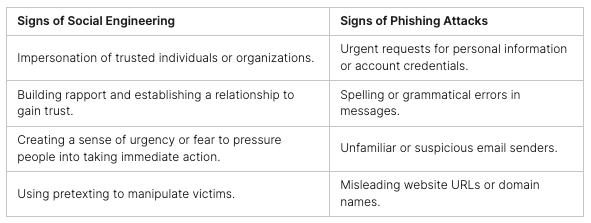
    Social engineering and phishing attacks are two common methods cybercriminals use to gain unauthorized access to personal data. Understanding the characteristics and techniques associated with these attacks is essential to prevent falling victim to them.

    Social engineering: Cybercriminals often employ social engineering tactics to manipulate individuals into disclosing sensitive information or performing actions compromising their security. These tactics exploit human psychology and trust to deceive victims. Some common forms of social engineering include:

    • Impersonating trusted individuals or organizations.
    • Creating a sense of urgency or fear to pressure people into taking immediate action.
    • Building rapport and establishing a relationship to gain trust.
    • Using pretexting involves creating a fabricated scenario to manipulate victims.

    Phishing attacks: Phishing attacks typically involve using fraudulent emails, messages, or websites that appear to be from legitimate sources. The goal is to trick individuals into revealing sensitive information such as passwords, credit card numbers, or social security numbers. Common characteristics of phishing attacks include:

    • Urgent requests for personal information or account credentials.
    • Spelling or grammatical errors in messages.
    • Unfamiliar or suspicious email senders.
    • Misleading website URLs or domain names.

    By familiarizing ourselves with the methods and telltale signs of social engineering and phishing attacks, we can enhance our ability to detect and protect against these threats.

    Vigilance in the Virtual World: Recognizing and Preventing Privacy Breaches Online

    Recognizing the subtle signs of privacy breaches is crucial for safeguarding our data. By staying informed and implementing proactive measures, we can significantly reduce the risk of falling victim to social engineering and phishing attacks, ensuring a more secure online experience.

    Building a Secure Digital Footprint in the Age of Social Sharing

    Building a secure digital footprint is essential in today’s age of social sharing. With the increasing amount of personal information available online, it is important to take proactive measures to protect yourself from potential privacy breaches and unauthorized access to your data.

    Managing your online profiles is the first step towards building a secure digital footprint. Regularly review your privacy settings on social media platforms to ensure that only the necessary information is visible to others. Please be careful about the personal details you share online, and consider limiting the personal information you provide on public platforms.

    Controlling your privacy settings is not the only way to secure your digital footprint. Securing your personal information through strong passwords and multifactor authentication is also crucial. Use unique and complex passwords for each of your online accounts, and consider using a reputable password manager to help you keep track of them.

    Crafting a Secure Digital Footprint: Privacy Management and Protection in the Age of Social Sharing

    Best Practices for Building a Secure Digital Footprint

    1. Regularly review and update your privacy settings on social media platforms.
    2. Be cautious about the personal information you share online, especially on public platforms.
    3. Use strong and unique passwords for each of your online accounts.
    4. Consider using a password manager to store and manage your passwords securely.
    5. Enable multifactor authentication whenever possible to add an extra layer of security.
    6. Be mindful of the apps and services you grant access to your personal information.
    7. Regularly monitor your online presence and proactively address potential privacy vulnerabilities.

    Following these best practices can minimize the risk of exposing your data to hackers and ensure a safer online presence. Remember, building a secure digital footprint is an ongoing process that requires continual vigilance and attention to detail. Stay informed, stay proactive, and protect your digital identity.

    How Your Casual Online Behavior Can Attract Cybercriminals

    In today’s interconnected world, it’s easy to underestimate the vulnerabilities associated with our online behavior. However, cybercriminals are constantly looking for opportunities to exploit online data vulnerabilities. Even seemingly casual actions can attract their attention, risking our personal information.

    “Cybersecurity is not just about using secure passwords and installing antivirus software, it’s about understanding the consequences of our online behavior,” says cybersecurity expert, “We need to be mindful of how our actions can create opportunities for cybercriminals.”

    The Consequences of Underestimating Online Data Vulnerability

    The consequences of underestimating online data vulnerability can be severe on an individual and organizational level. Individuals and companies become easy targets for cybercriminals by neglecting to prioritize cybersecurity measures. The repercussions can include:

    • Identity theft: Cybercriminals can use stolen personal information for fraud, such as opening credit accounts or conducting financial transactions.
    • Financial loss: Online data breaches can result in financial loss, including unauthorized transactions, stolen funds, or fraudulent use of credit cards.
    • Reputation damage: For businesses, a data breach can lead to a loss of customer trust, damage to brand reputation, and potential legal consequences.
    • Privacy invasion: Cybercriminals can access personal information, including sensitive data such as social security numbers and medical records, compromising an individual’s privacy.

    Case Studies: Real-Life Incidents of Cyber Attacks Through Social Media

    Real-life incidents serve as cautionary tales, highlighting the devastating impact of cyber attacks through social media platforms. Let’s take a look at two notable case studies:

    1. The Facebook Data Breach: In 2018, it was revealed that the personal data of approximately 87 million Facebook users was improperly shared with the now-defunct political consulting firm Cambridge Analytica. The incident raised concerns about privacy violations and demonstrated how social media platforms can be manipulated to influence public opinion and political processes.
    2. The Twitter Bitcoin Scam: In July 2020, a massive Twitter hack targeted high-profile accounts, including those of prominent individuals and organizations. The hackers used these compromised accounts to promote a Bitcoin scam, resulting in financial loss and damage to the reputation of the affected accounts.

    These case studies underscore the importance of recognizing the potential risks of online behavior and taking proactive steps to protect ourselves and our data from cybercriminals.

    By understanding how our casual online behavior can attract cybercriminals and the consequences of underestimating online data vulnerability, we can become more vigilant in safeguarding our personal information. Taking steps such as using strong passwords, enabling two-factor authentication, and being cautious about sharing sensitive information online can reduce the risk of falling victim to cyber attacks.

    Defending Against Hacker Targets: Best Practices for Personal Data Security

    In today’s digital age, personal data security is of utmost importance. Hackers and cybercriminals are constantly on the prowl, looking for opportunities to exploit vulnerabilities and gain unauthorized access to sensitive information. To protect yourself from potential security breaches, it is crucial to implement best practices for personal data security. This section will discuss two essential measures: strong password management and multifactor authentication.

    Tips for Strong Password Management

    Creating and managing strong passwords is the first line of defense against hackers. Here are some tips to enhance your password security:

    • Use a unique password for each of your accounts.
    • Make your passwords complex by combining uppercase and lowercase letters, numbers, and special characters.
    • Avoid using common or easily guessable passwords, such as “123456” or “password.”
    • Regularly change your passwords to minimize the risk of unauthorized access.
    • Consider using a password manager tool to store and generate strong passwords securely.

    By following these tips, you can significantly reduce the chances of your data being compromised due to weak passwords.

    Multifactor Authentication: An Extra Layer of Security

    While strong passwords are essential, utilizing multifactor authentication adds more security to your accounts. Multifactor authentication requires users to provide two or more pieces of evidence to verify their identity. This can include something they know (password), something they have (a smartphone or hardware token), or something they are (biometric data).

    By enabling multifactor authentication for your online accounts, even if hackers manage to obtain your password, they would still need the additional verification factor to gain unauthorized access. This greatly enhances the security of your accounts and significantly reduces the risk of personal data breaches.

    Benefits of Strong Password Management and Multifactor Authentication

    • Enhances the security of your online accounts
    • Reduces the risk of unauthorized access and data breaches
    • Provides peace of mind knowing that your data is protected
    • Mitigates the potential financial and emotional consequences of a breach

    By implementing strong password management practices and enabling multifactor authentication, you can fortify your data security and defend against the ever-evolving tactics of hackers. Protecting your data is a continuous effort; adopting these best practices is essential to safeguarding your online presence.

    Evaluating Your Digital Exposure: Steps to Assess Your Online Data Vulnerability

    In today’s digital age, evaluating your digital exposure and assessing your online data vulnerability is essential. You can proactively enhance your online security by understanding your digital presence’s potential weaknesses and vulnerabilities. This section will outline the steps to evaluate digital exposure and protect online data.

    Tools and Techniques for Scanning Digital Presence

    One of the key steps in assessing your online data vulnerability is to utilize tools and techniques for scanning your digital presence. These tools can help you identify potential risks and vulnerabilities in your online accounts and activities. Here are some recommended tools and techniques to consider:

    1. Digital Footprint Scanners: These tools scan the internet for any mention of your personal information, such as your name, email address, or phone number. By identifying where your information is exposed, you can take steps to mitigate the risk of it being misused.
    2. Website Vulnerability Scanners: If you have a website or blog, it is crucial to scan it for vulnerabilities regularly. Website vulnerability scanners can detect weaknesses in your site’s security, such as outdated software or misconfigured settings, and provide recommendations for improvement.
    3. Social Media Privacy Auditing Tools: As social media platforms are a common target for data breaches, it is important to review and adjust your privacy settings regularly. You can use privacy auditing tools on social media platforms to identify settings that may expose your personal information and adjust them accordingly.
    4. Email Security Scanners: Email is a common method hackers use to access personal data. Use email security scanners to scan your inbox for suspicious emails, phishing attempts, or malware attachments. These scanners can help you identify potential threats and take appropriate measures to protect your data.

    By leveraging these tools and techniques, you can actively monitor and identify potential risks to your online data. I’d like to point out that regularly scanning your digital presence is crucial in maintaining a proactive approach to online security.

    Instilling Internet Safety Norms for Comprehensive Protection

    Instilling internet safety norms is crucial for comprehensive protection when protecting ourselves online. By educating individuals about online risks and promoting awareness, we can create a culture of cybersecurity that minimizes the chances of falling victim to hackers.

    Internet safety starts with understanding the potential dangers and taking proactive steps to mitigate them. Here are some practical tips for staying safe while using the internet:

    1. Use strong and unique passwords for all your online accounts. Avoid using common passwords like “123456” or “password”. Consider using a password manager to store and generate strong passwords securely.
    2. Enable two-factor authentication whenever possible. This adds an extra layer of security by requiring you to provide an additional code or confirmation to access your accounts.
    3. Be cautious when sharing personal information online. Avoid posting sensitive details such as your full name, address, phone number, or financial information on public platforms.
    4. Think before you click. Avoid clicking on suspicious links or downloading files from unknown sources. These can contain malware or lead to phishing attempts.
    5. Regularly update your devices and software to ensure you have the latest security patches and bug fixes.
    6. Be mindful of your online presence and the information you share on social media. Adjust your privacy settings to restrict who can see your posts and personal information.
    7. Educate yourself about common online scams and tactics used by hackers. Understanding their methods can help you recognize and avoid potential threats.

    Following these internet safety norms can significantly enhance online security and protect your data from cyber threats. Remember, comprehensive protection requires ongoing vigilance and adherence to best practices.

    Conclusion

    Personal Vigilance: Your Key Shield in the Digital Age

    In today’s highly interconnected digital world, personal vigilance is a critical defense mechanism in protecting our online data. This article has shed light on the hidden dangers of social sharing, which inadvertently make us susceptible to hacker exploits. Embracing vigilance and awareness of these risks enables us to adopt proactive strategies for safeguarding our privacy.

    Creating a secure digital presence demands understanding the intricate balance between social connectivity and the risks to privacy it brings. Identifying the subtle indications of privacy intrusions and honing our skills to traverse the digital world safely is essential. By valuing digital literacy, exercising prudent online conduct, and approaching social media cautiously, we can significantly diminish our vulnerability to cyber threats.

    Continual Learning and Adaptation: Paving the Path to Cyber Fortitude

    Educational initiatives play a pivotal role in forging a resilient digital environment. Cultivating cybersecurity awareness in professional settings and addressing the digital skill gap through educational programs empower individuals and organizations. This knowledge is vital in detecting social engineering and phishing attempts and comprehending the gravity of underestimating online data vulnerabilities.

    Ongoing education and adaptation are indispensable in keeping pace with the dynamic cyber landscape. Keeping abreast of cybersecurity trends and practices reinforces our cyber resilience. Robust password management, multi-factor authentication, and regular reviews of our digital footprint are key practices that position us ahead of cybercriminals, safeguarding our online personas.

    In summation, personal vigilance is your foremost ally in the digital era. We can navigate toward a more secure digital existence by remaining informed, practicing responsible digital habits, and continuously educating ourselves. As we progress through the ever-evolving digital era, let’s commit to the significance of personal vigilance and continuous growth in cyber resilience.

    For a deeper exploration into securing not just computers but our society and to connect with a global network of independent IT security researchers, we invite you to visit Peris.ai Cybersecurity. Our mission is to facilitate a safer digital environment by uniting organizations with top-tier cybersecurity experts under one platform. Join us in our quest to create a more secure digital world at Peris.ai Cybersecurity.

    FAQ

    What are the risks associated with social sharing?

    Social sharing exposes your online data to hackers, making you a target for privacy breaches and cyber attacks. By sharing personal information on social media platforms, you inadvertently put yourself at risk of having your data compromised.

    How does social connectivity contribute to privacy risks?

    While social media platforms allow us to connect and share with others, they also create opportunities for hackers to exploit our data. The desire for connection often leads users to share more than they should, increasing their vulnerability to privacy breaches.

    What strategies do hackers employ on social media platforms?

    Hackers use various tactics, such as social engineering and phishing attacks, to access personal data on social media platforms. They exploit the trust and personal information shared on these platforms to deceive users and access sensitive information.

    What are the privacy vulnerabilities created by popular social media challenges like the Insta Story and Post challenges?

    Social media challenges like the Insta Story and Post challenges often require users to share personal information or engage in activities that can compromise their privacy. These challenges may unknowingly expose users to privacy risks, making them more susceptible to hacker targets.

    How does digital literacy play a role in safeguarding personal data?

    Digital literacy is crucial in protecting personal data. By understanding the risks associated with social sharing and being aware of cybersecurity best practices, individuals can make informed decisions and take proactive measures to safeguard their personal information.

    How can cybersecurity awareness be imparted in the workplace?

    Cybersecurity awareness can be promoted in the workplace through training programs that educate employees about the risks associated with social sharing and provide them with the skills to identify and prevent potential privacy breaches.

    How do training programs bridge digital skills gaps?

    Training programs help bridge digital skills gaps by providing individuals with the necessary knowledge and skills to navigate the digital landscape securely. These programs empower individuals to understand privacy risks, recognize warning signs, and take appropriate actions to protect their online data.

    What are the signs of privacy breaches?

    Privacy breaches can manifest in various ways, including unauthorized access to accounts, unusual online activity, unsolicited emails or messages, and changes in personal information. Recognizing these signs is essential in taking immediate action to protect your online data.

    How can social engineering and phishing attacks be identified and prevented?

    Social engineering and phishing attacks can be identified by being vigilant of suspicious requests for personal information or login credentials, verifying the legitimacy of emails or messages before responding, regularly updating passwords, and enabling two-factor authentication.

    How can a secure digital footprint be built?

    Building a secure digital footprint involves managing online profiles, controlling privacy settings, and securing personal information. By being mindful of the information you share online and implementing security measures, you can minimize the risk of your data being exposed to hackers.

    What are the consequences of underestimating online data vulnerability?

    Underestimating online data vulnerability can result in various consequences, including identity theft, financial loss, reputation damage, and compromised personal and professional relationships. Being aware of the risks and taking proactive measures can prevent these consequences.

    Can you provide real-life case studies of cyber attacks through social media platforms?

    Yes, there have been numerous cases of cyber attacks through social media platforms. These attacks range from identity theft and phishing scams to account hijacking and malware distribution. These real-life examples highlight the importance of online data security and privacy protection.

    What are the best practices for personal data security?

    Best practices for personal data security include using strong and unique passwords, enabling two-factor authentication, regularly updating software and apps, being cautious of suspicious links or attachments, and regularly monitoring and reviewing online accounts for any unauthorized activity.

    How can one evaluate their digital exposure and assess online data vulnerability?

    Evaluating your digital exposure and assessing online data vulnerability can be done by conducting a comprehensive review of your online presence, including social media accounts, online profiles, and websites. Additionally, using tools and techniques for scanning and monitoring your digital presence can provide insights into potential weaknesses and vulnerabilities.

    What are some tips for staying safe while using the internet?

    To stay safe while using the internet, you should practice good internet safety norms such as using strong passwords, updating software regularly, avoiding suspicious links and attachments, being cautious of sharing personal information online, and being aware of common online scams and threats.

  • Visualize the Threat: The Power of Visualization in Cybersecurity

    Visualize the Threat: The Power of Visualization in Cybersecurity

    Cybersecurity threats are constantly evolving and becoming more sophisticated, posing significant risks to organizations’ valuable data and digital assets. In this digital age, understanding these threats and their potential impact is crucial to implementing effective security measures. That’s where visualization comes in. Visualization is a powerful tool that can help organizations gain a deeper understanding of cybersecurity threats and their role in shaping security strategies.

    By visualizing cybersecurity threats, organizations can transform complex data into intuitive visual representations. This enables security teams to easily identify patterns, relationships, and trends, leading to a more comprehensive understanding of potential vulnerabilities and attack vectors. Visual representations make it easier to communicate complex information across teams, ensuring everyone is on the same page when it comes to identifying and mitigating cybersecurity risks.

    Visualization also empowers organizations to take proactive measures. By providing a clear picture of the threat landscape, visualization enables security teams to prioritize risks, allocate resources effectively, and implement targeted security measures. Through interactive and dynamic visualizations, security professionals can analyze data in real-time, spot anomalies, and respond swiftly to emerging threats.

    Ultimately, the power of visualization lies in its ability to transform abstract cybersecurity concepts into tangible insights. It bridges the gap between technical jargon and meaningful actions, empowering organizations to make informed decisions and strengthen their cybersecurity defenses.

    Key Takeaways:

    • Visualization plays a crucial role in understanding cybersecurity threats
    • Visual representations make complex data and relationships easily comprehensible
    • Visualization enables proactive measures by identifying and prioritizing risks
    • Interactive and dynamic visualizations allow real-time analysis and response
    • Visualization bridges the gap between technical jargon and actionable insights

    Importance of Data Security in Cybersecurity

    Data security is the foundation of cybersecurity. With the expansion of cloud infrastructure and digital transformation, organizations face an increased attack surface and need robust data security solutions.

    Data security involves identifying critical data, controlling access policies, monitoring user activity, and ensuring compliance with privacy mandates. It helps organizations protect sensitive information from breaches, cyberattacks, and other security threats.

    “Data security is not just a technical issue; it is a business imperative. Organizations must prioritize data security to safeguard their reputation, customer trust, and compliance with regulations. Any compromise in data security can result in severe consequences, such as financial losses, legal liabilities, and reputational damage.”

    Protecting Against Breaches and Cyberattacks

    Data security measures are essential for preventing unauthorized access to sensitive information. By implementing strong data security protocols, organizations can reduce the risk of data breaches and cyberattacks.

    Meeting Compliance Requirements

    In today’s regulatory environment, compliance is crucial for organizations to operate securely and avoid penalties. Data security plays a vital role in meeting compliance requirements, such as the General Data Protection Regulation (GDPR) or industry-specific standards like the Payment Card Industry Data Security Standard (PCI DSS).

    Securing Confidential Information

    Confidential data, including customer information, trade secrets, and proprietary business data, requires stringent protection. Data security measures such as encryption, access controls, and secure data storage help safeguard critical information from unauthorized disclosure.

    Implementing robust data security practices is an ongoing effort for organizations. It requires a combination of technology solutions, employee training, and continuous monitoring to stay ahead of evolving cybersecurity threats.

    Comprehensive Data Security Solutions

    When it comes to safeguarding sensitive information and mitigating cyber threats, organizations need comprehensive data security solutions that provide visibility, insights, and compliance. These solutions play a vital role in strengthening data security posture and protecting critical data from unauthorized access. By implementing robust data security solutions, organizations can ensure real-time enforcement of security policies and access controls, detect vulnerabilities and risks, and meet regulatory compliance requirements.

    One of the key advantages of data security solutions is the visibility they provide into an organization’s cybersecurity landscape. By gaining visibility, organizations can monitor and investigate potential threats, identify vulnerabilities, and take proactive measures to remediate them. The insights derived from data security solutions enable organizations to make informed decisions about their cybersecurity strategies, prioritize mitigation efforts, and enhance their incident response capabilities.

    “Comprehensive data security solutions offer organizations visibility into their cybersecurity landscape, empowering them to gain insights, investigate threats, and take proactive measures to protect their critical data.”

    Meeting regulatory compliance requirements is essential for organizations across various industries. Data security solutions help organizations ensure compliance by providing the necessary controls and monitoring mechanisms to protect sensitive information and prevent data breaches. By implementing these solutions, organizations can mitigate the risk of non-compliance penalties and reputational damage.

    To illustrate the impact of comprehensive data security solutions, consider the following table:

    Realizing the Full Potential of Data Security Solutions

    Data security solutions form a critical part of an organization’s cybersecurity strategy. By providing visibility, insights, and compliance, these solutions empower organizations to protect their sensitive data and stay ahead of emerging cyberthreats. By taking full advantage of data security solutions, organizations can enhance their overall data security posture and maintain a strong defense against evolving cyber threats.

    The Role of Knowledge Graphs in Cybersecurity

    Knowledge Graphs play a crucial role in bolstering cybersecurity defenses by capturing and visualizing the complex relationships between diverse data points. In the realm of cybersecurity, these dynamic tools excel in real-time threat detection, incident response, and unifying disparate data sources for a holistic view of the cybersecurity landscape.

    Knowledge Graphs serve as digital twins of network data, providing cybersecurity analysts with actionable insights. By leveraging these powerful graphs, organizations can enhance their cybersecurity capabilities and stay ahead of evolving threats.

    “Knowledge Graphs empower organizations to connect the dots and analyze the intricate web of cybersecurity data, offering unparalleled visibility and intelligence,”

    The unique ability of Knowledge Graphs to visualize complex relationships and dependencies enables analysts to identify potential vulnerabilities, detect threats in real-time, and respond swiftly to security incidents. By unifying and mapping the diverse data points, these graphs provide a comprehensive overview that helps organizations thwart cyberattacks and safeguard sensitive information.

    In their research paper “Leveraging Knowledge Graphs for Cybersecurity Intelligence,” Williams et al. highlight the power of Knowledge Graphs in enhancing incident response capabilities and improving threat detection. The study demonstrates that organizations that leverage Knowledge Graphs have a faster incident response time and are better equipped to detect sophisticated cyber threats.

    Benefits of Knowledge Graphs in Cybersecurity:

    • Real-time Threat Detection: Knowledge Graphs enable organizations to monitor and detect complex, interconnected threats in real-time, empowering them to take proactive measures before any potential breaches.
    • Efficient Incident Response: By visualizing network data, Knowledge Graphs provide cybersecurity analysts with a comprehensive view of the attack surface, facilitating swift and efficient incident response actions.
    • Unifying Data Sources: Knowledge Graphs integrate diverse data sources, enabling analysts to identify patterns, correlations, and hidden connections among various cybersecurity events.
    • Enhanced Risk Mitigation: Leveraging Knowledge Graphs allows organizations to gain actionable insights into potential vulnerabilities and prioritize mitigation efforts, reducing the impact of cyber threats.

    The Future of Cybersecurity with Knowledge Graphs

    As the cybersecurity landscape continues to evolve, the importance of leveraging Knowledge Graphs becomes increasingly evident. These powerful tools provide organizations with the means to holistically understand and combat cyber threats through advanced visualization techniques and actionable insights.

    By harnessing the capabilities of Knowledge Graphs and continually adapting to emerging cyber threats, organizations can enhance their cybersecurity resilience, protect critical assets, and stay one step ahead of malicious actors.

    The Crucial Role of Knowledge Graphs in Cybersecurity

    Knowledge Graphs serve as digital twins, creating comprehensive representations of organizations’ cybersecurity environments. These graphs provide a holistic perspective that helps cybersecurity analysts query and take proactive measures. They automate cybersecurity tasks, map connections between systems, identify vulnerabilities, and pinpoint critical systems requiring heightened protection. Knowledge Graphs offer a visual representation and serve as a dynamic platform for cybersecurity analysts to gain insights, model threats, and predict cybersecurity risks.

    With Knowledge Graphs, cybersecurity analysts can:

    • Automate cybersecurity tasks
    • Map connections between systems
    • Identify vulnerabilities
    • Pinpoint critical systems

    By leveraging these capabilities, organizations can improve their cybersecurity posture and effectively defend against cyber threats.

    Knowledge Graphs provide a visual representation of complex cybersecurity data, enabling analysts to:

    1. Analyze and understand interconnected systems
    2. Identify trends and patterns
    3. Visualize potential attack paths
    4. Identify areas of vulnerability

    This visual representation enhances analysts’ ability to make informed decisions, prioritize resources, and proactively respond to emerging threats.

    “Knowledge Graphs enable cybersecurity analysts to gain deep insights into the organization’s cybersecurity landscape, empowering them with the information necessary to make strategic decisions and mitigate risks effectively.”

    Augmenting the Graph with Software Information

    Integrating software information into Knowledge Graphs is a crucial step in enhancing their comprehensiveness and strengthening organizations’ cybersecurity defenses. By incorporating data from configuration management tools and scanning tools, Knowledge Graphs can be enriched with valuable insights, software versions, health reports, and vulnerability data. This integration allows organizations to gain a more complete understanding of their cybersecurity landscape and identify potential vulnerabilities and attack paths.

    The inclusion of software information in Knowledge Graphs empowers cybersecurity analysts to make informed decisions and take proactive measures to protect critical assets. The comprehensive view provided by the augmented graph enables organizations to prioritize their resources and respond effectively to potential threats.

    The Benefits of Graph Augmentation

    “The integration of software information into Knowledge Graphs plays a pivotal role in strengthening cybersecurity defenses by providing a holistic understanding of vulnerabilities and attack vectors. This enhanced visualization allows organizations to identify potential weak points and take proactive measures to prevent breaches.”

    As organizations continue to depend on complex software systems, understanding the intricacies of software versions and vulnerabilities becomes paramount. By augmenting Knowledge Graphs with software information, organizations can ensure that their cybersecurity efforts are comprehensive and up to date.

    Enhanced Insights and Proactive Defense

    The integration of software information expands the scope and depth of Knowledge Graphs, enabling organizations to unlock valuable insights into their cybersecurity posture. With a more comprehensive understanding of their software ecosystem, organizations can:

    • Identify vulnerabilities and prioritize patching
    • Track software versions and ensure the implementation of necessary updates
    • Detect misconfigurations and proper system settings
    • Monitor system health and performance to detect abnormalities

    These capabilities empower organizations to proactively defend against potential threats and vulnerabilities. By leveraging the enriched Knowledge Graphs, organizations can stay one step ahead of cyber attackers and ensure the resilience of their cybersecurity infrastructure.

    Enriching the Graph with Threat Intelligence

    Integrating threat intelligence into Knowledge Graphs is a crucial step in fortifying cybersecurity defenses. By incorporating industry-standard vulnerability databases and attacker tactics and defensive measures matrices, organizations can enhance their graph with valuable insights. This enrichment process enables organizations to visualize vulnerabilities and discern potential attack paths, gaining a deeper understanding of their cybersecurity risks.

    Threat intelligence serves as a rich source of data that highlights vulnerabilities affecting critical resources and identifies emerging attack patterns. By integrating this intelligence into the Knowledge Graph, organizations can proactively identify risks, prioritize mitigation efforts, and improve incident response capabilities.

    Benefits of Enriching the Graph with Threat Intelligence

    Enriching the graph with threat intelligence offers several key advantages:

    1. Enhanced Risk Analysis: By incorporating threat intelligence into the graph, organizations can identify and prioritize vulnerabilities based on their potential impact on critical assets. This enables them to allocate resources more effectively and respond promptly to the most significant threats.
    2. Attack Path Visualization: Integrating threat intelligence provides insights into attack patterns and potential paths that adversaries may exploit. Visualizing these attack paths in the graph allows organizations to identify weak points and take proactive measures to strengthen their defenses.
    3. Predictive Capabilities: Enriching the graph with threat intelligence enables organizations to predict cybersecurity risks by identifying trends and patterns in attack vectors. This empowers them to stay one step ahead and implement preemptive measures to counter emerging threats.

    A visually appealing and comprehensive table showcasing the benefits of enriching the graph with threat intelligence:

    By enriching the graph with threat intelligence, organizations gain a comprehensive understanding of their cybersecurity landscape. This empowers them to make informed decisions, prioritize mitigations, and stay ahead of evolving threats.

    Visualizing Vulnerabilities and Attack Paths

    In the ever-evolving landscape of cybersecurity, organizations face an array of vulnerabilities and potential attack paths that threaten the security of their critical assets. To effectively defend against these risks, visualization plays a pivotal role in understanding the dynamic nature of cybersecurity threats and enhancing incident response capabilities.

    One powerful method of visualization is through the use of attack graphs. These visual representations showcase interconnected vulnerabilities and potential routes that attackers may take to compromise organizational assets. By visualizing vulnerabilities and attack paths, organizations gain a holistic understanding of their cybersecurity risks, allowing them to prioritize their mitigation efforts accordingly.

    Attack graphs provide a comprehensive overview of the cybersecurity landscape, highlighting the relationships between various vulnerabilities and their impact on critical assets. By visually mapping out these attack paths, organizations can identify the weakest points in their defenses and take proactive measures to strengthen them.

    Through the power of visualization, cybersecurity professionals can analyze complex data and identify patterns that may not be immediately apparent in traditional reports or raw data. This visual representation enables them to gain actionable insights and make informed decisions to protect their digital assets.

    Benefits of Visualizing Vulnerabilities and Attack Paths:

    • Enhanced understanding of the interconnected nature of vulnerabilities
    • Prioritization of mitigation efforts based on identified attack paths
    • Improved incident response capabilities
    • Identification of weak points in the cybersecurity defenses
    • Proactive measures to strengthen organizational security

    “Visualization allows us to grasp the complex web of vulnerabilities and potential attack paths, empowering organizations to stay one step ahead of cyber threats.”

    To better illustrate the power of visualizing vulnerabilities and attack paths, consider the following example:

    This simplified table demonstrates how visualization can help identify the vulnerabilities exploited in each step of an attack path. By visualizing the progression of an attack, organizations can understand the sequence of events and implement appropriate security measures to prevent similar incidents.

    By visualizing vulnerabilities and attack paths, organizations can effectively address cybersecurity risks, safeguard their critical assets, and bolster their overall security posture. With the power of visualization at their fingertips, cybersecurity professionals can proactively defend against emerging threats and stay one step ahead of potential attackers.

    The AI and Data Visualization Intelligence Cycle

    The combination of AI and data visualization in the intelligence cycle enhances the investigation process. AI techniques such as machine learning and natural language prompts can analyze and process data, while data visualization enables humans to understand and interpret AI-driven insights. AI can detect patterns and make recommendations, but human investigators play a crucial role in querying, exploring, and making executive decisions based on the visualized data.

    “The insights gained from data visualization empower investigators to connect the dots and uncover hidden relationships, leading to actionable intelligence.”

    With the help of AI, the intelligence cycle becomes more efficient, as it has the capability to sift through vast amounts of data and identify relevant information. Through machine learning algorithms, AI can detect patterns, trends, and anomalies that may go unnoticed by human analysts.

    Data visualization complements AI by providing a visual representation of the insights generated. Visualizations help investigators grasp complex concepts quickly and gain a deeper understanding of the data. By representing data in visual formats such as charts, graphs, and maps, investigators can identify patterns, correlations, and anomalies more intuitively.

    The insights gained from data visualization empower investigators to connect the dots and uncover hidden relationships, leading to actionable intelligence. This collaboration between AI and data visualization enhances the investigation process by leveraging the strengths of both technologies.

    Benefits of AI and Data Visualization in the Intelligence Cycle

    • Enhanced data analysis: AI-powered algorithms assist in processing large volumes of data, extracting valuable insights that might otherwise be missed.
    • Improved decision-making: Data visualization enables investigators to interpret complex information quickly, facilitating informed decision-making during investigations.
    • Uncovering hidden patterns: AI algorithms can identify patterns and correlations in data, while data visualization makes these patterns more apparent to investigators.
    • Effective communication: Visualizing AI-generated insights makes it easier to communicate findings and share information with stakeholders and decision-makers.

    The AI and Data Visualization Intelligence Cycle

    The intelligence cycle, when augmented with AI and data visualization, follows a seamless process:

    1. Data collection: AI algorithms assist in collecting and processing vast amounts of data from various sources.
    2. Data analysis: AI algorithms analyze the collected data, identifying patterns, trends, and anomalies.
    3. Data visualization: Visual representations of AI-driven insights are created to facilitate understanding and exploration.
    4. Investigation and interpretation: Human investigators explore the visualized data, query the AI system, and make informed decisions based on their expertise and the AI-driven insights.
    5. Insight utilization: Actionable intelligence is derived from the investigation process, enabling organizations to respond effectively to threats and enhance their cybersecurity posture.

    Data visualization plays a critical role in the intelligence cycle by bridging the gap between AI-driven insights and human understanding. It empowers investigators to make informed decisions based on visualized data, resulting in actionable intelligence that leads to effective threat mitigation and informed decision-making.

    The Five Steps of the Intelligence Cycle

    The intelligence cycle is a systematic process that organizations follow to gather, analyze, and disseminate information to support decision-making and mitigate security threats. It consists of five essential steps: direction, data collection, data processing, analysis, dissemination, and feedback.

    Throughout the intelligence cycle, various tools and techniques, including AI, data visualization, and human reasoning, are utilized to maximize the effectiveness and efficiency of each step.

    Direction

    The direction phase of the intelligence cycle involves setting objectives, determining the information requirements, and defining the scope of the intelligence operation. It is crucial to establish clear goals and priorities to guide the subsequent steps of the cycle.

    Data Collection

    Data collection is the process of gathering relevant information from various sources, both internal and external. This step involves conducting surveillance, utilizing open-source intelligence, and collecting data through human sources or technical means. It is essential to ensure the accuracy, integrity, and reliability of the collected data to generate meaningful insights.

    Data Processing

    Data processing is the transformation and analysis of collected information to extract useful intelligence. AI plays a significant role in this step, leveraging algorithms and machine learning to identify patterns, detect anomalies, and categorize data. By automating data processing, organizations can enhance their ability to handle vast amounts of information efficiently.

    Analysis

    The analysis phase involves examining the processed data to identify trends, patterns, and potential threats. Human analysts with expertise in cybersecurity and threat intelligence are instrumental in interpreting the findings and providing contextual insights. Visualizing the analyzed data through data visualization techniques, such as charts, graphs, and heat maps, enables analysts to gain a comprehensive understanding of the intelligence.

    Dissemination and Feedback

    The dissemination step involves sharing the analyzed intelligence with relevant stakeholders, such as decision-makers, security teams, and law enforcement agencies. It is crucial to communicate the information effectively and tailor it to the recipients’ needs for informed decision-making. Feedback loops are essential to refine the intelligence cycle continually. Evaluating the effectiveness and impact of the intelligence helps improve future investigations and enhance the overall intelligence process.

    In summary, the intelligence cycle encompasses direction, data collection, data processing, analysis, dissemination, and feedback. By leveraging AI, data visualization, and human reasoning at each step, organizations can enhance their ability to gather, analyze, and disseminate intelligence effectively. This approach enables proactive threat detection, informed decision-making, and a more comprehensive understanding of the evolving cybersecurity landscape.

    Conclusion

    In the intricate domain of cybersecurity, visualization emerges as a pivotal tool for deciphering complex threats and forging effective defense strategies. Through the adept application of visualization techniques, organizations gain enhanced clarity on cybersecurity challenges, empowering them to make well-informed decisions to safeguard their digital realms.

    Knowledge Graphs stand out as a potent instrument in the visualization arsenal, offering actionable intelligence and a comprehensive perspective on the intricate web of cyber threats. By marrying these advanced visualization tools with the prowess of AI technology, organizations can significantly boost their incident response efficiency and stay a step ahead in the ever-evolving cybersecurity landscape.

    This fusion of human insight, cutting-edge AI, and sophisticated data visualization techniques heralds a new era of cybersecurity resilience. Leveraging visualization tools and the rich insights provided by Knowledge Graphs enables organizations to not only shield their sensitive data but also pinpoint vulnerabilities and proactively counter cybersecurity challenges. Through informed and knowledge-based decision-making, bolstered by visualization, organizations can fortify their cyber defenses and ensure the integrity of their digital infrastructure.

    For organizations keen on harnessing the power of visualization in cybersecurity, Peris.ai Cybersecurity offers cutting-edge solutions. Our platform empowers you to visualize the cybersecurity landscape with unparalleled clarity, providing the tools and insights necessary for robust digital protection. Dive into the world of Peris.ai Cybersecurity and discover how our visualization techniques and Knowledge Graphs can transform your cybersecurity strategy, ensuring your organization’s resilience in the face of cyber threats. Visit us to explore how we can help you secure a fortified digital future.

    FAQ

    What is the power of visualization in cybersecurity?

    Visualization plays a powerful role in presenting complex cybersecurity data and relationships in an easily comprehensible and actionable way. It enhances understanding and enables organizations to take proactive measures to mitigate risks.

    Why is data security important in cybersecurity?

    Data security is crucial in protecting sensitive information from unauthorized access and data breaches. It involves identifying critical data, controlling access policies, monitoring user activity, and ensuring compliance with privacy mandates.

    How do comprehensive data security solutions help organizations?

    Comprehensive data security solutions provide visibility and insights into cyber threats, enforce security policies, detect vulnerabilities, and help organizations meet regulatory compliance requirements. They improve data security posture and protect critical data from unauthorized access.

    What is the role of Knowledge Graphs in cybersecurity?

    Knowledge Graphs excel in real-time threat detection, incident response, and unifying diverse data sources in cybersecurity. They visualize the cybersecurity landscape, provide actionable insights, and help analysts query and take proactive measures.

    How do Knowledge Graphs enhance cybersecurity capabilities?

    Knowledge Graphs serve as digital twins, creating comprehensive representations of cybersecurity environments. They automate tasks, map connections between systems, identify vulnerabilities, and pinpoint critical systems requiring heightened protection. They offer a visual representation and serve as a dynamic platform for insights, threat modeling, and risk prediction.

    How can software information be integrated into Knowledge Graphs?

    Configuration management and scanning tools can provide software versions, health reports, and vulnerability data that enrich the graph. This integration enhances the comprehensiveness of the graph and helps identify potential vulnerabilities and attack paths within the cybersecurity landscape.
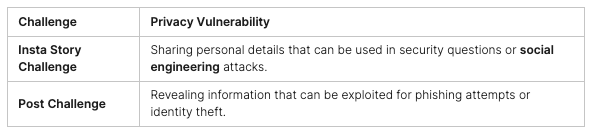
    What role does threat intelligence play in Knowledge Graphs?

    Integrating threat intelligence into Knowledge Graphs helps identify vulnerabilities affecting critical resources and uncover potential attack paths. By enriching the graph with industry-standard vulnerability databases and attacker tactics, organizations can visualize vulnerabilities and gain a deeper understanding of cybersecurity risks.

    How does visualizing vulnerabilities and attack paths help organizations?

    Visual representations such as attack graphs allow organizations to grasp the dynamic nature of cybersecurity threats. By visualizing interconnected vulnerabilities and potential attack routes, organizations can prioritize mitigation efforts and enhance their incident response capabilities.

    What is the role of AI and data visualization in the intelligence cycle?

    AI techniques such as machine learning and natural language prompts can analyze and process data, while data visualization enables human investigators to understand and interpret AI-driven insights. The combination of AI and data visualization enhances the investigation process and supports decision-making in cybersecurity.

    What are the steps of the intelligence cycle?

    The intelligence cycle consists of direction, data collection, data processing, analysis, dissemination, and feedback. Humans set objectives and collect data, AI aids in data processing and analysis, and data visualization enables effective communication of the results. Human decision-making and feedback loops are crucial in enhancing future investigations.

  • Why VC’s Are Investing in Startups with Ironclad Security Systems!

    Why VC’s Are Investing in Startups with Ironclad Security Systems!

    In today’s digital landscape, venture capitalists (VCs) increasingly focus on startups, prioritizing robust cybersecurity measures. With the growing importance of protecting sensitive data and intellectual property from security breaches, VCs recognize that a proactive stance on security is vital. By investing in startups that utilize ironclad security systems, venture capitalists mitigate their risk profile. This shift in investment strategies reflects the critical need for comprehensive cybersecurity infrastructures that respond to evolving threats.

    Key Takeaways

    • A strategic focus on robust security measures helps VCs manage risk and safeguard digital assets.
    • The prevalence of cyber threats has significantly influenced venture capital investment strategies.
    • Startups with excellent cybersecurity infrastructures are viewed as more secure and attractive investments.
    • Ironclad security systems play a crucial role in the stability and growth of the startup ecosystem.

    The Rise of Cybersecurity Threats and Venture Capital Response

    In recent years, the cybersecurity landscape has evolved dramatically, with a sharp increase in the frequency and complexity of cyberattacks. These cybersecurity threats have become a major concern for investors, affecting their approach and investment strategies. Recognizing the potential losses due to data breaches, ransomware, or cybercrime.

    Understanding the Current Cybersecurity Climate

    There has been an unprecedented rise in cyber threats, ranging from large-scale data breaches to ransomware attacks that can cripple an entire organization.

    Investing in the future!

    This rapidly evolving cybersecurity climate has made businesses need to deploy robust digital defenses to protect their valuable assets. As a result, venture capital firms have pivoted their investment focus to prioritize securing startups with advanced security measures in place.

    How Cyber Threats Influence Investment Strategies

    The prevalence of cyber threats has significantly impacted venture capital investment strategies, with investors now scrutinizing the cybersecurity measures of potential startup investments more closely than ever before. VCs know cybersecurity incidents can lead to significant financial damage, tarnish a company’s reputation, and erode customer trust.

    As such, they are increasingly looking towards startups with robust security protocols, considering them as safer bets and a means to manage investment risk effectively.

    1. Greater focus on cybersecurity solutions within the startups’ product offerings
    2. Rigorous evaluation of a startup’s security infrastructure during the due diligence process
    3. Increased investment in startups that prioritize continuous security improvements

    These shifts in investment strategies underscore the importance of cybersecurity as a differentiating factor for startup success and the subsequent need for effective risk management in venture capital decisions.

    Investment Trends: The Allure of Secure Startup Investments

    In recent years, the trend toward investing in startups with formidable cybersecurity systems has gained momentum, as these companies are perceived to have a strategic advantage over their peers. Startups at the forefront benefit from increased attention from venture capitalists who recognize these investments’ long-term growth potential and stability, especially in a world where digital threats are becoming commonplace.

    As investors increasingly prioritize secure startup investments, key investment trends have emerged, highlighting the appeal of startups that demonstrate a strong cybersecurity focus:

    • A startup’s cybersecurity infrastructure is assigned greater weight during initial assessments and due diligence.
    • There is a higher propensity for investors to fund startups with advanced security systems compared to startups with weaker cybersecurity measures.

    With the ever-increasing prevalence of digital threats, venture capitalists are shifting their attention towards startups with robust security systems to ensure their investments remain protected and secure in the long run.

    Empowering innovation and security!

    By investing in startups with state-of-the-art cybersecurity systems, venture capitalists enhance their investment portfolio and contribute to the digital ecosystem’s overall security. This collaborative effort helps build a strong foundation for the growth and nurturing of startups, cementing the crucial role of cybersecurity in the success and long-term stability of innovative ventures.

    Assessing the Financial Impact of Security Breaches on Startups

    Security breaches can have a devastating financial impact on startups, ranging from immediate costs associated with addressing the breach to long-term consequences such as loss of customer trust and reduced valuation. As the cost of cybersecurity neglect becomes increasingly apparent, venture capitalists are incorporating cybersecurity risk management into their investment decisions, prioritizing security when identifying and evaluating potential startups for funding.

    Securing success from the start!

    Case Studies: The Cost of Neglecting Cybersecurity

    Several high-profile security breaches have demonstrated the importance of prioritizing cybersecurity in startups. Among these, the 2017 Equifax breach led to the theft of sensitive personal data belonging to 147 million customers, resulting in a financial loss of over $4 billion and a significant hit to the company’s reputation. Similarly, the breach suffered by Yahoo in 2014 exposed the personal data of over 3 billion user accounts, ultimately decreasing the company’s valuation by $350 million in the subsequent Verizon acquisition. Such incidents underscore the seriousness of neglecting cybersecurity and its potential financial consequences on businesses.

    The Equifax breach resulted in a financial loss of over $4 billion and a significant hit to the company’s reputation

    The Importance of Risk Management in Investment Decisions

    Given the potential financial impact of security breaches on startups, cybersecurity risk management has become integral to venture capitalist investment decisions. Due diligence processes now increasingly focus on evaluating the strength of a startup’s cybersecurity measures, ensuring that potential investments have a solid foundation for preventing and managing security incidents:

    1. Investors seek to understand the robustness of a startup’s cybersecurity infrastructure.
    2. Assessing a startup’s vulnerability to various security threats is crucial to identifying potential weaknesses.
    3. Investor confidence in a startup’s ability to manage security risks hinges on demonstrated experience and knowledge.

    By incorporating these considerations into the investment decision-making process, venture capitalists can better manage potential risks and more confidently direct their funding toward startups with a strong focus on security. This reduces the chances of significant financial losses due to security breaches and increases investor confidence in a startup’s long-term stability and growth prospects.

    Cybersecurity as a Competitive Advantage for Startup Fundraising

    In the current landscape of startup fundraising, a strong cybersecurity posture has emerged as a vital competitive advantage. As investors become increasingly security-conscious, they are more inclined to back companies that can demonstrate a solid commitment to protecting their operations and client data from cyber threats. This shift has led to advanced cybersecurity measures becoming non-negotiable components of a startup’s value proposition, with security-savvy businesses leveraging their robust digital defenses to gain investor confidence and secure capital.

    Startups with robust cybersecurity gain a competitive edge in the funding landscape.

    Several factors highlight the significance of cybersecurity in startup fundraising:

    1. Investor appeal: Investors progressively prioritize startups with a comprehensive cybersecurity strategy, acknowledging the importance of safeguarding valuable digital assets and providing a secure environment.
    2. Reputation management: A well-implemented cybersecurity plan can prevent damaging breaches, which helps maintain a company’s reputation, customer trust, and, consequently, its valuation.
    3. Growth potential: Startups prioritizing cybersecurity can carve out a valuable niche in a rapidly expanding market, positioning themselves for long-term success.

    “Cybersecurity has undoubtedly become a critical factor in determining investment success and securing funding – startups that prioritize their security measures will be substantially better-positioned than those that do not.”

    As cybersecurity risks continue to rise, it is evident that robust digital defenses have become an essential component in attracting investors and achieving ongoing growth.

    The Evolving Landscape of Venture Capital Funding and Security

    The landscape of venture capital funding is continuously changing, with a noticeable shift in priorities towards startups with advanced cybersecurity measures. This shift reflects an understanding by VCs that strong security systems are no longer optional but necessary, driving a more rigorous due diligence process that places security at the forefront of investment criteria.

    Changing Priorities Amongst Venture Capitalists

    Venture capitalists increasingly recognize the importance of ironclad security systems, moving essential cybersecurity from one of many considerations to a more prominent role. This new focus on security priorities has implications for the VC investment process, as outlined in the table below:

    As a result of these changing priorities, due diligence has become more comprehensive when assessing startups for potential investment. VCs are paying closer attention to factors such as the strength of security infrastructure, data protection policies, and employee cybersecurity training programs.

    Incorporating Security in the Pitch: A Must for Startups

    Startups seeking venture capital funding must now prioritize incorporating cybersecurity into their pitches. By presenting comprehensive cybersecurity strategies as part of their value proposition, they are more likely to attract funding. Security is no longer an afterthought but a critical element for gaining investor interest and capital.

    “Security is not a one-time fix; it’s an ongoing process. By embracing security as a core value, startups position themselves to better engage with investors and build trust.” – Cybersecurity Expert

    An emphasis on essential cybersecurity can help startups differentiate themselves in a crowded market. Startups can use the following points to incorporate security into their pitch:

    1. Highlight the company’s dedication to staying current with evolving security threats and adapting its defenses accordingly.
    2. Discuss the company’s robust security infrastructure, including technology, personnel, and policies.
    3. Share customer testimonials affirming the startup’s data security and privacy commitment.
    4. Illustrate how the company’s secure environment can reduce the financial risks associated with security breaches, attracting VCs.

    Ultimately, by focusing on security as a core value and strategically incorporating it into their pitch, startups are better positioned to attract investments from venture capitalists in today’s evolving venture capital funding and security landscape.
    Long-term Benefits: Why VCs Bank on Startups with Robust Security

    Venture capitalists bank on startups with robust security due to their long-term benefits, including sustained growth potential and resilience to digital threats. A strong cybersecurity foundation allows startups to protect their intellectual property and user data better, reducing the likelihood of disruptions, ensuring stability, and offering a more attractive investment proposition for VCs focused on steady returns.

    Some of the critical benefits that ultimately impact the VC investment rationale are:

    • Enhanced scalability and growth potential
    • Increased resilience to cyberattacks and online threats
    • Improved protection of sensitive data and intellectual property
    • The lower risk profile for investment

    Companies must rely on more than traditional security measures in the modern digital landscape. Instead, they must focus on evolving solutions that proactively address new and emerging threats. The long-term benefits of a strong cybersecurity framework will propel a startup toward success, making it an attractive investment opportunity for VCs seeking steady returns and promising prospects.

    “By investing in startups that prioritize robust security, venture capitalists are not only aligning themselves with companies that stand a better chance of surviving in today’s complex threat environment but also are more likely to thrive and scale-up, making it a wise and strategic investment choice.”

    Through continued prioritization of cybersecurity investments, venture capitalists can help breed a new generation of startups focusing on long-term success, stability, and robust security, paving the way for the next era of business growth and innovation.

    The Role of Ironclad Security Systems in Building a Secure Startup Ecosystem

    Ironclad security systems play a pivotal role in building a secure startup ecosystem by providing a framework to protect against cyber threats and ensure data integrity. By adopting stringent cybersecurity protocols, startups secure their immediate operational environment and contribute to the ecosystem’s broader stability and trustworthiness, attracting more investment and fostering innovation.

    Cybersecurity protocols encompass a wide array of practices, solutions, and technologies that work in tandem to minimize vulnerabilities and enhance the resilience of the entire ecosystem. These protocols provide a foundation for startups to build upon and use as a launchpad to grow while maintaining their security posture.

    By implementing ironclad security systems, startups are proactively contributing to the creation of a secure environment, increasing overall trust in the ecosystem and promoting more investment and collaboration between stakeholders.

    With the increasing sophistication and prevalence of cyber threats, the importance of robust security systems in startups cannot be understated. Let us explore some key measures that help create a secure startup ecosystem:

    • Regular vulnerability assessments and penetration testing
    • Implementation of end-to-end encryption for data storage and transmission
    • Use of multi-factor authentication mechanisms
    • Employee training and establishment of a security-conscious culture
    • Development and enforcement of detailed cybersecurity policies and procedures

    These initiatives provide a strong defensive framework for individual startups and help create an environment conducive to the growth and innovation of all participants in the ecosystem.

    Investors play a crucial role in encouraging the development of secure startup ecosystems. Through careful due diligence and a focus on cybersecurity, investors can identify startups that prioritize strong security measures. In turn, this will lead to the funding and growth of these startups, ultimately fostering a more secure ecosystem as a whole.

    Ultimately, ironclad security systems are not only essential for protecting individual startups but also act as a catalyst for developing a secure startup ecosystem. By integrating robust cybersecurity protocols, startups contribute to a safer and more prosperous environment for all participants, fueling innovation and ensuring long-term growth.

    Conclusion

    In the dynamic landscape of startup investments, cybersecurity has emerged as a pivotal factor influencing the trajectory of success. The imperative role of cybersecurity in fortifying startups against digital risks is undeniable, serving as a linchpin for maintaining a competitive advantage.

    Acknowledging the profound impact of cybersecurity on investment portfolios, venture capitalists are increasingly recognizing its strategic significance. Prioritizing cybersecurity measures safeguards startups from potential security breaches and enhances their appeal to investors. Consequently, startups with stringent security protocols stand poised to attract investment and thrive in an era where digital resilience is paramount.

    In essence, the prevalence of cybersecurity threats has fundamentally shaped the strategies of venture capital investments, underscoring the value placed on startups committed to safeguarding their digital assets. The critical takeaway is that investors must prioritize cybersecurity to evaluate potential investments. For a comprehensive solution tailored to meet the evolving challenges of cybersecurity, we invite you to explore Peris.ai Cybersecurity on our website. Safeguard your investment and confidently navigate the digital landscape – visit us today.

    FAQ

    Why are venture capitalists increasingly investing in startups with ironclad security systems?

    Venture capitalists understand the importance of protecting sensitive data and intellectual property from security breaches, and they recognize that investing in startups with robust cybersecurity measures lowers the risk profile of their investments. Additionally, strong cybersecurity can provide a competitive advantage, making these startups more attractive to investors seeking long-term growth potential and stability.

    How do cybersecurity threats influence venture capital investment strategies?

    The prevalence of cyber threats has significantly shifted venture capital investment strategies, prompting investors to scrutinize the cybersecurity measures of potential startup investments more closely. As cyber incidents can lead to considerable financial damage, tarnish reputation, and erode customer trust, venture capitalists are increasingly looking for startups with robust security protocols to manage investment risk effectively.

    What role does risk management play in venture capital investment decisions?

    Risk management plays a crucial role in investment decisions. Venture capitalists examine startup security protocols as an essential component of due diligence to ensure that potential investments have strong cybersecurity foundations. By doing so, investors proactively manage risk and avoid the pitfalls associated with security incidents.

    How can cybersecurity serve as a competitive advantage for startup fundraising?

    Startups demonstrating strong cybersecurity measures can leverage this attribute to gain investor confidence and secure capital. As investors increasingly know the importance of protecting operations and client data from cyber threats, having a solid cybersecurity foundation can distinguish startups in the competitive fundraising landscape.
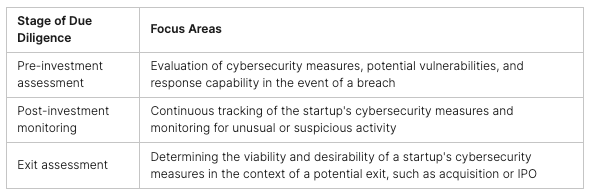
    What is the role of ironclad security systems in building a secure startup ecosystem?

    Ironclad security systems play a critical role in creating a secure startup ecosystem by providing a framework to protect against cyber threats and ensure data integrity. By adopting stringent cybersecurity protocols and systems, startups secure their immediate operational environment and contribute to the ecosystem’s broader stability and trustworthiness, attracting more investment and fostering innovation.

    What are some success stories of startups that have secured funding due to their exceptional security measures?

    While specific examples of startups should not be cited in this format, there are many instances where startups have successfully secured funding due to their top-tier security measures. By examining these case histories, potential investors and entrepreneurs can gain insights into best practices and understand how prioritizing cybersecurity can lead to successful fundraising efforts and positive growth trajectories.