As cyber threats evolve, Magniber ransomware has resurfaced, targeting home users globally by encrypting devices and demanding ransoms. Here’s an in-depth look at Magniber, its methods, and effective precautions to safeguard against this persistent threat.
Understanding the Magniber Ransomware Campaign
Ransomware Overview:
Origins: Magniber was first identified in 2017, evolving from the notorious Cerber ransomware.
Distribution Tactics: It exploits Windows zero-day vulnerabilities, deceives users with fake software updates, and spreads through illicit software cracks and key generators.
Recent Surge in Attacks:
Increase in Activity: Since July 2024, there has been a noticeable spike in Magniber ransomware attacks.
Impact: Over 720 incidents have been reported, demonstrating its significant reach among individual users.
Encryption Tactics and Ransom Demands:
Encryption Technique: Magniber uses a potent encryption method, appending unique extensions like .oaxysw or .oymtk to encrypted files.
Ransom Instructions: Victims find a ransom note named READ_ME.htm on their device, which includes payment instructions accessible via a Tor website.
Ransom Costs: Demands typically start at $1,000, increasing to $5,000 if the ransom is not paid promptly within three days.
Decryption Challenges:
Past Solutions: In 2018, a decryptor was released by AhnLab, which has since become ineffective due to updates by the cybercriminals.
Current Status: As of now, no free decryption solutions are available for the latest strains of Magniber ransomware.
Protective Measures Against Magniber Ransomware
Avoid Unsafe Software Sources:
Risks of Illicit Downloads: Software cracks and key generators are high-risk sources for malware distribution. Refrain from downloading these to prevent ransomware infections.
Enhance Security Protocols:
Update Security Software: Regular updates to antivirus and anti-malware programs are essential to detect and thwart malicious attacks effectively.
Data Backup Strategies:
Routine Data Backups: Consistently back up your data to external drives or cloud storage. This redundancy can be crucial for restoring your information without succumbing to ransom demands.
Cybersecurity Awareness:
Stay Updated: Keep abreast of the latest cybersecurity threats and protective strategies to enhance your digital defenses.
️ Your Proactive Cybersecurity Stance
The revival of Magniber ransomware underscores the necessity of vigilant cybersecurity practices. By avoiding unauthorized downloads and maintaining up-to-date security measures, you can significantly mitigate the risk of falling victim to such attacks.
For individuals impacted by Magniber, a dedicated support topic is available, offering guidance and recovery suggestions.
Stay Informed, Stay Protected
For further updates on cybersecurity and detailed insights, visit our website at peris.ai.
As our world becomes more interconnected and digitalized, the significance of robust cybersecurity measures cannot be emphasized enough. Companies operating in diverse industries constantly face the threat of malicious actors eager to exploit vulnerabilities within their systems and networks. To safeguard sensitive data and maintain uninterrupted business operations, organizations must adopt proactive strategies to bolster their cybersecurity defenses. A highly effective technique that has gained considerable prominence in recent years is known as Red Teaming.
Red Teaming is a powerful solution to this challenge, offering a comprehensive and realistic assessment of an organization’s security posture. Unlike conventional penetration testing focusing on limited security aspects, Red Teaming takes a holistic approach. By simulating real-world cyber-attacks, Red Teaming replicates the strategies and techniques of actual adversaries, enabling organizations to identify weaknesses and potential attack vectors that might otherwise go unnoticed. This proactive methodology empowers companies to understand their security gaps better, proactively address vulnerabilities, and fortify their cybersecurity framework.
What is Red Teaming?
Red Teaming is a security assessment methodology that simulates real-world cyber-attacks on an organization’s systems and infrastructure. Unlike traditional penetration testing, which focuses on finding vulnerabilities within the scope of a specific assessment, Red Teaming takes a more comprehensive approach. It aims to replicate genuine adversaries’ tactics, techniques, and procedures (TTPs) to identify weaknesses and uncover potential attack vectors that may have been overlooked.
The Role of Red Teamers
Red Teaming is carried out by highly skilled cybersecurity professionals known as Red Teamers. These individuals deeply understand various hacking techniques, social engineering tactics, and cutting-edge cybersecurity tools. Their primary objective is to emulate the mindset and actions of potential attackers, helping organizations identify and address vulnerabilities before malicious actors can exploit them.
Benefits of Red Teaming
Holistic Security Assessment: Red Teaming evaluates an organization’s security posture, considering technical and human factors. It assesses the effectiveness of security controls, incident response procedures, employee awareness, and other critical aspects of cybersecurity.
Realistic Threat Simulation: Red Teaming goes beyond traditional vulnerability scanning and testing. It emulates the tactics of real attackers, enabling organizations to identify vulnerabilities that may go unnoticed in routine security assessments. By mimicking real-world attack scenarios, Red Teaming helps organizations understand their adversaries better and prepare robust defense strategies accordingly.
Identifying Weak Links: Red Teaming aims to identify the weakest links in an organization’s defenses, whether technical vulnerabilities or human errors. It helps uncover potential entry points that attackers could exploit, providing valuable insights into areas that require immediate attention and strengthening.
Enhanced Incident Response Capability: Red Teaming exercises simulate actual attacks, allowing organizations to test their incident response capabilities in a controlled environment. This enables the identification of gaps in response procedures, communication channels, and coordination among teams. By uncovering weaknesses in incident response, organizations can improve their ability to detect, respond, and recover from security incidents effectively.
Improved Security Awareness and Training: Red Teaming exercises often involve social engineering techniques like phishing emails or physical intrusion attempts. Organizations can identify areas where additional education and awareness efforts are required by testing employees’ security awareness and training programs. This helps in creating a more security-conscious culture within the company.
Implementing Red Teaming
To implement Red Teaming effectively, organizations should follow these key steps:
Define Objectives: Clearly define the goals and scope of the Red Teaming exercise. Determine which systems, networks, or personnel will be included and identify the areas to assess.
Assemble a Red Team: Build a team of skilled cybersecurity professionals to conduct the Red Teaming exercise. The team should include experts from various domains, such as penetration testing, social engineering, and incident response.
Reconnaissance and Planning: The Red Team should gather information about the organization’s systems, networks, and personnel. This helps in designing realistic attack scenarios and identifying potential vulnerabilities.
Simulation and Testing: The Red Team performs the simulated attacks, employing various techniques to exploit vulnerabilities and gain unauthorized access. This may include network attacks, phishing campaigns, physical intrusion attempts, etc.
Analysis and Reporting: After the exercise, the Red Team provides a detailed report highlighting their identified vulnerabilities and weaknesses. They should also offer recommendations for remediation and strengthening the organization’s defenses.
Remediation and Follow-Up: Based on the Red Team’s findings, the organization’s cybersecurity team should prioritize and address the identified vulnerabilities. They should also revise security policies, procedures, and training programs to mitigate future risks.
Conclusion
Organizations must be bold in the ever-evolving landscape of cybersecurity threats. A proactive approach is essential to safeguard sensitive data, protect business continuity, and stay ahead of malicious actors. Red Teaming is a robust and comprehensive methodology that can significantly enhance your organization’s security posture. By adopting Red Teaming practices, you can better understand your vulnerabilities, strengthen incident response capabilities, and cultivate a culture of heightened security awareness within your company.
Implementing Red Teaming empowers your organization to identify weaknesses that may go unnoticed through traditional security assessments. By simulating real-world attack scenarios, Red Teaming allows you to see your defenses from an adversary’s perspective, enabling you to fortify your systems and networks accordingly. The comprehensive evaluation provided by Red Teaming helps you uncover potential entry points and address them proactively, reducing the risk of successful cyber-attacks.
Additionally, Red Teaming enhances your incident response capabilities by allowing you to test and refine your response procedures in a controlled environment. By simulating realistic attacks, you can identify gaps or bottlenecks in your incident response plan, fine-tune your processes and enhance your ability to detect, respond to, and recover from security incidents effectively.
To take your organization’s cybersecurity defenses to the next level, we would like to invite you to explore our website. Our team of experienced professionals specializes in Red Teaming services tailored to meet your specific needs. By engaging our services, you can benefit from our expertise in emulating real-world attack scenarios, identifying vulnerabilities, and providing actionable recommendations to bolster your defenses.
Remember, staying ahead in the battle against cyber threats requires a proactive stance. Embrace Red Teaming as a proactive approach to cybersecurity, and fortify your organization against the ever-evolving threat landscape. Visit our website today to learn more about how our Red Teaming services can empower your company and protect your valuable assets in the digital age.
With over 2 billion active users globally, Google accounts are a treasure trove of sensitive information—emails, photos, documents, and even financial details. This makes them prime targets for cybercriminals employing tactics like phishing, malware, and stolen credentials to gain unauthorized access.
A compromised Google account can lead to financial fraud, identity theft, and even reputational damage. Recognizing the warning signs and taking immediate action can prevent these threats from escalating into catastrophic consequences.
⚠️ Signs Your Google Account May Be Hacked
Despite Google’s robust security features, no system is foolproof. Here’s how you can detect if your account has been breached:
Unexpected Changes in Security Settings
Suspicious Activity Across Google Services
Unauthorized Financial Transactions
Google Security Alerts
What to Do If Your Google Account Is Hacked
A swift response is critical to mitigating the damage from a hacked account. Follow these steps to regain control and secure your account:
Enable Two-Factor Authentication (2FA)
Scan and Remove Malware
Update Passwords
Review Connected Devices and Apps
Notify Your Financial Institutions
Inform Your Contacts
️ How to Prevent Future Hacks
Proactive measures can significantly reduce the risk of a breach:
Strengthen Your Security
Be Cautious of Phishing Scams
Update Software Regularly
Secure Your Internet Connection
Stay Secure with Peris.ai
A compromised Google account can expose sensitive information to cybercriminals, but early detection and immediate action can make all the difference. Implementing security best practices, enabling advanced protection features, and maintaining vigilance are your best defenses against future attacks.
Want to learn more about safeguarding your online identity? Visit Peris.ai for expert cybersecurity insights and solutions tailored to keep your digital world safe.
Your Peris.ai Cybersecurity Team #YouBuild #WeGuard
Cloud computing is becoming more common, making cloud security a big issue. Almost 80% of companies face a data breach in 18 months. Data breaches are the biggest risk for companies, and many don’t use basic security tools like encryption.
To keep your cloud safe, it’s key to get advice from a cloud security expert. They can teach you about the best ways to secure your cloud and offer solutions that meet strict standards.
Using cloud security best practices, like encryption and access control, can lower the risk of data breaches. A cloud security specialist can create custom solutions to protect your data.
By focusing on cloud security, you can lower the risk of data breaches. This ensures your cloud environment is safe. Is your cloud secure? Find out by asking a cloud security specialist.
Key Takeaways
Cloud security is a top concern, with nearly 80% of companies experiencing at least one data breach within an 18-month period.
Implementing cloud security best practices, such as encryption and access control, can significantly reduce the risk of data breaches.
A cloud security specialist can provide tailored solutions to protect your data and ensure compliance with regulatory requirements.
Cloud security best practices and secure cloud solutions are essential for mitigating the risk of data breaches.
Ask a cloud security specialist to assess your cloud environment and provide guidance on cloud security best practices and secure cloud solutions.
By prioritizing cloud security, you can ensure the integrity of your cloud environment and protect your data from breaches.
Cloud security specialists play a critical role in ensuring the security of cloud environments and protecting against data breaches.
The Growing Challenges of Cloud Security in Today’s Digital Landscape
More companies are moving to the cloud, but cloud security risks are a big worry. Cloud security breaches are on the rise. It’s key for companies to follow cloud security compliance rules. Cloud security consulting offers expert advice on how to keep the cloud safe.Some important stats show why cloud security matters:
59% of organizations say security and compliance are big hurdles to faster multi-cloud adoption.
52% struggle with technical issues like seeing and controlling policies in multi-cloud setups.
49% lack the resources needed to set up cloud security.
With these challenges, it’s vital for companies to focus on cloud security. They should think about getting help from cloud security consulting services. This ensures that their data is safe and meets legal standards.By understanding and tackling cloud security challenges, companies can reduce cloud security risks. This way, they can keep their cloud environment safe and secure.
Why Your Organization Needs a Cloud Security Assessment
Keeping data safe in the cloud is a big deal for companies. A cloud security assessment is key to protecting cloud environments. Recent stats show that 75% of breaches are due to misconfigurations, making regular checks vital.Cloud security experts are essential for spotting risks and fixing them. They help keep your data safe, which is critical for any business.A cloud security assessment finds and fixes security risks before they happen. It can cut down on attack surfaces by 30% and speed up response times by 40%. This is important because 66% of IT pros don’t fully trust their cloud security.
Identifying misconfigurations and vulnerabilities
Ensuring compliance with industry standards and regulations
Protecting data in the cloud from unauthorized access
Improving incident response time and reducing recovery times
Companies can keep their cloud data safe by teaming up with cloud security experts and doing regular assessments. This protects their information and lowers the chance of security breaches.
The Role of a Cloud Security Specialist in Protecting Your Data
A cloud security specialist is key in keeping your data safe. They must know how to spot and fix security problems. Gartner says that by 2025, most cloud security failures will be caused by human mistakes. This shows how important a cloud security specialist is in keeping your data safe.
Cloud security services and solutions are vital in fighting off threats. These threats include zero-day exploits and insider threats. A cloud security specialist must keep up with new threats and know how to protect your data. They do this by using Identity and Access Management (IAM) and encrypting your data.
A cloud security specialist watches network activities and alerts you to possible breaches. They also make sure your data follows laws like GDPR and HIPAA. They need to know a lot about cloud security to keep your data safe.
Certification and Qualification Requirements
To do their job well, a cloud security specialist needs the right certifications. They should have CompTIA Security+ and CISSP. They also need experience in cloud security services and solutions.
Real-World Case Study: Manufacturing Firm Prevents Data Breach
A recent case study of a manufacturing firm shows the value of cloud security best practices and secure cloud solutions. These measures helped the firm protect its data and avoid a breach. Thanks to cloud security services, they kept their sensitive information safe.The firm chose to invest in cloud security best practices and secure cloud solutions due to rising cloud security threats. About 45% of security incidents come from the cloud. The cost of a data breach has also jumped to $4.88 million in 2024.Key advantages of cloud security best practices and secure cloud solutions include:
Improved data protection
Reduced risk of security incidents
Compliance with regulatory requirements
Partnering with a cloud security expert and using cloud security services helps keep data safe. This includes regular audits, risk checks, and monitoring for compliance.
The table below outlines the benefits of cloud security best practices and secure cloud solutions:
Essential Components of a Complete Cloud Security Strategy
A complete cloud security strategy is key to fighting cloud security risks and following cloud security rules. It involves setting up different measures to guard cloud spaces from threats. Cloud security consulting aids in crafting and applying effective cloud security plans.Key parts of a full cloud security strategy include access control, encryption, and following rules. These parts work together to keep cloud spaces safe and sound. By focusing on cloud security consulting and following rules, companies can lower the chance of cloud security breaches. This ensures the safety of important data.Regular security checks and ongoing monitoring are also vital. They help spot and fix weaknesses quickly. This keeps companies ahead of new cloud security dangers and ensures their security plans work well. By being proactive in cloud security, companies can reduce the risk of security issues. They also keep the trust of their stakeholders.
By adding these key components to their cloud security plans, companies can tackle cloud security risks well. Cloud security consulting offers important advice and support. It helps companies create and apply detailed cloud security strategies that fit their specific needs.
Is Your Cloud Really Secure? Ask a Cloud Security Specialist for These Key Assessments
To keep your cloud safe, it’s key to get expert advice. A cloud security specialist can check your cloud’s security. They can also help you follow the best practices and use secure solutions.Recent stats show that 50% of cyberattacks in 2024 hit cloud vulnerabilities. This shows how critical a strong cloud security plan is. A specialist can review your cloud and suggest ways to improve. They might recommend things like least privilege access and automated monitoring tools.Some important things to ask a cloud security specialist include:
Evaluating your cloud security posture and identifying possible vulnerabilities
Checking if you meet rules like GDPR and HIPAA
Following cloud security best practices and using secure solutions
Doing regular security checks and risk assessments
By getting these assessments, you can make sure your cloud is secure. This lets you relax and focus on your business.
Implementing Cloud Security Best Practices: A Step-by-Step Approach
Protecting data and applications in the cloud is key for organizations. Over 90% of companies say moving to the cloud brings new security risks. To tackle these risks, using cloud security services is vital. This includes initial security audits and strategies to lower risks.A secure cloud solution gives organizations the tools and knowledge to safeguard their data. Cloud security consulting helps in applying best practices like encryption and access control. By following these steps, organizations can reduce data breach and cyber attack risks by about 70%.
Initial Security Audit Process
The first step in cloud security is the security audit process. It’s about finding and checking for security risks and weaknesses in the cloud. Cloud security services like vulnerability assessments and penetration testing help spot these issues.
Risk Mitigation Strategies
Having strategies to reduce risks is also important. These strategies include controls and countermeasures to deal with security risks. Cloud security consulting helps create and apply these strategies, like encryption and access control.
Keeping the cloud environment secure is an ongoing task. Organizations use cloud security services for monitoring and incident response. This ensures they can handle security threats quickly. By following these steps, organizations can keep their cloud environments safe and reduce the risk of attacks.
The Cost of Not Having Professional Cloud Security Support
Companies without proper cloud security face high costs. These include data breaches and not meeting rules. The price of not having cloud security help can be very high. Some companies pay over $3 million for security breaches.About 94% of businesses have had a big cloud security problem in the last year. Those using more than one cloud are 50% more likely to get hacked. Cloud security risks can be lessened by getting professional help and following rules.Not having cloud security support can lead to several costs. These include:
Financial losses from security breaches
Damage to reputation
Loss of customer trust
Not following rules
Getting professional cloud security help can lower the risk of data breaches. It also makes sure companies follow the rules. By focusing on cloud security, companies can keep their data safe and avoid high costs from security issues.Measuring the Success of Your Cloud Security ProgramTo make sure your cloud security program works well, you need to measure its success. Use cloud security services that give you important performance indicators and metrics. This way, you can see where you need to get better and improve your cloud security plan.Cloud security consulting is key to a strong cloud security strategy. It includes regular checks and monitoring. This means doing vulnerability scans, checking multi-factor authentication, and following rules like GDPR and HIPAA.Some important metrics to watch include:
Incident response time
Compliance achievement
Security ROI
Tracking these metrics helps you know if your cloud security program is working. It lets you make smart choices to boost your cloud security.Investing in cloud security services and solutions keeps your data safe. With cloud security consulting, you can create a solid cloud security plan. This ensures your cloud infrastructure is secure and follows the rules.
Conclusion: Securing Your Cloud Infrastructure for the Future
As businesses continue migrating to the cloud, securing cloud infrastructure is more critical than ever. With the average cost of a data breach reaching USD 4.88 million, organizations must take proactive security measures to prevent financial and reputational damage.Businesses can safeguard sensitive data and reduce risks by implementing cloud security best practices, including regular security assessments, encryption, and compliance monitoring. Industries like finance, healthcare, and government must meet strict regulatory requirements, making secure cloud solutions essential for avoiding costly penalties.The cloud security market is rapidly growing, underscoring the increasing need for strong protection strategies. Investing in AI-driven security, continuous monitoring, and expert cloud security solutions ensures that your data remains secure against evolving threats. Is your cloud really secure? Protect your business with Peris.ai’s cloud security solutions. Visit https://www.peris.ai/ to strengthen your cybersecurity posture today.
FAQ
What is the importance of cloud security in today’s digital landscape?
Cloud security is key today because it keeps sensitive data safe. It also makes sure we follow the law. A cloud security expert can help create custom solutions to keep data safe and follow the rules.
What are the growing challenges of cloud security?
Cloud security faces many challenges. These include risks, compliance issues, and the need for expert advice. Threats, vulnerabilities, and big breaches show that we need strong security measures.
Why is a cloud security assessment necessary for my organization?
A cloud security assessment is vital to find and fix weaknesses. It keeps cloud environments safe. Cloud security experts can do a detailed check and suggest ways to improve, following best practices.
What is the role of a cloud security specialist in protecting my data?
A cloud security specialist is key in keeping data safe and following the law. They need the right skills and certifications to spot and fix security issues. They offer cloud security services and set up secure solutions.
How can I prevent a data breach in my cloud environment?
To avoid a data breach, follow cloud security best practices and use secure solutions. This includes access control, encryption, and following the law. Use cloud security services to watch over and keep your cloud safe.
What are the essential components of a complete cloud security strategy?
A good cloud security strategy includes access control, encryption, and following the law. It also involves consulting and assessing risks. These steps ensure that cloud environments are secure and data is protected.
How can I measure the success of my cloud security program?
Track important metrics to see if your cloud security program is working. Look at security ROI and compliance, and use cloud services to improve your strategy. This keeps your cloud environment safe.
What is the cost of not having professional cloud security support?
Without professional cloud security, you face big risks. This includes data breaches and not following the law. It can cost a lot and harm your reputation, showing the need for expert advice and risk assessment.
How can I ensure the security of my cloud infrastructure for the future?
To keep your cloud infrastructure secure, focus on cloud security. Do regular assessments and follow best practices. Ask a cloud security expert for advice and recommendations on how to improve.
Amidst the ever-changing digital landscape, businesses of all sizes have embraced technology and the internet as essential elements for efficient and effective operations. However, this digital transformation has also exposed them to an ever-increasing risk of cyber threats and attacks. The repercussions of falling victim to such attacks can be devastating, encompassing financial losses and significant harm to a company’s reputation, legal entanglements, and the erosion of customer trust. In light of these menacing risks, investing in cyber safety has transcended the realm of choice and become an absolute necessity for every business. This comprehensive guide aims to underscore the importance of prioritizing cyber safety. It offers actionable steps to fortify your company’s cybersecurity posture, ensuring robust protection of its valuable assets in the face of relentless cyber threats.
The Growing Cybersecurity Threat Landscape
The threat landscape for cybersecurity is constantly evolving, with cybercriminals becoming more sophisticated and relentless in their attacks. Businesses are vulnerable to various cybersecurity risks, from data breaches and ransomware attacks to phishing scams and insider threats. The motivations behind these attacks can range from financial gain to corporate espionage or simply causing disruption. Businesses must understand that cyber-attacks are no longer isolated incidents but continuous, targeted efforts to exploit vulnerabilities.
Understanding the Impact of Cybersecurity Incidents
Before delving into the measures needed to enhance cyber safety, it is essential to comprehend the potential impact of cybersecurity incidents on a company:
Financial Losses: Cybersecurity breaches can lead to substantial financial losses due to the theft of sensitive data, ransom payments, legal expenses, and system repairs.
Reputation Damage: A cyber-attack can tarnish a company’s reputation, eroding customer trust and loyalty. Recovering from the reputational damage can be an uphill battle.
Legal and Compliance Issues: Depending on the industry and location, companies may be subject to various cybersecurity regulations and data protection laws. Failure to comply with these can result in legal penalties.
Disruption of Operations: A successful cyber-attack can disrupt business operations, leading to downtime, loss of productivity, and missed opportunities.
Loss of Intellectual Property: Intellectual property theft can occur in cyber-attacks, causing a loss of competitive advantage and innovation.
Loss of Customer Data: If customer data is compromised, it can lead to identity theft and fraud, exposing the company and its customers to significant risks.
The Importance of Investing in Cyber Safety
Given the potential consequences of cyber-attacks, investing in cyber safety should be a top priority for all businesses. Here are some compelling reasons why your company should allocate resources to bolster its cybersecurity:
1. Protecting Valuable Assets
Your company’s data, intellectual property, and proprietary information are invaluable assets that require robust protection. Investing in cybersecurity measures ensures that these assets remain safe from unauthorized access and theft.
2. Safeguarding Customer Trust
Customer trust is vital for the success of any business. A robust cybersecurity posture reassures customers that their sensitive information is safe, fostering loyalty and long-term relationships.
3. Regulatory Compliance
Many industries have specific cybersecurity regulations that companies must comply with. Investing in cyber safety helps your business meet these requirements and avoids potential legal liabilities.
4. Competitive Advantage
In today’s competitive market, demonstrating a commitment to cybersecurity can give your company a significant edge. Clients and partners are likelier to choose a company with a proven track record of safeguarding data and privacy.
5. Business Continuity
Cyber-attacks can disrupt operations and lead to prolonged downtime. Investing in cyber safety ensures business continuity by minimizing the risk of costly disruptions.
Key Steps to Enhance Cyber Safety
Now that we understand the importance of investing in cyber safety, let’s explore some actionable steps that your company can take to strengthen its cybersecurity posture:
1. Conduct a Cybersecurity Risk Assessment
Start by conducting a comprehensive cybersecurity risk assessment. Identify potential threats, vulnerabilities, and risks specific to your organization. Assess the potential impact of these risks on your business and prioritize them based on severity.
2. Develop a Cybersecurity Policy
Create a clear and concise cybersecurity policy outlining the rules and guidelines for all employees. The policy should cover password management, data handling, network security, and remote work protocols.
3. Educate and Train Employees
Invest in cybersecurity training and awareness programs for all employees. Ensure they understand the latest threats and best practices to avoid falling victim to cyber-attacks like phishing or social engineering.
4. Implement Strong Access Controls
Control access to sensitive data and systems by implementing robust authentication mechanisms like multi-factor authentication (MFA). Limit access privileges to only those who need it for their roles.
5. Regularly Update and Patch Software
Keep all software, including operating systems, applications, and security tools, updated with the latest patches and updates. Cybercriminals often exploit vulnerabilities in outdated software.
6. Secure Your Network
Use firewalls, intrusion detection, and prevention systems (IDPS), and virtual private networks (VPNs) to secure your network. Segment your network to limit the potential impact of a breach.
7. Back Up Data Regularly
Frequently back up all critical data and verify the integrity of the backups. In a ransomware attack or data breach, having secure and up-to-date backups can save your company from severe data loss.
8. Invest in Endpoint Security
Cybercriminals often target endpoint devices, such as laptops and mobile phones. Invest in robust endpoint security solutions to protect these devices from malware and unauthorized access.
9. Monitor and Respond to Threats
Deploy a security operations center (SOC) or partner with a managed security service provider (MSSP) to monitor your network for potential threats 24/7. Implement an incident response plan to respond quickly and effectively to security breaches.
10. Regularly Test and Improve Security Measures
Conduct regular penetration tests and security assessments to identify weaknesses in your cybersecurity measures. Use the results to improve your company’s security posture continually.
Conclusion
Safeguarding your company from cyber threats requires an unwavering dedication to cyber safety, recognizing it as an ongoing and dynamic commitment. The digital landscape evolves rapidly, and cyber criminals continuously devise new tactics to breach defenses. As a result, constant vigilance and adaptability are essential in the battle against cyber-attacks. By following the guidelines outlined in this comprehensive guide, including conducting regular risk assessments, empowering your employees with cybersecurity education, implementing robust access controls, and regularly testing and improving security measures, your company can build a formidable defense against potential threats.
Remember that cybersecurity is not solely the responsibility of your IT team; instead, it is a shared responsibility that involves every individual in your organization. Employees play a vital role in safeguarding the company’s digital assets, and fostering a culture of cyber awareness is crucial. Encourage your team members to remain vigilant and report any suspicious activity promptly. Your company can create a resilient and secure environment to protect against cyber-attacks with collective efforts.
We invite you to visit our website to stay up-to-date with the latest cybersecurity trends, tools, and best practices. Our platform offers many resources, including informative articles, expert insights, and innovative solutions to help fortify your company’s cybersecurity posture. Remember, investing in cyber safety is an investment in your business’s future success and growth. Embrace the challenge of securing your digital assets and forge ahead confidently in this ever-evolving digital age. Together, we can safeguard your company’s data, reputation, and customer trust, ensuring your organization’s resilient and thriving future. Visit our website today and embark on the journey to bolster your cybersecurity defenses.
The conclusion of Black Hat USA 2024 has left the cybersecurity community abuzz with new strategies, insights, and the urgent need to adapt to rapidly evolving threats. This summary highlights essential takeaways and how they can enhance your organization’s cybersecurity strategies.
1. Identity and Access Management Takes Center Stage
Growing Importance of IAM: This year’s conference emphasized identity and access management (IAM) as a cornerstone of cybersecurity. With increasing incidents of identity-related breaches, implementing stringent IAM controls is essential for safeguarding sensitive data and systems.
Cloud Security Needs: The shift towards cloud-based services demands robust IAM frameworks to manage digital identities effectively across diverse platforms and cloud environments.
2. Emphasizing Security as a Collective Effort
Interdepartmental Collaboration: Security integration across various organizational sectors including IT, engineering, and operations highlights the move towards a unified security approach.
Cultural Integration: There’s a significant shift towards a security-conscious culture within organizations, making security a universal responsibility and improving overall defensive postures.
3. Practical Applications of AI in Cybersecurity
AI Implementation: Beyond theoretical discussions, AI is now actively being integrated into daily cybersecurity operations, enhancing threat detection, response automation, and system resilience.
Maturation of AI Technologies: AI has transitioned from a novel concept to an essential tool, delivering concrete benefits and becoming integral to cybersecurity frameworks.
☁️ 4. Enhanced Focus on Cloud Security
Protection of Cloud Data: Post-migration, the focus has shifted to securing cloud architectures, employing zero-trust models, and ensuring minimal access controls to safeguard digital assets.
Evolving Security Measures: Continuous improvements in cloud security measures are necessary to tackle emerging vulnerabilities and secure cloud-based environments effectively.
️ 5. Prioritizing Organizational Resiliency and Data Protection
Enhancing Resilience: Recent disruptions have prompted organizations to strengthen infrastructure to withstand and quickly recover from cyber threats, emphasizing the importance of resilience in maintaining business continuity.
Securing Data Repositories: With the proliferation of external data platforms, securing sensitive information within systems like Snowflake and MongoDB through dynamic access governance has become critical.
️ Proactive Cybersecurity Posture
The insights garnered from Black Hat USA 2024 underscore the necessity of adopting advanced cybersecurity measures. Key strategies include:
Strengthening IAM to protect identity data and system access.
Cultivating a security-first culture across all organizational levels.
Leveraging AI to automate and enhance security processes.
Implementing rigorous cloud security protocols.
Focusing on building a resilient organizational infrastructure capable of responding to and recovering from cyber incidents.
Stay Informed and Secure
These developments from Black Hat USA 2024 serve as a roadmap for organizations aiming to stay ahead of the curve in a landscape marked by sophisticated cyber threats. By embracing these evolving trends and technologies, you can fortify your defenses and ensure comprehensive protection against potential cyber attacks.
For ongoing updates and detailed analyses of the latest in cybersecurity, visit our website at peris.ai.
Stay cautious, stay protected.
Your Peris.ai Cybersecurity Team #YouBuild #WeGuard
Today’s digital world is like a battlefield. Cybersecurity strategies are vital to protect an organization’s data and operations. Two main groups, Red Teams and Blue Teams, play a key role. They form the heart of cyber defense, which is crucial for strong network security.
Red Teams are made up of expert ethical hackers. They take offensive actions to mimic real cyber attackers. Their job is to break into an organization’s defense to find weak spots. This helps businesses improve their security by understanding potential threats. On the flip side, Blue Teams defend against these simulated attacks. They work hard to make sure an organization’s cyber defenses stay strong.
The threat landscape in cybersecurity changes very fast. It’s the combined work of both Red and Blue Teams that helps create and improve cybersecurity strategies. This teamwork makes an organization’s security stronger. It builds a strong defense against cyber threats.
Key Takeaways
The interplay between Red Teams and Blue Teams is foundational to an effective cybersecurity strategy.
Red Teams employ ethical hacking to test and improve cyber defense mechanisms.
Blue Teams are essential for maintaining resilient network security against incoming threats.
Continuous adaptation and updating of the security posture are necessary to respond to the evolving threat landscape.
Threat intelligence gathered by Red Teams is critical for informing the defensive strategies of Blue Teams.
Both teams contribute to a holistic approach to cybersecurity, ensuring the protection of sensitive data and business continuity.
The Strategic Role of Red Teams in Cybersecurity
In the dynamic world of cybersecurity, Red Team exercises are vital for protecting information systems. They use tactics like penetration testing and vulnerability exploitation. These teams perform ethical hacking to mimic real attacker strategies. Their cyber attack simulations help improve an organization’s defenses.
Simulating Real-Life Cyber Attacks
Red Teams work to reflect the unpredictable nature of real cyber threats. They conduct tests ranging from social engineering to advanced digital intrusions. This strengthens security and gets organizations ready for evolving cyber threats.
Continuous Pursuit of System Vulnerabilities
The main goal of Red Teams is to find system vulnerabilities. They carefully check an organization’s network to find possible entry points for hackers. With advanced techniques, they ensure the security measures are strong and effective.
Creativity and Persistence: The Hallmarks of Red Teams
Red Team members are known for their creativity and persistence. These qualities help them find and use system weaknesses. By simulating attacks, they help make security stronger against potential breaches.
Red Teams follow strict rules and ethics to improve, not harm, security. The feedback from their tests is crucial for building a solid cybersecurity defense.
Defensive Protocols: How Blue Teams Safeguard Organizations
Blue Team protocols are the backbone of strong cybersecurity. These teams work tirelessly at the forefront of incident response. They use detailed security measures to protect assets. Their work starts with a thorough risk assessment. Then, they focus on protecting a company’s most valuable assets.
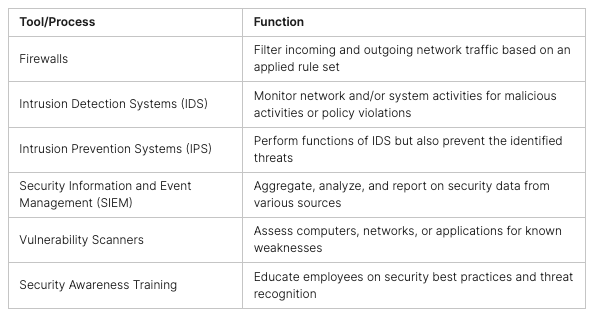
At the heart of their strategy is network monitoring. This helps in catching suspicious activity early. By doing so, they can stop threats before they turn into major issues. Below, you’ll find a list of tools and processes Blue Teams use to protect digital spaces:
The Blue Teams also conduct DNS audits and vulnerability scanning. These are crucial in forming a proactive defense. They check domain names and search for security vulnerabilities.
The Blue Teams are quick to respond in a crisis. Their incident response process includes:
Immediate containment to limit threat impact.
Root cause removal to stop further spread.
System recovery to restore full functionality.
Learning lessons to better prepare for future threats.
As digital assets grow more important, Blue Teams keep improving and watching networks closely. This strengthens an organization’s defenses.
To wrap up, Blue Teams’ expert balance of proactive steps, technical skills, and quick response helps them protect organizations. Their expertise in risk assessment and incident response is crucial for keeping assets safe.
Red Teams and Blue Teams: Enhancing Organizational Resilience
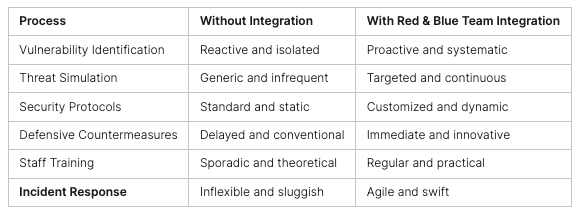
In the world of cybersecurity, merging the power of Red and Blue Teams boosts organizational strength. These teams are key in making a business’s digital space safer and more secure. By combining Red Teams’ proactive steps with Blue Teams’ defensive skills, they create a powerful duo. This mix lets companies quickly adapt and stand strong against cyber threats.
An Integrated Approach to Cyber Threats
Companies that mix both offensive and defensive cyber strategies fare better. They use Red Teams to find weak spots and Blue Teams to protect vital assets. This balanced approach brings out the best in cybersecurity team work. It ensures smooth communication and quick action against threats. Together, these teams set a high standard in cybersecurity that others aim to reach.
Triumph Through Teamwork: The Competitive Edge
Teamwork in cybersecurity is more than working together; it’s a smart strategy. It has these expert teams challenge each other, raising security standards. This rivalry boosts creativity and keeps defenses up-to-date against new cyber threats. As a result, competitive cybersecurity acts as more than a safeguard. It gives companies an edge, making them tough targets for hackers. This protects their reputation and financial health.
The mix of attack and defense insights builds a culture focused on organizational resilience. This creates a flexible and strong cybersecurity system. It’s built to last against both time and cyber-attacks.
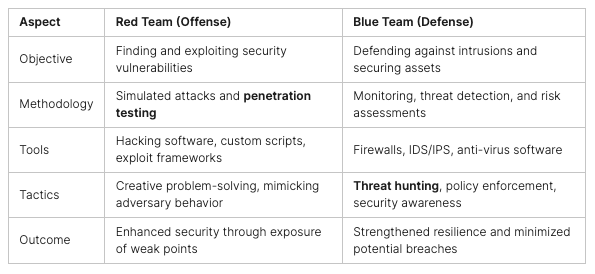
The Cybersecurity Battleground: Offense vs. Defense
In the high-stakes world of cybersecurity battleground, teams face off in a vital power clash. On this battlefield, offensive cyber strategies and defensive cyber measures meet head-on. The key to success? Using both proactive and reactive approaches to keep the balance of security.
Distinct Mindsets of Attack and Defense Teams
The Red Team’s approach is all about finding weak spots in a company’s digital armor. They use offensive cyber strategies to mimic real attackers. By doing this, they expose and fix vulnerabilities, making the company’s cybersecurity stronger.
On the other hand, Blue Teams focus on defense. They work hard to protect the company from cyber attacks. Their strategy includes being always alert, constantly monitoring, and having solid plans for dealing with incidents.
Balancing Cyber Defenses with Proactive Threat Hunting
While Blue Teams strengthen the company’s defenses, having proactive cybersecurity is also crucial. This involves not just updating defenses but also actively looking for threats within the system. Such efforts help companies stop potential attacks before they happen, rather than responding after the fact.
Maintaining a balance between offense and defense is crucial. It prepares organizations to face current dangers and quickly adjust to new ones. This makes them strong on the ever-changing cybersecurity battleground.
Developing a Holistic Cybersecurity Framework
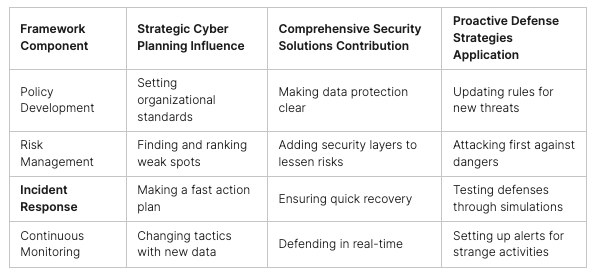
To build a holistic cybersecurity framework, groups need strategic cyber planning. They also need proactive defense strategies. A good framework uses broad coverage, adaptability, and various cyber functions. This is key today.
It mixes Red Teams’ attack skills with Blue Teams’ defenses. This creates a strong, ready system. It can quickly handle new cyber threats.
To make this complex system, commitment to comprehensive security solutions is needed. It’s about setting standard rules and uniting the work of Red and Blue Teams. This way, every cybersecurity aspect is handled well and thoroughly. Here’s an example:
“A holistic cybersecurity framework combines proactive steps, smart planning, and reaction skills. It forms a digital fortress that’s hard to break.”
A smart security plan gets better over time. It keeps up with new threats and uses the latest tech. By aligning improvements with business goals, companies become robust. They’re ready for today’s and tomorrow’s threats.
In conclusion, groups should dive into making a holistic cybersecurity framework. It should include strategic cyber planning, comprehensive security solutions, and proactive defense strategies. This three-part approach keeps our digital worlds safe against growing cyber threats.
Evolving Threat Landscapes: Adapting through Red and Blue Team Collaboration
As the digital world expands, evolving threats become a major concern for security experts. It’s vital to combine Red Team collaboration with Blue Team adaptability. This creates a strong defense against changing cyber threats. Sharing threat intelligence is key to staying informed and ready.
Sharing Threat Intelligence: A Global Imperative
Changing cybersecurity defenses to face evolving threats requires threat intelligence sharing. By sharing info, Red and Blue Teams can understand and stop attacks early. Having access to global intelligence data is crucial. It helps teams stop attacks before they happen.
Adaptive Defense: Learning from Simulated Threats
Learning from Red Team exercises, Blue Team can improve. These simulations help Blue Teams make their defenses stronger. By practicing and reviewing these simulations, they keep learning and adapting. This ensures they stay ready for new tactics from adversaries.
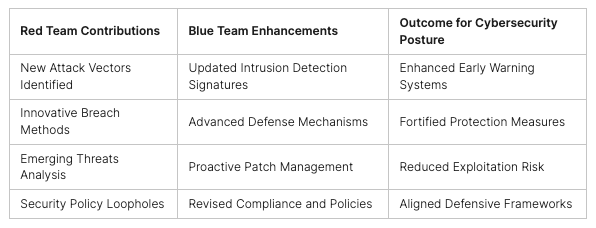
This strategy uses offensive and defensive strengths together. The table below shows key areas of shared intelligence and how teams adapt.
In conclusion, cybersecurity landscapes continuously change. The teamwork of Red and Blue Teams, through intelligence sharing and learning, is crucial. Their ongoing cooperation makes organizations ready to face digital threats.
Advanced Cyber Defense Tactics: The Integration of Red Teams and Blue Teams
The world of cybersecurity tactics has changed a lot with Red Team integration and Blue Team collaboration coming together. This mix is at the heart of advanced cyber defense. It creates a culture that focuses on stopping threats and making systems stronger. By combining Red Teams’ aggressive threat spotting with Blue Teams’ defensive skills, companies can set up fast and flexible cyber safety actions.
At the center of this teamwork is making security better, where Red and Blue Teams unite to strengthen defense. This teamwork forms a solid strategy that helps organizations stay secure against new cyber threats.
With security response optimization, there’s always room for getting better. The lessons from practice attacks lead to stronger defenses.
When we look closer, we see how Red Team integration boosts Blue Team efforts:
By adopting advanced cyber defense strategies through this teamwork, the effect of cyberattacks is reduced. This approach helps companies get ready for and stop future threats. It’s a vital shift in cybersecurity tactics—a field that’s always changing and needs smart, fast teamwork.
In short, advanced cyber defense is more than just using tools. It’s about creating a space where Red Team integration and Blue Team collaboration push security to new heights. The shared knowledge of these teams leads to a smarter way of optimizing responses. This is what sets the standard in today’s cybersecurity efforts.
Conclusion
In the dynamic and ever-evolving world of digital security, the collaboration between Red Teams and Blue Teams is essential for fortifying cybersecurity defenses. This partnership epitomizes the synergy necessary to safeguard online environments effectively. Red Teams, by simulating real-world cyber attacks, identify vulnerabilities in security systems, while Blue Teams focus on defending against these infiltrations and strengthening the system’s resilience.
The continuous interaction between Red and Blue Teams not only identifies and rectifies vulnerabilities but also fosters an environment of perpetual learning and improvement. This iterative process is crucial for adapting to the sophisticated tactics of modern cyber threats, ensuring that security measures evolve faster than the tactics employed by attackers. This teamwork is the cornerstone of a robust cybersecurity strategy, ensuring that defenses are not only reactive but proactively tested and enhanced.
For organizations aiming to maintain a cutting-edge defense against cyber threats, the integration of both Red and Blue Team efforts is vital. Their combined expertise allows businesses to anticipate potential security breaches and adapt their defenses before any real damage can occur. This proactive approach to cybersecurity ensures that organizations can continue to operate safely and reliably in an increasingly hostile digital landscape.
At Peris.ai Cybersecurity, we understand the importance of this dynamic and offer comprehensive Red Teaming services as part of our Peris.ai Pandava suite. Our Red Team Service goes beyond traditional penetration testing by simulating sophisticated cyber attacks to uncover deep-rooted vulnerabilities, providing your organization with the insights needed to fortify your defenses. Visit us at Peris.ai Cybersecurity to learn more about how our Red Team services can help you stay one step ahead of cyber threats and ensure that your organization is prepared to face the future of digital security with confidence. Embrace the collaborative power of Red and Blue Teams with Peris.ai and secure your digital world today.
FAQ
What are Red Teams in cybersecurity?
Red Teams are groups that work on offensive cybersecurity. They use ethical hacking to find weaknesses in a network’s security. Their goal is to find these issues to make the network stronger against real attacks.
How do Blue Teams contribute to cyber defense?
Blue Teams focus on defending an organization from cyber threats. They handle risk analysis, monitor networks, and respond to incidents. They aim to keep critical assets safe and fend off threats.
Why is the collaboration between Red Teams and Blue Teams important?
When Red and Blue Teams work together, they create a strong cybersecurity strategy. Red Teams find flaws, and Blue Teams improve security with this knowledge. This teamwork makes the organization’s defenses better.
What distinguishes the offensive strategies of Red Teams from the defensive measures of Blue Teams?
Red Teams attack using unique hacking methods to find and fix security gaps. In contrast, Blue Teams protect the organization. They watch for threats and keep the company’s data safe.
How does proactive threat hunting contribute to an organization’s cybersecurity?
Proactive threat hunting means always looking for cyber threats. It uses offense and defense to respond to new dangers. This makes the security stronger and more effective.
What is a holistic cybersecurity framework, and why is it necessary?
A holistic framework combines attacking and defending in cybersecurity. It involves planning and defending against threats. This ensures an organization can handle new dangers and keep improving its defenses.
In what ways can threat intelligence sharing improve cybersecurity?
Sharing threat intelligence means exchanging information on cyber threats worldwide. This makes defense strategies smarter and more effective. It helps organizations be better prepared for new risks.
What constitutes advanced cyber defense tactics?
Advanced tactics come from mixing Red Teams’ attacks with Blue Teams’ defenses. This creates new strategies that keep up with the latest security practices, making defenses stronger.
How does simulation of cyber threats aid in improving cybersecurity?
Simulating threats tests a network’s defenses safely. It shows what attackers might do. This helps Blue Teams improve defenses and plan better for real attacks.
What is the role of competitive cybersecurity in an organization?
Competitive cybersecurity means Red and Blue Teams challenge each other. This competition improves their methods and makes cybersecurity stronger. It leads to continuous learning and better defenses.
In today’s world, protecting our computer systems is more crucial than ever. With cyberattacks on the rise, the threat to our data is real. That’s where white box penetration testing comes in. It mimics a hacker’s method to find and fix system weaknesses before they’re attacked.
White box testing is unique. It checks a system from the inside, like how a hacker would. This helps organizations make their defenses stronger against new cyber threats. Let’s explore how white box penetration testing is changing the game in security.
Key Takeaways
White box penetration testing provides the tester with full access to the target system, including source code, architecture, and credentials.
This approach enables a more thorough security evaluation, identifying vulnerabilities that may be overlooked in black box or gray box testing.
White box testing is crucial for assessing critical components of a system, particularly in software development and multi-application environments.
By leveraging detailed system knowledge, white box testing allows for precise vulnerability identification and the implementation of effective mitigation strategies.
Integrating white box testing into the software development life cycle (SDLC) can help organizations shift left and address security concerns early in the development process.
Introduction to White Box Penetration Testing
White box penetration testing is sometimes called clear box testing. It’s when the testers know everything about the target system. This includes source code, documentation, and different account levels. It’s used a lot to check important parts of a system, mostly by those making software or using many apps.
What is White Box Penetration Testing?
It’s a deep look at a system’s weaknesses, both inside and outside. This test looks at things like source code, design, and business logic that black box tests miss. With so much knowledge about the system, it finds vulnerabilities accurately.
The Need for White Box Testing in Today’s Cyber Landscape
Software is getting more complex, and so are cyber threats. This is why thorough security checks are more important now. White box penetration testing is good at finding hidden system problems and making sure security issues are fixed early.
Benefits of White Box Penetration Testing
Allowing testers to explore a system inside out has many advantages. It includes:
Spotting unseen weaknesses: It finds issues missed by other tests, like those in the source code, design, and logic.
Fast problem solving: It finds problems early, which means they can be fixed quickly.
Boosting system security and code checks: It helps improve how companies write safe code and check their software’s safety.
Meeting rules and standards: It makes sure a system follows the right industry and data security regulations.
Differences Between Black Box, Gray Box, and White Box Penetration Testing
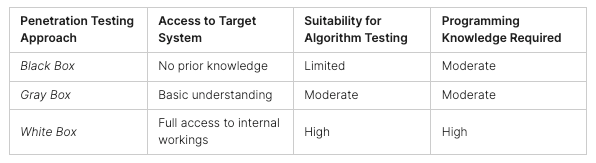
There are three main ways to do a penetration test. These are black box, gray box, and white box testing. Black box tests are done without knowing anything about the system. This is like a surprise attack. Gray box tests use some knowledge of the target system. White box tests give the tester all the information about the system, like the source code.
White box testing lets the tester deeply examine the system’s security. It’s the best way to find hidden flaws. This method is great for algorithm testing. It needs more knowledge of programming.
Using white box testing, testers can find more vulnerabilities. This is because they have more information. It makes the vulnerability assessment and software security stronger.
Key Techniques in White Box Penetration Testing
White box penetration tests look at the target’s code and structure to find weak spots. They use source code review, static code analysis, and dynamic code analysis. These methods join up to give a full check on how safe the code is.
Source Code Review
Source code review checks all the code closely. It lets testers find risks like bad input handling or weak coding. Analyzing the code deeply finds bugs attackers could use if they get the code.
Static Code Analysis
Static code analysis uses tools to pinpoint code flaws without running it. The tools scan the code for dangers like SQL injections and XSS. This process helps testers check the code before it goes live.
Dynamic Code Analysis
Dynamic code analysis tests the code while it’s running. This way, testers can see if the code stands up to attacks and find live weaknesses. It’s another step to ensure an app is secure.
By using these techniques together, testers can spot more risks. This helps make apps safer. It’s key for companies wanting to boost their app’s security and strength.
The White Box Penetration Testing Process
The white box penetration testing carefully checks a system inside out. It starts by gathering info about the target like architecture and diagrams. Essential is getting to the source code.
Defining Test Objectives and Critical Components
Next, the tester sets clear goals and pinpoints vital parts of the system. This way, the test focuses on what matters most. It makes the test count.
Static Analysis Phase
Then comes the static analysis phase. Here, the source code is gone over with a fine-tooth comb. The goal is to catch bugs like SQL injections and XSS. Both automated tools and manual checks are used.
Dynamic Analysis Phase
In the dynamic analysis phase, experiments mimic real attacks. This is to find hidden gaps. The tester uses hands-on tactics to see where real threats could break in.
Vulnerability Reporting and Prioritization
Finally, a detailed report is put together. It lists vulnerabilities and their risks. It also suggests fixes. This step ensures the most important issues are dealt with first. It makes the system safer against attacks.
White Box Penetration Testing Tools
White box penetration testing uses various tools to help in different parts of the tests. These tools are important for making the checks more effective and efficient. They help testers find security holes that might be missed with other methods.
Automated Tools for Static Analysis
Semgrep is one tool used for the static analysis step. It checks the code for security issues, like wrong input handling or unsafe coding habits. This helps the tester check the code quicker and find problems before the software is used. These tools give the tester a deep look at how the software works and spot areas that could be targeted by hackers.
Dynamic Analysis and Exploitation Tools
For dynamic analysis, tools such as Burp Suite, Metasploit, and SQLmap come into play. They act like hackers, trying to break into the software by exploiting its weak spots. Using these tools, the tester sees how dangerous these flaws could be if a real attack happens. A mix of static and dynamic checks paints a full picture of the software’s security level. This process pinpoints the worst security holes that need fixing first.
Using a range of white box testing tools allows for a deep examination of security issues. They focus on areas often missed in black box testing. This detailed checkup helps in making the system more secure against new cyber threats.
White Box Penetration Testing
White box testing is super helpful for checking how secure cloud-based infrastructure and web applications are. Testers get to see inside these systems. This means they can dig into the setup of services in the cloud and the code of websites.
Examining Cloud Infrastructure and Configurations
In one study, a tester got by the CloudFront content delivery network (CDN). They went straight to the EC2 server that hosted the site. They found security weaknesses hidden by the CDN. This detailed look was possible because of the white box method.
Analyzing Source Code for Web Applications
This method also lets testers look closely at an app’s source code. They look for bugs that might not show up otherwise. Testers understand the app’s deep workings. This helps them spot security problems in the code.
Identifying Vulnerabilities in Cloud Storage (S3 Buckets)
In another case, a white box tester found an open S3 bucket. This bucket wrongly lets anyone see important files, like secret data. Such big issues need a full review of how the cloud is set up.
Integrating White Box Testing into the SDLC
Integrating white box penetration testing into the SDLC is vital. It helps find and fix security problems early in development. This early focus makes it possible to stop flaws from reaching the final product.
Shifting Left: Incorporating Security Early
Shifting left involves dealing with security issues from the start. It lets developers work on security at the same time they build new features. This reduces the time and money needed to correct problems later.
This approach helps create software that’s safe from the beginning. This way, the risk of successful attacks becomes lower.
Continuous Integration and Continuous Delivery (CI/CD)
Integrating white box testing into the CI/CD pipeline keeps security high. It makes sure new features don’t bring in new risks. This strategy, based on ongoing white box testing, helps maintain security. It protects against successful attacks.
Compliance and Regulatory Considerations
White box penetration testing is key for making application security and software assurance better. It’s vital for meeting industry standards and regulatory requirements too. In fields like healthcare, finance, or government, rules such as HIPAA, PCI DSS, or NIST say you need strong security controls.
It looks inside an app’s source code to find weaknesses. This is critical for sticking to the rules. Data privacy laws, including GDPR and CCPA, need companies to focus on info security. Adding white box testing to how they build things shows they care about keeping data safe. It also helps avoid big fines for not following the rules.
Industry Standards and Frameworks
Companies must follow lots of rules, from HIPAA to NIST, for tight security controls. White box testing is a must. It uncovers problems deep in the app’s code and structure. This helps meet compliance needs smoothly.
Data Privacy and Security Regulations
Data privacy laws like GDPR and CCPA really stress the need for secure systems. Using white box testing from the start shows companies are serious about protecting data. Plus, it helps prevent serious problems like hacks and fines.
Best Practices for White Box Penetration Testing
To do white box penetration testing well, it’s key to follow certain steps. You should use secure coding practices and do code reviews often. This lets developers find and fix problems in the code before it’s rolled out. Also, give users and programs only as much access as they need. This can limit the harm if a vulnerability is attacked.
Secure Coding Practices and Code Reviews
Following solid coding practices and doing thorough code reviews is crucial. When developers follow safe coding tips, common issues like SQL injections and cross-site scripting get tackled early on. Then, having expert security folks review the code further cuts down on any missed problems.
Access Control and Least Privilege Principles
Using strong access control and least privilege can lessen an attack’s effects. By only giving the basics of what job roles need, the harm from an attack drops. Even if a flaw is found, it’s harder for attackers to do more damage.
Threat Modeling and Risk Assessment
Running threat modeling and risk assessment helps spot and deal with threats wisely. This means looking closely at your system, spotting dangers, and figuring out what threats are likely and how bad they could be. By focusing on the main risks, you can make better choices on where to put effort and resources.
Using these steps in white box testing makes applications and software safer. This lowers the chances of being hit by cyberattacks.
Conclusion
White box penetration testing is crucial for thoroughly understanding the security of an application. By providing testers with full access to the application’s internal workings, this method uncovers hidden vulnerabilities that external testing might miss.
This approach allows for early detection and remediation of bugs, enhancing the application’s overall security. It is also essential for complying with security standards such as HIPAA and GDPR, demonstrating a company’s commitment to data protection.
Incorporating white box penetration testing into your software development process significantly strengthens your defenses against cyber threats, ensuring the safety of critical data and customer information.
With Peris.ai Pandava, you can rest assured that your business will stay secure while gaining a competitive edge in the marketplace. Sleep better at night knowing your data is safe. Our ethical hackers will conduct thorough penetration testing and provide detailed reports, identifying vulnerabilities before they can be exploited. “Finding vulnerabilities and weak points within your digital platform and infrastructures” may sound daunting, but with Peris.ai Pandava Service, you can rest easy.
Visit Peris.ai Cybersecurity to learn more about how our comprehensive security solutions can protect your business and keep you ahead of cyber threats. Secure your digital world today with Peris.ai Pandava.
FAQ
What is white box penetration testing?
White box penetration testing is a detailed method. It’s also called transparent or clear box testing. Testers know everything about the target system, like the source code. They have all the documentation and access to many accounts.
They can see the software’s hidden problems before it’s used by people. This helps find and fix issues early.
What are the benefits of white box penetration testing?
White box testing is great because it looks deeply into a system. It can spot security issues not seen with other tests. Since testers see the inside of the software, they can find specific problems.
It gives a clear picture of a system’s safety level. This makes it easier to make the system as secure as possible.
How does white box penetration testing differ from black box and gray box testing?
There are three main types of penetration tests. Black box testing is like a surprise attack. Testers know very little about the system. Gray box testing allows some info about the system.
White box testing, however, opens the system fully to testers. They see everything, including the code and structure.
What are the key techniques used in white box penetration testing?
White box testing includes looking at the code closely. This is the source code review. It also uses tools to check the code for security issues without running it.
Finally, testers run the software to find more vulnerabilities. It helps make the system stronger against real attacks.
How does the white box penetration testing process work?
The process starts with gathering info. Then testers lay out what they will check. They look at the code and run the software, investigating every corner.
Finally, they write a report. This report details the found issues and how to fix them.
What tools are used in white box penetration testing?
White box testing uses specialized tools. For code checking, it might use Semgrep. For running the software and finding vulnerabilities, tools like Burp Suite and Metasploit are common.
These tools help testers do their job thoroughly and efficiently.
How can white box penetration testing be useful for cloud-based infrastructure and applications?
It’s essential for checking cloud security. Testers can see deeply into the system, much more than with other tests. This allows for uncovering hidden risks.
It ensures that cloud services and web apps are as safe as possible.
How can white box penetration testing be integrated into the software development life cycle (SDLC)?
Adding this testing early helps catch bugs before the system is used. This saves time and money later. It’s called shifting left.
By testing during development, security becomes part of the whole process. It’s not an afterthought.
How does white box penetration testing support compliance with industry standards and regulations?
White box testing is often required to follow rules like HIPAA and PCI DSS. It shows that the system is secure as needed by these rules.
Thus, it helps organizations prove they are protecting data and preventing cyber attacks.
What are some best practices for conducting effective white box penetration testing?
To test well, use safe coding and keep checking your code. Also, limit access to only what’s needed. Think about what threats you might face.
It’s good to test often, not just once. This keeps your system up-to-date and ready to face new dangers.
A renowned Russian cyber group, identified by multiple aliases including APT28, Fancy Bear, Forest Blizzard, and ITG05, has recently been spotlighted for exploiting a legitimate feature within Microsoft Windows to disseminate infostealers among other malicious software, affecting users globally. This alarming development was detailed in a recent analysis by the cybersecurity division of IBM, known as X-Force. The analysis covers the group’s activities from November of the previous year to February of the current year.
This cyber campaign ingeniously impersonates government and non-governmental organizations spanning across Europe, the South Caucasus, Central Asia, and the Americas, engaging victims through seemingly benign emails. These emails are particularly deceptive as they contain weaponized PDF attachments.
Exploitation of Windows Search Protocols for Malware Deployment
The malicious PDFs include URLs directing to compromised websites that manipulate the “search-ms:” URI protocol handler and the “search:” application protocol within Windows. These features are designed to facilitate local searches on a device and to invoke the desktop search application, respectively. However, in this nefarious context, they lead victims to perform searches on attacker-controlled servers, presenting malware in the guise of PDF files via Windows Explorer. Victims are then coaxed into downloading and executing these files.
Compromised Infrastructure and Malware Deployment
The attack infrastructure relies on WebDAV servers, likely situated on compromised Ubiquiti routers previously linked to a botnet allegedly dismantled by U.S. authorities last month, as reported by The Hacker News. Although the specific targets of these attacks have not been disclosed, the countries of the impersonated government and NGO entities include Argentina, Ukraine, Georgia, Belarus, Kazakhstan, Poland, Armenia, Azerbaijan, and the U.S., suggesting a widespread geographical impact.
The malware variants identified in these attacks, namely MASEPIE, OCEANMAP, and STEELHOOK, are equipped to steal files, execute commands remotely, and pilfer browser data. The adaptability and evolving nature of ITG05’s tactics underscore a continuous threat landscape, as noted by IBM’s X-Force. The group’s ability to modify its attack methodologies and leverage available commercial infrastructure while enhancing its malware capabilities poses a significant challenge to cybersecurity defenses worldwide.
At Peris.ai Cybersecurity, we emphasize the importance of vigilance and advanced protective measures against such sophisticated cyber threats. Staying informed about the latest cyberattack strategies is crucial for safeguarding sensitive information and maintaining digital security.
Cybersecurity experts at Trend Micro have recently brought to light an ingenious piece of malware, dubbed UNAPIMON, which has been designed to stealthily bypass antivirus solutions. This novel threat is attributed to Winnti, a notorious Chinese state-sponsored group with a history of launching sophisticated cyberattacks on governments, tech companies, think tanks, and more.
A Twist on Traditional Malware Techniques
UNAPIMON stands out from conventional malware through its unique approach to evading detection. Traditional malware often employs API hooking to intercept and manipulate software functions for malicious purposes, a technique also utilized by security tools to monitor and thwart such threats. However, UNAPIMON takes a different path by leveraging Microsoft Detours to unhook critical API functions in child processes, particularly targeting the CreateProcessW API function. This strategic maneuver allows it to slip past antivirus programs undetected.
The Simplicity and Creativity Behind UNAPIMON
What makes UNAPIMON particularly noteworthy is its blend of simplicity and innovation. By utilizing Microsoft Detours, a legitimate debugging library, in a malevolent fashion, the malware showcases the versatility of common tools when wielded with malicious intent. This not only reflects the technical skill and creativity of its creators but also poses a significant challenge to behavioral detection mechanisms due to the tool’s legitimacy.
Winnti’s Track Record of Evasion Tactics
Winnti has long been recognized for its creative methods of avoiding detection. Past exploits include manipulating Windows print processors to conceal malware and persist within target networks, as well as fragmenting a Cobalt Strike beacon into over a hundred pieces to evade detection, only reassembling it when necessary. These incidents, detailed by BleepingComputer, underscore the group’s persistent innovation in crafting tools and methods to circumvent traditional cybersecurity defenses.
Implications and the Path Forward
The emergence of UNAPIMON underscores the ever-evolving landscape of cyber threats and the continuous arms race between cybercriminals and security professionals. It highlights the necessity for cybersecurity defenses to adapt to the increasingly sophisticated and inventive tactics employed by threat actors. As malware writers leverage the potential of common and legitimate tools for malicious purposes, the challenge for cybersecurity solutions to distinguish between benign and malevolent use becomes ever more complex.
Peris.ai Cybersecurity emphasizes the importance of staying informed about the latest malware developments and enhancing detection capabilities to protect against innovative threats like UNAPIMON. The cybersecurity community must remain vigilant and foster a culture of continuous learning and adaptation to counter the sophisticated strategies employed by state-sponsored groups and other cyber adversaries.