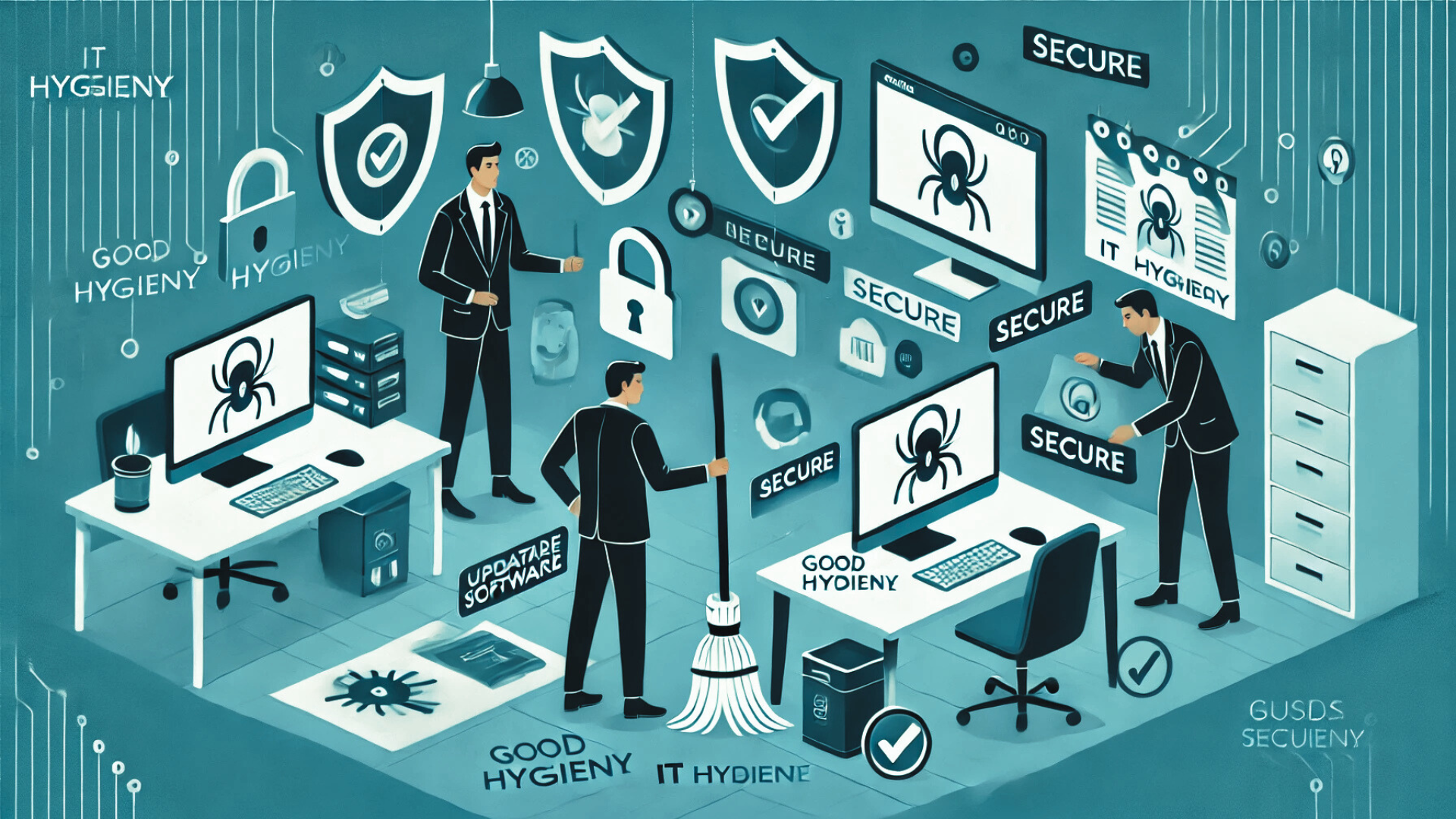
In our digital-first world, the threat of cyberattacks is more prevalent than ever. To combat this growing threat, businesses must emphasize the importance of IT hygiene—a cornerstone in safeguarding systems and data. Adopting proactive security measures is not just a best practice; it’s essential for maintaining the resilience and continuity of any organization.
Crafting a Cybersecurity Playbook
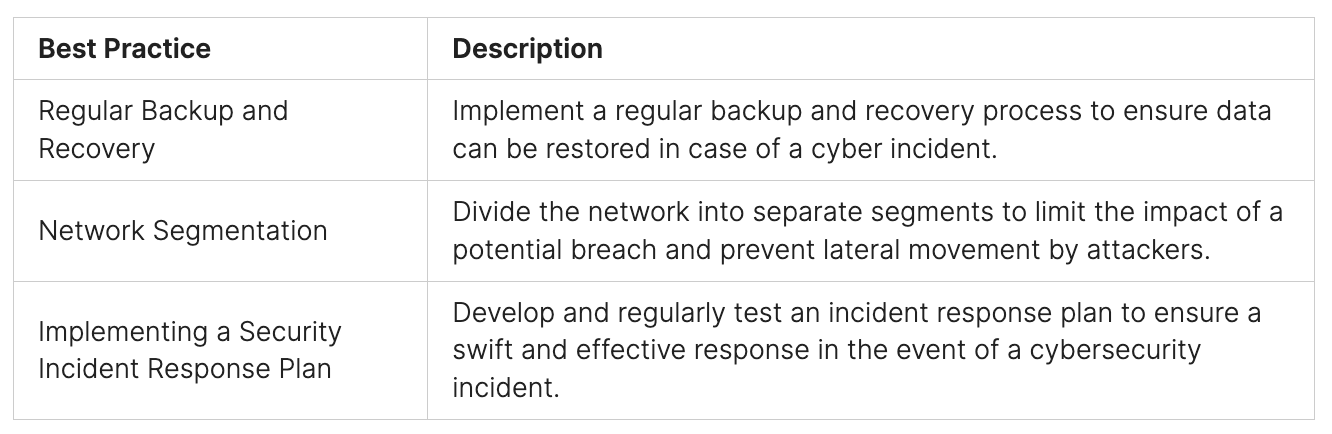
A well-structured cybersecurity playbook is indispensable. It should outline specific protocols for different types of cyber incidents, including clear steps for containment, eradication, and recovery. This guide should also contain essential contact information for rapid response and instructions for documenting incident details. Keeping this playbook updated and accessible ensures that your team can act swiftly and effectively in the face of a cyberattack.
Prioritizing Strong IT Hygiene Practices
Robust IT hygiene involves more than just regular password updates:
System Updates: Regularly apply patches and updates to all systems to close security loopholes.
Vulnerability Assessments: Routinely evaluate your IT infrastructure to identify and mitigate potential vulnerabilities.
Secure Configurations: Ensure that all system configurations adhere to the highest security standards to avoid exploitable weaknesses.
Engaging with Law Enforcement
Developing relationships with local and national law enforcement agencies can provide critical support during cyber incidents. These partnerships can offer valuable resources for incident investigation and recovery, enhancing your overall response strategy.
Training Staff on Cybersecurity Awareness
Employee education is critical:
Phishing Training: Regularly train employees to identify and respond appropriately to phishing attempts and other social engineering attacks.
Suspicious Activity Reporting: Encourage a culture where employees feel comfortable reporting suspicious activities without fear of reprisal.
Fortifying Against Financial Fraud
Financial systems are prime targets for cybercriminals. Strengthening these systems involves:
Transaction Security: Implement robust security measures for all financial transactions.
Audit and Monitoring: Continuously monitor financial activities and conduct regular audits to detect and respond to irregularities promptly.
️ Being Proactive with Cybersecurity
The best defense against cyber threats is a proactive approach. By maintaining excellent IT hygiene, regularly updating your cybersecurity playbook, and fostering a culture of security awareness, your business can defend against and mitigate the effects of cyberattacks.
For more insights into effective cybersecurity strategies and to discover how Peris.ai can enhance your organization’s defenses, visit our website at peris.ai.
Stay proactive, stay secure.
Your Peris.ai Cybersecurity Team #YouBuild #WeGuard
Welcome to our comprehensive guide on the Cybersecurity Triangle for Organizations. In today’s digital landscape, businesses face numerous cyber threats that can compromise their sensitive data and disrupt their operations. Organizations need a strategic approach that balances price, quality, and time in their cybersecurity initiatives to protect their assets. This guideline provides valuable insights into how organizations can make informed decisions, optimize resources, and prioritize cybersecurity investments.
Key Takeaways:
The Cybersecurity Triangle for Organizations helps businesses find the right balance between price, quality, and time in their cybersecurity initiatives.
Price considerations involve budgeting and cost allocation for cybersecurity measures.
Quality focuses on implementing robust and reliable cybersecurity measures.
Time management strategies ensure efficient implementation and management of cybersecurity strategies.
Organizations can prioritize their cybersecurity investments by understanding and implementing the Cybersecurity Triangle.
Understanding the Cybersecurity Triangle Concept
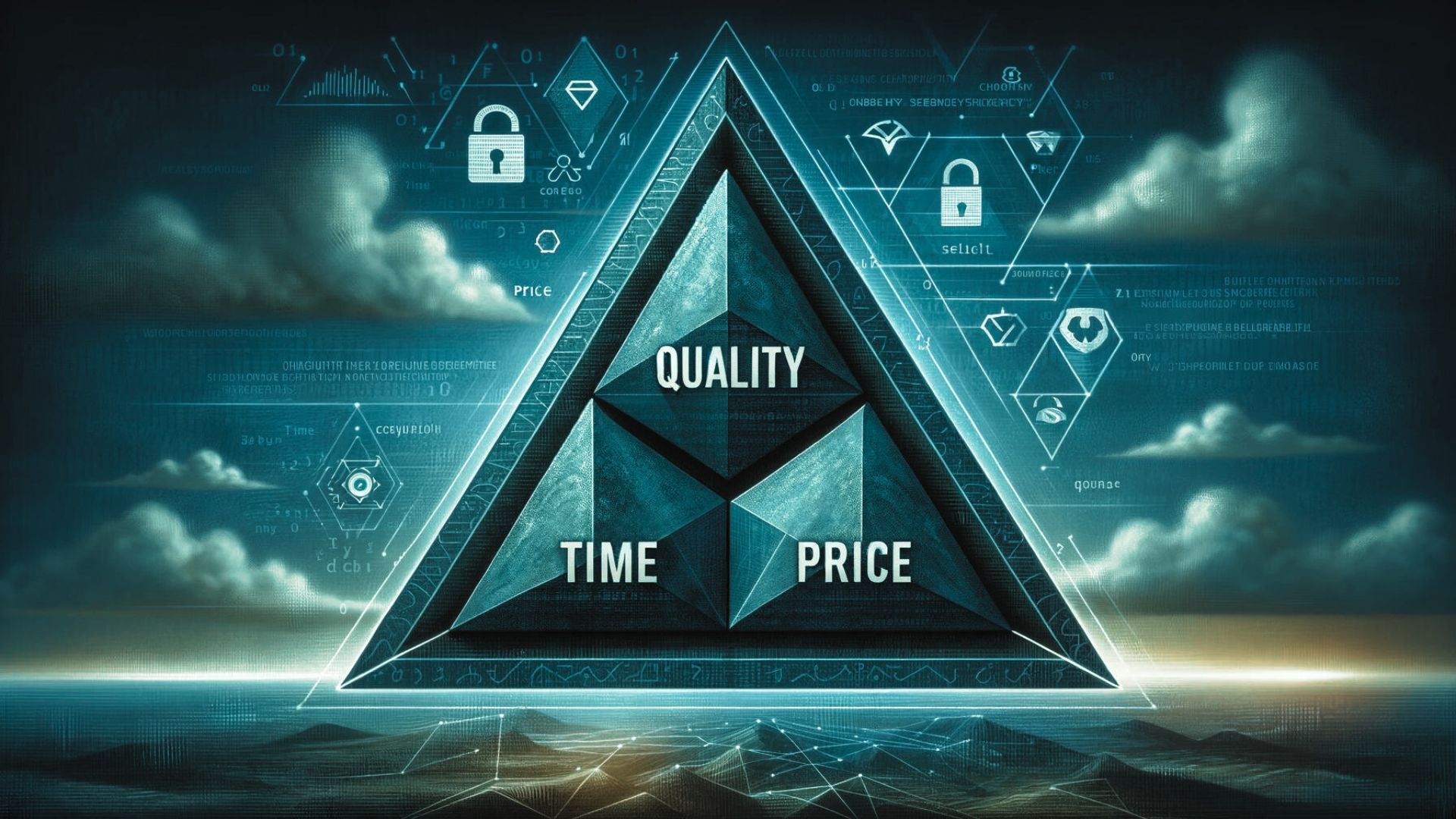
The cybersecurity triangle concept is a fundamental framework that organizations must grasp to implement cybersecurity measures effectively. It centers around three key factors: price, quality, and time. By balancing these factors, organizations can develop a comprehensive approach to cybersecurity that addresses their specific needs and maximizes the protection of their assets.
Defining the Cybersecurity Triangle
The cybersecurity triangle comprises three crucial elements:
Price: This factor involves budgeting and cost allocation for cybersecurity initiatives. Organizations must consider their financial resources carefully and allocate budgetary provisions to support robust cybersecurity measures.
Quality: Ensuring the effectiveness and reliability of cybersecurity measures is the core focus of this factor. Organizations should implement robust and innovative technologies, adhere to industry best practices, and conduct regular security assessments to maintain high-quality cybersecurity resilience.
Time: Efficient time management is critical in implementing and managing cybersecurity strategies. Organizations must develop swift incident response plans, deploy rapid deployment security protocols, and conduct thorough disaster recovery planning and analysis to minimize downtime and maintain business continuity.
The Evolution of Cybersecurity Prioritization
Over time, the prioritization of cybersecurity factors has evolved as organizations recognize the increasing importance of a balanced approach:
In the past, organizations often prioritized cost over quality and time, focusing primarily on budgetary concerns. However, cybersecurity incidents and the subsequent financial and reputational damage have shifted the mindset. Organizations have come to understand that compromising quality and neglecting time management can lead to severe consequences. As a result, there has been a paradigm shift towards a comprehensive approach that balances all three factors of the cybersecurity triangle.
By comprehending and implementing the cybersecurity triangle concept, organizations can navigate the complex cybersecurity landscape and make informed decisions safeguarding their digital assets.
Price in Cybersecurity: Budgeting and Costs
Price plays a crucial role in cybersecurity as organizations must budget and allocate sufficient resources to protect their assets effectively. Allocating budgets for cybersecurity involves assessing the specific needs and risks of the organization, understanding the potential impact of cyber threats, and determining the financial investment required to mitigate those risks. This process requires careful consideration of various factors, including the organization’s size, industry regulations, and risk tolerance.
Allocating Budgets for Cybersecurity in Organizations
When allocating budgets for cybersecurity, organizations must take a strategic approach. It starts with assessing the unique needs and risks faced by the organization. By thoroughly evaluating current security measures, vulnerabilities, and potential threats, organizations can identify gaps and prioritize their budget allocation accordingly.
Moreover, organizations should consider the potential impact of cyber threats on their business operations and reputation. This includes evaluating the financial losses that could occur in a data breach or system outage and the costs associated with recovering from such incidents.
Organizations should also consider industry regulations and compliance requirements when allocating budgets for cybersecurity. Organizations must adhere to Different industries’ specific data protection and privacy regulations. This may require additional investments in security technologies, personnel training, and compliance audits.
It is also essential for organizations to balance their budget allocation between preventive, detective, and responsive cybersecurity measures. Preventive measures, such as firewalls and antivirus software, help protect systems and data from cyber threats. Detective measures like intrusion detection systems and security monitoring help identify and respond to potential threats. Responsive measures, such as incident response plans and data recovery solutions, ensure a quick and effective response during a security incident.
Understanding Cybersecurity Expense Categories
When budgeting for cybersecurity, organizations should consider various expense categories to ensure comprehensive coverage. These expense categories include:
Security personnel: Allocating budget for cybersecurity professionals responsible for implementing and managing security measures.
Security technologies: Invest in security solutions such as firewalls, antivirus software, encryption tools, and intrusion detection systems.
Security assessments and audits: Conduct regular assessments and audits to identify vulnerabilities and ensure compliance with industry standards and regulations.
Employee training and awareness: Budgeting for training programs that help employees understand their role in maintaining cybersecurity and raise awareness about potential threats.
Incident response and recovery: Allocating resources for developing and implementing incident response plans and investing in data recovery solutions.
By understanding the expense categories and their importance, organizations can allocate their budgets effectively, ensuring that all aspects of cybersecurity are adequately covered.
Ensuring Quality in Cybersecurity Measures
Ensuring quality in cybersecurity measures is vital for organizations to protect their assets from cyber threats effectively. Quality in cybersecurity involves implementing robust and reliable measures that can effectively detect, prevent, and respond to cyber-attacks. This includes using advanced technologies, adherence to industry best practices, regular security assessments and audits, and continuous employee training and awareness programs.
By prioritizing quality in cybersecurity, organizations can enhance their overall security posture and minimize the risk of data breaches and cyber incidents. It is essential to have a comprehensive approach that combines advanced technologies and industry standards for protection against evolving threats.
Organizations need to employ a multi-layered security approach to strengthen their defenses and create a resilient cybersecurity environment. By implementing a range of measures, such as firewalls, intrusion detection systems, encryption, and security information and event management (SIEM) solutions, organizations can detect and prevent cyber attacks. Regular security assessments and audits help identify vulnerabilities and ensure that cybersecurity measures are up to date.
Continuous employee training and awareness programs play a crucial role in ensuring the effectiveness of cybersecurity measures. By educating employees about common cyber threats, phishing attacks, and best practices for data protection, organizations can significantly reduce the risk of human error leading to security breaches.
By adopting a proactive and comprehensive approach to cybersecurity, organizations can stay ahead of cyber threats and safeguard their critical assets.
Key Elements of Ensuring Quality in Cybersecurity Measures
Implementing advanced technologies
Adhering to industry best practices
Conducting regular security assessments and audits
Providing continuous employee training and awareness programs
Balancing Time Management in Cybersecurity Strategies
Effective time management is essential in cybersecurity strategies to ensure organizations promptly respond to cyber threats while minimizing downtime and disruption. Time management encompasses various practices and processes that optimize time use in cybersecurity initiatives.
One crucial aspect of time management is the development of efficient incident response plans. These plans outline the steps to be taken during a cyber incident, allowing organizations to respond quickly and effectively. By having well-defined incident response plans in place, organizations can minimize the impact of cyber incidents and swiftly mitigate the risks posed by threats.
Rapid deployment security protocols also play a vital role in time management. These protocols enable organizations to rapidly deploy and activate security measures in response to emerging threats. By implementing these protocols, organizations can reduce the time it takes to protect their systems and data, preventing potential security breaches and minimizing the window of vulnerability.
Regular disaster recovery planning and analysis are crucial time management practices in cybersecurity. Organizations need to plan for potential disasters and develop robust recovery strategies proactively. Regular analysis allows organizations to identify vulnerabilities and weaknesses in their disaster recovery plans, enabling them to make necessary improvements and ensure optimal readiness.
By effectively managing time in cybersecurity strategies, organizations can minimize the impact of cyber incidents, reduce recovery time, and ensure the continuous availability of critical systems and data. Time management practices enable organizations to optimize their response to cyber threats and safeguard their assets efficiently and timely.
Cybersecurity Investment Decisions: Combining Price, Quality, and Time
Cybersecurity investment decisions require organizations to consider the interplay between price, quality, and time. Achieving a balance among these factors is essential for developing effective cybersecurity strategies that align with organizational goals and resource availability. This section explores case studies and implementation strategies demonstrating successful approaches to combining price, quality, and time in cybersecurity initiatives.
Case Studies and Implementation Strategies
Examining real-world case studies provides valuable insights into how organizations effectively combine price, quality, and time in their cybersecurity investments. These case studies highlight the importance of evaluating and prioritizing cybersecurity needs, understanding the potential impact of cyber threats, and allocating resources accordingly. Organizations can adapt and apply successful strategies to their unique contexts by learning from these examples.
Implementing a comprehensive cybersecurity strategy requires a thoughtful approach that addresses the specific needs and resources of the organization. By considering factors such as budget constraints, risk tolerance, and desired quality of security measures, organizations can make informed decisions on allocating their resources effectively. The implementation strategies from case studies provide practical guidance on integrating price, quality, and time considerations into the overall cybersecurity investment decision-making process.
Public Policy Implications and Corporate Theory
Cybersecurity investment decisions impact individual organizations and have broader implications at the public policy level. Public policy plays a crucial role in shaping the cybersecurity landscape and establishing standards and regulations organizations must adhere to. Understanding the public policy implications of cybersecurity investment decisions is essential for organizations to navigate compliance requirements and ensure the security of their assets.
Corporate theory also influences cybersecurity investment decisions as organizations strive to align their cybersecurity strategies with their overall business strategies. By considering factors such as the organization’s risk appetite, strategic objectives, and stakeholder expectations, organizations can make investment decisions that enhance their resilience to cyber threats while supporting their long-term goals.
Organizations can make informed and strategic cybersecurity investment decisions by analyzing real-world case studies, considering public policy implications, and incorporating corporate theory. This holistic approach ensures that organizations invest in the right cybersecurity measures, combining price, quality, and time to protect their assets effectively and mitigate cyber risks.
Time-Efficient Cybersecurity Strategies for Immediate Threat Response
Time is of the essence when it comes to cybersecurity. Organizations need to act swiftly and decisively to combat immediate cyber threats. This section explores time-efficient cybersecurity strategies that enable organizations to respond promptly and effectively.
Development of Rapid Deployment Security Protocols
Organizations should focus on developing rapid deployment security protocols to combat emerging threats quickly. These protocols allow for the swift deployment and activation of security measures in response to immediate cyber threats. By having predefined procedures and processes in place, organizations can reduce response times and minimize the impact of cyber incidents.
Establishing a dedicated incident response team that can be activated at a moment’s notice.
It is developing predefined incident response plans that outline the necessary steps to be taken in the event of a cyber attack.
Regularly conducting drills and simulations to test the effectiveness and efficiency of the response protocols.
It integrates automated threat detection and response systems to identify and mitigate cyber threats quickly.
By adopting these rapid deployment security protocols, organizations can significantly enhance their ability to respond to immediate cyber threats, minimize potential damages, and safeguard their critical assets and data.
Disaster Recovery Planning and Analysis
Disaster recovery planning and analysis are essential components of time-efficient cybersecurity strategies. By proactively preparing for potential cyber incidents, organizations can minimize downtime, mitigate damages, and ensure a swift recovery.
Key steps in disaster recovery planning and analysis include:
Conducting a thorough risk assessment to identify potential vulnerabilities and prioritize critical systems and data.
Developing comprehensive disaster recovery plans that outline the steps to be taken during a cyber incident.
Regularly test and update the disaster recovery plans to ensure their effectiveness and relevance.
Implement backup and data recovery mechanisms to restore critical systems and data quickly.
Performing post-incident analysis to identify areas for improvement and refine the disaster recovery strategies.
By incorporating disaster recovery planning and analysis into their cybersecurity strategies, organizations can minimize the impact of cyber incidents, reduce downtime, and ensure the continuity of their operations.
Benefits of Time-Efficient Cybersecurity Strategies
Minimized Response Time – Rapid deployment security protocols allow organizations to respond quickly to cyber threats, reducing the time it takes to identify and mitigate potential damages.
2. Reduced Impact of Cyber Incidents – By promptly activating security measures and implementing disaster recovery plans, organizations can minimize the impact of cyber incidents, preventing significant disruptions to their operations.
Improved Resilience – Time-efficient cybersecurity strategies enhance an organization’s resilience against cyber threats, enabling it to recover quickly and effectively in the face of an incident.
Enhanced Protection of Assets and Data – Rapid deployment security protocols and disaster recovery planning help organizations safeguard their critical assets and data by implementing proactive measures and efficient response mechanisms.
Achieving Cost-Quality-Time Balance in Cybersecurity
When it comes to cybersecurity, organizations often face the challenge of finding the right balance between cost, quality, and time. Allocating resources efficiently while ensuring adequate protection against cyber threats requires careful analysis and decision-making. This section explores the trade-offs of different cybersecurity approaches and provides practical frameworks for achieving a cost-quality-time balance.
Analyzing the Trade-offs in Cybersecurity Approaches
When implementing cybersecurity measures, organizations must consider various factors and make trade-offs to optimize their investments. One of the key trade-offs is cost versus quality. While investing in high-quality cybersecurity solutions can provide better protection, it often comes at a higher cost. On the other hand, opting for cheaper solutions may compromise the effectiveness of the security measures.
Another trade-off to consider is the balance between cost and time. Implementing comprehensive cybersecurity strategies takes time and effort, which may result in delays or disruptions to business operations. Therefore, organizations must analyze the trade-off between investing sufficient time in cybersecurity measures and the potential impact on productivity and efficiency.
Lastly, there is also a trade-off between quality and time. Implementing high-quality cybersecurity measures requires thorough planning, testing, and implementation. This may slow down the process compared to quick fixes or shortcuts, prioritizing speed over quality. Organizations need to weigh the benefits of investing time in quality measures against the urgency of immediate protection.
Practical Frameworks for Cybersecurity Balance
To help organizations achieve a cost-quality-time balance in cybersecurity, practical frameworks can guide decision-making and resource allocation. These frameworks consider each organization’s unique needs and resources and provide structured approaches to striking the right balance. Here are some practical frameworks to consider:
Risk-Based Approach: This framework identifies and prioritizes the most critical cyber risks based on their potential impact and likelihood of occurrence. Organizations can allocate resources effectively by aligning cybersecurity investments with risk assessments while addressing the most significant threats.
Cost-Benefit Analysis: This framework evaluates the costs and benefits of different cybersecurity measures. By quantifying the potential risks and potential savings associated with each measure, organizations can make informed decisions on where to invest their resources.
Resource Optimization Model: This framework considers the available resources and constraints of the organization, such as budget, manpower, and technology. By optimizing the allocation of resources, organizations can maximize the impact of their cybersecurity measures within the given limitations.
Continuous Improvement Framework: This framework emphasizes the iterative and continuous improvement of cybersecurity measures. By implementing an ongoing monitoring and evaluation process, organizations can identify areas for improvement and make adjustments to achieve a better cost-quality-time balance.
Implementing these practical frameworks can enable organizations to make informed decisions, optimize their cybersecurity investments, and maintain an effective balance between cost, quality, and time. By finding this balance, organizations can enhance their security posture, mitigate risks, and protect their valuable assets.
Cybersecurity Budgeting for Organizations: A Structured Approach
Cybersecurity budgeting for organizations requires a structured approach that considers the specific needs and resources of the organization. By following a structured approach, organizations can ensure that their cybersecurity investments are aligned with their strategic objectives while effectively protecting their assets.
One key step in the structured approach to cybersecurity budgeting is assessing risk. Organizations must evaluate the potential risks, such as the likelihood and impact of different cyber threats. This assessment helps identify the areas where cybersecurity investments are most crucial, ensuring that resources are allocated where they are most needed.
Once the risk assessment is complete, organizations can prioritize their investments. This involves determining the order in which cybersecurity initiatives should be implemented based on their potential impact on risk reduction. By prioritizing investments, organizations can first ensure that limited resources are allocated to the most critical areas.
Another important step is aligning the budget with strategic objectives. Organizations must consider their overall business goals and how cybersecurity investments can support them. This alignment ensures cybersecurity becomes integral to the organization’s strategic planning, with resources allocated accordingly.
It is crucial to involve key stakeholders in the cybersecurity budgeting process. This includes representatives from different departments and levels of the organization who can provide valuable insights and perspectives. By involving stakeholders, organizations can gather diverse input and ensure that the budget reflects the needs and priorities of the entire organization.
Organizations should conduct thorough assessments and regularly review and adjust the budget based on evolving cyber threats and organizational priorities to maintain effectiveness. By staying proactive and adaptive, organizations can ensure that their cybersecurity budget remains aligned with the changing threat landscape and the organization’s strategic goals.
Effective cybersecurity budgeting is essential for organizations to allocate their resources efficiently and effectively, ensuring the protection of their assets. By following a structured approach and considering the specific needs and resources of the organization, organizations can optimize their cybersecurity investments and enhance their overall security posture.
Conclusion: Harmonizing the Cybersecurity Triangle with Corporate Strategy
In summary, organizations must weave the principles of the cybersecurity triangle into their corporate strategy to safeguard their assets against digital threats effectively. The interplay of cost, excellence, and timeliness forms the crux of this approach, guiding businesses in formulating an all-encompassing cybersecurity plan that resonates with their overarching business goals.
The cybersecurity triangle acts as a strategic compass, guiding the allocation of resources and the management of risks. This paradigm aids companies in striking a balance between financial limitations and the imperative for dependable, high-caliber cyber defense mechanisms. Embedding this model into their strategic framework empowers organizations to elevate their cybersecurity standing, mitigate potential risks, and secure their assets for the long haul.
Implementing the cybersecurity triangle into an organization’s strategy demands a comprehensive viewpoint. Companies must weigh the fiscal aspects of their cybersecurity ventures, ensuring ample allocation of resources to combat the continually changing cyber threats. High-quality cybersecurity solutions, incorporating cutting-edge technology and best practices, are paramount for effective threat detection, prevention, and response.
Moreover, time is a critical element in cybersecurity strategies. Quick and effective incident response plans, swift security protocol implementation, and thorough disaster recovery plans are essential. These steps enable organizations to swiftly tackle emerging threats and reduce the impact of any operational disruptions.
Fusing the cybersecurity triangle with corporate strategy lays the groundwork for a resilient, forward-thinking cybersecurity posture. This strategy equips businesses to defend their valuable assets robustly, uphold customer trust, and successfully navigate the intricate and evolving realm of cyber threats.
For tailored cybersecurity solutions that align with this approach, we encourage you to contact us or visit Peris.ai Cybersecurity.
FAQ
What is the cybersecurity triangle for organizations?
The cybersecurity triangle for organizations is a comprehensive guideline that helps businesses find the right balance between price, quality, and time in their cybersecurity initiatives. It allows organizations to effectively protect their assets from cyber threats while optimizing their resources.
What does the price aspect of the cybersecurity triangle involve?
The price aspect involves budgeting and cost allocation for cybersecurity initiatives. Organizations must assess their needs and risks, understand the potential impact of cyber threats, and determine the financial investment required to mitigate those risks.
How can organizations ensure quality in their cybersecurity measures?
Organizations can ensure quality in cybersecurity by implementing robust and reliable measures that effectively detect, prevent, and respond to cyber-attacks. This includes using advanced technologies, adhering to industry best practices, conducting regular security assessments, and providing continuous employee training and awareness programs.
Why is time management important in cybersecurity strategies?
Time management is crucial in cybersecurity strategies to effectively respond to cyber threats, minimize downtime, and ensure the continuous availability of critical systems and data. It involves developing efficient incident response plans, implementing rapid deployment security protocols, and conducting regular disaster recovery planning and analysis.
How can organizations make cost-effective cybersecurity investment decisions?
Organizations can make cost-effective cybersecurity investment decisions by considering the interplay between price, quality, and time. This involves analyzing budget constraints, resource availability, risk tolerance and prioritizing investments based on specific needs and resources.
What are some key considerations for implementing high-quality cybersecurity solutions?
Implementing high-quality cybersecurity solutions requires using cryptography and access management techniques to ensure the confidentiality and integrity of sensitive data. Organizations should also implement data integrity and protection mechanisms such as encryption and data backup strategies to safeguard their data against unauthorized access and tampering.
How can organizations develop time-efficient cybersecurity strategies for immediate threat response?
Organizations can develop time-efficient cybersecurity strategies by establishing rapid deployment security protocols that enable quick activation of security measures in response to emerging threats. They should also have robust disaster recovery plans and procedures to recover from cyber incidents and minimize the impact of disruptions.
How can organizations strike the right balance between cost, quality, and time in their cybersecurity strategies?
Organizations can achieve a cost-quality-time balance in cybersecurity by analyzing trade-offs in different approaches, considering budget constraints, resource availability, and risk tolerance. Practical frameworks can help organizations make informed decisions and allocate resources efficiently and effectively.
What is a structured approach to cybersecurity budgeting for organizations?
A structured approach to cybersecurity budgeting involves assessing risk, prioritizing investments, and aligning the budget with strategic objectives. It requires involving key stakeholders, conducting thorough assessments, and regularly reviewing and adjusting the budget based on evolving threats and priorities.
How can organizations integrate the cybersecurity triangle into their corporate strategy?
Integrating the cybersecurity triangle into corporate strategy allows organizations to develop a comprehensive cybersecurity approach that aligns with their business objectives. It provides a framework for decision-making, resource allocation, and risk management, enhancing an organization’s overall cybersecurity posture and ensuring the long-term security of assets.
In today’s fast-paced software development world, keeping apps safe and secure is key. Source code scanning is a vital tool for finding and fixing security issues before they can be used against us. It checks the app’s code automatically to spot things like buffer overflows and SQL injection. This helps developers take action early to keep their apps safe.
Adding source code scanning to the development process helps catch and fix problems early. This lowers the chance of security breaches and makes apps safer for everyone. It’s not just about keeping the app safe. It also protects the data it handles and keeps users’ trust. With new threats always coming up, using strong source code scanning is now key for any good security plan in software development.
Key Takeaways
Source code scanning is a critical process for identifying and addressing security vulnerabilities in software development.
It involves automatically analyzing the source code of an application to detect potential security flaws, such as buffer overflows and SQL injection.
Integrating source code scanning into the software development lifecycle allows developers to catch and fix vulnerabilities early on, reducing the risk of breaches.
Source code scanning is a crucial component of a comprehensive security strategy for modern software development teams.
The adoption of robust source code scanning practices is essential in the face of the evolving threat landscape.
Introduction to Source Code Scanning
Source code scanning, also known as static code analysis, is key in making software secure. It checks the software’s source code for security risks, bugs, and defects. This helps developers find and fix problems early, making the software safer and better.
What is Source Code Scanning?
It’s about looking at an app’s source code line by line to find security risks, errors, and flaws. Automated tools do this, using advanced methods like data flow analysis and lexical analysis. They spot issues like buffer overflows and SQL injection vulnerabilities.
Benefits of Source Code Scanning
It makes apps more secure by finding and fixing security risks before they can be used to harm, reducing the chance of security breaches.
It saves time and resources by finding problems early, so developers don’t spend more time fixing them later.
It helps make the code better by finding coding errors and defects, improving the software’s quality and reliability.
It meets security and compliance standards in many industries by ensuring apps are secure and free of vulnerabilities.
Source code scanning is crucial for making software secure. It lets developers find and fix security risks and other issues before they cause problems.
How Source Code Scanning Prevents Vulnerabilities
Source code scanning is key to stopping vulnerabilities and making code secure. It checks the code to find security weaknesses and possible attack paths early. This way, it’s better than waiting to check for security after the code is out there. It helps fix risks while the code is still being made.
Code scanning tools check the code at every step of making software. They make sure the code is safe, private, and works right before it goes live. Tools like SAST look at the code to find things like unauthorized access risks and outdated software. DAST tests the code by pretending to be an attacker to find issues that SAST might miss, like XSS and SQL injections.
SCA checks code libraries for known security problems. This shows how important it is to check open-source parts for security risks. Also, Privacy Code Scanning tools help find privacy risks in real-time across different systems.
By fixing issues found by these tools early, developers can stop them from turning into big problems. Automated scanners also make sure code follows important rules, avoiding big fines for not following them.
In summary, scanning source code is vital for preventing vulnerabilities and writing secure code. By finding and fixing security issues early, companies can keep their apps safe, protect data, and lower the chance of cyber threats.
Types of Vulnerabilities Detected by Code Scanning
Code scanning tools find many security risks, like buffer overflows and SQL injection flaws.
Buffer Overflows
Buffer overflow happens when an app puts too much data in a small buffer. This can let an attacker run harmful code and control the system. Scanning tools spot these issues by making a model of how the app works and using known patterns.
SQL Injection Flaws
SQL injection happens when bad data changes database queries. This lets attackers see private data. Tools use fuzzing to find these problems by testing the app with strange inputs.
Scanning code early helps fix these issues before they cause problems, saving time and money.
Scanning tools also find other risks like XSS, insecure settings, and bad dependencies. Using different scanning methods like SCA, SAST, and IAST gives a full check for vulnerabilities.
“Effective code scanning helps developers find and fix security problems early, reducing the risk of big attacks.”
Techniques Used in Source Code Scanning
Source code scanning uses advanced methods to find security risks in software. These include data flow analysis, taint analysis, and lexical analysis. Each method is key to spotting and fixing potential issues.
Data Flow Analysis
Data flow analysis tracks how data moves through the app. It helps spot wrong ways of handling sensitive info. This way, it finds security risks.
Taint Analysis
Taint analysis looks for variables touched by user input and follows them to possible weak spots. It’s great at catching injection flaws, where bad data gets into queries or commands.
Lexical Analysis
Lexical analysis turns code into tokens for security checks. It helps find issues that aren’t easy to see, like wrong use of security functions or hardcoded passwords.
Using these techniques, scanning tools can spot many security problems, like buffer overflows and SQL injection. These methods, along with others, make source code scanning vital for software security.
Strengths and Weaknesses of Source Code Scanning
Source code scanning has many benefits. It finds problems early in development, letting developers fix them before they’re used. It also makes sure code follows certain rules, making it better and safer. Plus, it automates code checks, making developers’ work more efficient and saving time.
These tools spot many security risks, like null pointer errors and buffer overflows. They also catch weak passwords and SQL injection attacks, protecting software.
But, source code scanning has its downsides. Checking all the code takes time, and sometimes it mistakes or misses things. It mainly looks at the code itself, not at bigger security issues.
Analysts might run into problems with missing libraries or incomplete code, leading to wrong results. These tools can’t always check apps that use closed-source parts or interact with other systems, missing some risks.
Even though source code scanning tools are getting better, they can’t catch every security problem. Methods like static code analysis help find some issues, but not all.
As software development changes, it’s key for companies to use a mix of automated tools, manual checks, and other security steps to keep their software safe.
Selecting the Right Source Code Scanning Tool
When picking a source code scanning tool, it’s important to look at a few key things. These include the programming languages it supports, the kinds of vulnerabilities it finds, and how well it fits with the team’s tools and workflows.
Language Support
It’s key that the tool can handle the programming languages your organization uses. A detailed language support list helps make sure the tool can scan all your code.
Types of Vulnerabilities Detected
How well a tool can find different security weaknesses matters a lot. You want it to spot everything from buffer overflows to SQL injection. This ensures a thorough check of your code’s security.
Integration with Developer Tools
Working well with developer tools like IDEs and CI pipelines makes the scanning process better. It lets teams add security checks easily into their work.
By looking at these factors, you can pick a tool that meets your needs and finds and fixes code vulnerabilities.
Looking at these factors and checking out different tools helps you find the best one for your needs. This way, you can spot and fix vulnerabilities in your codebase.
“Automated code scanning tools are essential for identifying vulnerabilities in source code and preventing potential cyber attacks. The right tool can make a significant difference in the security of an organization’s codebase.”
Examples of Source Code Scanning Tools
The software development world is full of tools to check source code for security. These tools help make apps safer. They use advanced methods like data flow analysis to find security risks in code.
OWASP’s Source Code Analysis Tools support over 30 programming languages, including Java and Ruby. ReSharper offers over 1,200 quick fixes and checks code quality. Code Climate Quality gives a 10-point check on code quality and how easy it is to maintain.
CAST Highlight supports over 40 languages and helps with cloud migration. Codacy works with more than 40 languages and frameworks right away. Snyk scans code in real-time and works with Git to find security issues.
Looking at these tools helps organizations pick the right one for their needs.
Using these tools helps protect apps from security risks and keeps code safe.
“Using on-premises source code security analyzers can impair development timelines, hindering speed-to-market.”
Cloud-based solutions like Veracode are becoming popular for their effectiveness.
OWASP offers a list of free tools for open source projects. These include tools for checking code security in different ways. Developers have many options to make their apps secure.
Best Practices for Effective Source Code Scanning
To make source code scanning work well, follow these best practices. First, add scanning to the software development process. This way, you catch and fix problems early.
Keep your scanning tool updated. This helps you keep up with new threats and bugs. Also, fix any problems you find quickly to keep your apps safe.
Teach your developers about secure coding. Make security a big part of your team’s culture.
Automate your scanning, like putting it in your continuous integration pipelines. This makes sure you find and fix issues often.
By doing these things, you’ll make your source code scanning better. You’ll also improve your app’s security and handle problems better during development.
“Effective source code scanning is a critical component of a comprehensive application security strategy, helping organizations identify and address vulnerabilities before they can be exploited.”
Conclusion
Source code scanning is now key to making software safe, helping companies spot and fix security issues early. Tools use methods like data flow and lexical analysis to find problems like buffer overflows and SQL injection. Even with its limits, using source code scanning well can make software much safer and lower the chance of data breaches.
To get the most from source code scanning, companies need to pick the right tools. Look for ones that support your programming languages, find many vulnerabilities, and work well with your team’s workflow. By adding source code scanning to the development process, companies can boost their application security, prevent vulnerabilities, and make sure their software is secure. A strong source code scanning strategy, along with other security steps, is key to protecting systems, data, and customer trust online.
The role of source code scanning in secure software development will keep growing as software changes. By being alert, using the right tools, and valuing security, companies can tackle code-level risks. This way, they can offer strong, dependable, and safe apps to their users.
FAQ
What is source code scanning?
Source code scanning, also known as static code analysis, checks software applications’ source code automatically. It looks for security weaknesses and defects.
What are the benefits of source code scanning?
It makes applications more secure, lowers the risk of security breaches, and speeds up development. It finds problems before they’re deployed.
How does source code scanning prevent vulnerabilities?
It checks the code for security weaknesses and attack points. Developers fix these issues early, making the code safer and more secure.
What types of vulnerabilities can source code scanning detect?
It finds many security weaknesses, like buffer overflows and SQL injection flaws.
What techniques are used in source code scanning?
It uses techniques like data flow analysis, taint analysis, and lexical analysis to find security issues.
What are the strengths and weaknesses of source code scanning?
It can scale well and find some vulnerabilities automatically. But, it struggles with complex issues and can show many false positives.
What should organizations consider when selecting a source code scanning tool?
Look at the languages it supports, the vulnerabilities it can spot, and how it fits with your team’s tools and workflows.
What are some examples of source code scanning tools?
Popular tools include OWASP’s Source Code Analysis Tools, NIST’s Source Code Security Analyzers, and RIPS and pixy.
What are the best practices for effective source code scanning?
Make it part of your development cycle, keep the tool updated, fix issues fast, and teach developers about secure coding.
Cloud computing is becoming more common, making cloud security a big issue. Almost 80% of companies face a data breach in 18 months. Data breaches are the biggest risk for companies, and many don’t use basic security tools like encryption.
To keep your cloud safe, it’s key to get advice from a cloud security expert. They can teach you about the best ways to secure your cloud and offer solutions that meet strict standards.
Using cloud security best practices, like encryption and access control, can lower the risk of data breaches. A cloud security specialist can create custom solutions to protect your data.
By focusing on cloud security, you can lower the risk of data breaches. This ensures your cloud environment is safe. Is your cloud secure? Find out by asking a cloud security specialist.
Key Takeaways
Cloud security is a top concern, with nearly 80% of companies experiencing at least one data breach within an 18-month period.
Implementing cloud security best practices, such as encryption and access control, can significantly reduce the risk of data breaches.
A cloud security specialist can provide tailored solutions to protect your data and ensure compliance with regulatory requirements.
Cloud security best practices and secure cloud solutions are essential for mitigating the risk of data breaches.
Ask a cloud security specialist to assess your cloud environment and provide guidance on cloud security best practices and secure cloud solutions.
By prioritizing cloud security, you can ensure the integrity of your cloud environment and protect your data from breaches.
Cloud security specialists play a critical role in ensuring the security of cloud environments and protecting against data breaches.
The Growing Challenges of Cloud Security in Today’s Digital Landscape
More companies are moving to the cloud, but cloud security risks are a big worry. Cloud security breaches are on the rise. It’s key for companies to follow cloud security compliance rules. Cloud security consulting offers expert advice on how to keep the cloud safe.Some important stats show why cloud security matters:
59% of organizations say security and compliance are big hurdles to faster multi-cloud adoption.
52% struggle with technical issues like seeing and controlling policies in multi-cloud setups.
49% lack the resources needed to set up cloud security.
With these challenges, it’s vital for companies to focus on cloud security. They should think about getting help from cloud security consulting services. This ensures that their data is safe and meets legal standards.By understanding and tackling cloud security challenges, companies can reduce cloud security risks. This way, they can keep their cloud environment safe and secure.
Why Your Organization Needs a Cloud Security Assessment
Keeping data safe in the cloud is a big deal for companies. A cloud security assessment is key to protecting cloud environments. Recent stats show that 75% of breaches are due to misconfigurations, making regular checks vital.Cloud security experts are essential for spotting risks and fixing them. They help keep your data safe, which is critical for any business.A cloud security assessment finds and fixes security risks before they happen. It can cut down on attack surfaces by 30% and speed up response times by 40%. This is important because 66% of IT pros don’t fully trust their cloud security.
Identifying misconfigurations and vulnerabilities
Ensuring compliance with industry standards and regulations
Protecting data in the cloud from unauthorized access
Improving incident response time and reducing recovery times
Companies can keep their cloud data safe by teaming up with cloud security experts and doing regular assessments. This protects their information and lowers the chance of security breaches.
The Role of a Cloud Security Specialist in Protecting Your Data
A cloud security specialist is key in keeping your data safe. They must know how to spot and fix security problems. Gartner says that by 2025, most cloud security failures will be caused by human mistakes. This shows how important a cloud security specialist is in keeping your data safe.
Cloud security services and solutions are vital in fighting off threats. These threats include zero-day exploits and insider threats. A cloud security specialist must keep up with new threats and know how to protect your data. They do this by using Identity and Access Management (IAM) and encrypting your data.
A cloud security specialist watches network activities and alerts you to possible breaches. They also make sure your data follows laws like GDPR and HIPAA. They need to know a lot about cloud security to keep your data safe.
Certification and Qualification Requirements
To do their job well, a cloud security specialist needs the right certifications. They should have CompTIA Security+ and CISSP. They also need experience in cloud security services and solutions.
Real-World Case Study: Manufacturing Firm Prevents Data Breach
A recent case study of a manufacturing firm shows the value of cloud security best practices and secure cloud solutions. These measures helped the firm protect its data and avoid a breach. Thanks to cloud security services, they kept their sensitive information safe.The firm chose to invest in cloud security best practices and secure cloud solutions due to rising cloud security threats. About 45% of security incidents come from the cloud. The cost of a data breach has also jumped to $4.88 million in 2024.Key advantages of cloud security best practices and secure cloud solutions include:
Improved data protection
Reduced risk of security incidents
Compliance with regulatory requirements
Partnering with a cloud security expert and using cloud security services helps keep data safe. This includes regular audits, risk checks, and monitoring for compliance.
The table below outlines the benefits of cloud security best practices and secure cloud solutions:
Essential Components of a Complete Cloud Security Strategy
A complete cloud security strategy is key to fighting cloud security risks and following cloud security rules. It involves setting up different measures to guard cloud spaces from threats. Cloud security consulting aids in crafting and applying effective cloud security plans.Key parts of a full cloud security strategy include access control, encryption, and following rules. These parts work together to keep cloud spaces safe and sound. By focusing on cloud security consulting and following rules, companies can lower the chance of cloud security breaches. This ensures the safety of important data.Regular security checks and ongoing monitoring are also vital. They help spot and fix weaknesses quickly. This keeps companies ahead of new cloud security dangers and ensures their security plans work well. By being proactive in cloud security, companies can reduce the risk of security issues. They also keep the trust of their stakeholders.
By adding these key components to their cloud security plans, companies can tackle cloud security risks well. Cloud security consulting offers important advice and support. It helps companies create and apply detailed cloud security strategies that fit their specific needs.
Is Your Cloud Really Secure? Ask a Cloud Security Specialist for These Key Assessments
To keep your cloud safe, it’s key to get expert advice. A cloud security specialist can check your cloud’s security. They can also help you follow the best practices and use secure solutions.Recent stats show that 50% of cyberattacks in 2024 hit cloud vulnerabilities. This shows how critical a strong cloud security plan is. A specialist can review your cloud and suggest ways to improve. They might recommend things like least privilege access and automated monitoring tools.Some important things to ask a cloud security specialist include:
Evaluating your cloud security posture and identifying possible vulnerabilities
Checking if you meet rules like GDPR and HIPAA
Following cloud security best practices and using secure solutions
Doing regular security checks and risk assessments
By getting these assessments, you can make sure your cloud is secure. This lets you relax and focus on your business.
Implementing Cloud Security Best Practices: A Step-by-Step Approach
Protecting data and applications in the cloud is key for organizations. Over 90% of companies say moving to the cloud brings new security risks. To tackle these risks, using cloud security services is vital. This includes initial security audits and strategies to lower risks.A secure cloud solution gives organizations the tools and knowledge to safeguard their data. Cloud security consulting helps in applying best practices like encryption and access control. By following these steps, organizations can reduce data breach and cyber attack risks by about 70%.
Initial Security Audit Process
The first step in cloud security is the security audit process. It’s about finding and checking for security risks and weaknesses in the cloud. Cloud security services like vulnerability assessments and penetration testing help spot these issues.
Risk Mitigation Strategies
Having strategies to reduce risks is also important. These strategies include controls and countermeasures to deal with security risks. Cloud security consulting helps create and apply these strategies, like encryption and access control.
Keeping the cloud environment secure is an ongoing task. Organizations use cloud security services for monitoring and incident response. This ensures they can handle security threats quickly. By following these steps, organizations can keep their cloud environments safe and reduce the risk of attacks.
The Cost of Not Having Professional Cloud Security Support
Companies without proper cloud security face high costs. These include data breaches and not meeting rules. The price of not having cloud security help can be very high. Some companies pay over $3 million for security breaches.About 94% of businesses have had a big cloud security problem in the last year. Those using more than one cloud are 50% more likely to get hacked. Cloud security risks can be lessened by getting professional help and following rules.Not having cloud security support can lead to several costs. These include:
Financial losses from security breaches
Damage to reputation
Loss of customer trust
Not following rules
Getting professional cloud security help can lower the risk of data breaches. It also makes sure companies follow the rules. By focusing on cloud security, companies can keep their data safe and avoid high costs from security issues.Measuring the Success of Your Cloud Security ProgramTo make sure your cloud security program works well, you need to measure its success. Use cloud security services that give you important performance indicators and metrics. This way, you can see where you need to get better and improve your cloud security plan.Cloud security consulting is key to a strong cloud security strategy. It includes regular checks and monitoring. This means doing vulnerability scans, checking multi-factor authentication, and following rules like GDPR and HIPAA.Some important metrics to watch include:
Incident response time
Compliance achievement
Security ROI
Tracking these metrics helps you know if your cloud security program is working. It lets you make smart choices to boost your cloud security.Investing in cloud security services and solutions keeps your data safe. With cloud security consulting, you can create a solid cloud security plan. This ensures your cloud infrastructure is secure and follows the rules.
Conclusion: Securing Your Cloud Infrastructure for the Future
As businesses continue migrating to the cloud, securing cloud infrastructure is more critical than ever. With the average cost of a data breach reaching USD 4.88 million, organizations must take proactive security measures to prevent financial and reputational damage.Businesses can safeguard sensitive data and reduce risks by implementing cloud security best practices, including regular security assessments, encryption, and compliance monitoring. Industries like finance, healthcare, and government must meet strict regulatory requirements, making secure cloud solutions essential for avoiding costly penalties.The cloud security market is rapidly growing, underscoring the increasing need for strong protection strategies. Investing in AI-driven security, continuous monitoring, and expert cloud security solutions ensures that your data remains secure against evolving threats. Is your cloud really secure? Protect your business with Peris.ai’s cloud security solutions. Visit https://www.peris.ai/ to strengthen your cybersecurity posture today.
FAQ
What is the importance of cloud security in today’s digital landscape?
Cloud security is key today because it keeps sensitive data safe. It also makes sure we follow the law. A cloud security expert can help create custom solutions to keep data safe and follow the rules.
What are the growing challenges of cloud security?
Cloud security faces many challenges. These include risks, compliance issues, and the need for expert advice. Threats, vulnerabilities, and big breaches show that we need strong security measures.
Why is a cloud security assessment necessary for my organization?
A cloud security assessment is vital to find and fix weaknesses. It keeps cloud environments safe. Cloud security experts can do a detailed check and suggest ways to improve, following best practices.
What is the role of a cloud security specialist in protecting my data?
A cloud security specialist is key in keeping data safe and following the law. They need the right skills and certifications to spot and fix security issues. They offer cloud security services and set up secure solutions.
How can I prevent a data breach in my cloud environment?
To avoid a data breach, follow cloud security best practices and use secure solutions. This includes access control, encryption, and following the law. Use cloud security services to watch over and keep your cloud safe.
What are the essential components of a complete cloud security strategy?
A good cloud security strategy includes access control, encryption, and following the law. It also involves consulting and assessing risks. These steps ensure that cloud environments are secure and data is protected.
How can I measure the success of my cloud security program?
Track important metrics to see if your cloud security program is working. Look at security ROI and compliance, and use cloud services to improve your strategy. This keeps your cloud environment safe.
What is the cost of not having professional cloud security support?
Without professional cloud security, you face big risks. This includes data breaches and not following the law. It can cost a lot and harm your reputation, showing the need for expert advice and risk assessment.
How can I ensure the security of my cloud infrastructure for the future?
To keep your cloud infrastructure secure, focus on cloud security. Do regular assessments and follow best practices. Ask a cloud security expert for advice and recommendations on how to improve.
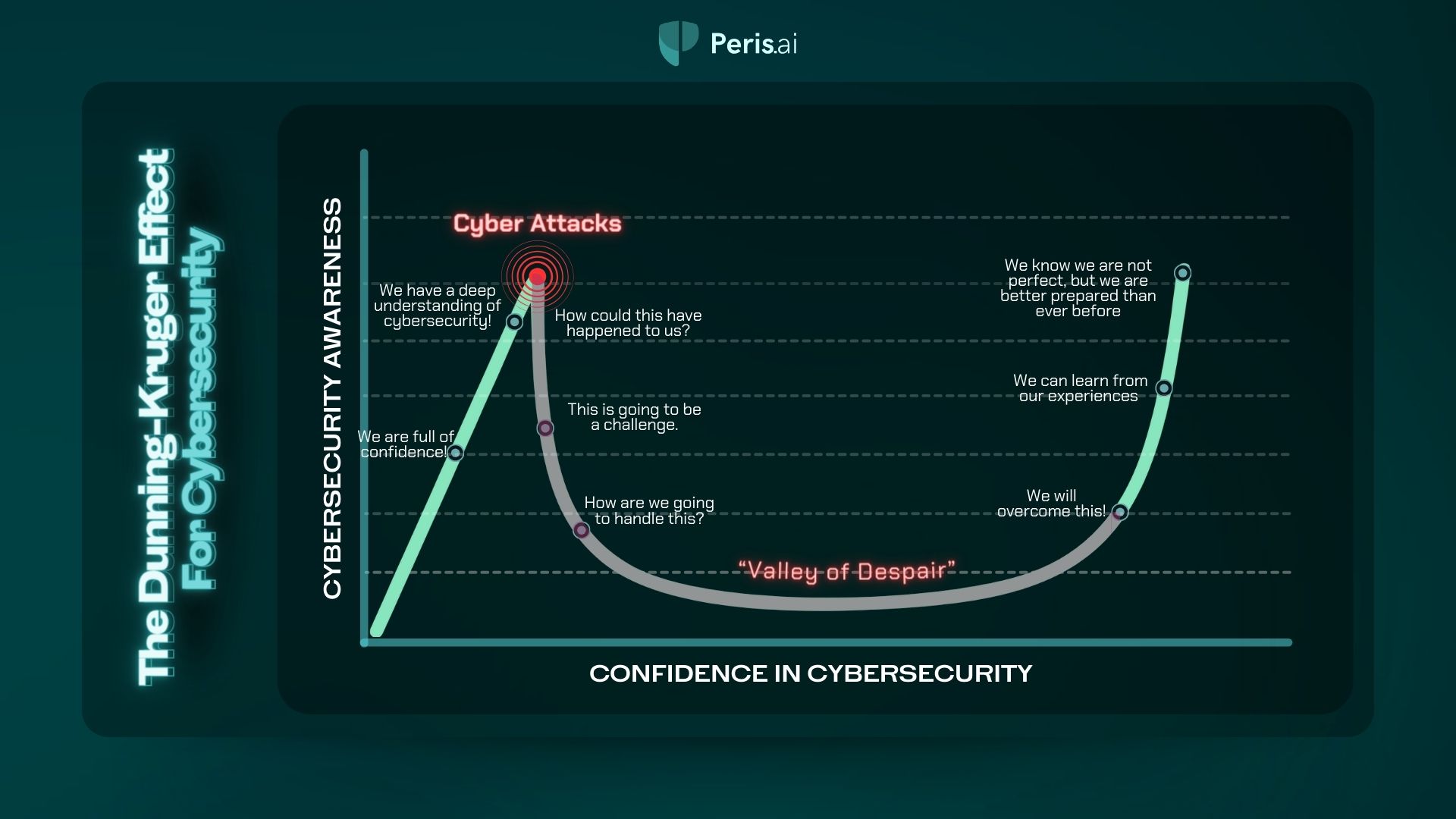
The Dunning-Kruger Effect is a cognitive bias that has significant implications for cybersecurity. It refers to the tendency for individuals with limited knowledge or skills in a subject to overestimate their abilities. In the context of cybersecurity, this can lead to dangerous misconceptions and a false sense of security.
As cyber threats continue to evolve, it is crucial to recognize the impact of cognitive bias on our understanding of cybersecurity. By understanding the Dunning-Kruger Effect and its implications, we can take proactive steps to bridge the knowledge gap and improve our overall security posture.
Uncover the risks of overestimation in a rapidly evolving cyber landscape
Key Takeaways:
The Dunning-Kruger Effect is a cognitive bias that affects individuals’ self-assessment of their competence in cybersecurity.
It can lead to cybersecurity misconceptions and a false sense of security.
Overconfidence in one’s abilities can leave organizations vulnerable to cyber threats.
Bridging the knowledge gap and seeking expert guidance are crucial in combating the Dunning-Kruger Effect.
A culture of continuous improvement and education can enhance cybersecurity skills and risk awareness.
The Impact of Cognitive Bias in Cybersecurity
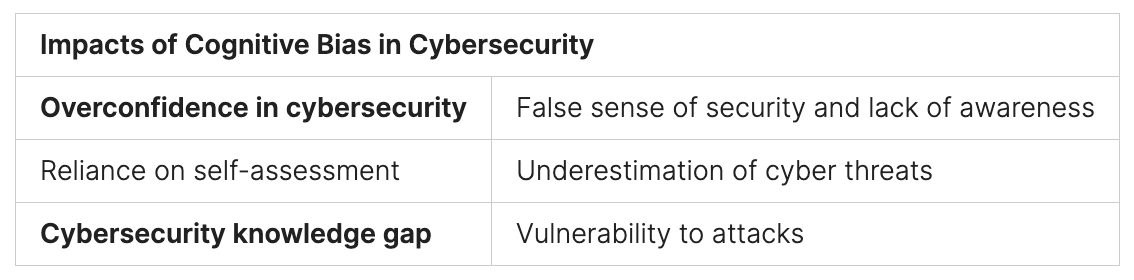
The field of cybersecurity is not immune to the influence of cognitive biases. One common cognitive bias that affects individuals in the cybersecurity realm is the Dunning-Kruger Effect. This bias can lead to overconfidence in one’s cybersecurity abilities and a false sense of security. Instead of recognizing their limitations, individuals may rely on self-assessment and underestimate the complexity of cyber threats.
Overconfidence in cybersecurity can be detrimental as it can lead to a lack of awareness and preparedness. It may prevent individuals from seeking expert guidance or staying informed about the evolving threat landscape. This can create a significant cybersecurity knowledge gap, leaving organizations vulnerable to attacks.
To mitigate the impact of cognitive bias in cybersecurity, it is crucial to promote a culture of continuous learning and improvement. By acknowledging the existence of biases and the limitations of one’s knowledge, individuals can actively seek opportunities to enhance their cybersecurity skills. This may involve attending training programs, obtaining certifications, and engaging with cybersecurity communities to stay updated on best practices and emerging threats.
By addressing cognitive biases and fostering a learning mindset, individuals and organizations can improve their cybersecurity posture and reduce the risks associated with overconfidence and self-assessment. It is essential to recognize that cybersecurity is a complex and ever-changing field, requiring continuous education and a humble approach to ensure effective protection against cyber threats.
Recognizing the Illusion of Cybersecurity Competence
The Dunning-Kruger Effect sheds light on the illusion of cybersecurity competence that individuals may experience. This phenomenon occurs when individuals with limited knowledge or skills in cybersecurity mistakenly believe that they possess a high level of competence. The consequences of this illusion can be significant, as it leads to a false sense of security and a failure to recognize the gaps in one’s cybersecurity knowledge.
To bridge the cybersecurity knowledge gap, it is crucial to address this illusion and take proactive measures to enhance our understanding of cybersecurity. Education and training play a vital role in dispelling misconceptions and developing a more accurate assessment of one’s abilities. By seeking out reputable cybersecurity courses and certifications, individuals can gain the foundational knowledge needed to recognize their limitations and evaluate their true competence.
Furthermore, self-reflection and humility are essential in combating the cybersecurity competence illusion. It is important to acknowledge that cybersecurity is a complex and rapidly evolving field, and no individual can possess mastery in every aspect. By embracing a growth mindset and being open to feedback and constructive criticism, individuals can continually improve their skills and avoid falling victim to the Dunning-Kruger Effect.
Bridging the Gap: Understanding the Dunning-Kruger Effect in Cybersecurity
To illustrate the knowledge gap that the Dunning-Kruger Effect can create, let’s consider a hypothetical scenario. Suppose an individual with limited cybersecurity knowledge believes they are competent in implementing robust security measures. However, without a comprehensive understanding of cyber threats and risk factors, they may overlook critical vulnerabilities in their systems, leaving them susceptible to attacks.
This table clearly illustrates the disparity between perceived competence and actual competence, highlighting the dangers of the cybersecurity competence illusion. It emphasizes the importance of objective self-assessment and continuous learning to bridge the knowledge gap and improve cybersecurity skills.
Understanding Cyber Threats and Risks
When it comes to cybersecurity, understanding the various threats and risks is crucial for protecting sensitive information and maintaining a secure environment. Cyber threats are constantly evolving, and organizations must stay informed and aware to effectively defend against potential attacks. By gaining a comprehensive understanding of these threats, individuals can develop a proactive approach to cybersecurity and minimize the risk of falling victim to malicious activities.
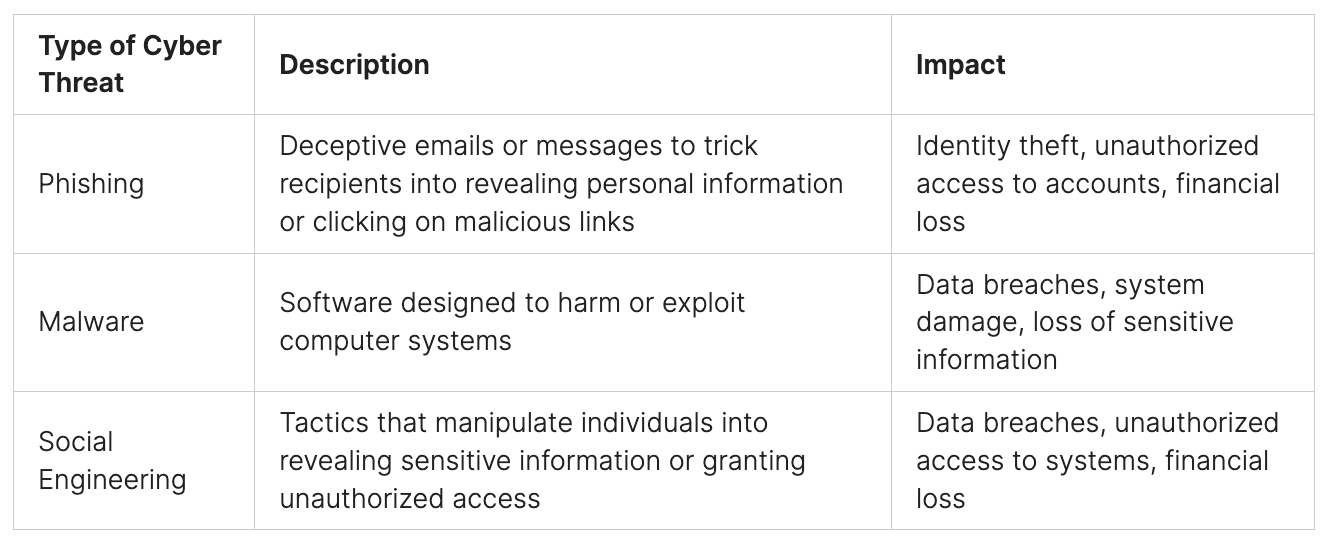
There are several common cyber threats that individuals should be familiar with. Phishing, for example, involves the use of deceptive emails or messages to trick recipients into providing personal information or clicking on malicious links. Malware refers to any software designed to harm or exploit computer systems, while social engineering tactics manipulate individuals into revealing sensitive information or granting unauthorized access.
To visually illustrate the different types of cyber threats and their impact, consider the following table:
By understanding the different types of cyber threats and their potential impact, individuals can better assess their own cybersecurity risk and take appropriate measures to protect themselves and their organizations. It is essential to stay informed about the latest threats and security best practices to maintain a strong defense against cyber attacks.
Improving Cybersecurity Skills
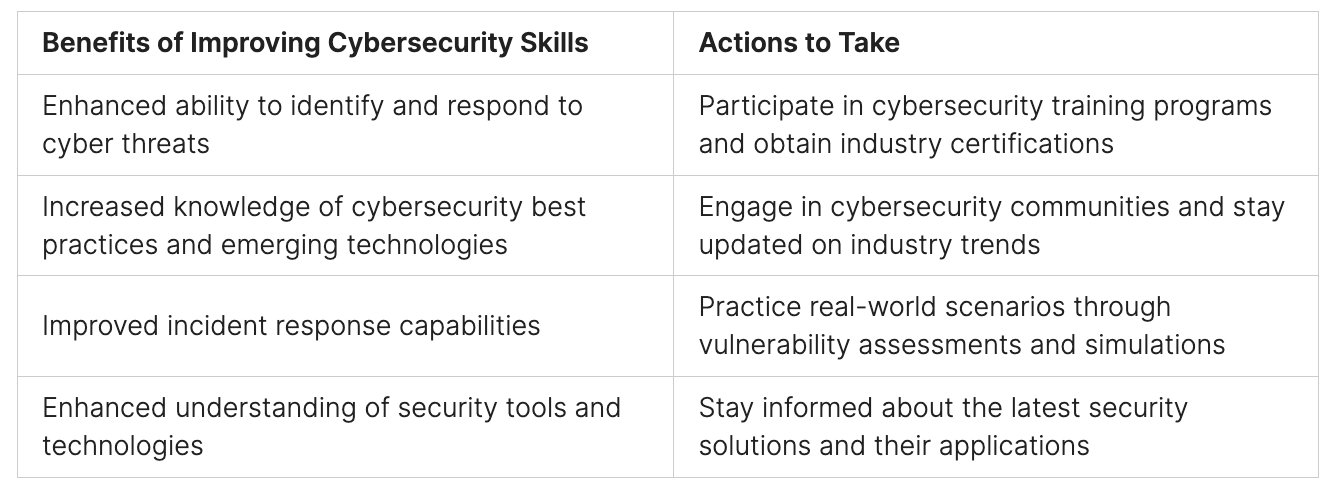
Enhancing cybersecurity skills is imperative to counter the effects of the Dunning-Kruger Effect and bolster overall security measures. Here are some key strategies and approaches that can help bridge the cybersecurity knowledge gap and improve individual and organizational cybersecurity competence:
Continuous Learning and Training Programs
Participating in dedicated training programs and continuous learning initiatives is essential for keeping up with the ever-evolving cybersecurity landscape. By attending workshops, webinars, and conferences, individuals can gain valuable insights and stay updated on the latest security practices and technologies. Additionally, pursuing industry certifications can demonstrate proficiency and provide a structured framework for skill development.
Engagement in Cybersecurity Communities
Active engagement in cybersecurity communities can foster collaboration, knowledge sharing, and access to expert guidance. Joining online forums, participating in discussion groups, and networking with experienced cybersecurity professionals can offer a wealth of insights and support. It also allows individuals to stay informed about emerging threats, best practices, and industry trends.
Familiarity with Latest Security Tools and Technologies
Improving cybersecurity skills entails staying abreast of the latest security tools and technologies. This involves familiarizing oneself with emerging solutions, such as advanced threat detection systems, secure coding practices, and encryption protocols. By understanding and leveraging these tools, individuals can enhance their ability to prevent, detect, and mitigate cyber threats.
Practicing Real-World Scenarios
To reinforce and apply cybersecurity skills, individuals should engage in practical exercises and simulations that mimic real-world scenarios. This includes conducting vulnerability assessments, penetration testing, and incident response drills. By actively engaging in hands-on exercises, individuals can develop critical thinking, problem-solving, and decision-making abilities, contributing to a more robust cybersecurity skill set.
By adopting these strategies and actively investing in skill enhancement, individuals and organizations can improve their cybersecurity preparedness, mitigate risks, and develop a more comprehensive understanding of the cybersecurity domain.
Leveraging Expert Guidance
Overcoming the Dunning-Kruger Effect in cybersecurity requires recognizing the limitations of one’s knowledge and seeking expert guidance. Cybersecurity experts play a crucial role in providing valuable insights and helping individuals gain a more accurate understanding of their capabilities and potential vulnerabilities. By engaging with these experts through consultations, mentorships, or online communities, individuals can access the expertise and guidance needed to develop effective cybersecurity strategies.
“Seeking the advice of cybersecurity experts is essential for navigating the complex landscape of threats and risks. Their experience and knowledge can help individuals gain a deeper understanding of the latest trends and best practices, ultimately strengthening their cybersecurity posture.”
Working with cybersecurity experts allows individuals to tap into a wealth of industry-specific knowledge and experience. These experts can provide tailored advice, recommendations, and strategies based on the unique needs and challenges faced by individuals and organizations. By leveraging their expertise, individuals can bridge the cybersecurity knowledge gap and enhance their overall security defenses.
Benefits of Seeking Expert Advice in Cybersecurity
Seeking expert advice in cybersecurity offers several key benefits:
Access to up-to-date knowledge and best practices
Insights into emerging threats and vulnerabilities
Validation of existing security measures
Identification of weak points and areas for improvement
Guidance in developing effective cybersecurity strategies
Potential cost savings by avoiding breaches and incidents
By leveraging the expertise of cybersecurity professionals, individuals can gain a competitive edge in the ever-evolving cybersecurity landscape. The guidance provided by experts can help individuals make informed decisions, prioritize their security efforts, and stay one step ahead of potential threats.
Seek guidance from experts to gain a competitive edge in the dynamic cybersecurity landscape
Fostering a Culture of Continuous Improvement
To overcome the Dunning-Kruger Effect and cultivate a learning mindset in cybersecurity, it is essential to foster a culture of continuous improvement within organizations and individuals. This involves creating an environment that encourages employees to acknowledge their limitations, embrace feedback and constructive criticism, and actively seek opportunities for growth and development.
One effective way to foster continuous improvement is through regular training and education programs. By providing employees with access to cybersecurity training resources, organizations can ensure that their workforce stays updated on the latest threats, vulnerabilities, and best practices. This not only enhances the overall cybersecurity knowledge and skills of individuals but also helps to bridge the cybersecurity knowledge gap.
Another important aspect of fostering continuous improvement is to create a supportive and collaborative work environment. Encouraging employees to share their experiences, insights, and lessons learned can promote knowledge sharing and the exchange of ideas. This can be done through team meetings, workshops, or even online platforms dedicated to cybersecurity discussions.
By fostering a culture of continuous improvement, organizations can empower their employees to take ownership of their cybersecurity skills and stay proactive in keeping abreast of the evolving threat landscape. This ultimately enhances the organization’s overall security posture and helps mitigate the risks associated with cognitive biases such as the Dunning-Kruger Effect.
The Role of Education and Awareness
The role of education and awareness is crucial in addressing the Dunning-Kruger Effect and other cognitive biases in cybersecurity. By providing comprehensive cybersecurity education programs, individuals can gain the knowledge and skills necessary to make informed decisions and protect themselves from cyber threats.
In addition to education, raising awareness about the Dunning-Kruger Effect is vital. This includes highlighting the risks of overestimating one’s abilities in cybersecurity and emphasizing the importance of seeking expert guidance. By educating individuals about the potential pitfalls of cognitive biases, organizations can foster a culture of self-awareness and accountability.
One effective way to promote cybersecurity education and awareness is through workshops and training sessions. These sessions can cover a range of topics, such as identifying common cyber threats, understanding the importance of secure password practices, and recognizing social engineering techniques. By equipping individuals with this knowledge, they can better recognize their limitations and take proactive measures to enhance their cybersecurity.
Cybersecurity EducationBenefits
Workshops and Training
Equips individuals with cybersecurity knowledge and skills
Raises awareness about common cyber threats
Encourages self-awareness and accountability
Online Resources and Courses
Provides convenient access to cybersecurity materials
Allows individuals to learn at their own pace
Offers a wide range of topics and expertise
Professional Certifications
Validates individuals’ cybersecurity skills and knowledge
Enhances career prospects in the cybersecurity field
Demonstrates commitment to ongoing learning and improvement
In conclusion, education and awareness are essential in combating the Dunning-Kruger Effect and promoting a more informed approach to cybersecurity. By providing comprehensive education programs, raising awareness about cognitive biases, and equipping individuals with the necessary knowledge and skills, organizations can enhance their cybersecurity practices and reduce the risks posed by overconfidence and misinformation.
Conclusion
In summary, the Dunning-Kruger Effect emerges as a formidable obstacle in the realm of cybersecurity, fostering overconfidence and misconceptions that jeopardize our collective digital security. Heightened awareness of this cognitive bias is imperative, as it underscores the potential for overlooked risks, rendering individuals and organizations susceptible to cyber threats.
To navigate the challenges posed by the Dunning-Kruger Effect and fortify cybersecurity defenses, it is paramount to prioritize the cultivation of robust cybersecurity skills. The path forward involves a commitment to continuous learning and enhancement, achieved through participation in comprehensive training programs and the attainment of industry-recognized certifications. These efforts are instrumental in bridging the existing knowledge gap and fostering a more resilient cybersecurity ecosystem.
Furthermore, seeking expert guidance from seasoned cybersecurity professionals serves as a linchpin in acquiring invaluable insights. Such guidance facilitates a more accurate understanding of one’s capabilities and vulnerabilities, contributing significantly to an elevated level of cybersecurity preparedness. Nurturing a culture of perpetual improvement and fostering a mindset of ongoing learning within organizations are essential elements in advancing cybersecurity practices and mitigating the inherent risks associated with cognitive bias.
In conclusion, acknowledging the constraints of one’s knowledge, actively engaging in educational initiatives, and staying abreast of evolving cyber threats are pivotal steps toward refining cybersecurity skills and bolstering risk awareness. We invite you to explore further insights and innovative solutions on our website, Peris.ai Cybersecurity, to empower yourself and your organization in the ongoing pursuit of a secure digital landscape. Visit us today to stay ahead in the ever-evolving landscape of cybersecurity.
FAQ
What is the Dunning-Kruger Effect in cybersecurity?
The Dunning-Kruger Effect is a cognitive bias that affects individuals’ self-assessment of their competence in cybersecurity. It refers to the tendency for people with low levels of knowledge or skill in cybersecurity to overestimate their abilities.
How does cognitive bias impact cybersecurity?
Cognitive bias in cybersecurity, such as the Dunning-Kruger Effect, can lead to overconfidence, misconceptions, and a lack of awareness of potential risks. This can result in a significant cybersecurity knowledge gap and leave organizations vulnerable to attacks.
What is the illusion of cybersecurity competence?
The illusion of cybersecurity competence occurs when individuals with limited knowledge or skills in cybersecurity mistakenly believe that they have a high level of competence. This can lead to a false sense of security and a failure to recognize the gaps in their knowledge.
How can I understand cyber threats and risks better?
Understanding cyber threats and risks involves awareness of common attack vectors, such as phishing, malware, and social engineering. Staying informed about the ever-evolving cybersecurity landscape can help individuals better protect themselves and their organizations from cyber attacks.
How can I bridge the cybersecurity knowledge gap?
Bridging the cybersecurity knowledge gap requires continuous learning and improvement of cybersecurity skills. This can be achieved through attending training programs, obtaining industry certifications, participating in cybersecurity communities, and staying updated on the latest security practices and technologies.
How can I leverage expert guidance in cybersecurity?
Seeking expert guidance from cybersecurity professionals can provide valuable insights and help individuals gain a more accurate understanding of their capabilities and potential vulnerabilities. Engaging with cybersecurity experts through consultations, mentorships, or online communities can offer guidance and support in developing effective cybersecurity strategies.
How can I foster a culture of continuous improvement in cybersecurity?
Fostering a culture of continuous improvement in cybersecurity involves encouraging employees to acknowledge their limitations, embrace feedback and constructive criticism, and actively seek opportunities for growth and development. Prioritizing continuous learning and improvement enhances cybersecurity practices and mitigates the risks associated with cognitive bias.
What is the role of education and awareness in cybersecurity?
Education and awareness play a critical role in combating misconceptions and cognitive biases in cybersecurity. Providing comprehensive cybersecurity education programs and raising awareness about the Dunning-Kruger Effect and other cognitive biases helps individuals develop a more nuanced understanding of their knowledge and skills, reducing the likelihood of falling victim to cyber threats.
How can I improve my cybersecurity skills?
Improving cybersecurity skills requires a commitment to continuous learning and improvement. This can be achieved through various means, such as attending training programs, obtaining industry certifications, participating in cybersecurity communities, and staying updated on the latest security practices and technologies.
Cybersecurity plays a critical role in safeguarding organizations from digital threats. However, structural organizations often need to gain more knowledge when it comes to implementing effective cybersecurity measures. This article examines the challenges these organizations encounter and provides strategies and solutions to bridge the cybersecurity knowledge gap, strengthening defenses and ensuring uninterrupted business operations.
Bridging the Cybersecurity Knowledge Gap: Empowering Organizations to Strengthen Digital Defenses
Key Takeaways:
Structural organizations need a knowledge gap in cybersecurity implementation.
Training and education are essential to address the cybersecurity knowledge gap.
Identifying risks and threats is crucial for effective cybersecurity.
Developing cybersecurity skills among employees is a priority.
Implementing best practices and leveraging cybersecurity solutions enhance defenses.
Understanding the Cybersecurity Knowledge Gap
Many structured organizations need more cybersecurity knowledge among their employees. With proper training and education, employees may be aware of the latest cybersecurity threats, best practices, and strategies. This section delves into the factors contributing to the cybersecurity knowledge gap and the importance of cybersecurity training and education programs.
One of the key factors contributing to the cybersecurity knowledge gap is the rapid evolution of cyber threats. With new techniques and tactics emerging constantly, employees often need help to keep up with the latest security measures. Additionally, structured organizations may need more dedicated cybersecurity teams or departments, leading to a lack of expertise and guidance.
Implementing cybersecurity training and education programs is crucial for addressing this knowledge gap. By providing employees with the necessary skills and knowledge, organizations can empower them to become the first line of defense against cyber threats. Training programs can cover a wide range of topics, from basic cybersecurity awareness to more advanced topics such as secure coding practices and incident response protocols.
Furthermore, cybersecurity education programs can help employees understand the broader impact of cybersecurity on the organization and its stakeholders. By highlighting the potential consequences of a cyberattack, such as data breaches, financial losses, and reputational damage, organizations can foster a sense of responsibility and urgency among employees.
Closing the Knowledge Gap in Structured Organizations through Training and Education
Building a Robust Cybersecurity Culture through Continuous Training and Education
Implementing cybersecurity training and education programs is an ongoing process that requires regular updates and reinforcement. By continuously investing in the development of employees’ cybersecurity knowledge and skills, structured organizations can bridge the knowledge gap and strengthen their overall cybersecurity defenses.
Identifying the Risks and Threats
When it comes to cybersecurity, structured organizations need to be aware of the risks and threats they face. By understanding these potential vulnerabilities, organizations can take proactive measures to protect themselves and bridge the knowledge gap. Let’s explore some common cybersecurity risks and threats that structured organizations should be aware of:
Malware Attacks
Malware attacks are one of the most prevalent cybersecurity threats organizations face today. Malware, short for malicious software, includes viruses, worms, ransomware, and other malicious programs that infiltrate computer systems, disrupt operations, and steal sensitive information. Through social engineering techniques, hackers often trick unsuspecting employees into downloading and opening infected files or clicking on malicious links. The consequences of a malware attack can be devastating, resulting in data breaches, financial losses, and reputational damage.
Data Breaches
Data breaches occur when unauthorized individuals gain access to sensitive information, such as customers’ personal data or confidential business records. These breaches can be the result of various factors, including weak security protocols, unpatched vulnerabilities, or human error. The consequences of a data breach can be severe, ranging from financial repercussions to legal liabilities and damage to the organization’s reputation. Structured organizations must prioritize data protection and implement robust security measures to prevent data breaches.
Phishing Scams
Phishing scams involve cybercriminals posing as trustworthy entities to deceive individuals into revealing sensitive information, such as login credentials or financial details. These scams often occur via email, where attackers send seemingly legitimate messages that trick recipients into clicking on malicious links or providing confidential information. Phishing attacks can lead to identity theft, financial fraud, and unauthorized access to systems. It is crucial for employees in structured organizations to be cautious and vigilant when handling emails and to report any suspicious messages immediately.
Insider Threats
Insider threats refer to cybersecurity risks that originate from within an organization. These threats can be intentional or unintentional and can come from employees, contractors, or third-party vendors with access to sensitive systems and data. Insider threats can involve theft of intellectual property, sabotage, unauthorized sharing of information, or accidental data breaches. Structured organizations must implement proper access controls, monitor user activities, and educate employees about the importance of cybersecurity to mitigate these risks.
By being aware of these common cybersecurity risks and threats, structured organizations can take steps to educate their employees, implement necessary security measures, and bridge the knowledge gap in cybersecurity. Organizations must stay updated with the latest threat landscape and adopt a proactive approach to protect their valuable assets and maintain robust cybersecurity defenses.
Stay Informed, Stay Secure!
Developing Cybersecurity Skills
In order to bridge the knowledge cybersecurity gap in structured organizations, it is essential to focus on developing cybersecurity skills among employees. By equipping individuals with the necessary knowledge and expertise, organizations can significantly enhance their defense against cyber threats. Cybersecurity skills development programs play a vital role in ensuring that employees are well-prepared to identify and mitigate potential risks.
A key component of cybersecurity skills development is creating cybersecurity awareness among employees. This involves educating individuals about the various types of cyber threats, the importance of following best practices, and the role they play in protecting the organization. By fostering a culture of cybersecurity awareness, employees are empowered to take proactive measures to safeguard sensitive information and maintain a secure work environment.
Implementing cybersecurity skills development programs can be approached in various ways, including classroom-style training, online courses, workshops, and mentorship programs. These initiatives should cover topics such as recognizing phishing attempts, creating strong passwords, detecting malware, and understanding social engineering techniques. By providing employees with the necessary tools and knowledge, organizations can build a strong line of defense against cyber threats.
Importance of Cybersecurity Awareness
Cybersecurity awareness is critical for all employees, regardless of their role within an organization. It enables individuals to understand the potential risks they may encounter and empowers them to take appropriate actions to mitigate those risks. By prioritizing cybersecurity awareness, organizations can foster a sense of responsibility among employees and create a collaborative effort to protect sensitive data.
Strategies for Promoting Cybersecurity Skills and Awareness
Offer regular cybersecurity training sessions tailored to different levels and roles within the organization.
Create internal cybersecurity campaigns to raise awareness and inform employees about current threats and best practices.
Encourage employees to stay updated with the latest cybersecurity news and trends through industry resources.
Establish a feedback system that allows employees to report potential security risks or incidents.
Recognize and reward individuals who consistently demonstrate good cybersecurity practices.
Proactive Steps to Boost Cybersecurity Skills and Awarenes
Strategies to Boost Cybersecurity Skills and Awareness in Your Organization
Cybersecurity Best Practices and Strategies
Implementing cybersecurity best practices is essential for structured organizations to protect themselves against cyber threats. By following these strategies, organizations can enhance their defenses and minimize the risk of cybersecurity incidents. Here are some key best practices to consider:
Educate Employees on Cybersecurity
One of the most crucial aspects of cybersecurity is employee awareness and education. Providing comprehensive cybersecurity training programs can empower employees to identify potential threats and take necessary precautions. These programs should cover topics such as phishing awareness, password management, data protection, and safe browsing habits. Regularly reinforcing these best practices will help create a vigilant and security-conscious workforce.
Implement Multi-Factor Authentication
Enforcing multi-factor authentication adds an extra layer of security to prevent unauthorized access to sensitive information. By requiring users to provide multiple forms of verification, such as a password and a unique code sent to their mobile device, organizations can significantly reduce the risk of compromised accounts. Multi-factor authentication should be implemented for all critical systems and applications, including email, remote access, and administrative accounts.
Maintain Regular Software Updates and Patching
Keeping software and applications up to date is essential in preventing vulnerabilities that cybercriminals could exploit. Regularly applying software updates and patches ensures that known security weaknesses are addressed promptly. Establishing a patch management process and monitoring vendor notifications for security updates is crucial for maintaining a robust cybersecurity posture.
The Power of Timely Software Updates
By adhering to these cybersecurity best practices, structured organizations can strengthen their defenses and minimize the risk of cyberattacks. However, it’s important to note that cybersecurity is a continuous effort, requiring ongoing monitoring, updates, and adaptations to stay ahead of evolving threats.
Leveraging Cybersecurity Solutions
Structured organizations can benefit greatly from leveraging cybersecurity solutions to bridge the knowledge gap and enhance their defenses. With the increasing sophistication of cyber threats, it is essential to invest in the right cybersecurity technologies and tools. These solutions can help organizations detect, prevent, and mitigate potential cyber risks, ensuring the security and continuity of their operations.
The Role of Cybersecurity Solutions in Knowledge Enhancement and Defense Strengthening
The Importance of Cybersecurity Technologies
Cybersecurity technologies play a vital role in safeguarding structured organizations from a wide range of cyber threats. These technologies include:
Intrusion Detection Systems (IDS): IDS monitor network traffic for signs of unauthorized access, identifying and alerting IT teams to potential security breaches.
Firewalls: Firewalls act as a barrier between an organization’s internal network and the external internet, monitoring and controlling incoming and outgoing network traffic based on predefined security rules.
Antivirus Software: Antivirus software scans files and programs for known malware, preventing them from causing harm to the organization’s systems.
Encryption Tools: Encryption tools protect sensitive data by converting it into a code that can only be accessed with the correct decryption key, ensuring confidentiality and integrity.
Security Awareness Training Platforms: These platforms provide interactive training modules and simulations to educate employees about cybersecurity best practices, helping them recognize and respond to potential threats.
By implementing these cybersecurity technologies, structured organizations can strengthen their security posture, improve incident response capabilities, and proactively defend against emerging cyber threats.
Choosing the Right Cybersecurity Solutions
When selecting cybersecurity solutions, structured organizations should consider their specific needs and requirements. Conducting a thorough assessment of existing security measures and identifying vulnerabilities will help organizations determine the most appropriate technologies to implement. It is essential to choose solutions that seamlessly integrate with existing IT infrastructure and align with the organization’s overall cybersecurity strategy.
Moreover, structured organizations should regularly evaluate and update their cybersecurity solutions to ensure they remain effective against evolving cyber threats. Engaging with industry experts and staying informed about the latest trends and advancements in cybersecurity technologies can provide valuable insights into emerging solutions that can further enhance an organization’s defense against cyber risks.
The Role of Cybersecurity Solutions in Bridging the Knowledge Gap
Cybersecurity solutions not only bolster the organization’s security infrastructure but also contribute to bridging the knowledge gap. By implementing technologies like security awareness training platforms, organizations can empower their employees with the necessary cybersecurity knowledge and skills. These platforms offer interactive and engaging training modules, quizzes, and simulations that educate employees about the latest threats and best practices.
Overall, structured organizations can leverage cybersecurity solutions to enhance their defenses, fill the knowledge gap, and ensure the resilience of their systems and data in the face of ever-evolving cyber threats.
Building a Cybersecurity Team
One of the key components in bridging the knowledge cybersecurity gap in structured organizations is building a dedicated cybersecurity team. This team consists of cybersecurity experts and professionals who possess the necessary skills and knowledge to implement effective cybersecurity measures. Their expertise, guidance, and support are invaluable in fortifying defenses, mitigating risks, and responding to incidents.
By assembling a cybersecurity team, organizations can benefit from the diverse skill sets and experiences of their members. These experts can conduct comprehensive assessments of the organization’s current cybersecurity posture, identify vulnerabilities, and develop tailored strategies to address them. They can also stay updated with the latest cybersecurity trends and threats, ensuring that the organization remains prepared and resilient in the face of evolving risks.
Having a dedicated cybersecurity team is particularly crucial for structured organizations as they often handle sensitive data and face a higher level of risk due to their size and complexity. These experts can work closely with other departments within the organization, such as IT and legal, to ensure a holistic approach to cybersecurity. They can also provide training and awareness programs to educate employees on best practices and security protocols, empowering them to become the first line of defense.
Benefits of a Cybersecurity Team
“Building a dedicated cybersecurity team allows organizations to tap into specialized expertise, enhance their cybersecurity capabilities, and proactively address potential threats. It also sends a clear message to stakeholders, partners, and customers that the organization prioritizes cybersecurity and is committed to protecting sensitive data.”
By investing in a cybersecurity team, structured organizations can demonstrate their dedication to maintaining a robust cybersecurity posture and instill confidence in their stakeholders. This team plays a critical role in creating a secure and resilient environment, ensuring business continuity, and safeguarding the organization’s reputation.
Building Trust through Cybersecurity: The Strategic Investment in a Dedicated Cybersecurity Team
Table: Key Roles and Responsibilities of a Cybersecurity Team
Crafting a Resilient Cybersecurity Team with Varied Expertise
A well-rounded cybersecurity team should consist of individuals with expertise in various areas, including governance and risk management, technology, compliance, and incident response. Each role plays a crucial part in strengthening the organization’s cybersecurity defenses and ensuring a proactive and resilient approach to cybersecurity.
Creating a Cybersecurity Culture
Cultivating a cybersecurity culture is crucial for bridging the knowledge gap in structured organizations. When cybersecurity becomes ingrained in an organization’s values and practices, employees are more likely to prioritize and adhere to cybersecurity best practices. By fostering cybersecurity awareness and promoting a sense of responsibility, organizations can strengthen their defenses and mitigate the risks of cyber threats.
The Importance of Cybersecurity Awareness
One of the key elements in building a cybersecurity culture is creating awareness among employees. This involves educating them about the potential risks and threats they may encounter in their day-to-day work and providing them with the knowledge and skills to identify and respond to such threats. Regular cybersecurity training programs and awareness campaigns are essential for keeping employees informed about the latest cybersecurity trends and best practices. These initiatives can include workshops, webinars, and interactive modules that cover topics like password hygiene, phishing awareness, and device security.
Encouraging a Proactive Approach
A proactive approach to cybersecurity is vital for creating a culture that prioritizes cybersecurity. This involves encouraging employees to take ownership of their cybersecurity responsibilities and empowering them to report any suspicious activities or potential vulnerabilities. Organizations can implement mechanisms such as anonymous reporting channels or cybersecurity incident response teams to facilitate reporting and ensure timely action. By fostering an environment where employees feel comfortable and confident in raising concerns, organizations can strengthen their cyber defenses and prevent potential breaches.
The Role of Leadership
Leadership plays a critical role in establishing and promoting a cybersecurity culture within a structured organization. Executives and managers should lead by example and demonstrate their commitment to cybersecurity by following best practices themselves. They should also provide support and resources for cybersecurity initiatives, including allocating budget and personnel for cybersecurity awareness programs and investing in the latest cybersecurity technologies. By prioritizing cybersecurity at the highest level, leaders can set the tone for the entire organization and inspire employees to embrace a cybersecurity-first mindset.
How Leadership Sets the Tone for Cybersecurity Excellence
By creating a cybersecurity culture, structured organizations can bridge the knowledge gap and ensure that employees are equipped with the necessary skills and awareness to protect against cyber threats. This proactive approach towards cybersecurity will strengthen the organization’s overall security posture and contribute to the resilience and success of the business in an increasingly digital world.
Building Skills, Raising Awareness, and Bolstering Security in Structured Organizations
Continuous Monitoring and Improvement
Bridging the knowledge gap in cybersecurity requires a proactive approach that includes continuous monitoring and improvement. Organizations must stay vigilant and keep up with the ever-evolving cybersecurity landscape to protect their valuable data and systems. Continuous monitoring allows for the detection of potential vulnerabilities and threats, enabling organizations to take prompt action and prevent potential breaches.
Vigilance, Continuous Monitoring, and Proactive Defense in Action
Implementing a robust cybersecurity assessment program is vital for organizations to evaluate their existing security measures and identify areas for improvement. By conducting regular assessments, organizations can gain valuable insights into their cybersecurity posture and make data-driven decisions regarding necessary updates and enhancements. These assessments should cover various aspects of cybersecurity, including network infrastructure, software systems, employee awareness and training, and incident response protocols.
Benefits of Continuous Monitoring and Improvement
Continuous monitoring and improvement offer several key benefits to structured organizations:
Proactive threat detection: Continuous monitoring enables organizations to identify potential threats and vulnerabilities before they can be exploited, allowing for timely remediation.
Enhanced incident response: By continuously monitoring systems and networks, organizations can detect and respond to security incidents more effectively, minimizing the impact and recovery time.
Ongoing compliance: Continuous monitoring helps organizations stay compliant with industry regulations and standards by ensuring that security controls and measures are continuously assessed and updated.
Adaptability: The cybersecurity landscape is constantly evolving, with new threats emerging regularly. Continuous monitoring and improvement enable organizations to adapt to these changes and stay ahead of emerging threats.
In today’s digital landscape, continuous monitoring and improvement are essential for organizations to bridge the knowledge gap in cybersecurity. By adopting a proactive approach and conducting regular cybersecurity assessments, organizations can identify vulnerabilities, detect potential threats, and enhance their security measures. This ongoing monitoring and improvement process ensures that organizations stay resilient and can effectively respond to the evolving cybersecurity landscape.
Collaboration and Knowledge Sharing
Collaboration and knowledge sharing are vital components in bridging the cybersecurity knowledge gap among structured organizations. By working together and exchanging information, organizations can enhance their understanding of cybersecurity threats and best practices, ultimately strengthening their defenses against evolving cyber risks.
One effective way to foster collaboration is by partnering with cybersecurity experts. These professionals bring specialized knowledge and experience to the table, offering valuable insights and guidance on implementing cybersecurity measures. By leveraging their expertise, organizations can gain a competitive edge in the ever-changing cybersecurity landscape.
Industry forums and events also provide opportunities for knowledge sharing and networking. Participating in these gatherings allows organizations to learn from peers, share best practices, and stay updated on the latest trends and advancements in cybersecurity. By actively engaging in these collaborative platforms, organizations can stay ahead of emerging threats and continuously improve their cybersecurity posture.
Furthermore, creating a culture of knowledge sharing within the organization itself is essential. Encouraging employees to share their experiences, lessons learned, and innovative approaches to cybersecurity foster a collective learning environment. This can be achieved through regular knowledge-sharing sessions, internal forums, or even a dedicated communication channel where employees can share insights, ask questions, and contribute to the organization’s cybersecurity knowledge base.
In summary, collaboration and knowledge sharing play a crucial role in bridging the cybersecurity knowledge gap in structured organizations. By partnering with experts, participating in industry events, and fostering a culture of knowledge sharing within the organization, organizations can strengthen their defenses, stay informed about emerging threats, and enhance their overall cybersecurity posture.
Conclusion
Cybersecurity is of utmost importance for structured organizations, but bridging the knowledge gap in this field is a complex task. However, by implementing effective strategies and solutions, structured organizations can fortify their defenses, prevent risks, and boost business continuity in the face of evolving cyber threats.
One of the key steps to bridging the cybersecurity knowledge gap is through implementing cybersecurity training programs. By providing employees with the necessary education and training, organizations can ensure that their workforce is aware of the latest cybersecurity threats, best practices, and strategies.
In addition to training, developing cybersecurity skills among employees and fostering a cybersecurity culture are essential. By promoting cybersecurity awareness and implementing best practices, structured organizations can create a strong defense against cyber threats.
The pivotal components of cybersecurity resilience involve not only bridging the knowledge gap but also strategically leveraging cybersecurity solutions and cultivating a dedicated cybersecurity team. Organizations can significantly enhance their defenses and ensure swift, effective responses to incidents by investing in the right technologies and bringing onboard cybersecurity experts.
For a deeper understanding of how these principles can be tailored to meet your organization’s needs, we’d like to invite you to explore the cybersecurity solutions offered by Peris.ai. Our expertise and innovative technologies stand ready to fortify your digital defenses. Take the proactive step towards a more secure future – visit our website at Peris.ai Cybersecurity. Discover how we can empower your organization to navigate the ever-evolving landscape of cybersecurity challenges with confidence.
FAQ
What is the cybersecurity knowledge gap in structured organizations?
The cybersecurity knowledge gap refers to the need for cybersecurity knowledge among employees in structured organizations, which hinders their ability to protect against cyber threats effectively.
Why is cybersecurity training and education important?
Cybersecurity training and education programs are crucial to ensure employees are aware of the latest threats, best practices, and strategies, enabling them to contribute to a strong cybersecurity defense.
What are the common cybersecurity risks and threats faced by structured organizations?
Structured organizations are susceptible to malware attacks, data breaches, phishing scams, and insider threats, among other cybersecurity risks.
How can structured organizations develop cybersecurity skills?
By implementing cybersecurity skills development programs and awareness campaigns, structured organizations can foster a cybersecurity culture and enhance employees’ cybersecurity skills.
What are some cybersecurity best practices for structured organizations?
Regularly updating software, using strong passwords, implementing multi-factor authentication, conducting security audits, and creating incident response plans are essential cybersecurity best practices.
How can structured organizations leverage cybersecurity solutions?
Structured organizations can utilize intrusion detection systems, firewalls, antivirus software, encryption tools, and security awareness training platforms to bolster their cybersecurity defenses.
Why is building a cybersecurity team important?
Hiring cybersecurity experts and professionals enables structured organizations to benefit from their expertise and receive guidance and support in implementing effective cybersecurity measures.
How can structured organizations create a cybersecurity culture?
By prioritizing cybersecurity in values and practices, promoting awareness, encouraging responsibility, and adopting a proactive approach, structured organizations can foster a cybersecurity culture.
Why is continuous monitoring and improvement essential in cybersecurity?
Regular cybersecurity assessments, system monitoring, staying updated with the latest trends, and addressing vulnerabilities are vital for maintaining a strong cybersecurity posture in structured organizations.
How can collaboration and knowledge sharing contribute to bridging the cybersecurity knowledge gap?
Collaboration with cybersecurity experts, sharing best practices, and participating in industry forums and events facilitate collective learning and knowledge exchange, strengthening cybersecurity defenses.
As the digital world becomes more complex, the need for robust cybersecurity has never been greater. Yet, the terms and jargon associated with data security are often misunderstood, leading to confusion and ineffective protective measures. Whether you’re an individual protecting personal data or an organization safeguarding sensitive information, understanding the nuances of cybersecurity terminology is key to building a solid defense. Let’s clear up some of the most common misconceptions in cybersecurity.
Encryption
Misunderstanding: People often believe that encryption alone can guarantee data security.
Clarification: While encryption is essential for protecting data by converting it into unreadable code for unauthorized users, it isn’t a comprehensive solution. Without proper access controls, secure key management, and monitoring, encrypted data can still be compromised. Effective encryption requires a layered security approach that includes strong passwords, regular updates, and user education on data handling.
Phishing
Misunderstanding: Many think phishing is limited to scam emails.
Clarification: Phishing attacks are not confined to emails. They also occur through text messages (smishing), social media, and phone calls (vishing). Hackers craft these attacks to trick individuals into revealing personal information, login credentials, or financial details. With the increasing sophistication of phishing methods, it’s crucial to recognize phishing across all communication channels to prevent data breaches and identity theft.
Firewall
Misunderstanding: A firewall is seen as a complete security solution.
Clarification: Firewalls are essential for monitoring and controlling network traffic but are not sufficient on their own. A firewall is just one layer in a broader defense strategy. For full protection, firewalls should be paired with intrusion detection systems (IDS), endpoint security, and regular security updates to defend against evolving cyber threats.
Malware
Misunderstanding: Some users believe malware only refers to viruses.
Clarification: Malware encompasses a wide range of malicious software, including viruses, trojans, ransomware, spyware, and more. Each type has different behaviors and purposes, such as stealing data, encrypting files for ransom, or spying on users. A comprehensive security strategy should account for all types of malware and employ preventive tools such as anti-malware software, regular patches, and safe browsing habits.
Data Breach
Misunderstanding: Some think a data breach is only about stolen data.
Clarification: A data breach can involve more than theft. It may include unauthorized access leading to data exposure, alteration, or destruction. Even if no data is stolen, breaches can have severe consequences, such as damaged data integrity, loss of trust, and significant financial repercussions for businesses.
Two-Factor Authentication (2FA)
Misunderstanding: 2FA is often thought of as a foolproof solution.
Clarification: Two-factor authentication adds an extra layer of security, but it is not invulnerable. Hackers can exploit techniques like SIM swapping or sophisticated phishing schemes to bypass 2FA. While 2FA significantly reduces risk, it should be used alongside strong passwords, security awareness, and other identity protection measures.
☁️ Cloud Security
Misunderstanding: Some believe data stored in the cloud is automatically safe.
Clarification: While cloud service providers implement strict security protocols, data security in the cloud is a shared responsibility. Users must also take measures, such as using strong passwords, enabling encryption, and understanding the terms of service regarding data storage and access. Ensuring compliance with regulations and maintaining good cloud hygiene are essential to securing data in cloud environments.
️ Zero Trust
Misunderstanding: Zero Trust is often interpreted as a security approach that trusts no one.
Clarification: The Zero Trust model assumes that threats can originate from anywhere, even within the network. It requires continuous verification of users and devices, regardless of whether they are inside or outside the organization’s network. Zero Trust is not about distrusting everyone but about enforcing strict access controls and reducing risks through constant monitoring and validation.
️ Staying Ahead in Cybersecurity
Understanding these commonly misunderstood terms is critical to developing a robust cybersecurity strategy. Misinterpretations can lead to vulnerabilities and missed opportunities to strengthen defenses. By clarifying these key concepts, both individuals and organizations can take proactive steps to protect sensitive information in an ever-evolving digital landscape.
Stay informed, stay protected. For more updates and expert insights, visit our website at Peris.ai.
In today’s fast-changing world of cybersecurity, spotting threats early is key. It helps stop breaches before they can harm an organization’s important data and systems. Phishing, ransomware, and identity theft are big problems. New threats like attacks on the supply chain and IoT vulnerabilities add to the danger. To fight these threats, companies need a strong plan. This plan should use people, processes, and technology together.
Key Takeaways
Threat detection and analysis are vital for a solid cybersecurity plan
Finding threats early can stop breaches and protect data
Using AI and analytics makes spotting threats better
Threat hunting and watching for threats can find hidden dangers
Having a good plan for responding to threats is crucial
Understanding Threat Detection and Response
Threat detection and response are key parts of a strong cybersecurity plan. They help spot and stop harmful activities that could harm a company’s network and data. A good program uses people, processes, and technology to find breaches early and act fast to lessen damage.
What is Threat Detection and Response?
Threat detection is finding threats that could harm a company’s assets. This includes watching network traffic, checking user actions, and finding malware or unauthorized access. Threat response is taking steps to stop or lessen the threat, like blocking bad traffic, isolating infected systems, and fixing problems.
Detecting Known and Unknown Threats
Security programs need to find both known and unknown threats to work well. Known threats are ones a company has seen before and has defenses for. Unknown threats are new attacks that need advanced methods like behavioral analysis and machine learning to find.
Using security best practices like making endpoints secure, segmenting networks, and doing risk checks can help find threats better. Also, using frameworks like MITRE ATT&CK can help make defense strategies more effective against specific threats.
“Threat detection is the first step of a defense-in-depth security strategy. It can help organizations reduce the risk of data theft, fraud, and other cybercrime, while also identifying vulnerabilities before they can be exploited.”
It’s important to keep staff up to date on new threats for quick responses. Automated detection tools and managed services can also help find and fix threats early.
Good threat detection and response are key for strong security and protecting against many cyber threats. By using people, processes, and technology, companies can spot and handle threats fast, reducing the damage from breaches.
Leveraging Threat Intelligence
Threat intelligence is key to better cybersecurity. It analyzes past attacks to spot known threats. This lets organizations defend against them early. But its real strength is in finding unknown threats, those we haven’t seen before.
Role of Threat Intelligence in Threat Detection
Threat intelligence gives us a peek into how cybercriminals work. It helps us understand threats better and fight them more effectively. Using threat intelligence in security solutions boosts our ability to face new cyber threats.
User Behavior Analytics and Attacker Behavior Analytics
User behavior analytics (UBA) and attacker behavior analytics (ABA) are also vital. UBA sets a normal activity baseline and spots anomalies that might mean trouble. ABA looks at known threat actor patterns to help us catch and stop them.
Together, threat intelligence, UBA, and ABA give us a full view of threats. This lets us take steps to protect our assets. This approach makes our cybersecurity stronger and lowers the chance of cyber attacks.
“Threat intelligence is the foundation of a robust cybersecurity strategy, providing organizations with the insights they need to stay one step ahead of evolving threats.”
Responding to Security Incidents
Incident Response Planning and Coordination
Getting everyone on board with an incident response plan is key before you start. Having a team and plans in place can save a lot of money, almost half a million dollars on average, according to IBM. But, because of criminal tricks and mistakes, security breaches are almost sure to happen, threatening money, operations, and reputation.
Important questions in incident response include: Who is in charge at each step? Is communication clear? And when should issues be escalated? A solid plan can help control damage and speed up recovery, reducing downtime and boosting security.
An incident response plan lists who does what, actions for different situations, and how to finish tasks. It’s about sorting incidents by urgency and importance to decide how to respond.
Using Digital Forensics and Incident Response (DFIR) can help recover faster, with less disruption and better security. Your plan should cover roles, detection, investigation, and how to handle and notify about breaches.
Frameworks from NIST, ISO, and SANS Institute have steps like planning, detection, and recovery. Regular drills and reviews are crucial to find weaknesses, check progress, and update the plan.
Plans need to keep up with new threats, technology, and business changes, with updates at least once a year.
Essential Components of a Threat Detection Program
Creating a strong threat detection program is key for keeping your network safe. It uses different tools to gather data from all over the network. This includes login records, network access, and system logs.
Threat detection technology is important for watching network traffic and activity. It looks at both internal and internet traffic. Endpoint threat detection solutions give detailed info on devices. They help in understanding and solving security issues.
Penetration testing is also crucial. It helps understand how well your detection works. This way, you can quickly respond to security threats. A good threat detection program uses all these tools. It helps spot and stop cyber threats early.
Key Components of a Threat Detection Program:
Security Event Detection
Network Traffic Monitoring
Endpoint Threat Detection
Penetration Testing
Good cybersecurity monitoring and threat detection can save a lot of money. Data breaches can cost up to $4.22 million in 2024. Spotting threats early keeps your business running smoothly and protects your reputation.
A good threat detection program includes SIEM systems, IDS/IPS, and log management. It also has network and endpoint monitoring. These tools give you a clear view of your network. They help detect threats automatically and provide insights to keep your network safe.
Proactive Threat Detection Techniques
Organizations are now focusing on proactive cybersecurity measures. They use honeypots and attacker traps to catch and study malicious actors in their networks. This helps security teams understand how threat actors work, leading to better defense strategies.
Setting Attacker Traps with Honeypots
Honeypots are fake systems that seem real, attracting attackers. When an attacker falls for it, the security team gets a chance to study their actions. They can then plan better ways to stop them. This method not only finds hidden dangers but also stops attackers’ plans, making the organization safer.
Threat Hunting for Hidden Threats
Threat hunting is about looking for signs of trouble in the network and security systems. It uses special tools and knowledge to find threats that others might miss. By hunting for these threats, companies can lower the risk of being hacked and keep their important data safe.
Using these methods together, organizations can improve their security. They can lessen the damage from possible attacks and stay ahead of new threats.
How Threat Detection and Analysis Can Prevent Breaches Before They Happen
Cyber threats are getting smarter and more common. This is because hackers are getting better and technology is advancing fast. Old security tools can’t keep up with these new threats because they only look for known dangers. To fight back, companies need to use proactive threat detection and analysis.
Cybersecurity analytics uses advanced tools like machine learning and artificial intelligence. These tools help understand threats better. For companies to protect their digital stuff well, using cybersecurity analytics is key. Tools like SentinelOne’s WatchTower help by looking at past and current data to spot and fix weaknesses.
Real-Time Threat Detection is key to catching threats early, unlike waiting for them to happen. It helps lower how long it takes to find and fix threats. This way, companies can see their whole network and find problems fast, keeping their security strong.
Cybersecurity analytics also helps meet rules like GDPR and HIPAA, and get ready for audits. It helps use security resources wisely by focusing on real threats and cutting down on false alarms.
Starting real-time threat detection can be hard because of tech, operational, and money issues. But, the good it does is worth it. With advanced analytics and constant monitoring, companies can stop cyber threats before they start. This keeps their important stuff and good name safe.
Role of AI and Machine Learning
Artificial intelligence (AI) and machine learning (ML) are changing how we detect threats. They use AI algorithms to spot patterns and oddities in big data. ML models get better at predicting threats as they learn from more data. AI and ML can handle huge amounts of data faster and more accurately than humans, helping us catch cyber threats quickly.
Leveraging AI for Threat Detection
AI is great at looking through lots of data to find small details that others might miss. It can take over routine security tasks, letting experts tackle harder problems. This makes security work more efficient and accurate. AI also keeps getting better at spotting threats by learning from past attacks.
AI can watch how users behave to find insider threats or stolen accounts. This makes security even stronger.
Machine Learning Applications in Cybersecurity
Machine learning helps in two main ways: anomaly detection and behavioral analytics. Anomaly detection finds unusual behavior that might be a threat. Behavioral analytics looks at how users and networks act to find patterns that could mean trouble. These methods help security teams keep up with new and tricky cyber threats.
AI can handle and analyze data for threat detection in ways humans can’t. Machine learning can spot new threats by looking at data patterns. This has made the cybersecurity field more automated, fast, and predictive.
But, using AI for security needs special skills and knowledge. AI might not always keep up with the newest cyber threats because they keep changing. There are also worries about privacy because AI uses a lot of data.
“The shift to AI-based threat detection has accelerated automation, real-time data analysis, and predictive capabilities in the cybersecurity industry.”
Anomaly Detection and Behavioral Analytics
In today’s fast-changing cybersecurity world, tools like anomaly detection and behavioral analytics are key. They help stop threats before they can harm us. These tools are especially useful in finance, retail, and cybersecurity. They spot fraud and unusual patterns.
Banking benefits a lot from anomaly detection. It helps find suspicious activities that don’t follow the usual rules.
Before, people looked at data points by hand to understand performance. Now, machine learning is used more for anomaly detection. This makes it easier to spot problems early and fix them without spending a lot. But, setting up these systems and finding the right data levels can be hard.
Behavioral analytics, like User Entity Behavior Analytics (UEBA), offer a new way to fight cyber threats. UEBA sets a baseline for normal user behavior. It then spots unusual activities that might be threats, like insider attacks or APTs.
UEBA helps find and stop complex cyber threats. It also helps meet data protection rules, making security better overall.
Anomaly detection and behavioral analytics are great for stopping data breaches and making incident response better. They also help automate fixing problems and analyze trends over time. But, setting them up can be tricky. It involves balancing security and privacy, dealing with false alarms, and keeping up with new threats.
To use these tools well, organizations need clear goals, lots of data, and tailored security plans. They also need to adjust settings and link these tools with other security systems. This way, businesses can protect themselves from risks and keep their important data safe.
“Anomaly detection identifies suspicious activities outside of established normal patterns, protecting systems from financial losses and data breaches.”
As threats grow, using anomaly detection and behavioral analytics is key to protect against data breaches and other dangers. These tools help security teams find and fix threats fast, keeping systems safe.
Threat Intelligence for Proactive Defense
Effective cybersecurity strategies need proactive steps to keep up with new threats. Threat intelligence is key, helping organizations spot potential attackers and their plans. This way, they can stop breaches before they happen.
Integrating Threat Intelligence Data
The cyber threat intelligence cycle includes planning, collection, and analysis. Each step helps improve defense strategies. By using threat intelligence, companies can better detect and handle threats quickly.
Cyberattacks happen every 39 seconds, showing the need for early defense. Threat intelligence comes from many sources, like open data and commercial providers. It gives insights into current and future threats.
Threat intelligence helps with proactive cybersecurity by guiding practices like vulnerability management. By adding threat intelligence to their systems, companies can stay ahead of threats. This strengthens their cybersecurity.
“Cyber threat intelligence enables organizations to make faster and more informed security decisions, shift from reactive to proactive measures, and reduce the risk of data breaches.”
Conclusion
Preventing cyber breaches is critical for businesses to safeguard their data and operations. Leveraging advanced technology, threat intelligence, and expert teams empowers organizations to detect and neutralize threats swiftly, ensuring robust protection.
Proactive cybersecurity measures yield the best results. By understanding the evolving threat landscape and utilizing tools like threat intelligence and deception technology, businesses can effectively analyze risks and implement strategies to fortify their security.
Adopting a proactive approach to cybersecurity ensures preparedness against emerging threats. By combining cutting-edge technology, actionable threat intelligence, and comprehensive security training, companies can secure their digital environments and stay ahead of cybercriminals.
Don’t wait to enhance your defenses—explore our Products and Services at Peris.ai today and take the first step toward a safer digital future.
FAQ
What is Threat Detection and Response?
Threat detection and response is about finding and stopping harmful activities in a network. It uses people, processes, and technology to catch breaches early. This way, threats can be stopped before they cause harm.
How do you detect known and unknown threats?
To find threats, security systems must spot both known and unknown dangers. Known threats are recognized because they match known malware or attacks. Unknown threats are new or changing, but threat intelligence helps spot them.
User behavior analytics (UBA) and attacker behavior analytics (ABA) help find unusual activities. These might show unknown threats.
What is the role of threat intelligence in threat detection?
Threat intelligence helps by comparing known attack data to what’s happening in your network. It’s great for known threats but not for new ones. Adding threat intelligence to detection systems makes responses faster and more accurate.
How important is incident response planning and coordination?
Good incident response planning is key. It needs everyone to know their role and how to communicate. A solid plan helps reduce damage and keeps things running smoothly during a breach.
What are the essential components of a threat detection program?
A strong program uses security event, network, and endpoint detection technologies. These tools gather and analyze data from across the network. Penetration tests and other controls help understand and respond to threats.
What are some proactive threat detection techniques?
Proactive techniques include setting traps and threat hunting. These methods help security teams watch over employees, data, and assets. They increase the chance of catching and stopping threats early.
How can threat detection and analysis prevent breaches?
Effective detection and analysis stop breaches before they happen. By using advanced tech, threat intelligence, and skilled teams, businesses can spot and act on threats fast. This keeps them safe from attacks.
How do AI and machine learning contribute to threat detection?
AI and machine learning change threat detection by finding patterns in data. They learn from past data to predict threats. AI and ML solutions can analyze huge amounts of data quickly, helping detect and respond to threats fast.
What is the importance of anomaly detection and behavioral analytics?
Anomaly detection and behavioral analytics are crucial for real-time threat detection. They find unusual behavior that might be malicious. These methods help security teams catch and stop complex attacks by spotting suspicious activities.
How can threat intelligence improve proactive defense?
Threat intelligence helps by gathering and analyzing threat data. When added to detection systems, it makes responses faster and more accurate. This helps organizations stay ahead of cyber threats.
With over 2 billion active users globally, Google accounts are a treasure trove of sensitive information—emails, photos, documents, and even financial details. This makes them prime targets for cybercriminals employing tactics like phishing, malware, and stolen credentials to gain unauthorized access.
A compromised Google account can lead to financial fraud, identity theft, and even reputational damage. Recognizing the warning signs and taking immediate action can prevent these threats from escalating into catastrophic consequences.
⚠️ Signs Your Google Account May Be Hacked
Despite Google’s robust security features, no system is foolproof. Here’s how you can detect if your account has been breached:
Unexpected Changes in Security Settings
Suspicious Activity Across Google Services
Unauthorized Financial Transactions
Google Security Alerts
What to Do If Your Google Account Is Hacked
A swift response is critical to mitigating the damage from a hacked account. Follow these steps to regain control and secure your account:
Enable Two-Factor Authentication (2FA)
Scan and Remove Malware
Update Passwords
Review Connected Devices and Apps
Notify Your Financial Institutions
Inform Your Contacts
️ How to Prevent Future Hacks
Proactive measures can significantly reduce the risk of a breach:
Strengthen Your Security
Be Cautious of Phishing Scams
Update Software Regularly
Secure Your Internet Connection
Stay Secure with Peris.ai
A compromised Google account can expose sensitive information to cybercriminals, but early detection and immediate action can make all the difference. Implementing security best practices, enabling advanced protection features, and maintaining vigilance are your best defenses against future attacks.
Want to learn more about safeguarding your online identity? Visit Peris.ai for expert cybersecurity insights and solutions tailored to keep your digital world safe.
Your Peris.ai Cybersecurity Team #YouBuild #WeGuard
Organizations face a constant battle against cyber threats. They must protect their digital assets to keep operations running smoothly. Threat Exposure Management (TEM) is a key strategy to help them stay safe. It gives them a clear view of their security and helps them spot and deal with threats quickly.
Managing assets well is at the heart of TEM. It boosts threat detection and mitigation, and improves overall cybersecurity. A detailed asset list is vital for understanding what needs protection. It helps in managing risks and responding to security incidents.
A good asset management system makes it easier to manage risks and assess vulnerabilities. It helps in focusing security efforts on the most critical areas. It also ensures that all assets meet strict data protection and cybersecurity standards.
Asset management helps in planning and using resources wisely. It gives insights into how assets are performing and when they need updates or replacements. IT asset discovery tools are key in this process. They automatically find and list all network-connected assets, from hardware to IoT devices.
With a full list of IT assets, administrators can better manage risks. They can do precise vulnerability checks and focus on the most critical security efforts. This control over the IT environment leads to better resource use. It makes operations more efficient and strengthens cybersecurity.
Key Takeaways
Effective asset management enhances threat detection, mitigation, and overall cybersecurity by providing visibility and managing risks.
A comprehensive asset inventory offers crucial insights into what is being protected, essential for effective threat detection and asset risk management.
Effective asset risk management and vulnerability assessment are facilitated by a well-maintained asset inventory, enabling targeted mitigation measures.
Asset management aids in resource planning and optimization, informing decisions about resource allocation, upgrades, and replacements.
IT asset discovery tools provide the comprehensive visibility essential for effective threat detection and mitigation.
Understanding Threat Exposure Management (TEM)
Threat Exposure Management (TEM) is key to a strong cybersecurity plan. It means always watching an organization’s outside attack surface for weaknesses. This helps spot vulnerabilities and understand the risks they pose.
This proactive method lets organizations focus on improving security. They can make plans to fix problems and get better at protecting themselves.
Continuous Monitoring
Continuous Monitoring is a big part of TEM. It’s about checking the outside attack surface often to find vulnerabilities and risks. This keeps organizations up-to-date with new threats and helps them adjust their defenses.
Vulnerability Prioritization
Vulnerability Prioritization is important in TEM. It’s about looking at security controls to see which need work or should be replaced. This helps organizations use their resources wisely and tackle the most urgent security issues first.
Mobilization & Remediation Planning
Mobilization and Remediation Planning in TEM means making plans to tackle risks. This includes fixing problems or taking steps to prevent attacks. It’s about being ready to act fast and lessen the damage from threats.
Risk Communication
Risk Communication is crucial in TEM. It makes sure everyone in an organization knows about threats and how they affect the attack surface. This knowledge helps everyone work together to keep security strong and makes better decisions about risk.
Using a full TEM approach helps organizations stay ahead of threats. It improves their security and makes them more resilient against cyber attacks. TEM helps lower the chance of being hit by cyber threats. It scans the whole attack surface to find weaknesses and risks, helping organizations focus on the most important security issues.
Good TEM strategies use many steps together. These include always watching, prioritizing vulnerabilities, planning to fix problems, and sharing risk information. With a TEM program, organizations can tackle vulnerabilities, spot and handle threats, and improve their security by making smart choices based on risk and impact.
The Importance of Threat Intelligence in TEM
Using the latest threat intelligence is key for good Threat Exposure Management (TEM). It helps by using data from reports, advisories, and online forums. This way, teams can spot new cybercrime methods and tech vulnerabilities early on.
This info lets security teams prepare for threats before they hit. It’s like knowing the enemy’s plan before they attack.
Combining threat intelligence with TEM strategies helps focus security efforts. It makes sure resources are used wisely to reduce risks. By 2026, Gartner says companies using Continuous Threat Exposure Management (CTEM) will face fewer breaches.
CTEM could save a company $1.12 million from a data breach, according to the 2022 report.
Threat intelligence systems can automatically block threats, easing the load on IT teams. Sharing threat info across industries makes detection and response better. Quick action in cyber threat intelligence can stop attacks and reduce downtime.
A good cyber threat intelligence system should fit into current security setups easily. It should offer quick access to threat data for fast responses. CTEM changes how we manage risks, moving from reactive to proactive.
It also improves Vendor Risk Management by keeping risks in check all the time.
By using threat intelligence in TEM, companies can stay one step ahead. They can prepare for threats and take steps to prevent them. This approach makes them stronger against cyber threats.
The Role of Continuous Monitoring in Effective TEM
Keeping your systems safe from cyber threats is a constant battle. Continuous monitoring is key to spotting and handling threats as they happen. This way, you can lower the chance of attacks succeeding. It means checking logs, network traffic, and threat data regularly.
It also helps you see how well your security controls are working. You can find out where you need to improve or add new security steps. By focusing on the most critical risks, you can use your resources wisely. This makes your security stronger.
Gartner introduced Continuous Threat Exposure Management (CTEM) in 2022. It’s a five-stage method for checking vulnerabilities in your systems and assets all the time. CTEM looks into why and how vulnerabilities happen, not just what they are.
High-maturity organizations that use CTEM have fewer security issues. Important tools for CTEM include digital risk protection, vulnerability checks, and simulated attacks.
CTEM moves you from just stopping threats to actively testing for security. Kroll helps with this by offering services like virtual CISOs and penetration testing.
Key Benefits of CTEM Description Reduction of blast radius and impact CTEM finds and fixes vulnerabilities before hackers can use them. This lessens the damage from attacks. Stronger security posture By always watching and fixing threats, you build a stronger defense. This makes you more resilient against cyber attacks. Cost reduction in case of breaches Being proactive with threat management saves money and reputation. CTEM is a smart way to spend on security.
To start a CTEM program, you need to tackle external threats and share goals clearly. You also need a good understanding of your current risks. By always monitoring and being proactive, you can protect your important assets better.
Gaining Visibility into Your Security Posture
To manage threats well, organizations need to see their security clearly. Security teams must understand the whole attack surface to protect against attacks. Techniques like vulnerability scanning and digital risk monitoring help achieve this.
Leveraging Attack Surface Management Platforms
Platforms like Anomali help find and watch external assets. They match found assets with known threats, helping to fix the most critical issues first. Tenable One focuses on seeing the whole attack surface and sharing cyber risk clearly.
Cymulate’s platform does advanced monitoring and simulates attacks. Seeing everything about an organization’s security is key to managing threats well.
Key Roles in Exposure Management Visibility Needs Security Practitioners Full visibility into the attack surface to prioritize software vulnerabilities, misconfigurations, and credential entitlements. Security Managers Insight and context about threats, assets, and privileges to focus resources effectively on security needs. CISOs, BISOs, and other Security Executives Accurate risk assessments to improve investment decisions and meet compliance requirements.
Exposure management platforms are getting better fast, making cybersecurity more about data and business goals. It’s important for organizations to keep their strategies up to date to fight off new cyber threats.
“Gaining comprehensive visibility into an organization’s security posture is a crucial aspect of effective threat exposure management, leading to more robust protection against cyber threats.”
Preventing Cyber Attacks Through Proactive Measures
Proactive cybersecurity is key for businesses to stay ahead of cyber threats. By focusing on threat exposure management (TEM), companies can find and fix vulnerabilities before hackers can use them.
Benefits of Proactive vs Reactive Approaches
A proactive TEM strategy helps detect threats early, lowering the chance of cyber attacks. It boosts an organization’s ability to respond, improves how resources are used, and aids in making smart choices. On the other hand, a reactive approach leaves companies open to attacks, leading to expensive data breaches and business disruptions.
Using advanced tools like threat intelligence platforms helps businesses see their security clearly. They can then focus on fixing the most critical vulnerabilities first. This proactive way lets security leaders make informed decisions, keeping their businesses safe from cyber threats.
Statistics show how crucial proactive cybersecurity is. Companies that focus on proactive TEM are more resilient and better protect their assets from cyber threats.
Risk Mitigation in Cybersecurity: The Role of Threat Exposure and Asset Discovery
Effective Threat Exposure Management (TEM) strategies are key to tackling cybersecurity risks. They help find, assess, and tackle threats early. This way, organizations can lower their risk exposure and boost their security posture.
Continuous monitoring is vital in TEM. It lets security teams spot and act on threats fast. This helps make smart decisions on where to focus cybersecurity efforts.
Using threat intelligence with TEM tools helps organizations focus on the most critical threats. This smart approach makes sure efforts are spent where they matter most.
Managing exposure means finding and fixing security risks in digital assets. This includes finding web apps, APIs, and cloud resources. It also means understanding their weaknesses.
Attack surface mapping is key in managing exposure. It helps spot open services and vulnerabilities. This way, organizations can focus on the most critical risks.
Keeping a close eye on systems and using automation are crucial. They help spot new risks and check if fixes work. Regular checks and training also help reduce digital risks.
With a solid TEM plan, organizations can tackle vulnerabilities and lower threat exposure. This boosts their cybersecurity overall.
“Effective threat exposure management is essential for addressing cybersecurity risks in today’s dynamic threat landscape.”
Communicating Risks Effectively Within Your Organization
Effective risk communication is key for keeping your organization safe from cyber threats. Security teams need to make sure everyone knows about threats and how they impact the company. This teamwork helps everyone play a part in keeping the organization secure.
Creating a culture where everyone is aware of cybersecurity is also vital. When employees can spot and report security issues, it leads to quicker and better responses. Good risk communication also helps CISOs meet compliance and understand risks better.
Measuring cyber risks is another important part of sharing information. Cyber risk quantification (CRQ) gives a number to risks, often in dollars, making it easier to manage. Tools like FAIR and NIST 800-30 help figure out the costs of threats and where to focus efforts.
Using visual tools like heat maps and cost-benefit analysis makes risk talk clearer. This way, everyone gets a better picture of the risks and how to tackle them. By mixing numbers and stories, organizations can share a strong message about cybersecurity risks.
“Effective risk communication is essential for building a culture of cybersecurity awareness and facilitating a collaborative approach to maintaining robust security practices.”
The Five Stages of TEM Implementation
Effective threat exposure management (TEM) needs a structured, cyclical approach with five key stages: Scoping, Discovery, Prioritization, Validation, and Mobilization. This approach includes important parts like External Attack Surface Management (EASM), Cyber Asset Attack Surface Management (CAASM), and Risk-Based Vulnerability Management (RBVM). It also covers Threat Intelligence Platform (TIP), Penetration Testing, Breach and Attack Simulation (BAS), and Security Rating Services (SRS).
The scoping stage sets the program’s limits, making sure the organization watches and manages risk across its digital attack surface. The discovery phase finds assets and risks, like vulnerabilities and misconfigurations. Then, the prioritization stage has the security team rank risks based on how easy they are to exploit and their impact. The validation stage uses penetration testing to see how well the organization protects against threats. Lastly, the mobilization phase tackles potential attack paths, creating workflows and using automation to fix the most critical vulnerabilities.
By using this structured method, organizations can manage their threat exposure well and boost their cybersecurity. It’s key to integrate these five stages smoothly. This helps organizations proactively find, prioritize, and tackle cybersecurity risks. It makes them more resilient against new threats.
“Implementing a comprehensive TEM program is essential for organizations to gain visibility into their security posture and effectively manage cybersecurity risks.” – Cybersecurity Expert
Cyber Risk Mitigation Strategies and Best Practices
Effective cyber risk mitigation needs a wide range of strategies and best practices. The National Security Agency (NSA) lists 12 key cybersecurity strategies. These include using multifactor authentication and enforcing signed software execution policies.
It’s important to regularly scan and inventory network devices and software. This helps reduce the attack surface and control the environment. Organizations should also assume insider threats and use a layered approach to address them. Implementing a zero-trust framework is key, limiting access based on user needs.
Cybersecurity risk mitigation aims to prevent cyber threats. It involves prevention, detection, and mitigation actions. A cybersecurity risk assessment is vital for identifying IT security gaps.
Continuous monitoring of IT infrastructure is essential. Developing an incident response plan (IRP) is also crucial for handling data breaches. Physical security measures and minimizing attack surfaces are key to reducing data theft risk.
By using a wide range of cyber risk mitigation strategies, organizations can protect their systems and data. This helps keep their brand reputation safe from threats.
Conclusion
Threat Exposure Management (TEM) is a critical component of modern cybersecurity. By identifying, prioritizing, and addressing vulnerabilities, TEM equips organizations with the tools to defend against emerging cyber threats. Combining real-time risk monitoring, actionable threat intelligence, and robust security measures, TEM creates a proactive shield against attackers.
With a data-driven TEM strategy, companies can make informed decisions about resource allocation, safeguarding critical assets, and maintaining their reputation. By staying vigilant and ready, businesses can confidently navigate the ever-changing digital landscape and achieve sustainable growth.
Take the proactive step today. Explore how Peris.ai can enhance your cybersecurity with cutting-edge TEM solutions. Visit Peris.ai to learn more and secure your digital future.
FAQ
What is Threat Exposure Management (TEM)?
Threat Exposure Management (TEM) helps reduce risk by giving clear insights into an organization’s security. It stops attacks and quickly shares threat info. A good TEM strategy keeps businesses and governments safe from cyber threats and makes the most of their security spending.
What are the key components of a TEM strategy?
A TEM strategy includes always watching for vulnerabilities, focusing on fixing them first, and taking proactive steps like simulated attacks. It also means sharing threat info well with everyone involved. Using the latest threat intelligence is key for a good TEM.
How does continuous monitoring contribute to effective TEM?
Continuous monitoring is vital for spotting and acting on threats quickly. It means checking logs, network traffic, and other data for signs of trouble. Staying up-to-date with the latest threats is also important.
What techniques can organizations use to gain visibility into their security posture?
To get a clear view of security, organizations can use vulnerability scanning, penetration testing, and digital risk monitoring. They can also use Attack Surface Management platforms to find and watch external assets. This helps focus on fixing the most critical vulnerabilities first.
What are the benefits of a proactive TEM strategy?
A proactive TEM strategy lets organizations spot threats early. This gives them time to set up the right security before an attack. It lowers risk, helps use resources better, and improves response times compared to reacting after an attack.
How can effective risk communication improve an organization’s cybersecurity?
Talking about cybersecurity risks and threats clearly is crucial for managing them well. Security teams need to tell all stakeholders about current threats. This helps everyone work together to keep the organization’s cybersecurity strong.
What are the key stages of a successful TEM program implementation?
A successful TEM program goes through five stages: Scoping, Discovery, Prioritization, Validation, and Mobilization. These stages help the organization watch and manage risks across its digital attack surface. They identify assets, prioritize fixes, and tackle potential attack paths.
What are the best practices for effective cyber risk mitigation?
Good cyber risk mitigation needs a full approach. This includes doing a risk assessment, setting up network access controls, and using firewalls and threat detection software. It also means keeping security patches up to date, training employees, using automated security tools, reducing the attack surface, and having a plan for incidents.