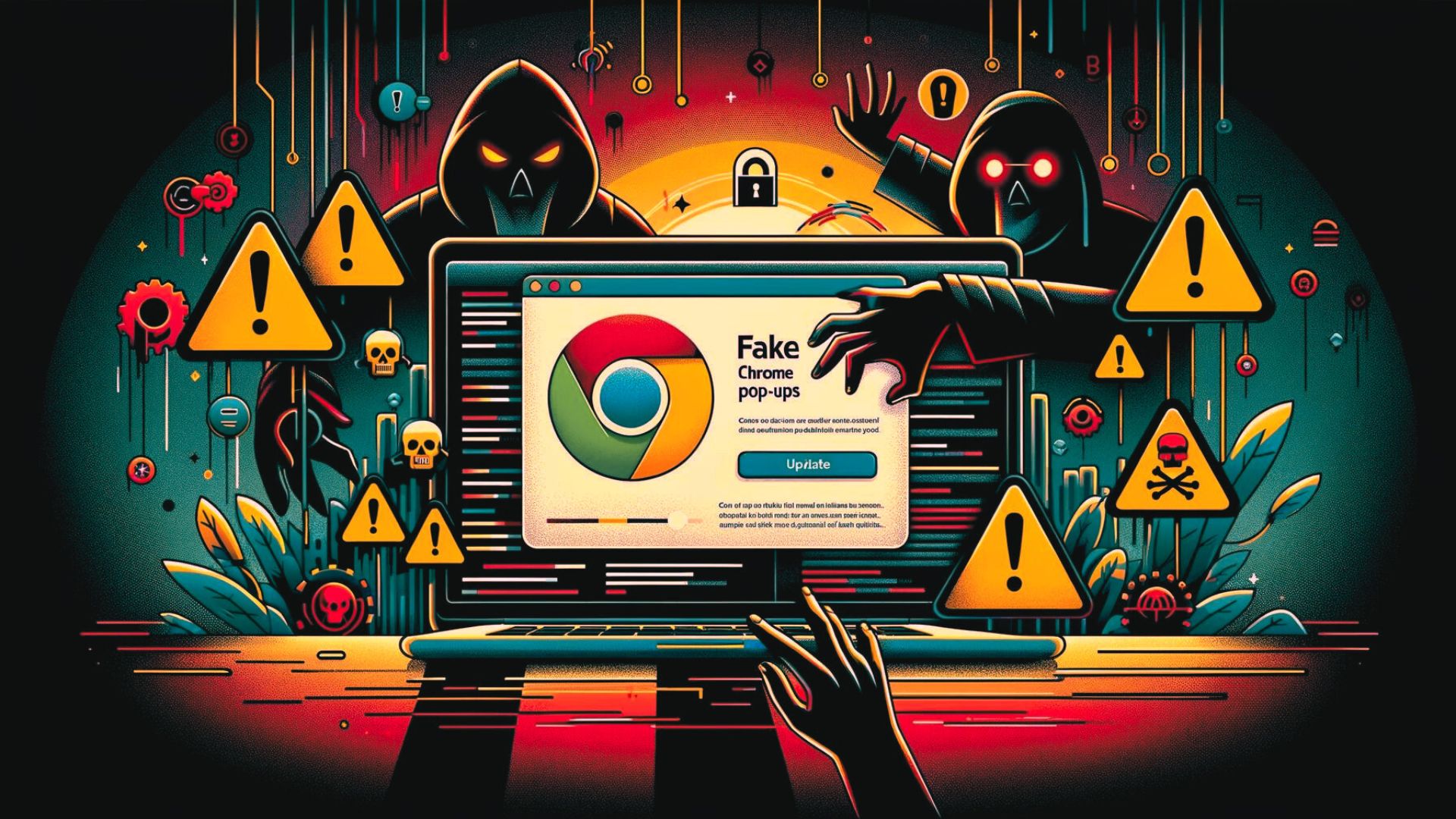
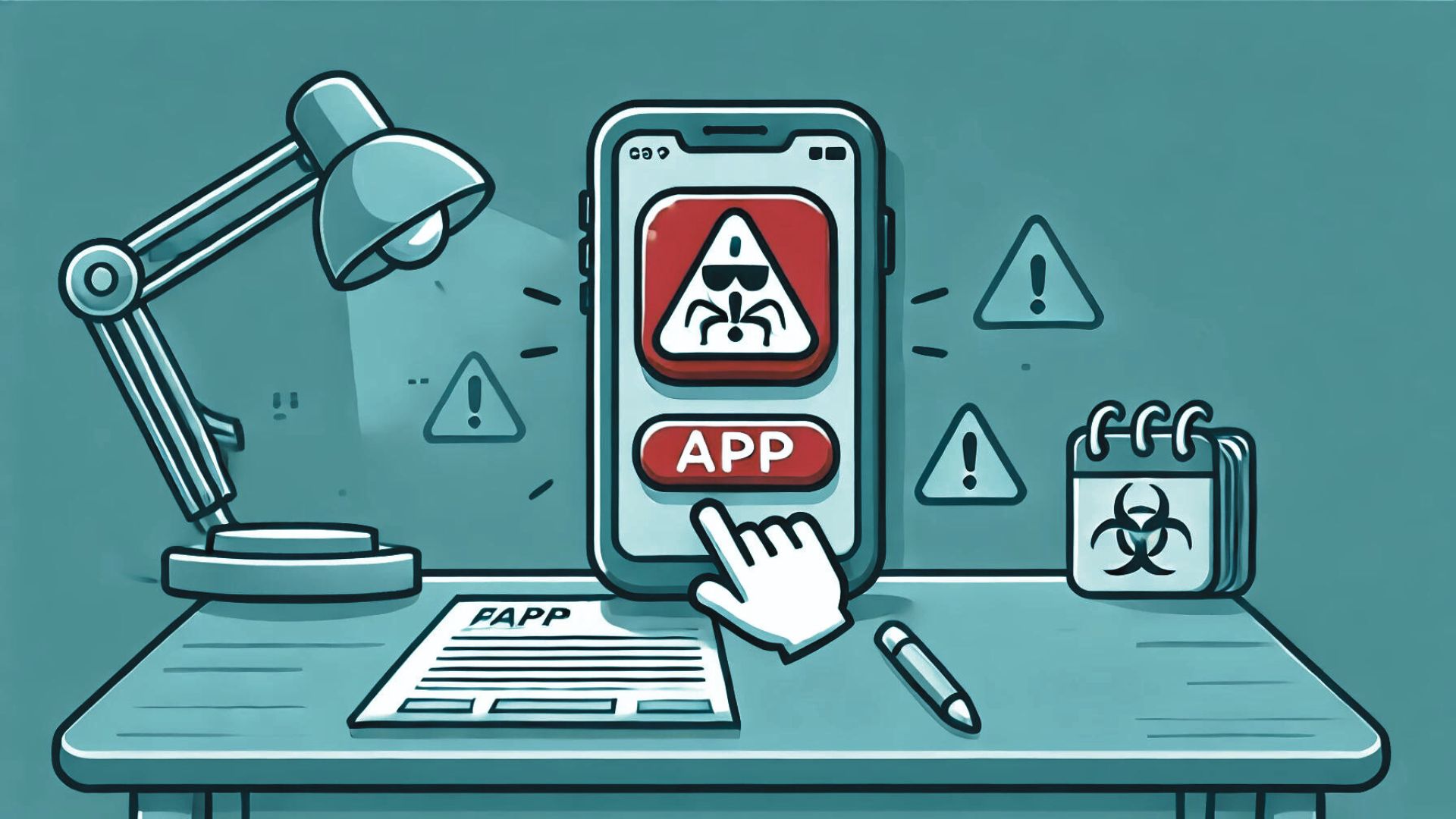
In today’s interconnected world, the creativity of cyber criminals seems to be constantly evolving, posing new and sophisticated threats. A notable trend in the cybersecurity landscape is the emergence of fake Google Chrome update pop-ups, a deceptive tactic that tricks users into downloading malware under the guise of legitimate updates.
Understanding the Fake Chrome Update Scam
How It Operates:
Website Hijacking: Cyber attackers inject malicious code into poorly secured websites. When visitors arrive, a pop-up message falsely claiming to be from Google Chrome appears, usually within a few seconds of the page load.
Deceptive Pop-Ups: The pop-up typically prompts an urgent update with messages like “Warning Exploit Chrome Detect. Update Chrome Browser,” accompanied by a convincing “Update” button.
The Malicious Mechanism Behind the Scam
Clicking the Menace: Users who click on the pop-up are redirected to URLs crafted to initiate the download of malware, such as SocGholish, which includes remote access Trojans and infostealers.
Fake URLs: Examples of these malicious URLs include deceptive links that mimic legitimate update channels but lead to harmful downloads.
The Dangers of Complacency
Broad Impact: This scam is not limited to users of Chrome; the deceptive message pops up even for those using different browsers, broadening the potential victim base.
Advanced Detection: Tools like Sucuri’s SiteCheck can identify these threats, often flagged as malware.fake_update.3, indicating a widespread recognition of the scam within the cybersecurity community.
Strategies to Mitigate Risk and Enhance Security
Proactive Website Security: Implement strict access controls, such as Two-Factor Authentication (2FA), especially for administrative functions. Adopt a minimalistic approach to website privileges—limit plugin use and enforce strong, unique passwords for all user accounts.
Ongoing Vigilance and Maintenance: Regularly update and patch all software components of your website to close any vulnerabilities that could be exploited. Consider deploying a web application firewall (WAF) as a defensive barrier against incoming threats.
Conclusion: Your Defense Against Deceptive Updates
Fake Google Chrome update alerts are a significant threat not just to individual users but also to businesses that depend on the integrity of their websites and online platforms. By understanding the mechanics of this scam and implementing stringent protective measures, you can safeguard your digital assets against such insidious attacks. Always approach update prompts with scepticism, verify through official channels and maintain rigorous cybersecurity practices.
For continuous protection and the latest in cybersecurity defences, visit Peris.ai and empower your digital journey with confidence.
Stay vigilant, and stay secure with Peris.ai Cybersecurity.
For more insights and to keep your guard up against digital threats, follow us at Peris.ai.
Your Peris.ai Cybersecurity Team #YouBuild #WeGuard
The relentless evolution of cybersecurity threats and social engineering attacks have emerged as a formidable menace, distinguished by their adeptness in manipulating human psychology rather than exploiting conventional technical vulnerabilities. This nefarious breed of attacks continually advances in sophistication, with one particularly disconcerting trend taking center stage: the calculated pursuit of super administrator privileges within corporate and institutional landscapes. These super administrators, positioned at the zenith of digital authority, effectively wield the keys to an organization’s most coveted digital assets, boasting unparalleled access and control over critical systems and sensitive data. The following article explores the intricate motivations, sophisticated techniques, and imperative preventive measures surrounding social engineering attacks specifically tailored to compromise super administrator privileges. Through this inquiry, we aim to illuminate the shadows that cloak these malicious endeavors and provide organizations with the insights necessary to safeguard their most prized digital assets.
Understanding Social Engineering Attacks
Before delving into the specific targeting of super administrator privileges, it’s essential to grasp the fundamentals of social engineering attacks. Social engineering is a psychological manipulation tactic that tricks individuals into divulging confidential information, providing access, or performing actions that benefit the attacker. These attacks exploit human psychology and rely on trust, authority, or urgency to succeed.
Social engineers employ various techniques, such as phishing emails, pretexting, baiting, and tailgating, to manipulate their victims. They prey on human emotions, including fear, curiosity, and trust, to convince individuals to reveal sensitive information or perform actions that compromise security.
Super Administrator Privileges: The Crown Jewels
Super administrators, sometimes called “root” users, have the highest level of access and control within an organization’s IT infrastructure. These individuals can create, modify, or delete user accounts, access sensitive data, and configure critical systems. Super administrators are the ultimate gatekeepers of an organization’s digital kingdom, making them prime targets for cybercriminals.
Reasons Behind Targeting Super Administrator Privileges
Ultimate Access: The primary motivation for targeting super administrators is their unparalleled access. Gaining control over a super administrator account essentially grants cybercriminals unrestricted access to an organization’s digital assets, allowing them to execute malicious activities undetected.
Privilege Escalation: Attackers often use compromised super administrator accounts as a stepping stone to escalate their privileges further. By compromising a super admin, they can move laterally within an organization’s network, gaining access to other privileged accounts and systems.
Strategic Targeting: Cybercriminals strategically select super administrators as their targets because they represent the highest authority within an organization’s IT infrastructure. Successfully compromising a super admin account provides cybercriminals with an invaluable foothold.
Social Engineering Techniques Targeting Super Administrators
Spear Phishing: Cybercriminals craft highly convincing emails that appear to be from trusted sources or colleagues, luring super administrators to click on malicious links or download infected attachments. Once clicked, malware can infiltrate their systems.
Impersonation: Attackers may impersonate coworkers, executives, or IT personnel to request sensitive information or actions from super administrators. This tactic exploits trust and authority, making it challenging to spot fraudulent requests.
Pretexting: Social engineers create elaborate scenarios or pretexts to manipulate super administrators into disclosing information or performing actions. They may pose as vendors, auditors, or IT support personnel to gain access to sensitive systems.
Insider Threats: In some cases, the attacker may already be an insider with knowledge of the organization’s super administrators. They can leverage this knowledge to exploit vulnerabilities in the human element of security.
Preventive Measures
Security Awareness Training: Organizations must invest in ongoing security awareness training to educate employees, including super administrators, about the dangers of social engineering attacks. Training should include identifying phishing emails, recognizing impersonation attempts, and practicing safe online behavior.
Multifactor Authentication (MFA): Enforce MFA for super administrator accounts to add a layer of security. Even if an attacker manages to steal login credentials, MFA can thwart unauthorized access.
Least Privilege Principle: Implement the principle of least privilege, ensuring that super administrators only have access to resources necessary for their roles. This reduces the potential damage an attacker can cause if they compromise a super admin account.
Strong Password Policies: Enforce strong password policies, encouraging super administrators to use complex and unique passwords. Regularly update passwords and consider using password management tools.
Verification Protocols: Establish strict verification protocols for sensitive actions, especially those requested through email or phone calls. Super administrators should verify any unusual requests through a secondary channel before taking action.
Incident Response Plan: Develop and regularly update an incident response plan to address social engineering attacks promptly. This plan should include steps for identifying, mitigating, and recovering from such incidents.
In Conclusion
The specter of social engineering attacks looms larger than ever, with cybercriminals honing their psychological manipulation tactics to precision, all in pursuing super administrator privileges within organizations. These attacks, bolstered by their subtlety and the vulnerability of human psychology, are a stark reminder that traditional security measures alone cannot ensure an impenetrable defense. The rise in these targeted attacks necessitates a multifaceted approach to cybersecurity that transcends the technological realm and delves deep into human behavior.
To fortify the defenses against this evolving threat landscape, it is incumbent upon organizations to prioritize cybersecurity awareness and education. Regular training programs, simulations of real-world scenarios, and cultivating a vigilant employee mindset can empower individuals at all levels to recognize and thwart social engineering attempts. Moreover, implementing robust preventive measures, such as multifactor authentication, strict access controls, and the principle of least privilege, can significantly reduce the attack surface and minimize the potential damage an attacker can inflict.
In this age of persistent cyber threats, preparedness is the linchpin of a resilient cybersecurity strategy. Organizations must develop and continually refine their incident response plans, ensuring they can swiftly detect, contain, and mitigate the impacts of social engineering attacks. The protection of super administrator privileges should be prioritized, with stringent verification protocols and rigorous password policies in place. Organizations must adapt and evolve in these challenges to remain one step ahead of cybercriminals. For further insights and guidance on bolstering your cybersecurity defenses, we encourage you to visit our website, where you’ll find comprehensive resources and solutions tailored to safeguarding your digital kingdom. Your proactive commitment to cybersecurity today will determine your organization’s resilience in the face of tomorrow’s threats.
In today’s fast-changing world of cybersecurity, spotting threats early is key. It helps stop breaches before they can harm an organization’s important data and systems. Phishing, ransomware, and identity theft are big problems. New threats like attacks on the supply chain and IoT vulnerabilities add to the danger. To fight these threats, companies need a strong plan. This plan should use people, processes, and technology together.
Key Takeaways
Threat detection and analysis are vital for a solid cybersecurity plan
Finding threats early can stop breaches and protect data
Using AI and analytics makes spotting threats better
Threat hunting and watching for threats can find hidden dangers
Having a good plan for responding to threats is crucial
Understanding Threat Detection and Response
Threat detection and response are key parts of a strong cybersecurity plan. They help spot and stop harmful activities that could harm a company’s network and data. A good program uses people, processes, and technology to find breaches early and act fast to lessen damage.
What is Threat Detection and Response?
Threat detection is finding threats that could harm a company’s assets. This includes watching network traffic, checking user actions, and finding malware or unauthorized access. Threat response is taking steps to stop or lessen the threat, like blocking bad traffic, isolating infected systems, and fixing problems.
Detecting Known and Unknown Threats
Security programs need to find both known and unknown threats to work well. Known threats are ones a company has seen before and has defenses for. Unknown threats are new attacks that need advanced methods like behavioral analysis and machine learning to find.
Using security best practices like making endpoints secure, segmenting networks, and doing risk checks can help find threats better. Also, using frameworks like MITRE ATT&CK can help make defense strategies more effective against specific threats.
“Threat detection is the first step of a defense-in-depth security strategy. It can help organizations reduce the risk of data theft, fraud, and other cybercrime, while also identifying vulnerabilities before they can be exploited.”
It’s important to keep staff up to date on new threats for quick responses. Automated detection tools and managed services can also help find and fix threats early.
Good threat detection and response are key for strong security and protecting against many cyber threats. By using people, processes, and technology, companies can spot and handle threats fast, reducing the damage from breaches.
Leveraging Threat Intelligence
Threat intelligence is key to better cybersecurity. It analyzes past attacks to spot known threats. This lets organizations defend against them early. But its real strength is in finding unknown threats, those we haven’t seen before.
Role of Threat Intelligence in Threat Detection
Threat intelligence gives us a peek into how cybercriminals work. It helps us understand threats better and fight them more effectively. Using threat intelligence in security solutions boosts our ability to face new cyber threats.
User Behavior Analytics and Attacker Behavior Analytics
User behavior analytics (UBA) and attacker behavior analytics (ABA) are also vital. UBA sets a normal activity baseline and spots anomalies that might mean trouble. ABA looks at known threat actor patterns to help us catch and stop them.
Together, threat intelligence, UBA, and ABA give us a full view of threats. This lets us take steps to protect our assets. This approach makes our cybersecurity stronger and lowers the chance of cyber attacks.
“Threat intelligence is the foundation of a robust cybersecurity strategy, providing organizations with the insights they need to stay one step ahead of evolving threats.”
Responding to Security Incidents
Incident Response Planning and Coordination
Getting everyone on board with an incident response plan is key before you start. Having a team and plans in place can save a lot of money, almost half a million dollars on average, according to IBM. But, because of criminal tricks and mistakes, security breaches are almost sure to happen, threatening money, operations, and reputation.
Important questions in incident response include: Who is in charge at each step? Is communication clear? And when should issues be escalated? A solid plan can help control damage and speed up recovery, reducing downtime and boosting security.
An incident response plan lists who does what, actions for different situations, and how to finish tasks. It’s about sorting incidents by urgency and importance to decide how to respond.
Using Digital Forensics and Incident Response (DFIR) can help recover faster, with less disruption and better security. Your plan should cover roles, detection, investigation, and how to handle and notify about breaches.
Frameworks from NIST, ISO, and SANS Institute have steps like planning, detection, and recovery. Regular drills and reviews are crucial to find weaknesses, check progress, and update the plan.
Plans need to keep up with new threats, technology, and business changes, with updates at least once a year.
Essential Components of a Threat Detection Program
Creating a strong threat detection program is key for keeping your network safe. It uses different tools to gather data from all over the network. This includes login records, network access, and system logs.
Threat detection technology is important for watching network traffic and activity. It looks at both internal and internet traffic. Endpoint threat detection solutions give detailed info on devices. They help in understanding and solving security issues.
Penetration testing is also crucial. It helps understand how well your detection works. This way, you can quickly respond to security threats. A good threat detection program uses all these tools. It helps spot and stop cyber threats early.
Key Components of a Threat Detection Program:
Security Event Detection
Network Traffic Monitoring
Endpoint Threat Detection
Penetration Testing
Good cybersecurity monitoring and threat detection can save a lot of money. Data breaches can cost up to $4.22 million in 2024. Spotting threats early keeps your business running smoothly and protects your reputation.
A good threat detection program includes SIEM systems, IDS/IPS, and log management. It also has network and endpoint monitoring. These tools give you a clear view of your network. They help detect threats automatically and provide insights to keep your network safe.
Proactive Threat Detection Techniques
Organizations are now focusing on proactive cybersecurity measures. They use honeypots and attacker traps to catch and study malicious actors in their networks. This helps security teams understand how threat actors work, leading to better defense strategies.
Setting Attacker Traps with Honeypots
Honeypots are fake systems that seem real, attracting attackers. When an attacker falls for it, the security team gets a chance to study their actions. They can then plan better ways to stop them. This method not only finds hidden dangers but also stops attackers’ plans, making the organization safer.
Threat Hunting for Hidden Threats
Threat hunting is about looking for signs of trouble in the network and security systems. It uses special tools and knowledge to find threats that others might miss. By hunting for these threats, companies can lower the risk of being hacked and keep their important data safe.
Using these methods together, organizations can improve their security. They can lessen the damage from possible attacks and stay ahead of new threats.
How Threat Detection and Analysis Can Prevent Breaches Before They Happen
Cyber threats are getting smarter and more common. This is because hackers are getting better and technology is advancing fast. Old security tools can’t keep up with these new threats because they only look for known dangers. To fight back, companies need to use proactive threat detection and analysis.
Cybersecurity analytics uses advanced tools like machine learning and artificial intelligence. These tools help understand threats better. For companies to protect their digital stuff well, using cybersecurity analytics is key. Tools like SentinelOne’s WatchTower help by looking at past and current data to spot and fix weaknesses.
Real-Time Threat Detection is key to catching threats early, unlike waiting for them to happen. It helps lower how long it takes to find and fix threats. This way, companies can see their whole network and find problems fast, keeping their security strong.
Cybersecurity analytics also helps meet rules like GDPR and HIPAA, and get ready for audits. It helps use security resources wisely by focusing on real threats and cutting down on false alarms.
Starting real-time threat detection can be hard because of tech, operational, and money issues. But, the good it does is worth it. With advanced analytics and constant monitoring, companies can stop cyber threats before they start. This keeps their important stuff and good name safe.
Role of AI and Machine Learning
Artificial intelligence (AI) and machine learning (ML) are changing how we detect threats. They use AI algorithms to spot patterns and oddities in big data. ML models get better at predicting threats as they learn from more data. AI and ML can handle huge amounts of data faster and more accurately than humans, helping us catch cyber threats quickly.
Leveraging AI for Threat Detection
AI is great at looking through lots of data to find small details that others might miss. It can take over routine security tasks, letting experts tackle harder problems. This makes security work more efficient and accurate. AI also keeps getting better at spotting threats by learning from past attacks.
AI can watch how users behave to find insider threats or stolen accounts. This makes security even stronger.
Machine Learning Applications in Cybersecurity
Machine learning helps in two main ways: anomaly detection and behavioral analytics. Anomaly detection finds unusual behavior that might be a threat. Behavioral analytics looks at how users and networks act to find patterns that could mean trouble. These methods help security teams keep up with new and tricky cyber threats.
AI can handle and analyze data for threat detection in ways humans can’t. Machine learning can spot new threats by looking at data patterns. This has made the cybersecurity field more automated, fast, and predictive.
But, using AI for security needs special skills and knowledge. AI might not always keep up with the newest cyber threats because they keep changing. There are also worries about privacy because AI uses a lot of data.
“The shift to AI-based threat detection has accelerated automation, real-time data analysis, and predictive capabilities in the cybersecurity industry.”
Anomaly Detection and Behavioral Analytics
In today’s fast-changing cybersecurity world, tools like anomaly detection and behavioral analytics are key. They help stop threats before they can harm us. These tools are especially useful in finance, retail, and cybersecurity. They spot fraud and unusual patterns.
Banking benefits a lot from anomaly detection. It helps find suspicious activities that don’t follow the usual rules.
Before, people looked at data points by hand to understand performance. Now, machine learning is used more for anomaly detection. This makes it easier to spot problems early and fix them without spending a lot. But, setting up these systems and finding the right data levels can be hard.
Behavioral analytics, like User Entity Behavior Analytics (UEBA), offer a new way to fight cyber threats. UEBA sets a baseline for normal user behavior. It then spots unusual activities that might be threats, like insider attacks or APTs.
UEBA helps find and stop complex cyber threats. It also helps meet data protection rules, making security better overall.
Anomaly detection and behavioral analytics are great for stopping data breaches and making incident response better. They also help automate fixing problems and analyze trends over time. But, setting them up can be tricky. It involves balancing security and privacy, dealing with false alarms, and keeping up with new threats.
To use these tools well, organizations need clear goals, lots of data, and tailored security plans. They also need to adjust settings and link these tools with other security systems. This way, businesses can protect themselves from risks and keep their important data safe.
“Anomaly detection identifies suspicious activities outside of established normal patterns, protecting systems from financial losses and data breaches.”
As threats grow, using anomaly detection and behavioral analytics is key to protect against data breaches and other dangers. These tools help security teams find and fix threats fast, keeping systems safe.
Threat Intelligence for Proactive Defense
Effective cybersecurity strategies need proactive steps to keep up with new threats. Threat intelligence is key, helping organizations spot potential attackers and their plans. This way, they can stop breaches before they happen.
Integrating Threat Intelligence Data
The cyber threat intelligence cycle includes planning, collection, and analysis. Each step helps improve defense strategies. By using threat intelligence, companies can better detect and handle threats quickly.
Cyberattacks happen every 39 seconds, showing the need for early defense. Threat intelligence comes from many sources, like open data and commercial providers. It gives insights into current and future threats.
Threat intelligence helps with proactive cybersecurity by guiding practices like vulnerability management. By adding threat intelligence to their systems, companies can stay ahead of threats. This strengthens their cybersecurity.
“Cyber threat intelligence enables organizations to make faster and more informed security decisions, shift from reactive to proactive measures, and reduce the risk of data breaches.”
Conclusion
Preventing cyber breaches is critical for businesses to safeguard their data and operations. Leveraging advanced technology, threat intelligence, and expert teams empowers organizations to detect and neutralize threats swiftly, ensuring robust protection.
Proactive cybersecurity measures yield the best results. By understanding the evolving threat landscape and utilizing tools like threat intelligence and deception technology, businesses can effectively analyze risks and implement strategies to fortify their security.
Adopting a proactive approach to cybersecurity ensures preparedness against emerging threats. By combining cutting-edge technology, actionable threat intelligence, and comprehensive security training, companies can secure their digital environments and stay ahead of cybercriminals.
Don’t wait to enhance your defenses—explore our Products and Services at Peris.ai today and take the first step toward a safer digital future.
FAQ
What is Threat Detection and Response?
Threat detection and response is about finding and stopping harmful activities in a network. It uses people, processes, and technology to catch breaches early. This way, threats can be stopped before they cause harm.
How do you detect known and unknown threats?
To find threats, security systems must spot both known and unknown dangers. Known threats are recognized because they match known malware or attacks. Unknown threats are new or changing, but threat intelligence helps spot them.
User behavior analytics (UBA) and attacker behavior analytics (ABA) help find unusual activities. These might show unknown threats.
What is the role of threat intelligence in threat detection?
Threat intelligence helps by comparing known attack data to what’s happening in your network. It’s great for known threats but not for new ones. Adding threat intelligence to detection systems makes responses faster and more accurate.
How important is incident response planning and coordination?
Good incident response planning is key. It needs everyone to know their role and how to communicate. A solid plan helps reduce damage and keeps things running smoothly during a breach.
What are the essential components of a threat detection program?
A strong program uses security event, network, and endpoint detection technologies. These tools gather and analyze data from across the network. Penetration tests and other controls help understand and respond to threats.
What are some proactive threat detection techniques?
Proactive techniques include setting traps and threat hunting. These methods help security teams watch over employees, data, and assets. They increase the chance of catching and stopping threats early.
How can threat detection and analysis prevent breaches?
Effective detection and analysis stop breaches before they happen. By using advanced tech, threat intelligence, and skilled teams, businesses can spot and act on threats fast. This keeps them safe from attacks.
How do AI and machine learning contribute to threat detection?
AI and machine learning change threat detection by finding patterns in data. They learn from past data to predict threats. AI and ML solutions can analyze huge amounts of data quickly, helping detect and respond to threats fast.
What is the importance of anomaly detection and behavioral analytics?
Anomaly detection and behavioral analytics are crucial for real-time threat detection. They find unusual behavior that might be malicious. These methods help security teams catch and stop complex attacks by spotting suspicious activities.
How can threat intelligence improve proactive defense?
Threat intelligence helps by gathering and analyzing threat data. When added to detection systems, it makes responses faster and more accurate. This helps organizations stay ahead of cyber threats.
The conclusion of Black Hat USA 2024 has left the cybersecurity community abuzz with new strategies, insights, and the urgent need to adapt to rapidly evolving threats. This summary highlights essential takeaways and how they can enhance your organization’s cybersecurity strategies.
1. Identity and Access Management Takes Center Stage
Growing Importance of IAM: This year’s conference emphasized identity and access management (IAM) as a cornerstone of cybersecurity. With increasing incidents of identity-related breaches, implementing stringent IAM controls is essential for safeguarding sensitive data and systems.
Cloud Security Needs: The shift towards cloud-based services demands robust IAM frameworks to manage digital identities effectively across diverse platforms and cloud environments.
2. Emphasizing Security as a Collective Effort
Interdepartmental Collaboration: Security integration across various organizational sectors including IT, engineering, and operations highlights the move towards a unified security approach.
Cultural Integration: There’s a significant shift towards a security-conscious culture within organizations, making security a universal responsibility and improving overall defensive postures.
3. Practical Applications of AI in Cybersecurity
AI Implementation: Beyond theoretical discussions, AI is now actively being integrated into daily cybersecurity operations, enhancing threat detection, response automation, and system resilience.
Maturation of AI Technologies: AI has transitioned from a novel concept to an essential tool, delivering concrete benefits and becoming integral to cybersecurity frameworks.
☁️ 4. Enhanced Focus on Cloud Security
Protection of Cloud Data: Post-migration, the focus has shifted to securing cloud architectures, employing zero-trust models, and ensuring minimal access controls to safeguard digital assets.
Evolving Security Measures: Continuous improvements in cloud security measures are necessary to tackle emerging vulnerabilities and secure cloud-based environments effectively.
️ 5. Prioritizing Organizational Resiliency and Data Protection
Enhancing Resilience: Recent disruptions have prompted organizations to strengthen infrastructure to withstand and quickly recover from cyber threats, emphasizing the importance of resilience in maintaining business continuity.
Securing Data Repositories: With the proliferation of external data platforms, securing sensitive information within systems like Snowflake and MongoDB through dynamic access governance has become critical.
️ Proactive Cybersecurity Posture
The insights garnered from Black Hat USA 2024 underscore the necessity of adopting advanced cybersecurity measures. Key strategies include:
Strengthening IAM to protect identity data and system access.
Cultivating a security-first culture across all organizational levels.
Leveraging AI to automate and enhance security processes.
Implementing rigorous cloud security protocols.
Focusing on building a resilient organizational infrastructure capable of responding to and recovering from cyber incidents.
Stay Informed and Secure
These developments from Black Hat USA 2024 serve as a roadmap for organizations aiming to stay ahead of the curve in a landscape marked by sophisticated cyber threats. By embracing these evolving trends and technologies, you can fortify your defenses and ensure comprehensive protection against potential cyber attacks.
For ongoing updates and detailed analyses of the latest in cybersecurity, visit our website at peris.ai.
Stay cautious, stay protected.
Your Peris.ai Cybersecurity Team #YouBuild #WeGuard
In our connected world, keeping digital assets safe is key. As cyber threats grow, penetration testing is vital. It finds system weaknesses and helps boost defenses. This piece explores gray box testing. It’s a security check-up. Ethical hackers look for vulnerabilities without causing damage.
Weaknesses can be hard to spot, like in system configurations and access control mechanisms. Penetration testing searches for these issues. It aims to see how well defenses block a cyber-attack. Both manual and automated checks happen, with hackers using different tools.
What sets gray box testing apart from black and white box methods? How does it boost a company’s cybersecurity risk management and vulnerability remediation? This section will answer these questions.
Key Takeaways
Gray box penetration testing combines elements of black box and white box testing to provide a balanced and effective security assessment approach.
It grants testers partial knowledge of the system’s internal workings, allowing for more targeted and user-like interactions compared to black box testing.
Gray box testing can uncover vulnerabilities that may be missed by a purely black box or white box approach, improving the overall security posture.
Techniques like matrix testing, regression testing, and orthogonal array testing are used in gray box testing to thoroughly assess the system.
Gray box penetration testing is particularly useful for evaluating web applications, APIs, and privileged access controls.
Introduction to Penetration Testing
In today’s world, cybersecurity is more important than ever. Penetration testing is a key method. It helps organizations check how well they are protected against attacks. This method uses ethical hackers, also called penetration testers or ethical hackers. They test systems or networks as if they are real bad actors. Their goal is to find weak spots that could be exploited.
What is Penetration Testing?
Penetration testing, or pen testing, is like a pretend cyberattack done in a safe way. Its purpose is to find security holes and fix them. Unlike harmful hackers, penetration testers work for the good. They look closely at systems, networks, or apps. They try to break in but follow strict rules to ensure no real damage is done.
Types of Penetration Testing Techniques
There are different penetration testing techniques to secure systems. They include:
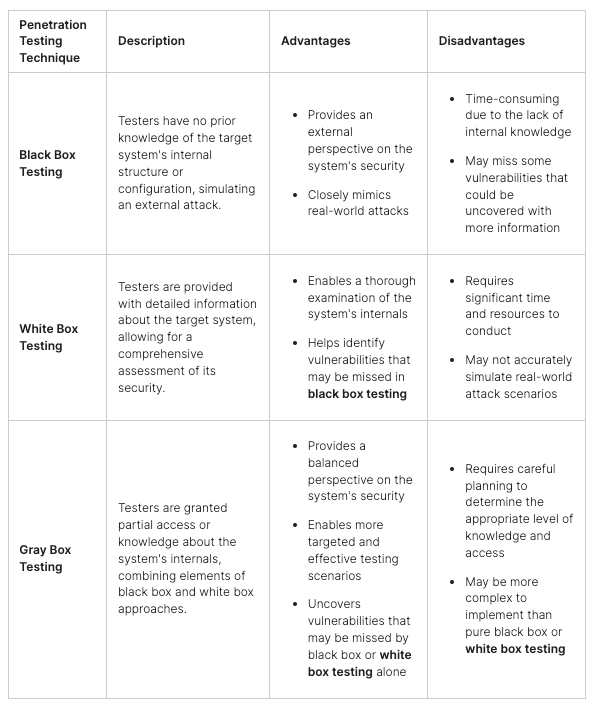
Black Box Testing: The tester doesn’t know anything about the target system’s inside. It’s like a surprise attack from the outside.
White Box Testing: The tester knows all about the target system. This allows for a deep check of its security.
Gray Box Testing: The tester has some but not complete knowledge of the system. This mixes the other two methods.
Mixing these penetration testing techniques gives a thorough check of security. It helps find weaknesses that could be exploited by real threats.
Demystifying Black Box Penetration Testing
Black box testing, also known as external penetration testing, is like simulating a cyberattack. The tester has little information about the company’s IT or security. It’s like being blindfolded in a dark, unknown world, starting from outside the network. The aim is to find vulnerabilities just as a real hacker would. Even though it’s time-consuming, it gives key insights into a company’s external defense.
In black box penetration testing, the tester knows very little about the system they are testing. They act like a real cybersecurity threat actor, trying to break in. Without inside info, the tester has to search for vulnerabilities in a detailed way, much like an ethical hacking mission. They use their skills, knowledge of the industry, and various vulnerability assessment tools to find weaknesses.
Starting from the outside help test the organization’s defense against real cyberattacks. This method truly checks how effective the company’s security measures are. It points out areas that need more care or fixing. In the end, it provides a thorough look at the company’s security from an outsider’s view.
Understanding White Box Penetration Testing
White box testing is like getting a map to a treasure with all the clues. The tester knows everything about the network infrastructure and security systems. With this knowledge, they can fully check the organization’s defenses.
Such tests do not copy real cyberattacks from the outside. Yet, they are great at finding weak spots in the network. They can even fake the danger of insider threats, showing how an attack from inside could harm the company. This kind of testing is fast and open, but big companies might still need to be patient for the full report.
Gray Box Penetration Testing
Gray box penetration testing blends black and white box testing’s best parts. Testers have some info on the network, not all of it. This lets them check things more like a regular user than just guessing.
What is Gray Box Penetration Testing?
It’s a method that mixes white and black box pen testing. Testers know some things about the system. This is unlike the total secrecy of black box testing or the full knowledge of white box testing.
How Does Gray Box Testing Help Secure Your System?
It gives testers a peek at the company’s network. This lets checks focus better on the system’s flaws. Testers can then look at how real users might use the system and find hidden weak spots.
Critical Characteristics of Gray Box Testing
Here are the main points of gray box penetration testing:
Partial knowledge of the system’s structure and functions
Allows simulation of real user tests
Finds hidden flaws not seen in black box tests
Uses time and resources well compared to white box testing
Looks into the system’s reaction after a breach and its effects
Gray Box Penetration Testing Examples
Gray box penetration testing digs deeper than just black box methods. It helps find and tackle specific problems. This type of testing uses a mix of white and black box methods. It gives a full check-up of a company’s cyber defenses.
Website Form Testing
For website form testing, a black box tester uses various email inputs. This is to see how the system handles email confirmations without knowing the system details. In a gray box test, the tester knows email checks are done with JavaScript. They can run tests with and without JavaScript. This finds more about the website’s form security.
Login Functionality Testing
Gray box testing is also useful for checking a system’s login security. Unlike black box testing, it doesn’t stop at just guessing passwords. It uses some system insight to create smarter tests. These tests can check how the system blocks wrong logins, the strength of password rules, and if multi-factor authentication works well. Gray box testing is a powerful mix. It can reveal hidden weak spots not found by other tests.
Gray Box Testing Techniques
Gray box penetration testing is a special kind of test that’s very powerful. It’s between white box testing and black box testing in terms of perspective. Testers know some internal details of the system, helping them find more vulnerabilities effectively. This approach catches security flaws that other methods might miss.
Matrix Testing
Matrix testing looks at different input combos to find edge cases and weaknesses. Testers use what they know about the system to create detailed test plans. They check how the system reacts to different inputs.
Regression Testing
Regression testing is key to make sure old functions still work after updates. In gray box testing, testers use their inside knowledge to focus on these checks. They ensure security measures are still working and find any new problems quickly.
Pattern Testing
Pattern testing focuses on common system sequences. Gray box testers use this to create tests. They look for any mistakes, flaws, or strange actions that attackers might use.
Orthogonal Array Testing (OAT)
OAT is a smart way to test many system inputs efficiently. Testers create tests that cover a lot but with fewer actual tests. This leads to quicker and cheaper security checks.
Authenticated Testing
Authenticated testing is essential in gray box approaches. Testers act like they’re authorized to see how secure the system really is. This lets them find issues that internal attackers or hacked accounts might exploit.
Combining these techniques with inside knowledge makes gray box testing effective. It gives a deep view of system security, helping companies fix issues and improve their defenses.
API Penetration Testing
APIs are often targeted by attackers because they’re open and handle sensitive info. It’s crucial to put up strong security barriers and not just assume they’ll work. To check on these barriers, API penetration testing is key.
Scope of an API Penetration Test
An API penetration test checks all the key security points of an API. This includes how it identifies users, allows use, checks data, and manages its whole life cycle. Looking for weak spots helps make the API security stronger and lowers the risk of bad access or data leaks.
Black Box Penetration Testing of an API
In black box API testing, the tester acts like someone outside trying to break-in. They don’t know how the API works inside. This simulates a real attack. The tester uses things like tips from OWASP and tools to check for flaws in the API’s use, security checks, and how it filters information.
Gray Box Penetration Testing of an API
Gray box API testing mixes both black box and white box testing. Testers get some info about how the API works. This lets them dig deep in a more focused way. Knowing a bit inside and seeing from the outside, gray box penetration testing finds hidden flaws. These might be left out if only black box testing was done.
Exploiting Vulnerabilities with Gray Box Testing
Gray box penetration testing is a powerful method for finding and fixing security issues. It uses some knowledge about the system’s inner workings. This is more effective than black box testing because it’s like having a key to uncover hidden problems. By looking at the system from an insider perspective, testers can find security holes that outsiders might miss.
Exploiting a Mass Assignment Vulnerability
Mass assignment issues happen when a program doesn’t check user input correctly. This lets attackers change parts of the program they shouldn’t. In gray box testing, testers use their inside view of the system to send specific inputs. These can be used to access secret data or do things they’re not supposed to do.
Manipulating Server Requests Using SSRF
SSRF occurs when a web app downloads content from a URL without checking it. In gray box tests, testers’ knowledge helps them find ways to misuse this feature. They can make the app download from places it shouldn’t, leading to data leaks or deeper hacks.
Exploiting a Broken Access Control Vulnerability on GraphQL
Broken access control in a GraphQL app lets users get to data or actions they shouldn’t. Gray box tests leverage this by using a tester’s knowledge of the app’s data structure. They craft special requests to try and get around the security checks.
These instances show the strength of gray box testing. It combines the best of both black and white box testing. This method can root out hidden flaws in a system’s security effectively. This mix gives a clearer look at how secure an organization really is.
White Box Penetration Testing of an API
White box testing gives testers full knowledge of how the system works. This approach, when used on an API, allows them to deeply check its security. They can find issues not seen with other testing methods.
Exploiting an IDOR Vulnerability
In this kind of testing, the tester knows everything about the API’s inside. They can spot IDOR vulnerabilities. These are where the API wrongly lets users access sensitive data without checking their permissions first.
Exploiting a Command Injection
When using a white box approach, the tester checks how the API handles inputs and outputs. They look for spots that might allow a command injection attack. With thorough knowledge of the API’s internal workings, they can create attacks to do things the system shouldn’t allow.
Conclusion
In our increasingly connected world, securing digital assets is paramount. As cyber threats evolve, penetration testing becomes essential in identifying system vulnerabilities and enhancing defenses. Gray box testing, in particular, offers a unique approach by providing a comprehensive security check-up where ethical hackers search for vulnerabilities without causing damage.
Gray box penetration testing is crucial for uncovering hidden weaknesses, such as flaws in system configurations and access control mechanisms. This method assesses the effectiveness of existing defenses against potential cyber-attacks through a combination of manual and automated checks, utilizing various tools and techniques.
What distinguishes gray box testing from black and white box methods? How does it enhance a company’s cybersecurity risk management and vulnerability remediation? By leveraging partial knowledge of the system, gray box testing provides a balanced perspective, combining the internal access of white box testing with the external view of black box testing. This approach allows for more accurate identification of security gaps and more effective remediation strategies.
With Peris.ai Pandava, you can rest assured that your business will stay secure while gaining a competitive edge in the marketplace. Sleep better at night knowing your data is safe. Our ethical hackers will conduct thorough penetration testing and provide detailed reports—like a scene out of Mission Impossible. Identifying vulnerabilities before they’re exploited may sound daunting, but with Peris.ai Pandava Service, it’s something you can rest easy about.
Visit Peris.ai Cybersecurity to learn more about how our comprehensive security solutions can protect your business and keep you ahead of cyber threats. Secure your digital world today with Peris.ai Pandava.
FAQ
What is penetration testing?
Penetration testing checks computer systems or networks for security. Ethical hackers, like black hackers but safe, look for weak spots. The aim is to find vulnerabilities and boost defenses against cyber-attacks.
What are the types of penetration testing techniques?
Penetration testing has various types, including: – Black box testing: This mimics a real attack, knowing very little about the system. – White box testing: The tester knows everything about the network and its security. – Gray box testing: Testers are partially informed, highlighting a mix of black and white methods.
What is gray box penetration testing?
Gray box penetration testing blends both white and black box methods. Testers understand some internal system details, making tests more user-representative than black box tests alone.
How does gray box testing help secure a system?
Gray box testing helps find weaknesses by knowing some system internals. This targeted approach finds vulnerabilities that might be overlooked in black or white box tests.
What are the critical characteristics of gray box testing?
Gray box testing’s key features are: – Knowing part of the network’s information – Deeper testing than black box – Focusing on specific concerns – Mimicking user interactions
What are some examples of gray box penetration testing?
Examples of gray box tests are: – Checking website forms with partial email validation process insight – Testing logins with basic knowledge of the system’s structure
How is gray box penetration testing applied to API security?
In API security, gray box testing means testers know some of the API’s workings. This deep knowledge lets them pinpoint vulnerabilities effectively. It’s better than black box because testers have insight into the API’s structure.
What are some vulnerabilities that can be exploited with gray box testing?
How does white box penetration testing differ from gray box testing for APIs?
White box testing knows all about the API system, unlike gray box, which only has some knowledge. This makes white box testing more thorough, but gray box testing balances insight with testing efficiency from both black and white methods.
In our digital age, APIs are vital for our growing digital economy. They are the backbone of internet connectivity and online services. With over 83% of web traffic going through APIs, keeping them secure is crucial. They are the main part of any strong cybersecurity plan. The effectiveness of our digital security depends on APIs’ ability to resist cyber attacks. This makes it very important to protect our digital assets from breaches.
The world of cybersecurity is full of warnings. Big breaches at Venmo, Facebook, and the US Post Office show how serious weak API security can be. These incidents reveal the risks to important systems and private data without the right protection. More than ever, keeping digital assets safe with strong and creative cybersecurity is essential for all businesses.
Key Takeaways
APIs are handling an increasing volume of web traffic, necessitating stronger API security strategies.
Adopting automated API testing tools is a significant advancement in the pursuit of better digital defense.
API-related cyberattacks pose a substantial threat to digital assets and operations.
Establishing regular and thorough testing routines is a cornerstone of comprehensive cybersecurity.
Effective digital defense is both preventative and responsive, integrating testing with real-time monitoring.
Businesses must remain vigilant and proactive to adapt to evolving cybersecurity threats targeting APIs.
Understanding the Importance of API Security in the Digital Landscape
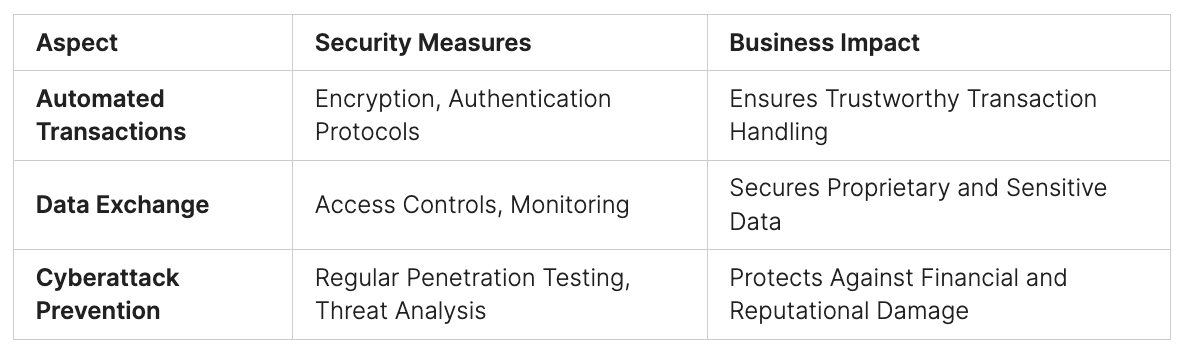
In our fast-growing API economy, knowing about API security is key. It’s not just a tech issue but a core part of a company’s strategy. With data exchange and automated transactions happening through APIs, top-notch cyberattack prevention is crucial.
What APIs Mean for Your Business
APIs are crucial for digital interaction, enhancing user experiences and integration. They allow efficient data sharing, reaching beyond a company to partners and clients.
The Rising Prominence of APIs in Web Traffic
The role of APIs is growing as web traffic from APIs increases. This highlights their importance in digital services. So, investing in strong API security is a must for businesses.
High-Profile API Breaches: A Lesson in Vulnerabilities
Big breaches show the risks of weak API security. They stress the need for better security. This includes regular checks and watching for weak spots.
Mixing in these security elements makes a business’s digital operations strong. It also helps keep the API economy healthy.
The API Security Checklist: Protecting Your Digital Assets
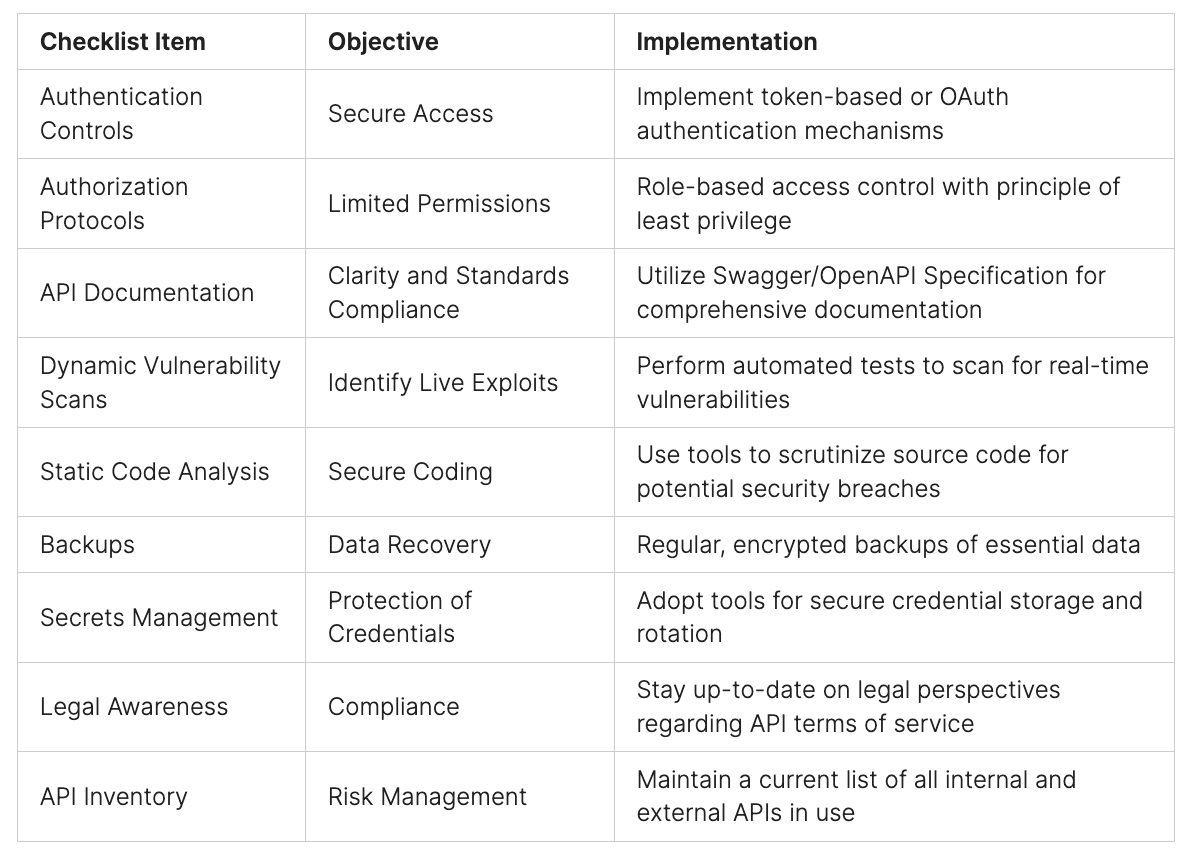
A strong security evaluation in an API security checklist is key to protecting digital assets. It ensures data safety and embeds secure API use in the system’s design. Here we outline the key points of a checklist aimed at improving your cybersecurity in today’s threat environment.
Starting with access control is crucial for data protection. Authentication and authorization check every API request. They make sure only approved users and services access your APIs. Also, well-kept documentation like Swagger/OpenAPI outlines your API’s details, use, and potential weak spots.
Being watchful at every stage of API development is vital. It involves both dynamic and static checks for vulnerabilities—thorough testing to find threats early. By doing this, you ensure your API practices meet modern security needs.
Ensuring the security of your digital assets means taking an inventory of all the APIs your business uses, including third-party APIs, which can present external risks to your applications’ stability and security.
Handling sensitive data with extreme care is also key, especially secrets and credentials. Avoiding mishaps prevents unauthorized access. Having backups protects against data loss, letting you restore your system after any problem.
Following this checklist is an ongoing effort. It’s about making cybersecurity measures central from start to finish in development. This approach builds a robust framework. It keeps your system safe today and ready for future threats and tech changes. Security evolves with your digital landscape, requiring your strategic commitment.
Navigating the Challenges: API Testing Versus Monitoring
Securing API frameworks today is complex, needing both prevention and ongoing watchfulness. There’s a dual approach involved: API security testing and continuous API monitoring. Each plays a key role in protecting data integrity, but they’re distinct yet intertwined in cybersecurity.
API Testing: Locking Down Potential Threats
API security testing closely examines possible weaknesses that bad actors could use. Automated tools play a big part here. They inspect various aspects like endpoints with great detail.
Through imitating different attack types, these tools help organizations find and fix security flaws. This boosts their digital platforms’ performance reliability.
API Monitoring: The Cybersecurity Alarm System
API monitoring is like a watchful eye, alerting to unusual activities in real-time. It acts as a cybersecurity alarm, quickly notifying about threats for fast action and threat prevention. This ongoing vigilance is key in modern DevSecOps flow, catching breaches early for swift handling.
Understanding the Critical Role of Automated API Testing
Automated API testing does more than find problems. It keeps a constant watch in a world where threats always change. By including automated testing in the DevSecOps cycle, organizations stress security at every development stage. This builds a mindset where threat prevention and performance reliability are crucial for strong digital creations.
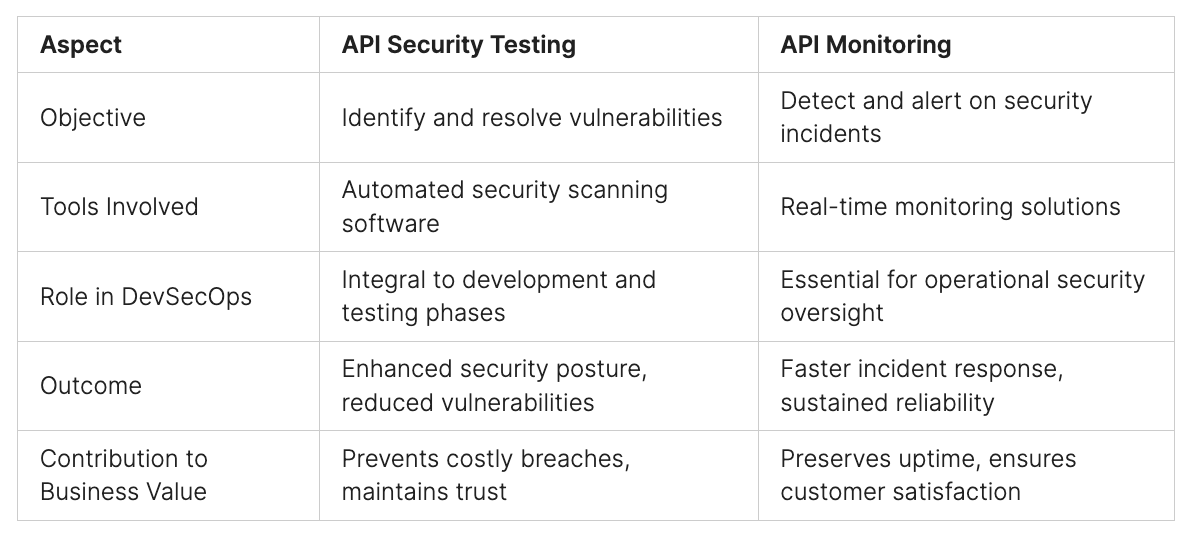
To show how API testing and monitoring work together, look at this table. It shows their roles side by side:
Using both security testing and monitoring helps businesses navigate digital challenges confidently. Their APIs are built resilient and watched for threats. This strategy is crucial for maintaining reliable and integrity-rich services in today’s API-driven world.
How to Take Control: Implementing API Security Measures
In today’s digital world, knowing how to secure your APIs is crucial. You must commit to security at every level to protect your systems. This involves everything from documenting your own APIs to handling third-party services. By actively scanning and analyzing, you can identify and strengthen weak spots in your API setup. This keeps your digital defenses strong against cyber attacks.
When dealing with external APIs, it’s important to check their security measures. Make sure to carefully manage access to sensitive information. Understanding the risks like data breaches and hacking attacks helps build a better defense. Inside your company, keeping detailed records of API use helps keep things safe. This creates a culture where every action is tracked, boosting your security.
Now, more than ever, it’s important to be aware of the legal and privacy risks with APIs. Following rules and carefully using third-party services is key. Taking charge of your cybersecurity strategies allows your business to safely innovate and connect. With a proactive approach, you can confidently face the digital world, knowing you’re protected against cyber threats.
FAQ
What Are the Essential API Security Strategies to Protect Digital Assets?
Key API security strategies include regular testing and strong authentication measures. Companies should also document their APIs clearly using standards like Swagger/OpenAPI. It’s vital to perform both dynamic and static security checks, and monitor APIs for any threats.
Building a cybersecurity-aware culture and having a detailed API security checklist are key. These steps ensure digital assets remain protected.
How Do APIs Contribute to the Digital Economy and Cyberattack Prevention?
APIs enable smooth data exchange, helping the digital economy grow. They make different systems work together, supporting scalable business models. Secure APIs are also crucial for stopping cyberattacks.
This ensures data is exchanged safely, without security risks.
What Can We Learn from High-Profile API Breaches?
High-profile API breaches teach us the value of strong security. They show how big data losses can happen, highlighting the need for solid protection measures.
These include continuous testing, monitoring, and quick action plans. Doing so helps prevent future attacks.
Why Is Regular Security Evaluation Important for API Protection?
Security checks find and fix new threats to APIs. They keep protection strong and ensure APIs meet security rules.
This helps react quickly to any issues, keeping digital assets safe.
How Does API Testing Differ from Monitoring, and Why Are Both Necessary?
API testing looks for weaknesses, checking APIs work right in all situations. Monitoring keeps an eye on API security, alerting to breaches.
Testing protects against known threats. Monitoring provides constant security checks and fast response to problems.
What Is the Critical Role of Automated API Testing in Maintaining Performance Reliability?
Automated API testing ensures APIs perform strongly and securely. It makes testing accurate and quick, finding problems early.
This keeps APIs ready for user demand and secure from attacks. It’s crucial for smooth digital activities.
What Are Some of the Best Practices for Implementing API Security Measures?
For strong API security, use good authentication and encrypt data. Keep API documentation up-to-date and follow secure coding rules.
Include security in the development process and have a plan for breaches. Keeping up with evolving cybersecurity trends is also a must.
Organizations face a complex cybersecurity world. The first step is knowing where to start. This article will guide you through the basics of building a strong cybersecurity foundation. You’ll learn how to start your cybersecurity journey and protect your digital assets.
Key Takeaways
Small and medium-sized enterprises (SMEs) often struggle with the abundance of cybersecurity tools and information available in the market
Understanding unique business needs is the crucial first step in implementing effective cybersecurity measures
Prioritizing efforts based on identifying the most valuable business information is essential for successful cybersecurity strategies
Seeking guidance from cybersecurity professionals can help navigate the complex landscape of online security
Building a cybersecurity culture within the organization is a key component of a comprehensive security approach
Understanding the Importance of Cybersecurity
In today’s world, cybersecurity is key for all kinds of organizations. Cybersecurity protects internet-connected systems and data from threats. It combines tech, sociology, law, politics, and more. Knowing about cybersecurity helps organizations keep their digital assets safe.
Definition of Cybersecurity
Cybersecurity keeps computer systems, networks, and digital info safe from harm. It uses tools like firewalls and encryption to protect against threats. Cybersecurity ensures data stays private, safe, and accessible, helping businesses thrive online.
Cybersecurity as a Multifaceted Domain
Cybersecurity covers many areas, including:
Information security: Protects data and systems from unauthorized access or damage.
Network security: Keeps communication networks safe from threats.
Application security: Secures software and web platforms from vulnerabilities.
Incident response: Handles cybersecurity incidents and helps recover.
Compliance and risk management: Follows rules and manages cyber risks.
Good cybersecurity needs a complete approach. It must cover tech, people, and organization to protect assets and keep operations strong.
Developing a Broad Understanding of IT
To effectively implement robust cybersecurity measures, it is crucial to have a comprehensive understanding of IT. By exploring a diverse range of blogs and resources, individuals and organizations can develop a well-rounded knowledge of technology. This includes areas such as networking, system administration, software development, and data management. This broad IT knowledge is essential for identifying and addressing the various security challenges that organizations may face.
Recommended Blogs and Resources
Here are some recommended blogs and resources that can help you expand your IT knowledge and stay up-to-date with the latest cybersecurity trends and best practices:
These resources cover a wide range of IT and cybersecurity topics. They provide valuable insights, news, and expert analysis to help you stay informed and prepared. By continuously learning and expanding your IT knowledge, you can better understand the security challenges your organization faces. This way, you can implement effective solutions to protect against cyber threats.
By leveraging these IT knowledge, cybersecurity resources, and cybersecurity learning opportunities, individuals and organizations can develop a comprehensive understanding of IT. This strengthens their cybersecurity posture.
Setting up a cybersecurity home lab is great for learning practical cybersecurity skills through hands-on learning. You can create virtual machines and test different security tools. This helps you understand how systems work and how to fix problems.
Using a used Lenovo ThinkServer PC is a smart way to save money. The goal was to spend less than $200. The PC has a strong CPU, lots of storage, and RAM, all for a good price. It’s a great deal for a home lab.
The lab also has tools like Plex and Pi-Hole for managing media and networks. It uses containers for better management and updates.
Building the lab is a learning experience. One person started with Kali Linux and Windows 10 VMs. They set up the network, installed Splunk, and tried a malware attack. They faced some issues but managed to connect and use Splunk for monitoring.
Having a cybersecurity home lab lets you practice in a safe space. You can learn and apply practical cybersecurity skills in real situations. This hands-on learning boosts your confidence and skills in cybersecurity.
“By creating a cybersecurity home lab, individuals and organizations can immerse themselves in a controlled, simulated environment, allowing them to experiment, learn, and develop practical cybersecurity skills that can be directly applied in real-world scenarios.”
The Cybersecurity Starting Line: Where Should Your Organization Begin?
Finding the right start for your organization’s cybersecurity is key. It’s about knowing your business’s unique needs and security priorities. This way, you can create a security plan that really works for you.
First, figure out where your money comes from. Then, see how sensitive your data is. Lastly, think about what could happen if someone hacks you. Knowing these things helps you understand where to start.
For beginners, learning about IT is a good first step. It helps you understand how to keep your digital world safe. This knowledge is the foundation for strong cybersecurity.
By focusing on these key areas, you can build a solid cybersecurity foundation. This will help protect your most important digital assets. Getting into cybersecurity can be a rewarding career, but start by figuring out what you’re most interested in.
Getting involved in the cybersecurity world is great for your career. Join open-source projects and go to conferences. Soft skills are just as important as technical ones in this field.
“Cybersecurity is not just about technical expertise; it’s about understanding the organization’s needs, prioritizing security efforts, and fostering a culture of security awareness.”
Access Management: The Foundation of Cybersecurity
Access management is key to a strong cybersecurity plan. It ensures that only the right people or machines get to the resources they need. This keeps everything safe and makes sure users have a good experience. Starting with access management is crucial for protecting important assets and stopping unauthorized access.
Prioritizing Access Controls and Security Policies
With more machine identities than human ones, IAM needs to focus on identity security. IAM programs are essential for managing identities well. They help keep identities consistent and secure. AI can also help IAM teams by automating tasks like detecting account takeovers.
IAM is a first line of defense against security threats. IAM teams should keep identities clean to prevent and detect problems. This includes dealing with the growing number of machine identities. The Australian Essential Eight framework suggests tackling machine identities early, but it’s better to do it sooner.
IAM teams should watch for misconfigurations and use adaptive access and multi-factor authentication. They should also balance spending on identity hygiene and threat detection. Using an “identity fabric” approach helps manage IAM processes well for the future.
Identifying Critical Assets and Priorities
Keeping an organization’s most valuable information safe is key to good cybersecurity. By finding out what’s most important, like customer data or business secrets, companies can focus on protecting it. This way, they use their resources well, making sure the most important parts of their digital world are safe.
When figuring out what’s most critical, companies should think about laws, what’s important in the market, and who relies on their data. They also need to watch for weak spots like bad settings, old software, and weak passwords. Keeping an eye on these issues is crucial for staying ahead of cyber threats.
Threats are things that could harm a company by taking advantage of its weak spots. To stay ahead, companies should train their teams, check for compliance, and review their security plans. Making detailed plans for different threats helps them handle problems quickly and well.
Tools like JupiterOne’s Critical Assets feature help companies keep an eye on their most important assets. Microsoft’s Security Exposure Management also helps by classifying important assets and using advanced tools to find them. These tools give companies a clear view of their security and help them control it better.
By focusing on protecting key assets, companies can lower the risks of cyber attacks. For example, the healthcare industry loses a lot of money per breach because of the sensitive data. Having a strong cybersecurity plan that fits the company’s needs is vital for keeping its digital treasures safe.
Simplifying Cybersecurity: Essential Tools and Strategies
Understanding cybersecurity can feel like a big task. But, focusing on key tools and strategies can make it easier. Starting with antivirus software, firewalls, and two-factor authentication is a good first step. These tools help protect against many cyber threats.
As you get better at cybersecurity, you can look into more advanced tools. For example, Endpoint Detection and Response (EDR) or Security Information and Event Management (SIEM) systems can boost your security even more.
Antivirus, Firewalls, and Two-Factor Authentication
Antivirus software is key in fighting malware and other cyber dangers. It’s important to choose strong antivirus options like Norton 360, Bitdefender Antivirus, Kaspersky Anti-Virus, and McAfee Total Protection to keep your systems safe.
Firewalls are also crucial. They control who can get in and out of your network. Cybersecurity experts often use Tufin, AlgoSec, FireMon, and RedSeal to manage firewalls.
Two-factor authentication, or multi-factor authentication, is another strong tool. It can stop almost all account-based attacks, says Microsoft. Make sure to turn it on for all important systems and apps.
Advanced Security Solutions
As you grow in cybersecurity, you can try more advanced tools. Endpoint Detection and Response (EDR) and Security Information and Event Management (SIEM) systems offer better visibility and threat detection.
Some top advanced security tools include SiteLock, SolarWinds Security Event Manager, Heimdal Security, Wireshark, Nagios, Nessus Professional, Acunetix, Snort, Teramind, AxCrypt, Bitdefender Total Security, TotalAV Cyber Security, and Norton LifeLock.
Using both basic and advanced security tools can strengthen your defenses. This makes your cybersecurity simpler and more effective.,
“Multi-factor authentication can prevent 99.9% of attacks on accounts according to Microsoft.”
By using these cybersecurity essentials, you can create a solid defense against cyber threats. This makes your security efforts simpler and more effective.,
Seeking Guidance from Cybersecurity Experts
Organizations face a complex world of cybersecurity. Consulting with experts can offer valuable advice and solutions. Cybersecurity experts bring deep knowledge and experience. They help businesses find their most important assets, check for weaknesses, and set up strong security. Companies pay around $150 an hour or more for cybersecurity consultants to guard their systems and networks.
Looking for cybersecurity guidance from trusted sources is key. This includes industry forums, tech blogs, and professional groups. These places keep businesses updated on new threats, trends, and best ways to stay safe. They also share info on training and certifications to boost a company’s security team.
Working with cybersecurity experts lets companies create security plans that fit their needs. This ensures their key assets are safe from cyber threats. A 2022 IBM report found the average data breach cost in the U.S. is $9.4 million. This shows why getting proactive security consultations is crucial.
“Investing in cybersecurity guidance from experts is a critical step in safeguarding an organization’s digital assets and preserving its reputation and financial wellbeing.”
Smart Investments in Cybersecurity
Investing in cybersecurity is key for companies to protect their digital assets. It’s a strategic move, not just an expense. By focusing on the most critical areas, companies can secure their future without overspending.
Managed Security Services
Managed security services are a smart way to boost cybersecurity. Working with a managed security service provider (MSSP) gives companies access to expert security without the need for a big in-house team. MSSPs keep watch over security 24/7, ensuring businesses stay safe.
Strong cybersecurity investments give companies a competitive edge and boost customer trust. They also support business growth. By working with managed security services, companies can get expert help without spending too much.
The cybersecurity skills gap is a challenge, but evaluating cybersecurity investments helps make the most of spending. Viewing cybersecurity as a business enabler, not just tech, helps companies grow and succeed.
“Cybersecurity is part of the core transformation team in 53% of organizations, indicating integration of cybersecurity in strategic business initiatives.”
Building a Culture of Security Awareness
Cybersecurity is everyone’s job, not just the IT team’s. By fostering a culture of security awareness, we can make our workforce part of the defense against cyber threats.
Teaching employees about security basics is key. This includes spotting phishing, using strong passwords, and keeping software up to date. This boosts an organization’s security posture greatly.
82% of data breaches in 2021 involved a “human element,” showing how crucial employee behavior is in cybersecurity.
Executives must promote cybersecurity messages at company events to foster a security-first mindset.
Working together, CISOs and HR are vital for security awareness programs to keep employees informed.
Getting employees to participate in security training is key. Use incentives and team goals to encourage them.
The C-suite and board members need special training to defend against attacks targeting them.
Simulating attacks, like phishing drills, helps employees stay alert to threats.
Encouraging employees to be proactive, like not leaving devices unattended, is crucial to prevent breaches.
Creating a culture of security awareness empowers employees to protect the company’s digital assets.
Human error causes 95% of data breaches, making a cybersecurity culture essential to reduce breaches. Cybercrime costs are expected to hit over $10 trillion annually by 2025, a 15% increase from 2024. Remote work and BYOD policies increase risks by expanding attack surfaces.
Leaders must understand cyber threats and the need for strong data protection. It’s important to measure how well cybersecurity training works by tracking engagement and behavior changes.
Cybersecurity training must be ongoing and tailored to different roles within the organization. Engaging employees is key to building a cybersecurity culture. Use incentives, marketing, and a dedicated leader to boost readiness.
Running cybersecurity drills, like phishing simulations, is vital. It helps assess training, validate learning, and prepare for real threats.
Conclusion
Navigating cybersecurity may seem complex, but with a well-thought-out plan, organizations can safeguard their digital assets effectively. Starting with a solid understanding of IT fundamentals, setting up secure systems, and implementing structured security protocols are key steps to strengthening your cybersecurity posture.
An effective security strategy includes identifying critical assets, using reliable tools, and employing comprehensive security services like Managed Detection and Response (MDR). MDR enhances your organization’s resilience by providing constant monitoring, quick threat detection, and rapid response to potential cyber risks. Equally important is educating employees on security best practices, as they are essential in preventing data breaches.
A proactive approach, covering both foundational and advanced security practices, helps organizations remain secure in today’s threat landscape. To learn more about boosting your organization’s security with our MDR package and other tailored solutions, visit Peris.ai.
FAQ
What is the definition of cybersecurity?
Cybersecurity protects internet-connected systems and data from threats. It uses many methods. It combines technology, sociology, law, politics, and organizational sciences.
Why is it important for organizations to develop a broad understanding of IT?
Knowing IT well is key for organizations in today’s digital world. They need to protect their important assets. Learning about technology helps them do this.
How can establishing a home lab environment be beneficial for cybersecurity learning?
A home lab lets you learn by doing. You can create virtual machines and try out security tools. This helps you understand systems and find vulnerabilities.
How should organizations determine their starting point for cybersecurity?
First, figure out what’s most important for your business. Look at where you make the most money and what data you handle. Then, think about what could happen if you get hacked.
Why is access management considered the foundation of a robust cybersecurity strategy?
Access management controls who gets to what resources. It keeps things secure while still being easy for users. It’s a key step in protecting your digital world.
How should organizations identify and prioritize their critical assets?
Find out what’s most valuable to your business. This could be customer data or business secrets. Then, focus on protecting those things first.
What are the essential cybersecurity tools and strategies that organizations should implement?
Start with the basics like antivirus and firewalls. As you get better, look into more advanced tools. This will make your security stronger.
How can organizations benefit from consulting with cybersecurity experts?
Talking to cybersecurity pros can really help. They can share their knowledge and guide you. Use online forums and blogs to learn more.
How can organizations balance cybersecurity investments with cost-effectiveness?
Spend wisely on what’s most important. Use managed security services for extra help. This way, you can save money without sacrificing security.
What is the importance of building a culture of security awareness within an organization?
Teach your team about security basics. This includes spotting phishing and using strong passwords. A security-aware team can help protect your digital world.
Hackers are now employing a new and concerning method in cyber-attacks by deploying what’s being referred to as “malware cluster bombs.” This technique involves attacking computers with up to ten different malware strains simultaneously, significantly increasing the potential damage and control over the infected systems.
Malware Cluster Bombs Explained
Origin of the Attack: Security researchers at KrakenLabs have unearthed this tactic, which they attribute to a hacker group named Unfurling Hemlock. These attacks are particularly alarming due to their complexity and the volume of threats they deliver in a single payload.
Mechanism of the Attack:
Delivery Method: These malware payloads are primarily distributed via malicious emails or malware loaders.
Execution Strategy: The malware utilizes an executable named “WEXTRACT.EXE”, which contains nested compressed files. Each layer of compression reveals different malware samples or another compressed file, akin to a Russian nesting doll.
Malware Varieties: The attacks have included a range of malware types, from info-stealers and botnets to backdoors. Notable strains observed include the Redline stealer among other prevalent malware.
How to Protect Against Malware Cluster Bomb Attacks
Preventative Measures:
Email Vigilance: Exercise caution with email attachments and links, especially those from unknown or dubious sources.
Safe Browsing Practices: Avoid downloading files from untrusted websites and be wary of executing any files that are downloaded unexpectedly.
Enhanced Security Practices:
Utilization of Antivirus Software: It’s crucial to install and update reputable antivirus software that can detect and block the sophisticated layers of malware delivered by these attacks.
System Updates: Keep your operating system and all software up to date to mitigate vulnerabilities that could be exploited by such malware.
Stepping Up Your Cyber Defense
Given the evolving nature of cyber threats, understanding and preparing for the latest attack methods is essential. The emergence of malware cluster bombs represents a significant escalation in cyber warfare, capable of delivering multiple threats to a system simultaneously.
Key Recommendations:
Robust Antivirus Protection: Ensuring that your antivirus software is capable and up-to-date is more crucial than ever. Tools like Microsoft’s Windows Defender should be enabled as they provide effective baseline protection.
Continuous Education: Stay informed about the latest in cyber threats and the best practices for defending against them. Awareness is your first line of defense.
Conclusion:
The introduction of malware cluster bombs is a stark reminder of the sophistication and relentless innovation of cybercriminals. By adopting stringent cybersecurity measures, maintaining vigilance, and regularly updating security protocols, organizations can shield themselves from these and other advanced cyber threats.
For more detailed insights and continuous updates on cybersecurity, visit our website at peris.ai.
In today’s world, cyber threats are everywhere. Companies need to move from just reacting to threats to being proactive. But how can they keep up with hackers who find weaknesses in their systems and cause breaches? The key is security architecture – designing systems and technologies to protect against cyber threats.
Security architecture makes sure cybersecurity fits with a company’s goals and risk level. By building security into systems from the start, companies can lower the number and impact of threats. Also, a strong security architecture helps teams respond quickly to breaches, stopping threats before they get worse.
Key Takeaways
Security architecture is the strategic design of systems, policies, and technologies to protect IT and business assets from cyberthreats.
A well-designed security architecture aligns cybersecurity with the organization’s unique business goals and risk management profile.
Security architecture ensures organizations have the IT infrastructure to properly prevent, detect, and respond to attacks.
Security architecture frameworks like TOGAF, SABSA, and OSA provide structured methodologies for designing and implementing security solutions.
Best practices for security architecture include developing a strategy, establishing objectives, training the organization, and staying updated on the latest threats.
Defining Security Architecture
Security architecture is about designing systems and technologies to protect IT and business assets from cyber threats. It makes sure cybersecurity fits with the organization’s goals and risk management. This master plan helps create a strong and flexible security posture.
It focuses on identifying threats and finding weak points in IT systems. Then, it designs solutions and sets priorities for security efforts.
By matching security investments with the organization’s risk and business goals, it ensures resources are used wisely. This approach reduces costs in deploying and running applications securely. It combines network, identity, data, and application security for a strong defense.
Security Architecture Frameworks and Standards
Following standards like COBIT®, SABSA, and TOGAF helps build a security plan that aligns with business goals. These frameworks, along with ISO 27001, NIST Cybersecurity Framework, and OWASP Top Ten, guide in creating secure systems. Certification audits show customers how safe an organization is.
Using “Security by Design” means building software with security controls from the start. Regular risk assessments and updates are key to keeping systems secure. The ISO27001 standard was updated in 2022, affecting companies’ security programs.
Security architecture gives a broad view of an organization’s security, unlike point solutions. It simplifies security, reducing complexity and overhead. This makes it easier to design secure solutions at a lower cost.
Security architecture programs follow 6 steps, from understanding business goals to aligning with needs. Leaders should see security architecture as key to cyber resilience. They should invest in skilled architects and balance preventive measures.
“Security architecture integrates various security components such as network security, identity and access management (IAM), data protection, and application security to create a unified security ecosystem for protection against potential threats.”
Key Objectives of Security Architecture
The main goal of security architecture is to lower cybersecurity risks and protect companies from threats. It involves making security a part of business operations. Security architects look at current processes and technologies to find gaps. They then create a plan to reduce the harm cyber threats can cause.
Today, CISOs and their teams face challenges in a world where security is everywhere. With the rise of multi-cloud, hybrid work, and digital transformation, attack surfaces grow fast. This makes it easier for attackers to find and exploit weaknesses.
Security architecture includes network, application, endpoint, identity, and data security. It also involves risk assessment, policy making, control implementation, and regular updates.
Security architecture is more than just technology; it’s a strategic plan that aligns with business goals. Security architects work with enterprise architects to create security strategies that fit the company’s goals. This ensures the security architecture supports the company’s objectives.
A well-implemented security architecture improves risk management and compliance, boosts operational efficiency, and supports business goals. It leads to better data protection, compliance with regulations, and a strong defense against cyber threats.
Security architecture is key for managing risks and ensuring compliance with laws. Industries like healthcare, finance, and e-commerce need strong security to avoid legal and financial losses from data breaches.
Effective security architecture improves operational efficiency, customer trust, and business resilience. Companies with strong security architecture gain trust from clients, partners, and stakeholders.
Benefits of Security Architecture
A solid cybersecurity architecture does more than just react to breaches. It also cuts down on threats, sometimes stopping them before they start. It fills security gaps and has plans for when incidents happen. This way, security teams can act fast and stop threats early, often with the help of automation.
Reduce Security Breaches
A good security architecture has fewer tools and vendors. It integrates everything well, making updates and threat responses easier. This setup makes the cyber system more efficient and scalable. It also makes sure the organization follows all the rules and laws.
“A strong security architecture is essential for organizations to proactively protect their IT assets and ensure business continuity in the face of evolving cyber threats.”
Frameworks and Standards for Cybersecurity Architecture
Security architects use established frameworks and standards to build strong cybersecurity architecture. These tools offer a structured way to design and manage security systems. They help align with an organization’s goals and risk level.
The main frameworks are TOGAF, SABSA, and OSA. TOGAF helps identify security issues in an enterprise. SABSA focuses on policy, answering key questions like what, why, when, and who. OSA gives a detailed look at security components and principles, offering a technical view.
The NIST Framework also guides security efforts. It outlines cybersecurity activities and outcomes for critical sectors.
These frameworks are key for security architects. They help design architectures that fight off new threats. By linking security to business goals and watching for new risks, organizations get stronger and more compliant.
Using TOGAF, SABSA, OSA, or the NIST framework is crucial. It helps architects build strong cybersecurity systems that protect vital assets.
How to Build an Effective Security Architecture
Creating a strong security architecture is key for companies to keep their IT and business assets safe from cyber threats. First, they need to understand their current security setup. Then, they must define a future state that fits their risk management and business goals. This plan helps them focus on what needs improvement and how to build a solid security framework.
A good security architecture includes important parts like orchestration, visibility, and policy enforcement. It also needs automation and compliance management across the whole cyber world. In today’s world, adopting a zero trust architecture is vital. This is because old security models don’t work anymore in a hybrid work and digital transformation setting. Having a unified console for managing security is also beneficial. It helps with network, cloud, endpoint, identity, data, monitoring, and governance.
The National Institute of Standards and Technology (NIST) Cybersecurity Framework is a great starting point for building a strong security architecture. It covers essential steps like identifying assets, protecting data, and responding to cyber attacks. Following this framework helps companies improve their cybersecurity, meet data privacy rules, and boost their market reputation.
To create a solid security architecture, companies must be proactive and always improve. By combining old security methods with new ones, they can manage risks better, enhance security, and stay ahead in the digital world.
“Cybersecurity architecture plays a critical role in protecting an organization’s digital assets and ensuring compliance with industry standards and regulations. By aligning security strategies with business goals, security architects can build a robust and resilient security posture.”
What Is Security Architecture and Why Does It Matter?
In the fast-paced world of cybersecurity, companies spend a lot on advanced security tools. These tools help fight off cyber threats and malicious actors. Yet, a more strategic plan is needed to tackle complex threats.
On average, businesses use over 130 security tools. These tools make managing security harder, require more staff, and take up a big part of the budget.
Security architecture is like a master plan for security. It helps organizations build a strong and flexible security system. It aligns security efforts with the company’s risk level and goals.
It combines network security, identity management, data protection, and app security into one framework. This way, companies can design and set up security systems to stop breaches before they happen.
Using security architecture makes things simpler and lets security teams focus on important tasks. They can work on finding threats and responding to incidents. It also helps companies follow important rules and standards like ISO 27001 and GDPR.
Security leaders should see security architecture as a key to staying safe online. They should invest in skilled architects and balance their cybersecurity strategy. Following standards like COBIT® and TOGAF helps create a security plan that grows with technology.
By using security architecture, companies can better handle the complex world of cybersecurity. They can make sure their security efforts match their business goals and risk management. This approach helps security teams stay ahead of threats and keep a strong defense against new dangers.
The Proactive Nature of Security Architecture
Security architecture teams do more than just react to problems. They use their deep knowledge to anticipate threats and vulnerabilities. They analyze threat intelligence and security trends to help organizations proactively design and implement security systems. This way, they can stay ahead of threats, not just react to them.
Following industry standards like COBIT and TOGAF helps build a strong security architecture. It’s not just about protecting against current threats. It’s also about designing for the future, improving security continuously. This ensures organizations can use new technologies safely.
Anticipating Threats and Vulnerabilities
Next-generation firewalls (NGFWs) offer advanced security with malware and malicious site blocking.
Unified threat management (UTM) combines security functions into one appliance for SMEs.
Multi-factor authentication (MFA) uses more than one method to verify users, like biometrics or apps.
Honeypots are decoy targets that alert to early attack detection.
Cloud firewalls protect cloud networks in IaaS or PaaS environments.
“Security architecture teams anticipate potential threats and vulnerabilities, enabling organizations to proactively design and implement security systems to avoid security breaches.”
Benefits of Security Architecture Compared to Point Solutions
Point solutions focus on specific security needs but miss the bigger picture. On the other hand, a comprehensive security architecture gives a strategic view of an entire security landscape. It boosts security, offering better visibility and awareness for proactive threat prevention.
This makes it easier to spot and handle threats fast, reducing the risk of big losses from cyber attacks.
Security architecture also saves money and simplifies things. It helps design secure solutions, streamlines processes, and cuts down on unnecessary steps. This leads to a more agile and affordable defense, which is key as cybercrime costs are expected to hit nearly $13.82 trillion by 2028.
It also gives cybersecurity experts a clear, strategic plan, especially in cloud environments. Cloud services face disruptions and threats, causing long downtimes that hurt business. A good security architecture can greatly reduce these issues for cloud users.
By choosing security architecture, organizations can better handle cyber risks, improve how they see and respond to threats, and prevent problems before they start. This boosts their security and resilience.
Security Architecture Point Solutions Comprehensive view of security landscape Specialized security measures Improved visibility and situational awareness Narrower focus Proactive threat prevention Reactive security measures Cost-effective and streamlined operations Higher complexity and overhead Empowers cybersecurity professionals Limited strategic approach
In conclusion, security architecture is a strategic and all-encompassing way to handle cybersecurity. It gives organizations the tools and insights to face the changing threat landscape and protect their key assets. By investing in a strong security architecture, businesses can improve their security, work more efficiently, and stay one step ahead of cyber threats.
Security Architecture Empowers Security Teams
Security architecture gives cybersecurity pros a clear, strategic plan. It makes things simpler and cheaper. It helps design secure solutions, making processes smoother and cutting down on waste. This makes for a strong, agile defense that’s also cost-effective.
A good security architecture tackles big problems, letting teams focus on important tasks. It helps design systems and networks to keep digital assets safe from cyber threats.
Security architects work with IT and developers to spot risks and create security plans. They also make plans to handle security issues quickly and get things back to normal.
Role Focus Area Cloud Security Architect Designing and implementing security solutions for cloud-based environments Enterprise Security Architect Developing holistic security architectures and strategies to protect an organization’s entire IT infrastructure Information Security Architect Protecting an organization’s sensitive information assets, including intellectual property, customer data, and financial information Network Security Architect Designing and implementing network security architectures, protocols, and configurations to protect against unauthorized access, malware, and other network-based threats Software Security Architect Designing secure software architectures and applications to mitigate vulnerabilities and prevent exploitation by attackers
Security architecture empowers teams with a clear plan, reducing complexity and boosting efficiency. This helps organizations focus their cybersecurity efforts better, use resources wisely, and improve their security stance.
Conclusion
Security architecture is a vital foundation for defending against cyber threats, providing more than just reactive measures—it offers a strategic approach to safeguarding IT systems. By focusing on key risks and leveraging zero trust security principles, security architecture ensures that resources are used efficiently to protect critical assets.
This proactive strategy helps organizations stay ahead of evolving technologies and threats, reducing cyber risks while enhancing operational efficiency. It also empowers security teams to remain prepared for emerging challenges, strengthening overall cybersecurity posture and enabling business growth.
A robust security architecture is essential for long-term protection of digital assets. By adopting and implementing strong security measures, companies can minimize the impact of breaches, safeguard their systems, and focus on their core objectives with confidence.
To learn more about how we can help strengthen your cybersecurity strategy, visit Peris.ai Cybersecurity today.
FAQ
What is security architecture?
Security architecture is about designing systems and policies to protect IT and business assets. It makes sure cybersecurity fits with the company’s goals and risk management.
What are the key objectives of security architecture?
The main goal is to lower the risk of security breaches and protect against threats. It’s about making security a part of daily business operations.
What are the benefits of security architecture?
It helps cut down on security breaches and makes responding to incidents faster. It also boosts operational efficiency and meets regulatory standards.
What are the standard frameworks used for cybersecurity architecture?
Security architects often use TOGAF, SABSA, and OSA frameworks. The NIST Framework for Improving Cybersecurity Infrastructure is also widely followed.
How do you build an effective security architecture?
To build a good security architecture, first map the current state. Then, describe the target state that matches the company’s risk profile. Prioritize what needs improvement. It should help with orchestration, visibility, and policy enforcement.
How does security architecture differ from point solutions?
Point solutions focus on specific security needs. But, security architecture gives a broad view of an organization’s security. It boosts security measures and offers better visibility for proactive defense and quick response.
How does security architecture empower security teams?
Security architecture simplifies things and reduces workloads. It helps design secure solutions and streamlines processes. This lets security teams focus on important tasks like threat hunting and incident response.
The explosion in popularity of the mobile game “Hamster Kombat” has unfortunately drawn the attention of cybercriminals. Released in March 2024, the game boasts over 250 million players and maintains a significant presence with 53 million users on its Telegram channel. Cybercriminals are capitalizing on this success by distributing fake Android and Windows applications designed to install spyware and steal personal information.
️♂️ Targeting Tactics by Threat Actors
Cybercriminals use various methods to deceive ‘Hamster’ enthusiasts:
Fake Apps on Google Play: A cloned app, titled ‘Hamster Kombat – Earn Crypto’, was identified and removed for spreading malware.
Telegram Channel Exploits: Several unofficial Telegram channels, like ‘HAMSTER EASY’, have been caught distributing Android malware such as the Ratel spyware through APK files masquerading as genuine game enhancements.
Malware Employed in These Scams
The types of malware associated with these fraudulent activities include:
Ratel Spyware: This spyware is particularly intrusive, capable of intercepting SMS messages and device notifications to enroll victims in premium services surreptitiously.
Fake Websites: Sites like ‘hamsterkombat-ua.pro’ mislead visitors with ads, profiting from unwary traffic.
Lumma Stealer: Found on malicious GitHub repositories, this malware purports to offer helpful farming bots for Hamster Kombat but instead steals information. It is available in several programming languages, each tailored to look more convincing, such as a Python version with a graphical installer designed to deceive.
How to Stay Safe from Hamster Kombat Scams
To protect yourself from falling victim to these scams, consider the following safety tips:
Download from Official Sources: Always obtain the game directly from the official Telegram channel or the game’s authentic website.
Avoid Clones: Exercise extreme caution with any apps that resemble Hamster Kombat, as they are often scams or malware carriers.
Exercise Caution with Security: The legitimate Hamster Kombat game itself lacks comprehensive security evaluations, as it isn’t hosted on major platforms like Google Play or the App Store.
Heed User Warnings: Pay attention to community reports, especially those highlighting scams involving clone apps that fail to process promised financial transactions.
Explore Safer Alternatives: Consider engaging with other cryptocurrency gaming projects that have established and verified systems.
Trust but Verify
In an era where digital recreation can unexpectedly turn into a cybersecurity threat, maintaining vigilance is crucial. Always ensure the authenticity of sources for any download, particularly when financial transactions or sensitive data are involved. By staying informed and cautious, you can enjoy digital entertainment without compromising your security.
For continuous updates and more in-depth cybersecurity insights, ensure to visit our website at Peris.ai.